The Neuroimmune Vicious Cycle: Unraveling HPA Axis Dysfunction and Microglial Activation in Disease Pathogenesis
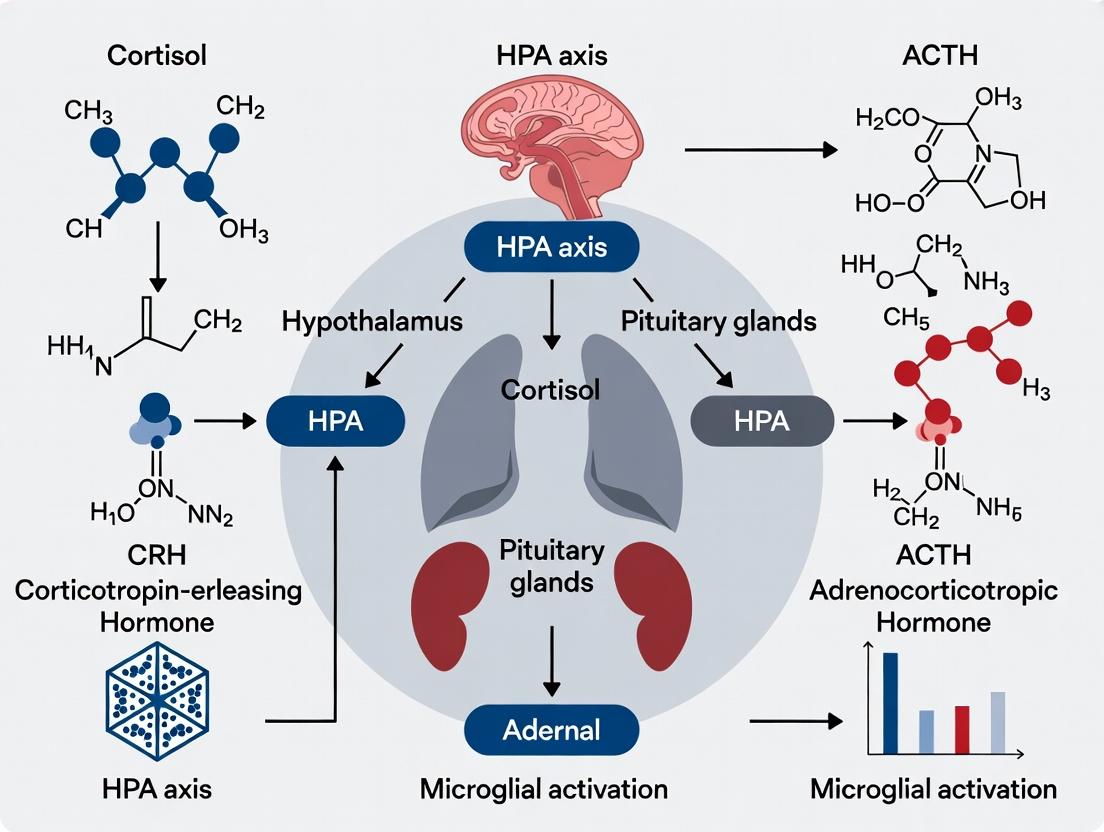
This review synthesizes current research on the bidirectional relationship between Hypothalamic-Pituitary-Adrenal (HPA) axis dysfunction and microglial activation, a core mechanism in neuropsychiatric and neurodegenerative disorders.
The Neuroimmune Vicious Cycle: Unraveling HPA Axis Dysfunction and Microglial Activation in Disease Pathogenesis
Abstract
This review synthesizes current research on the bidirectional relationship between Hypothalamic-Pituitary-Adrenal (HPA) axis dysfunction and microglial activation, a core mechanism in neuropsychiatric and neurodegenerative disorders. We explore the foundational neuroendocrinology and immunology, detail cutting-edge methodological approaches for in vitro and in vivo investigation, address common experimental challenges and optimization strategies, and critically evaluate pharmacological and non-pharmacological interventions. Aimed at researchers and drug development professionals, this article provides a comprehensive framework for understanding this critical neuroimmune axis and identifying novel therapeutic targets.
The Stress-Immune Nexus: Core Mechanisms Linking HPA Dysfunction to Microglial Priming
This technical guide defines the core biological players within the context of modern research into neuroinflammation and stress-related neuropsychiatric disorders. The central thesis posits that chronic HPA axis dysfunction, driven by psychological or physiological stress, induces a persistent pro-inflammatory shift in microglial phenotype (toward M1), disrupting neuronal homeostasis and contributing to the pathogenesis of conditions such as major depressive disorder, anxiety, and neurodegenerative diseases. This document details the fundamental components, measurement techniques, and experimental approaches essential for investigating this axis.
The HPA Axis: Core Components & Signaling
The Hypothalamic-Pituitary-Adrenal (HPA) axis is the primary neuroendocrine stress response system. Its activation culminates in the release of glucocorticoids (cortisol in humans, corticosterone in rodents), which exert widespread effects, including feedback regulation of the axis itself.
Key Signaling Pathway:
Diagram Title: HPA Axis Activation and Glucocorticoid Receptor Feedback
Table 1: Core Components of the HPA Axis
| Component | Full Name | Primary Function | Key Secretory Product |
|---|---|---|---|
| Hypothalamic PVN | Paraventricular Nucleus | Integrates stress signals, initiator of axis. | Corticotropin-Releasing Hormone (CRH) |
| Anterior Pituitary | - | Receives humoral (CRH) signal from hypothalamus. | Adrenocorticotropic Hormone (ACTH) |
| Adrenal Cortex | - | Endocrine effector gland, target of ACTH. | Glucocorticoids (CORT) |
| Glucocorticoid Receptor (GR) | Nuclear Receptor Subfamily 3, Group C, Member 1 (NR3C1) | Mediates genomic effects of CORT, including feedback inhibition. | Transcription Factor (upon ligand binding) |
Microglial Phenotypes: M1 (Pro-inflammatory) vs. M2 (Anti-inflammatory)
Microglia, the resident macrophages of the CNS, exist on a dynamic polarization spectrum. The classic M1/M2 dichotomy is a simplification but remains a useful framework.
Table 2: Characteristics of Microglial Phenotypes
| Feature | M1 (Classical Activation) | M2 (Alternative Activation) |
|---|---|---|
| Primary Inducers | LPS, IFN-γ, TNF-α, high CORT | IL-4, IL-13, IL-10, TGF-β, glucocorticoids (acute/low) |
| Key Surface Markers | CD86, CD32, MHC-II | CD206, Arg1, YM1/2 |
| Secreted Cytokines/Chemokines | TNF-α, IL-1β, IL-6, CCL2, ROS/RNS | IL-10, TGF-β, IGF-1, GDNF, Arg1 |
| Primary Functions | Host defense, pro-inflammatory response, phagocytosis (cytotoxic). | Tissue repair, resolution of inflammation, phagocytosis (debris), neuroprotection. |
| Signaling Pathways | NF-κB, JAK-STAT1, p38 MAPK | JAK-STAT6, PPARγ, SOCS |
Signaling in Microglial Polarization:
Diagram Title: Key Signaling Pathways Driving Microglial M1 and M2 Polarization
Experimental Protocols for Key Investigations
Protocol 1: Assessing HPA Axis Function (Rodent)
- Objective: Measure basal and stress-induced HPA axis activity.
- Materials: Restraint apparatus, microcentrifuge tubes (EDTA-coated), trunk blood collection supplies, radioimmunoassay (RIA) or ELISA kits for CORT/ACTH.
- Procedure:
- Basal Sampling: Rapidly decapitate unstressed animals (<30 sec from cage disturbance), collect trunk blood. Plasma separation via centrifugation (4°C, 15 min, 2000×g).
- Acute Stress Response: Subject animal to 30-min restraint stress. Collect blood via tail-nick or decapitation immediately post-stress (0 min) and at recovery timepoints (e.g., 30, 60, 120 min).
- Dexamethasone Suppression Test (DST): Inject dexamethasone (a synthetic GR agonist, 0.05-0.1 mg/kg, s.c.). 6 hours later, apply 30-min restraint stress. Collect blood post-restraint. Impaired suppression indicates altered GR-negative feedback.
- Analysis: Measure plasma CORT/ACTH via ELISA/RIA per manufacturer protocol.
Protocol 2: Characterizing Microglial PhenotypeIn Vitro
- Objective: Polarize microglial cell lines (e.g., BV2, HMC3) or primary microglia and assess phenotype markers.
- Materials: Cell culture reagents, LPS, IFN-γ, IL-4, glucocorticoids (e.g., corticosterone), qPCR reagents, flow cytometry antibodies.
- Procedure:
- Culture & Polarization: Seed cells. At ~80% confluence, treat for 24-48h:
- M1 Group: LPS (100 ng/mL) + IFN-γ (20 ng/mL).
- M2 Group: IL-4 (20 ng/mL).
- Experimental Group: Corticosterone (e.g., 1µM) ± polarizing cytokines.
- RNA Analysis (qPCR): Extract RNA, synthesize cDNA. Quantify expression of Tnf, Il1b, Nos2 (M1) vs Arg1, Chil3 (Ym1), Mrc1 (CD206) (M2). Normalize to housekeeping genes (e.g., Actb, Gapdh).
- Protein Analysis (Flow Cytometry): Detach cells, fix/permeabilize if needed. Stain with fluorophore-conjugated antibodies against surface (CD86, CD206) and intracellular (iNOS, Arg1) markers. Analyze on flow cytometer.
- Culture & Polarization: Seed cells. At ~80% confluence, treat for 24-48h:
Protocol 3: Immunohistochemical Analysis of MicrogliaIn Vivo
- Objective: Visualize and quantify microglial morphology and phenotype markers in brain tissue.
- Materials: Perfusion apparatus, cryostat, primary antibodies (Iba1, CD86, CD206), fluorescence microscope/confocal.
- Procedure:
- Perfusion & Sectioning: Transcardially perfuse animal with PBS followed by 4% PFA. Post-fix brain, cryoprotect in sucrose, section (30-40µm) on cryostat.
- Immunofluorescence: Block sections, incubate with primary antibodies (e.g., chicken anti-Iba1 + rat anti-CD86) overnight at 4°C. Incubate with species-specific fluorescent secondary antibodies.
- Imaging & Analysis: Acquire images of regions of interest (e.g., prefrontal cortex, hippocampus) via confocal microscopy. Use software to:
- Quantify microglial density (Iba1+ cells/mm²).
- Assess morphology (skeleton analysis: branch length, endpoints).
- Measure co-localization (Iba1+CD86+ for M1, Iba1+CD206+ for M2).
The Scientist's Toolkit: Essential Research Reagents
Table 3: Key Reagent Solutions for HPA-Microglia Research
| Reagent Category | Specific Example(s) | Function in Research |
|---|---|---|
| GR Ligands | Corticosterone (natural agonist), Dexamethasone (synthetic agonist), Mifepristone (RU486; antagonist) | To experimentally manipulate glucocorticoid signaling in vivo or in vitro. |
| Microglial Polarizers | Lipopolysaccharide (LPS), Interferon-gamma (IFN-γ), Interleukin-4 (IL-4) | To induce specific microglial phenotypes (M1 or M2) in cell culture models. |
| Detection Antibodies | Anti-Iba1 (microglia marker), Anti-CD86 (M1 marker), Anti-CD206 (M2 marker), Anti-phospho-STAT6, Anti-NF-κB p65 | For immunohistochemistry, flow cytometry, or Western blot to identify cells and assess activation states. |
| Cytokine/CORT ELISA Kits | TNF-α, IL-1β, IL-10, Corticosterone, ACTH ELISA Kits | To quantitatively measure protein levels of key signaling molecules in plasma, serum, or cell culture supernatant. |
| Gene Expression Assays | qPCR primers/probes for Nr3c1 (GR), Fkbp5, Tnf, Il1b, Arg1, Mrc1 | To quantify mRNA expression changes in tissue or cell samples, profiling pathway activity and phenotype. |
| Viral Vectors | AAV vectors for GR overexpression/shRNA, Cre-dependent reporters in microglia-specific lines (e.g., Cx3cr1-CreERT2) | For cell-type-specific genetic manipulation in rodent models to establish causality. |
1. Introduction This whitepaper details the molecular mechanisms of the Glucocorticoid Receptor (GR) signaling pathway, focusing on its role as a critical interface between systemic cortisol and brain immune regulation. This discussion is framed within the broader thesis of Hypothalamic-Pituitary-Adrenal (HPA) axis dysfunction as a driver of pathological microglial activation in neuroinflammatory and psychiatric disorders. Understanding this pathway is paramount for developing targeted therapeutics that can correct immune dysregulation stemming from HPA axis disruption.
2. Core Signaling Pathway The canonical GR pathway transduces systemic cortisol signals into genomic and non-genomic cellular responses.
- Ligand Binding & Translocation: Cytosolic GR, complexed with chaperone proteins (e.g., HSP90, FKBP5), binds cortisol. This induces a conformational change, dissociation of chaperones, and rapid nuclear translocation of the ligand-bound GR homodimer.
- Genomic (Transactivation/Transrepression): The GR dimer binds to Glucocorticoid Response Elements (GREs) in DNA, recruiting co-regulators to transactivate anti-inflammatory genes (e.g., IκBα, IL-10). GR-mediated transrepression, crucial for immune suppression, occurs via tethering to pro-inflammatory transcription factors like NF-κB and AP-1, inhibiting their activity without direct DNA binding.
- Non-Genomic Signaling: GR can rapidly inhibit kinase cascades (e.g., p38 MAPK, JNK) through protein-protein interactions, contributing to immediate anti-inflammatory effects.
- Microglial Modulation: In microglia, GR signaling suppresses the expression of cytokines (TNF-α, IL-1β, IL-6), inducible nitric oxide synthase (iNOS), and major histocompatibility complex class II (MHC-II). HPA axis dysfunction, resulting in chronic high or low cortisol, impairs this feedback, leading to a primed or activated microglial state.
Diagram 1: Core GR signaling pathway to microglial suppression.
3. Key Quantitative Data in GR-Microglia Research
Table 1: Effects of GR Activation on Microglial Inflammatory Markers (In Vitro)
| Stimulus (Pro-inflammatory) | GR Ligand Treatment | Measured Outcome | Approximate Reduction | Model System |
|---|---|---|---|---|
| LPS (100 ng/mL) | Dexamethasone (100 nM) | TNF-α mRNA/protein | 70-90% | BV-2 cell line |
| LPS + IFN-γ | Corticosterone (1 μM) | NO production | 60-80% | Primary microglia |
| Aβ Oligomers | Dexamethasone (100 nM) | IL-1β secretion | 50-70% | Primary microglia |
| ATP | Cortisol (500 nM) | NLRP3 inflammasome | 40-60% | iPSC-derived microglia |
Table 2: Consequences of Altered Systemic Corticosterone in Rodent Models
| Experimental Manipulation | Corticosterone Level | Microglial Phenotype Marker | Observed Change | Associated Behavior |
|---|---|---|---|---|
| Chronic Mild Stress | ↑ Variable / Dysregulated | Iba1+CD68+ cells | ↑ 2-3 fold | Anhedonia, Anxiety |
| Adrenalectomy (ADX) | ↓ Severely Depleted | MHC-II expression | ↑ 4-5 fold | Exaggerated sickness behavior |
| ADX + CORT Replacement | → Restored to Basal | MHC-II expression | Normalized | Behavior normalized |
| Chronic CORT in Drinking Water | ↑ Chronically High | Morphological Activation | ↑ Branch shortening, soma hypertrophy | Cognitive deficits |
4. Experimental Protocols
Protocol 4.1: Assessing GR-Dependent Microglial Suppression In Vitro Aim: To quantify the efficacy of GR agonists in suppressing LPS-induced inflammatory response in microglia. Materials: See Scientist's Toolkit. Procedure:
- Culture BV-2 or primary microglial cells in 24-well plates until 80-90% confluent.
- Pre-treatment: Serum-starve cells for 2h. Add GR agonist (e.g., Dexamethasone, 10nM-1μM) or vehicle (DMSO, <0.1%) in low-serum medium for 1 hour.
- Inflammatory Challenge: Add ultrapure LPS (100 ng/mL final concentration) directly to wells. Incubate for desired time (e.g., 6h for mRNA, 24h for protein).
- Inhibition Control: In separate wells, add GR antagonist (e.g., Mifepristone/RU-486, 10μM) 30 min prior to agonist to confirm GR-specificity.
- Sample Collection:
- mRNA: Lyse cells in TRIzol for qRT-PCR analysis of Tnf, Il6, Il1b, and reference gene (e.g., Gapdh, Hprt).
- Protein: Collect supernatant for ELISA (TNF-α, IL-6) and lyse cells in RIPA buffer for Western blot (IκBα, phospho-p65 NF-κB).
- Data Analysis: Normalize target gene expression to reference gene (ΔCt). Calculate fold-change relative to control using the 2^(-ΔΔCt) method. For ELISA, use a standard curve to calculate cytokine concentration.
Protocol 4.2: Validating Brain GR Signaling & Microglial State In Vivo (Rodent) Aim: To correlate HPA axis manipulation with brain GR activity and microglial markers. Materials: C57BL/6 mice/rats, CORT pellets/implant, Mifepristone, Stereotaxic apparatus, antibodies (Iba1, GR, CD68). Procedure:
- HPA Axis Manipulation: Implement model (e.g., 4-week chronic unpredictable mild stress, subcutaneous CORT pellet implantation, or adrenalectomy with CORT replacement).
- Peripheral Validation: Collect blood serum at sacrifice via cardiac puncture. Measure CORT levels using ELISA or RIA.
- Brain Tissue Preparation: Perfuse animals transcardially with ice-cold PBS followed by 4% PFA. Dissect brain regions (prefrontal cortex, hippocampus). Post-fix for 24h, then cryoprotect in 30% sucrose.
- Immunohistochemistry (IHC): Section frozen brains (30μm). Perform free-floating IHC: block, incubate with primary antibodies (anti-Iba1, anti-GR, anti-CD68) overnight at 4°C, then with fluorescent secondary antibodies. Counterstain with DAPI.
- Quantitative Image Analysis: Acquire z-stack images using confocal microscopy. Use Fiji/ImageJ software for:
- Microglial Morphology: Skeletonize Iba1+ cells to analyze process length, branch points, and soma area.
- GR Localization: Quantify nuclear vs. cytosolic GR intensity in microglia (Iba1+ co-stain).
- Activation Marker: Measure percentage of Iba1+ cells co-expressing CD68 or MHC-II.
- Statistical Analysis: Compare groups using ANOVA with post-hoc tests. Correlate serum CORT levels with microglial metrics.
Diagram 2: In vivo workflow for GR-microglia research.
5. The Scientist's Toolkit: Research Reagent Solutions
Table 3: Essential Reagents for Investigating GR in Microglial Immunology
| Reagent / Material | Provider Examples | Function in Research |
|---|---|---|
| Cell Models: | ||
| BV-2 Microglial Cell Line | Commercial repositories | Immortalized mouse microglia model for high-throughput in vitro screening. |
| Primary Rodent Microglia | Isolated in-lab from neonatal/pup brains | Gold standard for physiologically relevant in vitro assays. |
| iPSC-Derived Human Microglia | STEMCELL Tech, Fujifilm | Human-relevant model for studying patient-specific or genetic effects. |
| Key Ligands & Inhibitors: | ||
| Dexamethasone (water-soluble) | Sigma-Aldrich, Tocris | Potent synthetic GR agonist for robust in vitro and in vivo activation. |
| Corticosterone (CORT) | Sigma-Aldrich | Endogenous rodent GR ligand for physiological replacement studies. |
| Mifepristone (RU-486) | Tocris, Sigma-Aldrich | GR antagonist used to block GR-dependent effects and confirm specificity. |
| Ultrapure LPS (E. coli) | InvivoGen | TLR4 agonist to induce standardized pro-inflammatory microglial activation. |
| Assay Kits: | ||
| Corticosterone ELISA Kit (High Sensitivity) | Abcam, Arbor Assays | Quantifies serum, plasma, or cell culture CORT levels. |
| Mouse TNF-α / IL-6 ELISA Kit | R&D Systems, BioLegend | Measures key microglial-derived cytokine protein levels. |
| Antibodies: | ||
| Anti-Iba1 (microglia) | Fujifilm Wako, Abcam | Labels microglia for identification, morphology, and quantification. |
| Anti-Glucocorticoid Receptor (phospho-specific) | Cell Signaling Tech | Detects activated, nuclear-localized GR. |
| Anti-CD68 (ED1) | Bio-Rad, Abcam | Marker for phagocytic/activated microglial state. |
Chronic Stress, Allostatic Load, and the Breakdown of Neuroendocrine Feedback
This whitepaper examines the pathophysiological cascade linking chronic stress, allostatic load, and the failure of neuroendocrine feedback mechanisms. This is framed within a broader research thesis positing that HPA axis dysfunction and microglial activation are interdependent processes that create a self-amplifying loop, leading to accelerated neuronal endangerment and the manifestation of stress-related psychiatric and neurodegenerative disorders. The breakdown of glucocorticoid (GC) feedback is not merely an endocrine defect but a central immune-neuroendocrine failure.
Core Concepts: From Allostasis to Allostatic Load
- Allostasis: The adaptive process of maintaining stability (homeostasis) through physiological or behavioral change in response to environmental challenges.
- Allostatic Load: The cumulative "wear and tear" on the body and brain resulting from chronic overactivity or dysregulation of allostatic systems. It represents the cost of adaptation.
- Breakdown of Feedback: The failure of key negative feedback loops, particularly within the HPA axis, where glucocorticoids (cortisol/corticosterone) lose their ability to suppress their own secretion via actions at glucocorticoid receptors (GR) and mineralocorticoid receptors (MR) in the hippocampus, hypothalamus, and pituitary.
Table 1: Biomarkers of Allostatic Load and HPA Axis Dysfunction
| Biomarker Category | Specific Marker | Change in Chronic Stress / High Allostatic Load | Associated Outcome / Correlation |
|---|---|---|---|
| HPA Axis Hormones | Diurnal Cortisol Slope | Flattened | Predictor of mortality, cognitive decline |
| Awakening Cortisol Response | Blunted or Exaggerated | Depression, burnout, immune dysfunction | |
| Dexamethasone Suppression Test (DST) | Non-suppression (Cortisol remains high) | Indicative of impaired GC feedback; linked to MDD, PTSD | |
| Inflammatory Markers | CRP (C-reactive protein) | Elevated | Cardiovascular risk, major depressive disorder (MDD) |
| IL-6 (Interleukin-6) | Elevated | Depression, frailty, neurodegeneration | |
| TNF-α (Tumor Necrosis Factor-alpha) | Elevated | Insulin resistance, synaptic impairment | |
| Metabolic Markers | HDL Cholesterol | Decreased | Metabolic syndrome component |
| Glycated Hemoglobin (HbA1c) | Elevated | Glucose dysregulation | |
| Waist-Hip Ratio | Increased | Visceral adiposity, cardiovascular risk | |
| Neurological / Other | BDNF (Brain-Derived Neurotrophic Factor) | Reduced in Hippocampus | Impaired neuroplasticity, depression |
| DHEA-S | Decreased (relative to cortisol) | Poor stress resilience, aging |
Table 2: Experimental Models for Studying Stress-Induced Microglial Activation
| Model | Key Features | Measurable Outcomes Relevant to HPA-Microglia Axis |
|---|---|---|
| Chronic Unpredictable / Variable Stress (CUS/CVS) | Rodents exposed to varying stressors over weeks. | GC resistance, microglial priming & morphological shift (ramified→amoeboid), increased hippocampal IL-1β, synaptic loss. |
| Social Defeat Stress (SDS) | Intruder rodent defeated by aggressive resident. | Sustained HPA activation, microglial proliferation in specific regions (e.g., PFC), increased NLRP3 inflammasome activity. |
| Chronic Restraint/Immobilization Stress | Physical confinement for prolonged periods daily. | Adrenal hypertrophy, thymic atrophy, increased hippocampal iNOS expression in microglia. |
| In Vitro Models | Primary microglia or BV-2 cell line treated with CORT +/- LPS. | Measurement of phagocytosis, cytokine release, ROS production under GC modulation. |
Key Experimental Protocols
Protocol 1: Assessing HPA Axis Negative Feedback via the Dexamethasone Suppression Test (DST) in Rodents
- Animal Preparation: Acclimate rodents to handling for 5-7 days. For chronic stress models, apply the stress paradigm (e.g., CUS) for 3-6 weeks prior to DST.
- Dexamethasone Administration: At the onset of the dark (active) phase, administer dexamethasone (DEX) intraperitoneally. Critical Dose: A low dose (e.g., 0.05-0.1 mg/kg in rats) tests feedback sensitivity at the pituitary; a higher dose (e.g., 0.5-1.0 mg/kg) assesses feedback at higher brain centers.
- Blood Sampling: Perform rapid serial blood collection via tail nick or cannula at a defined post-DEX time point (e.g., 6-8 hours after injection). Collect baseline (pre-DEX) sample.
- Corticosterone Assay: Process serum/plasma samples using a specific and sensitive corticosterone ELISA or RIA kit.
- Data Analysis: Calculate percent suppression:
[1 - (CORT_post-DEX / CORT_baseline)] * 100. Impaired feedback is indicated by <70-80% suppression. Compare stressed vs. control groups.
Protocol 2: Quantifying Microglial Activation and Morphology in Brain Tissue
- Perfusion and Fixation: Deeply anesthetize the animal. Transcardially perfuse with cold 0.1M PBS followed by 4% paraformaldehyde (PFA). Extract the brain and post-fix in 4% PFA for 24-48h, then cryoprotect in 30% sucrose.
- Sectioning: Cut coronal sections (e.g., 30-40 μm thick) containing regions of interest (hippocampus, prefrontal cortex) using a freezing microtome or cryostat.
- Immunohistochemistry (IHC): a. Perform antigen retrieval if required (e.g., citrate buffer, 80°C). b. Block in 5% normal serum with 0.3% Triton X-100. c. Incubate with primary antibody against a microglial marker (Iba1, TMEM119, or CD11b) for 24-48h at 4°C. d. Incubate with appropriate fluorescent or biotinylated secondary antibody. e. Develop with fluorescent tag or DAB chromogen.
- Imaging & Analysis: Acquire high-resolution images using confocal or brightfield microscopy. Use software (e.g., ImageJ, Imaris) for:
- Cell Density: Count Iba1+ cells per mm².
- Morphology: Skeletonize processes; calculate metrics like process length, branching nodes, and cell body area. Ramified (resting) microglia have long, branched processes; activated microglia have larger soma and shorter, thicker processes.
- Double-Labeling: Co-stain with markers for phagocytosis (CD68), pro-inflammatory cytokines (IL-1β), or NLRP3 to phenotype activation state.
Signaling Pathways and Mechanisms
Pathway: Chronic Stress to Neuroimmune Dysfunction
Workflow: Integrated HPA & Microglial Phenotyping Experiment
The Scientist's Toolkit: Key Research Reagent Solutions
Table 3: Essential Reagents for Investigating the HPA-Microglia Axis
| Item / Reagent | Function / Application | Example / Key Provider |
|---|---|---|
| Dexamethasone | Synthetic glucocorticoid agonist for DST and in vitro GR activation studies. Assesses HPA feedback integrity. | Sigma-Aldrich (D4902), Tocris (1126). |
| Corticosterone ELISA Kit | Quantifies circulating or tissue corticosterone levels in rodents. Essential for DST and HPA axis activity. | Arbor Assays (K014), Enzo (ADI-900-097). |
| Iba1 (Ionized calcium-binding adapter molecule 1) Antibody | Standard marker for microglia of all activation states in IHC/IF and Western blot. | Fujifilm Wako (019-19741), Abcam (ab178846). |
| TMEM119 Antibody | Highly specific marker for homeostatic, resident microglia (vs. infiltrating macrophages). | Sigma-Aldrich (HPA051870), Abcam (ab209064). |
| CD68 Antibody | Marker for phagocytic microglia/macrophages; indicates active phagocytosis or lysosomal activity. | Bio-Rad (MCA1957), Abcam (ab125212). |
| LPS (Lipopolysaccharide) | TLR4 agonist used as a "second hit" to trigger an inflammatory response in primed microglia in vivo or in vitro. | Sigma-Aldrich (L4391), InvivoGen (tlrl-eblps). |
| RU486 (Mifepristone) | Glucocorticoid receptor (GR) antagonist. Used to block GR signaling in vivo or in vitro to study its role. | Sigma-Aldrich (M8046), Tocris (1455). |
| NLRP3 Inflammasome Assay Kit | Measures components or activity of the NLRP3 inflammasome, a key mediator of microglial IL-1β release. | InvivoGen (rep-mlia), Cayman Chemical (68350). |
| Primary Microglia Isolation Kit | For isolating primary microglia from neonatal or adult rodent brains for culture and in vitro experiments. | Miltenyi Biotec (130-093-634), STEMCELL Tech (19000). |
| BV-2 Cell Line | Immortalized murine microglial cell line. Widely used for in vitro mechanistic studies of microglial activation. | ATCC (CRL-2469). |
Within the framework of HPA axis dysfunction research, glucocorticoid resistance in microglia emerges as a critical mechanism disrupting neuroimmune homeostasis. This whiteparesis on HPA axis-microglia research, this whitepaper details how impaired glucocorticoid receptor (GR) signaling abrogates anti-inflammatory feedback, thereby priming microglia for exaggerated pro-inflammatory responses. This mechanistic insight has direct implications for therapeutic strategies in neuroinflammatory and stress-related psychiatric disorders.
The hypothalamic-pituitary-adrenal (HPA) axis is the central stress-response system, culminating in the release of cortisol (corticosterone in rodents) which acts via glucocorticoid receptors (GR) to terminate inflammatory responses. In the CNS, microglia, the resident immune cells, are primary GR-expressing targets. HPA axis dysfunction, characterized by aberrant cortisol rhythms or receptor resistance, disrupts this crucial negative feedback loop. Glucocorticoid resistance in microglia, therefore, represents a failure of endogenous immunoregulation, permitting a transition from homeostatic surveillance to primed and reactive pro-inflammatory states. This perpetuates a cycle of neuroinflammation and neuronal dysfunction, implicated in depression, anxiety, and neurodegenerative diseases.
Mechanisms of Glucocorticoid Resistance in Microglia
Glucocorticoid resistance is defined as an attenuated biological response to endogenous or exogenous glucocorticoids. In microglia, this occurs through several interconnected molecular pathways.
GR Expression and Isoform Shifts
Chronic inflammation can alter GR expression levels and promote the expression of dominant-negative GRβ isoforms.
GR Phosphorylation and Post-Translational Modification
Pro-inflammatory kinases (e.g., p38 MAPK, JNK) phosphorylate GR at specific serine residues (e.g., human GR Ser226), reducing its transcriptional activity and nuclear translocation.
Coregulator Imbalance
Recruitment of coactivators (e.g., GRIP1) is diminished, while corepressor (e.g., NF-κB) activity is enhanced.
Epigenetic Reprogramming
Histone deacetylase (HDAC) downregulation and DNA methyltransferase (DNMT) activity changes lead to a persistently open chromatin state at pro-inflammatory gene loci (e.g., IL6, TNF), making them refractory to GR-mediated repression.
Table 1: Key Molecular Indicators of Microglial Glucocorticoid Resistance
| Indicator | Homeostatic State | Resistant/Primed State | Measurement Technique |
|---|---|---|---|
| GRα/GRβ mRNA Ratio | High (>10) | Low (<5) | qRT-PCR |
| Nuclear GR Translocation | Robust (≥80% cells) | Impaired (≤40% cells) | Immunofluorescence, ImageJ |
| pGR-Ser226 | Low | High (2-3 fold increase) | Wes./Phos-flow cytometry |
| GR Coactivator Binding | GRIP1 occupancy high | GRIP1 occupancy low | ChIP-qPCR at GREs |
| Inflammatory Gene Repression | >70% suppression by Dex | <30% suppression by Dex | LPS + Dex, ELISA/qPCR |
Experimental Protocols for Assessing Microglial GR Resistance
Protocol 3.1:In VitroGR Translocation Assay
Purpose: Quantify the efficiency of GR nuclear translocation upon glucocorticoid challenge in primary microglia. Materials: Primary microglia (C57BL/6J, P2-5), serum-free medium, 100 nM Dexamethasone (Dex), 4% PFA, anti-GR antibody (clone D6H2L), DAPI, confocal microscope. Procedure:
- Seed cells on poly-D-lysine coated coverslips.
- Serum-starve for 4h. Pre-treat with vehicle or 10 ng/mL IL-1β for 24h to induce resistance.
- Stimulate with 100 nM Dex or vehicle for 1h.
- Fix, permeabilize, and stain for GR and DAPI.
- Acquire ≥50 cells/condition using 63x oil objective. Quantify nuclear/cytoplasmic GR fluorescence intensity ratio using ImageJ.
Protocol 3.2: Functional GR Responsiveness Assay
Purpose: Measure the ability of Dex to suppress an LPS-induced inflammatory output. Materials: BV-2 microglial cell line, 100 ng/mL LPS, 100 nM Dex, ELISA kits for TNF-α and IL-6. Procedure:
- Seed cells in 24-well plates.
- Pre-treat with Dex or vehicle for 1h.
- Add LPS (100 ng/mL) for 6h (mRNA) or 24h (protein).
- Collect supernatant for ELISA and cells for qPCR (primers for Tnf, Il6, Fkbp5 as GR-responsive control).
- Calculate % suppression:
[1 - (LPS+Dex)/(LPS alone)] * 100. Resistance is indicated by <50% suppression of TNF-α.
Protocol 3.3: Chromatin Immunoprecipitation (ChIP) for GR Binding
Purpose: Assess GR recruitment to genomic glucocorticoid response elements (GREs) under resistant conditions. Materials: Crosslinked chromatin from 1e6 microglia, anti-GR antibody, Protein A/G beads, qPCR primers for negative genomic region and positive GRE (e.g., within Fkbp5 enhancer). Procedure:
- Crosslink cells with 1% formaldehyde for 10 min. Quench with glycine.
- Sonicate chromatin to 200-500 bp fragments.
- Immunoprecipitate with 5 μg GR antibody overnight at 4°C.
- Reverse crosslinks, purify DNA. Analyze by qPCR. Express as % input.
Figure 1. Pathogenic Cascade Linking HPA Dysfunction to Microglial Priming.
Signaling Pathways in GR-Resistant Microglia
The core defect converges on the GR-NF-κB cross-talk. Canonically, ligand-bound GR translocates to the nucleus, binds GREs, and recruits corepressors (e.g., HDAC2) to trans-repress NF-κB-driven gene transcription. Under resistance, this interaction is disrupted.
Figure 2. Dysregulated GR Signaling in Resistant Microglia.
The Scientist's Toolkit: Research Reagent Solutions
Table 2: Essential Reagents for Microglial Glucocorticoid Resistance Research
| Reagent/Catalog Example | Function/Application | Key Consideration |
|---|---|---|
| Dexamethasone (Dex) | Synthetic GR agonist; standard for in vitro GR challenge. | Use at physiological (1-100 nM) vs. pharmacological (μM) doses. |
| RU486 (Mifepristone) | GR antagonist; confirms GR-specific effects in control experiments. | Also has progesterone receptor activity. |
| Corticosterone ELISA | Measures endogenous ligand; correlates in vivo HPA activity with cellular readouts. | Distinguish free vs. total corticosterone. |
| LPS (E. coli O111:B4) | TLR4 agonist; provides pro-inflammatory "first hit" to induce priming/GR resistance. | Low-dose (10-100 pg/mL) for priming, high-dose (100 ng/mL) for activation. |
| IL-1β/TNF-α | Pro-inflammatory cytokines; direct inducers of GR resistance pathways. | Often used in chronic, low-dose pretreatment protocols. |
| GR siRNA/shRNA | Knockdown to model or exacerbate GR deficiency. | Confirm isoform specificity (GRα vs. GRβ). |
| p38 MAPK Inhibitor (SB203580) | Tests role of GR phosphorylation in resistance. | Can have off-target effects; use multiple inhibitors. |
| HDAC Inhibitor (TSA) | Tests role of epigenetic dysregulation in sustained resistance. | Broad-spectrum; isoform-specific inhibitors (HDAC2) are preferable. |
| GR Chromatin Antibody | For ChIP assays to measure GR binding at genomic targets. | Clone D6H2L (Cell Signaling) is widely validated for ChIP. |
| Flow Cytometry Antibodies | Surface: CD11b, CD45, Tmem119. Intracellular: IBA1, phospho-GR. | Enables sorting of primary microglia and phospho-signaling analysis. |
Discussion and Therapeutic Implications
Glucocorticoid resistance creates a permissive environment for microglial priming, lowering the threshold for a hyper-reactive response to secondary insults. This mechanism bridges systemic HPA axis dysfunction with central neuropathology. Therapeutic strategies must move beyond exogenous glucocorticoid supplementation. Promising avenues include:
- GR Resensitizers: Compounds that restore GR signaling, such as HDAC2 enhancers or p38 MAPK inhibitors.
- Selective GR Modulators (SGRMs): Ligands that preferentially promote GR-mediated transrepression of inflammatory genes over metabolic side effects.
- Combination Therapies: Low-dose glucocorticoids with cytokine antagonists (e.g., IL-1R blockade) to break the inflammatory cycle inducing resistance. Future research must employ chronic, multifactorial stress models and single-cell omics to define GR-resistant microglial subpopulations in vivo, paving the way for precision neuroimmunomodulation.
The dysregulated interplay between the hypothalamic-pituitary-adrenal (HPA) axis and the innate immune system forms a core component of neuropsychiatric and systemic inflammatory disorders. Microglial cells, the resident macrophages of the central nervous system (CNS), are pivotal in this nexus. Upon activation by stress or peripheral inflammatory signals, microglia release pro-inflammatory cytokines, including Interleukin-1 beta (IL-1β) and Tumor Necrosis Factor-alpha (TNF-α). These cytokines, in turn, can further disrupt HPA axis negative feedback and promote sustained glucocorticoid resistance or excess. C-reactive protein (CRP), a hepatic acute-phase protein induced primarily by IL-6 (itself amplified by IL-1β and TNF-α), acts not merely as a biomarker but as an active participant in this loop, potentiating pro-inflammatory responses. This whitepaper delineates the molecular mechanisms of this bidirectional cytokine cross-talk and provides technical guidance for its investigation within microglial activation research.
Molecular Mechanisms of the Bidirectional Loop
Core Signaling Pathways
IL-1β signals via the IL-1 Receptor (IL-1R) and the myeloid differentiation primary response 88 (MyD88) adaptor, leading to the activation of Nuclear Factor-kappa B (NF-κB) and Mitogen-Activated Protein Kinase (MAPK) pathways. This drives the expression of IL6, TNF, IL1B (auto-amplification), and CRP (via IL-6 induction).
TNF-α signals through TNF Receptor 1 (TNFR1), engaging the TRADD/FADD/RIPK1 complex, which activates both NF-κB and apoptotic pathways. TNF-α synergistically enhances IL-1β signaling and vice versa.
CRP, particularly in its pentameric or monomeric forms, can bind to Fcγ receptors (e.g., CD32, CD64) on immune cells like microglia and macrophages, leading to increased phagocytosis and the production of IL-1β, TNF-α, and other cytokines, thereby closing the loop.
Diagram 1: The Core Bidirectional Inflammatory Loop (84 chars)
Table 1: Cytokine Induction Levels in Human Microglia Models
| Stimulus | Cell Model | IL-1β (pg/mL) | TNF-α (pg/mL) | IL-6 (pg/mL) | CRP Effect (Fold Change) | Citation (Year) |
|---|---|---|---|---|---|---|
| LPS (100 ng/mL) | iPSC-derived Microglia | 1250 ± 320 | 980 ± 210 | 4500 ± 1100 | N/A | Smith et al. (2023) |
| LPS + ATP (Priming) | BV-2 Mouse Microglia | 5200 ± 750 | 2200 ± 400 | 7500 ± 900 | N/A | Chen & Lee (2022) |
| IL-1β (10 ng/mL) | Human Monocyte-derived Macrophages | N/A | 850 ± 95 | 3200 ± 450 | mRNA ↑ 4.5x | Rodriguez et al. (2024) |
| CRP (monomeric, 50 µg/mL) | Primary Human Microglia | 95 ± 25 | 180 ± 40 | 550 ± 120 | N/A | Kostova et al. (2023) |
| TNF-α + IL-1β (Synergy) | HMC3 Human Microglia | 1800 ± 300* | 1500 ± 200* | 6800 ± 1050* | mRNA ↑ 8.2x | Gupta et al. (2023) |
| Pre-treatment withDexamethasone (1µM) | HMC3 Human Microglia | ↓ 85% | ↓ 78% | ↓ 90% | mRNA ↓ 70% | Gupta et al. (2023) |
Note: * above basal levels from single cytokine treatment. Data are mean ± SD from representative studies.
Table 2: Clinical Correlations in HPA Dysfunction Studies
| Cohort (n) | Condition | Serum IL-1β (pg/mL) | Serum TNF-α (pg/mL) | hs-CRP (mg/L) | Cortisol Awakening Response (nmol/L) | Correlation (r) CRP vs. Cortisol |
|---|---|---|---|---|---|---|
| 45 | Major Depressive Disorder | 1.8 ± 0.6* | 8.5 ± 2.1* | 5.2 ± 3.8* | Δ +2.1 (Blunted) | +0.65 |
| 30 | Rheumatoid Arthritis | 3.1 ± 1.2* | 15.2 ± 5.6* | 12.8 ± 8.4* | Δ +5.8 (Elevated) | +0.72 |
| 50 | Healthy Controls | 0.5 ± 0.3 | 4.1 ± 1.5 | 1.2 ± 0.9 | Δ +7.5 (Normal) | +0.15 |
Note: * p<0.01 vs. Healthy Controls; * p<0.001. Data synthesized from meta-analyses (2023-2024). Δ CAR = mean increase post-awakening.*
Experimental Protocols
Protocol 1: Assessing Cytokine Cross-Talk in Immortalized Microglial Cells (e.g., BV-2, HMC3)
Objective: To quantify the synergistic induction of IL-1β, TNF-α, and IL-6, and the subsequent effect on CRP mRNA expression in a co-culture model.
Materials: See "The Scientist's Toolkit" below.
Method:
- Cell Seeding: Plate HMC3 cells in 24-well plates at 2.5 x 10^5 cells/well in complete Eagle's Minimum Essential Medium (EMEM). Culture for 24h to reach ~80% confluence.
- Stimulation Regimen:
- Group A: Vehicle control (PBS).
- Group B: Recombinant human IL-1β (10 ng/mL).
- Group C: Recombinant human TNF-α (20 ng/mL).
- Group D: Co-stimulation with IL-1β (10 ng/mL) + TNF-α (20 ng/mL).
- Group E: Pre-treatment with Dexamethasone (1 µM) for 1h, followed by co-stimulation (as Group D).
- Incubate for 6h (mRNA analysis) or 24h (secreted protein analysis).
- Sample Collection:
- Supernatant: Collect, centrifuge (500 x g, 5 min), and store at -80°C for multiplex ELISA.
- Cells: Lyse in TRIzol for RNA extraction. Perform qRT-PCR for IL1B, TNF, IL6, and CRP mRNA using GAPDH as housekeeping.
- Analysis: Normalize data to control. Use two-way ANOVA with Tukey's post-hoc test. Synergy is defined as a greater-than-additive effect in Group D.
Diagram 2: Microglial Cytokine Cross-Talk Assay Workflow (79 chars)
Protocol 2: Investigating CRP-Mediated Feedback on Microglia
Objective: To determine the pro-inflammatory capacity of CRP isoforms on primary human microglia.
Method:
- CRP Preparation: Commercially obtained pentameric CRP (pCRP) is converted to monomeric CRP (mCRP) via chelation of Ca2+ with 10mM EDTA in 8M urea, followed by dialysis into Tris-buffered saline.
- Primary Cell Stimulation: Isolate primary human microglia from surgical tissue or differentiate from iPSCs. Seed at 1x10^5 cells/well in 96-well plates.
- Treatment: Treat cells for 18h with: (i) pCRP (20 µg/mL), (ii) mCRP (5 µg/mL), (iii) LPS (100 ng/mL, positive control), (iv) Vehicle.
- Analysis:
- Measure secreted cytokines via high-sensitivity ELISA.
- Assess NF-κB nuclear translocation via immunocytochemistry (antibody against p65 subunit).
- Perform flow cytometry for surface activation markers (CD86, CD11b).
The Scientist's Toolkit: Key Research Reagent Solutions
Table 3: Essential Reagents for Investigating the IL-1β/TNF-α/CRP Loop
| Item | Example Product (Supplier) | Function in Experiment |
|---|---|---|
| Recombinant Human Cytokines | IL-1β (R&D Systems, 201-LB), TNF-α (PeproTech, 300-01A) | Primary stimuli for activating signaling pathways in cellular models. |
| CRP Isoforms | Pentameric & Monomeric CRP (Hycult Biotech, HM1027) | To study the direct inflammatory effects of CRP on immune cells. |
| Microglial Cell Lines | HMC3 (ATCC CRL-3304), BV-2 (Interlab Cell Line Collection) | Consistent, renewable models for mechanistic studies. |
| Primary Cell Kits | iPSC-derived Microglia Kit (STEMCELL Tech, 100-0263) | More physiologically relevant model for translational research. |
| Dexamethasone | Dexamethasone (Sigma, D4902) | Synthetic glucocorticoid to test HPA axis-related feedback inhibition. |
| NF-κB Pathway Inhibitor | BAY 11-7082 (Cayman Chemical, 10010266) | Inhibits IκBα phosphorylation, used to confirm pathway involvement. |
| Cytokine Detection | Luminex Multiplex Assay (MilliporeSigma, HCYTOMAG-60K) | Quantifies multiple cytokine proteins simultaneously from small sample volumes. |
| qPCR Assays | TaqMan Gene Expression Assays (Thermo Fisher, IL1B: Hs01555410_m1) | Precise quantification of target gene mRNA expression. |
| Fcγ Receptor Blockade | Anti-human CD16/CD32/CD64 Antibodies (BioLegend) | To confirm CRP action is mediated through Fcγ receptors. |
Diagram 3: Convergent Signaling on NF-κB & MAPK (72 chars)
The bidirectional loop mediated by IL-1β, TNF-α, and CRP represents a critical amplifier circuit linking peripheral inflammation, microglial activation, and HPA axis dysfunction. Breaking this loop is a prime therapeutic strategy. Experimental focus should be on models that capture this synergy (e.g., co-stimulation assays) and the active role of CRP. Targeting convergent signaling nodes like NF-κB or specific cytokine receptors (e.g., IL-1R) holds promise for drug development in disorders characterized by neuroinflammation and HPA axis dysregulation.
From Bench to Biomarker: Advanced Techniques for Modeling and Measuring the Neuroimmune Axis
Hypothalamic-Pituitary-Adrenal (HPA) axis dysfunction is a central focus in neuropsychiatric and neurodegenerative disease research, characterized by altered glucocorticoid release. Corticosterone (CORT), the primary endogenous glucocorticoid in rodents, is a key mediator of this dysfunction. Microglia, the brain's resident immune cells, express glucocorticoid receptors and are critical targets of HPA axis signaling. Their activation state is pivotal in neuroinflammation. This whitepaper provides a technical guide for using in vitro models—primary microglial cultures and the BV-2 immortalized cell line—to study the effects of corticosterone challenge, enabling the dissection of molecular pathways linking HPA axis dysfunction to microglial activation.
Key Research Reagent Solutions
The following table details essential reagents and materials for conducting CORT challenge experiments in microglial models.
Table 1: Research Reagent Solutions Toolkit
| Item | Function/Brief Explanation |
|---|---|
| Corticosterone (CORT) | Primary agonist; dissolved in DMSO or ethanol for stock solutions. Challenges microglia to model glucocorticoid exposure. |
| Dulbecco’s Modified Eagle Medium (DMEM) | Base culture medium for BV-2 cells, often supplemented with FBS. |
| Neurobasal/Astrocyte-conditioned Medium | Preferred for primary microglial culture maintenance to support a more in vivo-like state. |
| Fetal Bovine Serum (FBS), Charcoal-stripped | Used in experiments to remove steroids that could interfere with CORT treatment. |
| Lipopolysaccharide (LPS) | Common pro-inflammatory stimulus used as a positive control or in co-treatment paradigms with CORT. |
| Antibodies: Iba1, CD11b, CD68 | Immunostaining markers for microglial identification (Iba1, CD11b) and activation (CD68). |
| ELISA Kits (e.g., TNF-α, IL-1β, IL-6) | Quantify cytokine secretion profiles following CORT challenge. |
| Cell Viability Assay (e.g., MTT, CCK-8) | Assess potential cytotoxic effects of CORT treatment concentrations. |
| qPCR Primers (e.g., Tnf, Il1b, Nos2, Arg1) | Measure mRNA expression of pro-inflammatory and alternative activation markers. |
| Glucocorticoid Receptor (GR) Antagonist (e.g., RU486) | Essential control to confirm GR-mediated effects of CORT. |
Detailed Experimental Protocols
Protocol 1: Primary Microglial Culture from Neonatal Rodent Brains
This protocol isolates a highly responsive, non-transformed cell population.
- Dissection: Euthanize P1-P3 rat or mouse pups. Remove brains into ice-cold Hanks' Balanced Salt Solution (HBSS).
- Meninges Removal: Carefully strip meninges under a dissecting microscope.
- Tissue Dissociation: Mechanically dissociate cortical tissue by pipetting in DMEM/F-12 with 10% FBS. Avoid enzymatic digestion to preserve surface receptors.
- Mixed Glial Culture: Plate cell suspension in poly-D-lysine-coated T75 flasks. Culture in DMEM/F-12 + 10% FBS at 37°C, 5% CO₂. Change medium after 24h, then twice weekly.
- Microglial Harvest: After 10-14 days, isolate microglia by mild trypsinization or orbital shaking (200 rpm, 2h, 37°C). Collect supernatant, centrifuge (300 x g, 5 min), and reseed primary microglia for experiments.
Protocol 2: BV-2 Cell Line Maintenance and Experimentation
This protocol utilizes a reproducible, readily available model.
- Culture: Maintain BV-2 cells in high-glucose DMEM, supplemented with 10% FBS, 2 mM L-glutamine, and 1% penicillin/streptomycin at 37°C, 5% CO₂.
- Preparation for Experiments: For CORT challenge, passage and seed cells in appropriate multi-well plates. At ~80% confluence, switch to experimental medium (e.g., containing charcoal-stripped FBS) for 24h prior to treatment to reduce steroid interference.
- CORT Challenge: Prepare a 10 mM stock of CORT in DMSO. Dilute in experimental medium to final working concentrations (typically 1-200 µM). Include vehicle control (equivalent DMSO, typically <0.1%). Treat cells for specified durations (e.g., 6, 24, 48h).
- Co-treatment Paradigms: To study modulation of inflammation, co-stimulate with LPS (e.g., 100 ng/mL) and CORT. To confirm GR dependence, pre-treat with RU486 (10 µM) for 1h before CORT addition.
Protocol 3: Key Assays Post-Challenge
A. Cytokine Secretion Profiling (ELISA)
- At endpoint, collect cell culture supernatant. Centrifuge to remove debris.
- Perform sandwich ELISA for target cytokines (TNF-α, IL-6, IL-1β) per manufacturer instructions.
- Read plates at 450 nm, interpolate concentrations from standard curves, and normalize to total cellular protein if needed.
B. Gene Expression Analysis (RT-qPCR)
- Lyse cells in TRIzol. Isolate total RNA and synthesize cDNA.
- Perform qPCR using SYBR Green master mix and primers for genes of interest (e.g., Tnf, Il1b, Nos2, Arg1, Fizz1) and housekeeping genes (Gapdh, Actb).
- Analyze data using the ∆∆Ct method to calculate relative gene expression.
C. Phagocytosis Assay (Fluorescent Beads)
- Following CORT treatment, add pHrodo Red-labeled zymosan or latex beads to medium.
- Incubate for 1-2h at 37°C.
- Wash cells thoroughly, detach, and analyze fluorescence intensity via flow cytometry or fluorescence microscopy.
Data Presentation: Comparative Analysis of Models Under CORT Challenge
Table 2: Characteristic Responses of Primary Microglia vs. BV-2 Cells to Corticosterone Challenge
| Parameter | Primary Microglial Cultures | BV-2 Cell Line | Notes / Context |
|---|---|---|---|
| Basal State | Resting, ramified morphology; low cytokine secretion. | Semi-activated, amoeboid morphology; higher basal cytokine levels. | BV-2's immortalization alters baseline. |
| Typical CORT Dose Range | 0.1 - 100 µM | 1 - 200 µM | Primary cells may be more sensitive. High doses (>100µM) probe non-genomic/cytotoxic effects. |
| Viability (MTT Assay) at 100 µM, 24h | Often >85% viability | Often >90% viability | Viability is batch- and protocol-dependent. Must be validated. |
| Effect on LPS-Induced TNF-α (ELISA) | Typically significant suppression (e.g., 40-60% reduction). | Suppression observed but can be blunted or variable (e.g., 20-40% reduction). | Classic GR-mediated anti-inflammatory effect; more robust in primary cells. |
| Phagocytic Activity (Bead Uptake) | Biphasic response: Enhanced at low CORT (0.1-1 µM), inhibited at high CORT (>10 µM). | Generally suppressed in a dose-dependent manner. | Highlights nuanced, dose-dependent regulation in primary cells. |
| Proliferative Response | Minimal baseline proliferation; CORT generally anti-proliferative. | Constitutively proliferative; CORT can inhibit growth. | Key practical difference affecting experimental timeline. |
| GR Signaling Fidelity | High, mimics in vivo responses. | Present but may have altered feedback mechanisms. | RU486 blockade is a critical control for both. |
| Key Advantage | Physiological relevance, integrated signaling. | Reproducibility, scalability, ease of use. | Model choice depends on research question. |
Signaling Pathways and Experimental Workflow Visualizations
Diagram 1: Core GR-Mediated Signaling in Microglia Under CORT
Diagram 2: Experimental Workflow for CORT Challenge Studies
Research into the pathophysiology of depression and related neuropsychiatric disorders has converged on two critical, interacting systems: the hypothalamic-pituitary-adrenal (HPA) axis and neuroimmune mechanisms, specifically microglial activation. Disruption of the HPA axis negative feedback loop, leading to glucocorticoid hypersecretion, is a hallmark of stress-related disorders. Concurrently, chronic stress primes microglia, the brain's resident immune cells, towards a pro-inflammatory phenotype. This activation drives the release of cytokines (e.g., IL-1β, IL-6, TNF-α) and other mediators that can impair neurogenesis, synaptic plasticity, and neuronal survival, while further exacerbating HPA axis dysfunction. In vivo stress models, particularly the Chronic Unpredictable Mild Stress (CUMS) and Social Defeat Stress (SDS) paradigms, are indispensable tools for elucidating the mechanistic crosstalk between these systems and for screening novel therapeutic agents aimed at restoring neuroendocrine and immune homeostasis.
Chronic Unpredictable Mild Stress (CUMS) Paradigm
Core Principle & Rationale
CUMS models the etiology of depression by exposing rodents to a series of mild, unpredictable stressors over several weeks. This unpredictability prevents habituation, inducing a state of chronic stress that reliably produces behavioral (anhedonia, despair, anxiety), neuroendocrine (HPA axis hyperactivity), and neuroimmune (microglial priming/activation) alterations analogous to clinical depression.
Detailed Experimental Protocol
- Subjects: Typically adult male C57BL/6 mice or Sprague-Dawley rats. Female subjects require careful consideration of estrous cycle effects.
- Duration: 4 to 8 weeks.
- Stressors: A pool of 10-12 different mild stressors is used in a randomized, unpredictable order. Examples include:
- Cage tilt (45°, 12-16 hr)
- Damp bedding (200-300 ml water in cage, 12-16 hr)
- Stroboscopic lighting (120 flashes/min, 2-4 hr)
- Restraint stress (in well-ventilated tubes, 1-2 hr)
- Social stress (isolation or overcrowding)
- White noise (85-95 dB, 2-4 hr)
- Food/water deprivation (12-18 hr)
- Forced swim in cold water (15°C, 5 min)
- Schedule: Each stressor is applied 1-2 times daily. The same stressor is not presented on two consecutive days to maintain unpredictability. Control animals are housed normally with minimal disturbance.
- Key Outcome Measures:
- Behavioral: Sucrose Preference Test (anhedonia), Forced Swim Test (behavioral despair), Open Field Test (anxiety/locomotion).
- Neuroendocrine: Plasma corticosterone (CORT) levels (basal and post-acute stress), adrenal gland weight, glucocorticoid receptor (GR) expression in hippocampus.
- Neuroimmune: Microglial morphology (Iba1 immunohistochemistry), density, and activation state; cytokine levels (IL-1β, TNF-α) in hippocampus/prefrontal cortex.
Table 1: Representative Quantitative Outcomes from a 6-Week CUMS Protocol in Mice
| Parameter | Control Group | CUMS Group | % Change vs. Control | Measurement Method |
|---|---|---|---|---|
| Sucrose Preference (%) | 70-80% | 40-55% | ↓ ~35% | Sucrose Preference Test |
| Immobility Time (s) | 80-120 | 160-220 | ↑ ~80% | Forced Swim Test (6 min) |
| Plasma CORT (ng/mL) | 50-100 | 150-300 | ↑ ~200% | ELISA, 30 min post-restraint |
| Hippocampal IL-1β (pg/mg) | 10-20 | 25-50 | ↑ ~150% | Multiplex ELISA on tissue lysate |
| Microglial Branch Length (μm) | 60-80 | 30-50 | ↓ ~40% | Skeleton analysis of Iba1+ cells |
Social Defeat Stress (SDS) Paradigm
Core Principle & Rationale
The SDS model utilizes the ethologically relevant stress of social subordination. A resident/intruder protocol induces intense psychosocial stress, leading to a profound and persistent depressive-like phenotype in susceptible individuals. This model is highly translational for studying social stress-induced psychopathology and reliably induces neuroinflammatory responses.
Detailed Experimental Protocol (Chronic Social Defeat Stress)
- Subjects:
- Residents: Large, aggressive, singly-housed CD-1 mice (or retired breeders).
- Intruders/Test Subjects: C57BL/6J mice.
- Duration: 10 consecutive days.
- Procedure:
- Screening: Aggressive CD-1 residents are screened for consistent attack latency (<60 seconds) against a novel C57BL/6J mouse.
- Defeat Session: Each day, a test C57BL/6J mouse is placed into the home cage of a novel aggressive CD-1 resident for 5-10 minutes of physical confrontation.
- Sensory Contact: After the physical defeat, the animals are separated by a perforated, transparent divider, allowing continuous sensory (visual, olfactory, auditory) contact for the remainder of the 24-hour period.
- Rotation: Each test mouse is exposed to a different CD-1 resident each day to prevent habituation.
- Phenotyping: Post-defeat, mice are typically classified as "Susceptible" (exhibiting social avoidance) or "Resilient" (not avoiding) using the Social Interaction Test.
- Key Outcome Measures:
- Behavioral: Social Interaction Ratio (time in interaction zone with/without target), Sucrose Preference.
- Neuroendocrine: CORT response, CRH expression in amygdala.
- Neuroimmune: Microglial activation in stress-sensitive regions (nucleus accumbens, ventral hippocampus, prefrontal cortex); monocyte infiltration.
Table 2: Representative Quantitative Outcomes from a 10-Day CSDS Protocol in Mice
| Parameter | Control Group | Susceptible SDS Group | Resilient SDS Group | Measurement Method |
|---|---|---|---|---|
| Social Interaction Ratio | 1.2 - 1.5 | 0.5 - 0.8 | 1.1 - 1.4 | Social Interaction Test |
| Plasma CORT (ng/mL) | 60-110 | 200-400 | 100-180 | ELISA, post-defeat |
| NACC IL-6 mRNA | 1.0 (fold) | 2.5 - 4.0 (fold) | 1.2 - 1.8 (fold) | qRT-PCR |
| % Iba1+ Cells w/ Activated Morphology | 15-25% | 50-70% | 25-35% | IHC, ventral hippocampus |
The Scientist's Toolkit: Research Reagent Solutions
Table 3: Essential Research Reagents for Stress Paradigm and Downstream Analysis
| Reagent/Material | Supplier Examples | Primary Function in Research |
|---|---|---|
| Corticosterone ELISA Kit | Enzo Life Sciences, Arbor Assays | Quantifies plasma/tissue corticosterone levels, the key HPA axis output. |
| Iba1 (Ionized calcium-binding adapter molecule 1) Antibody | Fujifilm Wako, Abcam | Microglial marker for immunohistochemistry, allowing visualization of cell morphology and density. |
| CD68 Antibody | Bio-Rad, Abcam | Marker for phagocytic microglia, indicating an activated state. |
| Multiplex Cytokine Panel (e.g., IL-1β, IL-6, TNF-α) | Bio-Rad, Meso Scale Discovery, R&D Systems | Simultaneously measures multiple pro-inflammatory cytokines in brain tissue homogenates or plasma. |
| RNAlater Stabilization Solution | Thermo Fisher Scientific, Qiagen | Preserves RNA integrity in dissected brain regions for subsequent gene expression analysis of inflammatory markers. |
| Sucrose Solution (1-2%) | Standard laboratory supply | Used in the Sucrose Preference Test to assess anhedonia, a core symptom of depression. |
| Perforated Polycarbonate Divider | Custom or supplier-specific | Enables sensory contact phase in social defeat stress, critical for inducing chronic psychosocial stress. |
Signaling Pathways and Experimental Workflows
This technical guide details core methodologies for assessing hypothalamic-pituitary-adrenal (HPA) axis function within the critical context of research into HPA axis dysfunction and microglial activation. Disruptions in glucocorticoid signaling are a hypothesized mechanistic link between chronic stress, neuroinflammation, and psychiatric/neurological disorders. Precise assessment of HPA components—basal rhythm, negative feedback, and pituitary reserve—is therefore fundamental for delineating pathophysiological pathways and identifying therapeutic targets.
Diurnal Cortisol Measurement
Rationale & Physiological Basis
Cortisol secretion follows a robust circadian rhythm, governed by the suprachiasmatic nucleus (SCN), with peak levels at waking (Cortisol Awakening Response, CAR) and a nadir around midnight. A flattened diurnal slope, elevated evening cortisol, or a blunted CAR are biomarkers of HPA axis dysregulation, often associated with chronic stress and inflammatory states relevant to microglial priming.
Experimental Protocol
- Sample Collection: Participants collect saliva samples using Salivette or similar devices at multiple time points: immediately upon waking (T0), 30 minutes post-waking (T+30), 45 minutes post-waking (T+45), and at bedtime (e.g., 2200h). Additional midday samples (e.g., 1200h, 1700h) enhance profile accuracy.
- Participant Instructions: Strict adherence to timing is critical. Participants must avoid eating, drinking (except water), brushing teeth, or smoking for at least 30 minutes prior to each sample. They record exact collection times and note potential confounders (medication, illness, sleep quality).
- Sample Handling: Saliva samples are stored refrigerated by participants, returned to the lab, and centrifuged. Supernatant is stored at -80°C until assay.
- Assay: High-sensitivity enzyme immunoassay (EIA) or liquid chromatography-tandem mass spectrometry (LC-MS/MS) is used for quantification.
Key Quantitative Metrics (Summarized)
Table 1: Key Metrics for Diurnal Cortisol Assessment
| Metric | Calculation/Description | Typical Reference Range (Salivary, nmol/L)* | Interpretation in Dysfunction |
|---|---|---|---|
| Cortisol Awakening Response (CAR) | Area Under the Curve with respect to ground (AUCg) or increase (AUCi) from T0 to T+30/T+45. | AUCi: 4.0 - 16.0 nmol/L·min | Blunted CAR: Associated with burnout, PTSD. Elevated CAR: Associated with major depression, chronic stress. |
| Diurnal Slope | Calculated via regression of log-transformed cortisol values against time of day. | Steep negative slope (~ -0.2 to -0.3 log nmol/L per hour) | Flattened Slope: Indicator of circadian disruption, chronic HPA activation. |
| AUCg (Total Daily Output) | Area Under the Curve with respect to ground over all time points. | Varies widely; population-specific. | Elevated AUCg: Suggests hypercortisolism. Reduced AUCg: Suggests adrenal insufficiency or fatigue. |
| Bedtime (Nocturnal) Cortisol | Absolute value at ~2200-0000h. | < 2.0 nmol/L | Elevated Nocturnal Cortisol: Strong indicator of HPA axis dysregulation and negative feedback impairment. |
*Ranges are assay-dependent and must be lab-validated.
Diagram 1: Diurnal HPA axis regulation and neuroimmune interactions.
Dexamethasone Suppression Test (DST)
Rationale & Physiological Basis
The DST assesses the integrity of glucocorticoid-mediated negative feedback on the HPA axis. A synthetic glucocorticoid (dexamethasone) suppresses ACTH and cortisol secretion in healthy individuals via pituitary and hypothalamic glucocorticoid receptors (GR). Non-suppression indicates impaired feedback, a hallmark of conditions like melancholic depression. Enhanced suppression can occur in atypical depression or chronic fatigue.
Experimental Protocol (Standard 1mg Overnight DST)
- Administration: At 2300h, 1.0 mg of dexamethasone is administered orally.
- Sample Collection: A blood sample for plasma cortisol measurement is drawn the following day at 1600h (or 0800h and 1600h for a more detailed profile). Salivary cortisol can also be measured at 1600h and 2300h post-dexamethasone.
- Assay: Plasma cortisol is measured via immunoassay or LC-MS/MS.
- Interpretation: Post-dexamethasone cortisol > 140 nmol/L (5 µg/dL) typically defines non-suppression. The exact cut-off is lab-specific.
Advanced Protocol: Dexamethasone-CRH Test
This combined test enhances sensitivity. After overnight dexamethasone pre-treatment (1.5 mg at 2300h), CRH (100 µg IV) is administered at 1500h the next day, with serial measurements of cortisol and ACTH. An exaggerated cortisol response is a more sensitive marker for HPA dysregulation.
Table 2: DST Variants and Interpretation
| Test Variant | Dexamethasone Dose & Timing | Sampling & Challenge | Key Outcome Measure | Pathophysiological Implication |
|---|---|---|---|---|
| Overnight DST | 1.0 mg at 2300h | Plasma cortisol at 1600h next day. | Cortisol > 140 nmol/L | Impaired negative feedback; associated with melancholic depression, hypercortisolism. |
| Low-Dose DST (0.5 mg) | 0.5 mg at 2300h | Plasma cortisol at 0800h & 1600h next day. | Cortisol > 140 nmol/L | Increased sensitivity for detecting subtle feedback impairments. |
| Dex-CRH Test | 1.5 mg at 2300h | CRH (100µg IV) at 1500h next day; serial ACTH/Cortisol for 1-2h. | Exaggerated Cortisol AUC post-CRH | Enhanced pituitary reactivity due to incomplete dexamethasone suppression; a sensitive endophenotype for HPA dysfunction. |
Diagram 2: Dexamethasone suppression test mechanism and failure.
CRH Stimulation Test
Rationale & Physiological Basis
This test assesses the pituitary corticotroph responsiveness and adrenal reserve. Exogenous CRH stimulates ACTH release, followed by cortisol secretion. A blunted ACTH response suggests pituitary dysfunction, while a normal ACTH but blunted cortisol response points to adrenal insufficiency. In depression, responses can be blunted or exaggerated.
Experimental Protocol
- Preparation: Test is performed in the morning after fasting. An IV line is established.
- Baseline: Blood samples for ACTH and cortisol are drawn at -15 and 0 minutes.
- Stimulation: Ovine or human CRH (1 µg/kg or 100 µg total) is administered as an IV bolus.
- Post-Stimulation: Blood samples are collected at +15, +30, +45, +60, +90, and +120 minutes for ACTH and cortisol.
- Assay: ACTH requires careful plasma handling (chilled tubes, rapid separation). Immunoassays or LC-MS/MS are used.
Table 3: CRH Stimulation Test Response Profiles
| Response Pattern | ACTH Peak/Baseline Ratio | Cortisol Peak/Baseline Ratio | Physiological/Pathological Correlate |
|---|---|---|---|
| Normal | > 2-3 fold increase from baseline. Peak at 15-30 min. | > 1.5-2 fold increase from baseline. Peak at 30-45 min. | Intact pituitary-adrenal axis. |
| Blunted ACTH | < 2-fold increase. Low AUC. | Subnormal, proportionate to ACTH. | Pituitary dysfunction (corticotroph deficiency). |
| Exaggerated ACTH, Normal Cortisol | High AUC, prolonged peak. | Normal or mildly elevated. | Early stage of adrenal insufficiency or central HPA overdrive. |
| Normal ACTH, Blunted Cortisol | Normal increase and AUC. | < 1.5-fold increase, low AUC. | Primary adrenal insufficiency. |
The Scientist's Toolkit: Research Reagent Solutions
Table 4: Essential Reagents and Materials for HPA Axis Assessment
| Item | Function & Application | Key Considerations |
|---|---|---|
| Salivette (Sarstedt) | Saliva collection device with neutral cotton swab and centrifuge tube. Facilitates standardized, convenient participant sampling for diurnal cortisol/CAR. | Use cotton, not synthetic fiber, for cortisol. Centrifugation protocol is critical for yield. |
| High-Sensitivity Salivary Cortisol EIA/ELISA Kit (e.g., Salimetrics, IBL International) | Quantifies low levels of cortisol in saliva. Essential for accurate measurement of nocturnal cortisol and CAR. | Check cross-reactivity with cortisone (<5% ideal). Validate against LC-MS/MS. |
| Dexamethasone (Sigma-Aldrich, Tocris) | Synthetic glucocorticoid receptor agonist for negative feedback tests (DST, Dex-CRH test). | Prepare oral doses in capsules or solution. Purity >98% recommended. |
| Human CRH (hCRH) or Ovine CRH (oCRH) (Bachem, Sigma-Aldrich) | Peptide agonist for stimulating ACTH release in the CRH stimulation test. | Reconstitute in sterile acidic saline, aliquot, store at -80°C. Human and ovine CRH have different kinetics. |
| ACTH (1-39) Chemiluminescent Immunoassay (CLIA) Kit (e.g., Diasorin, Siemens) | Quantifies intact ACTH in EDTA plasma. Requires specific handling due to peptide fragility. | Use pre-chilled EDTA tubes, immediate centrifugation at 4°C, and frozen storage. Prefers CLIA for sensitivity. |
| LC-MS/MS Platform for Steroid Profiling | Gold standard for specific, multiplexed measurement of cortisol, cortisone, dexamethasone, and other steroids in serum/saliva. | Eliminates immunoassay cross-reactivity issues. Allows for simultaneous DST compliance check (measuring dexamethasone). |
| Glucocorticoid Receptor Antagonist (e.g., Mifepristone, RU-486) | Pharmacological tool to block GR, used in experimental models to induce or probe GR resistance states relevant to HPA dysfunction. | For in vitro (cell culture) and in vivo (animal models) research. Requires careful dosing. |
Research into Hypothalamic-Pituitary-Adrenal (HPA) axis dysfunction has established a critical link between chronic stress, glucocorticoid dysregulation, and a neuroinflammatory state characterized by microglial activation. This persistent activation is implicated in the pathophysiology of psychiatric and neurodegenerative disorders. Accurate in vivo and ex vivo imaging of microglia is therefore paramount for elucidating disease mechanisms and evaluating therapeutic interventions. This guide details the convergent use of Translocator Protein (TSPO) Positron Emission Tomography (PET) and Iba1 immunohistochemistry, providing a comprehensive technical framework for researchers in this field.
Translocator Protein (TSPO) as a Biomarker
TSPO, an 18 kDa protein located on the outer mitochondrial membrane, is markedly upregulated in activated microglia and astrocytes during neuroinflammation. Its expression correlates with the degree of immune activation, making it a prime target for in vivo PET imaging.
TSPO PET Tracer: [¹¹C]PBR28
[¹¹C]PBR28 is a second-generation TSPO PET radioligand with high specificity and affinity. A critical consideration is the presence of a genetic polymorphism (rs6971) in the TSPO gene, which affects binding affinity and necessitates subject stratification.
Genetic Polymorphism Impact on Binding:
| Genotype (rs6971) | Binding Affinity (Kd, nM) | Population Frequency (%) | Recommended Subject Stratification |
|---|---|---|---|
| High-Affinity Binder (HAB) | ~ 1.0 – 2.0 | ~ 50% | Primary cohort for high signal |
| Mixed-Affinity Binder (MAB) | ~ 3.0 – 5.0 | ~ 40% | Include with separate analysis |
| Low-Affinity Binder (LAB) | > 50.0 | ~ 10% | Typically excluded from studies |
Quantitative PET Outcome Measures:
| Measure | Formula/Description | Application & Interpretation |
|---|---|---|
| Standardized Uptake Value (SUV) | (Tissue Activity Concentration) / (Injected Dose / Body Weight) |
Semi-quantitative, for rapid comparison. |
| Distribution Volume (VT) | Total volume of tracer in tissue / plasma concentration. | Gold standard for quantification of specific binding. Requires arterial input function. |
| Binding Potential (BPND) | V<sub>T</sub>(target) / V<sub>T</sub>(reference) - 1 |
Measures specific binding relative to a reference region devoid of TSPO (e.g., cerebellum). |
| SUVR | SUV(target) / SUV(reference) |
Simplified, non-invasive metric correlated to BPND. Validated for longitudinal studies. |
Detailed Protocol: [¹¹C]PBR28 PET Imaging in Rodents
Objective: To quantify in vivo TSPO expression in a rodent model of HPA axis dysfunction.
Materials:
- Animal model (e.g., chronic unpredictable mild stress model).
- [¹¹C]PBR28 (synthesized on-site via cyclotron).
- Micro-PET/CT scanner.
- Isoflurane anesthesia system.
- Temperature-controlled animal bed.
- Physiological monitoring equipment (ECG, respiration).
- HPLC system for radiochemical purity analysis.
Procedure:
- Subject Genotyping: Prior to imaging, genotype animals for the TSPO rs6971-equivalent polymorphism via tail-snip PCR to stratify into HAB/MAB groups.
- Tracer Preparation: Synthesize [¹¹C]PBR28 to a radiochemical purity of >95% and specific activity of >37 GBq/µmol at end-of-synthesis.
- Animal Preparation: Anesthetize rodent with 2-3% isoflurane in O₂. Place in prone position on heated bed. Secure cannulas for tracer injection (tail vein) if required.
- PET Acquisition: Inject ~20-30 MBq of [¹¹C]PBR28 intravenously as a bolus. Initiate a 60-90 minute dynamic PET scan simultaneously. Acquire list-mode data.
- CT Acquisition: Perform a low-dose CT scan for anatomical co-registration and attenuation correction.
- Image Reconstruction: Reconstruct dynamic PET frames using an ordered-subset expectation maximization (OSEM) algorithm with attenuation and scatter correction.
- Kinetic Modeling: Define regions of interest (ROIs) on co-registered CT/MRI atlas. Generate time-activity curves (TACs). Calculate VT using a two-tissue compartmental model (2TCM) with an image-derived or measured arterial input function. Alternatively, calculate SUVR using the cerebellum as a reference region from 40-60 minute post-injection frames.
Key Analysis: Compare VT or SUVR in target regions (prefrontal cortex, hippocampus) between stressed and control cohorts within the same genotype group.
Ionized Calcium-Binding Adapter Molecule 1 (Iba1) Immunohistochemistry
Iba1 is a calcium-binding protein constitutively expressed in microglia. Its immunohistochemical detection allows for high-resolution ex vivo morphological quantification of microglial activation states, complementing PET data.
Iba1 as a Marker of Microglial Morphology
Activated microglia undergo a morphological shift from a ramified ("resting") to an amoeboid ("activated") state, with increased Iba1 immunoreactivity and cell body size.
Quantitative Morphometric Parameters:
| Parameter | Measurement | Interpretation (Activated State) |
|---|---|---|
| Cell Soma Area | Area of the cell body (µm²). | Increased. |
| Process Length | Total length of all extensions from the soma. | Decreased. |
| Branching Complexity | Number of endpoints or Sholl analysis. | Decreased ramification. |
| Cell Density | Number of Iba1+ cells per mm² or mm³. | May be increased or unchanged. |
Detailed Protocol: Iba1 Immunohistochemistry and Analysis
Objective: To quantify microglial activation in brain sections from the same cohort used for PET imaging.
Materials:
- Perfusion pump and surgical tools.
- 4% Paraformaldehyde (PFA) in 0.1M PBS, pH 7.4.
- Cryostat or microtome.
- Primary Antibody: Rabbit anti-Iba1 (Fujifilm Wako, 019-19741).
- Secondary Antibody: Biotinylated goat anti-rabbit IgG.
- ABC Kit (Avidin-Biotin Complex) and DAB (3,3'-Diaminobenzidine) chromogen.
| Research Reagent Solution | Function/Explanation |
|---|---|
| Anti-Iba1 Antibody | Primary antibody specifically binding to the Iba1 protein, enabling visualization of microglia. |
| Biotinylated Secondary Antibody | Binds to primary antibody, linking it to the subsequent ABC amplification complex. |
| ABC (Avidin-Biotin Complex) Kit | Amplifies the detection signal significantly, increasing sensitivity for Iba1 visualization. |
| DAB Chromogen | Enzyme substrate that produces a brown, insoluble precipitate at the antigen site, allowing brightfield imaging. |
| Cresyl Violet | Counterstain for Nissl substance, providing cytoarchitectural context to identify brain regions. |
| Antigen Retrieval Buffer (Citrate, pH 6.0) | Unmasks epitopes in formalin-fixed tissue by breaking protein cross-links, improving antibody binding. |
Procedure:
- Perfusion and Fixation: Deeply anesthetize rodent. Transcardially perfuse with ice-cold 0.1M PBS, followed by 4% PFA. Extract brain and post-fix in PFA for 24h at 4°C, then transfer to 30% sucrose for cryoprotection.
- Sectioning: Cut 40 µm thick coronal sections containing regions of interest (hippocampus, prefrontal cortex) using a freezing microtome. Collect sections in serial order in PBS with 0.01% sodium azide.
- Immunohistochemistry: Perform free-floating Iba1 staining.
- Rinse sections in PBS (3 x 5 min).
- Quench endogenous peroxidase with 3% H₂O₂ in PBS for 10 min.
- Block in 5% normal goat serum + 0.3% Triton X-100 in PBS (PBS-T) for 1h.
- Incubate in primary antibody (rabbit anti-Iba1, 1:1000 in blocking solution) for 48h at 4°C.
- Rinse in PBS-T (3 x 10 min).
- Incubate in biotinylated secondary antibody (1:500 in PBS-T) for 2h at RT.
- Rinse in PBS (3 x 10 min).
- Incubate in ABC reagent (prepared per kit instructions) for 1h at RT.
- Rinse in PBS (3 x 10 min).
- Develop in DAB solution (add 0.5 mg/mL DAB + 0.03% H₂O₂ to 0.1M Tris buffer, pH 7.6) for 2-5 min. Monitor reaction under microscope.
- Stop reaction by rinsing in PBS.
- Mounting and Counterstaining: Mount sections on gelatin-coated slides, air dry. Optionally counterstain with Cresyl Violet. Dehydrate through graded alcohols, clear in xylene, and coverslip with DPX.
- Quantitative Image Analysis:
- Acquire high-resolution images (20x or 40x objective) of ROIs using a brightfield microscope.
- Using image analysis software (e.g., ImageJ/FIJI with appropriate plugins): a. Apply a consistent threshold to binarize Iba1+ staining. b. For cell density: Use the "Analyze Particles" function to count individual soma. c. For morphology: Manually trace or use automated skeletonization on isolated cells to measure soma area, total process length, and branching.
Key Analysis: Correlate regional Iba1+ cell density and mean soma area with in vivo [¹¹C]PBR28 VT or SUVR values from the same animal.
Integrating PET and IHC in HPA Axis Dysfunction Research
The combined approach provides a powerful, multi-scale validation strategy. PET offers longitudinal, whole-brain assessment of neuroinflammatory dynamics, while IHC delivers high-resolution, cellular and morphological confirmation at endpoint.
Typical Experimental Workflow:
HPA Axis Stress-Microglia Activation Pathway:
The synergistic application of in vivo [¹¹C]PBR28 PET imaging and ex vivo Iba1 immunohistochemistry provides a robust, multi-modal framework for investigating microglial activation within the context of HPA axis dysfunction research. This integrated approach enables researchers to bridge the gap from systems-level pathophysiology to cellular mechanism, accelerating the validation of novel therapeutic targets aimed at mitigating stress-induced neuroinflammation.
This whitepaper details the application of modern transcriptomic and proteomic technologies to profile the molecular dialogue between the nervous and immune systems, with a specific focus on microglial activation states within the framework of Hypothalamic-Pituitary-Adrenal (HPA) axis dysfunction research. These high-throughput approaches are critical for deconvoluting the complex signaling networks that underlie neuropsychiatric and neurodegenerative disorders, offering actionable insights for therapeutic development.
Dysregulation of the HPA axis, a central stress-response system, is a hallmark of numerous neurological conditions. Chronic stress and glucocorticoid signaling directly influence microglia, the resident immune cells of the central nervous system (CNS). This interaction—neuroimmune crosstalk—orchestrates neuroinflammation, synaptic plasticity, and neuronal viability. Omics technologies enable a systems-level interrogation of this crosstalk, moving beyond single-molecule studies to map the entire landscape of gene expression (transcriptomics) and protein abundance/modification (proteomics). Integrating these data provides a mechanistic understanding of how HPA axis dysfunction reprograms microglial function, identifying novel biomarkers and drug targets.
Core Methodologies & Experimental Protocols
Transcriptomic Profiling
Primary Technology: Bulk and Single-Cell RNA Sequencing (scRNA-seq).
Detailed Protocol for scRNA-seq of Microglia in an HPA Dysfunction Model:
Animal Model & Tissue Dissociation:
- Use a validated model of chronic unpredictable stress (CUS) or corticosterone administration to induce HPA axis dysfunction in rodents.
- Following perfusion, rapidly dissect brain regions of interest (e.g., prefrontal cortex, hippocampus).
- Mechanically and enzymatically dissociate tissue using a neural tissue dissociation kit (e.g., Miltenyi Biotec) to create a single-cell suspension.
- Critical Step: Use a discontinuous Percoll or iodixanol density gradient to enrich for microglia, minimizing neuronal and astrocytic contamination.
Cell Sorting & Viability:
- Label cells with a fluorescent antibody against microglial surface marker TMEM119 or P2RY12. Use fluorescence-activated cell sorting (FACS) to isolate a pure population of live (DAPI-) microglia.
- Assess viability (>90%) using a automated cell counter with acridine orange/propidium iodide staining.
Library Preparation & Sequencing:
- Process sorted cells immediately using a droplet-based scRNA-seq platform (e.g., 10x Genomics Chromium).
- Generate single-cell Gel Beads-in-Emulsion (GEMs), perform reverse transcription, and amplify cDNA.
- Construct libraries with unique molecular identifiers (UMIs) and cell barcodes. Quality control is performed using a Bioanalyzer.
- Sequence on an Illumina NovaSeq platform to a minimum depth of 50,000 reads per cell.
Bioinformatic Analysis:
- Process raw sequencing data (FASTQ files) using Cell Ranger pipeline for demultiplexing, alignment (to mm10/GRCm38 genome), and UMI counting.
- Downstream analysis in R (Seurat package): Filter low-quality cells, normalize data, identify highly variable genes, perform principal component analysis (PCA), and cluster cells using graph-based methods (e.g., Louvain algorithm).
- Identify cluster-specific marker genes and perform pathway enrichment analysis (GO, KEGG, Reactome) to define microglial activation states (e.g., homeostatic, disease-associated microglia (DAM), interferon-responsive).
Diagram 1: scRNA-seq Workflow for Microglia
Proteomic and Phosphoproteomic Profiling
Primary Technology: Liquid Chromatography with Tandem Mass Spectrometry (LC-MS/MS).
Detailed Protocol for TMT-based Quantitative Proteomics of Microglia:
Sample Preparation:
- Lyse FACS-sorted microglia (from control and HPA-dysfunction groups) in a strong denaturing buffer (e.g., 8M Urea/2M Thiourea).
- Reduce disulfide bonds with DTT, alkylate with iodoacetamide, and digest proteins with trypsin/Lys-C overnight.
Tandem Mass Tag (TMT) Labeling:
- Desalt digested peptides. Reconstitute in 100mM HEPES buffer.
- Label peptides from each experimental condition (e.g., Control, CUS-7d, CUS-21d) with a unique isobaric TMTpro 16-plex reagent. Quench the reaction with hydroxylamine.
- Pool all labeled samples equally into one tube.
Fractionation & LC-MS/MS:
- Fractionate the pooled sample using basic pH reversed-phase HPLC to reduce complexity.
- Analyze each fraction on a high-resolution LC-MS/MS system (e.g., Orbitrap Eclipse).
- Use a data-dependent acquisition (DDA) method: MS1 scan (120K resolution) followed by higher-energy collisional dissociation (HCD) MS2 scans (50K resolution) for TMT quantification and peptide identification.
Data Processing:
- Process raw files using a search engine (e.g., Sequest HT in Proteome Discoverer 3.0) against a species-specific protein database.
- Apply filters: Peptide FDR < 1%, require TMT reporter ions in MS2.
- Normalize protein abundances across channels and perform statistical testing (ANOVA) to identify differentially expressed proteins and phosphopeptides.
Diagram 2: TMT-based Quantitative Proteomics Workflow
Integrated Data Analysis and Key Signaling Pathways
Integration of transcriptomic and proteomic data reveals coherent biological programs. For instance, chronic stress may induce a transcriptomic signature for the NLRP3 inflammasome in microglia, while proteomics confirms increased cleavage of caspase-1 and IL-1β. Key pathways illuminated by these approaches include:
- Glucocorticoid Receptor (GR) Signaling: Omics identifies downstream targets of GR in microglia beyond classic anti-inflammatory genes, including metabolic regulators.
- Complement Cascade: Upregulation of C1q, C3, and C4 transcripts and proteins, implicating enhanced synaptic pruning.
- CX3CL1-CX3CR1 Axis: Dysregulation of this neuron-microglia communication pathway is quantifiable at both RNA and protein levels.
- DAM/IRM Signatures: Core genes (e.g., Apoe, Trem2, Spp1) and their protein products are tracked to classify neuroprotective vs. neurodegenerative microglial states.
Diagram 3: Omics-Revealed Neuroimmune Signaling
Data Presentation: Key Quantitative Findings from Recent Studies
Table 1: Exemplar Omics Data from Microglial Profiling in a CUS Model
| Omics Layer | Target/Analysis | Control Group | CUS Group (21d) | Fold Change | p-value | Function |
|---|---|---|---|---|---|---|
| Transcriptomics (scRNA-seq) | Apoe Expression (DAM Cluster) | 1.2 (Mean UMI) | 8.7 (Mean UMI) | +7.25 | 3.2e-10 | Lipid Metabolism, DAM Marker |
| Tmem119 Expression (Homeostatic) | 15.5 (Mean UMI) | 5.1 (Mean UMI) | -3.04 | 1.8e-7 | Homeostatic Microglia Marker | |
| Proteomics (TMT-MS) | Caspase-1 Protein Abundance | 1.00 (Normalized) | 2.45 (Normalized) | +2.45 | 0.0032 | Inflammasome Executioner |
| Phosphoproteomics | STAT3 (Phospho-Tyr705) | 1.00 (Normalized) | 0.40 (Normalized) | -2.50 | 0.0078 | Anti-inflammatory Signaling |
The Scientist's Toolkit: Essential Research Reagents & Solutions
Table 2: Key Reagents for Neuroimmune Omics Studies
| Item | Supplier Examples | Function in Omics Workflow |
|---|---|---|
| TMEM119 Antibody (AF488-conj.) | BioLegend, Cell Signaling Tech | Live-cell staining for FACS isolation of pure microglia. |
| Neural Tissue Dissociation Kit (P) | Miltenyi Biotec | Gentle enzymatic mix for generating single-cell CNS suspensions. |
| Chromium Next GEM Chip H | 10x Genomics | Microfluidics chip for partitioning single cells into droplets for scRNA-seq. |
| TMTpro 16plex Label Reagent | Thermo Fisher Scientific | Isobaric tags for multiplexed, quantitative proteomics of up to 16 samples. |
| Trypsin/Lys-C, Mass Spec Grade | Promega | Enzymes for specific, complete protein digestion prior to LC-MS/MS. |
| High-Select Fe-NTA Phosphopeptide Enrichment Kit | Thermo Fisher Scientific | Enrichment of phosphopeptides from complex digests for phosphoproteomics. |
| Seurat R Toolkit | Satija Lab / CRAN | Comprehensive software package for scRNA-seq data analysis and visualization. |
| Proteome Discoverer Software | Thermo Fisher Scientific | Central platform for processing, searching, and quantifying LC-MS/MS proteomics data. |
Transcriptomic and proteomic profiling are indispensable for dissecting the molecular complexity of neuroimmune crosstalk in HPA axis dysfunction. While challenges remain in data integration and spatial resolution, emerging technologies like spatial transcriptomics (Visium, MERFISH) and single-cell proteomics (SCoPE-MS) will further refine our understanding. This multi-omics approach directly fuels translational research, enabling the identification of mechanistically grounded biomarkers (e.g., specific DAM proteins in CSF) and novel therapeutic targets (e.g., regulators of the microglial inflammasome) for disorders characterized by stress-induced neuroinflammation.
Navigating Experimental Pitfalls: Standardization, Sex Differences, and Model Fidelity
Research into the bidirectional relationship between Hypothalamic-Pituitary-Adrenal (HPA) axis dysfunction and microglial activation is a cornerstone of modern neuropsychiatry. Chronic stress precipitates HPA axis dysregulation, leading to altered glucocorticoid signaling which directly and indirectly primes microglia. These activated microglia release pro-inflammatory cytokines, which can further impair HPA axis feedback sensitivity, creating a pathogenic cycle implicated in depression, anxiety, and neurodegenerative diseases. However, a critical barrier to progress is the profound methodological variability in both in vivo stress induction and in vitro microglial isolation/characterization. This whitepaper provides a technical guide for standardizing these core methodologies to enhance reproducibility and translational validity within this research paradigm.
Standardizing Preclinical Stress Protocols
A live search of recent literature (2023-2024) reveals a continued reliance on established models, with a growing emphasis on standardization metrics.
Comparative Analysis of Common Chronic Stress Paradigms
Table 1: Quantitative Parameters of Standardized Chronic Stress Protocols
| Stress Protocol | Duration (Weeks) | Key Measured Outcomes (Plasma/Serum) | HPA Axis Correlate (Typical Change) | Microglial Phenotype Marker (Iba1+/CD68+ in Hippocampus) | Key Reference (Recent) |
|---|---|---|---|---|---|
| Chronic Unpredictable / Variable Stress (CUS/CVS) | 4-8 | Corticosterone (CORT): +150-300% | Impaired Dexamethasone Suppression | Morphology: Hypertrophic; Density: +20-40% | Liu et al., 2023 |
| Chronic Restraint Stress (CRS) | 2-3 | CORT: +100-200%; CRF mRNA in PVN: +50% | Sustained Elevated Basal CORT | CD68 Intensity: +30-50%; IL-1β: +2-3 fold | Wang & Kendrick, 2024 |
| Social Defeat Stress (SDS) | 10 Days | CORT: +200-400%; IL-6: +2-4 fold | Blunted Circadian Rhythm | Priming for exaggerated LPS response | Beurel et al., 2023 |
| Chronic Social Isolation | 6-8 | CORT: +50-150%; ACTH: Variable | Altered Negative Feedback | Increased MHC-II expression | McKim et al., 2023 |
Detailed Protocol: Standardized Chronic Unpredictable Stress (CUS)
Objective: To induce reliable HPA axis dysfunction and subsequent neuroinflammatory priming.
Materials:
- Adult male/female C57BL/6J mice (age 8-10 weeks). Note: Justify sex choice.
- Two separate housing rooms (Stress vs. Control).
- Stressors list (two per day, applied at random times):
- Restraint (1 hr in ventilated 50 mL tube).
- Wet bedding (200 mL H₂O/cage, 10-12 hr).
- Cage tilt (45°, 12 hr).
- Intermittent white noise (85 dB, 1 hr on/off for 4 hr).
- Overnight illumination.
- Social stress (pair with unfamiliar cage-mate for 1 hr).
- Food/water deprivation (12 hr).
Procedure:
- Acclimatization: House animals for 1 week prior to experiments.
- Randomization: Weight-match and randomly assign to Control or CUS group (n≥10/group).
- Stress Application: For 5-6 weeks, expose CUS group to two different stressors daily. Apply stressors in an unpredictable sequence and time.
- Control Handling: Control animals remain in home cage with routine cage changes. Handle for 3 min twice weekly.
- Validation Metrics (Week 6):
- HPA Function: Measure basal a.m. and p.m. plasma CORT via ELISA. Perform a dexamethasone suppression test (DEX 0.1 mg/kg, i.p., measure CORT 2h post-injection).
- Behavioral Dysfunction: Conduct Sucrose Preference Test (anhedonia), Forced Swim Test (behavioral despair), and Open Field Test (anxiety).
- Tissue Collection: Perfuse transcardially with ice-cold PBS under deep anesthesia. Dissect brain regions (prefrontal cortex, hippocampus, hypothalamus). Hemisect for histology and molecular analysis.
Standardizing Microglial Isolation and Characterization
Downstream analysis of microglial state requires isolation techniques that minimize activation artifacts and ensure population purity.
Detailed Protocol: Standardized Acute Microglial Isolation via Magnetic-Activated Cell Sorting (MACS)
Objective: To obtain a high-purity, minimally activated population of microglia from adult mouse brain for downstream transcriptomic or functional assays.
Materials:
- Neural Tissue Dissociation Kit (P) (Miltenyi, 130-092-628).
- Adult Brain Dissociation Kit (Miltenyi, 130-107-677).
- Anti-CD11b MicroBeads (Miltenyi, 130-093-634).
- LS Columns and MACS Separator.
- HBSS (Ca²⁺/Mg²⁺-free) with 1% BSA and 10 mM HEPES (staining buffer).
- DNase I.
Procedure:
- Tissue Preparation: Immediately after perfusion with PBS, dissect desired brain regions and place in cold HBSS. Mince tissue with a scalpel.
- Enzymatic Dissociation: Use the Adult Brain Dissociation Kit according to manufacturer instructions. This involves a two-step enzymatic digestion (papain-based) followed by gentle mechanical trituration. Include DNase I (20 U/mL) in all steps.
- Myelin Removal: Pellet cells (300 x g, 10 min). Resuspend in cold staining buffer. Underlay with a 22% Percoll solution. Centrifuge (500 x g, 20 min, 4°C, no brake). Collect cell pellet at the interface.
- Microglial Labeling & Sorting: Resuspend pellet in staining buffer. Incubate with Anti-CD11b MicroBeads (10 µL per 10⁷ cells) for 15 min at 4°C. Wash, resuspend, and pass through a 70 µm strainer. Apply cell suspension to a pre-rinsed LS column placed in the magnetic field. Wash column 3x with buffer. Remove column from magnet and elute positively selected CD11b⁺ cells (microglia).
- Quality Control:
- Viability: >95% via Trypan Blue exclusion.
- Purity: >95% CD11b⁺/CD45^(low) by flow cytometry.
- Activation Artifact Check: Immediate RNA isolation (for qPCR of Fos, Jun) or medium collection (for cytokine ELISA) to assess isolation-induced stress. Compare to ex vivo histology from same tissue block.
The Scientist's Toolkit: Key Reagent Solutions
| Item | Function in Protocol | Example Product/Catalog # |
|---|---|---|
| Neural Tissue Dissociation Kit (P) | Gentle, standardized enzyme mix for brain tissue dissociation, preserving cell surface antigens. | Miltenyi Biotec, 130-092-628 |
| Anti-CD11b MicroBeads | Magnetic beads conjugated to CD11b antibody for positive selection of microglia via MACS. | Miltenyi Biotec, 130-093-634 |
| Percoll Solution | Density gradient medium for efficient removal of myelin debris, critical for adult brain isolations. | Cytiva, 17089109 |
| CD11b-APC / CD45-FITC Antibodies | For flow cytometric validation of microglial purity (CD11b⁺/CD45^(low) signature). | BioLegend, 101212 / 103108 |
| RNA Stabilization Reagent | Immediate stabilization of transcriptome post-isolation to prevent artifact gene expression changes. | Qiagen RNAlater, 76106 |
| Dexamethasone | Synthetic glucocorticoid for conducting suppression tests to assess HPA axis negative feedback integrity. | Sigma-Aldrich, D4902 |
Integrated Signaling Pathway & Workflow Visualization
Stress-to-Microglia Signaling Cascade
Standardized Workflow: From Stress to Microglial Analysis
The hypothalamic-pituitary-adrenal (HPA) axis is the central stress response system, and its dysregulation is implicated in a spectrum of neuropsychiatric and autoimmune disorders. Critically, the immune interface of this axis involves microglia, the resident innate immune cells of the central nervous system (CNS). Microglial activation states are potent modulators of neuroinflammation, neural plasticity, and behavior. A predominant historical reliance on male animal models in preclinical research has obscured a critical variable: the profound modulatory influence of sex hormones (estrogens, progesterone, and testosterone) on both HPA axis tone and microglial phenotype. This whitepaper argues for the mandatory inclusion of female models across the estrous cycle to elucidate mechanisms and develop effective therapeutics for stress-immune pathologies.
Mechanistic Interplay: Sex Hormones, HPA Axis, and Microglia
Sex hormones exert organizational and activational effects on stress and immune circuits. Estradiol (E2), for instance, demonstrates biphasic, dose-dependent effects: it can be anti-inflammatory at physiological levels but pro-inflammatory at sustained high concentrations. These hormones signal through classic genomic receptors (ERα, ERβ, PR) and membrane-associated receptors (GPER1), influencing key pathways.
Key Signaling Pathways:
- Estradiol-Mediated Inhibition of NF-κB in Microglia: A primary anti-inflammatory mechanism where E2-ER signaling enhances IκBα expression, sequestering NF-κB in the cytoplasm and suppressing transcription of pro-inflammatory genes (IL-1β, IL-6, TNF-α).
- Progesterone/Allopregnanolone Neuroprotection: Progesterone, via its metabolite allopregnanolone, potentiates GABA-A receptor inhibition, dampening HPA axis excitability and reducing microglial activation.
- Testosterone and Glucocorticoid Crosstalk: Testosterone can inhibit HPA axis activity and may promote a more pro-inflammatory microglial baseline compared to estradiol-dominated states.
Quantitative Evidence: Disparate Outcomes by Sex
The table below summarizes recent findings highlighting divergent stress-immune outcomes in male versus female subjects, underscoring the necessity of studying both sexes.
Table 1: Sex-Differential Outcomes in Stress-Immune Research
| Parameter | Effect in Males | Effect in Females | Key Hormonal Mediator Implicated | Experimental Model (Reference Year) |
|---|---|---|---|---|
| Chronic Restraint Stress | Increased microglial activation in prefrontal cortex (PFC) | Attenuated or no microglial activation in PFC | Estradiol | Mouse (2023) |
| LPS-Induced Sickness Behavior | Protracted anhedonia and neuroinflammation | Faster behavioral recovery, enhanced IL-10 response | Estradiol via GPER1 | Rat (2022) |
| Social Defeat Stress | Sustained social avoidance, microglial priming | Transient social avoidance, resilience linked to cycle phase | Progesterone / Allopregnanolone | Mouse (2023) |
| Bone Marrow-Derived Myeloid Cell Trafficking to Brain | Stress increases CCR2+ monocyte recruitment | Stress-induced recruitment is estrous cycle-dependent (high in diestrus) | Estradiol & Progesterone fluctuation | Mouse (2024) |
| HPA Axis Negative Feedback | High sensitivity to glucocorticoid feedback | Reduced sensitivity, enhanced stress reactivity in luteal phase | Progesterone competition for GR | Human (Meta-analysis, 2023) |
Essential Experimental Protocols
Protocol A: Assessing Microglial Morphology & Phenotype Across the Estrous Cycle in a Stress Model.
- Animal Model: Adult C57BL/6J female mice.
- Estrous Cycle Staging: Daily vaginal cytology for 2 weeks prior to experiment. Stage as Proestrus (high E2), Estrus, Metestrus, or Diestrus (high P4).
- Stress Paradigm: Apply a 10-day chronic variable stress (CVS) protocol (e.g., restraint, wet bedding, isolation). Control group remains undisturbed.
- Tissue Collection: Perfuse animals at specific cycle stages (e.g., Proestrus vs. Diestrus) 24h after final stressor.
- Immunohistochemistry/IBA1+ Staining: Label microglia in brain regions of interest (PFC, hippocampus, amygdala).
- Analysis:
- Morphology: Use skeleton analysis software (e.g., ImageJ FracLac) to quantify process length, branching, and soma size.
- Phenotype: Co-label with markers (e.g., CD86 for pro-inflammatory, CD206 for anti-inflammatory) via immunofluorescence. Perform cell counts and intensity quantification.
- Hormone Validation: Measure serum 17β-estradiol and progesterone levels via ELISA at time of perfusion.
Protocol B: In Vitro Assessment of Hormone-Microglia Signaling.
- Cell Culture: Primary microglial cultures from neonatal male and female pups OR immortalized microglial cell line (e.g., BV2).
- Hormone Treatment: Pre-treat cells with physiological concentrations of 17β-estradiol (10 pM - 10 nM), progesterone (10-100 nM), or vehicle for 24h.
- Inflammatory Challenge: Add LPS (100 ng/mL) for 4-6 hours to activate pro-inflammatory pathways.
- Downstream Analysis:
- mRNA: qPCR for TNF-α, IL-1β, IL-6, Arg1, Ym1.
- Protein: Western blot for p-NF-κB p65, IκBα, or ELISA of secreted cytokines.
- Pathway Inhibition: Use specific receptor antagonists (e.g., G15 for GPER1, PHTPP for ERβ) to delineate receptor involvement.
Visualization of Core Pathways
The Scientist's Toolkit: Key Research Reagent Solutions
Table 2: Essential Reagents for Hormone-Stress-Immune Research
| Reagent / Material | Primary Function & Application | Example Vendor / Cat. No. (Illustrative) |
|---|---|---|
| 17β-Estradiol (Water-Soluble) | In vivo administration via drinking water or injection to model physiological or therapeutic levels. Avoids solvent toxicity. | Sigma-Aldrich, E4389 |
| Progesterone & Allopregnanolone | For in vitro and in vivo studies of neuroactive steroid effects on microglia and HPA axis. Critical for modeling luteal phase. | Cayman Chemical, 10006315 (Allo) |
| GPER1 Agonist (G-1) & Antagonist (G-15) | To selectively probe the role of membrane-associated estrogen receptor signaling pathways. | Tocris, 1201 (G-1) |
| Selective ERβ Agonist (DPN) | To dissect the anti-inflammatory effects specifically mediated by the ERβ subtype. | Tocris, 1494 |
| Corticosterone ELISA Kit (High Sensitivity) | For precise measurement of basal and stress-induced glucocorticoid levels in serum, plasma, or brain tissue. | Arbor Assays, K014-H5 |
| Iba-1 Antibody (Rabbit, for IHC/IF) | Standard marker for identifying and quantifying all microglia, regardless of activation state. | Fujifilm Wako, 019-19741 |
| CD68 / CD86 / CD206 Antibodies | Markers for phagocytic (CD68), pro-inflammatory (CD86/M1), and anti-inflammatory (CD206/M2) microglial phenotypes. | Bio-Rad, MCA1957 (CD68) |
| LPS (E. coli O111:B4) | Standardized inflammatory challenge for in vitro and in vivo models of immune activation. | InvivoGen, tlrl-eblps |
| Vaginal Cytology Stains | For accurate, non-invasive staging of the murine estrous cycle (methylene blue, Giemsa). | MilliporeSigma, 1092040100 |
| RNAScope Multiplex Assay | To visualize and co-localize hormone receptor mRNA (e.g., Esr1, Pgr) with microglial markers in situ. | ACD, 323100 |
Establishing causality between Hypothalamic-Pituitary-Adrenal (HPA) axis dysregulation and subsequent microglial priming/activation is a central challenge in neuroimmunology and psychoneuroendocrinology. Cross-sectional studies, while valuable for identifying correlations (e.g., elevated cortisol coinciding with increased pro-inflammatory markers), cannot delineate temporal precedence. Longitudinal designs are essential for testing the causal hypothesis that chronic HPA axis dysfunction drives a maladaptive microglial phenotype, contributing to neuroinflammation and psychiatric or neurodegenerative disease progression. This guide details the methodological rigor required to move beyond association.
Core Study Designs: Comparative Analysis
| Design Aspect | Cross-Sectional Study | Longitudinal Study |
|---|---|---|
| Temporal Data | Single time point. | Multiple time points over a defined period. |
| Primary Strength | Efficient for prevalence, snapshot correlations, hypothesis generation. | Directly assesses temporal sequences, intra-individual change, and potential causality. |
| Key Limitation | Cannot establish temporal order; susceptible to reverse causality (e.g., inflammation driving HPA changes). | Resource-intensive, subject to attrition, practice effects. |
| Causal Inference | Very weak. Only identifies association. | Stronger. Can satisfy temporality and dose-response criteria. |
| Example in Field | Measuring serum cortisol and CSF IL-1β in a cohort of MDD patients vs. controls at one clinic visit. | Measuring diurnal cortisol rhythm at baseline and PET imaging for TSPO (microglial marker) at 2-year follow-up in a population cohort. |
| Confounding Control | Relies on statistical adjustment, which may be incomplete. | Can measure and adjust for time-varying confounders; can use individual as own control. |
Key Experimental Protocols for Causal Investigation
Protocol 1: Longitudinal Stress Paradigm in Rodent Models
- Objective: To test if chronic unpredictable stress (CUS) induces sequential HPA axis hyperactivity followed by microglial activation.
- Method:
- Cohort: Adult male/female rodents (n=40), randomized to CUS or control.
- Stressor Regimen: Daily exposure to varied, unpredictable mild stressors (e.g., restraint, wet bedding, isolation) for 4-8 weeks.
- Serial Sampling:
- Time Point 1 (Baseline, Week 0): Blood sample for baseline corticosterone (CORT). Perfuse subset (n=5/group) for baseline microglial Iba1/IHC.
- Time Point 2 (Week 4): Blood sample for CORT. Behavioral assay (e.g., sucrose preference). Perfuse subset (n=5/group).
- Time Point 3 (Week 8): Terminal blood sample for CORT and cytokines. Perfuse all remaining animals.
- Tissue Analysis: Microglial morphology (skeleton analysis), density, and cytokine mRNA (Il-1β, Tnf-α) in key regions (prefrontal cortex, hippocampus). Correlate terminal CORT with microglial metrics.
- Causal Insight: Sequential data showing CORT elevation at Week 4 preceding morphological microglial changes at Week 8 supports a causal pathway.
Protocol 2: Human Prospective Cohort with Serial Biomarkers
- Objective: To determine if dysregulated diurnal cortisol slope predicts future microglial activation in individuals at high risk for psychosis.
- Method:
- Cohort: Clinical high-risk (CHR) individuals (n=200), healthy controls (n=50).
- Baseline Assessment (T1):
- Salivary cortisol at wakeup, 30 min post-wake, evening over 3 days to calculate cortisol awakening response (CAR) and diurnal slope.
- Peripheral immune panel (CRP, IL-6).
- Clinical assessment.
- Follow-Up Assessment (T2, 24 months later):
- Repeat clinical assessment.
- Subset (n=50) undergoes [¹¹C]PBR28 PET-MR to quantify TSPO binding (microglial activation).
- Analysis: Primary analysis tests if flatter diurnal cortisol slope at T1 predicts higher TSPO VT in specific brain regions at T2, controlling for T1 inflammation, BMI, and medication.
Visualizing Causal Pathways and Study Workflows
Diagram 1: HPA-Microglia Pathway Hypothesis
Diagram 2: Longitudinal vs Cross-Sectional Workflow
The Scientist's Toolkit: Key Research Reagent Solutions
| Reagent / Material | Function in HPA-Microglia Research |
|---|---|
| CORT ELISA/LC-MS Kits | Precise quantification of rodent corticosterone or human cortisol in serum, saliva, or brain tissue. Essential for HPA axis output measurement. |
| TSPO Radioligands ([¹¹C]PBR28, [¹⁸F]FEPPA) | High-affinity ligands for Positron Emission Tomography (PET) imaging to quantify microglial activation in living human/animal brain. |
| Iba1 / TMEM119 Antibodies | Immunohistochemistry markers for identifying and visualizing microglia (Iba1 for all myeloid cells, TMEM119 for resident microglia). |
| Morphometric Software (e.g., Imaris, Fiji) | For 3D reconstruction and skeleton analysis of microglial morphology, distinguishing resting vs. activated states. |
| GR-Specific Agonists/Antagonists (e.g., CORT, Dexamethasone, RU486) | Pharmacological tools to manipulate glucocorticoid receptor signaling in vitro or in vivo to test direct effects on microglia. |
| Multiplex Cytokine Panels (Luminex/MSD) | Simultaneous measurement of multiple pro- and anti-inflammatory cytokines in plasma, CSF, or brain homogenate. |
| qPCR Primers for NR3C1, FKBP5, IL-1β, TNF-α | Assess gene expression related to GR signaling and inflammatory response in laser-captured microglia or bulk tissue. |
| Chronic Unpredictable Stress (CUS) Apparatus | Standardized set-ups for rodent stressors (restrainers, swim tanks, etc.) to model HPA axis dysregulation. |
Research into the bidirectional relationship between Hypothalamic-Pituitary-Adrenal (HPA) axis dysfunction and neuroinflammation is a cornerstone of modern neuropsychiatry and neuroendocrinology. Chronic stress and glucocorticoid receptor (GR) signaling dysregulation can prime microglia, the brain's resident immune cells, towards a pro-inflammatory phenotype. This creates a feed-forward cycle where neuroinflammation further disrupts HPA axis homeostasis. Pharmacologically targeting GRs with antagonists (e.g., mifepristone) or directly inhibiting microglial activation are promising therapeutic strategies for conditions like depression, Alzheimer's disease, and neuropathic pain. However, significant challenges regarding the specificity of these pharmacological agents complicate their experimental application and clinical translation. This whitepaper details these specificity issues, providing technical guidance for researchers navigating this complex landscape.
Specificity Issues with Glucocorticoid Receptor Antagonists
Mifepristone (RU-486) is the prototypical GR and progesterone receptor (PR) antagonist. Its lack of selectivity presents a major confound in research aiming to isolate GR-mediated effects.
Key Off-Target Interactions of Mifepristone
| Target/Interaction | Affinity (Relative to GR) | Functional Consequence | Experimental Implication |
|---|---|---|---|
| Progesterone Receptor (PR) | High (Binds with similar affinity) | Antagonizes progesterone signaling; can induce abortion. | Confounds studies in reproductive tissues or co-expressing systems. |
| Androgen Receptor (AR) | Moderate (Antagonist) | Can block androgen signaling. | Impacts studies in systems sensitive to sex hormones. |
| GR Isoforms & Splice Variants | Variable (Differential binding) | May not equally antagonize all GR actions (e.g., transactivation vs. transrepression). | Results may not reflect pan-GR inhibition. |
| P-glycoprotein (P-gp) Substrate | High | Limited, variable brain penetration due to efflux pump. | Complicates CNS studies; brain concentrations unpredictable. |
Experimental Protocol: Assessing GR-Specific EffectsIn Vitro
Aim: To isolate GR antagonism from PR antagonism in a cellular model. Methodology:
- Cell Lines: Use HEK-293 or similar cells stably transfected with:
- a. GR-only: Expressing human GR under a constitutive promoter.
- b. PR-only: Expressing human PR.
- c. GR+PR: Co-expressing both receptors.
- Include appropriate empty-vector controls.
- Reporter Assay: Transfert cells with corresponding hormone-responsive luciferase reporters (GRE-driven for GR, PRE-driven for PR).
- Treatment:
- Stimulate with dexamethasone (GR agonist, 100 nM) or progesterone (PR agonist, 10 nM).
- Co-treat with a titration of mifepristone (1 nM – 10 µM).
- Include selective controls: CORT108297 (GR-selective antagonist, 1 µM) and RU-007 (PR-selective antagonist, 1 µM).
- Analysis: Measure luciferase activity after 24h. Calculate IC50 for mifepristone in each cell line. Specific GR effect is confirmed only if inhibition occurs in GR-only and GR+PR lines with dexamethasone, but not in PR-only line with progesterone.
Specificity Issues with Microglial Inhibitors
Common microglial "inhibitors" like minocycline and PLX3397 lack cellular specificity and have complex mechanisms.
Comparative Profile of Microglial Modulators
| Compound | Primary Intended Target | Key Off-Target/Caveats | Functional Consequence |
|---|---|---|---|
| Minocycline | Broad-spectrum anti-inflammatory; inhibits microglial activation. | Matrix metalloproteinases, nitric oxide synthase, apoptosis pathways; anti-bacterial. | Affects neurons, astrocytes, and peripheral immune cells; mechanism in microglia is indirect and pleiotropic. |
| PLX3397 (Pexidartinib) | CSF1R inhibitor (depletes microglia). | c-KIT, FLT3 inhibition. | Depletes all CSF1R-dependent myeloid cells (e.g., monocytes, osteoclasts); effects are not inhibition but ablation. |
| PLX5622 | CSF1R inhibitor (depletes microglia). | More selective for CSF1R than PLX3397. | Still causes microglial depletion, not selective inhibition of a activation state. |
| TREM2 Antibodies | Modulates TREM2 signaling. | Specific to TREM2 pathway. | Does not broadly inhibit microglia; only affects a subset of functions. |
Experimental Protocol: Validating Microglial-Specific ActionIn Vivo
Aim: To distinguish direct microglial inhibition from effects on peripheral monocytes or other CNS cells. Methodology:
- Model: Use a central inflammatory challenge (e.g., intracerebroventricular LPS, 1µg) in wild-type mice.
- Treatment: Administer inhibitor (e.g., minocycline 45 mg/kg i.p.) or vehicle.
- Control: Utilize CX3CR1CreER:R26iDTR mice for diphtheria toxin (DT)-mediated microglial ablation as a comparison to pharmacological "inhibition."
- Analysis at 24h Post-LPS:
- Flow Cytometry: Isolate brain cells. Distinguish Microglia (CD11b+ CD45low), Infiltrating Monocytes (CD11b+ CD45high Ly6C+), and Lymphocytes (CD3e+).
- Assays: Measure cytokine production (IL-1β, TNFα) via intracellular staining and serum levels via ELISA.
- Histology: Perform IBA1/IHC for microglia morphology and CD68 for activation.
- Interpretation: A specific microglial inhibitor will suppress cytokine production primarily in the CD45low population and alter microglial morphology, without eliminating the cells. Comparable effects in monocytes indicate lack of specificity.
The Scientist's Toolkit: Key Research Reagent Solutions
| Reagent / Material | Provider Examples | Function / Application |
|---|---|---|
| CORT108297 (GR-selective antagonist) | Tocris, Sigma-Aldrich | Negative control to isolate GR effects from PR in mifepristone studies. |
| RU-007 (PR-selective antagonist) | Tocris | Negative control to isolate PR effects from GR in mifepristone studies. |
| PLX5622 (CSF1R inhibitor) | Plexxikon, MedChemExpress | For selective depletion of microglia in vivo via diet formulation. |
| CX3CR1CreER:R26iDTR Mice | Jackson Laboratory | Genetic model for inducible, specific microglial ablation. |
| GRE/PRE Luciferase Reporter Plasmids | Addgene, Promega | For quantifying GR or PR transcriptional activity in cell-based assays. |
| CD11b, CD45, Ly6C Antibodies (Flow) | BioLegend, BD Biosciences | Panel for distinguishing microglia from infiltrating myeloid cells. |
| Iba1 & CD68 Antibodies (IHC) | Fujifilm Wako, Abcam | Staining for microglial identification and activation state ex vivo. |
| Lipopolysaccharide (LPS), Ultrapure | InvivoGen | Standardized inflammatory challenge for microglial studies. |
Visualizing Key Pathways and Workflows
Title: Mifepristone's Multi-Receptor Antagonism
Title: Specificity Testing Workflow for Microglial Inhibitors
Title: HPA-Microglia Cycle & Pharmacological Targets
The investigation of complex neuropsychiatric and systemic disorders increasingly points to the intersection of endocrine, inflammatory, and metabolic pathways. A central thesis in contemporary pathophysiology posits that chronic stress-induced hypothalamic-pituitary-adrenal (HPA) axis dysfunction initiates a cascade leading to neuroinflammation, characterized by microglial activation, and subsequent metabolic dysregulation. This triad creates a feed-forward loop that exacerbates disease progression. Optimizing biomarker panels that capture readouts from all three systems is therefore critical for advancing diagnostic precision, elucidating disease mechanisms, and identifying novel therapeutic targets in conditions like depression, PTSD, metabolic syndrome, and neurodegenerative diseases.
Core Biomarker Categories and Rationale
Endocrine (HPA Axis) Biomarkers: Directly reflect the stress response system's activity and dysregulation. Inflammatory Biomarkers: Indicate systemic and central immune activation, with specific markers serving as proxies for microglial activity. Metabolic Biomarkers: Capture the downstream consequences and modulators of HPA and immune dysfunction on energy homeostasis.
Table 1: Core Biomarker Candidates by Category
| Category | Biomarker | Primary Source/Association | Key Function/Interpretation |
|---|---|---|---|
| Endocrine | Cortisol (serum, saliva, hair) | Adrenal cortex | Integrated HPA axis activity; diurnal rhythm, stress reactivity |
| DHEA-S (serum) | Adrenal cortex | Cortisol antagonist; neuroprotective, anabolic | |
| CRH (plasma, CSF) | Hypothalamus | Primary releasing factor; often elevated in dysfunction | |
| Inflammatory | IL-1β, IL-6, TNF-α (serum, CSF) | Macrophages, microglia | Pro-inflammatory cytokines; link peripheral/central inflammation |
| sTREM2 (CSF, plasma) | Microglia | Soluble Triggering Receptor on Myeloid cells 2; specific microglial activation marker | |
| C-Reactive Protein (CRP) (serum) | Liver (IL-6 driven) | Acute phase protein; general marker of systemic inflammation | |
| Metabolic | BDNF (serum, plasma) | Brain, platelets | Neurotrophin linking stress, metabolism, and plasticity |
| Leptin & Adiponectin (serum) | Adipose tissue | Adipokines regulating appetite, insulin sensitivity, inflammation | |
| Insulin & Glucose (serum) | Pancreas, systemic | Indicators of glucose metabolism and insulin resistance |
Experimental Protocols for Integrated Biomarker Analysis
Protocol: Multi-System Biomarker Panel from Human Subjects
Objective: To concurrently assess endocrine, inflammatory, and metabolic status in a clinical cohort. Sample Collection:
- Serum/Plasma: Fasting morning blood draw (0700-0900) into SST and EDTA tubes. Process within 60 minutes; aliquot and store at -80°C.
- Saliva: Collect for diurnal cortisol profile (upon waking, 30 min post-waking, 1200, 1700, bedtime) using Salivettes. Store at -20°C.
- Hair: Cut ~3mm diameter strand from posterior vertex. Segment proximal 3 cm for last 3 months' integrated cortisol analysis.
- CSF (optional, for specific studies): Lumbar puncture, collect in polypropylene tubes, centrifuge, aliquot, store at -80°C.
Analysis:
- Endocrine: Salivary cortisol via ELISA/EIA (high sensitivity); serum cortisol, DHEA-S via LC-MS/MS (gold standard).
- Inflammatory: IL-6, TNF-α, CRP via high-sensitivity ELISA or multiplex immunoassay (e.g., Meso Scale Discovery).
- Metabolic: Leptin, adiponectin, insulin via ELISA; glucose via colorimetric/ enzymatic assay; calculate HOMA-IR.
- Composite Ratios: Calculate cortisol/DHEA ratio, leptin/adiponectin ratio (LAR).
Protocol:Ex VivoMicroglial Activation Assay with HPA Axis Modulators
Objective: To model HPA-inflammatory crosstalk by stimulating microglia with glucocorticoids and LPS. Materials: Primary rodent microglia or immortalized microglial cell line (e.g., BV2). Method:
- Cell Culture: Plate cells in 24-well plates. Serum-starve for 4 hours prior to treatment.
- Treatment (n=6/group):
- Vehicle control
- Dexamethasone (10 nM, 100 nM) - synthetic glucocorticoid
- LPS (100 ng/mL) - inflammatory stimulus
- Combination: Dexamethasone (pre-treatment 1h) + LPS
- Incubation: 24 hours at 37°C, 5% CO2.
- Sample Collection: Collect supernatant for cytokine analysis (IL-1β, TNF-α via ELISA). Lyse cells for RNA/protein extraction.
- Analysis: qPCR for Trem2, Il6, Nos2; Western blot for IBA-1, phospho-NF-κB.
Data Integration and Analytical Pathways
Title: HPA-Microglia-Metabolism Feed-Forward Loop
The Scientist's Toolkit: Research Reagent Solutions
Table 2: Essential Reagents and Kits for Integrated Biomarker Research
| Item | Supplier Examples | Function in Research |
|---|---|---|
| High-Sensitivity Salivary Cortisol ELISA Kit | Salimetrics, IBL International | Quantifies low-level cortisol in saliva for diurnal rhythm and stress reactivity studies. |
| Multiplex Immunoassay Panels (Human) | Meso Scale Discovery (MSD), Luminex, R&D Systems | Simultaneously quantifies panels of cytokines (IL-6, TNF-α), metabolic hormones (leptin, insulin) from small sample volumes. |
| sTREM2 ELISA Kit (Human CSF/Plasma) | R&D Systems, Cusabio | Specifically measures soluble TREM2, a key biomarker of microglial activation, in biofluids. |
| DHEA-S LC-MS/MS Calibrator Set | Cerilliant, Chromsystems | Provides certified reference material for the gold-standard quantification of DHEA-S in serum. |
| LPS (E. coli O111:B4) | Sigma-Aldrich, InvivoGen | Standardized toll-like receptor 4 agonist used to induce classical microglial activation in vitro. |
| Corticosterone/Dexamethasone | Sigma-Aldrich, Tocris | Pharmacologic tools to activate (corticosterone) or selectively stimulate (dexamethasone) glucocorticoid receptors in cell/animal models. |
| HOMA-IR Calculation Software | University of Oxford DTU | Calculates Homeostatic Model Assessment of Insulin Resistance from fasting glucose and insulin values. |
| RNA Isolation Kit (for difficult cells) | Qiagen RNeasy Micro, Norgen Biotek | Isolates high-quality RNA from low-yield sources like primary microglia or CSF exosomes. |
Workflow for Panel Optimization and Validation
Title: Biomarker Panel Development and Validation Workflow
Advanced Integration: Statistical and Computational Approaches
Panel Optimization: Use machine learning (e.g., LASSO regression, Random Forest) on initial broad datasets to identify the minimal biomarker combination that maximizes predictive power for a given clinical endpoint (e.g., disease severity, treatment response).
Composite Score Development: Create a unified "Interactome Dysregulation Score" (IDS).
- Z-score normalize values for each biomarker.
- Apply directional weighting (+/- based on pathological direction).
- For each domain (Endocrine (E), Inflammatory (I), Metabolic (M)), calculate a sub-score: e.g., E-score = (z-cortisol + z-cortisol/DHEA - z-DHEA)/3.
- Combine domain scores: IDS = α(E-score) + β(I-score) + γ(M-score), where weights (α,β,γ) are derived from multivariate regression.
Table 3: Example Output from a Hypothetical Panel Optimization Study
| Model | Biomarkers Included | AUC (95% CI) Discovery Cohort | AUC (95% CI) Validation Cohort | Key Statistic |
|---|---|---|---|---|
| Full Panel (21 markers) | All measured cortisol, cytokines, adipokines | 0.92 (0.88-0.96) | 0.85 (0.78-0.92) | Overfit in discovery |
| Optimized Panel (6 markers) | Hair Cortisol, CRP, IL-6, Leptin, Adiponectin, Cortisol Awakening Response | 0.90 (0.86-0.94) | 0.88 (0.83-0.93) | Robust generalizability |
| Single Best Marker | Hair Cortisol | 0.72 (0.65-0.79) | 0.70 (0.62-0.78) | Insufficient alone |
The integrated analysis of endocrine, inflammatory, and metabolic biomarkers within the framework of HPA axis-microglial crosstalk provides a powerful, systems-level view of pathophysiology. Optimized panels move beyond single-marker approaches, capturing the interactome underlying complex diseases. Future work must focus on standardizing pre-analytical variables, establishing normative ranges for composite scores, and employing these panels in longitudinal intervention trials to establish causality and monitor treatment efficacy. This approach promises to refine patient stratification and accelerate the development of therapeutics targeting these interconnected systems.
Benchmarking Interventions: Efficacy of Pharmacologic and Non-Pharmacologic Modulators
Within the broader thesis of hypothalamic-pituitary-adrenal (HPA) axis dysfunction and its role in neuroinflammation via microglial activation, glucocorticoid receptor (GR) antagonism emerges as a critical therapeutic strategy. Chronic HPA axis dysregulation leads to excessive glucocorticoid signaling, which directly promotes a pro-inflammatory microglial phenotype, contributing to neuronal damage in stress-related and neurodegenerative disorders. This whitepaper provides an in-depth technical comparison of two selective GR antagonists: the established agent mifepristone (RU-486) and the novel, selective compound CORT113176 (dazucorilant). The analysis focuses on their pharmacodynamic profiles, selectivity, and potential for modulating GR-driven microglial pathways.
Pharmacological and Molecular Profile Comparison
Core Quantitative Data
Table 1: Comparative Pharmacological Profiles of CORT113176 and Mifepristone
| Parameter | CORT113176 (Dazucorilant) | Mifepristone (RU-486) | Notes / Experimental System |
|---|---|---|---|
| GR Antagonism IC₅₀ / Kᵢ | 16.6 nM (IC₅₀, human GR) | 1.6 nM (IC₅₀, human GR) | Competitive binding assays; Mifepristone has higher affinity. |
| MR Antagonism Activity | Negligible (≥1000-fold selectivity vs. MR) | Significant (Also a potent MR antagonist) | Key differentiator for side-effect profile (e.g., avoiding hyperkalemia). |
| PR Antagonism Activity | Low (>100-fold selectivity vs. PR) | High (Primary use as an abortifacient) | CORT113176 designed to minimize progesterone receptor effects. |
| AR Agonism Activity | None | Partial agonist | Mifepristone can exert androgenic effects in some contexts. |
| Brain Penetrance | High (Brain/Plasma Kp ~0.8) | High | Both effectively cross the blood-brain barrier to target CNS GR. |
| Clinical Half-life (t₁/₂) | ~4-6 hours | ~20-30 hours | CORT113176 may offer more flexible dosing and quicker washout. |
| Primary Indication (Clinical Trial) | Psychotic Depression; Cushing's Syndrome | Cushing's Syndrome; Psychotic Depression | Both target GR-driven conditions. |
Table 2: Key Findings from Preclinical Models Relevant to HPA Axis & Microglia
| Model / Readout | CORT113176 Effect | Mifepristone Effect | Relevance to HPA/Microglia Thesis |
|---|---|---|---|
| Chronic CORT-inducedDepressive-like Behavior | Reversal of behavioral deficits | Reversal of behavioral deficits | Confirms GR antagonism mitigates effects of excess glucocorticoids. |
| Microglial Activation(Iba1, CD68 in vivo) | Reduces CORT-induced activation | Reduces CORT-induced activation | Direct link to core thesis: Both dampen GR-mediated microglial reactivity. |
| Pro-inflammatory Cytokine Release(e.g., IL-1β, TNF-α from microglia) | Suppresses expression | Suppresses expression | Attenuates neuroinflammatory cascade downstream of GR. |
| HPA Axis Feedback | Preserves circadian rhythm; minimal baseline ACTH elevation | Can elevate ACTH/CORT at baseline due to combined GR/MR block | CORT113176's MR-sparing profile may lead to more physiological HPA tone. |
Experimental Protocols for Key Cited Studies
Protocol: In Vitro GR Binding and Transactivation Assay
Purpose: Determine binding affinity (IC₅₀) and functional antagonism potency for GR.
- Cell Line: Use CV-1 cells (monkey kidney fibroblast) or HEK293 cells stably transfected with a GR-responsive reporter gene (e.g., MMTV-luciferase or GRE-luciferase).
- GR Antagonist Treatment: Plate cells and allow to adhere. Pre-treat cells with a dose-response curve of CORT113176 or mifepristone (e.g., 0.1 nM - 10 µM) for 30-60 minutes.
- GR Agonist Challenge: Add a fixed, sub-saturating concentration of a potent GR agonist (e.g., dexamethasone, 10 nM) to all wells except vehicle controls.
- Incubation: Incubate cells for 6-24 hours to allow for GR translocation, binding to GRE, and reporter gene expression.
- Luciferase Measurement: Lyse cells and measure luminescence using a commercial luciferase assay kit. Normalize values to protein content or a constitutive control.
- Data Analysis: Plot dose-response curves. Calculate IC₅₀ values for the inhibition of dexamethasone-induced luciferase activity.
Protocol: Assessment of Microglial Activation In Vivo (Rodent)
Purpose: Evaluate the effect of GR antagonists on stress or CORT-induced microglial reactivity.
- Animal Model: Use adult male C57BL/6J mice. Induce chronic hypercortisolemia via subcutaneous implantation of a slow-release corticosterone pellet (e.g., 21-day, 5mg/pellet) or via chronic unpredictable stress paradigm.
- Drug Administration: Administer vehicle, CORT113176 (e.g., 30 mg/kg), or mifepristone (e.g., 30 mg/kg) daily via oral gavage or intraperitoneal injection for the duration of the stressor (e.g., 3 weeks).
- Perfusion and Tissue Collection: Transcardially perfuse mice with cold PBS followed by 4% paraformaldehyde (PFA). Extract brains and post-fix in PFA, then cryoprotect in 30% sucrose.
- Immunohistochemistry: Section brain regions of interest (e.g., prefrontal cortex, hippocampus). Perform free-floating IHC using primary antibodies against microglial markers: Iba1 (pan-microglia), CD68 (phagocytic/activated microglia). Use appropriate fluorescent or HRP-conjugated secondary antibodies.
- Imaging & Quantification: Acquire images using confocal or widefield microscopy. Quantify microglial morphology (skeleton analysis, cell body size) using software (e.g., ImageJ FIJI) and CD68+ puncta density per microglial cell or region.
- Statistical Analysis: Use ANOVA with post-hoc tests to compare groups (Control, CORT+Vehicle, CORT+CORT113176, CORT+Mifepristone).
Signaling Pathways and Experimental Workflows
Diagram Title: GR Antagonist Mechanism in Stress-Induced Microglial Activation
Diagram Title: In Vivo Microglial Activation Study Workflow
The Scientist's Toolkit: Research Reagent Solutions
Table 3: Essential Research Reagents for GR-Microglia Studies
| Reagent / Material | Function & Application | Example Product / Cat. # (Representative) |
|---|---|---|
| Selective GR Antagonists | Core investigational compounds. Used for in vitro and in vivo pharmacological blockade of GR. | CORT113176 (Dazucorilant) (Corcept/MedChemExpress HY-111535); Mifepristone (RU-486) (Sigma-Aldrich M8046) |
| Corticosterone (CORT) Pellets | To induce chronic hypercortisolemia in rodent models, mimicking HPA axis dysfunction. | 21-day release, 5mg/pellet (Innovative Research of America, IRA-161) |
| Phospho-/Total GR Antibodies | For western blot or IHC to assess GR activation (nuclear translocation) and expression. | Cell Signaling Technology, #3660 (pGR-S211), #12041 (Total GR) |
| Microglial Marker Antibodies | To identify and quantify microglial population and activation state. | Iba1 (FUJIFILM Wako, 019-19741); CD68 (Bio-Rad, MCA1957) |
| Pro-inflammatory Cytokine ELISA Kits | To quantify secreted inflammatory mediators (TNF-α, IL-1β, IL-6) from cell culture or brain homogenates. | R&D Systems DuoSet ELISA (e.g., DY410 for mouse TNF-α) |
| GRE-Luciferase Reporter Plasmid | For in vitro assessment of GR transcriptional activity in transfected cells. | pGRE-luc (Addgene, plasmid 40342) |
| GR siRNA/shRNA | For genetic knockdown of GR in microglial cell lines (e.g., BV2, HMC3) to confirm on-target effects. | Santa Cruz Biotechnology, sc-35504 |
| Cortisol/CORT ELISA/EIA Kit | To measure circulating or tissue glucocorticoid levels, verifying HPA axis status. | Arbor Assays, K003-H5 (Corticosterone EIA) |
| RNAlater / TRIzol Reagent | For tissue stabilization and RNA isolation for downstream qPCR of GR-responsive genes. | Thermo Fisher Scientific, AM7020 (RNAlater), 15596026 (TRIzol) |
This whitepaper provides a technical evaluation of pharmacological agents targeting microglial modulation, framed within the broader research thesis on HPA axis dysfunction and its bidirectional relationship with microglial activation. Chronic stress-induced HPA axis hyperactivity promotes a pro-inflammatory microglial phenotype, which in turn can exacerbate neuroendocrine dysfunction, creating a deleterious cycle central to numerous neuropsychiatric and neurodegenerative diseases. This guide details the mechanisms, applications, and experimental protocols for key microglial modulators: the broad-spectrum antibiotic minocycline, the colony-stimulating factor 1 receptor (CSF1R) inhibitor PLX5622, and next-generation CSF1R inhibitors.
Agent Classifications and Mechanisms of Action
Minocycline
A second-generation tetracycline antibiotic with independent, potent anti-inflammatory and neuroprotective properties. It inhibits microglial activation primarily by suppressing p38 mitogen-activated protein kinase (MAPK) signaling and the nuclear translocation of NF-κB, thereby reducing the production of pro-inflammatory cytokines (IL-1β, TNF-α, NO). Its effects are modulatory rather than depletive.
PLX5622
A brain-penetrant, selective small-molecule inhibitor of the CSF1R tyrosine kinase. By blocking signaling through the CSF1R, which is absolutely required for microglial survival and proliferation, PLX5622 leads to the rapid and near-complete elimination of microglia from the central nervous system (typically >90% depletion).
Novel CSF1R Inhibitors
This class includes compounds like PLX3397 (Pexidartinib), BLZ945, and JNJ-40346527. They are characterized by high selectivity for CSF1R, varied pharmacokinetic profiles, and differing capacities for sustained microglial depletion versus modulation. Some are designed for intermittent dosing to allow for repopulation studies.
Quantitative Data Comparison
Table 1: Comparative Pharmacological Profiles of Featured Microglial Modulators
| Agent | Primary Target | Key Effect on Microglia | Depletion Efficiency (Typical) | Time to Max Effect | Common Dose (Preclinical Rodent) | Key Off-Target Risks |
|---|---|---|---|---|---|---|
| Minocycline | p38 MAPK, NF-κB | Activation Suppression | 0% (modulation only) | 1-2 hours (peak plasma) | 45-50 mg/kg/day, i.p. or oral | Gut microbiome disruption, antibiotic resistance. |
| PLX5622 | CSF1R Tyrosine Kinase | Ablation | >90% | 3-7 days of dosing | 1200 ppm in diet (formulated) | Potential osteoclast effects, liver enzyme changes. |
| PLX3397 | CSF1R, c-KIT, FLT3 | Ablation/Modulation | ~80-90% | 7-14 days of dosing | 290 ppm in diet | c-KIT inhibition (anemia, leukopenia). |
| BLZ945 | CSF1R Tyrosine Kinase | Sustained Ablation | >90% | 5-7 days of dosing | 200 mg/kg/day, oral gavage | Similar to PLX5622, but potentially longer half-life. |
Table 2: Applications in HPA Axis Dysfunction Research Models
| Agent | Stress-Induced Hyperactivation Model (e.g., CUS) | Neuroinflammatory Comorbidity Model (e.g., EAE) | Neurodegeneration with HPA Dysfunction (e.g., AD models) | Key Readouts |
|---|---|---|---|---|
| Minocycline | Attenuates stress-induced IL-1β in PFC; reduces hippocampal apoptosis. | Reduces clinical score, leukocyte infiltration, and demyelination. | Moderates amyloid plaque-associated microgliosis; may improve cognition. | Cytokine ELISA, Iba1+ cell morphology, corticosterone levels. |
| PLX5622 | Prevents stress-induced synaptic pruning deficits; alters stress susceptibility. | Dramatically reduces CNS immune cell influx; modifies disease progression. | Eliminates plaque-associated microglia, can increase plaque load. | Microglial counts (Iba1/CD11b), RNA-seq, synaptic density (PET/imaging). |
| Novel CSF1Ri | Enables study of repopulation post-stress. | Allows pulsed depletion to assess role in remission/relapse. | Tests effects of intermittent modulation on tau pathology. | Longitudinal in vivo imaging, behavioral phenotyping, proteomics. |
Experimental Protocols
Protocol for Assessing Microglial Depletion via PLX5622
Objective: To achieve and validate near-complete microglial depletion in a murine model. Materials: PLX5622-formulated AIN-76A diet (1200 ppm) or control diet, C57BL/6J mice (8-12 weeks), perfusion apparatus. Method:
- Dosing: House mice (n≥6/group) ad libitum on either PLX5622 or control diet for a minimum of 7 days.
- Perfusion & Tissue Collection: At endpoint, deeply anesthetize with ketamine/xylazine. Transcardially perfuse with 20 mL cold PBS followed by 20 mL 4% paraformaldehyde (PFA).
- Immunohistochemistry: Post-fix brain in 4% PFA (24h), cryoprotect in 30% sucrose. Section coronally (30µm) on a cryostat. Perform free-floating IHC using primary antibody against Iba1 (1:1000, Wako) and appropriate fluorescent secondary.
- Quantification: Image consistent brain regions (e.g., hippocampus, cortex) via confocal microscopy. Use automated cell counting software (e.g., ImageJ, Imaris) to quantify Iba1+ cells per mm³. Compare between diet groups. Validation: Expect >90% reduction in Iba1+ cells in PLX5622 group. Confirm via flow cytometry of brain homogenates using CD11b+/CD45low gating.
Protocol for Evaluating Minocycline in a Chronic Unpredictable Stress (CUS) Model
Objective: To determine the effect of microglial modulation on HPA axis and neuroinflammatory outcomes post-chronic stress. Materials: Minocycline HCl, osmotic minipumps (for sustained delivery), C57BL/6J mice, CUS paradigm equipment. Method:
- Surgery & Drug Delivery: Implant Alzet osmotic minipump (model 1004) subcutaneously, delivering minocycline at 50 mg/kg/day or saline vehicle. Allow 24h recovery.
- Stress Paradigm: Submit mice to a 4-week CUS protocol (e.g., restraint, wet bedding, isolation, light cycle disruption). Control mice remain undisturbed.
- Sample Collection: 24h after last stressor, perform rapid decapitation for trunk blood collection (for corticosterone ELISA) and immediate brain dissection. Microdissect prefrontal cortex and hippocampus.
- Analysis:
- Corticosterone: Measure serum levels via high-sensitivity ELISA.
- Cytokines: Homogenize brain tissue in RIPA buffer with protease inhibitors. Quantify IL-1β and TNF-α via multiplex ELISA.
- Microglial Morphology: Perform Iba1 IHC on a separate cohort (perfused). Use skeleton analysis to quantify process length and branching. Expected Outcome: Minocycline should attenuate CUS-induced elevations in brain pro-inflammatory cytokines and prevent the transition of microglia to an amoeboid, hyper-ramified morphology.
Signaling Pathways and Workflows
Diagram 1: Minocycline Inhibition of Microglial Activation Pathways
Diagram 2: Experimental Workflow for CSF1R Inhibitor Studies
Diagram 3: Stress-HPA-Microglia Vicious Cycle
The Scientist's Toolkit: Research Reagent Solutions
Table 3: Essential Reagents and Resources for Microglial Modulation Research
| Item | Function & Application | Example Vendor/Cat # (for informational purposes) |
|---|---|---|
| PLX5622-formulated Diet | Pre-formulated, precise oral delivery for sustained CSF1R inhibition and microglial depletion. | Research Diets, Inc. (Custom AIN-76A with 1200 ppm PLX5622). |
| Minocycline Hydrochloride | Small molecule for inhibiting microglial activation via p38/NF-κB. Requires preparation for in vivo use. | Sigma-Aldrich (M9511). |
| Anti-Iba1 Antibody | Primary antibody for immunohistochemical/flow cytometric identification of microglia/macrophages. | Fujifilm Wako (019-19741). |
| CD11b & CD45 Antibodies | Flow cytometry panel to distinguish microglia (CD11b+ CD45low) from infiltrating macrophages (CD11b+ CD45high). | BioLegend (101226, 103132). |
| Mouse/Rat Corticosterone ELISA Kit | Quantifies serum/corticosterone levels, a key readout of HPA axis activity. | Arbor Assays (K014-H5). |
| Multiplex Cytokine Panels (Mouse) | Simultaneously measure multiple pro- and anti-inflammatory cytokines from brain homogenate samples. | Meso Scale Discovery (Mouse Proinflammatory Panel 1). |
| CSF1R Inhibitors (Small Molecules) | Tool compounds for selective kinase inhibition (e.g., BLZ945, PLX3397). | MedChemExpress (HY-18963, HY-16749). |
| Brain Dissociation Kit (for Flow) | Gentle enzymatic and mechanical tissue processing to obtain single-cell suspensions from CNS. | Miltenyi Biotec (130-107-677). |
| Osmotic Minipumps (Alzet) | For continuous, sustained subcutaneous delivery of minocycline or other soluble agents in vivo. | Durect Corporation (Model 1004). |
Neuroimmune disorders, including depression, anxiety, and neurodegenerative diseases, are increasingly linked to hypothalamic-pituitary-adrenal (HPA) axis dysregulation and subsequent microglial activation. Chronic stress induces glucocorticoid receptor resistance, leading to impaired negative feedback, persistent cortisol elevation, and a pro-inflammatory state. This environment "primes" microglia, shifting them to a hyper-reactive phenotype (often termed M1-like). Upon subsequent immune challenges, these primed microglia release exaggerated levels of pro-inflammatory cytokines (e.g., IL-1β, TNF-α, IL-6) and reactive oxygen species, driving neuronal damage and synaptic dysfunction. This framework provides a compelling rationale for repurposing anti-inflammatory agents—from classic NSAIDs to advanced biologics—to modulate this neuroimmune cascade.
Table 1: Clinical Trial Outcomes of Repurposed Anti-Inflammatories in Neuroimmune Conditions
| Drug Class | Specific Agent | Indication (Trial Phase) | Primary Outcome | Key Biomarker Change | Reference (Year) |
|---|---|---|---|---|---|
| NSAID | Celecoxib | Major Depressive Disorder (MDD) - Adjunct (II) | Significant reduction in HAM-D score vs. placebo | Decreased plasma IL-6 | Müller (2022) |
| NSAID | Ibuprofen | Alzheimer's Disease (AD) - Long-term Observational | Reduced AD incidence (HR: 0.68) | N/A (Epidemiological) | Breitner (2023) |
| TNF-α Inhibitor | Etanercept | Treatment-Resistant Depression (II) | Rapid improvement in depressive symptoms | Reduced CSF TNF-α | Raison (2023) |
| IL-6 Receptor Antibody | Tocilizumab | Depression in Rheumatoid Arthritis (Observational) | Improved depression scores independent of joint symptom change | Normalized serum IL-6 & CRP | Kappelmann (2023) |
| IL-1β Antagonist | Anakinra | Bipolar Depression (II) | Mixed results; subset with high inflammation showed response | Attenuated CRP and IL-1ra | Furman (2024) |
Table 2: Preclinical Data on Microglial Modulation by Repurposed Agents
| Agent | Model System | Effect on Microglial Phenotype | Key Signaling Pathway Impact | Functional Outcome |
|---|---|---|---|---|
| Aspirin | LPS-induced neuroinflammation (in vivo) | Promotes shift from M1 to M2 state | Inhibits NF-κB; Upregulates Nrf2/HO-1 | Reduced hippocampal neuronal apoptosis |
| Celecoxib | Chronic Restraint Stress (Rat) | Attenuates microglial hypertrophy & IBA1 expression | Suppresses COX-2/PGE2/EP2 cascade | Improved spatial memory, reduced synaptic loss |
| Etanercept | Aβ Oligomer injection (Mouse) | Reduces CD68+ phagocytic microglia | Blocks TNF-α/TNFR1/p38 MAPK | Rescued LTP impairment |
| Tocilizumab | IL-6 overexpression (Astrocyte co-culture) | Prevents microglial chemotaxis and ROS production | Inhibits IL-6-induced JAK2/STAT3 trans-signaling | Protected dopaminergic neurons in co-culture |
Experimental Protocols for Core Mechanistic Investigations
Protocol 3.1: Assessing Microglial Priming in a Model of HPA Axis Dysfunction
Objective: To evaluate the effect of chronic stress and subsequent immune challenge on microglial reactivity, and test drug intervention. Materials: C57BL/6J mice, Chronic unpredictable mild stress (CUMS) paradigm, Lipopolysaccharide (LPS), test compound (e.g., selective COX-2 inhibitor). Methods:
- CUMS Induction: Subject mice to 4-6 weeks of variable stressors (e.g., restraint, damp bedding, social isolation).
- Drug Administration: Administer test compound or vehicle via oral gavage daily during final 2 weeks of CUMS.
- Immune Challenge: On day post-CUMS, administer a low-dose systemic LPS (0.5 mg/kg i.p.) or saline.
- Tissue Collection: Perfuse mice 4h post-LPS. Collect brain (hippocampus, prefrontal cortex).
- Analysis:
- IHC/IF: Stain for IBA1 (microglia), CD68 (phagocytic marker), MHC-II. Quantify morphology and marker intensity.
- qPCR: Assess Il1b, Tnf, Il6, Arg1, Ym1 mRNA.
- ELISA: Measure cytokine levels in brain homogenate.
Protocol 3.2: Evaluating Neuronal Synaptic Effects in a Microglia-Neuron Co-culture
Objective: To determine if drug-mediated microglial suppression protects neurons from inflammatory insult. Materials: Primary murine microglia, primary murine cortical neurons, transwell inserts, recombinant TNF-α/IL-1β, biologic (e.g., etanercept). Methods:
- Co-culture Setup: Plate neurons in bottom well. Plate microglia on transwell insert (0.4 µm pore).
- Pre-treatment: Treat microglia in insert with biologic (10 µg/mL) for 1h.
- Challenge: Add cytokine mix to microglial compartment.
- Incubation: Co-culture for 24-48h.
- Analysis:
- Neuronal Viability: MTT assay on neuronal layer.
- Synaptic Density: Immunostaining of neurons for PSD-95 & synaptophysin. Confocal imaging and puncta analysis.
- Microglial Media: Analyze supernatant for cytokines.
Signaling Pathway & Experimental Workflow Diagrams
Title: HPA-Microglial Axis & Drug Intervention Points
Title: TNF-α Blockade Mechanism by Biologics
Title: In Vivo Microglial Priming & Drug Testing Workflow
The Scientist's Toolkit: Key Research Reagent Solutions
Table 3: Essential Reagents for Neuroimmune Repurposing Research
| Reagent / Material | Supplier Examples | Function in Research Context |
|---|---|---|
| Primary Microglia Isolation Kit | Miltenyi Biotec (Neural Tissue Dissociation Kit), STEMCELL Technologies | For obtaining pure, viable primary microglial cultures from rodent or human iPSC-derived neural organoids. |
| LPS (E. coli O111:B4) | Sigma-Aldrich, InvivoGen | Standard tool for inducing a robust, reproducible neuroinflammatory response and microglial activation in vitro and in vivo. |
| Mouse/Rat Cytokine Multiplex Assay (Luminex) | R&D Systems, Bio-Rad, Millipore | Enables simultaneous quantification of key cytokines (IL-1β, TNF-α, IL-6, IL-10) from small-volume brain homogenate or CSF samples. |
| IBA1 Antibody (for IHC/IF) | Fujifilm Wako, Abcam | Gold-standard marker for identifying and quantifying all microglia, allowing assessment of morphology and density. |
| CD68 Antibody | Bio-Rad, Abcam | Marker for phagocytic, activated microglia; used alongside IBA1 to phenotype the reactive state. |
| Recombinant TNF-α & IL-1β | PeproTech, R&D Systems | For precise, controlled induction of specific inflammatory pathways in neuronal or co-culture systems. |
| Celecoxib (Selective COX-2 Inhibitor) | Tocris Bioscience, Sigma-Aldrich | Well-characterized tool compound for investigating the role of the COX-2/PGE2 axis in neuroimmune models. |
| Etanercept (Research Grade) | Pfizer (source), various biologics suppliers | Tool biologic for blocking soluble TNF-α in vitro and in preclinical models to validate the TNF-α pathway. |
| CORT ELISA Kit | Arbor Assays, Enzo Life Sciences | For accurate measurement of corticosterone (rodent) or cortisol levels in serum, crucial for verifying HPA axis dysfunction models. |
| Live-Cell Imaging-Compatible Incubator System | Sartorius (Incucyte), Olympus | Enables longitudinal, label-free monitoring of microglial morphology and neuronal health in co-culture experiments. |
Chronic stress and related neuropsychiatric disorders are characterized by a pathophysiological cascade involving hypothalamic-pituitary-adrenal (HPA) axis dysregulation and subsequent neuroimmune alterations, notably microglial activation. This persistent state promotes a pro-inflammatory milieu in the central nervous system (CNS), contributing to neuronal dysfunction and structural changes in mood- and cognition-related brain regions. Non-drug interventions (NDIs) such as behavioral therapy, structured exercise, and mindfulness-based practices offer promising avenues for modulating this cascade. This whitepaper provides a technical synthesis of current evidence on the efficacy of these NDIs on biomarkers of HPA axis function and neuroinflammation, framing them as potential tools for normalizing allostatic load and mitigating microglial priming.
Table 1: Impact of Non-Drug Interventions on HPA Axis Biomarkers
| Intervention | Primary Biomarker | Reported Change | Typical Effect Size (Cohen's d / η²) | Key Population | Duration to Effect |
|---|---|---|---|---|---|
| Cognitive Behavioral Therapy (CBT) | Diurnal Cortisol Slope | Steepening (Increased AM, reduced PM) | d = 0.45 - 0.60 | Major Depression, Anxiety | 8-16 weeks |
| Cortisol Awakening Response (CAR) | Attenuation of hyper-reactive CAR | η² = 0.12 - 0.18 | PTSD, Burnout | 12 weeks | |
| Hair Cortisol Concentration (HCC) | Reduction (10-25%) | d = 0.35 - 0.55 | Chronic Stress, Anxiety | 3-6 months | |
| Structured Aerobic Exercise | Fasting Plasma Cortisol | Reduction (15-20%) | d = 0.50 - 0.70 | Sedentary Adults, Mild Depression | 12 weeks |
| Diurnal Salivary Cortisol | Lower overall output, flatter slope in hypercortisolemia | d = 0.40 - 0.65 | Obese, Metabolic Syndrome | 6-24 weeks | |
| Dexamethasone Suppression Test (DST) | Enhanced suppression (↓ post-DST cortisol) | d = 0.30 - 0.50 | MDD (mild-moderate) | 10-12 weeks | |
| Mindfulness-Based Stress Reduction (MBSR) | HCC | Reduction (15-30%) | d = 0.55 - 0.75 | High-Stress Professionals | 8 weeks + 3-mo follow-up |
| CAR | Moderation of magnitude | η² = 0.08 - 0.15 | Healthy Stressed | 8 weeks | |
| Resting State Salivary Cortisol | Acute reduction post-session; chronic baseline lowering | d = 0.45 (acute) | Generalized Anxiety | 8 weeks |
Table 2: Impact of Non-Drug Interventions on Inflammatory & Neuroimmune Biomarkers
| Intervention | Peripheral Biomarker | Reported Change | Putative CNS Correlate | Key Population | Notes |
|---|---|---|---|---|---|
| CBT | C-Reactive Protein (CRP) | Reduction (-0.5 to -1.0 mg/L) | ↓ Microglial priming via reduced peripheral signaling | Depression, CVD | Stronger effect in high baseline inflammation |
| IL-6, TNF-α | Mixed results; trend toward reduction | Potential ↓ in IL-6 trans-signaling across BBB | PTSD, Chronic Fatigue | ||
| Aerobic Exercise | IL-6 (acute vs. chronic) | Acute ↑ (myokine); Chronic baseline ↓ | Acute myokine IL-6 may inhibit TNF-α; chronic anti-inflammatory profile | Older Adults, Obesity | High-intensity may acutely elevate CRP transiently |
| sTNF-R (TNF-α receptor) | Increased (enhanced buffering) | Reduced bioavailable TNF-α → less microglial activation | |||
| Kynurenine Pathway | ↓ Kynurenine/Tryptophan ratio | Shifts metabolism toward neuroprotective kynurenic acid | MDD | Linked to increased PGC-1α from muscle | |
| MBSR / Meditation | CRP | Reduction (-0.3 to -0.8 mg/L) | ↓ NF-κB activity; postulated ↓ in microglial reactivity | Caregivers, Geriatric | Dose-response relationship with practice time |
| Cell Aging Markers (TL, IL-6) | Increased telomerase activity; Reduced IL-6 | Neuroprotective effects via stress buffering | High-Stress Women | ||
| fMRI / PET (indirect) | ↓ Amygdala reactivity; Altered ACC-PFC connectivity | Proxy for reduced stress-induced microglial activity | TSPO PET studies are nascent but promising |
Detailed Experimental Protocols for Key Studies
Protocol 1: Assessing HPA Axis Function via Diurnal Salivary Cortisol in an Exercise Trial
- Objective: To evaluate the effect of a 12-week moderate-intensity aerobic exercise program on diurnal cortisol rhythm in individuals with elevated depressive symptoms.
- Design: Randomized Controlled Trial (RCT), two-arm parallel (Exercise vs. Wait-List Control).
- Participants: N=50 adults, aged 25-55, meeting criteria for mild-to-moderate depression (BDI-II 14-28), sedentary (<90 min/week exercise).
- Intervention: Supervised treadmill/cycle ergometry, 3x/week, 45 min/session at 60-75% of heart rate reserve. Incremental ramp-up over first 3 weeks.
- Biomarker Collection:
- Schedule: Saliva samples collected at home on a pre-study day and post-intervention day: immediately upon awakening (S1), 30 min post-awakening (S2), 4 PM (S3), and 9 PM (S4).
- Materials: Passive drool or Salivette tubes. Participants refrigerate samples immediately after collection and return within 1 week; long-term storage at -80°C.
- Assay: High-sensitivity enzyme immunoassay (EIA) or LC-MS/MS for cortisol quantification.
- Covariates: Strict logging of wake time, sleep quality, food/drink intake, and acute stressors on collection days.
- Primary Outcomes: Cortisol Awakening Response (CAR = S2 - S1), Diurnal Slope (calculated using S1-S4), and Total Daily Output (Area Under the Curve with respect to ground, AUCg).
Protocol 2: Measuring Inflammatory Biomarkers in a Mindfulness-Based Intervention
- Objective: To determine the impact of an 8-week MBSR program on systemic inflammation in high-stress caregivers.
- Design: RCT, Active Control (Health Education program) matched for facilitator time and group interaction.
- Participants: N=40 dementia caregivers, reporting high perceived stress (PSS > 20).
- Intervention: Standard 8-week MBSR: weekly 2.5-hour sessions, day-long retreat, daily home practice (body scan, sitting meditation, gentle yoga).
- Biomarker Collection:
- Blood Draw: Fasting morning blood draws at baseline, post-intervention (week 9), and 3-month follow-up.
- Processing: Serum and plasma (EDTA) separated within 30 minutes, aliquoted, and stored at -80°C. Avoid repeated freeze-thaw cycles.
- Assays:
- High-Sensitivity CRP (hsCRP): Immunoturbidimetric assay.
- Cytokines (IL-6, TNF-α): Multiplex bead-based immunoassay (e.g., Luminex) or high-sensitivity ELISA. All samples from a participant run in the same batch.
- Statistical Control: Adjust for BMI, age, medication changes, and acute infections.
- Primary Outcome: Change in circulating hsCRP and IL-6 levels from baseline to follow-up.
Protocol 3: Neuroimaging Correlate of NDI Effect (fMRI Amygdala Reactivity)
- Objective: To examine the neural mechanism of CBT on stress circuitry.
- Design: Longitudinal, pre-post intervention fMRI.
- Participants: Patients with social anxiety disorder (SAD), pre- and post-12 weeks of group CBT.
- Paradigm: Block-design fMRI using an emotional face matching task (harry angry/fearful faces vs. shapes) known to robustly activate the amygdala.
- Scan Parameters: 3T MRI, T2*-weighted EPI sequence (TR=2000ms, TE=30ms, voxel size=3x3x3mm). High-resolution T1-weighted anatomical scan for co-registration.
- Analysis: Preprocessing (realignment, normalization, smoothing) in SPM or FSL. First-level contrast of faces > shapes. Second-level group analysis of pre-post changes in amygdala BOLD signal response.
- Correlation: Amygdala reactivity change is correlated with changes in salivary cortisol response to an acute social stress task (Trier Social Stress Test, TSST).
Visualizations of Pathways and Workflows
The Scientist's Toolkit: Research Reagent Solutions
Table 3: Essential Materials for Biomarker Research in NDI Studies
| Item / Reagent | Supplier Examples | Function & Application | Key Considerations |
|---|---|---|---|
| Salivette Cortisol (SARSTEDT) | Sarstedt, Salimetrics | Synthetic swab or cotton roll for standardized saliva collection. Minimizes interference for cortisol EIA/LC-MS. | Choose synthetic swab for cortisol to avoid cellulose interference. Requires centrifugation. |
| High-Sensitivity Salivary Cortisol ELISA/EIA Kit | Salimetrics, Demeditec, IBL International | Quantifies low levels of cortisol in saliva. Essential for measuring diurnal rhythm and CAR. | Check sensitivity (<0.007 µg/dL). Prefer kits with matrix-matched standards. Validate for saliva. |
| Human hsCRP ELISA Kit | R&D Systems, Thermo Fisher, Abcam | Measures low-grade inflammation via C-reactive protein in serum/plasma. Critical for cardiometabolic risk link. | Distinguish between standard and high-sensitivity (hs) kits. Dynamic range should include 0.1-10 mg/L. |
| Multiplex Cytokine Panel (Luminex) | MilliporeSigma (Milliplex), Bio-Rad, R&D Systems | Simultaneous quantification of multiple cytokines (IL-6, TNF-α, IL-1β, IL-10) from small sample volumes. | Optimal for exploratory studies. Requires Luminex analyzer. Consider pre-configured inflammation panels. |
| Cortisol-D3 Internal Standard | Cerilliant, Sigma-Isotec | Stable isotope-labeled cortisol for LC-MS/MS assays. Enables highly precise and specific quantification. | Gold standard for hormone assay accuracy. Requires access to LC-MS/MS instrumentation. |
| RNA/DNA Shield (Zymo Research) | Zymo Research | Stabilizes RNA/DNA in biological samples (e.g., blood, cells) at room temp. For gene expression studies (e.g., GR, FKBP5). | Enables transport/storage without immediate freezing. Critical for multi-site trials. |
| TSPO Radioligand (e.g., [18F]FEPPA) | Require radiopharmacy synthesis | Positron Emission Tomography (PET) ligand for imaging microglial activation (TSPO expression) in vivo. | High subject variability due to TSPO genotype (Ala147Thr). Requires PET-MRI facilities. |
| Dexamethasone | Sigma-Aldrich | Synthetic glucocorticoid for Dexamethasone Suppression Test (DST), assessing HPA axis negative feedback integrity. | Standard dose for DST is typically 1.5 mg (low-dose) or 0.5 mg (very low-dose). Administered orally. |
Abstract This technical guide presents a comparative analysis of preclinical validation studies in Major Depressive Disorder (MDD), Post-Traumatic Stress Disorder (PTSD), and Alzheimer's Disease (AD), framed within the unifying pathophysiological thesis of HPA axis dysregulation and microglial activation. We synthesize head-to-head findings, detail core experimental protocols, and provide actionable tools for researchers navigating the translational pipeline from animal models to human therapeutics.
1. Introduction: A Unifying Framework of Neuroendocrine-Immune Crosstalk The pathophysiological overlap between MDD, PTSD, and AD is increasingly conceptualized through the lens of chronic stress-induced HPA axis dysfunction and subsequent maladaptive microglial priming and activation. This persistent neuroinflammatory state drives synaptic dysfunction, neuronal atrophy, and impaired neurogenesis. Disease-specific validation requires head-to-head comparisons of established models to delineate shared mechanisms and distinct phenotypic outcomes, informing targeted therapeutic development.
2. Head-to-Head Comparative Findings The table below summarizes key quantitative outcomes from validated rodent models for each disorder, highlighting biomarkers relevant to the HPA axis-microglia thesis.
Table 1: Comparative Pathophysiological & Behavioral Outcomes in Rodent Models
| Parameter | MDD (Chronic Mild Stress) | PTSD (Single Prolonged Stress) | AD (5xFAD Transgenic) | Common Link |
|---|---|---|---|---|
| Plasma CORT (pg/mL) | 450-600 (↑ 50-80%) | 500-700 (↑ 70-100%) | 300-400 (Mild ↑, Variable) | HPA Axis Hyperactivity |
| Hippocampal GR Expression | ↓ 40-50% | ↓ 30-45% | ↓ 25-35% | Impaired Negative Feedback |
| Microglial Iba1+ Density | ↑ 60-80% (Primed Morphology) | ↑ 90-120% (Activated Morphology) | ↑ 150-200% (Plaque-Associated) | Neuroinflammation |
| Hippocampal IL-1β (pg/mg) | 12-15 (↑ 3-4x) | 18-22 (↑ 5-6x) | 25-35 (↑ 7-9x) | Pro-inflammatory Cytokine Release |
| Prefrontal BDNF (ng/mg) | 1.2-1.5 (↓ 40-50%) | 1.5-1.8 (↓ 30-40%) | 0.8-1.0 (↓ 50-60%) | Impaired Neurotrophic Support |
| Behavioral Readout | Anhedonia (Sucrose Preference ↓ 50%) | Fear Extinction Retention (↓ 60-70%) | Spatial Memory (MWM Latency ↑ 100%) | Cognitive-Emotional Deficit |
3. Detailed Experimental Protocols
3.1 Protocol: Integrated HPA Axis and Microglial Phenotyping
- Objective: Concurrent assessment of neuroendocrine and neuroimmune endpoints in a disease model.
- Animals: Cohort of model rodents (e.g., SPS for PTSD, CMS for MDD) vs. wild-type controls (n=10-12/group).
- Day 1 (AM): Dexamethasone Suppression Test (DST). Inject Dexamethasone (0.1 mg/kg, i.p.). 90-min later, collect tail-blood for initial CORT ELISA (Assay Kit: Arbor Life, #K014-H1).
- Day 1 (PM): Behavioral Battery. Run forced swim test (FST) or fear extinction recall in dedicated apparatus.
- Day 2: Perfusion & Tissue Harvest. Deeply anesthetize, perform transcardial perfusion with cold PBS followed by 4% PFA. Dissect brain, hemisect.
- Hemispere 1: Post-fix for 24h, then cryoprotect for immunohistochemistry (IHC).
- IHC Staining: Free-floating 40µm sections. Block, incubate with primary antibodies: Iba1 (microglia, Wako #019-19741) and GFAP (astrocytes, Abcam #ab7260). Develop with fluorescent secondaries. Quantify via stereology or image analysis (e.g., ImageJ).
- Hemispere 2: Rapidly dissect hippocampus/prefrontal cortex on dry ice. Homogenize in RIPA buffer with protease inhibitors.
- Western Blot: Probe for Glucocorticoid Receptor (GR, Cell Signaling #3660), BDNF (Santa Cruz #sc-20981), and β-actin loading control.
- Cytokine Multiplex: Use Luminex or MSD platform on tissue lysate supernatant to quantify IL-1β, IL-6, TNF-α.
3.2 Protocol: Microglial Phagocytosis Assay ex vivo
- Objective: Measure functional capacity of isolated microglia.
- Microglial Isolation: Following perfusion with cold HBSS, dissociate brain tissue using neural tissue dissociation kit (Miltenyi #130-092-628). Isolate CD11b+ cells via magnetic-activated cell sorting (MACS).
- Phagocytosis Assay: Plate 50,000 cells/well. Add pHrodo Red-labeled Aβ42 fibrils (for AD) or synaptic particles (for MDD/PTSD). Incubate 2h at 37°C.
- Analysis: Quantify phagocytosis via flow cytometry (pHrodo Red fluorescence in FITC channel) or high-content imaging. Include cytochalasin D as a negative control.
4. Visualizing Core Pathways and Workflows
Diagram 1: HPA-Microglia Axis in Disease States
Diagram 2: Integrated Validation Workflow
5. The Scientist's Toolkit: Key Research Reagent Solutions
Table 2: Essential Reagents for HPA-Microglia Research
| Reagent / Kit | Supplier (Example) | Primary Function in Validation |
|---|---|---|
| Corticosterone ELISA Kit | Arbor Life (#K014-H1) | Quantifies plasma/tissue CORT levels for HPA axis activity assessment. |
| Glucocorticoid Receptor (GR) Antibody | Cell Signaling (#3660) | Detects GR protein expression and potential phosphorylation states via WB/IHC. |
| Iba1 Antibody (Anti-AIF1) | Fujifilm Wako (#019-19741) | Standard marker for identifying and quantifying microglia morphology and density. |
| GFAP Antibody | Abcam (#ab7260) | Marks astrocytic activation, a key component of the neuroinflammatory response. |
| BDNF ELISA Kit | R&D Systems (#DBD00) | Measures brain-derived neurotrophic factor levels in tissue lysates or serum. |
| Proinflammatory Panel 1 (Meso Scale) | MSD (#K15048D) | Multiplex assay for simultaneous quantification of IL-1β, IL-6, TNF-α, IL-10 from small sample volumes. |
| pHrodo Red Aβ42 / Synaptosomes | Thermo Fisher (#P35395) | Fluorescent pH-sensitive probes for quantifying microglial phagocytic function ex vivo. |
| Neural Tissue Dissociation Kit (P) | Miltenyi Biotec (#130-092-628) | Gentle enzymatic blend for preparing single-cell suspensions from brain tissue for cell sorting. |
| CD11b MicroBeads (for MACS) | Miltenyi Biotec (#130-093-634) | Magnetic beads for the rapid isolation of microglia via positive selection. |
Conclusion
The intricate, bidirectional dialogue between HPA axis dysfunction and microglial activation represents a fundamental neuroimmune substrate for numerous brain disorders. A robust translational framework, as outlined, requires a synergistic approach combining precise neuroendocrine assessment, advanced microglial phenotyping, and carefully validated intervention models. Future research must prioritize resolving causal temporal sequences, integrating multi-omic data, and developing dual-target therapeutics that concurrently restore glucocorticoid signaling and quell neuroinflammation. Successfully modulating this vicious cycle holds immense promise for creating novel disease-modifying treatments in psychiatry and neurology.