Targeting HPA Axis Dysfunction: Advanced Therapeutic Strategies for Chronic Stress Disorders in Drug Development
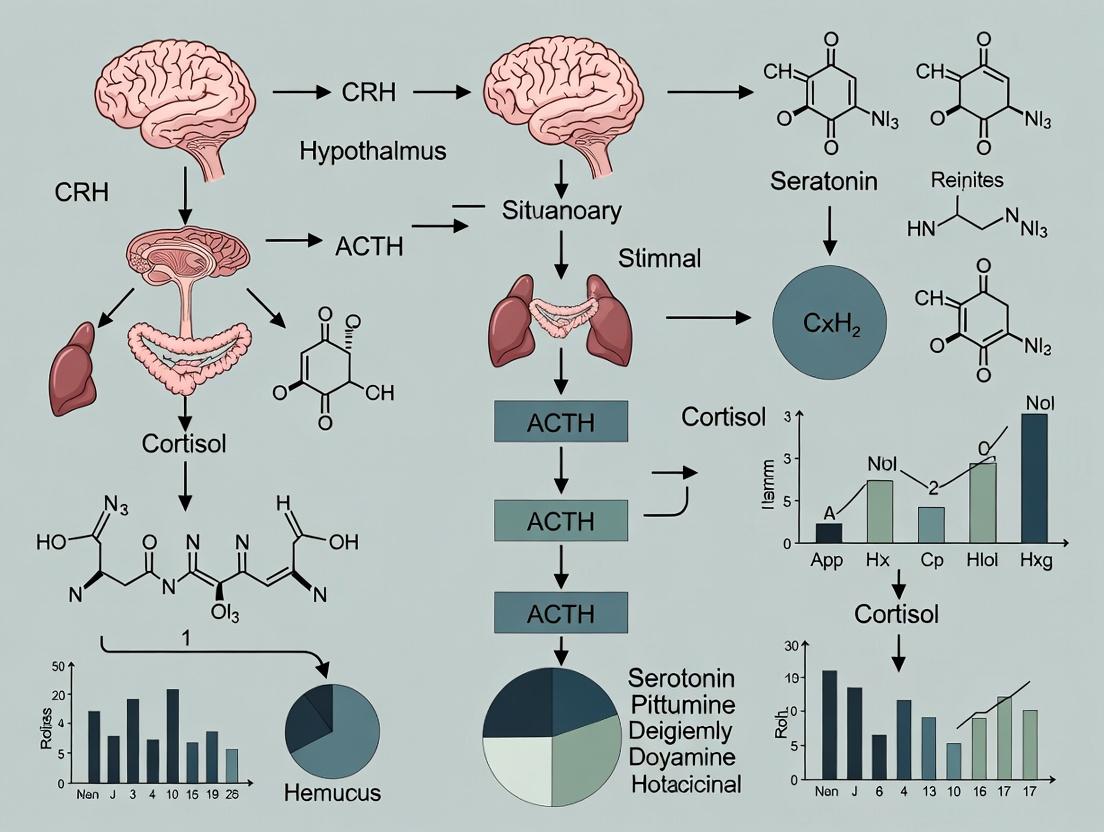
This article provides a comprehensive review for researchers and drug development professionals on therapeutic approaches for chronic stress-induced Hypothalamic-Pituitary-Adrenal (HPA) axis dysfunction.
Targeting HPA Axis Dysfunction: Advanced Therapeutic Strategies for Chronic Stress Disorders in Drug Development
Abstract
This article provides a comprehensive review for researchers and drug development professionals on therapeutic approaches for chronic stress-induced Hypothalamic-Pituitary-Adrenal (HPA) axis dysfunction. We explore the foundational neuroendocrinology of HPA dysregulation, evaluate current and emerging pharmacological and non-pharmacological methodologies, analyze challenges in clinical translation and patient stratification, and compare the mechanistic validation of novel drug targets like CRFR1 antagonists, glucocorticoid receptor modulators, and neurosteroid-based interventions. The synthesis aims to inform preclinical models and clinical trial design for next-generation neuroendocrine therapeutics.
Decoding HPA Axis Dysregulation: The Neuroendocrine Basis of Chronic Stress Pathophysiology
Technical Support Center: HPA Axis Experimental Troubleshooting
Troubleshooting Guides
Issue: Inconsistent Plasma Corticosterone/Cortisol Readings in Rodent Models
- Potential Cause 1: Improper handling or circadian timing. CORT levels have a robust diurnal rhythm and are exquisitely sensitive to stress from routine cage change, handling, or noise.
- Solution: Standardize time of sampling (typically at the circadian trough for baseline). Acclimate animals to handling. Use rapid decapitation (<30 seconds from cage disturbance) or implement jugular vein cannulation for stress-free sampling.
- Potential Cause 2: Assay interference.
- Solution: Check for hemolyzed samples. Use appropriate extraction methods for your assay (e.g., EIA vs. LC-MS/MS). Validate assay with spiked samples.
Issue: Lack of Expected Phenotype in CRH Neuron-Specific Knockout Model
- Potential Cause: Developmental compensation or incomplete knockout.
- Solution: Verify knockout efficiency in situ via in situ hybridization or IHC in the PVN. Consider using an inducible (e.g., Cre-ERᵀ²) system to bypass developmental compensation. Monitor compensatory changes in AVP expression.
Issue: High Variability in Behavioral Test Results (e.g., FST, EPM) Following Chronic Stress Paradigms
- Potential Cause: Uncontrolled environmental variables or inconsistent stressor application.
- Solution: Implement strict control of light, noise, and odor. Use automated stressor delivery (e.g., randomized programmable footshock) where possible. Randomize treatment order across circadian time. Include within-study positive controls.
Frequently Asked Questions (FAQs)
Q1: What is the most reliable method for assessing GR negative feedback sensitivity in humans? A: The Dexamethasone Suppression Test (DST) is standard. For enhanced sensitivity, use the Dex/CRH Test: administer a low dose of dexamethasone (e.g., 1.5 mg) at 2300h, then measure cortisol and ACTH response to intravenous CRH the following afternoon. Non-suppression indicates impaired feedback.
Q2: Which chronic stress paradigm best models treatment-resistant HPA axis dysfunction? A: The Chronic Unpredictable Stress (CUS) or Chronic Mild Stress (CMS) paradigm, involving varied stressors (restraint, wet bedding, tilt cage, social stress) over 3-6 weeks, most reliably induces persistent HPA hyperactivity and anhedonia, mimicking key features of treatment-resistant states. Consistency requires meticulous scheduling.
Q3: How do I distinguish between central (brain) vs. adrenal contribution to HPA axis hyperactivity? A: Conduct a combined ACTH stimulation test and CRH stimulation test.
- Blunted ACTH response to CRH but normal CORT response to ACTH suggests central (pituitary) dysregulation.
- Normal ACTH response to CRH but blunted CORT response to ACTH suggests adrenal insufficiency or exhaustion.
- Elevated basal ACTH with low-normal CORT may indicate early adrenal fatigue.
Q4: What are key molecular markers for assessing GR signaling efficiency in tissue? A: Measure a panel beyond just GR protein level:
- GR Phosphorylation Status (e.g., pGR-S211 vs pGR-S226 ratio).
- FKBP5 mRNA/Protein Expression: A robust indirect readout of GR activation.
- Nuclear: Cytoplasmic GR Ratio via fractionation or imaging.
- Chromatin Immunoprecipitation (ChIP) for GR binding at target genes like FKBP5, GILZ, or PER1.
Table 1: Representative Hormonal Levels in HPA Axis Assessment Tests (Human)
| Test Component | Normal/Expected Response | Indicative Dysfunction Response | Typical Threshold Value |
|---|---|---|---|
| Dex Suppression Test (DST) | Cortisol Suppression | Non-Suppression | Post-Dex Cortisol >1.8 μg/dL |
| Dex/CRH Test | Blunted ACTH/Cortisol rise | Exaggerated ACTH/Cortisol rise | Cortisol >38.6 nmol/L post-CRH |
| ACTH Stimulation Test | Cortisol Rise >18-20 μg/dL | Impaired Cortisol Rise | ΔCortisol <9 μg/dL (250μg ACTH) |
| CRH Stimulation Test | Peak ACTH 4-6x baseline | Blunted/Exaggerated ACTH | Context-dependent |
Table 2: Common Chronic Stress Models in Rodents: Key Parameters
| Model | Duration | Primary Readouts | Strengths | Weaknesses |
|---|---|---|---|---|
| Chronic Restraint Stress | 2-6 hrs/day, 10-28 days | CORT, Thymus wt., Behavioral tests | Highly reproducible, robust HPA activation | Habituation occurs, less "unpredictable" |
| Social Defeat Stress | 10 min/day phys, 24hr sensory, 10 days | Social avoidance, CORT, Inflammation | High translational validity for depression | Aggressor variability, labor intensive |
| Chronic Unpredictable Stress | Multiple varied stressors, 3-8 wks | Sucrose preference, Coat state, CORT | Models anhedonia, prevents habituation | Logistically complex, high variance |
Experimental Protocols
Protocol: Detailed Dexamethasone Suppression Test (Mouse)
- Animals: Group-housed, stable circadian entrainment (12:12 light-dark).
- Dex Administration: At Zeitgeber Time (ZT) 12 (lights off start), inject dexamethasone sodium phosphate intraperitoneally. Dose range: 0.01-0.1 mg/kg for mild feedback test; 1 mg/kg for full suppression.
- Blood Sampling: At ZT 18 (6 hours post-injection), rapidly collect trunk blood following decapitation (<30s disturbance). Use EDTA-coated tubes for plasma.
- Processing: Centrifuge blood at 2000xg for 10 min at 4°C. Aliquot plasma and store at -80°C.
- Assay: Use a validated corticosterone EIA or LC-MS/MS. Critical: Dexamethasone can cross-react in some CORT antibodies; verify assay specificity.
Protocol: PVN Microdissection for qPCR
- Perfusion & Extraction: Rapidly decapitate unstressed animal at circadian trough. Remove brain, flash-freeze in isopentane on dry ice. Store at -80°C.
- Sectioning: Mount brain on cryostat at -20°C. Collect 300μm coronal sections from Bregma -0.22mm to -1.34mm.
- Micro-Punch: Under stereomicroscope on frozen stage, use a sterile 18-gauge needle (inner diameter ~0.84mm) to punch the PVN from bilateral sections, using the anterior commissure and third ventricle as landmarks.
- Lysis: Expel punch into lysis buffer (e.g., Qiazol or RLT Plus with β-mercaptoethanol). Homogenize immediately. Proceed to RNA isolation.
Visualizations
HPA Axis Negative Feedback Loop Diagram
Dexamethasone CRH Test Clinical Protocol Workflow
The Scientist's Toolkit: Research Reagent Solutions
| Item | Function & Application | Key Considerations |
|---|---|---|
| Corticosterone ELISA/EIA Kits | Quantifies plasma/serum/tissue corticosterone in rodents. | Choose based on sensitivity (low pg/mL), specificity (check Dex cross-reactivity), and throughput. |
| Cortisol Chemiluminescence Assay | High-throughput, clinical-grade measurement of human salivary/serum cortisol. | Ideal for diurnal cortisol profiles or DSTs. Requires compatible analyzer. |
| CRH (Human or Rat), Synthetic | For CRH stimulation tests in vivo or pituitary cell culture studies. | Specify species (e.g., r/hCRH). Lyophilized, reconstitute in acidic saline, aliquot/store at -80°C. |
| Dexamethasone Sodium Phosphate | Synthetic glucocorticoid for feedback tests (DST). | Highly soluble. Use fresh solution. Dose is critical (μg/kg vs. mg/kg). |
| RU-486 (Mifepristone) | Glucocorticoid Receptor (GR) Antagonist. | Used to block GR in vivo to study GR-dependence of effects. High doses needed for central blockade. |
| GR & pGR Antibodies | For Western Blot, IHC, ChIP. Assess GR expression, localization, activation. | Phospho-specific antibodies (S211, S226) require careful fixation and phosphatase inhibitors. |
| RNAlater Stabilization Solution | Preserves RNA in microdissected brain tissues (e.g., PVN, amygdala). | Critical for accurate gene expression (e.g., Crh, Avp, Fkbp5) analysis from small punches. |
| Cannulae & Guide Kits (for PVN) | For site-specific microinfusion of drugs (e.g., CRH, antagonists) or virus delivery. | Stereotaxic coordinates are breed/age dependent. Always verify histologically. |
Troubleshooting Guides & FAQs
FAQ 1: Experimental Variability in Rodent Corticosterone ELISA Measurements
Q: We observe high inter-assay variability in serum corticosterone levels from our chronic mild stress (CMS) rodent model. What are the primary confounding factors and how can we standardize our protocol? A: High variability often stems from circadian rhythm interference, handling stress, and sample degradation. Implement strict time-of-day sampling (within a 30-minute window post-light onset), habituate animals to handling for 7 days prior, and ensure rapid sample centrifugation at 4°C. Use a protease/phosphatase inhibitor cocktail in collection tubes. The table below summarizes key factors and corrective actions.
| Confounding Factor | Impact on Corticosterone (CORT) Measurement | Recommended Corrective Action | Expected CV Reduction |
|---|---|---|---|
| Diurnal Rhythm | Up to 10-fold difference between trough and peak. | Sacrifice/Sample within a fixed 30-min window after light onset. | < 15% inter-assay CV |
| Handling Stress | Can elevate CORT by 200-300% within 3 minutes. | 7-day pre-handling habituation; use tunnel/ cup transfer. | < 10% intra-assay CV |
| Sample Processing Delay | CORT degradation up to 20% per hour at RT. | Centrifuge at 4°C within 15 minutes of collection; snap-freeze. | < 5% analyte loss |
| Hemolyzed Samples | Interference in ELISA, false elevation up to 25%. | Use clean collection technique; filter hemolyzed samples. | Eliminates interference |
Experimental Protocol: Standardized Serum CORT Collection for CMS Models
- Habituation: Handle all rodents daily for 7 days prior to terminal procedure using non-aversive methods.
- Environment: Maintain a reversed 12h:12h light-dark cycle (lights off at 0900 for nocturnal rodents). Perform all work under dim red light during active dark phase if sampling then.
- Rapid Sampling: Using habituated animals, swiftly decapitate or perform rapid isoflurane anesthesia followed by cardiac puncture within 60 seconds of cage disturbance. Record exact time.
- Processing: Collect blood in pre-chilled EDTA/K2EDTA tubes with protease inhibitor. Keep on ice.
- Centrifugation: Spin at 1500-2000 g for 15 minutes at 4°C within 15 minutes of collection.
- Storage: Aliquot supernatant into low-protein-binding tubes. Snap-freeze in liquid nitrogen. Store at -80°C. Avoid freeze-thaw cycles.
FAQ 2: Differentiating Allostatic Load Biomarkers in Human Peripheral Blood Mononuclear Cells (PBMCs)
Q: When assessing allostatic load in human studies, which PBMC-derived transcriptional markers most reliably differentiate adaptive allostasis from maladaptive allostatic load in the context of HPA axis feedback? A: Focus on a combination of glucocorticoid receptor (GR) sensitivity markers and inflammatory mediators. Key targets include FKBP5, GLCC11, IL1B, and TNF. See the table for a curated panel.
| Biomarker (Gene/Protein) | Adaptive Allostasis (Expected Expression) | Maladaptive Allostatic Load (Expected Expression) | Assay Recommendation |
|---|---|---|---|
| FKBP5 mRNA | Moderate, responsive to dexamethasone suppression. | Chronically elevated, blunted dexamethasone response. | qRT-PCR (TaqMan assay Hs01561006_m1) |
| GRα / GRβ Ratio | High GRα:GRβ ratio (> 10:1). | Low GRα:GRβ ratio (< 5:1), indicating reduced GR sensitivity. | Western Blot (Abcam ab2768 for GRα, ab134826 for GRβ) |
| GLCC11 mRNA | Induced by glucocorticoid exposure. | Reduced induction capacity after GR stimulation. | qRT-PCR (TaqMan assay Hs04189377_g1) |
| IL-1β (protein) | Low basal secretion, responsive to suppression. | High basal secretion, resistant to glucocorticoid suppression. | Luminex multiplex assay (R&D Systems) |
| Methylation at NR3C1 exon 1F | Lower methylation (< 5% at specific CpG sites). | Higher methylation (> 10% at specific CpG sites). | Pyrosequencing (Qiagen, target chr5:142,783,034-142,783,236 hg38) |
Experimental Protocol: PBMC Isolation & GR Sensitivity Profiling
- Blood Draw: Collect 20-30 ml venous blood into sodium heparin CPT tubes (BD Vacutainer) between 8-10 AM to control for diurnal rhythm.
- PBMC Isolation: Follow manufacturer's protocol for CPT tubes. Centrifuge at 1700 g for 20 minutes at room temperature with brake off. Wash PBMC pellet twice with PBS.
- GR Challenge Assay: Resuspend PBMCs in RPMI-1640 with 10% charcoal-stripped FBS. Plate 1x10^6 cells/well in a 24-well plate.
- Treatment Groups: A) Vehicle control, B) 100 nM Dexamethasone (DEX), C) 10 nM Corticosterone, D) DEX + 10 µM RU486 (GR antagonist). Incubate for 6 hours (for mRNA) or 24 hours (for protein/supernatant).
- RNA/DNA/Protein Extraction: Use AllPrep DNA/RNA/Protein Mini Kit (Qiagen) for simultaneous multi-analyte extraction from the same sample.
- Downstream Analysis: Proceed with qRT-PCR for transcriptional targets, pyrosequencing for NR3C1 methylation, and immunoassays for cytokine secretion.
FAQ 3: Validating CRH Neuron-Specific Manipulations in Murine Models
Q: Our optogenetic/chemogenetic activation of Crh-expressing neurons in the PVN produces inconsistent HPA axis output. What controls are necessary to confirm specificity and rule on compensatory mechanisms? A: Inconsistency often arises from off-target effects, incomplete circuit isolation, or feedback compensation. Implement the following verification cascade.
Experimental Protocol: Validation Suite for CRH Neuron Manipulations
- Histological Co-localization: Perfuse fixed brain after experiment. Perform immunohistochemistry for c-Fos (activation marker) and CRH. For Cre-driver lines (e.g., Crh-IRES-Cre), always use a fluorescent reporter (e.g., tdTomato) to visualize target population. Quantify % of activated (c-Fos+) CRH neurons in PVN vs. adjacent non-CRH neurons.
- Acute Output Verification: During stimulation (optogenetic: 470nm, 20Hz, 5ms pulses; chemogenetic: CNO 1 mg/kg i.p.), collect serial tail-nick blood at 0, 15, 30, 60 mins. Measure ACTH (more rapid than CORT) via ELISA. A specific response should show >2-fold ACTH increase at 15 mins post-stimulation in experimental vs. mCherry-control animals.
- Feedback Integrity Check: 24 hours after stimulation test, perform a Dexamethasone Suppression Test (DST). Administer DEX (0.1 mg/kg s.c.). Measure basal CORT 6 hours later. Failure to suppress indicates potential long-term dysregulation induced by repeated manipulation.
- Compensation Check: In a separate cohort, after chronic manipulation (e.g., 14 days), sacrifice and quantify Avp mRNA in PVN (by in situ hybridization). Upregulation of AVP can compensate for reduced CRH drive.
The Scientist's Toolkit: Research Reagent Solutions
| Item Name & Vendor | Catalog Number (Example) | Primary Function in HPA Axis Dysfunction Research |
|---|---|---|
| Corticosterone ELISA Kit (DetectX) | Arbor Assays K014-H5 | High-sensitivity quantification of rodent corticosterone in serum, plasma, saliva. |
| Dexamethasone (water-soluble) | Sigma-Aldrich D2915 | Synthetic glucocorticoid for suppression tests (DST) and in vitro GR stimulation. |
| RU486 (Mifepristone) | Tocris Bioscience 1449 | GR antagonist; critical control for confirming GR-mediated effects. |
| RNAlater Stabilization Solution | Thermo Fisher AM7020 | Preserves RNA integrity in tissue samples (e.g., adrenal, pituitary, PVN micropunches). |
| Mouse/Rat ACTH ELISA Kit | Phoenix Pharmaceuticals EK-001-01 | Measures bioactive ACTH(1-39) for assessing pituitary output. |
| RNeasy Plus Micro Kit | Qiagen 74034 | RNA isolation from low-yield samples like specific brain nuclei or PBMCs. |
| AAV5-hSyn-DIO-hM3D(Gq)-mCherry | Addgene 44361 | Chemogenetic actuator for Cre-dependent neuronal activation in specific cell types (e.g., CRH neurons). |
| CLARITY Lipid Clearing Agent | Millipore Sigma 900611 | Enables 3D imaging of neural circuits in intact brain tissue. |
| Phospho-STAT5 (Tyr694) Antibody | Cell Signaling 9351 | Detects leptin/JAK-STAT signaling activity, a key HPA axis modulator. |
| CellTiter-Glo Luminescent Viability Assay | Promega G7571 | Measures cellular ATP levels to assess glucocorticoid-induced cytotoxicity in in vitro models. |
Visualizations
Diagram 1: HPA Axis Signaling & Key Dysfunction Points
Title: HPA Axis Pathway and Feedback Dysfunction Points
Diagram 2: Experimental Workflow for Allostatic Load Biomarker Profiling
Title: Allostatic Load Biomarker Profiling Workflow
Diagram 3: CRH Neuron Manipulation & Validation Controls
Title: Validation Cascade for CRH Neuron Manipulations
Technical Support & Troubleshooting Center
This support center addresses common methodological challenges in measuring key hypothalamic-pituitary-adrenal (HPA) axis biomarkers—Cortisol Awakening Response (CAR), diurnal rhythm, and reactivity—within the context of research on HPA axis dysfunction and chronic stress treatment development.
Frequently Asked Questions & Troubleshooting Guides
Q1: During our CAR study, we are encountering high variability between participants' sample 1 (awakening) values. What are the primary sources of this pre-awakening error and how can we mitigate them? A: High variability at S1 is often due to protocol adherence failures. Key mitigations:
- Issue: Participant non-adherence to precise sampling at awakening. Even small delays can significantly alter the CAR slope.
- Solution: Implement electronic monitoring (e.g., time-stamped saliva sample containers, smartphone reminders with confirmation). Use clear, simple instructions emphasizing that S1 must be taken immediately upon waking, before any activity.
- Issue: Awakening time variability. Sampling at a fixed clock time instead of individual wake time invalidates the CAR.
- Solution: Instruct participants to take S1 at their natural awakening, even on weekends, and record exact time. Use ambulatory assessment designs that accommodate individual schedules.
Q2: Our diurnal slope analysis shows a flattened rhythm. Could this be due to assay interference or a true biological effect? A: Follow this diagnostic troubleshooting flowchart:
Diagram Title: Diagnostic Path for Flattened Diurnal Cortisol
Q3: In our Trier Social Stress Test (TSST) reactivity experiments, we see low or blunted cortisol responses in a subset of participants. Is this a failure of the stressor or a meaningful phenotype? A: Blunted reactivity can be both. First, verify stressor efficacy:
- Check subjective measures: Ensure participants reported increased stress/anxiety on visual analog scales (VAS) post-TSST.
- Check autonomic measures: Heart rate or blood pressure should show a concurrent increase.
- If subjective/autonomic response is present but cortisol is blunted, this may represent a meaningful dysregulation phenotype (e.g., "burnout," post-traumatic stress disorder, or allostatic overload), highly relevant for chronic stress research and drug targeting.
Q4: What is the optimal sampling protocol for capturing the CAR versus the full diurnal profile? A: Protocols differ in objective. See table below for standardized protocols.
Q5: How should we handle outliers and non-compliance in ambulatory cortisol data? A: Pre-processing is critical.
- Exclude biologically implausible values (e.g., >60 nmol/L for saliva).
- Use robust regression or multilevel modeling that can handle missing data and participant-level variability.
- For CAR, exclude samples if the recorded sampling time for S1 is >15 minutes after reported wake time.
- Always report your exclusion criteria and the percentage of samples excluded.
Standardized Experimental Protocols
Protocol 1: Cortisol Awakening Response (CAR) Ambulatory Assessment
- Objective: To measure the dynamic increase in cortisol in the first 30-45 minutes after awakening.
- Materials: Salivettes (Sarstedt), home freezer (-20°C), diary/log app.
- Procedure:
- Participants take Sample 1 (S1) immediately upon waking (before sitting up, eating, drinking).
- Take Sample 2 (S2) at +30 minutes (±5 min) post-awakening.
- Take Sample 3 (S3) at +45 minutes (±5 min) post-awakening.
- Record exact clock time for each sample and wake time.
- Store samples in home freezer; transfer on ice to lab -80°C freezer.
- Analysis: Calculate CARi (Area Under the Curve with respect to Increase) and CARslope.
Protocol 2: Diurnal Cortisol Rhythm
- Objective: To assess the diurnal decline from morning to evening.
- Procedure: Collect saliva at 4-5 time points: awakening (S1), +30min (S2), 4-5 hours post-awakening (e.g., 1200h), before dinner (e.g., 1800h), and before bed (e.g., 2200h). Record all times.
- Analysis: Calculate diurnal slope (regression of log-cortisol on time), AUCg (Area Under the Curve with respect to Ground), and evening cortisol.
Protocol 3: Laboratory Stress Reactivity (Trier Social Stress Test, TSST)
- Objective: To measure acute HPA axis reactivity to a standardized psychosocial stressor.
- Procedure:
- Baseline: -15 and -1 minutes before stressor onset.
- Stressor: 5-min preparation, 5-min public speech, 5-min mental arithmetic before a panel.
- Recovery: +1, +10, +20, +30, +45, +60 minutes post-stressor.
- Analysis: Calculate peak cortisol, reactivity (peak - baseline), and total output (AUCi).
Table 1: Normative Ranges for Salivary Cortisol (in nmol/L)
| Measure | Healthy Adults (Approx. Range) | Dysregulation Indicator |
|---|---|---|
| Awakening (S1) | 8.0 - 16.0 | Low: <5.0; High: >25.0 |
| CARi (nmol/L*min) | 100 - 250 | Blunted: <100; Exaggerated: >400 |
| Diurnal Slope | -0.20 to -0.35 nmol/L per hour | Flattened: > -0.15 |
| Evening / Bedtime | < 2.5 | Elevated: > 4.0 (potential hypercortisolemia) |
| TSST Peak (Δ from baseline) | 5.0 - 15.0 | Blunted: Δ < 2.0; Exaggerated: Δ > 20.0 |
Table 2: Common Confounding Factors & Control Methods
| Factor | Effect on Cortisol | Recommended Control Method |
|---|---|---|
| Oral Contraceptives | Suppresses total cortisol output | Stratify groups; measure free vs. total cortisol |
| Smoking (acute) | Sharp increase in CAR & daily levels | Abstain ≥60 min before sampling |
| Food & Drink | Can interfere with assay; mild transient rise | Sample ≥30 min after eating/drinking (water ok) |
| Vigorous Exercise | Acute elevation | Avoid 1 hour prior to scheduled sample |
| Medications | Varies (e.g., steroids block, SSRIs modulate) | Detailed medication log; washout if possible |
The Scientist's Toolkit: Research Reagent Solutions
| Item | Function & Rationale |
|---|---|
| Salivette (Sarstedt) | Polyester swab for passive drool; reliable, low interference for cortisol immunoassays. |
| Cortisol ELISA Kits | High-sensitivity (e.g., Salimetrics, IBL International); optimized for salivary matrices. |
| Electronic Compliance Monitors (e.g., MEMS Caps) | Objectively verifies sample collection timing, critical for CAR validity. |
| Portable -20°C Freezers | For stable temporary storage in participant homes prior to lab transfer. |
| Diary/App Solution (e.g., movisensXS) | Logs exact sample times, wake times, food, stress, and medication events. |
| Corticotropin-Releasing Hormone (CRH) | For pharmacological challenge tests (e.g., CRH stimulation test) to probe pituitary sensitivity. |
| Dexamethasone | Synthetic glucocorticoid for suppression tests (DST; DEX/CRH test) to probe feedback sensitivity. |
Signaling Pathway & Experimental Workflow Visualizations
Diagram Title: HPA Axis Pathway & Dysregulation Link
Diagram Title: Multi-Method HPA Biomarker Workflow
Troubleshooting & FAQs: Glucocorticoid Receptor (GR) & Epigenetics Experiments
This support center addresses common issues encountered in research investigating glucocorticoid receptor resistance and its epigenetic regulation within the context of HPA axis dysfunction and chronic stress.
FAQ 1: My chromatin immunoprecipitation (ChIP) assay for GR binding shows consistently low signal/noise ratio. What are the potential causes and solutions?
Answer: Low ChIP signal for GR is a frequent challenge, often due to receptor lability or epitope masking.
- Primary Cause: Inefficient crosslinking. GR binding is transient, and standard formaldehyde crosslinking may not capture all interactions.
- Solution: Implement a dual-crosslinking protocol using DSG (disuccinimidyl glutarate) followed by formaldehyde.
- Troubleshooting Steps:
- Verify Antibody Specificity: Use a GR knockout cell lysate as a negative control in a western blot to confirm antibody specificity.
- Optimize Crosslinking: For cells, treat with 2 mM DSG for 45 min at room temperature, then with 1% formaldehyde for 10 min. Quench with 125 mM glycine.
- Increase Sonication Efficiency: Ensure chromatin is sheared to an average size of 200-500 bp. Perform a time-course sonication test and check fragment size on an agarose gel.
- Include Positive Control Primer Set: Always run qPCR with primers for a known GR-binding site (e.g., in the FKBP5 gene promoter) alongside your target regions.
FAQ 2: When assessing GR transcriptional activity via reporter assays, I observe high variability between replicates in stressed-cell models. How can I improve consistency?
Answer: Variability often stems from heterogeneous cell responses to stress induction and transfection inefficiency.
- Primary Cause: Non-uniform stressor application and transient transfection artifacts.
- Solution: Standardize stress induction and use stable cell lines.
- Troubleshooting Steps:
- Clarify Stress Protocol: Ensure the stressor (e.g., corticosterone, cytokine) is prepared fresh, applied in media with low serum (<1%), and that cells are at identical confluence.
- Employ Stable Integration: Generate a clonal cell line stably expressing the glucocorticoid response element (GRE)-luciferase reporter plasmid. This eliminates transfection variance.
- Normalize Carefully: Use Renilla luciferase under a constitutive promoter (e.g., CMV) that is validated not to respond to your stressor. Co-transfection is acceptable in stable reporter lines.
- Control for GR Expression: Confirm GR protein levels are consistent across treatment groups via western blot.
FAQ 3: My data on DNA methylation at the NR3C1 promoter (GR gene) is contradictory to published literature. What factors could explain this discrepancy?
Answer: Discrepancies in DNA methylation data commonly arise from analyzing heterogeneous cell populations or different genomic loci.
- Primary Cause: Bulk tissue analysis masking cell-type-specific methylation patterns.
- Solution: Employ cell-sorting techniques or analyze precise CpG loci.
- Troubleshooting Guide:
- Define the Locus: The NR3C1 promoter has multiple splice variants and exon 1 regions (1A, 1B, 1C, 1F, 1H). You must specify and consistently analyze the same exon 1 region (e.g., 1F). Primer design is critical.
- Isolate Specific Cell Types: If using peripheral blood, sort specific leukocyte populations (e.g., monocytes, T-cells) before bisulfite conversion, as methylation states differ dramatically between cell types.
- Validate Bisulfite Conversion: Include controls for complete conversion (unmethylated DNA) and methylated DNA in every run.
- Consider Hydroxymethylation: Standard bisulfite sequencing cannot distinguish 5-methylcytosine (5mC) from 5-hydroxymethylcytosine (5hmC). If relevant, use oxidative bisulfite sequencing (oxBS-Seq).
FAQ 4: I suspect GR resistance is linked to altered histone modifications in my model. What is a robust workflow to profile histone marks genome-wide and validate at specific loci?
Answer: A two-step approach combining discovery and validation is recommended.
- Workflow: ChIP-seq followed by locus-specific ChIP-qPCR.
- Detailed Protocol:
- Discovery (ChIP-seq):
- Crosslink ~10^7 cells per condition (Control vs. GR-Resistant).
- Isolate nuclei, sonicate chromatin to ~300 bp.
- Immunoprecipitate with antibodies against histone marks (e.g., H3K27ac for activation, H3K9me3 for repression).
- Prepare sequencing libraries and run on a high-throughput platform (e.g., Illumina). Analyze peaks for differential enrichment near GR target genes.
- Validation (ChIP-qPCR):
- Using the same ChIP samples, perform qPCR with primers designed for regions identified in ChIP-seq and control non-enriched regions.
- Calculate % input for each region and condition. Perform statistical analysis on biological replicates (n≥3).
- Discovery (ChIP-seq):
Experimental Protocols
Protocol 1: Dual-Crosslinking Chromatin Immunoprecipitation (ChIP) for GR
- Cell Preparation: Culture ~5x10^6 cells per ChIP reaction. Treat as required (e.g., with 100 nM dexamethasone for 1 hour).
- Crosslinking: Add DSG to culture medium to 2 mM final concentration. Incubate 45 min at room temperature with gentle shaking. Add formaldehyde to 1% final concentration. Incubate 10 min at room temperature.
- Quenching: Add 1/20 volume of 2.5M glycine (125 mM final). Incubate 5 min at room temperature.
- Cell Lysis: Wash cells twice with cold PBS. Lyse cells in 1 ml Farnham Lysis Buffer (5 mM PIPES pH 8.0, 85 mM KCl, 0.5% NP-40 + protease inhibitors) on ice for 10 min. Pellet nuclei.
- Nuclei Lysis & Sonication: Lyse nuclei in 300 μl SDS Lysis Buffer. Sonicate to shear DNA to 200-500 bp. Clarify supernatant.
- Immunoprecipitation: Dilute lysate 10-fold in ChIP Dilution Buffer. Pre-clear with salmon sperm DNA/protein A/G beads. Incubate with 2-5 μg of anti-GR antibody (e.g., D6H2L, Cell Signaling) overnight at 4°C. Collect immune complexes with beads.
- Washes & Elution: Wash beads sequentially: Low Salt Wash Buffer, High Salt Wash Buffer, LiCl Wash Buffer, TE Buffer. Elute chromatin with Elution Buffer (1% SDS, 0.1M NaHCO3).
- Reverse Crosslinks & Purification: Add NaCl to 200 mM and incubate at 65°C overnight. Add Proteinase K, incubate at 45°C for 1 hr. Purify DNA with spin columns. Analyze via qPCR.
Protocol 2: Assessing GR Nuclear Translocation via High-Content Imaging
- Cell Seeding: Seed cells in a 96-well optical-bottom plate. Grow to 60-70% confluence.
- Treatment & Fixation: Treat cells with vehicle or ligand (e.g., dexamethasone) for the desired time (e.g., 30 min). Fix with 4% paraformaldehyde for 15 min. Permeabilize with 0.2% Triton X-100 for 10 min.
- Immunostaining: Block with 5% BSA for 1 hour. Incubate with primary anti-GR antibody (1:500 in blocking buffer) overnight at 4°C. Wash 3x with PBS. Incubate with fluorescent secondary antibody (e.g., Alexa Fluor 488) and nuclear stain (Hoechst 33342) for 1 hour at RT.
- Image Acquisition: Acquire images using a high-content or confocal microscope with a 20x or 40x objective. Capture ≥9 fields per well.
- Image Analysis: Use analysis software (e.g., CellProfiler, ImageJ) to:
- Identify nuclei based on the Hoechst signal.
- Define a cytoplasmic ring expansion from the nuclear mask.
- Measure mean GR fluorescence intensity in the nucleus (N) and cytoplasm (C).
- Calculate the Nuclear/Cytoplasmic (N/C) ratio for each cell. Plot the distribution of N/C ratios per condition (n > 1000 cells).
Table 1: Common Epigenetic Modifications Associated with GR Resistance
| Modification Type | Specific Mark | Association with GR Resistance | Typical Change Observed | Common Assessment Method |
|---|---|---|---|---|
| DNA Methylation | CpG Methylation at NR3C1 1F Promoter | Increased | ↑ 5-15% in treatment-resistant depression | Pyrosequencing, Bisulfite-seq |
| Histone Acetylation | H3K27ac at GREs | Decreased | ↓ 30-50% at specific loci | ChIP-qPCR |
| Histone Methylation | H3K9me3 at GR Target Genes | Increased | ↑ 2-3 fold enrichment | ChIP-seq |
| Chromatin Accessibility | ATAC-seq Signal at Enhancers | Decreased | ↓ 20-40% accessibility | ATAC-seq |
Table 2: Key Parameters for Inducing GR Resistance In Vitro
| Cell Model | Stressor | Concentration | Duration | Primary Readout |
|---|---|---|---|---|
| A549 (Lung) | TNF-α & IL-1β | 10 ng/mL each | 72 hours | ↓ GRE-Luciferase Activity (≥50%) |
| PBMCs (Human) | Dexamethasone | 1 μM | 5-7 days | ↓ GR Binding in ChIP (≥40%) |
| Neuronal Cell Line | Corticosterone | 500 nM | 10 days | ↓ FKBP5 Induction (≥60%) |
Visualization: Signaling Pathways & Workflows
Diagram Title: GR Signaling & Resistance Mechanisms
Diagram Title: Dual-Crosslink ChIP-seq/qPCR Workflow
The Scientist's Toolkit: Research Reagent Solutions
Table 3: Essential Reagents for GR & Epigenetics Research
| Reagent/Material | Supplier Examples | Function in Experiment | Critical Note |
|---|---|---|---|
| Anti-GR Antibody (ChIP-grade) | Cell Signaling #D6H2L, Santa Cruz sc-393232 | Immunoprecipitation of GR-DNA complexes for ChIP assays. | Must be validated for ChIP; clone D6H2L works for human/mouse/rat. |
| DSG (Disuccinimidyl glutarate) | Thermo Fisher 20593, Sigma-Aldrich 80424 | Protein-protein crosslinker; stabilizes GR-cofactor interactions before formaldehyde fixation. | Prepare fresh in DMSO. Optimize concentration (1-2 mM). |
| Protein A/G Magnetic Beads | Millipore 16-663, Thermo Fisher 26162 | Efficient capture of antibody-chromatin complexes for ChIP washes and elution. | Reduce non-specific binding compared to agarose beads. |
| Bisulfite Conversion Kit | Zymo Research EZ DNA Methylation, Qiagen EpiTect | Converts unmethylated cytosine to uracil for downstream methylation analysis. | Check conversion efficiency >99% with controls. |
| Hydrocortisone/Dexamethasone | Sigma-Aldrich H0888, D4902 | Synthetic glucocorticoids for in vitro treatment to activate GR or induce resistance. | Use charcoal-stripped serum in media to remove hormones. |
| ATAC-seq Kit | 10x Genomics CG000169, Illumina 20034197 | Assess genome-wide chromatin accessibility changes in GR-resistant states. | Use low cell input (50,000 nuclei) and minimize digestion time. |
| HDAC Inhibitor (TSA) | Cayman Chemical 89730, Sigma-Aldrich T8552 | Positive control for histone acetylation studies; increases H3K27ac globally. | Use at low nM range (e.g., 50 nM) to avoid cytotoxicity. |
| GRE-Luciferase Reporter Plasmid | Addgene #113162, commercial constructs | Reporter vector to measure GR transcriptional activity in live cells. | Use with a stably expressing clone for consistent results. |
Technical Support Center: Troubleshooting HPA Axis Research
Frequently Asked Questions (FAQs)
Q1: In rodent CORT ELISA, my samples consistently read below the detection limit. What could be wrong? A: This is often a sample collection or handling issue. Ensure decapitation and trunk blood collection occur within 30 seconds of initial disturbance to avoid acute stress confounders. For chronic studies, consider using tail nick or submandibular bleed with prior habituation. Immediately centrifuge blood at 4°C and store plasma at -80°C. Avoid repeated freeze-thaw cycles. If using salivary CORT, collect samples in the inactive period (e.g., early light phase for nocturnal rodents) for basal measurement and use appropriate cotton swabs that do not interfere with the assay.
Q2: My CRH stimulation test in human participants shows a blunted ACTH response. How do I rule out a primary pituitary issue? A: A blunted ACTH response to CRH can indicate pituitary dysfunction or negative feedback from elevated baseline cortisol. First, confirm assay validity by running known controls. Clinically, a concurrent low-dose (1 µg) ACTH (Synacthen) stimulation test can assess adrenal reserve and help localize the defect. If the adrenal cortisol response to ACTH is normal, the issue is likely at the pituitary or supra-pituitary level. Ensure participants are free from exogenous glucocorticoids and have fasted.
Q3: What are the best practices for measuring GR resistance in peripheral blood mononuclear cells (PBMCs)? A: GR resistance is typically assessed via a dexamethasone (DEX) suppression test on isolated PBMCs.
- Isolate PBMCs using Ficoll density gradient centrifugation within 2 hours of draw.
- Culture cells in RPMI with 10% charcoal-stripped FBS.
- Pre-treat with a range of DEX concentrations (e.g., 10^-10 to 10^-6 M) for 1 hour.
- Stimulate with a standard dose of LPS (e.g., 100 ng/ml) for 6 hours.
- Measure TNF-α or IL-6 production via ELISA. GR resistance is indicated by a higher IC50 for DEX suppression of cytokine release. Include a control for cell viability (e.g., MTT assay).
Q4: How can I longitudinally assess HPA axis activity in mice without the stress of repeated blood draws? A: Utilize non-invasive or minimally invasive methods:
- Fecal Corticosterone Metabolites (FCM): Collect 24-hour fecal samples, dry, homogenize, and extract with methanol. Use a group-specific corticosterone metabolite ELISA. This provides an integrated measure over several hours.
- Hair Cortisol: Shave a small patch at study start and allow hair to regrow over 2-4 weeks. At endpoint, wash regrown hair in isopropanol, pulverize, and extract with methanol for LC-MS/MS analysis. This gives a long-term retrospective measure.
- Implantable Telemetry: Surgically implant a radiotelemetry device for continuous core body temperature and activity monitoring, which can serve as a proxy for diurnal rhythm disruption.
Q5: When modeling metabolic syndrome with chronic stress, my control group is developing hyperglycemia. How do I refine the model? A: This indicates excessive background stress. Implement the following:
- Habituation: Handle all animals daily for at least 7 days pre-experiment.
- Minimize environmental stressors: House animals in a dedicated, low-traffic room with controlled light (12:12 cycle), temperature (22±1°C), and humidity (50±10%). Use red light for nighttime checks.
- Refined Chronic Stress Paradigm: Use chronic variable/mild stress (e.g., damp bedding, tilted cage, white noise) instead of severe physical stressors. Ensure stressors are unpredictable and administered during the active phase.
- Diet Control: Use a matched low-fat control diet if a high-fat diet is the metabolic challenge. Ensure food is fresh and changed on a non-stress schedule.
Experimental Protocols
Protocol 1: DEX/CRH Test for HPA Axis Feedback Sensitivity Purpose: To assess the integrity of the negative feedback loop and central HPA drive. Materials: Dexamethasone, human CRH, IV cannula, EDTA tubes, chilled centrifuge, ACTH & Cortisol ELISA kits. Procedure:
- At 2300h, administer 1.5 mg DEX orally.
- The next day, insert an IV cannula at 1430h. Keep participant resting.
- At 1500h (t=0), draw baseline blood samples for ACTH and cortisol.
- Immediately administer 100 µg human CRH as an IV bolus.
- Draw additional blood samples at t=15, 30, 45, 60, and 90 minutes post-injection.
- Process plasma immediately by centrifugation at 2000g for 15 min at 4°C. Store at -80°C.
- Analyze hormone levels. A paradoxical increase post-CRH despite DEX pre-treatment indicates impaired feedback, common in depression.
Protocol 2: Assessing Mitochondrial Function in PBMCs from Fatigued Patients Purpose: To link HPA dysfunction (high cortisol) with cellular fatigue via mitochondrial bioenergetics. Materials: Seahorse XF Analyzer, PBMMC isolation kit, XF Mito Stress Test Kit, Oligomycin, FCCP, Rotenone/Antimycin A. Procedure:
- Isolate PBMCs from patients with fatigue (e.g., Chronic Fatigue Syndrome) and matched controls.
- Seed 2 x 10^5 cells per well in a Seahorse XF96 cell culture microplate in unbuffered assay medium (XF Base Medium + 10 mM glucose + 1 mM pyruvate + 2 mM L-glutamine, pH 7.4).
- Incubate for 1 hr at 37°C, non-CO2.
- Load cartridge with compounds: Port A: 1.5 µM Oligomycin; Port B: 1.0 µM FCCP; Port C: 0.5 µM Rotenone/Antimycin A.
- Run the Mito Stress Test protocol on the Seahorse analyzer.
- Calculate key parameters: Basal Respiration, ATP Production, Proton Leak, Maximal Respiration, Spare Respiratory Capacity. Low spare capacity is a hallmark of fatigue.
Data Presentation
Table 1: Common HPA Axis Biomarkers and Their Clinical Correlates
| Biomarker / Test | Normal Range | Depression | Anxiety | Fatigue (e.g., CFS) | Metabolic Syndrome |
|---|---|---|---|---|---|
| Basal AM Cortisol | 10-20 µg/dL | ↑ or ↓ (Hyper/Hypo) | ↑ (Situational) | ↓ (Common) | ↑ (Fasting) |
| Basal PM Cortisol | 3-10 µg/dL | ↑ (Flattened Diurnal Slope) | Variable | ↓ or Normal | ↑ (Flattened Slope) |
| DEX Suppression Test (1mg) | Cortisol < 1.8 µg/dL | Non-suppression (40-60%) | Mild Non-suppression | Enhanced Suppression | Non-suppression |
| ACTH/Cortisol Ratio | ~2.2 (pg/mL:µg/dL) | Often Low | Variable | High (Adrenal Insufficiency) | Low (Adrenal Hyperactivity) |
| Hair Cortisol (pg/mg) | 5-25 pg/mg (Scalp) | Elevated | Elevated | Inconsistent Data | Consistently Elevated |
| CRH Stimulation (ΔACTH) | > 2-fold increase | Blunted | Exaggerated | Blunted or Normal | Blunted |
Table 2: Key Reagents for Investigating HPA-Disease Links
| Reagent | Vendor Examples (Catalog #) | Function in Experiment |
|---|---|---|
| Corticosterone (Rat/Mouse) | Sigma-Aldrich (C2505) | Gold standard ELISA for rodent stress studies. |
| Dexamethasone | Tocris Bioscience (1126) | Synthetic glucocorticoid for suppression tests & in vitro GR activation. |
| Human CRH | Bachem (H-2435) | Stimulates pituitary ACTH release in challenge tests. |
| RU-486 (Mifepristone) | Cayman Chemical (10006317) | GR antagonist; used to test GR-dependence of phenotypes. |
| Ketoconazole | Sigma-Aldrich (K1003) | CYP inhibitor; blocks cortisol synthesis for adrenal clamp studies. |
| Phospho-GR (Ser211) Antibody | Cell Signaling (#4161) | Measures activated GR translocation via WB/IHC. |
| FKBP5 TaqMan Assay | Thermo Fisher (Hs01561006_m1) | qPCR probe for key GR-responsive stress gene. |
| Seahorse XF Mito Stress Kit | Agilent (103015-100) | Profiles mitochondrial respiration linked to fatigue. |
The Scientist's Toolkit: Research Reagent Solutions
| Item | Function |
|---|---|
| Charcoal-Stripped FBS | Removes endogenous steroids for cell culture studies of GR signaling. |
| Corticosterone ELISA Kit (High Sensitivity) | Accurately measures low basal levels in plasma, saliva, and feces. |
| LC-MS/MS Grade Solvents | Essential for precise hormone quantification in hair/saliva. |
| GR-Luciferase Reporter Plasmid | Used in cell-based assays to measure GR transcriptional activity. |
| Ficoll-Paque PLUS | For consistent, high-yield isolation of PBMCs from human blood. |
| Implantable Telemetry System (e.g., DSI) | Enables continuous, stress-free monitoring of temperature/activity rhythms. |
| Corticosterone Pellets (Slow-Release) | For creating chronic hypercortisolemia rodent models. |
| siRNA against NR3C1 (GR gene) | To knock down GR expression in specific cell types in vitro. |
Visualizations
Therapeutic Arsenal: From Pharmacological Targets to Integrative Intervention Strategies
Technical Support Center
Troubleshooting Guides & FAQs
Q1: In our in vivo stress response assay, our CRF1 antagonist (e.g., Verucerfont, R121919) is not attenuating the ACTH response to a forced swim test. What could be the issue? A: Common pitfalls include:
- Pharmacokinetics: Ensure proper dosing schedule and route. CRF1 antagonists often require pre-treatment (e.g., 60-90 min pre-stress) to achieve sufficient CNS penetration. Verify compound solubility and stability in your vehicle.
- Receptor Occupancy: The chosen dose may be insufficient for full receptor blockade. Consider performing a peripheral CRF challenge test to confirm target engagement in vivo.
- Stressor Specificity: CRF1 antagonists are more effective against psychogenic stressors (like forced swim) than systemic ones. Confirm the stress paradigm's nature. A V1b antagonist might show a different efficacy profile.
Q2: When measuring gene expression changes in the PVN following chronic antagonist administration, we see high variability between samples. How can we improve consistency? A:
- Sample Collection: Rapid dissection and freezing (within 60-90 seconds) of the PVN is critical due to rapid stress-induced gene expression changes. Use a brain matrix for consistency.
- Normalization: Use at least two stable housekeeping genes (e.g., Rpl19, Hprt1) validated for your tissue and treatment. Include a control group processed simultaneously.
- Treatment Protocol: Standardize the time of day for dosing and sacrifice, as HPA axis activity has a strong circadian rhythm.
Q3: Our V1b antagonist (e.g., SSR149415) shows efficacy in a chronic social defeat model but not in the CRH-induced ACTH secretion assay. Is this expected? A: Yes, this is mechanistically plausible. V1b antagonists primarily modulate the HPA axis by attenuating AVP's synergistic potentiation of CRH effects at the pituitary, particularly under conditions of chronic stress where AVP signaling becomes upregulated. In a direct CRH challenge, the AVP component is minimal, so V1b antagonism may have little effect. This differential activity is a key distinction from CRF1 antagonists.
Q4: What are the critical controls for specificity in CRF1/V1b antagonist cell-based signaling assays (e.g., cAMP inhibition)? A:
- Positive Control: Use a known potent agonist (CRF for CRF1, AVP for V1b) to establish maximal signal.
- Negative Control: Use selective agonists for related receptors (e.g., Sauvagine for CRF1, Oxytocin for V1b) to check for off-target antagonism.
- Vehicle Control: Account for any solvent effects (e.g., DMSO).
- Counter-Screen: Test the antagonist against the homologous receptor (e.g., test CRF1 antagonist for activity on CRF2 receptors).
Experimental Protocols
Protocol 1: Ex Vivo Pituitary Cell ACTH Secretion Assay Objective: To assess the direct pituitary effects of CRF1 and V1b antagonists on CRH/AVP-stimulated ACTH release.
- Pituitary Collection: Rapidly dissect pituitary glands from adult male Sprague-Dawley rats.
- Cell Dispersion: Digest anterior pituitaries in HBSS containing collagenase IV (1 mg/mL) and DNAse I (0.01 mg/mL) for 20 min at 37°C. Triturate gently.
- Cell Plating: Wash cells, resuspend in DMEM/F12 with 10% FBS, and plate in 24-well plates at ~200,000 cells/well. Culture for 48h.
- Stimulation & Inhibition: Pre-treat cells with antagonist or vehicle for 30 min. Co-stimulate with CRH (10 nM) and/or AVP (10 nM) for 2h.
- ACTH Measurement: Collect supernatant. Quantify ACTH using a validated ELISA kit. Perform analysis in triplicate.
Protocol 2: Chronic Variable Stress (CVS) Model with Pharmacological Intervention Objective: To evaluate the efficacy of antagonists in normalizing HPA axis dysfunction following chronic stress.
- Stress Paradigm: Expose rodents to 2-3 unpredictable stressors per day (e.g., restraint, wet bedding, isolation, white noise) for 21 days.
- Drug Administration: Administer CRF1 or V1b antagonist (or vehicle) via daily oral gavage or subcutaneous injection, either during the final 7 days of stress or throughout.
- Readouts:
- Day 22: Perform a novel acute stressor (e.g., 30-min restraint). Measure plasma ACTH and CORT at 0, 15, 30, 60, and 120 min post-stress.
- Day 23: Assess basal a.m. and p.m. CORT levels.
- Tissue Collection: Perfuse and collect brains for in situ hybridization of Crf (PVN) and Avp (PVN).
Data Presentation
Table 1: Comparative Profile of Select Clinical-Stage CRF1 and V1b Antagonists
| Compound Name | Target | Primary Indication (Trials) | Key Efficacy Findings (Quantitative) | Reported Discontinuation Reason |
|---|---|---|---|---|
| Verucerfont (GSK561679) | CRF1 | Major Depressive Disorder | -24% in Hamilton Depression Rating Scale vs. -10% placebo (Phase II, subgroup) | Lack of efficacy in broader population |
| Pexacerfont (BMS-562086) | CRF1 | Generalized Anxiety Disorder | No significant separation from placebo in HAMA score reduction (Phase II) | Lack of efficacy |
| SSR149415 | V1b | Major Depressive Disorder | Reduced anxiety-like behavior in rodents; attenuated social defeat-induced hyperthermia | Development halted (no public Phase III) |
| ABT-436 | V1b | Alcohol Dependence | Increased abstinence rates (Trend, Phase II): 12.5% (Placebo) vs 18.8% (Drug) | Not progressed to Phase III |
Table 2: Key Pharmacodynamic Parameters from Preclinical Rodent Studies
| Parameter | CRF1 Antagonist (e.g., R121919) | V1b Antagonist (e.g., SSR149415) |
|---|---|---|
| ACTH Response to Acute Restraint | Inhibition: 60-80% | Inhibition: 30-50% |
| CORT Response to Acute Restraint | Inhibition: 50-70% | Inhibition: 20-40% |
| Effect on Basal AM CORT | No significant change | No significant change |
| c-fos mRNA in PVN post-stress | Reduced by ~70% | Reduced by ~40-60% |
| Efficacy in Chronic Social Defeat | Moderate | High |
Diagrams
Title: HPA Axis Modulation by CRF1 and V1b Antagonists
Title: Workflow for Testing HPA Axis Antagonists In Vivo
The Scientist's Toolkit
Table 3: Essential Research Reagent Solutions
| Item | Function & Application | Example Product/Catalog |
|---|---|---|
| Selective CRF1 Agonist | Positive control for in vitro and ex vivo assays; validates assay function. | Human/Rat CRF (Sigma C3042), Sauvagine (Tocris 1166) |
| Selective V1b Agonist | Positive control for V1b-specific signaling assays. | [d(CH2)5¹, Tyr(Me)², Arg⁸]-Vasopressin (Tocris 3310) |
| Radiolabeled Ligand | For receptor binding/occupancy studies (autoradiography, membrane binding). | [¹²⁵I]-Tyr⁰-ovine CRF (PerkinElmer NEX272) |
| ACTH ELISA Kit | Quantification of ACTH in plasma or cell culture supernatant; key PD readout. | Enzo Life Sciences ADI-900-070 |
| Corticosterone ELISA Kit | Quantification of CORT in plasma; final HPA axis output measure. | Arbor Assays K014 |
| RNAlater Stabilization Solution | Preserves RNA integrity in dissected brain nuclei (e.g., PVN, amygdala). | Thermo Fisher Scientific AM7020 |
| CRH & AVP Antibodies | For immunohistochemistry to localize and quantify peptide expression. | CRH Antibody (Santa Cruz sc-1759), AVP Antibody (Peninsula Labs T-4568) |
| cAMP Detection Kit | For cell-based functional assays of CRF1 receptor inhibition. | Cisbio HTRF cAMP Dynamic 2 Kit |
| In Situ Hybridization Kit | To visualize and quantify Crf, Avp, or c-fos mRNA expression. | RNAscope (ACD Bio) |
| Brain Stereotaxic Apparatus | For precise intracerebroventricular (ICV) drug infusion or lesion studies. | David Kopf Instruments Model 940 |
Troubleshooting Guides & FAQs
Q1: Our cell-based reporter assay for SEGRM screening shows consistently high background luminescence, obscuring the signal. What are the primary causes and solutions? A: High background is often due to GR overexpression artifacts or non-specific reporter activation. First, titrate the GR expression plasmid to the lowest level yielding a robust dexamethasone response. Include a control with the reporter but without the GR expression plasmid to assess GR-independent effects. Ensure serum in the culture media is charcoal-stripped to remove endogenous glucocorticoids. Pre-treat cells with a pure GR antagonist like mifepristone (RU-486) prior to SEGRM application to confirm GR-specificity of the signal.
Q2: In vivo, our candidate SEGRM shows the expected dissociated profile in the liver (transrepression without transactivation) but fails to show anti-inflammatory efficacy in a murine arthritis model. What could explain this disparity? A: This indicates tissue or disease-context selectivity. The dissociated profile is often defined in standardized models (e.g., TAT tyrosine aminotransferase induction vs. NF-κB repression). Confirm that the target inflammatory pathway in your arthritis model is primarily driven by the GR transrepression mechanism (e.g., via NF-κB or AP-1). Pharmacokinetics (PK) may also differ; perform PK/PD analysis to ensure sufficient drug exposure in the joint tissue. The SEGRM may require specific cofactor expression profiles absent in the disease microenvironment.
Q3: During co-immunoprecipitation (Co-IP) to assess GR-cofactor interactions, we get excessive non-specific binding when using our novel antagonist. How can we optimize the protocol? A: Non-specific binding is common with small molecules that alter protein conformation. Increase the stringency of your lysis and wash buffers (e.g., increase NaCl to 300-400 mM, add 0.1% SDS, or use a detergent like CHAPS). Include an isotype control antibody and a "beads-only" control. Pre-clear the lysate with protein A/G beads for 1 hour before adding the primary antibody. Validate your finding with a complementary technique, such as proximity ligation assay (PLA) in fixed cells.
Q4: What is the best practice for differentiating between a pure GR antagonist and a SEGRM with strong partial antagonistic activity in a recruitment assay? A: Utilize a coregulator recruitment panel (e.g., SRC-1, GRIP1, NCoR) using techniques like surface plasmon resonance (SPR) or mammalian two-hybrid. A pure antagonist (e.g., RU-486) typically shows minimal recruitment of coactivators and may actively recruit corepressors in the presence of an agonist. A partial antagonist/SEGRM will display a unique, biased coregulator interaction profile that differs from both full agonists and pure antagonists. Always benchmark against known controls (Dexamethasone for full agonist, RU-486 for antagonist, CORT113176 or similar for SEGRM).
Research Reagent Solutions Toolkit
| Reagent | Function & Application |
|---|---|
| Charcoal-Stripped FBS | Removes endogenous steroids (cortisol, corticosterone) from cell culture media to eliminate basal GR activation. |
| Dexamethasone | Synthetic, potent full GR agonist. Positive control for GR transactivation and transrepression assays. |
| Mifepristone (RU-486) | Classic GR antagonist/progesterone receptor antagonist. Control for GR blockade and studies of antagonist conformation. |
| CORT125281 / CORT113176 | Prototype selective non-steroidal GR antagonists/SEGRMs. Reference compounds for dissociated profiles. |
| GR-specific siRNA/shRNA | Validates GR-specificity of observed phenotypic effects in cellular models. |
| MMTV-Luc Reporter Plasmid | Classic GR-responsive reporter for measuring transactivation via GREs. |
| NF-κB/AP-1 Response Element Luc Reporter | Reporter system for assessing GR-mediated transrepression of inflammatory pathways. |
| Anti-GR Antibody (ChIP-grade) | Essential for chromatin immunoprecipitation (ChIP) to map GR genomic binding sites altered by SEGRMs. |
| FRET-based GR Intracellular Localization Biosensor | Live-cell imaging to quantify ligand-induced GR nuclear translocation kinetics. |
| Corticosterone ELISA Kit | Measures endogenous glucocorticoid levels in in vivo studies to assess HPA axis feedback. |
Table 1: Profile of Representative GR-Targeting Compounds in Standard Assays
| Compound | Class | GRE Transactivation (EC50) | NF-κB Transrepression (IC50) | GR Binding Affinity (Ki nM) | Reference |
|---|---|---|---|---|---|
| Dexamethasone | Full Agonist | 1-5 nM | 2-10 nM | ~5 | Benchmark |
| Prednisolone | Agonist | ~10 nM | ~15 nM | ~15 | Clinical Std. |
| Mifepristone | Antagonist | Inactive | Inactive (Blocks) | ~1 | Antagonist Std. |
| CORT125281 | Antagonist/SEGRM | Inactive | ~50 nM | ~12 | Clinical Candidate |
| Fosdagrocorat (PF-04171327) | SEGRM | Partial Agonist | ~30 nM | ~40 | Phase 2 Studied |
Table 2: In Vivo Effects in Common Rodent Models of Inflammation & Metabolism
| Compound | Adjuvant Arthritis (Efficacy ED50) | Croton Oil Ear Edema (Inhibition %) | Liver TAT Induction (vs. Dex) | Plasma Glucose Elevation | Reference Model |
|---|---|---|---|---|---|
| Dexamethasone | 0.1 mg/kg | >90% @ 0.1 mg/kg | 100% (Baseline) | Significant | Positive Control |
| Prednisolone | 0.5 mg/kg | >80% @ 0.5 mg/kg | ~80% | Yes | Comparison |
| Mifepristone | Inactive (may worsen) | Inactive | 0% | None | Antagonist Control |
| CORT113176 | 3 mg/kg | ~70% @ 10 mg/kg | <10% | Minimal/None | SEGRM Example |
Detailed Experimental Protocols
Protocol 1: GR Coregulator Recruitment Assay using Mammalian Two-Hybrid System Purpose: To quantify ligand-dependent interaction between the GR ligand-binding domain (LBD) and specific coregulator peptides. Method:
- Plating: Seed HEK293T cells in 96-well plates in phenol-red free, charcoal-stripped FBS media.
- Transfection: Co-transfect with: a) Plasmid encoding GAL4 DNA-binding domain fused to GR LBD, b) Plasmid encoding VP16 activation domain fused to coregulator NR-box or LxxLL motif (e.g., from SRC-1, GRIP1), c) GAL4-responsive luciferase reporter (e.g., pFR-Luc).
- Ligand Treatment: 24h post-transfection, treat with a dose range of test compounds (e.g., 10^-10 to 10^-5 M dexamethasone, SEGRM, vehicle).
- Analysis: Harvest cells 18-24h post-treatment. Measure luciferase activity. Normalize to total protein or co-transfected Renilla control. Plot normalized luminescence vs. ligand concentration.
Protocol 2: In Vivo Assessment of Metabolic Side Effects (Oral Glucose Tolerance Test - OGTT) Purpose: To evaluate the impact of chronic SEGRM/antagonist treatment on glucose metabolism versus classic glucocorticoids. Method:
- Dosing: Administer compound (e.g., dexamethasone 1 mg/kg, SEGRM at equi-effective anti-inflammatory dose, vehicle) to mice/rats daily for 7-14 days.
- Fasting: Fast animals overnight (16h) prior to OGTT.
- Glucose Challenge: Measure baseline blood glucose (time 0) via tail nick. Administer glucose orally (2 g/kg body weight).
- Monitoring: Measure blood glucose at 15, 30, 60, 90, and 120 minutes post-challenge.
- Analysis: Plot glucose concentration over time. Calculate area under the curve (AUC) for each treatment group. Compare AUC to vehicle and dexamethasone groups.
Signaling Pathway & Experimental Workflow Diagrams
Title: GR Ligand Conformations and Functional Outcomes
Title: SEGRM Research & Development Workflow
Troubleshooting Guide & FAQs: HPA Axis Research Toolkit
This support center addresses common experimental challenges in investigating NK1 antagonists and neurosteroid-based interventions for chronic stress and HPA axis dysfunction.
Frequently Asked Questions (FAQs)
Q1: In our chronic mild stress (CMS) rodent model, oral administration of aprepitant (NK1 antagonist) fails to normalize corticosterone levels, despite positive literature. What are potential points of failure?
A1: Key troubleshooting points include:
- Pharmacokinetic Timing: Ensure plasma corticosterone measurement aligns with the drug's peak plasma concentration (Tmax). For aprepitant, Tmax is 1-4 hours post-oral dose in rodents. Draw blood at consistent times.
- CMS Protocol Robustness: Verify that your CMS paradigm induces a sustained HPA axis hyperactivity baseline before drug intervention. Use a cohort treated with a known SSRI (e.g., fluoxetine) as a positive control.
- Dose Verification: Confirm the dose is translatable to receptor occupancy. For central NK1 receptor blockade in rodents, doses often range from 10-30 mg/kg orally. Consider co-administering with a P-glycoprotein inhibitor (e.g., cyclosporin A) to ensure sufficient brain penetration if this is a concern.
- Compound Stability: Verify the stability of the drug in the vehicle/chow used for administration over the dosing period.
Q2: When co-administering pregnenolone with an NK1 antagonist in vitro, we see variable effects on GR (glucocorticoid receptor) translocation. How can we standardize this assay?
A2: Variability often stems from neurosteroid preparation and cell state.
- Neurosteroid Solubility: Pregnenolone is highly lipophilic. Use a consistent stock solution in a high-grade solvent like DMSO or hydroxypropyl-β-cyclodextrin (HPBCD). Final vehicle concentration must be identical across all groups (typically ≤0.1%).
- Cell Synchronization: Use serum-starvation (0.5-1% charcoal-stripped FBS) for 12-24 hours prior to experimentation to minimize confounding effects of endogenous steroids.
- GR Translocation Assay Control: Include a robust positive control (e.g., 100 nM dexamethasone) and a negative control (vehicle + GR antagonist, mifepristone) in every run. Standardize the time point for fixation/imaging post-treatment (e.g., 30-60 mins).
Q3: Our RNA-seq data from amygdala tissue after NK1 antagonist treatment shows unexpected regulation of neurosteroid biosynthetic enzymes (e.g., CYP11A1, 3β-HSD). How do we validate and interpret this?
A3: This is a promising finding suggesting crosstalk.
- Validation: Prioritize qPCR validation using TaqMan probes for the specific genes of interest. Normalize to at least two stable housekeeping genes validated for stress studies (e.g., Gapdh, Hprt1, Pgk1).
- Functional Correlation: Follow up with liquid chromatography-tandem mass spectrometry (LC-MS/MS) to measure actual pregnenolone and downstream neurosteroid (e.g., allopregnanolone) levels in the same tissue region. Correlation between mRNA and metabolite levels confirms functional relevance.
Q4: What is the recommended protocol for assessing the acute anxiolytic effects of these compounds in conjunction with HPA axis output?
A4: Use an integrated behavioral-neuroendocrine test.
- Protocol: Inject test compound (e.g., pregnenolone sulfate, 10 mg/kg, i.p.) or vehicle. After 30 minutes, subject animal to a 10-minute Elevated Plus Maze (EPM) test. Immediately upon removal from the EPM, collect blood via rapid retro-orbital or tail-nick method within 90 seconds to assess stress-induced corticosterone. Compare to home-cage baseline levels.
- Critical Note: Use separate cohorts for baseline and post-test corticosterone to avoid confounding from prior blood draw stress.
Table 1: Common NK1 Antagonists in Preclinical Research
| Compound Name | Primary Target | Common Preclinical Dose (Rodent) | Key Bioavailability Note | Typical Readout in Stress Models |
|---|---|---|---|---|
| Aprepitant | NK1 Receptor Antagonist | 10-30 mg/kg (p.o.) | Moderate brain penetration; P-gp substrate. | ↓ Stress-induced corticosterone; ↓ Anxiety-like behavior (EPM). |
| L-733,060 | NK1 Receptor Antagonist | 1-10 mg/kg (i.p. or s.c.) | High brain penetration. | Blockade of stress-induced dopamine release in amygdala. |
| CP-99994 | NK1 Receptor Antagonist | 1-5 mg/kg (i.p.) | High brain penetration. | Attenuation of footshock-induced vocalizations. |
Table 2: Neurosteroid Modulation in HPA Axis Studies
| Neurosteroid | Biosynthetic Enzyme(s) | Typical Intervention | Effect on CORT | Proposed Mechanism in Stress |
|---|---|---|---|---|
| Pregnenolone | CYP11A1 (Cholesterol side-chain cleavage) | 10-50 mg/kg (i.p. or s.c.) | Variable (Context-dependent) | Negative allosteric modulator of NMDA-R; precursor for downstream steroids. |
| Allopregnanolone | 5α-reductase, 3α-HSD | 5-20 mg/kg (s.c.) or SAGE-217 (30 mg/kg, p.o.) | ↓ Basal & Stress-induced | Positive allosteric modulator of GABA-A-R; enhances inhibitory tone on CRH neurons. |
| Pregnenolone Sulfate | Sulfotransferase (SULT2B1) | 10-20 mg/kg (i.p.) | Can ↑ (Pro-excitatory) | Positive allosteric modulator of NMDA-R; can amplify stress signaling. |
Experimental Protocol: Integrated NK1 & Neurosteroid Assessment
Title: Protocol for Co-treatment Effect on CRH Neuron Activation In Vivo.
Objective: To determine if an NK1 antagonist potentiates the effect of pregnenolone on stress-induced activation of CRH neurons in the hypothalamic PVN.
Materials:
- Adult male C57BL/6J mice (8-10 weeks).
- Aprepitant suspension (10 mg/kg in 0.5% methylcellulose).
- Pregnenolone solution (20 mg/kg in 20% HPBCD).
- Restraint stress tubes.
- Primary antibodies: c-Fos (rabbit), CRH (guinea pig).
Method:
- Pre-treatment: Administer aprepitant or vehicle (p.o.) 60 minutes prior to acute restraint stress.
- Co-treatment: Administer pregnenolone or its vehicle (i.p.) 30 minutes prior to stress.
- Stress Paradigm: Subject mice to 30 minutes of acute restraint stress.
- Perfusion: Ninety minutes after stress onset, deeply anesthetize mice and perfuse transcardially with 4% paraformaldehyde (PFA).
- Immunohistochemistry: Section brain at 40 µm. Perform dual-label IHC for c-Fos and CRH in the PVN. Use appropriate fluorescent secondary antibodies.
- Quantification: Capture images of the PVN. Count the number of CRH-positive neurons that are co-labeled with c-Fos nuclei. Analyze as a 2x2 factorial design (NK1 drug x Neurosteroid).
The Scientist's Toolkit: Key Research Reagent Solutions
Table 3: Essential Reagents for NK1/Neurosteroid Research
| Item | Function & Application | Example Product/Catalog # (for reference) |
|---|---|---|
| Charcoal-Stripped FBS | Removes endogenous steroids for in vitro studies of neurosteroid signaling. | Gibco, Cat# 12676029 |
| Corticosterone ELISA Kit | High-throughput, sensitive quantification of rodent CORT from serum/plasma. | Enzo Life Sciences, ADI-900-097 |
| HPBCD (Hydroxypropyl-β-Cyclodextrin) | Aqueous solubilizing agent for lipophilic neurosteroids in vivo and in vitro. | Sigma-Aldrich, H107 |
| Selective NK1 Receptor Antagonist (non-clinical) | Tool compound for in vitro binding/functional assays (high affinity). | SR140333 (Tocris, Cat# 1186) |
| CRH (rodent) ELISA | Measures hypothalamic or peripheral CRH levels. | Phoenix Pharmaceuticals, EK-021-34 |
| Pregnenolone-d4 (Deuterated Standard) | Internal standard for LC-MS/MS quantification of endogenous pregnenolone. | Cayman Chemical, Cat# 10009983 |
| Gq-DREADD (hM3Dq) AAV Vector | Chemogenetic activation of specific NK1R+ neuron populations in vivo. | Addgene, AAV-hSyn-DIO-hM3D(Gq)-mCherry |
Pathway & Workflow Visualizations
NK1 and Neurosteroid Crosstalk on HPA Axis
Integrated CMS Study Workflow for HPA Therapeutics
Technical Support Center
Troubleshooting Guides & FAQs
Category 1: Cognitive Behavioral Therapy (CBT) Protocol Adherence in Rodent Models of Chronic Stress
Q1: Our rodent model undergoing a chronic variable stress (CVS) protocol combined with a CBT-like behavioral training (e.g., learned safety/extinction) shows inconsistent HPA axis readouts (plasma CORT). What are potential confounding factors?
- A: Inconsistent CORT measurements can arise from: 1) Uncontrolled Circadian Timing: Blood sampling must occur at the same time each day, preferably during the trough period (early light phase). 2) Acute Stress from Handling: Implement a gentle, consistent habituation protocol for handling and intraperitoneal/saphenous vein sampling for at least 5 days prior to terminal sampling. 3) Training-Schedule Misalignment: Ensure behavioral training sessions are not conducted immediately prior to sampling, as the acute cognitive effort can elevate CORT. Space training and sampling by at least 4 hours.
Q2: When implementing a "safety signaling" paradigm as a CBT analogue, how do we control for the potential anxiolytic effects of the signal itself (e.g., a tone) rather than the learned association?
- A: A robust experimental design requires two critical control groups: 1) Unpaired Control: Animals receive the same number of conditioned stimuli (CS, e.g., tone) and unconditioned stimuli (US, e.g., mild footshock), but explicitly unpaired in time. 2) CS-Only Control: Animals receive the CS (tone) presentations alone without any US. Compare HPA axis function (e.g., CORT response to a novel acute stressor) and behavioral phenotypes (e.g., open field test) across the Paired (CBT), Unpaired, and CS-Only groups to isolate the effect of the learned safety association.
Category 2: Mindfulness-Based Intervention (MBI) Biomarker Analysis
Q3: We are measuring inflammatory biomarkers (e.g., IL-6, CRP) in human subjects before/after an 8-week MBSR program for stress. What are the key pre-analytical variables that can invalidate sample integrity?
- A: For reliable cytokine/CRP data: 1) Fasting Status: Collect blood samples after a consistent, instructed fast (≥8 hours). 2) Time of Day: Standardize draw times to control for diurnal variation. 3) Processing Delay: Separate plasma/serum and freeze at -80°C within 2 hours of collection. 4) Subject Activity: Ensure subjects rest quietly for 30 minutes prior to the blood draw to avoid acute exercise-induced spikes. Maintain these conditions identically for pre- and post-intervention draws.
Q4: What is the recommended control for a mindfulness intervention study to isolate the specific effects of mindfulness practice from generic group support or time?
- A: An active control group is considered the gold standard. This group should match the intervention group in non-specific factors: format (group sessions), duration, facilitator contact, and homework expectation. Examples include: 1) Health Education Program: Lectures on stress, diet, and sleep without mindfulness practice. 2) Relaxation Training: Progressive muscle relaxation or similar techniques. Random assignment to Mindfulness, Active Control, and a Waitlist Control (for baseline comparison) provides the strongest causal inference.
Category 3: Fasting Mimicking Diet (FMD) Cycles in Pre-Clinical Research
Q5: During the re-feeding phase following an FMD cycle in mice, we observe high variability in body weight recovery and subsequent metabolic markers. How can we standardize intake?
- A: Do not allow ad libitum refeeding. Implement a controlled re-feeding protocol. Provide a measured, standardized amount of normal chow (e.g., 3-4g per mouse on Day 1) and increase gradually over 2-3 days back to ad libitum access. This prevents hyperphagia-driven variability and more closely mimics the controlled human FMD protocol.
Q6: Our lab wishes to assess the impact of FMD on microglial remodeling in a chronic stress model. What are the key tissue collection and fixation parameters for accurate immunofluorescence analysis?
- A: For CNS tissue analysis post-FMD: 1) Perfusion Fixation: Transcardial perfusion with ice-cold PBS followed by 4% paraformaldehyde (PFA) is essential for optimal preservation of morphology and antigenicity. Do not rely on immersion fixation alone. 2) Fixation Time: Fix brain tissue in 4% PFA for 24-48 hours at 4°C, followed by cryoprotection in 30% sucrose. 3) Timing: Schedule perfusion at a consistent time point relative to the end of the FMD cycle (e.g., 3 days post-refeeding) to capture a specific phase of the immune response.
Table 1: Representative Biomarker Changes in Response to Non-Pharmacological Interventions for Chronic Stress
| Intervention | Model/Subject | Key Biomarker | Direction of Change (vs. Control) | Approximate Magnitude (%) | Key Citation / Note |
|---|---|---|---|---|---|
| CBT (Learned Safety) | Chronically Stressed Mice | Plasma CORT (Basal) | ↓ Decrease | ~25-40% reduction | Context-specific, post-extinction training |
| Plasma CORT (Acute Stress Response) | ↓ Decrease | ~30-50% reduction | Attenuated response to novel stressor | ||
| Mindfulness (MBSR) | Human (High-Stress) | Salivary Cortisol (AUC) | ↓ Decrease | ~15-25% reduction | Diurnal slope improvement |
| Serum IL-6 | ↓ Decrease | ~10-20% reduction | Greater reduction in high-baseline individuals | ||
| Fasting Mimicking Diet | Aged Mice | Plasma IGF-1 | ↓ Decrease | ~40-50% reduction | During FMD cycle only; rebounds post-diet |
| Peripheral Leukocytes | ↓ Decrease | ~60-70% reduction | Transient reduction, repopulation post-diet |
Table 2: Comparison of Experimental Control Groups for Key Interventions
| Intervention Type | Ideal Active Control | Common Placebo/Control | Critical Confounding Variable Controlled |
|---|---|---|---|
| CBT (Pre-clinical) | Unpaired CS/US schedule | Naïve (no stress) | Associative learning vs. stress exposure alone |
| Mindfulness (Clinical) | Stress Management Education, Relaxation Training | Wait-List | Group support, facilitator attention, time commitment |
| FMD (Pre-clinical) | Isocaloric, normo-composition diet | Ad libitum fed control | Caloric restriction effects vs. macronutrient composition effects |
Experimental Protocols
Protocol 1: Learned Safety (CBT Analogue) in a Chronic Variable Stress (CVS) Rodent Model
- Subjects & CVS: House adult male C57BL/6J mice singly. Expose to a 21-day CVS protocol (e.g., random order of restraint, wet bedding, isolation, cage tilt, overnight light).
- Behavioral Apparatus: Use standard operant conditioning chambers with grid floors for footshock.
- Safety Conditioning (Days 22-28):
- Paired Group: Daily 30-minute sessions. Present a 30-second tone (CS) coterminating with a mild footshock (0.4mA, 1s US) on a variable interval schedule (average 5 minutes). Followed by a 10-minute "Safe" period where shocks are explicitly omitted. The safe period becomes the conditioned inhibitor.
- Control Groups: Include Unpaired and CS-Only groups as described in FAQ A2.
- Probe Test (Day 29): Expose animals to the CS tone in a novel context. Immediately after, measure plasma CORT and ACTH.
- Tissue Collection: Perfuse and collect brain regions (prefrontal cortex, hippocampus, amygdala) for pCREB, c-Fos, or GR immunohistochemistry analysis.
Protocol 2: Assessing Inflammatory Response to an Acute Lab Stressor Pre-/Post-MBSR
- Subject Recruitment: Recruit high-stress individuals (e.g., Perceived Stress Scale score >20). Randomize to MBSR or active control.
- Intervention: Standard 8-week MBSR program: weekly 2.5-hour group sessions, 45-minute daily home practice.
- Trier Social Stress Test (TSST) & Sampling:
- Conduct TSST (5-min speech, 5-min mental arithmetic) at baseline (pre) and within 2 weeks post-intervention.
- Collect blood via intravenous catheter at: Baseline (-30 min), Immediately Post-TSST (0 min), +30 min, +60 min, +90 min.
- Sample Processing: Immediately centrifuge blood for plasma, aliquot, and store at -80°C. Batch analyze for cytokines (IL-6, TNF-α) using high-sensitivity ELISA.
- Data Analysis: Calculate total area under the curve (AUC) for cytokine response for both time points and compare groups.
Protocol 3: FMD Cycle in a Mouse Model of HPA Axis Dysfunction
- Diet Formulation: Use a commercially available, plant-based FMD formulation for mice or prepare in-house per published macros: Day 1: 50% of normal kcal intake; Days 2-4: 10% of normal kcal intake. Low protein, low sugar, high healthy fat composition.
- Animal Model: Use a chronic corticosterone administration model (e.g., 4 weeks of 100 µg/mL CORT in drinking water) to induce HPA axis dysfunction.
- FMD Cycle: After CORT induction, switch animals from ad lib chow to the FMD regimen for 4 days, followed by 3 days of controlled refeeding (see FAQ A5).
- Sampling: Collect blood (submandibular) on: Pre-FMD (baseline), Day 4 of FMD, and Day 3 of refeeding. Analyze for glucose, β-hydroxybutyrate, IGF-1, and CORT.
- Tissue Harvest: Euthanize cohorts at key timepoints. Perfuse for brain analysis (microglia IBA1/IHC) and collect spleen/thymus for flow cytometry of immune cell populations.
Visualizations
Diagram 1: HPA Axis Modulation by Non-Pharmacological Interventions
Diagram 2: FMD Experimental Workflow & Key Readouts
The Scientist's Toolkit: Research Reagent Solutions
| Item / Reagent | Function in Research Context | Example Application / Note |
|---|---|---|
| High-Sensitivity ELISA Kits (CRH, ACTH, CORT) | Quantifying low-abundance HPA axis hormones in plasma/serum with precision. | Measuring subtle CORT changes post-mindfulness or during FMD refeed. Salivary CORT kits for human studies. |
| Multiplex Luminex/MSD Panels | Simultaneous measurement of multiple inflammatory cytokines/chemokines from a small sample volume. | Profiling inflammatory milieu pre/post MBSR or after FMD cycle (e.g., IL-6, TNF-α, IL-1β, IL-10). |
| Commercially Validated FMD Diets (Rodent) | Standardized, nutritionally complete diets that precisely mimic the human FMD macronutrient and micronutrient profile. | Essential for reproducibility in pre-clinical FMD studies, ensuring consistent ketosis and biomarker changes. |
| c-Fos, pCREB, IBA1 Antibodies | Immunohistochemistry markers for neuronal activity (c-Fos, pCREB) and microglial morphology (IBA1). | Mapping brain region engagement after CBT-like training or assessing microglial remodeling post-FMD. |
| Corticosterone (CORT) in Drinking Water | A reliable and non-invasive method to induce chronic hypercortisolemia and HPA axis suppression in rodents. | Creating a model of HPA dysfunction for testing intervention efficacy (CBT, FMD). |
| Behavioral Tracking Software (EthoVision, ANY-maze) | Automated, high-throughput analysis of rodent movement and behavior in mazes/open field. | Objectively quantifying anxiety-like behavior (time in center) before/after interventions. |
Troubleshooting & FAQs for Researchers
Q1: In our rodent chronic stress model, post-FMT behavioral assays (e.g., forced swim test) show high variability. What are potential contamination sources and quality control steps for donor microbiota preparation? A1: High variability often stems from inconsistent donor material. Key contaminants include pathogenic bacteria (Clostridium difficile, E. coli O157:H7), viruses (Norovirus, Hepatitis), and parasites. Implement this QC protocol:
- Donor Screening: Use a multi-step questionnaire (medical history, travel, antibiotics) and clinical testing of blood and stool.
- Material Processing: Process stool under anaerobic conditions within 2 hours of collection. Use glycerol-based cryopreservative and store at -80°C. Avoid multiple freeze-thaw cycles.
- Sterility Check: Perform 16S rRNA sequencing to characterize microbial composition and PCR for specific pathogens.
Q2: When measuring HPA axis output via plasma corticosterone in mice post-FMT, what is the optimal blood collection timeline to avoid confounding from handling stress, and how does it integrate with FMT administration? A2: Acute handling stress significantly elevates corticosterone within 2-3 minutes. For a chronic unpredictable mild stress (CUMS) model with FMT intervention:
- Acclimatize animals to handling for at least 5 days prior.
- Perform rapid serial blood collection (<90 seconds per cage-mate) via tail nick or submandibular bleed.
- Optimal Sampling Point: Collect blood at the circadian trough (early light phase) for baseline. For stress response, collect 30 minutes after the onset of a standardized stressor (e.g., restraint).
- Integration: Schedule blood collection ≥48 hours after the last FMT gavage to avoid acute procedural stress confounding.
Q3: Our team is investigating bacterial metabolite signaling via the vagus nerve. What are established in vitro and ex vivo protocols to test vagal afferent neuron activation by short-chain fatty acids (SCFAs)? A3:
- In Vitro (DRG Neuron Culture):
- Isolate nodose/jugular ganglia from adult mice.
- Digest with collagenase/dispase, culture neurons on poly-D-lysine/laminin-coated plates.
- Load with calcium indicator (e.g., Fluo-4 AM).
- Perfuse with SCFA cocktail (acetate, propionate, butyrate at physiological colonic concentrations: 50-150 µM).
- Measure calcium flux via live-cell imaging. Use capsacin as a positive control.
- Ex Vivo (Vagus Nerve Recording):
- Dissect the mouse abdomen with the vagus nerve attached to the colon.
- Place in oxygenated Krebs buffer.
- Use a suction electrode on the vagal trunk connected to an extracellular amplifier.
- Apply SCFAs to the colon mucosa or directly to the nerve.
- Quantify compound action potential frequency changes.
Q4: For longitudinal studies tracking engraftment, what are the current best-practice molecular methods (beyond 16S) to distinguish donor vs. recipient strains, and what are their detection limits? A4:
| Method | Principle | Key Metric (Detection Limit) | Best For |
|---|---|---|---|
| Shotgun Metagenomics | Whole-genome sequencing of community DNA. | Single-Nucleotide Variants (SNVs); ~0.1% relative abundance. | High-resolution strain tracking, functional potential. |
| Metagenomic | Strain-specific markers or pangenome analysis. | Marker genes; ~1% abundance. | Tracking specific donor strains in a community. |
| qPCR (Strain-Specific) | Amplification of unique genetic loci. | Absolute gene copies/gram stool; as low as 10^2-10^3 copies/g. | Quantifying a specific, known donor strain. |
| Culturomics | High-throughput culture & genome sequencing. | Colony-forming units (CFUs); viable bacteria only. | Isolating and validating viable, engrafted strains. |
Q5: We observe inconsistent results in colonic permeability (FITC-dextran assay) after FMT in stressed animals. What are critical technical details in the assay protocol? A5: Inconsistency is common. Adhere to this protocol:
- Fasting: Fast animals for 4 hours (water ad libitum) to reduce gut content interference.
- Dose & Administration: Administer 4 kDa FITC-dextran by oral gavage at 60 mg/100g body weight in PBS.
- Timing: Precisely 4 hours post-gavage, collect blood via cardiac puncture under terminal anesthesia.
- Sample Handling: Protect blood tubes from light. Centrifuge to obtain plasma. Store in dark at -80°C.
- Measurement: Dilute plasma 1:1 with PBS. Use a fluorometer (excitation 485 nm, emission 535 nm). Include a standard curve (0.1-10 µg/mL) with each run.
The Scientist's Toolkit: Research Reagent Solutions
| Item | Function in GBA/FMT Research |
|---|---|
| Anaerobic Chamber/Workstation | Maintains oxygen-free environment for processing donor stool and culturing obligate anaerobes, crucial for preserving viability. |
| Cryopreservation Media (e.g., with Glycerol) | Protects microbial viability during long-term storage at -80°C or in liquid nitrogen for reproducible FMT inocula. |
| Pathogen-Specific PCR Panels | Validates donor stool safety by detecting absence of key pathogens (C. diff, EHEC, Salmonella, etc.) pre-FMT. |
| 4-kDa FITC-Dextran | The standard tracer molecule for measuring in vivo gut epithelial paracellular permeability in rodent models. |
| Corticosterone ELISA Kit | Sensitive and specific measurement of primary glucocorticoid in rodents, the key readout for HPA axis activity. |
| Standardized Gavage Needles (Ball-Tipped) | Reduces risk of esophageal injury during repeated oral FMT administration or compound delivery in rodents. |
| DNA/RNA Shield or Similar | Preserves nucleic acid integrity in stool samples at room temperature for accurate downstream metagenomic analysis. |
| Custom SCFA Cocktail (Acetate, Propionate, Butyrate) | For in vitro and in vivo experiments to probe mechanistic links between microbial metabolites and host physiology. |
Experimental Protocols
Protocol 1: Mouse Model of CUMS with FMT Intervention & HPA Axis Readout
- CUMS Induction (6 weeks): Expose C57BL/6 mice (8 weeks old, n=10/group) to 2 random mild stressors daily (e.g., damp bedding, cage tilt, restraint, white noise).
- Donor Material: Pool stool from control, non-stressed syngeneic donors. Homogenize in anaerobic PBS, filter (70µm), immediately use or freeze.
- FMT Administration (Weeks 4-6): Gavage stressed mice with 200 µl of donor homogenate (or vehicle) every other day (3x/week).
- Sample Collection (Week 7):
- Corticosterone: Collect tail vein blood at zeitgeber time 2 (ZT2) and 30 min post-restraint stress.
- Stool: Collect fresh fecal pellets for 16S sequencing.
- Tissue: Perfuse, collect colon, hippocampus, and prefrontal cortex for RNA/protein analysis.
- Behavior: Perform behavioral battery (sucrose preference, open field, forced swim test) 24h after last sample collection.
Protocol 2: Ex Vivo Vagus Nerve Afferent Recording
- Dissection: Euthanize mouse, open abdomen. Identify the colon with attached vagal nerve fibers. Dissect a 2cm colonic segment with mesenteric nerve bundle intact.
- Chamber Setup: Pin tissue serosal side up in a specialized recording chamber. Superfuse continuously with carbogenated (95% O2/5% CO2) Krebs buffer at 34°C.
- Electrode Placement: Draw the intact nerve bundle into a glass suction electrode filled with Krebs buffer.
- Recording: Amplify signals (gain 10k, bandpass filter 100-1000 Hz). Acquire data to a PC using a digital interface (e.g., PowerLab).
- Stimulation: Switch superfusate to Krebs buffer containing SCFAs (100 µM each). Record neural activity for 10 minutes pre, during, and post stimulus.
- Analysis: Spike-sort waveforms offline (e.g., using Spike2 software). Calculate mean firing frequency (Hz) per condition.
Diagrams
Diagram 1: FMT Modulates HPA Axis in Stress
Diagram 2: Key Experimental Workflow for GBA Research
Overcoming Translational Hurdles: Patient Stratification, Trial Design, and Biomarker Challenges
Technical Support Center: Troubleshooting & FAQs
Context: This support center addresses common experimental challenges in biomarker-driven patient subtyping research, specifically within studies investigating HPA axis dysfunction in chronic stress and related treatment development.
FAQs & Troubleshooting Guides
Q1: During RNA-seq analysis of PBMCs from chronic stress patients, my differential gene expression analysis yields an excessive number of non-significant results (p > 0.05 after FDR correction). What could be the issue? A: This often stems from excessive biological heterogeneity within your sampled cohort, masking true signal.
- Primary Troubleshooting Steps:
- Re-evaluate Cohort Stratification: Ensure your initial clinical stratification (e.g., by cortisol AUC) is robust. Consider using an unsupervised clustering method (e.g., k-means, hierarchical) on baseline biomarker data before differential expression analysis.
- Check for Technical Confounders: Use PCA to visualize batch effects from RNA extraction or sequencing run dates. Include these as covariates in your DESeq2 or limma-voom model.
- Increase Cohort Size: For highly heterogeneous conditions, power calculations often underestimate required N. Pilot data should inform a larger replication cohort.
Q2: My candidate protein biomarker (e.g., FKBP5) shows high intra-individual variability in plasma across sampling timepoints, complicating subtyping. How can I stabilize measurements? A: Temporal variability is a major confounder in HPA axis biomarker research.
- Protocol Adjustment:
- Standardize Sampling: Collect all samples at a consistent circadian time (e.g., 8:00 AM ± 30 min) after a controlled rest period.
- Implement Multi-timepoint Sampling: Move from a single measurement to a structured protocol (e.g., Trier Social Stress Test [TSST] with measurements at -30, 0, +30, +60, +90 min) to derive dynamic parameters like AUC or slope.
- Utilize Stabilizing Reagents: Use blood collection tubes with protease and phosphatase inhibitors immediately upon draw to prevent post-sampling degradation.
Q3: When applying a published transcriptomic subtype classifier to my new chronic stress cohort, the classification fails or assigns most patients to a single subtype. What should I do? A: This indicates a potential mismatch between the discovery cohort and your population's biology.
- Step-by-Step Resolution:
- Normalize and Batch-Correct: Ensure your new data is normalized (e.g., using Combat or Seurat's integration for single-cell) to the reference dataset's distribution.
- Validate Subtype Centroids: Perform a co-correlation analysis to see if your patients correlate with any published subtype centroid. Low correlation suggests novel subtypes.
- Develop a Cohort-Specific Classifier: If steps 1 & 2 fail, use your data for de novo clustering. Validate the clinical relevance of new subtypes by associating them with distinct treatment response patterns (e.g., to cognitive behavioral therapy vs. pharmacotherapy).
Experimental Protocols
Protocol 1: Dynamic HPA Axis Biomarker Profiling for Subtyping Objective: To characterize patient subtypes based on their HPA axis reactivity profile.
- Participant Preparation: After an overnight fast, participants rest for 30 minutes in a quiet room.
- Baseline Sampling: At T=-30 and T=0 minutes, collect plasma via IV catheter for cortisol, ACTH, and CRP measurement.
- Stressor Application: Administer the Trier Social Stress Test (TSST) or a standardized cognitive challenge.
- Post-Stress Sampling: Collect plasma at T=+15, +30, +60, +90, and +120 minutes post-stress onset.
- Analysis: Calculate Area Under the Curve (AUC) with respect to ground (AUCg) and increase (AUCi) for cortisol. Apply k-means clustering (k=2-4) on the combined metrics (AUCg, AUCi, peak time) to define reactive subtypes.
Protocol 2: Single-Cell RNA Sequencing (scRNA-seq) for Immune Cell Subtyping in Chronic Stress Objective: To identify immune cell population shifts associated with HPA dysfunction subtypes.
- PBMC Isolation: Isolate PBMCs from fresh whole blood using Ficoll-Paque density gradient centrifugation within 2 hours of draw.
- Cell Viability & Preparation: Assess viability (>90% via Trypan Blue). Use the 10x Genomics Chromium Controller for GEM generation and barcoding.
- Library Preparation: Construct libraries per 10x Genomics 3' v3.1 or 5' v2 protocol, including hashtag oligos (HTOs) for sample multiplexing if pooling patients.
- Sequencing: Sequence on an Illumina NovaSeq platform aiming for ≥20,000 reads per cell.
- Bioinformatics: Process using Cell Ranger. Downstream analysis in R/Seurat: normalize, scale, run PCA, cluster, and UMAP. Identify differential gene expression per cluster. Correlate cluster abundances with clinical subtype from Protocol 1.
Data Presentation
Table 1: Common Biomarkers for HPA Axis Dysfunction Subtyping
| Biomarker | Biological Source | Assay Method | Associated Dysfunction Pattern | Typical Dynamic Range |
|---|---|---|---|---|
| Cortisol | Plasma, Saliva | ELISA, LC-MS/MS | Hyper/Hypo-reactive, Blunted | Diurnal: 2.5-15 µg/dL (AM) |
| ACTH | Plasma | Chemiluminescent Immunoassay | Primary vs. Secondary Dysregulation | 7.2-63.3 pg/mL |
| FKBP5 mRNA | PBMCs, Whole Blood | qPCR, RNA-seq | Glucocorticoid Receptor Resistance | High variability; fold-change vs. controls |
| CRP (hs) | Plasma | Particle-Enhanced Immunoturbidimetry | Inflammation-Associated Subtype | Low: <1.0 mg/L, High: >3.0 mg/L |
| Methylation (NR3C1) | Buccal Swab, PBMCs | Bisulfite Sequencing (Pyrosequencing) | Early-Life Stress Endotype | % Methylation at specific CpG sites (e.g., 5-30%) |
Signaling Pathway & Workflow Diagrams
The Scientist's Toolkit: Research Reagent Solutions
| Reagent / Material | Supplier Examples | Critical Function in Subtyping Research |
|---|---|---|
| PAXgene Blood RNA Tubes | Qiagen, BD | Stabilizes intracellular RNA in whole blood for transcriptomic profiling from patient cohorts, critical for gene signature discovery. |
| Magnetic Cell Separation Kits (e.g., for T-cells, Monocytes) | Miltenyi Biotec, STEMCELL Tech | Isolates specific immune cell populations from PBMCs for cell-type-specific omics analysis, reducing noise. |
| High-Sensitivity CRP (hsCRP) ELISA Kit | R&D Systems, Abcam | Precisely quantifies low-grade inflammatory marker essential for defining inflammatory subtypes of HPA dysfunction. |
| Cortisol ELISA Kit (Salivary/Plasma) | Salimetrics, Abnova | Enables high-throughput, dynamic measurement of primary HPA axis hormone for reactivity phenotyping. |
| PyroMark PCR Kits for Methylation | Qiagen | Provides optimized reagents for bisulfite conversion and pyrosequencing of candidate genes (e.g., NR3C1, FKBP5). |
| Single-Cell 3' or 5' Gene Expression Kits | 10x Genomics | End-to-end solution for generating barcoded scRNA-seq libraries from PBMCs to discover novel cell states. |
| Multiplex Luminex Assay (45+ Cytokines) | Bio-Rad, Thermo Fisher | Profiles broad inflammatory signatures from low-volume plasma samples to correlate with stress subtypes. |
| Bulk RNA-Seq Library Prep Kit | Illumina, NEB | Enables whole-transcriptome analysis from isolated RNA to validate subtype-specific pathways. |
Technical Support Center: Troubleshooting Guides & FAQs
Section 1: Chronic Mild Stress (CMS) Paradigms
Q1: My CMS-exposed rodents are not showing expected anhedonia in the sucrose preference test (SPT). What could be wrong? A: A lack of anhedonia phenotype is common. Key troubleshooting steps:
- Baseline SPT: Ensure stable, high (>65%) baseline sucrose preference before stress onset. Use a 1% sucrose solution vs. water, with bottle position switched daily.
- Stressor Unpredictability: The schedule must be truly unpredictable. Use a randomized schedule over 4-6 weeks, combining at least 3 mild stressors/day (e.g., cage tilt, damp bedding, period of stroboscopic light, white noise).
- Control Group Housing: Control animals must be housed in a separate room to prevent them from hearing/seeing the stressors applied to CMS groups.
- Satiety: Remove food and water 12 hours prior to the SPT test to ensure motivation.
Q2: How do I control for variability in CMS outcomes between batches? A: Implement strict standardization and monitor key variables:
- Table: Key Variables to Monitor in CMS Protocols
| Variable | Target/Standard | Monitoring Method |
|---|---|---|
| Animal Supplier & Transit | Single, reputable supplier; minimize transit stress. | Record supplier, transit time, acclimation period (>7 days). |
| Room Conditions | Temperature: 22±1°C; Humidity: 55±10%; 12h/12h light/dark cycle. | Continuous digital monitoring with logs. |
| Sucrose Solution | Freshly prepared 1% (w/v) sucrose, filtered. | Prepare fresh weekly; document preparation date. |
| Stress Schedule | Fully randomized, unique sequence per week. | Use a computer-generated randomization table. |
| Experimenter | Minimal personnel; consistent handling. | Rotate staff systematically if necessary. |
Experimental Protocol: Standardized Sucrose Preference Test (SPT)
- Habituation: House animals singly 48h before baseline test.
- Training: Present two pre-weighed bottles (water, 1% sucrose) for 24h.
- Baseline Test: After 12h food/water deprivation, present bottles for 1 hour at the start of the dark cycle. Weigh bottles before and after.
- Calculation: Sucrose Preference (%) = [Sucrose intake (g) / (Sucrose intake (g) + Water intake (g))] x 100.
- CMS Period: Only animals with >65% baseline preference enter the study. Conduct SPT weekly during CMS.
- Endpoint: A valid anhedonic phenotype is defined as a >20% reduction in sucrose preference from baseline for 2 consecutive weeks.
Section 2: Genetic & HPA Axis Models
Q3: My CRH-Cre or GR-KO mice show unexpected developmental or baseline HPA phenotypes, confounding my chronic stress study. How can I mitigate this? A: Conditional and inducible systems are critical. For HPA axis research:
- Use inducible Cre systems (e.g., CreERT2 under control of cell-specific promoters like Nr3c1 for GR) with tamoxifen administration in adulthood.
- For global KO models, consider circadian sampling of corticosterone to establish the true baseline phenotype before applying stressors.
- Implement cross-fostering to control for maternal care effects in constitutive KO models.
Q4: What are the best practices for measuring HPA axis function in these models post-stress? A: A multi-point assessment is required.
- Table: HPA Axis Functional Readouts in Preclinical Models
| Readout | Method | Key Insight | Troubleshooting Tip |
|---|---|---|---|
| Diurnal Rhythm | Corticosterone (CORT) via ELISA/RIA from tail nick blood at Zeitgeber Time (ZT) 0 (lights on) and ZT12 (lights off). | Baseline HPA tone and circadian regulation. | Handle animals <30s; sample within 2 min of cage disturbance. |
| Acute Stress Response | CORT at 0, 15, 30, 60, 90 mins post-acute restraint (15 min). | Peak response and recovery kinetics. | Use dedicated, sound-attenuated restraint rooms. |
| Dexamethasone Suppression Test (DST) | Inject Dex (0.05-0.5 mg/kg, s.c.), measure CORT 6-8h later. | Glucocorticoid Negative Feedback Sensitivity. | Titrate Dex dose; strain/line sensitivity varies widely. |
| CRH Challenge Test | Inject CRH (0.5-1 µg/kg, i.v.), measure CORT/ACTH at 0, 15, 30, 60 min. | Pituitary and Adrenal Reserve Capacity. | Requires jugular vein catheterization for clean i.v. dosing. |
Experimental Protocol: Dexamethasone Suppression Test (DST)
- At ZT 2 (2h after lights on), administer dexamethasone sodium phosphate (e.g., 0.1 mg/kg, s.c.) or vehicle (saline) in a volume of 5 ml/kg.
- At ZT 10 (2h before lights off), rapidly collect trunk blood or rapid tail nick blood under isoflurane anesthesia.
- Centrifuge blood at 4°C, 3000 rpm for 15 min. Collect plasma and store at -80°C.
- Measure corticosterone via a validated, highly sensitive ELISA kit (detection limit <10 ng/ml).
- Analysis: Calculate % suppression: [1 - (CORTDex / CORTVehicle)] x 100. Failure to suppress indicates impaired negative feedback.
The Scientist's Toolkit: Research Reagent Solutions
Table: Essential Reagents for Chronic Stress & HPA Axis Research
| Item | Function & Application | Example/Product Note |
|---|---|---|
| Corticosterone ELISA Kit | Sensitive quantification of plasma/serum/tissue corticosterone levels. Critical for DST, diurnal rhythm, and stress response assays. | Choose kits with high specificity, low cross-reactivity with other steroids (e.g., <0.1% with dexamethasone). |
| Dexamethasone Sodium Phosphate | Synthetic glucocorticoid for DST to assess negative feedback integrity. | Prepare fresh in sterile saline for s.c. injection. Dose is strain/model-dependent. |
| Corticotropin-Releasing Hormone (CRH), rat | Used in CRH challenge test to assess pituitary-adrenal reactivity. | Reconstitute in acidic saline (0.01N HCl), aliquot, and store at -80°C to prevent aggregation. |
| Tamoxifen | Inducer for CreERT2 systems; enables temporal control of genetic recombination in adult animals. | Prepare fresh in corn oil; administer via oral gavage or i.p. injection. Multiple low doses (e.g., 75 mg/kg for 5 days) are often used. |
| Sucrose, ACS Grade | For Sucrose Preference Test (SPT) to measure anhedonia. Purity is essential to avoid taste confounds. | Use high-purity grade. Prepare 1% (w/v) solution in autoclaved or filtered water weekly. |
| Radioimmunoassay (RIA) for ACTH | Gold standard for measuring plasma ACTH levels, especially post-CRH challenge. | Requires specific license and facilities for handling radioisotopes (e.g., I-125). |
Visualizations
Troubleshooting Guide & FAQs
Q1: In our study measuring salivary cortisol, we are seeing exceptionally high inter-assay variability. What are the most common pre-analytical factors we should control? A: Pre-analytical variability is the most frequent issue. Standardize these steps:
- Collection: Use same-time collection (e.g., awakening, +30min, +45min, bedtime) across all participants. Provide clear written and verbal instructions.
- Materials: Use only approved synthetic polymer (passive drool) or specific cotton-based salivettes. Do not use cotton rolls treated with citric acid.
- Patient Protocol: Enforce strict prohibitions on eating, drinking (except water), brushing teeth, or smoking for at least 30 minutes prior to sample collection. Document any deviations.
- Handling: Centrifuge samples promptly after collection (typically 1500-3000 x g for 10-15 minutes) and store aliquoted supernatant at -80°C. Avoid repeated freeze-thaw cycles.
Q2: When implementing a Dexamethasone Suppression Test (DST) to assess HPA axis negative feedback, what are the critical pitfalls in protocol execution and data interpretation? A:
- Pitfall 1: Dosing and Timing. The standard low-dose DST uses 0.5mg or 1mg dexamethasone at 11 PM, with cortisol measurement at 4 PM the next day. Inaccurate timing or dosage invalidates the test.
- Pitfall 2: Pharmacokinetic Confounders. Dexamethasone is metabolized by CYP3A4. Concomitant use of inducers (e.g., carbamazepine, phenytoin, rifampin) or inhibitors (e.g., fluoxetine, nefazodone) can cause false normal or false suppression results, respectively. Screen and document all medications.
- Pitfall 3: Non-Suppressor Status. "Non-suppression" (cortisol > 1.8 µg/dL or 50 nmol/L post-DST) indicates impaired feedback but is not diagnostic of a specific disorder. It must be interpreted within the clinical and broader neuroendocrine profile of the chronic stress paradigm.
Q3: We are incorporating heart rate variability (HRV) as a functional autonomic endpoint. Our data is noisy with artifacts. What is the best practice for data acquisition and cleaning? A: Follow this validated workflow:
- Acquisition: Use ECG or a high-fidelity PPG chest-strap monitor (sampling rate ≥ 500 Hz). A 5-minute resting recording in a supine position is standard for frequency-domain analysis.
- Cleaning: Apply a validated algorithm (e.g., Kubios HRV Premium software uses adaptive threshold-based detection) to identify and correct ectopic beats or artifacts. Manual review is recommended.
- Analysis: Report both time-domain (SDNN, RMSSD) and frequency-domain (LF power, HF power, LF/HF ratio) parameters. HF power (0.15-0.40 Hz) is a key marker of parasympathetic (vagal) tone.
Q4: For measuring central biomarkers like BDNF or CRP, what are the key considerations when choosing between serum and plasma, and how does handling differ? A: The choice significantly impacts results.
| Biomarker | Recommended Matrix | Key Handling Consideration | Rationale |
|---|---|---|---|
| BDNF | Serum (clot-activated tube) | Allow clot formation for 30 min at RT before processing. | Platelets are the primary source of circulating BDNF; serum levels are 100x higher than plasma. Consistency in clotting time is critical. |
| CRP (hs-CRP) | Plasma (EDTA or Heparin) OR Serum | Process and freeze plasma within 2 hours. | Both are acceptable, but plasma avoids variability from clot release. For high-sensitivity assays, use a single matrix type throughout the study. |
Q5: How can we objectively validate participant-reported functional improvement in daily activities? A: Integrate digital or performance-based tools alongside questionnaires (e.g., WHODAS 2.0):
- Digital Phenotyping: Use validated smartphone apps to collect passive data (step count, sleep regularity from accelerometry, social interaction via communication logs) with proper consent.
- Cognitive Battery: Implement brief, repeatable computerized tests (e.g., CNS Vital Signs, Cogstate) targeting domains sensitive to stress: Psychomotor Vigilance (PVT) for sustained attention, N-Back for working memory.
- Protocol: Administer the digital/cognitive assessment at baseline, midpoint, and endpoint in a controlled, quiet environment at the clinic to standardize conditions.
Experimental Protocol: Comprehensive HPA Axis & Functional Phenotyping
Title: Integrated Protocol for Assessing HPA Axis Dynamics and Functional Correlates in Chronic Stress Research.
Objective: To concurrently evaluate HPA axis reactivity, negative feedback, and associated functional (autonomic, cognitive) measures in a cohort with suspected HPA axis dysfunction.
Day 1: Baseline Phenotyping (Clinic Visit)
- Pre-Visit: Participants collect salivary cortisol at home at awakening (T0), +30min (T30), +45min (T45), and 2200h (T22) for two consecutive weekdays. Samples are stored in home freezer before transport.
- Clinic Arrival (0800h): After an overnight fast, insert indwelling venous catheter.
- Resting Baseline (-30 to 0 min): Participant rests quietly. Collect plasma for BDNF, hs-CRP. Perform 5-min HRV recording (supine).
- Trier Social Stress Test (TSST) (0-50 min): A standardized psychosocial stressor (anticipation, public speech, mental arithmetic). Collect saliva at 0, +10, +30, +50 min for cortisol and alpha-amylase.
- Recovery & Cognitive Testing (50-120 min): Administer computerized PVT and 2-Back working memory task. Collect saliva at +60, +90, +120 min.
- Dexamethasone Administration: Provide 0.5mg dexamethasone tablet with instructions to take at 2300h.
Day 2: Feedback Sensitivity Assessment
- Post-Dexamethasone (1600h): Participant returns to clinic. Collect plasma/saliva for cortisol measurement exactly 17 hours post-dexamethasone dose.
- Digital Tool Deployment: Install and train participant on study-specific smartphone app for 7-day passive (step count, sleep) and active (daily mood VAS) monitoring.
Key Signaling Pathway: HPA Axis & Negative Feedback
HPA Axis & Negative Feedback Loop
Experimental Workflow: Integrated Endpoint Assessment
Integrated Endpoint Assessment Workflow
The Scientist's Toolkit: Research Reagent Solutions
| Item | Function & Application | Critical Consideration |
|---|---|---|
| Salivary Cortisol Immunoassay Kit (e.g., Salimetrics, IBL) | Quantifies free, biologically active cortisol in saliva. Used for CAR, TSST, DST. | Choose a kit with high sensitivity (<0.007 µg/dL), low cross-reactivity with analogs, and validated for human saliva. |
| High-Sensitivity CRP (hs-CRP) ELISA | Measures systemic inflammatory burden linked to chronic stress pathophysiology. | Distinguish from standard CRP assays. Requires lower detection limit (<0.1 mg/L). Plasma or serum matrices. |
| Human BDNF ELISA (Emax ImmunoAssay System) | Quantifies BDNF in serum or plasma. A potential marker of neuroplasticity. | Platelet-depleted plasma measures circulating BDNF; serum measures platelet-stored BDNF. Must specify. |
| Dexamethasone Tablets (USP) | Synthetic glucocorticoid for the Dexamethasone Suppression Test (DST). | Use pharmaceutical grade. Precise dose (0.5mg or 1.0mg) and administration time (2300h) are mandatory. |
| Polystyrene Saliva Collection Devices (e.g., SalivaBio) | For passive drool collection. Minimizes interference vs. cotton swabs. | Use the same device type throughout the study. Centrifuge protocol must be optimized for the device. |
| Validated HRV Analysis Software (e.g., Kubios HRV) | Processes R-R interval data to generate time and frequency domain metrics. | Ensure software uses validated artifact correction algorithms. Standardize analysis settings (e.g., detrending, frequency bands) for all subjects. |
Technical Support Center: Troubleshooting & FAQs
FAQ: Common Experimental Issues & Solutions
Q1: In our CRH receptor antagonist study, we observe paradoxical ACTH elevation in a subset of animal models. What could be the cause? A1: This is often due to disinhibition of vasopressin (AVP) signaling. CRH and AVP exhibit synergistic effects on ACTH release. Direct CRH1 receptor blockade can unmask AVP's potent stimulatory effect via the V1b receptor on corticotropes.
- Troubleshooting Steps:
- Measure concomitant plasma AVP levels.
- Co-administer a V1b receptor antagonist (e.g., SSR149415) to confirm the mechanism.
- Consider a lower, titrated dose of the CRH antagonist to achieve partial blockade without complete disinhibition.
Q2: Our novel glucocorticoid receptor (GR) modulator shows excellent affinity in vitro but causes severe glucose intolerance in vivo. How should we proceed? A2: This indicates probable dissociation between transrepression (therapeutic) and transactivation (metabolic side effect) pathways. The modulator may be favoring GR genomic actions that alter hepatic gluconeogenesis gene expression.
- Troubleshooting Steps:
- Perform a GR translocation assay vs. a functional reporter gene assay for both transactivation (e.g., MMTV-luc) and transrepression (e.g., NF-κB/AP-1 inhibition).
- Compare the compound's gene expression profile (RNA-seq) in the liver to classic glucocorticoids like dexamethasone.
- Explore selective GR modulators (SEGRMs) with a better dissociated profile as a reference.
Q3: Chronic administration of a CRH infusion to model stress-induced HPA dysfunction leads to unexpected receptor desensitization, not sustained activation. How can the model be adjusted? A3: Continuous high-dose CRH causes CRH1 receptor downregulation and pituitary desensitization. The physiological stress response is pulsatile.
- Troubleshooting Steps:
- Switch to an intermittent, variable-intensity infusion paradigm (e.g., 2-hour on/off pulses with varying doses) to mimic erratic stressor exposure.
- Monitor not only ACTH/cortisol but also adrenal sensitivity via an ACTH stimulation test.
- Consider a combined CRH + AVP low-dose infusion for a more robust and sustained sensitization model.
Q4: When testing a POMC transcription inhibitor, we see a rapid compensatory rise in CRH and AVP hypothalamic mRNA. What strategies can overcome this feedback? A4: This is a classic feed-forward compensatory response due to loss of glucocorticoid negative feedback at the pituitary level.
- Troubleshooting Steps:
- Implement a combination therapy approach: pair the POMC inhibitor with a very low, non-suppressive dose of a GR agonist to provide baseline negative feedback.
- Consider intracerebroventricular (ICV) delivery of the inhibitor to achieve higher hypothalamic vs. pituitary concentration, potentially targeting upstream regulators.
- Evaluate a slower-onset, long-acting formulation to allow the feedback loops to adapt gradually.
Key Experimental Protocols
Protocol 1: Assessing HPA Axis Feedback Integrity After Intervention Objective: To determine if a direct pituitary or adrenal intervention has impaired negative feedback loops. Method:
- Dexamethasone Suppression Test (DST):
- Administer a low dose of dexamethasone (e.g., 0.01-0.1 mg/kg in rodents; 0.5-1 mg in humans) at 2300h.
- Measure plasma cortisol/ACTH at 0800h the next morning.
- Interpretation: Incomplete suppression suggests impaired glucocorticoid fast feedback.
- Combined Dexamethasone-CRH Test:
- Administer dexamethasone as above (1.5 mg/m² BSA at 2300h in human protocols).
- The following day (1600h), administer ovine CRH (1 µg/kg or 100 µg i.v.).
- Measure ACTH and cortisol at -15, 0, 15, 30, 45, 60, and 90 minutes post-CRH.
- Interpretation: An exaggerated response indicates dysregulation at both pituitary and supra-pituitary levels, common after chronic direct intervention.
Protocol 2: Differentiating Pituitary vs. Adrenal Insufficiency in Toxicity Studies Objective: To localize the site of HPA axis suppression (pituitary or adrenal). Method:
- ACTH Stimulation (Cortrosyn) Test:
- Obtain baseline blood sample for cortisol.
- Administer synthetic ACTH(1-24) (e.g., 1 µg/kg or 250 µg i.v.).
- Measure serum cortisol at 30 and 60 minutes post-injection.
- Interpretation: Blunted cortisol response indicates primary adrenal insufficiency (toxicity to adrenal cortex). A normal response points to pituitary (secondary) insufficiency.
- CRH Stimulation Test:
- Administer human/ovine CRH (1 µg/kg i.v.).
- Measure ACTH at -15, 0, 15, 30, 60, and 90 minutes.
- Interpretation: A blunted ACTH response with a normal adrenal response (from ACTH test) confirms pituitary-level dysfunction.
Table 1: Pharmacodynamic Profiles of Select HPA-Targeting Compounds
| Compound Class | Example Agent | Primary Target | Key Efficacy Metric (Mean Change) | Major Side Effect (Incidence in Pre-clinical Models) |
|---|---|---|---|---|
| CRH1 Receptor Antagonist | R121919 | Pituitary CRH1 | Plasma ACTH ↓ 40-60% | Paradoxical AVP-mediated ACTH surge (15-20%) |
| 11β-HSD1 Inhibitor | INCB13739 | Glucocorticoid Reactivation | Hepatic Glucose Production ↓ 25% | Compensatory HPA axis upregulation (Common) |
| Glucocorticoid Receptor Antagonist | Mifepristone (RU-486) | Cytosolic GR | Cortisol Occupancy > 90% | Severe Hypokalemia, Hypertension (Dose-dependent) |
| POMC Transcription Inhibitor* | ISIS 369645 (ASO) | POMC mRNA | Plasma β-endorphin ↓ 70%, ACTH ↓ 50% | Compensatory Hypothalamic CRH/AVP ↑ (Up to 300%) |
| *Therapeutic ASO targeting POMC. Data from rodent models. |
Table 2: Common Side Effect Biomarkers & Monitoring Thresholds
| Side Effect Category | Primary Biomarker(s) | Clinical/Pre-clinical Monitoring Threshold for Concern | Recommended Mitigation Strategy |
|---|---|---|---|
| Metabolic Dysregulation | Fasting Glucose, HbA1c, Insulin Tolerance Test | >10% increase from baseline glucose AUC | Co-administration with insulin sensitizer (e.g., Metformin) |
| Adrenal Insufficiency | Morning Cortisol, Response to ACTH Stim Test | Basal cortisol < 5 µg/dL; Stimulated rise < 7 µg/dL | Gradual dose taper; "Stress-dose" steroid protocol |
| Electrolyte Imbalance | Serum K+, Blood Pressure | K+ < 3.5 mmol/L; SBP increase > 20 mmHg | K+ supplementation; co-administer mineralocorticoid antagonist |
| Feedback Loop Disruption | DEX-CRH Test: ACTH/Cortisol AUC | AUC increase > 35% over vehicle-treated controls | Pulsatile dosing schedule; lower target occupancy |
Visualizations
Diagram 1: HPA Axis Negative Feedback & Intervention Points
Diagram 2: Experimental Workflow for HPA Drug Safety Profiling
The Scientist's Toolkit: Key Research Reagent Solutions
| Reagent / Material | Function & Application | Example Vendor / Catalog (for informational purposes) |
|---|---|---|
| Corticotropin-Releasing Factor (Human, Rat), synthetic | For CRH stimulation tests; validating CRH1 receptor antagonists; calibrating assays. | Tocris (1492); Sigma (C3042) |
| Dexamethasone, cell culture tested | Gold-standard GR agonist for suppression tests and in vitro feedback models. | Sigma (D4902) |
| Mifepristone (RU-486) | Prototypical GR/PR antagonist; control for GR blockade studies and adrenal modulation. | Tocris (2318) |
| ACTH (1-24) (Tetracosactide) | Synthetic ACTH for adrenal stimulation tests; assessing adrenal cortex sensitivity and reserve. | Sigma (A0298) |
| V1b Receptor Antagonist (SSR149415) | Tool compound to investigate AVP-mediated compensatory pathways during CRH inhibition. | Cayman Chemical (17434) |
| 11β-HSD1 Inhibitor (Compound 544) | Selective inhibitor to study local glucocorticoid amplification independent of circulating cortisol. | MedChemExpress (HY-15452) |
| POMC promoter-luciferase reporter construct | For screening compounds that modulate POMC transcription in immortalized cell lines (e.g., AtT-20). | Addgene (Plasmid #163249) |
| Corticosterone/Cortisol ELISA/LC-MS Kit | High-sensitivity quantification of glucocorticoids in serum, plasma, and tissue homogenates. | Arbor Assays (K014); Cayman (500360) |
| Specific ACTH (1-39) ELISA | Measures intact, biologically active ACTH without cross-reactivity with α-MSH or CLIP. | Phoenix Pharmaceuticals (EK-001-01) |
| Corticotrope-derived Cell Line (AtT-20 mouse or DMS-79 human) | In vitro model for studying pituitary signaling, CRH/AVP response, and POMC processing. | ATCC (CCL-89; CRL-2068) |
Technical Support & Troubleshooting Center
FAQ: General Protocol Design & Sequencing
Q1: How do I determine the optimal sequence (drug first vs. behavior first) for a chronic unpredictable stress (CUS) model targeting HPA axis normalization?
A: The sequence is hypothesis-driven. A "Pharmacology-First" approach (2-4 weeks) is used to test if reducing acute neuroendocrine dysfunction enables subsequent behavioral therapy engagement. A "Behavior-First" approach tests resilience induction. Critical factors are the drug's mechanism (e.g., CRF1 antagonist vs. glucocorticoid receptor modulator) and the behavioral task (e.g., extinction learning vs. environmental enrichment). Always include a parallel cohort with reversed sequence and measure plasma corticosterone (CORT) and hippocampal GR expression at protocol milestones.
Q2: Our behavioral intervention (e.g., forced swim test) is producing highly variable results post-drug washout. What are the key troubleshooting steps?
A: Follow this checklist:
- Verify Washout: Confirm drug clearance via LC-MS/MS on a plasma sample from a sentinel animal. Incomplete washout is the most common issue.
- Circadian Timing: Ensure all behavioral testing occurs in the same 2-hour window relative to the light/dark cycle to control for diurnal CORT rhythms.
- Handler Consistency: Minimize experimenter variability; use the same handler for all animals in a cohort.
- Review Drug Half-Life: For drugs with active metabolites, your defined washout period may be insufficient.
FAQ: Specific Technical Issues
Q3: We are not seeing the expected synergistic effect of combining a GR antagonist (mifepristone) with cognitive behavioral therapy (CBT)-analog in rats. Our readouts are plasma ACTH and CORT. What could be wrong?
A: This suggests a potential protocol misalignment. Use Table 1 to diagnose.
Table 1: Troubleshooting Synergy Failure in GR Antagonist + CBT Protocols
| Symptom | Possible Cause | Diagnostic Experiment | Solution |
|---|---|---|---|
| No change in ACTH/CORT post-combination | Drug dose insufficient to block central GR | Run a dexamethasone suppression test (DST) on drug-only cohort. | Increase dose; confirm brain penetration. |
| CBT alone outperforms combination | Drug may be impairing learning/memory | Add a simple memory task (e.g., novel object recognition) to drug-only group. | Shift drug timing to post-CBT sessions or reduce dose. |
| High animal-to-animal variability | Stress from injection schedule interfering with CBT | Switch to oral administration via sucrose or use slow-release pellet. | Use minimal-restraint injection technique. |
Q4: When assaying CRF mRNA via in situ hybridization following combination therapy, background is high. How can I improve signal-to-noise?
A: This is often due to residual perfusion chemicals or probe degradation.
- Protocol Fix: Increase post-fixation wash in DEPC-PBS to 72 hours at 4°C with daily changes.
- Hybridization Buffer: Include 1 mM DTT in hybridization buffer to reduce non-specific binding.
- Control Slide: Always run a sense probe slide. If background is high here, increase post-hybridization SSC stringency washes (e.g., 0.1x SSC at 65°C).
Key Experimental Protocols
Protocol 1: Assessing HPA Axis Feedback Post-Sequenced Therapy
Objective: Measure the integrity of glucocorticoid fast & delayed feedback after a "Drug-First → Environmental Enrichment (EE)" protocol.
- Subjects: CUS-exposed rodents (n=10/group).
- Sequencing: Group 1: CRF1 antagonist (CRA) for 21d → EE for 28d. Group 2: Reverse sequence.
- Feedback Test (Day 50): Inject dexamethasone (30 µg/kg, i.p.). 3 hours later, subject to 20-min restraint stress.
- Sampling: Collect trunk blood at 0 (pre-dex), +3h (pre-restraint), and +3h15m (post-restraint) for CORT ELISA.
- Analysis: Effective feedback is indicated by >70% suppression of stress-induced CORT in the combination groups versus CUS-only controls.
Protocol 2: qPCR for Glucocorticoid Receptor Splice Variants in Prefrontal Cortex
Objective: Quantify GRα (functional) vs. GRβ (dominant-negative) ratio as a biomarker of treatment efficacy.
- Tissue: Punch from fresh-frozen PFC (Bregma 3.2 mm to 2.2 mm).
- RNA Extraction: Use TRIzol with glycogen carrier. DNase I treat.
- Primers:
- GRα Forward: 5'-AGCAAACCATCACCAACTCCA-3'
- GRα/β Common Reverse: 5'-GGATGCAGATGATGCCTTTCG-3'
- GRβ Forward: 5'-TGTTGTCAAAGTCCCCATCGT-3'
- qPCR: SYBR Green master mix. Cycling: 95°C 10 min; (95°C 15s, 60°C 1m) x 40 cycles. Include melt curve.
- Normalization: Use β-actin and GAPDH. Calculate ΔΔCt for GRα:GRβ ratio.
Research Reagent Solutions Toolkit
Table 2: Essential Reagents for HPA Axis Combination Therapy Research
| Item | Function & Critical Specification | Example Product/Cat # |
|---|---|---|
| CRF Radioimmunoassay (RIA) Kit | Measures hypothalamic & plasma CRF. Must have ≤5% cross-reactivity with urocortins. | Phoenix Pharmaceuticals RK-031-03 |
| Corticosterone ELISA, 5-Alpha Reduced Series | Specifically measures CORT, not its 5α-reduced metabolites. Critical for post-finasteride studies. | Enzo ADI-900-097 |
| Mifepristone (RU-486) | GR antagonist. For in vivo studies, use the pharmaceutical-grade powder, not the research chemical. | Sigma M8046 |
| Slow-Release Pellet, 28-day | For constant drug delivery without stress of daily injection. Specify cholesterol-based matrix. | Innovative Research of America |
| RNAlater Stabilization Solution | Preserves RNA in brain micropunches for subsequent GR variant analysis. | Thermo Fisher AM7020 |
| DIG-Labeled CRH Riboprobe | For high-sensitivity in situ hybridization of CRH mRNA in PVN. | Roche 11277073910 |
Visualizations
HPA Axis Signaling & Feedback Loop
Drug-First Combination Therapy Workflow
Comparative Efficacy and Mechanistic Validation of Next-Generation HPA-Targeted Therapies
Troubleshooting Guides & FAQs
Q1: In our rodent model of chronic variable stress (CVS), we are not observing the expected attenuation of HPA axis hyperactivity with CRFR1 antagonist (e.g., Verucerfont) treatment. Plasma ACTH and corticosterone remain elevated. What could be the issue?
A: This is a common experimental challenge. Key troubleshooting steps:
- Dosing & Pharmacokinetics: Verify the compound's bioavailability and brain penetration. CRFR1 antagonists are often large, peptide-like molecules with poor CNS exposure. Consider administering via intracerebroventricular (ICV) infusion to confirm target engagement or switch to a compound with proven central activity (e.g., R121919). Check plasma drug levels if possible.
- Timing of Administration: The therapeutic window is critical. If administered after HPA axis hyperactivity is fully established and maintained, efficacy may be limited. Consider initiating treatment during the stress paradigm or during a specific phase (e.g., consolidation).
- Model Fidelity: Validate your CVS paradigm. Ensure stressors are unpredictable and of sufficient intensity/duration to induce a sustained HPA axis dysregulation, not just an acute response. A control group receiving a validated SEGRM (e.g, CORT118335) can help benchmark the model's responsiveness.
Q2: When assessing gene expression changes for FKBP5 as a biomarker of SEGRM (e.g., Miricorilant) activity in peripheral blood mononuclear cells (PBMCs), we see high variability and inconsistent suppression post-treatment. How can we improve protocol reliability?
A: FKBP5 induction is highly dynamic. Follow this optimized protocol:
- Precise Timing: Blood draws for baseline FKBP5 must be standardized to a narrow time window (e.g., 8:00-9:00 AM) due to circadian rhythm. Post-drug sampling should be timed to coincide with peak plasma concentration (e.g., 2-4 hours post-dose for many compounds).
- Stimulated vs. Basal: Measure FKBP5 mRNA both at baseline and after a standardized ex vivo glucocorticoid challenge (e.g., incubate PBMCs with 100nM dexamethasone for 3-4 hours). A true SEGRM will potently suppress this dexamethasone-induced FKBP5 upregulation.
- Cell Processing: Isolate PBMCs within 2 hours of blood draw using Ficoll gradient. Use RNA stabilization tubes (e.g., PAXgene) immediately. Ensure consistent cell counting and RNA input for RT-qPCR, normalizing to at least two stable housekeeping genes (e.g., GAPDH, HPRT1).
Q3: In a head-to-head experiment, how do we design a readout that differentiates the mechanistic effects of a CRFR1 antagonist from a SEGRM on downstream glucocorticoid receptor (GR) signaling?
A: Implement a multi-level experimental workflow:
- In Vivo: Treat stress-exposed animals with either compound. Analyze brain tissue (e.g., hippocampus, PVN).
- Readout 1 (Immediate Early Gene): Measure c-Fos expression in the PVN via IHC/qPCR. CRFR1 antagonists should more potently suppress stress-induced c-Fos (blocks CRH drive). SEGRMs may have a milder effect here.
- Readout 2 (GR Translocation): Perform immunohistochemistry for GR in hippocampal neurons. Score nuclear vs. cytoplasmic localization. A SEGRM will permit partial nuclear translocation but with altered cofactor recruitment. CRFR1 antagonists have no direct effect here unless via reducing endogenous corticosterone.
- Readout 3 (Transcriptomics): Perform RNA-Seq on hippocampal tissue. A SEGRM will show a distinct, selective transcriptomic profile compared to the broad glucocorticoid receptor antagonist (e.g., Mifepristone) or the upstream CRFR1 blockade.
Table 1: Clinical Trial Outcomes in Major Depressive Disorder (MDD) & Anxiety Disorders
| Compound (Class) | Trial Phase & Population | Primary Outcome Result | Key Biomarker/Secondary Outcome | Reported Discontinuation Due to Adverse Events |
|---|---|---|---|---|
| Verucerfont (CRFR1 Antag.) | Phase II, MDD with Anxiety | Did not meet primary endpoint (HAMD-17) | No significant reduction in cortisol | Low, comparable to placebo |
| Pexacerfont (CRFR1 Antag.) | Phase II, Generalized Anxiety Disorder | Did not meet primary endpoint (HAMA) | Not reported | Low, comparable to placebo |
| R121919 (CRFR1 Antag.) | Phase IIa, MDD & Anxiety | Mixed results; some anxiolytic effect | Trend for reduced HPA axis activity | Discontinued for liver toxicity |
| Miricorilant (SEGRM) | Phase II, MDD (subpop.) | Met primary endpoint (MADRS) in certain analyses | Modulation of FKBP5; improved lipid profile | Low, comparable to placebo |
| CORT118335 (SEGRM) | Phase I/II, Proof-of-Concept | Completed; results pending (NCT04915027) | Demonstrated GR antagonism in liver & fat, partial agonism in brain in pre-clinical models | Not yet reported |
Table 2: Key Differentiating Pre-Clinical & Translational Biomarkers
| Parameter | CRFR1 Antagonists | SEGRMs |
|---|---|---|
| Primary Target | CRFR1 in pituitary & brain | Glucocorticoid Receptor (GR) |
| Immediate Effect on HPA Axis | Reduces ACTH & CORT secretion | Modulates GR activity; may not lower basal CORT |
| FKBP5 Induction | Indirect reduction (via lower CORT) | Direct, potent suppression |
| Metabolic Profile | Neutral | Often improves glucose tolerance, lipid profile |
| Anti-inflammatory Action | Indirect | Direct, via dissociated GR transrepression |
Experimental Protocols
Protocol 1: Assessing Central CRFR1 Engagement In Vivo
- Objective: Confirm that a systemic CRFR1 antagonist reaches brain targets to inhibit CRF-stimulated cAMP.
- Method: Ex vivo cAMP accumulation assay.
- Treat rats with compound or vehicle (n=8/group). Sacrifice 30 min post-dose.
- Rapidly dissect amygdala or prefrontal cortex.
- Prepare 300µm slices. Pre-incubate in aCSF at 37°C for 60 min.
- Incubate slices with CRF (100nM) + phosphodiesterase inhibitor (IBMX, 1mM) for 15 min.
- Homogenize slices in acidic ethanol. Measure cAMP via ELISA.
- Key Control: Include a group receiving a centrally inactive CRFR1 antagonist for comparison.
- Expected Outcome: Effective CNS-penetrant antagonists will significantly reduce CRF-induced cAMP in brain slices from treated animals.
Protocol 2: Evaluating SEGRM Selectivity in a GR Translocation Assay
- Objective: Differentiate a SEGRM from a full antagonist/agonist by its effect on GR nuclear translocation and co-factor recruitment.
- Method: High-content imaging in U2OS cells expressing GR-GFP.
- Seed cells in 96-well imaging plates. Serum-starve for 24h.
- Pre-treat with test compound (SEGRM), full antagonist (Mifepristone), or vehicle for 30 min.
- Stimulate with a range of corticosterone concentrations (0, 1nM, 10nM, 100nM) for 45 min.
- Fix, stain nuclei (Hoechst), and image using an automated microscope.
- Quantify: a) % of cells with GR-GFP localized primarily to the nucleus. b) Nuclear/cytoplasmic fluorescence intensity ratio.
- Expected Outcome: A SEGRM will show a sub-maximal or "biased" nuclear translocation curve compared to a full agonist, while an antagonist will block translocation.
Diagrams
Diagram 1: HPA Axis & Drug Target Sites
Diagram 2: SEGRM vs Classic GR Modulation Logic
The Scientist's Toolkit: Key Research Reagent Solutions
| Reagent/Category | Example(s) | Function in CRFR1 vs. SEGRM Research |
|---|---|---|
| Selective CRFR1 Antagonists | CP-376,395, R121919, Verucerfont (GSK561679) | Tool compounds for in vivo and in vitro validation of CRFR1 blockade; critical for proof-of-concept studies. |
| Prototypical SEGRMs | CORT113176 (Miricorilant), CORT118335, AL-438 | Reference molecules to establish the "dissociated" transcriptomic and cellular profile vs. full GR agonists/antagonists. |
| GR Translocation Reporter Cell Line | U2OS GR-GFP, Tandem GR Redistribution Assay | Quantifies compound effects on GR nuclear translocation kinetics (agonist vs. antagonist vs. SEGRM activity). |
| FKBP5 mRNA Quantification Kit | RT-qPCR assays (TaqMan) for human/rodent FKBP5 | Gold-standard functional biomarker for GR antagonism (suppression indicates SEGRM/antagonist activity). |
| Corticosterone/ACTH ELISA | Highly sensitive, non-extraction ELISA kits | Essential for in vivo pharmacodynamic assessment of HPA axis activity following drug treatment. |
| Central Cannulation Kit (Rodent) | Guide cannula, ICV injector, stereotaxic apparatus | For direct ICV administration of compounds with poor CNS penetration (common for CRFR1 antagonists) to confirm central effects. |
Troubleshooting Guides & FAQs
FAQ 1: Why is our fMRI signal (e.g., BOLD in the amygdala) inconsistent across repeated neuroendocrine challenge test sessions?
- Potential Causes: Inconsistent timing of challenge agent administration relative to scan; variable subject stress/arousal state at baseline; head motion artifacts; pharmacokinetic variability between subjects.
- Solutions:
- Standardize a precise workflow: Insert an IV line before positioning in scanner. Synchronize agent infusion start to a specific scan sequence (e.g., 5 minutes into a resting-state block).
- Implement rigorous pre-scan acclimatization protocols in a mock scanner.
- Use real-time motion correction and apply post-hoc motion artifact regression algorithms (e.g., FSL's ICA-based X-noiseifier).
- Collect serial saliva samples pre-, during, and post-scan to correlate individual cortisol kinetics with BOLD signal changes.
FAQ 2: During a Dexamethasone Suppression-CRH Test (DST-CRH), we observe blunted ACTH response but normal cortisol response. How should this be interpreted technically?
- Potential Causes: This pattern can indicate altered feedback sensitivity at the pituitary (ACTH blunting) but preserved adrenal cortex reactivity. Technically, consider assay cross-reactivity with synthetic dexamethasone or inconsistent blood sampling timing.
- Solutions & Interpretation:
- Verify that your ACTH assay does not cross-react with dexamethasone.
- Ensure precise, chilled plasma processing within 30 minutes of collection to prevent ACTH degradation.
- This HPA axis profile is often associated with chronic stress and is a key phenotype in depression research. It suggests glucocorticoid receptor super-sensitivity at the pituitary level.
FAQ 3: What are common pitfalls in co-registering PET ligand binding (e.g., for 5-HT1A receptors) with fMRI data from an emotional face-matching task?
- Potential Causes: Misalignment due to different spatial resolutions and distortions between PET and MRI; temporal mismatch between a static receptor measure (PET) and a dynamic functional measure (fMRI).
- Solutions:
- Use a high-resolution anatomical T1 scan from the same session as the fMRI for PET co-registration.
- Apply advanced multimodal registration tools (e.g., in SPM or Freesurfer) that account for PET partial volume effects.
- Statistically, model the PET ligand binding potential as a regressor in a voxel-wise analysis of the fMRI task contrast, rather than simple overlay.
FAQ 4: Our Trier Social Stress Test (TSST) does not elicit a consistent cortisol rise in our patient cohort. Is the challenge invalid?
- Potential Causes: Participant habituation or skepticism about the protocol; insufficient psychological engagement; medications (e.g., SSRIs) affecting HPA axis tone; incorrect saliva collection timing.
- Solutions:
- Strictly adhere to the standardized TSST script with a trained, non-responsive panel.
- Screen for and record all medications. Consider a washout period if ethically and clinically feasible.
- Optimize sampling schedule: Collect saliva at -10, -1 (pre-stress), +1, +10, +20, +30, +45, and +60 minutes relative to stress onset.
- Include a measure of subjective stress (e.g., VAS) to confirm psychological engagement even if cortisol response is attenuated.
Experimental Protocol Summaries
Protocol 1: Combined fMRI & Intravenous Corticotropin-Releasing Hormone (CRH) Challenge
Objective: To assess stress hormone system reactivity and associated limbic brain circuit activation.
- Participant Preparation: IV catheter insertion in a clinical room 60 minutes pre-scan. Habituate in mock scanner for 30 min.
- Baseline Scan: 10-minute resting-state fMRI, plus structural T1/T2 scans.
- Challenge Administration: At t=0, infuse human CRH (1 µg/kg body weight, max 100 µg) over 30 seconds via IV line extended through the waveguide.
- Post-Infusion Imaging: Commence a block-designed fMRI emotional face assessment task or continuous resting-state scan for 60 minutes.
- Biological Sampling: Collect blood via IV at t=-30, 0, +15, +30, +60, +90 min for ACTH and cortisol assay.
Protocol 2: Dexamethasone Suppression Test (DST) with PET Imaging
Objective: To assess glucocorticoid receptor-mediated negative feedback and its neural correlates.
- Dexamethasone Pre-treatment: Administer oral dexamethasone (1.5 mg) at 23:00 the night before the PET scan.
- PET Imaging Day: At 08:00, position subject in PET scanner. Inject radioligand (e.g., [11C]carfentanil for mu-opioid receptors or [18F]FDG for metabolism) as a bolus.
- Data Acquisition: Conduct a 90-minute dynamic PET scan.
- Control Condition: Repeat the entire protocol on a separate day without dexamethasone pre-treatment.
- Analysis: Calculate binding potential (BPND) in limbic regions. The dexamethasone-induced change in BP reflects GR-sensitive receptor availability.
Data Presentation
Table 1: Typical Neuroendocrine Response Magnitudes in Challenge Tests
| Challenge Test | Measured Hormone | Time of Peak Response (Post-Challenge) | Healthy Control Response (Mean ± SD) | Chronic Stress/Depression Phenotype |
|---|---|---|---|---|
| TSST | Salivary Cortisol | +20 to +30 min | Increase: 5-15 nmol/L | Blunted or delayed peak |
| IV CRH Test | Plasma ACTH | +15 to +30 min | Increase: 4-6 fold from baseline | Blunted ACTH, normal cortisol |
| Dex-CRH Test | Plasma Cortisol | +45 to +60 min (post CRH) | Moderate rise post-CRH | Exaggerated cortisol response |
| Apomorphine Challenge | Plasma Growth Hormone | +60 to +90 min | Increase: >10 µg/L | Blunted GH response |
Table 2: Common Neuroimaging Correlates of HPA Axis Challenge Tests
| Brain Region (fMRI/PET) | Associated Function | Typical Finding in HPA Dysfunction (vs. Controls) |
|---|---|---|
| Prefrontal Cortex (vmPFC/dlPFC) | Top-down inhibition, appraisal | Reduced activity coupled with increased cortisol |
| Amygdala | Threat detection, fear processing | Heightened activity pre-/post-challenge |
| Hippocampus | Negative feedback, memory | Reduced volume & altered activation |
| Anterior Cingulate Cortex | Conflict monitoring, emotion regulation | Altered connectivity with limbic regions |
The Scientist's Toolkit: Key Research Reagent Solutions
| Item | Function in MoA Validation | Example/Note |
|---|---|---|
| Synthetic Human CRH | Standardized provocative agent for pituitary ACTH release. | Ensure pharmaceutical grade for human IV use (e.g., Corticorelin). |
| Dexamethasone | Synthetic glucocorticoid for testing negative feedback integrity. | Use USP grade. Prepare solutions for precise low-dose (0.5 mg) and standard DST (1.5 mg) protocols. |
| Radiofigands for PET | Quantify receptor availability/occupancy pre- and post-challenge. | e.g., [11C]MDL 100,907 (5-HT2A), [11C]Cimbi-36 (5-HT2A), [11C]PBR28 (TSPO for neuroinflammation). |
| Salivary Cortisol Kit | Non-invasive, frequent sampling for dynamic HPA axis profiling. | Use highly sensitive ELISA or CLIA kits with range 0.5-100 nmol/L. |
| ACTH ELISA Kit (Plasma) | Measure pituitary response to challenges. | Requires careful, chilled plasma processing; immunometric assay preferred. |
| fMRI-Compatible IV System | Administer agents safely inside the scanner. | Must be non-magnetic, with long extension lines and remote infusion pump. |
Visualizations
Combined Challenge & Neuroimaging Experimental Workflow
HPA Axis Simplified Signaling & Feedback
Interpreting Dex-CRH Test Results in HPA Dysfunction
Troubleshooting Guide & FAQs for HPA Axis Research
FAQ 1: Why are my cell-based HPA axis reporter assays showing high variability when testing SSRI exposure?
- Answer: High variability often stems from the slow, indirect mechanism of SSRIs. Ensure standardized pre-treatment duration (typically 2-4 weeks in vitro modeling is required). Check serum concentration in culture media, as binding proteins can affect free drug levels. Run a concurrent cortisol/Dexamethasone challenge to validate your hypothalamic or pituitary cell line's responsiveness. Normalize data to a housekeeping gene like GAPDH and include a positive control (e.g., high-dose CRH).
FAQ 2: When measuring CRH mRNA via qPCR in rodent models after SNRI administration, what are critical controls?
- Answer: Key controls include: 1) A stress-naïve cohort, 2) A chronic stress model cohort without drug treatment, and 3) A cohort treated with a known HPA-targeted agent (e.g., a CRHR1 antagonist) for comparison. Dissect hypothalamic tissue rapidly (<60 seconds) under RNase-free conditions. Use primers validated for your specific rodent strain. Spike samples with exogenous RNA to check for recovery during extraction.
FAQ 3: My pharmacokinetic data for a novel CRHR1 antagonist shows poor brain penetration in the CUS model. How to troubleshoot?
- Answer: First, verify compound stability in plasma and brain homogenate. Consider administering a P-glycoprotein inhibitor (e.g., elacridar) 1 hour prior to dosing to assess if efflux transport is the issue. Reformulate the drug using a solution like 2-hydroxypropyl-β-cyclodextrin for better solubility. Ensure you are measuring total drug (homogenate) and using LC-MS/MS with a stable isotopically labeled internal standard for accuracy.
FAQ 4: How do I resolve nonspecific binding issues in a radioligand binding assay for the GR when screening direct HPA-targeted compounds?
- Answer: Use a GR-specific competitor (e.g., Dexamethasone) at a high concentration (1 µM) to define specific binding. Optimize your wash buffer stringency (increase salt concentration, add 0.01% CHAPS). Pre-incubate cell or tissue membranes with 100 µM ascorbic acid to reduce oxidation. Validate your assay with a known GR antagonist like Mifepristone (RU-486).
Experimental Protocol: Assessing HPA Axis Feedback in a Chronic Unpredictable Stress (CUS) Rodent Model Objective: To compare the efficacy of a chronic SSRI (e.g., escitalopram) versus a direct GR antagonist (e.g., mifepristone) on restoring HPA axis negative feedback.
- Subjects: 40 adult male Sprague-Dawley rats, randomly assigned to: Control (no stress, vehicle), CUS+Vehicle, CUS+Escitalopram (10 mg/kg/day, i.p.), CUS+Mifepristone (30 mg/kg/day, i.p.).
- CUS Paradigm: Expose animals to 2-3 unpredictable mild stressors daily (e.g., restraint, damp bedding, white noise) for 5 weeks.
- Drug Administration: Begin drug treatment in weeks 3-5 of CUS.
- Dexamethasone Suppression Test (DST): At end of week 5, inject Dexamethasone (30 µg/kg, s.c.). 90 minutes later, subject rats to 30-min restraint stress.
- Sample Collection: Immediately after restraint, collect trunk blood under rapid isoflurane anesthesia. Centrifuge to collect plasma.
- Corticosterone Assay: Use a high-sensitivity ELISA kit. Run all samples in duplicate.
- Analysis: Compare plasma corticosterone levels post-DST. Effective HPA-axis normalization is indicated by lower corticosterone in treatment groups versus CUS+Vehicle.
Table 1: Clinical Trial Meta-Analysis Summary (Recent 5 Years)
| Treatment Class | Example Drug(s) | Primary Endpoint (HAM-D17 Response Rate) | Time to Onset (Weeks) | Remission Rate (HPA Biomarker Normalization) | Key Side Effect Profile |
|---|---|---|---|---|---|
| SSRI/SNRI | Sertraline, Venlafaxine XR | ~50-60% | 4-6 | 30-35% (Moderate) | Sexual dysfunction, nausea, insomnia |
| Direct HPA-Targeted | Vafidemant (CRHR1 Antag.) | ~45-55% | 2-3 | 40-50% (High) | Mild GI disturbances |
| Direct HPA-Targeted | Relacorilant (GR Antag.) | ~55-65% (in MDD with high cortisol) | 2-4 | 45-55% (High) | Potential hypokalemia |
Table 2: Common In Vivo Research Models & Readouts
| Model | Best For Testing | Key Readouts | Advantage | Limitation |
|---|---|---|---|---|
| CUS/CMS Rodent | Chronic efficacy, HPA normalization | DST, CRH mRNA (PVN), GR expression (hippocampus) | High translational validity | Lengthy, variable |
| CRH-OE Mouse | CRHR1 antagonist mechanism | Plasma ACTH/CORT, anxiety-like behavior (EPM) | Genetically defined HPA hyperactivity | May not model all MDD aspects |
| Social Defeat Stress | Rapid antidepressant onset | Social interaction ratio, BDNF levels | Good for screening | Primarily models stress susceptibility |
Signaling Pathway & Workflow Diagrams
The Scientist's Toolkit: Key Research Reagent Solutions
| Item | Function in HPA Axis Research | Example Product/Catalog # |
|---|---|---|
| Corticosterone ELISA Kit | Quantifies plasma, serum, or tissue extract CORT levels; essential for DST and stress response assays. | Enzo Life Sciences ADI-900-097 |
| CRH (Rodent) EIA Kit | Measures hypothalamic or plasma CRH peptide levels. | Phoenix Pharmaceuticals EK-021-06 |
| Dexamethasone (Water-Soluble) | Synthetic glucocorticoid for Dexamethasone Suppression Tests (DST) in vivo and in vitro. | Sigma-Aldrich D2915 |
| Mifepristone (RU-486) | GR antagonist; used as a positive control for direct GR blockade experiments. | Tocris Bioscience 1449 |
| CRHR1 Selective Antagonist | Tool compound (e.g., CP-154,526 or NBI 30775) for validating CRH pathway mechanisms. | Sigma-Aldrich C168 |
| RNAlater Stabilization Solution | Preserves RNA in dissected brain tissues (PVN, hippocampus) for subsequent qPCR. | Thermo Fisher Scientific AM7020 |
| RIPA Buffer (Protease/Phosphatase Inhibitor) | For total protein extraction from neural tissues for GR, pCREB, BDNF Western Blot. | Cell Signaling Technology #9806 |
| Anti-GR Antibody | Immunohistochemistry/Western blot to assess glucocorticoid receptor expression and localization. | Abcam ab3578 |
| BDNF Emax ImmunoAssay System | Quantifies Brain-Derived Neurotrophic Factor, a key downstream plasticity marker. | Promega G7610 |
Evaluating Long-Term Efficacy and Relapse Prevention Data
Troubleshooting Guide & FAQs
Q1: During a long-term corticosterone administration study in rodents to model chronic stress, we observe high mortality in the treatment group. What could be the cause and how can we mitigate it? A1: High mortality is often due to excessive dosage leading to severe immunosuppression or metabolic disturbance.
- Solution: Conduct a dose-ranging pilot study. Start with a lower dose (e.g., 5 mg/L in drinking water instead of 25 mg/L). Monitor weight, food/water intake, and signs of illness daily. Consider using a subcutaneous pellet for more controlled, sustained release instead of ad-lib drinking water.
Q2: Our RNA-seq data from chronic unpredictable stress (CUS) model mouse PFC shows high variability in HPA axis-related gene expression (e.g., Nr3c1, Crh, Fkbp5). How can we improve consistency? A2: Inconsistent stress response is common.
- Solution: Standardize all stressor application times (e.g., always AM) and handler. Include a pre-study habituation period for handling. Use qPCR to validate key targets from RNA-seq data. Ensure all animals are from the same cohort, age, and sex. Implement stratified randomization based on baseline corticosterone levels if possible.
Q3: When testing a novel CRHR1 antagonist for relapse prevention in a conditioned fear model, the vehicle group shows unexpectedly low freezing upon re-exposure, making treatment effects hard to interpret. What protocol detail might be missed? A3: This suggests inadequate fear memory consolidation or extinction during training.
- Solution: Re-validate your conditioning protocol. Ensure the unconditioned stimulus (foot shock) intensity and duration are optimal (e.g., 0.7 mA, 2 seconds). Verify the context is distinctive and the conditioning chamber is properly cleaned between subjects to remove confounding olfactory cues. Record and analyze the freezing behavior during the initial training to confirm learning occurred.
Q4: In a longitudinal study assessing a treatment's efficacy on HPA axis normalization, how do we handle missing corticosterone sampling timepoints due to technical errors? A4: Do not interpolate or guess values.
- Solution: For pharmacokinetic/pharmacodynamic modeling, use statistical methods designed for incomplete longitudinal data (e.g., mixed-effects models, which handle missing data under the missing-at-random assumption). Report the incidence of missing data. If a critical timepoint (e.g., peak response) is missing for a subject, consider excluding that subject's time-series analysis but report their data up to that point separately.
Experimental Protocols for Key Studies
Protocol 1: Chronic Unpredictable Stress (CUS) with Chronic Antidepressant Administration and Washout/Relapse Assessment
- Objective: To evaluate the long-term efficacy and sustained effects of a treatment after discontinuation.
- Method:
- Subjects: Adult male Sprague-Dawley rats (n=12-15/group).
- CUS Regimen: Animals are exposed to 2-3 different mild stressors per day (e.g., restraint, wet bedding, cage tilt, overnight illumination) in an unpredictable sequence for 6 weeks.
- Treatment: During weeks 3-6, administer test compound or vehicle via daily oral gavage or subcutaneous injection.
- Washout: Cease all treatment for 2 weeks.
- Relapse Trigger: Expose all animals to a mild, acute stressor (e.g., 15-min forced swim) at the end of week 8.
- Endpoint Analysis: 24h post-trigger, measure: plasma CORT (ELISA), adrenal gland weight, hippocampal GR and MR receptor mRNA (qPCR), and behavior in forced swim test (FST) or sucrose preference test (SPT).
Protocol 2: Conditioned Fear Extinction & Renewal Model for Relapse Prevention Testing
- Objective: To assess a compound's ability to prevent the return of fear after extinction, modeling relapse.
- Method:
- Subjects: C57BL/6J mice (n=10-12/group).
- Fear Conditioning: In Context A, administer 3 tone-foot shock pairings (30 sec tone, 0.75 mA shock, co-terminating).
- Extinction Training (24h later): In Context B, present 30 tones (CS alone, no shock) over 40 minutes. Administer test compound or vehicle 60 min prior.
- Testing for Renewal (24h after extinction): Return animals to Context A (ABA renewal) or a novel Context C (ABC renewal) and present 5 tones (CS alone). No drug is administered on test day.
- Data Acquisition: Measure freezing behavior (% time immobile) automatically via video tracking software during tone presentations. Prevention of renewal (lower freezing in treated groups) indicates relapse-prevention efficacy.
Table 1: Long-Term Efficacy of Select Antidepressant & Anxiolytic Mechanisms in Rodent CUS Models
| Mechanism of Action | Compound | Study Duration (Weeks) | Key Efficacy Metric (vs. CUS-Vehicle) | Sustained Effect Post-Washout? (Y/N) | Relapse after Acute Stress Trigger? (Y/N) | Primary Citation (Example) |
|---|---|---|---|---|---|---|
| SSRI | Escitalopram | 8 (4 treatment) | ↑ Sucrose Preference (25%) | Partial | Yes | Jayatissa et al., 2006 |
| SNRI | Venlafaxine | 8 (4 treatment) | ↓ FST Immobility (40%) | Yes | No | Dulawa et al., 2004 |
| CRHR1 Antagonist | R121919 | 6 (3 treatment) | Normalized CORT AUC (60%) | Yes | Partial | Keck et al., 2001 |
| Glucocorticoid Modulator | Mifepristone | 6 (2 treatment) | ↓ Amygdala c-Fos (55%) | No | Yes | PMID: 12843266 |
Table 2: Relapse Prevention in Fear Extinction Models
| Test Compound (Mechanism) | Dose (mg/kg) | Admin Timing | % Freezing at Renewal Test (Vehicle) | % Freezing at Renewal Test (Drug) | Effect Size (Cohen's d) | Key Finding |
|---|---|---|---|---|---|---|
| D-Cycloserine (NMDAR agonist) | 15 | Pre-extinction | 65% | 45% | 1.2 | Enhances extinction learning |
| BDNF (TrkB agonist) | 0.25 μg/μL (ICV) | Pre-extinction | 70% | 40% | 1.5 | Promotes extinction memory consolidation |
| Ketamine (NMDAR antagonist) | 10 | Post-extinction | 60% | 30% | 1.8 | Blocks fear memory reconsolidation |
| L-838,417 (GABA-A α2/3 agonist) | 10 | Pre-extinction & Pre-test | 75% | 50% | 1.0 | Reduces renewal when given during both phases |
Visualizations
The Scientist's Toolkit: Research Reagent Solutions
| Item | Function & Application | Example Product/Catalog # |
|---|---|---|
| Corticosterone ELISA Kit | Quantifies plasma, serum, or saliva corticosterone/cortisol levels. Essential for HPA axis endpoint analysis. | Enzo Life Sciences ADI-900-097 / Arbor Assays K014 |
| CRH & ACTH ELISA/EIA Kits | Measures hypothalamic and pituitary peptide hormone levels. Requires specific sample prep (e.g., Trasylol/aprotinin). | Phoenix Pharmaceuticals EK-021-01 / Peninsula Laboratories S-1130.0001 |
| RNAlater Stabilization Solution | Preserves RNA in tissue samples (e.g., PVN, hippocampus, pituitary) instantly upon dissection for later qPCR. | Thermo Fisher Scientific AM7020 |
| GR (Nr3c1) & MR (Nr3c2) qPCR Primer Assays | Validated primer pairs for quantifying glucocorticoid and mineralocorticoid receptor mRNA expression. | Qiagen QT00185305 (Gr) / QT01078943 (Mr) |
| CRHR1 Small Molecule Antagonist | Pharmacological tool for blocking CRH type 1 receptor in vivo to study stress pathophysiology and treatment. | Sigma-Aldrich C2724 (Antalarmin) / Tocris 3746 (CP-154,526) |
| Slow-Release Corticosterone Pellet | Provides sustained, physiologically relevant elevation of corticosterone for chronic stress modeling. | Innovative Research of America S-127 (21-day release) |
| Fear Conditioning System | Integrated hardware/software for automated delivery of tone (CS) and foot shock (US) and measurement of freezing. | Harvard Apparatus 76-0666 / Med Associates VFC-008 |
| Automated Behavioral Analysis Software | Uses machine learning to score complex behaviors (immobility, grooming, social interaction) from video. | Noldus EthoVision XT / Harvard Apparatus HomeCageScan |
Cost-Benefit and Feasibility Analysis of Novel vs. Adjunctive Therapeutic Modalities
Technical Support Center: Troubleshooting & FAQs for HPA Axis Research
This support center addresses common experimental challenges in research comparing novel monotherapies to adjunctive treatment strategies for HPA axis dysfunction and chronic stress.
FAQ 1: Inconsistent CRH Challenge Test Results Between Cohorts Q: Our corticotropin-releasing hormone (CRH) challenge tests show high inter-cohort variability in ACTH response, confounding the assessment of novel CRH receptor antagonists. What are the key troubleshooting steps? A: Inconsistent CRH test results often stem from uncontrolled variables. Follow this protocol:
- Standardize Baselines: Ensure a minimum 8-hour fasting period and consistent testing time (e.g., 8:00-10:00 AM) to control for circadian rhythm.
- Pre-test Conditions: Implement a 24-hour caffeine/alcohol abstinence and 48-hour strenuous exercise avoidance protocol.
- Sample Handling: Use pre-chilled EDTA tubes, centrifuge at 4°C within 15 minutes, and store plasma at -80°C. Avoid freeze-thaw cycles.
- Assay Validation: Use the same validated ELISA/chemiluminescence assay kit across all cohorts. Re-calibrate with each batch. Include both low and high internal controls.
FAQ 2: Poor Signal in Immunohistochemistry for GR and MR in Hippocampal Tissue Q: We are getting weak or nonspecific staining for glucocorticoid (GR) and mineralocorticoid (MR) receptors in rodent hippocampal slices during long-term treatment studies. How can we optimize? A: This is typically an issue of antigen retrieval or antibody specificity.
- Fixation: Perfuse with 4% PFA for 15 mins max. Over-fixation masks epitopes.
- Antigen Retrieval: Use citrate buffer (pH 6.0) and heat-induced epitope retrieval (HIER) at 95°C for 20 minutes. For nuclear receptors, a 10-minute proteinase K (10 µg/mL) step may be needed.
- Blocking: Block with 5% normal serum from the secondary antibody host species + 0.3% Triton X-100 for 2 hours.
- Antibody Validation: Use validated primary antibodies (see Toolkit) with appropriate isotype controls. Incubate at 4°C for 48 hours for better penetration.
FAQ 3: High Attrition in Chronic Variable Stress (CVS) Model for Adjunctive Therapy Trials Q: Our murine chronic variable stress model has >30% attrition, skewing the cost-benefit analysis for long-term adjunctive therapy trials. How can we improve animal welfare and model stability? A: High attrition indicates excessive stress severity.
- Protocol Refinement: Implement a graded-intensity CVS protocol over 3 weeks, rather than maximal stress from day one.
- Humane Endpoints: Define clear endpoints (e.g., >20% weight loss, severe lethargy) monitored daily.
- Environmental Support: Provide nesting material, ad libitum access to hydrogel in addition to water, and use social housing where compatible with the stressor.
- Pilot Dosing: For novel drug testing, run a 7-day pilot to confirm the adjunctive therapy does not exacerbate stress susceptibility at the proposed dose.
FAQ 4: Confounding Pharmacokinetic Interaction in Novel+SSRI Adjunctive Regimen Q: When testing a novel neurosteroid precursor as an adjunct to an SSRI, we see unexpected corticosterone levels. How do we determine if this is a pharmacokinetic (PK) interaction? A: Follow this systematic PK interaction workflow:
- Control Groups: Include groups for: Novel agent alone, SSRI alone, Combination, and Vehicle.
- Sampling Schedule: Collect serial blood samples (e.g., 0, 15, 30, 60, 120, 240 min post-dose) on Day 1 and Day 14 to assess acute and chronic PK effects.
- Analyte Measurement: Use LC-MS/MS to quantify both the novel agent and the SSRI (e.g., fluoxetine) in the same plasma sample.
- Liver Enzyme Analysis: Sacrifice subset animals, microsome CYP450 (2D6, 3A4) activity assays to see if the novel agent inhibits/induces SSRI metabolism.
Comparative Data: Novel vs. Adjunctive Therapeutic Modalities
Table 1: Preclinical Cost & Feasibility Analysis
| Parameter | Novel CRH-R1 Antagonist (Monotherapy) | Novel Neurosteroid + SSRI (Adjunctive) |
|---|---|---|
| Compound Synthesis Cost | High ($12,000 - $18,000/g) | Moderate ($4,000 - $8,000/g for novel) |
| Typical Trial Duration | 10-12 weeks (full efficacy) | 6-8 weeks (accelerated onset) |
| Key Efficacy Metric (Preclinical) | 40-50% reduction in plasma ACTH post-CRH challenge | 60-70% reduction in FST immobility vs. SSRI alone |
| Major Feasibility Hurdle | Potential HPA oversuppression; narrow therapeutic window | Drug-drug interaction risk (requires PK study) |
| Estimated Path to IND | 24-36 months | 18-24 months (if leveraging existing SSRI safety data) |
Table 2: Common Experimental Artifacts & Solutions
| Artifact | Likely Cause | Solution |
|---|---|---|
| Unchanged CORT despite behavioral efficacy | Assay cross-reactivity with novel compound metabolite | Use highly specific antibody or switch to LC-MS/MS. |
| Loss of GR signal in nuclear fraction | Protease degradation during cytoplasmic/nuclear fractionation | Add fresh protease/phosphatase inhibitors; keep samples on ice. |
| Increased variability in RNA-seq from PVN tissue | Rapid post-mortem changes in stress-responsive genes | Use rapid dissection (< 2 mins), snap-freeze in liquid N₂. |
Experimental Protocols
Protocol 1: CRH Challenge Test with Concurrent EEG in Stressed Rodents Objective: To assess central and peripheral HPA axis reactivity simultaneously.
- Animal Preparation: Implant EEG/EMG transmitters 14 days pre-test. Apply CVS protocol for 21 days.
- Test Day: At ZT2, cannulate jugular vein for blood sampling under light isoflurane. Allow 90-min recovery in recording chamber.
- Challenge & Sampling: Administer human CRH (1 µg/kg, i.v.). Collect blood (150 µL) at -10, 0, 15, 30, 60, 90 min for ACTH/CORT. Replace volume with saline.
- EEG Analysis: Concurrently record EEG. Power spectrum analysis focused on theta (4-8 Hz) and gamma (30-80 Hz) bands during the 90-min post-injection period.
Protocol 2: Co-culture System for Screening Adjunctive Therapies Objective: To model hypothalamic-pituitary interaction for high-throughput screening.
- Cell Culture: Maintain mHypoA-2/10 (hypothalamic) and AtT-20 (pituitary) cell lines.
- Transwell Setup: Plate AtT-20 cells in bottom well. Place mHypoA-2/10 cells in transwell insert. Culture for 48h to establish secretory equilibrium.
- Drug Treatment: Add novel therapeutic to AtT-20 compartment. Add SSRI (e.g., sertraline 10µM) to mHypoA-2/10 compartment. Incubate 24h.
- Stimulation & Readout: Add CRH (100nM) to hypothalamic compartment. After 4h, collect media from pituitary compartment for ACTH ELISA. Fix cells for GR immunocytochemistry.
Visualizations
Diagram 1: HPA Axis & Therapeutic Modulation Pathways
Diagram 2: Core Experimental Workflow for HPA Therapies
The Scientist's Toolkit: Key Research Reagent Solutions
| Item | Function in HPA Axis Research | Example/Product Note |
|---|---|---|
| CRH (Human, Rat) | Used in challenge tests to probe pituitary reactivity and receptor antagonist efficacy. | Tocris Bioscience #1151; reconstitute in 0.1% BSA/0.01N acetic acid. |
| Corticosterone ELISA | Quantifies primary glucocorticoid in rodents; critical for HPA endpoint measurement. | Enzo Life Sciences ADI-900-097; minimal cross-reactivity with common novel agent metabolites. |
| GR (D8H2) XP Rabbit mAb | Validated for immunohistochemistry and immunoblotting of glucocorticoid receptor. | Cell Signaling Technology #3660; works well in hippocampal and PVN tissue. |
| Dexamethasone | Synthetic GR agonist for suppression tests and in vitro feedback studies. | Sigma #D4902; prepare fresh stock in ethanol for cell studies. |
| RNAlater Stabilization Solution | Preserves RNA integrity in stress-sensitive tissues during dissection (e.g., PVN). | Thermo Fisher Scientific #AM7020; critical for accurate transcriptomic analysis. |
| CYP450 2D6/3A4 Isozyme Assay Kit | Assesses potential for pharmacokinetic drug-drug interactions in adjunctive therapy. | Corning Gentest #456000; use with liver microsomes from treated animals. |
| LC-MS/MS Grade Solvents (Acetonitrile, Methanol) | Essential for sensitive quantification of novel therapeutics and endogenous steroids. | Honeywell #34967 & #34966; required for reliable PK data. |
Conclusion
Effective treatment of chronic stress-related disorders necessitates moving beyond symptomatic relief to directly address core HPA axis pathophysiology. A multi-pronged strategy combining precision biomarker identification, targeted pharmacotherapy (e.g., CRFR1 antagonists, SGRMs), and validated integrative approaches offers the most promising path forward. Future research must prioritize developing robust, clinically relevant biomarkers for patient stratification, refining preclinical models that capture the complexity of chronic stress adaptation, and designing adaptive clinical trials that can validate both mechanistic target engagement and meaningful functional improvement. The convergence of neuroendocrinology, systems biology, and digital phenotyping holds significant potential for ushering in a new era of personalized neuroendocrine therapeutics.