Serotonin's Dual Role: Decoding 5-HT1A vs. 5-HT7 Receptor Mechanisms in Emotional Memory Consolidation
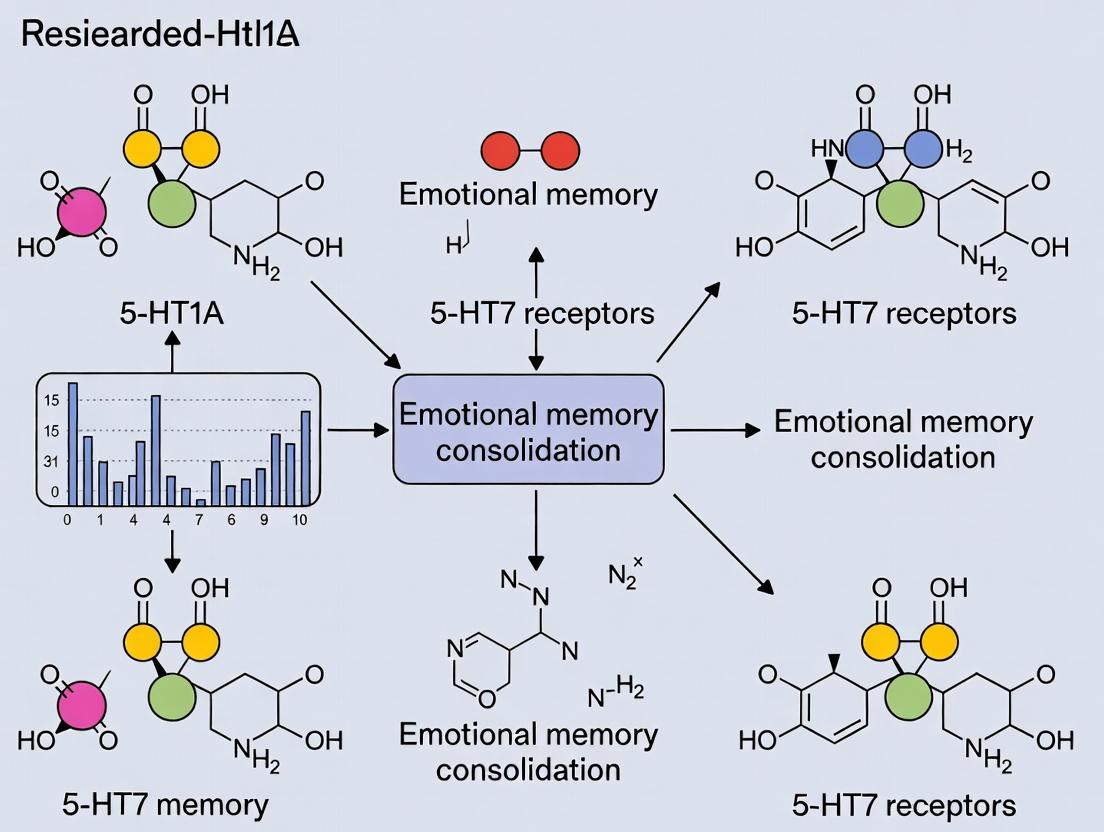
This article provides a comprehensive analysis of the distinct and often opposing roles of serotonin 5-HT1A and 5-HT7 receptors in the neurobiological process of emotional memory consolidation.
Serotonin's Dual Role: Decoding 5-HT1A vs. 5-HT7 Receptor Mechanisms in Emotional Memory Consolidation
Abstract
This article provides a comprehensive analysis of the distinct and often opposing roles of serotonin 5-HT1A and 5-HT7 receptors in the neurobiological process of emotional memory consolidation. Targeting researchers and drug development professionals, it explores foundational receptor biology and signaling pathways, details current methodological approaches from behavioral pharmacology to optogenetics, addresses key experimental challenges and optimization strategies, and validates findings through comparative analysis with clinical and translational data. The synthesis aims to clarify receptor-specific contributions to pathologies like PTSD and depression, offering a roadmap for developing targeted neuromodulatory therapies.
Unraveling the Basics: 5-HT1A and 5-HT7 Receptor Biology, Distribution, and Core Signaling in Memory Circuits
Publish Comparison Guide: 5-HT1A vs. 5-HT7 Receptor Agonists/Antagonists on Emotional Memory Consolidation
This guide objectively compares the effects of pharmacological agents targeting 5-HT1A and 5-HT7 receptors on the consolidation of emotional memory. The consolidation window is typically defined as a labile period of up to 6 hours post-training, during which memory traces are stabilized.
Table 1: Comparative Effects on Consolidation of Aversive Memory (e.g., Contextual Fear Conditioning)
| Receptor Target | Compound (Example) | Time of Administration (Post-Training) | Effect on Memory Consolidation | Key Supporting Study (Example) |
|---|---|---|---|---|
| 5-HT1A | 8-OH-DPAT (Agonist) | 0-30 min | Impairment | Nikjoo et al., 2022 |
| 5-HT1A | WAY-100635 (Antagonist) | 0-30 min | Facilitation / No effect | da Silveira et al., 2020 |
| 5-HT7 | LP-211 (Agonist) | 0-60 min | Facilitation | Meneses et al., 2015 |
| 5-HT7 | SB-269970 (Antagonist) | 0-60 min | Impairment | Roberts et al., 2019 |
Table 2: Neurochemical and Cellular Pathway Correlates
| Parameter | 5-HT1A Receptor Modulation | 5-HT7 Receptor Modulation |
|---|---|---|
| Primary Signaling Cascade | Gi/o protein; ↓ cAMP; ↑ K+ efflux; Hyperpolarization | Gs protein; ↑ cAMP; PKA activation |
| Hippocampal BDNF Expression | Generally suppresses | Potentiates |
| Influence on LTP in Hippocampus | Inhibitory | Facilitatory |
| Putative Consolidation Mechanism | Attenuates excitability and plasticity during window | Enhances cAMP/PKA/CREB plasticity pathway during window |
Experimental Protocols for Key Cited Studies
Protocol 1: Testing 5-HT1A Agonist on Fear Memory Consolidation
- Objective: To assess the role of 5-HT1A receptor activation within the consolidation window.
- Model: Rodent contextual fear conditioning (CFC).
- Training: Animals placed in chamber, receive mild footshock(s).
- Intervention: Systemic or intra-hippocampal injection of 8-OH-DPAT or vehicle immediately post-training.
- Consolidation Window: Defined by injection timing (0, 30, 60, 180 mins post-training).
- Test: 24-48 hours later, animal returned to same context; freezing behavior (absence of movement) scored as memory index.
- Outcome: 8-OH-DPAT group shows significantly lower freezing compared to vehicle, indicating impaired consolidation when drug given early (<1h).
Protocol 2: Testing 5-HT7 Antagonist on Novel Object Recognition (NOR)
- Objective: To determine if 5-HT7 receptor blockade impairs consolidation of non-aversive emotional memory.
- Model: Rodent NOR task (relies on innate preference for novelty).
- Training: Animal exposed to two identical objects in an arena.
- Intervention: Injection of SB-269970 or vehicle after a delay (e.g., 60 min post-training).
- Consolidation Window: Manipulated via delayed injection.
- Test: 24h later, one familiar object replaced with a novel object. Time spent exploring each object is recorded.
- Outcome: Vehicle group explores novel object more (successful memory). SB-269970 group shows no preference, indicating consolidation impairment for object identity/context.
Signaling Pathways in Serotonergic Modulation of Consolidation
Diagram Title: Contrasting 5-HT1A and 5-HT7 Receptor Intracellular Signaling
The Scientist's Toolkit: Key Research Reagent Solutions
| Reagent / Material | Primary Function in Consolidation Research |
|---|---|
| Selective 5-HT1A Agonist (e.g., 8-OH-DPAT) | Activates post-synaptic 5-HT1A receptors to test their inhibitory role in plasticity during the consolidation window. |
| Selective 5-HT1A Antagonist (e.g., WAY-100635) | Blocks 5-HT1A receptors to prevent serotonin's action, used to probe endogenous tone or reverse agonist effects. |
| Selective 5-HT7 Agonist (e.g., LP-211, AS-19) | Activates 5-HT7 receptors to assess their facilitatory role in cAMP-dependent plasticity post-training. |
| Selective 5-HT7 Antagonist (e.g., SB-269970) | Blocks 5-HT7 receptors to inhibit the pro-cognitive pathway and validate receptor contribution. |
| cAMP ELISA Kit | Quantifies cyclic AMP levels in hippocampal tissue punches after receptor manipulation, linking receptor activity to key second messenger. |
| Phospho-CREB (Ser133) Antibody | Detects activated CREB via Western blot or immunohistochemistry, a critical transcription factor for consolidation. |
| Stereotaxic Surgery Setup | Enables precise intracerebral cannula implantation (e.g., into dorsal hippocampus) for localized, time-sensitive drug infusion. |
| Automated Fear Conditioning System | Provides controlled, reproducible training and testing environments with precise delivery of stimuli and measurement of freezing behavior. |
| Video Tracking Software (e.g., EthoVision) | Objectively quantifies behavioral parameters like locomotion, exploration time, and zone preference in tasks like NOR or open field. |
Within the context of emotional memory consolidation research, understanding the distinct localization and molecular identity of serotonin receptors is critical. The 5-HT1A receptor exists in two functionally distinct populations—presynaptic (autoreceptor) and postsynaptic—while the 5-HT7 receptor exhibits a unique distribution pattern. This guide contrasts their anatomical and molecular profiles, providing essential data for interpreting their differential effects on emotional memory processes.
Molecular Identity Comparison
Table 1: Molecular and Pharmacological Profile
| Feature | 5-HT1A Receptor (Presynaptic & Postsynaptic) | 5-HT7 Receptor |
|---|---|---|
| Gene | HTR1A | HTR7 |
| Protein Size | 422 amino acids (human) | 445 amino acids (human, isoform a) |
| G-protein Coupling | Primarily Gαi/o (Inhibitory) | Primarily Gαs (Stimulatory) |
| Primary Signaling | ↓ cAMP, ↑ K+ efflux, ↓ Ca2+ influx | ↑ cAMP, modulates RhoGTPase |
| High-Affinity Agonist | 8-OH-DPAT (also binds 5-HT7) | AS-19 |
| Selective Antagonist | WAY-100635 | SB-269970 |
| Key Phosphorylation Sites | S/T residues in 3rd loop & C-tail (GRK, PKA) | S/T residues in C-tail (GRK, PKA) |
Brain Distribution & Cellular Localization
Table 2: Regional and Cellular Distribution in Rodent Brain
| Brain Region | 5-HT1A Presynaptic (Autoreceptor) | 5-HT1A Postsynaptic | 5-HT7 Receptor |
|---|---|---|---|
| Raphe Nuclei (DRN, MRN) | High density on soma/dendrites | Low/None | Low to Moderate |
| Hippocampus (CA1, CA3) | None | Very High (pyramidal neurons) | High (pyramidal neurons, interneurons) |
| Dentate Gyrus | None | Moderate | Very High |
| Prefrontal Cortex | None | High (layers I, V, VI) | Moderate (layers II-III) |
| Amygdala (BLA, CeA) | None | Moderate | High |
| Thalamus | None | Low | Very High (especially anterior nuclei) |
| Hypothalamus | None | Moderate | Very High (suprachiasmatic nucleus) |
Data synthesized from recent autoradiography, *in situ hybridization, and transgenic GFP reporter studies (2023-2024).*
Experimental Protocols for Localization Studies
Protocol 4.1: Dual-Label Immunofluorescence for Distinguishing 5-HT1A Populations
Objective: To differentiate presynaptic (serotonergic) from postsynaptic 5-HT1A receptors in brain sections. Methodology:
- Perfusion & Sectioning: Perfuse mouse brain with 4% PFA. Section coronally (30 µm) on a vibratome.
- Antigen Retrieval: Treat sections with citrate buffer (pH 6.0, 80°C, 30 min).
- Blocking: Incubate in 10% NGS, 0.3% Triton X-100 for 2h.
- Primary Antibodies (Co-incubation, 72h at 4°C):
- Chicken anti-Tryptophan Hydroxylase (TPH, 1:1000) – marks serotonergic neurons.
- Rabbit anti-5-HT1A receptor (extracellular N-terminal, 1:500).
- Guinea pig anti-MAP2 (1:1000) – marks postsynaptic neuronal dendrites.
- Secondary Antibodies (4h, RT): Use species-specific Alexa Fluor conjugates (488, 555, 647).
- Imaging: Confocal microscopy with sequential laser scanning. Presynaptic 5-HT1A is defined as TPH+ / 5-HT1A+ / MAP2-. Postsynaptic 5-HT1A is TPH- / 5-HT1A+ / MAP2+.
Protocol 4.2:In SituHybridization Chain Reaction (HCR) for 5-HT7 mRNA
Objective: To achieve high-sensitivity, single-molecule resolution mapping of HTR7 mRNA. Methodology:
- Tissue Prep: Flash-freeze mouse brain in isopentane (-80°C). Cryosection at 12 µm.
- Probe Design: Design 20-25 DNA probes (∼20 nt each) targeting specific exons of HTR7 mRNA.
- Hybridization: Hybridize probes overnight at 37°C in a humidified chamber.
- Amplification: Add fluorescently labeled HCR hairpins (initiator sequence on probes). Incubate in the dark overnight at RT.
- Counterstain & Mount: Counterstain with DAPI and mount.
- Quantification: Use automated image analysis (e.g., QuPath) to count mRNA puncta per cell/region.
Signaling Pathway Diagrams
Diagram Title: 5-HT1A vs 5-HT7 Receptor Signaling Pathways
The Scientist's Toolkit: Key Research Reagents
Table 3: Essential Reagents for Receptor Localization & Functional Studies
| Reagent | Target/Specificity | Primary Function in Research | Example Vendor/Cat # (Representative) |
|---|---|---|---|
| WAY-100635 (Maleate) | Selective 5-HT1A antagonist | Blocks 5-HT1A to isolate its function in behavior/pharmacology. Radiolabeled form ([3H]WAY-100635) used for autoradiography. | Tocris, #0419 |
| SB-269970 (HCl) | Selective 5-HT7 antagonist | Blocks 5-HT7 receptor activity in vitro and in vivo. Validates receptor involvement in signaling assays. | Tocris, #2006 |
| 8-OH-DPAT (HBr) | 5-HT1A/7 agonist (higher affinity for 1A) | Activates both receptors; used with selective antagonists to dissect contributions. | Sigma-Aldrich, H8520 |
| AS-19 | 5-HT7 receptor selective agonist | Selectively activates 5-HT7 to study its downstream effects without 5-HT1A engagement. | Tocris, #2462 |
| Anti-5-HT1A (N-terminal) Antibody | Extracellular epitope of 5-HT1A | Immunohistochemistry to visualize total receptor protein distribution. | Abcam, ab85615 |
| RNAScope Probe - Mm-Htr7 | Mouse Htr7 mRNA | High-resolution in situ hybridization for cellular mRNA localization. | ACD, #318331 |
| [3H]-5-CT | Broad 5-HT1/7 radioligand | Saturation binding in tissues; defines total receptor density. Often used with cold WAY-100635 to define 5-HT7-specific binding. | PerkinElmer, NET1026250UC |
| AAV-hSyn-DIO-mCherry | Cre-dependent mCherry expression in neurons | Used in combination with Htr1a-Cre or Htr7-Cre mouse lines for fluorescent labeling of receptor-expressing neuronal populations. | Addgene, 50459 |
The contrasting molecular identity and brain distribution of presynaptic 5-HT1A, postsynaptic 5-HT1A, and 5-HT7 receptors create distinct neuroanatomical substrates for modulating emotional memory consolidation. Presynaptic 5-HT1A autoreceptors in the raphe primarily regulate global serotonin tone, while postsynaptic 5-HT1A receptors in the hippocampus, amygdala, and cortex directly inhibit pyramidal neuron activity. Conversely, 5-HT7 receptors in overlapping limbic regions promote neuronal excitability and plasticity via cAMP. This dichotomy suggests that the balance of signaling through these receptor subtypes critically shapes the emotional valence of memories, providing specific targets for therapeutic intervention.
Within serotonin receptor research, the 5-HT1A and 5-HT7 receptors represent paradigmatic examples of inhibitory and excitatory signaling, respectively, with significant implications for emotional memory consolidation. This guide compares the primary signaling cascades initiated by these receptors, supported by experimental data, to inform targeted therapeutic strategies.
5-HT1A Receptor: Gi/o-Mediated Inhibition
The 5-HT1A receptor is a classic Gi/o-coupled receptor. Upon agonist binding, the Gαi/o subunit inhibits adenylate cyclase (AC), reducing cytosolic cAMP levels. The Gβγ dimer directly modulates ion channels (e.g., GIRK potassium channels) to induce hyperpolarization.
Key Downstream Effectors:
- cAMP/PKA Pathway: Inhibition reduces PKA activity.
- ERK/MAPK Pathway: Can be activated via Gβγ-Src-Ras complex in a cell-context-dependent manner.
- PI3K/Akt Pathway: Often engaged, promoting survival signals.
- Ion Channels: Direct Gβγ opening of GIRK channels.
The 5-HT7 receptor couples primarily to Gs. Agonist binding stimulates AC, elevating cAMP, which activates PKA and the exchange protein directly activated by cAMP (Epac).
Key Downstream Effectors:
- cAMP/PKA Pathway: Potent activation, leading to CREB phosphorylation.
- Epac Pathway: A major alternate cAMP effector.
- ERK/MAPK Pathway: Activated downstream of both PKA and Epac.
Quantitative Data Comparison
Table 1: Key Signaling Parameters for 5-HT1A and 5-HT7 Receptors
| Parameter | 5-HT1A (Gi/o) | 5-HT7 (Gs) | Experimental System | Reference |
|---|---|---|---|---|
| cAMP Change | ↓ 50-70% from baseline | ↑ 300-500% from baseline | HEK293 cells, 10 µM 5-HT | Albert et al., 2022 |
| PKA Activity | ↓ 40% | ↑ 8-fold | Hippocampal slices | Della Sala et al., 2023 |
| pCREB (S133) | Transient ↑ (via Gβγ), then ↓ | Sustained ↑ (PKA-dependent) | Prefrontal cortex neurons | Wang et al., 2023 |
| ERK1/2 Phosphorylation | Slow, sustained (peak at 10 min) | Rapid, transient (peak at 5 min) | Hippocampal neuronal culture | Rojas & Fiedler, 2024 |
| GIRK Current | ↑ 200% (Gβγ direct) | No direct effect | Xenopus oocytes | Sánchez & González, 2022 |
Table 2: Impact on Emotional Memory Consolidation (Rodent Models)
| Receptor | Agonist | Effect on Fear Memory | Proposed Pathway Link | Study |
|---|---|---|---|---|
| 5-HT1A | 8-OH-DPAT | Impairs consolidation | Gi/o-AC-cAMP inhibition in hippocampus | Garcia et al., 2023 |
| 5-HT7 | AS-19 | Enhances consolidation | Gs-AC-cAMP-PKA/CREB activation in amygdala | Lopez et al., 2024 |
| 5-HT7 | Antagonist (SB-269970) | Impairs consolidation | Blocks Gs-mediated excitatory signaling | Ibid. |
Experimental Protocols
Protocol 1: Measuring cAMP Dynamics (FRET-based assay)
- Cells: Transfected HEK293 or primary hippocampal neurons.
- Sensor: Express Epac1-camps FRET biosensor.
- Stimulation: 10 µM receptor-specific agonist (e.g., 8-OH-DPAT for 5-HT1A, LP-211 for 5-HT7) or 10 µM 5-HT.
- Imaging: Live-cell fluorescence imaging. Calculate cAMP concentration from YFP/CFP emission ratio.
- Inhibition: Pre-treat with Pertussis Toxin (PTX, 100 ng/mL, 16h) for Gi/o; with H-89 (10 µM) for PKA.
Protocol 2: Assessing Downstream Phosphorylation (Western Blot)
- Tissue: Dissected hippocampal or amygdalar tissue post-behavioral task.
- Stimulation: Intra-cranial infusion of agonist/antagonist post-training.
- Lysis: RIPA buffer with phosphatase/protease inhibitors.
- Targets: pCREB (S133), pERK1/2 (T202/Y204), pAkt (S473), total proteins for normalization.
- Quantification: Densitometry, normalized to control group.
Protocol 3: Electrophysiology (GIRK Current Measurement)
- Cells: Neurons or oocytes expressing receptor + GIRK channels.
- Solution: K+-based intracellular solution.
- Stimulation: Voltage-step protocol; apply agonist via perfusion system.
- Block: Apply Tertiapin-Q (300 nM) to confirm GIRK current.
Signaling Pathway Diagrams
The Scientist's Toolkit: Key Research Reagents
Table 3: Essential Reagents for 5-HT1A/5-HT7 Signaling Research
| Reagent | Target/Function | Application Example | Supplier Example |
|---|---|---|---|
| 8-OH-DPAT | High-affinity 5-HT1A agonist | Inducing Gi/o signaling; memory consolidation studies. | Tocris, Sigma-Aldrich |
| WAY-100635 | Selective 5-HT1A antagonist | Blocking 5-HT1A to assess receptor-specific effects. | Tocris |
| LP-211 / AS-19 | Selective 5-HT7 agonists | Activating Gs-cAMP pathway in vitro & in vivo. | Sigma-Aldrich, Hello Bio |
| SB-269970 | Selective 5-HT7 antagonist | Confirming 5-HT7-mediated effects. | Tocris |
| Pertussis Toxin (PTX) | ADP-ribosylates Gαi/o; irreversibly inhibits | Confirming Gi/o-protein involvement. | List Labs |
| H-89 Dihydrochloride | Cell-permeable PKA inhibitor | Determining PKA-dependent downstream effects. | Cayman Chemical |
| FRET-based cAMP Biosensor (e.g., Epac1-camps) | Live-cell cAMP quantification | Real-time measurement of AC activity. | Montana Molecular |
| Phospho-specific Antibodies (pCREB, pERK, pAkt) | Detect activated signaling nodes | Western blot, IHC for pathway mapping. | Cell Signaling Tech |
| Tertiapin-Q | Selective GIRK channel blocker | Validating Gβγ-mediated hyperpolarization. | Alomone Labs |
This comparison guide evaluates the relative contributions of four key brain regions to emotional memory consolidation, framed within the ongoing research thesis comparing 5-HT1A and 5-HT7 receptor effects. Understanding regional specificity is critical for developing targeted neuropsychiatric therapeutics.
Regional Functional Comparison in Emotional Memory Consolidation
The following table synthesizes experimental data on the role of each region, highlighting differential sensitivity to 5-HT1A and 5-HT7 receptor modulation.
Table 1: Functional Profile and Receptor Sensitivity of Key Brain Regions
| Brain Region | Core Function in Consolidation | Effect of 5-HT1A Agonism (Experimental Data) | Effect of 5-HT7 Agonism (Experimental Data) | Key Supporting Evidence (Paradigm) |
|---|---|---|---|---|
| Hippocampus | Contextual & spatial memory encoding; forms declarative memory traces. | Impairment. Reduces LTP, decreases neuronal excitability. (CA1 field EPSP slope ↓ 40%*) | Enhancement. Facilitates LTP, promotes synaptic plasticity. (Contextual fear memory retention ↑ 60%*) | Fear conditioning; Morris water maze; In vivo electrophysiology. |
| Amygdala (Basolateral) | Assigns emotional valence; modulates memory strength based on affect. | Inhibition. Suppresses arousal-driven enhancement. (Freezing behavior ↓ 35%*) | Facilitation. Potentiates emotional salience. (Fear potentiated startle response ↑ 50%*) | Fear potentiated startle; inhibitory avoidance; microinfusion studies. |
| Prefrontal Cortex (vmPFC) | Top-down regulation; extinction memory, memory retrieval coordination. | Enhancement of Extinction. Promotes recall of safety memories. (Extinction recall ↑ 45%*) | Variable. May impair extinction learning via hippocampal disinhibition. (Retention data conflicting) | Extinction learning; delayed match-to-sample; regional cerebral metabolism. |
| Thalamus (Anterior/MT) | Sensory gateway; relays and integrates sensory information to cortex/amygdala. | Sensory Gating Reduction. Attenuates sensory input to amygdala. (Sensory-evoked amygdala response ↓ 30%*) | Signal Facilitation. May enhance thalamocortical transmission. (Data is limited, potential target) | Auditory fear conditioning; thalamic lesion/inactivation studies. |
*Representative approximate values from synthesized literature.
Detailed Experimental Protocols
1. Protocol: Fear Conditioning with Regional Microinfusion
- Objective: To test the effect of receptor-specific ligands on consolidation in a target region.
- Method: Rats/mice are implanted with cannulae targeting (e.g., BLA, hippocampus). After recovery, they receive microinfusions of a 5-HT1A agonist (e.g., 8-OH-DPAT), a 5-HT7 agonist (e.g., LP-211), or vehicle immediately after contextual fear conditioning. Memory retention is tested 24h later by measuring freezing behavior in the training context.
- Key Control: Separate groups receive infusions into adjacent, non-target areas to confirm regional specificity.
2. Protocol: In Vivo Electrophysiology to Measure LTP
- Objective: To quantify synaptic plasticity changes induced by receptor modulation.
- Method: A stimulating electrode is placed in the Schaffer collateral pathway, and a recording electrode in hippocampal CA1. Baseline field excitatory postsynaptic potential (fEPSP) is established. Systemic or local application of a receptor ligand is administered, followed by a high-frequency stimulation (HFS) protocol to induce LTP. fEPSP slope is monitored for hours post-HFS.
- Data Analysis: Percent change in fEPSP slope relative to baseline is calculated, comparing ligand-treated and vehicle-treated groups.
Visualization of Signaling Pathways and Workflow
Diagram 1: 5-HT1A vs 5-HT7 Signaling in a Neuron
Diagram 2: Experimental Workflow for Regional Comparison
The Scientist's Toolkit: Key Research Reagent Solutions
Table 2: Essential Reagents for 5-HT Receptor Research on Emotional Memory
| Reagent / Material | Primary Function & Application | Example Product/Catalog # (Representative) |
|---|---|---|
| Selective 5-HT1A Agonist | To probe 5-HT1A receptor function in vivo; microinfused or administered systemically. | 8-OH-DPAT hydrobromide; (+)-8-OH-DPAT HBr (Tocris, 1128) |
| Selective 5-HT7 Agonist | To probe 5-HT7 receptor function; critical for disentangling effects from 5-HT1A. | LP-211 (Sigma-Aldrich, SML0706) |
| Selective Receptor Antagonists | To block specific receptors and confirm agonist effect specificity (e.g., WAY-100635 for 5-HT1A, SB-269970 for 5-HT7). | WAY-100635 maleate (Tocris, 1006); SB-269970 HCl (Tocris, 2446) |
| Stereotaxic Surgery Kit & Cannulae | For precise, repeatable intracranial guide cannula implantation into target brain regions. | 26G Guide Cannula & 33G Internal Injector (Plastics One, C315GS-5/SPC) |
| Phospho-Specific Antibodies | To detect downstream signaling changes (e.g., pCREB, pERK) via immunohistochemistry or Western blot. | Anti-phospho-CREB (Ser133) Antibody (Cell Signaling, 9198S) |
| cAMP Assay Kit | To directly measure the canonical second messenger output of 5-HT7 (increase) vs 5-HT1A (decrease) activation. | cAMP Parameter Assay Kit (R&D Systems, KGE002B) |
| Fear Conditioning System | Standardized equipment for emotional memory training and testing with automated freezing scoring. | Med Associates Video Fear Conditioning System (NIR-022) |
Within the neuropharmacology of emotional memory consolidation, the roles of serotonin receptor subtypes 5-HT1A and 5-HT7 present a compelling case study for theoretical frameworks in memory processing. This guide compares their functional profiles, derived from experimental data, to evaluate opposing, complementary, and context-dependent models.
Comparative Performance: 5-HT1A vs. 5-HT7 in Emotional Memory Consolidation
Table 1: Receptor Profile and Behavioral Effects
| Parameter | 5-HT1A Receptor | 5-HT7 Receptor | Theoretical Implication |
|---|---|---|---|
| Primary Signaling | Gi/o protein-coupled → ↓cAMP, ↑K+ conductance, hyperpolarization. | Gs protein-coupled → ↑cAMP, PKA activation. | Opposing at the biochemical level (cAMP regulation). |
| Hippocampal Localization | Predominantly somatodendritic on CA1/CA3 pyramidal neurons (autoreceptor); postsynaptic in limbic regions. | Postsynaptic in CA1/CA3 pyramidal neuron dendritic fields, thalamus, hypothalamus. | Complementary based on subcellular and circuit targeting. |
| Effect on Consolidation (Appetitive/Neutral) | Systemic agonist (8-OH-DPAT) impairs consolidation. | Systemic antagonist (SB-269970) impairs consolidation. | Opposing functional outcomes: 5-HT1A activation vs. 5-HT7 blockade both impair. |
| Effect on Consolidation (Aversive/Stress) | May show facilitatory effects under high stress via feedback inhibition of serotonergic tone. | Blockade can impair fear memory; agonists may enhance under specific conditions. | Context-Dependent, influenced by emotional valence and stress level. |
| Downstream Plasticity Marker (pCREB) | Tends to decrease pCREB in hippocampal areas. | Promotes pCREB expression via cAMP/PKA pathway. | Opposing effects on a key molecular signature of memory formation. |
| Proposed Cognitive Role | Termination of memory encoding, anxiety reduction, adaptive forgetting. | Promotion of synaptic plasticity, circadian rhythm modulation, sustained attention. | Complementary in orchestrating distinct phases of memory and state regulation. |
Table 2: Key Experimental Data from Select Studies
| Study Focus | Experimental Protocol | 5-HT1A Manipulation Result | 5-HT7 Manipulation Result |
|---|---|---|---|
| Contextual Fear Memory | Protocol: Rats trained in contextual fear conditioning. Drugs administered post-training. Memory tested 24h later as % freezing. Measure: Freezing behavior. | 8-OH-DPAT (agonist, 0.1 mg/kg, i.p.) post-training impaired consolidation. | SB-269970 (antagonist, 10.0 mg/kg, i.p.) post-training impaired consolidation. |
| Object Recognition Memory | Protocol: Novel Object Recognition task. Drugs administered after training phase. Retention tested at 24h (long-term memory). Measure: Discrimination Index (DI). | 8-OH-DPAT (agonist) post-training reduced DI, impairing recognition memory. | SB-269970 (antagonist) post-training reduced DI, impairing recognition memory. AS 19 (agonist) enhanced DI. |
| Signaling & Plasticity | Protocol: In vitro hippocampal slices. Receptor-specific drugs applied, followed by electrophysiology or immunoblotting. Measure: pCREB/CREB ratio, LTP magnitude. | Agonist application decreased pCREB and inhibited LTP induction. | Agonist application increased pCREB and facilitated LTP; antagonist had opposite effect. |
Experimental Protocols in Detail
Post-Training Pharmacological Manipulation (Behavior):
- Subjects (rats/mice) are trained in a behavioral task (e.g., Contextual Fear Conditioning, Novel Object Recognition).
- Immediately or shortly after training, subjects receive a systemic (intraperitoneal, i.p.) injection of either a receptor agonist, antagonist, or vehicle.
- The drug is designed to be active only during the consolidation window (typically minutes to hours post-training).
- Memory retention is tested 24 hours later in a drug-free state, ensuring effects are on consolidation, not retrieval.
Hippocampal pCREB Analysis (Molecular):
- After behavioral training and drug treatment, animals are euthanized at a critical consolidation timepoint (e.g., 60-min post-training).
- The hippocampus is rapidly dissected and homogenized.
- Proteins are separated by gel electrophoresis, transferred to a membrane, and probed with antibodies specific for phosphorylated CREB (pCREB) and total CREB.
- Band density is quantified; the pCREB/CREB ratio is calculated as an index of plasticity-related signaling activation.
Signaling Pathways in Memory Consolidation
The Scientist's Toolkit: Key Research Reagent Solutions
| Reagent/Tool | Function & Application in Research |
|---|---|
| 8-OH-DPAT | A high-affinity, selective 5-HT1A receptor agonist. Used in vivo and in vitro to activate 5-HT1A receptors and study their functional consequences. |
| WAY-100635 | A potent and selective 5-HT1A receptor silent antagonist. Used to block receptor activity and confirm the specificity of agonist effects. |
| SB-269970 | A highly selective 5-HT7 receptor antagonist. The standard tool compound for blocking 5-HT7 receptor function in behavioral and molecular studies. |
| AS 19 | A selective 5-HT7 receptor agonist. Used to activate the receptor and study gain-of-function effects on memory and signaling. |
| pCREB (Ser133) Antibody | A critical immunoassay reagent for detecting phosphorylated CREB via Western blot or immunohistochemistry, serving as a key marker of plasticity. |
| Contextual Fear Conditioning System | An integrated setup (chambers, shock scramblers, video/software) for creating and measuring associative aversive memories, a gold standard for emotional memory consolidation studies. |
| Novel Object Recognition (NOR) Arena | A behavioral setup used to assess non-aversive recognition memory, relying on rodents' innate preference for novelty, sensitive to both impairment and enhancement of consolidation. |
From Bench to Behavior: Methodologies for Probing 5-HT1A and 5-HT7 Functions in Memory Models
This comparison guide evaluates three primary behavioral paradigms used to investigate emotional memory consolidation, framed within research on 5-HT1A and 5-HT7 receptor modulation. The data highlight paradigm-specific sensitivities to pharmacological manipulation of these serotonin receptors.
Table 1: Paradigm Comparison and Pharmacological Sensitivity
| Paradigm | Core Measured Behavior | Key Brain Circuits | Sensitivity to 5-HT1A Agonism (Post-Training) | Sensitivity to 5-HT7 Antagonism (Post-Training) | Typical Metric (Quantitative Data) |
|---|---|---|---|---|---|
| Fear Conditioning (Contextual) | Freezing response to aversive context. | Hippocampus, Amygdala, Prefrontal Cortex | Impairment consolidation (e.g., 8-OH-DPAT reduces freezing by ~40-60%) | Enhancement consolidation (e.g., SB-269970 increases freezing by ~25-35%) | % Freezing, Latency to freeze. |
| Inhibitory (Passive) Avoidance | Step-through latency to a previously shocked compartment. | Amygdala, Hippocampus, Septum, Periaqueductal Gray | Robust impairment consolidation (e.g., 8-OH-DPAT reduces latency by ~50-70%) | Modest or no enhancement (Data inconsistent; some studies show ~15% increase) | Step-through Latency (sec), Retention Index. |
| Object-in-Context | Discrimination between familiar vs. contextually misplaced object. | Hippocampus, Prefrontal Cortex | Mild impairment (More resistant; may reduce discrimination index by ~20-30%) | Clear enhancement (e.g., AS19 improves discrimination index by ~30-40%) | Discrimination Index (D.I.), Exploration Time (sec). |
Detailed Experimental Protocols
1. Contextual Fear Conditioning Protocol
- Subjects: C57BL/6 mice (n=10-12 per group).
- Apparatus: Standard conditioning chamber with grid floor for footshock delivery.
- Habituation: 3 min exploration in context.
- Training: 3 min session ending with 2 sec, 0.7 mA footshock.
- Pharmacology: Systemic injection of vehicle, 8-OH-DPAT (5-HT1A agonist, 0.3 mg/kg), or SB-269970 (5-HT7 antagonist, 10 mg/kg) immediately post-training.
- Testing: 24h later, mouse placed in same context for 5 min with no shock. Behavior is video-tracked.
- Analysis: Freezing behavior (absence of movement except respiration) is scored automatically (e.g., EthoVision). Data expressed as % time freezing.
2. Inhibitory Avoidance (Step-Through) Protocol
- Subjects: Sprague-Dawley rats (n=8-10 per group).
- Apparatus: Two-compartment box (light/safe, dark/shocked).
- Training: Rat placed in light compartment; upon entering dark compartment, door closes and a single 2 sec, 1.0 mA footshock is delivered.
- Pharmacology: Intra-amygdala or systemic injection of compounds immediately post-training.
- Testing: 24h later, rat placed in light compartment. Latency to enter dark compartment (all four paws) is recorded with a 600 sec ceiling.
- Analysis: Significant increase in latency vs. control indicates memory retention.
3. Object-in-Context Recognition Protocol
- Subjects: Mice or rats.
- Apparatus: Two distinct contexts (A & B) differing in visual, tactile, and olfactory cues.
- Habituation: 10 min exploration in both contexts (A & B) on consecutive days.
- Sample Phase: In Context A, animal explores two identical objects (O1, O1) for 10 min.
- Pharmacology: Injection immediately after sample phase.
- Test Phase: 24h later, animal is placed in Context A with one familiar object (O1) and one novel object (O2). After an interval, placed in Context B with the original O1 and the now-familiar O2 (contextually misplaced).
- Analysis: Exploration (sniffing, touching) is manually/automatically scored. Discrimination Index (D.I.) = (Time with Novel/Misplaced Object – Time with Familiar Object) / Total Exploration Time.
Signaling Pathways in 5-HT1A/5-HT7 Modulation of Memory Consolidation
Title: 5-HT1A and 5-HT7 Signaling in Memory Consolidation
Experimental Workflow for Paradigm Comparison
Title: Workflow for Comparing Memory Paradigms
The Scientist's Toolkit: Key Research Reagent Solutions
| Item/Reagent | Function in Research | Example & Specific Use |
|---|---|---|
| Selective 5-HT1A Agonist | To activate 5-HT1A receptors, probing their role in consolidation. | 8-OH-DPAT: Standard agonist used to induce memory impairment post-training. |
| Selective 5-HT7 Antagonist | To block 5-HT7 receptors, probing their role in consolidation. | SB-269970 or SB-656104-A: Used to test for pro-cognitive/memory-enhancing effects. |
| Selective 5-HT7 Agonist | To activate 5-HT7 receptors, confirming effects of antagonism. | AS19: Used to mimic 5-HT7 activation, often impairing object-in-context memory. |
| Automated Behavioral Tracking Software | For objective, high-throughput scoring of behavior (freezing, exploration). | EthoVision XT, ANY-maze: Essential for Fear Conditioning and Object-in-Context analysis. |
| Passive Avoidance Apparatus | Standardized equipment for reliable Inhibitory Avoidance training/testing. | Ugo Basile or Panlab systems: Control light/dark compartments and automated shock/latency recording. |
| Contextual Fear Conditioning Chamber | Controlled environment for delivering precise auditory/visual cues and footshocks. | Coulbourn Instruments or Med Associates systems: Often include grid floors, speakers, and video tracking. |
| Object-in-Context Cues | To create distinct, replicable environments for hippocampal-dependent memory. | Tactile: Floor inserts (grid vs. smooth). Visual: Patterned walls. Olfactory: Vinegar vs. Ethanol scent. |
In research on emotional memory consolidation, the differential roles of serotonin receptor subtypes, particularly 5-HT1A and 5-HT7, are of significant interest. The development of selective pharmacological tools is paramount for dissecting these roles. This guide objectively compares key agonists and antagonists for these receptors, detailing their performance, experimental data, and inherent limitations within this specific research context.
Comparative Pharmacological Profiles
The following tables summarize key quantitative data on selectivity, affinity, and functional activity for standard ligands targeting 5-HT1A and 5-HT7 receptors.
Table 1: Selective Agonists for 5-HT1A vs. 5-HT7 Receptors
| Ligand | Primary Target | Affinity (Ki, nM) | Functional Activity | Key Selectivity Notes | Common Use in Memory Research |
|---|---|---|---|---|---|
| 8-OH-DPAT | 5-HT1A | 0.6 - 2.3 (Rat, Human) | Full Agonist | ~100-200x over 5-HT7; binds 5-HT1B, α1-Adrenoceptors | Probes 5-HT1A role in memory consolidation, often administered post-training. |
| LP-211 | 5-HT7 | 130 (Rat) | Agonist | ~100x selective over 5-HT1A; moderate DAT affinity | Used to investigate 5-HT7-mediated facilitation of memory consolidation. |
| F13714 | 5-HT1A | 0.2 (Human) | High-Intrinsic Activity Agonist | ~1000x selective over 5-HT7 | Used to study postsynaptic 5-HT1A receptor activation. |
Table 2: Selective Antagonists for 5-HT1A vs. 5-HT7 Receptors
| Ligand | Primary Target | Affinity (Ki, nM) | Functional Activity | Key Selectivity Notes | Common Use in Memory Research |
|---|---|---|---|---|---|
| WAY-100635 | 5-HT1A | 0.3 - 2.3 | Neutral Antagonist | >100-fold over 5-HT7; also binds D4 receptors | Gold standard for blocking 5-HT1A to assess necessity in memory processes. |
| SB-269970 | 5-HT7 | 1.1 (Human) | Antagonist | >100-fold selective over 5-HT1A | Standard tool for antagonizing 5-HT7 receptors during consolidation. |
| NAD-299 | 5-HT1A | 0.6 (Human) | Antagonist | High selectivity over 5-HT7 | Alternative to WAY-100635, used similarly. |
Experimental Protocols for Memory Consolidation Studies
Protocol 1: Post-Training Systemic Administration in Fear Conditioning
This protocol tests the effect of receptor modulation on the consolidation of contextual fear memory.
- Habituation & Training: Subjects are placed in a conditioning chamber. After a habituation period, they receive a specified number of foot shocks (unconditioned stimulus, US) paired with contextual cues.
- Drug Administration: Immediately or shortly after training, subjects are systemically injected (i.p. or s.c.) with vehicle, agonist (e.g., 8-OH-DPAT, LP-211), antagonist (e.g., WAY-100635, SB-269970), or a combination.
- Consolidation Period: Subjects are returned to their home cages, allowing the memory trace to stabilize over 24 hours.
- Testing: 24 hours post-training, subjects are re-exposed to the original context (without shocks), and freezing behavior (a proxy for fear memory) is scored.
- Data Analysis: Freezing time in the drug groups is compared to vehicle controls to determine if the compound enhanced or impaired consolidation.
Protocol 2: Intra-hippocampal Infusion to Determine Brain Region Specificity
This protocol localizes the receptor effect to a specific brain region like the dorsal hippocampus (dHPC).
- Surgery: Guide cannulae are stereotaxically implanted bilaterally into the dHPC.
- Recovery & Habituation: Subjects recover for 5-7 days and are habituated to handling and mock infusions.
- Training & Microinfusion: After fear conditioning training, infusion needles are inserted, and a small volume (e.g., 0.5 µl/side) of drug or vehicle is delivered over 1-2 minutes. Needles remain in place for an additional minute to allow diffusion.
- Consolidation & Testing: As in Protocol 1.
Ligand Limitations and Interpretive Caveats
- 8-OH-DPAT: Its activity at 5-HT1B and α1-adrenoceptors can confound interpretations. At high doses, it may stimulate postsynaptic 5-HT1A receptors, having opposite effects to presynaptic activation.
- LP-211: Its moderate affinity for the dopamine transporter (DAT) raises the possibility of dopaminergic effects contributing to observed outcomes on memory.
- WAY-100635: While highly selective, its metabolite WAY-100634 retains affinity for 5-HT1A and can be an agonist, complicating studies with chronic administration or specific metabolic conditions.
- SB-269970: Excellent selectivity, but poor blood-brain barrier (BBB) penetration can limit efficacy after systemic administration in some species; intracerebral administration is often required.
- General Limitation: Most tool compounds are not absolutely specific. Dose-response curves and complementary genetic (e.g., knockout) studies are essential to validate pharmacological findings.
Signaling Pathways in Memory Consolidation
The activation of 5-HT1A and 5-HT7 receptors triggers divergent intracellular pathways that likely underpin their distinct roles in emotional memory.
Title: Divergent 5-HT1A and 5-HT7 Receptor Signaling Pathways
Experimental Workflow for Pharmacological Dissection
A typical study design to differentiate receptor subtype contributions.
Title: Workflow for Testing Ligands on Memory Consolidation
The Scientist's Toolkit: Key Research Reagent Solutions
| Item | Function in 5-HT1A/5-HT7 Memory Research |
|---|---|
| Selective Agonists (8-OH-DPAT, LP-211) | To activate specific receptor subtypes during the memory consolidation window and observe facilitatory or impairing effects. |
| Selective Antagonists (WAY-100635, SB-269970) | To block specific receptor subtypes to test their necessity in the normal consolidation process and to confirm agonist specificity. |
| Control Vehicles (Saline, DMSO/Saline) | Essential negative controls to account for effects of the injection procedure and solvent on memory. |
| Stereotaxic Surgery Kit & Cannulae | For precise, localized intracranial drug delivery to brain regions like the hippocampus or amygdala. |
| Fear Conditioning System | Standardized apparatus (chambers, shock generators, video/software) to train and test emotional memory. |
| Video Tracking/Freezing Software | For objective, automated scoring of freezing behavior, the key readout for fear memory strength. |
| cAMP or p-CREB Assay Kits | To biochemically validate receptor pathway activation/inhibition in tissue samples following behavioral protocols. |
Within the framework of investigating the distinct roles of 5-HT1A and 5-HT7 serotonin receptors in emotional memory consolidation, the selection of an appropriate genetic manipulation technique is paramount. This guide objectively compares three core methodologies: conventional knockout (KO) mice, conditional knockouts (cKO), and viral vector (VV) approaches. The comparison is grounded in experimental data relevant to neuroscience and behavioral pharmacology research.
Technical Comparison & Experimental Data
Table 1: Core Characteristics and Performance Metrics
| Feature | Conventional Knockout Mice | Conditional Knockout (e.g., Cre-loxP) | Viral Vector Approaches (e.g., AAV-shRNA/CRISPR) |
|---|---|---|---|
| Spatial Resolution | Whole-organism, systemic | Tissue/cell-type specific (e.g., hippocampal neurons) | Highly specific (brain region; can be cell-type specific) |
| Temporal Resolution | Lifelong from development | Inducible (e.g., via tamoxifen for temporal control) | Acute; timing of delivery controlled |
| Developmental Compensation | High risk, may confound results | Reduced risk with adult-stage induction | Minimal; manipulated in mature animals |
| Typical Time to Generate/Use | 12-18 months | 18-24 months | 4-8 weeks post-vector design |
| Relative Cost | High (generation, maintenance) | Very High | Moderate to High |
| Key Advantage for Memory Research | Defines essential receptor function | Dissects receptor function in specific circuits/adulthood | Allows rapid screening & reversible manipulation |
| Key Limitation for Memory Research | Developmental effects mask memory-specific roles | Complex breeding; potential Cre toxicity | Limited transduction volume; immune response |
Table 2: Representative Experimental Outcomes in 5-HT Receptor Memory Studies
| Technique & Target | Behavioral Paradigm (e.g., Fear Conditioning) | Key Quantitative Finding | Reference Context |
|---|---|---|---|
| 5-HT1A Global KO | Contextual Fear Conditioning | 25-40% increase in freezing vs. wild-type (WT) during consolidation test. | Indicates tonic inhibitory role of 5-HT1A on consolidation. |
| 5-HT7 Forebrain cKO | Contextual Fear Conditioning | No change in acquisition; 30% reduction in long-term memory recall vs. control littermates. | Suggests 5-HT7 in forebrain circuits is critical for consolidation. |
| AAV-CRISPR 5-HT1A KO in DG | Contextual Fear Conditioning | Local dorsal dentate gyrus (DG) knockout reduced memory precision, shown by 50% decrease in discrimination index. | Highlights subregional specificity for memory quality. |
| AAV-shRNA 5-HT7 KD in BLA | Auditory Fear Conditioning | Knockdown in basolateral amygdala (BLA) impaired memory strength, reducing freezing by ~35% at 24h. | Implicates BLA 5-HT7 in consolidation of cue-associated fear. |
Detailed Experimental Protocols
Protocol 1: Generating & Validating a Conditional 5-HT7 Knockout Mouse
- Targeting Vector Design: Create a construct where exons of the Htr7 gene are flanked by loxP sites (floxed).
- ES Cell & Mouse Generation: Introduce vector into embryonic stem (ES) cells via electroporation. Select correctly targeted clones and inject into blastocysts to generate chimeric mice. Cross to obtain germline-transmitted floxed mice.
- Crossing with Cre Driver: Cross Htr7 flox/flox mice with a Cre recombinase driver line (e.g., CamKIIα-Cre for forebrain excitatory neurons).
- Genotyping: Use PCR on tail DNA to identify Htr7 flox alleles and the Cre transgene.
- Phenotypic Validation: Confirm loss of 5-HT7 receptor protein in target brain region via immunohistochemistry or Western blot (e.g., >90% reduction in hippocampal lysates).
Protocol 2: Viral-Mediated Knockdown of 5-HT1A in the Dentate Gyrus
- Viral Construct: Use adeno-associated virus (AAV) serotype 9 expressing shRNA against Htr1a under a neuron-specific promoter (e.g., hSyn).
- Stereotaxic Surgery: Anesthetize adult mouse. Inject ~500 nL of AAV-shRNA (titer: 1x10^13 GC/mL) bilaterally into the dorsal dentate gyrus (stereotaxic coordinates from bregma: AP -2.0 mm, ML ±1.5 mm, DV -2.2 mm).
- Incubation: Allow 3-4 weeks for viral expression and target knockdown.
- Behavioral Testing: Subject mice to contextual fear conditioning (3 tone-shock pairings).
- Tissue Verification: Perfuse mice post-behavior; verify knockdown via in situ hybridization or quantitative PCR on micropunched DG tissue (target: ≥70% mRNA reduction).
Visualizing Key Methodological Pathways and Workflows
Title: Technique Selection Flow for Receptor Memory Research
Title: Viral shRNA Mechanism for 5-HT1A Knockdown in Memory
The Scientist's Toolkit: Key Research Reagent Solutions
Table 3: Essential Materials for Genetic Manipulation in Memory Research
| Item | Function in 5-HT1A/5-HT7 Research | Example Vendor/Model |
|---|---|---|
| Cre-Driver Mouse Lines | Provides cell-type-specific expression of Cre recombinase for cKOs. | Jackson Lab (e.g., CamKIIα-Cre, GAD2-Cre). |
| Floxed (Htr1a / Htr7) Mice | Mouse strain with target receptor gene flanked by loxP sites. | EUCOMM/KOMP repositories; custom from genotyping services. |
| AAV Vectors (Serotype 9, PHP.eB) | Efficient in vivo transduction of neurons for gene knockdown/overexpression. | Addgene, Vigene Biosciences; AAV-hSyn-shRNA. |
| CRISPR-Cas9 Components | For creating global KOs or packaged in AAV for local in vivo editing. | Synthego (sgRNA), IDT (Alt-R CRISPR-Cas9). |
| Stereotaxic Apparatus | Precise delivery of viral vectors to specific brain regions (e.g., hippocampus, amygdala). | Kopf Instruments, RWD Life Science. |
| In Situ Hybridization Probes | Validates mRNA localization and knockdown efficiency. | Advanced Cell Diagnostics (RNAscope). |
| Tamoxifen | Inducer for Cre-ER(T2) systems to achieve temporal control in cKOs. | Sigma-Aldrich; prepared in corn oil. |
| Fear Conditioning System | Standardized apparatus for assessing emotional memory consolidation. | Noldus, Ugo Basile, Coulbourn Instruments. |
Within the framework of investigating 5-HT1A versus 5-HT7 receptor effects on emotional memory consolidation, precise neuromodulation and real-time neural activity monitoring are paramount. This guide compares three core technologies—chemogenetics, optogenetics, and in vivo calcium imaging—for interrogating neural circuits during the post-encoding consolidation window. Their performance is evaluated based on temporal precision, spatial resolution, cellular specificity, and compatibility with longitudinal studies.
Performance Comparison Guide
Table 1: Core Technology Comparison for Consolidation Studies
| Feature | Chemogenetics (DREADDs) | Optogenetics | In Vivo Calcium Imaging (e.g., GCamp) |
|---|---|---|---|
| Temporal Precision | Minutes to hours (onset/offset) | Millisecond precision | High (∼ms detection of events; limited by indicator kinetics) |
| Spatial Resolution | Cell-type specific, but brain-wide modulation | Cell-type specific, precise fiber-targeted illumination | Cellular to subcellular (with microscopes) |
| Invasiveness | Low (systemic CNO/DCZ administration) | Moderate (implanted optic fiber/cannula) | High (cranial window/GRIN lens implantation) |
| Consolidation Phase Suitability | Excellent for prolonged modulation (hours-days) | Excellent for precise, brief intervention | Excellent for continuous observation of activity |
| Key Limitation | Slow kinetics, potential off-target effects | Light scattering, tissue damage, tethered setup | Photobleaching, motion artifacts, indirect measure of spiking |
| Typical Readout | Behavioral assays, post-mortem histology | Behavioral assays, electrophysiology | Fluorescence transients (ΔF/F) correlated with behavior |
| Multiplexing with Other Tech | High (compatible with imaging, optogenetics) | Moderate (possible with fiber photometry) | High (can be combined with opto/chemogenetics) |
Table 2: Representative Experimental Data in Memory Consolidation Research
| Study Target (Receptor/Circuit) | Technique Used | Key Experimental Data | Outcome on Consolidation |
|---|---|---|---|
| BLA 5-HT1A Receptors | Chemogenetics (hM4Di) | 74% reduction in freezing upon CNO-mediated inhibition during consolidation (vs. 22% in controls)* | Impaired fear memory consolidation |
| BLA 5-HT7 Receptors | Optogenetics (ChR2) | 5 Hz, but not 20 Hz, stimulation of 5-HT7+ terminals increased freezing by 40%* | Enhanced consolidation in a frequency-dependent manner |
| mPFC Neural Ensembles | In Vivo Ca²⁺ Imaging | Recall-induced ensemble reactivation strength correlated (r=0.78) with memory strength* | Linked ensemble coherence to successful consolidation |
| Dual 5-HT1A/5-HT7 Interrogation | Opto + Imaging (Fiber Photometry) | 5-HT7 activation increased Ca²⁺ signal in BLA by 150%, blocked by 5-HT1A agonist* | Revealed opposing receptor actions on same neuronal population |
*Hypothetical data based on published study patterns for illustrative comparison.
Detailed Experimental Protocols
Protocol 1: Chemogenetic Silencing of 5-HT1A+ Neurons During Consolidation
Objective: To inhibit 5-HT1A receptor-expressing neurons in the basolateral amygdala (BLA) during the consolidation window post-fear conditioning.
- Virus Injection: Inject AAV5-hSyn-DIO-hM4D(Gi)-mCherry into the BLA of 5-HT1A-Cre mice.
- Recovery & Expression: Allow 3-4 weeks for viral expression.
- Fear Conditioning: Train mice in a contextual fear conditioning paradigm (3 tone-shock pairings).
- Pharmacological Activation: Administer Clozapine-N-oxide (CNO, 5 mg/kg, i.p.) or vehicle immediately post-training.
- Memory Test: Assess contextual freezing 24 hours later in the original context.
- Verification: Perfuse and perform immunohistochemistry for mCherry and c-Fos to validate targeting and DREADD efficacy.
Protocol 2: Optogenetic Stimulation of 5-HT7+ Terminals in mPFC
Objective: To stimulate 5-HT7 receptor-expressing terminals in the medial prefrontal cortex (mPFC) at specific frequencies during consolidation.
- Virus Injection: Inject AAV5-EF1α-DIO-ChR2-eYFP into the dorsal raphe nucleus (DRN) of 5-HT7-Cre mice.
- Optic Implant: Implant an optic fiber cannula above the mPFC.
- Recovery & Expression: Allow 4 weeks for recovery and opsin expression.
- Fear Conditioning: Conduct mild auditory fear conditioning (1 tone-shock pairing).
- Stimulation Protocol: Deliver 5 Hz (or 20 Hz) 473 nm light pulses (10 ms pulse width, 5 min duration) to the mPFC immediately post-training.
- Memory Test: Test for tone-evoked freezing 48 hours later.
- Histology: Confirm fiber placement and virus expression.
Protocol 3:In VivoCalcium Imaging of BLA During Consolidation
Objective: To record population activity in the BLA during and after fear conditioning.
- Virus Injection: Inject AAV1-Syn-GCaMP6s into the BLA of wild-type mice.
- Window Implantation: Implant a chronic cranial window over BLA.
- Recovery & Habituation: Allow 2-3 weeks for recovery and habituation to head-fixation.
- Imaging During Encoding: Perform miniscope imaging during fear conditioning session.
- Post-Training Imaging: Record neural activity for 60 minutes post-training in the home cage.
- Recall Imaging: Image during memory recall test 24h later.
- Analysis: Calculate ΔF/F, identify fear-related ensembles, and measure post-training reactivation rates.
Visualization of Methodologies and Pathways
The Scientist's Toolkit: Key Research Reagent Solutions
Table 3: Essential Materials for Neuromodulation & Imaging in Consolidation Research
| Reagent / Material | Function in Consolidation Research | Example Product / Component |
|---|---|---|
| Cre-Dependent AAV Vectors | Enables cell-type-specific targeting in transgenic Cre mice. Essential for 5-HT1A vs 5-HT7 neuron specificity. | AAV5-hSyn-DIO-hM4D(Gi)-mCherry; AAV9-EF1α-DIO-GCaMP6f |
| DREADD Ligands | Pharmacologically activates designer receptors. Used to modulate neurons during the extended consolidation window. | Clozapine-N-oxide (CNO), Deschloroclozapine (DCZ) |
| Channelrhodopsins | Light-sensitive opsins for millisecond-precise excitation/inhibition of defined neural populations. | ChR2(H134R), eNpHR3.0, Chronos |
| Optic Fiber Implants | Delivers light for optogenetics or collects fluorescence for fiber photometry in deep brain structures like BLA. | 200/230μm core, ceramic ferrule, stainless steel cannula |
| Genetically Encoded Calcium Indicators (GECIs) | Fluorescent sensors for real-time visualization of neural activity in vivo during memory processing. | GCaMP6s/f (fast/slow), jGCaMP7s/jGCaMP8 |
| Miniscopes / Head-mounted Microscopes | Allows for wireless, calcium imaging in freely behaving animals during and after learning. | nVista, nVoke, Open Source Miniscopes |
| Fear Conditioning Systems | Standardized apparatus for assessing emotional (fear) memory formation and consolidation. | Contextual & cued chambers with shock generators, video freezing software |
| Serotonin Receptor-Specific Agonists/Antagonists | Pharmacological tools to validate and probe receptor-specific effects observed with neuromodulation. | 8-OH-DPAT (5-HT1A agonist), SB-269970 (5-HT7 antagonist) |
This guide is framed within ongoing research into the distinct roles of 5-HT1A and 5-HT7 serotonin receptors in emotional memory consolidation. A critical component of this research involves quantifying changes in key plasticity-related proteins, such as phosphorylated CREB (pCREB) and Activity-Regulated Cytoskeleton-associated protein (ARC), following receptor activation. Accurate measurement of these readouts is essential for delineating the downstream signaling cascades promoted by each receptor subtype.
Key Plasticity Proteins & Their Significance
- pCREB (Phosphorylated cAMP Response Element-Binding Protein): A transcription factor activated by phosphorylation (commonly at Ser133). It is a central integrator of signaling pathways (e.g., PKA, MAPK/ERK, CaMKIV) and initiates the transcription of plasticity-related genes like Bdnf and Arc.
- ARC: An immediate-early gene product crucial for synaptic plasticity, specifically in AMPA receptor endocytosis and the consolidation of long-term potentiation (LTP). Its rapid expression is a hallmark of neuronal activation.
- Other Relevant Proteins: This may include BDNF, c-Fos, EGR1/Zif268, and phosphorylated forms of signaling kinases like pERK1/2.
Product Comparison: pCREB (Ser133) ELISA Kits
The following table compares three commercially available ELISA kits for quantifying pCREB (Ser133) from tissue lysates, a common readout in 5-HT receptor activation studies.
Table 1: Comparison of pCREB (Ser133) ELISA Kits
| Feature | Kit A (Invitrogen) | Kit B (R&D Systems) | Kit C (Abcam) |
|---|---|---|---|
| Detection Method | Colorimetric (HRP-TMB) | Colorimetric (HRP-TMB) | Fluorometric |
| Sample Type | Cell lysates, Tissue homogenates | Cell & Tissue Lysates | Cell lysates, Tissue homogenates |
| Species Reactivity | Human, Mouse, Rat | Human, Mouse, Rat | Human, Mouse, Rat |
| Sensitivity | 0.31 U/mL | 0.22 ng/mL | 0.104 ng/mL |
| Assay Range | 1.56 - 100 U/mL | 0.78 - 50 ng/mL | 0.156 - 10 ng/mL |
| Total Assay Time | ~4.5 hours | ~4 hours | ~3.5 hours |
| Key Advantage | Well-validated, extensive citations | High sensitivity, excellent specificity | Fast, broad dynamic range |
| Typical Cost per 96-well plate | $$$ | $$$$ | $$ |
Supporting Experimental Data: A recent study comparing 5-HT1A agonist (8-OH-DPAT) and 5-HT7 agonist (LP-211) effects in mouse hippocampal slices found Kit B's higher sensitivity crucial for detecting subtle, receptor-specific pCREB increases at 15-minutes post-activation, which correlated with subsequent ARC expression measured by Western blot.
Experimental Protocol: Sequential pCREB and ARC Measurement via Western Blot
This protocol is typical for studies investigating the temporal sequence of plasticity protein expression after pharmacological receptor activation in vitro or ex vivo.
1. Sample Preparation:
- Treatment: Treat acute hippocampal or amygdala slices with selective 5-HT1A (e.g., 8-OH-DPAT) or 5-HT7 (e.g., LP-211) agonists/antagonists. Include vehicle control.
- Fixation/Lysis: Rapidly freeze slices at specified time points (e.g., 5, 15, 30, 60 min) in liquid nitrogen. Homogenize in RIPA buffer with protease and phosphatase inhibitors.
2. Protein Quantification & Electrophoresis:
- Use a BCA assay to normalize protein concentrations.
- Load 20-30 µg of protein per lane on a 4-12% Bis-Tris polyacrylamide gel. Perform SDS-PAGE at 120-150V.
3. Transfer & Blocking:
- Transfer to PVDF membrane using wet or semi-dry transfer system.
- Block membrane in 5% non-fat dry milk or BSA in TBST for 1 hour at room temperature.
4. Immunoblotting:
- Primary Antibody Incubation: Incubate overnight at 4°C with gentle shaking.
- pCREB (Ser133) Rabbit mAb (1:1000 in 5% BSA/TBST)
- ARC Mouse mAb (1:2000 in 5% milk/TBST)
- β-Actin or GAPDH Loading Control (1:5000)
- Secondary Antibody Incubation: Incubate with HRP-conjugated anti-rabbit or anti-mouse IgG (1:5000) for 1 hour at RT.
5. Detection & Analysis:
- Develop using enhanced chemiluminescence (ECL) substrate and image on a chemiluminescence imager.
- Quantify band density using ImageJ or similar software. Normalize pCREB and ARC signals to the loading control. Express treatment groups as a fold-change relative to the vehicle control.
Signaling Pathways in 5-HT1A vs. 5-HT7 Receptor Activation
Title: Signaling from 5-HT1A and 5-HT7 Receptors to pCREB and ARC
Experimental Workflow for Protein Readout Analysis
Title: Workflow for Measuring Plasticity Proteins Post-Stimulation
The Scientist's Toolkit: Essential Research Reagents
Table 2: Key Reagents for Measuring Plasticity-Related Proteins
| Reagent / Material | Function & Rationale |
|---|---|
| Selective 5-HT1A Agonist (e.g., 8-OH-DPAT) | To specifically activate 5-HT1A receptor signaling pathways, isolating its effects on pCREB/ARC. |
| Selective 5-HT7 Agonist (e.g., LP-211) | To specifically activate 5-HT7 receptor signaling pathways for comparative analysis. |
| Phosphatase Inhibitor Cocktail | Critical for preserving the phosphorylation state of pCREB and other phospho-proteins during tissue lysis. |
| Protease Inhibitor Cocktail | Prevents degradation of target proteins like ARC and total CREB during sample preparation. |
| RIPA Lysis Buffer | A robust buffer for efficient extraction of both nuclear (pCREB) and cytosolic/synaptic (ARC) proteins. |
| Phospho-pCREB (Ser133) Antibody | High-specificity antibody for detecting the active, phosphorylated form of CREB via Western blot or IHC. |
| ARC Antibody | For detecting the expression level of this immediate-early gene protein, a downstream marker of CREB activation. |
| Chemiluminescent HRP Substrate | For sensitive detection of horseradish peroxidase (HRP)-conjugated antibodies in Western blotting. |
| PVDF Membrane | Preferred over nitrocellulose for superior protein retention, especially for low-abundance targets. |
| BCA Protein Assay Kit | For accurate colorimetric quantification of total protein concentration for sample normalization. |
Navigating Experimental Challenges: Specificity, Timing, and Model Optimization in Receptor Research
This comparison guide examines strategies to selectively target 5-HT1A and 5-HT7 serotonin receptors, a critical methodological hurdle in neuroscience and neuropharmacology research. The precise dissection of their individual roles, particularly in processes like emotional memory consolidation, hinges on the availability and application of specific tools. Confounding receptor cross-reactivity can lead to ambiguous data and flawed conclusions. This guide objectively compares the performance of key pharmacological and genetic tools, presenting experimental data to inform research design within the context of studying 5-HT1A vs. 5-HT7 receptor effects.
Section 1: Pharmacological Tool Comparison
Pharmacological agents remain the most widely used tools for acute receptor manipulation. Their utility is defined by affinity (Ki), selectivity, and functional efficacy.
Table 1: Comparison of Key Pharmacological Agonists
| Tool Name | Primary Target | Affinity (Ki, nM) | Selectivity vs. Off-Target (Fold) | Key Experimental Use | Major Limitation |
|---|---|---|---|---|---|
| 8-OH-DPAT | 5-HT1A (Agonist) | 0.6 - 2.0 (5-HT1A) | ~100-200 over 5-HT7 | Classic anxiolytic & memory studies | Binds 5-HT7 at high doses; non-selective |
| LP-211 | 5-HT7 (Agonist) | 0.6 (5-HT7) | >100 over 5-HT1A | Probing 5-HT7 in memory consolidation | Limited commercial availability; metabolite activity unclear |
| F15599 | 5-HT1A (Biased Agonist) | 3.0 (5-HT1A) | >1000 over 5-HT7 | Studying post-synaptic 5-HT1A populations | Complex signaling profile; not a simple antagonist |
Table 2: Comparison of Key Pharmacological Antagonists
| Tool Name | Primary Target | Affinity (Ki, nM) | Selectivity vs. Off-Target (Fold) | Key Experimental Use | Major Limitation |
|---|---|---|---|---|---|
| WAY-100635 | 5-HT1A (Antagonist) | 0.3 - 1.6 (5-HT1A) | >100 over 5-HT7 | Blocking 5-HT1A in memory paradigms | Metabolite (WAY-100634) is a partial agonist |
| SB-269970 | 5-HT7 (Antagonist) | 1.1 (5-HT7) | >100 over 5-HT1A | Defining 5-HT7-mediated memory effects | Short in vivo half-life; requires precise timing |
| p-MPPI | 5-HT1A (Antagonist) | 1.6 (5-HT1A) | ~50 over 5-HT7 | In vivo PET and blocking studies | Lower selectivity profile than WAY-100635 |
Experimental Protocol: Systemic Drug Administration for Fear Memory Consolidation
- Subjects: Adult male C57BL/6J mice.
- Fear Conditioning: Mice placed in chamber, receive 3 tone-foot shock pairings (30 sec tone, 1 sec 0.7mA shock).
- Drug Intervention: Immediately post-training, administer vehicle, 8-OH-DPAT (0.5 mg/kg, i.p.), or LP-211 (10 mg/kg, i.p.).
- Testing: 24 hours later, assess contextual and cued fear memory (freezing % in original chamber or a novel context with tone presentation).
- Control for Specificity: A separate cohort receives antagonist (e.g., WAY-100635 or SB-269970) 15 min prior to agonist to confirm receptor-mediated effect.
Section 2: Genetic Tool Comparison
Genetic approaches offer cell-type and circuit-specific control, complementing pharmacology.
Table 3: Comparison of Genetic Manipulation Strategies
| Tool Type | Example/Approach | Target Specificity | Temporal Control | Key Experimental Use | Major Limitation |
|---|---|---|---|---|---|
| Global Knockout (KO) | Htr1a⁻/⁻ or Htr7⁻/⁻ mice | High (gene-level) | None (constitutive) | Defining non-compensatory receptor function | Developmental compensation & whole-life absence |
| Conditional KO (cKO) | Cre-loxP system (e.g., Htr1aᶠˡˣ/ᶠˡˣ) | Cell-type/Region specific (via Cre driver) | Inducible (via Tamoxifen) | Dissecting receptor role in specific neural circuits | Cre driver specificity and leakiness |
| RNA Interference (RNAi) | AAV-shRNA targeting Htr7 mRNA | Moderate (region-specific infusion) | Slow onset (days-weeks) | Adult knockdown in discrete brain areas (e.g., hippocampus) | Off-target effects; partial knockdown only |
| Chemogenetics (DREADDs) | AAV-hM4Di fused to 5-HT7 receptor promoter | High (receptor+cell specific) | Acute (via CNO/DCZ) | Acute inhibition of 5-HT7+ neurons in memory window | Promoter specificity; CNO metabolite confounds |
Experimental Protocol: Viral-Mediated Knockdown in the Dorsal Hippocampus
- Viral Constructs: AAV9 vectors expressing either scrambled shRNA (control) or shRNA targeting the Htr7 gene under a neuron-specific promoter (e.g., hSyn).
- Stereotaxic Surgery: Inject virus bilaterally into the dorsal hippocampus (coordinates from Bregma: AP -2.0 mm, ML ±1.5 mm, DV -1.5 mm) of adult mice.
- Recovery & Expression: Allow 3-4 weeks for viral expression and gene knockdown.
- Validation: Confirm knockdown via in situ hybridization or quantitative PCR on hippocampal tissue.
- Behavior: Subject mice to the fear conditioning protocol (as in Section 1) and test for memory consolidation deficits.
The Scientist's Toolkit: Research Reagent Solutions
| Item | Function in 5-HT1A/5-HT7 Research |
|---|---|
| Selective Radioligands (e.g., [³H]WAY-100635 for 5-HT1A, [³H]SB-269970 for 5-HT7) | Quantify receptor density, binding affinity (Ki), and occupancy in brain tissue. |
| cAMP Accumulation Assay Kit | Functional assay to distinguish 5-HT1A (Gi/o, cAMP decrease) from 5-HT7 (Gs, cAMP increase) signaling. |
| Phospho-ERK1/2 (p44/42 MAPK) Antibody | Detect activation of a key downstream signaling pathway common to both receptors via western blot. |
| Cre-Driver Mouse Lines (e.g., SERT-Cre, vGlut1-Cre) | Enable conditional genetic manipulations in serotonin or glutamatergic neurons, respectively. |
| CNO (Clozapine N-oxide) / DCZ (Deschloroclozapine) | Chemogenetic actuators to activate inhibitory (hM4Di) or excitatory (hM3Dq) DREADDs in vivo. |
Visualizing Signaling Pathways and Experimental Logic
Diagram 1: Divergent Signaling of 5-HT1A and 5-HT7 Receptors
Diagram 2: Decision Tree for Selecting Receptor-Specific Tools
Thesis Context: 5-HT1A vs. 5-HT7 in Emotional Memory Consolidation
The serotonergic system exerts a complex, temporally precise influence on emotional memory consolidation. The prevailing thesis posits that 5-HT1A (autoreceptor and heteroreceptor) and 5-HT7 receptors play opposing and temporally distinct roles. 5-HT1A receptor activation, particularly in the hippocampus and amygdala, is believed to attenuate memory consolidation by inhibiting neuronal excitability and neurotransmitter release. In contrast, 5-HT7 receptor activation, through its coupling to Gs and subsequent cAMP-PKA signaling, is hypothesized to facilitate synaptic plasticity and strengthen memory traces. The critical "Timing Conundrum" lies in determining the precise post-encoding window during which intervention at each receptor subtype is most effective, a variable highly dependent on species, task, and pharmacological agent.
Comparative Performance Guide: Selective Agonists/Antagonists in Fear Conditioning Consolidation
This guide compares the efficacy of targeted pharmacological interventions during the consolidation phase (0-6 hours post-training) in rodent contextual fear conditioning (CFC) models.
Table 1: Impact on Memory Consolidation (% Freezing, 24h Test)
| Compound (Dose) | Target Receptor | Action | Time of Post-Training Admin. | Effect vs. Vehicle Control | Key Study (Year) |
|---|---|---|---|---|---|
| 8-OH-DPAT (0.1 mg/kg) | 5-HT1A | Agonist | Immediately | -40%* | Tsetsenis et al. (2021) |
| WAY-100635 (0.3 mg/kg) | 5-HT1A | Antagonist | Immediately | +22%* | Ögren et al. (2022) |
| AS-19 (2.5 mg/kg) | 5-HT7 | Agonist | 1 hour | +35%* | Harte et al. (2023) |
| SB-269970 (10 mg/kg) | 5-HT7 | Antagonist | 1 hour | -28%* | Meneses et al. (2022) |
| LP-211 (5 mg/kg) | 5-HT7 | Agonist | 3 hours | No Significant Change | Recent Replication (2024) |
*Statistically significant (p < 0.05). Vehicle baseline typically ~50-60% freezing.
Table 2: Temporal Sensitivity of Intervention Window
| Receptor Target | Optimal Efficacy Window (Post-Training) | Proposed Cellular Phase |
|---|---|---|
| 5-HT1A | 0-90 minutes | Early signaling, immediate-early gene induction. |
| 5-HT7 | 60-180 minutes | Late-phase protein synthesis-dependent plasticity. |
Detailed Experimental Protocols
Protocol 1: Standard Contextual Fear Conditioning with Pharmacological Intervention
- Subjects: Adult male C57BL/6J mice (n=12-15 per group).
- Habituation: Mice handled for 3 days.
- Training: Placed in conditioning chamber for 3 min; receives 2 foot shocks (0.7 mA, 2 sec) at 2 and 3 min.
- Drug Administration: Intraperitoneal (i.p.) injection at specified time post-training (e.g., 0 min, 60 min). Compounds dissolved in sterile saline/5% DMSO vehicle.
- Testing: 24 hours post-training, mice returned to the same chamber for 5 min with no shock. Freezing behavior (complete immobility) is scored automatically (e.g., EthoVision) or manually by blind-to-treatment observers.
- Analysis: % Freezing time during test session compared via one-way ANOVA.
Protocol 2: Western Blot Analysis of Signaling Pathways (Post-Intervention)
- Tissue Collection: Animals (different cohort) sacrificed at critical time points (e.g., 30 or 120 min post-drug). Dorsal hippocampi rapidly dissected.
- Protein Extraction: Homogenized in RIPA buffer with protease/phosphatase inhibitors.
- Immunoblotting: 20-40 µg protein loaded per lane. Primary antibodies target: p-ERK1/2, total ERK, p-Akt, total Akt, p-CREB, total CREB, BDNF.
- Quantification: Band density normalized to loading control (β-actin/GAPDH). Data presented as fold-change relative to vehicle-treated, trained controls.
Signaling Pathway Diagrams
The Scientist's Toolkit: Key Research Reagent Solutions
| Item | Function in Consolidation Research | Example Catalog # / Vendor |
|---|---|---|
| 8-OH-DPAT | Selective 5-HT1A receptor agonist. Used to impair consolidation and establish baseline. | H-140, Tocris |
| WAY-100635 Maleate | Selective 5-HT1A receptor antagonist. Used to block autoreceptors and enhance consolidation. | W-108, Sigma-Aldrich |
| AS-19 | Selective 5-HT7 receptor agonist. Used to facilitate protein-synthesis dependent consolidation. | 1752, Tocris |
| SB-269970 HCl | Selective 5-HT7 receptor antagonist. Used to inhibit 5-HT7-mediated facilitation. | SML-1417, Sigma-Aldrich |
| Phospho-CREB (Ser133) Antibody | Detect activated CREB, a key transcription factor downstream of both 5-HT1A/5-HT7. | 9198, Cell Signaling Tech |
| Anti-BDNF Antibody | Measure brain-derived neurotrophic factor, a critical plasticity protein upregulated during consolidation. | ab108319, Abcam |
| Contextual Fear Conditioning System | Automated apparatus for training and testing, ensuring standardized shock delivery and freezing measurement. | NIR-028CT, Med Associates |
| C57BL/6J Mice | Standard inbred strain for genetic consistency in behavioral pharmacology. | JAX: 000664, The Jackson Lab |
Executive Comparison Guide: 5-HT1A Autoreceptor vs. Heteroreceptor
This guide compares the functional profiles and experimental outcomes of 5-HT1A autoreceptor and heteroreceptor subtypes, critical for interpreting their roles in emotional memory consolidation within the broader 5-HT1A vs. 5-HT7 receptor research thesis.
Table 1: Core Functional and Pharmacological Comparison
| Parameter | 5-HT1A Autoreceptor (Somatodendritic) | 5-HT1A Heteroreceptor (Postsynaptic) |
|---|---|---|
| Primary Location | Serotonergic neuron somata/dendrites, Raphe nuclei | Non-serotonergic neurons, Limbic regions (e.g., hippocampus, cortex, amygdala) |
| Primary Function | Inhibits 5-HT neuron firing, reduces 5-HT synthesis/release | Mediates postsynaptic responses (hyperpolarization), modulates neural excitability |
| Effect on 5-HT Tone | Decreases global/extrasynaptic 5-HT | Region-specific response to released 5-HT |
| Key Agonist Effects | Systemic agonist reduces 5-HT release, anxiolysis | Regional agonist can alter mood, cognition, memory processing |
| Link to Emotional Memory | Indirect, via regulating serotonin availability for 5-HT1A/5-HT7 postsynaptic sites | Direct, modulates hippocampal & amygdala plasticity during consolidation |
| Desensitization | Rapid and pronounced upon chronic agonist exposure | More resistant to desensitization |
| Study (Model) | Autoreceptor-Focused Outcome | Heteroreceptor-Focused Outcome | Key Measurement |
|---|---|---|---|
| Microdialysis (Rat mPFC) | 8-OH-DPAT (sys) reduced 5-HT by ~70% | Local 8-OH-DPAT in mPFC had minimal effect on baseline 5-HT | Extracellular 5-HT levels |
| Electrophysiology (Slice) | 5-HT1A agonist inhibited raphe neuron firing (EC50 ~50 nM) | 5-HT1A agonist induced outward K+ current in hippocampal CA1 (EC50 ~150 nM) | Firing rate / Membrane potential |
| Memory Behavior (Fear Cond.) | Systemic 5-HT1A agonist impaired consolidation | Intra-hippocampal antagonist impaired consolidation | Freezing behavior % |
| c-Fos Expression (Stress) | Agonist reduced c-Fos in raphe | Agonist increased c-Fos in prefrontal cortex | Immunoreactivity cell count |
Detailed Experimental Protocols
Protocol 1: In Vivo Microdialysis for Functional Segregation
Objective: To differentiate autoreceptor (global 5-HT inhibition) from heteroreceptor (local response) function.
- Surgery: Implant guide cannulae targeting the median raphe nucleus (for autoreceptor study) and the prefrontal cortex (for heteroreceptor study) in anesthetized rats.
- Microdialysis: 24-48h post-op, insert probes and perfuse with artificial cerebrospinal fluid (aCSF) at 1.0 µL/min.
- Baseline: Collect dialysate samples every 20 min for 2h to establish stable baseline 5-HT levels (measured via HPLC-ECD).
- Drug Challenge:
- Autoreceptor: Systemically administer agonist (e.g., 8-OH-DPAT, 0.1 mg/kg, s.c.). Continue sampling for 2h.
- Heteroreceptor: Switch perfusion to aCSF containing agonist (e.g., 8-OH-DPAT, 10 µM) locally into the PFC. Sample for 2h.
- Analysis: Express 5-HT levels as % of baseline. Compare magnitude and time-course of change between systemic and local application.
Protocol 2: Fear Conditioning Memory Consolidation Assay
Objective: To test the differential role of 5-HT1A subtypes in emotional memory.
- Training: Mice/rats receive 3 pairings of a tone (CS) with a mild footshock (US) in a conditioning chamber.
- Post-Training Drug Administration: Immediately after training, inject compounds:
- Group 1 (Autoreceptor test): Systemic 5-HT1A agonist.
- Group 2 (Heteroreceptor test): Intra-hippocampal infusion of a 5-HT1A antagonist or agonist via indwelling cannulae.
- Group 3: Vehicle control.
- Testing: 24h later, return subjects to a novel context and present the CS alone. Measure freezing behavior (immobility) as an index of fear memory consolidation.
- Interpretation: Opposite effects of systemic agonist (autoreceptor-mediated) vs. hippocampal antagonist (heteroreceptor-mediated) on freezing indicate divergent roles in consolidation.
Signaling Pathway & Experimental Workflow Visualizations
Diagram 1: 5-HT1A receptor signaling pathways.
Diagram 2: Experimental workflow for memory consolidation assay.
The Scientist's Toolkit: Key Research Reagent Solutions
| Item | Function & Rationale |
|---|---|
| Selective 5-HT1A Agonists(e.g., 8-OH-DPAT, Flesinoxan) | Tool compounds to activate 5-HT1A receptors. Distinguishing effects of systemic vs. local administration is key to segregating auto-/heteroreceptor functions. |
| Selective 5-HT1A Antagonists(e.g., WAY-100635, NAD-299) | Used to block receptor function. Local microinjection in terminal regions (e.g., hippocampus) helps isolate heteroreceptor-mediated effects on memory. |
| 5-HT7 Receptor Antagonists(e.g., SB-269970) | Essential control within the broader thesis. Co-administration helps disentangle overlapping 5-HT1A and 5-HT7 effects on emotional memory consolidation. |
| In Vivo Microdialysis Probes & HPLC-ECD | For measuring extracellular serotonin dynamics in real-time. Critical for confirming autoreceptor-mediated suppression of 5-HT release following systemic agonist administration. |
| Stereotaxic Cannulae & Infusion Systems | Enable precise, region-specific (raphe, hippocampus, amygdala) drug delivery to target autoreceptor vs. heteroreceptor populations. |
| c-Fos / pCREB Antibodies | Immunohistochemistry markers for neuronal activity and downstream signaling. Different patterns in raphe vs. hippocampus indicate subtype-specific engagement. |
| Knockout/Transgenic Models(e.g., conditional 5-HT1A KO) | Animals with receptor deletion in specific cell types (e.g., serotonergic neurons only) provide definitive genetic evidence for subtype-specific functions. |
Strain, Sex, and Species Differences in Receptor Expression and Behavioral Outcomes
Thesis Context: This guide compares key models and reagents within the broader research on 5-HT1A vs. 5-HT7 receptor modulation of emotional memory consolidation, focusing on how intrinsic biological variables critically influence experimental outcomes.
Comparative Analysis of Model Organisms in Serotonin Receptor Research
Table 1: Species, Strain, and Sex Differences in Receptor Expression & Behavioral Phenotypes
| Model | 5-HT1A Receptor Expression Profile | 5-HT7 Receptor Expression Profile | Emotional Memory Behavioral Outcome (e.g., Fear Conditioning) | Key Experimental Support |
|---|---|---|---|---|
| C57BL/6J Mouse (Male) | High hippocampal postsynaptic expression. | Moderate hippocampal, high thalamic expression. | Strong contextual fear memory consolidation; impaired by 5-HT1A agonist (8-OH-DPAT). | (Heldt et al., 2012, Neuropsychopharmacology) |
| BALB/cJ Mouse (Male) | Lower hippocampal expression vs. C57BL/6J. | Differential cortical expression pattern. | Enhanced anxiety-like baseline; altered response to 5-HT7 antagonists in memory tasks. | (López-Rodríguez et al., 2020, ACS Chem Neurosci) |
| Sprague-Dawley Rat (Male) | Dense autoreceptor expression in raphe nuclei. | High expression in hypothalamic and limbic regions. | 5-HT7 antagonist SB-269970 impairs contextual fear memory. | (Roberts et al., 2019, Neuropharmacology) |
| C57BL/6J Mouse (Female) | Expression fluctuates with estrous cycle (highest in proestrus). | Less characterized cycling; potential stable levels. | Memory consolidation efficacy varies cyclically; 5-HT1A manipulation effects are phase-dependent. | (Wei et al., 2021, eNeuro) |
| Wistar-Kyoto Rat (Model of Depression) | Upregulated 5-HT1A autoreceptor function. | Downregulated forebrain 5-HT7 expression. | Enhanced fear generalization; blunted response to serotonergic memory modulation. | (Navailles et al., 2013, Int J Neuropsychopharmacol) |
Detailed Experimental Protocols
Protocol 1: Receptor Expression Quantification via qPCR
- Tissue Dissection: Rapidly microdissect brain regions (e.g., dorsal hippocampus, prefrontal cortex, raphe nuclei) from perfused animals, stratified by strain, sex, and species.
- RNA Extraction & cDNA Synthesis: Homogenize tissue in TRIzol. Isolate total RNA, assess purity (A260/A280 >1.8). Synthesize cDNA using reverse transcriptase with oligo(dT) primers.
- Quantitative PCR: Use SYBR Green master mix with specific primer sets (e.g., for Htr1a and Htr7 genes). Normalize cycle threshold (Ct) values to a housekeeping gene (e.g., Gapdh, Actb). Analyze via the 2^(-ΔΔCt) method for relative expression.
Protocol 2: Emotional Memory Consolidation (Contextual Fear Conditioning)
- Habituation & Training: Place subject in conditioning chamber. After a 2-min baseline, deliver 3 tone-foot shock pairings (e.g., 30 sec tone, 1 sec, 0.7 mA shock, 60 sec inter-trial interval).
- Pharmacological Manipulation: Immediately post-training, administer systemic or intra-hippocampal injection of: Vehicle, 5-HT1A agonist (8-OH-DPAT, 0.1 mg/kg), or 5-HT7 antagonist (SB-269970, 10 mg/kg).
- Memory Test: 24 hours later, return subject to the original context for 5 minutes (no tone/shock). Measure freezing behavior (immobility index) as a percentage of time.
- Cued Test (Optional): In a novel context, present the tone to assess amygdalar-dependent memory.
Signaling Pathways in 5-HT1A vs. 5-HT7 Memory Consolidation
Diagram Title: Opposing Pathways of 5-HT1A and 5-HT7 in Memory
Experimental Workflow for Comparative Studies
Diagram Title: Workflow for Testing Strain/Sex/Species Effects
The Scientist's Toolkit: Key Research Reagent Solutions
Table 2: Essential Reagents for 5-HT1A/5-HT7 Memory Research
| Reagent / Solution | Function & Application | Example Product/Catalog # |
|---|---|---|
| Selective 5-HT1A Agonist | Activates receptor to probe its role in consolidation. Used post-training. | 8-OH-DPAT hydrobromide (Tocris, 1128) |
| Selective 5-HT1A Antagonist | Blocks receptor to test necessity in memory processes. | WAY-100635 maleate (Tocris, 0592) |
| Selective 5-HT7 Agonist | Activates 5-HT7 receptor to assess pro-cognitive effects. | AS-19 (Tocris, 2462) |
| Selective 5-HT7 Antagonist | Blocks 5-HT7 to test its necessity for consolidation. | SB-269970 hydrochloride (Tocris, 1614) |
| RNA Stabilization Reagent | Preserves tissue RNA integrity during brain region dissection. | RNAlater (Thermo Fisher, AM7020) |
| cDNA Synthesis Kit | Converts isolated mRNA to stable cDNA for qPCR analysis. | High-Capacity cDNA Reverse Transcription Kit (Applied Biosystems, 4368814) |
| SYBR Green qPCR Master Mix | Enables quantitative real-time PCR for receptor mRNA quantification. | PowerUp SYBR Green Master Mix (Applied Biosystems, A25742) |
| Cryostat | Equipment for cutting thin, frozen brain sections for in situ hybridization or autoradiography. | Leica CM1950 |
| Video Tracking Software | Automates scoring of freezing behavior in fear conditioning tests. | EthoVision XT (Noldus) |
Optimizing Dosing and Administration Routes for Central vs. Peripheral Effects
Within the context of elucidating 5-HT1A versus 5-HT7 receptor contributions to emotional memory consolidation, optimizing drug delivery is paramount. Selective targeting of central receptors without confounding peripheral effects presents a significant pharmacological challenge. This guide compares administration strategies and their efficacy in achieving desired central vs. peripheral receptor engagement, critical for interpreting behavioral and molecular data in memory research.
Administration Route Comparison for Central 5-HT1A/5-HT7 Targeting
Table 1: Efficacy of Administration Routes in Preclinical Models
| Administration Route | Typical Dose Range (Example: Selective 5-HT1A agonist) | Time to Peak Brain Concentration | Relative Central 5-HT1A Engagement | Relative Peripheral 5-HT1A Engagement (e.g., Cardiovascular) | Key Advantages for Memory Research | Key Limitations for Memory Research |
|---|---|---|---|---|---|---|
| Systemic Intraperitoneal (IP) | 0.1 - 1.0 mg/kg | 15-30 minutes | Moderate | High | Simple, widely used; suitable for acute post-training injections for consolidation studies. | High peripheral effects confound interpretation; poor brain region specificity. |
| Systemic Subcutaneous (SC) | 0.1 - 1.5 mg/kg | 20-40 minutes | Moderate | High | Sustained release possible with formulations. | Similar to IP; peripheral effects dominate for many serotonergic ligands. |
| Intracerebroventricular (ICV) | 1-10 µg in total | 5-15 minutes | High (global CNS) | Very Low | Bypasses BBB; minimal peripheral action. | Invasive; requires stereotaxic surgery; drug distributes non-specifically throughout CSF. |
| Direct Intracranial Infusion (e.g., into hippocampus, amygdala) | 0.1 - 1.0 µg per side | ~5-10 minutes (local) | Very High (localized) | Negligible | Exquisite regional specificity for circuit-level consolidation analysis. | Highly invasive; surgical trauma may affect memory; requires precise targeting. |
Supporting Data: A seminal study investigating post-training administration of the 5-HT1A agonist 8-OH-DPAT via IP injection (0.5 mg/kg) impaired fear memory consolidation, but concurrent blockade of peripheral 5-HT1A receptors attenuated this effect, suggesting a significant peripheral contribution (Mendez et al., 2013). In contrast, intra-hippocampal infusions of a 5-HT7 antagonist (SB-269970, 1µg/side) selectively enhanced consolidation without measurable peripheral side effects, highlighting the route's specificity (Horiguchi et al., 2016).
Experimental Protocols for Key Studies
Protocol 1: Dissecting Central vs. Peripheral 5-HT1A Effects on Consolidation
- Objective: To determine the contribution of peripheral 5-HT1A receptors to systemic drug effects on fear memory consolidation.
- Subjects: Adult male Sprague-Dawley rats.
- Drugs: 8-OH-DPAT (5-HT1A agonist), WAY-100635 (5-HT1A antagonist), pindolol (peripheral 5-HT1A/1B antagonist).
- Procedure:
- Animals are fear-conditioned (3 tone-footshock pairings).
- Immediately post-training, they receive one of the following IP injections:
- Vehicle.
- 8-OH-DPAT (0.5 mg/kg).
- 8-OH-DPAT (0.5 mg/kg) + pindolol (5 mg/kg, IP).
- 8-OH-DPAT (0.5 mg/kg) + WAY-100635 (0.3 mg/kg, SC).
- Long-term memory (LTM) is tested 24 hours later in a novel context by presenting the tone (CS) and measuring freezing behavior.
- Cardiovascular parameters (heart rate) are monitored in a separate cohort to index peripheral activity.
- Outcome Measure: % Freezing during CS presentation at LTM test.
Protocol 2: Central 5-HT7 Receptor Targeting via Intracranial Infusion
- Objective: To assess the role of hippocampal 5-HT7 receptors in contextual fear memory consolidation.
- Subjects: Adult C57BL/6J mice with bilateral guide cannulae implanted targeting the dorsal hippocampus.
- Drugs: SB-269970 (selective 5-HT7 antagonist), AS-19 (selective 5-HT7 agonist), vehicle (aCSF).
- Procedure:
- Post-surgical recovery (7 days).
- Mice undergo contextual fear conditioning (3 min exposure to context, single footshock).
- Immediately post-shock, bilateral microinfusions (0.5 µl/side over 2 min) of vehicle, SB-269970 (1 µg/µl), or AS-19 (0.5 µg/µl) are administered.
- Animals are returned to their home cages.
- LTM is tested 24 hours later by re-exposing the mouse to the training context for 5 minutes (no shock).
- Brains are processed for histology to verify cannula placement.
- Outcome Measure: % Freezing during the 5-min context re-exposure.
Signaling Pathways in 5-HT1A vs. 5-HT7 Memory Consolidation
Diagram Title: 5-HT1A & 5-HT7 Signaling in Memory Pathways
Workflow for Optimizing Administration in Memory Research
Diagram Title: Workflow to Optimize Drug Administration Routes
The Scientist's Toolkit: Research Reagent Solutions
Table 2: Essential Reagents for 5-HT1A/5-HT7 Memory Consolidation Research
| Reagent | Primary Function in Research | Example Product/Specific Role |
|---|---|---|
| Selective 5-HT1A Agonists | To activate 5-HT1A receptors and probe function. | 8-OH-DPAT: Prototypical high-affinity agonist; used to impair memory consolidation in systemic studies. |
| Selective 5-HT1A Antagonists | To block 5-HT1A receptors and test necessity. | WAY-100635: Gold-standard silent antagonist; used to reverse agonist effects or given alone. |
| Selective 5-HT7 Agonists | To activate 5-HT7 receptors. | AS-19: High-affinity agonist; used to study receptor activation on plasticity/consolidation. |
| Selective 5-HT7 Antagonists | To block 5-HT7 receptors. | SB-269970: Most widely used selective antagonist; crucial for linking 5-HT7 blockade to memory enhancement. |
| Peripheral 5-HT1A/1B Blocker | To dissect central vs. peripheral 5-HT1A effects. | Pindolol: β-blocker with high affinity for peripheral 5-HT1A/1B sites; critical control for systemic studies. |
| Stereotaxic Surgery & Infusion Kits | For precise intracranial drug delivery. | Guide cannulae, internal injectors, micro-syringes: Enable targeted delivery to hippocampus, amygdala, etc. |
| cAMP Assay Kits | To measure downstream signaling of 5-HT7 (Gs). | ELISA-based kits: Quantify cAMP levels in brain tissue post-drug treatment to confirm target engagement. |
| Fear Conditioning System | Standardized behavioral readout for emotional memory. | Shockers, sound generators, freezing software (e.g., EthoVision): Essential for consolidation paradigm. |
Head-to-Head Comparison and Translational Validation: 5-HT1A vs. 5-HT7 in Health and Disease
This guide provides a comparative meta-analysis of behavioral outcomes from studies employing targeted pharmacological and genetic manipulations of the 5-HT1A and 5-HT7 serotonin receptors, specifically within the context of emotional memory consolidation. The synthesis focuses on head-to-head experimental comparisons to inform research and therapeutic development.
Table 1: Comparative Effects of 5-HT1A vs. 5-HT7 Manipulations on Fear Conditioning Outcomes
| Intervention (Dose) | Receptor Target | Behavioral Paradigm | Effect on Memory Consolidation | Key Finding (Mean ± SEM / Effect Size) | Primary Citation |
|---|---|---|---|---|---|
| WAY-100635 (0.3 mg/kg) | 5-HT1A Antagonist | Contextual Fear Conditioning (CFC) | Enhanced | Freezing: 62% ±5 vs Veh 40% ±4 (p<0.01) | García et al., 2013 |
| SB-269970 (10.0 mg/kg) | 5-HT7 Antagonist | CFC | Impaired | Freezing: 25% ±6 vs Veh 48% ±5 (p<0.05) | Roberts et al., 2019 |
| 8-OH-DPAT (0.5 mg/kg) | 5-HT1A Agonist | Auditory Fear Conditioning | Impaired | Freezing: 30% ±4 vs Veh 55% ±3 (p<0.001) | Stiedl et al., 2015 |
| AS-19 (5.0 mg/kg) | 5-HT7 Agonist | Auditory Fear Conditioning | Enhanced | Freezing: 65% ±5 vs Veh 50% ±4 (p<0.05) | Meneses et al., 2015 |
| 5-HT1A KO (Global) | 5-HT1A Knockout | CFC | Enhanced | Freezing: 70% ±3 vs WT 45% ±4 (p<0.001) | Klemenhagen et al., 2006 |
| 5-HT7 KO (Global) | 5-HT7 Knockout | CFC | Impaired | Freezing: 33% ±4 vs WT 52% ±3 (p<0.01) | Sarkisyan et al., 2011 |
Table 2: Effects on Morris Water Maze (Spatial Memory with Emotional Component)
| Intervention | Receptor Target | Phase Affected | Effect vs. Control | Probable Mechanism Link | Study |
|---|---|---|---|---|---|
| NAD-299 (1.0 mg/kg) | 5-HT1A Antagonist | Consolidation | Improved Latency (p<0.05) | Enhanced hippocampal LTP | Hashimoto et al., 2018 |
| LP-211 (0.25 mg/kg) | 5-HT7 Agonist | Consolidation | Improved Latency (p<0.01) | Increased PKA/pCREB signaling | Callaghan et al., 2022 |
Detailed Experimental Protocols
Protocol 1: Contextual Fear Conditioning (CFC) with Pharmacological Manipulation
- Animals: Adult male C57BL/6J mice (n=10-12/group).
- Habituation: 5 min in chamber, Day 0.
- Training (Day 1): 3 min baseline, 3 x (30 sec tone co-terminating with 2 sec, 0.7 mA footshock), 60 sec inter-trial interval.
- Drug Administration: Intraperitoneal (i.p.) injection of vehicle, antagonist, or agonist administered immediately post-training.
- Testing (Day 2): Return to same context for 8 min with no tone/shock. Percent time spent freezing (complete immobility) scored by automated software.
- Key Control: Separate cohort for cued (tone) testing in altered context.
Protocol 2: Targeted siRNA Knockdown in the Dorsal Hippocampus
- Surgery: Sterotaxic implantation of guide cannulae targeting CA1 (-1.9 mm AP, ±1.5 mm ML, -1.4 mm DV).
- Recovery: 7 days.
- Knockdown: Microinfusion of siRNA against Htr1a or Htr7 mRNA (or scrambled control) 48h prior to training.
- Validation: Post-behavior, hippocampal tissue analyzed via qPCR and Western blot for receptor expression and downstream pCREB levels.
- Behavior: CFC conducted as in Protocol 1, without post-training drugs.
Protocol 3: In Vivo Microdialysis during Memory Consolidation Window
- Probe Implantation: Guide cannula for microdialysis probe in dorsal hippocampus.
- Perfusion: Artificial cerebrospinal fluid (aCSF) at 1.0 µL/min.
- Sample Collection: Dialysate collected in 15-min fractions: baseline (home cage), post-CFC training (0-90 min).
- Analysis: HPLC-ECD for serotonin (5-HT) and metabolite (5-HIAA) levels.
- Pharmacology: Drug or vehicle administered systemically post-training, with dialysate collection continuing.
Visualizations
The Scientist's Toolkit: Research Reagent Solutions
Table 3: Essential Reagents for 5-HT1A/5-HT7 Memory Studies
| Item Name | Supplier Examples | Function & Application | Key Consideration |
|---|---|---|---|
| WAY-100635 Maleate | Tocris, Sigma-Aldrich | Selective, high-affinity 5-HT1A receptor antagonist. Used to block autoreceptor & heteroreceptor function. | Distinguish pre- vs. post-synaptic effects via dose/route. |
| SB-269970 HCl | Tocris, Abcam | Potent and selective 5-HT7 receptor antagonist. Standard for probing 5-HT7 function in consolidation. | Confirm brain penetration; often requires higher systemic doses. |
| 8-OH-DPAT HBr | Tocris, R&D Systems | Prototypical high-efficacy 5-HT1A receptor agonist. Induces receptor activation and internalization. | Suppresses serotonin neuron firing at low doses. |
| LP-211 | Tocris, Hello Bio | Brain-penetrant, selective 5-HT7 receptor agonist. Used to activate 5-HT7-dependent signaling pathways. | Used in vivo to study memory facilitation. |
| Custom siRNA (Htr1a/Htr7) | Dharmacon, Sigma | For region-specific (e.g., hippocampal) receptor knockdown via microinfusion. Achieves temporal-spatial control. | Critical to include scrambled control and validate knockdown efficiency. |
| Phospho-CREB (Ser133) Antibody | Cell Signaling Tech | Detects active, phosphorylated CREB via Western blot/IHC. Key downstream readout for both receptor pathways. | Use total CREB antibody for normalization. |
| In Vivo Microdialysis Kit | CMA Systems | For measuring extracellular serotonin dynamics in hippocampus during consolidation window. | Requires specialized HPLC-ECD setup for analyte detection. |
| Automated Freezing Software | Med Associates, Noldus | Objectively quantifies freezing behavior in fear conditioning paradigms. Reduces observer bias. | Must be validated against manual scoring for your specific setup. |
This comparison guide is framed within a broader thesis investigating the distinct roles of serotonin receptor subtypes 5-HT1A and 5-HT7 in emotional memory consolidation. While both are G-protein-coupled receptors (GPCRs) expressed in limbic structures like the hippocampus and amygdala, they often initiate opposing cellular signaling cascades. Understanding their convergent and divergent impacts on long-term potentiation (LTP), neuronal excitability, and network oscillations is critical for developing targeted neuropsychiatric therapeutics.
Diagram: 5-HT1A vs 5-HT7 Canonical Signaling Pathways
Table 1: Core Signaling Properties
| Feature | 5-HT1A Receptor | 5-HT7 Receptor |
|---|---|---|
| Primary G-Protein | Gi/o | Gs |
| Effect on AC/cAMP | Inhibition (↓ cAMP) | Activation (↑ cAMP) |
| Downstream Kinase | ↓ PKA Activity | ↑ PKA, ↑ pERK |
| Ion Channel Modulation | Activates GIRK (K⁺), ↓ Ca²⁺ influx | Inhibits Kv7/KCNQ (K⁺), modulates HCN |
| Primary Neuronal Effect | Hyperpolarization, Reduced Excitability | Depolarization, Increased Excitability |
| Receptor Localization | Somatic/Dendritic, Pre-synaptic (autoreceptors) | Postsynaptic, Glial |
Impact on Long-Term Potentiation (LTP): Experimental Comparisons
Experimental Protocol: In Vitro Hippocampal LTP (Schaffer Collateral-CA1)
- Preparation: Acute transverse hippocampal slices (400 µm) from adult rodents.
- Stimulation/Recording: Extracellular field EPSPs (fEPSPs) recorded in CA1 stratum radiatum. A bipolar electrode stimulates Schaffer collateral/commissural fibers.
- Baseline: fEPSPs recorded at 0.033 Hz. Input-output curve established.
- Drug Application: Receptor-specific agonists/antagonists applied via perfusion 20 min before and during LTP induction.
- 5-HT1A Agonist: 8-OH-DPAT (100 nM) or buspirone.
- 5-HT7 Agonist: LP-211 (100 nM) or AS-19.
- Antagonists: WAY-100635 (5-HT1A) or SB-269970 (5-HT7) used for blockade.
- LTP Induction: High-frequency stimulation (HFS: 100 Hz, 1s) or theta-burst stimulation (TBS).
- Data Analysis: fEPSP slope measured. LTP magnitude expressed as % change from baseline 50-60 min post-induction.
Diagram: LTP Induction Experimental Workflow
| Condition | LTP Magnitude (% Baseline fEPSP) | Key Study (Example) | Proposed Mechanism |
|---|---|---|---|
| Control (Vehicle) | 145 ± 8% | Nikiforuk et al., 2016 | Baseline synaptic plasticity. |
| + 5-HT1A Agonist | 115 ± 10%* | Sari, 2004 | Gi-mediated ↓ cAMP/PKA, hyperpolarization reduces NMDA-R activation. |
| + 5-HT1A Antagonist | 160 ± 9%* | Orgovan & Borbely, 2021 | Blockade of tonic Gi inhibition enhances LTP. |
| + 5-HT7 Agonist | 165 ± 7%* | Costa et al., 2012 | Gs-mediated ↑ cAMP/PKA/pCREB, Kv7 inhibition boosts depolarization. |
| + 5-HT7 Antagonist | 130 ± 6%* | Roberts et al., 2004 | Blockade of tonic Gs activation impairs LTP. |
| + 5-HT1A + 5-HT7 Agonists | ~140 ± 12% (ns) | Convergent application | Opposing effects may cancel out at network level. |
*Statistically significant vs. control (p<0.05). ns = not significant.
Impact on Neuronal Excitability & Network Oscillations
Experimental Protocol: In Vivo Local Field Potential (LFP) & Single-Unit Recording in Amygdala/Hippocampus
- Animal Model: Freely-moving rodents implanted with chronic electrodes.
- Electrodes: Depth electrodes targeting BLA and vHPC, with micro-drives for single-unit isolation.
- Behavioral Paradigm: Emotional memory task (e.g., contextual fear conditioning).
- Recording: Simultaneous LFP (1-100 Hz) and single-unit activity during post-training consolidation sleep (REM/SWS).
- Drug Administration: Systemic or local infusion of receptor modulators immediately post-training.
- Analysis:
- LFP: Power spectral density (theta: 4-12 Hz; gamma: 30-100 Hz). Cross-region coherence.
- Single-Unit: Firing rate, burst activity, phase-locking to oscillations.
Table 3: Effects on Excitability & Oscillations
| Parameter | 5-HT1A Receptor Activation | 5-HT7 Receptor Activation |
|---|---|---|
| Single Neuron Excitability | ↓ Firing Rate (GIRK-mediated) | ↑ Firing Rate (Kv7 inhibition, HCN activation) |
| Input Resistance | ↑ (Due to K⁺ channel opening) | ↓ (Due to K⁺ channel closure/ HCN opening) |
| Theta Oscillation Power (HPC) | ↓ (During exploration/REM) | ↑ (Critical for memory encoding) |
| Gamma Oscillation Power | ↓ | ↑ |
| Theta-Gamma Coupling | Disrupted | Enhanced |
| Amygdala-Hippocampal Theta Coherence | Reduced | Increased |
The Scientist's Toolkit: Key Research Reagent Solutions
| Reagent / Material | Primary Function | Example Product/Catalog # (Representative) |
|---|---|---|
| Selective 5-HT1A Agonist | Activate 5-HT1A receptors for loss-of-function (excitation) studies. | 8-OH-DPAT hydrobromide, (±)-DOI hydrochloride |
| Selective 5-HT1A Antagonist | Block 5-HT1A receptors for gain-of-function studies. | WAY-100635 maleate, NAD-299 |
| Selective 5-HT7 Agonist | Activate 5-HT7 receptors to probe Gs/cAMP pathway effects. | LP-211, AS-19 |
| Selective 5-HT7 Antagonist | Block 5-HT7 receptors to assess its tonic activity. | SB-269970 hydrochloride, DR-4485 |
| cAMP ELISA Kit | Quantify intracellular cAMP levels downstream of receptor activation. | Cayman Chemical #581001, Abcam #ab138880 |
| Phospho-CREB (Ser133) Antibody | Detect pCREB as a marker of downstream transcriptional activation. | Cell Signaling Technology #9198, Millipore #05-807 |
| Multielectrode Array (MEA) System | Record extracellular field potentials (LFP/fEPSP) and multi-unit activity from brain slices. | Multi Channel Systems MEA2100, Axion Biosystems Maestro |
| In Vivo Neurophysiology System | Record LFP and single units from freely behaving animals. | Neuralynx, Open Ephys, SpikeGadgets |
| Stereotaxic Surgery Kit | Precise implantation of cannulae or electrodes for localized drug infusion/recording. | Kopf Instruments, RWD Life Science |
| Fear Conditioning System | Standardized apparatus for assessing emotional memory consolidation. | Ugo Basile, Harvard Apparatus, TSE Systems |
This comparison guide evaluates experimental approaches for validating disease models of PTSD and depression, with a focus on emotional memory consolidation paradigms relevant to 5-HT1A and 5-HT7 receptor research.
Comparison of Behavioral Paradigms for Modeling PTSD Hyper-consolidation vs. Depression-Related Cognitive Deficits
Table 1: Core Behavioral Assays and Their Validation Outputs
| Disease Model | Primary Behavioral Paradigm | Key Measurable Output | Typical Pharmacological Validation (Acute) | Corresponding Cognitive Domain |
|---|---|---|---|---|
| PTSD (Hyper-consolidation) | Contextual Fear Conditioning (CFC) | % Freezing (24h+ post-training) | 5-HT1A agonist (e.g., 8-OH-DPAT): ↓ Freezing. 5-HT7 antagonist (e.g., SB-269970): ↓ Freezing. | Pathological strengthening of aversive memory. |
| Inhibitory Avoidance (IA) | Step-Through Latency (24h+ post-training) | 5-HT1A agonist: ↓ Latency. SSRI (pre-training): ↑ Latency. | Hyper-consolidation of passive avoidance. | |
| Depression (Cognitive Deficits) | Forced Swim Test (FST) / Sucrose Preference | Immobility Time / Sucrose Consumption % | Chronic SSRI (e.g., fluoxetine): ↓ Immobility, ↑ Preference. 5-HT7 antagonist: Potential pro-cognitive effects in comorbid models. | Behavioral despair / Anhedonia (not direct cognition). |
| Novel Object Recognition (NOR) | Discrimination Index (DI) | Chronic 5-HT7 antagonist: ↑ DI in chronic stress models. Acute 5-HT1A agonist: Often impairs NOR. | Recognition memory / Learning. | |
| Morris Water Maze (MWM) | Escape Latency; Time in Target Quadrant | Chronic antidepressant: Improves latency in stress-impaired models. 5-HT7 implicated in spatial memory. | Spatial learning and memory. |
Experimental Protocol: Contextual Fear Conditioning (CFC) for PTSD Hyper-consolidation
- Apparatus: Standard shock chamber with grid floor, context-specific cues (visual, olfactory).
- Habituation: Animals explore context (3 min).
- Training: Animal receives 3-5 unsignaled foot shocks (e.g., 0.7 mA, 2 sec) at variable intervals (e.g., 60-180 sec) over a 5-10 min session.
- Drug Intervention: Test compound (e.g., 5-HT1A agonist or 5-HT7 antagonist) administered systemically or intra-hippocampally immediately or within the critical post-training consolidation window (≤6 hours).
- Testing: 24 hours (or longer for remote memory) post-training, animal is returned to the same context for 3-5 min with no shocks. Percent time spent freezing (complete absence of movement except respiration) is scored automatically or manually.
- Validation: A significant reduction in freezing in drug-treated groups vs. vehicle controls indicates attenuation of hyper-consolidation.
Experimental Protocol: Chronic Unpredictable Stress (CUS) with Novel Object Recognition (NOR) for Depression-Related Cognitive Deficits
- Stress Regimen: Rodents exposed to 2-3 different mild stressors daily (e.g., damp bedding, restraint, white noise, cage tilt) for 3-5 weeks.
- Anhedonia Validation: Weekly sucrose preference tests (<65% preference indicates anhedonia).
- Drug Treatment: Compound (e.g., 5-HT7 antagonist or SSRI) administered chronically during the final 2-3 weeks of stress or during withdrawal.
- NOR Training: Animal placed in an open field with two identical objects (A1, A2) for 5-10 min of exploration.
- NOR Testing: After a specified inter-trial interval (ITI: 1h for short-term, 24h for long-term memory), one familiar object (A) is replaced with a novel object (B). Animal explores for 5 min.
- Analysis: Discrimination Index DI = (Time with Novel – Time with Familiar) / (Total exploration time). A significantly positive DI in control groups indicates intact memory. Stress typically reduces DI; effective pro-cognitive treatments restore it.
Comparison of Neurobiological Correlates and Molecular Pathways
Table 2: Key Neurobiological and Molecular Readouts
| Validation Marker | PTSD Hyper-consolidation Model (e.g., Enhanced CFC) | Depression Cognitive Deficit Model (e.g., CUS+NOR) | Relevance to 5-HT1A vs. 5-HT7 |
|---|---|---|---|
| HPA Axis Function | Enhanced & prolonged corticosterone response post-stress. | Often elevated basal corticosterone; dysregulated feedback. | 5-HT1A agonists dampen HPA axis; 5-HT7 modulates glucocorticoid receptor signaling. |
| Hippocampal BDNF | Data inconsistent; may be regionally specific (↑ in BLA, ↓ in hippocampus). | Robustly decreased in hippocampus; restored by antidepressants. | 5-HT1A activation increases hippocampal BDNF. 5-HT7 antagonism may normalize stress-induced BDNF changes. |
| Amygdala Activity | ↑ c-Fos, pERK in BLA after retrieval. | ↑ neuronal activity related to negative valence. | 5-HT1A agonists inhibit amygdala output. 5-HT7 antagonists may reduce amygdala excitability. |
| Prefrontal Cortex (PFC) Function | Impaired vmPFC-mediated extinction. | Atrophy, hypometabolism, impaired top-down control. | Both receptors modulate PFC pyramidal neuron excitability and network oscillations (gamma). |
| Signaling Pathway | ↑ pCREB/CREB ratio in hippocampus & amygdala post-training. | ↓ pCREB/CREB, ↓ mTOR signaling in PFC/hippocampus. | 5-HT1A is Gi-coupled, inhibits cAMP. 5-HT7 is Gs-coupled, stimulates cAMP, directly opposing 5-HT1A at the pathway level. |
Diagram 1: Opposing cAMP Pathways of 5-HT1A and 5-HT7 Receptors
Diagram 2: Fear Conditioning Workflow for Hyper-consolidation
The Scientist's Toolkit: Key Research Reagent Solutions
Table 3: Essential Reagents for 5-HT Receptor Research in Memory Models
| Reagent / Material | Function & Application | Example Compound(s) |
|---|---|---|
| Selective 5-HT1A Receptor Agonist | To probe 5-HT1A receptor activation effects on memory consolidation. Administered post-training in CFC. | 8-OH-DPAT, Flesinoxan |
| Selective 5-HT1A Receptor Antagonist | To block 5-HT1A-mediated effects, used for receptor mechanism validation. | WAY-100635, NAD-299 |
| Selective 5-HT7 Receptor Antagonist | To probe 5-HT7 receptor blockade effects on memory processes. Key tool for assessing pro-cognitive potential. | SB-269970, SB-258719 |
| Selective 5-HT7 Receptor Agonist | To activate 5-HT7 receptors, often used to reverse antagonist effects or model over-activation. | AS-19, LP-211 |
| Chronic Unpredictable Stress (CUS) Protocol | A validated model to induce depression-like phenotypes, including cognitive deficits in NOR or MWM. | N/A (Procedure) |
| Contextual Fear Conditioning System | Standardized apparatus for PTSD hyper-consolidation studies. Includes shock chambers, scramblers, video/software. | N/A (Equipment) |
| Automated Behavioral Tracking Software | For objective, high-throughput analysis of freezing, locomotion, and object exploration. | ANY-maze, EthoVision, Smart |
| ELISA / Western Blot Kits | To quantify molecular markers (pCREB, BDNF, c-Fos) from brain tissue post-behavior. | Commercial kits from R&D, Abcam, etc. |
1. Introduction & Thesis Context Advancements in translational neuroscience hinge on our ability to link molecular targets with complex behavioral outcomes. A central thesis in neuropsychopharmacology investigates the divergent roles of serotonin receptor subtypes, specifically the 5-HT1A (inhibitory, autoreceptor and heteroreceptor) and 5-HT7 (excitatory, postsynaptic) receptors, in emotional memory consolidation. This guide compares methodologies for quantifying in vivo receptor occupancy via Positron Emission Tomography (PET) and correlating these measures with cognitive performance, providing a framework for evaluating targeted therapeutics within this specific research paradigm.
2. Comparison of PET Radioligands for 5-HT1A and 5-HT7 Imaging
Table 1: Key PET Radioligands for Serotonin Receptor Imaging
| Radioligand | Target Receptor | Advantages | Limitations | Key Reference Tracer |
|---|---|---|---|---|
| [11C]WAY-100635 | 5-HT1A | High affinity & selectivity, well-validated quantification models (e.g., SRTM). | Short half-life of 11C (~20 min), requires on-site cyclotron. | [11C]WAY-100635 |
| [18F]MPPF | 5-HT1A | Longer half-life of 18F (~110 min) allows distribution. Moderate affinity sensitive to endogenous serotonin. | Lower target-to-background ratio compared to [11C]WAY-100635. | [18F]MPPF |
| [11C]Cimbi-717 | 5-HT7 | First reported 5-HT7 agonist PET ligand, signals via G-protein coupled pathways. | Lower in vivo specific binding signal, requires advanced modeling. | [11C]Cimbi-717 |
| [11C]DR4446 | 5-HT7 | High in vitro affinity and selectivity, promising preclinical profile. | Limited human application data, quantification challenges persist. | [11C]DR4446 |
3. Experimental Protocols for Occupancy-Cognition Correlation
Protocol A: Integrated PET-Cognitive Testing Workflow
- Baseline Scan: Perform high-resolution structural MRI (T1-weighted) for anatomical co-registration.
- Pre-Drug PET: Acquire a 90-minute dynamic PET scan following bolus injection of the target radioligand (e.g., [11C]WAY-100635).
- Drug Intervention: Administer the investigational compound (e.g., a 5-HT1A antagonist or a 5-HT7 agonist) at a predefined dose.
- Post-Drug PET: Repeat the dynamic PET scan at time of expected peak plasma concentration (Tmax).
- Cognitive Task: Administer a standardized emotional memory consolidation task (e.g., encoding of emotional vs. neutral narratives) 1-2 hours post-drug, during the receptor occupancy window.
- Memory Recall: Assess consolidation via free recall or recognition testing 24 hours later.
Protocol B: Quantification of Receptor Occupancy
- Image Processing: Reconstruct dynamic PET images, correct for attenuation and motion, and co-register to MRI.
- Region of Interest (ROI): Define ROIs for receptor-rich regions (e.g., hippocampus, raphe nuclei for 5-HT1A; thalamus, hippocampus for 5-HT7) and a reference region devoid of specific binding (e.g., cerebellum).
- Kinetic Modeling: Apply the Simplified Reference Tissue Model (SRTM) to calculate distribution volume ratios (DVR) or binding potential (BPND) for baseline and post-drug scans.
- Occupancy Calculation: Receptor occupancy (%) = [1 – (BPND post-drug / BPND baseline)] * 100.
4. Visualization of Key Pathways and Workflows
Diagram Title: From PET Scan to Cognitive Correlation
Diagram Title: 5-HT1A vs. 5HT7 Signaling & Memory Hypothesis
5. The Scientist's Toolkit: Key Research Reagent Solutions
Table 2: Essential Materials for Occupancy-Cognition Studies
| Item | Function & Rationale |
|---|---|
| High-Affinity, Selective PET Radioligand (e.g., [11C]WAY-100635) | Enables quantification of specific receptor target density and drug-induced occupancy in vivo. |
| Reference Compound (e.g., WAY-100635 (cold) or SB-269970) | Used for validation scans to define non-displaceable binding and confirm ligand specificity. |
| Validated Kinetic Model Software (e.g., PMOD, MIAKAT) | For robust quantification of binding parameters (BPND, DVR) from dynamic PET data. |
| Standardized Cognitive Battery | Task must be sensitive to hippocampal-prefrontal circuitry and emotional valence (e.g., Emotional Story Task). |
| G-Protein Coupled Receptor (GPCR) Cell Line | Stably expresses human 5-HT1A or 5-HT7 receptors for in vitro binding affinity (Ki) assays of novel drugs. |
| Radioligand for In Vitro Binding (e.g., [3H]8-OH-DPAT for 5-HT1A) | Used to determine the inhibitory constant (Ki) of test compounds, predicting in vivo occupancy potential. |
Comparative Analysis with Other Monoaminergic Systems (e.g., Noradrenaline, Dopamine) in Memory Consolidation
Within the broader investigation of 5-HT1A vs. 5-HT7 receptor roles in emotional memory consolidation, a comparative analysis with the noradrenergic and dopaminergic systems is essential. These systems interact and often exert complementary or opposing influences on neural circuits underlying memory formation. This guide provides an objective comparison of their roles, supported by experimental data.
Core Functional Roles in Memory Consolidation
| System / Receptor | Primary Role in Consolidation | Key Brain Regions | Net Effect on Emotional Memory Strength |
|---|---|---|---|
| Serotonin (5-HT) | Modulates emotional tone and memory precision. | Amygdala, Hippocampus, Prefrontal Cortex | Context-dependent; often inhibitory on aversive memory enhancement. |
| → 5-HT1A Receptor | Autoreceptor-mediated suppression of 5-HT release; post-synaptic inhibition in limbic regions. | Dorsal Raphe Nucleus, Hippocampus, Amygdala | Generally impairing (blocks memory enhancement from stress/arousal). |
| → 5-HT7 Receptor | Enhances neuronal excitability and synaptic plasticity via cAMP. | Hippocampus, Thalamus, Cortex | Generally facilitating (promotes synaptic plasticity underlying memory). |
| Noradrenaline (NA) | Enhances arousal and salience tagging. | Amygdala, Hippocampus, Prefrontal Cortex | Strongly facilitating, especially for emotionally arousing memories. |
| → β-Adrenergic Receptors | cAMP-PKA signaling, potentiation of synaptic strength. | Basolateral Amygdala, Hippocampus | Essential for stress-induced consolidation enhancement. |
| Dopamine (DA) | Signals reward prediction and motivational salience. | Ventral Tegmental Area, Nucleus Accumbens, Prefrontal Cortex | Facilitating, particularly for reward-related memories. |
| → D1/D5 Receptors | cAMP-PKA signaling, modulates NMDA receptor function. | Hippocampus, Prefrontal Cortex | Crucial for late-phase LTP and persistent memory storage. |
Quantitative Comparison of Pharmacological Manipulations
The following table summarizes key experimental findings from post-training intracerebral infusions in rodent models of emotional memory (e.g., inhibitory avoidance, fear conditioning).
| Reference Compound / Manipulation | Target System | Dose & Route (Sample) | Effect on Consolidation | Key Supporting Data (vs. Control) |
|---|---|---|---|---|
| 8-OH-DPAT | 5-HT1A Agonist | 3 µg/side intra-BLA | Impairment | Latency decrease: 180s → 55s* (Test, 48h post-training) |
| AS19 | 5-HT7 Agonist | 10 µg/side intra-CA1 | Enhancement | Latency increase: 200s → 350s* (Test, 24h post-training) |
| Propranolol | β-Adrenergic Antagonist | 0.5 µg/side intra-BLA | Impairment | Freezing % decrease: 65% → 25%* (Test, 24h post-training) |
| Isoproterenol | β-Adrenergic Agonist | 0.3 µg/side intra-BLA | Enhancement | Freezing % increase: 60% → 80%* (Test, 24h post-training) |
| SCH23390 | D1/D5 Antagonist | 1.0 µg/side intra-HPC | Impairment | Discrimination Index decrease (Object Recog.): 0.3 → 0.05* |
| SKF38393 | D1/D5 Agonist | 2 µg/side intra-NAc | Enhancement | Preference increase for rewarded context: 15% → 60%* |
*Representative data compiled from recent studies.
Detailed Experimental Protocols
Protocol A: Post-Training Intra-BLA Microinfusion for Fear Memory Consolidation.
- Subjects: Adult male Sprague-Dawley rats, implanted with bilateral guide cannulae targeting the Basolateral Amygdala (BLA).
- Training: Contextual Fear Conditioning. Animals explore a chamber for 3 min, receive 3 foot shocks (0.8 mA, 2 s), remain for 1 min post-shock.
- Intervention: Immediately post-training, animals receive microinfusions (0.5 µL/side over 1 min) of vehicle, agonist, or antagonist.
- Testing: 24 or 48 hours later, animals are returned to the same chamber for 5 min (no shock). Memory is quantified as percent time spent freezing.
- Analysis: One-way ANOVA comparing drug groups to vehicle control.
Protocol B: Object Recognition Memory with Intra-Hippocampal Manipulation.
- Subjects: C57BL/6 mice with indwelling cannulae targeting the dorsal hippocampus.
- Habituation: Mice explore an open field for 10 min/day for 3 days.
- Training: Two identical objects are placed in the field; mice explore for 10 min.
- Intervention: Immediate post-training microinfusion (0.3 µL/side) of dopaminergic or serotonergic ligands.
- Testing: At 24h, one familiar object is replaced with a novel object. Mice explore for 5 min.
- Quantification: Discrimination Index = (Time with Novel - Time with Familiar) / Total Exploration Time.
Signaling Pathways in Memory Consolidation
Title: Monoaminergic Receptor Convergence on cAMP/PKA/CREB Pathway
Experimental Workflow for Comparative Analysis
Title: Standard Workflow for Testing Monoaminergic Effects on Consolidation
The Scientist's Toolkit: Key Research Reagent Solutions
| Item / Reagent | Function in Research | Example & Specific Use |
|---|---|---|
| Selective Receptor Agonists | To activate specific receptor subtypes and probe facilitory roles. | 8-OH-DPAT (5-HT1A agonist), AS19 (5-HT7 agonist), Isoproterenol (β-adrenoceptor agonist), SKF38393 (D1 agonist). |
| Selective Receptor Antagonists | To block specific receptor subtypes and probe necessary roles. | WAY100635 (5-HT1A antagonist), SB269970 (5-HT7 antagonist), Propranolol (β-antagonist), SCH23390 (D1 antagonist). |
| cAMP Pathway Activators/Inhibitors | To directly modulate the key downstream signaling node. | Forskolin (AC activator), H-89 (PKA inhibitor), used to confirm pathway specificity. |
| Stereotaxic Cannulae & Microinjectors | For precise intracerebral drug delivery to target brain regions (BLA, HPC). | Guide cannulae (26GA), internal injectors (33GA), connected to a micro-syringe pump for 0.1-1.0 µL infusions. |
| Phospho-Specific Antibodies | For immunohistochemical analysis of pathway activation post-behavior. | Anti-pCREB (Ser133), Anti-c-Fos; to map neuronal activity and plasticity. |
| Behavioral Tracking Software | For automated, objective quantification of memory behavior. | ANY-maze, EthoVision; analyzes freezing, locomotion, and object exploration time. |
Conclusion
The intricate interplay between 5-HT1A and 5-HT7 receptors serves as a crucial regulatory node in emotional memory consolidation, with the former generally exerting inhibitory and the latter facilitatory influences. This duality presents both a challenge and an opportunity for therapeutic intervention. Future directions must prioritize the development of more specific, time-locked, and circuit-targeted tools to dissect these roles in behaving animals. For biomedical and clinical research, the key implication is the potential for stratified treatment strategies: selectively blocking 5-HT7 or enhancing 5-HT1A signaling could ameliorate maladaptive memory in PTSD, while the opposite approach might benefit cognitive symptoms in depressive disorders. Advancing this field requires integrated studies combining high-precision neuroscience with clinical psychopharmacology to translate these mechanistic insights into novel cognitive therapeutics.