Precision Control of Reward: A Comprehensive Guide to DREADD-Based Manipulation of Dopaminergic Circuits
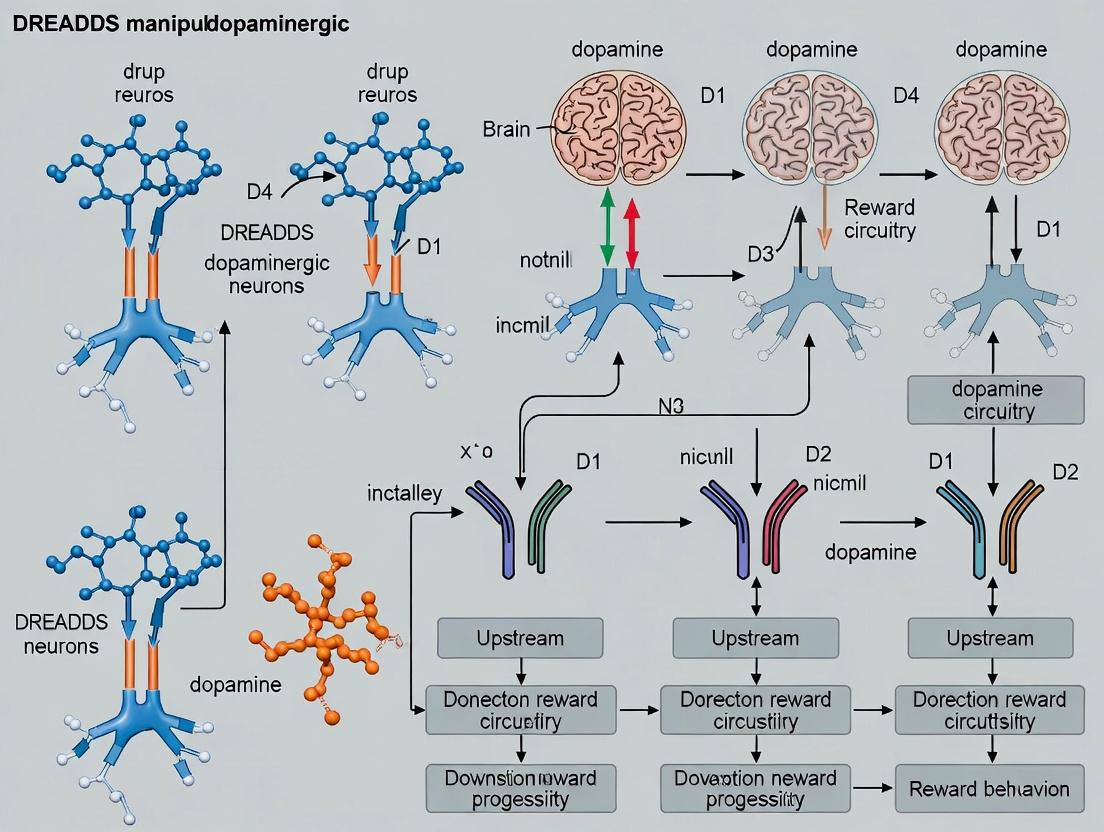
This article provides a detailed technical resource for researchers, scientists, and drug development professionals on the use of Designer Receptors Exclusively Activated by Designer Drugs (DREADDs) for targeted manipulation of...
Precision Control of Reward: A Comprehensive Guide to DREADD-Based Manipulation of Dopaminergic Circuits
Abstract
This article provides a detailed technical resource for researchers, scientists, and drug development professionals on the use of Designer Receptors Exclusively Activated by Designer Drugs (DREADDs) for targeted manipulation of dopaminergic circuitry in reward pathways. It covers the foundational biology of dopamine and reward, the methodological pipeline for DREADD implementation—from viral vector selection to behavioral assay integration—and addresses common troubleshooting and validation challenges. The content synthesizes current best practices, compares DREADDs to alternative techniques like optogenetics, and explores translational implications for neuropsychiatric disorders such as addiction, depression, and Parkinson's disease, offering a roadmap for future preclinical and therapeutic research.
The Dopamine-Reward Nexus: Building the Foundation for Circuit-Specific DREADD Targeting
This document provides detailed application notes and protocols for the study of core dopaminergic pathways within the context of a broader thesis on Designer Receptors Exclusively Activated by Designer Drugs (DREADDs) for circuit manipulation in reward research. The mesolimbic pathway (Ventral Tegmental Area to Nucleus Accumbens; VTA-NAc) is central to reward processing, motivation, and aversion. The nigrostriatal pathway (Substantia Nigra pars compacta to dorsal striatum; SNc-striatum) is primarily involved in motor control and habit formation, with contributions to reward-related learning. Precise manipulation of these circuits using chemogenetic tools like DREADDs allows for causal investigation of their roles in behavior and their dysregulation in neuropsychiatric disorders.
The Mesolimbic Pathway (VTA → NAc)
- Primary Neurotransmitter: Dopamine (DA)
- Function: Mediates reward prediction error, incentive salience ("wanting"), motivation, and aspects of aversive processing. It is a key substrate for natural rewards (e.g., food, social interaction) and drugs of abuse.
- Key Outputs: The VTA also projects to the prefrontal cortex (mesocortical pathway), amygdala, and hippocampus, integrating reward with executive function, emotion, and memory.
The Nigrostriatal Pathway (SNc → Dorsal Striatum)
- Primary Neurotransmitter: Dopamine (DA)
- Function: Critical for the initiation and control of voluntary movement, procedural learning, and the formation of stimulus-response habits. DA in this pathway also supports action-outcome learning and vigor.
Table 1: Core Comparison of Dopaminergic Pathways
| Feature | Mesolimbic Pathway (VTA-NAc) | Nigrostriatal Pathway (SNc-Striatum) |
|---|---|---|
| Origin | Ventral Tegmental Area (VTA) | Substantia Nigra pars compacta (SNc) |
| Primary Target | Nucleus Accumbens (NAc), ventral striatum | Dorsal Striatum (Caudate-Putamen) |
| Primary Behavioral Role | Reward, motivation, aversion, reinforcement | Motor control, habit formation, action selection |
| Key Associated Disorders | Addiction, depression, schizophrenia | Parkinson's disease, OCD, addiction habits |
| DREADD Targeting Commonality | High (hM3Dq/hM4Di in VTA neurons or terminals in NAc) | High (hM3Dq/hM4Di in SNc neurons or terminals in striatum) |
Key Experimental Protocols for DREADD-Based Investigation
Protocol 3.1: Stereotaxic Viral Delivery of DREADDs into Rodent VTA or SNc
Aim: To express activating (hM3Dq) or inhibiting (hM4Di) DREADDs selectively in dopaminergic neurons of the VTA or SNc.
Materials:
- Anesthetized adult mouse/rat in stereotaxic apparatus.
- Recombinant AAV (e.g., AAV5-hSyn-DIO-hM3Dq-mCherry for Cre-dependent expression in Dat-Cre mice).
- Microsyringe pump and glass capillary or Hamilton syringe.
- Standard surgical tools, bone drill, sutures.
Method:
- Anesthetize animal and secure head in stereotaxic frame.
- Expose skull and level bregma and lambda.
- Calculate target coordinates (e.g., Mouse VTA: AP -3.2 mm, ML ±0.5 mm, DV -4.3 mm from bregma).
- Drill a small craniotomy at target coordinates.
- Load viral vector into injection system and lower needle to target depth.
- Inject virus at a slow, controlled rate (e.g., 50 nl/min for a total of 500 nl).
- Wait 10 minutes post-injection before slowly retracting the needle.
- Suture wound and provide post-operative care.
- Allow 3-4 weeks for viral expression before behavioral testing.
Protocol 3.2: Chemogenetic Activation/Inhibition and Behavioral Assessment
Aim: To assess the role of VTA or SNc dopamine neurons in a reward-related behavior using DREADDs.
Materials:
- Clozapine-N-oxide (CNO) or more selective ligand like deschloroclozapine (DCZ).
- Saline vehicle.
- Appropriate behavioral apparatus (e.g., operant chambers, open field, rotarod).
Method:
- CNO/DCZ Preparation: Prepare CNO or DCZ fresh in sterile saline or DMSO/saline solution. Typical systemic injection dose: 0.3-3 mg/kg for CNO; 0.1-0.3 mg/kg for DCZ (i.p. or s.c.).
- Pre-treatment: Administer CNO/DCZ or vehicle 30-45 minutes prior to behavioral session to allow for receptor activation and neuronal modulation.
- Behavioral Paradigm Examples:
- Real-Time Place Preference (RTPP): Test VTA^hM3Dq activation's rewarding effect. Mouse explores two chambers; one is paired with CNO-induced neuronal activation.
- Sucrose Self-Administration/Progressive Ratio: Test motivation. VTA^hM4Di inhibition is expected to breakpoint.
- Rotarod or Skilled Reaching: Test motor function. SNc^hM4Di inhibition is expected to impair performance.
- Counterbalancing: Use within-subject or between-subject designs with appropriate vehicle controls and counterbalanced treatment order.
Protocol 3.3: Ex Vivo Validation using Electrophysiology or Fiber Photometry
Aim: To validate functional DREADD expression and measure neuronal activity changes.
Protocol 3.3a: Brain Slice Electrophysiology
- Prepare acute brain slices containing VTA/SNc or NAc/striatum from DREADD-expressing animals.
- Perform whole-cell patch-clamp recordings from identified neurons (mCherry+).
- Bath apply CNO (5-10 µM) and measure changes in firing rate (current-clamp) or synaptic currents (voltage-clamp).
Protocol 3.3b: In Vivo Fiber Photometry of Calcium Signals
- Co-inject AAV-DREADD and AAV-GCaMP into VTA/SNc. Implant optical fiber above the region.
- Connect implanted fiber to photometry system. Record fluorescence (Ca2+-dependent signal) during behavioral tasks.
- Administer CNO/DCZ and observe changes in population calcium activity relative to baseline and vehicle.
Visualization of Pathways and Experimental Workflow
Diagram 1: DREADD Experiment Workflow
Diagram 2: DA Pathways & Functional Outputs
The Scientist's Toolkit: Key Research Reagents & Materials
Table 2: Essential Reagents for DREADD Studies of Dopaminergic Pathways
| Item | Function & Application | Example/Notes |
|---|---|---|
| Cre-Driver Mouse Lines | Provides genetic specificity for targeting dopaminergic neurons. | Dat-IRES-Cre (DA neurons), TH-Cre (catecholaminergic). Critical for AAV-DIO-DREADD strategies. |
| DREADD AAV Vectors | Delivers genetic construct for chemogenetic receptor. | AAV5-hSyn-DIO-hM3Dq-mCherry (activate). AAV5-hSyn-DIO-hM4Di-mCherry (inhibit). Serotype (e.g., AAV5) affects tropism. |
| Designer Ligands | Administrated to activate DREADDs in vivo. | Clozapine-N-oxide (CNO): First-generation ligand. Deschloroclozapine (DCZ): More potent, selective, and brain-penetrant. |
| Fiber Photometry System | Records population neural activity in vivo during behavior. | Includes laser source, fluorescence detector, implantable optical fibers, and acquisition software. Used with GCaMP. |
| Patch-Clamp Rig | Validates DREADD function and measures synaptic changes ex vivo. | Electrophysiology setup for brain slice recordings. Bath application of CNO confirms neuronal excitation/inhibition. |
| Stereotaxic Apparatus | Enables precise intracranial viral injections and fiber implantation. | Standard rig with digital coordinate readout and microsyringe pump for consistent viral delivery. |
| Operant Conditioning Chambers | Assesses reward-related behaviors (self-administration, conditioned preference). | Configurable with levers, nose-pokes, liquid/food dispensers, and cue lights for sophisticated paradigms. |
Application Notes
Dopamine (DA) neuron phasic firing encodes a reward prediction error (RPE) signal, a core teaching signal in reinforcement learning models. Recent advances in circuit neuroscience, particularly the use of Designer Receptors Exclusively Activated by Designer Drugs (DREADDs), allow for precise manipulation of dopaminergic subpopulations to test causal hypotheses derived from electrophysiological recordings. Within the broader thesis of utilizing DREADDs for dissecting reward circuits, these tools enable researchers to move from correlative observations of firing patterns to causal demonstrations of their necessity and sufficiency in motivated behavior.
Key insights from recent studies (2023-2024) include:
- VTA DA Neuron Heterogeneity: Phasic firing in ventral tegmental area (VTA) DA neurons projecting to the nucleus accumbens (NAc) lateral shell is crucial for cue-triggered motivated pursuit, while activity in medial shell projections supports consumption.
- SNc DA in Learning: Substantia nigra pars compacta (SNc) DA phasic signals are integral for the acquisition and expression of cue-value associations in instrumental learning, not just for movement vigor.
- Tonic Signaling Modulation: Artificial modulation of tonic DA firing rates via DREADDs can bidirectionally shift the vigor of exploratory behavior and the willingness to work for reward, providing a manipulable model of motivational states.
Table 1: Effects of Chemogenetic Manipulation of Dopaminergic Subpopulations on Behavior
| Dopaminergic Pathway (Projection Target) | DREADD Manipulation | Behavioral Paradigm | Key Quantitative Effect | Proposed Signal Encoded |
|---|---|---|---|---|
| VTA → NAc Lateral Shell | Inhibition (hM4Di) | Cue-Triggered Reward Seeking | ↓ Pursuit velocity by ~40%; No change in consumption. | Phasic firing for incentive salience. |
| VTA → NAc Medial Shell | Inhibition (hM4Di) | Progressive Ratio Schedule | ↓ Breakpoint by ~55%; Reduced lick rate. | Phasic firing for reward consumption. |
| SNc → Dorsal Striatum | Inhibition (hM4Di) | Instrumental Learning | ↓ Initial learning rate by ~65%; ↓ response rate after reward devaluation. | Phasic RPE for model-based learning. |
| VTA (Global Tonic) | Activation (hM3Dq) | Open Field Exploration | ↑ Total distance traveled by 120%. | Tonic firing for behavioral activation state. |
| VTA (Global Tonic) | Inhibition (hM4Di) | Effort-Based Choice (T-maze) | ↓ High-effort choice preference from 80% to 35%. | Tonic firing for willingness to work. |
Table 2: Common DREADD Ligands & Pharmacokinetics
| Ligand | DREADD Receptor | Typical Dose (IP) | Time to Peak Effect | Half-life in Vivo | Key Consideration |
|---|---|---|---|---|---|
| Clozapine N-Oxide (CNO) | hM3Dq, hM4Di | 1-5 mg/kg | 30-45 min | ~2 hours | Back-metabolizes to clozapine; use controls. |
| Deschloroclozapine (DCZ) | hM3Dq, hM4Di | 0.1-0.3 mg/kg | 15-30 min | ~1 hour | Higher potency, lower off-target effects than CNO. |
| Compound 21 (C21) | hM3Dq, hM4Di | 1-3 mg/kg | 20-40 min | ~1.5 hours | Minimal back-conversion; widely used. |
| JHU37160 (J60) | hM3Dq, hM4Di | 0.1-0.5 mg/kg | 10-25 min | ~45 min | High brain penetrance and potency. |
Experimental Protocols
Protocol 1: Validating DREADD Expression & Function in Midbrain DA Neurons
Objective: To confirm specific and functional expression of DREADDs in targeted dopaminergic circuits. Materials: TH-Cre mouse, AAV5-hSyn-DIO-hM3Dq-mCherry (or hM4Di), stereotaxic apparatus, DCZ/CNO, antibodies (anti-TH, anti-mCherry). Procedure:
- Stereotaxic Surgery: Anesthetize mouse and inject 300-500 nL of Cre-dependent DREADD virus into VTA (AP: -3.2 mm, ML: +/-0.5 mm, DV: -4.3 mm from bregma) or SNc (AP: -3.2 mm, ML: +/-1.3 mm, DV: -4.2 mm).
- Recovery: Allow 3-4 weeks for viral expression and fiber-optic cannula implantation if used.
- Immunohistochemistry (IHC): Perfuse and section brain. Co-stain with anti-TH (1:1000) and anti-mCherry (1:2000). Image with confocal microscopy.
- Validation Metrics: Calculate co-localization (% of mCherry+ cells that are TH+; target >90%). For functionality, administer DCZ (0.3 mg/kg, IP) and stain for c-Fos (1:1000) 90 min later in target regions (e.g., NAc).
Protocol 2: Assessing the Role of Phasic DA in Cue-Triggered Motivation
Objective: To test the necessity of phasic DA in a specific pathway for incentive motivation. Materials: DREADD-expressing mice (VTA→NAc), behavioral chamber with lickometer, cue light, fluid pump, videotracking software. Procedure:
- Training: Water-restrict mice. Train on an operant Pavlovian contingency: 5s cue light → 10s reward access (sucrose). 50 trials/session for 7 days.
- Baseline Test: On Day 8, run test session. Measure: (a) latency to first lick post-cue, (b) velocity of movement towards reward port, (c) total licks.
- DREADD Inhibition Test: On Day 9, administer DCZ (0.3 mg/kg, IP) or vehicle 30 min prior to an identical test session. Counterbalance order.
- Data Analysis: Compare vehicle vs. DCZ sessions using paired t-tests for each metric. A selective reduction in pursuit velocity (but not consumption) implicates the pathway in incentive motivation.
Protocol 3: Probing Tonic DA in Effort-Based Decision Making
Objective: To manipulate tonic DA signaling and measure its effect on willingness to expend effort. Materials: DREADD-expressing mice (global VTA), T-maze, weights to create high-effort arm. Procedure:
- Maze Training: Mice learn that one T-maze arm (high-effort) has a large reward (4 pellets) but a barrier to climb, while the other (low-effort) has a small reward (1 pellet) with free access.
- Baseline Preference: Over 3 days, establish stable preference (typically >70% for high-effort).
- Chemogenetic Manipulation: On test days, administer CNO (3 mg/kg, IP) or vehicle 45 min before the 10-trial session. Use within-subjects crossover design.
- Analysis: Compare the percentage of high-effort choices between vehicle and CNO conditions. A significant decrease with inhibition indicates a role for tonic DA in sustaining effort.
Visualizations
Title: Dopamine RPE Signaling and Plasticity
Title: DREADD-Based Experimental Workflow
The Scientist's Toolkit: Research Reagent Solutions
| Item/Category | Example Product/Catalog # | Function in DA Reward Research |
|---|---|---|
| Cre-Driver Mouse Lines | TH-IRES-Cre (Jackson Labs #008601) | Enables genetic targeting of catecholaminergic (dopaminergic) neurons for intersectional viral strategies. |
| DREADD AAV Vectors | AAV5-hSyn-DIO-hM3Dq-mCherry (Addgene #44361) | Allows Cre-dependent expression of activating (hM3Dq) or inhibitory (hM4Di) DREADDs for bidirectional control of neuronal activity. |
| Potent DREADD Agonist | Deschloroclozapine (DCZ) (Hello Bio HB6126) | High-potency, brain-penetrant ligand with minimal off-target effects, used to activate DREADDs in vivo. |
| Fiber Photometry System | Tucker-Davis Technologies RZ5P + LED Driver | Measures population-level calcium (GCaMP) or dopamine (dLight) dynamics in freely behaving animals, correlating with phasic firing. |
| In Vivo Electrophysiology | Neuropixels 2.0 Probes | Simultaneously records hundreds of single neurons, enabling identification of phasic DA firing patterns across multiple brain regions. |
| DA Sensor Virus | AAV9-hSyn-dLight1.3b (Addgene #126854) | Genetically encoded dopamine sensor for optical measurement of DA release with high spatiotemporal resolution. |
| Operant Behavior Chamber | Med Associates ENV-307W with Video Tracking | Fully programmable environment for running precise reinforcement learning tasks (Pavlovian, operant) with integrated behavioral monitoring. |
| Stereotaxic Frame | Kopf Model 1900 with Digital Atlas Integration | Provides precise, repeatable targeting of viral injections or probe placements into small mouse midbrain nuclei (VTA, SNc). |
Chemogenetics is the engineering of macromolecules to interact with previously inert, small molecules. Designer Receptors Exclusively Activated by Designer Drugs (DREADDs) represent a transformative chemogenetic technology, enabling precise, non-invasive, and reversible manipulation of specific neuronal populations. Within the thesis context of manipulating dopaminergic circuits in reward research, DREADDs offer a powerful alternative to traditional electrophysiological or optogenetic methods, particularly for long-term behavioral studies where implantable hardware is impractical. This article details the rationale, evolution, and practical application of DREADD technology for researchers targeting the brain's reward pathways.
The Rationale and Evolution of DREADD Technology
Rationale and Core Mechanism
DREADDs are engineered G protein-coupled receptors (GPCRs) derived from human muscarinic receptors. Their core rationale lies in their exquisite selectivity for a pharmacologically inert ligand, clozapine-N-oxide (CNO), over endogenous neurotransmitters. This orthogonal ligand-receptor pair allows for the remote control of specific intracellular signaling cascades in genetically defined cell populations.
Key Evolutionary Milestones:
- Origin: Developed by Bryan Roth's laboratory, the first DREADDs were created via directed molecular evolution of the human M3 muscarinic receptor.
- Ligand Evolution: Concerns about CNO's potential back-metabolism to clozapine spurred the development of new ligands like Compound 21 (C21) and JHU37160 (J60), which are more potent, selective, and do not convert to clozapine in vivo.
- Receptor Expansion: The toolkit has expanded beyond the original hM3Dq (Gq-coupled) and hM4Di (Gi-coupled) to include:
- Gs-DREADD (rM3Ds): For cAMP enhancement.
- Golf-DREADD: Specifically tailored for striatal neurons.
- β-arrestin-biased DREADDs: To isolate arrestin pathway signaling.
- Delivery Methods: Evolution from viral vectors (AAV, lentivirus) to transgenic Cre-driver rodent lines allows for stable, cell-type-specific expression compatible with the thesis goal of targeting dopaminergic neurons (e.g., in VTA or SNc).
The following table summarizes the key DREADD receptors used in neuromodulation, particularly relevant for dopaminergic circuit manipulation.
Table 1: Common DREADD Receptors and Their Key Properties
| DREADD Receptor | Parent Receptor | Coupling | Primary Signaling Effect | Behavioral/Physiological Outcome (Upon Agonist Administration) | Common Targeting in Reward Circuits |
|---|---|---|---|---|---|
| hM3Dq | Human M3 Muscarinic | Gq | ↑ IP3, ↑ Ca²⁺, ↑ Neuronal Firing | Neuronal excitation, increased burst firing | VTA dopamine neurons to drive reinforcement |
| hM4Di | Human M4 Muscarinic | Gi | ↓ cAMP, ↑ K⁺ currents, ↓ Neuronal Firing | Neuronal silencing, reduced neurotransmitter release | VTA dopamine neurons to probe anhedonia or extinction |
| rM3Ds | Rat M3 Muscarinic | Gs | ↑ cAMP, ↑ Neuronal Firing | Sustained neuronal excitation | Striatal projection neurons to modulate valence |
| κ-opioid DREADD (KORD) | Kappa Opioid Receptor | Gi | ↓ cAMP, ↑ K⁺ currents | Neuronal silencing (orthogonal to hM3Dq/hM4Di) | Allows bidirectional control in same animal with CNO and Salvinorin B |
Table 2: Common DREADD Agonists: Pharmacokinetic Properties
| Designer Drug | Potent DREADD Receptor(s) | Typical Dose Range (i.p. in rodents) | Key Advantage | Note for Reward Studies |
|---|---|---|---|---|
| Clozapine-N-Oxide (CNO) | hM3Dq, hM4Di | 1-10 mg/kg | Well-characterized, widely used | Potential reverse metabolism to clozapine; requires careful control groups. |
| Compound 21 (C21) | hM3Dq, hM4Di | 1-3 mg/kg | No back-conversion to clozapine; higher brain penetrance | Now considered a first-line agonist for hmDREADDs. |
| JHU37160 (J60) | hM3Dq, hM4Di | 0.1-0.5 mg/kg | High potency, excellent brain penetration, minimal off-targets | Enables lower doses, reducing potential side-effects in long-term behavioral paradigms. |
| Salvinorin B (SalB) | KORD | 1-3 mg/kg | Orthogonal ligand for KORD; allows bidirectional chemogenetics | Used in conjunction with C21/J60 for complex circuit interrogation. |
Application Notes and Protocols for Dopaminergic Circuit Research
Protocol: DREADD-mediated Activation of Midbrain Dopaminergic Neurons in a Reward Task
Aim: To assess the sufficiency of VTA dopamine neuron activity in driving conditioned place preference (CPP).
Materials & Workflow:
- Targeting: Inject Cre-dependent AAV8-hSyn-DIO-hM3Dq-mCherry into the VTA of DAT-Cre mice.
- Control: Inject AAV8-hSyn-DIO-mCherry in control cohort.
- Expression: Allow 3-4 weeks for viral expression.
- Habituation: Handle animals and habituate to i.p. injection procedure for 3 days.
- Conditioning: Over 3 days, administer C21 (3 mg/kg, i.p.) and confine animal to one distinct context for 30 min. On alternating days, administer vehicle in the paired context.
- Testing: On test day (no drug), allow free exploration of the multi-chamber apparatus for 15 min. Record time spent in each context.
- Validation: Perform immunohistochemistry (TH, mCherry) to confirm targeted expression.
Protocol: DREADD-mediated Inhibition for Probing Necessity in Sucrose Seeking
Aim: To determine the necessity of nigrostriatal dopamine neuron activity in operant sucrose seeking.
Materials & Workflow:
- Targeting: Inject Cre-dependent AAV5-hSyn-DIO-hM4Di-GFP into the SNc of DAT-Cre rats.
- Training: Train rats on a fixed-ratio (FR5) schedule to press a lever for sucrose pellets.
- Expression & Habituation: As above.
- Testing: On test day, administer J60 (0.25 mg/kg, i.p.) or vehicle 45 minutes prior to the operant session in a within-subject, counterbalanced design.
- Measurement: Compare active lever presses, rewards earned, and locomotor activity between conditions.
- Ex vivo Validation: Prepare brain slices post-experiment. Apply CNO (10 µM) to recorded GFP+ neurons in the SNc and measure hyperpolarization or reduced firing rate.
The Scientist's Toolkit: Key Research Reagent Solutions
Table 3: Essential Materials for DREADD Experiments in Reward Research
| Item | Function | Example/Note |
|---|---|---|
| Cre-dependent DREADD AAV | Enables cell-type-specific expression in Cre-expressing neurons (e.g., DAT, TH). | AAV8-hSyn-DIO-hM3Dq-mCherry; serotype choice (AAV5, AAV8, AAV9) affects tropism. |
| Cre-driver Rodent Line | Provides genetic access to target neuronal population. | DAT-IRES-Cre, TH-Cre mice/rats for dopaminergic neurons. |
| Validated DREADD Agonist | The inert small molecule that selectively activates the engineered receptor. | Compound 21 (C21) or JHU37160 (J60) for hmDREADDs; SalB for KORD. |
| Control Viral Vector | Critical for controlling for effects of viral expression, surgery, and ligand. | AAV with fluorophore only (e.g., DIO-mCherry). |
| Validated Antibodies | For histological verification of targeting and DREADD expression. | Anti-TH (dopamine neuron marker), Anti-GFP/RFP (DREADD tag). |
| c-Fos Antibodies | To map functional neuronal activation following DREADD stimulation. | Indicates immediate early gene upregulation post-hM3Dq activation. |
| In vivo Ligand | For systemic administration in behavioral assays. | C21, dissolved in sterile saline or DMSO/saline mix per manufacturer protocol. |
| Ex vivo Ligand | For bath application in slice electrophysiology validation. | CNO or C21 at 1-10 µM in artificial cerebrospinal fluid (aCSF). |
Visualizations
DREADD hM3Dq Gq Pathway to Behavior
Workflow for DREADD Reward Behavior Study
hM4Di-Mediated Inhibition of DA Neurons
Within the thesis research on chemogenetic manipulation of dopaminergic circuits in reward processing, selecting the appropriate Designer Receptor Exclusively Activated by Designer Drug (DREADD) is critical. The most commonly used DREADDs—hM3Dq, hM4Di, and the more recently engineered rM3Ds—offer distinct modes of cellular modulation via different G-protein coupling. These receptors, derived from human muscarinic receptors (M3 and M4), are inert to native acetylcholine but are potently and selectively activated by the pharmacologically inert ligand clozapine-N-oxide (CNO) or its metabolite, clozapine. This guide provides a comparative pharmacodynamic profile and detailed protocols for their application in dopaminergic circuit research.
Comparative Pharmacodynamics & G-protein Coupling
The following tables synthesize key pharmacodynamic and functional properties.
Table 1: Core Receptor Characteristics and G-protein Coupling
| Receptor | Parent Receptor | Primary G-protein Coupling | Canonical Signaling Outcome in Neurons | Preferred Ligand (in vivo) | Key Effector Pathways |
|---|---|---|---|---|---|
| hM3Dq | Human M3 | Gq | Neuronal depolarization and excitation | CNO / Clozapine | PLCβ → IP3 → Ca²⁺ release; PKC activation |
| hM4Di | Human M4 | Gi/o | Neuronal hyperpolarization and inhibition | CNO / Clozapine | Inhibition of AC → ↓cAMP; GIRK channel activation |
| rM3Ds | Rat M3 | Gs | Neuronal modulation via increased cAMP | CNO / Clozapine | AC activation → ↑cAMP → PKA signaling |
Table 2: Key Pharmacokinetic & Operational Parameters
| Parameter | hM3Dq | hM4Di | rM3Ds | Notes |
|---|---|---|---|---|
| Common Ligand EC50 (CNO) | ~5-30 nM | ~5-30 nM | ~10-40 nM | In vitro, cell-based assays. Potency can vary by system. |
| Common Ligand EC50 (Clozapine) | ~1-5 nM | ~1-5 nM | ~1-10 nM | Clozapine is more potent and brain-penetrant than CNO. |
| Typical In Vivo Dose (CNO) | 0.1-5 mg/kg (i.p.) | 0.1-5 mg/kg (i.p.) | 0.3-5 mg/kg (i.p.) | Dose depends on expression level and route. |
| Onset of Action (post-injection) | 15-30 min | 15-30 min | 15-30 min | For CNO (i.p.). Clozapine may act faster. |
| Peak Effect | ~30-60 min | ~30-60 min | ~30-60 min | |
| Duration of Action | Several hours (~2-6 h) | Several hours (~2-6 h) | Several hours (~2-6 h) |
Detailed Experimental Protocols
Protocol 1: Validating DREADD Expression and Functionality In Vitro
Objective: To confirm receptor expression and G-protein coupled signaling efficacy in transfected cell lines (e.g., HEK293T) or primary neuronal cultures prior to in vivo use.
Materials:
- Plasmid DNA (pAAV-hSyn-DIO-hM3Dq-mCherry, -hM4Di-mCherry, -rM3Ds-mCherry)
- HEK293T cells or primary neuronal cultures
- Transfection reagent (e.g., Lipofectamine 3000, calcium phosphate)
- Clozapine N-oxide (CNO) stock solution (10 mM in DMSO)
- FLIPR Calcium 6 Assay kit (for hM3Dq) or cAMP assay kit (for hM4Di/rM3Ds)
- Fluorescence microscope
Procedure:
- Cell Transfection: Seed cells in appropriate plates. Transfect with DREADD plasmid using manufacturer's protocol. Include an empty vector control.
- Expression Check (24-48h post-transfection): Visualize mCherry fluorescence to confirm transfection efficiency and receptor localization (typically plasma membrane).
- Functional Assay (48h post-transfection):
- For hM3Dq (Gq): Load cells with Calcium 6 dye. Using a fluorescent plate reader, establish a baseline, then add CNO (1 µM final) and monitor intracellular Ca²⁺ flux (peak excitation/emission ~490/525 nm).
- For hM4Di (Gi) & rM3Ds (Gs): Use a commercial cAMP accumulation assay (e.g., ELISA or FRET-based). Stimulate cells with forskolin (10 µM) to elevate cAMP. Apply CNO (1 µM):
- hM4Di: CNO will inhibit forskolin-induced cAMP production.
- rM3Ds: CNO will increase cAMP production above baseline (forskolin may be omitted).
- Data Analysis: Normalize responses to control wells. For hM3Dq, plot ΔF/F over time. For cAMP assays, calculate pmol cAMP/well or % forskolin response.
Protocol 2: In Vivo Chemogenetic Manipulation of Dopaminergic Neurons in Reward Tasks
Objective: To selectively activate or inhibit midbrain dopaminergic neurons during behavioral paradigms (e.g., operant conditioning, place preference).
Materials:
- Viral Vector: AAV5-EF1α-DIO-hM3Dq/hM4Di/rM3Ds-mCherry (for Cre-dependent expression in DAT-Cre mice/rats)
- Stereotaxic surgery equipment
- Clozapine N-oxide (CNO), dissolved in sterile saline with 1-5% DMSO (or clozapine in dilute acidic saline)
- Behavioral apparatus (operant chambers, open field, etc.)
Procedure:
- Stereotaxic Surgery: Anesthetize DAT-Cre animal. Inject ~0.5-1 µL of the DREADD AAV unilaterally/bilaterally into the ventral tegmental area (VTA) (coordinates relative to Bregma: AP -3.2 mm, ML ±0.5 mm, DV -4.3 mm for mouse). Allow 3-4 weeks for expression.
- Habituation: Habituate animals to handling and injection procedure (i.p. or s.c.).
- Behavioral Testing:
- On test day, administer CNO (1-3 mg/kg, i.p.) or vehicle 30 minutes prior to behavioral session.
- Conduct the reward-related task (e.g., sucrose self-administration, real-time place preference).
- Post-hoc Validation: Perfuse and fix brain. Perform immunohistochemistry (anti-mCherry, anti-TH) to confirm DREADD expression in dopaminergic (TH+) neurons in the VTA.
- Data Analysis: Compare behavioral outcomes (e.g., lever presses, time in paired chamber) between CNO and vehicle sessions within subjects, or between DREADD and control groups.
Signaling Pathway Diagrams
The Scientist's Toolkit: Key Research Reagent Solutions
Table 3: Essential Reagents for DREADD-based Reward Circuit Research
| Item | Function/Description | Example Vendor/Cat # (for reference) |
|---|---|---|
| DREADD AAV Vectors | Cre-dependent or constitutive AAVs for in vivo neuronal expression of hM3Dq, hM4Di, or rM3Ds. | Addgene (various), UNC Vector Core |
| DAT-Cre Transgenic Animals | Mouse or rat lines expressing Cre recombinase under the dopamine transporter promoter for targeting dopaminergic neurons. | The Jackson Laboratory (e.g., B6.SJL-Slc6a3 |
| Clozapine N-oxide (CNO) | The classic, pharmacologically inert DREADD agonist. Note: reverse-metabolized to clozapine in some species. | Hello Bio (HB1805), Tocris (6329) |
| Clozapine | Potent DREADD agonist with better brain penetration. Requires careful dosing to avoid endogenous receptor effects. | Sigma-Aldrich (C6305) |
| JHU37160 (J60) | A novel, potent DREADD agonist with improved bioavailability and reduced off-target potential vs. CNO. | Hello Bio (HB6126), custom synthesis |
| Fluorescent Calcium Indicators (e.g., Cal-6, GCaMP) | For validating hM3Dq Gq-mediated calcium mobilization in vitro or in vivo imaging. | Abcam, AAT Bioquest |
| cAMP Assay Kits (ELISA/FRET) | For validating Gi-mediated inhibition or Gs-mediated activation of adenylyl cyclase by hM4Di/rM3Ds. | Cisbio, Abcam |
| Anti-mCherry/RFP Antibody | For immunohistochemical validation of DREADD receptor expression post-behavior. | Novus Biologicals (NBP2-25158) |
| Anti-Tyrosine Hydroxylase (TH) Antibody | For confirming co-localization of DREADDs in dopaminergic neurons. | Millipore Sigma (AB152) |
1. Introduction Within a thesis investigating DREADDs for manipulating dopaminergic circuits in reward research, selecting the appropriate neuromodulation tool is a critical first step. The research question must be precisely defined to align with the strengths and limitations of each technology. This guide compares DREADDs with optogenetics and electrical microstimulation, providing application notes and protocols to inform experimental design.
2. Tool Comparison: Key Characteristics
Table 1: Quantitative Comparison of Neuromodulation Tools
| Feature | DREADDs | Optogenetics | Electrical Microstimulation |
|---|---|---|---|
| Temporal Precision | Minutes to Hours (h) | Milliseconds (ms) | Milliseconds (ms) |
| Spatial Precision | Cell-Type Specific | Cell-Type & Axon Projection Specific | Regional (Multi-Cell) |
| Invasiveness | Low (Systemic CNO/DCZ) | High (Optic Implant) | High (Electrode Implant) |
| Effect Duration | 1-9 hours (CNO) | Millisconds to Seconds | Millisconds to Seconds |
| Common Readout | Behavioral Tasks, fMRI | In vivo Electrophysiology, Fast Behavior | Behavior, Physiology |
| Throughput | High (multiple animals) | Medium | Low |
| Key Limitation | Pharmacokinetics of Ligand | Light Scatter/Depth | Lack of Cell-Type Specificity |
3. Application Notes: Selecting the Right Tool
- Use DREADDs When: Your question concerns the causal, prolonged modulation of a defined dopaminergic population on integrated behavioral states (e.g., motivation, conditioning, craving) over timescales relevant to learning or pathological states. Ideal for complex behavioral paradigms, multi-region circuit mapping with dual-virus strategies, and combination with neuroimaging (fMRI).
- Use Optogenetics When: Your question requires millisecond precision to dissect the precise timing of dopaminergic firing in reward prediction error, reinforcement learning, or rapid behavioral triggering. Essential for probing synaptic transmission and axonal projections.
- Use Electrical Stimulation When: The question focuses on regional activation in a manner analogous to clinical deep brain stimulation (DBS) for reward, or for foundational mapping studies where genetic access is not required.
4. Experimental Protocols
Protocol 1: DREADD-Based Inhibition of VTA Dopaminergic Neurons in a Sucrose Preference Task
- Objective: To determine the necessity of sustained VTA dopamine activity for hedonic response.
- Viruses: AAV-hSyn-DIO-hM4D(Gi)-mCherry (or AAV8-hSyn-DIO-hM4D(Gi)-mCherry for retrograde access from NAc).
- Animal Model: DAT-Cre or TH-Cre mice.
- Stereotaxic Surgery: Inject virus into VTA (-3.3 AP, ±0.5 ML, -4.3 DV mm from bregma). Allow 3-4 weeks for expression.
- Validation: Confirm expression and functionality via ex vivo electrophysiology (1-10 µM CNO-induced hyperpolarization).
- Behavioral Protocol:
- Habituate mice to i.p. injection and testing chamber.
- Pre-Test: Conduct 24-hour two-bottle choice (sucrose vs. water) to establish baseline preference.
- Test Day: Administer either vehicle or DCZ/CNO (0.1-1 mg/kg, i.p.) 30 minutes prior to a 1-hour shortened access test.
- Analysis: Compare sucrose preference (%) and total licks between vehicle and DCZ/CNO conditions.
- Controls: Include Cre-negative controls and mCherry-only controls.
Protocol 2: Optogenetic Stimulation of VTA-NAc Dopaminergic Terminals in Real-Time Place Preference
- Objective: To test the sufficiency of phasic dopamine release in the NAc for positive reinforcement.
- Viruses: AAV5-EF1α-DIO-ChR2-eYFP injected into VTA of DAT-Cre mice.
- Implants: Chronic optic fiber implant above NAc core (+1.3 AP, ±1.5 ML, -4.2 DV mm).
- Validation: Confirm light-evoked dopamine release with fast-scan cyclic voltammetry (FSCV) in acute slices.
- Behavioral Protocol (RTPP):
- Habituate mice to handling and tethering.
- Pre-Test: Allow free exploration of a two-chamber arena for 15 min (baseline preference).
- Conditioning: Over 2 days, conduct 4x 20-min sessions. Entry into one paired chamber triggers 473 nm, 20 Hz, 5 ms pulse width laser stimulation (10-15 mW at fiber tip). The other chamber has no stimulation.
- Test Day: Conduct a 15-min stimulation-free test. Measure time spent in each chamber.
- Analysis: Compare time in the paired chamber during Test vs. Pre-Test.
5. Signaling & Workflow Diagrams
DREADD hM4Di Inhibitory Signaling Pathway
Decision Workflow for Tool Selection
6. The Scientist's Toolkit: Research Reagent Solutions
Table 2: Essential Materials for Dopaminergic Reward Manipulation
| Item | Function & Application |
|---|---|
| AAV-hSyn-DIO-hM3Dq/hM4Di | Cre-dependent DREADD effector virus for cell-type specific neuromodulation. |
| Deschloroclozapine (DCZ) | Potent, selective, and fast-acting DREADD agonist with superior pharmacokinetics vs. CNO. |
| AAV-EF1α-DIO-ChR2-eYFP | Cre-dependent channelrhodopsin virus for optogenetic excitation. |
| DAT-IRES-Cre or TH-Cre Mice | Driver lines for targeting dopaminergic neurons. |
| Ceramic Ferrule & Optical Fiber | For chronic in vivo optogenetic light delivery. |
| Miniature Microdrive / Electrode Array | For in vivo electrophysiology recordings during neuromodulation. |
| Fast-Scan Cyclic Voltammetry (FSCV) Setup | To measure real-time, phasic dopamine release with optogenetics. |
| DeepLabCut or BORIS | Software for automated, markerless tracking of complex reward-related behaviors. |
From Design to Data: A Step-by-Step Protocol for DREADD Experiments in Dopamine Circuits
Within the broader thesis investigating the use of Designer Receptors Exclusively Activated by Designer Drugs (DREADDs) to manipulate dopaminergic circuits in reward research, achieving precise cellular targeting is paramount. Viral vectors, primarily adeno-associated viruses (AAVs), are the primary vehicles for in vivo DREADD delivery. The selection of the promoter—the genetic sequence driving transgene expression—is the critical determinant of cell-type specificity. This application note details the strategic use of specific (e.g., DAT, TH) and conditional (Cre-dependent) promoters for targeting dopaminergic neurons and their subpopulations in reward pathways like the ventral tegmental area (VTA) and substantia nigra pars compacta (SNc).
Promoter Strategies for Dopaminergic Targeting
Specific Promoters: DAT & TH
The dopamine transporter (DAT, Slc6a3) and tyrosine hydroxylase (TH) genes are canonical markers of dopaminergic neurons. Promoters from these genes offer varying degrees of specificity and expression strength.
Quantitative Comparison of Specific Promoter Performance: Table 1: Characteristics of Specific Dopaminergic Promoters in AAV Vectors
| Promoter | Size (bp) | Target Cell Type | Relative Expression Strength | Specificity (DA Neurons) | Key Considerations |
|---|---|---|---|---|---|
| hDAT | ~1.2 - 4.5 kb | Midbrain DA neurons | Moderate to High | High | Larger size can limit AAV packaging capacity; excellent for VTA/SNc. |
| mTH | ~2.5 - 9 kb | All catecholaminergic neurons (DA, NE) | Moderate | Moderate (broader) | Can drive expression in noradrenergic neurons; long versions are highly specific but very large. |
| ePet1 | ~1.3 kb | Serotonergic neurons | High | None (5-HT specific) | Included as a critical control for off-target specificity in reward circuits. |
| Synapsin (hSyn) | ~0.5 kb | Pan-neuronal | Very High | Low (all neurons) | Useful for broad neuronal expression but lacks DA specificity. |
Conditional (Cre-dependent) Expression Strategy
For unparalleled specificity in defined genetic subpopulations or projection-defined neurons, Cre-dependent (DIO - Double-floxed Inverse Orientation) AAV vectors are used. This system requires a mouse line expressing Cre recombinase under a cell-type-specific promoter (e.g., DAT-IRES-Cre).
Protocol 1: Stereotaxic Delivery of Cre-dependent AAV-DREADD for Reward Circuit Manipulation
Objective: Express hM3Dq DREADD specifically in VTA dopaminergic neurons of a DAT-Cre mouse.
Materials (Research Reagent Solutions Toolkit): Table 2: Essential Reagents and Materials
| Item | Function | Example Product/Catalog # |
|---|---|---|
| AAV5-EF1α-DIO-hM3Dq-mCherry | Cre-dependent DREADD vector. mCherry reports expression. | Addgene 44361 or custom order from viral core. |
| DAT-IRES-Cre Mouse Line | Provides Cre expression in DAT+ neurons. | JAX Stock #006660 |
| Clozapine N-oxide (CNO) | Inert ligand to activate hM3Dq DREADD. | Hello Bio HB6149 (prepared in sterile saline). |
| Sterile Saline (0.9%) | Vehicle for CNO and viral vector dilution. | Sigma-Aldrich S8776 |
| Micropipette Puller & Glass Capillaries | For creating fine-tip injection needles. | Sutter Instrument P-97 |
| Nanolitre Injector & Controller | Precise delivery of small viral volumes. | World Precision Instruments Nanoject III |
| Stereotaxic Frame with Digital Display | Precise skull positioning and coordinate targeting. | Kopf Instruments Model 940 |
| Small Animal Anesthesia System | For isoflurane-induced anesthesia. | VetEquip or similar |
| Brain Slice Electrophysiology Setup | For functional validation (CNO-induced depolarization). | MultiClamp 700B, Digidata 1550 |
Procedure:
- Viral Preparation: Thaw AAV aliquot on ice. Centrifuge briefly before loading. Dilute if necessary in sterile saline to desired titer (typically >1x10^12 vg/mL).
- Animal Preparation: Anesthetize adult DAT-Cre mouse with isoflurane (4% induction, 1-2% maintenance). Secure in stereotaxic frame with ear bars. Apply ophthalmic ointment. Shave scalp and disinfect with iodine/ethanol.
- Craniotomy: Make a midline scalp incision. Level skull (Bregma and Lambda in same DV plane). Calculate coordinates for VTA (e.g., AP: -3.2 mm, ML: +0.5 mm from Bregma; DV: -4.3 mm from skull surface). Drill a small burr hole.
- Microinjection: Load ~1 µL of viral suspension into a glass capillary needle. Lower needle to target DV coordinate at a slow rate (e.g., 1 µm/s). Inject 500 nL at a rate of 100 nL/min. Wait 10 minutes post-injection before slowly retracting the needle.
- Post-operative Care: Suture the wound, administer analgesic (e.g., carprofen), and monitor until recovery.
- Incubation: Allow 3-4 weeks for robust transgene expression.
- Validation: Perfuse and perform immunohistochemistry for mCherry and TH to confirm co-localization. Conduct electrophysiological recordings in brain slices to verify CNO-induced (5-10 µM) excitation of mCherry+ neurons.
- Behavioral Assay: Administer CNO (3 mg/kg, i.p.) 30 minutes prior to place conditioning or operant self-stimulation tests to assess DREADD-mediated manipulation of reward behavior.
Data Analysis and Interpretation
- Specificity Quantification: Calculate the percentage of mCherry+ cells that are TH+ (should be >90% for DAT promoter/DIO strategy) and the percentage of TH+ cells in the region that are mCherry+ (infection efficiency).
- Functional Validation: Electrophysiology data should show a significant increase in firing rate of mCherry+ neurons upon CNO application compared to baseline or vehicle.
Visualizing Promoter Strategy Logic and Experimental Workflow
Title: Logic Flow for Selecting a DA Targeting Promoter
Title: Workflow for DREADD-Mediated Reward Circuit Manipulation
This protocol is framed within a thesis investigating the use of Designer Receptors Exclusively Activated by Designer Drugs (DREADDs) to dissect dopaminergic (DA) circuit function in reward processing. Precise stereotaxic delivery of viral vectors encoding DREADDs (e.g., hM3Dq, hM4Di) into DA neuron populations (VTA) or their projection targets (NAc, PFC) is the critical first step. Subsequent behavioral assays, combined with systemic administration of the inert ligand (e.g., CNO, JHU37160), allow for temporally controlled manipulation of specific nodes within the mesolimbic and mesocortical pathways. The accuracy of the initial surgical targeting dictates the specificity and interpretability of all downstream results.
Quantitative Stereotaxic Data for Rodent Models
Table 1: Standard Stereotaxic Coordinates for Adult Mouse (C57BL/6J, ~25g, Bregma Flat Skull)
| Brain Region | Abbreviation | AP (mm from Bregma) | ML (mm from Midline) | DV (mm from Dura) | Common Viral Serotype | Injection Volume (nL) |
|---|---|---|---|---|---|---|
| Ventral Tegmental Area | VTA | -3.2 to -3.4 | ±0.4 to ±0.5 | -4.2 to -4.5 | AAV5, AAV9 | 50-100 |
| Nucleus Accumbens (Core) | NAc | +1.5 to +1.7 | ±1.4 | -4.2 to -4.5 | AAV5, AAV2retro, AAV9 | 200-500 |
| Prefrontal Cortex (Prelimbic) | PFC | +2.0 to +2.2 | ±0.4 | -2.2 to -2.5 | AAV5, AAV1 | 150-300 |
Table 2: Critical Parameters for High-Precision Injection
| Parameter | Optimal Range/Value | Impact on Precision |
|---|---|---|
| Pipette/Needle Bevel Angle | 30-45° | Reduces tissue deflection, improves target depth accuracy. |
| Injection Flow Rate | 20-50 nL/min | Minimizes backflow and tissue damage; allows for controlled diffusion. |
| Post-Injection Dwell Time | 5-10 min | Allows for viral absorption, reduces viral tract contamination upon withdrawal. |
| Head Tilt Correction | Skull surface leveled to <0.05° variation | Absolute coordinate accuracy depends on a level skull. |
| Viral Titer | 1x10^12 to 1x10^13 GC/mL | Balance between high transduction efficiency and potential neurotoxicity. |
Detailed Experimental Protocol: Dual-Vector Strategy for Pathway-Specific DREADD Expression
Aim: To express inhibitory DREADD (hM4Di) selectively in VTA dopamine neurons that project to the NAc. Workflow: 1. Retrograde tracer virus in NAc. 2. DREADD virus in VTA with Cre-dependency.
Materials & Reagents: Table 3: Research Reagent Solutions
| Item | Function/Description |
|---|---|
| AAV5-retro-hSyn-Cre | Retrograde tracer; expresses Cre recombinase in neurons projecting to the injection site. |
| AAV5-hSyn-DIO-hM4Di-mCherry | Cre-dependent DREADD virus; expresses hM4Di only in Cre-positive neurons (i.e., VTA→NAc projectors). |
| Clozapine N-oxide (CNO) or JHU37160 (J60) | Inert designer ligand to activate DREADDs. J60 offers higher potency and brain penetration. |
| Artificial Cerebrospinal Fluid (aCSF) | Vehicle for viral dilution and control injections. |
| Isoflurane (1-3% in O₂) | Inhalation anesthetic for induction and maintenance during surgery. |
| Carprofen (5 mg/kg) | Pre- and post-operative analgesic (NSAID). |
| Betadine & Ethanol (70%) | Antiseptic for surgical site preparation. |
| Sterile Saline (0.9%) | For hydration and maintaining physiological balance during surgery. |
Pre-Surgical Preparation (Day -7 to -1):
- Virus Preparation: Thaw viral aliquots on ice. Dilute to working titer in sterile aCSF if necessary. Centrifuge briefly before loading to pull down aggregates.
- Stereotaxic Setup: Calibrate stereotaxic frame. Ensure all manipulators move freely. Sterilize surgical instruments via autoclave or glass bead sterilizer.
- Animal Preparation: House animals individually or in pairs. Allow acclimation to facility for at least one week.
Surgical Procedure (Day 0):
- Anesthesia & Analgesia: Induce anesthesia with 3-4% isoflurane. Maintain at 1-2% via nose cone. Administer Carprofen (5 mg/kg, SC) preemptively.
- Animal Positioning: Secure animal in stereotaxic frame using non-rupture ear bars. Apply ophthalmic ointment. Shave scalp and disinfect with alternating betadine/ethanol scrubs (3x).
- Craniotomy: Make a midline scalp incision (~1.5 cm). Retract tissue. Gently scrape the skull surface clean. Level the skull at Bregma and Lambda (dorsal-ventral variance <0.05 mm).
- Coordinate Marking & Drilling: Mark target coordinates (NAc first) using a sterile surgical pen. Using a high-speed micro-drill with a 0.5 mm burr, perform a small craniotomy. Keep the dura intact.
- Primary Injection (NAc - Retrograde Tracer):
- Pull a glass micropipette (tip diameter ~20 µm) or prepare a sterilized 33-gauge Hamilton needle.
- Load virus (~500 nL total) avoiding bubbles.
- Lower the injection system to the NAc coordinates (AP: +1.6, ML: +1.4, DV: -4.3).
- Begin injection: 300 nL at 30 nL/min.
- Post-injection dwell: 10 minutes.
- Withdraw pipette slowly over 5 minutes.
- Secondary Injection (VTA - DREADD):
- Reload pipette with Cre-dependent AAV.
- Reposition animal if necessary. Lower to VTA coordinates (AP: -3.3, ML: +0.45, DV: -4.35).
- Begin injection: 80 nL at 20 nL/min.
- Post-injection dwell: 10 minutes.
- Withdraw pipette slowly over 5 minutes.
- Closure: Suture the scalp incision with absorbable sutures or surgical adhesive. Apply topical antibiotic ointment. Administer warm saline (0.5-1 mL, SC) for hydration.
- Recovery: Place animal in a warmed, clean cage until fully ambulatory. Monitor daily for 7 days post-op. Provide softened food and Carprofen for 48 hours post-surgery.
Post-Surgical Timeline:
- Days 1-7: Daily health monitoring.
- Weeks 3-4: Allow for viral expression and DREADD protein trafficking.
- Week 4+: Begin behavioral testing with systemic CNO/J60 administration (typical dose: CNO 1-5 mg/kg; J60 0.1-0.5 mg/kg, IP, 30 min prior).
Validation & Histology Protocol
Aim: Confirm injection site and DREADD expression specificity.
- Perfusion & Fixation: Deeply anesthetize animal. Transcardially perfuse with PBS followed by 4% paraformaldehyde (PFA).
- Brain Extraction & Sectioning: Post-fix brain in PFA (24h), then cryoprotect in 30% sucrose. Section coronal slices (40 µm) containing VTA and NAc using a cryostat or vibratome.
- Immunohistochemistry: Perform free-floating IHC.
- Primary Antibodies: Chicken anti-Tyrosine Hydroxylase (TH, 1:1000), Rabbit anti-mCherry (1:1000).
- Secondary Antibodies: Donkey anti-chicken 488, Donkey anti-rabbit 568.
- Mount with DAPI medium.
- Confocal Imaging: Image sections using a confocal microscope. Quantify co-localization of mCherry (hM4Di) with TH in the VTA and assess terminal expression in NAc.
Visualizations
Diagram 1 Title: DREADD Pathway Targeting Workflow
Diagram 2 Title: hM4Di Gi Signaling Pathway
The development of Designer Receptors Exclusively Activated by Designer Drugs (DREADDs) has revolutionized systems neuroscience, particularly in the study of dopaminergic (DA) circuits in reward processing. This chemogenetic approach allows for precise, reversible manipulation of specific neuronal populations. The efficacy of DREADDs is critically dependent on the pharmacokinetic (PK) and pharmacodynamic (PD) properties of the administered actuator ligand. This document provides a critical evaluation and application notes for key designer drugs—Clozapine-N-oxide (CNO), Deschloroclozapine (DCZ), and emerging alternatives—framed within the context of manipulating mesolimbic and mesocortical DA pathways.
Table 1: Key Pharmacological Parameters of DREADD Agonists
| Compound | Primary Target (DREADD) | Approx. EC50 (nM) for hM3Dq/hM4Di | Active Metabolite(s) | Reported Tmax (Rodent, IP) | Reported Half-life (Rodent) | Key Advantage | Key Limitation |
|---|---|---|---|---|---|---|---|
| Clozapine-N-oxide (CNO) | hM3Dq, hM4Di | ~10-30 nM | Clozapine | ~15-30 min | ~1-2 hours | Well-characterized, widely used. | Back-metabolism to clozapine, potential off-target effects. |
| Deschloroclozapine (DCZ) | hM3Dq, hM4Di | ~<1 nM | Minor metabolites | ~10-20 min | ~1 hour | Higher potency, lower effective dose, reduced clozapine conversion. | Less long-term in vivo data, cost. |
| JHU37160 (J60) | hM3Dq, hM4Di | ~<1 nM | JHU37152 (active) | ~10-15 min | ~1-1.5 hours | High brain penetrance, potent, designed for DREADDs. | Emerging compound, limited commercial availability. |
| Compound 21 (C21) | hM3Dq, hM4Di | ~~10 nM | Not reported | ~20-30 min | ~1-2 hours | No back-conversion to clozapine. | Lower potency than DCZ/J60. |
Table 2: Recommended Dosing Guidelines for Rodent Studies (Dopaminergic Circuit Manipulation)
| Compound | Route | Effective Dose Range (for DA neuron expression) | Typical Vehicle | Pre-injection Time (Prior to Assay) | Notes for Reward Studies |
|---|---|---|---|---|---|
| CNO | i.p. | 1-10 mg/kg | 1-10% DMSO in saline or sterile water | 30-45 minutes | Higher doses (5-10 mg/kg) may produce clozapine-mediated off-target effects on locomotor activity, confounding reward measures. |
| DCZ | i.p. | 0.1-1 mg/kg | 1-5% DMSO in saline | 15-25 minutes | Lower doses minimize sedation. Optimal for real-time place preference (RTPP) or operant conditioning tasks with shorter windows. |
| JHU37160 | i.p. | 0.1-0.5 mg/kg | 1-5% DMSO in saline/PEG | 10-20 minutes | Rapid onset beneficial for temporal precision in self-stimulation paradigms. |
| C21 | i.p. | 3-10 mg/kg | 5% DMSO, 10% Tween-80 in saline | 30 minutes | Useful control for ruling out clozapine-specific effects. |
Critical Experimental Protocols
Protocol 1: Validating DREADD Agonist Efficacy in VTA Dopaminergic NeuronsIn Vivo
Objective: To confirm that systemic administration of a designer drug (e.g., DCZ) selectively modulates ventral tegmental area (VTA) DA neuron activity and subsequent dopamine release in the nucleus accumbens (NAc) in a DREADD-dependent manner.
Materials: See "Scientist's Toolkit" below. Animals: TH-Cre mice or rats with AAV-hM3Dq/hM4Di injection in VTA.
Procedure:
- Surgery & Expression: Stereotactically inject AAV5-hSyn-DIO-hM3Dq-mCherry into the VTA of TH-Cre animals. Allow 3-4 weeks for expression.
- Fiber Photometry Preparation: Inject AAV5-hSyn-DIO-GCaMP6f into the same VTA coordinates or implant a GRIN lens for calcium imaging. Alternatively, implant an optical fiber over the NAc for dopamine sensor (dLight) recording.
- Habituation: Habituate animals to handling and injection procedure for 3 days.
- Pharmacological Testing: a. Connect animal to photometry system in home cage or behavioral arena. b. Record a 10-minute baseline. c. Administer designer drug (e.g., DCZ at 0.3 mg/kg, i.p.) or vehicle in a counterbalanced, within-subjects design. d. Record neural (VTA Ca2+) or neurochemical (NAc DA) signal continuously for 60-90 minutes post-injection.
- Histology: Perfuse and section brain to verify viral expression and fiber/lens placement. Only include data from correctly targeted animals.
Analysis: Calculate ΔF/F for photometry traces. Compare the area under the curve (AUC) for the 20-minute period post-injection versus baseline for drug and vehicle sessions. Use paired t-test or RM-ANOVA.
Protocol 2: Dose-Response Assessment in an Operant Reward Task
Objective: To determine the optimal dose of a designer drug for modulating effort-based reward seeking without confounding motor effects.
Materials: Operant conditioning chambers, sucrose pellets, analysis software. Animals: DREADD-expressing animals in DA neurons (e.g., VTA→NAc pathway).
Procedure:
- Training: Train animals on a fixed-ratio 5 (FR5) schedule of reinforcement for sucrose. Stabilize performance.
- Dose-Response Testing: a. Use a within-subjects Latin square design testing vehicle and 3-4 doses of the agonist (e.g., CNO: 1, 3, 5 mg/kg; DCZ: 0.1, 0.3, 0.6 mg/kg). b. Inject agonist i.p. 30 minutes (CNO/C21) or 20 minutes (DCZ/J60) prior to a 30-minute FR5 test session. c. Maintain training under vehicle between test days to prevent extinction.
- Metrics: Record total reinforcers earned, total lever presses, and rate of pressing (presses/min).
Analysis: Plot dose-response curves for reinforcers earned. Use one-way RM-ANOVA with post-hoc tests. The optimal dose is one that significantly modulates reward seeking without reducing press rate below 80% of vehicle levels, indicating minimal motor impairment.
Visualizations
Title: DREADD Agonist Action on Dopaminergic Neuron Signaling
Title: Workflow for DREADD-Based Reward Circuit Manipulation
The Scientist's Toolkit: Research Reagent Solutions
| Item | Function & Relevance to DREADD/DA Research |
|---|---|
| AAV-hSyn-DIO-hM3Dq/hM4Di | Double-floxed inverted orientation (DIO) AAV for Cre-dependent expression of DREADDs in targeted neuronal populations (e.g., TH+ DA neurons). |
| TH-Cre Transgenic Rodents | Driver line enabling specific targeting of tyrosine hydroxylase-expressing catecholaminergic neurons (dopaminergic and noradrenergic). |
| Clozapine-N-oxide (CNO) dihydrochloride | First-generation DREADD agonist. Requires verification of lack of off-target effects at chosen dose. Often used as a historical comparator. |
| Deschloroclozapine (DCZ) dihydrochloride | High-potency second-generation agonist. Preferred for robust activation with lower risk of clozapine-mediated side effects in reward tasks. |
| JHU37160 dihydrochloride | Potent, brain-penetrant DREADD agonist with favorable kinetics for temporal precision. Ideal for real-time behavioral paradigms. |
| dLight AAV (e.g., dLight1.1, 1.3b) | Genetically encoded dopamine sensor. Used with fiber photometry to directly measure NAc dopamine dynamics in response to DREADD manipulation. |
| GCaMP6f AAV | Genetically encoded calcium indicator. Used to record activity changes in DREADD-expressing VTA neuron populations in vivo. |
| Fiber Photometry System | For recording fluorescence changes from dLight or GCaMP in freely moving animals during behavioral tasks. |
| Operant Conditioning Chambers | For quantifying effort-based reward seeking (e.g., FR, PR schedules) under DREADD manipulation. |
| Microinfusion Pump & Cannulae | For intracerebral verification studies (e.g., intra-NAc drug infusion) to confirm circuit-specificity of behavioral effects. |
Integrating DREADD Activation with Established Behavioral Assays (Self-Stimulation, CPP, Operant Tasks)
Application Notes
The integration of Designer Receptors Exclusively Activated by Designer Drugs (DREADDs) with classic behavioral assays for reward provides a powerful chemogenetic toolkit for dissecting the causal role of specific, genetically defined dopaminergic (DA) circuits. This approach allows for transient, reversible manipulation of neural activity in vivo, complementing and extending insights from traditional lesion or pharmacological studies. The hM3Dq (Gq-coupled) and hM4Di (Gi-coupled) DREADDs are most commonly used to stimulate or inhibit neuronal populations, respectively, upon administration of the inert ligand clozapine-N-oxide (CNO) or its more brain-penetrant alternatives like deschloroclozapine (DCZ) or JHU37160 (J60). Successful integration requires careful temporal alignment of receptor activation with behavioral tasks, appropriate controls for off-target effects, and validation of DREADD-mediated neuronal modulation.
Key Considerations for Integration:
- Temporal Kinetics: CNO peak effects occur ~30-60 minutes post-injection, with effects lasting 1-2 hours. DCZ and J60 act more rapidly (<15 min). Behavioral sessions must be timed accordingly.
- Control Groups: Critical controls include DREADD-expressing subjects given vehicle and/or non-expressing subjects given the designer drug.
- Validation: Post-hoc histological (expression) and electrophysiological/functional (e.g., c-Fos induction) validation is mandatory.
- Route of Administration: Intraperitoneal (i.p.) injection is common, but subcutaneous (s.c.) or oral routes offer alternatives for sustained protocols.
Table 1: Summary of Key DREADD Ligands and Properties
| Ligand | Typical Dose (i.p.) | Time to Peak Effect | Duration of Action | Key Advantage | Key Consideration |
|---|---|---|---|---|---|
| CNO | 1-10 mg/kg | 30-60 min | 1-2 hours | Well-characterized, low back-metabolism in rodents. | Can be reverse-metabolized to clozapine; requires careful dosing. |
| DCZ | 0.1-0.3 mg/kg | 10-20 min | ~2 hours | Higher potency & selectivity than CNO; minimal back-conversion. | Newer compound, long-term effects less characterized. |
| JHU37160 | 0.1-0.3 mg/kg | <15 min | ~2 hours | High brain penetrance, potent, rapid onset. | Newer compound; cost may be higher. |
Detailed Protocols
Protocol 1: DREADD Modulation of Intracranial Self-Stimulation (ICSS) Objective: To assess the impact of stimulating or inhibiting a specific DA neuronal population on brain stimulation reward threshold. Materials: Stereotaxic injector, viral vector (e.g., AAV-hSyn-DIO-hM3Dq/mCherry), ICSS apparatus, bipolar stimulating electrode, CNO/DCZ.
- Surgery: Inject Cre-dependent DREADD virus into the ventral tegmental area (VTA) of DAT-Cre mice/rats. Implant a stimulating electrode into the medial forebrain bundle (MFB).
- Recovery & Training: Allow 3-4 weeks for viral expression. Train subjects on a standard rate-frequency ICSS paradigm until stable responding is achieved.
- Baseline Testing: Determine the stimulation frequency threshold (θ0) for each subject over 3-5 sessions.
- DREADD Activation Test: Administer CNO (3 mg/kg, i.p.) or vehicle 30 min prior to an ICSS threshold determination session. Use a within-subjects crossover design with ≥48h washout.
- Analysis: Compare the mean threshold (θ0) and maximum response rate (Mmax) between vehicle and CNO conditions. hM3Dq stimulation in VTA-DA neurons is expected to lower reward thresholds.
Protocol 2: DREADD Modulation of Conditioned Place Preference (CPP) Objective: To determine if acute manipulation of a DA circuit is sufficient to establish a place preference or aversion, or to modulate an existing one. Materials: Two- or three-chamber CPP apparatus, video tracking software, CNO/DCZ.
- Viral Expression: Express DREADDs (hM3Dq or hM4Di) in the target DA population (e.g., VTA or SNc).
- Pre-Test: Habituate subject to apparatus; record baseline time spent in each chamber.
- Conditioning (For "DREADD as Reinforcer"):
- Day 1,3,5: Confine subject to Chamber A for 30 min after i.p. injection of vehicle.
- Day 2,4,6: Confine subject to Chamber B for 30 min after i.p. injection of CNO/DCZ (timed to peak during confinement).
- Post-Test: Drug-free test session to assess preference for the CNO-paired chamber.
- Control: A separate cohort receives vehicle in both chambers.
- Analysis: Compare difference scores (Time(Post) - Time(Pre)) for the CNO-paired chamber between DREADD+ and control groups.
Protocol 3: DREADD Modulation of Operant Responding for Reward Objective: To probe the role of a DA circuit in the motivation (progressive ratio), learning, or execution of goal-directed actions. Materials: Operant conditioning chambers with levers/ports, pellet or liquid dispenser.
- Viral Expression & Training: Express DREADDs in target circuit. Train subjects on a fixed-ratio 1 (FR1) schedule for a natural (sucrose) or drug reward until stable.
- DREADD Testing on Motivation (Progressive Ratio - PR):
- Establish stable baseline breakpoints on a PR schedule.
- On test days, administer CNO/DCZ or vehicle prior to the PR session.
- Compare breakpoints (last ratio completed) and active lever presses between conditions.
- DREADD Testing on Learning/Consolidation: Administer CNO/DCZ immediately after daily training sessions to investigate a role in memory consolidation.
- Analysis: Use repeated-measures ANOVA to compare operant responses, rewards earned, and breakpoints across treatment conditions.
The Scientist's Toolkit
| Research Reagent / Solution | Function in DREADD-Behavior Integration |
|---|---|
| AAV-hSyn-DIO-hM3Dq/hM4Di | Cre-dependent viral vector for cell-type-specific expression of excitatory or inhibitory DREADDs in neurons. |
| Clozapine-N-oxide (CNO) | First-generation inert ligand for activating DREADDs. Requires careful dose control. |
| Deschloroclozapine (DCZ) | Potent, selective second-generation DREADD ligand with minimal back-metabolism. |
| JHU37160 (J60) | High-potency, brain-penetrant DREADD ligand for rapid onset. |
| Anti-c-Fos Antibody | For immunohistochemical validation of DREADD-induced neuronal activation (hM3Dq). |
| Clozapine-d4 (Internal Standard) | Essential for liquid chromatography-mass spectrometry (LC-MS) validation of CNO/DCZ administration and metabolism. |
| DAT-Cre or TH-Cre Mouse/Rat Line | Driver line for targeting dopaminergic neurons for DREADD expression. |
| Artificial Cerebrospinal Fluid (aCSF) | Vehicle for intracranial viral injections. |
Diagrams
DREADD Modulation of Dopaminergic Circuits
General Workflow for DREADD-Behavior Assays
Application Notes Designer Receptors Exclusively Activated by Designer Drugs (DREADDs) offer chemogenetic control of neuronal activity in specific, genetically defined populations. In reward research targeting dopaminergic circuits (e.g., ventral tegmental area, VTA; substantia nigra pars compacta, SNc), combining DREADD manipulation with robust readout technologies is essential for establishing causal links between circuit activity and behavior. The temporal resolution, cellular specificity, and chemical sensitivity of the readout method must be matched to the scientific question. Fiber photometry provides population-level calcium or neurotransmitter dynamics, electrophysiology offers single-unit or local field potential (LFP) precision, and microdialysis delivers detailed neurochemical profiling. Integrating these readouts with DREADDs allows researchers to move beyond correlation to mechanistic insight, observing how defined perturbations in dopaminergic circuits alter real-time neural coding, network dynamics, and neurochemical tone during reward processing, consumption, and seeking behaviors.
Protocols
Protocol 1: Concurrent DREADD Manipulation and Fiber Photometry in Freely Behaving Mice. Objective: To record population activity (via calcium or dopamine sensor fluorescence) from VTA dopaminergic neurons during chemogenetic manipulation. Materials: AAV-hSyn-DIO-hM3Dq-mCherry (or hM4Di), AAV-hSyn-DIO-GCaMP6f (or jRGECO1a), AAV-TH-Cre; 400µm core, 0.48 NA optic fiber; fiber photometry system; Clozapine-N-oxide (CNO) or deschloroclozapine (DCZ); stereotaxic apparatus.
- Viral Delivery & Implantation: Anesthetize TH-Cre mouse. Inject AAV-DIO-hM3Dq and AAV-DIO-GCaMP6f (1:1 mix, 300 nL) into VTA (AP: -3.2 mm, ML: ±0.5 mm, DV: -4.3 mm from bregma). Immediately implant an optic fiber cannula 150 µm above the injection site. Secure with dental cement.
- Recovery & Expression: Allow 4-6 weeks for viral expression and recovery.
- Photometry Recording: Habituate mouse to recording tether. Record baseline fluorescence (470 nm excitation for GCaMP, 405 nm isosbestic reference) during a 10-minute baseline period in the behavioral arena.
- DREADD Activation & Readout: Administer CNO (3 mg/kg, i.p.) or vehicle. Continue photometry recording for 60 minutes post-injection during behavioral tasks (e.g., open field, sucrose preference).
- Data Analysis: Calculate ΔF/F using the 405 nm channel for motion artifact correction. Align fluorescence transients to behavioral events and compare post-CNO epochs to baseline/vehicle.
Protocol 2: In Vivo Electrophysiology during DREADD Modulation. Objective: To record single-unit activity or LFPs from the nucleus accumbens (NAc) during chemogenetic inhibition of VTA dopaminergic inputs. Materials: AAV-TH-Cre; AAV-DIO-hM4Di; 16-channel silicon probe or tetrode drive; CNO/DCZ; neural data acquisition system.
- Viral Preparation: Inject AAV-DIO-hM4Di into VTA of TH-Cre mouse (as in Protocol 1). Allow 4 weeks for expression.
- Electrode Implantation: In a second surgery, implant a chronic microdrive or fixed silicon probe targeting the NAc (AP: +1.3 mm, ML: ±1.2 mm, DV: -3.8 mm).
- Recording Session: After recovery and electrode descent/stabilization, connect to headstage. Record 20 minutes of baseline neural activity.
- Intervention & Recording: Administer CNO (5 mg/kg, i.p.). Continue recording for 60+ minutes. Perform spike sorting offline.
- Analysis: Compare firing rates, bursting patterns, and phase-locking of NAc units to theta oscillations before and after CNO administration.
Protocol 3: Microdialysis for Neurochemical Profiling with DREADDs. Objective: To measure extracellular dopamine and metabolite concentrations in the NAc during chemogenetic activation of VTA neurons. Materials: AAV-TH-Cre; AAV-DIO-hM3Dq; guide cannula for microdialysis probe (e.g., CMA 7); CMA 7 1mm membrane microdialysis probe; artificial cerebrospinal fluid (aCSF); HPLC-EC system; CNO.
- Surgery: Inject AAV-DIO-hM3Dq into VTA. Implant a guide cannula above the NAc core. Allow 4 weeks for recovery/expression.
- Probe Insertion & Perfusion: 12-18 hours before experiment, insert microdialysis probe. Perfuse with aCSF (1.0 µL/min) overnight to stabilize.
- Baseline Sampling: Increase flow rate to 2.0 µL/min. Collect 3-4 baseline dialysate samples (10-20 min/sample) into vials containing 5 µL of 0.1M perchloric acid.
- DREADD Stimulation & Sampling: Administer CNO (3 mg/kg, i.p.). Continue collecting sequential samples for 2-3 hours.
- Sample Analysis: Analyze dialysate samples immediately via HPLC with electrochemical detection for dopamine, DOPAC, and HVA concentrations.
Research Reagent Solutions
| Item | Function in DREADD-Reward Circuit Research |
|---|---|
| AAV-TH-Cre | Targets recombinant gene expression (DREADDs, sensors) specifically to catecholaminergic (dopaminergic) neurons. |
| AAV-DIO-hM3Dq/hM4Di | Delivers chemogenetic actuator in a Cre-dependent manner. hM3Dq (Gs) increases activity; hM4Di (Gi) decreases it. |
| AAV-DIO-jRGECO1a/GCaMP6f | Encodes a Cre-dependent calcium indicator for fiber photometry readout of population activity. |
| AAV-DIO-dLight1.1 | Encodes a Cre-dependent dopamine sensor for direct readout of extracellular dopamine via photometry. |
| Clozapine-N-oxide (CNO) | First-generation, biologically inert designer ligand that activates DREADDs. Note: potential back-metabolism to clozapine. |
| Deschloroclozapine (DCZ) | Potent, selective second-generation DREADD agonist with improved pharmacokinetics and reduced off-target effects. |
| Compound 21 (C21) | Alternative, highly selective hM3Dq agonist with no known off-targets and poor blood-brain barrier penetration (useful for peripheral studies). |
Quantitative Data Summary
Table 1: Characteristic Effects of DREADD Manipulation on Dopaminergic Circuit Readouts.
| Readout Method | Measured Parameter | hM3Dq (Activation) Effect | hM4Di (Inhibition) Effect | Typical Latency Post-CNO (i.p.) |
|---|---|---|---|---|
| Fiber Photometry (GCaMP) | Calcium Transient Frequency | Increase (>50%) | Decrease (30-70%) | 15-30 min (peak) |
| Fiber Photometry (dLight) | Dopamine Transient Amplitude | Increase (80-150%) | Decrease (40-60%) | 20-40 min |
| In Vivo Electrophysiology | Firing Rate (VTA DA neurons) | Increase (2-5 fold) | Decrease (50-80%) | 10-25 min |
| In Vivo Electrophysiology | NAc Unit Modulation | Increased phasic responses | Reduced event-related firing | 20-40 min |
| Microdialysis | Extracellular [Dopamine] in NAc | Increase (150-300% of baseline) | Decrease (to 60-80% of baseline) | 40-60 min (peak) |
Table 2: Recommended Experimental Parameters for Combined Approaches.
| Parameter | Fiber Photometry | In Vivo Electrophysiology | Microdialysis |
|---|---|---|---|
| Optimal DREADD Ligand | DCZ (1-2 mg/kg) or low-dose CNO (3 mg/kg) | DCZ (0.5-1 mg/kg) or CNO (5 mg/kg) | CNO (3 mg/kg) or DCZ (1 mg/kg) |
| Key Control | Vehicle injection; isosbestic (405nm) channel | Vehicle injection; recording from hM4Di+ cells pre-CNO (baseline) | Reverse dialysis of aCSF/vehicle |
| Primary Analysis Window | 20-50 min post-injection | 15-45 min post-injection | 40-80 min post-injection |
| Complementary Behavioral Assay | Real-time place preference, sucrose seeking | Operant conditioning, probabilistic reward | Conditioned taste aversion, locomotor activity |
Visualizations
DREADD Experiment Workflow for Reward Circuits
hM3Dq (Gq) Signaling Cascade in DA Neurons
Sequential Protocol for Combined DREADD & Readout Experiments
Solving the Puzzle: Troubleshooting Common Issues in DREADD Reward Circuit Experiments
Within the broader thesis investigating the use of Designer Receptors Exclusively Activated by Designer Drugs (DREADDs) to manipulate dopaminergic circuits in reward research, a primary concern is the specificity of the neuromodulation. Off-target receptor binding of the designer drug (e.g., clozapine-N-oxide, CNO) and leaky, non-cell-type-specific expression of the DREADD can confound behavioral and electrophysiological data. This protocol details the application of immunohistochemistry (IHC) as a critical validation step to confirm the location, specificity, and functionality of DREADD expression within targeted dopaminergic neurons (e.g., in the ventral tegmental area, VTA).
Key Validation Data & Concerns
The following table summarizes quantitative benchmarks and common findings from DREADD validation studies in dopaminergic circuits.
Table 1: Key Metrics for Validating Specific DREADD Expression in Dopaminergic Neurons
| Validation Metric | Target/Ideal Outcome | Typical Experimental Findings | Interpretation & Implication |
|---|---|---|---|
| Co-localization Rate | >70% of DREADD+ cells are also TH+ (Tyrosine Hydroxylase, DA marker). | Studies report 65-90% co-localization with Cre-dependent systems in VTA. | Rates <60% suggest significant off-target expression in non-dopaminergic cells. |
| DREADD Expression in Non-Target Cells | Minimal to zero DREADD+ / TH- cells in target region. | Variable; can be 10-30% of all DREADD+ cells depending on viral titer and serotype. | Indicates leaky expression or viral spread, compromising circuit specificity. |
| CNO-Induced c-Fos Activation in DREADD+ Cells | High correlation (>80%) between hM3Dq/mCherry+ and c-Fos+ nuclei post-CNO. | Successful activation shown by 5-10x increase in c-Fos in hM3Dq+ vs. control regions. | Confirms functional coupling of the DREADD to neuronal activity. |
| Background c-Fos in Saline Controls | Minimal c-Fos in DREADD+ cells without CNO. | Low baseline, but CNO metabolite clozapine can cause minor off-target activation. | Highlights need for proper control groups (vehicle, inert DREADDs). |
| Projection Specificity (e.g., in NAc) | mCherry+ axons present in target regions (NAc) from VTA-DA neurons. | Axonal mCherry fluorescence confirms pathway targeting. | Validates anterograde transport and potential for terminal modulation. |
Experimental Protocols
Protocol 1: Perfusion, Fixation, and Sectioning for IHC Validation
Objective: To prepare high-quality brain tissue containing the VTA and projection regions (e.g., nucleus accumbens, NAc) for immunohistochemical analysis.
- Perfusion: Deeply anesthetize the subject (e.g., mouse/rat) with sodium pentobarbital. Transcardially perfuse with 50-100 mL of ice-cold 0.1M phosphate-buffered saline (PBS), followed by 100-150 mL of ice-cold 4% paraformaldehyde (PFA) in 0.1M PB.
- Post-fixation: Extract the brain and post-fix in 4% PFA for 24 hours at 4°C.
- Cryoprotection: Transfer the brain to a 30% sucrose solution in 0.1M PB until it sinks (~48 hours).
- Sectioning: Snap-freeze the brain and cut 30-40 µm coronal sections containing the VTA and NAc using a cryostat. Collect free-floating sections in series in well-plates containing antifreeze solution (ethylene glycol, glycerol in PB) and store at -20°C.
Protocol 2: Multiplex Immunofluorescence for DREADD & Cell-Type Marker
Objective: To visualize the co-localization of the DREADD (e.g., hM3Dq-mCherry) with the dopaminergic marker Tyrosine Hydroxylase (TH).
- Section Prep: Retrieve and wash free-floating sections (1:6 series) in 0.1M PBS (3 x 10 min).
- Blocking & Permeabilization: Incubate in blocking buffer (10% normal donkey serum, 0.3% Triton X-100 in PBS) for 2 hours at room temperature (RT).
- Primary Antibody Incubation: Incubate sections in a cocktail of primary antibodies diluted in blocking buffer for 48 hours at 4°C on a shaker.
- Chicken anti-TH (1:1000)
- Rabbit anti-mCherry (1:2000) or anti-HA tag (for other DREADD variants)
- Wash: Wash sections in PBS (4 x 15 min).
- Secondary Antibody Incubation: Incubate in species-appropriate fluorescent secondary antibodies (e.g., Donkey anti-Chicken 488, Donkey anti-Rabbit 647) diluted 1:500 in blocking buffer for 2 hours at RT, protected from light.
- Wash & Mount: Wash in PBS (3 x 10 min), then in 0.1M PB (1 x 10 min). Mount sections onto gelatin-subbed slides, air-dry, and coverslip with DAPI-containing mounting medium.
Protocol 3: Immunohistochemistry for c-Fos Activation Post-CNO
Objective: To validate DREADD functionality by quantifying neuronal activation following designer drug administration.
- Stimulation & Perfusion: Administer CNO (3-5 mg/kg, i.p.) or vehicle to DREADD-expressing animals. Wait 90 minutes for peak c-Fos expression. Perfuse and prepare tissue as in Protocol 1.
- IHC Staining: Follow Protocol 2, but use primary antibodies against:
- Rabbit anti-c-Fos (1:2000)
- Chicken anti-TH (1:1000)
- Rat anti-mCherry (1:2000) if triple-labeling is required.
- Quantification: Using confocal microscopy, count the number of c-Fos+ nuclei within mCherry+ (DREADD-expressing) cells in the VTA. Compare CNO vs. vehicle groups.
Visualizations
DREADD Validation Workflow for Reward Circuits
hM3Dq DREADD Signaling to c-Fos Activation
The Scientist's Toolkit
Table 2: Essential Research Reagents for DREADD Validation
| Reagent/Material | Function in Validation | Example/Note |
|---|---|---|
| Cre-Dependent DREADD AAV | Confines expression to genetically defined cell populations (e.g., DAT-Cre for dopaminergic neurons). | AAV5-hSyn-DIO-hM3D(Gq)-mCherry; serotype affects tropism. |
| Clozapine-N-Oxide (CNO) | The prototype designer drug to activate DREADDs. | Note: CNO is often back-metabolized to clozapine; use low doses (1-5 mg/kg). |
| JHU 37160 (C21) | A potent, brain-penetrant alternative with higher DREADD selectivity and less off-target activity. | Increasingly preferred over CNO for in vivo studies. |
| Anti-mCherry Antibody | Primary antibody to amplify and detect DREADD-mCherry fusion protein signal via IHC. | Rabbit or rat monoclonal; critical for sensitive detection. |
| Anti-Tyrosine Hydroxylase (TH) Antibody | Primary antibody to identify dopaminergic neurons for co-localization analysis. | Chicken or mouse polyclonal; standard marker for dopamine synthesis pathway. |
| Anti-c-Fos Antibody | Primary antibody to detect immediate-early gene expression as a marker of recent neuronal activation. | Validates functional efficacy of DREADD stimulation. |
| Normal Donkey Serum | Used in blocking buffer to reduce non-specific secondary antibody binding. | Matched to the host species of secondary antibodies. |
| Fluorescent Secondary Antibodies | Enable multiplex detection of primary antibodies raised in different species. | Must be highly cross-adsorbed to prevent cross-reactivity. |
| Confocal Microscope | Essential imaging tool for capturing high-resolution z-stacks and confirming cellular co-localization. | Enables quantitative analysis of expression and activation. |
| Stereotaxic Injector & Micropump | For precise delivery of viral vectors to deep brain structures like the VTA. | Critical for accurate targeting and reproducibility. |
Chemogenetic technologies, specifically Designer Receptors Exclusively Activated by Designer Drugs (DREADDs), are indispensable for the causal dissection of dopaminergic circuits in reward processing, motivation, and addiction. The classic actuator, clozapine-N-oxide (CNO), is now known to be retro-metabolized to the pharmacologically active compound clozapine, which has inherent receptor profiles that confound the interpretation of DREADD-based experiments, particularly in dopaminergic systems where clozapine has affinity for several monoamine receptors. This has driven the development and adoption of purportedly "inert" designer drugs like deschloroclozapine (DCZ) and JHU37152/JHU37160 (JHU compounds). These Application Notes provide validated protocols for their use and critical validation strategies to ensure experimental specificity within reward research.
Quantitative Comparison of Key Designer Drugs
Table 1: Pharmacokinetic & Pharmacodynamic Profiles of DREADD Agonists
| Parameter | CNO | DCZ | JHU37160 |
|---|---|---|---|
| Active Metabolite | Clozapine (high confound) | DCC (minimal activity) | None known |
| Potency (hM3Dq) | ~40-60 nM (EC₅₀) | ~2-3 nM (EC₅₀) | ~0.6 nM (EC₅₀) |
| Brain Penetrance | Low; requires high doses (1-10 mg/kg) | High; effective at 0.1-0.5 mg/kg | Very High; effective at 0.01-0.1 mg/kg |
| Receptor Off-Targets | Clozapine: D₂, 5-HT₂, M₁-₄, H₁ | >100-fold selectivity over 400+ targets | >1000-fold selectivity; minimal off-target activity |
| Typical Dose (i.p.) | 1-10 mg/kg | 0.1-0.5 mg/kg | 0.01-0.1 mg/kg |
| Time to Peak Effect | ~30-45 min | ~15-30 min | ~10-20 min |
Table 2: Validation Strategies & Expected Outcomes for Specificity
| Validation Experiment | Purpose | Key Control Groups | Expected Outcome for Specificity |
|---|---|---|---|
| Vehicle vs. Drug in Wild-Type | Detect baseline effects of drug/dose | WT + Vehicle; WT + Designer Drug | No behavioral/neural effect in WT groups |
| DREADD-Only vs. DREADD+Drug | Confirm actuator efficacy | DREADD+ + Vehicle; DREADD+ + Designer Drug | Significant effect only in DREADD+ + Drug group |
| CNO vs. Inert Drug Comparison | Differentiate metabolite confounds | DREADD+ + CNO; DREADD+ + DCZ/JHU37160 | Divergent profiles (e.g., CNO has side effects) |
| Plasma/Brain LC-MS/MS | Quantify parent drug & metabolites | Samples post-administration from relevant groups | DCZ/JHU: High parent, low clozapine. CNO: High clozapine. |
| Fos Immunohistochemistry | Map neural activation patterns | Compare all groups in target (VTA, NAc) & off-target regions | Activation restricted to DREADD+ cells & projection areas |
Detailed Experimental Protocols
Protocol 3.1: Systemic Administration & Behavioral Testing in Reward Paradigms
Aim: To assess the effect of dopaminergic (e.g., VTA DA neuron) DREADD manipulation on operant responding for reward using an inert designer drug. Materials:
- Adult mice/rats expressing hM3Dq or hM4Di in target dopaminergic population.
- DCZ dihydrochloride (Hello Bio, HB6126) or JHU37160 dihydrochloride (Tocris, 6777).
- Sterile saline (0.9%) for vehicle.
- Intraperitoneal (i.p.) injection supplies.
- Operant conditioning chambers.
Procedure:
- Drug Preparation: Dissolve DCZ or JHU37160 in sterile saline to a working concentration (e.g., 0.05 mg/mL for DCZ). Sonicate and vortex. Prepare fresh daily.
- Dosing: Administer via i.p. injection at a volume of 10 mL/kg. Use a dose of 0.1 mg/kg for DCZ or 0.03 mg/kg for JHU37160 for hM3Dq activation.
- Behavioral Timeline: Inject subject and immediately place in the operant chamber. Begin behavioral session (e.g., fixed-ratio 5 for sucrose pellet) 15 minutes post-injection. Session typically lasts 30-60 min.
- Critical Controls: Include DREADD(+) vehicle, DREADD(-) vehicle, and DREADD(-) drug groups.
- Analysis: Compare the number of active lever presses, rewards earned, and response latency across groups.
Protocol 3.2: LC-MS/MS Validation of Drug and Metabolite Exposure
Aim: To confirm brain presence of designer drug and absence of confounding metabolites (clozapine). Materials:
- Tissue homogenizer.
- Acetonitrile, methanol, formic acid (MS grade).
- Internal standards (e.g., clozapine-d4).
- LC-MS/MS system (e.g., Sciex Triple Quad 6500+).
- C18 reverse-phase column.
Procedure:
- Sample Collection: At peak behavioral time (e.g., 30 min post-i.p.), euthanize subject. Collect trunk blood (centrifuge for plasma) and rapidly dissect brain region (e.g., nucleus accumbens). Snap-freeze in liquid N₂.
- Sample Preparation: Weigh tissue. Homogenize in 3:1 (v/w) acetonitrile:water with 0.1% formic acid containing internal standard. For plasma, precipitate proteins with 3x volume acetonitrile with IS.
- Centrifugation: Spin at 15,000 x g for 10 min at 4°C. Transfer supernatant to LC-MS vial.
- LC-MS/MS Conditions:
- Column: Kinetex C18, 2.6 µm, 50 x 2.1 mm.
- Mobile Phase: A: 0.1% Formic acid in H₂O; B: 0.1% Formic acid in MeCN.
- Gradient: 5% B to 95% B over 3 min, hold 1 min.
- Flow Rate: 0.5 mL/min.
- MS: ESI+, MRM mode. Monitor transitions for: CNO (m/z 342→271), clozapine (m/z 327→270), DCZ (m/z 308→242), JHU37160 (m/z 365→291).
- Quantification: Use a standard curve from spiked blank matrix. Report ng/g of tissue or ng/mL of plasma for parent drug and clozapine.
Protocol 3.3: Fos Immunohistochemistry for Neural Activation Mapping
Aim: To visualize and quantify DREADD-mediated neural activation in dopaminergic circuits. Materials:
- Phosphate-buffered saline (PBS), 4% paraformaldehyde (PFA).
- Primary antibody: Rabbit anti-c-Fos (Cell Signaling, 2250).
- Secondary antibody: Biotinylated goat anti-rabbit (Vector Labs).
- ABC kit (Vector Labs), DAB peroxidase substrate.
- Cryostat or microtome.
Procedure:
- Perfusion & Fixation: 90 min post-drug injection, deeply anesthetize subject and transcardially perfuse with cold PBS followed by 4% PFA.
- Brain Sectioning: Post-fix brain in PFA overnight at 4°C, then cryoprotect in 30% sucrose. Section coronal slices (40 µm) containing VTA and NAc using a cryostat.
- Immunohistochemistry: Perform free-floating IHC. Block sections in 3% normal goat serum + 0.3% Triton X-100 for 1 hr. Incubate in primary anti-c-Fos (1:1000) for 48h at 4°C. Incubate in biotinylated secondary (1:500) for 2h at RT. Process with ABC kit (30 min) and develop with DAB (2-5 min).
- Imaging & Analysis: Image sections under brightfield microscope. Manually or automatically count Fos-positive nuclei in region of interest (ROI) for 3-4 sections per animal. Normalize to area.
- Interpretation: Specific DREADD activation is indicated by significantly higher Fos counts in the DREADD(+)/Drug group versus all other controls in the targeted nucleus.
Visualization: Diagrams & Workflows
Diagram 1: CNO Metabolic Confound Pathway (89 chars)
Diagram 2: Inert Drug Validation Workflow (52 chars)
Diagram 3: hM3Dq Gq Signaling Cascade (58 chars)
The Scientist's Toolkit: Essential Research Reagents
Table 3: Key Reagents for DREADD Studies with Inert Actuators
| Reagent / Material | Supplier Example | Function & Application Notes |
|---|---|---|
| AAV-hSyn-DIO-hM3Dq(Gq) | Addgene (#44361) | Cre-dependent DREADD for cell-type-specific activation in dopaminergic neurons. |
| Deschloroclozapine (DCZ) diHCl | Hello Bio (HB6126) | High-potency, metabolically inert agonist for hM3Dq/hM4Di. Use at 0.1-0.5 mg/kg i.p. |
| JHU37160 dihydrochloride | Tocris (6777) | Ultra-potent, selective, and metabolically stable agonist. Effective at 0.01-0.1 mg/kg i.p. |
| Clozapine N-oxide (CNO) diHCl | Hello Bio (HB6149) | Classic but confounded agonist. Use primarily as a positive control or for comparison studies. |
| Rabbit anti-c-Fos Antibody | Cell Signaling (2250) | Marker for immediate-early gene activation to map DREADD-induced neuronal activity. |
| MS-Compatible Internal Standards | Cerilliant (C-883) | e.g., Clozapine-d4 for accurate LC-MS/MS quantification of drug and metabolite levels. |
| Stereotaxic Virus Injection Kit | Stoelting / World Prec. | Precise delivery of DREADD viruses to dopaminergic nuclei (VTA, SNc). |
1. Introduction Within the broader thesis on utilizing Designer Receptors Exclusively Activated by Designer Drugs (DREADDs) to manipulate dopaminergic circuits in reward research, a critical challenge is achieving consistent and potent behavioral modulation. Two pivotal, interrelated parameters determine success: the temporal window of transgene expression and the degree of receptor saturation upon ligand administration. This document synthesizes current findings and provides protocols to optimize these factors, focusing on dopaminergic neurons in the ventral tegmental area (VTA) and their projections.
2. Quantitative Data Summary
Table 1: Common DREADD Constructs & Expression Timeframes
| DREADD Type | Common Promoter(s) | Peak Expression (Post-Transduction) | Effective Behavioral Window | Key Considerations for DA Circuits |
|---|---|---|---|---|
| hM3D(Gq) | hSyn, CaMKIIa, DAT-Cre (AAV-FLEX) | 3-4 weeks | 3-8 weeks | Overexpression beyond 8 weeks may lead to compensatory adaptations, baseline behavioral drift. |
| hM4D(Gi) | hSyn, CaMKIIa, DAT-Cre (AAV-FLEX) | 3-4 weeks | 3-10 weeks | Longer effective window for inhibitory manipulation, but may see reduced ligand sensitivity over time. |
| rM3Ds(Gs) | hSyn, DAT-Cre (AAV-FLEX) | 4 weeks | 4-6 weeks | Novel Gs-DREADDs; optimal window less defined, requires stringent temporal controls. |
Table 2: Ligand Pharmacokinetics & Receptor Saturation Estimates
| Ligand | Common Dose (IP) | Tmax (min) | Estimated Receptor Occupancy at Tmax* | Behavioral Onset/Offset (Post-Injection) |
|---|---|---|---|---|
| Clozapine-N-oxide (CNO) | 1-5 mg/kg | 15-30 | ~60-85% (dose-dependent) | Onset: 15-30 min; Offset: 2-4 hours |
| Compound 21 (C21) | 1-3 mg/kg | 10-20 | ~70-90% (dose-dependent) | Onset: 10-20 min; Offset: 1-3 hours |
| Deschloroclozapine (DCZ) | 0.1-0.3 mg/kg | 5-15 | >90% at 0.3 mg/kg | Onset: 5-15 min; Offset: 2-6 hours |
Occupancy estimates based on *in vivo PET studies and ex vivo electrophysiology. DCZ shows superior potency and blood-brain barrier penetration.
3. Experimental Protocols
Protocol 3.1: Determining Optimal Expression Window for VTA Dopaminergic Neurons Objective: To empirically define the post-transduction period for maximal, stable DREADD expression and function. Materials: DAT-IRES-Cre mice, AAV5-hSyn-DIO-hM3D(Gq)-mCherry, CNO/DLZ. Procedure:
- Stereotaxic Surgery: Inject AAV into VTA (AP: -3.2 mm, ML: ±0.4 mm, DV: -4.3 mm from bregma).
- Cohort Design: Divide animals into cohorts (n=8-10) for testing at 2, 3, 4, 6, 8, and 12 weeks post-injection.
- Functional Validation (Per Time Point): a. Immunohistochemistry: Perfuse subset of animals. Stain for mCherry (DREADD) and TH (tyrosine hydroxylase). Calculate co-localization % and fluorescence intensity. b. c-Fos Induction: Administer ligand (e.g., CNO 5 mg/kg, i.p.) to one group and vehicle to another. Perfuse 90 min later. Stain for c-Fos and mCherry. Quantify c-Fos+ nuclei in mCherry+ neurons as % activation. c. Acute Behavioral Assay: In separate animals, test ligand-induced real-time place preference (RTPP) or locomotor activation in open field.
- Analysis: Plot expression intensity, neuronal activation, and behavioral magnitude versus time. The plateau phase for all three metrics defines the optimal window.
Protocol 3.2: Titrating Ligand Dose for Receptor Saturation Objective: To establish the minimal ligand dose required for maximal receptor occupancy and behavioral effect, minimizing off-target effects. Materials: Animals expressing DREADDs in the target circuit (e.g., VTA→NAc), validated within optimal expression window. Procedure:
- Dose-Response Design: Prepare ligand (e.g., DCZ) at 0.01, 0.03, 0.1, 0.3, 1.0 mg/kg doses. Include vehicle control.
- Ex Vivo Electrophysiology (Slice): a. Prepare brain slices containing the targeted region (e.g., VTA) from DREADD-expressing animals. b. Perform whole-cell recordings from mCherry+ neurons. c. Bath apply increasing cumulative concentrations of ligand (e.g., 1 nM to 1000 nM). Measure change in firing rate (for Gq/Gs) or synaptic inhibition (for Gi). d. Fit data to a sigmoidal curve to determine EC50 and maximal effect.
- In Vivo Behavioral Dose-Response: a. Using a within-subjects, counterbalanced design, administer each dose in separate test sessions (≥48h washout). b. Conduct a sensitive behavioral assay (e.g., operant conditioning for reward amplification with hM3Dq). c. Plot behavioral output against log(dose). The dose at which the response plateaus indicates in vivo saturation.
- Correlation: The behavioral saturation dose should align with the EC90+ from electrophysiology.
4. Visualization Diagrams
5. The Scientist's Toolkit: Research Reagent Solutions
Table 3: Essential Materials for DREADD Experiments in Reward Circuits
| Item | Function & Rationale |
|---|---|
| DAT-IRES-Cre Mouse Line | Provides Cre recombinase expression specifically in dopaminergic neurons, enabling cell-type-specific DREADD expression via Cre-dependent (DIO) AAVs. |
| AAV serotype (e.g., AAV5, AAV9) | Viral vector for in vivo gene delivery. Serotype choice (AAV5 common for VTA) affects tropism and expression kinetics. |
| pAAV-hSyn-DIO-hM3D(Gq)-mCherry | Ready-to-package plasmid. hSyn promoter drives robust neural expression; DIO ensures Cre-dependence; mCherry allows visualization. |
| Clozapine-N-oxide (CNO), DCZ, or C21 | Chemogenetic actuator ligands. DCZ is now preferred due to higher potency, lack of back-metabolism to clozapine, and lower effective doses. |
| Anti-Tyrosine Hydroxylase Antibody | For immunohistochemical validation of DREADD expression in dopaminergic (TH+) neurons. |
| Anti-c-Fos Antibody | To map functional neuronal activation (for Gq/Gs) or inhibition (for Gi, via reduction of baseline c-Fos) following ligand administration. |
| Kainate Receptor Agonist (e.g., DAQQ) | Positive control for c-Fos induction in electrophysiology/slice experiments, independent of DREADD pathway. |
| In Vivo Electrophysiology Setup | For direct measurement of DREADD-mediated changes in VTA DA neuron firing rate in vivo upon ligand injection. |
| Behavioral Apparatus | Operant chambers, place preference boxes, or open field arenas tailored to the specific reward-related behavior being probed (e.g., self-stimulation, preference, motivation). |
This application note is framed within a broader thesis investigating the use of Designer Receptors Exclusively Activated by Designer Drugs (DREADDs) to dissect dopaminergic circuits in reward-related behaviors. The successful translation of DREADD technology from concept to reliable, reproducible data hinges on meticulous management of three critical sources of experimental variability: animal model selection, stereotaxic surgery, and viral vector titer. Failure to control these factors can lead to inconsistent neuronal modulation, confounding behavioral results, and ultimately, irreproducible findings in reward research.
Table 1: Common Dopaminergic DREADD Targeting Strategies in Rodent Reward Research
| Target Brain Region | Common Cre-Driver Line (Mouse) | Recommended AAV Serotype | Common Promoter | Typical Injection Volume (nl) | Expression Timeline (Weeks) |
|---|---|---|---|---|---|
| Ventral Tegmental Area (VTA) | DAT-IRES-Cre (Slc6a3) | AAV5, AAV8, AAVrg (retrograde) | hSyn, EF1α | 100-300 | 3-6 |
| Nucleus Accumbens (NAc) | DAT-IRES-Cre | AAV5, AAV9 | hSyn, CAG | 300-500 | 3-4 |
| Prefrontal Cortex (PFC) | TH-Cre (limited) or direct injection of Cre-dependent virus into DAT-expressing terminals | AAV5, AAV9 | hSyn, EF1α | 200-400 | 4-6 |
Table 2: Impact of Viral Titer on Expression Outcomes in Dopaminergic Neurons
| Titer (vg/mL) | Transduction Efficiency | Risk of Neurotoxicity/Overexpression | Recommended for |
|---|---|---|---|
| > 1x10^13 | Very High | High | Sparse populations, low-effciency routes |
| 5x10^12 – 1x10^13 | High (Optimal) | Low-Medium | Most common applications (VTA, NAc) |
| 1x10^12 – 5x10^12 | Medium | Low | Large regions, high-sensitivity cells |
| < 1x10^12 | Low/Unreliable | Very Low | Not recommended for DREADDs |
| Variability Source | Potential Impact on Reward Behavior | Mitigation Strategy |
|---|---|---|
| Animal Model (Strain) | Baseline anxiety, locomotor activity, and reward sensitivity differ (e.g., C57BL/6J vs. BALB/c). | Use consistent, well-characterized strain; include within-study controls. |
| Surgical Depth Variance | +/- 0.1 mm can miss target nucleus (e.g., VTA subregions). | Use skull landmarks (bregma/lambda), adjust for age/weight, validate with post-hoc histology. |
| Titer Inconsistency | Low titer: weak/modulated hM3Dq expression, insufficient neuronal firing. | Aliquot viruses, use same batch for a study, pre-validate titer in vivo. |
| CNO/Dose Timing | CNO metabolism, off-target effects, peak activation window. | Use low CNO doses (1-3 mg/kg), saline vehicle controls, precise timing relative to behavior. |
Detailed Experimental Protocols
Protocol 3.1: Stereotaxic Surgery for VTA Dopaminergic Neuron Targeting
Objective: Deliver Cre-dependent AAV encoding hM3Dq or hM4Di into the VTA of DAT-Cre mice.
Materials:
- DAT-IRES-Cre mouse (e.g., B6.SJL-Slc6a3tm1.1(cre)Bkmn/J), 8-12 weeks old.
- AAV5-hSyn-DIO-hM3Dq(Gq)-mCherry (titer: ≥5x10^12 vg/mL).
- Stereotaxic apparatus with digital display.
- Micropipette (e.g., Nanoject III) or 33-gauge Hamilton syringe.
- Isoflurane anesthesia system.
- Analgesics (e.g., carprofen), eye ointment.
- Surgical tools (scalpel, drill, sutures).
- Stereotaxic coordinates for VTA (from Bregma): AP: -3.2 mm, ML: +/-0.5 mm, DV: -4.3 mm (adjust for mouse weight/age).
Procedure:
- Pre-surgical Prep: Induce anesthesia (5% isoflurane), maintain at 1.5-2%. Administer analgesics. Secure mouse in stereotaxic frame with non-rupture ear bars. Apply eye ointment. Shave and disinfect scalp.
- Craniotomy: Make a midline incision. Level skull precisely at Bregma and Lambda. Mark injection site. Drill a small craniotomy.
- Viral Injection: Load virus into micropipette/syringe. Lower needle slowly to target DV coordinate. Wait 2 minutes. Inject 150 nL at 30 nL/min. Wait 10 minutes post-injection for diffusion. Slowly retract needle.
- Closure: Suture incision. Place mouse in warm recovery cage. Monitor for 3 days post-op with analgesia.
- Expression Period: Allow 3-4 weeks for robust DREADD expression before behavioral assays.
Protocol 3.2: Viral Titer Validation via qPCR and Histology
Objective: Confirm viral titer and expression specificity before main study.
Part A: In Vitro Titer Verification (qPCR)
- DNA Extraction: Treat viral aliquot with DNase I to remove unpackaged DNA. Inactivate DNase, then digest capsid with Proteinase K. Extract total DNA.
- qPCR Setup: Prepare standards using plasmid of known concentration containing the target sequence (e.g., WPRE). Set up reactions with primers/probes for the viral genome (e.g., polyA region).
- Quantification: Run qPCR. Plot standard curve, determine genome copies/µL in viral sample, and calculate titer (vg/mL).
Part B: In Vivo Expression Validation (Pilot Study)
- Pilot Injection: Inject 2-3 animals per planned titer/batch using Protocol 3.1.
- Perfusion & Sectioning: After 4 weeks, transcardially perfuse with PBS followed by 4% PFA. Extract brain, post-fix, cryoprotect, section at 40 µm.
- Immunohistochemistry: Stain for mCherry (direct fluorescence) and tyrosine hydroxylase (TH, dopaminergic marker).
- Analysis: Image using confocal microscopy. Quantify: (a) Co-localization of mCherry+ and TH+ cells in VTA, (b) Expression spread, (c) Evidence of neuropil toxicity (blebbing).
Mandatory Visualizations
Title: DREADD Experiment Workflow
Title: hM3Dq Gq Signaling in Dopaminergic Neuron
Title: Managing Variability Decision Tree
The Scientist's Toolkit: Research Reagent Solutions
Table 4: Essential Reagents & Materials for Dopaminergic DREADD Studies
| Item | Supplier Examples | Function in Reward Research |
|---|---|---|
| DAT-IRES-Cre Mouse Line | Jackson Labs (Strain #006660) | Provides Cre recombinase expression specifically in dopaminergic neurons for targeted DREADD delivery. |
| AAV-hSyn-DIO-hM3Dq(Gq)-mCherry | Addgene (various), UNC Vector Core, Salk Institute | Cre-dependent excitatory DREADD; hSyn promoter drives neuron-specific expression in VTA/NAc. |
| Clozapine N-oxide (CNO) | Hello Bio, Sigma, Tocris | Inert ligand that activates DREADDs; administered i.p. or via drinking water to modulate reward circuits. |
| AAV Serotype 5 or 8 | Penn Vector Core, Vigene, SignaGen | High tropism for neurons, efficient transduction of midbrain dopaminergic neurons. |
| Stereotaxic Injector (Nanoject III) | Drummond Scientific | Allows precise, nanoliter-volume delivery of virus to deep brain structures like VTA. |
| Anti-Tyrosine Hydroxylase Antibody | Millipore, Abcam | Immunohistochemical verification of DREADD expression in dopaminergic (TH+) neurons. |
| qPCR Kit for Viral Titering | TaqMan-based (Thermo Fisher), SYBR Green (Qiagen) | Quantifies viral genome copies to ensure consistent, high-titer injections across experiments. |
| Conditioned Place Preference (CPP) Apparatus | Med Associates, Noldus | Standardized arena for measuring drug- or stimulation-induced reward learning and preference. |
Application Notes and Protocols
Within the broader thesis investigating Designer Receptors Exclusively Activated by Designer Drugs (DREADDs) for manipulating dopaminergic circuits in reward research, a critical challenge is the interpretation of negative or inconsistent behavioral outcomes. Such results can stem from myriad factors beyond the core hypothesis. This document provides a structured decision tree and associated protocols for systematic troubleshooting.
Decision Tree for Analysis
The following logic pathway guides the researcher through potential failure points.
Diagram Title: DREADD Behavioral Result Troubleshooting Tree
Detailed Experimental Protocols
Protocol 1: Verification of DREADD Expression and Cellular Targeting
- Objective: Confirm viral vector delivery and specific expression of DREADD (hM3Dq, hM4Di) in targeted dopaminergic neurons.
- Materials: Perfused brain tissue, cryostat, immunohistochemistry (IHC) reagents.
- Method:
- Perform transcardial perfusion with 4% PFA. Extract and post-fix brain.
- Section tissue (40-50 µm) containing the target region (e.g., VTA, SNc).
- Conduct dual-label IHC. Incubate with primary antibodies: chicken anti-GFP (to label DREADD-GFP fusion protein; 1:1000) and mouse anti-TH (tyrosine hydroxylase, dopaminergic marker; 1:1000).
- Incubate with fluorescent secondary antibodies (e.g., Alexa Fluor 488 anti-chicken, Alexa Fluor 594 anti-mouse).
- Image using a confocal microscope. Quantify the co-localization of GFP and TH signals within the injection site.
- Success Criteria: >70% of GFP+ cells are TH+, and >60% of TH+ cells in the ROI are GFP+ (indicative of high infection efficiency).
Protocol 2: Confirmation of CNO/Deschloroclozapine (DCZ) Pharmacokinetics and DREADD Engagement
- Objective: Ensure effective dose and conversion of CNO to clozapine, or direct action of DCZ.
- Materials: CNO/DCZ, saline, animal subjects, appropriate behavioral apparatus.
- Method:
- Administer CNO (typical dose: 1-10 mg/kg, i.p.) or DCZ (0.1-1 mg/kg, i.p.) at a set time (e.g., 30 min) prior to behavioral testing or tissue collection.
- For engagement verification: Perform Fos immunostaining (c-Fos IHC) as a marker of neuronal activation (for hM3Dq) 90 min post-injection. Alternatively, use electrophysiology ex vivo to record neuronal activity in slices following in vivo drug administration.
- Control groups: Include vehicle-injected DREADD+ animals and CNO/DCZ-injected wild-type or mCherry-only animals.
- Success Criteria: Significant increase in Fos+ nuclei in hM3Dq+ regions post-CNO/DCZ vs. vehicle, or measurable change in firing rate in slice recordings.
Protocol 3: Assessing Functional Circuit Output
- Objective: Measure dopamine release in target projection areas (e.g., NAc, PFC) following DREADD manipulation.
- Materials: Fiber photometry system, dopamine sensor (e.g., GRAB_DA), stereotaxic virus injection.
- Method:
- Co-inject AAV encoding DREADD and AAV encoding GRAB_DA into the VTA. Implant optical fiber above the NAc.
- After recovery and expression, connect animal to photometry system.
- Record baseline dopamine fluorescence. Administer CNO/DCZ and record signal for 60+ minutes.
- Analyze change in fluorescence (ΔF/F) correlated with drug administration.
- Success Criteria: hM3Dq activation should produce a sustained increase in NAc dopamine signal; hM4Di inhibition should decrease it.
Table 1: Critical Validation Metrics for DREADD Experiments
| Validation Stage | Key Metric | Target Benchmark | Typical Method |
|---|---|---|---|
| Expression & Targeting | Co-localization (DREADD+ / TH+) | >70% specificity | Dual-label IHC & Confocal Microscopy |
| Expression & Targeting | Infection Efficiency (TH+ / DREADD+) | >60% in ROI | Dual-label IHC & Confocal Microscopy |
| Drug Engagement | Fos Induction (hM3Dq) | >5-fold increase vs. vehicle | Fos IHC & Cell Counting |
| Circuit Output | Dopamine Signal Change (ΔF/F) | >10% increase (hM3Dq) | Fiber Photometry with GRAB_DA |
| Behavioral Control | Effect in DREADD- Control | No significant effect | Standardized Behavioral Assay |
Signaling Pathway of DREADD Modulation
Diagram Title: DREADD vs Native GPCR Signaling
The Scientist's Toolkit: Key Research Reagent Solutions
Table 2: Essential Reagents for DREADD-based Dopamine Circuit Research
| Reagent / Material | Function / Purpose | Example & Notes |
|---|---|---|
| DREADD AAV Vectors | Deliver DREADD transgene to specific neurons. | AAV5-hSyn-DIO-hM3Dq(Gq)-mCherry. Serotype (AAV5, AAV9) dictates tropism; promoter (hSyn, CaMKIIa) dictates specificity. |
| Cre-Driver Lines | Enable cell-type-specific expression when using Cre-dependent (DIO) DREADDs. | DAT-Cre, TH-Cre mice/rats. Essential for targeting dopaminergic populations. |
| Designer Drug Agonists | Activate DREADDs in vivo. | Deschloroclozapine (DCZ): More potent, specific, and faster than CNO. CNO: Historical ligand, requires back-metabolism. |
| Activity Reporters | Verify neuronal activation/silencing. | c-Fos antibodies (IHC), pERK antibodies. Downstream markers of GPCR activity. |
| Dopamine Sensors | Measure functional circuit output. | GRAB_DA sensors (AAV vector). Used with fiber photometry for real-time dopamine measurement in projections. |
| Validated Antibodies | Confirm expression and targeting. | Anti-GFP (for DREADD tag), Anti-TH (for dopamine neurons), Anti-mCherry. High specificity is critical. |
| Pharmacological Controls | Rule out off-target drug effects. | CNO/DCZ administration in wild-type or fluorophore-only control animals. |
Benchmarking DREADDs: Validation Strategies and Comparative Analysis with Optogenetics
Application Notes
This document provides a framework for the essential validation of Designer Receptors Exclusively Activated by Designer Drugs (DREADDs) within the context of a thesis focused on manipulating dopaminergic circuits in reward research. Robust validation is critical for interpreting behavioral and physiological outcomes with confidence. For dopaminergic (DA) circuit studies, this requires confirming: 1) Specific expression in targeted DA neuron populations (e.g., VTA or SNc), 2) Proper membrane localization of the DREADD receptor, and 3) Functional efficacy in modulating neuronal activity and downstream circuit function.
1. Cellular Specificity: A foundational step is verifying that the DREADD (e.g., hM3Dq, hM4Di) is expressed exclusively in the intended cell type. In reward research, targeting midbrain DA neurons using promoters like DAT or TH is common, but off-target expression in adjacent GABAergic or glial cells can confound results. Validation employs immunohistochemistry (IHC) and fluorescent in situ hybridization (FISH) to quantify co-localization.
2. Receptor Localization: DREADDs are G protein-coupled receptors (GPCRs) that must traffic to the neuronal membrane to be activated by the designer ligand (e.g., CNO, JHU37160, deschloroclozapine). Confocal microscopy and biochemical fractionation are used to confirm plasma membrane localization, as intracellular retention renders the receptor non-functional.
3. Functional Efficacy: Ultimately, one must demonstrate that DREADD activation produces the intended cellular and circuit-level effect. For DA neurons, hM3Dq-mediated activation should increase firing rate, dopamine release in projection areas (e.g., NAcc, PFC), and drive reward-related behaviors. hM4Di-mediated inhibition should produce opposite effects. This requires in vivo electrophysiology, fiber photometry, and microdialysis coupled with behavioral assays.
The following protocols and data tables standardize these validation tiers for DA circuit research.
Table 1: Expected Cellular Specificity Metrics for DAT-Cre DREADD Targeting
| Validation Method | Target Population | Off-Target Population | Acceptable Co-localization Threshold | Typical Result (Mean ± SEM) |
|---|---|---|---|---|
| IHC (DREADD+/TH+) | Midbrain DA Neurons | GABAergic Neurons (GAD67+) | >90% of DREADD+ cells are TH+ | 95.2% ± 1.8% |
| FISH (DREADD mRNA/DAT mRNA) | DAT-expressing Neurons | Glia (S100β+) | >85% co-expression rate | 88.5% ± 2.3% |
| IHC (DREADD+/c-Fos+ after CNO) | Activated Neurons | Astrocytes (GFAP+) | <5% of c-Fos+ cells are GFAP+ | 2.1% ± 0.7% |
Table 2: Functional Efficacy Benchmarks for hM3Dq in VTA DA Neurons
| Readout Method | Baseline Activity (Vehicle) | Activity Post-CNO (hM3Dq+) | Fold-Change | Significance (p-value) |
|---|---|---|---|---|
| In Vivo Firing Rate (Hz) | 4.1 ± 0.5 | 8.9 ± 1.1 | 2.17x | < 0.001 |
| NAcc DA Release (μM, Microdialysis) | 0.05 ± 0.01 | 0.22 ± 0.04 | 4.40x | < 0.001 |
| Real-Time Place Preference (Sec in Paired Side) | 210 ± 25 | 480 ± 40 | 2.29x | < 0.001 |
| c-Fos Induction (Cells per mm²) | 15 ± 5 | 210 ± 35 | 14.0x | < 0.001 |
Experimental Protocols
Protocol 1: Cellular Specificity Validation via Immunohistochemistry (IHC)
Objective: To quantify the co-localization of DREADD expression with dopaminergic neuronal markers (Tyrosine Hydroxylase, TH). Materials: Perfused brain tissue (fixed in 4% PFA), cryostat, primary antibodies (anti-GFP [for hsDreadd-mCitrine], anti-TH, anti-GAD67), fluorescent secondary antibodies, confocal microscope. Procedure:
- Section frozen brain tissue containing VTA/SNc at 30 μm thickness.
- Perform free-floating IHC: Block in 10% NGS for 1 hour. Incubate in primary antibody cocktail (chicken anti-GFP 1:1000, rabbit anti-TH 1:500, mouse anti-GAD67 1:500) for 48 hours at 4°C.
- Wash and incubate with appropriate secondary antibodies (e.g., Alexa Fluor 488, 568, 647) for 2 hours at RT.
- Mount slides and image using a confocal microscope with sequential laser scanning to avoid bleed-through.
- Analyze 3-5 sections per animal (n≥3 animals). Count DREADD+ (GFP+) cells and determine the percentage that are TH+ or GAD67+ using cell counter software (e.g., ImageJ, Imaris).
Protocol 2: Receptor Localization via Membrane Fractionation & Western Blot
Objective: To biochemically assess the plasma membrane localization of the expressed DREADD receptor. Materials: Fresh brain micropunches of VTA, Membrane Protein Extraction Kit, BCA assay kit, SDS-PAGE system, primary antibodies (anti-GFP, anti-Na+/K+ ATPase [membrane marker], anti-GAPDH [cytosolic marker]). Procedure:
- Homogenize VTA tissue in ice-cold Hypotonic Buffer.
- Use the membrane extraction kit to separate cytosolic and membrane fractions via differential centrifugation.
- Quantify protein concentration in both fractions using BCA assay.
- Run 20 μg of protein from each fraction on SDS-PAGE gel. Transfer to PVDF membrane.
- Probe with anti-GFP (1:2000), anti-Na+/K+ ATPase (1:5000), and anti-GAPDH (1:10000).
- Quantify band intensity. A successful localization shows strong DREADD (GFP) signal in the membrane fraction, co-fractionating with Na+/K+ ATPase, and minimal signal in the cytosolic fraction with GAPDH.
Protocol 3: Functional Efficacy viaIn VivoFiber Photometry of Calcium Dynamics
Objective: To demonstrate that hM3Dq activation increases activity in DA neuron projections. Materials: DAT-Cre mice injected with AAV5-DIO-hM3Dq-mCherry and AAV5-DIO-GCaMP6f into VTA, implanted with optical ferrule in NAcc core, fiber photometry system, CNO or JHU37160. Procedure:
- Surgically inject viruses and implant ferrule targeting NAcc.
- After 3-4 weeks, tether mouse to photometry system. Record 465 nm (GCaMP signal) and 405 nm (isosbestic control) fluorescence for a 10-minute baseline.
- Administer CNO (1 mg/kg, i.p.) or vehicle in a counterbalanced design.
- Record for 60 minutes post-injection. Calculate ΔF/F using the 405 nm signal for motion artifact correction.
- Analyze peak ΔF/F and area under the curve (AUC) for 20 minutes post-CNO vs. post-vehicle. A significant increase confirms functional potentiation of DA terminal activity.
The Scientist's Toolkit
Table 3: Essential Research Reagents & Materials for DREADD Validation in DA Circuits
| Item | Function & Rationale |
|---|---|
| AAV5-hSyn-DIO-hM3D(Gq)-mCherry | Cre-dependent virus for targeted expression of excitatory DREADD in dopaminergic neurons of DAT-Cre mice. AAV5 serotype ensures efficient neuronal transduction. |
| Clozapine N-oxide (CNO) | First-generation, pharmacologically inert designer ligand for activating DREADDs. Note: now often used with awareness of potential back-metabolism to clozapine. |
| JHU37160 (J60) or Deschloroclozapine (DCZ) | Newer, more potent and selective DREADD agonists with superior pharmacokinetics and reduced off-target effects compared to CNO. |
| Anti-Tyrosine Hydroxylase (TH) Antibody | Gold-standard marker for identifying catecholaminergic (dopaminergic) neurons in IHC validation of cellular specificity. |
| Anti-GFP Antibody | For detecting DREADDs fused to fluorescent proteins like GFP, mCitrine, or mCherry (via cross-reactivity) in IHC and Western blot. |
| Cell-Permeant cAMP or Ca2+ Indicator (e.g., FLIPR Assay Kits) | For in vitro functional validation in transfected cell lines to confirm Gq (calcium mobilization) or Gi (cAMP inhibition) signaling prior to in vivo use. |
| In Vivo Electrophysiology Setup (Microdrives, electrodes) | For gold-standard validation of DREADD-induced changes in single-unit firing rates of identified VTA DA neurons. |
| Fiber Photometry System with GCaMP | For real-time, population-level recording of neuronal activity dynamics in DREADD-expressing circuits in vivo following ligand administration. |
Visualizations
Title: DREADD Validation Experimental Workflow
Title: DREADD Signaling Pathways: hM3Dq vs hM4Di
Within the broader thesis exploring chemogenetic tools for dissecting dopaminergic circuits in reward, the choice between Designer Receptors Exclusively Activated by Designer Drugs (DREADDs) and optogenetics is pivotal. This application note provides a direct, quantitative comparison of their temporal precision and spatial resolution, along with detailed protocols for their implementation in reward studies involving dopaminergic neurons of the ventral tegmental area (VTA).
Quantitative Comparison: DREADDs vs. Optogenetics
Table 1: Core Parameter Comparison for Dopaminergic Circuit Manipulation
| Parameter | DREADDs (e.g., hM3Dq/hM4Di) | Optogenetics (e.g., ChR2/NpHR) |
|---|---|---|
| Temporal Precision | Seconds to minutes (onset); minutes to hours (offset). Dependent on CNO/DCZ pharmacokinetics. | Millisecond onset/offset. Limited only by light pulse kinetics. |
| Spatial Resolution | Cell-type specific, but limited by viral spread and ligand diffusion. Systemic ligand administration affects entire expressing population. | Extremely high. Can be confined to single axons or terminals with focused light. |
| Invasiveness | Minimally invasive for manipulation (IP injection). Requires viral transduction. | Invasive: Requires chronic optic fiber implantation in addition to virus. |
| Typical Experiment Duration | Long-term modulation (30 min to 12+ hours per session). Suitable for behavioral state changes. | Brief, precise perturbations (ms to sec). Ideal for trial-by-trial causal links. |
| Key Quantitative Metrics | CNO EC50: ~5-50 nM; Peak effect: ~30-60 min post-i.p.; Duration: 1-9 hours. | ChR2 Channel Opening: <1 ms; Spike Latency: ~2-10 ms; Light Power Required: 1-20 mW at fiber tip. |
Table 2: Suitability for Reward Study Paradigms
| Study Paradigm | Recommended Tool | Rationale |
|---|---|---|
| Real-Time Place Preference/Aversion | Optogenetics | Millisecond precision aligns with instantaneous place-contingent stimulation/inhibition. |
| Cue-Induced Reward Seeking | Optogenetics | Precise photoinhibition of VTA→NAc projections during cue presentation can block seeking. |
| Progressive Ratio/Long-Term Motivation | DREADDs | Sustained modulation of dopaminergic tone over a 30-60 min session affects breakpoint. |
| Reinstatement of Extinguished Seeking | Both | DREADDs for state modulation pre-session; Optogenetics for projection-specific inhibition during cue. |
| Chronic "Tag-and-Activate" of Engaged Ensembles | DREADDs (e.g., TRAP2/hM3Dq) | Allows manipulation of neurons active during a past event days or weeks later. |
Detailed Experimental Protocols
Protocol 1: DREADD-Based Inhibition of VTA Dopaminergic Neurons in a Sucrose Seeking Task
- Objective: To assess the effect of sustained inhibition of VTA dopaminergic neurons on operant sucrose seeking.
- Key Reagents: AAV-hSyn-DIO-hM4Di-mCherry (for Cre-dependent expression in DAT-Cre mice), Clozapine N-oxide (CNO) or Deschloroclozapine (DCZ), vehicle (0.9% saline + 1% DMSO).
- Procedure:
- Stereotaxic Surgery: Inject 500 nL of AAV into the VTA (AP: -3.3 mm, ML: ±0.5 mm, DV: -4.3 mm from bregma) of isoflurane-anesthetized DAT-Cre mice. Allow 3-4 weeks for expression.
- Behavioral Training: Train mice on a fixed-ratio 1 (FR1) schedule for sucrose pellet delivery. Stable baseline is required (>80% accuracy).
- Pharmacological Manipulation: On test day, administer CNO (3 mg/kg, i.p.) or DCZ (0.1 mg/kg, i.p.) 45 minutes prior to the behavioral session.
- Behavioral Testing: Conduct a 30-minute operant session. Measure total active lever presses, inactive lever presses, and pellets earned.
- Validation: Perform immunohistochemistry for mCherry and tyrosine hydroxylase (TH) post-mortem to confirm viral expression in dopaminergic neurons.
Protocol 2: Optogenetic Stimulation of VTA→NAc Projections in Real-Time Place Preference
- Objective: To establish the sufficiency of phasic activity in VTA dopaminergic terminals in the Nucleus Accumbens (NAc) for driving place preference.
- Key Reagents: AAV-hSyn-ChR2-eYFP, Optic fibers (200 µm core, 0.37 NA), 473 nm blue laser or LED system.
- Procedure:
- Stereotaxic Surgery: Inject 500 nL of AAV into the VTA. Unilaterally implant an optic fiber cannula above the NAc core (AP: +1.3 mm, ML: ±1.3 mm, DV: -4.0 mm). Secure with dental cement.
- Recovery & Habituation: Allow 3-4 weeks for expression and recovery. Habituate mice to the patch cord.
- Real-Time Place Preference (RTPP):
- Use a two-chamber apparatus with distinct visual/tactile cues.
- During a 20-minute test, movement into the "paired" chamber triggers continuous 20 Hz, 10-ms pulse width laser stimulation (5-10 mW at fiber tip).
- Movement into the other chamber stops stimulation.
- Track time spent in each chamber.
- Data Analysis: Compare time in the stimulation-paired vs. unpaired chamber. A significant preference indicates reward.
- Validation: Confirm fiber placement and terminal expression with histology for eYFP.
Visualized Pathways and Workflows
DREADD hM4Di Mediated Neuronal Inhibition Pathway
Decision Workflow: Optogenetics vs DREADDs Selection
The Scientist's Toolkit: Research Reagent Solutions
Table 3: Essential Materials for Dopaminergic Reward Circuit Manipulation
| Item | Function & Application | Example/Notes |
|---|---|---|
| AAV-hSyn-DIO-hM3Dq/hM4Di | Cre-dependent expression of excitatory/inhibitory DREADDs for cell-type specificity. | Use with DAT-Cre or TH-Cre driver lines for dopaminergic neurons. |
| AAV-hSyn-ChR2(H134R)-eYFP | Constitutively active channelrhodopsin for precise neuronal excitation with blue light. | Common workhorse for sufficiency tests. |
| Clozapine N-oxide (CNO) | First-generation inert ligand for DREADD activation. | Use at 1-10 mg/kg i.p.; monitor for potential back-metabolism to clozapine. |
| Deschloroclozapine (DCZ) | Potent, selective second-generation DREADD ligand with superior pharmacokinetics. | Lower dose (0.1-1 mg/kg i.p.), faster onset, fewer off-target effects. |
| Optic Fiber Implant (200µm) | Chronic implant for light delivery in freely moving animals. | 0.37 NA is standard. Precise depth targeting is critical. |
| 473 nm Laser/LED System | Light source for activating ChR2. Must deliver sufficient power (~5-15 mW at fiber tip). | LEDs reduce cost; lasers provide higher power stability. |
| Rotary Joint | Allows unrestricted movement during behavioral tasks by preventing patch cord twisting. | Essential for place preference and open field tasks. |
| Video Tracking Software | Quantifies location and behavior (e.g., time in zone, lever presses) during manipulation. | EthoVision, ANY-maze, or Bonsai. |
Comparative Strengths for Long-Term and Projection-Specific Manipulations in Addiction Models
Within the broader thesis on employing Designer Receptors Exclusively Activated by Designer Drugs (DREADDs) to manipulate dopaminergic circuits in reward research, a critical methodological comparison emerges. This document details the application notes and protocols for two principal DREADD-based strategies: long-term, cell body-targeted manipulations versus acute, projection-specific interventions. The former typically utilizes hM3Dq or hM4Di expressed under cell-type-specific promoters, while the latter employs approaches like Cre-dependent viral delivery combined with retrograde tracers or intersectional methods to restrict DREADD expression to defined neural projections. These approaches offer complementary insights into the circuit dysregulation underlying addiction pathologies.
Comparative Strengths Analysis
The choice between long-term and projection-specific manipulations depends on the experimental question, each presenting distinct advantages and limitations, as summarized in Table 1.
Table 1: Comparative Strengths of DREADD Manipulation Strategies in Addiction Models
| Feature | Long-Term (Cell Body) Manipulation | Projection-Specific Manipulation |
|---|---|---|
| Primary Application | Probing necessity/sufficiency of a specific neuronal population in addiction behaviors over days/weeks. | Dissecting the functional role of specific neural pathways or projections in real-time. |
| Temporal Resolution | Chronic (hours to days post-CNO). Suitable for studying neuroadaptations. | Acute (minutes to hours). Allows within-session, reversible control. |
| Spatial Resolution | Lower. Affects all efferent and afferent connections of the targeted population. | Higher. Isolates the function of one output pathway from a heterogeneous region. |
| Common DREADD Variants | hM3Dq (Gq), hM4Di (Gi), rM3Ds (Gs) | hM3Dq, hM4Di |
| Key Interpretive Strength | Establishes causal role of a defined cell type in behavioral plasticity (e.g., incubation of craving). | Establishes causal role of a specific circuit pathway in a discrete behavioral event (e.g., cue-induced relapse). |
| Potential Confound | Altered neural activity in all target projections may induce compensatory network changes or behavioral effects via multiple outputs. | Off-target expression in axons of passage is a major concern requiring careful viral and promoter selection. |
| Typical Behavioral Paradigm | Repeated testing across withdrawal (e.g., progressive ratio, resistance to punishment). | Real-time place preference, reinstatement, within-session decision making. |
Key Protocols
Protocol 1: Long-Term Manipulation of VTA Dopaminergic Neurons in a Model of Cocaine Seeking
This protocol assesses the necessity of ventral tegmental area (VTA) dopamine neuron activity for the expression of cocaine-seeking behavior after prolonged abstinence.
Materials & Reagents:
- TH-IRES-Cre transgenic mice or rats.
- Cre-dependent AAV vectors: AAV5-hSyn-DIO-hM4Di-mCherry (for inhibition) or AAV5-hSyn-DIO-hM3Dq-mCherry (for activation).
- Clozapine-N-oxide (CNO), dissolved in sterile saline or DMSO/saline.
- Stereotaxic surgery equipment.
- Operant conditioning chambers for intravenous self-administration.
Procedure:
- Stereotaxic Surgery: Anesthetize animal and bilaterally inject 0.5-1.0 µL of the Cre-dependent DREADD virus into the VTA (AP: -3.2 mm, ML: ±0.5 mm, DV: -4.3 mm from bregma for mouse). Allow 3-4 weeks for viral expression.
- Cocaine Self-Administration: Train subjects to self-administer cocaine (e.g., 0.5 mg/kg/infusion) on a fixed-ratio 1 schedule, followed by extinction training.
- Long-Term Manipulation & Test: Following extinction, administer CNO (5 mg/kg, i.p.) or vehicle 30 minutes before a reinstatement test session (e.g., cue- or cocaine-primed). Repeat this across multiple test days (e.g., at different abstinence time points) with counterbalanced treatment order.
- Verification: Perfuse and conduct immunohistochemistry for mCherry and tyrosine hydroxylase (TH) to confirm specific expression in VTA dopamine neurons.
Protocol 2: Projection-Specific Inhibition of NAc-Bound VTA Dopamine Terminals in Real-Time Place Preference
This protocol dissects the role of dopaminergic neurotransmission specifically in the nucleus accumbens (NAc) shell during the expression of opioid-induced place preference.
Materials & Reagents:
- DAT-IRES-Cre transgenic mice.
- Retrograde Cre vector: AAVrg-hSyn-Cre-WPRE-hGH.
- Cre-dependent effector vector: AAV5-EF1α-DIO-hM4Di-mCherry.
- Morphine sulfate.
- CNO.
- Two-chamber real-time place preference apparatus.
Procedure:
- Intersectional Viral Strategy: a. Inject AAVrg-hSyn-Cre retrograde virus into the NAc shell (AP: +1.5 mm, ML: ±0.8 mm, DV: -4.2 mm for mouse). b. In the same surgery, inject AAV5-EF1α-DIO-hM4Di-mCherry into the VTA. This limits hM4Di expression to VTA neurons projecting to the NAc shell.
- Expression Period: Allow 6-8 weeks for optimal retrograde transport and expression.
- Conditioning: Conduct a standard morphine-conditioned place preference (CPP) protocol over several days.
- Projection-Specific Test: On the post-conditioning test day, administer CNO (5 mg/kg, i.p.) 30 minutes before placing the mouse in the CPP apparatus. CNO will selectively inhibit only the VTA→NAc shell terminals during the test.
- Control Tests: Include control groups with mismatched viral injections or vehicle treatment.
- Verification: Confirm specific mCherry expression in VTA cell bodies and in terminals within the NAc shell using immunohistochemistry.
The Scientist's Toolkit
Table 2: Essential Research Reagent Solutions for DREADD Experiments in Addiction Models
| Item | Function & Application Notes |
|---|---|
| TH-IRES-Cre or DAT-IRES-Cre Rodents | Provides genetic access to dopaminergic neurons for Cre-dependent viral targeting. DAT-Cre offers more selective dopamine neuron targeting. |
| Cre-dependent DREADD AAVs (e.g., AAV-DIO-hM3Dq/hM4Di) | Allows cell-type or projection-specific expression of DREADDs. Serotype (e.g., AAV5, AAV8) affects tropism and spread. |
| AAVrg (Retrograde) Vectors | Essential for projection-specific strategies. Delivers Cre recombinase retrogradely to neurons projecting to the injection site. |
| Clozapine-N-Oxide (CNO) | The inert designer ligand activating DREADDs. Typical dose: 1-10 mg/kg i.p. or s.c. Must account for potential back-metabolism to clozapine. |
| JHU37160 (dihydrochloride) | A potent, selective, and brain-penetrant DREADD agonist with improved pharmacokinetics and reduced off-target effects compared to CNO. |
| Kainic Acid or Tetrodotoxin (TTX) | Used in ex vivo electrophysiology slice experiments to validate DREADD-mediated neuronal silencing (TTX) or excitation. |
| Phospho-ERK1/2 Antibodies | Useful for mapping neuronal activation downstream of Gq-DREADD (hM3Dq) stimulation via immunohistochemistry. |
| Operant Self-Administration Systems | For modeling addiction-related behaviors (drug taking, seeking, relapse) in rodents during DREADD manipulation. |
| In Vivo Fiber Photometry Systems | Can be combined with DREADDs to record calcium or neurotransmitter dynamics from manipulated circuits during behavior. |
Visualizations
Long-Term Cell Body Manipulation Workflow
Projection-Specific DREADD Strategy
hM3Dq (Gq) vs hM4Di (Gi) Signaling Pathways
The development of Designer Receptors Exclusively Activated by Designer Drugs (DREADDs) has provided a transformative chemogenetic tool for neuroscience. While rodent studies have extensively validated their utility for dissecting dopaminergic (DA) circuits in reward and motivation research, the translational path to human therapy remains challenging. Large animal models (e.g., non-human primates (NHPs), swine) are a critical bridge, offering brain scale, connectivity, and functional organization closer to humans. This note details current applications, quantitative outcomes, protocols, and reagent solutions for deploying DREADDs in large animals to validate target engagement in DA-related circuits, thereby de-risking therapeutic development for disorders like addiction, depression, and Parkinson's disease.
Current Data & Efficacy in Large Animals
Recent studies demonstrate the feasibility and quantitative outcomes of DREADD modulation in large animal DA circuits. Key metrics include viral transduction efficiency, ligand pharmacokinetics (PK), and behavioral/physiological readouts.
Table 1: Quantitative Summary of DREADD Studies in Large Animal DA Circuits
| Species (Target) | DREADD (Promoter) | Vector & Route | Transduction Efficiency | Ligand & Dose (Route) | Key Functional Outcome |
|---|---|---|---|---|---|
| NHP (VTA/SNc) | hM4Di (hSyn) | AAV5, MRI-guided convection-enhanced delivery | ~40-60% of DA neurons | CNO 3-5 mg/kg (i.m.) | ~30-40% reduction in DA metabolite (HVA) in NAcc; reduced reward-seeking behavior |
| NHP (NAcc) | hM3Dq (CAG) | AAV9, stereotactic injection | 15-25% of total NAcc cells | DCZ 0.1 mg/kg (i.v.) | Increased local field potential (LFP) beta power by 50%; induced place preference |
| Swine (VTA) | hM4Di (CMV) | AAV1, intracerebroventricular | Widespread, ~30% DA neuron co-labeling | CNO 1 mg/kg (i.v.) | 20% decrease in spontaneous firing rate (single-unit recordings) |
| NHP (mPFC→NAcc) | KORD (CaMKIIα) | AAV8, stereotactic injection | Anterograde transport confirmed | SalB 1.0 mg/kg (i.m.) | Reversible suppression of cocaine-induced hyperactivity by 60% |
Detailed Experimental Protocols
Protocol 1: Stereotactic AAV Delivery for NHP Dopaminergic Targets Objective: Express DREADDs in the ventral tegmental area (VTA) of NHPs for inhibition of DA release. Materials: Adult macaque; MRI scanner; stereotactic system; AAV5-hSyn-hM4Di-mCherry (titer ≥ 1×10¹³ vg/mL); Hamilton syringe; CNO.
- Pre-operative Planning: Acquire high-resolution structural MRI. Fuse images with a stereotactic atlas to determine VTA coordinates.
- Surgery: Under general anesthesia, perform a craniotomy. Use a guidance system to align a 22-gauge cannula to the target.
- Infusion: Load viral vector into a gas-tight syringe. Use a micro-infusion pump to deliver 50 µL total volume (split over 2-3 tracks) at 0.5 µL/min. Leave syringe in place for 10 minutes post-infusion.
- Recovery & Expression: Allow 8-12 weeks for robust DREADD expression.
- Validation: Perform post-mortem histology (anti-mCherry & TH immunofluorescence) to quantify co-localization in DA neurons.
Protocol 2: Pharmacodynamic Assessment via Systemic Ligand Administration Objective: Assess functional silencing of DA neurons and downstream behavioral effects. Materials: DREADD-expressing NHP; CNO (or DCZ/SalB); telemetry system for behavior/physiology.
- Ligand Preparation: Dissolve CNO in sterile saline (0.9% NaCl). Filter sterilize (0.22 µm).
- Dosing & PK: Administer CNO (3 mg/kg) via intramuscular injection. Plasma levels peak at 15-30 mins, with brain penetration confirmed.
- Behavioral Testing: In an operant chamber, measure rate of reward-predictive cue pressing. Conduct tests in a counterbalanced design (vehicle vs. CNO).
- Biochemical Analysis: Post-sacrifice, microdissect nucleus accumbens (NAcc). Analyze tissue via HPLC for DA and metabolite (HVA) levels. Expect a 30-40% reduction in HVA with hM4Di activation.
- Data Analysis: Use paired t-tests (CNO vs Vehicle) on behavioral counts and neurochemical concentrations.
The Scientist's Toolkit: Research Reagent Solutions
Table 2: Essential Materials for DREADD Studies in Large Animals
| Item | Function & Rationale |
|---|---|
| AAV serotypes 5, 9, or rh10 | High transduction efficiency in large animal neurons; good anterograde transport capabilities. |
| Promoters (hSyn, CAG, CaMKIIα) | Cell-specific (neuronal) or strong ubiquitous expression; critical for targeting DA circuits. |
| Validated DREADD ligands (CNO, DCZ, SalB) | Pharmacologically selective agonists with known PK profiles in large species. DCZ offers improved potency over CNO. |
| High-titer viral vector prep (≥1e13 vg/mL) | Essential for achieving sufficient transduction in large brain volumes with minimal injection volume. |
| MRI-guided stereotactic system | Enables precise targeting of deep brain nuclei (e.g., VTA, NAcc) in individual animals. |
| DA neuron marker (Anti-Tyrosine Hydroxylase) | Immunohistochemical validation of DREADD expression in dopaminergic cells. |
| In vivo electrophysiology or PET ligands | Functional readouts of neuronal modulation (firing rate) or DA release ([¹¹C]raclopride displacement). |
Visualization of Pathways and Workflows
Diagram 1: DREADD Mechanism of Action in DA Neurons (97 chars)
Diagram 2: Translational Workflow from Thesis to Therapy (100 chars)
Context: Within the broader thesis investigating Designer Receptors Exclusively Activated by Designer Drugs (DREADDs) for the precise manipulation of dopaminergic (DA) circuits in reward research, a critical gap exists in understanding the downstream molecular cascades beyond neuronal firing modulation. This protocol outlines an integrated approach combining DREADD-based circuit interrogation with multi-omics profiling to move beyond correlation and establish mechanistic causality.
Integrated Experimental Workflow Protocol
Protocol 1: DREADD-Mediated Circuit Perturbation in a Mouse Model of Reward Objective: To selectively activate or inhibit ventral tegmental area (VTA) dopaminergic neurons during a behavioral reward paradigm.
- Stereotaxic Surgery for Viral Delivery: Anesthetize TH-Cre mice. Inject 300 nL of AAV8-hSyn-DIO-hM3D(Gq) or AAV8-hSyn-DIO-hM4D(Gi) (titer: ≥4x10¹² vg/mL) bilaterally into the VTA (AP: -3.2 mm, ML: ±0.5 mm, DV: -4.3 mm from bregma). Include a control cohort injected with AAV8-hSyn-DIO-mCherry.
- Expression & Validation: Allow 3-4 weeks for viral expression. Confirm targeting and specificity via immunohistochemistry (IHC) for HA-tag (DREADD) and TH (tyrosine hydroxylase).
- Behavioral Manipulation: Administer Clozapine-N-Oxide (CNO) intraperitoneally (3 mg/kg in saline) 30 minutes prior to a behavioral session (e.g., sucrose preference test, conditioned place preference). Control groups receive saline.
- Tissue Harvest: Euthanize mice 60 minutes post-behavioral test (peak molecular response). Rapidly dissect VTA and target regions (e.g., nucleus accumbens, NAc). Snap-freeze in liquid nitrogen for omics analysis.
Protocol 2: Bulk RNA-Sequencing from DREADD-Manipulated Tissue Objective: To profile transcriptomic changes following acute DREADD-mediated modulation.
- RNA Extraction: Homogenize frozen tissue in TRIzol. Isolate total RNA using a silica-membrane column kit with on-column DNase I digestion. Assess RNA Integrity Number (RIN > 8.5).
- Library Preparation & Sequencing: Use 500 ng total RNA for poly-A selected mRNA library prep (e.g., Illumina Stranded mRNA Prep). Sequence on an Illumina platform to a depth of 25-30 million paired-end 150 bp reads per sample.
- Bioinformatics Analysis: Align reads to the mouse reference genome (GRCm39) using STAR. Generate count matrices and perform differential expression analysis (DEA) using DESeq2 (|log2FC| > 0.58, padj < 0.05). Conduct pathway enrichment analysis (GO, KEGG).
Protocol 3: LC-MS/MS-Based Proteomic Profiling Objective: To quantify proteomic and phosphoproteomic alterations complementary to transcriptomics.
- Protein Extraction & Digestion: Lyse tissue in 8M Urea buffer. Reduce, alkylate, and digest proteins with trypsin/Lys-C overnight. Desalt peptides using C18 solid-phase extraction.
- TMTpro 16plex Labeling: Label 50 µg of peptide per sample with TMTpro 16plex reagents. Pool all labeled samples.
- LC-MS/MS Analysis: Fractionate pooled sample via basic pH reversed-phase HPLC. Analyze fractions on a high-resolution tandem mass spectrometer coupled to a nanoLC system (120 min gradient).
- Data Processing: Search data against the UniProt mouse database using SequestHT. Apply a 1% false discovery rate (FDR) at PSM and protein levels. Quantify TMT reporter ion intensities. For phosphoproteomics, enrich phosphopeptides from a separate aliquot using Fe-IMAC cartridges prior to labeling and analysis.
Data Presentation: Key Quantitative Outcomes
Table 1: Summary of Omics Data Yield from a Representative Experiment (VTA hM3Dq Activation)
| Analysis Type | Total Features Identified | Differentially Expressed/Abundant Features | Up-regulated | Down-regulated | Top Enriched Pathway (KEGG) |
|---|---|---|---|---|---|
| Bulk RNA-seq | 18,542 transcripts | 1,207 genes (padj<0.05) | 712 | 495 | Dopaminergic synapse (p=3.2e-5) |
| Proteomics | 6,844 proteins | 189 proteins (p<0.01, FC>1.3) | 102 | 87 | MAPK signaling pathway (p=8.7e-4) |
| Phosphoproteomics | 12,550 phosphosites | 445 sites (p<0.01, FC>1.5) | 280 | 165 | Amphetamine addiction (p=2.1e-3) |
Table 2: Essential Research Reagent Solutions
| Reagent / Material | Function & Rationale |
|---|---|
| AAV8-hSyn-DIO-hM3D(Gq)-HA | Cre-dependent virus for robust, neuron-specific expression of excitatory DREADD in target cell population (e.g., DA neurons). |
| Clozapine-N-Oxide (CNO) | Biologically inert designer ligand that potently and selectively activates DREADDs. |
| TMTpro 16plex Isobaric Label Kit | Enables multiplexed, high-throughput quantitative comparison of up to 16 proteomic samples in a single MS run, reducing variability. |
| Fe-IMAC Magnetic Beads | High-affinity enrichment of phosphopeptides from complex digests for phosphoproteomic analysis. |
| TH-Cre Transgenic Mouse | Driver line providing Cre recombinase expression specific to catecholaminergic (dopaminergic) neurons for genetic targeting. |
| RNase Inhibitor | Critical for maintaining RNA integrity during extraction and library preparation for transcriptomics. |
Visualization
Workflow: DREADD-Omics Integration Pipeline
Pathway: hM3Dq Signaling to Omics Output
Conclusion
DREADD technology has fundamentally expanded the toolkit for dissecting the causal role of dopaminergic circuits in reward processing and related pathologies. This guide underscores that successful implementation hinges on a solid foundational understanding, meticulous methodological execution, rigorous troubleshooting, and comprehensive validation against established techniques. While challenges such as pharmacokinetic confounds and receptor specificity persist, ongoing advancements in designer drugs and viral vectors continue to enhance precision. The future of DREADD-based research lies in its integration with multi-omic approaches and its unique capacity for long-term, projection-specific circuit modulation in complex behavioral paradigms. This positions DREADDs not only as a powerful discovery engine for basic neuroscience but also as a critical bridge for translating circuit-level insights into novel therapeutic strategies for addiction, mood disorders, and neurodegenerative diseases, offering a viable path toward circuit-based pharmacotherapeutics.