Optimizing 7T MR Spectroscopy: Advanced Data Acquisition Parameters for Precision Neuroimaging and Biomarker Discovery
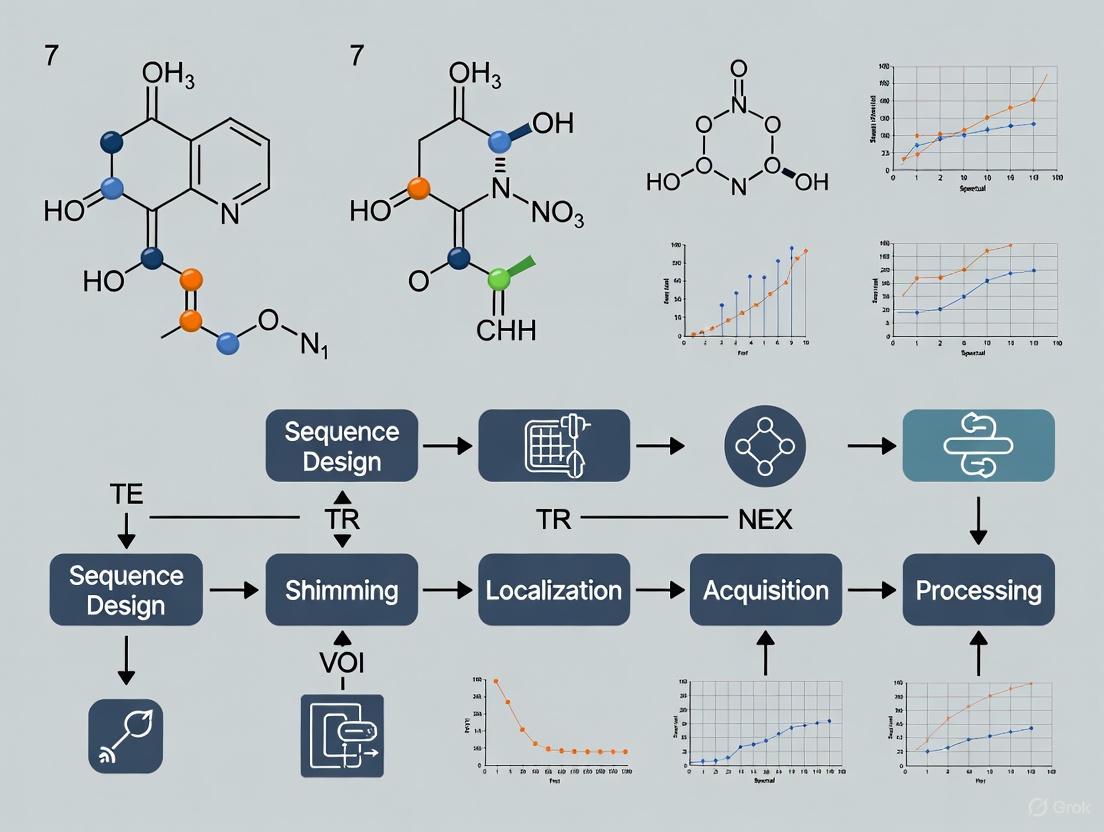
Ultra-high-field 7Tesla Magnetic Resonance Spectroscopy (MRS) offers unprecedented opportunities for non-invasive metabolic profiling in biomedical research and drug development.
Optimizing 7T MR Spectroscopy: Advanced Data Acquisition Parameters for Precision Neuroimaging and Biomarker Discovery
Abstract
Ultra-high-field 7Tesla Magnetic Resonance Spectroscopy (MRS) offers unprecedented opportunities for non-invasive metabolic profiling in biomedical research and drug development. This article provides a comprehensive guide to 7T MRS data acquisition, covering the foundational physics and technical advantages, critical methodological choices between sequences like sLASER and FID-MRSI for specific applications, advanced troubleshooting for common artifacts like lipid contamination and B1 inhomogeneity, and rigorous validation protocols for multi-site studies. Aimed at researchers and scientists, it synthesizes current best practices to harness 7T's superior signal-to-noise ratio and spectral resolution for detecting low-concentration metabolites like NAD+, 2-hydroxyglutarate, and neurotransmitters, thereby enabling robust biomarker quantification and accelerating translational neuroscience.
The 7T Advantage: Fundamental Principles and Technical Opportunities in Metabolic Imaging
Magnetic Resonance (MR) operating at ultra-high field (UHF), defined as static magnetic field strengths of 7 Tesla (7T) and above, provides fundamental physical advantages that translate into superior performance for spectroscopy and imaging. These advantages are primarily manifested in three core areas: a significant gain in Signal-to-Noise Ratio (SNR), enhanced Contrast-to-Noise Ratio (CNR) for specific mechanisms, and greater Spectral Dispersion. For researchers and drug development professionals, understanding these core physics principles is essential for designing sensitive and specific experiments that can probe disease metabolism, monitor treatment efficacy, and reveal previously undetectable neurochemical pathways. This document details the physics underlying these gains, provides quantitative comparisons, and outlines standardized experimental protocols for leveraging 7T systems in research.
Core Physical Principles and Quantitative Gains
Signal-to-Noise Ratio (SNR)
The signal-to-noise ratio is a primary driver for advancing to UHF. The theoretical basis for SNR improvement is the increased polarization of nuclear spins in a stronger magnetic field. While classical theory predicts a linear increase (SNR α B₀), experimental data accounting for practical factors like tissue properties and radiofrequency (RF) coil efficiency suggests a more complex relationship.
Experimental measurements across the human brain indicate an average SNR gain follows the power law SNR ~ B₀^1.65 [1]. This translates to an SNR that is approximately four times higher at 7T than at 3T [1]. This gain can be traded for higher spatial resolution, reduced acquisition time, or a combination of both. For instance, in prostate imaging, a direct comparison between 3T and 7T demonstrated an SNR increase ranging from 1.7-fold to 2.8-fold in the target region [2].
Table 1: Quantitative SNR and Resolution Gains at 7T versus 3T
| Application Area | SNR Gain (7T vs. 3T) | Achievable Spatial Resolution | Citation |
|---|---|---|---|
| General Brain MRS | ~4x (average) | N/A | [1] |
| Prostate Imaging | 1.7x to 2.8x | N/A | [2] |
| Anatomic Imaging | Enables sub-millimeter resolution | 0.35 - 0.45 mm isotropic | [3] |
| MRSI | Enables higher matrix sizes | 2.2 x 2.2 x 8 mm³ voxel volume | [4] |
Contrast-to-Noise Ratio (CNR)
Contrast-to-Noise Ratio depends on both the signal difference between tissues and the noise level. UHF enhances CNR for imaging techniques that rely on magnetic susceptibility effects and changes in relaxation times.
- Susceptibility-Weighted Imaging (SWI): Sensitivity to susceptibility effects scales linearly with the field strength [5] [6]. This dramatically improves the visualization of venous structures, microhemorrhages, and iron deposits, thereby increasing CNR in SWI.
- Blood Oxygenation Level-Dependent (BOLD) fMRI: The T2* dephasing caused by deoxygenated blood is more pronounced at higher fields. This results in a stronger BOLD effect, providing higher CNR for functional MRI studies and enabling the detection of previously unrecognized nodes in functional networks [5] [6].
- Time-of-Flight (TOF) Angiography: The longitudinal relaxation time (T1) of blood and tissues lengthens at UHF. This, combined with higher SNR, enhances the suppression of background tissue signal, leading to superior vessel-to-tissue contrast in TOF angiography [5] [6].
Spectral Dispersion
Spectral dispersion, or the separation between resonance frequencies of different metabolites, is a critical advantage for MR Spectroscopy (MRS). The chemical shift difference (Δδ) in Hertz (Hz) between two metabolites is directly proportional to the main magnetic field strength (ΔF α B₀) [6] [1].
At 7T, the same spectral range (e.g., 0-4 ppm) is distributed over ~1200 Hz, compared to only ~250 Hz at 1.5T [1]. This linear increase in spectral separation resolves overlapping metabolite peaks, allowing for more accurate quantification. This is particularly beneficial for distinguishing J-coupled spin systems like glutamate (Glu) and glutamine (Gln), which appear as a combined "Glx" peak at lower fields [7]. Furthermore, it enables the specific detection of oncometabolites such as 2-hydroxyglutarate (2HG) in mutant IDH glioma models [7].
Table 2: Impact of Ultra-High Field on Key Physical Parameters
| Physical Parameter | Relationship with Field Strength (B₀) | Practical Implication at 7T |
|---|---|---|
| SNR | SNR ~ B₀^1.65 (experimental average) | Higher resolution and/or faster acquisitions [1] |
| T1 Relaxation | Lengthens with B₀ | Improved background suppression in TOF angiography [5] [6] |
| T2*/T2 Relaxation | Shortens with B₀ | Enhanced susceptibility contrast (SWI, BOLD fMRI) [5] |
| Spectral Dispersion | ΔF α B₀ | Better separation of metabolite peaks (e.g., Glu, Gln, 2HG) [6] [7] [1] |
| RF Wavelength | Decreases with B₀ | Increased B₁⁺ inhomogeneity and SAR deposition [5] |
Diagram 1: Core physical advantages of Ultra-High Field MRI and their primary research applications.
Experimental Protocols for 7T MRS
Protocol 1: Ultra-High-Resolution MR Spectroscopic Imaging (MRSI) in Multiple Sclerosis
This protocol is designed to detect subtle neurochemical changes in multiple sclerosis (MS) lesions by leveraging the high SNR at 7T to achieve unprecedented spatial resolution [4].
- Primary Objective: To assess the utility of increased spatial resolution of MRSI at 7T for detecting metabolic alterations in MS-related brain lesions.
- Scanner Hardware: 7T whole-body MR scanner (e.g., Siemens Magnetom) with a high-channel-count head coil (e.g., 32-channel).
- Sequence: Free-induction-decay (FID) MRSI with parallel imaging acceleration (e.g., CAIPIRINHA).
- Key Parameters:
- Volunteer/Patient Positioning: Supine, head first. Use foam padding to minimize head motion.
- Shimming: Perform automated, high-order shimming over the volume of interest (VOI) to optimize B₀ homogeneity. Use FASTMAP or an equivalent projection-based technique.
- VOI Prescription: Position the VOI over the centrum semiovale, an area typically rich in MS lesions, using sagittal T2-FLAIR and T1-MPRAGE images for guidance.
- Spatial Resolution: Acquire data at multiple resolutions for comparison within a clinically feasible scan time (~6 minutes):
- Ultra-High Resolution: 2.2 x 2.2 x 8 mm³ (100 x 100 matrix)
- Standard High Resolution: 3.4 x 3.4 x 8 mm³ (64 x 64 matrix)
- Conventional Resolution: 6.8 x 6.8 x 8 mm³ (32 x 32 matrix, reconstructed from central k-space)
- Acquisition Delay: Use an ultra-short acquisition delay (e.g., 1.3 ms) to minimize T2 weighting and capture short-T2 metabolites.
- Data Analysis:
- Spectral Quality Control: Assess signal-to-noise ratio (SNR >12) and Cramér-Rao lower bounds (CRLB <20%) for quantifiable metabolites.
- Metabolite Quantification: Quantify ratios of myo-Inositol (mIns) to N-acetylaspartate (NAA), and Choline (Cho) to Creatine (Cr).
- Spatial Analysis: Coregister metabolic maps with structural images and manually define MS lesions on T2-FLAIR images. Compare the percentage of lesions showing elevated mIns/NAA across the different spatial resolutions.
Protocol 2: Short vs. Long Echo Time MRSI in Glioma
This protocol compares different MRSI acquisition strategies at 3T and 7T for the metabolic characterization of gliomas, evaluating the trade-offs between spatial coverage, number of detectable metabolites, and CNR for key metabolic ratios [8].
- Primary Objective: To compare metabolite profiles acquired with long TE MRSI at 3T versus short TE MRSI at 3T and 7T in patients with glioma.
- Scanner Hardware: 3T and 7T scanners. A 32-channel head coil is recommended for both.
- Sequence: 3D Proton MRSI using an automatic prescription method for the VOI and outer volume suppression (OVS) bands to ensure reproducibility.
- Key Parameters:
- Automatic Prescription: Use an atlas-based or image-analysis-based method to automatically define the PRESS excitation volume and OVS bands. This ensures consistent coverage and lipid suppression across serial studies.
- Spatial Resolution: 1 cm³ nominal voxel size for all acquisitions.
- Acquisition Details:
- 3T Long TE: TE ~288 ms. Optimized for Cho, NAA, Cr, Lactate, and Lipid.
- 3T Short TE: TE ~20-30 ms. Enables detection of additional metabolites like mIns, Glu, and Gln.
- 7T Short TE: TE ~20-30 ms. Leverages higher SNR and spectral dispersion for better separation of overlapping peaks (e.g., Glu/Gln).
- Scan Time: Keep acquisition time between 5-10 minutes for each scan to maintain clinical feasibility.
- Data Analysis:
- Linewidth Assessment: Measure the linewidth of the Creatine peak in normal-appearing white matter (NAWM) and the T2 lesion for all three acquisitions.
- Metabolite Analysis: Calculate metabolite ratios (e.g., Cho/NAA, NAA/Cr) in both NAWM and the T2-hyperintense lesion.
- Coverage Analysis: Calculate the percentage of the T2 lesion covered by voxels with quantifiable spectra for each acquisition.
The Scientist's Toolkit: Essential Research Reagents & Hardware
Successful 7T MRS research requires specialized hardware and software to overcome technical challenges and fully exploit the field's advantages. The following table details key components of the experimental setup.
Table 3: Essential Research Reagents and Hardware for 7T MRS
| Item Name | Category | Critical Function & Rationale |
|---|---|---|
| High-Performance Gradient Coil | Hardware | Enables high spatial resolution and fast acquisitions. A head-only gradient with amplitude of 200 mT/m and slew rate of 900 T/m/s reduces echo spacing, minimizing T2* blurring and geometric distortion in EPI-based sequences [3]. |
| Multi-Channel Transmit/Receive Array Coil | Hardware | A close-fitting, high-channel-count array (e.g., 64- or 96-channel) provides the high SNR necessary for high-resolution MRSI, particularly in the cerebral cortex. Parallel transmission capability helps mitigate B₁⁺ inhomogeneity [3] [1]. |
| High-Order B₀ Shimming System | Hardware / Software | Corrects static magnetic field (B₀) inhomogeneity, which is magnified at 7T. Systems supporting 2nd-order or higher spherical harmonics, or image-based shimming algorithms, are crucial for achieving narrow spectral linewidths, especially near air-tissue interfaces [1] [9]. |
| Spectral Analysis Software | Software | Enables accurate quantification of a large number of resolved metabolites. Software that provides Cramér-Rao Lower Bounds (CRLB) as an estimate of measurement precision (e.g., LCModel) is essential for validating results [7]. |
| Dielectric Padding | Consumable | Materials with specific permittivity placed between the coil and the subject can help improve RF field (B₁⁺) homogeneity and efficiency, leading to more uniform excitation and signal profile [9]. |
Diagram 2: A generalized workflow for a 7T MRS study, highlighting key experimental stages from setup to analysis.
Ultra-high field (UHF) 7 Tesla (7T) Magnetic Resonance Imaging (MRI) and Spectroscopy (MRS) provide unparalleled gains in signal-to-noise ratio (SNR) and spectral resolution, enabling the study of the human brain at mesoscopic scales. However, these benefits are accompanied by significant technical challenges that must be actively managed to ensure data quality, safety, and accuracy. The foremost among these are B0 inhomogeneity (spatial variations in the main magnetic field), Specific Absorption Rate (SAR) (radiofrequency power deposition), and Chemical Shift Displacement Error (CSDE). These phenomena are intrinsically more pronounced at 7T and can severely degrade image quality, confound metabolic quantification in spectroscopy, and pose patient safety risks. This application note, framed within the context of 7T MR spectroscopy data acquisition for research and drug development, details the underlying causes of these challenges and provides structured protocols and solutions for mitigating their effects, thereby ensuring reliable and reproducible data acquisition.
B0 Inhomogeneity: Causes, Consequences, and Coping Strategies
Understanding ΔB0 at Ultra-High Field
B0 inhomogeneity (ΔB0) refers to deviations from the ideal, perfectly uniform main magnetic field. While modern scanners have highly homogeneous empty magnetic fields, the primary source of ΔB0 in human imaging is the magnetic susceptibility differences between tissues (e.g., bone, air, soft tissue) and at tissue-air interfaces [10]. These susceptibility-induced field distortions scale linearly with the main magnetic field strength; therefore, the ΔB0 experienced at 7T can be more than twice that of 3T systems [10]. In MR Spectroscopy, this manifests as line broadening and shape distortion in the acquired spectra, reducing the spectral resolution needed to separate closely spaced metabolites like glutamate and glutamine. In imaging, it causes signal loss and geometric distortions, particularly in echo-planar imaging (EPI) sequences used for fMRI and diffusion MRI.
Strategic Mitigation: Shimming and Acquisition
Managing B0 inhomogeneity requires a multi-pronged approach involving both prospective field homogenization (shimming) and retrospective acquisition or correction methods.
Prospective Shimming: The fundamental method for correcting ΔB0 is B0 shimming, which applies compensatory magnetic fields to cancel out spatial variations.
- Global Shimming: This standard method uses the scanner's built-in spherical harmonic shim coils to optimize field homogeneity over a large volume of the brain. While effective for global improvements, it may be insufficient for regions near susceptibility hotspots like the orbitofrontal cortex and temporal lobes.
- Higher-Order and Dynamic Shimming: Advanced shimming hardware, such as high-degree (2nd & 3rd order) shim coils, provides more spatial flexibility to correct complex field patterns [10]. Furthermore, Dynamic Shimming techniques, including Dynamic Multi-Coil Shimming, can compute and apply slice-specific or slab-specific shim settings in real-time, dramatically improving local field homogeneity for specific regions of interest [10].
- Universal B0 Shim: A recent innovation proposes a "universal shim" for 7T whole-brain MRI, calculated as the median of subject-specific shim coefficients. This provides a robust initial guess for iterative shimming algorithms, a time-efficient option for fast protocols, and a reliable backup. One study showed it reduces average B0 inhomogeneity by 78 Hz compared to default settings, performing nearly as well as subject-specific shims (within 3 Hz) [11].
Acquisition-Based Corrections: For certain applications, particularly EPI, post-processing corrections are essential.
- Field Mapping: Acquiring an accurate ΔB0 field map is a critical first step for both shimming and post-processing. Dual-echo sequences are commonly used to generate these maps [10].
- EPI Distortion Correction: Tools like FSL's TOPUP or FUGUE use ΔB0 maps to unwarp geometric distortions in EPI data. TOPUP is particularly effective, creating a voxel-displacement map from two spin-echo EPI acquisitions with opposite phase-encode directions [10].
Sequence Optimization: The impact of ΔB0 can be reduced at the acquisition stage. Using sequences with shorter echo times (TE) minimizes signal decay due to T2* effects. The development of high-performance gradient coils, such as the "Impulse" head-only gradient with a slew rate of 900 T m⁻¹ s⁻¹, enables shorter echo spacing and echo times in EPI, thereby reducing T2* blurring and distortion [3].
Table 1: B0 Shimming Method Comparison for 7T MRS
| Method | Principle | Advantages | Limitations | Typical Performance |
|---|---|---|---|---|
| Global Shimming | Optimizes low-order spherical harmonic fields over the entire brain. | Standard on all scanners, fast, requires no extra hardware. | Limited ability to correct strong, local field deviations. | Reduces SD by ~50% in non-critical regions [10]. |
| High-Order Shimming | Uses 2nd/3rd order shim coils for more complex field corrections. | Significantly better correction of local inhomogeneities. | Requires specialized hardware, increased complexity. | Can reduce SD by >70% in temporal lobes [10]. |
| Dynamic Shim Update (DSU) | Updates shim currents for each slice or slab during acquisition. | Excellent for multi-slice protocols, provides optimal local shim. | Increased technical complexity; requires specific hardware/software. | Up to 80% reduction in through-slice variation [10]. |
| Universal Shim | Applies a pre-computed, population-derived median shim setting. | Excellent initializer; fast, robust backup for failed shims. | Not fully subject-specific, slight performance loss. | Within 3 Hz of subject-specific shim performance [11]. |
Experimental Protocol: B0 Shimming for a Voxel in the Prefrontal Cortex
Goal: To achieve optimal B0 field homogeneity for a 2.5 x 2.5 x 2.5 cm³ MRS voxel placed in the dorsolateral prefrontal cortex (DLPFC), a region susceptible to field distortions.
- Prescan & System Preparation: Run the scanner's standard automated global shim (typically 1st and 2nd order) as an initial step.
- Localizer Scan: Acquire a high-resolution anatomical scan (e.g., MPRAGE or T1-weighted).
- Voxel Placement: Manually position the MRS voxel on the anatomical images, parallel to the cortical surface in the left DLPFC.
- Field Map Acquisition: Acquire a high-quality, 3D B0 field map covering the entire brain using a dual-echo gradient echo sequence.
- Advanced Shimming:
- Input the field map and the defined MRS voxel coordinates into the scanner's local shimming software.
- If available, select high-order (3rd order) shim optimization for the voxel.
- Execute the shim calculation. The system will determine the optimal currents for the shim coils to minimize the field standard deviation within the voxel.
- Apply the new shim settings.
- Validation: Acquire a new B0 field map with the optimized shims active to quantify the improvement. The field deviation (in Hz) within the voxel should be minimized. A successful shim is critical for achieving narrow spectral linewidths [12].
Diagram 1: B0 shimming workflow for MRS voxel.
Specific Absorption Rate (SAR): Safety and Management
The SAR Challenge at 7T
Specific Absorption Rate (SAR) is the measure of the rate at which RF energy is absorbed by the body tissue, measured in Watts per kilogram (W/kg). SAR increases with the square of the operating frequency (B0²), making it a dominant constraint at 7T. Excessive SAR can lead to tissue heating, posing a potential safety risk. Regulatory limits and scanner software enforce strict global and local SAR thresholds, which can often limit the use of RF-intensive sequences (e.g., those with low repetition times or high flip angles), thereby impacting protocol design for both imaging and spectroscopy.
Strategic Mitigation: Simulation, Subject-Specific Models, and Sequence Design
Managing SAR requires a combination of predictive modeling, technological solutions, and sequence optimization.
Subject-Specific Electromagnetic Modeling: Traditional SAR estimates rely on generic human models, which fail to capture inter-subject anatomical variability. The use of personalized, subject-specific head models for electromagnetic (EM) simulations is critical for accurate local SAR prediction. The open-source toolbox PHASE (Personalized Head-based Automatic Simulation for Electromagnetic properties) has been developed specifically for this purpose. PHASE automatically generates high-resolution, patient-specific head models for EM simulations using paired T1-weighted MRI and CT scans, segmenting up to 14 distinct tissue types [13] [14]. This allows for more precise estimation of global SAR and local 10g-averaged SAR (SAR-10g), ensuring safety while potentially enabling less conservative safety margins.
Image-Based SAR Mapping: A promising emerging technique involves deriving in vivo, subject-specific SAR maps directly from MRI data. This method combines B1+ mapping with sequences like balanced Steady-State Free Precession (bSSFP) to estimate electrical conductivity and compute SAR and SAR-10g maps. One feasibility study demonstrated that a multi-slice image-based brain SAR map could be obtained in just 12 minutes (9-minute acquisition, 3-minute reconstruction), providing a practical alternative to time-consuming simulations during an MRI exam [15].
Hardware and Sequence Solutions: Technological advancements play a key role in SAR management.
- Parallel Transmission (pTx): Multi-channel transmit systems (e.g., 8-channel or 16-channel) allow for "RF shimming," where the RF fields are tailored to the patient's anatomy. This improves B1+ homogeneity and can reduce peak local SAR compared to a single-channel system [3] [16].
- Sequence Optimization: SAR can be reduced at the pulse sequence level by using adiabatic pulses designed for lower power deposition, employing longer repetition times (TR), or implementing variable rate selective excitation (VERSE) pulses, which reshape the RF pulse to lower peak power.
Table 2: SAR Management Solutions and Their Applications
| Solution | Methodology | Key Advantage | Considerations for 7T MRS |
|---|---|---|---|
| Personalized Models (PHASE) | Generates subject-specific head models from MRI/CT for EM simulation. | High-fidelity local SAR estimation; accounts for anatomical variability. | Requires paired CT scan; computationally intensive for real-time use [13] [14]. |
| Image-Based SAR Mapping | Derives SAR maps from acquired B1+ and conductivity maps. | Subject-specific, inline SAR assessment during the MRI exam. | Emerging technique; validation ongoing; adds ~12 min to protocol [15]. |
| Parallel Transmission (pTx) | Uses multi-channel Tx arrays to tailor and optimize RF fields. | Improves B1+ homogeneity and can reduce local SAR hotspots. | Essential for whole-brain uniform excitation at 7T; increases system complexity [3] [16]. |
| Pulse Sequence Optimization | Uses adiabatic pulses, longer TR, or VERSE pulses. | Directly reduces power deposition, enabling more averages or shorter TR. | May affect spectral editing or saturation; requires careful sequence design. |
Experimental Protocol: Subject-Specific SAR Assessment for a STEAM Sequence
Goal: To estimate the subject-specific local SAR for an ultrashort TE STEAM MRS sequence at 7T.
Method A: Using the PHASE Toolbox (Pre-Scan Simulation)
- Data Acquisition: Acquire paired T1-weighted MRI and CT scans of the subject.
- Model Generation: Input the data into the PHASE toolbox. The pipeline will automatically perform registration, segment tissues (using SLANT for brain, CT thresholding for skull, and GRACE/SimNIBS for other tissues), and generate a high-resolution head model with 14 tissue labels [13].
- EM Simulation: Use the generated model in an EM simulation software (e.g., Sim4Life, SEMCAD X) with a model of the 7T RF coil (e.g., a 16-rung birdcage coil). Simulate the RF exposure for the specific STEAM sequence parameters (TR/TE/TM, flip angle, pulse shape).
- SAR Analysis: Extract the global SAR and, more critically, the local SAR-10g distribution from the simulation results. Identify potential hotspots and verify that they are within regulatory safety limits.
Method B: Inline Image-Based SAR Mapping
- Standard Protocol: Run the standard MRS protocol with the STEAM sequence.
- SAR Mapping Sequence: Subsequently, run the SAR mapping protocol, which includes:
- A B1+ mapping sequence (e.g., XFL) for B1+ magnitude.
- A bSSFP sequence for B1+ phase.
- A T1-weighted MPRAGE sequence for anatomy and masking [15].
- Inline Processing: The scanner software combines the B1+ magnitude and phase to estimate the E-field and derives an electrical conductivity map using Helmholtz-EPT. It then computes the image-based SAR and SAR-10g maps.
- Verification: Check that the measured SAR values from the inline map are consistent with the scanner's conservative estimates and are within safe limits.
Chemical Shift Displacement Error (CSDE)
Understanding CSDE
Chemical Shift Displacement Error (CSDE) is an artifact arising from the use of frequency-selective RF pulses for spatial localization. Because the resonant frequency of protons is dependent on their chemical environment (the "chemical shift"), different metabolites are excited by slightly different parts of the frequency-selective pulse. In practice, this means the apparent spatial location of a voxel will shift for different metabolites. The magnitude of this spatial shift is directly proportional to the main magnetic field strength (B0) and inversely proportional to the bandwidth of the RF pulse. Therefore, at 7T, CSDE is a significantly larger problem than at lower fields, potentially leading to erroneous metabolite quantification if the voxel moves into a region with different tissue composition (e.g., from gray matter to CSF or bone).
Strategic Mitigation: Pulse Sequence and Parameter Optimization
The primary strategy for mitigating CSDE is to minimize the chemical shift dispersion during spatial encoding.
- High Bandwidth RF Pulses: The most effective method is to use RF pulses with the highest possible bandwidth. Doubling the pulse bandwidth halves the CSDE. Many MRS sequences at 7T are now designed with specially optimized, high-bandwidth RF pulses for this purpose.
- Sequence Choice: STEAM (STimulated Echo Acquisition Mode) sequences can be advantageous over PRESS (Point RESolved Spectroscopy) because they typically use three slice-selective 90° pulses, each of which can be designed with a higher bandwidth than the 180° pulses used in PRESS, which are subject to SAR and peak power limitations. This makes STEAM particularly suited for 7T MRS where CSDE is a major concern [12].
- Voxel Positioning: When studying cortical regions, care should be taken to position the voxel such that the direction of the largest CSDE (typically the slice-selective direction of the lowest-bandwidth pulse) does not cause the voxel for key metabolites (e.g., NAA) to shift significantly out of the brain parenchyma and into CSF or skull.
- Readout Bandwidth in MRSI: For Magnetic Resonance Spectroscopic Imaging (MRSI), increasing the readout bandwidth in the spatial-encoding dimensions reduces spatial misregistration between different metabolites in the final spectroscopic images.
Table 3: Impact of RF Pulse Bandwidth on CSDE at 7T
| Metabolite | Chemical Shift (ppm) | CSDE with 1.5 kHz Pulse (mm) | CSDE with 4.0 kHz Pulse (mm) |
|---|---|---|---|
| NAA | 2.0 ppm | 4.2 mm | 1.6 mm |
| Creatine | 3.0 ppm | 6.3 mm | 2.4 mm |
| Choline | 3.2 ppm | 6.7 mm | 2.5 mm |
| Lipids | 1.3 ppm | 2.7 mm | 1.0 mm |
Note: Calculations assume a gradient strength of 20 mT/m. The chemical shift difference is relative to water at 4.7 ppm.
Experimental Protocol: Minimizing CSDE in DLPFC Spectroscopy
Goal: To acquire reproducible MRS data from the DLPFC with minimal contamination from CSDE.
- Sequence Selection: Choose an ultrashort TE STEAM sequence [12]. STEAM's use of three 90° pulses allows for higher bandwidth pulses compared to PRESS, inherently reducing CSDE.
- Pulse Parameter Setup: In the sequence parameters, select the highest available bandwidth for the three slice-selective RF pulses. Be aware that this may increase SAR, so ensure the protocol remains within safe limits (refer to SAR protocols above).
- Voxel Orientation and Placement:
- Orient the 2.5 x 2.5 x 2.5 cm³ voxel parallel to the cortical surface in the DLPFC.
- Identify the dimension controlled by the RF pulse with the lowest bandwidth. Ensure this dimension is positioned so that the expected chemical shift of key metabolites (e.g., ~2.5 mm for NAA with a 4.0 kHz pulse) will not move a significant portion of the voxel into non-brain tissue.
- Automated Repositioning: Use an automated voxel repositioning tool (e.g., Siemens AutoAlign) for longitudinal studies to ensure consistent voxel placement across sessions, which is critical for tracking changes in metabolite levels over time [12].
The Scientist's Toolkit: Essential Research Reagents & Materials
Table 4: Key Resources for 7T MR Spectroscopy Research
| Resource / Reagent | Function / Description | Example Use Case |
|---|---|---|
| PHASE Toolbox | Open-source toolbox for generating subject-specific head models from MRI/CT data. | Creating accurate anatomical models for electromagnetic simulations to predict local SAR hotspots [13]. |
| SLANT Brain Segmentation | Deep learning-based whole-brain segmentation tool for fine-grained anatomical labeling. | Integrated into PHASE for detailed segmentation of brain tissues from T1w MRI [13]. |
| SimNIBS | Software for segmenting head tissues and performing EM simulations. | Can be used in conjunction with or as a benchmark for PHASE-generated models [13] [14]. |
| Universal B0 Shim Set | A pre-calculated set of shim coefficients derived from a population median. | Providing a robust and time-efficient initial shim condition for whole-brain 7T studies [11]. |
| High-Performance Head Gradient Coil | Asymmetric gradient coil with high amplitude/slew rate (e.g., 200 mT/m, 900 T/m/s). | Enabling shorter echo times and reduced distortion in EPI and diffusion MRI, mitigating T2* signal loss [3] [17]. |
| 96-Channel Receive / 16-Channel Transmit Array Coil | High-density RF coil array for signal reception and parallel transmission. | Boosting SNR in the cerebral cortex and enabling B1+ shimming for improved SAR management and image uniformity [3]. |
| LCModel | Commercial software for automated quantification of in vivo MR spectra. | Quantifying metabolite concentrations from 7T MRS data, using a appropriate simulated basis set [12]. |
Diagram 2: Relating 7T challenges to solutions and tools.
Ultra-high-field magnetic resonance spectroscopy (MRS) at 7 Tesla has revolutionized the detection and quantification of key neurochemicals in the human brain. The enhanced spectral resolution and increased signal-to-noise ratio (SNR) at this field strength enable researchers to address previously intractable challenges in neurometabolic research, particularly the separation of structurally similar compounds like glutamate (Glu) and glutamine (Gln), and the detection of low-concentration biomarkers critical for understanding neuropathology and therapeutic development [18] [7]. These technical advances provide unprecedented opportunities for investigating the roles of these metabolites in healthy brain function and their disturbances across a spectrum of neurological and psychiatric conditions.
The glutamatergic system represents a particularly compelling target for 7T MRS applications. Glu functions as the primary excitatory neurotransmitter in the human brain, while Gln serves as its precursor and storage form in the glial compartment [18]. The tight coupling between these metabolites reflects essential metabolic interactions between neurons and glia, with the Glu/Gln cycle accounting for more than 80% of cerebral glucose consumption [18]. Traditional MRS at clinical field strengths (1.5T or 3T) often reports these compounds combined as "Glx" due to substantial spectral overlap, obscuring their distinct metabolic roles and potential divergent changes in pathological states [18] [7]. The separation of Glu and Gln at 7T thus opens new avenues for investigating their individual contributions to brain disorders.
Beyond the Glu/Gln system, 7T MRS provides enhanced detection capabilities for low-concentration biomarkers that serve as critical indicators of disease processes. Metabolites such as 2-hydroxyglutarate (2-HG) in isocitrate dehydrogenase (IDH)-mutant gliomas, gamma-aminobutyric acid (GABA), and glycine (Gly) exist at millimolar or even sub-millimolar concentrations in brain tissue, presenting significant detection challenges at lower field strengths [19] [7] [20]. The improved sensitivity and spectral dispersion at 7T make these metabolites accessible to non-invasive quantification, providing valuable biomarkers for tumor characterization, treatment planning, and therapeutic monitoring.
This application note provides a comprehensive technical resource for researchers utilizing 7T MRS to investigate these key metabolites. We present optimized acquisition protocols, validated analytical approaches, and practical implementation guidelines to maximize data quality and biological insights in both basic neuroscience and clinical research applications.
Technical Advantages of 7T MRS for Metabolite Detection
Enhanced Spectral Resolution and Signal-to-Noise Ratio
The primary technical advantages of 7T MRS for metabolite detection stem from the linear increase in SNR and quadratic improvement in spectral dispersion with magnetic field strength. These physical improvements manifest practically as better separation of overlapping resonances and more precise quantification of low-concentration metabolites [7]. The increased frequency separation at 7T is particularly beneficial for resolving the complex spectral patterns of J-coupled metabolites like Glu and Gln, which exhibit substantial overlap at lower field strengths [18] [7].
Experimental evidence demonstrates the tangible benefits of these theoretical advantages. In a direct comparison of MRS sequences at 7T, short-TE STEAM (TE = 8 ms) provided excellent within-subject reproducibility for most neurochemicals, requiring fewer subjects to detect significant changes between experimental groups [21]. The improved spectral quality at 7T also results in reduced Cramér-Rao lower bounds (CRLB) for various metabolites, indicating enhanced quantification precision [19] [7]. For example, in the dorsal anterior cingulate cortex, CRLB values of 1.6 ± 0.2% for Glu and 3.2 ± 0.4% for Gln have been achieved with a 12.6 mL voxel and 10-minute acquisition time, representing excellent measurement precision for these challenging metabolites [22].
Practical Considerations for 7T Implementation
Despite these advantages, 7T MRS presents technical challenges that require careful management. Increased magnetic field inhomogeneity, heightened specific absorption rate (SAR), and more pronounced chemical shift displacement artifacts can compromise data quality if not properly addressed [23] [7]. Successful implementation relies on optimized shimming procedures, sequence parameter adjustments to manage SAR, and the use of advanced localization techniques that minimize spatial encoding errors [19] [24].
The development of specialized RF coils and parallel transmission systems has significantly advanced 7T MRS capabilities by improving B1 field homogeneity and enabling more efficient signal excitation and reception [19]. These hardware innovations, combined with optimized pulse sequences, have largely mitigated the initial technical barriers to high-quality 7T spectroscopy, making robust metabolite quantification accessible to a growing research community.
Metabolite-Specific Methodologies and Applications
Glutamate and Glutamine Separation
Acquisition Strategies
The separation of Glu and Gln requires careful sequence selection and parameter optimization to capitalize on the enhanced spectral resolution at 7T. Multiple acquisition approaches have demonstrated efficacy for this challenging application:
Short-TE STEAM: The stimulated echo acquisition mode (STEAM) sequence with very short echo times (TE = 8-20 ms) minimizes signal modulation due to J-coupling and T2 relaxation, desirable characteristics for separating the complex spectral patterns of Glu and Gln [21]. This approach provides excellent within-subject reproducibility, with mean coefficients of variation (CV) between visits as low as 6.3% for low-SNR metabolites including Glu, Gln, and GABA in the anterior cingulate region [23]. A representative protocol uses TE/TR/TM = 8/6000/40 ms, 64 averages, VAPOR water suppression, and outer-volume suppression pulses, providing robust data for Glu and Gln quantification [21].
sLASER Sequences: Semi-localized by adiabatic selective refocusing (sLASER) sequences offer an alternative approach with higher SNR compared to STEAM, though with slightly longer achievable TE (typically 30-40 ms) [21]. The paired adiabatic pulses in sLASER suppress J-evolution and prolong T2 relaxation times, similar to the effects of short-TE sequences [21]. One study found that sLASER with TE = 34 ms produced the lowest fit errors for most neurochemicals, though with somewhat reduced within-subject reproducibility compared to STEAM [21].
Spectral Editing Techniques: For specific research questions focusing on the Glu/Gln system, advanced spectral editing techniques such as MEGA-PRESS can provide enhanced detection of these metabolites. One reproducibility study implemented a MEGA-PRESS-IVS sequence with TR/TE = 3000/70 ms, Gaussian editing pulses applied at 1.9 ppm ("on") and 1.5 ppm ("off"), and an inner-volume saturation (IVS) technique to suppress regions with unfavorable modulation patterns for editing [23].
Table 1: Sequence Performance Comparison for Glu and Gln Detection at 7T
| Sequence | TE (ms) | Key Advantages | Limitations | Optimal Applications |
|---|---|---|---|---|
| STEAM | 8-20 | Minimal J-modulation; excellent reproducibility for Glu/Gln [21] | Lower SNR compared to spin-echo sequences [21] | Longitudinal studies requiring high reproducibility |
| sLASER | 30-40 | Higher SNR; reduced chemical shift displacement; resilience to B1 inhomogeneity [21] | Longer minimum TE; potential for greater J-modulation | Single-time-point studies prioritizing measurement precision |
| MEGA-PRESS | 70-80 | Specific detection of edited resonances; suppression of overlapping signals [23] | Longer TE with associated T2 weighting; complex implementation | Studies specifically targeting coupled spin systems |
Spectral Fitting and Quantification
Accurate quantification of Glu and Gln requires appropriate spectral modeling and fitting strategies. The use of simulated basis sets that include the exact RF pulse timings and sequences-specific modulation patterns is essential for reliable results [21]. For short-TE acquisitions, inclusion of appropriately parameterized macromolecule basis functions significantly improves fitting accuracy by accounting for the broad underlying signals that can confound metabolite quantification [21].
Advanced fitting approaches such as LCModel incorporate linear combination of basis spectra to decompose the in vivo signal into its constituent metabolites. The quality of the fit can be assessed using the Cramér-Rao lower bounds, which provide an estimate of the measurement precision for each quantified metabolite [23] [19]. Metabolites with CRLB values exceeding 20% are generally considered unreliable for most research applications [23].
Research Applications
The ability to separately quantify Glu and Gln at 7T has enabled investigations into their distinct roles in brain function and pathology:
Neurological and Psychiatric Disorders: Abnormalities in the Glu/Gln system have been demonstrated in a wide range of conditions, including epilepsy, major depressive disorder, schizophrenia, and Alzheimer's disease [18]. The separate quantification of these metabolites provides insights into excitotoxicity, glial dysfunction, and metabolic imbalances underlying these disorders.
Hepatic Encephalopathy: This condition represents a classic example of Gln elevation, as ammonia detoxification in astrocytes leads to increased Gln synthesis [18]. 7T MRS enables precise monitoring of Gln levels as a biomarker of disease severity and treatment response.
Brain Tumors: Glu and Gln show distinct patterns in various glioma subtypes, with oligodendrogliomas demonstrating significantly increased Glx compared to astrocytomas [18]. The separate quantification of Glu and Gln at 7T may provide improved tumor characterization and grading.
Diagram 1: Glu-Gln Neurotransmitter Cycle. This diagram illustrates the metabolic relationship between glutamate (Glu) and glutamine (Gln), known as the Glu-Gln cycle. Glu is synthesized from glucose and converted to Gln in astrocytes via glutamine synthetase (GS). Gln is transported back to neurons and converted to Glu via phosphate-activated glutaminase (PAG). Glu can also be decarboxylated to form GABA via glutamate decarboxylase (GAD). [18]
Low-Concentration Biomarkers
2-Hydroxyglutarate (2-HG) in Glioma Imaging
The detection of 2-hydroxyglutarate (2-HG) in IDH-mutant gliomas represents a landmark application of 7T MRS in neuro-oncology. 2-HG, an oncometabolite produced by mutant isocitrate dehydrogenase (IDH) enzymes, exists at concentrations of approximately 1-5 mM in mutant tumors but is virtually undetectable in normal brain tissue [19] [7]. Its reliable detection at 3T remains challenging due to spectral overlap with more abundant metabolites including Glu, Gln, and GABA [7].
Optimal Acquisition Parameters: 7T MRS significantly improves 2-HG detection through enhanced spectral dispersion. A recommended protocol utilizes a semi-LASER (sLASER) sequence with TE/TR = 34/5000 ms, VOI size of 2.5 × 2.5 × 2.5 cm³ positioned to encompass the tumor region while avoiding lipid-rich areas, and 64-128 averages to achieve sufficient SNR [19] [21]. Voxel sizes typically range from 8-27 mL depending on tumor size and location [19].
Spectral Fitting Considerations: Accurate 2-HG quantification requires specialized basis sets that include the characteristic resonance patterns of this metabolite. The use of density-matrix simulations that incorporate the exact sequence parameters ensures proper modeling of the complex J-coupled spin system [19]. The 2-HG signal appears as a complex multiplet between 1.8-2.4 ppm, with key resonances at approximately 2.25 ppm [7]. Quality assessment should include evaluation of CRLB values (<30% for reliable detection) and visual inspection of the spectral fit [19].
Clinical Applications: 2-HG detection provides a non-invasive biomarker for IDH mutation status, with significant implications for diagnosis, prognosis, and treatment monitoring [19] [7] [20]. IDH-mutant gliomas demonstrate better overall survival compared to wild-type tumors, making this metabolic biomarker valuable for treatment planning [19]. Recent studies have demonstrated the feasibility of 7T MRS for predicting IDH status with high accuracy (AUC = 0.86) using multivariate random forest analysis of metabolic ratios [20].
Table 2: Low-Concentration Metabolites Detectable with 7T MRS
| Metabolite | Typical Concentration | Chemical Shift (ppm) | Primary Clinical Significance | Detection Challenges |
|---|---|---|---|---|
| 2-HG | 1-5 mM [7] | 1.8-2.4 (multiplet) [7] | IDH-mutant glioma biomarker [19] [7] | Overlap with Glu, Gln, GABA at lower fields [7] |
| GABA | 1-3 mM [18] | 2.2-2.4 (multiplet) [23] | Primary inhibitory neurotransmitter [18] | Low concentration; spectral overlap with other metabolites [23] |
| Glycine | 0.5-1.5 mM [20] | 3.55 (singlet) [20] | Potential marker for high-grade gliomas [20] | Overlap with myo-inositol; low concentration [20] |
| NAAG | 0.5-1.5 mM [23] | 2.04/2.06 (NAA doublet) [23] | Modulator of glutamate neurotransmission [23] | Overlap with dominant NAA signal [23] |
GABA and Other Neurotransmitters
Gamma-aminobutyric acid (GABA), the primary inhibitory neurotransmitter in the brain, presents significant detection challenges due to its low concentration and complex spectral pattern overlapping with more abundant metabolites [23] [18]. 7T MRS improves GABA detection through both conventional short-TE approaches and specialized editing techniques:
Spectral Editing Methods: MEGA-PRESS represents the most widely implemented approach for GABA detection, using frequency-selective editing pulses to isolate the GABA resonance from overlapping signals [23]. A typical protocol uses TE/TR = 70/3000 ms, with editing pulses applied at 1.9 ppm ("on") and 1.5 ppm ("off") to selectively modulate the GABA signal while suppressing co-editing macromolecules [23].
Reproducibility Considerations: The reproducibility of GABA measurements varies by brain region, with the anterior cingulate showing superior reproducibility for STEAM (mean CV = 3.5%) compared to MEGA-PRESS (mean CV = 13.6%), while the opposite pattern was observed in the dorsolateral prefrontal cortex [23]. This regional variation highlights the importance of sequence optimization for specific study designs and target regions.
Research Applications: GABA quantification at 7T has been applied to investigations of epilepsy, mood disorders, schizophrenia, and neuropharmacology [18]. In glioma patients, significantly decreased GABA/water ratios have been observed in tumor tissue compared to control regions, suggesting potential alterations in inhibitory neurotransmission in the tumor microenvironment [19].
Diagram 2: MRS Data Analysis Workflow. This diagram outlines the key steps in MRS data acquisition, processing, and analysis. The process begins with subject positioning and shimming, followed by sequence-specific data acquisition. Processing steps include quality assessment, preprocessing, spectral fitting, and quantification. The final analysis stage involves quality evaluation (CRLB), calculation of metabolite ratios, statistical analysis, and biological interpretation. [23] [19] [21]
Experimental Protocols
Protocol 1: Simultaneous Detection of Glu, Gln, and Low-Concentration Metabolites
This protocol provides a balanced approach for comprehensive metabolic profiling, enabling quantification of both high-abundance and low-concentration metabolites in a single acquisition session.
Scanner Setup:
- Magnetic Field Strength: 7 Tesla
- RF Coil: 32-channel receive head coil with volume transmit capability [23] [19]
- Subject Positioning: Head first, supine with foam padding for immobilization
- Localizer Scan: High-resolution 3D T1-weighted sequence (e.g., MP2RAGE) for anatomical reference and voxel placement [19] [20]
Acquisition Parameters:
- Sequence: Short-TE STEAM [21]
- TE/TR/TM: 8/6000/40 ms [21]
- Voxel Size: 2.5 × 2.5 × 2.5 cm³ (15.6 mL) [21]
- Averages: 64 [21]
- Spectral Bandwidth: 3 kHz [23]
- Data Points: 2048 [23]
- Water Suppression: VAPOR [23] [21]
- Acquisition Time: Approximately 10 minutes [22]
Quality Assurance:
- Prescan: Optimize transmitter frequency, global shimming, and local shimming
- Quality Metrics: Target linewidth < 15 Hz for water signal, SNR > 30 for NAA peak [23]
- Water Reference: Acquire 8 averages without water suppression for eddy current correction and quantification [21]
Processing Pipeline:
- Time-domain data processing using FID-A or similar tools: coil combination, frequency drift correction, removal of motion-corrupted averages [21]
- Spectral fitting with LCModel using simulated basis sets appropriate for the acquisition sequence [23] [21]
- Quantification relative to unsuppressed water signal or creatine [19]
- Quality assessment: Exclude metabolites with CRLB > 20% from analysis [23]
Protocol 2: Optimized 2-HG Detection in Glioma Patients
This specialized protocol maximizes sensitivity for 2-HG detection in IDH-mutant glioma patients, with specific adaptations for tumor imaging.
Scanner Setup:
- Magnetic Field Strength: 7 Tesla
- RF Coil: 32-channel receive array coil [20]
- Patient Positioning: Standard head position with additional padding for comfort during longer acquisitions
- Localizer Scans: Multiplanar T2-weighted FLAIR and contrast-enhanced T1-weighted images for tumor localization and voxel placement [20]
Acquisition Parameters:
- Sequence: semi-LASER (sLASER) [19] [21]
- TE/TR: 34/5000 ms [21]
- Voxel Size: 2.0 × 2.0 × 2.0 cm³ (8 mL) to 3.0 × 3.0 × 3.0 cm³ (27 mL), adjusted to tumor size [19]
- Averages: 128 [19]
- Spectral Bandwidth: 3 kHz [23]
- Data Points: 2048 [23]
- Water Suppression: VAPOR [21]
- Acquisition Time: Approximately 10-15 minutes [20]
Special Considerations:
- Voxel Placement: Position within solid tumor component, avoiding necrotic areas, cysts, and lipid-rich regions [19] [20]
- Shimming: Use higher-order shimming with emphasis on the tumor region, potentially requiring region-specific optimization [19]
- Motion Management: Instruct patients to minimize head movement, consider navigator techniques for longer acquisitions
Processing and Analysis:
- Spectral fitting with specialized basis sets including 2-HG and other tumor-relevant metabolites (e.g., glycine, lactate) [19] [20]
- Quantification using water reference or internal creatine [19]
- Quality threshold: CRLB < 30% for 2-HG inclusion in analysis [19]
- Multivariate analysis incorporating multiple metabolic ratios (tCho/tNAA, Gln/tNAA, Gly/tNAA) for improved classification accuracy [20]
The Scientist's Toolkit
Table 3: Essential Research Reagent Solutions for 7T MRS Studies
| Resource | Function/Application | Implementation Examples | Technical Notes |
|---|---|---|---|
| LCModel Software | Linear combination modeling of in vivo spectra [23] [19] [20] | Quantification of Glu, Gln, and low-concentration metabolites from acquired spectra [23] | Requires sequence-specific basis sets; provides CRLB for quality assessment [23] |
| FID-A Processing Toolbox | MATLAB-based toolkit for MRS data processing [21] | Coil combination, frequency drift correction, removal of motion-corrupted averages [21] | Compatible with major scanner platforms; enables preprocessing before LCModel analysis [21] |
| Simulated Basis Sets | Spectral models for precise metabolite quantification [21] | Custom basis sets simulated using FID-A based on exact sequence timings and RF pulses [21] | Should include relevant metabolites and appropriately parameterized macromolecules [21] |
| Specialized RF Coils | Signal transmission and reception at 7T [23] [19] | 32-channel receive arrays with volume transmit capability [19] | Essential for achieving high SNR; parallel transmission improves B1 homogeneity [19] |
| Structural Imaging Sequences | Anatomical reference and tissue segmentation [19] [20] | MP2RAGE (0.8 mm³ isotropic) for voxel placement and partial volume correction [20] | High-resolution structural data essential for accurate voxel placement and tissue composition analysis [20] |
The enhanced spectral resolution and sensitivity of 7T MRS provide powerful capabilities for investigating key metabolites in the human brain. The separation of glutamate and glutamine enables detailed studies of excitatory neurotransmission and glial-neuronal interactions, while the detection of low-concentration biomarkers such as 2-HG offers unique insights into tumor metabolism and treatment response. The protocols and methodologies outlined in this application note provide researchers with practical guidance for implementing these advanced techniques in both basic neuroscience and clinical research settings. As 7T technology continues to evolve and become more widely available, these approaches will play an increasingly important role in understanding brain function and developing targeted therapies for neurological disorders.
Ultra-high-field (UHF) 7 Tesla (7T) Magnetic Resonance Imaging (MRI) offers a profound increase in signal-to-noise ratio (SNR) and contrast-to-noise ratio (CNR) compared to lower field systems, enabling higher spatial resolution and improved spectral separation for magnetic resonance spectroscopy (MRS) [25]. This promise, however, comes with significant technical challenges primarily related to radiofrequency (RF) interactions with biological tissue. As the operational frequency increases to approximately 300 MHz at 7T, the reduced RF wavelength leads to inhomogeneities in the transmit field (B1+), causing variations in image contrast and signal intensity [26] [25]. Additionally, the interaction of electromagnetic fields with dielectric tissues exacerbates inhomogeneous RF power deposition, potentially creating dangerous local hot-spots and increasing the specific absorption rate (SAR) [26]. These challenges necessitate advanced hardware solutions, particularly in RF coil design and parallel transmission methods, to realize the full potential of 7T systems for research and clinical applications, especially in neuroimaging and spectroscopy [27].
Parallel transmission (pTx) technology has emerged as a cornerstone solution for addressing these UHF challenges. By utilizing multiple-transmit RF coils driven independently and operating simultaneously, pTx enables significant reductions in B1+ inhomogeneity and can decrease local SAR [26]. The flexibility offered by controlling multiple independent transmit channels allows for sophisticated RF shimming and pulse design techniques that can compensate for patient-specific field variations. This hardware capability is particularly valuable for MRS, where spectral quality depends critically on field homogeneity and accurate excitation [28]. When combined with optimized phased-array receive coils, pTx systems form a complete hardware ecosystem that can unlock the theoretical benefits of 7T for both structural and metabolic imaging.
Core Coil Technologies and Configurations
Phased-Array Receive Coils
Phased-array (PA) coils consist of multiple small surface coil elements arranged to cover the region of interest. The fundamental advantage of this architecture is that each small element provides high SNR in its immediate vicinity, while the combined array offers extensive anatomical coverage [29]. The SNR for n number of well-decoupled receiver coils can increase by a factor of √n compared to a single coil element [29]. This relationship drives the development of arrays with increasingly higher channel counts.
Table 1: Performance Characteristics of Phased-Array Head Coils with Different Channel Counts at 7T
| Number of Channels | SNR Performance | Spatial Noise Variation | Parallel Imaging Capability | Best Application Context |
|---|---|---|---|---|
| 4 | Baseline | Higher | Limited (Low R-factor) | Reference comparisons |
| 8 | Moderate improvement | Moderate | Moderate | General imaging |
| 12 | Good improvement | Lower | Good | High-resolution imaging |
| 16 | High improvement | Lowest | Excellent | High-resolution MRSI/fMRI |
| 32 | Highest* | Lowest* | Maximum* | Advanced research applications |
Note: Performance for 32-channel coils is extrapolated from trends in the data [29].
Electromagnetic simulations demonstrate that PA coils with higher channel counts produce more homogeneously distributed B1 reception fields compared to those with fewer channels [29]. The progression from 4 to 16 channels shows consistent improvements in both SNR and spatial noise variation, with the 16-channel array providing optimal performance for most research applications. These arrays also enable parallel imaging techniques like GRAPPA and SENSE with higher acceleration factors, significantly reducing acquisition times—a critical factor in clinical translation and patient comfort [29].
Transmit Coil Architectures
Transmit coil design at 7T has evolved to address the fundamental challenge of B1+ inhomogeneity. While standard birdcage coils are effective at lower fields, their performance at 7T is compromised by wave behavior effects. Innovative designs like the Tic Tac Toe (TTT) antenna have demonstrated improved transmit field homogeneity with reduced electromagnetic power deposition [30]. This coupled antenna design, composed of multiple transmission line elements arranged in a grid pattern, has been used in over 1,300 neuroimaging scans, proving its practical utility in research settings [30].
The most significant advancement in transmit technology is the development of multichannel transmit arrays for parallel transmission. These systems typically feature 8 or 16 independent transmit channels, each with its own RF synthesizer and amplifier [26]. This hardware configuration enables RF shimming, where the amplitude and phase of each channel are independently adjusted to optimize the composite B1+ field. For the 16-channel TTT design, numerical optimizations of these parameters have demonstrated substantial improvements in field homogeneity while constraining local SAR [30]. The ability to proactively manage RF power deposition through hardware design and driving conditions is essential for safe operation at 7T, particularly for sequences with high RF energy requirements like spin-echo and inversion recovery.
Parallel Transmission Methodologies
Fundamental Principles and Pulse Design
Parallel transmission fundamentally changes the approach to RF excitation in MRI. While conventional systems use a single, uniform RF waveform, pTx systems generate multiple distinct RF pulses that are played out simultaneously through separate transmit channels, along with a common gradient waveform [26]. The additional degrees of freedom allow for the design of excitation patterns that can compensate for patient-induced B1+ inhomogeneities at UHF.
The simplest form of pTx is RF shimming, where multiple transmit elements are driven with a single RF waveform while independently adjusting the phase and amplitude in each channel [26]. This approach successfully improves B1+ homogeneity in small regions-of-interest but becomes less effective as the target volume increases. More advanced dynamic pTx techniques employ distinct tailored RF pulses across channels, providing greater control over the excitation pattern at the expense of increased computational complexity and hardware requirements [26]. These methods can be implemented under both small-tip-angle (STA) and large-tip-angle (LTA) regimes, with LTA posing greater design challenges but enabling more clinically relevant flip angles [26].
Advanced Applications: Simultaneous Multi-Slice (SMS) Imaging
SMS imaging using multiband (MB) RF pulses has revolutionized acquisition speed in neuroimaging, particularly for diffusion-weighted imaging and functional MRI [26]. However, at UHF, SMS faces limitations from B1+ inhomogeneity and high SAR of conventional MB pulses. pTx addresses both challenges when combined with SMS techniques (SMS-pTx).
Early SMS-pTx implementations applied RF shimming to MB excitations, either using global modulations applied to all slices or independent shim weights for each slice and transmit channel [26]. The latter approach provides superior flip angle homogeneity but requires full pTx hardware. Recent advancements have focused on improving MB pulse design through multi-spoke trajectories, optimized k-space locations, and explicit SAR control incorporating both global and local SAR constraints [26]. For high-resolution T2*-weighted protocols with near whole-brain coverage, LTA SMS-pTx approaches have been developed using Average Hamiltonian Theory to reduce computational burden while maintaining accuracy [26].
Experimental Protocols for 7T MRS
Protocol 1: Ultra-High-Resolution Metabolic Imaging
This protocol is designed for detecting neurochemical changes in small pathological structures, such as multiple sclerosis lesions, which average approximately 6mm in diameter and are poorly characterized by conventional MRSI resolutions [4].
Hardware Requirements:
- 7T MRI scanner with approved clinical or research use
- 32-channel receive head coil
- Volume transmit coil or multichannel transmit array
Sequence Parameters:
- Sequence: Free-induction-decay MRSI with parallel imaging acceleration (CAIPIRINHA)
- Spatial Resolution: 2.2×2.2×8 mm³ voxel volume (100×100 matrix size)
- Acceleration Factor: R=2-4 for scan time reduction
- Acquisition Delay: 1.3 ms (ultra-short)
- Repetition Time (TR): Adapted to maintain clinically feasible scan time (~6 minutes)
- Flip Angle: Optimized for T1 relaxation at 7T
- Water Suppression: Frequency-selective excitation to avoid magnetization transfer effects
Processing Methodology:
- Spectral Quality Assessment: Signal-to-noise ratio (SNR)>12, Cramér-Rao lower bounds (CRLB)<20%
- Metabolic Quantification: Ratios of mIns/tNAA, tCho/tNAA, Glx/tNAA with emphasis on pathological regions
Validation: This protocol has demonstrated 40-80% higher mean metabolic ratios and 100-150% increase in maximum metabolic ratios in MS lesions compared to conventional resolutions (6.8×6.8×8 mm³), enabling detection of neurochemical changes in 83% of lesions versus 35% with lower resolution [4].
Protocol 2: Large-Volume Downfield Spectroscopy
This protocol optimizes detection of low-concentration metabolites with downfield resonances (>4.7 ppm), particularly NAD+ and tryptophan, which are challenging due to their low concentrations, shorter T2 relaxation times, and magnetization transfer effects with water [28].
Hardware Requirements:
- 7T or 3T MRI scanner with multichannel transmit/receive capability
- Local transmit coil with B1+ shimming capability
- 32-channel receive head coil
Pulse Sequence Optimization:
- Excitation: Spectrally selective excitation using optimized sinc pulses (2 ppm bandwidth) to avoid magnetization transfer effects with water
- Localization:
- Option A: Single slice selection (1D) for minimized TE and maximum signal retention
- Option B: Voxel-based localization (3D) using three orthogonal refocusing pulses
- Refocusing Pulses: Low bandwidth (3.1 ppm) SLR-optimized pulses to utilize chemical shift displacement for water signal reduction
- Gradient Cycling: Crusher gradient polarity reversal every other acquisition to cancel water sideband artifacts
- Outer Volume Suppression: Modified vendor-provided package with 3 kHz bandwidth sinc pulse selecting 2 cm slice followed by spoiler gradients
Key Parameters:
- TE Minimization: Achieved through reduced crusher gradient duration and amplitude
- Phase Cycling: 16-step for voxel localization; 4-step EXORCYCLE for slice selection
- Volume Size: Large volumes (global measurement) to enhance SNR for low-concentration metabolites
Performance: This optimized approach enables detection of NAD+ and tryptophan in human brain at 3T in under five minutes, previously unachievable with conventional methods [28].
The Scientist's Toolkit: Essential Research Reagents and Materials
Table 2: Essential Hardware Components for 7T MRS Research
| Component | Specification | Function/Application | Performance Considerations |
|---|---|---|---|
| Transmit Coil | 16-channel Tic Tac Toe design | Provides homogeneous B1+ field for excitation | Improved field homogeneity; reduced SAR; >1300 human scans validated [30] |
| Receive Coil | 32-channel phased array | High SNR reception for metabolic detection | √n SNR gain with channel count; enables high acceleration factors [29] |
| RF Amplifiers | Independent per channel (8-16) | Enables parallel transmission capabilities | Cost increases with channel count; required for pTx |
| Dielectric Pads | High-permittity materials | B1+ inhomogeneity mitigation | Simple intervention for improved field homogeneity [27] |
| SAR Monitoring | Real-time calculation system | Patient safety assurance | Essential for pTx with local SAR constraints [26] |
| B0 Shimming | Second-order or higher shims | Improved magnetic field homogeneity | Critical for spectral resolution in MRS |
Implementation Workflow and Decision Pathways
The following diagram illustrates the logical decision process for selecting and implementing coil configurations and parallel transmission methods based on research objectives:
The optimal hardware configuration for 7T MR spectroscopy research balances technical complexity with practical research requirements. Multichannel phased-array receive coils (16-32 channels) provide essential SNR gains, while parallel transmission systems with 8-16 independent channels address the fundamental challenge of B1+ inhomogeneity. The Tic Tac Toe transmit coil design represents an innovative approach that has been validated in extensive human studies [30]. For metabolic imaging, protocol optimization including spectrally selective excitation, tailored localization methods, and advanced artifact suppression enables detection of previously challenging metabolites like NAD+ and tryptophan [28]. As 7T technology continues to evolve, these hardware essentials and methodologies provide researchers with the tools necessary to advance our understanding of metabolic processes in health and disease.
Sequences and Protocols: Selecting and Implementing 7T MRS Methods for Targeted Research
This application note provides a detailed comparison of three primary single-voxel localization sequences for proton magnetic resonance spectroscopy (¹H-MRS) at 7 Tesla (7T): semi-Localization by Adiabatic Selective Refocusing (sLASER), Stimulated Echo Acquisition Mode (STEAM), and Point RESolved Spectroscopy (PRESS). The ultra-high field (UHF) strength of 7T offers a significant increase in signal-to-noise ratio (SNR) and spectral dispersion compared to clinical field strengths (1.5T, 3T), enabling more accurate quantification of neurochemical profiles [31]. However, it also introduces technical challenges including increased B₁ field inhomogeneity, shorter T₂ relaxation times, and heightened specific absorption rate (SAR) [31] [32]. The choice of localization sequence is critical to leveraging the advantages of 7T while mitigating these challenges, particularly for research and drug development studies requiring high reliability and the detection of short-T₂ metabolites.
Technical Sequence Characteristics
Fundamental Operating Principles
- sLASER: Utilizes an adiabatic full passage (AFP) principle with two pairs of adiabatic refocusing radiofrequency (RF) pulses (e.g., GOIA-WURST, BASSI, FOCI) for localization. This design provides a wide bandwidth, is less sensitive to B₁-inhomogeneity, and yields a full-intensity spin-echo signal with a relatively short echo time (TE) and minimal voxel displacement [33] [32].
- STEAM: Employs three 90° pulses to create a stimulated echo. Its primary advantage is the ability to achieve very short TEs (e.g., 5-10 ms), which is beneficial for detecting metabolites with strong J-coupling or short T₂. However, this comes at the inherent cost of a 50% SNR loss compared to spin-echo techniques, as only half of the available magnetization is acquired [33] [32].
- PRESS: A workhorse clinical sequence using one 90° excitation pulse followed by two 180° refocusing pulses (e.g., sinc-Gaussian, Murdoch pulses) to generate a spin echo. It provides a full-intensity signal but is typically limited to longer TEs (≥30 ms) at UHF due to SAR constraints and the limited bandwidth of conventional refocusing pulses, leading to significant chemical shift displacement artifact (CSDA) [34] [35].
Quantitative Performance Comparison
The following table summarizes the key performance characteristics of the three sequences at 7T, based on current literature.
Table 1: Performance Characteristics of sLASER, STEAM, and PRESS at 7T
| Characteristic | sLASER | STEAM | PRESS |
|---|---|---|---|
| Inherent Signal | Full-intensity spin echo [33] | Half-intensity stimulated echo [33] [32] | Full-intensity spin echo [34] |
| Typical Short TE | ~28-32 ms [33] [32] | ~5-10 ms [32] | ≥30 ms at 7T [34] |
| Chemical Shift Displacement Artifact (CSDA) | Very Low (e.g., ~1.3%/ppm [34]) | Low [32] | High (e.g., 6-28%/ppm [34] [35]) |
| Sensitivity to B₁ Inhomogeneity | Low (Adiabatic pulses) [32] | Moderate | High (Conventional pulses) |
| SAR | High (Multiple AFP pulses) [32] | Low (Three 90° pulses) [32] | Moderate |
| Best Suited For | High-reproducibility quantification of a broad metabolite range (e.g., Glu, Gln, GSH) [33] | Detection of short-T₂ metabolites (e.g., GABA, mI) and J-coupled spins [32] | Widespread clinical use at lower fields; less ideal for 7T due to CSDA. |
Comparative Experimental Data at 7T
Reproducibility and Repeatability
A direct comparison between sLASER and STEAM at 7T revealed that sLASER provides higher intraclass correlations (ICCs) for glutamate concentration in both frontal and occipital voxels, attributed to its higher sensitivity and superior localization accuracy [33]. Another repeatability study of the posterior cingulate cortex found that both sLASER (TE=32 ms) and short-TE STEAM (sSTEAM, TE=5 ms) can quantify brain metabolites with a high degree of precision [32]. The median coefficient of variation (CV) for major metabolites like glutamate, total NAA (tNAA), and total creatine (tCr) was ≤10% for both sequences. However, a key differentiator was noted for γ-aminobutyric acid (GABA), for which sSTEAM demonstrated superior performance with lower CRLBs and CVs compared to sLASER [32].
Table 2: Quantitative Metabolite Repeatability (Coefficient of Variation, CV) at 7T
| Metabolite | sLASER (TE=32 ms) CV | sSTEAM (TE=5 ms) CV | Notes |
|---|---|---|---|
| Glutamate (Glu) | ≤10% [32] | ≤10% [32] | sLASER showed higher ICCs [33]. |
| Total NAA (tNAA) | ≤10% [32] | ≤10% [32] | Both sequences show high precision. |
| Total Creatine (tCr) | ≤10% [32] | ≤10% [32] | Both sequences show high precision. |
| myo-Inositol (Ins) | ≤10% [32] | >10% (CV higher than sLASER) [32] | sLASER may be more repeatable for Ins. |
| GABA | >10% (Higher CV, CRLB ≥18%) [32] | ≤10% (Lower CV and CRLB) [32] | sSTEAM is the preferred choice for GABA. |
Signal-to-Noise Ratio and Spectral Quality
While sLASER suffers from no inherent signal loss, the mandatory use of adiabatic pulses often results in a longer minimum TE compared to STEAM. One study reported that at comparable scan times, sLASER spectra for tNAA and Glu had a comparable or higher SNR than sSTEAM spectra [32]. The advanced localization of sLASER also results in significantly reduced CSDA, meaning all metabolites are measured from the same precise anatomical location, improving the accuracy of quantification and biological interpretation [33] [34].
Application-Oriented Protocols for 7T Research
Protocol 1: High-Reliability Neurochemical Profiling (sLASER)
This protocol is optimized for studies requiring the most accurate and reproducible quantification of a wide range of metabolites, including glutamate and glutamine.
- Sequence: sLASER
- Recommended Voxel Location: Prefrontal cortex or occipital lobe (validated in [33])
- Key Parameters:
- Typical Scan Time: ~4-6 minutes
- Best For: Clinical trials, longitudinal studies, and investigating conditions like schizophrenia, depression, and Alzheimer's disease where glutamate pathway integrity is of interest [33].
Protocol 2: Targeting Short-T₂ Metabolites and GABA (STEAM)
This protocol is ideal for researchers focusing on metabolites with short T₂ relaxation times or strong J-coupling, such as GABA, myo-inositol, and glutathione.
- Sequence: STEAM (short-TE)
- Recommended Voxel Location: Posterior cingulate cortex [32]
- Key Parameters:
- Typical Scan Time: ~3-5 minutes
- Best For: Studies of inhibitory neurotransmission (GABA), osmotic regulation (myo-inositol), and antioxidant status (GSH) [32].
The Scientist's Toolkit: Essential Research Reagents & Materials
Table 3: Key Materials and Tools for 7T MRS Research
| Item | Function/Application | Example/Specification |
|---|---|---|
| 32-Channel Receive Head Coil | High-sensitivity signal reception. | Nova Medical 32-channel array [33] [4] [32] |
| Dielectric Pads | Mitigates B₁+ transmit field inhomogeneity by altering the electromagnetic environment within the scanner. | Pads filled with CaTiO₃ suspension in D₂O [32] |
| Adiabatic Pulse Sets | Core component of sLASER for robust, broadband refocusing. | GOIA-WURST, BASSI, FOCI pulses [34] [35] |
| Spectral Fitting Software | Quantifies metabolite concentrations from raw spectra. | LCModel [33] [20], Osprey [34] |
| B₀ Shimming Algorithm | Optimizes magnetic field homogeneity for narrower spectral linewidths. | FASTERMAP [33], FAST(EST)MAP [32] |
Experimental Workflow and Sequence Selection Logic
The following diagram outlines the decision-making workflow for selecting the optimal MRS sequence based on research objectives and experimental constraints at 7T.
The selection of an MRS localization sequence at 7T involves a strategic trade-off between metabolite coverage, quantification reliability, and technical feasibility. sLASER emerges as the superior sequence for high-fidelity, reproducible quantification of a broad neurochemical profile, especially for glutamate and glutamine, due to its full signal intensity and excellent localization. STEAM remains the technique of choice for investigating short-T₂ metabolites like GABA, leveraging its unique ability to achieve ultra-short TEs. While PRESS is a robust and widely available sequence, its performance at 7T is hampered by significant CSDA, making it less ideal for research demanding the highest analytical precision. Researchers should align their sequence choice with their primary metabolic targets and the specific reliability requirements of their study design.
Magnetic Resonance Spectroscopic Imaging (MRSI) at ultra-high field strengths (≥7 T) has emerged as a powerful technique for non-invasive mapping of neurochemical distributions in the brain. The increased signal-to-noise ratio (SNR) and chemical shift dispersion at 7 T enable neuro-metabolic imaging at high spatial resolutions, providing unprecedented insights into brain metabolism and function [36]. However, conventional MRSI techniques face significant challenges, including prohibitively long acquisition times and persistent issues with lipid signal contamination from extra-cranial tissues. These limitations have impeded the widespread clinical implementation of high-resolution metabolic mapping.
To address these challenges, accelerated acquisition techniques have been developed, with Echo-Planar Spectroscopic Imaging (EPSI) and Free Induction Decay (FID)-MRSI representing two promising approaches. FID-MRSI sequences benefit from short echo times and high SNR per time unit, while EPSI utilizes rapidly alternating echo-planar gradients to encode multiple k-space locations in a single repetition time (TR), dramatically reducing acquisition duration [36]. The integration of these methods, particularly at 7 T, offers a compelling solution for achieving extensive brain coverage with high spatial resolution within clinically feasible scan times.
This application note explores the technical foundations, implementation protocols, and performance characteristics of accelerated FID-EPSI for high-resolution metabolic mapping at 7 T, with particular emphasis on addressing the critical challenge of lipid suppression through hardware and computational approaches.
Technical Background and Principles
Fundamental Advantages of 7 T for MRSI
The benefits of ultra-high field strength for MRSI are twofold. First, the signal-to-noise ratio increases approximately linearly with magnetic field strength (B₀), enabling higher spatial resolution or reduced scan times. Second, chemical shift dispersion also increases linearly with B₀, resulting in better separation of metabolite resonances and improved quantification of overlapping spectral peaks such as glutamate (Glu) and glutamine (Gln), which are difficult to distinguish at lower field strengths [37]. These properties make 7 T systems particularly advantageous for mapping neurochemical distributions with high fidelity.
EPSI Readout and Acquisition Speed
Conventional phase-encoded MRSI requires a separate phase-encoding step for each spatial dimension, making high-resolution acquisitions prohibitively time-consuming. EPSI addresses this limitation by employing oscillating readout gradients that encode one spatial dimension and the spectral dimension simultaneously [36]. This approach can reduce acquisition times by an order of magnitude or more compared to conventional phase-encoded MRSI, enabling matrix sizes of 64×64 or higher within practical scan durations.
FID Acquisition and Benefits
FID-MRSI sequences utilize a simple pulse-acquire scheme with short repetition times, maximizing SNR per unit time. Unlike localization techniques such as PRESS or STEAM that use multiple RF pulses and consequently have longer echo times, FID sequences maintain short echo times, minimizing T2-related signal losses and enabling detection of metabolites with shorter T2 relaxation times [36]. The combination of FID acquisition with EPSI readout represents an optimal strategy for high-speed, high-SNR metabolic imaging.
Lipid Suppression Strategies
A significant challenge for FID-MRSI, particularly at high spatial resolutions, is contamination from strong extra-cranial lipid signals. The table below summarizes the key lipid suppression methods investigated for 7 T FID-EPSI.
Table 1: Lipid Suppression Methods for 7 T FID-EPSI
| Method | Mechanism | Performance | Limitations |
|---|---|---|---|
| L2-regularization | Computational lipid signal removal during post-processing | Average lipid area reduced by 2-38% inside brain [36] | Requires high spatial resolution and accurate prior knowledge |
| Crusher Coil | Hardware-based signal dephasing using external coil | Lipid signal reduction factor of 2-7 in brain boundary regions [36] | Requires additional hardware; subject safety considerations |
| Combined Approach | Crusher coil + L2-regularization | Superior to either method alone [36] | Combines limitations of both methods |
| Inner Volume Selection (IVS) | RF pulses to localize signal to volume of interest | Effective lipid suppression | Limited spatial coverage; longer TE and TR |
| Outer Volume Suppression (OVS) | RF saturation of extra-cranial lipid regions | Moderate lipid suppression | Incomplete suppression; SAR considerations |
The combination of an external crusher coil with L2-regularization post-processing has demonstrated particularly promising results, providing effective lipid suppression while maintaining the benefits of FID acquisition (short TE, extensive coverage) [36]. The crusher coil, pulsed for 1.7 ms between excitation and readout using a Z3 amplifier with safety fuse, provides physical lipid signal dephasing, while L2-regularization computationally removes residual lipid contamination.
Experimental Protocols and Implementation
Pulse Sequence Design
The FID-EPSI sequence incorporates several key components optimized for 7 T performance:
- VAPOR water suppression: Precedes the excitation pulse to suppress the dominant water signal [36]
- Spatial localization: Achieved through phase-encoding or slab-selective excitation
- EPSI readout: Employing oscillating gradients for simultaneous spatial and spectral encoding
- Crusher coil activation: Synchronized via TTL trigger for lipid signal dephasing
- Water reference acquisition: Interleaved or separate acquisition for phase correction and spectral quality assessment
Table 2: Recommended Acquisition Parameters for 7 T FID-EPSI
| Parameter | Recommended Value | Notes |
|---|---|---|
| Field Strength | 7 T | Ultra-high field for enhanced SNR and spectral dispersion |
| TR | Short (e.g., 100-300 ms) | Maximizes SNR per unit time |
| TE | Short (e.g., 1-10 ms) | Minimizes T2 losses; detects short-T2 metabolites |
| Matrix Size | 64×64 or higher | High spatial resolution to minimize voxel bleeding |
| Spectral Bandwidth | 2-4 kHz | Sufficient for metabolite frequency range |
| FOV | 224×224 mm² or larger | Extensive brain coverage |
| Spatial Resolution | 3.5 mm isotropic or smaller | High-resolution mapping |
| Crusher Coil Pulse | 1.7 ms duration | Subject safety fuse (1.25A) recommended [36] |
Data Acquisition Workflow
The following diagram illustrates the comprehensive workflow for FID-EPSI data acquisition and processing at 7 T:
Spectral Processing and Quantification
Following data acquisition, several processing steps are essential for generating quantitative metabolite maps:
Spectral Reconstruction: EPSI data require specialized processing to address inconsistencies between odd and even k-space lines. Phase correction methods utilizing information from fully encoded water reference scans can effectively mitigate spectral ghosting artifacts [36].
Lipid Suppression: Application of L2-regularization algorithms to computationally remove residual lipid signals after crusher coil application [36].
Spectral Fitting: Automated fitting routines to quantify metabolite concentrations from the processed spectra. Key neuro-oncological markers include:
- N-acetylaspartate (NAA): Neuronal integrity marker
- Choline (Cho): Membrane turnover marker
- Creatine (Cr): Energy metabolism reference
- Glutamate (Glu) and Glutamine (Gln): Neurotransmitter metabolism
- myo-Inositol (mI): Astroglial marker
Spatial Normalization: Transformation of metabolite maps into standard space for group comparisons and database referencing [38].
Performance Characteristics and Validation
Spatial Coverage and Resolution
FID-EPSI at 7 T enables extensive brain coverage with high spatial resolution. Studies have demonstrated successful acquisition with isotropic voxel sizes of 3.4 mm covering the entire brain in approximately 15 minutes [37]. This represents a significant improvement over conventional MRSI approaches, which typically require longer acquisition times for similar coverage.
Metabolite Quantification Accuracy
The high spectral resolution at 7 T enables clear separation of metabolite resonances that overlap at lower field strengths. Specifically, the separation of glutamate and glutamine is significantly improved, providing more accurate quantification of these metabolically important compounds [37]. Quantitative analysis typically reports metabolite ratios (e.g., tCho/tNAA, Gln/tNAA, Ins/tNAA) which show characteristic alterations in pathological conditions.
Table 3: Representative Metabolite Ratios in Glioma Patients at 7 T
| Metabolite Ratio | Tumor Hotspot | Peritumoral Region | Normal Appearing White Matter |
|---|---|---|---|
| Gln/tNAA | 0.61 | 0.38 | 0.16 |
| Gly/tNAA | 0.28 | 0.20 | 0.07 |
| Ins/tNAA | 1.15 | 1.06 | 0.54 |
| tCho/tNAA | 0.48 | 0.38 | 0.20 |
Data derived from [37] demonstrating characteristic metabolic alterations in glioma patients.
Comparison with Other Modalities
Studies comparing 7 T MRSI with quantitative MRI techniques such as MR Fingerprinting (MRF) have shown good correspondence between metabolic and relaxation time maps. Specifically, glutamine-to-NAA ratios demonstrate high spatial overlap with T1 and T2 relaxation time abnormalities in glioma patients, with Sørensen-Dice similarity coefficients of 0.75-0.80 [37]. This multimodal correlation validates the biological relevance of MRSI-derived metabolite maps.
The Scientist's Toolkit: Essential Research Reagents and Materials
Table 4: Key Research Reagents and Hardware Solutions for 7 T FID-EPSI
| Item | Function/Purpose | Implementation Example |
|---|---|---|
| 7 T MR Scanner | Ultra-high field platform for MRSI | Systems from Philips, Siemens, GE with ≥7 T field strength [36] |
| Multi-channel RF Coils | Signal reception with high sensitivity | 32-channel head receive coils (e.g., Nova Medical) [36] |
| Crusher Coil Assembly | External lipid signal dephasing | Z3 amplifier with safety fuse (1.25A) for coil pulsing [36] |
| L2-regularization Algorithm | Computational lipid suppression | Post-processing software for residual lipid removal [36] |
| Water Reference Acquisition | Phase correction and quality assessment | Interleaved water MRSI with identical parameters [36] |
| Spectral Processing Software | Data reconstruction and quantification | MIDAS package, spec2nii, NIfTI-MRS compatible tools [38] [39] |
| BIDS-Compatible Data Format | Standardized data organization | NIfTI-MRS format for raw data storage [39] |
Implementation Considerations and Limitations
While FID-EPSI at 7 T offers significant advantages for high-resolution metabolic mapping, several practical considerations must be addressed for successful implementation:
Hardware Requirements: The crusher coil approach requires additional hardware integration and safety measures, including appropriate fusing to prevent coil overheating [36].
SAR Management: Despite the relatively low SAR of FID sequences, careful monitoring is essential, particularly when combining with water suppression and other RF-intensive preparations.
Spectral Quality Assessment: Implementation of standardized quality metrics is crucial for data interpretation and comparison across sites. Key parameters include spectral signal-to-noise ratio, linewidth (typically reported as full-width at half-maximum), and Cramér-Rao lower bounds for metabolite quantification [40].
Data Standardization: Adoption of standardized data formats such as NIfTI-MRS facilitates data sharing and comparison across research sites [39]. Conversion from proprietary manufacturer formats (e.g., Philips SDAT/SPAR, Siemens TWIX/RDA, GE P-files) to NIfTI-MRS is recommended for consistent processing and analysis.
Accelerated acquisition using FID-EPSI at 7 T represents a significant advancement in metabolic imaging capabilities, enabling high-resolution mapping of neurochemical distributions with extensive brain coverage within clinically feasible scan times. The integration of hardware-based lipid suppression (crusher coil) with computational methods (L2-regularization) effectively addresses the challenge of lipid contamination, while maintaining the inherent benefits of FID acquisition (short TE, high SNR). As standardized acquisition protocols, processing methods, and data formats continue to evolve, 7 T FID-EPSI is poised to become an increasingly valuable tool for both neuroscience research and clinical applications, particularly in neuro-oncology, where metabolic characterization of tumors provides complementary information to structural imaging.
Application Note & Experimental Protocols
Case Study: In Vivo 2-Hydroxyglutarate (2-HG) Detection for IDH-Mutant Glioma Pharmacodynamics
Background: Mutant isocitrate dehydrogenase 1 (IDH1) enzymes produce high levels of the oncometabolite 2-hydroxyglutarate (2-HG), which promotes gliomagenesis through epigenetic modifications. Non-invasive monitoring of 2-HG provides a direct pharmacodynamic biomarker for mutant IDH1 inhibitor therapy [41].
Experimental Protocol: 3D MR Spectroscopic Imaging of 2-HG
- Objective: To non-invasively monitor 2-HG levels in glioma patients before and after treatment with mutant IDH1 inhibitors (e.g., IDH305) to assess target modulation and treatment response [41].
- Equipment: Clinical MRI scanner, 3D MRSI sequence [41]. For higher resolution, a 7 Tesla MRI system is recommended, utilizing a concentric ring trajectory-based MRSI sequence with a 32-channel receive array coil [42].
- Key Acquisition Parameters (7T Protocol):
- Processing and Analysis:
- Post-processing: Gridding, lipid removal by regularization, and Hamming filtering [42].
- Spectral Fitting: Use LCModel software with a basis set including 2HG, NAA, Cr, Cho, Glu, Gln, GSH, and others. An example basis set should include N-acetyl-aspartate (tNAA), creatine and phosphocreatine (tCr), total choline (tCho), myo-inositol (Ins), glutathione (GSH), glutamate (Glu), glutamine (Gln), and 2HG [42].
- Quality Control: Include only voxels with spectral quality meeting criteria (e.g., tCr signal-to-noise ratio (SNR) > 5; tCr full width at half maximum (FWHM) < 0.15 ppm; Cramér–Rao lower bounds (CRLB) for metabolites < 40%) [42].
- Quantification: Generate metabolic ratio maps (e.g., 2HG/tCr, 2HG/tNAA) and coregister with anatomical images (FLAIR, T1) [41] [42]. Perform histogram analysis of 2HG levels across the tumor region of interest (ROI) before and after treatment [41].
Table 1: Key Metabolites for 2-HG MRSI and Their Significance
| Metabolite | Biological Significance | Spectral Reference |
|---|---|---|
| 2-Hydroxyglutarate (2HG) | Oncometabolite; direct biomarker of mutant IDH1 activity [41] | 1.8-4.1 ppm (specific peaks at ~2.25 and 4.02 ppm) |
| Total Choline (tCho) | Biomarker of cell membrane turnover and proliferation [42] | 3.2 ppm |
| N-Acetyl-Aspartate (tNAA) | Marker of neuronal integrity and viability [42] | 2.0 ppm |
| Creatine (tCr) | Involved in energy metabolism; often used as an internal reference [42] | 3.0 ppm |
| Glutamate (Glu) | Major excitatory neurotransmitter [41] | 2.1-2.5 ppm |
| Glutamine (Gln) | Indicator of glial metabolism and ammonia detoxification [41] | 2.1-2.5 ppm |
| Glutathione (GSH) | Key antioxidant; changes may indicate redox stress [41] | 2.9 ppm |
| Lactate | Marker of anaerobic glycolysis and hypoxia [41] | 1.33 ppm (doublet) |
Diagram 1: 2-HG Driven Oncogenesis in IDH-Mutant Glioma
Case Study: NAD+ Metabolism in Glioma Therapy Resistance
Background: Nicotinamide adenine dinucleotide (NAD+) is an essential redox cofactor. Glioma cells are particularly dependent on NAD+ metabolism, and resistance to therapies like panobinostat and bortezomib can emerge through upregulation of the de novo NAD+ biosynthesis pathway, specifically via quinolinic acid phosphoribosyltransferase (QPRT) [43].
Experimental Protocol: Gene Signature Construction for NAD+ Metabolism
- Objective: To construct a prognostic NAD+ metabolism-related gene signature (NMRGS) that predicts response to immune checkpoint inhibitors and outcomes in glioma [44].
- Data Acquisition and Preprocessing:
- Data Sources: Obtain RNA-seq transcriptome data and clinical information for glioma patients from public databases (e.g., TCGA, CGGA). Include only patients with survival data and overall survival ≥ 30 days [44].
- Gene List: Curate a list of NAD+ metabolism-related genes (NMRGs) from the Reactome database (R-HAS-196807) and Kyoto Encyclopedia of Genes and Genomes database (KEGG pathway has00760). An initial list typically contains ~40 genes [44].
- Signature Construction and Validation:
- Univariate Cox Regression: Identify overall survival (OS)-associated NMRGs (p < 0.05) [44].
- Kaplan-Meier Analysis: Further filter prognostic NMRGs (p < 0.05) [44].
- Multivariate Cox Regression & LASSO: Select independent OS-associated NMRGs and avoid overfitting [44].
- Risk Score Calculation: Construct the NMRGS using the formula:
NMRGS score = (Expression of Gene₁ × β₁) + (Expression of Gene₂ × β₂) + ... + (Expression of Geneₙ × βₙ)where β represents the coefficient from multivariate Cox regression [44]. A validated 6-gene signature includes CD38, NADK, NAPRT, NMNAT3, PARP6, and PARP9 [44]. - Stratification: Divide patients into NMRGS-high and NMRGS-low groups based on the median risk score [44].
- Validation: Validate the prognostic value of the NMRGS in independent training and validation cohorts using Kaplan-Meier survival curves and receiver operating characteristic (ROC) analysis [44].
Table 2: NAD+ Metabolism-Related Gene Signature and Functional Associations
| Gene Symbol | Protein Name | Function in NAD+ Metabolism | Association with Glioma Prognosis |
|---|---|---|---|
| QPRT | Quinolinic acid phosphoribosyltransferase | Rate-limiting enzyme in de novo NAD+ synthesis from tryptophan [43] | Upregulated in therapy-resistant cells; targetable dependency [43] |
| NADK | Nicotinamide adenine dinucleotide kinase | Phosphorylates NAD+ to form NADP+ [44] | Part of prognostic signature (NMRGS); high expression poor prognosis [44] |
| NAMPT | Nicotinamide phosphoribosyltransferase | Rate-limiting enzyme in NAD+ salvage pathway [44] | Drives immune evasion; inhibition potentiates immunotherapy [44] |
| CD38 | CD38 molecule | Glycohydrolase consuming NAD+ [44] | Part of prognostic signature (NMRGS) [44] |
| PARP9 | Poly(ADP-ribose) polymerase family member 9 | Consumes NAD+ for ADP-ribosylation [44] | Part of prognostic signature (NMRGS) [44] |
Diagram 2: NAD+ Metabolism in Glioma Therapy Resistance
Case Study: Tryptophan Metabolism and Immunosuppression in Glioma
Background: Tryptophan catabolism in the glioma microenvironment, driven by IDO/TDO enzymes, produces kynurenine, which activates the aryl hydrocarbon receptor (AhR). This suppresses effector T-cell activity and promotes an immunosuppressive state, particularly in IDH-mutant gliomas [45] [46].
Experimental Protocol: Characterizing the Tryptophan Metabolism-Related Signature
- Objective: To construct a tryptophan metabolism-related gene signature (TrMRS) that predicts prognosis and characterizes the immune microenvironment in glioma [46].
- Gene Selection and Clustering:
- Data Collection: Acquire RNA-seq and clinical data from public cohorts (TCGA, CGGA, REMBRANDT) and/or institutional cohorts. Include patients with primary gliomas only [46].
- Gene Identification: Obtain a list of tryptophan metabolism-related genes (TrMGs) by searching the Molecular Signature Database (MSigDB) with keywords "tryptophan metabolism" or "tryptophan metabolic process." A starting set may include ~56 genes [46].
- Unsupervised Clustering: Perform K-means clustering analysis based on the expression patterns of TrMGs to stratify glioma patients into distinct metabolic clusters. Use the R package "factoextra" to determine the optimal number of clusters [46].
- Signature Construction and Analysis:
- Signature Building: Employ univariate Cox regression and LASSO-Cox analysis to identify a core set of prognostic TrMGs (e.g., a 7-gene signature) and build the TrMRS risk model [46].
- Immune Profiling: Analyze the correlation between the TrMRS and tumor immune microenvironment using multiple algorithms:
- Metabolite Validation (Optional): Measure circulating levels of tryptophan (TRP) and kynurenine (KYN) in patient plasma or serum using liquid chromatography-tandem mass spectrometry (LC-MS/MS). Calculate the kynurenine-to-tryptophan ratio (KTR) as a surrogate for IDO/TDO activity [47].
Table 3: Tryptophan Metabolism and its Role in Glioma Immunosuppression
| Component | Role/Description | Impact on Glioma Microenvironment |
|---|---|---|
| IDO1 / TDO2 | Rate-limiting enzymes converting tryptophan to kynurenine [45] [46] | Creates an immunosuppressive niche; expression linked to poor prognosis [46] |
| Kynurenine (KYN) | Tryptophan metabolite; ligand for AhR [45] | Binds AhR on T cells and tumor cells, suppressing immunity and promoting migration [45] |
| Aryl Hydrocarbon\nReceptor (AhR) | Transcription factor activated by KYN [45] | Drives transcriptional program for immune suppression; correlated with poor prognosis [45] |
| Kynurenine/Tryptophan\nRatio (KTR) | Indirect measure of IDO/TDO activity [47] | Higher KTR indicates active tryptophan catabolism; potential prognostic biomarker [46] |
| TrMRS High-Risk | Gene signature reflecting active tryptophan catabolism [46] | Shorter overall survival, more immune cell infiltration, "hot" but suppressed immune phenotype [46] |
Diagram 3: Tryptophan Metabolism Drives Immunosuppression in Glioma
The Scientist's Toolkit: Essential Research Reagents & Materials
Table 4: Key Reagents and Resources for Glioma Metabolic Research
| Category / Reagent | Specific Example / Model | Function / Application |
|---|---|---|
| Cell Lines & Models | U87, A172, LN18, LNZ308 (adult glioma); SJG 2, HSJD-DIPG-007 (pediatric/DIPG); IDH-mutant GL261 mouse model [43] [45] | Preclinical in vitro and in vivo modeling of glioma biology and therapy response. |
| Inhibitors & Compounds | IDH305 (mutant IDH1 inhibitor); Panobinostat (HDACi); Bortezomib (proteasome inhibitor); FK866 (NAMPTi); Vortioxetine (repurposed neuroactive drug) [41] [43] [48] | Target validation and therapeutic efficacy studies. |
| Assay Kits | CellTiter 96 AQueous Assay (cell viability); Annexin V FITC/PI Kit (apoptosis); LC-MS/MS for tryptophan/kynurenine [43] [47] | Functional assessment of cell health, death, and metabolite quantification. |
| Bioinformatics Tools | LCModel (MRS data analysis); CIBERSORT/ESTIMATE (immune deconvolution); TIDE (immunotherapy response prediction); Seurat (scRNA-seq analysis) [42] [44] [45] | Data processing, analysis, and modeling from molecular and clinical data. |
| Critical Antibodies | Anti-Nestin, Anti-S100B, Anti-GFAP, Anti-CD45 (for cell phenotyping); Antibody panels for CyTOF (e.g., anti-TMEM119, P2RY12, HLA-DR) [45] [48] | Identification and isolation of specific cell populations (tumor, immune, stem cells). |
Application Notes
Deuterium Metabolic Imaging (DMI) in Neuro-Oncology
Deuterium Metabolic Imaging (DMI) is an emerging magnetic resonance technique that enables non-invasive, non-ionizing mapping of metabolic fluxes in vivo. By using deuterated substrates, particularly glucose, DMI provides unique insights into metabolic reprogramming in brain tumors, most notably the Warburg effect (aerobic glycolysis) [49] [50].
Recent applications in glioblastoma (GBM) patients at 7T have demonstrated that DMI can effectively differentiate tumor tissue from normal-appearing brain tissue (NABT) based on distinct metabolic patterns. The key observation is a significantly elevated 2H-Lactate/2H-Glutamate+Glutamine (2H-Lac/2H-Glx) ratio within tumors, which emerges 40-50 minutes after oral administration of [6,6'-2H₂]glucose [49]. This contrast is primarily driven by decreased oxidative metabolism (reflected in lower 2H-Glx) in tumors rather than exclusively by increased lactate production [50]. Quantitative DMI studies have further refined these observations, revealing that glioblastomas exhibit heterogeneous metabolic subtypes with Lac production rates of 2.3 μmol/L/min in tumors compared to 0.5 μmol/L/min in healthy brain tissue, and reduced Glx production (3.8 μmol/L/min versus 9.2 μmol/L/min in healthy brain) [51].
Advanced Spectral Editing for GABA and Glutathione
At ultra-high field (7T), spectral editing techniques have evolved to address the challenge of detecting low-concentration metabolites that are critical for understanding brain function and pathology. The HERMES (Hadamard Encoding and Reconstruction of MEGA-Edited Spectroscopy) technique represents a significant advancement by enabling simultaneous quantification of γ-aminobutyric acid (GABA) and glutathione (GSH) within a single acquisition [52] [53].
This simultaneous editing approach provides a two-fold acceleration in data acquisition while maintaining spectral quality comparable to separate sequential measurements [52]. The technical innovation lies in using an orthogonal editing scheme with four sub-experiments that are combined via Hadamard reconstruction to yield separate, crosstalk-free spectra for GABA and GSH [52]. This is particularly valuable for clinical research where measuring both the primary inhibitory neurotransmitter (GABA) and the major antioxidant (GSH) provides complementary insights into neurological and psychiatric disorders [52] [54].
Additional methodological advances include single-step spectral editing approaches that enhance the detection of glutamine and GSH signals at an optimized echo time (TE) of 56 ms, providing signal enhancements of 61% for Gln and 51% for GSH compared to previous methods at TE = 106 ms [54].
Experimental Protocols
Protocol 1: Dynamic Deuterium Metabolic Imaging for Glioblastoma
Patient Preparation: Patients fast for at least 6 hours prior to scanning. Establish intravenous access for continuous blood sampling throughout the experiment [50].
Tracer Administration: Orally administer 0.50 g/kg body weight of [6,6'-2H₂]glucose dissolved in water. Patients remain in the MRI system during administration [50].
MRI Hardware: Utilize a 7T MR scanner with a dual-tuned ³¹P/²H transmit bore coil and a head coil equipped with eight ²H receive loop coils combined with eight ¹H transmit/receive dipole antennas [50].
DMI Acquisition:
- Sequence: 3D ²H Free Induction Decay (FID)-Magnetic Resonance Spectroscopy Imaging (MRSI)
- Spatial Resolution: Nominal voxel size of 12 × 12 × 12 mm³
- Temporal Resolution: 11 minutes 44 seconds per dynamic scan
- Total Acquisition Time: ~75-100 minutes post-glucose ingestion
- Key Parameters: TR = 100 ms, TE = 1.82 ms, spectral bandwidth = 2800 Hz, 256 data points, Hamming-weighted k-space sampling [50]
Blood Sampling: Collect venous blood every 10 minutes during the scan to measure plasma glucose and ²H-glucose Atom Percent Enrichment (APE) [49] [50].
Data Processing:
- Combine data from multiple receive channels using Whitened Singular-Value Decomposition (WSVD)
- Apply PCA-based denoising
- Use exponential apodization (5-Hz)
- Zero-fill spectra before Fourier transformation
- Fit processed spectra to quantify ²H-Glc, ²H-Glx, and ²H-Lac concentrations [50]
Protocol 2: Simultaneous GABA and GSH Detection using HERMES
Hardware Setup: 7T scanner with a head coil featuring dual-channel transmit and 32-channel receive capabilities [52].
Sequence: HERMES with semi-LASER (sLASER) localization [52] [53].
Voxel Placement: Position a 27 cm³ voxel in the region of interest (e.g., midline parietal region for healthy volunteers) [52].
HERMES Acquisition:
- The sequence consists of four interleaved sub-experiments (A, B, C, D) with editing pulses applied as follows:
- A: ONGABA (1.9 ppm) + ONGSH (4.56 ppm)
- B: ONGABA (1.9 ppm) + OFFGSH
- C: OFFGABA + ONGSH (4.56 ppm)
- D: OFFGABA + OFFGSH
- Editing Pulses: Use sinc-Gaussian editing pulses (duration: 15 ms, bandwidth: 83 Hz at FWHM). For sub-experiment A, use a dual-lobe cosine-sinc-Gaussian pulse [52].
- Key Parameters: TR = 3000 ms, TE = 80 ms, spectral width = 5 kHz, 16 averages per sub-experiment [52].
- Total Acquisition Time: Approximately 11 minutes [52].
- The sequence consists of four interleaved sub-experiments (A, B, C, D) with editing pulses applied as follows:
Reconstruction:
- GABA-edited spectrum: Combine sub-experiments as A + B - C - D
- GSH-edited spectrum: Combine sub-experiments as A - B + C - D [52]
Quality Assessment: Evaluate spectral quality based on signal-to-noise ratio (SNR) and linewidth, excluding data with Cr SNR < 5 or linewidth > 0.15 ppm [42].
Table 1: Metabolic Alterations in Glioblastoma via DMI at 7T
| Metabolic Parameter | Glioblastoma Tissue | Normal-Appearing Brain Tissue | Statistical Significance | Temporal Characteristics |
|---|---|---|---|---|
| ²H-Glutamate+Glutamine (²H-Glx) | Significantly decreased [49] [51] | Significantly higher [49] [51] | p < 0.01 [49] | |
| ²H-Lactate (²H-Lac) | Significantly increased [49] [51] | Significantly lower [49] [51] | p < 0.01 [49] | |
| ²H-Lac/²H-Glx Ratio | Significantly elevated [49] [50] | Significantly lower [49] [50] | Provides tumor-specific contrast [49] | Contrast emerges 40-50 min post-tracer [49] |
| Lactate Production Rate | 2.3 μmol/L/min (SE = 0.87) [51] | 1.0 μmol/L/min (NAT, SE = 0.36) [51] | p < 0.01 [51] | |
| Glx Production Rate | 3.8 μmol/L/min (SE = 0.44) [51] | 6.0 μmol/L/min (NAT, SE = 0.36) [51] | p < 0.001 [51] |
Table 2: Performance of Spectral Editing Techniques at 7T
| Technique | Metabolites Detected | Acquisition Time | Key Parameters | Measured Concentration (in vivo) | Advantages |
|---|---|---|---|---|---|
| HERMES-sLASER | GABA, GSH [52] | 11 min [52] | TE = 80 ms [52] | GABA: 1.051 ± 0.254 i.u. [52] | Two-fold time savings; negligible crosstalk [52] |
| MEGA-sLASER (sequential) | GABA, GSH [52] | 2 × 11 min [52] | TE = 80 ms [52] | GABA: 1.053 ± 0.248 i.u. [52] | Reference standard [52] |
| Single-Step Editing | Gln, GSH [54] | TE = 56 ms [54] | 61% Gln and 51% GSH signal enhancement [54] |
Signaling Pathways and Workflows
The Scientist's Toolkit: Research Reagent Solutions
Table 3: Essential Reagents and Hardware for Advanced 7T MRS
| Item | Function/Role | Application Notes |
|---|---|---|
| [6,6'-²H₂]Glucose | Deuterated metabolic tracer for DMI; labels glycolytic and TCA cycle metabolites [49] [51] [50] | Administered orally at 0.50 g/kg body weight; dissolved in water prior to use [50] |
| Dual-Tuned ³¹P/²H Transmit Coil | Radiofrequency transmission for deuterium nuclei at 7T [50] | Typically a bore coil; enables ²H excitation for DMI [50] |
| Multi-channel ²H Receive Array | Signal reception for deuterium MRSI; typically 8-loop array [50] | Used in combination with ¹H transmit/receive arrays for co-registration [50] |
| Sinc-Gaussian & Cosine-sinc-Gaussian Editing Pulses | Frequency-selective pulses for HERMES editing [52] | Duration: 15 ms; Bandwidth: 83 Hz at FWHM; applied at 1.9 ppm (GABA) and 4.56 ppm (GSH) [52] |
| Adiabatic Refocusing Pulses | Used in sLASER localization for improved B1 inhomogeneity tolerance [52] | Sweep width: 5 kHz; duration: 5.23 ms [52] |
| Quintuple-Tuned RF Coil | Enables interleaved multi-nuclear acquisition (¹H, ³¹P, ²³Na, ¹³C, ¹⁹F) [55] | Facilitates comprehensive metabolic characterization in a single session [55] |
Solving 7T Complexities: Effective Strategies for Lipid Suppression, Shimming, and Artifact Reduction
In vivo proton magnetic resonance spectroscopic imaging (MRSI) at 7 Tesla (7T) provides unparalleled insight into brain neurochemistry by offering increased signal-to-noise ratio (SNR) and spectral dispersion compared to lower field strengths [36]. However, this potential is often compromised by a persistent technical challenge: contamination from strong extra-cranial lipid signals. These lipid resonances, originating from subcutaneous fat, are several orders of magnitude larger than metabolite signals and can permeate central brain regions through signal leakage, obscuring crucial metabolite information and impeding accurate quantification [36] [56]. Effective lipid suppression is therefore not merely beneficial but essential for realizing the full potential of 7T MRSI in research and drug development.
No single suppression technique has proven entirely sufficient at ultra-high fields. Conventional approaches like volume pre-selection (e.g., PRESS) restrict spatial coverage and suffer from severe chemical shift displacement errors at 7T [57]. Short Tau Inversion Recovery (STIR) methods suppress lipids without volume restriction but incur an unacceptable 50% signal loss for metabolites of interest due to converging T1 values at high fields [57]. This application note explores an integrated strategy that combines physical signal dephasing, advanced acquisition sequencing, and computational post-processing to achieve robust lipid suppression. We detail the implementation of crusher coils for physical signal destruction, Outer Volume Suppression (OVS) for spatial localization, and L2-regularization for residual lipid removal, providing researchers with a comprehensive protocol for high-fidelity metabolic mapping.
Technical Background and Lipid Suppression Techniques
The Origin and Challenge of Lipid Artifacts
The dominant lipid signals in brain MRSI originate from triglyceride acyl groups in subcutaneous fat, with major resonances at 1.3 ppm (–CH2–) and 0.9 ppm (–CH3–) [56]. The core problem stems from the low spatial sampling in conventional MRSI, which results in a broad point-spread function (PSF). This broad PSF causes signal leakage or "voxel bleeding," allowing intense lipid signals from the skull to contaminate metabolic information from central brain regions [36]. The high signal intensity of lipids means even minimal leakage can overwhelm the much weaker metabolite signals, leading to baseline distortions and inaccurate quantification.
Crusher Coils are dedicated hardware elements that create localized magnetic field gradients for physical dephasing of lipid signals outside the brain. Integrated with the main scanner, they are pulsed between excitation and readout, effectively crushing the signal from lipid-rich regions without affecting the brain's metabolic signals. Their performance is hardware-dependent but offers direct physical suppression [36] [56].
Outer Volume Suppression (OVS) employs radiofrequency (RF) pulses to saturate magnetization in selected regions outside the volume of interest. As a non-hardware-dependent technique, it can be implemented on most clinical scanners. When optimized with adiabatic pulses, OVS provides effective spatial localization, though its efficiency can be limited by B1+ inhomogeneity at 7T [56] [58].
L2-Regularization is a computational post-processing technique that incorporates prior knowledge about lipid signal locations. This algorithm applies constraints during the spectral reconstruction process to suppress signals originating from known lipid-rich areas, effectively "cleaning" the data after acquisition [36] [56].
Table 1: Comparison of Key Lipid Suppression Techniques for 7T MRSI
| Technique | Principle | Key Advantages | Key Limitations | Hardware Dependency |
|---|---|---|---|---|
| Crusher Coil | Physical dephasing of lipid signals using localized gradients [36] | Direct signal destruction; Does not affect metabolite T1 or T2 | Requires dedicated hardware/installation; Limited to specific scanner setups | High |
| L2-Regularization | Computational removal using spatial prior knowledge [36] [56] | Post-processing; No impact on sequence design or SAR; Effective for residual lipids | Relies on accurate spatial priors; Mathematical complexity | None |
| OVS | RF saturation of magnetization outside volume of interest [56] [58] | No special hardware needed; Can be interleaved with water suppression | Limited by B1+ inhomogeneity at 7T; SAR intensive | Low |
| Spectrally-Selective Adiabatic Inversion | Frequency-selective inversion of lipid resonances [57] | High spectral selectivity at 7T; B1-insensitive when adiabatic | Requires precise frequency calibration; Pulse design complexity | Low |
Integrated Lipid Suppression Protocol
This protocol describes the implementation of a combined lipid suppression approach for 2D FID-MRSI at 7T, integrating a crusher coil, OVS, and L2-regularization, as validated in recent literature [36].
Equipment and Reagents
Table 2: Research Reagent Solutions and Essential Materials
| Item | Specification/Function |
|---|---|
| 7T MR Scanner | Equipped with a high-performance gradient system (≥40 mT/m maximum strength, ≥200 mT/m/ms slew rate) [36] |
| RF Coils | Multi-channel receive head coil (e.g., 32-channel); Two-channel RF transmit coil architecture [36] |
| Crusher Coil System | External lipid crusher coil with dedicated amplifier and safety fuse (e.g., 1.25A fuse for coil protection) [36] |
| Sequence Software | Pulse sequence programming environment for implementing FID-EPSI with VAPOR water suppression [36] |
| B0 Shimming | Image-based B0 shimming capability using at least 3rd-order spherical harmonic terms [36] [58] |
| Post-Processing Tools | Software with capability for L2-regularization reconstruction (e.g., in-house developed algorithms in MATLAB/Python) [36] |
Pulse Sequence and Data Acquisition
The core of this protocol is a free induction decay (FID) acquisition with echo-planar spectroscopic imaging (EPSI) readout to enable high-speed data collection [36].
Pulse Sequence Diagram:
Key Acquisition Parameters:
- Pulse Sequence: 2D FID-EPSI with VAPOR water suppression [36]
- Crusher Coil Triggering: 1.7 ms duration pulse between excitation and readout [36]
- Typical Acquisition Parameters: TR = Short repetition time (for SNR efficiency); TE = Short echo time; In-plane matrix ≥ 64×64 for high spatial resolution [36]
- Water Suppression: VAPOR (VAriable Power and Optimized Relaxation delays) technique [36] [56]
- B0 Shimming: Third-order spherical harmonic terms with image-based shimming [36]
Lipid Suppression Workflow
The integrated lipid suppression strategy follows a sequential approach that combines physical, acquisition-based, and computational methods.
Integrated Lipid Suppression Workflow:
Post-Processing and L2-Regularization
The acquired data undergoes specialized reconstruction to address residual lipid contamination:
- Spectral Reconstruction: Reconstruct EPSI data using phase correction methods from a fully encoded water reference scan to mitigate spectral ghosting artifacts [36].
- L2-Regularization Implementation: Apply the L2-regularization algorithm during the spatial-spectral reconstruction. This incorporates prior knowledge about lipid spatial locations to mathematically suppress residual lipid signals that persist after physical suppression [36] [56].
- Performance Validation: Evaluate the residual lipid signal in the brain boundary regions. The combined approach typically reduces the lipid area to between 2% and 38% of the unsuppressed level, depending on the specific brain region [36].
Performance Metrics and Validation
Quantitative Performance
The combination of crusher coils and L2-regularization provides substantial lipid suppression, though performance varies by anatomical region.
Table 3: Quantitative Lipid Suppression Performance
| Technique Combination | Performance Metric | Result/Value | Context & Notes |
|---|---|---|---|
| Crusher Coil Alone | Lipid Signal Reduction Factor | 2 to 7 times reduction [36] | Measured in the lipid-rich brain boundary region; Subject to hardware setup |
| Crusher Coil + L2-Regularization | Residual Lipid Area (Inside Brain) | 2% to 38% of unsuppressed level [36] | Region-dependent; Lower values in central brain regions |
| FID-EPSI Sequence | Key Advantage | Short TE & TR; High SNR per time unit [36] | Enables high-resolution metabolic mapping |
| Spectrally-Selective Adiabatic Pulse | Metabolite Signal Preservation | Inverts lipids without affecting NAA [57] | Spectral separation at 7T enables frequency-selective targeting |
Impact on Metabolite Quantification
Effective lipid suppression directly enhances the reliability of metabolite quantification by:
- Reducing Baseline Distortions: Minimizing the broad lipid resonances that underlie the metabolite spectrum [56]
- Improving Spectral Fitting Accuracy: Enabling more accurate modeling of metabolite peaks, particularly for those resonating near lipid frequencies (e.g., myo-inositol at 3.56 ppm) [56]
- Expanding Spatial Coverage: Allowing inclusion of voxels near the brain boundary that would otherwise be discarded due to lipid contamination [36]
The integration of crusher coils, OVS, and L2-regularization represents a robust solution to the persistent challenge of lipid contamination in 7T MRSI. This multi-layered approach leverages the distinct advantages of each technique: physical signal dephasing (crusher coil), spatial localization (OVS), and computational cleaning (L2-regularization). For researchers and drug development professionals, this protocol enables the acquisition of high-quality neurochemical data with extensive brain coverage, essential for investigating metabolic changes in neurological disorders and therapeutic responses. The consistent implementation of this advanced lipid suppression strategy will facilitate more reliable and reproducible metabolic imaging at ultra-high fields, advancing both neuroscience research and clinical drug development.
{#context} This application note provides a practical guide to B0 shimming methods for 7 Tesla (7T) human brain MR spectroscopy (MRS), created within the broader thesis context of optimizing MRS data acquisition parameters at ultra-high field. It summarizes current shimming techniques, provides detailed experimental protocols, and offers a toolkit to help researchers and scientists achieve the superior spectral resolution and data quality that 7T promises.
Ultra-high field (UHF) 7T MRI systems provide significant benefits for magnetic resonance spectroscopy (MRS), including increased signal-to-noise ratio (SNR) and enhanced spectral dispersion due to greater chemical shift [59]. However, the technical challenges of maintaining magnetic field homogeneity, characterized as B0 inhomogeneity, also scale with the static field strength [60]. These field imperfections cause spectral line broadening, signal loss, and image distortion, which can compromise the quantification of metabolites [61] [62]. Effective B0 shimming is therefore not merely a preliminary step but a fundamental requirement for realizing the full potential of 7T MRS in both basic research and drug development. This note details practical shimming methods and protocols to achieve robust field homogeneity.
Shimming Performance Comparison of Current Methods
The choice of shimming hardware and algorithm directly impacts the residual field inhomogeneity, typically measured as the standard deviation of the B0 field (σB0) within a volume of interest in Hertz (Hz). The table below summarizes the performance of various advanced shimming methods as reported in recent literature.
Table 1: Performance comparison of advanced B0 shimming methods for 7T MRS.
| Shimming Method | Key Hardware | Reported Performance (σB0) | Key Advantage(s) | Primary Use Case |
|---|---|---|---|---|
| Map-based (Bolero) with 1st-4th Order SH [61] | 3rd & 4th Order Spherical Harmonic (SH) Coils | Rostral Prefrontal Cortex (rPFC): 4.0 ± 0.8 HzHippocampus (Hc): 4.6 ± 0.9 Hz | Corrects higher-order inhomogeneities within small voxels. | Single Voxel Spectroscopy (SVS) in challenging brain regions. |
| Higher-Order Static Shimming (HOS-DLT) [63] | Standard 2nd Order (or higher) SH Coils | Not explicitly quantified; improves whole-brain homogeneity without compromising local voxel shim. | Optimizes for both local (MRS voxel) and global (whole-brain) field homogeneity. | Integrated MRS-fMRI studies; sequences requiring global homogeneity (e.g., water suppression). |
| Integrated AC/DC Coil Shimming [62] | 31-channel integrated RF-receive/B0-shim array coil | 55% improvement in global B0 homogeneity; 29% narrower spectral linewidth. | Provides many degrees of freedom for complex field shapes; minimal eddy currents. | Whole-brain MR Spectroscopic Imaging (MRSI). |
| Automated High-Order Shimming (autoHOS) [64] | Standard SH coils with Deep Learning | Outperformed linear and manual HOS; reduced EPI distortion and narrowed MRS spectral linewidth. | Eliminates intra- and inter-operator variability; fast, robust, and automated. | High-throughput neuroimaging studies; standardized protocols. |
| Universal B0 Shim [11] | Standard SH coils | 78 Hz reduction in B0 inhomogeneity vs. default (only 3 Hz worse than subject-specific shims). | Provides excellent initial shim; time-efficient and robust. | Fast protocols; backup for failed subject-specific shimming. |
Detailed Experimental Protocols
Protocol 1: Map-Based High-Order Shimming for Single Voxel MRS
This protocol is adapted from a study demonstrating significant improvement in the rostral prefrontal cortex and hippocampus at 7T [61].
- Aim: To achieve optimal B0 homogeneity for single-voxel spectroscopy in regions affected by strong susceptibility artifacts.
- Prerequisites: A 7T scanner equipped with at least 2nd-order spherical harmonic shim coils; availability of 3rd- and 4th-order shim hardware is highly beneficial.
- Pre-Shimming Preparation:
- Initial Localizer: Acquire a structural scan (e.g., T1-weighted) for voxel placement.
- Voxel Placement: Place the SVS voxel (e.g., 8 cc for rPFC) using an initial B0 map that covers the entire brain for guidance. Using SUsceptibility Managed Optimization (SUMO) for placement is recommended.
- Whole-Brain Field Map: Acquire a 3D field map covering the entire cerebrum. A typical protocol uses a 3D gradient-echo sequence with two different echo times (e.g., ΔTE = 1-2 ms), a matrix of 128x128x64, and a FOV of approximately 28x28x21 cm³ [64].
- Shimming Procedure:
- Define Shim Volume of Interest (VOI): Use a volume slightly larger than the MRS voxel (e.g., extended by 10 mm in each direction) to reduce sensitivity to minor subject motion [63].
- Shim Calculation: Use a map-based shimming algorithm (e.g., Bolero) to calculate shim currents. The algorithm performs a least-squares minimization of the B0 field within the defined VOI, using all available shim channels (up to 4th order if available) [61] [64].
- Apply Shim Currents: The scanner applies the calculated currents to the respective shim coils.
- Validation:
Figure 1: Workflow for map-based high-order shimming for single voxel MRS.
Protocol 2: HOS-DLT for Integrated MRS-fMRI Studies
This protocol uses the Higher-Order Shim with Dynamic Linear Terms (HOS-DLT) algorithm to balance local and global shimming needs [63].
- Aim: To provide excellent B0 homogeneity within an MRS voxel while maintaining sufficient whole-brain homogeneity for interleaved sequence elements like fMRI, water suppression, or motion navigators.
- Prerequisites: A 7T scanner with higher-order shim coils and software capable of running a custom cost-function minimization.
- Procedure:
- Acquire Field Maps: Acquire two B0 field maps: one of the entire brain and a second, more detailed map of an extended volume around the MRS voxel.
- Dual-VOI Shim Optimization: The HOS-DLT algorithm uses a weighted cost function to find a single set of static higher-order shim currents that simultaneously minimize the field inhomogeneity in both the MRS VOI and the whole-brain VOI [63]. The optimization problem is formulated as:
minimize ||b0,v - Av s||² + α ||b0,b - Ab s||²whereb0,vandb0,bare the field maps for the MRS voxel and brain,AvandAbare the shim basis functions for each volume,sis the shim current vector, andαis a weighting factor prioritizing the brain volume. - Apply Static HOS: Apply the optimized higher-order shim currents. These remain static for the entire experiment.
- Dynamic Linear Shim Adjustment: During the sequence, the linear (first-order) shim terms (X, Y, Z) can be updated dynamically and rapidly between the MRS and interleaved acquisitions (e.g., fMRI volumes), as gradient coils can switch with minimal eddy currents [63].
- Validation: Assess MRS voxel linewidth and inspect the quality of interleaved elements, such as reduced distortions in EPI images or improved fat-navigator quality [63].
The Scientist's Toolkit: Essential Research Reagents & Materials
Table 2: Key hardware and software components for advanced 7T shimming.
| Item | Function & Purpose | Example Specifications / Notes |
|---|---|---|
| High-Order Shim Coils | Generate magnetic fields described by spherical harmonics to cancel B0 inhomogeneity. | Standard on many 7T scanners: up to 2nd order (8 channels). Research systems may have 3rd-order (15 channels) or 4th-order (24 channels) inserts [61] [60]. |
| Integrated AC/DC Array Coil | A hybrid coil where the same loop elements are used for both RF signal reception (AC) and B0 shimming (DC). | Provides a high number of localized, arbitrary shim fields. Example: 31-channel array [62]. Advantages include compact design and minimal eddy currents. |
| Multi-Coil (MC) Shim Array | A dedicated array of many small, independently driven electromagnetic coils. | Creates highly localized correction fields. Demonstrated to outperform low-order spherical harmonic shimming in the human brain at 7T [65]. |
| Deep Learning Brain Extraction Tool | Automatically defines the brain volume (shim VOI) from a field map's magnitude image. | Example: HD-BET [64]. Critical for automated, objective shimming, removing variable and lipid-rich tissue outside the brain. |
| Universal B0 Shim Set | A single, pre-calculated set of shim currents that provides good performance for an average subject. | Calculated as the median of subject-specific shim coefficients from a large cohort [11]. Serves as an excellent initial guess or backup. |
Figure 2: A conceptual map showing the relationship between key shimming hardware, software algorithms, and their primary application contexts in 7T research.
In proton magnetic resonance spectroscopy (1H-MRS), effective water suppression is not merely an enhancement but a fundamental requirement for accurate data acquisition. The concentration of water in biological tissues is approximately 5,000 to 10,000 times higher than that of the metabolites of interest. This immense dynamic range means that without robust suppression, the water signal will overwhelmingly dominate the spectrum, obscuring the minuscule metabolite resonances and rendering the data useless [66]. The primary goal of water suppression techniques is, therefore, to mitigate this dominant signal, allowing for the clear detection and quantification of neurochemicals such as N-acetylaspartate (NAA), choline (Cho), creatine (Cr), and myo-inositol (mIns).
The challenge is particularly pronounced at ultra-high field strengths like 7 Tesla (7T). While 7T systems provide significant benefits, including a higher signal-to-noise ratio (SNR) and improved spectral dispersion (better separation of overlapping peaks), they also introduce unique obstacles. These can include increased magnetic field inhomogeneity and specific absorption rate (SAR) limitations [7]. Consequently, the development and optimization of water suppression techniques for 7T research are active areas of innovation, aiming to leverage the field strength's advantages while controlling for its complexities. This application note details established and emerging protocols for effective water suppression and the subsequent post-processing essential for reliable metabolite quantification at 7T.
Water Suppression Techniques: VAPOR and Beyond
The VAPOR Technique
Variable power radio frequency pulses with optimized relaxation delays (VAPOR) is a widely used and cited technique for achieving effective water suppression in pre-clinical and clinical MRS. It employs a series of frequency-selective radiofrequency (RF) pulses, each followed by carefully calculated relaxation delays. The timing and power of these pulses are optimized to saturate the water magnetization fully while minimizing perturbation of the metabolite signals. A typical implementation, VAPOR7, uses seven such RF pulses to achieve robust suppression across a range of B1 field inhomogeneities [66]. For years, VAPOR has served as a benchmark against which new water suppression methods are measured.
Advanced Technique: Constrained Optimized Water Suppression (COWS)
A recent algorithmic advancement, Constrained Optimized Water Suppression (COWS), offers a more flexible approach to designing water suppression modules. The COWS algorithm can generate effective modules with an arbitrary number of RF pulses and can accommodate practical constraints such as minimum pulse spacings, total module duration, and maximum flip angles [66].
This flexibility allows researchers to tailor the water suppression to their specific study needs. For instance:
- COWS(7;236): A module using seven pulses (the same number as VAPOR7) but achieving a significantly reduced total duration of 236 ms.
- COWS(12;626): A module using more pulses (12) at a typical VAPOR duration, potentially offering superior suppression performance [66].
Experimental comparisons in the prefrontal cortex, posterior frontal lobe, and occipital lobe have shown that both COWS schemes perform similarly to VAPOR7 for metabolite quantification. Notably, COWS(7;236) demonstrated improved performance for macromolecule spectra while operating at a lower module duration, enhancing protocol efficiency [66].
Table 1: Comparison of Water Suppression Techniques at 7T
| Technique | Principle | Key Advantages | Considerations at 7T |
|---|---|---|---|
| VAPOR | Series of frequency-selective RF pulses with optimized delays | Well-established, robust performance, widely implemented | Can have a relatively long module duration; performance may be limited by SAR and B1+ inhomogeneity |
| COWS | Algorithmically generated pulses with flexible constraints | Customizable number of pulses and duration; can achieve performance similar to or better than VAPOR with shorter duration | Requires initial setup and optimization; newer technique with a smaller body of literature |
Experimental Protocols for 7T MRS
Protocol 1: Implementing COWS for Short-TE Spectroscopy
This protocol is designed for single-voxel spectroscopy using a short echo time (TE) sequence, such as semi-LASER (sLASER), to maximize the signal from coupled metabolites and macromolecules.
1. Prescan Calibration:
- System Shimming: Perform automatic and, if necessary, manual higher-order shimming on the voxel of interest to maximize B0 field homogeneity. A narrower water linewidth directly improves water suppression efficacy and spectral quality.
- B1+ Calibration: Calibrate the RF transmit gain for the subject to ensure the flip angles of the water suppression and excitation pulses are accurate.
2. COWS Module Setup:
- Utilize the COWS algorithm to generate a pulse sequence module. For a balance of speed and performance, a configuration like COWS(7;236) is recommended [66].
- Integrate the generated COWS module preceding the localization sequence (e.g., sLASER) in the pulse program.
3. Data Acquisition:
- Voxel Placement: Position the voxel in the region of interest (e.g., prefrontal cortex, lesion, normal-appearing white matter), avoiding tissue-air interfaces where possible.
- Acquisition Parameters: Set key parameters appropriate for 7T:
- Acquire both water-suppressed metabolite data and an unsuppressed water reference scan using identical parameters for subsequent eddy current correction and quantification.
Protocol 2: Ultra-High-Resolution MR Spectroscopic Imaging (MRSI)
This protocol leverages the high SNR of 7T to achieve metabolic imaging with high spatial resolution, crucial for investigating small or heterogeneous structures like multiple sclerosis lesions [4].
1. Sequence Setup:
- Use a free-induction decay (FID)-MRSI sequence with an ultra-short acquisition delay (e.g., 1.3 ms) to minimize T2 relaxation losses and permit detection of short-T2 metabolites [4].
- Implement parallel imaging acceleration (e.g., CAIPIRINHA) to maintain clinically feasible acquisition times.
2. Spatial Resolution Selection:
- For targeting small lesions, select an in-plane resolution of 2.2 x 2.2 mm² with a slice thickness of 8 mm (voxel volume ~2.2x2.2x8 mm³) [4].
- A nominal 3.4 x 3.4 x 8 mm³ voxel size can be used as a balance between resolution and robust quantification of less abundant neurochemicals.
3. Data Acquisition and Reconstruction:
- Acquire a high-resolution anatomical scan (e.g., 3D T1-weighted MP2RAGE or T2-FLAIR) for precise voxel co-registration and tissue segmentation.
- Acquire the MRSI data with a TR of ~2000 ms and a measurement time of approximately 6-10 minutes.
- Reconstruct the data with standard Fourier transformation and apply Hamming or Hanning filtering to reduce voxel bleeding.
Diagram 1: Experimental workflow for 7T MRS, covering prescan, acquisition, and post-processing steps.
Baseline Management and Advanced Post-Processing
Once data is acquired, rigorous post-processing is essential to transform raw signals into reliable metabolite concentrations. This process involves preprocessing, spectral analysis, and quantification [69].
Preprocessing for Optimal Spectral Quality
Preprocessing corrects for experimental imperfections and prepares the data for analysis. Key steps include:
- Eddy Current Correction: This is critical for correcting distorted spectral line shapes caused by rapid gradient switching. The standard method involves using the phase evolution of an unsuppressed water reference scan, acquired with identical gradient timings, to correct the phase of the water-suppressed FID [69].
- Frequency and Phase Drift Correction: Subject motion and scanner instability can cause drift in resonance frequency and phase across signal averages. Retrospective correction algorithms align individual transients before averaging, significantly improving the final SNR and line shape [69].
- Coil Combination: For data acquired with multi-channel receiver coils, the signals from individual channels must be combined into a single spectrum. Optimal methods like the Whitened Singular Value Decomposition (WSVD) maximize the combined SNR [69].
Spectral Analysis and Quantification
This stage involves estimating the areas under the spectral peaks, which are proportional to metabolite concentration.
- Analysis with Prior Knowledge: The most robust approach is to fit the time-domain or frequency-domain data using a fitting algorithm (e.g., in LCModel, TARQUIN) that incorporates prior knowledge about the metabolite spectra. This is particularly powerful at 7T, where the improved spectral dispersion helps resolve overlapping resonances of glutamate (Glu) and glutamine (Gln) [7] [69].
- Quantification: The fitted metabolite signal intensities are unitless and must be converted into meaningful concentration units (e.g., mmol/kg or Institutional Units). This is typically done by referencing the metabolite signal to the unsuppressed water signal from the same tissue volume, correcting for the different T1 and T2 relaxation times of water and metabolites [69] [67].
Table 2: Key Reagents and Computational Tools for MRS Research
| Item / Solution | Function / Application | Technical Notes |
|---|---|---|
| LCModel Software | Fully automated spectral fitting and quantification using a basis set of metabolite spectra. | Provides Cramér-Rao Lower Bounds (CRLB) as an estimate of quantification reliability [7] [68]. |
| ComBat Harmonization | Statistical tool for removing site and scanner-specific variances in multi-site studies. | Crucial for pooling data from different 7T scanners; originally developed for genomics [68]. |
| Water T1/T2 Reference Values | Used to correct the water signal for relaxation effects during quantification. | T1 and T2 values are field-strength and tissue-dependent and must be measured or taken from 7T literature [67]. |
| B0 Shimming Algorithms | To optimize magnetic field homogeneity within the voxel. | Essential for achieving narrow linewidths; first- and second-order shimming is standard on modern 7T systems. |
Concluding Practical Guidance
For researchers implementing these techniques at 7T, the following integrated guidance is recommended:
- Technique Selection: For new studies, consider advanced techniques like COWS for their flexibility and potential efficiency gains. VAPOR remains a robust and reliable fallback [66].
- Embrace High Resolution: Leverage the SNR advantage of 7T to implement MRSI with high spatial resolution (e.g., 2.2 x 2.2 mm² in-plane). This dramatically reduces partial volume effects and enables the metabolic characterization of small lesions that would be invisible to conventional MRSI [4].
- Rigorous Post-Processing: Adhere to a standardized post-processing pipeline that includes eddy current correction, frequency/phase drift correction, and quantification using a water reference with appropriate relaxation corrections [69].
- Multi-Site Studies: If participating in or initiating multi-site 7T studies, proactively plan to use data harmonization tools like ComBat from the outset to mitigate inter-scanner variance [68].
Diagram 2: Data processing and analysis pipeline, highlighting the optional step of data harmonization for multi-site studies.
The shift to Ultra-High Field (UHF) systems, particularly 7 Tesla (7 T) MRI, provides a significant boost in signal-to-noise ratio (SNR) and spectral dispersion for magnetic resonance spectroscopy (MRS). However, this advantage is accompanied by a primary technical and safety challenge: the management of the Specific Absorption Rate (SAR) of radiofrequency (RF) energy. The energy deposited in biological tissues increases approximately with the square of the magnetic field strength, making SAR a critical limiting factor for clinical feasibility at 7 T. Conservative international safety standards, such as those from the International Electrotechnical Commission (IEC) and the International Commission on Non-Ionizing Radiation Protection (ICNIRP), have historically constrained the clinical application of 7 T MRI [70]. These limitations necessitate innovative hardware and sequence adaptations to mitigate localized SAR and improve image uniformity, thereby making high-resolution metabolic imaging clinically viable [70].
The complex interplay between SAR, patient thermoregulation, and physiological factors (e.g., age, sex, and health condition) further complicates safety management. RF-related safety incidents account for up to 60% of all MRI safety incidents, underscoring the importance of robust SAR management protocols [70]. This document outlines practical strategies and detailed protocols for adapting MRS sequences at 7 T, focusing on maintaining diagnostic quality while adhering to stringent safety limits.
Key Hardware and Sequence Adaptations for SAR Reduction
Advanced RF Coil Design
The move from single-channel to multi-channel transmit (Tx) and receive (Rx) systems is a cornerstone of SAR management at 7 T. Parallel transmission systems with multiple independent channels (e.g., 8-channel or 16-channel Tx arrays) allow for a more homogeneous RF field distribution and reduced local SAR hotspots by controlling the phase and amplitude of each channel individually [3] [70]. Integrating a 128-channel receiver system with high-density coil arrays (e.g., 64-channel or 96-channel receive arrays) boosts the signal in the cerebral cortex while permitting higher acceleration factors, which can reduce scan time and overall RF exposure [3].
Sequence Optimization Strategies
Sequence design choices profoundly impact SAR. Free Induction Decay (FID)-based sequences are highly advantageous as they operate with a very short or zero echo time (TE), avoiding the SAR-intensive refocusing pulses used in spin-echo techniques like PRESS or LASER [36]. Furthermore, magnetization-prepared sequences (e.g., using an inversion recovery pulse) can be optimized for lower SAR by carefully selecting pulse timing and power [36]. For readout acceleration, Echo-Planar Spectroscopic Imaging (EPSI) significantly reduces scan time compared to conventional phase-encoding, thereby lowering the total RF energy deposited over the acquisition [36].
Table: Key Hardware Components for SAR Management at 7T
| Component | Exemplar Specification | Primary Function in SAR Management |
|---|---|---|
| Parallel Transmit Coil | 16-channel transmit system [3] | Improves B₁⁺ uniformity, reduces local SAR hotspots via precise RF shaping. |
| High-Density Receive Array | 96-channel receiver coil array [3] | Increases signal-to-noise ratio (SNR), enabling faster acquisitions and lower overall SAR. |
| Asymmetric Head Gradient Coil | Gmax: 200 mT/m, Slew Rate: 900 T/m/s [3] | Enables shorter echo times and readouts, reducing sequence TR and total RF duty cycle. |
| Crusher Coil | External insert coil [36] | Provides outer-volume lipid suppression without SAR-intensive RF pulses. |
Experimental Protocols for Low-SAR MRSI
Protocol 1: Accelerated 2D FID-EPSI with External Lipid Suppression
This protocol is designed for high-speed metabolic mapping with extensive brain coverage and minimal SAR [36].
- Pulse Sequence: 2D FID-EPSI with VAPOR water suppression.
- Key Parameters:
- Repetition Time (TR): Set as short as possible while respecting SAR limits and T1 relaxation (typically > 500 ms).
- Echo Time (TE): Minimum achievable (e.g., < 3 ms) to maximize SNR from short-T2 metabolites.
- Readout: EPSI for rapid k-space encoding.
- Spatial Resolution: In-plane resolution of 64 x 64 or higher to minimize lipid signal contamination from voxel bleeding.
- Lipid Suppression: An external crusher coil is pulsed for 1.7 ms between excitation and readout to dephase lipid signals from the scalp without using RF energy [36]. This can be combined with L2-regularization during post-processing for residual lipid suppression.
- SAR Management Rationale: The use of a non-selective excitation pulse followed by a crusher coil and a short TR FID readout avoids the high SAR costs associated with adiabatic pulses and long echo trains used in spin-echo localization methods.
Protocol 2: Interleaved Multi-Nuclear Acquisition (³¹P-MRSI and ²³Na-MRI)
This protocol demonstrates efficient multi-nuclear data acquisition within a single scan session, optimizing SAR distribution across different nuclei [55].
- Pulse Sequences: 3D ³¹P-MRSI (FID-MRSI) interleaved with 3D radial ²³Na-MRI.
- Key Parameters:
- TR Management: The sequence is interleaved such that the ²³Na acquisition occurs during the dead time of the ³¹P sequence, ensuring efficient use of the overarching TR without increasing total scan time or net SAR.
- SAR Monitoring: A combined SAR model is used, where the average forward power from each transmit chain (²³Na and ³¹P) is monitored. The system ensures the sum of their normalized power ratios does not exceed 100% as per the equation [55]:
P_ave_forward_²³Na / P_ave_forward,max_²³Na + P_ave_forward_³¹P / P_ave_forward,max_³¹P ≤ 100% - Flip Angle Optimization: The ²³Na sequence, being more SAR-demanding due to its short T1, uses a low flip angle and a fixed, short RF pulse. The ³¹P sequence uses a very low flip angle, utilizing the remaining SAR budget [55].
- SAR Management Rationale: Interleaving maximizes data collection efficiency without increasing total scan duration or net RF power. The software-based power monitoring ensures compliance with global head SAR limits (e.g., 3.2 W/kg) [55].
The following workflow diagram illustrates the core decision-making process for implementing these low-SAR protocols at 7T:
The Researcher's Toolkit: Essential Reagents & Hardware
Table: Essential Research Materials for 7T MRS
| Item Name | Function / Application | Safety & Feasibility Rationale |
|---|---|---|
| Quintuple-Tuned RF Head Coil [55] | Enables acquisition of 1H, 31P, 23Na, 13C, and 19F data in a single setup. | Eliminates the need to reposition the subject, reducing total scan time and cumulative SAR exposure. |
| External Crusher Coil [36] | Provides localized magnetic field gradients for dephasing lipid signals from the scalp. | Offers highly effective outer-volume lipid suppression without SAR-intensive RF pulses, crucial for FID-MRSI. |
| High-Temperature Superconductor (HTS) Coils | (Emerging technology) Used in advanced RF coil design. | Can dramatically improve SNR and reduce RF power requirements, thereby lowering SAR [70]. |
| Phantom with Metabolite Solutions | Contains reference solutions of key metabolites (e.g., NAA, Creatine, Choline). | Essential for validating sequence performance, SNR, and quantification accuracy under safe, controlled conditions before human scans. |
| L2-Regularization Software [36] | Advanced post-processing algorithm for lipid artifact removal. | Reduces reliance on SAR-heavy pre-localization techniques, improving the quality of high-resolution MRSI data. |
Effective SAR management is the linchpin for translating the formidable technical capabilities of 7 T MRS into clinically feasible and safe applications. This requires a holistic approach integrating specialized hardware, such as multi-channel transmit coils and crusher coils, with meticulously optimized pulse sequences like FID-EPSI and interleaved multi-nuclear acquisitions. By adopting the protocols and strategies outlined in this document, researchers and clinicians can safely harness the power of 7 T to unlock new insights into brain metabolism and pathophysiology, paving the way for broader clinical adoption of ultra-high-field MR spectroscopy.
Ensuring Data Fidelity: Reproducibility, Multi-Site Harmonization, and Correlation with Other Modalities
For researchers, scientists, and drug development professionals utilizing magnetic resonance spectroscopy (MRS), the selection of an appropriate acquisition sequence and magnetic field strength is a critical methodological decision. This choice directly impacts the reliability of metabolite quantification, influencing the detection of subtle neurochemical changes in longitudinal studies, clinical trials, and disease monitoring. Two primary metrics used to evaluate this reliability are the intraclass correlation coefficient (ICC), which reflects measurement consistency across repeated sessions, and the coefficient of variation (CV), which indicates measurement precision. The ongoing debate often centers on the comparative performance of the semi-Localization by Adiabatic Selective Refocusing (sLASER) sequence versus the Stimulated Echo Acquisition Mode (STEAM) sequence across the commonly available clinical and research field strengths of 3 Tesla (3T) and the ultra-high field (UHF) 7 Tesla (7T). This application note synthesizes recent evidence to provide a clear, quantitative framework for this decision-making process, contextualized within 7T research paradigms.
Quantitative Reliability Metrics: sLASER vs. STEAM at 3T and 7T
The following tables summarize key quantitative findings from recent studies that directly compare the test-retest reliability and reproducibility of sLASER and STEAM sequences at 3T and 7T field strengths.
Table 1: Inter-session Reliability and Reproducibility for Major Metabolites (Motor Cortex) [71]
| Metabolite | Sequence | Field Strength | ICC (Reliability) | CV (Reproducibility) |
|---|---|---|---|---|
| Total NAA (tNAA) | sLASER | 3 T | 0.92 | 0.04 |
| 7 T | 0.95 | 0.03 | ||
| STEAM | 3 T | 0.85 | 0.06 | |
| 7 T | 0.88 | 0.05 | ||
| Total Creatine (tCr) | sLASER | 3 T | 0.89 | 0.05 |
| 7 T | 0.91 | 0.04 | ||
| STEAM | 3 T | 0.80 | 0.07 | |
| 7 T | 0.83 | 0.06 | ||
| Glutamate (Glu) | sLASER | 3 T | 0.85 | 0.09 |
| 7 T | 0.90 | 0.06 | ||
| STEAM | 3 T | 0.75 | 0.12 | |
| 7 T | 0.78 | 0.10 | ||
| Myo-inositol (mIns) | sLASER | 3 T | 0.87 | 0.08 |
| 7 T | 0.89 | 0.07 | ||
| STEAM | 3 T | 0.79 | 0.11 | |
| 7 T | 0.81 | 0.09 |
NAA: N-acetylaspartate; ICC: Intraclass Correlation Coefficient; CV: Coefficient of Variation. Higher ICC and lower CV indicate better performance. Data derived from a test-retest study with a one-week interval [71].
Table 2: Repeatability of sLASER and STEAM at 7T in the Posterior Cingulate Cortex [32]
| Metabolite | sLASER (CV) | Short-TE STEAM (CV) | Notes |
|---|---|---|---|
| tNAA | ≤5% | ≤5% | Both sequences show excellent repeatability |
| Glutamate (Glu) | ≤7% | ≤8% | sLASER provides marginally better precision |
| Total Creatine (tCr) | ≤6% | ≤6% | Comparable performance |
| Myo-inositol (mIns) | ≤8% | ≤10% | STEAM shows higher variability for this metabolite |
| GABA | ≥10% | <10% | STEAM is the preferred sequence for GABA |
| Glutathione (GSH) | ≥10% | ≥10% | Both sequences show moderate repeatability |
GABA: γ-aminobutyric acid. Data based on a study of 16 healthy subjects scanned twice with an off-bed interval [32].
Key Findings from Quantitative Data
sLASER Superiority in General Reliability: Across most major metabolites (tNAA, tCr, Glu, mIns), data acquired with the sLASER sequence demonstrate superior test-retest reliability (higher ICC) and reproducibility (lower CV) compared to STEAM at both 3T and 7T [71]. The adiabatic refocusing pulses in sLASER provide excellent immunity to B1 inhomogeneities, leading to more consistent voxel localization and data quality.
7T Advantage: For both sequences, the 7T field strength provides a boost in performance metrics compared to 3T, thanks to the higher inherent signal-to-noise ratio (SNR) and spectral dispersion [71] [72]. However, 3T with sLASER remains a highly viable and reliable option, especially in clinical settings where 7T scanners are not available [71].
STEAM for GABA Quantification: A notable exception to sLASER's general superiority is the quantification of GABA. Due to its shorter echo time (TE) capabilities and different J-modulation behavior, short-TE STEAM yields lower CVs (better repeatability) for GABA compared to sLASER at 7T [32]. For studies focusing on this inhibitory neurotransmitter, STEAM is the recommended sequence.
Experimental Protocols for Reliability Assessment
To ensure the highest data quality and reproducibility in MRS studies, adhering to standardized experimental protocols is paramount. The following details a harmonized methodology for single-voxel MRS based on multi-center research.
Subject Preparation and Hardware
- Participants: Recruit healthy volunteers with no history of major neurological or psychiatric disorders. Written informed consent, approved by the local institutional ethics board, is required [73] [72].
- Scanner Hardware: The protocol can be implemented on 3T or 7T MR systems from major vendors (Siemens, Philips, GE). A key hardware component is a multi-channel receive head coil (e.g., 32-channel) [73] [32]. For 7T, a single-channel transmit or dual-transmit system is used, often with dielectric pads placed adjacent to the subject's head to improve B1+ field homogeneity [32].
Data Acquisition Parameters
The table below outlines the standardized acquisition parameters for the sLASER and STEAM sequences, harmonized across scanner platforms.
Table 3: Standardized Acquisition Parameters for Reliability Studies [73] [32] [71]
| Parameter | sLASER Protocol | Short-TE STEAM Protocol |
|---|---|---|
| Voxel Location | Posterior Cingulate Cortex (PCC) / Motor Cortex | Posterior Cingulate Cortex (PCC) / Motor Cortex |
| Voxel Size | 20x20x20 mm³ (8 mL) or 18x18x18 mm³ (~6 mL) | 20x20x20 mm³ (8 mL) |
| Echo Time (TE) | 28-32 ms | 5-7 ms |
| Repetition Time (TR) | 6.5-8 s | 4-8 s |
| Averages | 32-64 | 32-64 |
| Water Suppression | VAPOR (Variable power and optimized relaxation delays) | VAPOR |
| Outer Volume Suppression | Yes (8 pulses) | Yes (8 pulses) |
| Shimming Method | FAST(EST)MAP or equivalent for B0 shimming | FAST(EST)MAP or equivalent for B0 shimming |
| Unsaturated Water Reference | Acquired from same VOI for quantification | Acquired from same VOI for quantification |
Protocol Execution Workflow
The following diagram illustrates the sequential steps for executing a reliable MRS data acquisition session.
Data Processing and Quantification
- Spectral Pre-processing: This includes combining signals from multi-channel receiver coils, frequency and phase correction for motion, eddy-current correction using the water reference, and spectral filtering [73].
- Spectral Fitting: Utilize dedicated fitting software such as LCModel [32] [42] or TARQUIN [74]. These tools fit the acquired spectrum using a basis set of simulated metabolite spectra to estimate absolute concentrations.
- Quantification: Metabolite concentrations are typically calculated using the unsuppressed water signal as an internal reference, correcting for partial volume effects of grey matter, white matter, and CSF in the voxel [72] [73]. Corrections for T1 and T2 relaxation and magnetization transfer effects may also be applied for absolute quantification [73].
- Quality Control: Implement strict quality criteria. Common thresholds include a linewidth (FWHM) of <15-20 Hz and a signal-to-noise ratio (SNR) >20 for the total Creatine peak [42]. The Cramér-Rao Lower Bounds (CRLB) provided by fitting algorithms should be ≤20% for reliable quantification of most metabolites [32].
The Scientist's Toolkit: Essential Research Reagents & Materials
Table 4: Key Materials and Tools for High-Field MRS Reliability Research
| Item | Function & Description | Example/Specification |
|---|---|---|
| 7T/3T MR Scanner | Core imaging platform. 7T provides higher SNR and spectral dispersion; 3T offers wider availability and clinical translatability. | Siemens Magnetom, Philips Achieva, GE MR950 |
| Multi-Channel Head Coil | RF receiver coil for signal detection. A higher channel count (e.g., 32-channel) significantly improves SNR. | Nova Medical 32-channel receive array |
| Dielectric Pads | Passive devices used at 7T to improve the efficiency and homogeneity of the RF transmit (B1+) field. | Pads filled with CaTiO3 suspension in D2O [32] |
| sLASER Sequence | Single-voxel localization sequence known for high SNR and excellent localization accuracy, albeit with higher SAR. | Vendor-provided or consortium-developed prototype sequences [73] [71] |
| STEAM Sequence | Single-voxel localization sequence enabling very short TEs, advantageous for detecting metabolites with short T2 like GABA. | Vendor-provided or consortium-developed prototype sequences [32] [72] |
| Phantom Solutions | Used for protocol optimization, system validation, and cross-site calibration. Contains metabolites at known concentrations. | Uniform aqueous phantoms (e.g., "SPECTRE") with Glu, NAA, GABA, Cr, etc. [71] |
| Spectral Fitting Software | Essential for converting raw spectral data into quantitative metabolite concentrations. | LCModel, TARQUIN, OSPREY [74] [42] [73] |
| T1-weighted Atlas Sequence | Provides anatomical reference for precise and reproducible voxel placement across sessions. | MP2RAGE or 3D T1-weighted GRE (e.g., VIBE) [32] [71] |
Decision Pathway for Sequence and Field Strength Selection
The choice between sLASER, STEAM, 3T, and 7T is not one-size-fits-all. The following decision diagram synthesizes the evidence to guide researchers based on their specific study goals.
This application note provides a consolidated framework for quantifying the reliability of MRS data acquisition. The evidence strongly supports sLASER as the sequence of choice for quantifying the majority of brain metabolites, due to its consistently higher ICC and lower CV across field strengths. The 7T field strength provides a measurable enhancement in data quality. However, the critical exception is GABA quantification, for which short-TE STEAM at 7T is the more reliable and repeatable technique. By implementing the detailed experimental protocols and utilizing the provided decision pathway, researchers in 7T neuroscience and drug development can optimize their MRS acquisitions for robust, reproducible, and clinically meaningful metabolite quantification.
The aggregation of neuroimaging data from multiple sites and scanners is essential for achieving large sample sizes in modern neuroscience research, particularly in magnetic resonance spectroscopy (MRS) studies at 7 Tesla [75] [68]. However, this approach introduces significant technical challenges due to systematic site effects caused by differences in MRI hardware, acquisition protocols, and laboratory preparations [76]. These unwanted technical variations can confound biological signals of interest, potentially leading to biased results and reduced reproducibility [77] [78]. Data harmonization addresses this issue by removing non-biological variances while preserving clinically relevant biological information [76].
Within this context, ComBat (Combining Batches) has emerged as one of the most widely used harmonization methods for neuroimaging data, with applications spanning structural MRI, diffusion imaging, functional MRI, and more recently, MRS data [68]. Originally developed for genomic data, ComBat's popularity stems from its ability to adjust for site-related additive and multiplicative biases while preserving biological variability of interest [78] [68]. The method operates on the principle that multi-site data can be modeled with site-specific parameters that can be estimated and removed, effectively aligning data distributions across different scanners and sites.
For 7T MRS research specifically, harmonization becomes particularly crucial due to the enhanced sensitivity and spectral resolution at ultra-high field strengths, which can reveal subtle metabolite variations that might otherwise be obscured by site-specific technical artifacts [71]. The implementation of robust harmonization protocols ensures that observed metabolic differences reflect true biological phenomena rather than technical inconsistencies across acquisition sites.
ComBat Methodology and Extensions
Fundamental ComBat Model
ComBat operates on a parametric empirical Bayes framework that models multi-site data using a linear mixed-effects approach [78]. The fundamental ComBat model for a given neuroimaging feature (e.g., metabolite concentration) can be expressed as:
$y{ijv} = \alphav + \mathbf{x}^T{ij}\boldsymbol{\beta}v + \gamma{iv} + \delta{iv}\varepsilon_{ijv}$
Where for site $i$, subject $j$, and feature $v$: $y{ijv}$ is the measured value, $\alphav$ is the overall intercept, $\mathbf{x}{ij}$ is a vector of biological covariates (e.g., age, sex), $\boldsymbol{\beta}v$ is the corresponding coefficient vector, $\gamma{iv}$ represents the additive site effect, $\delta{iv}$ represents the multiplicative site effect, and $\varepsilon{ijv}$ is random error with $\varepsilon{ijv} \sim \mathscr{N}(0,\sigma^{2}_{v})$ [78].
The harmonization process involves estimating these site effect parameters ($\gamma{iv}$ and $\delta{iv}$) and removing them to generate harmonized data that conforms to the model:
$y{ijv}^{ComBat} = \alphav + \mathbf{x}^T{ij}\boldsymbol{\beta}v + \varepsilon_{ijv}$
This approach effectively aligns data from multiple sites to a common reference distribution while preserving the effects of biological covariates [78].
ComBat Extensions for Specialized Applications
The standard ComBat framework has been extended to address various methodological challenges in neuroimaging research:
- Longitudinal ComBat: Specifically designed for longitudinal multi-scanner imaging data, this extension improves power for detecting longitudinal change and better controls type I error rates compared to cross-sectional ComBat [79].
- ComBatLS: A recently developed extension that preserves the effects of biological covariates (e.g., sex, age) on feature variances in addition to means. This is particularly important for normative modeling applications where biological factors may differentially affect variance structure [75].
- ComBat-GAM: Incorporates generalized additive models to preserve nonlinear covariate effects during harmonization [75].
- CovBat: Extends the ComBat framework to remove site effects in feature covariance structure in addition to mean effects [75].
Table 1: ComBat Method Variations and Their Applications
| Method | Key Features | Optimal Use Cases |
|---|---|---|
| Standard ComBat | Adjusts for additive and multiplicative site effects | Cross-sectional studies with linear covariate effects |
| Longitudinal ComBat | Accounts for repeated measures | Multi-site studies with longitudinal design |
| ComBatLS | Preserves biological effects on variance | Normative modeling, studies with variance-altering covariates |
| ComBat-GAM | Preserves nonlinear covariate effects | Studies with nonlinear age effects or other complex relationships |
| CovBat | Harmonizes covariance structure | Studies requiring covariance preservation across sites |
Practical Implementation for MRS Data
Pre-harmonization Data Considerations
Successful implementation of ComBat harmonization for multi-site MRS studies requires careful attention to data structure and quality assurance prior to analysis. The minimum sample size requirements vary by study design, but practical recommendations suggest at least 15-20 subjects per site for reliable parameter estimation [78] [68]. Crucial pre-harmonization steps include:
- Covariate balance assessment: Ensure substantial overlap in covariate distributions (especially age) across sites and avoid significant demographic imbalances that violate ComBat assumptions [78].
- Data quality control: Implement standardized quality metrics for MRS data, including spectral linewidth, signal-to-noise ratio, and Cramér-Rao lower bounds for metabolite quantification [71].
- Sequence documentation: Document specific acquisition parameters across sites, including echo time, repetition time, voxel size, and sequence type (e.g., PRESS, sLASER, STEAM) [71] [68].
For 7T MRS specifically, additional considerations include accounting for increased B1 inhomogeneity, chemical shift displacement error, and specific absorption rate limitations, which may introduce site-specific biases even with standardized protocols [71].
ComBat Implementation Workflow
The following diagram illustrates the comprehensive workflow for implementing ComBat harmonization in multi-site MRS studies:
Experimental Protocol for Harmonization Validation
When implementing ComBat for multi-site MRS studies, validation is essential to ensure harmonization success. The following protocol outlines a comprehensive approach:
Protocol: Traveling Subject Validation for ComBat Harmonization
Subject Recruitment: Recruit 3-5 healthy control participants to be scanned across all participating sites within a narrow time window (2-4 weeks) to minimize biological variation.
Data Acquisition:
- Implement identical MRS protocols across all sites using centralized sequence documentation
- Acquire data from standardized brain regions (e.g., precentral gyrus, posterior cingulate)
- Include both major metabolite sequences (sLASER and STEAM) if possible [71]
- Collect essential covariates: age, sex, scanner manufacturer, field strength, sequence parameters
Pre-processing:
- Apply consistent quality control metrics to all spectra
- Quantify metabolites using standardized software (e.g., LCModel, Osprey)
- Extract relative or absolute metabolite concentrations for harmonization
Harmonization Implementation:
- Apply ComBat with site as the batch variable and biological covariates (age, sex) as preserved variables
- For 7T data, consider including sequence type as an additional covariate if multiple sequences are used
- Implement ComBatLS if preserving variance structure is important for downstream analysis
Validation Metrics:
- Calculate intra-class correlation coefficients (ICC) for each metabolite pre- and post-harmonization
- Assess coefficient of variation (CV) across sites for traveling subjects
- Evaluate biological effect preservation through age-metabolite correlations
- Test for residual site effects using linear models
Table 2: MRS Sequence Performance at Different Field Strengths
| Sequence | Field Strength | Reliability (ICC) | Reproducibility (CV%) | Key Advantages |
|---|---|---|---|---|
| sLASER | 3T | 0.75-0.95 | 5-12% | Superior reliability and reproducibility [71] |
| STEAM | 3T | 0.65-0.85 | 8-15% | Shorter echo time, less T2 weighting [71] |
| sLASER | 7T | 0.80-0.97 | 4-10% | Enhanced SNR and spectral resolution [71] |
| STEAM | 7T | 0.70-0.90 | 7-13% | Short TE minimizes signal loss [71] |
Comparative Performance of Harmonization Approaches
ComBat vs. Statistical Covariate Control
A recent comprehensive comparison evaluated different approaches for managing multi-site MRS data in a clinical pediatric population, including 545 datasets acquired across five sites, six scanners, and two MRI vendors [68]. The study compared ComBat harmonization against various statistical models controlling for site, vendor, and scanner as covariates while examining metabolite differences between concussion and orthopedic injury groups.
The findings demonstrated that harmonization approaches significantly influenced results. Models controlling for site and vendor without harmonization showed no significant group effects for any metabolites, while models controlling for scanner showed significant group effects for tNAA and tCho [68]. Crucially, data harmonized using ComBat (either by vendor or scanner) showed no significant group effects, which aligned with individual site analyses suggesting no true biological differences, supporting ComBat's ability to properly control for false positives [68].
ComBatLS for Variance Preservation
The recently developed ComBatLS extension addresses a critical limitation in traditional harmonization methods: the failure to preserve biological effects on feature variances [75]. This is particularly relevant for factors like sex and age that are known to affect variances of neuroanatomical features. In validation studies using UK Biobank data, ComBatLS robustly replicated individuals' normative scores better than other ComBat methods when subjects were assigned to sex-imbalanced synthetic "sites" and significantly reduced sex biases in normative scores [75].
The following diagram illustrates the key differences in variance treatment between ComBat approaches:
For 7T MRS studies investigating metabolic heterogeneity across populations, ComBatLS provides distinct advantages by maintaining biologically meaningful variance patterns while removing technical variance introduced by site differences.
The Scientist's Toolkit: Essential Research Reagents and Materials
Table 3: Essential Research Reagents and Computational Tools for Multi-Site MRS Harmonization
| Tool/Reagent | Function | Implementation Considerations |
|---|---|---|
| ComBat Family R Package | Primary harmonization algorithm | Open-source implementation available at https://github.com/andy1764/ComBatFamily [75] |
| sLASER Sequence | MRS data acquisition at 7T | Superior reliability/reproducibility; preferred for longitudinal studies [71] |
| STEAM Sequence | Alternative MRS acquisition | Shorter TE but inherent 50% signal loss; useful for J-coupled metabolites [71] |
| Traveling Human Phantom | Harmonization validation | Gold standard for method validation; logistically challenging [68] |
| Structural T1-weighted MRI | Voxel placement and tissue segmentation | Essential for partial volume correction; should be standardized across sites [68] |
| LCModel or Osprey | MRS data quantification | Consistent quantification pipeline across sites improves harmonization [71] |
| Intraclass Correlation Coefficient (ICC) | Reliability metric | Assesses harmonization success for between-subject differentiation [71] |
| Coefficient of Variation (CV) | Reproducibility metric | Evaluates measurement stability across sites/sessions [71] |
Best Practices and Critical Considerations
Key Assumptions and Limitations
Successful application of ComBat harmonization requires careful attention to its underlying assumptions, which when violated can lead to flawed harmonization [78]:
- Covariate effect consistency: The effects of biological covariates (e.g., age, sex) on the data must be consistent across all harmonization sites [78].
- Population distribution balance: Sites should not display substantial imbalances in key covariates (sample size, age, sex, medical condition) [78].
- Age distribution overlap: Age distributions must overlap substantially across sites and span a wide age range for proper estimation of age effects [78].
- Reference dataset alignment: For optimal performance, data should be harmonized to a common reference dataset with appropriate demographic characteristics [78].
Recommendations for 7T MRS Studies
Based on current evidence and methodological considerations, the following recommendations are essential for implementing ComBat harmonization in 7T MRS consortium studies:
- Prioritize sequence consistency: Standardize on sLASER sequences when possible due to their superior reliability and reproducibility characteristics, particularly for longitudinal studies [71].
- Implement traveling subject validation: Where logistically feasible, include traveling subjects to empirically validate harmonization performance across sites.
- Preserve biological variance with ComBatLS: When investigating metabolic heterogeneity or developing normative models, utilize ComBatLS to preserve biologically meaningful variance patterns [75].
- Ensure adequate sample sizes: Maintain minimum samples of 15-20 subjects per site for stable parameter estimation in ComBat models [78] [68].
- Validate with multiple metrics: Assess harmonization success using both statistical (ICC, CV) and biological (effect preservation) metrics [71].
The implementation of robust harmonization protocols for multi-site 7T MRS studies enables the aggregation of larger datasets with enhanced statistical power while maintaining data integrity and biological validity. As consortium studies continue to drive advancements in neuroimaging, proper attention to harmonization methodologies will be essential for generating reproducible and clinically meaningful findings.
Magnetic Resonance Spectroscopy (MRS) provides unique non-invasive insights into brain metabolism but often lacks the spatial specificity and quantitative rigor required for definitive biomarker validation. The integration of MRS with Magnetic Resonance Fingerprinting (MRF)—a rapid, multi-parametric quantitative imaging technique—and structural data presents a powerful correlative framework. This approach is particularly potent at 7 Tesla (7T), where increased signal-to-noise ratio (SNR) and spectral resolution significantly enhance data quality [80]. This Application Note details protocols for leveraging this multi-modal framework to validate MRS findings, providing researchers with a methodology to bridge metabolic, functional, and structural understandings of brain pathology.
Background and Rationale
The 7T Advantage for Multi-Parametric Assessment
Ultra-high field (7T) MRI offers a roughly linear increase in SNR over lower-field systems, which can be leveraged for higher spatial resolution, decreased noise, or faster imaging [80]. For MRS, this translates to improved spectral resolution and more reliable quantification of low-concentration metabolites. Furthermore, T1 relaxation times increase at 7T, improving tissue contrast (CNR) in quantitative maps [80]. However, 7T also introduces challenges, including increased B0 and B1+ field inhomogeneities and a higher specific absorption rate (SAR), which must be managed through sequence and hardware design [80].
The Role of MR Fingerprinting
MRF is a quantitative technique that uses a pseudorandomized acquisition to generate unique signal timecourses ("fingerprints") for different tissues. Pattern matching of these signals against a pre-computed dictionary allows for the simultaneous generation of perfectly coregistered, quantitative maps of multiple parameters, most commonly T1 and T2 relaxation times, and often proton density (PD) and B1+ field [81]. MRF's rapid, multi-parametric nature makes it an ideal companion for MRS, providing the anatomical and microstructural context for metabolic concentrations measured in a voxel.
Integrated Experimental Protocols
This section provides a detailed methodology for a correlative imaging study at 7T, focusing on validating Phosphorus-31 (³¹P) MRS findings with MRF and structural data. An overview of the workflow is provided in Figure 1.
Figure 1. Correlative imaging workflow overview. The process flows from participant preparation through data acquisition, processing, and final correlative analysis.
Protocol 1: Interleaved ³¹P-MRSI and ²³Na-MRI Acquisition
This protocol leverages a quintuple-tuned head coil to acquire complementary metabolic information within a single scan session, improving efficiency and ensuring data consistency [55].
- Primary Application: To simultaneously assess energy metabolism (via ³¹P) and cellular integrity/viability (via ²³Na) in a single, efficient acquisition.
- Equipment: 7T MR scanner (e.g., Philips Achieva) equipped with a quintuple-tuned RF head coil (e.g., with 8 transmit/receive ¹H/¹⁹F dipole antennas and a fifteen-loop receive-only array double-tuned to ³¹P and ²³Na) [55].
- Key Parameters:
- SAR Management: The summed power ratio from both transmit chains must not exceed 100% of the global head SAR limit (3.2 W/kg) [55]. This is calculated as:
(P_ave_forward²³Na / P_ave_forward,max²³Na) + (P_ave_forward³¹P / P_ave_forward,max³¹P) ≤ 100% - ³¹P-MRSI: 3D Free Induction Decay (FID)-MRSI acquisition.
- ²³Na-MRI: 3D radial ultrashort echo-time (UTE) acquisition.
- Interleaving: The ³¹P and ²³Na sequences are interleaved within a single, overarching repetition time (TR) to maximize scan efficiency [55].
- SAR Management: The summed power ratio from both transmit chains must not exceed 100% of the global head SAR limit (3.2 W/kg) [55]. This is calculated as:
- Procedure:
- Position the participant and ensure safety compliance.
- Perform localizer scans for planning.
- Execute the interleaved ³¹P-MRSI/²³Na-MRI protocol, ensuring real-time SAR monitoring remains within limits.
- The total scan time for this combined acquisition is significantly less than that of two sequential scans.
Protocol 2: 7T MR Fingerprinting for T1, T2, and PD Mapping
This protocol provides rapid, whole-brain quantitative maps that serve as the structural and microstructural reference for MRS voxels.
- Primary Application: To simultaneously generate quantitative T1, T2, and Proton Density (PD) maps for tissue characterization within the MRS voxel.
- Equipment: 7T MR scanner (e.g., Bruker Biospec or Siemens MAGNETOM Terra) with a high-performance gradient system and a transmit/receive head coil.
- Key Parameters (based on FISP-MRF) [82] [83]:
- Sequence: Fast Imaging with Steady-state Precession (FISP)-MRF.
- Preparation: Inversion recovery pulse to enhance T1 sensitivity.
- Acquisition: 600 successive FISP acquisition periods with varying flip angle (FA) and repetition time (TR).
- Flip Angle Pattern: Sinusoidal pattern, e.g., ranging from 0° to 70° [82].
- TR Pattern: Perlin noise pattern, e.g., ranging from 12.0 ms to 25.3 ms [82].
- Echo Time (TE): Held constant (e.g., 3.2 ms) [82].
- Coverage: Whole-brain using slice-interleaved acquisition (e.g., 4 slices per group) for high efficiency [83]. A 32-slice whole-brain acquisition can be achieved in approximately 3 minutes 36 seconds [83].
- Procedure:
- Following structural scans, initiate the MRF sequence.
- Reconstruct parameter maps using a pattern-matching algorithm against a pre-computed dictionary of simulated signal evolutions.
- The dictionary is generated using Bloch equation simulations or extended phase graph formalisms, covering a wide range of expected T1, T2, and B1+ values [81].
Protocol 3: Voxel Co-registration and Statistical Correlation
This is the core analytical protocol for validating MRS findings.
- Primary Application: To correlate quantitative MRF parameters (T1, T2) with metabolite concentrations from MRS within the same tissue volume.
- Software: Image analysis platform (e.g., SPM, FSL, or custom MATLAB/Python scripts).
- Procedure:
- Co-registration: Precisely co-register the MRS voxel geometry to the quantitative T1, T2, and PD maps derived from MRF.
- Value Extraction: For each MRS voxel, extract the mean and standard deviation of the T1, T2, and PD values from the coregistered MRF maps.
- Tissue Composition: Use the quantitative PD map to estimate the fractional tissue composition (e.g., GM, WM, CSF) within the MRS voxel, which can be used for partial volume correction of metabolite concentrations [83].
- Statistical Analysis: Perform linear regression or multiple correlation analysis between metabolite levels (e.g., PCr/ATP from ³¹P-MRS) and quantitative relaxation times (T1, T2) from MRF.
The Scientist's Toolkit: Essential Research Reagents and Materials
Table 1: Key hardware, software, and computational resources required for 7T correlative imaging studies.
| Item | Function & Application | Example/Notes |
|---|---|---|
| 7T MRI Scanner | Ultra-high field platform providing the fundamental SNR and spectral resolution for advanced MRS and MRF. | Siemens MAGNETOM Terra, Philips Achieva. Requires FDA/ethics approval for clinical use [84]. |
| Multi-Nuclear RF Coil | Enables transmission and reception of signals from non-proton nuclei (e.g., ³¹P, ²³Na) alongside ¹H. | Quintuple-tuned head coil (¹H, ³¹P, ²³Na, ¹³C, ¹⁹F) is ideal for multi-nuclear studies [55]. |
| Parallel Transmission (pTx) | Mitigates B1+ inhomogeneity issues at 7T, ensuring uniform RF excitation and improved image quality [80]. | Essential for robust volumetric MRF and MRSI. |
| SAR Monitoring System | Ensures patient safety by monitoring and enforcing specific absorption rate limits in real-time, crucial for multi-nuclear and long-duration scans [55]. | Integrated Software Power Monitoring Unit (SPMU). |
| MRF Dictionary | A pre-computed database of simulated signal evolutions used to match acquired MRF data and generate quantitative maps. | Generated offline using Bloch simulations. Covers ranges, e.g., T1: 100-6000 ms; T2: 10-300 ms [83]. |
| Computational Resources | High-performance computing for MRF dictionary generation, pattern matching, and multi-modal data analysis. | Standard desktop can be sufficient for 2D matching; complex 3D may require clusters [81]. |
Data Presentation and Analysis
The following table summarizes exemplary quantitative data that can be derived from the protocols described above, illustrating the correlative potential of the framework.
Table 2: Exemplary quantitative data from multi-modal 7T acquisition, demonstrating values for different tissue types and pathologies.
| Tissue / Condition | ³¹P-MRS Metabolite Ratio (PCr/ATP) | ²³Na-MRI Sodium Content (mmol/L) | MRF T1 (ms) | MRF T2 (ms) |
|---|---|---|---|---|
| Normal Grey Matter | ~1.0 - 1.2 [55] | ~40 - 50 [55] | ~1500 - 2000 [82] | ~50 - 70 [82] |
| Normal White Matter | ~0.9 - 1.1 [55] | ~35 - 45 [55] | ~900 - 1100 [82] | ~45 - 60 [82] |
| Glioblastoma (Tumor) | Decreased [55] | Increased [55] [85] | Elevated vs. NAWM [86] | Elevated vs. NAWM [86] |
| Multiple Sclerosis Lesion | Altered (e.g., increased PDE) [55] | Increased [55] | Elevated [83] | Variable (acute vs. chronic) [83] |
The relationship between these quantitative parameters can be visualized conceptually, as shown in Figure 2, which links the underlying biology to the measurable MR parameters.
Figure 2. Logical relationship between biology and MR parameters. A primary biological change drives microstructural alterations, which are simultaneously reflected in MRS-measured metabolism and MRF-measured relaxation times. Correlating MRS and MRF findings validates the MRS observation against a quantitative microstructural benchmark.
The correlative imaging framework integrating MRS, MRF, and structural data at 7T provides a robust, multi-parametric platform for validating metabolic findings. The protocols outlined herein offer researchers a detailed roadmap to implement this approach, enhancing the biological specificity and interpretability of MRS data. This methodology is particularly valuable in clinical neuroscience and drug development, where objective, quantitative biomarkers are essential for diagnosing pathology, monitoring disease progression, and evaluating therapeutic efficacy.
Application Notes: The Clinical Value of 7T MRS
Ultra-high-field 7 Tesla Magnetic Resonance Spectroscopy provides unparalleled metabolic insights for clinical decision-making. Its enhanced spectral resolution and signal-to-noise ratio enable precise monitoring of treatment efficacy and detailed surgical mapping, offering a window into the brain's biochemical environment.
Table 1: Quantitative Metabolite Changes in Pathological States
| Metabolite | Biological Significance | Change in Ageing | Change in MS/Neurodegeneration | Potential Clinical Utility |
|---|---|---|---|---|
| NAA (N-acetylaspartate) | Neuronal integrity and density [87] | ↓ Decline after adolescence [87] | ↓ Neuronal loss [88] | Biomarker for disease progression and treatment efficacy |
| myo-Inositol (Ins) | Astrocyte activation, gliosis [87] | ↑ Increase after adolescence [87] | ↑ Glial proliferation [88] | Indicator of neuroinflammation |
| Total Creatine (tCr) | Cellular energy metabolism [87] | ↑ Increase with age [87] | – | Often used as an internal reference |
| Choline (Cho) | Membrane turnover and cellular density [68] | ↑ Increase with age [87] | – | Biomarker for active demyelination |
| Glutamate + Glutamine (Glx) | Major excitatory neurotransmitter [87] | ↓ Decline with age [87] | – | Potential indicator of excitotoxicity |
The application of 7T MRS in treatment monitoring is particularly valuable for assessing progression-independent relapse activity in Multiple Sclerosis. The technology's ability to detect paramagnetic rim lesions serves as a biomarker for smoldering inflammation, allowing for treatment escalation before clinical deterioration becomes evident [88]. Furthermore, complementary nuclei like 23Na and 31P provide a more comprehensive metabolic picture. 23Na-MRI can act as a biomarker for neurodegeneration in MS and Alzheimer's disease, while 31P-MRSI offers insight into cell energy status and phospholipid metabolism, enabling early therapy response assessment in cancer [55].
For surgical planning, 7T MRS provides critical information on metabolic gradients between tumor core, infiltration zone, and healthy tissue. The interleaved acquisition of multiple nuclei within a single scan session offers a robust protocol for pre-surgical mapping, reducing overall scanning duration and improving patient acceptability [55].
Experimental Protocols
Protocol for Diagnostic Clarification in Multiple Sclerosis
This protocol is designed for cases where Multiple Sclerosis is suspected but not confirmed by lower-field MRI.
Patient Preparation and Safety Screening:
- Confirm absence of contraindications for 7T MRI (e.g., certain implants, prior neurosurgical interventions) [88].
- Obtain informed consent, specifically addressing the use of ultra-high-field MRI.
Data Acquisition Parameters:
- Scanner: 7T MAGNETOM Terra (Siemens Healthineers) [88].
- Head Coil: 1Tx/32Rx head coil (Nova Medical) [88].
- Core Sequences:
- 3D T1-weighted MPRAGE: For anatomical reference and voxel placement.
- T2-weighted FLAIR: For lesion detection.
- Susceptibility-Weighted Imaging: For detecting paramagnetic rim lesions and central vein sign [88].
- Single-Voxel or Multi-Voxel MRS: Using a short-echo PRESS sequence (recommended TE/TR = 30/2000 ms) [68].
Metabolite Analysis and Interpretation:
- Analyze spectra for reductions in NAA (indicating neuronal injury) and elevations in myo-Inositol (suggesting gliosis) [87].
- Systematically evaluate lesions for the presence of central vein sign and paramagnetic rim lesions, which are highly specific for MS [88].
- A positive scan showing characteristic CVS and PRLs supports an MS diagnosis, with reported sensitivity of 89.5% and specificity of 78.6% [88].
Protocol for Interleaved Multi-Nuclei Acquisition (23Na-MRI and 31P-MRSI)
This advanced protocol enables simultaneous assessment of cell integrity and energy metabolism, valuable for tumor characterization and therapy monitoring.
Hardware Configuration:
- Scanner: 7 Tesla MR scanner (e.g., Philips Achieva) [55].
- RF Coil: Quintuple-tuned head coil (1H, 31P, 23Na, 13C, 19F) with a dedicated multi-channel receive array [55].
- Transmitter: A two-channel 31P birdcage coil integrated in the bore combined with a dedicated Helmholtz clamp for 23Na excitation [55].
Interleaved Acquisition Workflow:
- Pulse Sequence: Interleaved 3D 31P FID-MRSI with 3D radial 23Na UTE (Ultrashort Echo Time) imaging within the same repetition time [55].
- SAR Management: Critically monitor and manage the Specific Absorption Rate from both transmit chains using the formula: Paveforward23Na / Paveforward,max23Na + Paveforward31P / Paveforward,max31P ≤ 100% [55].
- Key Parameters for 31P-MRSI:
- Objective: Assess energy metabolism (ATP, PCr) and phospholipid turnover (PME, PDE).
- Acquisition Type: 3D Free-Induction Decay MRSI (FID-MRSI) [55].
- Key Parameters for 23Na-MRI:
- Objective: Quantify total sodium concentration as a marker of tissue viability and cell integrity.
- Acquisition Type: 3D Radial Ultra-Short TE (UTE) sequence [55].
Data Processing and Analysis:
- Reconstruct 23Na images and quantify total sodium concentration in mmol/L.
- Fit 31P spectra to quantify metabolite concentrations (e.g., ATP/PCr ratio, PME/PDE ratio).
- Co-register metabolic maps with anatomical 1H-MRI for precise regional analysis.
Multi-Nuclei MRS Clinical Workflow
Protocol for Multi-Site Study Harmonization
When pooling 7T MRS data from multiple sites for clinical trials, harmonization is critical.
Pre-Study Preparation:
- Standardize MRS protocols across all participating sites, including phantom test scans.
- Define common voxel locations, sequence parameters (PRESS, TE/TR=30/2000 ms), and data formats [68].
Data Harmonization using ComBat:
- Apply ComBat harmonization to metabolite concentrations (e.g., tNAA, tCr, mI, Glx) to remove site and vendor effects while preserving biological variance [68].
- Harmonize can be performed by vendor or by individual scanner, with the latter being more precise [68].
Statistical Modeling:
- Incorporate harmonized data into statistical models (General Linear Models or Mixed-Effects Models) that include age and sex as covariates [68].
- Validate that site/scanner is no longer a significant factor in the model, confirming successful harmonization.
The Scientist's Toolkit: Essential Research Reagents & Materials
Table 2: Essential Materials for 7T MRS Research
| Item | Function / Rationale | Example / Specification |
|---|---|---|
| 7T MRI Scanner | Ultra-high field strength provides enhanced spectral resolution and SNR for metabolite detection. | MAGNETOM Terra (Siemens Healthineers) [88] |
| Multi-Nuclei RF Coil | Enables acquisition of complementary metabolic information from different nuclei within a single setup. | Quintuple-tuned head coil (1H, 31P, 23Na, 13C, 19F) [55] |
| Spectroscopy Phantoms | Quality control and calibration of MRS sequences; verification of metabolite quantification accuracy. | Phantoms with known metabolite concentrations (e.g., NAA, Cr, Cho, mI) |
| Harmonization Software | Removes site- and scanner-specific variance in multi-center studies, enabling pooled data analysis. | ComBat harmonization package [68] |
| Spectral Analysis Software | Quantifies metabolite concentrations from raw MRS data using prior knowledge models. | LCModel software [87] |
| SAR Monitoring System | Ensures patient safety by monitoring and limiting radiofrequency energy deposition during interleaved sequences. | Software Power Monitoring Unit (SPMU) [55] |
MRS Data Flow Pathway
Conclusion
The integration of 7T MRS into the research and drug development pipeline marks a significant leap forward in metabolic imaging. By leveraging its inherent SNR and spectral resolution advantages through optimized acquisition parameters—judicious sequence selection, robust lipid suppression, and rigorous multi-site validation—researchers can reliably quantify previously undetectable metabolites. This capability opens new frontiers in understanding disease mechanisms, particularly in oncology and neuroscience, and in developing targeted therapies. Future directions will focus on standardizing protocols across platforms, further accelerating acquisitions for clinical workflows, and expanding the role of 7T MRS as a definitive biomarker tool in precision medicine and therapeutic trials.
References
- 1. Chapter 26 - MR spectroscopy and spectroscopic imaging [https://www.sciencedirect.com/science/article/abs/pii/B9780323998987000353]
- 2. Comparing signal‐to‐noise ratio for prostate imaging at 7T ... [https://pmc.ncbi.nlm.nih.gov/articles/PMC6587835/]
- 3. Next-generation MRI scanner designed for ultra-high ... [https://www.nature.com/articles/s41592-023-02068-7]
- 4. 7T Magnetic Resonance Spectroscopic Imaging in Multiple ... [https://pmc.ncbi.nlm.nih.gov/articles/PMC7612616/]
- 5. with ultrahigh MRI strength and field -performance gradients... high [https://pmc.ncbi.nlm.nih.gov/articles/PMC8387544/]
- 6. Ultra-High-Field MR Neuroimaging - PMC - PubMed Central [https://pmc.ncbi.nlm.nih.gov/articles/PMC4472608/]
- 7. Application of 7T MRS to High-Grade Gliomas - PMC [https://pmc.ncbi.nlm.nih.gov/articles/PMC9575545/]
- 8. Comparison between Short and Long Echo Time Magnetic ... [https://pmc.ncbi.nlm.nih.gov/articles/PMC5771946/]
- 9. Ultrahigh Field MRI - UT Southwestern Medical Center [https://www.utsouthwestern.edu/departments/airc/research/ultra-high-field-mri.html]
- 10. B0 inhomogeneity: Causes and coping strategies [https://www.sciencedirect.com/science/article/abs/pii/B9780323998987000109]
- 11. Universal B 0 shimming for whole-brain MRI at 7T [https://archive.ismrm.org/2025/3480_HCcAMPQdA.html]
- 12. Reproducibility of 7-T brain spectroscopy using an ... [https://pmc.ncbi.nlm.nih.gov/articles/PMC8862634/]
- 13. PHASE: Personalized Head-based Automatic Simulation for ... [https://pmc.ncbi.nlm.nih.gov/articles/PMC12515100/]
- 14. PHASE: Personalized Head-based Automatic Simulation ... [https://www.sciencedirect.com/science/article/abs/pii/S0730725X25002164]
- 15. Feasibility study of subject‐specific, brain specific‐absorption ... [https://pmc.ncbi.nlm.nih.gov/articles/PMC12202717/]
- 16. Clinical 7 Tesla magnetic resonance imaging - PubMed Central [https://pmc.ncbi.nlm.nih.gov/articles/PMC11846079/]
- 17. Acquisition Optimization of Ultra-High Resolution Diffusion ... [https://archive.ismrm.org/2025/2152.html]
- 18. Glutamate and Glutamine: A Review of In Vivo MRS in the ... [https://pmc.ncbi.nlm.nih.gov/articles/PMC3849600/]
- 19. Single-Voxel MR Spectroscopy of Gliomas with s-LASER at 7T [https://pmc.ncbi.nlm.nih.gov/articles/PMC10216996/]
- 20. 7 Tesla magnetic resonance spectroscopic imaging predicting ... [https://cancerimagingjournal.biomedcentral.com/articles/10.1186/s40644-024-00704-9]
- 21. Examination of methods to separate overlapping ... [https://pmc.ncbi.nlm.nih.gov/articles/PMC11604845/]
- 22. Detection of 13C labeling of glutamate and glutamine in ... [https://www.nature.com/articles/s41598-022-12654-y]
- 23. Reproducibility of Brain Spectroscopy at 7T using Conventional Localization and Spectral Editing Techniques - PMC [https://pmc.ncbi.nlm.nih.gov/articles/PMC3620961/]
- 24. Ultra-high resolution brain metabolite mapping at 7 T by ... [https://www.sciencedirect.com/science/article/pii/S1053811916306012]
- 25. MRI with ultrahigh field strength and high-performance ... [https://eurradiolexp.springeropen.com/articles/10.1186/s41747-021-00216-2]
- 26. Parallel Transmission for Ultrahigh Field MRI - PMC [https://pmc.ncbi.nlm.nih.gov/articles/PMC7039313/]
- 27. Neuroimaging at 7 Tesla: a pictorial narrative review - PMC [https://pmc.ncbi.nlm.nih.gov/articles/PMC9131333/]
- 28. Optimization of 1H MR spectroscopy methods for large volume ... [https://pmc.ncbi.nlm.nih.gov/articles/PMC11030301/]
- 29. Quantitative assessment of phased array coils with different ... [https://journals.plos.org/plosone/article?id=10.1371/journal.pone.0219407]
- 30. Improved 7 Tesla transmit field homogeneity with reduced ... [https://www.nature.com/articles/s41598-020-79807-9]
- 31. 7 Tesla and Beyond: Advanced Methods and Clinical ... [https://pmc.ncbi.nlm.nih.gov/articles/PMC8505159/]
- 32. Repeatability of proton magnetic resonance spectroscopy of the brain... [https://qims.amegroups.org/article/view/49813/html]
- 33. Detection of Glutamate Alterations in the Human Brain Using 1H-MRS... [https://pmc.ncbi.nlm.nih.gov/articles/PMC5399075/]
- 34. sLASER and PRESS Perform Similarly at Revealing ... [https://pmc.ncbi.nlm.nih.gov/articles/PMC10942734/]
- 35. sLASER and PRESS Perform Similarly at Revealing ... [https://pmc.ncbi.nlm.nih.gov/articles/PMC9882274/]
- 36. Proton metabolic mapping of the brain at 7 T using a two ... [https://pmc.ncbi.nlm.nih.gov/articles/PMC9541868/]
- 37. A Comparison of 7 Tesla MR Spectroscopic Imaging and 3 ... [https://pmc.ncbi.nlm.nih.gov/articles/PMC10931074/]
- 38. Comprehensive processing, display and analysis for in vivo ... [https://pmc.ncbi.nlm.nih.gov/articles/PMC2673915/]
- 39. Magnetic Resonance Spectroscopy - BIDS Specification [https://bids-specification.readthedocs.io/en/stable/modality-specific-files/magnetic-resonance-spectroscopy.html]
- 40. Minimum Reporting Standards for in vivo Magnetic ... [https://pmc.ncbi.nlm.nih.gov/articles/PMC8647919/]
- 41. Pharmacodynamics of mutant-IDH1 inhibitors in glioma patients probed by in vivo 3D MRS imaging of 2-hydroxyglutarate | Nature Communications [https://www.nature.com/articles/s41467-018-03905-6]
- 42. 7 Tesla magnetic resonance spectroscopic imaging predicting ... [https://pmc.ncbi.nlm.nih.gov/articles/PMC11129458/]
- 43. Targeting NAD+ biosynthesis overcomes panobinostat and ... [https://pmc.ncbi.nlm.nih.gov/articles/PMC7335346/]
- 44. A prognostic NAD+ metabolism-related gene signature for ... [https://www.frontiersin.org/journals/oncology/articles/10.3389/fonc.2023.1051641/full]
- 45. Tryptophan metabolism drives dynamic ... [https://www.nature.com/articles/s43018-021-00201-z]
- 46. Prognosis prediction and tumor immune microenvironment ... [https://www.frontiersin.org/journals/pharmacology/articles/10.3389/fphar.2022.1061597/full]
- 47. A Prospective Study of Pre-diagnostic Circulating Tryptophan ... [https://pmc.ncbi.nlm.nih.gov/articles/PMC8855958/]
- 48. High-throughput identification of repurposable neuroactive ... [https://www.nature.com/articles/s41591-024-03224-y]
- 49. Dynamic deuterium metabolic imaging in glioblastoma at 7T [https://pubmed.ncbi.nlm.nih.gov/41066028/]
- 50. Dynamic deuterium metabolic imaging in glioblastoma at 7T [https://link.springer.com/article/10.1007/s10334-025-01299-3]
- 51. Absolute quantification of brain deuterium metabolic ... [https://www.medrxiv.org/content/10.1101/2025.10.08.25337571v1]
- 52. Simultaneous editing of GABA and glutathione at 7T using ... [https://pmc.ncbi.nlm.nih.gov/articles/PMC5910225/]
- 53. Simultaneous editing of GABA and glutathione at 7T using ... [https://pure.johnshopkins.edu/en/publications/simultaneous-editing-of-gaba-and-glutathione-at-7t-using-semi-las]
- 54. Signal enhancement of glutamine and glutathione by ... [https://www.sciencedirect.com/science/article/abs/pii/S1090780720300744]
- 55. Interleaved Whole Brain 23Na‐MRI and 31P‐MRSI ... [https://pmc.ncbi.nlm.nih.gov/articles/PMC11830465/]
- 56. Water and lipid suppression techniques for advanced 1H MRS ... [https://pmc.ncbi.nlm.nih.gov/articles/PMC8569948/]
- 57. Fat suppression for 1H MRSI at 7T using spectrally-selective ... [https://pmc.ncbi.nlm.nih.gov/articles/PMC2724983/]
- 58. Plug-and-play Advanced Magnetic Resonance Spectroscopy [https://pmc.ncbi.nlm.nih.gov/articles/PMC8957599/]
- 59. General technical remarks on 1HMRS translational research ... [https://pmc.ncbi.nlm.nih.gov/articles/PMC6717948/]
- 60. In vivo B0 field shimming methods for MRI at 7 T [https://pmc.ncbi.nlm.nih.gov/articles/PMC5760477/]
- 61. Map-based B0 shimming for single voxel brain spectroscopy ... [https://pubmed.ncbi.nlm.nih.gov/37586403/]
- 62. An integrated RF-receive/B0-shim array coil ... - Nature [https://www.nature.com/articles/s41598-020-71623-5]
- 63. MR spectroscopy using static higher order shimming with ... [https://pmc.ncbi.nlm.nih.gov/articles/PMC7317823/]
- 64. Automated High-Order Shimming for Neuroimaging Studies [https://www.mdpi.com/2379-139X/9/6/168]
- 65. Dynamic multi-coil shimming of the human brain at 7 T [https://www.sciencedirect.com/science/article/abs/pii/S1090780711002230]
- 66. Constrained optimized water suppression for 1H MR ... [https://pubmed.ncbi.nlm.nih.gov/40468477/]
- 67. An In-vivo 1H-MRS short-echo time technique at 7T [https://www.sciencedirect.com/science/article/pii/S1053811921005024]
- 68. Comparison of different approaches to manage multi-site ... [https://www.frontiersin.org/journals/psychology/articles/10.3389/fpsyg.2023.1130188/full]
- 69. Preprocessing, analysis and quantification in single-voxel ... [https://pmc.ncbi.nlm.nih.gov/articles/PMC7442593/]
- 70. MRI Safety in the Era of Ultra-High Field Systems [https://i-mri.org/DOIx.php?id=10.13104/imri.2025.0006]
- 71. Reliability and Reproducibility of Metabolite Quantification ... [https://pmc.ncbi.nlm.nih.gov/articles/PMC12235355/]
- 72. Detection of Glutamate Alterations in the Human Brain ... [https://www.frontiersin.org/journals/psychiatry/articles/10.3389/fpsyt.2017.00060/full]
- 73. Multi-center reproducibility of neurochemical profiles in ... - PMC [https://pmc.ncbi.nlm.nih.gov/articles/PMC4339538/]
- 74. Intra‐ and inter‐session reliability and repeatability of 1H ... [https://pmc.ncbi.nlm.nih.gov/articles/PMC11868024/]
- 75. ComBatLS: A Location‐ and Scale‐Preserving Method for ... [https://pmc.ncbi.nlm.nih.gov/articles/PMC12152769/]
- 76. Data harmonisation for information fusion in digital healthcare [https://pmc.ncbi.nlm.nih.gov/articles/PMC8878813/]
- 77. Image harmonization: A review of statistical and deep ... [https://www.sciencedirect.com/science/article/pii/S1053811923002719]
- 78. Challenges and best practices when using ComBAT to ... [https://www.nature.com/articles/s41598-025-25400-x]
- 79. A method for harmonizing longitudinal multi-scanner imaging ... [https://pubmed.ncbi.nlm.nih.gov/32640273/]
- 80. How to Implement Clinical 7T MRI—Practical Considerations ... [https://pmc.ncbi.nlm.nih.gov/articles/PMC11673481/]
- 81. Magnetic Resonance Fingerprinting-An Overview - PMC [https://pmc.ncbi.nlm.nih.gov/articles/PMC5984038/]
- 82. Preclinical Magnetic Resonance Fingerprinting (MRF) at 7 T [https://pmc.ncbi.nlm.nih.gov/articles/PMC4396690/]
- 83. Time efficient whole-brain coverage with MR Fingerprinting ... [https://www.nature.com/articles/s41598-018-24920-z]
- 84. Implementation of the 7T MRI in Clinical Trials [https://www.clinicaltrialsarena.com/features/implementation-7t-mri-clinical-trials/]
- 85. WAND: A multi-modal dataset integrating advanced MRI ... [https://www.nature.com/articles/s41597-024-04154-7]
- 86. ISMRM21 - MR Fingerprinting: Sequences, Reconstruction ... [https://www.ismrm.org/21/program-files/D-90.htm]
- 87. A quantitative analysis of 1H-MR spectroscopy at 3.0 T of ... [https://pmc.ncbi.nlm.nih.gov/articles/PMC4651385/]
- 88. 7 Tesla MRI in Multiple Sclerosis: Insights From Its Use in ... [https://pmc.ncbi.nlm.nih.gov/articles/PMC12375869/]