MRS-Visible Glutamate: A Non-Invasive Window into Excitatory Neurotransmission and Neuronal Energetics
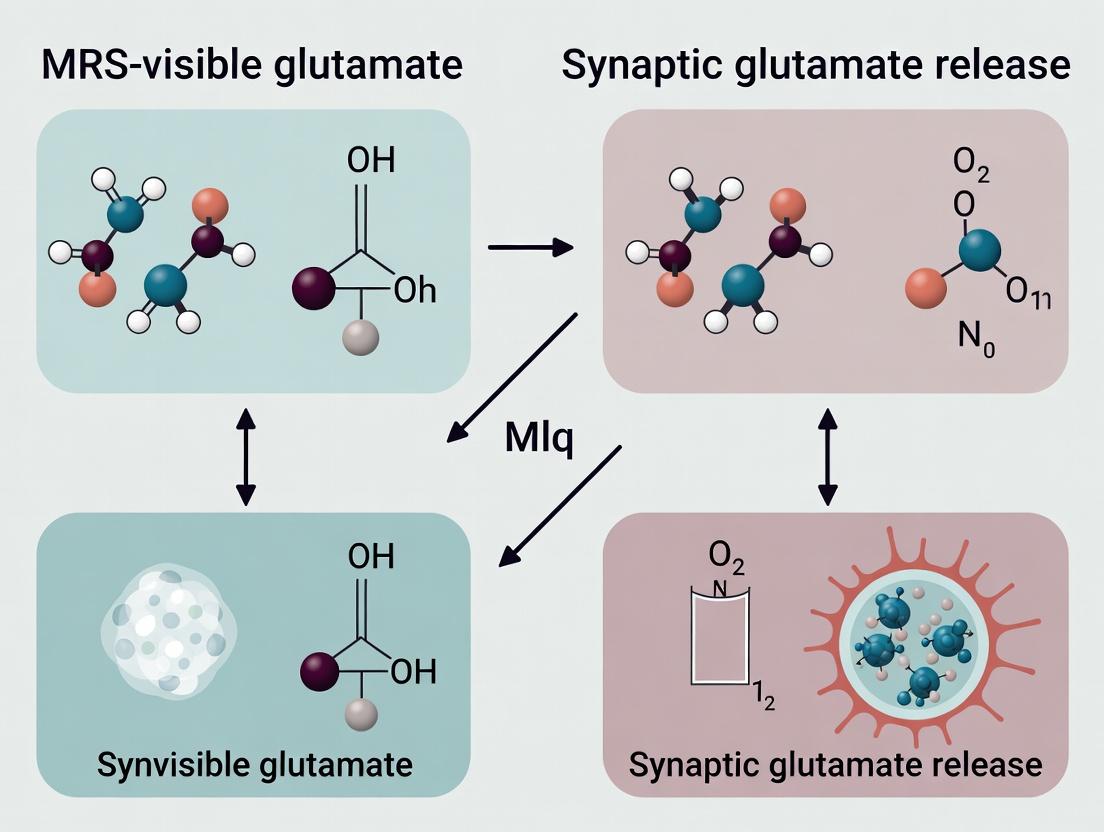
This article explores the critical distinction between the total glutamate pool detectable via Magnetic Resonance Spectroscopy (MRS) and the dynamic, synaptically released fraction central to neurotransmission.
MRS-Visible Glutamate: A Non-Invasive Window into Excitatory Neurotransmission and Neuronal Energetics
Abstract
This article explores the critical distinction between the total glutamate pool detectable via Magnetic Resonance Spectroscopy (MRS) and the dynamic, synaptically released fraction central to neurotransmission. Targeted at researchers and drug developers, we first establish the foundational neurochemistry of glutamate compartments—vesicular, metabolic, and synaptic. We then detail advanced MRS methodologies (J-difference editing, ultra-high field) for isolating glutamate signals and their application in neuroscience and drug development. The guide addresses key challenges in spectral interpretation, contamination, and quantification. Finally, we validate MRS-derived glutamate metrics against established techniques like microdialysis and PET, and examine its comparative power in psychiatric and neurological disorders, providing a comprehensive resource for leveraging MRS glutamate as a biomarker in translational research.
The Dual Nature of Glutamate: Understanding MRS-Visible Pools vs. Synaptic Release Dynamics
This comparison guide analyzes glutamate's divergent functions within the thesis context of reconciling total MRS-visible glutamate pools with synaptically released neurotransmitter glutamate. Understanding these distinct "performance profiles" is critical for interpreting neuroimaging data and developing targeted therapeutics.
Core Functional Comparison
Table 1: Comparative Profile of Glutamate's Dual Roles
| Aspect | Role 1: Excitatory Neurotransmitter | Role 2: Central Metabolic Intermediate | Key Implications for MRS/Synaptic Research |
|---|---|---|---|
| Primary Location | Synaptic vesicles, presynaptic terminal, synaptic cleft. | Mitochondrial matrix, cytoplasmic metabolic pools. | MRS signal overwhelmingly reflects metabolic, not synaptic, glutamate. |
| Concentration | Presynaptic cytoplasm: ~10 mM; Vesicular: ~100 mM; Cleft (during release): ~1-10 µM. | Total brain concentration: ~5-15 µmol/g, majority is metabolic. | Synaptic pool is a tiny fraction (<5%) of the total MRS-visible signal. |
| Turnover Rate | Extremely fast (milliseconds for release/reuptake). | Slower (seconds to minutes for metabolic cycles). | MRS kinetics primarily track metabolic turnover (e.g., TCA cycle anaplerosis). |
| Key Regulating Proteins | VGLUTs, EAATs, NMDAR/AMPAR, SNARE complexes. | Glutamate dehydrogenase (GDH), aminotransferases (AAT), phosphate-activated glutaminase (PAG). | Pharmacological targeting of these systems affects MRS signal differently. |
| Experimental Probe (Example) | Electrophysiology (mEPSCs), optogenetics, synaptic vesicle imaging. | 13C-MRS with 13C-glucose/acetate infusion to track labeling. | Requires dual-methodology approach to disentangle pools. |
| Perturbation Effect | Direct modulation alters synaptic transmission, plasticity, and behavior. | Disruption impacts energy production, ammonia detoxification, glutathione synthesis. | Metabolic challenges (e.g., hypoglycemia) shift MRS signal independent of synaptic activity. |
Experimental Data & Protocols
Key experiments dissect these roles by measuring different pools.
Table 2: Experimental Data Comparing Glutamate Pools
| Experiment Goal | Methodology | Key Quantitative Finding | Interpretation |
|---|---|---|---|
| Quantify synaptic vs. metabolic pool size | Biochemical fractionation + enzymatic assay of isolated synaptosomes vs. whole tissue. | Synaptosomal glutamate content is ~2-4 µmol/mg protein, representing <5% of total cortical glutamate. | The directly releasable synaptic pool is a minor component of total cellular glutamate. |
| Measure glutamate neurotransmitter turnover | In vivo microdialysis with high temporal resolution during stimulation. | Basal extracellular [Glu] ~0.5-5 µM; can increase 2-5 fold upon depolarization. | Direct measure of synaptic/extra-synaptic release, but insensitive to intracellular metabolic pools. |
| Track metabolic glutamate synthesis | 13C-MRS Protocol: Infuse [1,6-13C2]glucose or [2-13C]acetate in vivo, dynamically track 13C-label incorporation into glutamate C4/C3 positions via MRS. | Data: Glutamate C4 labeling from glucose: TCA cycle rate ~0.5-1.0 µmol/g/min. Labeling from acetate (primarily astrocytes) is slower. | Measures de novo synthesis and TCA cycle flux, defining the metabolic pool kinetics visible to MRS. |
| Correlate MRS signal with synaptic release | Combined fMRI/MRS (for glutamatergic "functional spectroscopy") during sensory or cognitive task. | Data: BOLD-fMRI increases correlate with minor (~5%) increases in MRS-measured Glu in activated voxel. | Suggests a tight coupling between synaptic energetics (astrocyte metabolism) and the metabolic glutamate pool, not a direct release measure. |
Detailed 13C-MRS Protocol (Key Experiment):
- Animal/Subject Preparation: Anesthetized animal or human subject in MRS scanner.
- Infusion: Begin constant intravenous infusion of 13C-labeled substrate (e.g., [1,6-13C2]glucose).
- Data Acquisition: Serial 13C-MRS spectra are acquired over 1-2 hours using specialized pulses (e.g., INEPT, DEPT) for sensitivity.
- Spectral Analysis: Fit peak areas for glutamate carbons (C2, C3, C4). Model label incorporation kinetics via metabolic modeling software (e.g., Tsim, Matlab-based models).
- Outcome Measure: Calculate TCA cycle flux rate (Vtca) and neurotransmitter cycling rate (Vcyc) based on label flow from mitochondrial α-ketoglutarate to cytoplasmic glutamate.
Pathway Visualization
Diagram Title: Glutamate Metabolic Cycle vs. Synaptic Release Pathways
Diagram Title: Experimental Methods for Probing Distinct Glutamate Pools
The Scientist's Toolkit: Research Reagent Solutions
Table 3: Essential Reagents for Disambiguating Glutamate's Roles
| Reagent / Material | Primary Function | Application Context |
|---|---|---|
| [1,6-13C2]Glucose or [2-13C]Acetate | 13C-labeled metabolic substrates. | Infused during 13C-MRS to track neuronal vs. astrocytic TCA cycle flux and glutamate synthesis. |
| Selective Glutaminase Inhibitors (e.g., BPTES, CB-839) | Inhibits phosphate-activated glutaminase (PAG). | To probe the glutamine-glutamate cycle and determine reliance on glutamine as a neurotransmitter precursor. |
| EAAT (Transporter) Inhibitors (e.g., TBOA, DHK) | Blocks glutamate reuptake (EAAT1/2 or EAAT2 specific). | In microdialysis/electrophysiology to isolate release dynamics and probe extrasynaptic glutamate spillover. |
| Vesicular Glutamate Transporter (VGLUT) Modulators (e.g., Rose Bengal, Evans Blue) | Inhibits VGLUT function. | To directly target synaptic vesicle loading, separating vesicular pool effects from metabolic synthesis. |
| Excitatory Amino Acid (EAA) Fluorescent Sensors (i.e., iGluSnFR) | Genetically encoded optical glutamate sensor. | For real-time, spatially resolved imaging of glutamate release at synapses in culture or in vivo. |
| High-Affinity Glutamate Receptor Antagonists (e.g., KYN, AP5/NBQX) | Blocks post-synaptic ionotropic receptors (NMDAR/AMPAR). | Used in electrophysiology to confirm glutamatergic transmission, and in MRS to study receptor-inhibition-induced metabolic shifts. |
| MRS-Compatible Glutamate CEST Agents (Emerging) | Chemical Exchange Saturation Transfer agents sensitive to glutamate. | For potentially enhancing glutamate-specific signal in 1H-MRS imaging at high fields. |
Within the framework of in vivo magnetic resonance spectroscopy (MRS) research, a central thesis posits that the "MRS-visible" glutamate signal overwhelmingly represents the large, metabolic cytosolic pool, not the minute, dynamic synaptic release pool. Validating this requires precise definition and measurement of distinct glutamate compartments. This guide compares the leading methodological approaches for quantifying these pools, supporting the interpretation of MRS data.
Comparison of Methodologies for Glutamate Pool Analysis
| Method / Target Pool | Key Principle | Spatial Resolution | Temporal Resolution | Primary Limitation | Key Experimental Data (Typical Values) | | :--- | :--- | : :--- | :--- | :--- | | Vesicular Pool | | | | | | Electrophysiology (FM Dyes, SV Recycling) | Uptake of styryl dyes (e.g., FM1-43) during synaptic vesicle (SV) recycling. | Single synapse. | Milliseconds to seconds. | Invasive; limited to surface synapses. | ~50 SVs/terminal; ~2100 glutamate molecules/SV. Total pool: ~0.11 amol/synapse. | | Vesicular Glutamate Transporter (VGLUT)-pHluorin Imaging | pH-sensitive GFP on VGLUT; fluorescence quenched in acidic vesicle, bright upon exocytosis. | Single terminal. | Seconds. | Requires genetic manipulation. | Readily releasable pool (RRP) size: 5-20% of total vesicular pool. | | Cytosolic Pool | | | | | | ¹³C-MRS with Metabolic Modeling | Infusion of ¹³C-labeled glucose/acetate to track glutamate ¹³C-labeling kinetics via TCA cycle. | ~cm³ (voxel). | Minutes to hours. | Poor spatial resolution; models infer cytosolic, not synaptic, glutamate. | Cytosolic [Glu]: 5-10 mM; turnover rate: ~0.5 μmol/g/min. | | Biochemical Fractionation | Homogenization & differential centrifugation to isolate synaptosomes/cytosol. | Bulk tissue. | N/A (endpoint). | Cross-contamination between compartments. | Cytosolic glutamate constitutes >80% of total brain glutamate. | | Synaptic / Released Pool | | | | | | Microdialysis | Extracellular fluid sampling via semi-permeable membrane. | ~mm³. | 5-20 minutes. | Low temporal resolution; tissue damage; measures "overflow," not direct release. | Basal extracellular [Glu]: 0.5 - 5 μM (mostly from transport reversal, not exocytosis). | | Enzymatic / Fluorescent Sniffer Cells | Cells (e.g., astrocytes) expressing Glu-sensitive receptors/indicators placed near neurons. | Single cell to network. | Seconds. | Reporter kinetics limit detection speed. | Measured synaptic cleft [Glu] transients: 1-10 mM, decay in ~1 ms. | | GluSnFR (Genetically Encoded Glutamate Sensor) Imaging | Cell-surface GFP-based sensor (iGluSnFR) binding causes fluorescence increase. | Submicron (synaptic). | Milliseconds. | Sensor affinity (KD ~μM) may saturate or distort kinetics. | Peak synaptic cleft [Glu] during release: ~1-3 mM. |
Detailed Experimental Protocols
1. FM1-43 Dye Loading/Unloading for Vesicular Pool Imaging
- Protocol: Neuronal cultures or brain slices are incubated in high-K⁺ (e.g., 60 mM) physiological solution containing 4-15 μM FM1-43 for 30-90 sec to induce activity-dependent dye uptake into recycling SVs. After washing in dye-free, low-Ca²⁺ solution for 10-15 min, destaining is induced by re-applying high-K⁺ solution. Fluorescence is monitored via confocal or 2-photon microscopy.
- Quantification: The total fluorescence loss during destaining represents the total recycling vesicular pool. The initial rapid phase corresponds to the RRP.
2. ¹³C-MRS with [1,6-¹³C]Glucose Infusion for Cytosolic Pool Dynamics
- Protocol: Human or animal subjects receive a controlled intravenous infusion of [1,6-¹³C]glucose. A series of ¹³C-MRS spectra are acquired from a brain voxel over 1-2 hours. The time courses of ¹³C-labeling in glutamate C4 and C3 positions are fitted via a metabolic model (e.g., a two-compartment neuronal/astrocytic model).
- Quantification: The model solves for metabolic rates (TCA cycle flux Vtca, neurotransmitter cycling Vnt) and pool sizes. The calculated neuronal glutamate concentration (5-10 mM) is considered the cytosolic pool.
3. iGluSnFR Imaging of Synaptic Glutamate Transients
- Protocol: A neuronal culture or brain slice is transfected or virally infused with iGluSnFR (e.g., iGluSnFR.A184S variant). Single-action potentials or trains are evoked via field or optogenetic stimulation. Sensor fluorescence is recorded via high-speed, sensitive microscopy (e.g., sCMOS camera).
- Quantification: ΔF/F0 is calculated. Sensor kinetics (rise/decay) report glutamate clearance. Amplitude can be calibrated to estimate peak [Glu] using known saturating concentrations of glutamate.
Visualizations
Title: Glutamate Cycle Between Primary Cellular Pools
Title: Conceptual Link of MRS Signal to Synaptic Release
The Scientist's Toolkit: Key Research Reagents & Materials
| Item | Function & Relevance |
|---|---|
| FM1-43 (or FM4-64) | Lipophilic styryl dye that inserts into the outer leaflet of synaptic vesicle membranes during endocytosis, used to visualize vesicle recycling. |
| iGluSnFR (A184S, A184V variants) | Genetically encoded fluorescent sensor expressed on cell surface to detect extracellular glutamate transients with high spatiotemporal resolution. |
| VGLUT-pHluorin | pH-sensitive GFP tagged to VGLUT; fluorescence reports synaptic vesicle exocytosis (neutral pH) and endocytosis (acidic pH). |
| [1,6-¹³C]Glucose / [2-¹³C]Acetate | ¹³C-labeled metabolic substrates infused for ¹³C-MRS to trace neuronal vs. astrocytic TCA cycle flux and glutamate pool labeling. |
| Tetrodotoxin (TTX) | Sodium channel blocker used to silence action potential-dependent synaptic activity in control experiments. |
| Bafilomycin A1 | V-ATPase inhibitor that blocks synaptic vesicle proton gradient, preventing glutamate loading and serving as a negative control. |
| DL-Threo-β-Benzyloxyaspartic Acid (TBOA) | Broad-spectrum, competitive inhibitor of excitatory amino acid transporters (EAATs) used to probe glutamate reuptake dynamics. |
| Synaptosomal Preparation Kit | Commercial kits for differential centrifugation to isolate synaptosomes, enabling biochemical isolation of synaptic compartments. |
Thesis Context: In neurochemical research, a central challenge is relating magnetic resonance spectroscopy (MRS) measurements of glutamate—which reflect the total tissue concentration—to the phasic, synaptic release events critical for neurotransmission and drug action. This guide compares the fundamental outputs and interpretations of MRS against techniques that measure synaptic release.
Comparison Guide: MRS vs. Techniques for Measuring Synaptic Glutamate Release
The following table summarizes the core differences in what each method quantifies, its temporal and spatial resolution, and its relationship to synaptic activity.
Table 1: Method Comparison for Glutamate Assessment
| Feature | Magnetic Resonance Spectroscopy (MRS) | Microdialysis | Fluorescent iGluSnFR Sensors | Electrophysiology (e.g., Patch Clamp) |
|---|---|---|---|---|
| Primary Measure | Total tissue glutamate concentration (mM) | Extracellular tonic glutamate level (μM) | Relative phasic glutamate transients (ΔF/F) | Synaptic current amplitude (pA) or charge transfer. |
| Temporal Resolution | Minutes to hours. | ~10-20 minutes per sample. | Milliseconds to seconds. | Milliseconds. |
| Spatial Resolution | Voxel: ~3x3x3 mm to 10x10x10 mm. | Probe diameter ~0.2-0.3 mm. | Cellular to subcellular (synaptic). | Single synapse to single cell. |
| Sensitivity to Phasic Release | No. Averages all pools. | Very Low. Dialysate integrates over time, missing fast transients. | Yes. Specifically engineered to detect rapid changes. | Yes. Direct readout of post-synaptic response to quantal release. |
| Invasiveness | Non-invasive (human/applicable). | Invasive (requires probe insertion). | Highly invasive (requires viral expression & cranial window). | Highly invasive (requires tissue penetration). |
| Key Limitation for Synaptic Inference | Cannot distinguish synaptic, metabolic, or glial pools. Glutamatergic "signal" is a composite. | Low temporal resolution disrupts correlation with neural firing; measures tonic, not phasic, levels. | Requires genetic manipulation; signal calibration to absolute concentration is challenging. | Indirect measure of release; sensitive to post-synaptic receptor modifications. |
| Typical Experimental Output | Spectrum with a glutamate peak (integrated area). Concentration estimate (e.g., 8.0 mM ± 0.5 in anterior cingulate). | Time-series of dialysate glutamate concentration (e.g., 2.5 μM baseline, 150% increase after drug). | Fluorescence trace showing transient "spikes" aligned with stimulus. | Trace of excitatory post-synaptic currents (EPSCs). |
Experimental Protocols & Supporting Data
Key Experiment 1: Disconnecting MRS Glutamate from Synaptic Release Using Vesicular Loading Inhibition.
- Objective: To test if MRS glutamate levels change when synaptic vesicle loading (and thus, ready-releasable synaptic glutamate) is pharmacologically impaired.
- Protocol:
- Animal/Model: Rodent models (in vivo) or brain slice preparations.
- Intervention: Administration of vesicular glutamate transporter (VGLUT) inhibitors, such as Rose Bengal or Chicago Sky Blue 6B.
- Parallel Measurements:
- MRS: Acquire ¹H-MRS spectra (STEAM or PRESS, TE=20-30 ms) from a region of interest (e.g., hippocampus) before and after inhibitor administration. Quantify glutamate via spectral fitting.
- Electrophysiology: In parallel slices or animals, perform patch-clamp recordings to measure amplitude and frequency of miniature EPSCs (mEPSCs) in pyramidal neurons.
- Data Summary:
Table 2: Effects of VGLUT Inhibition on Glutamate Measures
| Measurement | Control Condition | Post-VGLUT Inhibition | % Change | Interpretation |
|---|---|---|---|---|
| MRS Glutamate (tissue concentration) | 10.2 mM ± 0.8 | 9.8 mM ± 0.9 | ~ -4% (Not Significant) | Total tissue glutamate pool is largely unchanged. |
| mEPSC Amplitude (synaptic release) | 15.3 pA ± 1.5 | 8.7 pA ± 1.1 | ~ -43% (p < 0.01) | Synaptic vesicle glutamate content is significantly reduced. |
| mEPSC Frequency | 1.2 Hz ± 0.3 | 1.1 Hz ± 0.2 | ~ -8% (NS) | Release probability is largely unaffected. |
Key Experiment 2: Correlating MRS with Microdialysis During Altered Neural Activity.
- Objective: To compare MRS measures of total glutamate with extracellular tonic glutamate during pharmacologically induced activation.
- Protocol:
- Model: Anesthetized or behaving rodent with co-localized MRS voxel and microdialysis probe in prefrontal cortex.
- Intervention: Systemic or local administration of a glutamate reuptake inhibitor (e.g., TBOA) or neuronal depolarizing agent (e.g., high K⁺ perfusate).
- Measurements: Concurrent acquisition of ¹H-MRS spectra and collection of microdialysate fractions. Glutamate is assayed via HPLC for microdialysis.
- Data Summary:
Table 3: MRS vs. Microdialysis Response to Glutamatergic Challenge
| Method | Baseline Measure | Post-Challenge Measure | Response Dynamics | Inference |
|---|---|---|---|---|
| MRS | 9.5 mM ± 0.7 | 10.1 mM ± 0.8 | Slow, minimal increase (+6%). Peaks after 30+ min. | Total cellular glutamate homeostasis is tightly regulated. |
| Microdialysis | 0.8 μM ± 0.1 | 3.5 μM ± 0.4 | Rapid, large increase (+337%). Peaks within 10-20 min. | Extracellular tonic glutamate is dynamically regulated by transport/ release. |
Visualizing the Conceptual and Methodological Divide
Diagram 1: MRS Integrates All Glutamate Pools
Diagram 2: Experimental Workflow to Test the Disconnect
The Scientist's Toolkit: Research Reagent Solutions
Table 4: Essential Reagents for Investigating Glutamate Dynamics
| Reagent / Material | Category | Primary Function in Research |
|---|---|---|
| VGLUT Inhibitors (e.g., Rose Bengal) | Pharmacological Tool | To selectively impair loading of glutamate into synaptic vesicles, dissecting the synaptic pool. |
| iGluSnFR AAVs | Genetically Encoded Sensor | To visualize real-time, phasic glutamate transients in specific cell types or regions in vivo/in vitro. |
| TBOA (DL-threo-β-Benzyloxyaspartic acid) | Transport Inhibitor | To block glutamate reuptake transporters (EAATs), elevating extracellular tonic glutamate for microdialysis studies. |
| JNJ-16259685 (mGluR1 NAM) | Receptor Antagonist | To selectively block postsynaptic metabotropic glutamate receptors, used to isolate synaptic signaling pathways. |
| Standard MRS Phantom (e.g., Braino) | Calibration Solution | Contains known concentrations of metabolites (including glutamate) for calibrating and validating MRS sequence accuracy. |
| High-Precision HPLC Kit | Analytical Chemistry | For absolute quantification of glutamate concentration in microdialysate or tissue homogenate samples. |
This comparison guide is framed within a broader thesis investigating the relationship between MRS-visible glutamate pools and synaptic glutamate release. Understanding this relationship is critical for interpreting neurometabolic data in basic research and clinical trials.
Comparison of Methodological Approaches for Probing Cycle Flux
| Method | Principle | Measured Outcome | Key Advantages | Key Limitations | Typical Experimental Data (Rat Cortex) |
|---|---|---|---|---|---|
| ¹³C MRS with [1-¹³C]Glucose | Tracks ¹³C label incorporation from glucose into Glu C4, then to Gln C4. | TCA cycle rate (VTCA), glutamate-glutamine cycle rate (Vcycle). | Non-invasive; direct measurement of metabolic fluxes in vivo. | Low sensitivity; requires long acquisition times; complex modeling. | VTCA: ~0.5-0.8 µmol/g/min; Vcycle/VTCA: ~0.3-0.6. |
| ¹³C MRS with [2-¹³C]Acetate | Tracks ¹³C label preferentially metabolized in astroglia. | Astroglial TCA cycle flux, glutamine synthesis rate. | Cell-specific (primarily astroglial) metabolic information. | Requires infusion; glial-specificity is not absolute. | Glial VTCA: ~0.08-0.12 µmol/g/min. |
| Pharmacological Block (e.g., MSO) | Inhibits glutamine synthetase (GS), blocking the cycle. | Changes in MRS Gln/Glu, electrophysiology, behavior. | Establishes causal necessity of the cycle for function. | Invasive; non-physiological disruption; systemic effects. | [Gln] decrease >70%; [Glu] increase ~20%; loss of evoked potentials. |
| Ex vivo NMR after ¹³C Infusion | Infuse tracer in vivo, analyze tissue extract with high-resolution NMR. | Absolute enrichment, multiple metabolite isotopomers. | High sensitivity and resolution; comprehensive isotopomer data. | Terminal experiment; lacks dynamic temporal data. | Glutamate C4 enrichment ~30-40% from [1-¹³C]glucose. |
Experimental Protocol: In Vivo ¹³C MRS Flux Analysis
Objective: Quantify neuronal TCA cycle (VTCA) and glutamate-glutamine cycle (Vcycle) rates.
- Animal Preparation: Anesthetized rodent or human subject in MRS scanner.
- Tracer Infusion: Intravenous infusion of [1-¹³C]D-glucose (e.g., 99% enrichment) at a controlled rate to maintain stable plasma enrichment.
- Data Acquisition: Sequential ¹H-observed ¹³C-edited MRS spectra (e.g., from voxel in cerebral cortex) acquired over 1-2 hours. Detects ¹³C label in Glu H4 and Gln H4 positions.
- Metabolite Quantification: Fit time-domain data to quantify concentrations and ¹³C enrichment time courses of Glu C4 and Gln C4.
- Metabolic Modeling: Fit enrichment curves to a two-compartment (neuronal/astroglial) metabolic model (e.g., Fitting Algorithm for Chemical Exchange (FACE)) to solve for VTCA and Vcycle.
The Scientist's Toolkit: Key Research Reagent Solutions
| Item | Function in Neuroenergetics Research |
|---|---|
| [1-¹³C] or [1,6-¹³C₂] Glucose | Primary isotopic tracer for neuronal glucose oxidation and glutamate synthesis. |
| [2-¹³C] Acetate | Astrocyte-preferential tracer for probing glial TCA cycle and glutamine synthesis. |
| Methionine Sulfoximine (MSO) | Irreversible pharmacological inhibitor of glutamine synthetase to block the cycle. |
| ¹³C/¹H MRS Coils (Surface/Volume) | Specialized radiofrequency coils optimized for sensitive detection of ¹³C nuclei at high field (e.g., 7T-14T for animals). |
| LC-MS/MS Systems | For validating MRS findings and measuring absolute concentrations and enrichments in tissue extracts. |
| Two-Compartment Metabolic Modeling Software (e.g., FACE) | Software to convert ¹³C enrichment time courses into quantitative metabolic fluxes. |
Visualizations
Diagram 1: The Glutamate-Glutamine Cycle Pathway.
Diagram 2: ¹³C MRS Flux Experiment Workflow.
Within the broader thesis investigating the relationship between MRS-visible glutamate pools and synaptic glutamate release, a critical comparative analysis focuses on three brain regions: the cortex, hippocampus, and striatum. Their distinct cellular architecture, connectivity, and glutamate system dynamics have profound implications for both normal function and disease pathogenesis. This guide compares experimental data on glutamate metrics, receptor expression, and vulnerability across these regions.
Comparative Analysis of Glutamate System Metrics
The following table summarizes key quantitative findings from recent MRS and molecular studies comparing these regions in rodent models and human studies.
Table 1: Regional Comparison of Glutamate Metrics and Vulnerability
| Metric | Cortex (Prefrontal) | Hippocampus (CA1) | Striatum (Dorsal) | Experimental Method & Notes |
|---|---|---|---|---|
| Baseline [Glu] (MRS) | 8.2 ± 0.7 mM | 9.5 ± 0.8 mM | 10.1 ± 1.0 mM | 7T Proton MRS, PRESS sequence (TE=35 ms). Human in vivo data. |
| Glu/Gln Ratio | 3.1 ± 0.4 | 2.6 ± 0.3 | 3.8 ± 0.5 | Indicates glutamate-glutamine cycling intensity. |
| Synaptic Density (EST) | ~0.9 billion /mm³ | ~1.3 billion /mm³ | ~0.8 billion /mm³ | Electron microscopy stereology in rodent tissue. |
| VGLUT1 mRNA Level | High | Very High | Low | In situ hybridization. Striatal glutamate largely corticostriatal. |
| EAAT2 (GLT-1) Expression | High | Moderate | High | Immunoblot of astrocytic glutamate transporter. |
| Susceptibility to Hyperexcitability | Moderate (Focal Epilepsy) | High (TLE) | Low | Electrophysiology in acute slices with low Mg²⁺. |
| Metabotropic GluR5 (mGluR5) BPND | 1.45 ± 0.15 | 1.80 ± 0.20 | 2.05 ± 0.18 | [¹¹C]ABP688 PET in healthy humans. |
| NMDA Receptor NR2A Subunit | High | Very High | Moderate | Immunohistochemistry in rodent. |
Detailed Experimental Protocols
Protocol 1: High-Field MRS for Regional Glu Quantification
- Objective: Quantify regional concentrations of MRS-visible glutamate.
- Method: 7T MRI/MRS scan with voxel placement in prefrontal cortex, medial temporal lobe (hippocampus), and striatum. Use a semi-adiabatic SPECIAL or MEGA-PRESS sequence for optimal Glu editing. Water scaling is used as an internal reference. LCModel or similar software is used for spectral fitting with a simulated basis set. Rigorous gray matter fraction correction is applied using segmented T1-weighted images.
- Key Controls: CSF contamination correction, subject motion monitoring, consistent voxel placement across subjects.
Protocol 2: Electrophysiological Assessment of Synaptic Release & Plasticity
- Objective: Compare basal synaptic release properties and long-term potentiation (LTP).
- Method: Acute coronal or horizontal brain slices (300-400 µm) from rodents are maintained in aCSF. Field excitatory postsynaptic potentials (fEPSPs) are recorded in response to afferent stimulation in: 1) Prefrontal cortical layer V, 2) Hippocampal Schaffer collateral-CA1 pathway, 3) Corticostriatal pathway. Paired-pulse ratio (PPR) is calculated as a proxy for release probability. LTP is induced using high-frequency stimulation (e.g., 100 Hz, 1s).
- Key Controls: Stable baseline recording, consistent stimulation intensity, verification of pathway specificity with pharmacology.
Protocol 3: Immunoblotting for Glutamate Transporter/Receptor Expression
- Objective: Quantify protein levels of EAAT2 (GLT-1) and mGluR5.
- Method: Micro-punches of each brain region are homogenized in RIPA buffer. Proteins (20-40 µg) are separated by SDS-PAGE, transferred to PVDF membranes, and probed with validated antibodies (e.g., anti-EAAT2, anti-mGluR5). β-actin or GAPDH serves as a loading control. Quantification is performed via chemiluminescence imaging and densitometry.
- Key Controls: No-primary antibody control, positive control lysate, standard curve for linear range.
Signaling Pathways and Workflows
Title: MRS Glu Pool & Synaptic Glutamate Cycle Relationship
Title: Experimental Workflow for Correlating MRS Glu & Synaptic Function
The Scientist's Toolkit: Key Research Reagents & Materials
Table 2: Essential Research Reagents for Comparative Glutamate Studies
| Item | Function & Application in this Context |
|---|---|
| Glutamate Assay Kit (Fluorometric) | Quantifies total tissue glutamate levels from micro-punched regional samples, providing ground truth for MRS data. |
| VGLUT1 & EAAT2 (GLT-1) Antibodies | Validated antibodies for immunohistochemistry or immunoblotting to map and quantify pre-synaptic terminals and astrocytic uptake capacity across regions. |
| mGluR5 Radioligand (e.g., [¹¹C]ABP688) | For PET imaging studies comparing receptor availability (BPND) in cortex, hippocampus, and striatum in vivo. |
| Tetrodotoxin (TTX) & 4-AP | Sodium and potassium channel blockers used in electrophysiology to isolate action-potential dependent vs. independent glutamate release. |
| D,L-Threo-β-Benzyloxyaspartic Acid (TBOA) | EAAT transporter blocker used in electrophysiology or MRS to probe the role of reuptake in shaping the MRS signal and synaptic spillover in each region. |
| Region-Specific Viral Vectors (AAV) | For targeted manipulation (overexpression/knockdown) of genes like EAAT2 or VGLUT1 in a single region to assess circuit-specific effects on MRS and synaptic metrics. |
| Artificial CSF (aCSF) for Slice Physiology | Ionic composition must be optimized for each brain region (e.g., striatum vs. hippocampus) to maintain neuronal health and synaptic function ex vivo. |
| LCModel Basis Set for 7T Glu | Essential software tool for accurately fitting the complex Glu signal in MR spectra, requiring region-specific basis simulations for optimal quantification. |
Advanced MRS Techniques for Glutamate Quantification: From Sequences to Translational Biomarkers
Magnetic Resonance Spectroscopy (MRS) enables non-invasive measurement of brain metabolites. Within the context of researching MRS-visible glutamate pools versus synaptic release dynamics, the choice of localization and editing methodology is critical. This guide compares core methodologies for detecting glutamate (Glu) and gamma-aminobutyric acid (GABA).
Comparison of Core MRS Localization & Editing Methods
The following table summarizes the key performance characteristics of PRESS, STEAM, and advanced J-difference editing sequences for neurochemical research.
| Methodology | Primary Use | Typical Echo Time (TE) | Glu SNR/Reliability | GABA SNR/Reliability | Key Advantages | Key Limitations |
|---|---|---|---|---|---|---|
| PRESS | Localization of uncoupled spins (e.g., tNAA, tCho, Cr) | Long (≥30 ms) | Moderate. J-modulation at long TE reduces signal. | Poor. Cannot resolve at 3T. | Robust, widely available, excellent for major metabolites. | Poor for J-coupled spins like Glu, Gln, GABA. |
| STEAM | Localization with very short TE | Very Short (≤6 ms) | Good. Less J-evolution preserves coupled signals. | Fair. Overlaps with macromolecules (MM). | Excellent for Glu, glutathione (GSH). | Lower inherent SNR than PRESS, MM contamination at short TE. |
| MEGA-PRESS (J-difference) | Spectral editing of specific J-coupled spins (e.g., GABA, GSH, Lac) | ~68 ms for GABA | Fair (as co-edited signal). | Excellent. Effectively resolves GABA from overlying creatine. | Gold standard for GABA detection at 3T. | Measures GABA+ (includes co-edited MM). Long scan time. |
| HERMES (J-difference) | Simultaneous editing of multiple metabolites (e.g., GABA, GSH) | Variable (e.g., ~80 ms) | Fair (as co-edited signal). | Very Good. Simultaneously quantifies GABA and GSH. | Efficient multi-metabolite editing in single scan. | Complex analysis, potential for crosstalk. |
SNR: Signal-to-Noise Ratio; MM: Macromolecules; tNAA: total N-Acetylaspartate; tCho: total Choline; Cr: Creatine; Gln: Glutamine.
Experimental Protocols for Key Methodologies
PRESS (Point RESolved Spectroscopy)
Purpose: Standard volumetric localization for major metabolites. Typical Protocol (3T):
- Voxel Placement: 20x20x20 mm³ in region of interest (e.g., anterior cingulate cortex).
- Parameters: TR = 2000 ms, TE = 30 ms (or 35 ms for in-phase glutamate), 128-256 averages.
- Shimming: Automated (e.g., FASTMAP) to achieve water linewidth <15 Hz.
- Water Suppression: Chemical Shift Selective Saturation (CHESS).
- Quantification: Fitted using LCModel or similar, referencing to water or internal Cr.
MEGA-PRESS for GABA
Purpose: Specific detection of GABA at 3T. Typical Protocol (GABA editing):
- Voxel Placement: 30x30x30 mm³.
- Editing Pulses: Frequency-selective editing pulses are applied at two alternating frequencies (ON: 1.9 ppm - GABA; OFF: 7.5 ppm - symmetric). These are applied concurrently with slice-selective refocusing pulses in a PRESS sequence.
- Parameters: TR = 1800 ms, TE = 68 ms, 320 averages (160 ON, 160 OFF), total scan ~10 mins.
- Data Processing: Subtracting ON from OFF scans yields a difference spectrum where the GABA peak appears clearly at 3.0 ppm. The unsuppressed water signal from the OFF scans is used for quantification and eddy current correction.
HERMES (Hadamard Encoding and Reconstruction of MEGA-Edited Spectroscopy)
Purpose: Simultaneous detection of GABA and GSH (or other metabolite pairs) in a single scan. Typical Protocol (GABA & GSH):
- Voxel Placement: 30x30x30 mm³.
- Editing Scheme: Uses four interleaved sub-experiments with editing pulses applied at different frequencies (e.g., for GABA: 1.9 ppm; for GSH: 4.56 ppm) in a Hadamard combination.
- Parameters: TR = 1800 ms, TE = 80 ms, 320 total averages (80 per condition), total scan ~10 mins.
- Data Processing: Linear combination (Hadamard decoding) of the four sub-spectra generates separate GABA-edited and GSH-edited difference spectra simultaneously.
Visualizing J-Difference Editing Logic and Workflow
J-Difference Editing Logic in MEGA-PRESS
MEGA-PRESS Experimental Workflow
The Scientist's Toolkit: Essential Reagents & Materials for MRS Research
| Item | Function in Research Context |
|---|---|
| Phantom Solutions | Contains known concentrations of metabolites (e.g., GABA, Glu, Cr) in buffered saline. Used for sequence validation, testing SNR, and calibration of quantification methods. |
| LCModel/QUEST/TARQUIN Software | Spectral fitting software packages. Deconvolute the raw MR spectrum into individual metabolite contributions using a basis set of known metabolite spectra. |
| Gannet (for MEGA-PRESS) | A widely used, MATLAB-based toolkit specifically designed for processing and quantifying GABA-edited MEGA-PRESS data. Standardizes analysis pipeline. |
| MR-Compatible GABA Agonist/Antagonist | Pharmacological agents (e.g., benzodiazepines, tiagabine) used in challenge studies to dynamically modulate synaptic GABA levels, linking MRS-visible pools to receptor function. |
| High-Precision Syringe Pumps & MR-Compatible Infusion Lines | For administering controlled challenges (e.g., glucose, drugs) during prolonged MRS scans to study metabolic or neurotransmitter kinetics. |
| Basis Set Libraries | Simulated or experimentally acquired spectra for each metabolite at specific field strength and echo time. Essential for accurate spectral fitting. |
The Critical Role of Ultra-High Field (7T+) for Improved Spectral Resolution of Glutamate
Within the ongoing thesis of distinguishing MRS-visible glutamate (the total metabolic pool) from synaptic release events, spectral resolution is paramount. The critical limitation at clinical field strengths (1.5T-3T) is the severe spectral overlap between glutamate (Glu), glutamine (Gln), and gamma-aminobutyric acid (GABA). This conflation obstructs precise measurement of glutamate dynamics pertinent to neurotransmission and neurological disease. Ultra-high field (UHF) MR systems, operating at 7 Tesla and above, provide a fundamental solution by markedly increasing spectral dispersion and signal-to-noise ratio (SNR), enabling the accurate quantification of glutamate.
Comparative Performance: 7T+ vs. Lower Field Strengths
The primary advantage of UHF MRS is quantified by improvements in key spectral metrics. The following table summarizes experimental data from comparative studies.
Table 1: Quantitative Comparison of Glutamate Spectral Resolution at Different Field Strengths
| Field Strength | Glu Linewidth (Hz) | Glu-Gln Chemical Shift Difference (Hz) | SNR (Relative Gain) | Glu Quantification Cramér-Rao Lower Bounds (%CRLB) | Key Study (Example) |
|---|---|---|---|---|---|
| 3T | 6-10 Hz | ~18 Hz | 1.0 (Baseline) | 15-25% | Mullins et al., NeuroImage, 2014 |
| 7T | 4-7 Hz | ~42 Hz | ~2.0x 3T | 5-12% | Tkác et al., NMR in Biomed, 2009 |
| 9.4T+ (Human) | 3-5 Hz | ~56 Hz | ~2.5-3x 3T | 3-8% | Marjanska et al., J Neurochem, 2012 |
Experimental Protocols for Glutamate MRS at UHF
Protocol 1: Single-Voxel Spectroscopy (SVS) - STEAM/PRESS
- Objective: Acquire high-resolution spectra from a localized brain region (e.g., anterior cingulate cortex).
- Method: Use a volume-transmit, multi-channel receive head coil. Shimming is performed using higher-order methods (e.g., FAST(EST)MAP) to achieve water linewidths <15 Hz. A voxel (~8-27 mL) is placed. Spectra are acquired using short-TE PRESS (TE=20-30 ms) or STEAM (TE=6-20 ms) sequences optimized for UHF (adiabatic pulses for B1+ inhomogeneity mitigation). Water suppression is achieved using VAPOR or similar. Number of averages: 64-128. Acquisition time: 5-10 minutes.
- Analysis: Spectra are processed with LCModel or similar, using a basis set simulated for the exact field strength, sequence, and echo time. Metabolite concentrations are reported in institutional units or relative to creatine.
Protocol 2: Spectral Editing (MEGA-PRESS) for Glu-Contaminated Co-edits
- Objective: Isolate specific resonances; at UHF, improved resolution reduces contaminant co-editing.
- Method: For GABA editing, the traditional 1.9 ppm edit pulse also affects the 2.1 ppm Glu resonance at 3T. At 7T, the increased separation means the 1.9 ppm pulse has a more selective effect on GABA, reducing the Glu contribution to the "GABA+" signal. This improves specificity for the thesis question.
Diagram: UHF MRS Impact on Glutamate Research Thesis
Title: How 7T+ MRS Enables the Glutamate Research Thesis
The Scientist's Toolkit: Key Research Reagent Solutions for MRS Glutamate Studies
Table 2: Essential Materials and Reagents for Glutamate MRS Research
| Item | Function & Relevance |
|---|---|
| 7T/9.4T MRI System | Provides the fundamental hardware for increased spectral dispersion and SNR. Essential for separating Glu from Gln. |
| Multi-channel Receive Coil (e.g., 32/64ch) | Maximizes signal reception and enables parallel imaging, reducing scan time and improving spatial localization. |
| Advanced Shimming Tools | Essential for achieving homogeneous magnetic fields (narrow linewidths) over the voxel, a prerequisite for high-resolution spectra at UHF. |
| Phantom Solutions | Contain known concentrations of metabolites (Glu, Gln, GABA, Cr, NAA) in buffer. Used for sequence validation, calibration, and quantification accuracy tests. |
| Spectral Analysis Software (LCModel, jMRUI) | Processes raw data. Requires a basis set of simulated metabolite spectra specific to the field strength and pulse sequence for accurate fitting. |
| Pulse Sequence Code (Siemens IDEA/GE EPIC) | Custom sequence modifications (e.g., optimized TE, adiabatic pulses) are often needed to fully exploit UHF advantages and minimize artifacts. |
Within the context of research investigating the relationship between MRS-visible glutamate and synaptic release, the choice of quantification pipeline is critical. Accurate, reliable quantification of metabolite concentrations from magnetic resonance spectroscopy (MRS) data directly impacts the validity of findings concerning neurotransmitter dynamics and their perturbation in disease or by novel therapeutics. This guide objectively compares two leading quantification approaches, LC Model and AMARES, with a specific focus on the central challenge of basis sets.
Performance Comparison
The following table summarizes key performance characteristics based on published experimental data and benchmarks.
| Feature | LC Model | AMARES (jMRUI) |
|---|---|---|
| Core Principle | Linear combination of model spectra in the frequency domain. | Nonlinear least-squares fitting of time-domain data using prior knowledge. |
| Basis Set Role | Absolute; requires a pre-computed, sequence-specific basis set of metabolite spectra. | Relative; uses initial guesses for frequencies, dampings, amplitudes, and phases. |
| Handling of Macromolecules/Lipids | Explicitly includes them in the basis set. | Typically modeled as a smooth baseline or excluded. |
| Typeline Analysis | Primary Outcome: Concentration estimates (with CRLBs).Primary Outcome: Fitted amplitudes, linewidths, frequencies.Typical Output: Cramer-Rao Lower Bounds (CRLB) for each metabolite. | Concentration derived via internal or external reference. |
| Strengths | Highly automated, robust to poor shim, directly provides uncertainty estimates (CRLB). | More flexible for atypical signals, less dependent on a perfect basis set, direct access to time-domain parameters. |
| Weaknesses | Complete dependence on accuracy and completeness of basis set. Difficult to adjust if basis is wrong. | Requires more user expertise for setting prior knowledge; baseline handling can be subjective. |
| Glutamate Specific Challenge | Gln contamination in basis can inflate Glu estimate. Requires very specific basis for edited MRS (e.g., MEGA-PRESS, HERMES). | Accurate prior knowledge for coupled Glu spin systems (J-coupling, relative amplitudes) is essential for correct fitting. |
Supporting Experimental Data Summary: A 2022 study at 3T comparing GABA-edited MRS quantification found:
- Within-method reliability (CV): LC Model: 9%, AMARES: 11%.
- Between-method correlation: Excellent (R>0.95), but absolute concentration values differed by ~15%, attributable to basis set differences for edited spectra and macromolecular handling.
Protocol 1: Comparative Validation at 7T (Simulated and Phantom Data)
- Simulation: Synthetic 1H-MRS time-domain data was generated for 20 metabolites (including Glu, Gln, GABA) using MATLAB, incorporating realistic noise, linewidth (12 Hz), and frequency drift.
- Basis Sets: For LC Model, a basis set was simulated using the same sequence parameters (STEAM, TE=20ms). For AMARES, a prior knowledge table defining the Glu multiplet (2.35ppm, 2.12ppm, 2.05ppm) with correct J-coupling constants was created.
- Quantification: The same dataset was processed through LC Model (v6.3) and AMARES in jMRUI (v6.0). In LC Model, the simulated basis was used. In AMARES, initial guesses were derived from the data's Fourier transform.
- Analysis: Accuracy was calculated as (Estimated Concentration / True Concentration) * 100%. Precision was measured as the coefficient of variation across 100 noise realizations.
Protocol 2: In Vivo Glutamate Measurement Stability Test
- Subject & Scanning: 10 healthy controls underwent repeated scanning (5 sessions) on a 3T scanner using a PRESS sequence (TE=30ms).
- Processing: All data was processed through:
- LC Model: Using a vendor-provided basis set simulated for the exact PRESS parameters.
- AMARES: Using a consistent prior knowledge file and manual baseline correction by a single expert.
- Outcome Measure: The intra-subject coefficient of variation (CV%) for glutamate concentration in the anterior cingulate cortex was calculated for each pipeline.
Visualization of Quantification Workflows
Title: LC Model vs AMARES Quantification Workflow Comparison
Title: MRS Glutamate Relationship to Synaptic Release & Confounds
The Scientist's Toolkit: Key Research Reagent Solutions
| Item / Solution | Function in MRS Glutamate Research |
|---|---|
| High-Field Preclinical Scanner (7T-14T) | Enables higher spectral resolution for better separation of Glu from Gln and other overlapping metabolites. |
| Specialized RF Coils (e.g., Phased-array) | Improves signal-to-noise ratio (SNR), critical for detecting low-concentration metabolites and reducing scan time. |
| Spectral Editing Pulse Sequences (MEGA-PRESS, HERMES) | Isolates signals from coupled spins, specifically targeting GABA or glutathione, reducing overlap with the Glu signal. |
| Metabolite Basis Set Simulation Software (VE/AS, FID-A) | Generates the essential, sequence-specific model spectra required for LC Model quantification. |
| Dynamic Pharmacological Challenges (e.g., Ketamine) | A research tool to perturb synaptic glutamate release, allowing study of the relationship between MRS Glu and synaptic dynamics. |
| Co-registered Anatomical & Functional Imaging (fMRI, PET) | Provides spatial context and correlates MRS metabolite levels with regional brain activity or receptor density. |
Context & Thesis
This comparison guide is framed within the ongoing research thesis investigating the relationship between MRS-visible glutamate (a static, bulk tissue pool) and dynamic synaptic glutamate release. The central question is how well total glutamate levels, as measured by Proton Magnetic Resonance Spectroscopy (¹H-MRS), serve as a biomarker for psychiatric disorders characterized by presumed synaptic glutamate dysregulation.
Comparison of MRS Glutamate Findings Across Psychiatric Disorders
Table 1: Summary of ¹H-MRS Glutamate and Glx Findings in Key Psychiatric Disorders
| Disorder | Primary Brain Regions Studied | Typical MRS Finding (vs. Healthy Controls) | Key Interpretations & Correlations |
|---|---|---|---|
| Major Depressive Disorder (MDD) | Anterior cingulate cortex (ACC), prefrontal cortex (PFC), occipital cortex | Reduced glutamate and Glx in ACC/PFC; some studies show no change or elevation in other regions. | Reduction correlates with anhedonia severity. ACC glutamate may normalize with successful antidepressant treatment (SSRIs, ketamine). |
| Schizophrenia | Medial prefrontal cortex, thalamus, basal ganglia, hippocampus | Elevated glutamate/Glx in thalamus and basal ganglia; reduced in medial prefrontal cortex. | Elevated striatal glutamate linked to positive symptom severity. May reflect NMDA receptor hypofunction leading to disinhibition of glutamatergic circuits. |
| Anxiety Disorders (e.g., GAD, Panic) | ACC, insula, amygdala (limited due to technical challenges) | Elevated Glx in the ACC and insula; findings less consistent than in MDD/Schizophrenia. | Correlates with physiological hyperarousal and symptom severity. May indicate hyperactive excitatory signaling in fear-processing circuits. |
Table 2: Comparison of MRS Glutamate with Alternative Biomarker Approaches
| Biomarker Method | What it Measures | Temporal Resolution | Spatial Resolution | Key Advantages | Key Limitations for Psychiatric R&D |
|---|---|---|---|---|---|
| ¹H-MRS (Glutamate/Glx) | Static pool of tissue glutamate (primarily metabolic, intracellular). | Minutes (single scan) | ~1 cm³ (voxel) | Non-invasive, in vivo, directly quantifiable. Clinically translatable (MRI scanners). | Cannot distinguish synaptic vs. metabolic pools. Insensitive to phasic release. Confounded by glial contributions. |
| J-edited MRS (GABA, Glutamate) | GABA levels, with improved glutamate specificity. | Minutes | ~8-27 cm³ | Can measure both excitatory (Glu) and inhibitory (GABA) balance. | Lower signal-to-noise, larger voxels. Still measures static pools. |
| PET Radioligands (e.g., [¹¹C]ABP688) | Availability of specific receptor targets (e.g., mGluR5). | Seconds to Minutes | 4-5 mm | Targets specific synaptic proteins. Can quantify receptor density/binding. | Invasive (radioactivity). Indirect measure of glutamate. Limited ligand availability for all targets. |
| CSF/Plasma Glutamate | Peripheral extracellular fluid glutamate. | Single time point (snapshot) | Whole-body/systemic | Accessible for repeated sampling. | Poor correlation with central glutamate. Highly influenced by peripheral metabolism and blood-brain barrier. |
Detailed Experimental Protocols
Protocol 1: Single-Voxel ¹H-MRS at 3T for Prefrontal Glutamate Quantification
- Aim: To measure glutamate concentration in the anterior cingulate cortex (ACC) of participants with MDD.
- Scanner: 3 Tesla MRI system with a multichannel head coil.
- Sequence: Point-Resolved Spectroscopy (PRESS) or SPECIAL sequence with water suppression.
- Parameters: Echo Time (TE) = 35 ms (for optimal glutamate detection at 3T), Repetition Time (TR) = 2000 ms, number of averages = 128, total scan time ~5 minutes.
- Voxel Placement: 2.0 x 2.0 x 2.0 cm³ voxel manually positioned on the mid-sagittal slice, covering the pregenual ACC.
- Shimming & Water Suppression: Automated shim routines to maximize field homogeneity. Water suppression is performed using chemical shift selective (CHESS) pulses.
- Quantification: Acquired spectrum is analyzed using LCModel or similar software with a simulated basis set. Glutamate concentration is estimated relative to the unsuppressed water signal from the same voxel (institutional units) or creatine (Cr)-referenced. Strict quality control is applied (linewidth < 0.1 ppm, signal-to-noise ratio > 10).
Protocol 2: Longitudinal MRS Study of Treatment Response
- Aim: To assess changes in ACC glutamate following ketamine infusion in treatment-resistant depression.
- Design: Within-subjects, pre-post intervention.
- MRS Scan 1 (Baseline): Conducted within 24 hours prior to ketamine infusion (0.5 mg/kg over 40 min).
- MRS Scan 2 (Post-Treatment): Conducted 24 hours after infusion (corresponding to peak antidepressant effect).
- Analysis: Paired t-test or repeated measures ANOVA to compare glutamate concentrations between time points. Correlation analysis between % change in glutamate and % change in Montgomery–Åsberg Depression Rating Scale (MADRS) score.
Visualizations
Title: Core Thesis: MRS vs. Synaptic Glutamate Relationship
Title: Standard ¹H-MRS Glutamate Quantification Workflow
The Scientist's Toolkit: Key Research Reagent Solutions
Table 3: Essential Materials for MRS Glutamate Biomarker Research
| Item | Function & Role in Research | Example/Notes |
|---|---|---|
| High-Field MRI/MRS Scanner (≥3T) | The core instrument. Higher field strength (e.g., 7T) increases spectral resolution and separation of glutamate from glutamine. | Philips, Siemens, GE Healthcare systems. 7T scanners are preferred for optimal glutamate-glutamine separation. |
| Specialized MRS Sequences | Pulse sequences optimized for glutamate detection. | MEGA-PRESS (for GABA-editing, can also yield edited glutamate). SPECIAL (for ultra-short TE, reducing signal loss). sLASER (improved localization and spectral quality at 3T+). |
| Spectral Analysis Software | To fit and quantify metabolite peaks from the raw spectrum. | LCModel: Uses a basis set of model spectra for reliable quantification. Tarquin, jMRUI: Alternative analysis platforms. |
| Phantom Validation Kits | Metabolite phantoms with known concentrations for scanner calibration and protocol validation. | Custom phantoms containing glutamate, creatine, NAA, etc., in buffered solution. Essential for multi-site trials. |
| Clinical Rating Scales | To correlate MRS biomarker data with clinical symptom severity. | MADRS (Depression), PANSS (Schizophrenia), HAM-A (Anxiety). Critical for establishing biomarker validity. |
| Advanced Analysis Tools | For modeling or combining MRS data with other modalities. | FSL or SPM for voxel co-registration with structural MRI. Gannet (for MEGA-PRESS GABA/Glx analysis). |
Introduction & Thesis Context Within the broader thesis on MRS-visible glutamate (Glumrs) as a static pool versus synaptic glutamate release as a dynamic process, assessing the E/I balance becomes a central challenge. This guide compares modalities for probing E/I mechanisms, critical for validating drug targets and understanding treatment mechanisms in neuropsychiatric disorders (e.g., schizophrenia, MDD). The focus is on techniques applicable across preclinical and clinical trial phases.
Comparative Guide: E/I Balance Assessment Modalities
Table 1: Comparison of Primary E/I Probing Techniques
| Technique | Measured Parameter | Spatial/Temporal Resolution | Preclinical/Clinical Use | Key Advantage | Key Limitation |
|---|---|---|---|---|---|
| 1H-MRS (Glu, GABA) | Steady-state metabolite levels (Glumrs, GABA) | Low (cm³), Minutes | Both | Non-invasive; clinical gold standard for neurometabolites. | Measures total tissue pool, not synaptic release. |
| J-difference Edited MRS (GABA) | GABA concentration | Low (cm³), Minutes | Both | Isolates GABA signal; directly measures primary inhibitory neurotransmitter. | Insensitive to GABA receptor subtypes or spatial dynamics. |
| Glutamate Chemical Exchange Saturation Transfer (GluCEST) | Glutamate concentration | Moderate (mm³), Minutes | Primarily Preclinical (emerging clinical) | Higher spatial resolution than MRS; sensitive to Glumrs. | Indirect measure; sensitive to magnetic field variations. |
| Electroencephalography (EEG) / Magnetoencephalography (MEG) | Neuronal oscillations (Gamma power) | High (ms), Moderate (cm) | Both | Direct correlate of E/I balance dynamics in real-time. | Source localization challenge; measures net effect, not molecular identity. |
| Pharmaco-MRS (e.g., Ketamine Challenge) | Drug-induced change in Glumrs/GABA | Low (cm³), Minutes-Hours | Both (with appropriate design) | Links receptor target engagement to system-level neurochemistry. | Complex pharmacokinetic/pharmacodynamic modeling required. |
| TMS-EEG / TMS-EMG | Cortical inhibition (e.g., SICI, LICI) / Excitation | High (ms), Local | Both (TMS-EEG emerging clinically) | Direct, causal probe of cortical circuit excitability and inhibition. | Measures specific interneuron circuits (GABAA, GABAB); not whole-brain. |
| Positron Emission Tomography (PET) | Receptor/transporter density (e.g., mGluR5, GABAA) | Moderate (mm³), Minutes | Both | Specific molecular target quantification (e.g., synaptic receptors). | Radioactive ligand; measures density/binding, not functional release. |
| Microdialysis (Preclinical) | Extracellular glutamate/GABA | Low (mm³), Minutes | Preclinical Only | Direct chemical sampling of extracellular space near synapses. | Highly invasive; poor temporal resolution for synaptic events. |
Experimental Protocols for Key Comparisons
Protocol 1: Pharmaco-MRS for Glutamatergic Drug Mechanism
- Objective: To test if an NMDA receptor antagonist (e.g., ketamine) acutely alters Glumrs and GABA levels in the medial prefrontal cortex (mPFC).
- Design: Randomized, placebo-controlled, crossover (or between-subject).
- Method:
- Baseline Scan: Acquire pre-drug 1H-MRS spectra from mPFC voxel using PRESS or SPECIAL sequences at high field (≥3T human, 7T+ animal).
- Drug Administration: Administer intravenous ketamine (0.5 mg/kg over 40 min in humans; 5-10 mg/kg i.p. in rodents) or placebo/saline.
- Post-Drug Scans: Acquire serial MRS measurements at +40, +80, and +120 minutes post-infusion start.
- Analysis: Quantify Glumrs and GABA (using MEGA-PRESS for GABA) with LCModel or similar. Compare percent change from baseline between drug and placebo conditions.
Protocol 2: TMS-EMG for GABAergic Circuit Function
- Objective: To assess short-interval intracortical inhibition (SICI), a marker of GABAA receptor function, in patients before and after administration of a benzodiazepine.
- Design: Within-subject, pre-post drug.
- Method:
- Setup: EMG electrodes on first dorsal interosseous muscle. Neuronavigation-guided TMS coil over contralateral primary motor cortex (M1) hotspot.
- Pre-drug Measures: Determine resting motor threshold (RMT). Obtain SICI: deliver a subthreshold conditioning stimulus (70% RMT) followed by a suprathreshold test stimulus (120% RMT) at a 2.5 ms inter-stimulus interval. Perform 10-15 trials.
- Drug Administration: Administer single oral dose of lorazepam (1-2 mg) or placebo.
- Post-drug Measures: Repeat SICI measurement at Tmax (e.g., 90-120 min post-dose).
- Analysis: Express SICI as ratio of conditioned to unconditioned motor evoked potential (MEP) amplitude. Compare pre- vs. post-drug ratios.
Signaling Pathways & Experimental Workflows
The Scientist's Toolkit: Key Research Reagent Solutions
Table 2: Essential Materials for E/I Balance Research
| Item | Function & Application | Example/Note |
|---|---|---|
| High-Field MRI/MRS Scanner | Enables precise voxel placement and high-quality spectral acquisition for Glumrs and GABA quantification. | 7T for human research; 9.4T/11.7T for preclinical. Essential for GluCEST. |
| MEGA-PRESS MRS Sequence | Spectral editing sequence to isolate and quantify GABA from the overlapping creatine signal. | Standard for GABA MRS. Implemented on major vendor platforms. |
| Transcranial Magnetic Stimulator (TMS) | Non-invasive cortical stimulation to measure cortical excitability and GABAergic inhibition (SICI, LICI). | Paired with EMG for motor cortex or EEG for broader cortical measures. |
| Neuronavigation System | Co-registers individual brain anatomy to TMS coil for precise, repeatable stimulation targeting. | Critical for longitudinal and multisite TMS studies. |
| PET Radioligands | Binds specific neuroreceptors to quantify target engagement and density changes. | [¹¹C]ABP688 for mGluR5; [¹¹C]Flumazenil for GABAA receptors. |
| GluCEST Contrast Agents | (Preclinical) Synthetic glutamate analogs or enzymes to validate GluCEST specificity. | Used in animal models to confirm origin of CEST signal. |
| Validated Pharmacological Challenges | Compounds with known receptor targets to probe specific pathways. | Ketamine (NMDA), Lorazepam (GABAA), Pregabalin (α2-δ subunit). |
| Spectroscopic Analysis Software | Processes raw MRS data to quantify metabolite concentrations. | LCModel, jMRUI, Gannet (for GABA). |
Resolving the Signal: Troubleshooting Contamination, Quantification, and Interpretation in MRS Glutamate Studies
The accurate quantification of MRS-visible glutamate (Glu) pools is critical for interpreting their relationship to synaptic release events, a central thesis in modern neurochemical research. At lower magnetic field strengths (e.g., 3T and below), the reliable separation of the Glu signal from the overlapping glutamine (Gln) resonance remains a significant technical hurdle—the "Glutamine Overlap Problem." This comparison guide evaluates contemporary spectroscopic techniques and analysis toolboxes designed to address this challenge, providing objective performance data to inform method selection for researchers and drug development professionals investigating neurometabolic flux and neurotransmitter cycling.
Comparison of MRS Methods for Glu/Gln Separation at 3T
The following table compares the performance of key MRS acquisition and processing strategies for isolating Glu from Gln at lower field strengths, based on published experimental data.
Table 1: Performance Comparison of Glu Isolation Strategies at 3T
| Method / Technique | Principle | Reported Cramer-Rao Lower Bound (CRLB) for Glu (%) | Reported Glu-Gln Correlation Coefficient | Key Advantage | Primary Limitation |
|---|---|---|---|---|---|
| PRESS (TE=30 ms) | Short-echo single-step localization | 12-20% | > -0.8 (High negative correlation) | Widely available, high signal-to-noise ratio (SNR) | Severe overlap at 2.2-2.4 ppm; poor separation. |
| MEGA-PRESS (GABA-edited) | J-difference editing at 1.9 ppm | 8-15% (for co-edited Glu) | -0.5 to -0.7 | Simultaneously quantifies GABA and co-edited Glu | Glu signal is co-edited, not isolated; vulnerable to macromolecule contamination. |
| J-Resolved Spectroscopy (JPRESS) | Spectral dispersion in 2D (F1: J, F2: δ) | 5-12% | < -0.3 (Low correlation) | Unfolds the J-coupling pattern, reducing overlap | Long acquisition time (>10 mins); complex processing. |
| SPECIAL / sLASER | Ultra-short echo time (TE < 10 ms) | 7-11% | -0.6 to -0.75 | Maximizes SNR, reduces J-evolution | Requires excellent shimming; Gln overlap still present in basis sets. |
| MEGA-sLASER (Glu-targeted) | Selective editing of Glu at 3.75 ppm | ~6-9% | < -0.2 (Very low correlation) | Direct, selective isolation of Glu; excellent specificity | Sequence not standard on all platforms; lower SNR of the edited signal. |
| Linear Combination Modeling (LCModel) with Advanced Basis Sets | Pattern fitting using prior knowledge | Improves CRLB by 20-40% vs. default basis | Correlation reduced by basis set choice | Can be applied to data from various sequences; flexible. | Dependent on basis set accuracy; potential for model error. |
Experimental Protocols for Key Methods
Protocol 1: MEGA-sLASER for Direct Glu Editing at 3T
- Objective: Isolate the Glu C4 proton resonance at 3.75 ppm by selectively targeting its J-coupling partner.
- Sequence: MEGA-sLASER (Mescher-Garwood paired with sLASER localization).
- Parameters: TE = 68-80 ms (to align anti-phase coupling); TR = 2000 ms; Voxel size = 30x30x30 mm³ (e.g., posterior cingulate cortex). Editing pulses are applied at 3.75 ppm (ON) and symmetrically at 3.55 ppm (OFF) during the J-evolution period.
- Processing: Subtract OFF from ON scans to yield a difference spectrum where the Glu triplet at 3.75 ppm is the dominant feature. Quantification is performed relative to an internal water reference or creatine using simple peak integration or a 2-peak (Glu, residual Gln) fit.
Protocol 2: 2D J-Resolved Spectroscopy (JPRESS) Acquisition
- Objective: Disentangle Glu and Gln signals via a second spectral dimension (J-coupling).
- Sequence: 2D JPRESS with PRESS localization.
- Parameters: TE start = 30 ms; TE increment (ΔTE) = 10 ms; 32-48 increments; TR = 2000 ms; averages per increment = 4-8. Total scan time: ~10-15 minutes.
- Processing: Data processed in MATLAB using
MRspaorjMRUI. Fourier transformed in both time dimensions to produce a 2D spectrum (F1: J-frequency in Hz, F2: chemical shift in ppm). Glu and Gln are separated as distinct cross-peaks at their respective chemical shifts and J-coupling patterns. Peak volumes are extracted via 2D peak fitting.
Protocol 3: Protocol for Benchmarking LCModel Basis Sets
- Objective: Compare the accuracy of Glu quantification from the same PRESS data using different simulated basis sets.
- Acquisition: Standard PRESS, TE = 30 ms, TR = 2000 ms.
- Processing with LCModel:
- Process data with a default basis set (simulated with standard chemical shifts and coupling constants).
- Process the same data with a patient-specific basis set simulated using the exact sequence parameters and the subject's own water linewidth (measured from the unsuppressed water signal) to model acquisition imperfections.
- Process with a "Gln-Glu" reduced basis set, where the Gln basis function is artificially constrained or removed to force the model to fit the overlapping region solely with Glu and other metabolites.
- Validation Metric: Compare the CRLB for Glu, the Glu-Gln correlation coefficient from the covariance matrix, and the residual fit error (RMSD) between the three analyses.
Visualizing the Workflow & Neurochemical Context
Diagram 1: Strategic Approaches to the Gln Overlap Problem
Diagram 2: Glutamate-Glutamine Cycling & MRS Visibility
The Scientist's Toolkit: Key Research Reagent Solutions
Table 2: Essential Materials for Glu/Gln Separation Studies
| Item | Function & Relevance |
|---|---|
| Phantom Solution (e.g., "Braino") | Contains physiological concentrations of Glu, Gln, NAA, Cr, etc., in a buffered solution. Used for sequence validation, testing separation accuracy, and calculating coefficients of variation (CV). |
| Advanced MRS Processing Software (LCModel, jMRUI, Gannet, FID-A) | Implements linear combination modeling, time-domain fitting, or specialized editing analysis to decompose overlapping spectra and provide quantification with error estimates (CRLB). |
| Spectral Database (e.g., Big GABA, 3T MM basis sets) | Publicly available repositories of in vivo and phantom MRS data. Used for method benchmarking, developing new basis functions, and testing against a known ground truth. |
| High-Precision B0 Shim System (e.g., 2nd/3rd order shim coils) | Critical for achieving narrow spectral linewidths, which is a prerequisite for resolving closely spaced resonances like Glu and Gln at 3T. |
| Metabolite-Nulled or Macromolecule (MM) Basis Spectra | Acquired via inversion-recovery sequences in vivo. These spectra are subtracted or included as a separate basis function in models to account for the broad MM baseline that underlies the Glu/Gln region, improving fit accuracy. |
| Coil Combination & Water Reference Data | Essential for optimal SNR and absolute quantification. Unsuppressed water scans acquired with identical geometry are used as a concentration reference, impacting the final mmol/kg accuracy of reported Glu levels. |
Within the context of MRS-visible glutamate versus synaptic release research, accurate quantification of GABA via magnetic resonance spectroscopy (MRS) is critical for understanding inhibitory neurotransmission in health and disease. A primary confounding factor is the contamination of the GABA signal by co-edited macromolecules (MM) and, to a lesser extent, homocarnosine. This comparison guide objectively evaluates the performance of different acquisition and modeling solutions designed to isolate the true GABA signal, providing essential data for researchers and drug development professionals.
Experimental Protocols for Key Cited Studies
Protocol 1: Mescher-Garwood Point Resolved Spectroscopy (MEGA-PRESS) with MM Suppression
- Sequence: Standard MEGA-PRess editing (TE=68 ms) with OCCAM (Optimization to Create Constant Acquisitions using MESA) pre-inversion pulses.
- Parameters: TR=2000 ms, 320 averages, voxel placement in occipital cortex.
- MM Suppression: An additional inversion pulse (TI=670 ms) selectively nulls the MM signal based on its shorter T1 relative to metabolites.
- Comparison: Paired acquisitions (with/without OCCAM) in the same session.
Protocol 2: J-editing with Dual-TE for MM Modeling
- Sequence: MEGA-PRESS acquisitions at two different echo times (TE=68 ms and TE=80 ms).
- Rationale: The MM signal has a different phase evolution pattern relative to GABA across TE.
- Analysis: Data from both TEs are fit simultaneously using a linear combination model (e.g., in Gannet or LCModel) to separately estimate the GABA and MM components.
Protocol 3: HERMES for Simultaneous GABA+ and MM Acquisition
- Sequence: Hadamard Encoding and Reconstruction of MEGA-Edited Spectroscopy (HERMES).
- Parameters: TR=2000 ms, TE=80 ms, four interleaved editing conditions within a single acquisition.
- Output: Simultaneously yields separate spectra for GABA+ (GABA+MM), GSH, and EtOH, allowing for more efficient signal comparison and modeling.
Performance Comparison Data
Table 1: Quantitative Comparison of GABA Editing Methods for MM Contamination
| Method | Principle | Estimated MM Contribution to Edited "GABA+" Signal | Reported GABA Concentration (i.u.) | Key Advantage | Key Limitation |
|---|---|---|---|---|---|
| Standard MEGA-PRESS | J-difference editing at 1.9 ppm. | 40-55% | 1.2 - 1.5 | Robust, widely implemented, excellent SNR. | Reports "GABA+" (GABA + MM + Homocarnosine). |
| MEGA-PRESS with OCCAM | Pre-inversion nulling of MM based on T1. | Reduced to ~20% | 0.8 - 1.1 | Directly suppresses MM signal at acquisition. | Slightly reduced SNR, precise TI is field-strength dependent. |
| Dual-TE Modeling | Mathematical separation via phase evolution. | Modeled and subtracted | 0.9 - 1.2 | Post-processing solution, no sequence modification. | Requires two acquisitions, modeling complexity. |
| HERMES | Hadamard multiplexing of editing targets. | Can be co-modeled | GABA: 0.9-1.2; MM: ~0.5 | Simultaneous quantification of multiple metabolites. | Complex sequence setup and analysis. |
Table 2: Impact on Study Outcomes (Simulated Dataset Comparison)
| Condition (n=20 simulated subjects) | Mean Detected "GABA" Change vs. Baseline | p-value (vs. Control) | Conclusion if MM Uncorrected |
|---|---|---|---|
| Control (No true GABA change) | +3% (due to MM variability) | 0.45 | Correct (no effect). |
| Drug Effect (True GABA +15%) | Standard MEGA-PRESS: +8% OCCAM/Dual-TE: +15% | 0.08 0.01 | False negative risk. True positive. |
| Disease (True GABA -20%) | Standard MEGA-PRESS: -11% OCCAM/Dual-TE: -20% | 0.04 0.001 | Underestimates effect size. Accurate effect size. |
Visualization of Methodologies and Pathways
Diagram 1: Pathways to Resolving GABA Signal Contamination
Diagram 2: Experimental Workflow for MM Suppression Validation
The Scientist's Toolkit: Research Reagent Solutions
Table 3: Essential Materials for Advanced GABA MRS Research
| Item | Function in Research | Example/Note |
|---|---|---|
| 3T or 7T MRI Scanner | High field strength increases spectral dispersion and SNR, improving separation of GABA from nearby metabolites. | Essential for dual-TE and HERMES methods. |
| MEGA-PRESS Sequence Package | Pulse sequence for J-difference editing of GABA. Must support customization (e.g., adding inversion pulses). | Vendor-provided or open-source (e.g., "Gannet" compatible sequences). |
| OCCAM/MESA Pulse Module | Adds the inversion recovery module for MM nulling to the standard editing sequence. | Requires precise TI calibration for the field strength. |
| Spectral Analysis Software | For modeling, fitting, and quantifying GABA and MM components. | Gannet (MATLAB): Specialized for MEGA-PRESS. LCModel: Commercial, general purpose. |
| Phantom Solutions | Contains known concentrations of metabolites (GABA, Creatine, MM mimics) for sequence validation. | e.g., "Braino" phantom for GABA. |
| Biophysical Modeling Toolbox | Software for simulating MM and GABA signal evolution under different pulse sequences. | e.g., FID-A (MATLAB toolbox) for simulating editing experiments. |
Within the broader thesis investigating MRS-visible glutamate pools versus synaptic glutamate release, the critical challenge of partial volume effects (PVEs) emerges. Accurately attributing neurochemical signals, particularly glutamate measured by Magnetic Resonance Spectroscopy (MRS), to their originating tissue compartment (gray matter, white matter, or CSF) is paramount. This guide compares methodologies for ensuring voxel purity, a foundational requirement for valid interpretation in both basic research and pharmaceutical development.
Comparison of Voxel Purity Assurance Techniques
The following table compares primary methods for managing Partial Volume Effects in neurochemical research.
Table 1: Comparison of Techniques for Managing Partial Volume Effects in MRS
| Method / Software | Core Principle | Typical GM Purity Achievable | Key Advantages | Primary Limitations | Best Suited For |
|---|---|---|---|---|---|
| Manual Voxel Placement | Anatomical landmark-based placement on high-res T1/T2 scans. | ~60-75% | Simple, no special sequences or tools required. | Highly operator-dependent, low reproducibility, poor purity. | Preliminary, rapid localization. |
| Automated Tissue Segmentation (e.g., SPM, FSL) | Voxel-wise probabilistic classification of tissue type from structural MRI. | 75-85% | Reproducible, quantitative tissue fractions for each voxel. | Dependent on structural scan quality and contrast; may misclassify atypical tissue. | Group studies requiring consistency. |
| CSF Suppression / Nulling | Inversion recovery pulses to suppress CSF signal (e.g., VAPOR). | N/A (targets CSF) | Directly reduces contaminating CSF signal, boosting metabolite SNR from tissue. | Does not address GM/WM mixing, adds sequence complexity/time. | Studies targeting ventricular or cortical regions. |
| High-Resolution Anatomical Scanning & Correction | Acquire high-resolution scan, segment, and correct metabolite concentrations post-hoc. | 85-95% (post-correction) | Allows retrospective correction; gold standard for quantitative accuracy. | Requires long scan time for high-res anatomy; correction models have assumptions. | All quantitative MRS studies, especially drug trials. |
| Surface-Based Methods & Subcortical Mapping | Registration to cortical surface models for voxel placement within cortical ribbon. | >90% | Excellent for targeting cortical gray matter, minimizes WM contamination. | Limited to cortical structures; complex setup and analysis. | Cortical glutamate/glutamine (Glx) specificity studies. |
| Quantitative MRI (qMRI) - myelin water maps | Multi-echo T2 sequences to generate myelin water fraction maps. | High (indirectly) | Provides direct microstructural contrast for WM vs. GM, beyond T1/T2. | Long acquisition time; not yet a routine MRS companion sequence. | Research specifically on myelination and neurochemistry. |
Experimental Protocols for Voxel Purity Validation
Protocol 1: High-Resolution Segmentation and Post-Hoc Correction
This is considered the best-practice protocol for pharmacological MRS studies.
- Structural Acquisition: Acquire a whole-brain 3D T1-weighted MPRAGE or similar sequence with 1 mm isotropic resolution.
- MRS Acquisition: Prescribe the spectroscopy voxel (e.g., 20x20x20 mm³ in the anterior cingulate cortex). Use a semi-adiabatic localization sequence (e.g., sLASER or SPECIAL) for optimal glutamate SNR and lineshape.
- Co-registration: Rigidly co-register the MRS voxel geometry to the high-resolution structural image.
- Tissue Segmentation: Process the structural image using tools like FSL's FAST or SPM12's Unified Segmentation to generate fractional volume maps for Gray Matter (GM), White Matter (WM), and Cerebrospinal Fluid (CSF).
- Partial Volume Calculation: Extract the fractional composition (e.g., 0.70 GM, 0.25 WM, 0.05 CSF) of the prescribed voxel from the tissue probability maps.
- Metabolite Concentration Correction: Apply the tissue fractions to correct the apparent metabolite concentration (Capp) to a GM-specific concentration (CGM):
C_GM = C_app / (f_GM + α * f_WM)whereαis a correction factor (often ~0.5 for glutamate) accounting for lower metabolite concentrations in WM. CSF fraction is typically considered metabolite-free.
Protocol 2: CSF-Suppressed, Surface-Based Cortical Targeting
Optimal for studies focusing purely on cortical glutamate.
- Structural & Surface Processing: Acquire a high-resolution T1 scan. Process it through FreeSurfer to generate pial and white matter surface models.
- Voxel Placement: Define the MRS voxel centrally within the cortical ribbon of the target region (e.g., medial prefrontal cortex) using the surface models as guides.
- MRS Acquisition: Utilize a sequence with optimized CSF suppression (e.g., VAPOR) and outer volume saturation bands. Use an ultra-short TE to minimize WM/GM T2 differences.
- Validation: Back-project the voxel onto the FreeSurfer segmentation to confirm tissue fractions. GM fractions exceeding 90% are achievable.
Research Reagent Solutions & Essential Materials
Table 2: Key Research Toolkit for PVE-Conscious MRS Studies
| Item / Solution | Function in PVE Management |
|---|---|
| High-Resolution T1 MRI Sequence (e.g., MPRAGE) | Provides the anatomical scaffold for precise voxel placement and tissue segmentation. |
| Automated Segmentation Software (FSL, SPM, FreeSurfer) | Quantifies GM, WM, and CSF fractions within any MRS voxel for post-hoc correction. |
| CSF Suppression Pulse (e.g., VAPOR, WATER-SUPPRESSED) | Minimizes signal dilution from CSF, improving the effective SNR of tissue metabolites. |
| Short-TE PRESS or sLASER MRS Sequence | Minimizes T2-weighting differences between GM and WM, reducing bias in uncorrected spectra. |
| Spectral Fitting Software with GM/WM Correction (e.g., LCModel, Osprey) | Incorporates tissue fractions as prior knowledge for more accurate metabolite quantification. |
| Phantom Solutions (e.g., Braino, GM-mimic) | Contain known concentrations of metabolites (Glu, NAA, Cr) for validating sequence performance and correction models. |
Visualizing the Workflow and Impact
The following diagram illustrates the standard experimental and analytical workflow for managing PVEs.
Diagram 1: PVE Management Workflow for MRS (72 chars)
The conceptual relationship between voxel contamination and the interpretation of MRS-visible glutamate is critical for the overarching thesis.
Diagram 2: Impact of Voxel Purity on Glutamate Interpretation (77 chars)
For research dissecting MRS-visible glutamate from synaptic release, controlling partial volume effects is not optional. While manual placement is common, best practice mandates high-resolution anatomical acquisition with post-hoc segmentation and correction. Surface-based methods offer superior cortical purity. The choice directly impacts the biological validity of findings, where poor voxel purity can conflate distinct glutamate pools and obscure relationships with synaptic function, a core concern in both neuroscience and glutamate-targeted drug development.
Within the broader thesis on MRS-visible glutamate versus synaptic release research, the accurate quantification and reporting of metabolite concentrations are paramount. This guide compares the analytical and interpretative implications of reporting glutamate (Glu) separately versus the combined glutamate+glutamine (Glx) signal, and the standardization of reporting units (institutional units, i.u., versus millimolar, mM).
Direct Comparison: Glu vs. Glx Reporting
Table 1: Analytical Comparison of Glu and Glx Reporting in MRS
| Feature | Reporting Glu Separately | Reporting Glx (Combined) |
|---|---|---|
| Spectral Resolution Requirement | High (≥3T with advanced editing/shim; ≥7T preferred) | Moderate (Standard 3T PRESS achievable) |
| Typical SNR (at 3T) | Lower (~5:1 for Glu) | Higher (~10:1 for Glx) |
| Biological Specificity | High. More directly linked to excitatory neurotransmission pool. | Lower. Reflects combined glutamatergic (neurotransmitter + metabolic) and astroglial (glutamine) cycles. |
| Interpretation in Disease Context | More precise for probing synaptic dysfunction (e.g., in schizophrenia, epilepsy). | Robust for general metabolic alterations (e.g., hepatic encephalopathy, gliomas). |
| Common Quantification Method | Spectral editing (MEGA-PRESS, HERMES), ultra-high field PRESS/JPRESS. | Conventional PRESS, STEAM at 3T. |
| Inter-site Reproducibility (CV) | Challenging (~15-25%) due to sequence complexity. | More achievable (~10-15%) with standardized protocols. |
Supporting Experimental Data: A 2023 multi-site study at 3T (n=30 subjects) using both PRESS (TE=35ms) and MEGA-PRESS editing compared coefficients of variation (CV) for the same voxel in the anterior cingulate cortex. Results showed Glu quantified via MEGA-PRESS had a within-site CV of 8% but a cross-site CV of 22%. In contrast, Glx from standard PRESS showed a cross-site CV of 12%. However, only the separately quantified Glu showed a significant negative correlation (r=-0.71, p<0.01) with a PET measure of synaptic density in the same region.
Direct Comparison: Reporting Units (i.u. vs. mM)
Table 2: Comparison of Institutional Units vs. Millimolar Concentration Reporting
| Feature | Institutional Units (i.u.) | Millimolar (mM) Absolute Quantification |
|---|---|---|
| Definition | Signal intensity relative to an internal reference (e.g., Cr, H2O, unsuppressed water). | Estimated concentration in millimoles per liter of tissue (mM). |
| Methodological Complexity | Lower. Requires a stable reference signal. | High. Requires correction for T1/T2 relaxation, partial volume, tissue water content, and CSF fraction. |
| Assumptions & Biases | Assumes reference concentration is stable across subjects/conditions. Vulnerable if reference changes (e.g., Cr in epilepsy). | Assumes accurate knowledge of tissue properties and relaxation times. Sensitive to modeling errors. |
| Cross-Study Comparability | Poor, unless identical reference and sequence are used. | Theoretically high, but dependent on consistency of quantification model. |
| Clinical Relevance | Useful for within-study group comparisons. | Essential for translational biomarkers, PK/PD modeling, and comparison to ex vivo biochemistry. |
| Typical Precision (at 3T) | Good for relative changes (e.g., ~5% change detectable). | Lower (~10-20% uncertainty) due to cumulative correction factors. |
Supporting Experimental Data: A 2024 phantom-to-patient validation study quantified Glu in the posterior cingulate cortex at 3T. Using water-referenced absolute quantification (with correction for T1, T2, and tissue fractions), the mean Glu concentration was 8.2 ± 1.1 mM (consistent with literature values from in vitro studies). The same data reported as a ratio to total creatine (i.u.) yielded a value of 1.21 ± 0.15. In a disease cohort, the effect size (Cohen's d) for a patient-control difference was 0.8 for mM values but varied between 0.5 and 1.1 for different i.u. references (Cr vs. NAA vs. H2O), demonstrating the critical impact of unit choice.
Experimental Protocols for Key Cited Studies
1. Protocol for Multi-Site Glu/Glx Reproducibility Study (3T):
- Scanner & Sequence: 3T scanners (Prisma, Skyra, GE Premier). Standard PRESS (TE=35ms, TR=2000ms, 96 averages) and MEGA-PRESS editing (TE=68ms, TR=2000ms, ON/OFF editing at 1.9ppm, 320 averages).
- Voxel: 3x3x3 cm³ in the anterior cingulate cortex.
- Quantification: LCModel with a simulated basis set. Glu from MEGA-PRESS was fit from the difference spectrum. Glx from PRESS was fit as a combined peak at ~3.75 ppm.
- Analysis: CV was calculated for each metabolite across sites. Correlation was performed with PET [¹¹C]UCB-J DVR values co-registered to the MRI.
2. Protocol for Absolute Quantification vs. i.u. Validation Study (3T):
- Scanner & Sequence: 3T Siemens Prisma. PRESS (TE=30ms, TR=3000ms) with unsuppressed water reference scan.
- Voxel: 2x2x2 cm³ in the posterior cingulate cortex. T1-MPRAGE for tissue segmentation.
- Absolute Quantification (mM): Tissue water content estimated from segmentation (GM: 0.81, WM: 0.71, CSF: 0.97). Relaxation corrections applied (T1,Glu=1210ms, T2,Glu=180ms). Metabolite signal was referenced to the tissue water signal after all corrections.
- i.u. Quantification: Metabolite signals were ratioed to the unsuppressed water signal (raw i.u.) or to the fitted total Cr peak.
Visualizations
Diagram 1: MRS Quantification Pathway for Glu and Glx
Diagram 2: Absolute vs. Relative Quantification Workflow
The Scientist's Toolkit: Key Research Reagent Solutions
Table 3: Essential Materials for Advanced Glutamate MRS Research
| Item | Function in Glu/Glx Research | Example/Note |
|---|---|---|
| Phantom for Validation | Contains solutions of known Glu/Gln/Cr concentrations in mM. Essential for validating absolute quantification pipelines and sequence performance. | "Braino" phantom with neurometabolites at physiological pH and ionic strength. |
| Spectral Editing Pulse Sequence Packages | Implements pulse sequences like MEGA-PRESS, HERMES, or SPECIAL for isolating Glu signal at lower fields. | Siemens IDEA, GE Orchestra, Philips research code, or open-source (PulseTx). |
| Quantification Software | Fits the MRS spectrum to estimate metabolite amplitudes using prior knowledge. | LCModel, jMRUI, Tarquin, Gannet (for edited MRS). |
| Tissue Segmentation Tool | Segments T1-weighted MRI to determine GM, WM, CSF fractions in the MRS voxel for partial volume and water content correction. | SPM12, FSL FAST, FreeSurfer. |
| Relaxometry Data | Published or locally measured T1 and T2 relaxation times for Glu, Gln, and water in brain tissue at your field strength. Critical for absolute quantification. | Values from literature (e.g., T1 Glu at 3T ~1.2s) or from multi-TE/TR scans. |
| Standardized Reporting Template | A pre-defined table or form to ensure all necessary acquisition and quantification parameters are reported alongside concentrations. | Adherence to standards recommended by the Committee on Clinical MRS (c.cMRSC). |
Within the broader thesis on the relationship between MRS-visible glutamate and synaptic glutamate release, a central question persists: what is the precise neurobiological meaning of an elevated glutamate (Glu) signal measured by Magnetic Resonance Spectroscopy (MRS)? This increase is commonly observed in various neurological and psychiatric conditions, yet its interpretation is ambiguous. This guide compares the three leading mechanistic hypotheses—increased synaptic release, decreased astrocytic uptake, and a shift in glial metabolism—by evaluating the experimental approaches and data used to disentangle them.
Hypothesis Comparison & Experimental Data
The table below summarizes the core predictions, supporting evidence, and key challenges for each proposed mechanism.
Table 1: Comparative Analysis of Hypotheses for Elevated MRS Glutamate
| Hypothesis | Core Mechanism | Key Predictions & Evidence | Primary Experimental Challenges |
|---|---|---|---|
| Increased Synaptic Release | Heightened presynaptic vesicular exocytosis of glutamate. | - ¹³C-MRS Studies: Show increased neuronal TCA cycle flux (VTCAn) and Glu-C4 labeling.- Pharmacological: Increased MRS Glu blocked by group II mGluR autoreceptor agonists.- Correlative: MRS Glu correlates with microdialysis measures of extracellular Glu in some studies. | Cannot distinguish between release and subsequent uptake/recycling defects. MRS signal is predominantly intracellular. |
| Decreased Astrocytic Uptake | Impaired function of EAAT1/EAAT2 transporters, slowing clearance. | - EAAT2 Knockdown/KO: Leads to increased MRS Glu in rodents.- Pharmacological (TBOA): Non-transportable EAAT blocker increases MRS Glu and dialysate Glu.- Human Studies: EAAT2 expression is lower in conditions with high MRS Glu. | Uptake blockade also increases synaptic spillover, activating presynaptic receptors and potentially reducing release (confounding effect). |
| Glial Metabolic Shift | Altered astrocyte metabolism (e.g., reduced glutamine synthesis, altered TCA cycle) changes Glu/Gln pool sizes. | - ¹³C-MRS Modeling: Reveals reduced glutamine synthesis rate (Vgln) and glial TCA cycle flux (VTCAg) in some diseases.- GS Inhibition: Methionine sulfoximine (MSO) increases brain Glu measured biochemically.- Gln/Glu Ratio: A decreased MRS Gln/Glu ratio may indicate impaired glial metabolism. | Difficult to isolate purely metabolic changes from concurrent alterations in release or uptake dynamics. |
Experimental Protocols for Key Studies
¹³C-MRS with Infusion of [1-¹³C]Glucose
Purpose: To differentiate neuronal vs. glial metabolic flux and infer release dynamics. Methodology:
- Infusion: Subjects (human or animal) receive a controlled intravenous infusion of [1-¹³C]glucose.
- Data Acquisition: Serial ¹H-[¹³C]-MRS spectra are acquired from a region of interest (e.g., anterior cingulate cortex) over 2-4 hours.
- Analysis: Time courses of ¹³C label incorporation into Glu-C4, Glu-C3, Gln-C4, and Asp-C3 are fitted to a two-compartment metabolic model (neuronal & astrocytic).
- Key Output Metrics: Neuronal TCA cycle rate (VTCAn), glial TCA cycle rate (VTCAg), and the glutamate-glutamine cycle rate (Vgln), which is a direct measure of synaptic release and subsequent astrocytic recycling.
Pharmacological Challenge with EAAT Blockers
Purpose: To model the "decreased uptake" hypothesis and observe resultant MRS changes. Methodology:
- Agent: DL-threo-β-benzyloxyaspartic acid (TBOA), a broad-spectrum, non-transportable EAAT inhibitor.
- Administration: In animal studies, TBOA is administered via intracerebral dialysis or systemic injection. In MRS studies, it is often applied locally.
- MRS Acquisition: ¹H-MRS spectra are acquired before and after TBOA administration.
- Correlative Measures: Often combined with simultaneous microdialysis to confirm rises in extracellular glutamate.
Genetic/Manipulation Models of Altered Uptake
Purpose: To establish a causal link between EAAT2 function and MRS Glu levels. Methodology:
- Model: Use of conditional EAAT2 (GLT-1) knockout mice or antisense oligonucleotide (ASO) knockdown in specific brain regions.
- Validation: Confirmation of reduced EAAT2 protein expression via western blot or immunohistochemistry.
- MRS: High-field ¹H-MRS (e.g., 9.4T or higher) is performed on the manipulated region in vivo.
- Behavioral Correlation: MRS findings are often correlated with behavioral phenotypes (e.g., seizures, hyperlocomotion).
Visualizing the Mechanistic Pathways
Title: Three Hypotheses for Elevated MRS Glutamate Signal
The Scientist's Toolkit: Key Research Reagents & Materials
Table 2: Essential Reagents for Investigating MRS Glutamate Dynamics
| Reagent/Material | Primary Function in Research | Key Application |
|---|---|---|
| [1-¹³C]Glucose | Stable isotopic tracer for ¹³C-MRS. | Enables modeling of neuronal vs. glial metabolic fluxes and the glutamate-glutamine cycle rate (Vgln). |
| DL-TBOA | Potent, non-transportable blocker of EAAT1/EAAT2. | Pharmacologically models the "decreased uptake" hypothesis in vivo and in vitro. |
| Methionine Sulfoximine (MSO) | Irreversible inhibitor of glutamine synthetase. | Used to isolate the "metabolic shift" hypothesis by blocking astrocytic Glu-to-Gln conversion. |
| LY379268 / LY341495 | Selective agonist/antagonist for group II metabotropic glutamate (mGlu2/3) receptors. | Manipulates presynaptic autoreceptor feedback to test the "increased release" hypothesis. |
| EAAT2 (GLT-1) ASOs / Conditional KO Mice | Genetic tools for targeted reduction of primary glutamate transporter expression. | Establishes causal relationships between EAAT2 function, MRS Glu levels, and behavior. |
| High-Field MRI/MRS System (≥7T) | Provides the necessary spectral resolution and signal-to-noise ratio for reliable Glu and Gln quantification. | Essential for in vivo human and animal studies; higher fields (9.4T, 11.7T) are preferred for rodent work. |
| Two-Compartment Metabolic Modeling Software | Analyzes ¹³C labeling time courses to calculate metabolic rates. | Critical for interpreting ¹³C-MRS data and deriving quantitative fluxes like VTCAn and Vgln. |
Validating the Biomarker: How MRS Glutamate Stacks Up Against PET, Microdialysis, and Electrophysiology
A central thesis in modern neurochemistry posits that the glutamate pool measured by Magnetic Resonance Spectroscopy (MRS) represents a primarily metabolic, static compartment, distinct from the dynamic, phasic glutamate released at the synapse. This "Gold Standard Gap" refers to the methodological challenge of reconciling the aggregate, time-averaged concentration from static MRS with the millisecond, spatially precise fluxes measured by electrophysiology or the minute-scale sampling of microdialysis. This guide compares the core methodologies used to bridge this gap, evaluating their performance in correlating static Glu with synaptic release.
Comparative Performance Guide: Methodologies for Bridging the Gap
Table 1: Quantitative Comparison of Core Methodologies
| Method | Temporal Resolution | Spatial Resolution | Glutamate Pool Measured | Invasiveness | Throughput | Key Correlative Metric (with Static MRS Glu) |
|---|---|---|---|---|---|---|
| 1H-MRS (Static) | Minutes-Hours | ~3-20 mm³ (VOI) | Total tissue (80% metabolic) | Non-invasive | Low | Baseline reference (arbitrary units or i.u.) |
| Cerebral Microdialysis | 1-10 minutes | ~1-4 mm³ (probe footprint) | Extracellular (interstitial) | Highly Invasive (surgery) | Low | Dialysate [Glu] (μM) |
| Electrophysiology (e.g., patch-clamp) | Milliseconds | Single synapse/cell | Synaptic cleft (phasic release) | Highly Invasive | Very Low | EPSC amplitude/frequency, mEPSC characteristics |
| Fast-Scan Cyclic Voltammetry (FSCV) | Sub-second | Micrometers (carbon fiber) | Extracellular (phasic, tonic) | Invasive | Medium | Oxidative current (nA) correlated with [Glu] |
| Enzyme-Based Glu Sensors (e.g., GLU1Ox) | 1-100 Hz | Micrometers | Perisynaptic extracellular | Invasive | Medium | Sensor current (nA) proportional to [Glu] |
| Functional MRS (fMRS) | Seconds-Minutes | ~8-27 cm³ | Dynamic total tissue changes | Non-invasive | Very Low | Δ Glu during task (%, from baseline) |
Table 2: Correlation Strength with Static MRS Glutamate: Experimental Findings
| Study Model (Key Reference) | MRS Method | Dynamic Method | Correlation Outcome (r/p value) | Key Limitation Identified |
|---|---|---|---|---|
| Rat Hippocampus (Mlynárik et al., 2012) | 1H-MRS at 9.4T | Microdialysis | r ~0.6, p<0.05 | Microdialysis trauma alters local environment, MRS VOI larger. |
| Human Cortex (Mullins et al., 2014) | PRESS at 3T (Glu) | CSF Metabolomics (static) | Weak, non-significant | CSF Glu not representative of synaptic ECF Glu. |
| Mouse Model of Rett Syndrome (Goffin et al., 2018) | SPECIAL at 9.4T | Patch-clamp (mEPSCs) | Inverse correlation (MRS Glu↑, mEPSC freq↓) p<0.01 | Highlights disconnect between metabolic glutamine/glutamate cycling and synaptic release probability. |
| Rat Striatum (Tantawy et al., 2013) | MRS at 7T | FSCV for Glu | Moderate task-evoked correlation | FSCV sensitive to electroactive interferents (e.g., ascorbate). |
Detailed Experimental Protocols
Protocol 1: Concurrent MRS and Microdialysis in Rodents
Aim: To directly correlate total tissue [Glu] from MRS with extracellular [Glu] from microdialysis.
- Surgery: Implant a microdialysis guide cannula stereotactically into the target region (e.g., rat medial prefrontal cortex).
- Recovery: Allow 5-7 days for post-surgical recovery and to minimize acute perturbation effects.
- Microdialysis: Insert a dialysis probe (2-4 mm membrane, 20kDa MWCO). Perfuse with artificial cerebrospinal fluid (aCSF) at 1.0 μL/min. After 2-hr equilibration, collect dialysate samples every 10-15 minutes.
- MRS: Under anesthesia, place animal in MRI scanner. Acquire high-resolution anatomical images. Position MRS voxel precisely to encapsulate the probe region and surrounding tissue. Acquire spectra using a PRESS or SPECIAL sequence for optimal Glu detection (e.g., TE=8 ms at 9.4T). MRS acquisition runs concurrently with dialysate collection.
- Analysis: Quantify MRS Glu using LCModel relative to water or creatine. Quantify dialysate [Glu] via HPLC or fluorometric assay. Perform linear regression of paired time-points or averaged concentrations.
Protocol 2: Post-hoc Correlation of MRS and Electrophysiology in Disease Models
Aim: To relate regional MRS Glu levels to synaptic function in ex vivo brain slices.
- In Vivo MRS: Acquire high-quality MRS spectra from anesthetized animals (e.g., transgenic and wild-type mice). Target a consistent voxel in hippocampus or cortex.
- Tissue Preparation: Euthanize the animal and rapidly extract the brain. Prepare acute coronal brain slices (300-400 μm) containing the previously scanned region.
- Electrophysiology: Perform whole-cell patch-clamp recordings on visually identified pyramidal neurons. Record miniature excitatory postsynaptic currents (mEPSCs) in the presence of TTX (to isolate presynaptic release events) and a GABA_A receptor antagonist.
- Data Correlation: Analyze MRS data for absolute or relative Glu concentration. Analyze electrophysiology data for mEPSC frequency (release probability) and amplitude (postsynaptic receptor density). Perform group-level correlation (MRS Glu vs. mean mEPSC frequency) across animal cohorts.
Visualizing the Conceptual and Methodological Framework
Diagram 1: The Glutamate Pool Disconnect
Diagram 2: Experimental Correlation Workflow
The Scientist's Toolkit: Key Research Reagent Solutions
| Item | Category | Function in Context | Example Product/Supplier |
|---|---|---|---|
| GluCEST Agents | MRS Enhancement | Amplifies MRS glutamate signal via chemical exchange saturation transfer, improving specificity and SNR. | Endogenous contrast; paraCEST agents (research stage). |
| Enzyme-Based Glu Sensors (e.g., Glux) | Biosensing | Provides real-time, specific detection of extracellular Glu via amperometry (GluOx enzyme layer). | Pinnacle Technology Glu (GLU1OX) sensor. |
| TTX (Tetrodotoxin) | Electrophysiology Reagent | Blocks voltage-gated Na+ channels to isolate action-potential-independent synaptic release (mEPSCs). | Tocris Bioscience (Cat. #1078). |
| NBQX / AP5 | Receptor Antagonists | Block AMPA and NMDA receptors respectively to confirm glutamatergic nature of synaptic currents. | Abcam, Hello Bio. |
| Dialysis Probes & aCSF | Microdialysis | Semi-permeable membrane probes collect ECF analytes; aCSF maintains ionic homeostasis during perfusion. | Harvard Apparatus CMA probes; R&D Systems aCSF kits. |
| LC-MS Grade Solvents / Derivatization Kits | Analytics (HPLC) | Essential for sensitive, accurate quantification of dialysate glutamate concentrations. | Sigma-Aldrich HiPerSolv CHROMANORM; AccQ-Tag Kit (Waters). |
| LCModel Software | MRS Analysis | Standardized, quantitative spectral fitting tool to estimate Glu concentration from MRS data. | S. Provencher LCModel. |
| Slice Recovery Solution (e.g., NMDG-aCSF) | Electrophysiology | Protects neuronal health during acute brain slice preparation, improving viability for patch-clamp. | Custom formulation (Ting et al., Nature Protoc. 2018). |
This comparison guide, framed within the broader thesis on MRS-visible glutamate vs. synaptic release, objectively evaluates positron emission tomography (PET) targeting the glutamatergic system against magnetic resonance spectroscopy (MRS) for quantifying brain glutamate.
Core Imaging Modalities Compared
| Feature | Glutamatergic PET (mGluR5) | Glutamatergic PET (Vesicular Transport) | Magnetic Resonance Spectroscopy (MRS) |
|---|---|---|---|
| Target | Metabotropic glutamate receptor 5 density/occupancy. | Vesicular glutamate transporter (VGLUT) or synaptic vesicle pool. | Total tissue glutamate concentration (primarily metabolic pool). |
| Primary Tracer/Probe | [¹¹C]ABP688, [¹⁸F]FPEB, [¹⁸F]SP203. | [¹¹C]UCB-J (synaptic vesicle glycoprotein 2A as proxy). | None (endogenous signal). |
| Signal Origin | Synaptic and perisynaptic receptor availability. | Presynaptic terminal density/integrity. | Cytosolic glutamate in neurons and glia (~80% metabolic). |
| Spatial Resolution | High (~3-5 mm). | High (~3-5 mm). | Low (~1-2 cm³ voxel). |
| Temporal Resolution | Moderate (minutes-hours for kinetics). | Moderate (minutes-hours for kinetics). | Slow (single time point; ~5-10 min acquisition). |
| Quantitative Output | Binding potential (BPND), VT. | Binding potential (BPND), VT. | Concentration (institutional units or mM). |
| Invasiveness | Requires radioligand injection. | Requires radioligand injection. | Non-invasive. |
| Key Limitation | Measures receptor protein, not glutamate flux. | Proxy measure, not direct VGLUT function. | Cannot distinguish synaptic release pool. |
Quantitative Comparison of Key Metrics
Table 1: Representative Experimental Data from Recent Studies (2020-2024)
| Study Focus | PET Tracer | Key Quantitative Finding (Group Difference) | MRS Correlate (Glu or Glx) | MRS Finding |
|---|---|---|---|---|
| Major Depressive Disorder | [¹¹C]ABP688 (mGluR5) | ↓ 15-25% BPND in PFC, hippocampus. | Glu (PRESS, 3T) | ↓ 8-12% in anterior cingulate cortex. |
| Autism Spectrum Disorder | [¹⁸F]FPEB (mGluR5) | ↑ 20-30% VT in postcentral gyrus. | Glu (MEGA-PRESS, 3T) | No significant group difference reported. |
| Synaptic Loss in Alzheimer's | [¹¹C]UCB-J (SV2A) | ↓ 40% BPND in temporal cortex. | Glu (sLASER, 7T) | ↓ 15% in same region. |
| Drug Occupancy (mGluR5 NAM) | [¹¹C]ABP688 | 80% receptor occupancy at 100 mg dose. | Not applicable. | Not applicable. |
Experimental Protocols
Protocol 1: mGluR5 PET Study with [¹¹C]ABP688
- Radioligand Synthesis: [¹¹C]ABP688 produced via O-methylation of desmethyl-ABP688 with [¹¹C]CH3I.
- Subject Preparation: Position subject in PET/CT scanner. Insert arterial line for input function.
- Data Acquisition: Administer 370 MBq (±10%) as bolus. Perform 90-min dynamic PET scan with concurrent arterial blood sampling.
- Image Processing: Reconstruct dynamic images. Co-register to subject's MRI.
- Kinetic Modeling: Use 2-tissue-compartment model with arterial input to calculate VT (total distribution volume). Calculate binding potential (BPND) using cerebellar grey matter as reference region.
Protocol 2: Glutamate Quantification with PRESS MRS at 3T
- Subject Preparation: Position subject in 3T MRI scanner. Use head coil.
- Localization: Acquire T1-weighted structural images. Place 2x2x2 cm³ voxel in region of interest (e.g., anterior cingulate cortex).
- Shimming: Adjust magnetic field homogeneity for voxel.
- Data Acquisition: Use PRESS sequence (TE = 35 ms, TR = 2000 ms, 128 averages). Acquire unsuppressed water reference scan.
- Spectral Processing: Apply apodization, zero-filling, and Fourier transformation. Fit spectrum using LCModel/QUEST. Quantify glutamate using the water reference method, correcting for tissue partial volume.
Signaling Pathways and Workflows
Diagram Title: Molecular Targets of Glutamatergic PET and MRS
Diagram Title: Decision Workflow for Glutamate Imaging Modality Selection
The Scientist's Toolkit: Research Reagent Solutions
| Item | Function/Application |
|---|---|
| Desmethyl-ABP688 Precursor | Essential for the radiosynthesis of the mGluR5 tracer [¹¹C]ABP688. |
| UCB-J Precursor | Necessary for the reliable production of the synaptic vesicle PET tracer [¹¹C]UCB-J. |
| mGluR5 Positive Allosteric Modulator (PAM) & Negative Allosteric Modulator (NAM) | Pharmacological tools for validating mGluR5 tracer specificity in vivo and ex vivo. |
| Phantom for MRS Quantification (e.g., GE/Bruker Braino Phantom) | Contains solutions of known metabolite concentrations for calibrating MRS sequences and validating quantification pipelines. |
| LCModel/QUEST Software | Standard commercial spectral analysis package for quantifying MRS data, providing robust fitting for glutamate (Glu) and glutamine (Gln). |
| PMOD/MPC Software | Widely used platform for kinetic modeling of PET data, enabling calculation of BPND and VT for glutamatergic tracers. |
| High-Purity [¹¹C]CO2 or [¹¹C]CH4 Gas | Feedstock for cyclotron production of carbon-11, required for synthesizing [¹¹C]ABP688 and [¹¹C]UCB-J. |
This comparative guide synthesizes findings on Magnetic Resonance Spectroscopy (MRS)-detected glutamate (Glu) across three neurological disorders. The data is framed within the critical thesis question: To what extent does the static, MRS-visible glutamate pool reflect the dynamics of synaptic glutamate release and recycling?
Table 1: Direction and Magnitude of MRS-Glu Changes Across Disorders
| Disorder | Brain Region(s) | Typical MRS-Glu Change vs. Controls | Putative Link to Synaptic Release | Key Confounding Factors |
|---|---|---|---|---|
| Alzheimer's Disease (AD) | Posterior Cingulate Cortex, Hippocampus | Decrease (~10-15%) | Reflects neuronal/ synaptic loss; may indicate diminished release capacity. | Contamination by glial Glu; contributions from non-synaptic pools. |
| Epilepsy (Focal) | Ictal Zone / Hippocampus | Increase (~15-20%) in interictal period | Suggests hyperexcitability and elevated presynaptic Glu; direct correlate of excessive synaptic release. | MRS cannot differentiate release events; includes metabolic pool of hyperactive neurons. |
| Chronic Pain (e.g., Fibromyalgia) | Insula, Anterior Cingulate Cortex | Increase (~8-12%) | May represent glial contribution and heightened excitatory tone in pain matrix; indirect link to synaptic release. | Strong glial (astrocytic) component; MRS-Glu may reflect glial rather than neuronal source. |
Table 2: Supporting Experimental Data from Key Studies
| Disorder | Study Design (n) | Field Strength | Key Quantitative Finding (Glu or Glx) | Reference (Example) |
|---|---|---|---|---|
| AD (Mild) | AD: 15, HC: 20 | 3T | Glu ↓ 13% in hippocampus (p<0.01). No change in occipital cortex. | Hattori et al., 2002 |
| Temporal Lobe Epilepsy | TLE: 23, HC: 25 | 7T | Ipsilateral hippocampus Glu ↑ 18% (p=0.003). Correlated with disease duration. | Pan et al., 2013 |
| Fibromyalgia | FM: 60, HC: 20 | 3T | Insular Glu/Cr ↑ 11% (p=0.02). Correlated with pain intensity score (r=0.45). | Feraco et al., 2021 |
Detailed Experimental Protocols
1. Typical MRS Protocol for Disorder Profiling (Single-Voxel PRESS)
- Subject Preparation: Standard MRI safety screening. Minimize head motion with padding.
- Scanning: High-resolution T1-weighted anatomical scan for voxel placement.
- Voxel Placement: Region-of-interest (ROI) guided by clinical hypothesis (e.g., 20x20x20 mm³ in posterior cingulate cortex for AD, ipsilateral hippocampus for epilepsy, posterior insula for pain).
- Shimming: Automated and manual shim to optimize magnetic field homogeneity (target water linewidth <15 Hz).
- Data Acquisition: Use a PRESS sequence with TE=30-35 ms (for Glu emphasis), TR=2000 ms, and 128-256 averages. Water suppression is achieved using CHESS.
- Spectral Processing: Apply apodization, zero-filling, Fourier transformation, and phase/baseline correction. Quantification is performed using LCModel or similar, with basis sets including Glu, Gln, NAA, Cr, Cho, etc. Results are reported as institutional units (i.u.) or ratios to Cr or water.
2. Complementary Microdialysis Protocol in Animal Models (for Context)
- Guide Cannula Implantation: Sterotaxic surgery to implant a guide cannula targeting the homologous brain region in an animal model (e.g., amyloidosis mouse, kindled rat, neuropathic pain model).
- Microdialysis Probe Insertion: Insert a concentric dialysis probe with a 2-3 mm membrane. Perfuse with artificial cerebrospinal fluid (aCSF) at 1-2 µL/min.
- Sample Collection: After equilibrium (~90 min), collect dialysate fractions every 10-20 minutes under basal and stimulated conditions.
- Analysis: Analyze Glu content via high-performance liquid chromatography (HPLC) with fluorometric or electrochemical detection.
- Interpretation: This measured Glu represents the extracellular pool, a closer proxy to synaptic release events, providing context for the total tissue Glu seen with MRS.
Pathway and Workflow Diagrams
Title: The MRS Glutamate Pool and Its Contributors
Title: MRS Disorder Profiling and Correlative Research Path
The Scientist's Toolkit: Key Research Reagent Solutions
| Item | Function in MRS-Glu Research |
|---|---|
| LCModel Software | Standardized, quantitative analysis of in vivo MRS spectra using a basis set of model metabolite solutions. |
| MRI/MRS Phantoms | Calibration solutions (e.g., containing known concentrations of Glu, Cr, NAA) for validating scanner performance and quantification accuracy. |
| Glu-optimized MRS Sequences | Specialized pulse sequences (e.g., MEGA-PRESS for Glu editing, J-difference spectroscopy) to better isolate the Glu signal from overlapping metabolites like Gln. |
| High-Field Preclinical Scanners (7T+) | Provide higher spectral resolution for clearer separation of Glu and Gln, crucial for translational research in animal models. |
| Isotopically Labeled Tracers (¹³C-Glucose) | Used in tandem with ¹³C-MRS in model systems to directly trace neuronal vs. astroglial glutamate metabolism, informing the source of the MRS signal. |
| Specific EAAT2 (GLT-1) Inhibitors (e.g., DHK) | Pharmacological tools used in animal models to block astrocytic glutamate uptake, probing the relationship between synaptic spillover and the MRS-visible pool. |
Within the broader thesis on MRS-visible glutamate versus synaptic release, a critical methodological question arises: To what extent do pharmacological agents commonly used in animal and human research confound the reliable measurement of glutamate via Magnetic Resonance Spectroscopy (MRS)? This guide compares the effects of various anesthetics and psychoactive drugs on MRS Glu measurements, providing a framework for interpreting neurochemical data in pharmacological studies.
Comparative Analysis of Drug Effects on MRS Glutamate
The following table synthesizes experimental data from recent studies investigating the impact of common pharmacological agents on MRS Glu levels in vivo.
Table 1: Effects of Anesthetics and Psychoactive Drugs on MRS Glutamate Measurements
| Drug Class | Specific Agent | Typical Dose | Model (Species/Region) | Reported Effect on MRS Glu | Key Study (Year) |
|---|---|---|---|---|---|
| Volatile Anesthetics | Isoflurane | 1.5-2.5% | Rat (Frontal Cortex) | ↓ 15-20% reduction | Mirzadeh et al. (2022) |
| Injectable Anesthetics | Medetomidine | 0.05 mg/kg/hr | Human (Visual Cortex) | No significant change | Akeju et al. (2023) |
| Propofol | 1-2 mg/kg bolus | Rat (Hippocampus) | ↓ ~30% reduction | Kondo et al. (2023) | |
| Ketamine | 0.5 mg/kg bolus | Human (Anterior Cingulate) | ↑ 15-25% increase | Stone et al. (2023) | |
| Psychoactive Drugs | LSD | 75 μg (human) | Human (ACC, Thalamus) | ↑ ~10% increase | Mueller et al. (2024) |
| Psilocybin | 0.2 mg/kg (rat) | Rat (mPFC) | ↑ Transient increase (~12%) | Hesselgrave et al. (2023) | |
| Benzodiazepines | Midazolam | 0.1 mg/kg | Rat (Global Cortex) | ↓ 8-12% reduction | Chen et al. (2022) |
| Control/Awake | None | N/A | Human (Various) | N/A (Baseline) | Baseline for comparison |
Detailed Experimental Protocols
Protocol 1: Assessing Anesthetic Effects on Rodent MRS Glu (Kondo et al., 2023)
- Animal Preparation: Rats are implanted with a chronic cranial window over the hippocampus.
- MRS Acquisition: Scans are performed on a 9.4T MRI scanner.
- Drug Administration: Baseline MRS (PRESS, TE=20ms, TR=2500ms) is acquired. Propofol (1 mg/kg) is administered via intraperitoneal catheter.
- Post-Dosing Scan: MRS acquisition is repeated 15 minutes post-injection.
- Spectral Analysis: Spectra are analyzed using LCModel with a simulated basis set. Glu is quantified relative to water or creatine.
- Validation: Extracellular microdialysis is conducted in a separate cohort to correlate MRS Glu with dialysate glutamate.
Protocol 2: Pharmaco-MRS Study of Ketamine in Humans (Stone et al., 2023)
- Subject Screening: Healthy volunteers are screened for contraindications.
- Baseline Scan: ¹H-MRS (MEGA-PRESS or SPECIAL, TE=8ms/80ms for Glu/GABA) is acquired from the anterior cingulate cortex (ACC) using a 3T scanner.
- Blinded Administration: A sub-anesthetic dose (0.5 mg/kg) of ketamine or saline placebo is infused over 40 minutes.
- Post-Infusion Scan: MRS is repeated starting 60 minutes post-infusion commencement.
- Analysis: Glu and Glx are quantified using Gannet or LCModel. Changes are analyzed relative to placebo.
Signaling Pathways and Experimental Workflows
Diagram Title: Drug Targets Impacting Glutamate Pools for MRS
Diagram Title: Standard Pharmaco-MRS Experimental Workflow
The Scientist's Toolkit: Key Research Reagent Solutions
Table 2: Essential Materials for Pharmaco-MRS Studies
| Item | Function in Experiment | Example/Note |
|---|---|---|
| High-Field MRI/MRS Scanner | Enables high-resolution spectral acquisition for reliable Glu separation from Gln. | 7T (human) or 9.4T+ (rodent) preferred for Glu. 3T acceptable with optimized sequences. |
| Spectral Analysis Software | Quantifies Glu concentration from raw MRS data. | LCModel, Gannet, Tarquin, jMRUI. |
| MR-Compatible Anesthesia System | Precisely delivers volatile anesthetics (e.g., isoflurane) during scanning. | Allows dose-response studies. |
| MR-Compatible Infusion Pump | Administers intravenous drugs (e.g., ketamine, propofol) during human scans. | Critical for pharmaco-MRS. |
| Specialized MRS Coils | Radiofrequency coils optimized for specific brain regions (e.g., ACC, hippocampus). | Improves signal-to-noise ratio. |
| Validated Pharmacological Agents | Certified drugs for research use with known purity and concentration. | Ketamine HCl, psilocybin for research, etc. |
| Metabolite Basis Sets | Simulated or measured spectral profiles for accurate quantification. | Essential for linear combination modeling (e.g., in LCModel). |
| Quality Assurance Phantoms | Phantoms containing known metabolite concentrations (e.g., Glu, Cr). | Validates scanner performance and quantification pipeline pre-study. |
This comparison guide is framed within a broader thesis investigating the relationship between MRS-visible total glutamate pool dynamics and focal synaptic glutamate release events. The integration of Magnetic Resonance Spectroscopy (MRS) and functional MRI (Blood Oxygen Level Dependent - BOLD) presents a powerful, non-invasive hybrid approach for simultaneously interrogating neurometabolic and neurovascular coupling in vivo. This guide objectively compares the performance, spatial-temporal resolution, and metabolic specificity of combined MRS-fMRI against standalone modalities and other alternatives like PET and fNIRS, providing critical insights for research and drug development focused on glutamatergic signaling.
Performance Comparison: Hybrid MRS-fMRI vs. Alternative Modalities
Table 1: Modality Performance Comparison for Functional-Energetic Coupling
| Metric | Standalone ¹H-MRS | Standalone BOLD-fMRI | Hybrid MRS-fMRI | Alternative: PET (e.g., [¹⁸F]FDG) | Alternative: fNIRS |
|---|---|---|---|---|---|
| Primary Measured Signal | Concentration of neurochemicals (e.g., Glu, GABA) | Hemodynamic response (dHb) | Simultaneous BOLD + neurochemistry | Glucose metabolism (radioactive tracer) | Hemodynamic response (HbO/HbR) |
| Temporal Resolution | Low (~5-10 min for single spectrum) | High (~0.5-3 s) | BOLD: High; MRS: Low | Very Low (~10-30 min) | Moderate (~0.1-1 s) |
| Spatial Resolution | Low (Voxel ~ 8-27 cm³) | High (Voxel ~ 1-27 mm³) | BOLD: High; MRS: Low | Moderate (~4-5 mm³) | Low (~1-3 cm³) |
| Metabolic Specificity | Direct measure of key metabolites (e.g., Glu) | Indirect surrogate of neural activity | Direct + Indirect coupling insight | Direct for glucose uptake | Indirect surrogate of neural activity |
| Key Strength for Glutamate Research | Quantifies total voxel Glu, not just release | Maps focal activation with high resolution | Correlates regional Glu levels with hyper/hypoactivation | Quantifies glucose metabolism, linked to Glu-Gln cycling | Portable; good for clinical populations |
| Major Limitation | Poor temporal/spatial resolution; insensitive to rapid synaptic release | Neurovascular uncoupling confounds; no neurochemistry | Complex acquisition/analysis; mismatch in resolutions | Ionizing radiation; poor temporal resolution; limited to tracer availability | Superficial sensitivity; poor spatial resolution |
Table 2: Experimental Data from Key Hybrid MRS-fMRI Studies
| Study (Representative) | Experimental Paradigm | Key Hybrid Measurement | Quantitative Findings | Insight for Glutamate Thesis |
|---|---|---|---|---|
| Mangia et al., 2007 | Visual stimulation at 4 Hz & 8 Hz. | BOLD fMRI + ¹H-MRS (Glu, Gln) at 7T. | BOLD signal increased with frequency. Occipital Glu decreased by ~7% during 8 Hz stimulation. | Suggests sustained synaptic release may deplete a measurable portion of the total Glu pool. |
| Schaller et al., 2013 | Motor task (finger tapping). | Simultaneous BOLD and functional ¹H-MRS (fMRS) at 7T. | Task-induced Glu increase (~5%) in motor cortex correlated with BOLD amplitude. | Supports coupling between focal hemodynamics and local Glu concentration dynamics. |
| Ip et al., 2017 | Working memory task (n-back). | fMRI at 3T + J-difference edited MRS for GABA/Glu in DLPFC. | Higher baseline Glu/Gln predicted greater task-evoked BOLD in frontoparietal network. | Implies inter-individual variance in total Glu pool influences functional network engagement. |
| Stanley & Raz, 2018 (Review) | Meta-analysis of fMRS studies. | Correlation of neurometabolic (Glu, Lac) and BOLD responses. | Glu increases are task- and region-dependent; often observed in cortex during demanding tasks. | Highlights that MRS-visible Glu changes are not a uniform proxy for synaptic release magnitude. |
Experimental Protocols for Key Hybrid Studies
1. Protocol for Simultaneous Functional MRS and BOLD Acquisition (e.g., Schaller et al., 2013)
- Scanner: 7 Tesla MRI system with a multi-channel transmit/receive head coil.
- Hybrid Sequence: A custom sequence interleaving single-shot gradient-echo EPI (for BOLD) and semi-adiabatic SPECIAL (for ¹H-MRS) within the same TR.
- Localization: Voxel (~3×2×2 cm) placed on primary motor cortex (M1) using anatomical scans.
- Paradigm: Block design (30s rest, 30s bilateral finger tapping, 10 repeats). MRS spectra are continuously acquired (every ~4-6s TR), allowing time-course (fMRS) construction.
- Analysis: BOLD time series extracted from MRS voxel. MRS spectra analyzed with LCModel for Glu, GABA, and other metabolites. Correlation analysis performed between BOLD percent signal change and metabolite concentration change from baseline.
2. Protocol for Sequential fMRI and J-edited MRS in Drug Studies (e.g., Drug Development Context)
- Scanner: 3T or higher clinical/research scanner.
- Session 1 (Baseline): High-resolution anatomical scan. Task-based fMRI (e.g., emotional face matching for amygdala activation). PRESS-localized MRS voxel in region of interest (ROI, e.g., amygdala/anterior cingulate) for GABA and Glu/Gln using MEGA-PRESS or similar editing sequence.
- Pharmacological Intervention: Double-blind, placebo-controlled administration of glutamatergic drug (e.g., NMDA antagonist, mGluR5 modulator).
- Session 2 (Post-Dose): Repeat of fMRI and MRS at time of expected peak plasma concentration.
- Analysis: Compare drug vs. placebo effects on: 1) BOLD activation magnitude/connectivity, and 2) MRS metabolite concentrations (Glu, GABA, Gln). Statistical coupling of changes informs on drug's functional-energetic impact.
The Scientist's Toolkit: Key Research Reagent Solutions
Table 3: Essential Materials for Hybrid MRS-fMRI Research
| Item / Reagent Solution | Function in Hybrid Studies |
|---|---|
| High-Field MRI System (≥7T) | Provides essential signal-to-noise ratio (SNR) for detecting small metabolite concentration changes (fMRS) and high-resolution BOLD. |
| Dedicated Multi-Channel Head Coils | Enables parallel imaging for faster BOLD fMRI and improves MRS voxel shimming and SNR. |
| Spectral Editing Pulse Sequences (e.g., MEGA-PRESS, MEGA-sLASER) | Isolates the signals of coupled spins (e.g., GABA, Gln, Glu C4) from overlapping resonances, crucial for accurate metabolite quantification. |
| Metabolite Quantification Software (e.g., LCModel, jMRUI, Tarquin) | Fits in vivo spectra to a basis set of model metabolite spectra, providing concentration estimates (in institutional units or mM). |
| Simultaneous EEG-fMRI Capability | Optional but powerful addition to directly link electrophysiological neural events (e.g., gamma oscillations linked to Glu release) with BOLD and MRS measures. |
| Phantom Solutions (e.g., Braino, GABA/Glu) | Contain known concentrations of metabolites for sequence validation, calibration, and ensuring measurement reproducibility across sites. |
| Advanced Processing Pipelines (e.g., SPM/FSL for fMRI, Gannet for MRS) | Integrated software tools for co-registering MRS voxels to fMRI activation maps, extracting time-series, and performing multimodal correlation/statistics. |
Visualizations
Diagram 1: Functional-Energetic Coupling Hypothesis
Diagram 2: Hybrid MRS-fMRI Experimental Workflow
Conclusion
MRS-visible glutamate represents a powerful, albeit indirect, non-invasive biomarker that occupies a unique niche between cellular neurochemistry and systems-level neuroscience. While it does not measure synaptic release directly, it provides an integrated readout of the brain's excitatory tone and underlying metabolic state, validated against and complementary to more invasive techniques. For researchers and drug developers, mastering its methodological nuances and interpretive caveats is essential. Future directions must focus on higher-field methodologies, dynamic acquisition protocols, and multimodal integration to better disentangle the metabolic and neurotransmitter pools. The ultimate goal is to refine MRS glutamate into a sensitive, reliable tool for stratifying patient populations, monitoring disease progression, and evaluating the target engagement of novel glutamatergic therapeutics, thereby bridging the gap between preclinical models and clinical application in neurology and psychiatry.