HPA Axis Suppression Management: Strategies, Biomarkers, and Novel Therapeutics in Corticosteroid Therapy
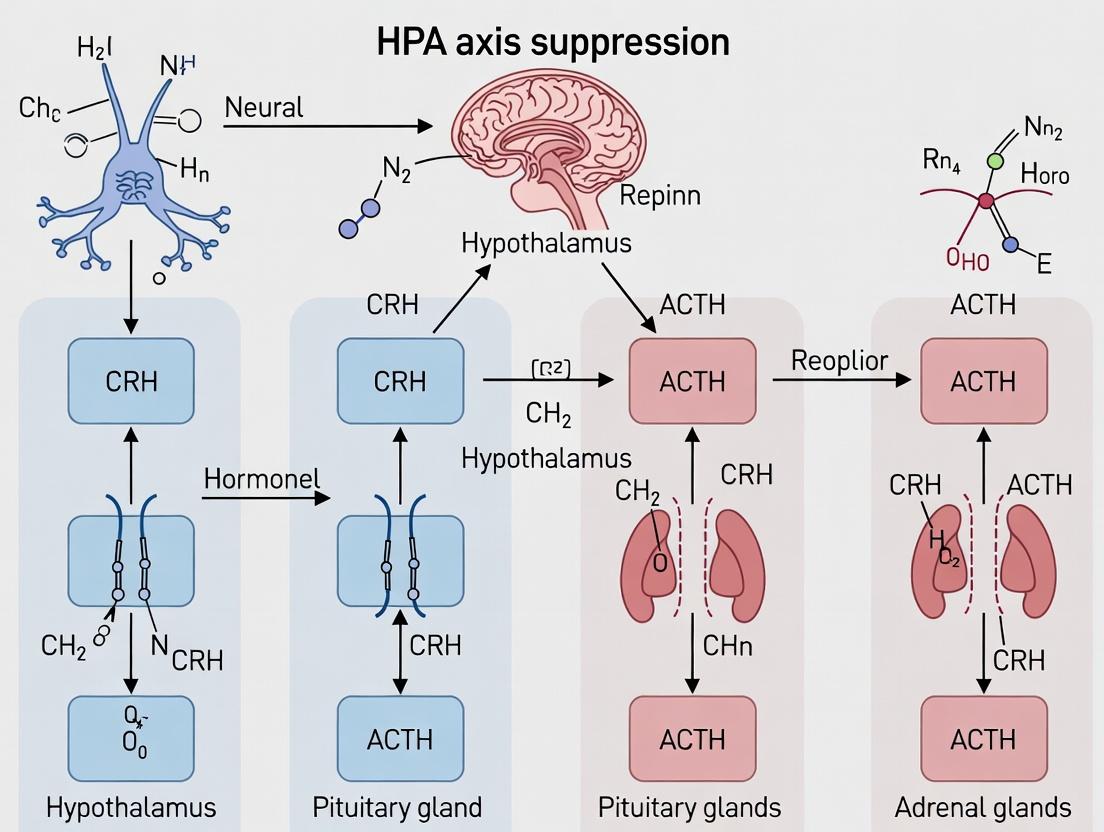
This article provides a comprehensive analysis for researchers, scientists, and drug development professionals on managing hypothalamic-pituitary-adrenal (HPA) axis suppression in corticosteroid treatment.
HPA Axis Suppression Management: Strategies, Biomarkers, and Novel Therapeutics in Corticosteroid Therapy
Abstract
This article provides a comprehensive analysis for researchers, scientists, and drug development professionals on managing hypothalamic-pituitary-adrenal (HPA) axis suppression in corticosteroid treatment. It covers the fundamental physiology and molecular mechanisms underlying suppression, explores current and emerging methodologies for clinical assessment and mitigation, details troubleshooting strategies for refractory cases and optimization of tapering protocols, and validates therapeutic strategies through comparative analysis of novel agents and delivery systems. The scope integrates latest preclinical and clinical data to inform future therapeutic development and precision medicine approaches.
Understanding HPA Axis Suppression: Molecular Mechanisms and Clinical Significance
Technical Support Center: Troubleshooting HPA Axis Research
Troubleshooting Guides
TG-01: Inconsistent Plasma ACTH/CORT Measurements in Rodent Models
- Issue: High variability in baseline or stimulated adrenocorticotropic hormone (ACTH) or corticosterone (CORT) levels.
- Diagnostic Steps:
- Verify time of sampling. CORT follows a strong circadian rhythm. Sample at consistent Zeitgeber Time (ZT) points.
- Assess environmental stressors (noise, odor from other species, cage disturbance). Implement a 7-day acclimatization period.
- Review euthanasia/sampling method. Decapitation or rapid trunk blood collection under 30 seconds is recommended to prevent stress-induced spikes.
- Check assay specificity. For mouse/rat CORT, use a validated assay that shows minimal cross-reactivity with other steroids (e.g., deoxycorticosterone <1%).
- Resolution: Standardize all environmental and procedural factors. Use control groups processed identically on the same day.
TG-02: Failure to Induce Pharmacodynamic HPA Axis Suppression
- Issue: Exogenous corticosteroid (e.g., dexamethasone) administration does not suppress endogenous CORT as expected.
- Diagnostic Steps:
- Confirm compound stability, formulation, and dosing route. For chronic studies in drinking water, consider stability of solution (change every 2-3 days, use opaque bottles).
- Verify the corticosteroid's potency and receptor affinity. Dexamethasone has high GR affinity; prednisolone has lower affinity and may require higher doses.
- Check animal model. Certain mouse strains (e.g., DBA/2J) are more resistant to dexamethasone suppression.
- Timing of post-dose sampling. Perform a kinetic pilot study (e.g., sample at 2, 4, 8, 12, 24h post-dose).
- Resolution: Perform a dose-response curve with a positive control (a known suppressive dose of dexamethasone, e.g., 1 mg/kg in rats). Use a sensitive and specific LC-MS/MS assay for endogenous CORT to avoid interference from synthetic steroids.
TG-03: Differentiated Cell Models Show No GR Translocation or GRE-Driven Reporter Activity
- Issue: In vitro models (e.g., AtT-20, primary pituitary cells) do not respond to glucocorticoid stimulation.
- Diagnostic Steps:
- Validate GR expression via western blot or immunofluorescence. Some cell lines downregulate GR with high passage number.
- Confirm glucocorticoid receptor (GR) ligand functionality. Use a positive control ligand (e.g., 100 nM Dexamethasone) and a GR antagonist (e.g., Mifepristone) to confirm specificity.
- Check reporter construct integrity and transfection efficiency. Co-transfect with a constitutive control (e.g., Renilla luciferase).
- Ensure serum conditions during stimulation. Use charcoal-stripped serum to remove endogenous steroids 24h prior to and during stimulation.
- Resolution: Establish a standardized protocol with quality-controlled, low-passage cells and validated serum conditions.
Frequently Asked Questions (FAQs)
Q1: What is the optimal sampling schedule to assess HPA axis recovery after cessation of chronic corticosteroid treatment in rodents? A: Based on pharmacokinetic and adrenal recovery dynamics, a validated protocol is:
- Day 0: Last dose administered.
- Day 1-2: Sample for trough CORT. Expect profound suppression.
- Day 3-7: Sample every 48h. ACTH will begin to rise before CORT.
- Day 7+: Sample weekly. Perform an ACTH stimulation test (e.g., 1 µg/kg i.v. Cosyntropin) once baseline CORT reaches ~50% of control to assess adrenal reserve. Full recovery can take 2-4 weeks post chronic treatment.
Q2: How do we differentiate between central (pituitary/hypothalamic) and adrenal suppression in a preclinical model? A: A tiered endocrine challenge test is required:
- CRH Stimulation Test: Administer exogenous CRH (e.g., 1 µg/kg i.v. rat CRH). Blunted ACTH response indicates pituitary-level suppression or higher.
- ACTH Stimulation Test: Administer exogenous ACTH (e.g., 1-10 µg/kg i.v. Cosyntropin). A blunted CORT response indicates primary adrenal insufficiency. A normal response with a blunted CRH test points to central suppression.
- Dexamethasone Suppression Test (DST): A low-dose DST (e.g., 0.1 mg/kg dexamethasone in rats) assesses negative feedback sensitivity at the pituitary level.
Q3: What are the key parameters to measure when profiling a novel selective GR agonist/modulator (SEGRA/SGRM) for reduced HPA axis suppression? A: A multi-faceted profile is essential. Quantitative benchmarks from comparative studies are summarized in Table 1.
Data Presentation
Table 1: Key Comparative Metrics for Novel Glucocorticoid Receptor Ligands
| Parameter | Traditional Steroid (e.g., Prednisolone) | Ideal SEGRA/SGRM Profile | Assay/Model |
|---|---|---|---|
| GR Transactivation (GRE) | High (EC~50~ ~10 nM) | Reduced (EC~50~ >100 nM) | GRE-luciferase in U2OS-GR |
| GR Transrepression (NF-κB) | High (IC~50~ ~5 nM) | Maintained (IC~50~ <10 nM) | TNFα-induced IL-6 repression |
| CORT Suppression (in vivo) | Significant at therapeutic dose | Minimal at equi-effective anti-inflammatory dose | Rat Air Pouch Model, plasma CORT |
| POMC mRNA Reduction | >80% suppression | <30% suppression | qPCR in rat pituitary |
| Adrenal Weight | Decreased (>25%) | No significant change | Chronic dosing (7-14 day) |
Experimental Protocols
Protocol P-01: Rat Dexamethasone Suppression Test (DST) for HPA Axis Function
- Objective: To assess the integrity of glucocorticoid negative feedback.
- Materials: Adult Sprague-Dawley rats (250-300g), dexamethasone phosphate (water-soluble), sterile saline, heparinized micro-hematocrit tubes.
- Procedure:
- Dosing: At ZT 2 (2h after lights on), administer dexamethasone (0.1 mg/kg) or vehicle (saline) via intraperitoneal (i.p.) injection. Use n≥6 per group.
- Blood Sampling: At ZT 8 (6h post-dose), rapidly anesthetize with isoflurane and collect trunk blood within 90 seconds into EDTA-coated tubes.
- Processing: Centrifuge at 2000 x g for 15 min at 4°C. Collect plasma and store at -80°C.
- Analysis: Measure corticosterone via specific ELISA or LC-MS/MS.
- Interpretation: Vehicle-treated rats will have high circadian CORT. >80% suppression in dexamethasone group indicates intact negative feedback.
Protocol P-02: In Vitro GR Nuclear Translocation Assay
- Objective: To visualize and quantify ligand-induced GR translocation.
- Materials: U2OS cells stably expressing GR-GFP, 96-well glass-bottom plates, Fluorescent glucocorticoid (e.g., Dexamethasone-Fluor 488), Hoechst 33342, live-cell imaging media.
- Procedure:
- Seed cells at 10,000 cells/well and culture for 24h in complete medium.
- Replace medium with phenol-red-free, serum-starved medium for 6h.
- Stimulation: Add test compound, 100 nM Dexamethasone (positive control), or vehicle (0.1% DMSO). Include 10 nM Dexamethasone-Fluor 488 as a visual control.
- Imaging: At 0, 15, 30, 60, and 120 min, image using a high-content imager (20x objective). Capture GFP (GR), Fluor 488 (ligand), and Hoechst (nucleus) channels.
- Analysis: Use cytoplasm-to-nucleus fluorescence ratio software to quantify translocation. Threshold for positive translocation is a ≥2.0-fold increase in nuclear/cytoplasmic ratio vs vehicle at 60 min.
Diagrams
HPA Axis Negative Feedback Loop
Experimental DST & Recovery Workflow
The Scientist's Toolkit: Research Reagent Solutions
| Item | Function & Application | Example/Supplier Note |
|---|---|---|
| Corticosterone ELISA Kit | Specific quantification of rodent CORT in plasma, serum, or tissue homogenates. Critical for in vivo studies. | Choose kits with low cross-reactivity to related steroids (<1% for 11-deoxycorticosterone). |
| Dexamethasone (Water-Soluble) | Synthetic glucocorticoid for suppression tests. High GR affinity, minimal cross-reactivity in CORT assays. | Prepare fresh in saline for in vivo studies. Use Dexamethasone Sodium Phosphate. |
| Cosyntropin (ACTH 1-24) | Synthetic ACTH fragment for adrenal stimulation tests. Assesses adrenal gland functional capacity. | Typical research dose: 1-10 µg/kg i.v. or i.p. for rodents. |
| Rat CRH | Specific corticotropin-releasing hormone for pituitary stimulation tests. Differentiates central suppression. | Use species-specific peptide. Administer i.v. (1 µg/kg) for acute test. |
| Charcoal-Stripped FBS | Fetal bovine serum stripped of steroids and hormones. Essential for in vitro GR studies to remove confounding ligands. | Use for 24-48h prior to and during glucocorticoid stimulation assays. |
| GR-GFP Reporter Cell Line | Stably expresses glucocorticoid receptor fused to GFP. Enables real-time visualization of nuclear translocation. | U2OS-GR-GFP is a common model. Monitor passage number. |
| GRE-Luciferase Reporter Plasmid | Plasmid containing glucocorticoid response elements driving firefly luciferase. Measures GR transcriptional activity. | Co-transfect with Renilla luciferase control (e.g., pRL-TK) for normalization. |
| Mifepristone (RU-486) | GR antagonist. Serves as a critical control to confirm GR-specific effects in experiments. | Use at 10-fold molar excess over agonist to block activity. |
Troubleshooting Guide: GR Dynamics & CRH/ACTH Inhibition Experiments
FAQ 1: My ChIP-seq experiment shows poor enrichment for the Glucocorticoid Receptor (GR) at negative glucocorticoid response elements (nGREs) after dexamethasone treatment. What could be the cause?
- Answer: Poor enrichment at nGREs, compared to positive GREs, is a common technical challenge due to lower binding affinity. Verify the following:
- Cross-linking Efficiency: nGRE binding may be more transient. Optimize formaldehyde concentration (e.g., try 1.5% for 15 min) and ensure quenching with 125mM glycine.
- Antibody Specificity: Use a validated GR antibody (e.g., clone D6H2L, Cell Signaling Technology) and pre-clear lysate with Protein A/G beads.
- Sonication Fragment Size: Aim for 200-500 bp fragments. Over-sonication can disrupt chromatin context critical for GR complexes at nGREs.
- qPCR Validation: Always include primer sets for a known positive GRE (e.g., in the FKBP5 gene) and a negative control region for comparison.
FAQ 2: I am not observing significant suppression of CRH mRNA in my hypothalamic neuronal cell line (e.g., mHypoA-2/10) after glucocorticoid (GC) treatment. What should I check?
- Answer: The suppressive feedback is indirect and requires functional GR and co-repressors.
- Cell State Confluence: Ensure cells are at 70-80% confluence for optimal response. Over-confluent cells have altered signaling.
- GR Pre-activation/Localization: Confirm GR is cytoplasmic prior to treatment. Perform immunofluorescence staining for GR (use an antibody that recognizes unliganded GR) in untreated cells.
- Time Course: CRH suppression is a late genomic event. Extend treatment time to 12-24 hours and measure mRNA via RT-qPCR using intron-spanning primers.
- Co-repressor Presence: Check expression of co-repressors like SMRT (NCOR2) or NCoR1 in your cell line via immunoblotting.
FAQ 3: My corticotroph cell (e.g., AtT-20) ACTH secretion assay shows high variability in response to CRH stimulation after pre-treatment with dexamethasone. How can I improve reproducibility?
- Answer: Variability often stems from inconsistent handling of the dynamic secretion process.
- Serum Starvation: Prior to the assay, starve cells in low-serum medium (0.5% charcoal-stripped FBS) for 24 hours to reduce basal ACTH.
- Secretion Collection Protocol: Use pre-warmed assay buffer (e.g., Krebs-Ringer buffer with 0.2% BSA). Perform exact, timed collections (e.g., 15-minute intervals).
- ACTH Measurement: Use a specific ELISA kit that detects bioactive ACTH(1-39) and shows no cross-reactivity with POMC or other fragments. Run samples in duplicate.
- Control Normalization: Express data as "% of Basal Secretion" from matched, untreated wells on the same plate.
Detailed Experimental Protocol: Co-immunoprecipitation (Co-IP) of GR with Corepressor Complexes Objective: To investigate ligand-dependent recruitment of corepressors (e.g., SMRT) to the GR in cells treated with suppressing vs. activating GCs.
- Cell Culture & Treatment: Seed HEK293 cells stably expressing FLAG-tagged GR in 10-cm dishes. At 90% confluence, treat for 90 minutes with:
- Vehicle (0.1% EtOH).
- 100 nM Dexamethasone (full agonist).
- 100 nM Dexamethasone + 10 μM RU486 (antagonist control).
- 100 nM CORT113176 (selective GR modulator, putative dissociative profile).
- Lysis: Wash cells with ice-cold PBS. Lyse in 1 mL IP Lysis Buffer (25mM Tris pH7.4, 150mM NaCl, 1% NP-40, 5% glycerol, 1mM EDTA) + fresh protease/phosphatase inhibitors. Rotate at 4°C for 30 min. Clear lysate by centrifugation (14,000g, 15 min).
- Immunoprecipitation: Pre-clear 500 μg lysate with 20 μL Protein G Magnetic Beads for 30 min. Incubate supernatant with 2 μg anti-FLAG M2 antibody overnight at 4°C. Add 40 μL beads for 2 hours.
- Wash & Elution: Wash beads 4x with lysis buffer. Elute bound proteins with 40 μL 2X Laemmli buffer containing 5% β-mercaptoethanol at 95°C for 10 min.
- Analysis: Resolve eluate by SDS-PAGE. Immunoblot for GR (FLAG), SMRT/NCOR2, and HDAC3.
Research Reagent Solutions
| Reagent/Material | Function & Application |
|---|---|
| Dexamethasone (water-soluble) | Synthetic, high-affinity GR agonist. Used to induce maximal GR nuclear translocation and transcriptional repression in suppression studies. |
| CORT113176 (or similar SGRM) | Selective Glucocorticoid Receptor Modulator. Critical for dissecting transrepression (suppressive) vs. transactivation pathways. |
| RU486 (Mifepristone) | GR antagonist. Essential control to confirm GR-specific effects in repression assays. |
| Charcoal/Dextran-Stripped FBS | Removes endogenous steroid hormones. Required for all cell culture in HPA axis suppression experiments to reduce background GR activation. |
| GR Antibody (D6H2L XP Rabbit mAb) | Validated for ChIP, IP, and WB. Recognizes endogenous GRα. |
| ACTH (1-39) ELISA Kit (e.g., from Phoenix Pharmaceuticals) | Specific, sensitive measurement of bioactive ACTH from cell culture or plasma samples. |
| Fast-SYBR Green Master Mix | For RT-qPCR quantification of low-abundance transcripts like CRH and Avp in hypothalamic extracts. |
| ATAC-seq Kit (e.g., from Illumina) | To assay ligand-induced chromatin accessibility changes at CRH or POMC enhancer/promoter regions. |
Quantitative Data Summary: Key Parameters in HPA Axis Suppression Models
Table 1: In Vitro Cellular Response Dynamics to Glucocorticoids
| Cell Model | Treatment | Key Readout | Typical Magnitude of Change | Time to Peak Effect |
|---|---|---|---|---|
| Primary Corticotrophs | 100 nM Dex | Pomc mRNA | 60-80% suppression | 12-24 hours |
| AtT-20 cell line | 10 nM CRH | ACTH secretion | 3-5 fold increase over basal | 15-30 minutes |
| AtT-20 (Dex pre-treat) | 10 nM CRH post 24h Dex | ACTH secretion | 50-70% inhibition of CRH response | 24 hours pre-treatment |
| Hypothalamic explants | 100 nM CORT | Crh mRNA | 40-60% suppression | 6-12 hours |
Table 2: In Vivo Pharmacodynamic Markers of HPA Suppression
| Marker | Species/Model | Baseline Value (Typical) | Value after 7d High-Dose GC | Recovery Time Post-Cessation |
|---|---|---|---|---|
| Plasma ACTH | Rat (SD) | 20-50 pg/mL | <5 pg/mL (≥90% suppression) | 5-7 days |
| Plasma Corticosterone | Rat (SD) | 100-300 ng/mL | <20 ng/mL | 3-5 days |
| Pituitary Pomc mRNA | Mouse (C57BL/6) | 1.0 (relative units) | 0.2-0.4 | 7-10 days |
| Adrenal Weight | Rat (SD) | 0.01-0.012% of BW | 0.006-0.008% of BW | 14+ days |
Visualizations
Technical Support & Troubleshooting Center
This support center addresses common experimental and methodological challenges in corticosteroid pharmacodynamic research, with a focus on HPA axis suppression studies relevant to risk stratification.
FAQ & Troubleshooting Guide
Q1: During an ACTH stimulation test for assessing HPA axis recovery, we observe a high inter-assay coefficient of variation (CV) in cortisol measurements. What are the primary troubleshooting steps?
A: High CV typically stems from pre-analytical or assay-specific issues.
- Sample Integrity: Ensure blood samples are collected in appropriate serum separator tubes, centrifuged within 60 minutes at room temperature, and serum is aliquoted and frozen at -20°C or lower immediately. Avoid repeated freeze-thaw cycles.
- Assay Calibration: Verify that your immunoassay (e.g., chemiluminescence) or LC-MS/MS instrument has been calibrated with the most recent lot of standards and controls. Run quality control samples at the beginning, middle, and end of the batch.
- Protocol Adherence: Strictly adhere to the timing of the ACTH (Cosyntropin) injection (typically 250 µg IV/IM) and the post-injection blood draws (e.g., at 30 and 60 minutes). Document exact times.
- Patient State: Confirm the test is performed in the morning after an overnight fast, with the patient in a rested, supine position for at least 30 minutes prior.
Q2: Our in vitro GR (glucocorticoid receptor) translocation assay in primary human fibroblasts shows inconsistent nuclear localization upon dexamethasone treatment. What could be the cause?
A: Inconsistency often relates to cell state or reagent handling.
- Cell Passage & Serum: Use low-passage-number cells (≤P8). Culture cells in steroid-stripped (charcoal-dextran treated) serum for at least 48 hours prior to the experiment to deplete endogenous glucocorticoids.
- Dexamethasone Preparation: Dexamethasone is light-sensitive and can degrade in solution. Prepare a fresh stock solution from powder in absolute ethanol for each experiment. Final vehicle concentration in media should not exceed 0.1%.
- Fixation & Permeabilization: Optimize the timing of paraformaldehyde fixation (typically 15-20 min at RT) and Triton X-100 permeabilization (5-10 min). Over-permeabilization can damage nuclear morphology.
- Positive Control: Include a potent GR agonist like prednisolone as a positive control for translocation.
Q3: When establishing a pharmacokinetic/pharmacodynamic (PK/PD) model for a novel topical corticosteroid, what are the key patient-specific covariates to include for stratification?
A: Incorporate covariates that significantly alter drug exposure (PK) or tissue sensitivity (PD).
- PK Covariates: Skin barrier integrity (e.g., TEWL measurement), application site thickness, presence of occlusion, hepatic/renal impairment status.
- PD Covariates: Baseline cortisol level, age, genetic polymorphisms in the NR3C1 (GR) and CYP3A4/5 genes, concurrent use of CYP450 inducers/inhibitors, prior corticosteroid use history.
Q4: How can we differentiate between adrenal insufficiency (AI) due to HPA suppression versus primary AI in our preclinical rodent model?
A: Use a combined testing approach and examine endpoint organs.
- ACTH Levels: Measure plasma ACTH. It will be low or inappropriately normal in HPA suppression (secondary AI) and markedly elevated in primary AI.
- CRH Stimulation Test: Administer CRH. A blunted ACTH response points to pituitary suppression (from exogenous steroids), while an exaggerated response points to a hypothalamic cause.
- Adrenal Gland Histology & Weight: In primary AI, adrenals may be atrophied or damaged. In HPA suppression, they are typically atrophied but can regain size upon steroid withdrawal.
Table 1: Correlation Between Corticosteroid Potency, Treatment Duration, and HPA Axis Recovery Time
| Corticosteroid (Example) | Relative Receptor Potency | Typical Supra-physiologic Dose Duration (Weeks) | Mean Time to Normal ACTH Stimulation Test Post-Cessation (Days) |
|---|---|---|---|
| Prednisone | 1 (Reference) | >3 | 10 - 14 |
| Dexamethasone | 7 - 10 | >2 | 14 - 28 |
| Topical Clobetasol (High Potency) | ~600 (Topical) | >4 (Chronic use) | 7 - 21 |
Table 2: Key Patient-Specific Factors Influencing HPA Suppression Risk
| Factor | High-Risk Direction | Proposed Mechanistic Impact |
|---|---|---|
| Age | Pediatric & Elderly | Altered clearance, increased skin permeability (topical) |
| Liver Cirrhosis (Moderate-Severe) | Present | Reduced corticosteroid metabolism, increased systemic exposure |
| CYP3A4/5 Inhibitors (e.g., Itraconazole) | Concomitant Use | Reduced corticosteroid metabolism, increased systemic exposure |
| NR3C1 (GR) Haplotype | Specific variants (e.g., BclI) | Altered glucocorticoid receptor sensitivity |
| Application Site (for topicals) | Thin skin (face, genitals), Intertriginous areas | Increased percutaneous absorption |
Experimental Protocols
Protocol 1: Standard Short Cosyntropin (ACTH) Stimulation Test Purpose: To assess adrenal cortex reserve and diagnose secondary adrenal insufficiency. Materials: See "Scientist's Toolkit" below. Procedure:
- Perform test at 8-9 AM after patient overnight fast.
- Insert indwelling venous catheter. Draw baseline blood sample for plasma cortisol (and optionally ACTH).
- Administer 250 µg of synthetic ACTH (Cosyntropin) intravenously or intramuscularly. Record time as T=0.
- Draw subsequent blood samples at T=30 and T=60 minutes post-injection for cortisol measurement.
- Process samples: Centrifuge at 1500-2000 x g for 10 min at 4°C. Aliquot serum into cryovials and freeze at -80°C until analysis.
- Interpretation: A normal response is typically a peak serum cortisol level >18-20 µg/dL (500-550 nmol/L) at either 30 or 60 minutes. Values below this suggest adrenal insufficiency.
Protocol 2: In Vitro GR Transactivation (Reporter Gene) Assay Purpose: To quantify the transcriptional potency and efficacy of corticosteroids. Procedure:
- Cell Seeding: Seed HEK-293 or A549 cells stably transfected with a glucocorticoid response element (GRE) driving a luciferase reporter into a 96-well plate.
- Steroid Deprivation: Culture cells in phenol-red-free medium with steroid-stripped serum for 24h.
- Treatment: Treat cells with a serial dilution of the test corticosteroid (e.g., 10^-12 M to 10^-6 M) and a vehicle control for 18-24 hours. Include dexamethasone as a reference control.
- Luciferase Measurement: Lyse cells and add luciferin substrate. Measure luminescence immediately using a plate reader.
- Analysis: Normalize luminescence of treated wells to vehicle control. Generate a dose-response curve and calculate EC50 values using nonlinear regression (e.g., four-parameter logistic model).
Visualizations
Diagram 1: HPA Axis Feedback & Suppression Pathway
Diagram 2: PK/PD Study Workflow for Topical Corticosteroids
The Scientist's Toolkit: Key Research Reagent Solutions
| Item | Function in HPA Axis Research |
|---|---|
| Cosyntropin (Tetracosactide) | Synthetic ACTH(1-24) used for direct adrenal stimulation in diagnostic tests. |
| Charcoal-Dextran Treated FBS | Steroid-stripped serum for cell culture to eliminate confounding effects of endogenous steroids. |
| Dexamethasone (Water-Soluble) | High-potency synthetic glucocorticoid standard for in vitro and in vivo positive controls. |
| GRE-Luciferase Reporter Plasmid | Construct for measuring GR-mediated transcriptional activation in reporter gene assays. |
| Cortisol/ACTH Immunoassay Kit | For high-throughput, quantitative measurement of key HPA axis hormones in serum/plasma. |
| LC-MS/MS System | Gold-standard for specific, multiplexed quantification of corticosteroids and metabolites in PK studies. |
| Tape Stripping Harvesting Kit | Non-invasive method to sample topical drug concentration in stratum corneum for local PK. |
Technical Support Center: HPA Axis & Corticosteroid Insufficiency Research
Troubleshooting Guides & FAQs
Q1: In our rodent model of CIRCI induced by cecal ligation and puncture (CLP), we observe high variability in plasma corticosterone levels. What are the key factors to control? A: High variability often stems from inadequate stressor standardization or sampling timing.
- Critical Controls:
- Procedure Uniformity: Ensure identical ligation location (e.g., 50% of cecum), needle gauge for puncture (e.g., 21G), and fecal extrusion volume across all subjects.
- Circadian Rhythm: Perform all procedures and blood sampling within a strict 2-hour window at the same time each day, relative to the light-dark cycle.
- Pre-sampling Stress: Minimize handling noise and vibrations for at least 30 minutes prior to rapid decapitation or cardiac puncture sampling (< 30 seconds from cage disturbance).
- Assay Interference: Use an appropriate ELISA or LC-MS/MS method validated for septic plasma; high cytokines can interfere with some antibody-based assays.
Q2: When assessing adrenal responsiveness with an ACTH stimulation test in our in vitro adrenal cell model, what constitutes a "normal" vs. "impaired" response? A: Response is defined by fold-change over baseline, not absolute values. Use internal controls for each experiment.
- Protocol: Primary adrenal cortical cells are stimulated with a supraphysiological dose of ACTH (1-100 nM) for 24 hours. Cortisol/corticosterone in media is measured by HPLC or ELISA.
- Interpretation Table:
| Condition | Baseline Secretion | Post-ACTH (1h) | Fold-Increase | Interpretation |
|---|---|---|---|---|
| Healthy Control | 50 ± 10 ng/mL | 250 ± 30 ng/mL | 5.0 ± 0.5 | Normal Responsiveness |
| CIRCI Model | 150 ± 40 ng/mL | 300 ± 50 ng/mL | 2.0 ± 0.3 | Impaired Reserve (Blunted Response) |
| AI Model | 10 ± 5 ng/mL | 15 ± 5 ng/mL | 1.5 ± 0.2 | Adrenal Insufficiency |
Q3: Our gene expression analysis of HPA axis feedback regulators (e.g., FKBP5, GR, CRH) in leukocytes from septic patients is inconsistent. What is the optimal workflow? A: Inconsistency is common due to leukocyte heterogeneity and rapid mRNA degradation.
- Stabilized Sampling: Draw blood directly into PAXgene RNA tubes, invert 10x, and store at -80°C within 2 hours.
- Cell Subset Sorting: For precise data, perform FACS sorting using CD45+/CD15+ (granulocytes), CD45+/CD14+ (monocytes), and CD45+/CD3+ (T-cells) markers before RNA extraction. Analyze subsets separately.
- Reference Genes: Validate stable reference genes for sepsis (e.g., PPIA, TBP; avoid GAPDH or ACTB alone).
Q4: How do we differentiate between primary adrenal insufficiency and CIRCI in a preclinical model? A: A combined low-dose/high-dose ACTH stimulation test with CRH measurement is definitive.
- Experimental Protocol:
- Day -7: Induce primary AI via bilateral adrenalectomy (ADX) with glucocorticoid replacement in one cohort. Induce CIRCI via LPS/CLP in another.
- Day 0 (Test): Withhold replacement in ADX model. Anesthetize and catheterize.
- T=0 min: Draw baseline blood for ACTH, CORT.
- T+30 min: Inject cosyntropin (ACTH1-24) at 1 µg/kg (low-dose). Draw blood at T+60.
- T+120 min: Inject cosyntropin at 250 µg/kg (high-dose). Draw blood at T+150.
- Expected Results Table:
| Diagnostic Target | Primary AI | CIRCI |
|---|---|---|
| Baseline ACTH | Markedly High (>2x ULN) | Low-Normal or Inappropriately Low |
| Baseline CORT | Low | Low or Mid-Range (Inadequate for stress) |
| Response to Low-dose ACTH | Minimal (< 2x increase) | Blunted/Impaired |
| Response to High-dose ACTH | Minimal (< 2x increase) | Preserved (> 2x increase) |
| CRH Stimulation Test | High ACTH response | Blunted ACTH response |
The Scientist's Toolkit: Key Research Reagent Solutions
| Reagent / Material | Function in HPA/CIRCI Research |
|---|---|
| Cosyntropin (ACTH1-24) | Synthetic ACTH fragment for standardized adrenal stimulation tests; stable, non-immunogenic. |
| Metyrapone | 11β-hydroxylase inhibitor; used to block cortisol synthesis and assess HPA axis reserve and feedback integrity. |
| RU-486 (Mifepristone) | Glucocorticoid receptor (GR) antagonist; essential for probing GR-mediated feedback mechanisms in vivo. |
| Dexamethasone | Potent synthetic glucocorticoid; used for suppression tests and to model iatrogenic HPA axis suppression. |
| Lipopolysaccharide (LPS) - E. coli O111:B4 | Standardized TLR4 agonist for modeling systemic inflammatory response and early CIRCI in vivo and in vitro. |
| Corticosterone/Cortisol ELISA (LC-MS/MS validated) | For precise quantification of glucocorticoids in plasma, tissue homogenates, or cell culture media. |
| CRH (Human/Rat), Ovine CRH | Used for direct pituitary corticotroph stimulation testing to localize HPA axis defect. |
| Paxgene Blood RNA System | For immediate stabilization of leukocyte gene expression profiles at the patient bedside. |
| Magnetic/Antibody Beads (CD14, CD15, CD45) | For isolation of specific leukocyte populations from whole blood prior to molecular analysis. |
Visualizations
Diagram 1: HPA Axis & CIRCI Disruption Pathways
Diagram 2: Experimental Workflow for CIRCI Model Validation
Current Gaps in Preclinical Models of Iatrogenic HPA Suppression
Technical Support Center: Troubleshooting & FAQs
Frequently Asked Questions
Q1: Our rodent model fails to show clinically relevant adrenal atrophy despite chronic corticosteroid dosing. What could be the cause? A: This is a common gap. Rodent adrenal glands are more resistant to glucocorticoid-induced apoptosis than human adrenals. The species-specific difference in glucocorticoid receptor (GR) sensitivity and local metabolism (11β-HSD1) is a key factor. Ensure your dosing regimen exceeds the physiological replacement by a significant margin (e.g., 10x) and lasts for several weeks. Consider using a slow-release pellet formulation to mimic constant human therapeutic exposure rather than bolus injections.
Q2: How do we accurately measure the "recovery phase" of the HPA axis after steroid cessation in animals? A: The recovery is non-linear and phase-dependent. Relying solely on basal corticosterone can be misleading. You must implement a dynamic stimulation test. The standard protocol is the ACTH stimulation test, but to assess central recovery, a CRH stimulation test or an insulin tolerance test (ITT) is required. See the Experimental Protocol section for details.
Q3: Why is there high variability in suppression thresholds between individual animals in our study? A: Pre-existing stress, diurnal rhythm, housing conditions, and genetic background are major confounders. Use animals with a defined genetic background (inbred strains). Implement a strict acclimatization period (e.g., 7 days), control light-dark cycles, and perform all procedures at the same time of day. Consider non-invasive fecal glucocorticoid metabolite monitoring to establish individual baselines.
Q4: Our in vitro model using adrenal cell lines shows no suppression with dexamethasone. Is the model invalid? A: Immortalized adrenal cell lines (like H295R) often have altered GR signaling and are primarily steroidogenic, not representative of the trophic apoptosis seen in vivo. They are poor models for HPA suppression. Consider using primary adrenal cortical cells or exploring ex vivo organotypic cultures of adrenal tissue, which better maintain cellular architecture and GR responsiveness.
Troubleshooting Guides
Issue: Inconsistent ACTH Stimulation Test Results Post-Steroid Withdrawal.
- Possible Cause 1: Premature testing before the exogenous steroid is fully cleared.
- Solution: Confirm the pharmacokinetic half-life of your administered corticosteroid in your species/strain. Double the washout period before testing.
- Possible Cause 2: Inadequate ACTH dose or inappropriate timing.
- Solution: Perform a dose-response curve for ACTH (typically 1-10 µg/kg for rodents) at multiple timepoints (e.g., 30, 60 min post-injection) to find the optimal challenge for your suppressed model.
- Solution Workflow:
- Extend washout period based on steroid PK.
- Conduct ACTH dose-response (see Protocol 2).
- Measure cortisol/corticosterone at T=0, T+30, T+60 minutes.
- Compare peak and area-under-curve response to controls.
- Possible Cause 1: Premature testing before the exogenous steroid is fully cleared.
Issue: Failure to Model the Graded Severity of Human HPA Suppression.
- Possible Cause: Using a single, high-dose steroid regimen creates a binary (on/off) state rather than a graded deficiency.
- Solution: Develop a multi-arm protocol with varying doses and durations to mimic different clinical scenarios (e.g., physiologic replacement vs. pharmacologic immunosuppression).
- Solution Workflow:
- Design cohorts: Control, Low-dose (1-2x replacement, 4 weeks), High-dose (10x replacement, 2 weeks), High-dose (10x replacement, 8 weeks).
- At end of dosing, perform sequential HPA axis assessment: Basal AM hormone -> Low-dose ACTH test -> CRH test.
- Correlate the degree of blunting with the dosing "burden" (dose x duration).
Experimental Protocols
Protocol 1: Establishing Chronic Suppression in a Rodent Model
- Objective: To induce iatrogenic HPA axis suppression mimicking therapeutic glucocorticoid use.
- Materials: C57BL/6J mice (or Sprague-Dawley rats), slow-release corticosterone or dexamethasone pellets, placebo pellets, surgical tools, anesthetic.
- Method:
- Anesthetize animal and implant a subcutaneous pellet containing either vehicle (placebo) or corticosteroid (e.g., 25 mg corticosterone pellet releasing ~4 mg/day for 3 weeks).
- House animals under standardized conditions (12:12 light-dark, minimal stress) for the pellet duration (e.g., 21 days).
- Monitor body weight twice weekly.
- Proceed to recovery or terminal assessment protocols.
Protocol 2: Dynamic ACTH Stimulation Test for Adrenal Reserve
- Objective: To assess the functional capacity of the adrenal cortex after steroid withdrawal.
- Materials: Synthetic ACTH(1-24) (Cosyntropin), sterile saline, precision scale, microcentrifuge tubes, blood collection tubes (EDTA), corticosterone/cortisol ELISA kit.
- Method:
- At a defined time post-withdrawal (e.g., Day 7), gently restrain the animal and administer ACTH(1-24) intraperitoneally at 1 µg/kg (low-dose) or 10 µg/kg (standard-dose) in a volume of 100 µL saline.
- Collect blood via tail nick or submandibular bleed immediately before injection (T=0) and at T=30 and T=60 minutes post-injection.
- Centrifuge blood samples, collect plasma, and store at -80°C.
- Assay all samples in a single batch using a commercial ELISA. Compare the peak corticosterone level and the area-under-the-response-curve (AUC) to control animals.
Data Presentation
Table 1: Comparison of Key Features in Common Preclinical HPA Suppression Models
| Model Type | Species/System | Key Strength | Major Limitation (Gap) | Approx. Suppression Timeline | Recovery Timeline (Variable) |
|---|---|---|---|---|---|
| Chronic Dosing | Rat (SD) | Robust adrenal atrophy, good for histology | High resistance vs. human; requires very high doses | 3-4 weeks | 4-8 weeks |
| Chronic Dosing | Mouse (C57BL/6) | Genetic tools available | Less consistent atrophy, high stress confound | 2-3 weeks | 3-6 weeks |
| Pellets/ Osmotic Pumps | Rodents | Constant hormone delivery, mimics therapy | Surgical stress, non-titratable dose | 1 week (steady-state) | Dependent on pellet lifespan |
| Adrenal Cell Line (H295R) | Human-derived in vitro | High-throughput, mechanistic studies | Lacks systemic feedback, poor model for apoptosis | N/A | N/A |
| Organotypic Culture | Ex vivo adrenal tissue | Maintains 3D architecture, cellular crosstalk | Technically challenging, short-term viability | 24-72 hours | Can be assessed ex vivo |
Table 2: Expected Hormone Profile in a Suppressed Model During Dynamic Testing
| Test Phase | Control Animal | Suppressed Animal (Post-Chronic Glucocorticoid) | Interpretation |
|---|---|---|---|
| Basal AM Corticosterone | Normal circadian peak | Low or undetectable | Basal secretion impaired |
| Low-dose (1 µg/kg) ACTH Stim Test | Normal response (>2x baseline) | Blunted or absent response | Adrenal reserve depleted |
| High-dose (10 µg/kg) ACTH Stim Test | Robust supra-physiological response | Subnormal or delayed response | Severe adrenal atrophy/ dysfunction |
| CRH Stimulation Test | Normal ACTH & Corticosterone rise | Blunted ACTH response, normal/low Cort rise | Combined central (pituitary) & adrenal impairment |
Diagrams
The Scientist's Toolkit: Research Reagent Solutions
| Item | Function & Rationale |
|---|---|
| Slow-Release Corticosterone Pellets | Provides constant, physiologically relevant glucocorticoid delivery, mimicking chronic human therapy better than daily injections. |
| Synthetic ACTH(1-24) (Cosyntropin) | Standardized reagent for adrenal stimulation tests; ensures consistent, potent stimulation independent of endogenous ACTH. |
| Corticosterone/Cortisol ELISA Kits (CLIA/MS-grade) | For precise, high-throughput measurement of steroid hormones in plasma/serum. MS-grade offers highest specificity for complex matrices. |
| CRH (Corticotropin-Releasing Hormone), human/rAt | Essential for probing the pituitary component of the HPA axis during recovery from suppression. |
| 11β-HSD1 Inhibitor (e.g., UE2316) | Pharmacological tool to investigate the role of local tissue glucocorticoid regeneration in modulating suppression severity. |
| GR Antagonist (e.g., Mifepristone, RU486) | Used to dissect GR-mediated effects in recovery models or to block residual exogenous steroid action. |
| Steroid Depletion Charcoal Stripped Serum | For in vitro studies to remove confounding steroids from cell culture media, creating a defined hormonal background. |
| RNAscope Probes for POMC, GR, STAR | Enables precise in situ visualization of gene expression changes in hypothalamus, pituitary, and adrenal tissues. |
Assessment and Mitigation: From Diagnostic Biomarkers to Tapering Protocols
Technical Support Center: Troubleshooting & FAQs
FAQ 1: The high-dose (250 µg) ACTH stimulation test shows a blunted cortisol response in our rodent model of chronic corticosteroid treatment. How do we differentiate between primary adrenal insufficiency and HPA axis suppression?
- Answer: A blunted response to the high-dose ACTH test alone cannot distinguish between primary adrenal insufficiency (adrenal gland failure) and secondary insufficiency due to HPA axis suppression. You must integrate a low-dose (1 µg) ACTH test and/or a CRH stimulation test.
- Troubleshooting Protocol: Perform a CRH Stimulation Test.
- Baseline: Draw blood for plasma ACTH and cortisol at -15 and 0 minutes.
- Stimulation: Administer 1 µg/kg (or 100 µg) ovine or human CRH IV.
- Sampling: Collect blood at +15, +30, +60, and +90 minutes post-injection for ACTH and cortisol.
- Interpretation:
- HPA Axis Suppression (Secondary): Blunted or delayed ACTH peak with a subsequently blunted cortisol response.
- Primary Adrenal Insufficiency: Exaggerated ACTH response (due to loss of negative feedback) with a minimal cortisol rise.
- Troubleshooting Protocol: Perform a CRH Stimulation Test.
FAQ 2: Our salivary cortisol assays show high intra-assay variability, confounding diurnal rhythm studies in suppressed patients. What are the critical pre-analytical factors?
- Answer: Salivary cortisol is highly sensitive to collection procedure. Ensure strict protocol adherence:
- Troubleshooting Guide:
- Contamination: Patients must avoid brushing teeth, eating, drinking (especially coffee), or smoking for at least 30 minutes before collection. Use a citric acid-free straw if needed.
- Collection Device: Use specific, validated passive drool devices or polyester swabs. Do not use cotton swabs, as they can sequester cortisol.
- Sample Integrity: Centrifuge samples at 1500-2000 x g for 10 minutes immediately after collection to separate mucins. Store supernatant at -80°C. Avoid repeated freeze-thaw cycles.
- Assay Interference: Use a tandem mass spectrometry (LC-MS/MS) method if available, as it has higher specificity than immunoassays and avoids cross-reactivity with cortisone or synthetic steroids.
- Troubleshooting Guide:
FAQ 3: When using a new chemiluminescent immunoassay for serum cortisol, how do we establish an accurate diagnostic cutoff for adrenal insufficiency post-ACTH stimulation?
- Answer: Do not rely on the manufacturer's generic cutoff. You must validate the assay in your specific population and clinical context.
- Validation Protocol:
- Sample Cohort: Assay samples from 50+ healthy control subjects and 50+ patients with confirmed adrenal insufficiency (by gold standard insulin tolerance test).
- ACTH Test: Perform standard 250 µg ACTH tests on all subjects.
- Statistical Analysis: Generate a Receiver Operating Characteristic (ROC) curve using the 30- or 60-minute post-ACTH cortisol values from your new assay.
- Cutoff Determination: The optimal cutoff is the value that maximizes the sum of sensitivity and specificity (Youden's index) for your cohort.
- Validation Protocol:
Table 1: Diagnostic Cutoffs for Post-ACTH Cortisol (Various Assays)
| Assay Type | Common Diagnostic Cutoff (30/60-min post 250 µg ACTH) | Key Consideration for HPA Suppression Research |
|---|---|---|
| Immunoassay (IA) | 500-550 nmol/L (18-20 µg/dL) | Overestimates cortisol; cross-reactivity with synthetic steroids can be problematic. |
| Liquid Chromatography-Tandem Mass Spectrometry (LC-MS/MS) | 400-450 nmol/L (14.5-16.5 µg/dL) | Gold standard for specificity. Essential for accurate baseline measurement in drug studies. |
| Salivary Cortisol Assay (LC-MS/MS) | 15-17 nmol/L post-low-dose ACTH | Correlates with free serum cortisol. Critical for non-stressful, frequent sampling in diurnal studies. |
Table 2: Expected Response Patterns in Dynamic Tests
| Condition | Low-Dose (1 µg) ACTH Test | High-Dose (250 µg) ACTH Test | CRH Stimulation Test |
|---|---|---|---|
| Healthy HPA Axis | Normal cortisol rise (>500 nmol/L) | Normal cortisol rise (>500 nmol/L) | Normal ACTH peak, normal cortisol rise |
| HPA Axis Suppression | Blunted cortisol response | May be normal or blunted | Blunted/delayed ACTH peak, blunted cortisol rise |
| Primary Adrenal Insufficiency | Blunted cortisol response | Blunted cortisol response | Exaggerated ACTH rise, no cortisol response |
Experimental Protocols
Protocol: Low-Dose (1 µg) ACTH Stimulation Test for Detection of Mild HPA Suppression
- Preparation: Reconstitute synthetic ACTH (1-24) to 1 µg/mL. Prepare IV line.
- Baseline (0 min): Draw blood for serum cortisol and ACTH.
- Stimulation: Inject 1 µg ACTH (1-24) intravenously as a bolus.
- Post-Stimulation Sampling: Draw blood for serum cortisol at 30 and 60 minutes.
- Analysis: Measure cortisol via LC-MS/MS. A peak cortisol <500 nmol/L (by LC-MS/MS) suggests impaired adrenal reserve.
Protocol: Ovine CRH Stimulation Test for HPA Axis Mapping
- Subject Preparation: Test performed in the morning after overnight fast. Place an indwelling IV catheter.
- Baseline Period: Draw blood at -15 and 0 minutes for plasma ACTH and cortisol.
- CRH Administration: Administer 1 µg/kg (max 100 µg) ovine CRH (oCRH) as an IV bolus over 30 seconds.
- Post-CRH Sampling: Draw blood at +15, +30, +60, +90, and 120 minutes for ACTH and cortisol.
- Analysis: Plot ACTH and cortisol curves. Key metrics: peak ACTH, time to peak ACTH, and integrated cortisol response.
Visualizations
Diagram 1: HPA Axis Diagnostic Test Decision Pathway
Diagram 2: CRH Test Experimental Workflow Timeline
The Scientist's Toolkit: Research Reagent Solutions
| Item | Function & Rationale |
|---|---|
| Synthetic ACTH (1-24) (Cosyntropin) | Standardized polypeptide for stimulation tests; stable, minimal immunogenicity, used for both high and low-dose protocols. |
| Ovine or Human Corticotropin-Releasing Hormone (oCRH/hCRH) | Diagnostic agent for the CRH test; directly stimulates pituitary corticotrophs to assess the integrity of the pituitary component of the HPA axis. |
| LC-MS/MS Grade Solvents & Internal Standards (e.g., Cortisol-d4) | Essential for specific, high-accuracy cortisol quantification without immunoassay cross-reactivity, especially in patients on synthetic steroids. |
| Passive Saliva Collection Device (e.g., Salivette without citric acid) | Standardizes non-invasive salivary cortisol collection, minimizing interference for diurnal rhythm and stress-free sampling studies. |
| EDTA or Heparin Plasma Tubes (pre-chilled) | For stable ACTH measurement. Must be kept on ice, centrifuged cold, and frozen rapidly to prevent peptide degradation. |
| Cortisol & ACTH Immunoassay Kits (Chemiluminescent) | High-throughput clinical measurement. Requires rigorous validation against LC-MS/MS for research-grade cutoff determination. |
Algorithm for Monitoring HPA Axis Function During Chronic Corticosteroid Therapy
Technical Support Center
FAQs & Troubleshooting
Q1: Our lab’s low-dose ACTH (cosyntropin) stimulation test results are inconsistent. What are the critical procedural factors we must control? A: Inconsistent results often stem from improper test timing or sample handling. Adhere strictly to this protocol:
- Schedule: Perform the test in the morning (8-9 AM) to account for diurnal cortisol rhythm. The patient must be in a stable state, not during acute illness or within 24 hours of the last corticosteroid dose (if on alternate-day therapy).
- Administration: Prepare 1 mcg of cosyntropin (diluted from 250 mcg vial in sterile saline). Administer as a slow intravenous push over 30-60 seconds. Document exact time as T=0.
- Sampling: Draw blood for serum cortisol measurement at T=0 (baseline) and T=30 minutes post-injection. Do not use heparinized plasma.
- Sample Handling: Allow blood to clot, centrifuge promptly, and freeze serum at -20°C or lower if not assayed immediately. Avoid repeated freeze-thaw cycles.
- Troubleshooting: Low T=0 cortisol is expected in suppression; the key is the delta. A peak cortisol < 18 μg/dL (500 nmol/L) suggests adrenal insufficiency. Verify assay calibration.
Q2: What are the validated thresholds for defining HPA axis suppression and recovery, and how do they vary by assay? A: Thresholds are assay-dependent. Consensus from recent literature is summarized below:
Table 1: HPA Axis Function Test Interpretation Thresholds
| Test | Traditional Threshold | Modern Immunoassay Threshold | LC-MS/MS Recommended Threshold | Interpretation |
|---|---|---|---|---|
| Morning Serum Cortisol | > 10 μg/dL (276 nmol/L) | > 7.5 μg/dL (207 nmol/L) | > 5.6 μg/dL (155 nmol/L) | Suggests intact HPA axis |
| Low-Dose ACTH Stimulation | Peak < 18 μg/dL (500 nmol/L) | Peak < 16.8 μg/dL (465 nmol/L) | Peak < 14.5 μg/dL (400 nmol/L) | Indicates adrenal insufficiency |
| Insulin Tolerance Test (ITT) | Peak cortisol < 20 μg/dL (550 nmol/L) | Peak cortisol < 18 μg/dL (500 nmol/L) | (Same as immunoassay) | Gold standard for central insufficiency |
LC-MS/MS = Liquid chromatography–tandem mass spectrometry (more specific). Always reference your lab’s local normative data.
Q3: Can you detail the protocol for the overnight metyrapone test, a key challenge test in our research? A: The metyrapone test assesses pituitary ACTH reserve. Due to the risk of adrenal crisis, it must be conducted under close supervision.
Experimental Protocol: Overnight Metyrapone Test Objective: To block cortisol synthesis, triggering a rise in ACTH and precursor 11-deoxycortisol if the pituitary-hypothalamic axis is intact. Materials: Metyrapone (30 mg/kg, max 3g), supplies for serum/plasma collection, assays for 11-deoxycortisol and ACTH. Procedure:
- Baseline: Draw blood for cortisol, 11-deoxycortisol, and ACTH at 2300h.
- Dosing: Administer exact weight-based metyrapone dose orally at 2400h with a small snack to minimize nausea.
- Post-Dose Sample: Draw blood at 0800h the next morning (8 hours post-dose) for 11-deoxycortisol and ACTH.
- Safety Monitor: Check morning serum cortisol; if > 7 μg/dL, metyrapone blockade was inadequate. Interpretation: An intact response is an 8 AM 11-deoxycortisol > 7.2 μg/dL (220 nmol/L) and/or a rise in ACTH > 75 pg/mL. Failure indicates impaired pituitary reserve.
Q4: What essential reagents and kits are required for setting up these monitoring assays? A:
Research Reagent Solutions Toolkit
| Item | Function & Application | Example/Note |
|---|---|---|
| Cosyntropin (Tetracosactide) | Synthetic ACTH(1-24); used for ACTH stimulation tests. | Must be properly reconstituted and diluted for low-dose (1 mcg) test. |
| Cortisol Immunoassay Kit | Measures total serum cortisol. Critical for all tests. | Choose kit validated against LC-MS/MS. Be aware of antibody cross-reactivity. |
| LC-MS/MS Calibrators | Gold-standard method for cortisol, 11-deoxycortisol. | Used to establish reference thresholds and validate immunoassays. |
| ACTH ELISA/CLIA Kit | Measures intact ACTH. Essential for metyrapone test & distinguishing primary/secondary AI. | Requires EDTA plasma, frozen immediately. |
| 11-Deoxycortisol Standard | Precursor molecule; measurement is specific for metyrapone test. | Often part of a steroid panel via LC-MS/MS. |
| Metyrapone | 11β-hydroxylase inhibitor. Used for provocative testing of HPA axis reserve. | Monitor for hypotension/nausea. Not for patients with incipient adrenal failure. |
Visualizations
Technical Support Center: Troubleshooting & FAQs for HPA Axis Research Protocols
Frequently Asked Questions
Q1: During a standard glucocorticoid taper simulation in an adrenalectomized rat model, the expected plasma ACTH rebound is not observed by day 14. What are the primary troubleshooting steps? A: This likely indicates incomplete HPA axis suppression or assay interference. Follow this protocol:
- Verify Corticosteroid Delivery: Confirm the minipump infusion rate (typically 75 µg/day corticosterone) and plasma corticosterone levels via LC-MS/MS. Target steady-state supraphysiological level > 20 µg/dL.
- Repeat ACTH RIA: Use a different antibody epitope (e.g., against ACTH 1-24) to rule out cross-reactivity with precursor molecules (POMC). Include a standard curve with synthetic ACTH 1-39.
- Check CRH Neuron Activity: Perform in situ hybridization for Crh mRNA in the PVN. Persistent high expression suggests suppression failure.
- Reference Control Data: Expected ACTH values should be < 5 pg/mL during suppression and rebound to 40-60 pg/mL post-taper.
Q2: In a symptom-led reduction protocol using a canine model, how do you objectively quantify "symptom flare" to trigger a pause in tapering? A: Symptom-led tapers require validated biomarkers beyond clinical observation. Use this multi-parameter scoring table:
| Parameter | Measurement Tool | Flare Threshold | Assay Frequency |
|---|---|---|---|
| Inflammatory Cytokine | Canine-specific IL-6 ELISA (Serum) | ≥ 2x Baseline | Every 48h post-dose reduction |
| Acute Phase Reactant | C-Reactive Protein (CRP) Turbidimetry | > 10 mg/L | Every 48h post-dose reduction |
| Behavioral Score | Validated Canine Lethargy/Lameness Scale | Score increase ≥ 3 points | Daily clinical assessment |
| HPA Axis Readiness | Synthetic ACTH (Cosyntropin) Stimulation Test | Cortisol peak < 12 µg/dL | Prior to each scheduled taper step |
A flare is confirmed if ≥2 parameters meet threshold. Pause taper and resume prior dose.
Q3: Our chronotherapeutic approach (evening dosing) in a human trial shows high inter-individual variability in cortisol circadian rhythm recovery. What experimental controls are critical? A: Variability often stems from poor control of light-dark cycles and activity. Implement:
- Strict Zeitgeber Control: Participants must adhere to fixed sleep-wake cycles (verified by actigraphy) and controlled light exposure (lux meters) for 7 days pre-sample.
- Salivary vs. Serum Cortisol: Collect salivary cortisol at 08:00, 16:00, 20:00, 23:00, and 00:00. Serum draws disrupt sleep. Use Salivette devices with citrate-treated swabs.
- Genotype for GR Polymorphisms: Assay for NR3C1 Bcl1 and N363S SNPs. Group data by genotype, as these significantly affect taper kinetics.
- Reference Rhythm: Compare to a non-suppressed control group studied under identical conditions. Recovery is defined as a restored diurnal slope, not absolute AM values.
Q4: When establishing a fibroblast assay to test corticosteroid sensitivity, what is the optimal positive control for GR signaling pathway activation? A: Use Dexamethasone (10 nM, 6-hour pretreatment) as the primary control. Include a secondary control with AL-438 (a dissociated GR ligand) at 100 nM to differentiate transactivation from transrepression pathways in your reporter assay (e.g., GRE-luciferase).
Experimental Protocol: Assessing HPA Axis Recovery Post-Taper
Title: Protocol for Combined Dexamethasone Suppression Test (DST) and CRH Stimulation Test in a Taper Model. Objective: To assess the integrity of the entire HPA axis (pituitary and adrenal responsiveness) after a corticosteroid taper regimen. Materials:
- Experimental cohort (post-taper) and matched controls.
- Dexamethasone phosphate (1 mg for human; 10 µg/kg for rodent models).
- Synthetic human/rCRH (1 µg/kg for iv administration).
- EDTA plasma tubes, chilled centrifuge.
- ACTH and Cortisol chemiluminescence immunoassay (CLIA) kits.
Procedure:
- Low-Dose DST: At 23:00, administer low-dose dexamethasone orally/ip.
- Baseline Draw: At 08:00 the next day (Post-Dex), collect blood for baseline cortisol (C1) and ACTH (A1).
- CRH Challenge: Immediately administer iv bolus of CRH.
- Post-Stimulus Draws: Collect blood at +15, +30, +60, and +90 minutes for cortisol (C2-C5) and ACTH (A2-A5).
- Interpretation: Normal Recovery: Post-Dex cortisol (C1) < 1.8 µg/dL, with robust rise to CRH (C5 peak > 7 µg/dL). Pituitary Impairment: Blunted ACTH response (A5 peak < 2x baseline). Adrenal Impairment: Exaggerated ACTH but blunted cortisol response.
Visualizations
Fig 1: HPA Axis Taper Response Pathways
Fig 2: Taper Protocol Decision Workflow
The Scientist's Toolkit: Key Research Reagent Solutions
| Reagent / Material | Supplier Examples | Function in Taper Research |
|---|---|---|
| Cosyntropin (Tetracosactide) | Sigma-Aldrich, Phoenix Pharmaceuticals | Synthetic ACTH 1-24 for adrenal stimulation tests to assess adrenal reserve post-taper. |
| Dexamethasone (Water-Soluble) | Cayman Chemical, Steraloids | Potent synthetic glucocorticoid for establishing suppression and conducting DSTs. |
| Corticosterone ELISA/LC-MS Kit | Enzo Life Sciences, Arbor Assays | Precise quantification of the primary rodent glucocorticoid for model validation. |
| Salivette Cortisol (Sarstedt) | Sarstedt, Salimetrics | Standardized device for non-invasive circadian cortisol sampling in human trials. |
| GRE-Luciferase Reporter Plasmid | Addgene (pGRE-luc), Promega | Cell-based assay to measure GR transcriptional activity under different taper drug concentrations. |
| Actigraphy Device (w/ Lux) | Philips Actiwatch, Ambulatory Monitoring | Objective monitoring of sleep-wake cycles and light exposure in chronotherapy studies. |
| CRH (rat/human) ELISA | Phoenix Pharmaceuticals, Merck Millipore | Measures hypothalamic/pituitary response during CRH stimulation tests. |
| NR3C1 Genotyping Panel | Thermo Fisher (TaqMan), Illumina | Identifies GR polymorphisms that confound taper response and require stratification. |
Technical Support Center
Troubleshooting Guide & FAQs
Q1: Our in-vivo model shows no significant increase in plasma corticosterone following a standardized CRH analogue challenge. What are the primary causes? A: This indicates a failure to stimulate the adrenal cortex. Key troubleshooting steps:
- Verify Compound Integrity: Check the reconstitution protocol and storage conditions of the CRH/ACTH analogue. Repeated freeze-thaw cycles or storage in a non-alkaline buffer can degrade peptides. Perform a fresh aliquot.
- Confirm Dosing & Route: Ensure the intravenous or subcutaneous dosing is correct (typically 1-10 µg/kg for many analogues). Intraperitoneal administration may have variable bioavailability.
- Assess Adrenal Integrity: Chronic corticosteroid pretreatment may have induced significant adrenal atrophy. Histological examination of the adrenal glands is recommended. The intervention may require a longer pretreatment period with the analogue to stimulate glandular growth before a secretory response is seen.
- Check for Downstream Saturation: If the model uses concurrent high-dose corticosteroid treatment, glucocorticoid receptors may be saturated, providing negative feedback that immediately blunts the stimulated corticosterone release. Consider a corticosteroid taper protocol.
Q2: During a chronic ACTH(1-24) recovery study, we observe elevated ACTH but low endogenous cortisol output. What does this signify? A: This pattern suggests a potential shift from adrenal suppression to a state of primary adrenal insufficiency or "adrenal exhaustion."
- Primary Cause: Prolonged HPA axis suppression may have led to adrenal cortex atrophy. While ACTH analogues stimulate recovery, the gland's steroidogenic capacity remains functionally impaired despite ACTH elevation.
- Action Protocol:
- Measure key steroidogenic enzymes (e.g., StAR, P450scc) via qPCR or Western blot from adrenal tissue post-mortem.
- Implement a graded recovery protocol, starting with lower-dose ACTH analogue stimulation to promote gland hypertrophy before challenging with secretory doses.
- Rule out oxidative damage in the adrenal cortex by assessing markers like 4-HNE; consider adjunctive antioxidants (e.g., N-acetylcysteine) in your model.
Q3: How do we differentiate between direct pituitary recovery (CRH sensitivity) and adrenal recovery (ACTH sensitivity) in our experiments? A: A sequential, two-step testing protocol is required.
- Step 1 - Pituitary Response Test: Administer CRH or a CRH analogue (e.g., human CRH, 1 µg/kg IV). Measure plasma ACTH at T=0, 15, 30, and 60 minutes. A robust ACTH response indicates recovering pituitary corticotroph function.
- Step 2 - Adrenal Response Test: After a suitable interval (e.g., 24h), administer ACTH(1-24) (e.g., Cosyntropin, 1 µg/kg IV). Measure plasma cortisol/corticosterone at T=0, 30, and 60 minutes. A robust steroid response indicates recovering adrenal capacity.
- Interpretation: Use the table below to diagnose the recovery stage.
Table 1: Interpretation of Sequential HPA Axis Function Tests
| CRH Test Result | ACTH(1-24) Test Result | Interpreted Recovery Stage |
|---|---|---|
| Blunted ACTH | Blunted Cortisol | Persistent global HPA axis suppression |
| Normal/High ACTH | Blunted Cortisol | Primary adrenal insufficiency (Adrenal stage impairment) |
| Blunted ACTH | Normal Cortisol | Pituitary-level suppression (Central impairment) |
| Normal ACTH | Normal Cortisol | Full HPA axis recovery |
Q4: What is the optimal timing for administering a CRH/ACTH analogue relative to corticosteroid taper in a rodent model? A: Current literature suggests protocol variations based on the goal.
- For Prevention of Atrophy: Initiate low-dose ACTH analogue (e.g., 0.5 µg/kg/day) concurrently with the start of the corticosteroid taper. This provides trophic support during the withdrawal phase.
- For Stimulating Recovery After Suppression: Begin the CRH/ACTH analogue regimen after the cessation of corticosteroids or during the final, low-dose phase of the taper. A common protocol is a 7-14 day course of once-daily ACTH(1-24) at 2-5 µg/kg.
- Critical Note: Administration during the peak of high-dose corticosteroid treatment is generally ineffective due to overwhelming negative feedback.
Detailed Experimental Protocols
Protocol 1: Assessing Adrenal Responsiveness Post-Corticosteroid Suppression Objective: To quantify adrenal cortex recovery using an ACTH stimulation test. Materials: See "Research Reagent Solutions" below. Procedure:
- Model Induction: Subject rodents to 21 days of sustained-release corticosteroid (e.g., dexamethasone 0.1 mg/kg/day via subcutaneous pellet).
- Recovery Intervention: Following pellet removal/taper, administer ACTH(1-24) at 2 µg/kg s.c. daily for 10 days to the treatment group. Control group receives saline vehicle.
- Challenge Test: On Day 11, perform a terminal ACTH challenge. Anesthetize animals and administer ACTH(1-24) at 10 µg/kg i.v. via tail vein.
- Sample Collection: Collect blood via cardiac puncture at T=0 (pre-challenge) and T=30 minutes post-challenge into EDTA-coated tubes on ice. Centrifuge immediately at 2000xg for 15 min at 4°C. Store plasma at -80°C.
- Analysis: Measure corticosterone/cortisol via ELISA or RIA. Compare basal and stimulated levels between groups.
Protocol 2: Evaluating Pituitary Corticotroph Responsiveness with CRH Analogue Objective: To assess central (pituitary) recovery of the HPA axis. Procedure:
- Preparation: Cannulate the jugular vein of model animals (e.g., post-corticosteroid taper) 24 hours prior to testing for stress-free blood sampling.
- Baseline Sampling: At T=0, collect 200 µL of blood, centrifuge, and store plasma for ACTH assay.
- Challenge: Administer human CRH (hCRH) or a stable analogue (e.g., Cortagine) at 1 µg/kg in 100 µL saline via the cannula.
- Serial Sampling: Collect further 200 µL blood samples at T=5, 15, 30, and 60 minutes post-injection. Replace fluid loss with warm saline.
- Sample Handling: Centrifuge samples within 10 minutes of collection. Store plasma at -80°C.
- Analysis: Use a sensitive ACTH ELISA or chemiluminescent assay. Plot the ACTH time-concentration profile. The peak (usually at 15 min) and area under the curve (AUC) indicate pituitary responsiveness.
Visualization: Signaling Pathways & Workflows
Title: HPA Axis Stimulation and Recovery Pathways (79 chars)
Title: Sequential HPA Function Test Workflow (54 chars)
The Scientist's Toolkit: Research Reagent Solutions
Table 2: Essential Reagents for CRH/ACTH Analogue Recovery Studies
| Reagent/Solution | Function & Application | Key Considerations |
|---|---|---|
| Synthetic ACTH(1-24) (Cosyntropin/Tetracosactide) | Gold-standard analogue for adrenal stimulation tests; binds melanocortin 2 receptor (MC2R). | Reconstitute in sterile saline with 0.1% BSA; aliquot to avoid freeze-thaw; define exact bioactivity (IU/µg) for dosing. |
| Human CRH (hCRF) or Stable Analogues (e.g., Cortagine) | Stimulates pituitary ACTH release via CRHR1; used to test central component recovery. | Peptide is light and temperature-sensitive; use vehicle with minimal protease activity (e.g., saline with 0.01% acetic acid). |
| Corticosterone/Cortisol ELISA Kit (High Sensitivity) | Quantifies adrenal output in plasma/serum; essential for challenge test endpoints. | Choose kit with appropriate cross-reactivity for your species; requires a dedicated plate reader. |
| ACTH ELISA or CLIA Kit (Plasma) | Measures pituitary-derived ACTH; critical for CRH test interpretation. | Requires careful plasma handling (rapid spin, cold storage); often needs a dedicated immunoassay analyzer. |
| Dexamethasone Sodium Phosphate | Synthetic glucocorticoid for inducing reproducible HPA axis suppression in models. | Administer via sustained-release pellet, drinking water, or daily injection; dose and duration are model-critical. |
| Steroidogenic Enzyme Antibodies (e.g., StAR, P450scc) | For Western Blot/IHC to assess adrenal gland functional recovery at a molecular level. | Validate for your species; optimal fixation and retrieval methods are crucial for IHC. |
| RNAlater Solution & RNA Isolation Kit | Preserves adrenal/pituitary tissue for qPCR analysis of CRHR1, MC2R, steroidogenic genes. | Immerse tissue immediately upon dissection; follow manufacturer's protocol for reliable RNA yield. |
Novel Drug Delivery Systems for Minimizing Systemic Exposure and HPA Impact
Troubleshooting Guide & FAQ
Q1: Our polymeric nanoparticle formulation for dermal corticosteroid delivery shows high encapsulation efficiency but poor in vitro skin permeation in Franz diffusion cells. What could be the cause and how can we troubleshoot this? A: Poor permeation despite high encapsulation often indicates nanoparticle aggregation or inappropriate surface properties for the stratum corneum.
- Troubleshooting Steps:
- Characterize Particle Size & Zeta Potential: Use dynamic light scattering (DLS) to confirm size (<100 nm ideal) and a strongly negative or positive zeta potential (>|30| mV) for stability. Aggregation reduces permeation.
- Check Surfactant/Stabilizer: Ensure the surfactant (e.g., Poloxamer 188, Tween 80) is compatible with skin lipids. Switch to a permeation enhancer like oleic acid or limonene if necessary.
- Validate Release Profile: Perform in vitro drug release in PBS with 1% w/v SDS. Slow release from nanoparticles can limit permeation. Adjust polymer (e.g., PLGA) molecular weight or lactide:glycolide ratio to modulate release.
- Protocol: Skin Permeation Assessment (Franz Diffusion Cell)
- Use excised human or porcine skin mounted between donor and receptor chambers.
- Hydrate skin in receptor fluid (PBS pH 7.4 + 0.01% NaN3) for 1 hour at 32°C.
- Apply nanoparticle dispersion (equivalent to 0.5 mg/cm² corticosteroid) to donor chamber.
- At predetermined intervals (1, 2, 4, 8, 12, 24h), sample receptor fluid and analyze via HPLC.
- Calculate cumulative permeation (µg/cm²) and flux (µg/cm²/h).
Q2: When testing a liposomal dexamethasone formulation for intra-articular injection, we observe a rapid initial burst release in synovial fluid simulant, negating the controlled release goal. How can we modify the formulation to extend release? A: A high burst release indicates inadequate bilayer stability or insufficient drug retention.
- Troubleshooting Steps:
- Increase Bilayer Rigidity: Incorporate cholesterol (up to 50 mol%) into the phospholipid bilayer (e.g., DPPC, HSPC) to reduce permeability.
- Use a Gradient Loading Method: Implement a remote ammonium sulfate or pH gradient loading technique to achieve >95% encapsulation efficiency and stable intraliposomal drug precipitation, drastically reducing burst release.
- Modify Surface Coating: Coat liposomes with chitosan or polyethylene glycol (PEG) to increase stability against enzymatic degradation in synovial fluid.
- Protocol: Remote Loading of Dexamethasone into Liposomes
- Prepare "empty" liposomes via thin-film hydration (HSPC:Cholesterol:DSPE-PEG2000, 55:40:5 molar ratio) in 250 mM ammonium sulfate solution (pH 5.5).
- Dialyze against saline to create an ammonium gradient.
- Incubate dexamethasone solution with liposomes at 60°C for 30 minutes.
- Cool and pass through a Sephadex G-50 column to remove unencapsulated drug.
- Measure encapsulation efficiency via HPLC after lysing an aliquot with 10% Triton X-100.
Q3: Our in vivo study in a rat model shows that a targeted lung corticosteroid microsphere system still leads to measurable serum corticosterone suppression. What experiments can we run to identify the source of systemic exposure? A: Systemic exposure can arise from off-target deposition or premature release during transit.
- Troubleshooting Steps:
- Conduct Biodistribution Imaging: Use fluorescent (e.g., DiR dye) or radiolabeled microspheres to quantify distribution to non-target organs (liver, spleen) via IVIS or gamma scintigraphy.
- Measure Corticosterone Kinetics: Collect serial plasma samples at 0, 2, 6, 12, 24h post-dose. Compare the area under the suppression curve (AUSC) to IV and standard inhalation controls.
- Analyze Particle Size Distribution: Re-measure aerodynamic diameter via cascade impaction. Particles >5 µm may deposit in the oropharynx and be swallowed, leading to GI absorption.
- Protocol: Rat HPA Axis Impact Assessment
- Administer formulation to rats (n=6/group) via targeted route (e.g., intratracheal instillation).
- At terminal timepoints, collect blood into EDTA tubes via cardiac puncture under isoflurane anesthesia.
- Centrifuge at 1500xg for 15 min at 4°C to separate plasma.
- Quantify plasma corticosterone using a validated ELISA kit.
- Compare group means to vehicle control using a one-way ANOVA with Dunnett's post-hoc test (significance: p<0.05).
Table 1: Comparison of Nanoparticle Properties for Dermal Delivery
| Formulation Type | Avg. Size (nm) | PDI | Zeta Potential (mV) | Encapsulation Efficiency (%) | 24h Cumulative Permeation (µg/cm²) |
|---|---|---|---|---|---|
| PLGA Nanoparticles | 85 ± 12 | 0.08 | -32 ± 5 | 92 ± 3 | 45.2 ± 8.1 |
| Solid Lipid Nanoparticles (SLN) | 120 ± 18 | 0.15 | -25 ± 4 | 88 ± 5 | 38.7 ± 6.5 |
| Nanoemulsion | 65 ± 8 | 0.10 | +5 ± 3 | >99 | 52.1 ± 9.3 |
| Micelles | 18 ± 4 | 0.05 | +2 ± 1 | 80 ± 4 | 15.3 ± 4.2 |
Table 2: In Vivo HPA Axis Impact of Targeted vs. Systemic Delivery in Rat Model
| Delivery Route / Formulation | Dose (µg/kg) | Cmax (ng/mL) | Tmax (h) | AUC0-24 (ng·h/mL) | Plasma Corticosterone Suppression at 8h (% vs Baseline) |
|---|---|---|---|---|---|
| IV Dexamethasone Sodium Phosphate | 100 | 1250 ± 210 | 0.25 | 1850 ± 305 | 92 ± 5 |
| Oral Dexamethasone | 100 | 315 ± 45 | 1.0 | 680 ± 95 | 85 ± 7 |
| Intratracheal Targeted Liposomes | 100 | 12.5 ± 3.2 | 4.0 | 85 ± 22 | 15 ± 8* |
| Standard DPI (Non-targeted) | 100 | 45.5 ± 10.1 | 1.5 | 210 ± 58 | 48 ± 12 |
*Statistically significant (p<0.01) reduction in HPA impact vs. all other groups.
Visualizations
The Scientist's Toolkit: Research Reagent Solutions
| Item | Function & Application |
|---|---|
| PLGA (Poly(lactic-co-glycolic acid)) | Biodegradable polymer for nanoparticle fabrication. Varying lactide:glycolide ratios controls drug release kinetics. |
| DPPC/HSPC (Phospholipids) | Primary lipid components for liposome formation, providing a biocompatible bilayer structure. HSPC offers higher phase transition temperature for sustained release. |
| Cholesterol | Incorporated into liposomal bilayers to increase rigidity, reduce permeability, and improve in vivo stability. |
| DSPE-PEG2000 | PEGylated lipid used for "stealth" coating of nanoparticles/liposomes to reduce opsonization and prolong circulation time. |
| Poloxamer 188 (Pluronic F-68) | Non-ionic surfactant used to stabilize nanoparticle dispersions during preparation and prevent aggregation. |
| Ammonium Sulfate | Used to create a transmembrane gradient for remote (active) loading of corticosteroids into liposomes, achieving high encapsulation. |
| Corticosterone ELISA Kit | Essential for quantifying plasma corticosterone levels in rodent studies to assess HPA axis suppression. |
| Franz Diffusion Cell | Standard apparatus for measuring in vitro permeation of formulations across excised skin or mucosal membranes. |
Managing Refractory Cases and Optimizing Therapeutic Regimens
Identifying and Managing Steroid Withdrawal Syndrome vs. True Adrenal Insufficiency
Troubleshooting Guides & FAQs
FAQ 1: How can I differentiate Steroid Withdrawal Syndrome from True Adrenal Insufficiency in a preclinical rodent model?
Answer: Steroid Withdrawal Syndrome (SWS) and True Adrenal Insufficiency (AI) present with overlapping symptoms (lethargy, weight loss, hypotension) but have distinct etiologies. SWS is a functional, often reversible state due to HPA axis suppression from exogenous glucocorticoids. True AI involves structural damage to the adrenal glands. Key differentiators are summarized in the table below.
Table 1: Key Differentiators in Preclinical Models
| Feature | Steroid Withdrawal Syndrome (SWS) | True Adrenal Insufficiency (AI) |
|---|---|---|
| Primary Cause | Exogenous glucocorticoid exposure followed by rapid taper/cessation. | Surgical adrenalectomy, autoimmune adrenalitis model, or adrenal toxin. |
| ACTH Level | Low or inappropriately normal. | Markedly elevated (e.g., >5x baseline in rodents). |
| Cortisol/Corticosterone Response to ACTH Stimulation | Normal. Adrenals are suppressed but intact. | Blunted or absent. Adrenal gland dysfunction/destruction. |
| HPA Axis Recovery Timeline | Gradual, over weeks. Follows HPA axis circadian rhythm restoration. | No endogenous recovery without intervention. |
| CRH Stimulation Test | Blunted ACTH response. | Exaggerated ACTH response (if pituitary intact). |
| Critical Diagnostic Test | Low-dose ACTH Stimulation Test (e.g., 1 µg/kg). | Standard-dose ACTH Stimulation Test (e.g., 250 µg). |
FAQ 2: What is a robust experimental protocol to induce and assess SWS in a murine model?
Answer: The following protocol is adapted from recent studies on HPA axis suppression.
Experimental Protocol: Murine Model of Steroid Withdrawal Syndrome
- Induction of HPA Suppression:
- Animals: C57BL/6J mice (or similar), age-matched cohorts.
- Intervention: Administer a supraphysiological dose of dexamethasone (a potent synthetic glucocorticoid) via drinking water (e.g., 1-2 µg/mL) or daily subcutaneous injection (e.g., 1 mg/kg) for a period of 14-21 days. Dexamethasone's potency ensures potent negative feedback on the pituitary.
- Withdrawal Phase:
- Abruptly cease dexamethasone administration.
- Monitor animals closely every 12 hours for signs of withdrawal: piloerection, reduced mobility, decreased food/water intake, weight loss.
- Assessment Timepoints: Conduct tests at 48-72 hours post-withdrawal (peak withdrawal symptoms).
- Behavioral: Open field test (for locomotor activity).
- Biochemical:
- Plasma Corticosterone: Collect blood at circadian peak (e.g., early dark phase) and trough. Expect very low levels initially.
- Plasma ACTH: Levels will be low or normal, confirming central suppression.
- Low-dose ACTH Stimulation Test: Inject ACTH (1-24) at 1 µg/kg intraperitoneally. Measure serum corticosterone at 0, 30, and 60 minutes. A normal response confirms adrenal gland competence and diagnoses SWS.
- Recorrelation: Follow a subgroup for 2-4 weeks with weekly low-dose ACTH stimulation tests to document the gradual recovery of the HPA axis.
FAQ 3: What are the essential reagents and models for studying these conditions?
Answer: The Scientist's Toolkit for HPA Axis Suppression Research.
Table 2: Research Reagent Solutions & Essential Materials
| Item | Function & Specification |
|---|---|
| Dexamethasone Sodium Phosphate | Synthetic glucocorticoid for inducing reproducible HPA axis suppression. High potency and minimal cross-reactivity in corticosterone assays. |
| ACTH (1-24) (Cosyntropin) | Diagnostic peptide for ACTH stimulation tests. Use low-dose (1 µg/kg) for SWS and high-dose (250 µg/kg) for true AI assessment. |
| Corticosterone ELISA Kit | For specific, high-throughput measurement of murine corticosterone. Prefer kits with low cross-reactivity to synthetic steroids. |
| ACTH ELISA/RIA Kit | For measuring plasma ACTH levels. Critical for differentiating low ACTH (SWS) from high ACTH (true AI). |
| Adrenalectomized (ADX) Rodent Model | Gold-standard positive control for true adrenal insufficiency. Requires corticosterone replacement in drinking water for survival. |
| CRH (Corticotropin-Releasing Hormone) | Used in CRH stimulation tests to assess pituitary reserve. Administer IV/IP and measure subsequent ACTH release. |
| Automated Blood Sampler for Circadian Profiling | Enables serial microsampling in rodents to map HPA axis rhythm recovery without excessive stress from repeated handling. |
Visualizations
Diagram 1: HPA Axis in Normal State vs. Suppression
Diagram 2: Diagnostic Workflow for SWS vs True AI
Technical Support Center: Troubleshooting Guides & FAQs for HPA Axis Suppression Research
This support center addresses common technical and methodological challenges in preclinical and clinical research investigating HPA axis suppression during corticosteroid treatment management, with a focus on special populations.
FAQ & Troubleshooting Guide
Q1: In our pediatric animal model (juvenile rodents), we observe high variability in plasma corticosterone levels following low-dose inhaled corticosteroid (ICS) administration. What are the primary confounding factors and how can we control for them?
A1: High variability in juvenile models often stems from litter effects, circadian timing, and method of ICS delivery.
- Primary Confounders: Litter-to-litter genetic and maternal care differences; imprecise dosing due to rapid growth; stress from handling/administration.
- Solution Protocol:
- Litter Matching: Assign pups from the same litter across all experimental groups (randomized block design).
- Weight-Adjusted Dosing: Recalculate and administer dose based on daily body weight. Use precision micro-dosing syringes.
- Minimized Stress: Acclimate animals to dosing apparatus (e.g., restrainer, mask) for 5-7 days prior. Perform all procedures during their inactive (light) phase under low-stress conditions.
- Standardized Sample Collection: Collect trunk blood or via rapid retro-orbital bleed under brief isoflurane anesthesia at a fixed Zeitgeber time (e.g., ZT4-6).
Q2: When designing a study to assess HPA axis recovery in elderly subjects with comorbid osteoarthritis (on chronic NSAIDs), what are the key pharmacokinetic (PK) and pharmacodynamic (PD) interactions to monitor, and what is a robust protocol for the low-dose ACTH stimulation test?
A2: Comorbidities and polypharmacy significantly alter corticosteroid PK/PD.
- Key Interactions:
- PK: NSAIDs (e.g., ibuprofen) may compete with corticosteroids for albumin binding, increasing free fraction. Reduced hepatic and renal function in elderly alters clearance.
- PD: NSAID-mediated COX inhibition can potentially modulate CRH/ACTH release. Underlying osteoarthritis pain is a chronic stressor, elevating baseline cortisol.
- Standardized Low-Dose ACTH (Synacthen) Test Protocol:
- Preparation: Schedule test at 8-9 AM. Withhold morning NSAID dose until after test. Ensure subject is fasting and resting for 30 min prior.
- Baseline (T=0): Draw blood for baseline serum cortisol.
- Stimulation: Administer 1 µg/1.73 m² (or 0.5 µg/m²) cosyntropin IV as a bolus. Use an exact, diluted preparation.
- Post-Stimulation: Draw blood at T=30 minutes for serum cortisol.
- Interpretation: A peak cortisol level < 18 µg/dL (500 nmol/L) suggests adrenal insufficiency. Use age-adjusted reference ranges if available.
Q3: Our in vitro model using primary human adrenocortical cells shows inconsistent suppression of cortisol secretion with dexamethasone. How can we optimize the dosing regimen and improve assay sensitivity?
A3: Inconsistency may arise from variable glucocorticoid receptor (GR) expression or suboptimal culture conditions.
- Optimization Protocol:
- Cell Characterization: Verify GR alpha expression via Western blot or flow cytometry in your cell batch.
- Serum-Free Conditioning: Culture cells in steroid-depleted (charcoal-stripped) serum for 48 hours prior to experiment to remove exogenous steroids.
- Dexamethasone Dose-Response: Perform a full 12-point dose-response (typically from 10⁻¹¹ M to 10⁻⁶ M) with 18-24 hour incubation. Include a potent GR antagonist (e.g., Mifepristone, 10⁻⁶ M) as a control for specificity.
- Sensitive Detection: Use a high-sensitivity ELISA or LC-MS/MS for cortisol in supernatant. Normalize to total cellular protein.
Summarized Data Tables
Table 1: Key Pharmacokinetic Parameters of Common Corticosteroids Across Populations
| Corticosteroid | Half-life (Adults) | Half-life (Pediatrics) | Half-life (Elderly >65) | Protein Binding | Key CYP450 Metabolism |
|---|---|---|---|---|---|
| Prednisolone | 2.5-3.5 hours | ~2 hours (neonates: longer) | Increased by 20-30% | ~90% (low) | 3A4 |
| Dexamethasone | 3-4 hours | Similar to adults | Slightly increased | ~70% | 3A4 |
| Hydrocortisone | 1.5-2 hours | Reduced clearance in infants | Similar to adults | >90% (high) | 3A4, 11B-HSD |
| Fluticasone Propionate (ICS) | ~14 hours | Limited data; per kg exposure may be higher | Potentially increased due to reduced clearance | >99% | 3A4 |
Table 2: Common Comorbidities and Their Impact on HPA Axis Assessment
| Comorbidity | Impact on Baseline Cortisol | Impact on Drug Metabolism | Key Research Consideration |
|---|---|---|---|
| Chronic Kidney Disease (CKD) | Often elevated due to reduced clearance, stress | Reduced clearance of renal-excreted steroids | Use free cortisol assays; adjust for eGFR. |
| Non-Alcoholic Fatty Liver Disease (NAFLD) | Variable; can be elevated | Altered CYP3A4 activity (induction/inhibition) | Measure steroid metabolites; frequent LFTs. |
| Type 2 Diabetes | Often elevated (hyperglycemia stress) | Minimal direct impact | Tight glycemic control during study; monitor ACTH. |
| Chronic Obstructive Pulmonary Disease (COPD) | Elevated due to chronic illness stress | Possible interaction with concomitant meds (e.g., theophylline) | Distinguish disease vs. steroid-induced suppression. |
Experimental Protocols
Protocol: Ex Vivo Adrenal Slice Culture for Assessing Zonal Suppression
- Objective: To evaluate differential suppression of cortisol vs. DHEA-S production by adrenal zona fasciculata vs. zona reticularis.
- Materials: Fresh adrenal gland (from donor or animal model), McIlwain Tissue Chopper, DMEM/F12 culture medium, steroid-depleted serum, collagenase IV, dexamethasone, ACTH (1-24).
- Method:
- Slice adrenal gland into 300 µm thick sections using a tissue chopper.
- Digest slices gently with 0.2% collagenase IV for 20 min at 37°C to disperse interstitial cells.
- Culture slices on transwell inserts in medium with steroid-depleted serum.
- Pre-treat with dexamethasone (10⁻⁸ M) or vehicle for 48h.
- Stimulate with ACTH (10 nM) for 24h.
- Collect media for cortisol (F) and DHEA-S analysis via specific immunoassays.
- Calculate F/DHEA-S ratio as a marker of zonal-specific suppression.
Protocol: Population PK/PD Modeling in Elderly with Comorbidities
- Objective: To develop a model describing cortisol suppression time-course in elderly subjects on multiple medications.
- Materials: Serial plasma samples, LC-MS/MS for drug and cortisol assay, NONMEM or Monolix software.
- Method:
- Administer a fixed-dose corticosteroid to a cohort of elderly subjects with documented comorbidities/polypharmacy.
- Collect dense PK samples (e.g., 0, 0.5, 1, 2, 4, 8, 12, 24h) and serial cortisol samples (0, 4, 8, 12, 24, 36h).
- Quantify drug and cortisol concentrations.
- Build a base PK model (e.g., 2-compartment).
- Build an indirect response PD model linking drug PK to cortisol suppression (inhibition of cortisol production rate).
- Incorporate covariates (e.g., eGFR, concomitant strong CYP3A4 inhibitors, BMI) into the model using stepwise forward addition/backward elimination.
Diagrams
Title: HPA Axis and Corticosteroid Suppression Mechanism
Title: Clinical Workflow for HPA Recovery Study
The Scientist's Toolkit: Research Reagent Solutions
| Item | Function & Application in HPA Axis Research |
|---|---|
| Charcoal-Stripped Fetal Bovine Serum (FBS) | Removes endogenous steroids and hormones from cell culture media to eliminate background interference in steroidogenesis assays. |
| Cosyntropin (ACTH 1-24) | Synthetic ACTH fragment for standardized adrenal stimulation tests (high-dose: 250 µg; low-dose: 1 µg). Key for dynamic HPA function assessment. |
| Highly Sensitive Cortisol/DHEA-S ELISA Kits | For accurate quantification of low basal levels of hormones in plasma, serum, or culture supernatant, crucial for detecting suppression. |
| LC-MS/MS Reference Standards | Isotope-labeled internal standards (e.g., cortisol-d4) for the gold-standard quantification of corticosteroids and metabolites in complex biological matrices. |
| RU-486 (Mifepristone) | Potent glucocorticoid receptor (GR) antagonist. Essential control for confirming GR-mediated effects in in vitro and in vivo models. |
| 11β-HSD Enzyme Inhibitors (e.g., Glycyrrhetinic Acid) | To inhibit 11β-HSD2 (protects mineralocorticoid receptor) or 11β-HSD1 (amplifies cortisol), used to study local tissue glucocorticoid metabolism. |
| Dexamethasone-Sodium Phosphate | Highly potent, long-acting synthetic glucocorticoid. The standard agent for inducing and studying HPA axis suppression in experimental models. |
| Corticosterone ELISA (for Rodent Studies) | Species-specific assay for measuring the primary glucocorticoid (corticosterone) in rats and mice, essential for preclinical models. |
| Human Adrenocortical Cell Lines (e.g., H295R, HAC15) | Well-characterized cell models for studying steroidogenic gene regulation, enzyme activity, and screening for adrenal toxicity/suppression. |
| Population PK/PD Software (NONMEM, Monolix) | For modeling inter-individual variability in drug exposure (PK) and cortisol response (PD) across special populations with comorbidities. |
Technical Support Center: Troubleshooting Guides & FAQs
This support center is framed within a thesis on HPA axis suppression management, providing guidance for researchers working on dissociated glucocorticoid receptor (GR) ligands.
Frequently Asked Questions (FAQs)
Q1: Our candidate compound shows excellent dissociated transrepression (TR) in reporter assays but still causes significant HPA axis suppression in the rat corticosterone model. What could explain this discrepancy? A: This is a common translational challenge. HPA axis suppression is a complex physiological readout influenced by systemic pharmacokinetics, tissue distribution, and GR-mediated transactivation (TA) in hypothalamic/pituitary cells. High TR/TA dissociation in vitro does not guarantee dissociation in vivo. First, verify the compound's TA potency in a pituitary cell line (e.g., AtT-20) using a GRE-luciferase assay. Secondly, review the pharmacokinetic profile; prolonged exposure, even from a weak TA ligand, can drive suppression. Consider reformulating for shorter half-life or exploring targeted delivery.
Q2: In the Cellular Thermal Shift Assay (CETSA) for GR ligand binding, we get inconsistent protein stability curves. What are the critical controls? A: Inconsistent CETSA results often stem from cell lysis or temperature gradient issues. Ensure these controls are included:
- Vehicle Control: DMSO-only treated sample.
- Positive Control: A classic GR agonist (e.g., Dexamethasone).
- Lysis Buffer Consistency: Maintain identical buffer composition and incubation time post-heating.
- Protein Concentration: Normalize lysate concentration before heating. Use a gradient PCR machine for precise temperature control across samples. Run samples in technical triplicates at each temperature point.
Q3: Our GR dimerization-deficient (GRdim) mutant cell line shows residual repression of NF-κB. Does this invalidate our transrepression assay? A: Not necessarily. It highlights the complexity of GR-mediated transrepression. The residual signal may stem from:
- Tethering Mechanism: GR monomer interacting with NF-κB via protein-protein interactions, independent of DNA binding.
- Assay Background: Verify your NF-κB stimulus (e.g., TNF-α concentration) is not saturating.
- GRdim Efficiency: Confirm the dimerization mutation (A458T) is homozygous and check GR expression levels via western blot. This result is scientifically valuable; quantify the residual repression and discuss it as a potential non-genomic or tethering mechanism.
Q4: When screening for dissociated ligands, what is the optimal primary cell model for assessing cytokine repression in human disease-relevant tissues? A: For pulmonary focus, use primary human bronchial epithelial cells (HBECs) stimulated with poly(I:C) or TNF-α/IL-1β. For rheumatoid arthritis, use primary human synovial fibroblasts or peripheral blood mononuclear cells (PBMCs) stimulated with LPS/IL-1β. Always compare to dexamethasone and a known dissociated ligand (e.g., Compound A, if available) as benchmarks. Donor variability is high; use cells from ≥3 donors.
Troubleshooting Guide: Key Experimental Protocols
Protocol 1: GR Transactivation vs. Transrepression Dual Reporter Assay
Objective: Quantify TR/TA dissociation index for novel ligands. Cell Line: HEK293T or U2OS-GR stable line. Method:
- Seed cells in 96-well plate.
- Co-transfect with two plasmids: a GRE-driven firefly luciferase (for TA) and an NF-κB/AP-1 response element-driven Renilla luciferase (for TR).
- 24h post-transfection, pre-treat with candidate ligands (10^-6 to 10^-12 M) for 1h.
- Stimulate TR pathway (e.g., add 10 ng/mL TNF-α for NF-κB).
- 6h post-stimulation, lyse cells and measure dual luciferase activity.
- Normalize firefly signal to Renilla for TA assay, and Renilla to firefly for TR assay to control for transfection efficiency. Troubleshooting: Low signal? Optimize transfection reagent:DNA ratio. High background in TA? Use charcoal-stripped serum to remove endogenous glucocorticoids.
Protocol 2: In Vivo HPA Axis Suppression Rat Model
Objective: Assess systemic TA activity of dissociated corticosteroid candidates. Model: Male Sprague-Dawley rats (n=6-8/group). Method:
- Acclimatize rats with a 12h light/dark cycle.
- Administer test compound, dexamethasone (positive control), or vehicle (negative control) subcutaneously at ZT1 (1 hour after light onset).
- Two hours post-dose (ZT3, during the circadian trough), terminally collect trunk blood under rapid isoflurane anesthesia.
- Process serum and measure corticosterone via ELISA.
- Calculate % suppression vs. vehicle group. Troubleshooting: High vehicle group variability? Ensure minimal pre-collection stress (habituate to handling, perform rapid decapitation in adjacent room). Confirm collection occurs at the circadian trough.
Table 1: Benchmark Dissociated GR Ligands Profile Comparison
| Compound | GRE TA (IC₅₀ nM) | NF-κB TR (IC₅₀ nM) | Dissociation Index (TR/TA) | HPA Suppression (% vs Dex) | Clinical Status |
|---|---|---|---|---|---|
| Dexamethasone | 5.2 | 3.1 | ~1 | 100% (Ref) | Marketed |
| Prednisolone | 23.0 | 12.5 | ~1 | ~80% | Marketed |
| Compound A | >10,000 | 12.8 | >780 | <20% | Phase II (Failed) |
| Vamorolone | 1,210* | 78* | ~15 | ~40% | Marketed (DMD) |
| AL-438 | 1,850 | 32 | ~58 | ~30% | Preclinical |
*Data representative of literature values. TA/TR assays vary by lab.
Table 2: Common In Vitro Assays for GR Dissociation Screening
| Assay | Target Pathway | Readout | Key Advantage | Key Limitation |
|---|---|---|---|---|
| GRE-Luc Reporter | Transactivation | Luminescence | Direct, quantitative, high-throughput | Artificial promoter context |
| Cytokine ELISA (e.g., IL-6, IL-8) | Transrepression | Protein concentration | Physiologically relevant endpoint | Slow, expensive, multi-step |
| qPCR of Target Genes (e.g., GILZ, FKBP5) | Transactivation | mRNA fold-change | Endogenous gene regulation | Complex, indirect for TR |
| Western Blot (p65 phosphorylation) | NF-κB Transrepression | Band intensity | Mechanistic insight | Semi-quantitative, low-throughput |
The Scientist's Toolkit: Research Reagent Solutions
| Item | Function & Application |
|---|---|
| GR-KO Cell Line (e.g., CRISPR-generated) | Essential control to confirm GR-specificity of observed effects. |
| Selective GR Agonist (SAGR) Tool Compounds (e.g., Dexamethasone, Compound A) | Critical benchmarks for validating assay performance and dissociation. |
| Phospho-NF-κB p65 (Ser536) Antibody | Key reagent for monitoring NF-κB pathway activation/repression via western. |
| Charcoal/Dextran-Stripped Fetal Bovine Serum | Removes endogenous steroids for clean GR signaling assays in cell culture. |
| Corticosterone ELISA Kit (Rat/ Mouse) | Gold-standard for quantifying HPA axis output in rodent models. |
| GRE (Glucocorticoid Response Element) Reporter Plasmid | Core tool for measuring GR transactivation activity. |
| GR Ligand Binding Domain (LBD) Recombinant Protein | Used for binding assays (SPR, ITC) and co-crystallization studies. |
Visualizations
Diagram 1: GR Mechanism of Action & Dissociation Concept
Diagram 2: In Vitro Screening Workflow for Dissociated Ligands
Leveraging Pharmacogenomics to Predict Individual Susceptibility to HPA Suppression
Technical Support Center: Troubleshooting & FAQs
Q1: Our TaqMan-based allelic discrimination assay for NR3C1 (GR) polymorphisms is yielding inconsistent clustering. What are the primary troubleshooting steps? A: Inconsistent clustering in TaqMan assays often stems from suboptimal DNA quality or quantity, or PCR inhibition.
- Verify DNA Integrity & Concentration: Re-quantify samples using a fluorometric method (e.g., Qubit). Ensure A260/A280 ratio is 1.8-2.0 and A260/A230 >2.0. Re-purity if necessary.
- Check for PCR Inhibitors: Dilute template DNA 1:10 and re-run. Improved clustering indicates inhibition.
- Optimize Thermocycling Conditions: Ensure the thermal cycler block is calibrated. A touchdown PCR protocol can improve specificity: Initial denaturation at 95°C for 10 min; 10 cycles of 92°C for 15s, annealing from 65°C to 57°C (decreasing 0.8°C/cycle) for 60s; followed by 40 cycles of 92°C for 15s, 57°C for 60s.
- Re-prepare Master Mix: Use fresh aliquots of assay mix and DNA polymerase. Vortex and centrifuge all reagents.
Q2: When performing the 250 µg ACTH (cosyntropin) stimulation test to assess HPA axis function, what constitutes a subnormal cortisol response in the context of pharmacogenomic correlation studies? A: For correlation with genetic variants, precise cut-offs are critical. The standard diagnostic criterion is a peak serum cortisol level < 18 µg/dL (500 nmol/L) at 30 or 60 minutes post-ACTH injection. In research settings, use a more granular stratification for analysis:
- Severe Suppression: Peak cortisol < 10 µg/dL (275 nmol/L)
- Moderate Suppression: Peak cortisol 10-14 µg/dL (275-386 nmol/L)
- Mild Suppression: Peak cortisol 14-18 µg/dL (386-500 nmol/L)
- Normal Response: Peak cortisol ≥ 18 µg/dL (500 nmol/L) Ensure cortisol is measured using a highly specific assay (e.g., LC-MS/MS) to avoid cross-reactivity with exogenous steroids.
Q3: Our cell-based luciferase reporter assay for glucocorticoid receptor (GR) transcriptional activity shows high background noise. How can we improve signal-to-noise ratio? A: High background often results from endogenous GR activity or non-specific serum effects.
- Use GR-Deficient Cells: Employ a cell line like COS-7 or HeLa S3 with siRNA-mediated GR knockdown for transfection.
- Charcoal-Stripped Serum: Culture cells in media supplemented with dextran-coated charcoal-stripped FBS for at least 48 hours pre-assay to remove endogenous glucocorticoids.
- Include Comprehensive Controls: For each experiment, include:
- Empty Vector Control: pGL4.10[luc2] alone.
- Constitutive Control: pRL-TK (Renilla luciferase) for normalization.
- Negative Control: Reporter + pcDNA3.1 empty expression vector.
- Positive Control: Reporter + wild-type GR expression plasmid + 100 nM Dexamethasone.
- Optimize Transfection Reagent Ratio: Perform a matrix experiment varying DNA:liposome ratio. A typical starting point for Lipofectamine 3000 is 100 ng reporter, 10 ng expression plasmid, and 10 ng pRL-TK per well in a 96-well plate.
Experimental Protocols
Protocol 1: Genotyping of NR3C1 BclI Polymorphism (rs41423247) using PCR-RFLP Objective: To identify the G>A (BclI) polymorphism in intron 2 of the NR3C1 gene. Materials: Genomic DNA, Taq polymerase, dNTPs, primers (F: 5'-CAG AGG AAC GTC TGC CCT CT-3', R: 5'-AGA ACA ATT CGG AGA GAG CA-3'), BclI restriction enzyme, thermal cycler, agarose gel electrophoresis system. Procedure:
- PCR Amplification: Prepare a 25 µL reaction mix: 50 ng genomic DNA, 1X PCR buffer, 1.5 mM MgCl2, 0.2 mM dNTPs, 0.4 µM each primer, 1 U Taq polymerase.
- Thermocycling: 95°C for 5 min; 35 cycles of 95°C for 30s, 58°C for 30s, 72°C for 45s; final extension at 72°C for 7 min.
- Restriction Digest: Incubate 10 µL PCR product with 5 U BclI enzyme at 50°C for 3 hours.
- Electrophoresis: Resolve digested products on a 3% agarose gel. Visualize with ethidium bromide.
- GG (Wild-type): One band at 206 bp.
- GA (Heterozygote): Three bands at 206 bp, 146 bp, and 60 bp.
- AA (Mutant): Two bands at 146 bp and 60 bp.
Protocol 2: In Vitro Assessment of GR Translocation for Variant Carriers Objective: To quantify dexamethasone-induced GR nuclear translocation in lymphoblastoid cell lines (LCLs) from genotyped patients. Materials: LCLs harboring different GR variants, Dexamethasone, anti-GR antibody (Alexa Fluor 488 conjugate), nuclear stain (Hoechst 33342), confocal microscope, image analysis software (e.g., ImageJ). Procedure:
- Cell Culture & Treatment: Seed LCLs on poly-L-lysine coated coverslips at 1x10^5 cells/mL. After 24h, treat with vehicle or 100 nM Dexamethasone for 1 hour.
- Fixation & Staining: Fix cells with 4% paraformaldehyde for 15 min. Permeabilize with 0.1% Triton X-100 for 10 min. Block with 1% BSA for 30 min. Incubate with anti-GR antibody (1:200) for 1 hour. Incubate with Hoechst 33342 (1 µg/mL) for 5 min.
- Imaging & Analysis: Acquire z-stack images using a 63x oil objective. Calculate the Nuclear-to-Cytoplasmic (N:C) Fluorescence Ratio for at least 50 cells per condition using ImageJ. Segment nuclei using the Hoechst channel, create a cytoplasmic ring (2-pixel dilation from nucleus), and measure mean fluorescence intensity in each compartment.
Table 1: Association of Common GR (NR3C1) Variants with HPA Suppression Risk
| Variant (rsID) | Location | Minor Allele | Functional Implication | Odds Ratio for HPA Suppression* (95% CI) | P-value |
|---|---|---|---|---|---|
| BclI (rs41423247) | Intron 2 | A (G>A) | Increased GR sensitivity | 2.45 (1.87 - 3.21) | 3.2 x 10^-9 |
| N363S (rs6195) | Exon 2 | A (A>G) | Increased transactivation | 1.82 (1.35 - 2.45) | 8.1 x 10^-5 |
| ER22/23EK (rs6189/rs6190) | Exon 2 | G (C>G) | Decreased GR sensitivity | 0.55 (0.41 - 0.74) | 1.4 x 10^-4 |
| 9β (rs6198) | 3' UTR | A (G>A) | Increased mRNA stability | 1.61 (1.18 - 2.19) | 0.002 |
*Meta-analysis data from studies on patients receiving >5mg/day prednisone equivalent for >1 month. Suppression defined by ACTH stimulation test.
Table 2: Performance Metrics of Pharmacogenomic Prediction Models for HPA Suppression
| Model Description | Genes/Variants Included | Cohort Size (n) | AUC (95% CI) | Sensitivity | Specificity | Clinical Utility Index (CUI+) |
|---|---|---|---|---|---|---|
| GR-Centric Model | NR3C1 (BclI, N363S, ER22/23EK) | 1,250 | 0.71 (0.68-0.74) | 0.68 | 0.65 | 0.44 |
| Extended Steroid Pathway Model | NR3C1, CYP3A4/5, CYP2C9, ABCB1 | 980 | 0.79 (0.76-0.82) | 0.75 | 0.71 | 0.53 |
| Polygenic Risk Score (PRS) | 12 variants from GWAS (p<5x10^-8) | 2,100 | 0.83 (0.81-0.85) | 0.78 | 0.75 | 0.59 |
| Clinical + PRS Integrated | PRS + Baseline Cortisol, Dose, BMI | 1,750 | 0.87 (0.85-0.89) | 0.81 | 0.79 | 0.64 |
Diagrams
The Scientist's Toolkit: Key Research Reagent Solutions
| Item/Category | Function/Application in PGx-HPA Research | Example Product/Specification |
|---|---|---|
| DNA Isolation Kits | High-yield, PCR-inhibitor-free genomic DNA extraction from whole blood or saliva for genotyping. | Qiagen DNeasy Blood & Tissue Kit, Automated systems (Chemagic). |
| Pre-designed & Custom TaqMan SNP Genotyping Assays | Accurate, high-throughput allelic discrimination for known GR and steroid pathway polymorphisms. | Thermo Fisher Scientific TaqMan Assays (40X). Store at -20°C, protect from light. |
| Glucocorticoid Receptor Antibodies | Detection of GR protein levels, localization (IHC/IF), and chromatin binding (ChIP) for functional studies. | Cell Signaling Technology D8H2 (for IF/WB), Abcam ab2768 (for ChIP). Validate for application. |
| Luciferase Reporter Vectors with GRE Promoters | In vitro assessment of GR transcriptional activity for wild-type vs. variant receptors. | Promega pGL4.31[luc2P/GRE/Hygro]; includes multiple glucocorticoid response elements. |
| Charcoal/Dextran Stripped FBS | Removes endogenous steroid hormones from cell culture media for sensitive GR activity assays. | Gibco Charcoal/Dextran Treated FBS; use at 10% concentration. |
| LC-MS/MS Cortisol Assay Kits | Gold-standard quantitative measurement of serum cortisol with high specificity for ACTH stimulation tests. | Chromsystems MassChrom Steroids in Serum/Plassy Kit. Requires LC-MS/MS instrumentation. |
| Lymphoblastoid Cell Line (LCL) Banks | Renewable, genotyped cellular models from diverse donors for in vitro pharmacogenomic experiments. | Coriell Institute Biobank; request lines with specific GR haplotypes. |
| Polygenic Risk Score (PRS) Calculation Software | Bioinformatic tools to compute aggregate genetic risk scores from SNP genotype data. | PRSice-2, PLINK2. Requires input of published GWAS effect size weights. |
Role of Adjuvant Stress-Dose Steroids in Surgical/Procedural Management of Suppressed Patients
Technical Support Center: Troubleshooting HPA Axis Suppression & Stress-Dose Steroid Research
Context: This support center addresses common experimental and clinical research challenges within a thesis investigating the management of HPA axis suppression from corticosteroid treatment, focusing on peri-procedural stress-dose steroid protocols.
Troubleshooting Guides
Issue 1: Inconsistent Post-Operative Cortisol Recovery in Animal Models
- Problem: Significant variability in time to HPA axis recovery after surgical stress and tapered stress-dose steroids in adrenal-suppressed rodent models.
- Potential Causes & Solutions:
- Cause A: Inconsistent baseline suppression. Solution: Implement a longer, standardized pre-operative corticosteroid administration protocol (e.g., 0.4 mg/kg/day dexamethasone in drinking water for 28 days) and verify suppression with a standardized ACTH stimulation test (e.g., 1 µg cosyntropin IV) prior to surgery.
- Cause B: Uncontrolled surgical stress magnitude. Solution: Use a single, highly trained technician to perform a standardized surgical procedure (e.g., midline laparotomy) with strict control over anesthesia depth and operative time.
- Cause C: Variable steroid clearance. Solution: Pharmacokinetic tailing of pre-operative steroids. Introduce a 48-hour washout period post-suppression phase before inducing surgical stress, while maintaining the suppressed state.
Issue 2: Ambiguous "Major" vs. "Minor" Stress Classification in Experimental Design
- Problem: Difficulty translating clinical stress classifications (major vs. minor surgery) to in vivo or in vitro experimental models.
- Solution: Develop an internal laboratory grading scale based on quantifiable biomarkers.
- Experimental Protocol: In a suppressed animal model, subject cohorts to varying stress magnitudes (e.g., anesthesia alone, skin incision, laparotomy with bowel manipulation). Measure serum IL-6, TNF-α, and ACTH at 1, 6, and 24 hours post-procedure. Correlate biomarker levels with clinical recovery scores. Define "major stress" by a threshold (e.g., IL-6 > 500 pg/mL and ACTH increase < 2x baseline).
Issue 3: Differentiating Adrenal Insufficiency from Systemic Inflammatory Response Syndrome (SIRS) Post-Operatively
- Problem: Hypotension and fatigue in post-operative subjects (clinical or animal models) can be due to either inadequate steroid coverage or SIRS/sepsis, confounding outcome measures.
- Solution: Implement a differential biomarker panel.
- Experimental Protocol: Collect blood samples at time of hypotension. Analyze for cortisol, ACTH, and procalcitonin. A low cortisol with a low/normal ACTH suggests persistent HPA suppression, while low cortisol with high ACTH suggests primary adrenal failure. Elevated procalcitonin indicates SIRS/sepsis as the primary driver.
Frequently Asked Questions (FAQs)
Q1: What is the current evidence-based recommended dosing for "stress-dose steroids" in a major surgical procedure for a patient on chronic supraphysiologic steroids? A: Recent guidelines (e.g., from the Endocrine Society) recommend individualized dosing. The historical "100 mg hydrocortisone every 8 hours" is often excessive. A common modern perioperative regimen is:
- Intraoperative: 50-100 mg hydrocortisone IV at induction.
- Post-Operative Day 1: 50 mg IV/PO every 8 hours (150 mg total).
- Post-Operative Day 2: Taper by 50% if clinically stable.
- Post-Operative Day 3: Resume the patient's usual daily dose.
- Always consult latest clinical guidelines, as this is an active research area.
Q2: In our drug development study, our investigational anti-inflammatory biologic may cause HPA suppression. How do we design a stress-dosing protocol for a required liver biopsy? A: Design a protocol based on the presumed severity of the procedure and the drug's biological half-life.
- Pre-Procedure: Perform a cosyntropin stimulation test to establish baseline adrenal function.
- Dosing: For a moderate stress procedure like biopsy, administer 50-75 mg hydrocortisone equivalent IV at the start.
- Post-Procedure: Give 20 mg hydrocortisone IV/PO 8 hours later. Resume normal dosing the next day.
- Monitoring: Have a protocol for IV hydrocortisone and saline resuscitation ready in case of hypotension post-procedure.
Q3: What are the key control groups needed in an in vivo experiment testing a novel, tapered stress-dose steroid regimen? A: A robust design requires:
- Group 1 (Negative Control): Non-suppressed animals + surgery + placebo.
- Group 2 (Positive Control/Current Standard): Suppressed animals + surgery + traditional high-dose steroid taper.
- Group 3 (Experimental): Suppressed animals + surgery + novel tapered steroid regimen.
- Group 4 (Suppression Control): Suppressed animals + surgery + placebo (to confirm morbidity).
- Group 5 (Sham): Suppressed animals + sham surgery + placebo/steroid (to parse stress of surgery vs. drug effect).
Q4: Which biomarkers are most reliable for monitoring HPA axis recovery after discontinuing stress-dose steroids in a research setting? A: A combination is best, measured in the morning.
- Primary: Serum Cortisol. A level >10 µg/dL suggests adequate recovery.
- Dynamic Test: Low-dose (1 µg) ACTH Stimulation Test. A post-30-minute cortisol >18 µg/dL is a strong indicator of functional recovery.
- Supporting: Plasma ACTH. A rising trend indicates hypothalamic-pituitary recovery.
Table 1: Comparison of Historical vs. Modern Stress-Dose Steroid Regimens for Major Surgery
| Aspect | Historical Regimen | Modern Individualized Regimen |
|---|---|---|
| Pre-Op Dose | 100 mg hydrocortisone IM | 50-100 mg hydrocortisone IV at induction |
| Intra-Op | Often not given separately | Covered by pre-op dose |
| Post-Op Day 1 | 100 mg q8h (300 mg total) | 50 mg q8h (150 mg total) |
| Taper Speed | Over 3-5 days | Over 2-3 days if stable |
| Rationale | "One size fits all" fear of AI | Mimics physiologic stress response, reduces infection/poor wound healing risk |
Table 2: Key Biomarkers for HPA Axis Function Research
| Biomarker | Sample Type | Indication of Suppression | Typical Recovery Value |
|---|---|---|---|
| Basal AM Cortisol | Serum | < 3 µg/dL (suggests) | >10 µg/dL |
| Post-ACTH Cortisol | Serum (30 min post 1µg ACTH) | < 18 µg/dL | >18 µg/dL |
| Plasma ACTH | Plasma (EDTA) | Low or "inappropriately normal" | Rising into normal range |
| CRH Stimulation Test | Serum/Plasma | Blunted ACTH response | Normal ACTH spike |
Experimental Protocols
Protocol 1: Standardized Rodent Model of Surgical Stress on HPA Suppression
- Induction of Suppression: Administer dexamethasone (0.4 mg/kg/day) via osmotic minipump or drinking water for 28 days.
- Verification of Suppression: On Day 25, perform a rapid ACTH test (intraperitoneal injection of 1 µg/kg cosyntropin). Measure serum cortisol at 0 and 60 minutes. Suppressed animals will show no significant rise.
- Surgical Stress: On Day 29, perform a standardized midline laparotomy under isoflurane anesthesia (duration: 20 minutes).
- Steroid Intervention: Administer intraperitoneal hydrocortisone (equivalent to human stress-dose) at anesthesia induction.
- Monitoring & Euthanasia: Monitor vital signs. Euthanize cohorts at 6h, 24h, 72h, and 7d post-op. Collect serum (cortisol, ACTH, cytokines) and adrenal/pituitary tissues for analysis.
Protocol 2: In Vitro Adrenocortical Cell Stress Response Assay
- Cell Culture: Maintain H295R human adrenocortical carcinoma cells in DMEM/F12 medium with 2.5% Nu-Serum and 1% ITS+ Premix.
- Suppression Phase: Treat cells with 10 µM dexamethasone for 72 hours to suppress endogenous steroidogenic enzyme activity.
- Simulated Stress: Wash out dexamethasone. Stimulate cells with a "stress cocktail": 10 nM Angiotensin II + 100 µM forskolin + 10 ng/mL IL-6 to simulate surgical stress.
- Rescue Intervention: Co-treat with varying physiological concentrations of hydrocortisone (e.g., 50, 200, 500 ng/mL).
- Outcome Measures: At 24h, collect media for cortisol ELISA and cells for qPCR analysis of StAR, CYP11B1, and MC2R gene expression.
The Scientist's Toolkit: Research Reagent Solutions
| Item | Function in HPA/Stress-Dose Research |
|---|---|
| Cosyntropin (Tetracosactide) | Synthetic ACTH(1-24) used for ACTH stimulation tests to assess adrenal reserve in vivo and in vitro. |
| Dexamethasone Sodium Phosphate | Long-acting, potent synthetic glucocorticoid used to induce reliable HPA axis suppression in animal models. |
| Hydrocortisone (Cortisol) Hemisuccinate | Bioidentical steroid for stress-dose replacement; soluble for IV/IP administration in experiments. |
| Corticosterone/Cortisol ELISA Kit | For precise quantification of rodent (corticosterone) or human (cortisol) glucocorticoid levels in serum, plasma, or media. |
| ACTH (1-39) ELISA Kit | Measures endogenous ACTH levels to assess pituitary function and feedback recovery. |
| H295R Adrenocortical Cell Line | A standard in vitro model for studying human adrenal steroidogenesis and drug/suppression effects. |
| CRH (Corticotropin-Releasing Hormone) | Used in stimulation tests to assess the entire HPA axis (hypothalamic-pituitary component). |
| Osmiotic Minipump (Alzet) | For continuous, steady subcutaneous delivery of steroids (e.g., dexamethasone) to induce chronic suppression in rodents. |
Diagrams
Diagram 1: HPA Axis & Steroid Feedback Pathway
Diagram 2: Stress-Dose Steroid Experiment Workflow
Comparative Analysis and Validation of Next-Generation Management Strategies
Troubleshooting Guides & FAQs
FAQ 1: Inconsistent ACTH Response During a Novel Stimulatory Protocol Q: During our trial of a pulsatile corticotropin-releasing hormone (CRH) stimulatory protocol, we observed highly variable adrenocorticotropic hormone (ACTH) responses between subjects with similar baseline cortisol levels. What could be causing this inconsistency? A: This is a common issue. Primary culprits are often improper timing of blood sampling relative to the pulsatile CRH administration or residual, uncontrolled exogenous glucocorticoid exposure. Ensure precise synchronization of sampling with the protocol's defined pulse windows (e.g., at 0, 5, 15, and 30 minutes post-pulse). Verify subject compliance with washout periods for any topical or inhaled corticosteroids, which can systemically suppress the HPA axis. Consider implementing a more sensitive LC-MS/MS assay for cortisol to rule out assay interference.
FAQ 2: Failed HPA Axis Recovery Despite Successful Traditional Taper Q: Our data shows patients completed a standard 8-week prednisone taper with normalized morning cortisol levels (>10 µg/dL), yet they presented with adrenal insufficiency symptoms during a subsequent physiological stressor. How is this possible? A: A normalized morning cortisol post-taper does not guarantee a robust response to stress. The traditional taper primarily restores basal secretion but may not fully recover the hypothalamic-pituitary (HP) unit's capacity to mount an amplified, dynamic response. We recommend confirming recovery with a high-dose (250 µg) cosyntropin (ACTH1-24) stimulation test or, ideally, an insulin tolerance test (ITT) to assess the integrity of the entire HPA axis loop before concluding recovery.
FAQ 3: Managing Hypoglycemia Risk During an Insulin Tolerance Test (ITT) Q: We are planning to use the ITT as a gold-standard endpoint for our study comparing tapering protocols. What are the critical steps to mitigate and manage hypoglycemia risk? A: The ITT requires stringent safety protocols:
- Contraindications: Exclude subjects with history of seizures, severe cardiovascular disease, or ECG abnormalities.
- Medical Supervision: A physician must be present throughout the test.
- IV Access: Maintain a patent intravenous line with 0.9% saline.
- Glucose Monitoring: Measure blood glucose at 0, 30, and 60 minutes. The test target is a glucose nadir < 40 mg/dL with neuroglycopenic symptoms.
- Abort Criteria & Rescue: Have 50 mL of 50% dextrose solution ready for immediate IV administration if severe neuroglycopenia occurs or if the subject becomes unresponsive. After the 60-minute sample, administer oral fast-acting carbohydrates and a meal.
FAQ 4: High Subject Drop-out Rates in Long Tapering Arms Q: Our clinical trial's traditional slow-taper arm (24 weeks) is experiencing significantly higher drop-out rates compared to the novel stimulatory arm (12 weeks). How can we address this? A: Extended tapers are burdensome and increase exposure to lingering side effects (e.g., mood disturbances, weight gain), leading to non-compliance. To mitigate this:
- Implement a robust patient education program on the importance of completing the taper.
- Use structured symptom questionnaires at each visit to proactively manage side effects.
- Consider more frequent contact (e.g., weekly nurse check-ins via phone) for support.
- This disparity in retention is a critical non-efficacy endpoint to report, as it impacts the real-world feasibility of a protocol.
Table 1: Clinical Trial Outcomes: Tapering vs. Stimulatory Protocols
| Metric | Traditional Taper (n=45) | Novel Pulsatile CRH Protocol (n=45) | P-Value |
|---|---|---|---|
| Time to HPA Axis Recovery | 22.4 ± 3.1 weeks | 11.2 ± 2.4 weeks | <0.001 |
| Recovery Rate (by ITT) | 71.1% (32/45) | 91.1% (41/45) | 0.015 |
| Incidence of Adrenal Crisis | 4.4% (2/45) | 0.0% (0/45) | 0.245 |
| Patient-Reported Fatigue (SF-36 Vitality Score) | 58.5 ± 12.3 | 72.4 ± 10.1 | <0.001 |
| Protocol Non-Completion Rate | 26.7% (12/45) | 8.9% (4/45) | 0.036 |
Table 2: Biochemical Response to High-Dose ACTH Stimulation Test Post-Treatment
| Patient Group | Baseline Cortisol (µg/dL) | 30-min Post-ACTH Cortisol (µg/dL) | ∆ Cortisol (µg/dL) |
|---|---|---|---|
| Healthy Controls (n=20) | 12.8 ± 3.5 | 28.9 ± 4.1 | 16.1 ± 2.8 |
| Post-Traditional Taper (n=32) | 10.1 ± 2.9 | 18.4 ± 5.2 | 8.3 ± 4.0 |
| Post-Stimulatory Protocol (n=41) | 11.5 ± 2.7 | 25.7 ± 4.8 | 14.2 ± 3.9 |
Detailed Experimental Protocols
Protocol A: Standard 24-Week Prednisone Taper (Comparator Arm)
- Subjects: Adults with iatrogenic HPA axis suppression from ≥20mg prednisone daily for >4 weeks.
- Taper Schedule: Begin at 20mg/day. Reduce dose by 2.5mg every 14 days until reaching 5mg/day. Thereafter, reduce by 1mg every 14 days until complete cessation at week 24.
- Monitoring: Weekly morning serum cortisol and ACTH at baseline, 12 weeks, and 24 weeks. High-dose cosyntropin test at week 24 primary endpoint.
- Symptom Diary: Patients maintain a daily log of fatigue, joint pain, and appetite.
Protocol B: Pulsatile CRH + Reduced Glucocorticoid Overlap (Intervention Arm)
- Subjects: As per Protocol A.
- Rapid Glucocorticoid Reduction: Reduce maintenance prednisone to physiological dose (5mg/day) over 7 days.
- Pulsatile CRH Administration: Beginning on day 8, administer human CRH (1 µg/kg) intravenously via pump every 90 minutes for 14 consecutive days.
- Blood Sampling: Frequent sampling for ACTH and cortisol profiles on days 1, 7, and 14 of CRH administration (samples at -10, 0, 5, 15, 30, 60 minutes relative to a pulse).
- Endpoint Testing: Perform Insulin Tolerance Test (ITT) 7 days after the final CRH pulse.
Diagrams
HPA Axis Signaling & Suppression Pathways
Clinical Trial Workflow: Protocol Comparison
The Scientist's Toolkit: Key Research Reagent Solutions
| Item | Function in HPA Axis Research |
|---|---|
| Human CRH (hCRH) | Synthetic peptide used in stimulation tests to directly assess pituitary ACTH reserve and in novel protocols to "exercise" the HPA axis. |
| Cosyntropin (ACTH1-24) | Synthetic ACTH fragment used in the standard (250 µg) and low-dose (1 µg) stimulation tests to assess adrenal gland responsiveness. |
| LC-MS/MS Kits | Mass spectrometry-based kits for the high-specificity, high-sensitivity quantification of serum cortisol, cortisone, and synthetic steroids, avoiding immunoassay interference. |
| Multiplex Assay Panels | For simultaneous measurement of ACTH, CRH, and other related peptides (e.g., AVP, POMC) from limited plasma sample volumes. |
| Dexamethasone | Synthetic glucocorticoid used in suppression tests (e.g., DST) to probe negative feedback sensitivity at the pituitary and hypothalamic levels. |
| Insulin (Human Regular) | Used to induce controlled hypoglycemia during the Insulin Tolerance Test (ITT), the gold-standard test for evaluating the integrity of the entire HPA axis. |
| Corticosteroid-Binding Globulin (CBG) Assay | Measures CBG levels, which are crucial for interpreting total cortisol measurements, especially in conditions like inflammation that alter CBG. |
Technical Support Center: Troubleshooting & FAQs
FAQ 1: During a suppression test, our rodent model shows inconsistent ACTH levels after intranasal corticosteroid administration. What could cause this variance?
- Answer: Inconsistent results often stem from methodological issues. Ensure precise dosing and delivery to the nasal mucosa. Common pitfalls include: 1) Improper animal restraint leading to dose loss, 2) Variable absorption due to nasal inflammation or prior drug use, and 3) Inadequate acclimation period causing stress-induced ACTH spikes. Standardize the protocol with a 7-day acclimation, use a microsyringe with a soft catheter tip for consistent delivery, and confirm deposition via a dye marker in pilot studies. Always administer at the same circadian time to minimize biological variation.
FAQ 2: Our in vitro assay for glucocorticoid receptor (GR) translocation shows high background with topical corticosteroid formulations. How can we improve specificity?
- Answer: High background is typically caused by carrier agents (e.g., polyethylene glycol, alcohols) in topical formulations that can induce non-specific cellular stress or fluorescence. Troubleshooting steps:
- Sample Preparation: Include a vehicle-only control for every formulation tested. Consider using centrifugal filters to separate the API from thick emulsions or creams before cell culture application.
- Assay Modification: Increase wash steps (from 3 to 5) with PBS post-fixation. Use a blocking buffer with 5% normal serum and 0.3% Triton X-100 for 1 hour.
- Validation: Employ a GR antagonist (e.g., Mifepristone) as a control to confirm signal specificity. The observed translocation should be completely inhibited.
FAQ 3: When comparing systemic vs. intra-articular corticosteroid pharmacokinetics, what is the optimal sampling schedule to capture HPA axis suppression markers?
- Answer: Sampling must account for the differential release profiles. See the optimized protocol below.
Experimental Protocol: Assessing HPA Axis Function Post-Corticosteroid Administration
- Objective: To compare the duration and magnitude of HPA axis suppression following systemic (oral/injection) vs. local (intra-articular, epidural) corticosteroid administration.
- Materials: Animal or human cohort, corticosteroid formulations, plasma/serum collection tubes, ELISA kits for cortisol and ACTH.
- Method:
- Baseline: Draw blood for plasma cortisol and ACTH at 8:00 AM (circadian peak).
- Administration: Administer a single clinical dose of either systemic (e.g., prednisone 40mg) or local (e.g., triamcinolone acetonide 40mg) corticosteroid.
- Serial Sampling: Collect blood samples at 0, 2, 6, 12, 24, 48 hours, and then daily for up to 28 days. Crucially, for local steroids, extend sampling to Days 14, 21, and 28 to capture prolonged systemic absorption.
- Stimulation Test (Optional Endpoint): At suspected time of maximal suppression (e.g., Day 2 for systemic, Day 7 for local), conduct a Cosyntropin (ACTH 1-24) stimulation test.
- Analysis: Measure cortisol/ACTH levels. Suppression is defined as a plasma cortisol level <5 µg/dL (138 nmol/L) at 30-min post-stimulation.
Table 1: Comparative HPA Suppression Risk & Pharmacokinetics
| Parameter | Systemic Corticosteroids (e.g., Oral Prednisone) | Local Corticosteroids (e.g., Intra-articular Triamcinolone) |
|---|---|---|
| Typical Bioavailability | High (80-100%) | Low (<10% systemically), but formulation-dependent |
| Time to Max Plasma Conc (Tmax) | 1-2 hours | 12-48 hours (prolonged release from depot) |
| Plasma Half-life (t1/2) | 2-4 hours (biological t1/2: 18-36h) | Highly variable; can be days to weeks in tissue |
| Risk of Significant HPA Suppression | High (Dose- & duration-dependent) | Low to Moderate (Dependent on dose, site, and specific ester) |
| Typical Duration of HPA Suppression | 1-3 days after short-term use | 1-4 weeks (reported up to 4 months with high/repeated doses) |
| Key Influencing Factor | Daily dose, dosing schedule | Injection technique, vascularity of site, particle size |
Table 2: Summary of Key Clinical Study Findings on HPA Suppression
| Study (Example) | Corticosteroid & Route | Dose | Duration of Significant HPA Suppression (Cortisol <5 µg/dL) | Recovery Time (to normal ACTH test) |
|---|---|---|---|---|
| Broersen et al. (2020) | Epidural Methylprednisolone | 80 mg | 3 weeks (in 33% of subjects) | 4-6 weeks for full recovery |
| Habib et al. (2022) | Intra-articular Triamcinolone | 40 mg | Up to 4 weeks | 1-3 months in some cases |
| Standard Therapy | Oral Prednisone | 20-40 mg/day | 1.25 - 1.5 days after last dose | 5-7 days after cessation |
Visualizations
Diagram Title: Risk Pathway: Corticosteroid Route to HPA Suppression
Diagram Title: Experimental Workflow for HPA Suppression Assessment
The Scientist's Toolkit: Research Reagent Solutions
| Item | Function in HPA Suppression Research |
|---|---|
| Cosyntropin (ACTH 1-24) | Synthetic ACTH fragment used for the gold-standard stimulation test to assess adrenal reserve and HPA axis integrity. |
| Corticosterone/Cortisol ELISA Kit (High Sensitivity) | For accurate quantification of low basal levels of glucocorticoids in plasma/serum from rodent or human samples. |
| ACHT ELISA Kit | Measures pituitary-derived ACTH, the direct regulator of adrenal cortisol output, crucial for assessing negative feedback. |
| Dexamethasone Suppression Test Kit | Contains standardized dexamethasone doses and protocols to test feedback sensitivity of the HPA axis. |
| LC-MS/MS Standards (d4-Cortisol) | Internal standards for liquid chromatography-tandem mass spectrometry, the most specific method for steroid hormone profiling. |
| GR Translocation Assay Kit (Cell-based) | Utilizes fluorescently tagged GR to visualize and quantify nuclear translocation in response to corticosteroids in vitro. |
| Animal Restraint Device (for Rodents) | Standardized, low-stress restraint is critical for consistent local (e.g., intranasal, ocular) drug administration. |
| Microsyringe with Flexible Catheter Tip (e.g., 25G) | Ensures precise, atraumatic delivery of steroid suspensions to local sites like joints or epidural space in animal models. |
Technical Support Center: Troubleshooting & FAQs
Q1: Our salivary cortisol ELISA results show consistently low optical density (OD) readings, leading to uninterpretable data. What are the primary causes and solutions? A1: Low OD typically indicates assay failure. Common causes and solutions are:
- Degraded Saliva Samples: Ensure samples are centrifuged (2000-3000 x g for 15 min) immediately after collection to remove mucins and debris. Store aliquots at -80°C. Avoid repeated freeze-thaw cycles (>2).
- Matrix Interference: Use the appropriate sample dilution specified by your kit manufacturer (commonly 1:4 to 1:10). Validate dilution linearity for your protocol.
- Outdated or Improperly Stored Reagents: Check kit expiration dates. Reconstitute standards exactly as directed and store all reagents at correct temperatures.
- Protocol Error: Confirm incubation times and temperatures. Ensure plates are sealed during incubations. Use fresh wash buffer.
Q2: When segmenting hair for cumulative cortisol analysis, how do we standardize the procedure to account for variable growth rates and improve temporal resolution? A2: Standardization is critical for correlating hair segment with exposure periods.
- Primary Issue: Average hair growth is ~1 cm/month but varies (0.7-1.3 cm) by ethnicity, age, and individual.
- Best Practice Protocol:
- Collection: Cut hair from the posterior vertex as close to the scalp as possible. Bundle and align by the root end.
- Segmentation: Use a precision caliper. The most common segment for 3-month retrospective analysis is the proximal 3 cm. For higher resolution, segment the first 1 cm (most recent month) separately.
- Documentation: Record patient-reported growth factors (chemical treatments, growth supplements).
- Normalization: Consider reporting cortisol concentration per unit weight (pg/mg) and normalizing by segment length. For drug trial contexts, the proximal 1-3 cm segment is recommended for assessing treatment periods.
Q3: Our AI model for predicting HPA axis suppression from biomarker data is overfitting to our small training dataset. How can we mitigate this? A3: Overfitting is common with limited biological datasets. Implement these strategies:
- Data-Level: Apply synthetic minority over-sampling technique (SMOTE) or similar to responsibly augment data. Use k-fold cross-validation (k=5 or 10) rigorously.
- Model-Level: Opt for simpler models (e.g., Regularized Logistic Regression, Random Forest) as a baseline before complex neural networks. Enforce L1 (Lasso) or L2 (Ridge) regularization to penalize complex coefficients.
- Feature Selection: Reduce dimensionality using Principal Component Analysis (PCA) or select top features via Recursive Feature Elimination (RFE). Use only clinically/biochemically justified features.
- Validation: Hold back a completely independent validation set from a separate patient cohort before any model training begins.
Q4: What is the optimal method for extracting cortisol from hair samples to ensure maximum yield and reproducibility for LC-MS/MS? A4: The pulverization and solid-phase extraction method yields high recovery (>85%).
- Detailed Protocol:
- Wash: Wash hair twice with isopropanol (5 mL, 3 min per wash) to remove external contaminants. Air-dry.
- Pulverize: Use a ball mill to pulverize 10-25 mg of hair to a fine powder at 30 Hz for 5 minutes.
- Incubate: Add 1.5 mL of methanol to the powder. Incubate at 52°C with constant shaking (1200 rpm) for 18 hours.
- Evaporate: Centrifuge, transfer supernatant, and evaporate to complete dryness under a gentle nitrogen stream.
- Reconstitute: Reconstitute the dried extract in 100 µL of mobile phase (e.g., 0.1% formic acid in water:acetonitrile). Vortex thoroughly and centrifuge at 14,000 x g for 10 min before LC-MS/MS injection.
Q5: How do we integrate discontinuous biomarker data (single-point saliva, cumulative hair) into a unified predictive model for HPA axis function? A5: Treat each biomarker as a feature with different temporal weights.
- Framework:
- Feature Engineering: Salivary cortisol (sampled at 8 AM) represents acute, state-like reactivity. The proximal 1 cm hair cortisol concentration represents chronic, trait-like exposure (past month).
- Create Composite Features: Calculate ratios (e.g., Hair Cortisol / Salivary Cortisol) as a potential index of HPA dysregulation. Use time-since-treatment-start as a critical covariate.
- Model Architecture: Use a tree-based ensemble model (e.g., XGBoost) that handles heterogeneous features well. Input features should include:
[HairCortisol_1cm, SalivaryCortisol_AM, PatientAge, DailyCorticosteroidDose_mg, TreatmentDuration_weeks, Baseline_ACTH]. - Target Variable: The model should predict a clinically validated endpoint (e.g., post-ACTH stimulation serum cortisol level < 18 µg/dL, indicating suppression).
Research Reagent Solutions & Essential Materials
| Item | Function & Specification | Key Consideration |
|---|---|---|
| Saliva Collection Device (e.g., Salivette) | Provides hygienic collection and clear filtration of saliva from mucins. | Use cotton-based vs. polyester synthetic swabs per assay compatibility. |
| High-Sensitivity ELISA Kit | Quantifies low concentrations of cortisol in saliva (< 0.1 µg/dL). | Verify cross-reactivity with common corticosteroids (<5% for prednisolone). |
| Ball Mill Homogenizer | Pulverizes hair shafts for efficient steroid extraction. | Essential for achieving >90% extraction efficiency vs. cutting alone. |
| LC-MS/MS Grade Solvents (Methanol, Acetonitrile) | Used for high-efficiency cortisol extraction and chromatography. | Low UV absorbance and particulate matter are critical for sensitivity. |
| Solid-Phase Extraction (SPE) Cartridges (C18) | Purifies hair extract prior to LC-MS/MS, removing interfering lipids and pigments. | Optimize wash and elution steps with cortisol standards for recovery. |
| Deuterated Cortisol Internal Standard (e.g., Cortisol-d4) | Added to samples pre-extraction to correct for matrix effects and loss in LC-MS/MS. | Mandatory for achieving accurate absolute quantification. |
| ACTH (Cosyntropin) Stimulation Test Kit | Gold-standard diagnostic for adrenal insufficiency (250 µg IV/IM dose). | Serves as ground truth label for AI model training of suppression. |
Table 1: Analytical Performance of Cortisol Assay Methods
| Method | Sample Type | Reported Sensitivity | Approximate CV (%) | Key Advantage |
|---|---|---|---|---|
| LC-MS/MS | Hair, Serum, Saliva | 0.1 ng/mL (serum) | 5-8% (intra-assay) | Gold-standard specificity, multi-analyte |
| High-Sensitivity ELISA | Saliva, Serum | 0.016 µg/dL | 7-12% (inter-assay) | High-throughput, cost-effective |
| Chemiluminescence Immunoassay (CLIA) | Serum | 0.2 µg/dL | <10% (intra-assay) | Automated, fast, routine clinical use |
Table 2: Biomarker Characteristics in HPA Axis Monitoring
| Biomarker | Matrices | Temporal Reflection | Primary Utility in Trial Context | Key Challenge |
|---|---|---|---|---|
| Salivary Cortisol | Saliva (free) | Acute (minutes to hours), Diurnal rhythm | Point-in-time stress reactivity, non-invasive sampling | High diurnal & situational variability |
| Hair Cortisol | Hair (cortex) | Chronic (weeks to months), Cumulative exposure | Retrospective assessment of long-term corticosteroid exposure | Standardization of wash & segmentation |
| Serum Cortisol | Serum (total & free) | Acute (real-time) | ACTH stimulation test, clinical diagnosis | Invasive, reflects bound & free fraction |
Experimental Protocol: Integrated Biomarker Collection for a Corticosteroid Trial
Objective: To longitudinally assess HPA axis function in patients on inhaled corticosteroids using acute (saliva) and chronic (hair) biomarkers.
Baseline Visit (Day 0):
- Collect scalp hair (~100-200 strands) from the posterior vertex. Cut as close to scalp as possible. Store in foil at room temperature.
- Perform ACTH stimulation test (serum cortisol at 0, 30, 60 min post-250 µg Cosyntropin). Result is the ground truth label for model training.
- Collect saliva at 8 AM, 4 PM, and 11 PM using Salivette. Centrifuge immediately, aliquot, and store at -80°C.
Monthly Visits (Weeks 4, 8, 12):
- Collect saliva at 8 AM.
- At Week 12, collect a second hair sample. The proximal 3 cm will reflect the cumulative exposure during the trial.
Sample Analysis:
- Hair: Wash, pulverize, and perform methanol extraction. Analyze cortisol via LC-MS/MS.
- Saliva: Analyze 8 AM samples via high-sensitivity ELISA.
- Data Integration: Align hair cortisol (3-month segment), mean salivary cortisol, dosage log, and ACTH test result into a single patient record for AI/ML modeling.
Visualizations
Diagram Title: Workflow for Integrated HPA Axis Biomarker Study
Diagram Title: AI Model Pipeline for HPA Suppression Prediction
Diagram Title: HPA Axis Suppression Pathway by Corticosteroids
Technical Support Center: Troubleshooting & FAQs
Context: This support resource is framed within ongoing research to manage HPA axis suppression in corticosteroid treatment, focusing on the experimental evaluation of novel SEGRAs and SEGRMs.
Frequently Asked Questions (FAQs)
Q1: Our candidate SEGRM shows excellent transrepression in the NF-κB reporter assay but exhibits unexpected transactivation in the MMTV-luc assay. What could explain this dissociation? A: This is a common challenge in SEGRM characterization. First, verify the selectivity of your MMTV-luc assay system. Ensure it is not contaminated with or activated by other nuclear receptors (e.g., progesterone receptor). Perform a co-transfection with a GR-specific siRNA as a control to confirm the signal is GR-dependent. The candidate may have context-dependent, promoter-specific activity. Proceed to a GRE-seq or ChIP-seq analysis to map genome-wide GR binding and correlate with transcriptional outcomes.
Q2: During in vivo efficacy testing in a murine inflammation model, our lead SEGRA fails to suppress cytokine levels despite good pharmacokinetic profiles. How should we troubleshoot? A: Follow this systematic checklist:
- Bioavailability: Re-check tissue distribution, particularly at the site of inflammation. Use quantitative whole-body autoradiography or LC-MS/MS on homogenized tissue samples.
- Target Engagement: Perform ex vivo GR receptor occupancy assays from splenocytes or target tissue isolates.
- On-Target Biology: Confirm the compound's mechanism in your model system. Use a positive control (e.g., prednisolone) and a selective GR antagonist (e.g., mifepristone) in parallel to validate the model's responsiveness to GR modulation.
- Metabolite Interference: Analyze plasma and tissue samples for major metabolites that may be antagonistic or inactive.
Q3: We observe high batch-to-batch variability in the results of our cellular GR dimerization assay (e.g., FRET/BRET). What are the critical parameters to control? A: Key parameters to standardize are:
- Cell Passage Number: Use cells within a narrow passage range (e.g., passages 5-15).
- Transfection Efficiency & Plasmid Quality: Use a consistent transfection reagent:DNA ratio and include an internal control reporter (e.g., Renilla luciferase). Confirm plasmid concentration and purity via spectrophotometry and gel electrophoresis.
- Expression Level: Overexpression can cause non-specific dimerization. Titrate your GR-expression plasmid to find the linear response range.
- Serum Conditions: Use charcoal-stripped serum to remove endogenous steroids that can occupy the receptor.
- Positive Control: Include a known full glucocorticoid (e.g., dexamethasone) and a known dissociating compound (e.g., Compound A) in every batch.
Experimental Protocols
Protocol 1: Quantitative Assessment of Transactivation vs. Transrepression Purpose: To determine the dissociative index of a new SEGRA/M. Method:
- Cell Line: HEK293 cells stably transfected with a GRE-driven luciferase reporter (for transactivation) and a separate line with an NF-κB/AP-1 response element-driven luciferase reporter (for transrepression).
- Procedure:
- Seed cells in 96-well plates at 20,000 cells/well.
- After 24h, pre-treat cells with test compound (in triplicate, 10-point serial dilution from 10 µM to 0.1 nM) or vehicle (0.1% DMSO) for 1 hour.
- For transrepression assay, stimulate with TNF-α (10 ng/mL) for 6 hours.
- Lyse cells and measure luciferase activity using a dual-luciferase assay system, normalizing to Renilla co-transfected control.
- Data Analysis: Calculate EC₅₀ values for GRE activation and IC₅₀ values for NF-κB repression. The dissociative index is often expressed as the ratio of EC₅₀(GRE) / IC₅₀(NF-κB).
Protocol 2: Ex Vivo GR Nuclear Translocation Assay Purpose: To visualize and quantify target engagement in primary cells. Method:
- Isolate human peripheral blood mononuclear cells (PBMCs) via density gradient centrifugation.
- Plate PBMCs on poly-D-lysine coated coverslips and allow to adhere.
- Treat cells with test compound, dexamethasone (positive control), or vehicle for 30-60 minutes.
- Fix, permeabilize, and stain with anti-GR antibody and a fluorescent secondary antibody. Co-stain with DAPI for nuclei.
- Image using a confocal microscope. Analyze 100+ cells per condition using image analysis software (e.g., ImageJ) to calculate the nuclear-to-cytoplasmic fluorescence intensity ratio.
Data Presentation
Table 1: Comparison of Prototype SEGRA/M Candidates in Key Assays
| Compound ID | Class | GRE-Luc EC₅₀ (nM) | NF-κB-Luc IC₅₀ (nM) | Dissociation Index* | GR Binding Kᵢ (nM) | In Vivo Anti-inflammatory ED₅₀ (mg/kg) | Thymus Involution ED₅₀ (mg/kg) | Therapeutic Window |
|---|---|---|---|---|---|---|---|---|
| Dexamethasone | Classic Steroid | 3.2 | 5.1 | 0.63 | 2.5 | 0.1 | 0.3 | 3.0 |
| Compound A | SEGRM | >10,000 | 45 | >222 | 12 | 1.5 | >30 | >20 |
| Cpd. XYZ-01 | SEGRA | 1,250 | 32 | 39 | 8 | 2.0 | 25 | 12.5 |
| Cpd. ABC-02 | SEGRM | >5,000 | 12 | >416 | 5 | 0.8 | >50 | >62.5 |
Dissociation Index = EC₅₀(GRE) / IC₅₀(NF-κB). Higher values indicate more dissociative profile. *Therapeutic Window = ED₅₀(Thymus) / ED₅₀(Anti-inflammation).
The Scientist's Toolkit: Key Research Reagent Solutions
| Reagent/Material | Function & Application |
|---|---|
| GR-Specific siRNA/sgRNA | Validates on-target effects in cellular assays by knocking down GR expression. |
| Charcoal-Dextran Stripped FBS | Removes endogenous steroids for clean in vitro GR modulation studies. |
| MMTV-Luc Reporter Plasmid | Classical reporter for GR-mediated transactivation via GREs. |
| NF-κB/AP-1 Response Element Luc Reporter | Standard reporter system for assessing transrepression activity. |
| Fluorescent GR Ligand (e.g., Dexamethasone-FITC) | Direct visualization of GR binding and nuclear translocation via flow cytometry or microscopy. |
| Selective GR Antagonist (Mifepristone, RU-486) | Essential control compound to confirm GR-specific mechanisms. |
| Recombinant TNF-α | Cytokine used to induce inflammatory signaling for transrepression assays. |
| Phospho-Specific GR Antibody (e.g., pGR-S211) | Detects GR activation status via phosphorylation; useful for mechanistic studies. |
Pathway & Workflow Visualizations
Title: SEGRA/M Mechanism: Dissociating GR Signaling Pathways
Title: SEGRA/M Profiling Workflow: From Screening to HPA Assessment
Technical Support Center: HPA Axis Suppression Research
Troubleshooting Guides & FAQs
Q1: During our longitudinal study, subject cortisol awakening response (CAR) data shows high variability, confounding suppression assessment. What are the primary technical culprits? A: High CAR variability often stems from protocol adherence or sample handling issues.
- Solution A (Protocol): Implement electronic subject reminders (e.g., SMS) for saliva sample collection times and utilize caps with integrated time-stamp technology (MEMS caps) to verify compliance. Standardize pre-collection restrictions (nothing by mouth, no brushing teeth) for 60 minutes prior.
- Solution B (Assay): Ensure all samples from a single subject are analyzed in the same batch to eliminate inter-assay variance. Use a kinetic enzyme immunoassay (EIA) with high sensitivity (<0.1 µg/dL) and include duplicate controls spanning expected ranges.
Q2: Our low-dose ACTH stimulation test (LDST) fails to differentiate suppressed from non-suppressed subjects, yielding uniformly "normal" responses. What is wrong? A: This indicates an insufficient adrenal challenge, likely due to suboptimal ACTH preparation or dosing.
- Troubleshooting Steps:
- Verify Peptide Source & Reconstitution: Use synthetic ACTH(1-24) (Cosyntropin). Ensure lyophilized powder is reconstituted with sterile preservative-free saline, not a protein-containing diluent which can cause adsorption losses.
- Check Concentration & Administration: Standard dose is 1 µg. Prepare a fresh dilution from a 250 µg/mL stock for each test day. Confirm intravenous bolus administration is timed precisely (t=0).
- Re-evaluate Timing: Collect serum cortisol at -15, 0, 30, and 60 minutes post-injection. A peak cortisol <18 µg/dL (500 nmol/L) at 30 or 60 minutes suggests HPA suppression.
Q3: When building a cost-benefit model, how do we reliably quantify "reactively" managed adverse events (AEs) like adrenal crisis for cost inputs? A: This requires a systematic review of real-world healthcare utilization data.
- Methodology: Conduct a retrospective cohort analysis using linked electronic health record (EHR) and claims data. Identify corticosteroid users and flag adrenal crisis events via ICD-10 codes (E27.2, E27.3). Extract direct medical costs for:
- Emergency department visits.
- Inpatient hospitalization length of stay.
- Parenteral hydrocortisone administration.
- Follow-up care. Model these as a probabilistic distribution (e.g., gamma distribution) in your simulation to account for variance.
Key Experimental Protocols
Protocol 1: Serial Serum Cortisol & ACTH Profiling for Proactive Detection Objective: To map the diurnal rhythm disruption indicative of impending HPA suppression.
- Subject Preparation: After ≥4 weeks of systemic corticosteroid therapy (prednisone ≥5mg/day eq.), subjects arrive fasted at 0700h.
- Sample Collection: Insert a heparin-lock IV catheter. Draw 5mL blood at 0800h (AM peak), 1200h, 1600h, 2000h, and 2400h (nadir).
- Processing: Centrifuge samples at 4°C within 30 min. Separate plasma into two aliquots (one for cortisol, one for ACTH). Store at -80°C.
- Analysis: Perform chemiluminescent immunoassay (CLIA) for cortisol and two-site immunometric assay for ACTH. Threshold: An 0800h cortisol <5 µg/dL with a concurrently low or inappropriately normal ACTH (<10 pg/mL) indicates early suppression.
Protocol 2: High-Sensitivity Salivary Cortisol Rhythm Assessment Objective: A non-invasive, home-based method for long-term monitoring.
- Kit Distribution: Provide subjects with pre-labeled salivettes (Sarstedt) and a detailed time log.
- Collection Schedule: Subjects provide samples at waking (t=0), +30min, +45min, 1200h, 1700h, and 2200h on two consecutive weekend days off therapy if possible.
- Storage: Subjects refrigerate samples immediately, then return to lab via cold transport. Centrifuge and store saliva at -30°C.
- Analysis: Use a high-sensitivity ELISA kit (e.g., Salimetrics). Calculate the area under the curve (AUC) for the day and the CAR (increase from waking to +30min). A flattened diurnal slope and blunted CAR are prognostic markers.
Data Tables
Table 1: Cost Comparison of Monitoring Strategies per Patient per Year (USD)
| Cost Component | Proactive Monitoring Strategy | Reactive Management Strategy |
|---|---|---|
| Monitoring Tests | $1,200 (4x salivary panels + 1 LDST) | $150 (1x baseline test) |
| Preventive Consultations | $800 (2x specialist visits) | $0 |
| Adverse Event Management | $500 (Minor adjustments) | $18,500 (Estimated cost of 1 adrenal crisis hospitalization) |
| Patient Education & Tech | $300 (App, materials) | $50 (Pamphlet) |
| Total Estimated Cost | $2,800 | $18,700 |
Table 2: Clinical Outcomes Comparison (Hypothetical 100-Patient Cohort)
| Outcome Metric | Proactive Monitoring Cohort | Reactive Management Cohort |
|---|---|---|
| Cases of Adrenal Crisis | 1 | 8 |
| Hospitalizations | 1 | 8 |
| Average Time to HPA Recovery | 4.2 months | 9.8 months |
| Quality-Adjusted Life Year (QALY) Loss | 0.08 | 0.45 |
| Subjects with Protocolized Taper | 98% | 35% |
Visualizations
HPA Axis and Corticosteroid Suppression Pathway
Proactive vs Reactive Management Clinical Workflow
The Scientist's Toolkit: HPA Axis Research Reagent Solutions
| Item Name | Supplier Example (Catalog #) | Function in Research |
|---|---|---|
| Cosyntropin (ACTH(1-24)) | Pfizer (Cortrosyn) | Synthetic peptide for standardized adrenal stimulation testing (LDST). |
| Salivette Cortisol | Sarstedt (51.1534) | Sterile cotton swab in centrifuge tube for standardized saliva collection. |
| High-Sensitivity Salivary | Salimetrics (1-3002) | ELISA kit optimized for low cortisol levels in saliva, crucial for CAR. |
| Cortisol ELISA Kit | ||
| Chemiluminescent Cortisol | Siemens Healthineers | Automated, high-throughput assay for precise serum/plasma cortisol. |
| Immunoassay | (ADVIA Centaur XP) | |
| Plasma ACTH Kit | Diasorin (LIAISON) | Two-site immunoluminometric assay for intact, labile ACTH molecule. |
| MEMS 6 TrackCap | WestRock (AARDEX) | Electronic medication bottle cap to monitor oral corticosteroid adherence. |
| Corticosteroid Taper | Custom (REDCap Survey) | Digital, personalized taper schedule with reminders for subjects. |
| Protocol App |
Conclusion
Effective management of HPA axis suppression requires a sophisticated, multi-faceted approach grounded in a deep understanding of its molecular etiology. Moving beyond one-size-fits-all tapering, the future lies in personalized strategies informed by robust biomarkers, genetic profiling, and advanced diagnostic tools. Drug development must prioritize dissociated agents and targeted delivery systems to uncouple therapeutic efficacy from endocrine toxicity. Validation through rigorous comparative clinical trials is essential to establish new standards of care. For researchers, the key implications are the need for improved predictive preclinical models, a focus on pharmacogenomics, and the integration of real-world data with AI-driven analytics to develop truly precision-based corticosteroid therapies that minimize or eliminate this significant treatment complication.