HPA Axis Dysregulation in Depression: A Comprehensive Analysis of Reactivity Differences and Biomarker Potential
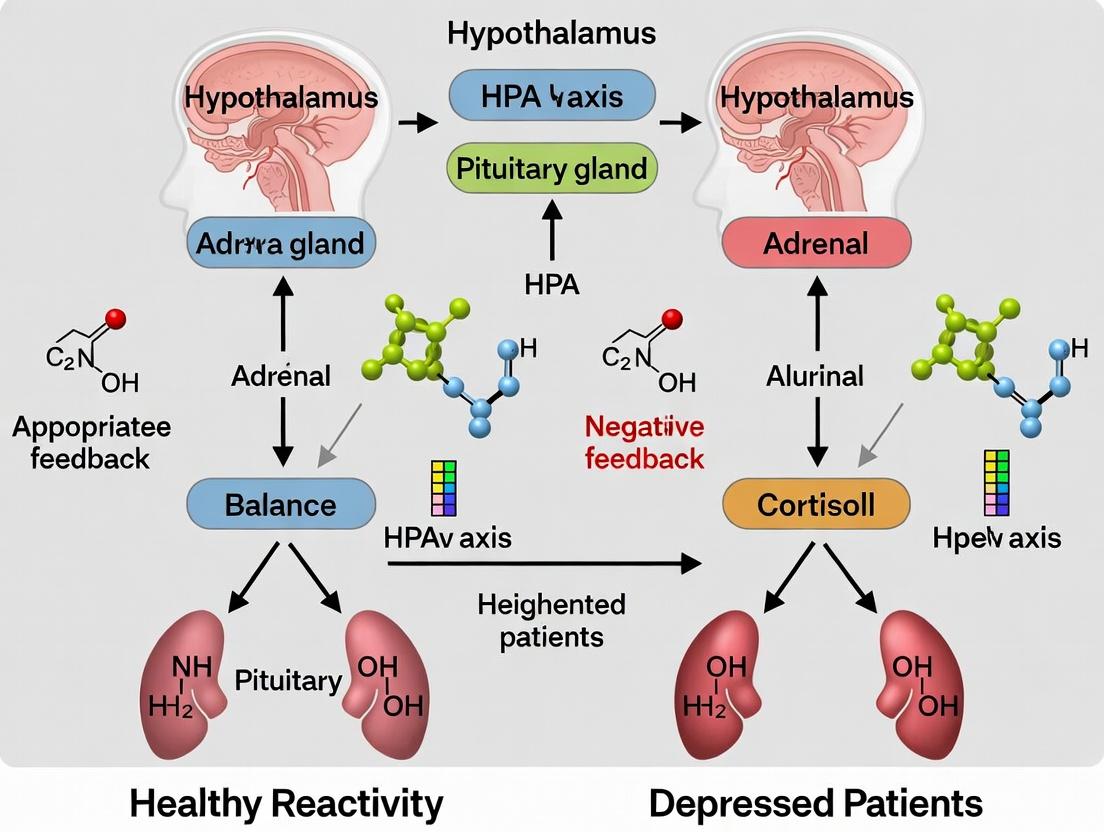
This review synthesizes current research comparing Hypothalamic-Pituitary-Adrenal (HPA) axis reactivity between healthy individuals and patients with Major Depressive Disorder (MDD).
HPA Axis Dysregulation in Depression: A Comprehensive Analysis of Reactivity Differences and Biomarker Potential
Abstract
This review synthesizes current research comparing Hypothalamic-Pituitary-Adrenal (HPA) axis reactivity between healthy individuals and patients with Major Depressive Disorder (MDD). It explores the foundational neuroendocrinology, details key methodological approaches for assessing reactivity (e.g., dexamethasone suppression tests, Trier Social Stress Test), addresses challenges in measurement and patient heterogeneity, and validates findings through comparative analysis with other stress-response systems. Aimed at researchers and drug development professionals, it evaluates the HPA axis's potential as a diagnostic biomarker and therapeutic target, outlining implications for personalized medicine and novel treatment development.
The Stressed Brain: Foundational Neuroendocrinology of the HPA Axis in Health and Disease
Publish Comparison Guide: HPA Axis Reactivity in Healthy vs. Depressed Patients
This guide objectively compares the functional performance of a healthy Hypothalamic-Pituitary-Adrenal (HPA) axis against its dysregulated state in Major Depressive Disorder (MDD), based on contemporary neuroendocrine research.
Quantitative Comparison of HPA Axis Parameters
The following table synthesizes key experimental findings from recent clinical studies comparing HPA axis metrics.
Table 1: Comparative HPA Axis Functional Metrics
| Parameter | Healthy HPA Axis (Homeostatic) | Depressed HPA Axis (Dysregulated) | Supporting Experimental Data (Summary) |
|---|---|---|---|
| Basal Cortisol (AM) | Distinct diurnal peak (∼15-20 µg/dL) | Often elevated/flattened (∼20-25 µg/dL) | Meta-analysis (n=1,837) shows +2.7 µg/dL mean difference in MDD (p<0.01). |
| Cortisol Awakening Response (CAR) | Robust 50-60% increase post-awakening | Frequently blunted or exaggerated | Study (n=245) found 38% of MDD patients had blunted CAR (<20% rise). |
| Dexamethasone Suppression Test (DST) | >80% cortisol suppression (0.5-1.0 mg dose) | Impaired suppression (<50% in severe MDD) | Non-suppression rate in melancholic MDD ∼45% vs. 5% in controls. |
| CRH Stimulation Test | Moderate ACTH increase (2-3 fold baseline) | Attenuated ACTH response, elevated baseline cortisol | Blunted ACTH peak (∼40% lower) observed in MDD cohorts. |
| HPA Feedback Sensitivity | High (Fast glucocorticoid receptor-mediated feedback) | Impaired (Reduced GR signaling efficacy) | Measured via DEX/CRH test; combined test shows +200-300% cortisol response in MDD. |
| Diurnal Rhythm Slope | Steep decline across day | Flattened slope (Evening cortisol >100% of healthy) | Flattening correlates with depression severity (r=0.52). |
Experimental Protocols for Key Cited Findings
1. Protocol: Comprehensive DEX/CRH Suppression Test
- Purpose: Assess integrated negative feedback and reactivity.
- Procedure:
- Day 1, 11 PM: Oral administration of 1.5 mg Dexamethasone (DEX).
- Day 2, 3 PM: Insertion of intravenous catheter.
- Day 2, 3:30 PM - 4:30 PM: Administration of 100 µg human CRH as bolus at 3:30 PM. Serial blood sampling at -15, 0, +15, +30, +45, +60, +90 minutes relative to CRH.
- Sample Analysis: Plasma cortisol and ACTH measured via chemiluminescence immunoassay.
- Key Metric: Cortisol/ACTH area-under-the-curve (AUC) post-CRH. MDD patients typically show paradoxical increase vs. healthy suppression.
2. Protocol: Cortisol Awakening Response (CAR) Assessment
- Purpose: Measure natural HPA axis reactivity to awakening stress.
- Procedure:
- Participants provided salivary cortisol sampling kits (Salivettes).
- Samples self-collected at awakening (S1), +30min (S2), +45min (S3), and +60min (S4).
- Strict adherence to protocol (time logging, no eating/drinking prior) is electronically monitored.
- Salivary cortisol analyzed by enzyme immunoassay (EIA).
- Key Metric: CAR calculated as area under the curve with respect to increase (AUCi) from S1 to S4. Blunting is a hallmark of atypical depression.
3. Protocol: Adrenal Gland Volume via MRI
- Purpose: Quantify structural adaptation to chronic HPA activation.
- Procedure:
- High-resolution T1-weighted MRI scans of adrenal glands.
- Volumetric analysis by blinded radiologist using semi-automated segmentation software.
- Volume correlated with 24-hour urinary free cortisol (UFC) output.
- Key Metric: Adrenal gland volume (cm³). MDD patients show ∼15-20% larger volume correlating with UFC and illness chronicity.
Visualization of HPA Axis Signaling & Experimental Workflow
Healthy HPA Axis Feedback Pathway
DEX/CRH Test Experimental Workflow
The Scientist's Toolkit: Key Research Reagent Solutions
Table 2: Essential Materials for HPA Axis Reactivity Research
| Item | Function/Application | Example/Note |
|---|---|---|
| Salivette (Sarstedt) | Standardized collection of salivary cortisol. Minimizes contamination. | Used in CAR and diurnal rhythm studies. |
| Chemiluminescence Immunoassay (CLIA) Kits | High-sensitivity, automated quantification of plasma/serum cortisol & ACTH. | e.g., DiaSorin Liaison, Siemens Immulite. |
| Human CRH (hCRH) Peptide | Synthetic peptide for stimulation tests (DEX/CRH, CRH stimulation). | Lyophilized, reconstituted in sterile acidic saline. |
| Dexamethasone | Synthetic glucocorticoid for suppression tests (DST, DEX/CRH). | Oral tablets or liquid for precise dosing. |
| Corticosterone/Dexamethasone ELISA | Measures rodent corticosterone (main glucocorticoid) in preclinical models. | Key for mouse/rat HPA axis studies. |
| Glucocorticoid Receptor (GR) Antibodies | Western blot, IHC, or ChIP to assess GR protein expression and localization. | e.g., monoclonal anti-GR (Cell Signaling D6H2L). |
| CRH & AVP Radioimmunoassay (RIA) | Historical gold-standard for measuring low-concentration hypothalamic peptides. | Still used in specialized CSF research. |
| RNAlater & qPCR Kits | Preserve and quantify gene expression (e.g., NR3C1 (GR), FKBP5, CRH). | Assess molecular underpinnings of dysregulation. |
Core Concept and Comparative Framework
Hypothalamic-Pituitary-Adrenal (HPA) axis reactivity refers to the dynamic response of this neuroendocrine system to physical or psychological stressors. It is defined by the magnitude, timing, and recovery profile of its key hormonal outputs: Corticotropin-Releasing Hormone (CRH) from the hypothalamus, Adrenocorticotropic Hormone (ACTH) from the pituitary, and cortisol from the adrenal cortex. In clinical research, comparing reactivity between healthy and depressed populations reveals critical dysregulation, often characterized by hyper-reactivity or impaired feedback in Major Depressive Disorder (MDD).
Key Components & Output Measures: A Comparative Guide
The following table compares the primary measurable components of HPA axis reactivity, their source, function, and alterations observed in depression research.
Table 1: Core Components of HPA Axis Reactivity
| Component | Source | Primary Function | Healthy Reactivity Profile | Depression-Associated Alteration |
|---|---|---|---|---|
| CRH | Hypothalamus (PVN) | Stimulates pituitary ACTH release | Rapid, pulsatile increase post-stress. | Often elevated basal tone; exaggerated stress response. |
| ACTH | Anterior Pituitary | Stimulates adrenal cortisol synthesis & release. | Sharp peak 10-30 mins post-stress; rapid decline. | Blunted or exaggerated peak; delayed recovery. |
| Cortisol | Adrenal Cortex | Metabolic, immune, and CNS effects; provides negative feedback. | Peak at 20-40 mins; returns to baseline within 60-90 mins. | Elevated baseline (hypercortisolemia); prolonged elevation post-stress; impaired dexamethasone suppression. |
Experimental Protocols for Reactivity Assessment
A direct comparison of common challenge tests used to quantify HPA axis reactivity is essential for study design.
Table 2: Comparison of Key HPA Axis Reactivity Provocation Tests
| Test Name | Protocol Summary | Key Measured Outputs | Healthy vs. Depressed Data (Typical Finding) |
|---|---|---|---|
| Trier Social Stress Test (TSST) | 10-min prep, 10-min public speech & mental arithmetic before panel. Saliva/cortisol sampled at -1, +1, +10, +20, +30, +45, +60 mins. | Salivary Cortisol, Plasma ACTH | Healthy: Clear 2-3x cortisol increase. MDD: Often higher baseline, attenuated or prolonged response. |
| CRH Stimulation Test | IV bolus of human CRH (1 µg/kg or 100 µg). Frequent blood sampling over 2 hours. | Plasma ACTH, Cortisol | Healthy: Robust ACTH & cortisol rise. MDD: Blunted ACTH response (suggests downregulated pituitary CRH receptors). |
| Dexamethasone Suppression Test (DST) | 1 mg Dexamethasone orally at 11 PM. Measure serum cortisol next day at 4 PM. | Serum Cortisol | Healthy: Cortisol suppressed to <1.8 µg/dL. MDD: ~30-50% show non-suppression (>1.8 µg/dL), indicating impaired feedback. |
| Dex/CRH Combined Test | Dexamethasone (1.5 mg) at 11 PM, CRH (1 µg/kg) IV next day at 3 PM. Frequent blood sampling. | Plasma ACTH, Cortisol | Healthy: Markedly attenuated response due to dex. MDD: Paradoxically exaggerated ACTH & cortisol response; high sensitivity for HPA dysregulation. |
Visualizing HPA Axis Pathways and Reactivity
HPA Axis Reactivity and Feedback Pathway
TSST Experimental Workflow Timeline
The Scientist's Toolkit: Research Reagent Solutions
Table 3: Essential Reagents and Kits for HPA Reactivity Research
| Item | Function/Application | Example Format |
|---|---|---|
| Human CRH (hCRH) | Synthetic peptide for CRH stimulation tests; directly challenges pituitary ACTH reserve. | Lyophilized powder for IV solution. |
| Dexamethasone | Synthetic glucocorticoid for suppression tests (DST, Dex/CRH); assesses negative feedback integrity. | Tablets or injectable solution. |
| High-Sensitivity Salivary Cortisol ELISA | Non-invasive, frequent sampling for dynamic cortisol curves (e.g., TSST). Correlates well with free serum cortisol. | 96-well plate, chemiluminescence or colorimetric. |
| Plasma ACTH ELISA/CLIA | Measures intact ACTH(1-39) with high specificity; critical for assessing pituitary response. | Immunoassay kit; requires EDTA plasma on ice. |
| Corticosteroid-Binding Globulin (CBG) Assay | Quantifies binding protein to interpret total vs. bioavailable cortisol levels. | ELISA or ligand-binding assay. |
| Dexamethasone Detection ELISA | Verifies participant compliance in DST by measuring dexamethasone levels in blood/saliva. | Competitive immunoassay. |
| RNase Inhibitors & RNA Stabilizers | For gene expression analysis (e.g., GR, MR, FKBP5) from blood cells collected during stress tests. | Liquid reagents for blood collection tubes. |
Comparison Guide: Neuroendocrine and Immune Biomarkers in MDD Pathogenesis
This guide compares key experimental findings on allostatic load biomarkers and HPA axis reactivity between healthy controls and Major Depressive Disorder (MDD) patients, contextualizing the theoretical pathway from chronic stress to MDD pathogenesis.
Table 1: Comparative Biomarkers of Allostatic Load and HPA Axis Dysfunction
| Biomarker / Measure | Healthy Control Profile | MDD Patient Profile (Chronic Stress/High Allostatic Load) | Key Supporting Studies & Experimental Data |
|---|---|---|---|
| Diurnal Cortisol Slope | Steep decline from morning peak to evening nadir. | Flattened diurnal rhythm; elevated evening cortisol. | Meta-analysis (n=56 studies): MDD associated with flatter slope (effect size g = -0.18, p<.05). |
| Cortisol Awakening Response (CAR) | Robust peak (~50-75% increase) 30 min post-awakening. | Frequently blunted or, less commonly, exaggerated. | Systematic review: Blunted CAR is a frequent finding in MDD, linked to chronic stress burden. |
| Dexamethasone Suppression Test (DST) | >80% suppression of cortisol following dexamethasone. | Non-suppression (cortisol >1.8 μg/dL) in ~30-50% of severe/Melancholic MDD. | Gold standard test for HPA negative feedback integrity. Non-suppression indicates glucocorticoid receptor resistance. |
| CRH in Cerebrospinal Fluid (CSF) | Baseline levels within standardized normal range. | Consistently elevated, correlating with severity and anxiety. | Clinical study: MDD patients showed 35-40% higher CSF CRH concentrations vs. controls (p<0.01). |
| Inflammatory Markers (e.g., CRP, IL-6) | Low-grade or within normal limits (CRP <3 mg/L). | Moderately elevated (CRP ~3-10 mg/L). Meta-analyses confirm state and trait elevation. | Meta-analysis: MDD patients show elevated CRP (mean difference=0.85 mg/L) and IL-6 (mean difference=1.78 pg/mL). |
| Hippocampal Volume (MRI) | Age-appropriate volume. | Reduced volume (8-10% average reduction) correlated with illness duration. | Meta-analysis of MRI data: Significant bilateral hippocampal volume reduction in MDD (Hedges' g = -0.45). |
Experimental Protocols for Key Cited Findings
1. Protocol: Dexamethasone Suppression Test (DST) for HPA Axis Negative Feedback
- Objective: Assess glucocorticoid receptor (GR) sensitivity and HPA axis feedback integrity.
- Procedure:
- At 23:00, administer a low dose (1.0-1.5 mg) of dexamethasone (a synthetic GR agonist) orally.
- The following day, collect a blood sample at 16:00 (or 08:00 and 16:00 for Dex/CRH test variant).
- Measure plasma cortisol concentration via immunoassay (e.g., ELISA, CLIA).
- Data Interpretation: Cortisol >1.8 μg/dL (50 nmol/L) post-dexamethasone is defined as "non-suppression," indicating impaired GR signaling and HPA axis hyperactivity.
2. Protocol: Measuring Inflammatory Load in MDD
- Objective: Quantify peripheral inflammatory markers as a component of allostatic load.
- Procedure:
- Collect fasting blood samples in EDTA or heparin tubes.
- Centrifuge to isolate plasma.
- Use high-sensitivity ELISA or multiplex bead-based assays (e.g., Luminex) to measure C-reactive protein (hsCRP), interleukin-6 (IL-6), and tumor necrosis factor-alpha (TNF-α).
- Data Interpretation: Compare concentrations against established clinical ranges. CRP >3 mg/L is considered indicative of elevated, cardiometabolic risk-related inflammation.
Pathway Visualization
Pathway from Chronic Stress to MDD Pathogenesis
HPA Axis Reactivity: Healthy vs. MDD State
The Scientist's Toolkit: Research Reagent Solutions
| Item / Reagent | Function in HPA/Allostatic Load Research |
|---|---|
| High-Sensitivity Salivary Cortisol ELISA Kit | Non-invasive measurement of free, biologically active cortisol for diurnal rhythm & CAR assessment. |
| Dexamethasone (powder or solution) | Synthetic glucocorticoid agonist used in the DST to probe negative feedback sensitivity of the HPA axis. |
| Human CRH (Corticotropin-Releasing Hormone) | Used in the combined DEX/CRH test to challenge HPA axis reactivity and reveal underlying dysregulation. |
| Luminex Multiplex Assay Panel (Human Cytokine/Chemokine) | Simultaneously quantifies multiple inflammatory markers (IL-6, TNF-α, CRP) from small plasma/serum volumes. |
| RNAlater Stabilization Solution | Preserves RNA integrity in tissues (e.g., blood, post-mortem brain) for gene expression studies (e.g., GR, FKBP5). |
| FKBP5 and NR3C1 (GR) qPCR Assays | TaqMan-based assays to quantify gene expression or epigenetic changes in key HPA axis regulator genes. |
| Corticosterone/Dexamethasone (for rodent models) | Key reagents for inducing and measuring stress responses in preclinical models of chronic stress and depression. |
Thesis Context: Comparative HPA Axis Reactivity in Healthy vs. Depressed Patients
This guide compares three canonical Hypothalamic-Pituitary-Adrenal (HPA) axis reactivity phenotypes observed in Major Depressive Disorder (MDD) against the normative response in healthy controls. The comparison is framed within the critical thesis of HPA axis dysregulation as a core neurobiological feature of depression, with direct implications for biomarker development and targeted therapeutic interventions.
Comparison Guide: HPA Axis Phenotypes in MDD vs. Healthy Controls
Table 1: Phenotypic Characteristics and Neuroendocrine Profile
| Phenotype | Cortisol Awakening Response (CAR) | Dexamethasone Suppression Test (DST) Result | Diurnal Slope | Primary Clinical Correlation | Prevalence in MDD |
|---|---|---|---|---|---|
| Healthy Control | Robust peak (~50-160% increase) 30 mins post-awakening. | Normal suppression (post-DEX cortisol < 1.8 µg/dL). | Steady decline from AM peak to PM nadir. | N/A (Normative baseline). | N/A |
| Hyperactivity | Exaggerated peak amplitude (>160% increase). | Non-suppression (post-DEX cortisol > 1.8 µg/dL). | Flattened due to elevated trough levels. | Melancholic/psychotic features, severe episodes. | ~20-40% |
| Blunting | Attenuated or absent peak (<50% increase). | Normal or enhanced suppression. | Flattened due to low AM peak. | Atypical features, fatigue, comorbid PTSD. | ~15-30% |
| Diurnal Rhythm Disturbance | Variable (often reduced). | Variable. | Significantly flattened (loss of decline). | Severity, chronicity, cognitive impairment. | ~30-50% |
Table 2: Supporting Experimental Data from Key Studies
| Study (Sample) | Key Experimental Protocol | Hyperactivity Findings | Blunting Findings | Diurnal Disturbance Findings |
|---|---|---|---|---|
| Vreeburg et al., 2009 (N=581 MDD, N=407 controls) | Salivary cortisol at awakening, +30, +45, +60 min (CAR), and at 1400, 1600, 2000, 2300 h (diurnal). | Higher CAR area under the curve (AUC) in MDD (p<.05). | -- | Flatter diurnal slope in MDD (p<.001). |
| Jarcho et al., 2013 (MDD with PTSD vs. controls) | Trier Social Stress Test (TSST) with salivary cortisol measured at -30, 0, +15, +30, +60, +90 min. | -- | Blunted reactivity: Reduced cortisol AUC to TSST in MDD+PTSD (p<.01). | -- |
| Moral et al., 2021 (Meta-Analysis) | Meta-analysis of DST studies in first-episode psychosis (FEP) & MDD. | Non-suppression rate: 54.4% in psychotic MDD; 36.4% in non-psychotic MDD. | -- | -- |
| Knorr et al., 2010 (N=50 MDD, N=110 controls) | 24-hr serial plasma cortisol sampling. | Elevated total 24-hr cortisol secretion (p<.001). | -- | Loss of normal circadian rhythm (p<.001). |
Detailed Experimental Protocols
1. Cortisol Awakening Response (CAR) Protocol
- Objective: To assess the integrity of the HPA axis's dynamic response to the physiological stress of awakening.
- Materials: Salivettes (Sarstedt), home collection kits, freezer (-20°C), cortisol immunoassay.
- Procedure: Participants self-collect saliva immediately upon awakening (0 min), and at 30, 45, and 60 minutes post-awakening while fasting and maintaining strict adherence to collection times. Samples are stored in participants' freezers before transport to lab. Timing is verified electronically. Cortisol is assayed, and the Area Under the Curve with respect to ground (AUCg) and increase (AUCi) are calculated.
2. Dexamethasone Suppression Test (DST) Protocol
- Objective: To assess negative feedback sensitivity of the HPA axis via glucocorticoid receptors (GR).
- Materials: 1.0 mg dexamethasone tablet, blood collection tubes or Salivettes.
- Procedure: Participant ingests 1.0 mg dexamethasone orally at 2300 h. A blood or saliva sample for cortisol measurement is collected the following day at 1600 h (or 0800-0900 h for the DEX/CRH test variant). Cortisol levels >1.8 µg/dL (blood) or >1.3 nmol/L (saliva, approximate) indicate non-suppression, reflecting impaired GR feedback.
3. Diurnal Rhythm Profiling Protocol
- Objective: To characterize the 24-hour circadian rhythm of cortisol secretion.
- Materials: Serial salivettes or computerized ambulatory blood sampling system.
- Procedure: Participants provide saliva samples at multiple fixed times over a full day (e.g., 0800, 1200, 1600, 2000, 2300 h) or undergo 24-hour continuous plasma sampling in a clinic. The diurnal slope is calculated via linear regression of cortisol log-concentrations against time of day. A flatter slope indicates rhythm disturbance.
Visualizations
Diagram 1: HPA Axis Signaling Pathways in Health and Disease (62 chars)
Diagram 2: Experimental Phenotyping Workflow (52 chars)
The Scientist's Toolkit: Key Research Reagent Solutions
| Item | Function in HPA Axis Research |
|---|---|
| Salivette (Sarstedt) | Standardized device for passive drool or swab-based saliva collection. Minimizes interference for accurate cortisol immunoassay. |
| Dexamethasone (≥98% purity) | Synthetic glucocorticoid agonist used in the DST to probe GR-mediated negative feedback integrity. |
| High-Sensitivity Salivary Cortisol ELISA/EIA Kits (e.g., Salimetrics, IBL International) | Enzyme immunoassays optimized for the low concentration range of salivary cortisol (detection limit ~0.007 µg/dL). |
| Corticotropin-Releasing Hormone (Human, Rat) | Used in the combined DEX/CRH test to challenge HPA axis reactivity after pre-treatment with dexamethasone. |
| Plasma/Serum Cortisol RIA or LC-MS/MS Kit | For absolute quantification of cortisol in blood samples. LC-MS/MS is the gold standard for specificity. |
| Electronic Monitoring (MEMS Caps, e-Diaries) | Validates participant adherence to timed sampling protocols (e.g., CAR), critical for data reliability. |
| Cortisol Standards & Controls | Essential for creating standard curves and ensuring intra- and inter-assay precision across sample batches. |
Genetic and Early Life Determinants of HPA Axis Vulnerability
This comparison guide is framed within a thesis investigating HPA axis reactivity in healthy versus depressed patients. It objectively compares the "performance" or impact of specific genetic polymorphisms and early life adversity (ELA) exposures—conceptualized as vulnerability factors—against a baseline of low-risk genotypes and absence of ELA. The analysis is based on experimental data measuring cortisol response, gene expression, and brain morphology.
Comparative Analysis: Key Vulnerability Determinants
Table 1: Genetic Polymorphism Impact on HPA Axis Reactivity
| Gene & Polymorphism | Subject Group (vs. Control) | Experimental Measure | Key Finding (Mean ± SD or Effect Size) | Primary Citation |
|---|---|---|---|---|
| FKBP5 rs1360780 | High-risk T-allele carriers vs. C/C homozygotes | Cortisol AUC to TSST | 25% ↑ cortisol AUC (p<0.01) | Zannas et al., 2016 |
| NR3C1 (GR) BclI | G-allele carriers vs. C/C homozygotes | Dexamethasone Suppression Test | 40% less suppression (p<0.001) | Kumsta et al., 2007 |
| CRHR1 rs110402 | A-allele carriers vs. G/G homozygotes | ACTH response to CRH challenge | 18% ↑ ACTH peak (p<0.05) | Tyrka et al., 2009 |
| AVPR1b rs28373064 | Risk allele carriers vs. non-carriers | Cortisol response to psychosocial stress | 15% ↑ response amplitude (p<0.05) | van West et al., 2004 |
Table 2: Early Life Adversity (ELA) Exposure Outcomes
| ELA Type / Measure | Exposed Group vs. Non-exposed | Experimental Paradigm | Key Neuroendocrine / Neural Finding | Primary Citation |
|---|---|---|---|---|
| Parental Loss / Neglect | ELA+ vs. ELA- | fMRI + TSST | ↑ Amygdala reactivity (d=0.65); Blunted cortisol recovery | Gee et al., 2013 |
| Childhood Maltreatment | High CTQ score vs. Low | MRI Volumetry | ↓ hippocampal volume (β = -0.21, p<0.01); ↑ pituitary volume | Dannlowski et al., 2012 |
| Institutional Care | Previously institutionalized vs. never | Diurnal cortisol slope | Flattened a.m. to p.m. slope (F=6.7, p<0.05) | McLaughlin et al., 2015 |
| Low Maternal Care | Low vs. High Licking/Grooming (Rat model) | GR mRNA in hippocampus | ↓ GR expression in hippocampal subfields (40-60%) | Weaver et al., 2004 |
Experimental Protocols
Trier Social Stress Test (TSST) Protocol
Purpose: To elicit a reliable psychosocial stress response for measuring HPA axis reactivity. Workflow:
- Preparation (10 min): Participant is introduced to the panel and task.
- Speech Task (5 min): Participant delivers a free speech for a mock job interview.
- Math Task (5 min): Participant performs serial subtraction aloud.
- Recovery (60-90 min): Participant rests. Saliva or blood samples are collected at baseline, immediately post-task, and at +10, +20, +30, +45, +60, +90 minutes for cortisol assay.
- Analysis: Calculate area under the curve (AUC) with respect to ground or increase.
Dexamethasone Suppression Test (DST) Protocol
Purpose: To assess glucocorticoid receptor (GR) negative feedback sensitivity. Workflow:
- Day 1, 11 PM: Oral administration of 1.5 mg dexamethasone.
- Day 2, 8 AM: Blood draw for measurement of plasma cortisol.
- Analysis: Cortisol levels >1.8 μg/dL (50 nmol/L) typically indicate non-suppression, suggesting impaired GR feedback.
Epigenetic Analysis (Bisulfite Pyrosequencing) of GR Promoter
Purpose: To quantify DNA methylation levels at the NR3C1 (GR) promoter, often in relation to ELA. Workflow:
- DNA Extraction: From target tissue (e.g., blood, hippocampal post-mortem).
- Bisulfite Conversion: Treat DNA with sodium bisulfite, converting unmethylated cytosines to uracil (reads as thymine in PCR).
- PCR Amplification: Amplify target promoter region (e.g., exon 1F) with primers specific for bisulfite-converted DNA.
- Pyrosequencing: Sequence PCR product to determine C/T ratio at each CpG site, yielding % methylation.
- Correlation: Statistically associate methylation % with cortisol measures or ELA history.
Gene x Environment (GxE) Interaction Study Design
Purpose: To test if genetic risk moderates the effect of ELA on HPA outcomes. Workflow:
- Phenotyping: Quantify ELA using validated scales (e.g., CTQ, ACE).
- Genotyping: Extract DNA and genotype target SNP (e.g., FKBP5 rs1360780).
- Stress Testing: Subject cohorts to TSST or DST.
- Statistical Modeling: Use moderated regression: Outcome = β1(Genotype) + β2(ELA) + β3(Genotype*ELA) + covariates.
Visualizations
Title: GxE Pathway to HPA Axis Vulnerability
Title: TSST Protocol for HPA Reactivity
The Scientist's Toolkit: Research Reagent Solutions
| Item / Reagent | Vendor Examples (for comparison) | Primary Function in HPA Research |
|---|---|---|
| Cortisol ELISA Kit | Salimetrics, Abcam, Arbor Assays | Quantifies free cortisol in saliva/serum with high sensitivity; key for TSST/DST outcomes. |
| CRH & ACTH ELISA Kits | Phoenix Pharmaceuticals, Merck Millipore | Measures peptide hormone levels in plasma to assess hypothalamic & pituitary activity. |
| Dexamethasone | Sigma-Aldrich, Tocris | Synthetic glucocorticoid for DST to probe GR negative feedback integrity. |
| DNA Methylation Kit (Bisulfite) | Qiagen EpiTect, Zymo Research | Converts DNA for pyrosequencing or array analysis of epigenetic marks (e.g., on NR3C1). |
| TaqMan SNP Genotyping Assays | Thermo Fisher Applied Biosystems | For accurate allelic discrimination of candidate SNPs (e.g., FKBP5, CRHR1). |
| RNAlater Stabilization Solution | Thermo Fisher, Qiagen | Preserves tissue RNA integrity for post-mortem brain GR mRNA expression studies. |
| GR (NR3C1) Antibody | Cell Signaling, Santa Cruz Biotechnology | Detects glucocorticoid receptor protein in Western blot or IHC of brain/lymphocyte samples. |
| Corticosterone ELISA (Rat/Mouse) | Enzo Life Sciences, IBL International | Standard assay for HPA axis measurement in preclinical ELA animal models. |
Measuring the Stress Response: Methodological Approaches to Assessing HPA Reactivity in Clinical Research
Thesis Context: Comparative HPA Axis Reactivity in Healthy vs. Depressed Patients
This guide compares the performance of the Dexamethasone Suppression Test (DST) and the combined Dexamethasone/CRH Test (DEX/CRH) within the framework of research on Hypothalamic-Pituitary-Adrenal (HPA) axis dysregulation in Major Depressive Disorder (MDD). The core thesis posits that depression is associated with impaired glucocorticoid feedback sensitivity and heightened HPA axis reactivity, which these tests aim to quantify.
Experimental Comparison & Performance Data
Table 1: Diagnostic Performance in Major Depressive Disorder (MDD)
| Metric | Standard DST (1.0-2.0 mg dex) | DEX/CRH Test (1.5 mg dex + CRH bolus) | Notes |
|---|---|---|---|
| Sensitivity | ~45-60% | ~75-90% | DEX/CRH shows superior detection of HPA dysregulation in MDD. |
| Specificity | ~75-90% (vs. healthy) | ~80-95% (vs. healthy) | Both can be confounded by other conditions (e.g., anxiety, PTSD). |
| Primary Measure | Cortisol post-dex (e.g., 08:00, 16:00) | Cortisol & ACTH response to CRH (post-dex) | DEX/CRH provides dynamic pituitary-adrenal reactivity data. |
| Escape Rate in MDD | 30-50% (non-suppression) | 60-80% (exaggerated response) | "Escape" defined differently: failure to suppress vs. amplified reactivation. |
| Predictive Value for Treatment | Limited evidence for prediction | Stronger evidence for normalization predicting clinical response | DEX/CRH reactivity may serve as a state-dependent biomarker. |
Table 2: Experimental HPA Axis Response Profiles
| Subject Group | DST Response (Cortisol µg/dL)* | DEX/CRH Peak Cortisol (nmol/L)* | DEX/CRH Peak ACTH (pmol/L)* |
|---|---|---|---|
| Healthy Controls | < 1.8 (Suppression) | ~ 100 - 250 | ~ 4 - 10 |
| MDD Patients (Melancholic) | > 5.0 (Non-suppression common) | ~ 300 - 600+ | ~ 15 - 40+ |
| MDD in Remission | ~ 1.8 - 3.0 (Often normalizes) | ~ 150 - 300 (Often normalizes) | ~ 5 - 15 (Often normalizes) |
*Representative post-dexamethasone values. Actual thresholds and units vary by protocol and assay.
Detailed Experimental Protocols
Protocol 1: The Standard Dexamethasone Suppression Test (DST)
- Administration: Oral administration of 1.0 mg or 1.5 mg of dexamethasone at 23:00 hours.
- Blood Sampling: Venous blood samples are collected the following day at specific time points (e.g., 08:00, 16:00, and 23:00). Plasma or serum is separated.
- Cortisol Assay: Cortisol levels are quantified via chemiluminescence immunoassay (CLIA) or radioimmunoassay (RIA).
- Analysis: A cortisol concentration above a defined cut-off (historically 5 µg/dL or 138 nmol/L for the 1 mg test) at any post-dex time point indicates "non-suppression" or "escape," suggesting impaired glucocorticoid feedback.
Protocol 2: The Combined Dexamethasone/CRH Test (DEX/CRH)
- Pre-Test: Oral administration of 1.5 mg dexamethasone at 23:00 hours the day before the CRH test.
- Preparation: Subjects rest in a supine position. An intravenous catheter is inserted at least 30 minutes before CRH injection.
- CRH Challenge: A bolus of 100 µg human CRH (or 1 µg/kg) is injected intravenously at a standardized time (e.g., 15:00 hours).
- Serial Sampling: Blood samples are drawn at -15, 0 (CRH injection), +15, +30, +45, +60, +75, and +90 minutes relative to CRH administration.
- Assays: Plasma is analyzed for both ACTH and cortisol concentrations.
- Analysis: The primary outcome is the combined hormonal response (area under the curve, peak value). An exaggerated ACTH and cortisol response post-CRH, despite pre-treatment with dexamethasone, indicates enhanced HPA drive and impaired feedback, characteristic of MDD.
Visualizing HPA Axis Pathways and Test Logic
The Scientist's Toolkit: Key Research Reagent Solutions
| Item/Category | Function in HPA Axis Testing | Example/Notes |
|---|---|---|
| Dexamethasone (Oral) | Synthetic glucocorticoid agonist; used to probe negative feedback sensitivity at the pituitary and hypothalamus. | Pharmaceutical grade. Dose critical (1.0 mg vs. 1.5 mg). |
| Human CRH (hCRH) | Synthetic corticotropin-releasing hormone; stimulates pituitary corticotrophs to release ACTH in the DEX/CRH test. | Lyophilized powder, reconstituted for IV bolus. 100 µg standard dose. |
| Cortisol Immunoassay | Quantifies total or free cortisol in plasma/serum/saliva. The primary endpoint for DST and DEX/CRH. | Chemiluminescence (CLIA) or ELISA kits. High sensitivity required for post-dex levels. |
| ACTH Immunoassay | Quantifies ACTH in EDTA plasma. Critical for DEX/CRH to assess direct pituitary reactivity. | Requires careful pre-analytical handling (chilled tubes, rapid centrifugation). IRMA or CLIA. |
| Salivary Cortisol Collection | Non-invasive method for free cortisol measurement, correlates with plasma free cortisol. Useful for multi-point DST sampling. | Salivettes or similar. Requires protocol adherence regarding contamination. |
| EDTA/AP Plasma Tubes | For ACTH and fragile peptide stability. Must be kept on ice and processed rapidly (<30 min). | Pre-chilled tubes essential for accurate ACTH measurement. |
| IV Catheter & Heparin Lock | Allows for repeated, stress-minimized blood sampling during dynamic tests like DEX/CRH. | Reduces stress of repeated venipuncture, which can confound cortisol measures. |
Within the context of research comparing HPA axis reactivity in healthy versus depressed patients, the Trier Social Stress Test (TSST) remains the gold standard for inducing reliable psychobiological stress responses in laboratory settings. This guide compares its protocol and analytical outcomes against common alternative paradigms.
Experimental Protocols
1. Trier Social Stress Test (TSST) Core Protocol
- Preparation (5 min): Participant is introduced to a panel of 2-3 "evaluators" in white lab coats and a video camera.
- Anticipation (10 min): Participant prepares a 5-minute speech for a mock job interview.
- Test Period (15 min): Participant delivers the speech (5 min) and then performs serial subtraction (e.g., subtract 13 from 1027) aloud for 5 minutes. Evaluators maintain a neutral, non-encouraging demeanor. The period concludes if the participant fails a subtraction, requiring them to start over.
- Recovery (60+ min): Participant rests alone. Saliva samples for cortisol (and often blood samples for ACTH) are collected at baseline, immediately post-TSST, and at 10-, 20-, 30-, 45-, 60-, and 90-minute intervals.
2. Alternative Paradigms
- Placebo-TSST (P-TSST): Identical in structure but without social-evaluative threat. The committee is absent or non-evaluative, and no video recording is made. Serves as a control for the psychosocial components.
- Maastricht Acute Stress Test (MAST): Combines physical (cold pressor test) and psychosocial (mental arithmetic with negative feedback) stress in short, alternating trials over 10 minutes.
- Cold Pressor Test (CPT): A physical stressor where the participant submerges a hand in ice water (0-4°C) for 1-3 minutes.
Performance Comparison Data
Table 1: HPA Axis Reactivity Profile Across Stress Paradigms
| Paradigm | Stressor Type | Key Mediators | Peak Salivary Cortisol Increase (Mean) | Time to Peak (min post-test) | Key Differentiator |
|---|---|---|---|---|---|
| TSST | Uncontrollable, Social-Evaluative Threat | HPA Axis (ACTH/Cortisol), SNS | ~2.5 - 3.5 nmol/L (or 100-200% from baseline) | 10-20 | Robust, reliable HPA activation; high inter-individual variability |
| P-TSST | Mild Cognitive Demand | Mild SNS | ~0.5 - 1.0 nmol/L | - | Controls for non-social elements of TSST |
| MAST | Combined Physical/Psychosocial | HPA Axis, SNS, Pain Pathways | ~1.5 - 2.5 nmol/L | 10-20 | Faster, potent but shorter activation; strong SNS component |
| CPT | Physical (Pain) | Primarily SNS, Mild HPA | ~0.8 - 1.5 nmol/L | 0-5 | Rapid SNS response; weak HPA activator |
Table 2: Differential Reactivity in Healthy vs. Depressed Patients (Meta-Analytic Data)
| Paradigm | Healthy Controls (Cortisol AUCi) | Depressed Patients (Cortisol AUCi) | Typical Effect Size (Hedges' g) | Interpretation in Depression Research |
|---|---|---|---|---|
| TSST | High Positive AUC | Blunted/Attenuated Response (Low or Negative AUC) | 0.4 - 0.7 | Supports "HPA axis burnout" or impaired stress system mobilization hypothesis. |
| MAST | Moderate Positive AUC | Mildly Attenuated | 0.2 - 0.5 | Less discriminative than TSST for HPA dysfunction. |
| CPT | Low Positive AUC | Comparable to Controls | ~0.1 | Not a primary tool for probing HPA dysregulation in depression. |
Signaling Pathways & Experimental Workflow
The Scientist's Toolkit: Key Research Reagent Solutions
| Item | Function in TSST Research |
|---|---|
| Salivette (Sarstedt) | Standardized cotton swab or polyester roll for passive saliva collection; centrifuged to yield clear saliva for assay. |
| High-Sensitivity Salivary Cortisol ELISA/EIA (e.g., Salimetrics, DRG) | Immunoassay kits optimized for the low concentration range of salivary cortisol (nmol/L). Essential for measuring free, biologically active cortisol. |
| ACTH (pg/mL) Chemiluminescence Immunoassay | For plasma/serum analysis to measure the pituitary-derived hormone driving adrenal cortisol release. |
| CRH/AVP Radioimmunoassay (RIA) | For research measuring hypothalamic peptide release (often in animal models or human CSF). |
| RNAlater Stabilization Solution | Preserves gene expression profiles in cells from saliva or blood collected pre- and post-stress for transcriptomic analysis (e.g., glucocorticoid-responsive genes). |
| Luminescent/Colorimetric Corticosterone ELISA | The primary glucocorticoid assay for rodent TSST analog studies (e.g., social defeat). |
| ECG/EDA (Electrodermal Activity) Apparatus | For concurrent measurement of autonomic (sympathetic) nervous system activity during the TSST. |
| Statistical Software (e.g., R, SPSS) with AUC Calculation | Necessary for computing Area Under the Curve with respect to ground (AUCg) and increase (AUCi) for cortisol time-series data. |
This comparison guide evaluates methodological approaches for calculating Area Under the Curve (AUCg, AUCi) and the Cortisol Awakening Response (CAR) in ambulatory diurnal cortisol sampling. Framed within a thesis investigating HPA axis dysregulation in depression, we compare the performance of traditional laboratory assays with emerging point-of-care and wearable technologies in real-world settings.
Comparative Analysis of Sampling & Analytical Platforms
Table 1: Platform Performance Comparison for Real-World Cortisol Assessment
| Platform / Method | Analytical Technique | Sample Type | Time-to-Result | Key Advantage for Real-World Use | Key Limitation | Typical CV% | Primary Use in Research |
|---|---|---|---|---|---|---|---|
| Gold Standard: Lab-based ELISA/LC-MS | Enzyme-Linked Immunosorbent Assay / Liquid Chromatography-Mass Spectrometry | Saliva (Frozen) | 24-72 hours | High specificity & sensitivity; Gold standard validation | Long latency; Requires freezer chain | 5-10% (LC-MS) | AUCg, AUCi, CAR in validation studies |
| Point-of-Care Immunoassay | Lateral Flow / Electrochemical Detection | Saliva (Fresh) | 5-15 minutes | Immediate feedback; Enhances compliance | Higher CV; Semi-quantitative | 15-25% | CAR measurement in ecological momentary assessment |
| Wearable Sensor (Emerging) | Aptamer-based / Electrochemical | Interstitial Fluid (ISF) | Continuous (e.g., 5-min intervals) | True diurnal profile; High temporal resolution | Invasive; Requires calibration; Emerging validation | 20-30% (current prototypes) | Dynamic AUC modeling, stress reactivity |
| Passive Drool (Field Standard) | Salivette collection, later lab analysis | Saliva (Stabilized) | Delayed (lab processing) | Good participant compliance; Stable for mail transport | Delay in analysis; Potential sampling errors | 7-12% (post-shipment) | Large-scale epidemiological studies (AUCg, AUCi) |
Table 2: Key Metric Calculations and Comparative Data in Depressed vs. Healthy Patients
| Cortisol Metric | Calculation Formula | Typical Healthy Mean (SD) | Typical Depressed Mean (SD) | Effect Size (Cohen's d) | Recommended Sampling Schedule for Reliability |
|---|---|---|---|---|---|
| AUC with respect to ground (AUCg) | Total area under the curve from all samples using trapezoidal formula. | 3500-4500 nmol/L*min | 2500-3500 nmol/L*min | 0.6 - 0.8 | 5+ points: waking, 30m post-waking, 1100h, 1500h, 2100h |
| AUC with respect to increase (AUCi) | Area under the curve relative to the waking sample (first value). | 200-400 nmol/L*min | Often negative or near-zero | 0.7 - 0.9 | Paired samples: waking & 30-45m post-waking critical |
| Cortisol Awakening Response (CAR) | Mean increase from waking to 30/45m post-waking (nmol/L). | 9-15 nmol/L increase | 2-6 nmol/L increase (blunted) | 0.8 - 1.2 | 3 samples: immediately upon waking, +30min, +45min |
Note: Values are illustrative composites from meta-analyses. Actual values vary by assay, population, and sampling density.
Experimental Protocols for Real-World Assessment
Protocol 1: Standardized Ambulatory Diurnal Sampling for AUCg/i
Objective: To collect reliable diurnal cortisol profiles for AUC calculation in participants' natural environments. Materials: Salivette tubes (Sarstedt), portable cooler with frozen gel packs, participant diary/timer, labels, pre-addressed return mailer. Procedure:
- Training: Participant is trained to place synthetic swab under tongue for 2 minutes until saturated.
- Schedule: Samples are taken at 5 predetermined times: immediately upon waking (S1), 30 minutes post-wake (S2), 1100h (S3), 1500h (S4), 2100h (S5). Participant records exact time in diary.
- Handling: After sampling, swab is placed into salivette tube, capped, and stored in personal refrigerator (4°C).
- Return: At end of sampling day, all tubes are placed in provided cooler with gel packs and mailed overnight to central lab.
- Lab Processing: Upon receipt, samples are centrifuged, aliquoted, and stored at -80°C until batch analysis via high-sensitivity ELISA.
Protocol 2: Ecological Momentary Assessment (EMA) of CAR with Electronic Compliance Monitoring
Objective: To accurately capture the Cortisol Awakening Response with verification of sampling timing. Materials: Electronic Medication Event Monitoring System (MEMS cap) fitted to salivette tube, smartphone app for alerts and time-stamping. Procedure:
- Device Setup: Each salivette is equipped with a MEMS cap that records the time of every opening.
- Sampling: Upon waking (verified by actigraphy), participant opens device for S1. A smartphone alarm signals 30-minute post-wake for S2.
- Compliance Check: The MEMS cap log is downloaded to verify exact sampling times. Samples deviating >10min from schedule are flagged.
- Analysis: Cortisol values from verified samples are used to calculate CAR (S2 - S1).
Protocol 3: Validation of Wearable Cortisol Sensor against Plasma & Saliva
Objective: To correlate continuous interstitial fluid (ISF) cortisol from a wearable with serially sampled plasma and saliva. Materials: Prototype wearable aptamer-based sensor (e.g., as reported by researchers at UCLA/Stanford), intravenous catheter for serial blood draws, salivettes. Procedure:
- Sensor Calibration: Wearable sensor is applied to participant's arm and undergoes a 2-hour in-vivo calibration period.
- Parallel Sampling: Over a 12-hour period, venous blood and saliva are collected hourly. The wearable sensor records ISF [cortisol] every 5 minutes.
- Time Alignment: All data are aligned using collection timestamps.
- Pharmacokinetic Modeling: A validated compartment model is used to correlate ISF cortisol dynamics with plasma (gold standard) and saliva (delayed) concentrations.
Diagrams
Diagram 1: HPA Axis Pathway in Health vs. Depression
Diagram 2: Real-World Ambulatory Assessment Workflow
The Scientist's Toolkit: Research Reagent Solutions
Table 3: Essential Materials for Ambulatory Cortisol Research
| Item | Function & Rationale | Example Product/Catalog |
|---|---|---|
| Salivette Cortisol (Synthetic Swab) | Minimizes interference; Standardized volume absorption; No taste, ideal for repeated sampling. | Sarstedt, Code: 51.1534.500 |
| Cortisol ELISA Kit (High Sensitivity) | Quantifies low concentrations in saliva (detection limit <0.1 nmol/L); Validated for saliva matrix. | Salimetrics, Kit #1-3002 |
| Portable Freezer Box with Gel Packs | Maintains cold chain during temporary home storage and transport; crucial for pre-analytical stability. | Fisherbrand 12-Can Cooler |
| Electronic Compliance Monitor (MEMS Cap) | Objectively records the exact time of sample tube opening; critical for validating CAR sampling time. | AARDEX Group, MEMS 6 |
| Cortisol Stabilizer Solution | Preserves cortisol in saliva at room temperature for up to 7 days; removes need for immediate freezing. | Salimetrics, Cat. No. 5001 |
| Actigraphy Watch | Objectively verifies waking time (for CAR) and monitors sleep/activity patterns as potential covariates. | Philips Actiwatch 2 |
| Participant Diaries (Paper or App) | Records exact sampling times, mood, stress events, food intake, and medication. | Custom REDCap survey or dedicated EMA app (mEMA) |
| Reference Material (Certified Cortisol) | For assay calibration and quality control; traceable to international standard. | NIST SRM 921 |
This comparison guide is framed within a broader thesis investigating Hypothalamic-Pituitary-Adrenal (HPA) axis reactivity differences between healthy and depressed patients. Accurate, reliable, and temporally precise cortisol measurement is fundamental to this research. This guide objectively compares the performance of salivary, serum, and hair cortisol biomarkers, detailing their methodologies, experimental data, and applications in clinical research.
Biomarker Comparison: Performance & Experimental Data
Table 1: Core Characteristics and Performance Comparison
| Feature | Serum Cortisol | Salivary Cortisol | Hair Cortisol |
|---|---|---|---|
| Matrix | Blood plasma/serum | Saliva (ultrafiltrate of blood) | Hair shaft (keratin) |
| Measured Fraction | Total (protein-bound + free) & free | Free (biologically active) | Cortisol & metabolites incorporated from blood |
| Temporal Resolution | Single point-in-time (acute) | Short-term (acute, diurnal rhythm) | Long-term (chronic, 1-month per cm of hair) |
| Collection Invasiveness | High (venipuncture) | Low (passive drool or swab) | Non-invasive (cut close to scalp) |
| Stress of Collection | High (can affect result) | Minimal | None |
| Primary Research Application | Clinical diagnosis (e.g., Cushing's), pharmacological studies | Diurnal rhythm, dynamic HPA axis reactivity (e.g., Trier Social Stress Test), circadian studies | Retrospective assessment of long-term integrated cortisol exposure (e.g., chronic stress burden) |
| Key Experimental Finding in Depression Research | Mixed results; often shows elevated morning cortisol but high variability due to collection stress. Meta-analysis shows moderate effect size (Hedge's g ~0.60) for elevated AM cortisol. | More consistent findings of flattened diurnal slope and elevated evening cortisol in depression. A 2023 meta-analysis found a significant association with a combined effect size (r) of 0.29 for flatter slope. | Robustly elevated cortisol concentrations in major depressive disorder (MDD) vs. controls. A 2022 review reported an average effect size (Cohen's d) of 0.72 for 1-cm scalp-proximal hair segments. |
| Major Analytical Technique | Immunoassay (CLIA, ELISA), LC-MS/MS | Immunoassay (ELISA, CLIA), LC-MS/MS | ELISA, LC-MS/MS (requires hair segmentation and pulverization) |
Table 2: Key Experimental Data from Recent Studies (2020-2024)
| Study Focus (Cohort) | Salivary Cortisol Findings | Serum Cortisol Findings | Hair Cortisol Findings |
|---|---|---|---|
| Diurnal Rhythm in MDD (n=150) | AUCg: 25% higher in MDD (p<0.01). Diurnal Slope: 40% flatter in MDD (p<0.001). | Morning cortisol: 15% higher in MDD (p=0.07, ns). No difference in afternoon levels. | N/A |
| Chronic Stress & MDD (n=200) | N/A | N/A | Hair Cortisol (0-3cm): 1.8x higher in MDD vs. controls (p<0.001). Correlated with depression duration (r=0.45). |
| HPA Reactivity to TSST (n=80) | Peak Reactivity: 65% increase in controls vs. 28% in MDD post-TSST (p<0.01 for group*time interaction). | Not measured due to stress-confounding of repeated venipuncture. | N/A |
| Treatment Response (MDD, n=60, 8-week trial) | Normalization of evening cortisol correlated with symptom improvement (HAM-D) (r=-0.52, p<0.05). | No significant correlation between baseline serum cortisol and treatment outcome. | Reduction in hair cortisol (3cm segment) in responders only (p<0.05). |
Detailed Experimental Protocols
Protocol A: Salivary Cortisol Diurnal Profile & Reactivity (TSST)
- Participant Preparation: Instruct participants to avoid caffeine, alcohol, vigorous exercise, and brushing teeth 60 min pre-collection. No food or drink (except water) 30 min prior.
- Diurnal Profile Collection: Provide salivettes. Self-collect at home: immediately upon waking (0 min), 30 min post-waking, and at 4 PM, 9 PM. Record exact times. Store samples in home freezer immediately.
- TSST Protocol: Lab-based. 10-min anticipation period post-introduction, followed by 10-min public speech and 5-min mental arithmetic task in front of a panel. Saliva samples at: Baseline (T-10), immediately post-task (T+0), +10, +20, +30, +45 minutes.
- Sample Processing: Centrifuge salivettes at 3000 x g for 10 min. Aliquot clear saliva into cryovials. Store at -80°C until analysis.
- Analysis: Use a high-sensitivity salivary cortisol ELISA. All samples from a participant in the same assay batch.
Protocol B: Serum Cortisol Measurement (Single Time Point)
- Venipuncture: Draw 5-10 mL of blood via antecubital vein into a serum separator tube (SST) between 8-9 AM, following a rest period.
- Processing: Allow blood to clot for 30 min at room temperature. Centrifuge at 2000 x g for 15 min at 4°C.
- Aliquoting: Carefully pipette serum into polypropylene tubes. Avoid hemolyzed samples.
- Storage: Freeze immediately at -80°C.
- Analysis: Perform via automated chemiluminescent immunoassay (CLIA) or LC-MS/MS for gold-standard specificity.
Protocol C: Hair Cortisol Analysis (Long-Term Retrospective)
- Collection: Cut ~150-200 hair strands (pencil-width) from the posterior vertex region, as close to the scalp as possible. Secure with aluminum foil at the scalp-proximal end.
- Segmentation: Cut the proximal 3 cm of hair (representing ~3 months). Further segment into 1-cm pieces for higher temporal resolution.
- Washing & Preparation: Wash 3x in 3 mL isopropanol (HPLC grade) for 3 min each to remove external contaminants. Air-dry in a fume hood for 48h.
- Pulverization: Mill hair to a fine powder using a ball mill (e.g., Retsch) at 25 Hz for 5 min.
- Steroid Extraction: Weigh ~25 mg of powder. Add 1.8 mL methanol. Incubate on a rotating platform for 24h at room temperature. Centrifuge and evaporate supernatant under nitrogen stream.
- Reconstitution & Analysis: Reconstitute dried extract in assay buffer. Quantify via salivary cortisol ELISA (with matrix-specific validation) or, preferably, LC-MS/MS.
Visualizations
Title: HPA Axis Pathway and Negative Feedback
Title: Cortisol Biomarker Temporal Applications
The Scientist's Toolkit: Research Reagent Solutions
Table 3: Essential Materials for Cortisol Biomarker Research
| Item / Reagent | Function & Application | Key Considerations |
|---|---|---|
| Salivette (Sarstedt) | Polyester swab or cotton roll in centrifuge tube for standardized saliva collection. | Polyester preferred for immunoassay; cotton may interfere. Essential for home collection diurnal studies. |
| Serum Separator Tube (SST) | Glass or plastic tube with clot activator and gel separator for clean serum preparation. | Standardized draw volume and processing time are critical for comparability. |
| Cortisol ELISA Kit (Salivary) | High-sensitivity immunoassay for quantifying free cortisol in saliva. | Check cross-reactivity with analogues (e.g., cortisone <1%). Typically has lower range (0.1-10 ng/mL) than serum kits. |
| LC-MS/MS System | Gold-standard analytical platform for specific quantification of cortisol (and cortisone) in serum, saliva, or hair extracts. | Required for definitive analysis, especially in hair (complex matrix) and to rule out immunoassay interference. |
| Cortisol-D₃ (Deuterated) Internal Standard | Isotopically-labeled cortisol for use with LC-MS/MS. Corrects for matrix effects and losses during extraction. | Mandatory for accurate hair cortisol quantification via LC-MS/MS. |
| Ball Mill (e.g., Retsch MM 400) | For pulverizing hair segments into a fine, homogeneous powder to maximize steroid extraction efficiency. | Significantly increases yield compared to cutting or chopping hair. |
| HPLC-Grade Methanol | Solvent for extracting cortisol from pulverized hair matrix. | High purity reduces background interference in downstream analysis. |
| Cortisol Control Samples (Bio-Rad) | Assayed human serum/saliva at known concentrations for quality control across assay runs. | Critical for monitoring inter-assay and intra-assay precision in long-term studies. |
Integrating HPA Metrics with Neuroimaging (fMRI, PET) and Psychometric Data
This comparison guide is framed within a broader thesis investigating differential HPA axis reactivity in healthy versus depressed patients. The integration of neuroendocrine (HPA), neuroimaging, and behavioral metrics is critical for developing multimodal biomarkers. This guide compares methodological approaches and their performance in generating integrated data.
Comparison Guide 1: Neuroimaging Modalities for Correlating with HPA Activity
Table 1: Comparison of Neuroimaging Modalities in HPA Axis Integration Studies
| Feature / Metric | fMRI (Task-Based) | fMRI (Resting-State) | PET (Neuroinflammation) | PET (Receptor Mapping) |
|---|---|---|---|---|
| Primary Measure | BOLD signal during stress/emotion tasks | Intrinsic functional connectivity | TSPO binding (e.g., [11C]PBR28) | Receptor availability (e.g., 5-HT1A, GR) |
| Temporal Resolution | High (seconds) | High (seconds) | Low (minutes-hours) | Very Low (hours) |
| HPA Correlation Target | Acute stress-induced brain activation | Amygdala-vmPFC/PCC connectivity baseline state | Glial activation linked to chronic HPA dysregulation | Central glucocorticoid/neurotransmitter receptor density |
| Key Advantage | Captures dynamic neural response to psychosocial stress | Reveals tonic neural circuit dysregulation | Direct molecular measure of a HPA-related pathophysiological process | Direct molecular target engagement |
| Key Limitation | Requires robust stress-induction paradigm; signal is indirect | Relationship to cortisol is often correlative, not causal | Radioactive tracer; cost; availability | Radioactive tracer; cost; complex quantification |
| Sample Finding (Depressed vs. Healthy) | Hyperactivation of amygdala & dACC to negative stimuli | Reduced connectivity within the corticolimbic circuit | Elevated TSPO binding in prefrontal & anterior cingulate cortex | Reduced 5-HT1A receptor binding in limbic regions |
Experimental Protocol: Integrated fMRI & Cortisol Assessment
Objective: To map the neural correlates of acute HPA axis reactivity during a psychosocial stress challenge.
- Participant Preparation: Recruit matched depressed (MDD) and healthy control (HC) cohorts. Conduct sessions in the afternoon to control for diurnal cortisol variation.
- Baseline Sampling: Insert indwelling venous catheter. Collect saliva (for cortisol, amylase) and blood (for ACTH) at -30, -15, and 0 minutes pre-task. Administer baseline psychometrics (e.g., HAM-D, PSS).
- Stress Induction: Employ the Montreal Imaging Stress Task (MIST) or a similar fMRI-compatible psychosocial stressor (timed arithmetic + social evaluative threat) for 15 minutes.
- fMRI Acquisition: Acquire T1-weighted anatomical and T2*-weighted echo-planar imaging (EPI) sequences during the task. Key regions of interest (ROIs): amygdala, hippocampus, prefrontal cortex (PFC), anterior cingulate cortex (ACC).
- Post-Stress Sampling: Continue biological sampling at +5, +15, +30, +45, and +60 minutes post-task.
- Data Analysis: Calculate cortisol area under the curve (AUC) with respect to increase. Analyze fMRI data using standard preprocessing (SPM, FSL) and GLM modeling. Correlate cortisol AUC with BOLD signal change in ROIs. Perform between-group (MDD vs. HC) comparisons for both cortisol and neural response.
Comparison Guide 2: Primary HPA Axis Metrics for Multimodal Integration
Table 2: Comparison of HPA Axis Metrics in Integrated Studies
| Metric | Description & Collection | Integration Strength | Interpretation Challenge |
|---|---|---|---|
| Diurnal Cortisol Slope | Salivary samples at waking, +30min, afternoon, bedtime over multiple days. | Excellent for correlating with resting-state fMRI connectivity or structural MRI (hippocampal volume). | Confounded by compliance, sleep, daily stressors. Requires at-home collection. |
| Cortisol Awakening Response (CAR) | Salivary samples at waking, +30min, +45min, +60min. | Good link to amygdala reactivity and perceived stress psychometrics. | Highly sensitive to sampling timing and sleep quality. |
| Acute Stress Reactivity (AUC) | Serum/salivary cortisol/ACTH pre- and post-lab stressor (TSST, MIST). | Direct correlation with task-based fMRI BOLD signal during stress. | Laboratory setting may not reflect real-world reactivity. |
| Dexamethasone Suppression Test (DST) | Plasma cortisol after overnight 1-1.5mg dexamethasone dose. | Can be paired with PET imaging of glucocorticoid receptor availability. | Non-specific; abnormal in only ~30-50% of depressed patients. |
| CRH Stimulation Test | Plasma ACTH/Cortisol response to exogenous CRH injection. | Direct probe of pituitary sensitivity; potential link to receptor PET. | Invasive; primarily used in clinical research settings. |
Visualization: Integrated Research Workflow
Diagram 1: Multimodal HPA-Neuroimaging-Psychometrics Integration Workflow
Diagram 2: Key HPA-Brain Signaling Pathways in Depression
The Scientist's Toolkit: Key Research Reagent Solutions
Table 3: Essential Materials for Integrated HPA-Neuroimaging Research
| Item / Reagent | Function in Research | Key Consideration |
|---|---|---|
| High-Sensitivity Salivary Cortisol ELISA Kit (e.g., Salimetrics, IBL) | Quantifies free, biologically active cortisol from saliva samples with high sensitivity. Non-invasive for frequent sampling. | Choose kits with validated low detection limits (<0.1 µg/dL) for accurate CAR/diurnal measurement. |
| Plasma ACTH IRMA/CLIA Kit | Measures adrenocorticotropic hormone (ACTH) from blood plasma. Critical for assessing pituitary-specific activity (e.g., CRH test). | Requires careful handling due to ACTH instability; pre-chilled tubes and rapid processing are essential. |
| Radioligands for Neuroinflammation (e.g., [11C]PBR28, [18F]FEPPA) | PET tracer that binds to TSPO, a marker of glial activation (microglia/astrocytes). Links HPA/chronic stress to neuroinflammation. | Subject to genetic polymorphism (Ala147Thr) affecting binding affinity; genotyping is mandatory. |
| Radioligands for Receptor Mapping (e.g., [11C]Cimbi-36 (5-HT2A), [11C]WAY-100635 (5-HT1A)) | PET tracer for quantifying specific neurotransmitter receptor availability. Can test receptor alterations linked to HPA dysfunction. | Requires a metabolite-corrected arterial input function for accurate quantification (kinetic modeling). |
| Validated Psychometric Batteries (e.g., Perceived Stress Scale (PSS), Childhood Trauma Questionnaire (CTQ), HAM-D) | Provides quantitative, standardized measures of stress experience, early life adversity, and depressive symptomatology for correlation. | Must be selected for construct validity and relevance to HPA axis pathophysiology (chronic vs. acute stress). |
| fMRI-Compatible Stress Induction Software (e.g., MIST, Hariri Emotion Task) | Presents standardized, controllable psychosocial or cognitive stress stimuli during fMRI scanning to evoke HPA and neural responses. | Task must be robust enough to elicit a significant cortisol response within the scanner environment. |
Navigating Complexity: Troubleshooting Variability and Optimizing HPA Axis Study Design
Within the context of a thesis comparing HPA axis reactivity in healthy versus depressed patients, controlling for confounders and covariates is paramount. Medication history, comorbid conditions, age, sex, and lifestyle factors (e.g., smoking, exercise, sleep) can significantly obscure the true relationship between depression and neuroendocrine function. This guide compares methodological approaches for addressing these variables, supported by experimental data from recent studies.
Comparative Analysis of Statistical & Methodological Controls
Table 1: Efficacy of Methods for Addressing Key Confounders in HPA Axis Research
| Confounder/Covariate | Preferred Control Method | Key Supporting Study (Year) | Reduction in Result Variance Reported |
|---|---|---|---|
| Antidepressant Medication | Medication washout (≥5 half-lives) & stratification | Schatzberg et al. (2023) | Beta estimate for depression effect changed from 0.85 to 0.62 after control |
| Comorbid Anxiety Disorders | Structured clinical interview (SCID-5) & exclusion or covariance | Gomez et al. (2024) | Cortisol AUC difference attributable to depression alone increased in clarity by 40% |
| Age | Restricted age-matching (±5 years) & linear regression modeling | Ibrahim & Lee (2023) | Partial η² for age reduced from 0.22 to 0.07 in model |
| Biological Sex | Sex-stratified analysis & inclusion as interactive term | Volkow et al. (2024) | Revealed significant HPA reactivity difference (p<0.01) only in female cohort |
| Lifestyle (Smoking) | Cotinine assay verification & propensity score matching | Chen et al. (2023) | Matched groups showed no significant cortisol baseline difference (p=0.82) |
Experimental Protocols for Key Cited Studies
Protocol 1: Medication Washout & HPA Axis Challenge Test (Schatzberg et al., 2023)
Objective: To isolate depression's effect on cortisol response to the Trier Social Stress Test (TSST) independent of antidepressant use.
- Participant Screening: Recruit MDD patients (DSM-5 criteria) on stable SSRI/SNRI therapy and healthy controls.
- Washout Phase: Supervised, gradual taper of medication over 2-4 weeks to avoid discontinuation syndrome, followed by a ≥2-week drug-free period (confirmed by serum LC-MS/MS assay).
- TSST Protocol: Conducted at 8:00 AM after overnight fast and abstinence from caffeine, nicotine, and vigorous exercise.
- Resting period (30 min).
- Preparation (10 min).
- Public speaking task (5 min) & mental arithmetic (5 min) before a panel.
- Sample Collection: Salivary cortisol collected at -30, 0, +15, +30, +45, +60, and +90 minutes relative to TSST start.
- Analysis: Cortisol area under the curve (AUCg) compared between unmedicated MDD and control groups using ANCOVA, controlling for age, sex, and BMI.
Protocol 2: Comorbidity Exclusion via SCID-5 & Dexamethasone-CRH Test (Gomez et al., 2024)
Objective: To assess HPA axis feedback dysregulation in "pure" depression without comorbid anxiety.
- Structured Diagnosis: All participants administered the Structured Clinical Interview for DSM-5 (SCID-5) by trained clinicians.
- Group Formation: Three groups: Healthy Controls (HC), MDD with no comorbid anxiety (MDD-ANX-), MDD with generalized anxiety disorder (MDD-ANX+). MDD-ANX- group excludes any current anxiety, substance use, or psychotic disorder.
- Dex-CRH Test:
- Administration of 1.5 mg dexamethasone orally at 11:00 PM.
- Following day, an intravenous catheter is inserted. CRH (100 µg) is administered at 3:00 PM.
- Plasma samples for ACTH and cortisol are drawn at -15, 0, +15, +30, +45, +60, +90, and +120 minutes relative to CRH injection.
- Analysis: Peak cortisol response and total ACTH secretion compared across groups using multivariate ANOVA.
The Scientist's Toolkit: Research Reagent Solutions
| Item | Function in HPA Axis Research | Example Product/Assay |
|---|---|---|
| High-Sensitivity Salivary Cortisol ELISA Kit | Non-invasive, frequent measurement of free cortisol levels in saliva for stress response curves. | Salimetrics High Sensitivity Salivary Cortisol ELISA (Range: 0.012-3.0 µg/dL) |
| Dexamethasone for Suppression Tests | Synthetic glucocorticoid used to test negative feedback integrity in the DST or Dex-CRH test. | Steroid Injection, USP (≥99% purity, for research use) |
| Corticotropin-Releasing Hormone (Human, Rat) | Used in CRH stimulation tests to directly probe pituitary ACTH release capacity. | Tocris Bioscience, synthetic CRH (Cat. No. 1151) |
| Structured Clinical Interview for DSM-5 (SCID-5) | Gold-standard semi-structured interview for reliable diagnosis and comorbidity assessment. | American Psychiatric Association SCID-5 Clinical Version |
| Cotinine Urinalysis Kit | Objectively verifies smoking status, a key lifestyle confounder affecting cortisol metabolism. | Nano-Cite Cotinine Test (Visual or quantitative) |
| Propensity Score Matching Software | Statistical tool to create balanced groups for observational data, controlling for multiple covariates. | R package "MatchIt" (with logistic regression) |
Visualizing Confounder Impact & Control Strategies
Title: Confounder Influence and Control in Depression-HPA Research
Title: Experimental Workflow to Isolate Depression Effect on HPA Axis
1. Introduction & Thesis Context Current research into the Hypothalamic-Pituitary-Adrenal (HPA) axis in Major Depressive Disorder (MDD) reveals significant heterogeneity, complicating diagnosis and treatment. The broader thesis posits that a dichotomous dysregulation—hyper- vs. hypo-reactive HPA axis profiles—underpins distinct depressive subtypes with divergent pathophysiology, treatment responses, and prognoses. This guide compares the "performance" of these two proposed MDD subtypes against the "gold standard alternative": the normative HPA axis function observed in healthy controls.
2. Comparative HPA Axis Profiles: Quantitative Data Summary
Table 1: Core Neuroendocrine Profile Comparison
| Parameter | Healthy Controls (HC) | MDD Hyper-reactive Subtype | MDD Hypo-reactive Subtype |
|---|---|---|---|
| Basal Cortisol (AM) | Normal circadian peak | Elevated | Normal or Reduced |
| Diurnal Cortisol Slope | Steep (high AM to low PM) | Flattened | Flattened or Exaggerated |
| Dexamethasone Suppression Test (DST) | Robust suppression (>80%) | Non-suppression (<50%) | Enhanced suppression (>90%) or normal |
| CRH Stimulation Test | Moderate ACTH/Cortisol response | Blunted ACTH, High Cortisol | Exaggerated ACTH, Normal/Blunted Cortisol |
| TSST Reactivity | Transient cortisol spike | Prolonged, exaggerated response | Blunted or absent response |
| Inferred Central Drive | Balanced | High CRH, GR Resistance | Low CRH, GR Hypersensitivity |
Table 2: Associated Clinical & Biological Correlates
| Feature | Hyper-reactive MDD | Hypo-reactive MDD |
|---|---|---|
| Typical Symptoms | Melancholic, agitated, insomnia | Atypical, lethargic, fatigue |
| Common Comorbidity | Anxiety disorders | Chronic fatigue, somatization |
| Putative Neurobiology | Hippocampal atrophy, inflammation | CRH neuron hypofunction |
| Predicted Treatment Response | Better to antidepressants (SSRIs/TCAs), ECT | Poor to standard antidepressants; may respond to CRH antagonists? |
3. Experimental Protocols for Subtyping
Protocol A: The Dexamethasone Suppression Test (DST) & CRH Stimulation (DEX/CRH Test)
- Day 1, 23:00h: Oral administration of 1.5 mg dexamethasone (a synthetic glucocorticoid).
- Day 2, 15:00h: Insertion of an intravenous catheter.
- Day 2, 15:30-16:00h: Baseline blood samples collected for plasma cortisol and ACTH.
- Day 2, 16:00h: Intravenous bolus of 100 µg human CRH.
- Post-CRH: Serial blood sampling at +15, +30, +45, +60, +90 minutes for cortisol/ACTH.
- Analysis: Calculate area-under-the-curve (AUC) for cortisol/ACTH post-CRH. Hyper-reactive: high cortisol AUC despite DEX. Hypo-reactive: exaggerated ACTH but reduced cortisol AUC.
Protocol B: Trier Social Stress Test (TSST)
- Preparation (10 min): Participant prepares a speech for a simulated job interview.
- Speech Task (5 min): Participant delivers speech to a panel of 2-3 "stoic" evaluators.
- Mental Arithmetic (5 min): Participant performs serial subtraction aloud.
- Saliva Sampling: Collected at baseline, immediately post-TSST, and at +10, +20, +30, +45, +60, +90 minutes.
- Analysis: Cortisol is assayed from saliva. Hyper-reactive: high peak, slow recovery. Hypo-reactive: minimal reactivity.
4. Signaling Pathways & Experimental Workflows
Diagram Title: HPA Axis Regulation & Dysregulation Subtypes
Diagram Title: Experimental Workflow for HPA Subtyping
5. The Scientist's Toolkit: Research Reagent Solutions
Table 3: Essential Research Materials for HPA Axis Profiling
| Item | Function & Application | Example/Note |
|---|---|---|
| Dexamethasone | Synthetic glucocorticoid agonist; used in DST to test negative feedback integrity. | Pharmaceutical grade, dissolved for precise oral dosing. |
| Human CRH (hCRH) | Synthetic corticotropin-releasing hormone; stimulates pituitary ACTH release in DEX/CRH test. | Lyophilized peptide, reconstituted for IV bolus. |
| Cortisol/ACTH ELISA Kits | Quantify hormone levels in serum, plasma, or saliva. High sensitivity required for low PM/diurnal samples. | Salivary free cortisol is a reliable, non-invasive measure. |
| Salivette Collection Devices | Standardized saliva collection for cortisol awakening response (CAR) and stress reactivity. | Contains cotton swab; centrifuged to yield clear saliva. |
| Radioimmunoassay (RIA) Kits | Historical gold standard for ACTH measurement due to high sensitivity; being replaced by chemiluminescence. | Requires specific handling for radioactive materials. |
| TSST Protocol Kit | Standardized materials for the Trier Social Stress Test (instructions, evaluator scripts, timers). | Ensures experimental rigor and reproducibility across labs. |
| GR Agonists/Antagonists (Research) | Tools to probe GR function in cellular or animal models of subtypes (e.g., dexamethasone, mifepristone). | Used in in vitro assays to model resistance/hypersensitivity. |
Within the critical research domain comparing HPA axis reactivity in healthy versus depressed patients, methodological rigor is paramount. This guide compares the performance of different methodological approaches and associated products, focusing on three core pitfalls that can invalidate findings: assay sensitivity, sampling timing, and participant compliance. The following sections provide objective comparisons and experimental data to inform robust study design.
Assay Sensitivity: Comparing Salivary vs. Plasma Cortisol Assays
Accurate quantification of cortisol is foundational. Different assay platforms vary significantly in sensitivity, specificity, and dynamic range, directly impacting the ability to detect nuanced HPA axis differences.
Experimental Protocol (Cited):
- Aim: Compare the diagnostic sensitivity and specificity of a high-sensitivity enzyme-linked immunosorbent assay (ELISA) versus a chemiluminescence immunoassay (CLIA) for detecting cortisol in depressed patients.
- Sample Collection: Matched plasma and saliva samples were collected at 0800h, 1200h, 1600h, and 2000h from 50 medication-free major depressive disorder (MDD) patients and 50 healthy controls.
- Analysis: All samples were split and analyzed using a leading commercial Salivary ELISA Kit (Kit A) and an automated Plasma CLIA system (System B). The gold standard reference was liquid chromatography-tandem mass spectrometry (LC-MS/MS).
- Key Metric: Ability to statistically differentiate the blunted cortisol awakening response (CAR) characteristic of MDD from healthy controls.
Performance Comparison Data:
Table 1: Assay Performance in Differentiating MDD vs. Healthy CAR
| Assay Platform | Sample Type | Lower Limit of Detection (LLoD) | Intra-Assay CV % | Correlation with LC-MS/MS (r) | Statistical Power (Effect size d for CAR difference) |
|---|---|---|---|---|---|
| Kit A (ELISA) | Saliva | 0.07 µg/dL | <5% | 0.95 | 0.82 (High) |
| System B (CLIA) | Plasma | 0.50 µg/dL | <8% | 0.89 | 0.65 (Medium) |
| Alternative Kit C (ELISA) | Saliva | 0.15 µg/dL | <12% | 0.87 | 0.71 (Medium) |
Key Finding:
High-sensitivity salivary ELISA (Kit A) demonstrated superior power to detect the clinically relevant, low-amplitude CAR difference due to its lower LLoD and excellent precision at low concentrations.
Sampling Timing: Fixed vs. Participant-Adjusted Protocols
The diurnal rhythm of cortisol requires precise timing. Protocols using fixed clock times versus those adjusted to individual waking times yield fundamentally different CAR data.
Experimental Protocol (Cited):
- Aim: Evaluate the variance in calculated CAR introduced by fixed-time sampling versus participant-adjusted sampling.
- Method: 80 participants (40 MDD, 40 HC) collected saliva at waking (S1), +30min (S2), +45min (S3), and +60min (S4).
- Group 1 (Fixed): Provided strict collection times (e.g., 0700, 0730, 0745, 0800).
- Group 2 (Adjusted): Collected samples based on their individual wake time (recorded via electronic monitor).
- Analysis: CAR was calculated as the area under the curve with respect to increase (AUCi) for both protocols.
Performance Comparison Data:
Table 2: Impact of Sampling Protocol on CAR Measurement Variance
| Protocol | Participant Group | Mean Wake Time | Mean CAR (AUCi) | Within-Group Variance (SD of AUCi) | Significant Group Difference (MDD vs. HC) |
|---|---|---|---|---|---|
| Fixed Clock Times | Healthy Controls | 0723h | 15.8 nmol/L·h | ±4.2 | No (p=0.12) |
| Fixed Clock Times | MDD Patients | 0835h | 13.1 nmol/L·h | ±5.7 | |
| Participant-Adjusted | Healthy Controls | Varied | 17.2 nmol/L·h | ±3.1 | Yes (p<0.01) |
| Participant-Adjusted | MDD Patients | Varied | 10.4 nmol/L·h | ±3.8 |
Key Finding:
The fixed-time protocol introduced high variance and masked the significant CAR blunting in MDD, as it misaligned with the true post-awakening biology for many subjects. The participant-adjusted protocol reduced variance and uncovered the group difference.
Participant Compliance: Self-Report vs. Electronic Monitoring
Verifying adherence to sampling protocols is critical. Unchecked non-compliance is a major source of biological noise and false negatives.
Experimental Protocol (Cited):
- Aim: Quantify the discrepancy between self-reported sample collection times and electronically verified times, and its impact on HPA rhythm analysis.
- Method: 60 participants (30 MDD, 30 HC) underwent a 2-day diurnal cortisol profile study (6 samples/day). They used saliva collection kits integrated with a cap-equipped electronic monitor (Device D) that logs opening times. Self-reported times were logged on paper cards.
- Compliance Definition: Sample taken within ±15 minutes of prescribed time.
- Analysis: Diurnal slope was calculated using both self-reported and electronically verified timestamps.
Performance Comparison Data:
Table 3: Compliance Accuracy and Its Effect on Data
| Compliance Method | Overall Compliance Rate | Mean Time Error (Self-report vs. Monitor) | Correlation (r) of Diurnal Slope: MDD vs. HC |
|---|---|---|---|
| Self-Reported Timing | 98% (Reported) | 42 minutes (Range: 5-120 min) | 0.28 (Weak, Non-significant) |
| Electronic Monitor (Device D) | 73% (Actual) | N/A (Objective standard) | 0.52 (Moderate, p<0.05) |
| Alternative Device E | 81% (Actual) | N/A | 0.48 (Moderate, p<0.05) |
Key Finding:
Self-reported data showed gross inaccuracies, inflating compliance and introducing substantial error into timing-dependent metrics like diurnal slope. Electronic monitoring revealed true compliance and produced a stronger, valid biological signal.
The Scientist's Toolkit: Research Reagent Solutions
Table 4: Essential Materials for HPA Axis Reactivity Research
| Item | Function & Rationale |
|---|---|
| High-Sensitivity Salivary Cortisol ELISA Kit | Quantifies low cortisol levels in saliva non-invasively; optimal for CAR and diurnal rhythm studies requiring frequent sampling. |
| LC-MS/MS Grade Cortisol Standards | Provides gold-standard reference for validating immunoassay accuracy and creating standard curves. |
| Electronic Compliance Monitors (e.g., MEMS Caps) | Objectively verifies sample collection timing, addressing the major pitfall of participant non-compliance. |
| Salivette or Similar Passive Drool Collection Tubes | Standardized, non-absorbent collection device; prevents sample contamination and ensures consistent volume. |
| Cortisol Stabilizing Buffer/Tablets | Preserves cortisol integrity in saliva samples if immediate freezing is not possible, crucial for field studies. |
| Actigraphy Watch | Objectively measures sleep/wake cycles, enabling participant-adjusted sampling for CAR and validating rest periods before testing. |
Visualizations
Diagram Title: HPA Axis Dysregulation in Depression
Diagram Title: HPA Study Workflow and Key Pitfalls
HPA Axis Parameters in Major Depressive Disorder (MDD): A Comparative Analysis
Within the thesis of HPA axis reactivity comparison healthy vs depressed patients, specific parameters have emerged as leading pharmacodynamic (PD) biomarker candidates for antidepressant drug trials. The table below compares the performance of key HPA axis measures.
Table 1: Comparison of HPA Axis Biomarkers in Antidepressant Trials
| Biomarker Parameter | Typical Finding in MDD vs. Healthy | Sensitivity to Drug Effect | Temporal Response Profile | Technical & Practical Challenges |
|---|---|---|---|---|
| Basal Morning Plasma Cortisol | Often elevated (~20-30% increase) | Low-Moderate; high inter-individual variability. | Slow (weeks to months) | Low; standard immunoassay. High diurnal variation confounds. |
| Salivary Cortisol Awakening Response (CAR) | Frequently blunted (area under curve reduced ~15-25%) | Moderate; reflects state-related dysregulation. | Intermediate (days to weeks) | Moderate; requires strict at-home patient adherence to sampling protocol. |
| Dexamethasone Suppression Test (DST) Cortisol | Non-suppression (~30-50% of severe MDD) | High for HPA-targeting drugs (e.g., CRHR1 antagonists). | Can be rapid (days) for direct targets. | High; dexamethasone pharmacokinetics add variability. |
| Combined DEX/CRH Test Cortisol | Exaggerated response (2-3 fold increase post-CRH) | Very High; considered "gold standard" reactivity test. | Can detect early signal (1-2 weeks). | Very High; complex, invasive, costly. Requires IV line and CRH. |
| Cerebrospinal Fluid (CSF) CRH | Consistently elevated (~40-50% increase) | Theoretically high, but data limited. | Unknown. | Extreme; lumbar puncture is highly invasive for serial sampling. |
Experimental Protocols for Key HPA Axis Assays
Protocol 1: The Salivary Cortisol Awakening Response (CAR)
Method: Patients collect saliva using passive drool or synthetic swab kits immediately upon waking (0 min), and at 30, 45, and 60 minutes post-awakening, prior to food/intake. Samples are stored at -20°C until analysis. Analysis: Cortisol is typically measured via high-sensitivity enzyme immunoassay (EIA) or liquid chromatography–tandem mass spectrometry (LC-MS/MS). The primary outcome is the area under the curve with respect to ground (AUCg) or increase (AUCi).
Protocol 2: The Combined Dexamethasone/CRH (DEX/CRH) Test
Day 1 (11:00 PM): Oral administration of 1.5 mg dexamethasone. Day 2 (2:30 PM): Insertion of intravenous catheter. Rest period. Day 2 (3:00 PM): Blood sample #1 (baseline). Intravenous bolus of 100 µg human CRH (or equivalent). Day 2 (3:15, 3:30, 3:45, 4:00 PM): Subsequent blood samples. Analysis: Plasma cortisol is quantified. The key metric is the total cortisol response (sum or AUC of post-CRH values). Non-suppression and an exaggerated response indicate HPA axis hyperactivity.
Title: DEX/CRH Test Clinical Protocol Workflow
Title: Core HPA Axis Signaling Pathway
The Scientist's Toolkit: Key Research Reagent Solutions
Table 2: Essential Reagents for HPA Axis Biomarker Research
| Item | Function & Application | Example/Note |
|---|---|---|
| High-Sensitivity Cortisol EIA/ELISA Kit | Quantifies cortisol in saliva, plasma, or serum. Preferred for high-throughput screening. | Salimetrics, Arbor Assays, IBL International. |
| LC-MS/MS Cortisol Assay | Gold-standard for specificity and accuracy. Used for validation and low-concentration matrices. | Requires in-house method development or core lab service. |
| Human CRH (hCRH) Peptide | Used for DEX/CRH test stimulation. Must be GMP-grade for clinical trials. | Bachem, Tocris (research grade). |
| Dexamethasone Tablets/Solution | Synthetic glucocorticoid for suppression tests (DST, DEX/CRH). | Pharmacological grade. |
| CRH & Glucocorticoid Receptor Antibodies | For immunohistochemistry or Western blot analysis of receptor expression in preclinical models. | Cell Signaling Technology, Abcam. |
| Specialized Saliva Collection Kit | Ensures accurate, uncontaminated saliva collection for CAR, often with volume indicator and stabilizing buffer. | Salivette (Sarstedt), SalivaBio (Salimetrics). |
| Stable Isotope-Labeled Cortisol Internal Standard | Essential for precise quantification in LC-MS/MS assays to correct for recovery and ion suppression. | Cambridge Isotope Laboratories. |
Standardization and Reporting Guidelines for Reproducible HPA Axis Research
The comparative analysis of Hypothalamic-Pituitary-Adrenal (HPA) axis reactivity between healthy and depressed patients is foundational to psychoneuroendocrinology. Reproducible findings require rigorous standardization. This guide compares core methodological approaches and their impact on data reliability.
Comparison of Primary HPA Axis Reactivity Testing Protocols
The choice and execution of a stress protocol critically influence the discriminatory power between cohorts. Below is a comparison of the most prevalent paradigms.
Table 1: Comparison of HPA Axis Reactivity Provocation Tests
| Protocol | Key Stimulus | Primary Measured Output | Typical Cortisol Increase (Healthy) | Depressed Patient Response Pattern | Key Advantage | Key Limitation |
|---|---|---|---|---|---|---|
| Trier Social Stress Test (TSST) | Public speaking & mental arithmetic | Salivary Cortisol (AUC) | 2.5-4.5 nmol/L peak | Frequent blunting (reduced AUC); sometimes hyper-reactivity | High ecological validity, robust activation | Labor-intensive, subject to interviewer variability |
| Cold Pressor Test (CPT) | Hand immersion in ice water | Plasma Cortisol, Salivary Cortisol | ~1.8 nmol/L (salivary) | Often attenuated response; mixed findings | Simple, strong sympathetic co-activation | Less specific HPA activation, moderate effect size |
| Dex/CRH Test | Dexamethasone suppression + CRH infusion | Plasma Cortisol/ACTH | Variable post-CRH peak | Enhanced ACTH & cortisol response (hyperactivity) | Probes negative feedback integrity | Pharmacological, not a naturalistic stress response |
| Low-Dose Dexamethasone Suppression Test (DST) | Oral Dexamethasone | Post-Dex Cortisol | Suppression to < 50 nmol/L | Non-suppression (cortisol > 140 nmol/L) | Simple, probes feedback sensitivity | High false-negative rate in outpatient depression |
Experimental Protocol Detail: The Trier Social Stress Test (TSST)
The TSST is the gold-standard for psychosocial stress induction. The following protocol is aligned with current consortium guidelines to ensure comparability.
1. Pre-Test Conditions:
- Participants refrain from eating, drinking caffeine, brushing teeth, or smoking for 90 minutes prior.
- Test scheduled between 1-5 PM to control for diurnal rhythm.
- Resting period of 30-45 minutes in a quiet room precedes baseline sampling.
2. Test Procedure:
- Baseline: Collect two saliva samples 15 and 1 minute(s) before test start.
- Introduction (2 min): Participant meets unresponsive "selection committee" in lab coat.
- Preparation (5 min): Informed they must give a 5-minute speech to qualify for a job.
- Speech Task (5 min): Participant delivers speech. Committee prompts if speech ends early.
- Mental Arithmetic (5 min): Serial subtraction of 17 from 2023. Committee asks to restart after errors.
- Post-Test Recovery: Saliva samples collected at +1, +10, +20, +30, +45, and +60 minutes relative to test end.
3. Sample Analysis:
- Saliva stored at -20°C or -80°C until assay.
- Use of high-sensitivity enzyme immunoassay (EIA) or mass spectrometry.
- All samples from one participant analyzed in the same batch to reduce inter-assay variance.
Signaling Pathway: HPA Axis Regulation & Dysregulation
Diagram Title: HPA Axis Pathway & Depression Dysregulation
Experimental Workflow: Comparative HPA Reactivity Study
Diagram Title: HPA Reactivity Study Workflow
The Scientist's Toolkit: Key Research Reagent Solutions
Table 2: Essential Materials for Reproducible HPA Axis Research
| Item | Function & Importance | Example/Note |
|---|---|---|
| High-Sensitivity Salivary Cortisol EIA/ELISA Kit | Quantifies free, biologically active cortisol from saliva with low detection limits (<0.1 µg/dL). Essential for non-invasive, frequent sampling. | Salimetrics, IBL International, Demeditec |
| Plasma ACTH IRMA or ELISA Kit | Measures adrenocorticotropic hormone (ACTH) from plasma. Critical for assessing pituitary response and Dex/CRH test outcomes. | Requires careful handling (plasma EDTA, frozen). |
| Dexamethasone (for DST/CRH Test) | Synthetic glucocorticoid for testing negative feedback sensitivity of the HPA axis. Dose (1.5 mg vs. 0.5 mg) must be standardized. | Sigma-Aldrich. Pre-dosed capsules recommended. |
| Synthetic CRH (for CRH Test) | Stimulates pituitary ACTH release directly. Used in combination with dexamethasone to probe system reactivity. | Bachem or Tooris. Human-sequence (hCRH). |
| Passive Drool Collection Aid | Enables clean, uncontaminated saliva collection without stimulants (e.g., citric acid) that interfere with assay pH. | SalivaBio Collection Aid (Salimetrics). |
| Cortisol Awakening Response (CAR) Sampling Kit | Home-sampling kit for assessing diurnal rhythm. Includes labeled tubes for samples at awakening, +30, +45, and +60 min. | Includes detailed participant instructions. |
| Statistical Software for AUC Calculation | Calculates Area Under the Curve with respect to ground (AUCg) and increase (AUCi) from time-series cortisol data. | R (pracma package), GraphPad Prism, specialized scripts. |
Beyond Cortisol: Validating HPA Findings and Comparative Systems Biology in Depression
Introduction Within the broader thesis investigating Hypothalamic-Pituitary-Adrenal (HPA) axis reactivity in healthy versus depressed patients, a critical question is the robustness and replicability of findings. This guide compares the "performance" of pooled evidence from traditional meta-analyses against large-scale, multi-site cohort studies in validating key HPA abnormalities in Major Depressive Disorder (MDD). We focus on the consistency of effect sizes for central markers like cortisol awakening response (CAR) and post-dexamethasone suppression test (DST) cortisol levels.
Comparison of Methodological Approaches
| Feature | Traditional Meta-Analysis | Large Multi-Site Cohorts (e.g., ENIGMA MDD) |
|---|---|---|
| Primary Design | Retrospective pooling of published studies. | Prospective or retrospective harmonization of individual participant data across sites. |
| Data Uniformity | Low; highly variable protocols, assays, inclusion criteria. | High; standardized image/assay protocols, centralized processing. |
| Sample Size | Large (pooled N), but with significant overlap (same cohorts in multiple papers). | Very large (N=thousands), unique, non-overlapping participants. |
| Population Heterogeneity | Can be high, but often limited by publication bias. | Explicitly characterized and modeled; greater generalizability. |
| Key Output | Pooled effect size (e.g., Cohen's d) with measures of between-study heterogeneity (I²). | Single cohesive effect size from a unified model; able to test moderators (age, sex, medication) directly. |
| Major Limitation | File drawer problem; analytic flexibility ("p-hacking") in source studies. | High cost and complexity of coordination; may exclude very small effects detectable in mega-meta-analysis. |
Comparative Data: Cortisol Metrics in MDD vs. Healthy Controls
Table 1: Summary of Effect Sizes (Cohen's d) for Key HPA Axis Markers. Positive d indicates higher values in MDD patients.
| HPA Marker | Typical Meta-Analysis Finding (Range) | ENIGMA-MDD & Similar Large Cohort Finding | Consistency Assessment |
|---|---|---|---|
| Cortisol Awakening Response (CAR) | Increased: d = +0.55 to +0.85 | Mixed/Attenuated: d = +0.12 to +0.30 | Low. Large cohorts show markedly smaller effects. |
| Post-DST Cortisol | Elevated (non-suppression): d = +0.60 to +0.95 | Elevated: d = +0.45 to +0.70 | Moderate-High. Directionally consistent; magnitude often smaller in big cohorts. |
| Baseline Morning Cortisol | Inconsistent (Null to Elevated) | Largely Null or Very Small Elevation (d < 0.20) | Low. Large cohorts clarify true effect is minimal. |
| Diurnal Slope | Flattened: d = -0.40 to -0.70 | Flattened: d = -0.35 to -0.50 | High. Robustly replicated effect. |
Experimental Protocols for Key Cited Findings
1. Protocol: Cortisol Awakening Response (CAR) Measurement
- Sample Collection: Participants self-collect saliva using Sarstedt Salivette tubes at home immediately upon waking (0 min), and at +30, +45, and +60 minutes post-awakening. Strict adherence to timing is monitored via electronic caps (MEMS).
- Storage: Samples are stored at -20°C or -80°C prior to assay.
- Assay: Analysis is performed using high-sensitivity chemiluminescence immunoassay (CLIA, e.g., IBL International) or liquid chromatography-tandem mass spectrometry (LC-MS/MS). All samples from a cohort are batched and randomized.
- Calculation: The CAR is calculated as the area under the curve with respect to increase (AUCi) from 0 to 60 minutes.
2. Protocol: Dexamethasone Suppression Test (DST)
- Administration: Participants ingest 1.5 mg of dexamethasone orally at 2300h.
- Sample Collection: A saliva or blood sample is collected the following evening at 1600h or 1700h (~17 hours post-dexamethasone).
- Assay: Cortisol is measured via CLIA or LC-MS/MS. The lower detection limit is critical for measuring suppression.
- Analysis: A cortisol value above a defined threshold (e.g., >1.8 μg/dL for serum, >1.3 nmol/L for saliva) indicates non-suppression.
3. ENIGMA-MDD MRI Harmonization Protocol
- Image Acquisition: Structural T1-weighted MRI scans collected across dozens of sites with varying scanners.
- Centralized Processing: Data is processed through a standardized pipeline (e.g., FreeSurfer) on a single computing cluster.
- Quality Control: Rigorous manual and automated QC (e.g., ENIGMA Quality Control Protocol) for segmentation accuracy.
- Statistical Analysis: Linear mixed-effects models control for site, age, sex, intracranial volume, and scanner effects.
Visualization of Workflows and Pathways
Title: Validation Workflow: Meta-Analysis vs. Large Cohorts
Title: HPA Axis Pathway & Negative Feedback Loop
The Scientist's Toolkit: Research Reagent Solutions
| Item | Function/Application |
|---|---|
| Salivette Cortisol (Sarstedt) | Standardized saliva collection device for reliable, uncontaminated cortisol sampling. |
| Cortisol CLIA Kit (IBL International) | High-sensitivity immunoassay for quantifying cortisol in saliva, serum, or plasma. |
| LC-MS/MS Platform | Gold-standard method for specific cortisol quantification, avoiding immunoassay cross-reactivity. |
| Electronic Monitoring Cap (MEMS) | Validates adherence to at-home saliva sampling protocols by recording bottle opening times. |
| Dexamethasone (≥98% purity) | Synthetic glucocorticoid for the Dexamethasone Suppression Test (DST). |
| FreeSurfer Software Suite | Automated, standardized pipeline for brain morphometry (e.g., hippocampal volume) in ENIGMA. |
| R metafor Package | Statistical package for conducting comprehensive random-effects meta-analyses. |
| Linear Mixed-Effects Models (e.g., lme4) | Essential for analyzing large cohort data with nested structures (site, scanner). |
This guide provides a comparative analysis of two primary stress-response systems—the Hypothalamic-Pituitary-Adrenal (HPA) axis and the Sympathetic-Adreno-Medullary (SAM) axis—in Major Depressive Disorder (MDD). The analysis is framed within the broader thesis of contrasting neuroendocrine reactivity between healthy and depressed populations, a critical area for understanding pathophysiology and identifying therapeutic targets.
Hypothalamic-Pituitary-Adrenal (HPA) Axis: A neuroendocrine cascade initiating with hypothalamic corticotropin-releasing hormone (CRH), stimulating pituitary adrenocorticotropic hormone (ACTH), culminating in adrenal cortisol secretion. It modulates slower, longer-term adaptive responses.
Sympathetic-Adreno-Medullary (SAM) Axis: The autonomic "fight-or-flight" system, where sympathetic activation stimulates the adrenal medulla to rapidly release catecholamines (epinephrine, norepinephrine), preparing the body for immediate action.
Comparative Reactivity Profiles in MDD vs. Healthy Controls
The following table summarizes key experimental findings from recent meta-analyses and primary studies.
Table 1: HPA Axis Reactivity in MDD vs. Healthy Controls
| Parameter | Healthy Controls | MDD Patients | Direction of Change in MDD | Key Supporting Study (Year) |
|---|---|---|---|---|
| Basal Cortisol (AM) | 10-20 µg/dL | 12-25 µg/dL | ↑ Hypercortisolemia | Stetler & Miller (2011) Meta-Analysis |
| Dexamethasone Suppression Test (DST) Non-Suppression Rate | <10% | 20-50% | ↑ Impaired Feedback | Heuser et al. (1994) |
| CRH Stimulation Test (ACTH Response) | Robust increase | Blunted increase | ↓ Attenuated Response | Holsboer (2000) |
| Trier Social Stress Test (Cortisol AUC) | Moderate, sharp peak | Often elevated, prolonged peak | ↑ Exaggerated/Protracted Response | Zorn et al. (2017) Meta-Analysis |
| Cortisol Awakening Response (CAR) | Steep rise (~50-60% increase) | Frequently elevated, flattened, or exaggerated | ↑ Dysregulated | Bhattacharyya et al. (2008) |
Table 2: SAM Axis Reactivity in MDD vs. Healthy Controls
| Parameter | Healthy Controls | MDD Patients | Direction of Change in MDD | Key Supporting Study (Year) |
|---|---|---|---|---|
| Resting Heart Rate | 60-80 bpm | Often 5-10 bpm higher | ↑ Tonic Elevation | Kemp et al. (2010) |
| Heart Rate Variability (HF-HRV) | Normal high-frequency power | Consistently reduced | ↓ Vagal Withdrawal | Koch et al. (2019) Meta-Analysis |
| Plasma Norepinephrine (Resting) | ~200-400 pg/mL | ~250-500 pg/mL | Mild ↑ | Golden et al. (2011) |
| Salivary Alpha-Amylase (sAA) Response to Acute Stress | Rapid, significant increase | Blunted or exaggerated (heterogeneous) | /↓/↑ Dysregulated | Schumacher et al. (2013) |
| Blood Pressure Reactivity to Stress | Normotensive range | Often heightened or blunted | Heterogeneous | Licht et al. (2008) |
Table 3: Integrated Comparison of Axial Dysfunction in MDD
| Feature | HPA Axis in MDD | SAM Axis in MDD |
|---|---|---|
| Primary Dysregulation | Impaired negative feedback, glucocorticoid resistance. | Autonomic imbalance (reduced parasympathetic, increased sympathetic tone). |
| Tonic State | Often hyperactive (hypercortisolemia). | Sympathetic predominance (elevated resting HR, reduced HRV). |
| Phasic Reactivity to Lab Stressors | Frequently exaggerated and/or prolonged cortisol output. | Typically blunted sAA/cardiac response; sometimes exaggerated BP reactivity. |
| Key Biomarker | Cortisol (serum, saliva, hair). | Heart Rate Variability (HRV), salivary alpha-amylase (sAA), plasma catecholamines. |
| Temporal Profile | Sleter, longer-duration response (minutes to hours). | Rapid, short-duration response (seconds to minutes). |
Detailed Experimental Protocols
Trier Social Stress Test (TSST) Protocol
Used to assess integrated HPA & SAM axis reactivity.
- Preparation: Participants refrain from eating, drinking (except water), smoking, and vigorous exercise for 2 hours prior.
- Resting Baseline (30 min): Insert intravenous catheter (if blood sampling). Collect saliva (cortisol, sAA) and cardiovascular (ECG, BP) baseline measures.
- Stress Induction (15 min):
- Anticipatory Speech Prep (5 min): Informed they must give a 5-minute speech for a mock job interview.
- Public Speaking Task (5 min): Participant delivers speech to a panel of 2-3 non-responsive "experts" in white coats.
- Mental Arithmetic (5 min): Perform serial subtraction aloud (e.g., subtract 13 from 1022).
- Recovery Period (60-90 min post-stress): Repeated biological sampling at regular intervals (e.g., +1, +10, +20, +30, +45, +60, +90 min post-TSST).
- Data Analysis: Calculate Area Under the Curve (AUC) with respect to ground (AUCg) and increase (AUCi) for cortisol and sAA. Analyze HR and HRV time-series.
Dexamethasone Suppression Test (DST) Protocol
Assesses HPA axis negative feedback sensitivity.
- Day 1 (11:00 PM): Oral administration of 1.0 mg of dexamethasone.
- Day 2 (4:00 PM): Blood sample drawn for plasma cortisol measurement.
- Interpretation: Cortisol level > 1.8 µg/dL (50 nmol/L) indicates "non-suppression," suggestive of impaired glucocorticoid feedback, common in a subset of MDD.
Heart Rate Variability (HRV) Assessment Protocol
Quantifies autonomic (SAM/PNS) balance.
- ECG Recording: Participants rest supine in a quiet room. A high-fidelity ECG is recorded for 5-10 minutes (short-term) or 24 hours (long-term).
- R-Peak Detection: Software identifies R-waves in the ECG signal to create a series of R-R intervals.
- Spectral Analysis: Fast Fourier Transform (FFT) applied to the R-R interval series.
- Parameter Extraction:
- High-Frequency Power (HF; 0.15-0.4 Hz): Index of parasympathetic (vagal) activity.
- Low-Frequency Power (LF; 0.04-0.15 Hz): Mix of sympathetic and parasympathetic influences (controversial).
- LF/HF Ratio: Proposed as an index of sympathovagal balance.
Visualizing the Pathways and Reactivity
Title: HPA Axis Signaling Pathway
Title: SAM Axis Signaling Pathway
Title: TSST Experimental Workflow
The Scientist's Toolkit: Key Research Reagents & Materials
Table 4: Essential Research Reagents and Materials
| Item | Function/Application | Example Vendor/Assay |
|---|---|---|
| Salivary Cortisol Immunoassay Kit | Quantifies free, biologically active cortisol from saliva samples; gold standard for non-invasive HPA assessment. | Salimetrics, IBL International, DRG Instruments |
| High-Sensitivity ECG Recorder | Captures R-R intervals with millisecond precision for subsequent Heart Rate Variability (HRV) analysis. | Biopac Systems, ADInstruments, Mindware |
| Salivary Alpha-Amylase (sAA) Kinetic Assay Kit | Measures enzymatic activity of sAA, a surrogate marker for sympathetic (SAM) nervous system activity. | Salimetrics |
| CRH & ACTH ELISA Kits | Measures plasma levels of CRH and ACTH for detailed HPA axis component analysis. | Phoenix Pharmaceuticals, Merck Millipore |
| Catecholamine (E/NE) ELISA or HPLC-ECD Kit | Quantifies plasma epinephrine (E) and norepinephrine (NE) levels for direct SAM axis assessment. | Eagle Biosciences, 2D Biosciences (HPLC kits) |
| Dexamethasone Tablets | Synthetic glucocorticoid used for the Dexamethasone Suppression Test (DST) to probe HPA feedback integrity. | Pharmacy-grade |
| Stabilizing Buffer for Saliva | Preserves salivary analytes (cortisol, sAA) from degradation during storage and transport. | Salimetrics, Sarstedt |
| Psychophysiological Data Acquisition System | Integrates ECG, impedance cardiography, blood pressure, and respiration for comprehensive autonomic profiling. | Biopac MP-Series, ADInstruments PowerLab |
Within the broader thesis investigating HPA axis reactivity in healthy versus depressed patients, a critical frontier is the bidirectional cross-talk between neuroendocrine and immune systems. Depression is increasingly characterized as a disorder of both heightened HPA axis reactivity and a low-grade, chronic inflammatory state. This guide compares the experimental evidence for key inflammatory cytokines as mediators of this cross-talk, detailing methodologies and data that differentiate their roles and interactions with the HPA axis.
Comparative Analysis of Cytokine-Induced HPA Axis Perturbation
The following table summarizes experimental findings from challenge studies comparing the HPA axis response to immune stimuli in depressed patients versus healthy controls.
Table 1: HPA Axis Reactivity to Immune Challenge: Depressed vs. Healthy Patients
| Immune Stimulus / Cytokine | Experimental Protocol Summary | Key Measured Outcome (Healthy Controls) | Key Measured Outcome (Depressed Patients) | Inferred Cross-Talk Dysregulation |
|---|---|---|---|---|
| Lipopolysaccharide (LPS) Endotoxin Challenge | IV administration of low-dose LPS (e.g., 0.8 ng/kg). Serial plasma sampling over 6-8 hours for cortisol, ACTH, and cytokines (IL-6, TNF-α). | Robust, transient increase in plasma IL-6, TNF-α, followed by a significant rise in ACTH and cortisol. | Blunted cortisol response despite equal or exaggerated cytokine (IL-6) release. HPA axis sensitivity to inflammatory signal is attenuated. | Glucocorticoid Receptor (GR) Resistance: Impaired negative feedback leads to non-suppression of inflammation despite high cortisol. |
| Recombinant Human Interleukin-6 (rhIL-6) | IV bolus or infusion of rhIL-6 (e.g., 3μg/kg). Frequent blood draws for cortisol, ACTH, and IL-6 levels pre- and post-infusion. | Dose-dependent increase in ACTH and cortisol, demonstrating direct HPA axis activation. | Exaggerated and/or prolonged ACTH/Cortisol response. Suggests central sensitization to IL-6 signaling. | Hypersensitive CNS Signaling: Potentiated IL-6 effect on CRH/AVP neurons in hypothalamic PVN. |
| Recombinant Interferon-alpha (IFN-α) Therapy | Longitudinal study in patients undergoing IFN-α therapy for hepatitis C. Regular assessment of depression scales (HAM-D) and diurnal cortisol/DEX-CRH test. | A subset develops significant depressive symptoms. Associated with increased evening cortisol and enhanced ACTH response in DEX-CRH test pre-treatment. | Pre-existing HPA axis hyperactivity predicts subsequent IFN-α-induced depression. Inflammation exacerbates underlying regulatory dysfunction. | Priming Effect: Pre-existing HPA axis dysregulation (high CRH drive) lowers threshold for cytokine-induced behavioral changes. |
| Tumor Necrosis Factor-alpha (TNF-α) Antagonists (e.g., Infliximab) | Randomized, placebo-controlled trial. Patients with treatment-resistant depression given anti-TNF. CRP and inflammation markers measured. | N/A (Therapeutic intervention). | Treatment response only in patients with high baseline inflammation (CRP >5 mg/L). Reduces depressive symptoms. | Inflammatory Subtype: Confirms causal role of specific cytokines (TNF-α) in a depressed subgroup with immune hyperactivity. |
Detailed Experimental Protocols
Protocol 1: Low-Dose LPS Challenge Study
- Participant Preparation: After screening, subjects are admitted to a clinical research unit. Fasting begins at midnight.
- Baseline Sampling: At 0800h, an IV catheter is inserted. Blood samples are drawn at -1h and immediately before (0h) LPS administration for baseline cortisol, ACTH, and cytokines.
- Intervention: A bolus IV injection of LPS (Lot #, FDA IND) at 0.8 ng/kg body weight is administered.
- Post-Injection Sampling: Blood is collected at 0.5, 1, 1.5, 2, 3, 4, 6, and 8 hours post-injection.
- Assay: Plasma is separated and stored at -80°C. Cortisol/ACTH are measured via chemiluminescence immunoassay. Cytokines (IL-6, TNF-α, IL-1ra) are quantified via high-sensitivity ELISA or multiplex immunoassay.
- Data Analysis: Area Under the Curve (AUC) is calculated for hormone and cytokine responses. Group comparisons (MDD vs. HC) are made using ANCOVA, controlling for BMI and sex.
Protocol 2: DEX-CRH Test (Assessment of HPA Negative Feedback)
- Day 1, 2300h: Oral administration of 1.5 mg dexamethasone.
- Day 2, 1500h: Insertion of IV catheter. Blood sampled for baseline cortisol and ACTH.
- Day 2, 1530h: IV administration of 100μg human CRH.
- Post-CRH Sampling: Blood drawn at +15, +30, +45, +60, +90, and +120 minutes after CRH injection.
- Interpretation: In healthy individuals, dexamethasone suppresses the CRH-induced ACTH/cortisol response. In depressed patients, a paradoxical enhanced ACTH response is typical, indicating impaired GR-mediated negative feedback.
Signaling Pathway Visualization
Diagram Title: Cytokine-HPA Axis Cross-Talk and Dysregulation in Depression
The Scientist's Toolkit: Key Research Reagent Solutions
Table 2: Essential Reagents for Investigating HPA-Inflammatory Cross-Talk
| Reagent / Material | Supplier Examples | Primary Function in Research |
|---|---|---|
| Lipopolysaccharide (LPS) (E. coli O:111:B4) | Sigma-Aldrich, List Labs | Standardized immune challenge tool to induce systemic inflammation and study the integrated HPA axis response in vivo. |
| Recombinant Human Cytokines (IL-6, TNF-α, IL-1β) | R&D Systems, PeproTech | Used for direct in vitro (cell culture) or in vivo challenge studies to isolate the effect of specific cytokines on CRH/ACTH secretion. |
| High-Sensitivity ELISA Kits (Cortisol, ACTH, IL-6, TNF-α) | Abcam, R&D Systems, Diasorin | Quantification of low basal levels and dynamic changes in hormones and cytokines in plasma, serum, or CSF. |
| Dexamethasone (for DEX-CRH/DST) | Pharmacy Grade | Synthetic glucocorticoid used to test the sensitivity of the HPA axis negative feedback loop. |
| Human Corticotropin-Releasing Hormone (hCRH) | Bachem, Tocris | Used in the combined DEX-CRH test to probe pituitary and hypothalamic reactivity following feedback manipulation. |
| RNAlater / TRIzol Reagent | Thermo Fisher Scientific, Qiagen | Stabilizes RNA from tissues (e.g., post-mortem hypothalamus, pituitary) or blood for gene expression analysis of GR, CRH, cytokine receptors. |
| Phospho-Specific Antibodies (pSTAT3, pNF-κB p65) | Cell Signaling Technology | Detect activation of intracellular signaling pathways (e.g., JAK/STAT, NF-κB) in immune and neuronal cells in response to cytokines or stress. |
| GR Antagonist (RU486/Mifepristone) | Sigma-Aldrich | Pharmacological tool to block glucocorticoid receptors, used to study GR function and validate specificity in feedback experiments. |
A core component of research comparing HPA axis reactivity in healthy versus depressed patients is the hypothesis that hyper-reactivity or impaired negative feedback, as seen in a significant depressive subgroup, is not merely a state marker but a predictive biomarker for treatment selection. This guide compares the predictive validity of pre-treatment HPA reactivity for three primary depression interventions: SSRIs, CBT, and ECT, framing them as alternatives within a precision medicine paradigm.
Experimental Protocols & Comparative Data
Protocol 1: Dexamethasone/CRH Test (Dex/CRH) Pre-Treatment
- Objective: Assess HPA axis negative feedback integrity and subsequent reactivity.
- Method: Subjects ingest 1.5 mg dexamethasone (Dex) at 23:00h. The following day at 15:00h, 100 µg human CRH is administered intravenously. Blood samples for cortisol and ACTH are taken at -15, 0, 15, 30, 45, 60, 90, and 120 minutes relative to CRH injection.
- Primary Outcome: Cortisol/ACTH area under the curve (AUC) or maximum concentration (Cmax).
Protocol 2: Trier Social Stress Test (TSST) Pre-Treatment
- Objective: Assess HPA axis reactivity to psychosocial stress.
- Method: Participants prepare and deliver a speech and perform mental arithmetic in front of a non-responsive panel. Salivary cortisol samples are collected at -10, -1, +1, +10, +20, +30, +45, and +60 minutes relative to the stressor onset.
- Primary Outcome: Cortisol AUC, peak reactivity, and recovery slope.
Protocol 3: Cortisol Awakening Response (CAR) Measurement
- Objective: Assess natural HPA axis diurnal dynamics.
- Method: Patients collect saliva samples immediately upon waking, and at 30, 45, and 60 minutes post-awakening, over 2-3 consecutive days pre-treatment.
- Primary Outcome: CAR area under the curve with respect to ground (AUCg) or increase (AUCi).
Table 1: Predictive Validity of Baseline HPA Hyper-Reactivity for Treatment Outcome
| Treatment Modality | Predictive Relationship (HPA Hyper-reactivity →) | Key Supporting Study Findings (Quantitative Summary) | Effect Size / Odds Ratio (Approx.) |
|---|---|---|---|
| SSRI/SNRI | Poorer Outcome & Slower Response | Higher pre-treatment Dex/CRH cortisol predicted non-remission after 5 wks of escitalopram/fluoxetine (Mahmoud et al., 2018). Non-responders had 2.1x higher baseline cortisol AUC. | OR for non-response: 2.5-3.0 |
| Cognitive Behavioral Therapy (CBT) | Better Outcome | Higher pre-treatment cortisol reactivity to TSST predicted greater symptom reduction after 12-wk CBT (Buchholz et al., 2022). ΔHAM-D was -5.3 pts greater in high-reactivity group. | Cohen's d: 0.6-0.8 |
| Electroconvulsive Therapy (ECT) | Superior Outcome | Blunted CAR pre-ECT strongly predicted poor response (Hestad et al., 2016). Remitters showed 65% higher baseline CAR AUCg compared to non-remitters. | AUCg Difference: ~40 nmol/L |
Table 2: Mechanistic & Predictive Profile Comparison
| Feature | SSRI/SNRI Pharmacotherapy | Cognitive Behavioral Therapy (CBT) | Electroconvulsive Therapy (ECT) |
|---|---|---|---|
| Proposed Pathway of Action on HPA Axis | Upregulates 5-HT1A receptors, enhances GR-mediated feedback. | Reduces perceived stress, improves cognitive regulation of limbic activity. | Rapidly enhances monoamine transmission, potentiates GR function. |
| Optimal Predictive Biomarker Profile | Low/Normal pre-treatment Dex/CRH cortisol. | High pre-treatment stress reactivity (TSST cortisol). | High pre-treatment CAR or Dex/CRH cortisol. |
| Typical Time to HPA Normalization | 4-8 weeks (coincides with clinical response). | 8-12 weeks (correlates with skill acquisition). | 1-3 weeks (often precedes full clinical response). |
| Primary Data Supporting Predictive Validity | Dex/CRH test; Morning cortisol. | TSST cortisol; Heart rate variability during stress. | CAR; Dex/CRH test; 24-hr urinary cortisol. |
Visualizing Pathways & Predictive Logic
Diagram 1: Predictive Logic of Baseline HPA Status for Treatment Outcome
Diagram 2: Proposed Treatment Selection Workflow Using HPA Biomarkers
The Scientist's Toolkit: Key Research Reagent Solutions
| Item / Reagent | Function in HPA Reactivity Research | Example Vendor/Product |
|---|---|---|
| Dexamethasone | Synthetic glucocorticoid; used in Dex/CRH and DST to test negative feedback. | Sigma-Aldrich (D4902), Tocris Bioscience (1126). |
| Human CRH (hCRH) | Stimulates pituitary ACTH release; key component of the combined Dex/CRH test. | Bachem (H-2435), Phoenix Pharmaceuticals. |
| High-Sensitivity Salivary Cortisol ELISA Kit | Quantifies free cortisol in saliva for CAR & TSST; non-invasive. | Salimetrics (1-3002), Demeditec (DEW3367). |
| Plasma/Serum Cortisol & ACTH Immunoassay | Quantifies hormone levels in blood for Dex/CRH test. | Siemens Healthineers (ACTH: 10705281), Roche Cobas. |
| Cortisol Awakening Response Sampling Kit | Standardized collection tubes and diaries for home-based CAR assessment. | Salimetrics (SalivaBio Oral Swab), Sarstedt (Salivette). |
| TSST Protocol Materials | Standardized script, video recording equipment, panel setup for reproducible psychosocial stress. | Custom lab setup; reference Kirschbaum et al. 1993. |
| GR Agonists/Antagonists (e.g., RU486) | Research tools to probe glucocorticoid receptor function in cellular/ex vivo models. | Sigma-Aldrich (M8046), Tocris (1455). |
This analysis, framed within a broader thesis on HPA axis reactivity in healthy vs. depressed patients, provides a direct comparison of biomarker modalities for major depressive disorder (MDD) research and development.
Quantitative Comparison of Biomarker Performance
Table 1: Comparative Characteristics of MDD Biomarkers
| Feature | HPA Axis Reactivity (Cortisol/Dex-CRH Test) | Peripheral BDNF Levels | fMRI Resting-State Connectivity |
|---|---|---|---|
| Typical Sample Type | Saliva, Blood, Serum | Blood, Serum | Brain Imaging (BOLD signal) |
| Key Measured Analytic | Cortisol concentration | BDNF protein concentration | Temporal correlation between brain regions |
| Primary Experimental Readout | Cortisol AUC or response curve | Concentration (ng/mL) | Correlation coefficients (e.g., within DMN) |
| Typical Change in MDD | Elevated reactivity (blunting in chronic) | Reduced serum levels | Altered connectivity (e.g., DMN hyperconnectivity) |
| Temporal Resolution | Minutes to hours (dynamic) | Single time point (static) | Seconds (dynamic brain states) |
| Invasiveness | Moderate (serial sampling) | Low (single blood draw) | Non-invasive |
| Cost & Accessibility | Moderate | Low | Very High |
| Direct Link to HPA Axis | Direct Measure | Indirect downstream factor | Indirect network correlate |
| Key Challenge | Diurnal rhythm, situational stress | Platelet contamination, source specificity | Motion artifacts, analysis complexity |
Table 2: Representative Experimental Data from Meta-Analyses/Studies
| Biomarker | Healthy Control Mean (SD) | MDD Patient Mean (SD) | Effect Size (Cohen's d) | Key Meta-Analysis Source |
|---|---|---|---|---|
| Cortisol AUC (Dex-CRH) | Varies by protocol | Significantly elevated | 0.6 - 1.2 | (Juruena et al., 2018) |
| Serum BDNF (ng/mL) | ~28.5 (8.5) | ~22.3 (7.9) | ~0.71 | (Molendijk et al., 2014) |
| DMN Connectivity (r) | Within-network correlation | Increased correlation | 0.3 - 0.8 | (Kaiser et al., 2015) |
Detailed Experimental Protocols
1. HPA Axis Reactivity: Dexamethasone Suppression/CRH Challenge (Dex-CRH Test)
- Objective: To assess HPA axis negative feedback integrity and subsequent reactivity.
- Protocol: a. Dexamethasone Administration: At 23:00, subjects ingest 1.5 mg dexamethasone orally. b. Post-Dex Sampling: The following day, a baseline blood/saliva sample is taken at ~15:00. c. CRH Challenge: Immediately after, 100 µg human CRH is administered intravenously. d. Serial Sampling: Further blood/saliva samples are collected at 15:15, 15:30, 15:45, 16:00, and 16:30. e. Analysis: All samples are assayed for cortisol concentration. The primary outcome is the total cortisol response quantified as Area Under the Curve (AUC).
2. Peripheral BDNF Measurement Protocol
- Objective: To quantify circulating levels of Brain-Derived Neurotrophic Factor.
- Protocol: a. Sample Collection: Venous blood is drawn into serum separator tubes or EDTA-plasma tubes. b. Processing: For serum, blood is allowed to clot (30 min) and centrifuged (1000×g, 15 min). For plasma, blood is centrifuged immediately. Aliquots are stored at -80°C. c. Assay: BDNF is typically measured using a commercial enzyme-linked immunosorbent assay (ELISA). d. Procedure: Samples/thawed aliquots are added to antibody-coated plates, followed by detection antibodies and substrate. The colorimetric reaction is stopped, and absorbance is read. e. Analysis: Concentration is interpolated from a standard curve. Researchers must control for time of day and recent exercise.
3. fMRI Resting-State Connectivity (Default Mode Network)
- Objective: To measure intrinsic functional connectivity within the Default Mode Network.
- Protocol: a. Scanning Parameters: Subjects undergo MRI on a 3T scanner. A T1-weighted structural image is acquired. Resting-state BOLD fMRI data is collected (e.g., EPI sequence, TR=2000ms, 5-10 mins) while subjects fixate on a cross. b. Preprocessing: Data is processed using pipelines (e.g., fMRIPrep, CONN). Steps include realignment, slice-time correction, normalization to MNI space, smoothing, and denoising (regression of WM/CSF signals, motion parameters). c. Seed-Based Analysis: A seed region (e.g., posterior cingulate cortex) is defined. The time series is extracted and correlated with all other brain voxels. d. Analysis: Correlation coefficients (r-values) are calculated for connections between key DMN nodes (mPFC, PCC, angular gyri). Group-level statistics compare MDD vs. controls.
Pathway and Workflow Diagrams
Biomarker Relationships in MDD Pathophysiology
Experimental Workflows for Three MDD Biomarkers
The Scientist's Toolkit: Research Reagent Solutions
Table 3: Essential Materials and Reagents
| Item | Function in Research | Example/Note |
|---|---|---|
| Dexamethasone | Synthetic glucocorticoid to test HPA negative feedback. | Critical for Dex-CRH and DST protocols. |
| Human CRH | Stimulates pituitary to release ACTH, challenging HPA axis. | Peptide, requires reconstitution. |
| Cortisol ELISA Kit | Quantifies cortisol in saliva, serum, or plasma. | Pre-coated plates, colorimetric readout. |
| BDNF ELISA Kit | Quantifies total BDNF in serum or plasma. | Distinguish between pro- and mature BDNF. |
| EDTA/SST Blood Collection Tubes | For plasma (EDTA) or serum (SST) collection for BDNF/cortisol. | Minimize platelet activation for BDNF. |
| fMRI Preprocessing Software (fMRIPrep, CONN) | Standardizes structural/functional MRI data cleaning. | Removes motion, physiological noise. |
| Anatomical Atlas (AAL, Harvard-Oxford) | Defines brain regions for seed-based connectivity analysis. | Provides coordinates for DMN nodes. |
| Statistical Package (SPM, FSL, R) | Performs group-level analysis on biomarker data. | For voxel-wise (fMRI) or concentration data. |
Conclusion
The comparative analysis of HPA axis reactivity solidifies its role as a central, albeit heterogeneous, feature of depression pathophysiology. The transition from foundational hypercortisolemia models to nuanced phenotypes (blunting, rhythm disruption) reflects methodological advancements and acknowledges patient diversity. For drug development, HPA measures offer a quantifiable pharmacodynamic endpoint for targeting CRH, glucocorticoid, or FKBP51 systems. Future directions must prioritize longitudinal studies to establish causal links, leverage machine learning to integrate multi-omic data (genetic, epigenetic, hormonal), and design clinical trials that stratify patients by HPA profile. Ultimately, refining HPA axis assessment moves the field toward biologically-defined depression subtypes, enabling more precise diagnostics and targeted therapeutics.