GABAergic Inhibition in Visual Cortex: Molecular Mechanisms, Contrast Sensitivity, and Therapeutic Potential
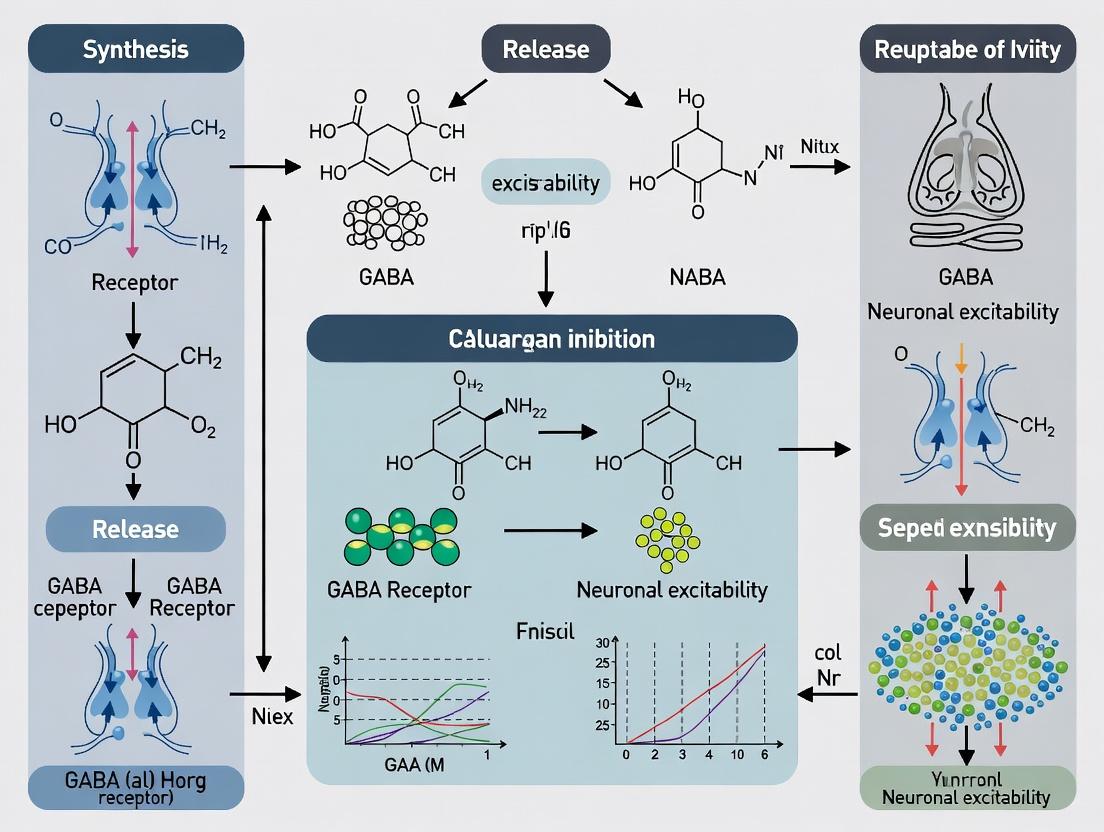
This article provides a comprehensive analysis of the GABAergic inhibitory mechanisms that govern contrast sensitivity in the visual cortex.
GABAergic Inhibition in Visual Cortex: Molecular Mechanisms, Contrast Sensitivity, and Therapeutic Potential
Abstract
This article provides a comprehensive analysis of the GABAergic inhibitory mechanisms that govern contrast sensitivity in the visual cortex. Aimed at researchers, neuroscientists, and drug development professionals, it explores foundational principles, current methodological approaches for investigation, common experimental challenges, and comparative evaluations of different GABAergic pathways. The review synthesizes the latest research on how specific interneuron subtypes, synaptic dynamics, and receptor pharmacology shape contrast detection and processing. It concludes with a discussion on the translational implications for visual disorders, neuropsychiatric conditions, and the development of novel neuromodulatory therapeutics.
GABAergic Circuits and Contrast Coding: Foundational Principles in Visual Cortex
Visual contrast sensitivity (VCS) is a fundamental metric of early visual processing, quantifying the ability of the visual system to detect differences in luminance between adjacent areas or patterns. Within the primary visual cortex (V1), the precise computation of contrast relies on finely tuned excitatory-inhibitory balance, with GABAergic inhibition playing a predominant role. This whitepaper details the mechanisms, measurement, and research methodologies central to VCS, framed within the thesis that cortical GABAergic circuits are the primary sculptors of contrast gain control and sensitivity.
Neurobiological Basis: GABAergic Circuitry in V1
Contrast detection begins in the retina and lateral geniculate nucleus (LGN), but its cortical transformation in V1 is governed by local microcircuits. Key elements include:
- Parvalbumin-positive (PV+) Basket Cells: Provide fast, potent somatic inhibition to pyramidal neurons, controlling response gain and temporal precision.
- Somato-statin-positive (SST+) Neurons: Often target distal dendrites of pyramidal cells, mediating divisive normalization and surround suppression.
- Pyramidal (Excitatory) Neurons: Integrate thalamocortical input and local inhibitory signals to generate a tuned contrast response.
GABAA receptor-mediated inhibition sharpens the contrast response function, shifting it rightward and increasing its slope, thereby defining the dynamic range and sensitivity.
Measuring Contrast Sensitivity: Psychophysics and Electrophysiology
Psychophysical Assessment (Human)
Contrast Sensitivity Functions (CSFs) are measured using sinusoidal gratings of varying spatial frequency and contrast.
- Common Protocols:
- Two-Alternative Forced Choice (2AFC): A participant indicates which of two temporal intervals contains a grating. Contrast is adjusted via a staircase procedure (e.g., QUEST) to find the detection threshold.
- Method of Constant Stimuli: Multiple fixed contrast levels are presented in random order. Percent correct is plotted against log contrast, and threshold is derived via curve fitting (e.g., Weibull function).
Table 1: Typical Human Contrast Sensitivity Across Spatial Frequencies (for a 4mm pupil, 100 cd/m² luminance)
| Spatial Frequency (cycles per degree) | Approximate Sensitivity (1/Threshold Contrast) | Notes |
|---|---|---|
| 0.5 cpd | 150 | Peak sensitivity region |
| 2 cpd | 220 | Often peak of CSF |
| 8 cpd | 90 | Sensitivity declines |
| 16 cpd | 20 | High-frequency cutoff |
Electrophysiological Correlates (Animal Models)
Neuronal contrast response is quantified in V1 by presenting drifting gratings.
- Protocol: Anesthetized or awake head-fixed preparation. Single-unit or multi-unit recordings from V1 layer 4 or 2/3. Stimuli: Full-screen gratings (2-4s), multiple contrasts (0-100%), randomized order. Firing rate (spikes/sec) is measured.
- Data Fitting: Responses are fit with a Naka-Rushton (hyperbolic ratio) function: R(C) = (Rmax * C^n) / (C50^n + C^n) + M, where Rmax is max response, C50 is semi-saturation contrast, n is exponent, M is spontaneous rate.
Table 2: Exemplar V1 Neuronal Contrast Response Parameters (Cat/Monkey)
| Cell Type / Condition | C50 (Typical Range) | N (Exponent) | Effect of GABAergic Blockade |
|---|---|---|---|
| Simple Cell (Normal) | 15-25% contrast | 2.0 - 3.0 | Decreased C50 (leftward shift) |
| Complex Cell (Normal) | 20-30% contrast | 1.5 - 2.5 | Decreased C50, increased gain |
| Under GABA_A Antagonist | 5-15% contrast | 1.0 - 1.8 | N/A |
Key Experimental Protocols for Mechanistic Research
In Vivo Pharmacological Manipulation of GABAergic Signaling
Objective: To test causal role of GABA receptor subtypes in VCS. Workflow:
- Animal Preparation: Head-post implantation and craniotomy over V1 in mouse/rat.
- Baseline Measurement: Record neuronal contrast responses (see 2.2) or measure behavioral VCS via operant conditioning.
- Drug Application: Iontophoresis or pressure ejection of drugs via implanted pipette/micromanipulator.
- GABAA Antagonist: Gabazine (SR-95531), 1-10 mM in saline, ejected at 10-50 nA.
- GABAB Antagonist: CGP-52432, 5-10 mM.
- GABA_A Positive Allosteric Modulator: Diazepam (low dose, 0.1-1 mM).
- Post-application Measurement: Repeat contrast response recording during/after drug delivery.
- Data Analysis: Compare pre- and post-drug C50, Rmax, and response gain.
Optogenetic Dissection of Inhibitory Circuits
Objective: To probe function of specific interneuron subtypes in VCS. Protocol:
- Transgenic Models: Cross PV-Cre, SST-Cre, or VIP-Cre mice with floxed-ChR2 (for activation) or eNpHR (for inhibition) lines.
- Fiber Implant: Chronicle over V1.
- Stimulation/Suppression: During contrast response recording, deliver 473nm (ChR2) or 589nm (eNpHR) light pulses (5-20 ms, 10-40 Hz) synchronized with visual stimulus.
- Analysis: Quantify change in contrast tuning curve parameters during light-on vs. light-off trials.
Behavioral Assay for Contrast Sensitivity in Rodents
Objective: To measure perceptual VCS for drug screening. Protocol (Visual Water Task):
- Apparatus: A water-filled Y-maze. Two monitors at the end of each choice arm display gratings vs. uniform gray.
- Training: Mouse must swim toward the grating (S+) to escape, the S- leads to a false wall.
- Testing: Gradually reduce grating contrast across sessions using a staircase. Threshold is defined as the contrast yielding 70% correct performance.
- Pharmacology: Systemically administer drug (e.g., GABAergic modulator) and re-assess threshold.
Research Reagent Solutions Toolkit
Table 3: Essential Research Tools for VCS/ GABAergic Research
| Reagent / Material | Supplier Examples | Function in Research |
|---|---|---|
| Gabazine (SR-95531) | Tocris, Abcam | Selective competitive antagonist for GABA_A receptors. Used to block fast inhibition in V1. |
| Muscimol | Sigma-Aldrich, Hello Bio | GABA_A receptor agonist. Used for reversible inactivation of cortical areas. |
| CGP-52432 | Tocris | Selective, competitive GABA_B receptor antagonist. Tests metabotropic inhibition role. |
| AAV9-synapsin-FLEX-ChR2-eYFP | Addgene, Vigene | Cre-dependent viral vector for specific optogenetic activation of defined interneurons. |
| Parvalbumin Antibody (PV-27) | Swant, Millipore | Immunohistochemical labeling of PV+ interneurons for post-hoc validation. |
| PsychoPy / PsychoJS | Open Source | Software for precise generation and presentation of visual stimuli (gratings) in experiments. |
| MATLAB with PsychToolbox | MathWorks | Standard platform for experimental control, data acquisition, and analysis of neural data. |
| Silicon Probes (Neuropixels) | IMEC | High-density probes for large-scale recording of neural ensembles in V1 during stimulation. |
Title: GABAergic Microcircuit Modulating V1 Contrast Response
Title: In Vivo Protocol to Test GABA & Contrast
This whitepaper details the core GABAergic interneuron subtypes—Parvalbumin-positive (PV), Somatostatin-positive (SST), and Vasoactive Intestinal Peptide-positive (VIP)—within the laminar architecture of the cerebral cortex. The discussion is framed within the specific thesis that the differential recruitment and laminar positioning of these interneurons constitute a fundamental mechanism for dynamically regulating contrast sensitivity in the visual cortex. Precise inhibitory control sculpts neuronal receptive fields and gain, directly impacting the processing of visual contrast information.
Interneuron Subtypes: Molecular, Morphological, and Functional Profiles
Cortical GABAergic interneurons are highly diverse. The three major non-overlapping classes (PV, SST, VIP) are defined by molecular expression, morphological features, synaptic targeting, and physiological properties.
Table 1: Core Characteristics of Major Cortical Interneuron Subtypes
| Feature | Parvalbumin (PV) | Somatostatin (SST) | Vasoactive Intestinal Peptide (VIP) |
|---|---|---|---|
| Primary Molecular Marker | Parvalbumin (Ca2+-binding protein) | Somatostatin (neuropeptide) | Vasoactive Intestinal Peptide (neuropeptide) |
| Typical Morphology | Basket cells, Chandelier cells | Martinotti cells, Non-Martinotti cells | Bipolar, Bitufted cells |
| Primary Synaptic Target | Perisomatic region (cell body, axon initial segment) | Distal dendrites | Dendrites of other interneurons (esp. SST) and pyramidal cells |
| Primary Physiological Effect | Fast, powerful inhibition; controls spike timing | Dendritic inhibition; modulates synaptic integration | Disinhibition of pyramidal cells |
| Characteristic Firing Pattern | Fast-spiking (non-adapting) | Regular-spiking adapting or burst-spiking | Irregular-spiking, adapting |
| Typical Cortical Layer Prevalence | All layers, high density in LII/III, LIV | All layers, higher density in LV | Predominantly superficial layers (LII/III) |
| Role in Visual Cortex Contrast Sensitivity | Sharpens orientation tuning, increases spike-time precision, regulates gain. | Modulates dendritic integration of lateral inputs, contributes to surround suppression. | Releases pyramidal cells from inhibition during attention or heightened arousal, boosting responses to preferred stimuli. |
Laminar Organization & Circuit Motifs
The functional impact of interneurons is dictated by their laminar position and specific circuit connections.
Table 2: Laminar Distribution and Canonical Cortical Circuit Roles
| Cortical Layer | Dominant Interneuron Subtype(s) | Key Circuit Role in Canonical Microcircuit |
|---|---|---|
| Layer I | VIP, SST (neurogliaform) | Integrates top-down/modulatory inputs; modulates apical dendrites of deeper pyramids. |
| Layers II/III | PV, SST, VIP | PV: Synchronizes pyramidal ensembles within column. SST: Provides lateral inhibition across columns. VIP: Mediates disinhibitory effects of top-down inputs. |
| Layer IV | PV (dominant) | Receives strong thalamic input; provides fast feedforward inhibition to spiny stellate and pyramidal cells, ensuring temporal fidelity. |
| Layer V | SST (Martinotti dominant), PV | SST: Provides feedback inhibition via apical dendrite targeting, crucial for output control. PV: Regulates output spike bursts of thick-tufted pyramidal cells. |
| Layer VI | SST, PV | Modulates feedback projections to thalamus and other cortical layers. |
Experimental Protocols for Interneuron Research
Protocol: In Vivo Two-Photon Calcium Imaging of Interneuron Activity in Mouse Visual Cortex
Objective: To measure visually evoked activity in identified PV, SST, or VIP interneurons in anesthetized or awake mice. Methodology:
- Animal Preparation: Transgenic mouse lines (e.g., PV-Cre, SST-Cre, VIP-Cre) are crossed with a Cre-dependent reporter line expressing a calcium indicator (e.g., GCaMP6s/8). A cranial window is implanted over primary visual cortex (V1).
- Visual Stimulation: Drifting gratings of varying contrast, orientation, and spatial/temporal frequency are presented on a monitor.
- Data Acquisition: A two-photon microscope is used to image GCaMP fluorescence changes in reporter-positive interneurons at depth (up to 500 µm) through the cranial window.
- Data Analysis: Fluorescence traces (ΔF/F) are extracted for each region of interest (ROI). Responses are quantified as peak ΔF/F or area under the curve for each stimulus condition. Tuning curves (orientation, contrast) are constructed. Key Outcome: Contrast response functions for each interneuron subtype, revealing differential recruitment thresholds and saturation points.
Protocol: Channelrhodopsin-Assisted Circuit Mapping (CRACM)
Objective: To map the functional synaptic outputs of a specific interneuron subtype onto post-synaptic target cells. Methodology:
- Viral Strategy: In a Cre-driver mouse, inject an AAV virus carrying a Cre-dependent Channelrhodopsin-2 (ChR2) construct (e.g., DIO-ChR2-EYFP) into V1.
- Slice Electrophysiology: Prepare acute coronal brain slices containing V1. Identify and patch-clamp (whole-cell) a putative post-synaptic neuron (e.g., pyramidal cell or other interneuron).
- Optical Stimulation: Briefly illuminate (1-5 ms blue light pulse) the slice to activate ChR2-expressing axons from the defined interneuron population.
- Recording: Record light-evoked post-synaptic currents (PSCs) in the patched cell. Use pharmacological blockers (TTX + 4-AP) to isolate monosynaptic connections. Key Outcome: Connectivity probability, amplitude, and kinetics of IPSCs from PV/SST/VIP neurons onto specific target cell types in different layers.
Visual Cortex Contrast Sensitivity: An Interneuron-Centric Model
Contrast gain control is a canonical computation in V1. The model posits:
- PV Interneurons: Mediate feedforward, subtractive inhibition. They are rapidly driven by thalamic input, providing divisive normalization that sharpens contrast-response functions and increases orientation selectivity at high contrasts.
- SST Interneurons: Mediate feedback, divisive inhibition. Activated by local pyramidal cell collaterals, they suppress pyramidal dendrites, contributing to surround suppression and contrast saturation. Their activity scales with overall network activity.
- VIP Interneurons: Mediate top-down, disinhibitory control. Activated by behavioral state (arousal, attention) via higher-order inputs, they preferentially inhibit SST interneurons, thereby disinhibiting pyramidal cells. This dynamically shifts contrast-response curves, enhancing sensitivity to low-contrast stimuli in relevant contexts.
Diagram Title: Cortical Microcircuit for Contrast Processing
The Scientist's Toolkit: Research Reagent Solutions
Table 3: Essential Research Tools for Cortical Interneuron Studies
| Reagent / Material | Function & Application |
|---|---|
| Cre-driver Mouse Lines (e.g., PV-IRES-Cre, SST-IRES-Cre, VIP-IRES-Cre) | Genetically targets specific interneuron populations for labeling, manipulation, or recording. Foundation for cell-type-specific research. |
| Flexed (DIO) Viral Vectors (AAV-DIO-GCaMP, AAV-DIO-ChR2) | Enables Cre-dependent expression of sensors (GCaMP for imaging), actuators (ChR2 for optogenetics), or tracers in defined interneuron subtypes. |
| Cell-Type-Specific Monoclonal Antibodies (Anti-Parvalbumin, Anti-Somatostatin, Anti-VIP) | Immunohistochemical identification and visualization of interneuron populations in fixed tissue. |
| GABAa Receptor Antagonists (e.g., Gabazine/SR95531, Picrotoxin) | Blocks fast inhibitory postsynaptic currents (IPSCs) to isolate excitatory inputs or test the necessity of inhibition in a circuit. |
| Caged Glutamate (e.g., MNI-glutamate) | Uncaging via UV laser allows precise, spatially defined photoactivation of neuronal dendrites or somata to map functional synaptic inputs. |
| Tetrodotoxin (TTX) & 4-Aminopyridine (4-AP) | Used in combination during CRACM experiments to block action potentials while allowing direct ChR2-mediated neurotransmitter release, isolating monosynaptic connections. |
| Juxtacellular/Whole-Cell Electrophysiology Setup | For characterizing firing patterns, intrinsic properties, and synaptic responses of identified interneurons in vivo or in vitro. |
Abstract: Within the visual cortex, GABAergic inhibition is fundamental for shaping neuronal responses to visual stimuli, particularly in regulating contrast gain control. This whitepaper provides a technical dissection of the distinct synaptic mechanisms mediated by phasic (synaptic) and tonic (extrasynaptic) inhibition, their molecular substrates, and their integrated role in modulating contrast sensitivity. Framed within ongoing research on cortical computation, this guide details experimental paradigms, quantitative findings, and essential toolkits for probing these inhibitory pathways.
Contrast gain control is a canonical neural computation that allows neurons in the primary visual cortex (V1) to maintain sensitivity across a wide range of input contrasts, optimizing information coding. This process is predominantly governed by GABAergic inhibition. Two functionally distinct forms of inhibition orchestrate this dynamic: phasic and tonic inhibition.
- Phasic Inhibition: Mediated by synaptic GABAA receptors (γ2-subunit containing) activated by the transient, vesicular release of GABA. It generates fast, point-to-point inhibitory postsynaptic currents (IPSCs) that precisely time-lock to presynaptic activity.
- Tonic Inhibition: Mediated by high-affinity, extrasynaptic GABAA receptors (e.g., α5- or δ-subunit containing) that are persistently activated by low, ambient concentrations of GABA. It generates a continuous conductance that modulates neuronal input resistance, membrane potential, and integrative properties.
The interplay between these modes fine-tunes the input-output relationship of V1 neurons, setting contrast response thresholds and gain.
Molecular and Cellular Substrates
The functional dichotomy arises from distinct receptor localizations, subunit compositions, and pharmacology.
Table 1: Key Properties of Phasic vs. Tonic GABAA Receptors
| Property | Phasic (Synaptic) Receptors | Tonic (Extrasynaptic) Receptors |
|---|---|---|
| Primary Subunits | γ2, α1-3, β2/3 | δ, α4, α5, α6, β1/3 |
| Localization | Synaptic cleft (post-synaptic density) | Perisynaptic, extrasynaptic membrane |
| GABA Affinity | Low to moderate (micromolar-millimolar EC50) | High (nanomolar EC50) |
| Activation Kinetics | Fast, transient (ms timescale) | Slow, sustained |
| Desensitization | Rapid | Slow, minimal |
| Example Pharmacological Agents | Antagonist: Gabazine (SR95531); Agonist: Muscimol (non-selective) | δ-subunit preferential agonist: THIP (Gaboxadol); α5-subunit modulator: L-655,708 (negative modulator) |
| Primary Role in V1 | Sharpens temporal precision, enforces feedforward/feedback suppression, controls spike timing. | Sets baseline membrane conductance, modulates gain and responsiveness to sustained contrast, regulates network excitability. |
Experimental Protocols for Dissecting Roles in Contrast Gain
In VivoElectrophysiology with Pharmacological Manipulation
Aim: To isolate the contribution of tonic vs. phasic inhibition to contrast response functions (CRFs) in V1. Protocol:
- Preparation: Anesthetize or use awake, head-fixed mouse/rat. Perform craniotomy over V1.
- Recording: Use a multi-barrel glass electrode combined with a recording pipette (loose-patch or cell-attached) to record spiking activity from a single neuron.
- Stimulation: Present full-field sinusoidal gratings at multiple contrast levels (0% to 100%) in a randomized block design. Obtain spike-count per trial for each contrast.
- Drug Application: Pressure-eject or iontophorese drugs from adjacent barrels into the local micro-environment of the recorded neuron.
- Tonic Block: Apply a low, sustained concentration of the δ-subunit preferential antagonist (e.g., GBP-6 (20 µM)) or a saturating concentration of the GABA uptake blocker NO-711 (10 µM) to enhance tonic inhibition.
- Phasic Block: Apply a low dose of Gabazine (0.5-1 µM) to partially antagonize synaptic receptors without completely abolishing inhibition.
- Data Analysis: Fit CRFs with a Naka-Rushton function: R(C) = R_max * (C^n / (C^n + C_50^n)), where R is response, C is contrast, R_max is maximum response, C_50 is semi-saturation contrast, and n is exponent. Compare fitted parameters (notably C_50 and gain) pre- and post-drug application.
Two-Photon GABA Imaging in Transgenic Mice
Aim: To visualize spatially distinct sources of GABA release contributing to phasic and tonic signaling. Protocol:
- Animal Model: Use transgenic mice expressing the GABA sensor iGABASnFR in GABAergic interneurons.
- Surgery: Implant a cranial window over V1.
- Imaging & Stimulation: Under two-photon microscopy, image iGABASnFR fluorescence in layer 2/3 or 4 while presenting visual stimuli of varying contrast.
- Analysis: Identify regions of interest (ROIs) over synaptic boutons (punctate, transient signals) and diffuse neuropil (sustained signal). Quantify transient amplitude (ΔF/F) for phasic signals and baseline fluorescence shift for tonic signals as a function of contrast.
Quantitative Data Synthesis
Table 2: Effects of Inhibitory Manipulation on Contrast Response Function Parameters in V1 (Exemplar Data)
| Experimental Condition | Effect on C_50 (Semi-sat. Contrast) | Effect on Response Gain (R_max / C_50) | Effect on Baseline Firing Rate | Key Reference (Type) |
|---|---|---|---|---|
| Block of Tonic Inhibition (e.g., δ-subunit antagonist) | Decreases (~15-25% reduction) | Increases significantly (~30-50%) | Often increases | Haider et al., 2013 (in vivo recording) |
| Enhancement of Tonic Inhibition (e.g., NO-711) | Increases (~20-30% increase) | Decreases significantly (~40-60%) | Decreases | Chiu et al., 2019 (in vivo recording) |
| Partial Block of Phasic Inhibition (low-dose Gabazine) | Minimal change or slight decrease | Increases moderately (~20%), but reduces response suppression at high contrast | Variable increase | Katzner et al., 2011 (in vivo recording) |
| Genetic Deletion of α5-GABAAR (Tonic) | Decreased | Increased gain and steeper CRF slope | Increased baseline noise | Mesik et al., 2015 (KO mouse study) |
| Optogenetic Activation of SST Interneurons (Phasic) | Can increase | Sharply reduces gain, compresses dynamic range | Suppresses | Wilson et al., 2012 (optophysiology) |
Signaling Pathways & Conceptual Workflow
Diagram 1: Phasic & Tonic Inhibition Circuit in V1 Contrast Processing
Diagram 2: Experimental Workflow for Dissecting Inhibition in CGC
The Scientist's Toolkit: Research Reagent Solutions
Table 3: Essential Reagents for Investigating Phasic/Tonic Inhibition in Contrast Gain
| Reagent / Material | Target / Function | Primary Use in Experiment |
|---|---|---|
| Gabazine (SR95531) | Competitive antagonist at synaptic (phasic) GABAA receptors (binds γ2-subunit interface). | To partially or fully block phasic IPSCs in vivo or in vitro; titratable to isolate tonic current. |
| THIP (Gaboxadol) | Superagonist at extrasynaptic, δ-subunit-containing GABAARs (higher efficacy than GABA). | To selectively enhance tonic inhibition in slice or in vivo without inducing rapid desensitization. |
| L-655,708 | Inverse agonist/negative allosteric modulator selective for α5-GABAARs (extrasynaptic in cortex). | To specifically reduce α5-mediated tonic conductance, probing its role in gain control. |
| NO-711 (NNC-711) | Selective inhibitor of GABA transporter 1 (GAT-1). | To increase ambient [GABA] by blocking reuptake, thereby enhancing tonic inhibition. |
| iGABASnFR (Genetically Encoded Sensor) | Fluorescent GABA sensor with fast kinetics. | To visualize spatial and temporal dynamics of GABA release in transgenic mice using 2P microscopy. |
| PV-Cre / SST-Cre Mouse Lines | Driver lines for Cre recombinase expression in parvalbumin+ or somatostatin+ interneurons. | For cell-type-specific manipulation (optogenetics, chemogenetics, ablation) to dissect circuit contributions. |
| AAV-hSyn-Jaws-KGC-GFP-ER2 (or ChR2) | Viral vector for expressing red-shifted optogenetic inhibitor (Jaws) or activator (ChR2). | To selectively and transiently silence or activate defined inhibitory pathways during visual stimulation. |
| C57BL/6J δ-GABAAR KO Mouse | Global knockout of the Gabrd gene, abolishing δ-subunit-containing receptors. | To study the isolated role of δ-mediated tonic inhibition in contrast processing and behavior. |
This technical guide examines the distinct yet complementary roles of ionotropic GABAA and metabotropic GABAB receptors in shaping inhibitory neurotransmission within the primary visual cortex (V1). The analysis is framed within a broader thesis investigating GABAergic mechanisms that underlie contrast sensitivity—a fundamental property of visual processing. Precise coordination between fast, phasic GABAA-mediated inhibition and slow, tonic GABAB-mediated inhibition is critical for tuning neuronal response gain, controlling temporal fidelity, and optimizing the signal-to-noise ratio for visual stimuli. Dysregulation in this balance is implicated in neurodevelopmental and psychiatric disorders affecting visual perception.
Receptor Mechanisms: Core Comparative Analysis
GABAA Receptor (Ionotropic)
GABAA receptors are ligand-gated chloride ion channels. Upon binding of two GABA molecules, the pentameric channel opens, allowing Cl- influx (post-synaptic hyperpolarization) leading to fast inhibitory postsynaptic potentials (IPSPs). Their kinetics are crucial for precise temporal control in visual circuits.
GABAB Receptor (Metabotropic)
GABAB receptors are G protein-coupled receptors (GPCRs). GABA binding activates Gi/o proteins, which subsequently inhibit adenylyl cyclase, activate inwardly rectifying K+ channels (GIRKs), and inhibit voltage-gated Ca2+ channels. This results in slow, prolonged IPSPs and presynaptic inhibition of neurotransmitter release.
Table 1: Core Functional Properties of GABAA vs. GABAB Receptors
| Property | GABAA Receptor | GABAB Receptor |
|---|---|---|
| Type | Ionotropic (Ligand-gated ion channel) | Metabotropic (G protein-coupled receptor) |
| Primary Effectors | Chloride (Cl-) channel | Gi/o protein -> K+/Ca2+ channels, AC inhibition |
| Kinetics | Fast onset (ms), short duration (<100 ms) | Slow onset (100s of ms), long duration (seconds) |
| Key Subunits/Forms | α1-6, β1-3, γ1-3, δ, ε, θ, π, ρ1-3 | GABAB1a/1b, GABAB2 (obligate heterodimer) |
| Primary Localization | Post-synaptic (synaptic & extrasynaptic) | Pre- & post-synaptic |
| Visual Cortex Role | Sharpens orientation tuning, controls spike timing. | Modulates response gain, contrast adaptation, network oscillations. |
| Pharmacological Agonist | Muscimol | Baclofen |
| Pharmacological Antagonist | Bicuculline, Gabazine | Saclofen, CGP55845 |
| Quantitative Impact on V1 Neuron | Reduces firing rate by ~40-60% for preferred orientation. | Prolonged application reduces sustained response by ~20-30%, enhances adaptation. |
Experimental Protocols for Visual Tuning Research
Protocol: In Vitro Electrophysiology of Contrast Response in V1 Slices
Objective: To isolate and quantify GABAA vs. GABAB contributions to contrast-dependent synaptic inhibition.
- Preparation: Prepare coronal or sagittal slices (300-400 μm) from mouse or rat primary visual cortex in ice-cold, sucrose-based cutting artificial cerebrospinal fluid (ACSF).
- Recording: Use whole-cell patch-clamp on layer 2/3 or 4 pyramidal neurons. For current-clamp, inject depolarizing current to simulate visual drive. For voltage-clamp, hold at -70 mV (for AMPA/Na+ currents) and +10 mV (for GABAA currents) or -50 mV (for combined synaptic currents).
- Stimulation: Place a bipolar stimulating electrode in layer 4 or white matter. Deliver a train of pulses (e.g., 5 pulses at 20 Hz) to mimic visual stimulus.
- Pharmacological Isolation:
- Record baseline evoked excitatory postsynaptic currents (EPSCs) and inhibitory postsynaptic currents (IPSCs).
- Apply GABAA antagonist Gabazine (SR-95531, 10 μM) to isolate GABAB-mediated slow IPSCs.
- Wash and apply GABAB antagonist CGP55845 (2 μM) to isolate fast GABAA-mediated IPSCs.
- Data Analysis: Measure peak amplitude, decay tau (τ), and charge transfer of IPSCs under each condition across varying stimulation intensities (simulating contrast).
Protocol: In Vivo Two-Photon Imaging of Calcium Dynamics
Objective: To visualize the impact of receptor-specific manipulation on population coding of orientation and contrast.
- Animal Preparation: Express a genetically encoded calcium indicator (e.g., GCaMP8) in V1 neurons of a transgenic mouse. Implant a cranial window over V1 and headplate.
- Visual Stimulation: Present drifting grating stimuli of varying orientations and contrasts (0-100%) on a monitor.
- Imaging: Use a two-photon microscope to record calcium activity from neuronal populations in layer 2/3 at frame rates >30 Hz.
- Pharmacological Manipulation: Via a cannula or iontophoresis, apply:
- GABAA agonist Muscimol (low dose, 0.5-1 mM) or antagonist Gabazine.
- GABAB agonist Baclofen (low dose, 1-5 mM) or antagonist Saclofen.
- Analysis: Calculate orientation selectivity index (OSI) and contrast response function (CRF) for each neuron pre- and post-drug application. Fit CRF with Naka-Rushton equation: R(C) = (Rmax * C^n) / (C50^n + C^n), where C=contrast, C50= semi-saturation contrast, n=exponent.
Table 2: Key Quantitative Metrics from Visual Tuning Experiments
| Metric | GABAA Manipulation (e.g., Gabazine) | GABAB Manipulation (e.g., Baclofen) | Combined Significance |
|---|---|---|---|
| Orientation Tuning Width | Increases by 20-40% (broadening) | Minimal change or slight narrowing | GABAA crucial for sharpness. |
| Contrast Gain (C50) | Decreases (leftward shift in CRF) | Increases (rightward shift in CRF) | Opposing effects on gain control. |
| Maximum Response (Rmax) | Often increases | Typically decreases | GABAB limits response ceiling. |
| Temporal Fidelity | Severely reduced (prolonged responses) | Moderately reduced (slowed dynamics) | GABAA essential for phasic timing. |
| Network Oscillation Power | Reduces gamma (30-80 Hz) power. | Enhances beta (15-30 Hz) power. | Distinct roles in rhythm generation. |
Signaling Pathways in Visual Cortex Inhibition
GABAA-Mediated Fast Inhibition Pathway
GABAB-Mediated Slow Inhibition Pathways
The Scientist's Toolkit: Key Research Reagents & Materials
Table 3: Essential Reagents for GABA Receptor Research in Visual Tuning
| Reagent / Material | Function & Application | Key Considerations |
|---|---|---|
| Gabazine (SR-95531) | Competitive, selective GABAA receptor antagonist. Used in vitro and in vivo to block fast IPSCs, study disinhibition. | Fast kinetics; commonly used at 5-10 μM in ACSF. |
| Muscimol | Potent, selective GABAA receptor agonist. Used for pharmacological inactivation ("silencing") of cortical regions. | Iontophoresis or pressure ejection for local application; irreversible at high doses. |
| Bicuculline Methiodide | Competitive GABAA antagonist. Older, less selective than Gabazine but useful in some preparations. | Can affect K+ channels at higher concentrations. |
| (R)-Baclofen | Selective GABAB receptor agonist. Used to activate slow inhibitory pathways, study gain modulation. | Active enantiomer. Use low concentrations (1-10 μM) to avoid profound suppression. |
| CGP55845 | Potent, selective GABAB receptor antagonist. High affinity, used to block both pre- and postsynaptic GABAB effects. | Often used at 1-2 μM. Penetrates tissue well. |
| Saclofen | GABAB antagonist. Less potent and selective than CGP55845 but historically significant. | Useful for initial screening experiments. |
| TTX (Tetrodotoxin) | Voltage-gated Na+ channel blocker. Used to isolate miniature/synaptic events by blocking action potentials. | Critical for presynaptic release studies. Extremely toxic. |
| GBZ-STP (Gabazine with Two-Photon uncaging) | Caged Gabazine for precise spatiotemporal manipulation of GABAA transmission during imaging/electrophysiology. | Enables mapping of inhibitory microcircuits with cell-specificity. |
| AAV-hSyn-GCaMP8 | Adeno-associated virus driving neuronal expression of fast calcium indicator under hSyn promoter. | For in vivo two-photon imaging of population activity in response to visual stimuli and drugs. |
| Cre-dependent DREADDs (hM4Di) | Designer Receptors Exclusively Activated by Designer Drugs (e.g., CNO) for chemogenetic silencing of specific neuronal populations. | Allows cell-type-specific manipulation of GABAergic interneurons (e.g., PV+, SOM+). |
| Artificial Cerebrospinal Fluid (ACSF) | Physiological salt solution for maintaining brain slices. Composition (NaCl, KCl, CaCl2, MgCl2, NaHCO3, Glucose) is critical. | Must be carbogenated (95% O2/5% CO2) to maintain pH 7.4. |
Within the broader investigation of GABAergic inhibition in sensory processing, this whitepaper examines the canonical microcircuit in the primary visual cortex (V1) that underlies contrast detection. The precise spatiotemporal orchestration of lateral and feedback inhibition, mediated predominantly by parvalbumin-positive (PV+) and somatostatin-positive (SOM+) interneurons, is fundamental for enhancing edge detection, adjusting gain, and sharpening neuronal selectivity. This review synthesizes current research to delineate the mechanistic roles of these inhibitory pathways in optimizing contrast sensitivity, a crucial visual computation with implications for understanding neurodevelopmental and psychiatric disorders involving GABAergic dysfunction.
Core Canonical Circuit: Anatomy and Physiology
The canonical circuit for contrast processing in layer 2/3 of V1 involves feedforward excitation from thalamocortical inputs and layer 4, which is dynamically modulated by two primary inhibitory motifs:
Lateral (or Horizontal) Inhibition: Mediated primarily by PV+ basket cells, this form of inhibition spreads laterally within a cortical layer. It creates a center-suround antagonistic receptive field, where the excitation of a centrally located neuron leads to the suppression of its neighbors. This sharpens spatial boundaries and enhances contrast at edges.
Feedback Inhibition: Engaged after initial excitation, this involves SOM+ Martinotti cells that receive input from local pyramidal neurons and project their axonal arbors back to the distal dendrites of the same or nearby pyramidal cells. This form of inhibition modulates gain, controls the temporal window of integration, and contributes to surround suppression.
The interplay between these pathways allows the network to dynamically adjust its sensitivity to contrast based on the overall stimulus context, balancing sensitivity and precision.
Key Experimental Protocols & Methodologies
Protocol 1: In Vivo Two-Photon Calcium Imaging with Optogenetic Manipulation
- Objective: To dissect the contribution of specific interneuron subtypes to contrast-dependent surround suppression.
- Methodology:
- Express a calcium indicator (e.g., GCaMP8m) in V1 L2/3 pyramidal neurons of transgenic mice (e.g., PV-Cre or SOM-Cre).
- Head-fix the mouse and present visual stimuli (drifting gratings of varying contrast and size) on a monitor.
- Record calcium transients from a population of neurons using two-photon microscopy.
- Simultaneously, use optogenetics to selectively inhibit (e.g., with stGtACR2) or activate (e.g., with ChR2) PV+ or SOM+ interneurons during specific stimulus epochs.
- Quantify changes in surround suppression strength by calculating a Suppression Index (SI = 1 - (Rlarge / Rsmall)) for control and manipulation trials.
Protocol 2: Cell-Attached and Whole-Cell Electrophysiology in Slice Preparation
- Objective: To characterize the synaptic mechanisms and kinetics of lateral vs. feedback inhibition.
- Methodology:
- Prepare acute coronal slices containing the primary visual cortex from adult rodents.
- Identify and target visually guided pyramidal neurons and interneurons under infrared differential interference contrast (IR-DIC) microscopy.
- For lateral inhibition studies: Stimulate a local electrode in L2/3 while recording from a nearby pyramidal neuron. Measure the short-latency IPSC, which is PV-mediated.
- For feedback inhibition studies: Use a paired recording or local stimulation protocol to first depolarize a pyramidal neuron, triggering an action potential, and record the delayed, long-lasting IPSC in the same or neighboring pyramidal cell, which is SOM-mediated.
- Pharmacologically isolate GABAA receptor-mediated currents (using CNQX and APV) and characterize their kinetics (rise time, decay tau).
Protocol 3: Perceptual Task with Local Cortical Pharmacology
- Objective: To establish a causal link between GABAergic inhibition in V1 and behavioral contrast sensitivity.
- Methodology:
- Train head-fixed mice on a visual detection task where they must report a change in grating contrast to receive a reward.
- Implant a guide cannula over V1.
- On test days, infuse a GABAA receptor antagonist (e.g., bicuculline methiodide) or a vehicle solution.
- Measure psychometric curves (percent correct vs. contrast) before and after infusion.
- Fit curves with a Weibull function to extract the contrast threshold (c) and slope (β). An increase in threshold indicates reduced contrast sensitivity.
Table 1: Electrophysiological Properties of Inhibition Types
| Property | Lateral Inhibition (PV+ mediated) | Feedback Inhibition (SOM+ mediated) | Measurement Conditions |
|---|---|---|---|
| Onset Latency | 1.2 - 2.5 ms | 5 - 15 ms | From presynaptic spike to IPSC onset in vitro |
| IPSC Rise Time (20-80%) | 0.5 - 1.2 ms | 2.0 - 5.0 ms | In vitro, at ~34°C |
| IPSC Decay Tau (τ) | 8 - 15 ms | 40 - 100 ms | In vitro, at ~34°C |
| Primary Target on Pyramidal Cell | Soma & Perisomatic region | Apical Dendritic Tuft | Anatomical studies |
| Key Receptor Subunit | α1-containing GABAA | α5-containing GABAA | Immunohistochemistry & pharmacology |
Table 2: Behavioral & Functional Imaging Outcomes of Circuit Manipulation
| Manipulation | Effect on Neuronal Contrast Response | Effect on Surround Suppression Index (SI) | Effect on Behavioral Contrast Threshold | Key Study (Example) |
|---|---|---|---|---|
| Silence PV+ Interneurons | Increased baseline firing, reduced gain at high contrast | SI significantly decreased (~50-70% reduction) | Threshold increased by ~30% | Lee et al., 2012 |
| Silence SOM+ Interneurons | Prolonged response, increased gain at low contrast | Moderate decrease in SI (~20-30% reduction) | Threshold slightly decreased, slope less steep | Adesnik et al., 2012 |
| Apply GABAA Antagonist (Bicuculline) | Overall increased firing, loss of contrast invariance | Abolished | Task performance severely impaired | Ringach et al., 2002 |
| Enhance α5-GABAA Function | Sharper tuning, reduced noise correlation | SI moderately increased | Improved detection at near-threshold contrasts | (Hypothetical drug target) |
Visualizations of Pathways and Workflows
Diagram 1: Canonical V1 Circuit for Contrast Processing
Diagram 2: In Vivo Imaging & Optogenetics Workflow
The Scientist's Toolkit: Research Reagent Solutions
| Item / Reagent | Function in Research | Example Product / Model |
|---|---|---|
| GCaMP8 Calcium Indicators | Genetically encoded calcium sensor for imaging neuronal population activity with high SNR and kinetics suitable for inhibitory interneuron spikes. | AAV9-syn-GCaMP8m (Addgene) |
| Opsins for Interneuron Targeting | For cell-type-specific activation (ChR2, ChrimsonR) or silencing (stGtACR2, Jaws). Enables causal interrogation of PV+ or SOM+ circuits. | AAV-EF1a-DIO-hChR2(H134R)-EYFP (UNC Vector Core) |
| Cre-Driver Mouse Lines | Provide genetic access to specific interneuron populations for imaging, optogenetics, or electrophysiology. | PV-IRES-Cre (JAX #017320), SST-IRES-Cre (JAX #013044) |
| GABAA Receptor Subunit-Selective Drugs | Pharmacological tools to dissect the contribution of specific receptor subtypes (e.g., α1, α5) to inhibitory postsynaptic currents. | Zolpidem (α1-preferring agonist), L-655,708 (α5 inverse agonist) |
| Patch-Clamp Amplifier | For high-fidelity recording of synaptic currents (IPSCs/EPSCs) and intrinsic properties in slice physiology. | MultiClamp 700B (Molecular Devices) |
| Two-Photon Microscope | For in vivo deep-tissue imaging of calcium dynamics in the visual cortex of behaving animals. | Bruker Ultima, or Scientifica Hyperscope |
| Visual Stimulation Software | Precisely controls the presentation of visual stimuli (gratings, bars, natural scenes) for mapping receptive fields and contrast responses. | Psychtoolbox, PsychoPy |
| Cannula & Microinjection System | For localized, reversible pharmacological manipulation of V1 during behavioral tasks. | Guide Cannula (PlasticsOne), Nanoject III (Drummond) |
Probing Inhibition: Advanced Methods to Measure GABAergic Function in Contrast Processing
This technical guide details the application of in vivo electrophysiology to characterize neuronal tuning curves and contrast response functions (CRFs) in the primary visual cortex (V1). The content is framed within a thesis investigating how specific GABAergic inhibitory mechanisms—mediated by parvalbumin-positive (PV+) and somatostatin-positive (SST+) interneurons—sculpt contrast sensitivity and gain control. The methodologies, data, and reagents presented are essential for research aimed at understanding cortical computation and developing therapeutics for visual processing disorders.
Contrast sensitivity, a fundamental property of the visual system, is dynamically regulated by intracortical inhibition. The prevailing model posits that feedforward inhibition from fast-spiking PV+ interneurons sharpens orientation tuning and controls response gain, while feedback inhibition from SST+ interneurons contributes to contrast gain control and surround suppression. Precise measurement of tuning curves and CRFs in vivo provides a critical window into these mechanisms, allowing researchers to quantify the effects of genetic, pharmacological, or optogenetic manipulations of specific GABAergic pathways.
Core Methodologies
In VivoElectrophysiological Recording Setup
Objective: To obtain stable, high-fidelity extracellular recordings from single neurons or neuronal ensembles in anesthetized or awake, behaving animals (typically mouse or cat).
Protocol:
- Animal Preparation: Anesthetize animal (e.g., with urethane or isoflurane) or implant a chronic headplate for awake recordings. Perform a craniotomy over the primary visual cortex (V1; ~2.5-3.5 mm lateral from lambda in mouse).
- Electrode Placement: Insert a silicon probe (e.g., Neuropixels) or a single tungsten/microelectrode (1-3 MΩ) into V1. Advance using a microdrive while presenting visual stimuli to locate responsive units.
- Stimulus Presentation: Display visual stimuli on a calibrated monitor positioned at a fixed distance from the animal's eyes. Use a software suite (e.g., Psychtoolbox, PsychoPy) to control stimulus timing and synchronize with acquisition.
- Data Acquisition: Amplify and digitize neural signals. Isolate single-unit activity (SUA) using online and offline spike-sorting software (e.g., Kilosort, Plexon Offline Sorter). Record local field potential (LFP) concurrently.
Measuring Orientation/Direction Tuning Curves
Objective: To quantify a neuron's preference for stimulus orientation and the sharpness of its tuning.
Protocol:
- Stimulus: Present full-contrast, drifting sinusoidal gratings at 8-12 evenly spaced orientations (0-360°). Repeat each orientation 10-20 times in random order.
- Analysis: For each trial, calculate the mean firing rate during stimulus presentation. Compute the baseline-subtracted response for each orientation.
- Fitting: Fit the data with a von Mises (circular Gaussian) function:
R(θ) = R0 + A * exp(k * (cos(θ - θ_pref) - 1)), whereR0is baseline rate,Ais amplitude,kis width parameter, andθ_prefis preferred orientation. - Key Metrics: Extract Preferred Orientation, Tuning Width (Half-width at half-maximum, HWHM), and Orientation Selectivity Index (OSI = (Rpref - Rorth) / (Rpref + Rorth)).
Measuring Contrast Response Functions (CRFs)
Objective: To quantify how a neuron's firing rate changes with visual contrast, revealing gain control mechanisms.
Protocol:
- Stimulus: At the neuron's preferred orientation, present drifting gratings at 6-8 logarithmically spaced contrast levels (e.g., 1%, 2%, 4%, 8%, 16%, 32%, 64%, 100%). Include blank (0%) trials. Repeat each contrast 10-15 times.
- Analysis: Calculate the mean firing rate for each contrast level.
- Fitting: Fit the data with a Naka-Rushton (or hyperbolic ratio) function:
R(C) = Rmax * (C^n / (C50^n + C^n)) + M, whereRmaxis maximum response,C50is contrast at half-maximal response,nis exponent controlling slope, andMis spontaneous activity. - Key Metrics: Extract
C50(contrast sensitivity),Rmax, and Response Gain (slope at low contrasts). Changes inC50indicate contrast gain control; changes inRmaxor low-contrast slope indicate response gain control.
Table 1: Typical V1 Neuron Response Properties Under Control Conditions (Mouse)
| Parameter | Example Value (Mean ± SEM) | Notes |
|---|---|---|
| Orientation Tuning Width (HWHM) | 22.5° ± 1.5° | Fitted from von Mises function. |
| Orientation Selectivity Index (OSI) | 0.65 ± 0.05 | Ranges from 0 (non-selective) to 1 (highly selective). |
| CRF C50 | 15% ± 2% contrast | Lower value indicates higher contrast sensitivity. |
| CRF Exponent (n) | 2.1 ± 0.2 | Controls steepness of the CRF. |
| Spontaneous Rate (M) | 2.5 ± 0.5 spikes/s | Firing rate during 0% contrast. |
| Maximum Driven Rate (Rmax) | 25.0 ± 3.0 spikes/s | Firing rate at 100% contrast. |
Table 2: Effects of GABAergic Manipulations on Tuning and CRF Parameters
| Experimental Manipulation | Effect on Tuning Width (HWHM) | Effect on CRF C50 | Effect on CRF Rmax | Proposed Mechanism |
|---|---|---|---|---|
| PV+ Interneuron Silencing (e.g., PV-Cre; hM4Di) | Increase (~+40%) | Decrease (~-30%) | Increase (~+25%) | Loss of feedforward inhibition broadens tuning, increases gain. |
| SST+ Interneuron Silencing | Minor Increase | Increase (~+50%) | Minor Decrease | Loss of feedback inhibition impairs contrast gain control. |
| GABA-A Receptor Antagonist (e.g., local bicuculline) | Large Increase (~+100%) | Large Decrease (~-60%) | Large Increase (~+50%) | Broad disinhibition. |
| Positive Allosteric Modulator of α5-GABA-A Receptors | Minor Decrease | Increase (~+20%) | Minor Decrease | Enhancement of specific inhibitory pathways alters gain control. |
Visualizing Experimental & Conceptual Workflows
Title: In Vivo Workflow for Tuning Curves and CRFs
Title: GABAergic Circuit for Contrast & Orientation Processing
The Scientist's Toolkit: Key Research Reagent Solutions
Table 3: Essential Materials for In Vivo GABAergic Manipulation Studies
| Item / Reagent | Function & Application in Experiments |
|---|---|
| Neuropixels 2.0 Probe | High-density silicon probe for simultaneous recording of hundreds of neurons across cortical layers, critical for dissecting circuit-specific effects. |
| DREADD Ligands (CNO or DCZ) | Chemogenetic tools to selectively silence (hM4Di) or activate (hM3Dq) Cre-defined neuronal populations (e.g., PV-Cre or SST-Cre mice). |
| Bicuculline Methiodide | GABA-A receptor antagonist for local, pharmacological blockade of inhibition to establish a baseline disinhibition effect. |
| AAV-flex-GCaMP8f | Cre-dependent adeno-associated virus for expressing genetically encoded calcium indicators, allowing concurrent imaging of population activity. |
| Alpha5-PAM (e.g., SH-053-2'F) | Positive allosteric modulator selective for extrasynaptic α5-subunit-containing GABA-A receptors, used to probe specific inhibitory pathways. |
| Spike Sorting Software (Kilosort) | Open-source, automated algorithm for resolving single-unit activity from high-channel-count probes, essential for data analysis. |
| Visual Stimulus Software (PsychoPy) | Open-source Python library for generating precisely timed, complex visual stimuli and synchronizing them with neural data acquisition. |
Within the framework of a broader thesis investigating GABAergic inhibitory mechanisms in visual cortex contrast sensitivity, the causal manipulation of specific interneuron populations has emerged as a cornerstone methodology. Optogenetics and chemogenetics provide spatially and temporally precise tools to dissect the functional contributions of distinct inhibitory cell types, such as parvalbumin (PV+), somatostatin (SST+), and vasoactive intestinal peptide (VIP+) interneurons, to cortical computation and perception.
Optogenetics utilizes genetically encoded, light-sensitive ion channels (e.g., Channelrhodopsin-2, ChR2) or pumps (e.g., Halorhodopsin, NpHR) to depolarize or hyperpolarize targeted neurons with millisecond precision.
Chemogenetics employs engineered receptors (e.g., Designer Receptors Exclusively Activated by Designer Drugs, DREADDs) that are activated by biologically inert ligands (e.g., clozapine-N-oxide, CNO) to modulate neuronal activity on a timescale of minutes to hours.
The selection between these techniques depends on the experimental requirements for temporal precision, duration of modulation, and invasiveness.
Table 1: Core Comparison of Optogenetics and Chemogenetics
| Feature | Optogenetics | Chemogenetics (e.g., DREADDs) |
|---|---|---|
| Temporal Precision | Millisecond-scale | Minute- to hour-scale |
| Temporal Onset | ~1-10 ms | ~5-30 minutes |
| Spatial Precision | High (constrained by light spread) | Systemic or local ligand application |
| Duration of Effect | Only during light stimulation | Hours (single injection) |
| Invasiveness | Requires implanted optical fiber | Minimally invasive (ligand injection/IP) |
| Common Actuators | ChR2 (excitatory), NpHR/Arch (inhibitory) | hM3Dq (Gq, excitatory), hM4Di (Gi, inhibitory) |
| Common Ligand/Light | 470 nm (ChR2), 589 nm (NpHR) | Clozapine-N-oxide (CNO), Deschloroclozapine (DCZ) |
| Primary Use Case | Causal links in neural circuits, coding dynamics | Behavioral state modulation, long-term manipulations |
Technical Implementation for Visual Cortex Interneurons
Genetic Targeting Strategies
Specific interneuron populations are targeted using Cre/LoxP or Flp/FRT systems in transgenic driver lines.
- PV-Cre: Targets fast-spiking, perisomatic-inhibiting PV+ interneurons.
- SST-Cre: Targets Martinotti cells and other SST+ interneurons providing dendritic inhibition.
- VIP-Cre: Targets VIP+ interneurons that often disinhibit cortical circuits.
Viral vectors (AAV) carrying Cre-dependent (DIO) constructs are injected into the visual cortex (e.g., V1) of these animals.
Key Experimental Protocols
Protocol A: Optogenetic Inhibition of PV+ Interneurons During Contrast Sensitivity Task
- Objective: To test if PV-mediated inhibition sharpens contrast tuning in V1.
- Animals: PV-Cre mice.
- Virus: AAV5-DIO-eNpHR3.0-eYFP (or similar inhibitory opsin).
- Surgery: Stereotaxic injection of virus into V1 (e.g., AP: -3.8 mm, ML: ±2.5 mm, DV: -0.4 mm). Implant a chronic optic fiber cannula above the injection site.
- Habituation & Training: Mice perform a visual detection task with varying grating contrasts.
- Testing: On random trials, deliver 589 nm light (5-15 mW at fiber tip, 500 ms pulses aligned to stimulus onset) to inhibit PV+ interneurons.
- Data Analysis: Compare psychometric curves (hit rate vs. log contrast) and neuronal spike rate/selectivity from silicon probes with light-OFF vs. light-ON trials.
Protocol B: Chemogenetic Activation of SST+ Interneurons and fMRI readout
- Objective: To assess the global network impact of sustained SST+ interneuron activation on visual processing.
- Animals: SST-Cre mice.
- Virus: AAV8-DIO-hM3Dq-mCherry.
- Surgery: Stereotaxic injection into V1.
- Activation: After >3 weeks expression, administer CNO (0.3 mg/kg, i.p.) or the more selective ligand DCZ (0.1 mg/kg, i.p.) 30 minutes prior to imaging.
- Measurement: Acquire BOLD-fMRI while presenting visual stimuli (drifting gratings). Compare BOLD amplitude and functional connectivity in light-OFF vs. light-ON states.
- Validation: Ex vivo patch-clamp on brain slices to confirm CNO/DCZ-induced depolarization in mCherry+ neurons.
Table 2: Quantitative Outcomes from Exemplar Studies
| Intervention | Target Population | Key Metric | Control Value | Manipulation Value | Effect | Citation Context |
|---|---|---|---|---|---|---|
| Opto-inhibition | V1 PV+ Interneurons | Contrast Sensitivity Threshold | 12.5% contrast | 21.8% contrast | Impairment | Lee et al., 2012; Neuron |
| Chemo-activation (hM3Dq) | V1 SST+ Interneurons | BOLD Response to Grating | 1.2% ΔBOLD | 0.7% ΔBOLD | Suppression | Uchimura et al., 2021; Cereb Cortex |
| Opto-activation | V1 VIP+ Interneurons | PV+ Cell Firing Rate | 18.5 Hz | 9.2 Hz | Suppression (Disinhibition) | Zhang et al., 2021; Nat Comm |
| Chemo-inhibition (hM4Di) | V1 PV+ Interneurons | Orientation Selectivity Index | 0.65 | 0.41 | Broadening | Lau et al., 2023; J Neurosci |
Visualizing Signaling Pathways and Workflows
Diagram 1: Core Optogenetics Workflow from Gene to Behavior
Diagram 2: Chemogenetic DREADD Signaling Pathways
Diagram 3: Visual Cortex Microcircuit with Manipulation Sites
The Scientist's Toolkit: Research Reagent Solutions
Table 3: Essential Reagents for Interneuron Manipulation Studies
| Item | Function & Rationale | Example Product/Catalog |
|---|---|---|
| Cre-driver Mouse Lines | Provides genetic access to specific interneuron populations. Foundation for all cell-type-specific manipulations. | Jackson Lab: B6;129P2-Pvalb |
| Cre-dependent AAV Vectors (DIO) | Delivers optogenetic or chemogenetic actuators exclusively to Cre-expressing cells. Critical for specificity. | Addgene: AAV-EF1a-DIO-hChR2(H134R)-EYFP (20298), AAV-hSyn-DIO-hM4D(Gi)-mCherry (44362). |
| Inhibitory Opsin | For optogenetic silencing of interneurons to assess their necessary role. | eNpHR3.0, iC++ (Chloride pump), ArchT (Proton pump). |
| Excitatory DREADD (hM3Dq) | For long-lasting chemogenetic activation of interneurons to assess their sufficiency. | AAV-hSyn-DIO-hM3D(Gq)-mCherry. |
| Potent DREADD Ligand | Activates DREADDs with higher potency and fewer off-target effects than CNO. | Deschloroclozapine (DCZ), JHU37160. |
| Fiber Optic Cannula & Laser | For precise delivery of light to the target brain region in freely moving animals. | Thorlabs, Doric Lenses; 473 nm & 589 nm diode-pumped solid-state (DPSS) lasers. |
| CNO/DCZ for In Vivo | Prepared for systemic injection (i.p. or s.c.) to activate DREADDs during behavior or imaging. | Hello Bio: HB6149 (CNO), HB9126 (DCZ); dissolved in saline or DMSO/saline. |
| In Vitro Validation Tools | Confirms opsin/DREADD functionality and measures direct cellular effects. | Artificial CSF, TTX/4-AP (for isolating depolarization currents), CNO/DCZ for bath application. |
| Silicon Probes / In Vivo Electrophysiology | To record the direct impact of interneuron manipulation on local network activity and single-unit tuning. | Neuropixels probes, Cambridge Neurotech probes. |
| Behavioral Setup | Quantitative assessment of perceptual changes (e.g., contrast sensitivity) following manipulation. | Custom or commercial (e.g., CubiOptic) operant chambers with high-refresh rate monitors. |
Optogenetics and chemogenetics have enabled a causal dissection of GABAergic interneuron contributions to contrast processing in the visual cortex, moving beyond correlative observations. The integration of these perturbation tools with high-density electrophysiology, two-photon imaging, and quantitative behavior is refining models of inhibitory circuit function. Emerging trends include the development of brighter, faster, and more sensitive opsins; DREADDs with novel signaling cascades; and the combination of both techniques (optochemogenetics) for bidirectional control. These advancements will further elucidate how specific inhibitory microcircuits dynamically shape sensory representations and perception, with potential implications for understanding disorders of neural inhibition.
Two-Photon Imaging of Calcium Dynamics in Inhibitory Networks During Visual Stimulation
This whitepaper serves as a technical guide for investigating the role of GABAergic inhibitory network dynamics in visual cortical processing. Framed within the broader thesis that contrast sensitivity in the visual cortex is modulated by precise spatiotemporal patterns of inhibition, this document details the application of two-photon calcium imaging to dissect the activity of genetically defined inhibitory neurons during controlled visual stimulation. The protocols and data herein are critical for researchers and drug development professionals targeting inhibitory dysfunction in neurodevelopmental and psychiatric disorders.
Contrast sensitivity, the ability to discern luminance differences, is a fundamental property of the visual system. Computational and physiological evidence indicates that GABAergic inhibition, primarily through parvalbumin-positive (PV+) and somatostatin-positive (SST+) interneurons, shapes cortical receptive fields, gain control, and the tuning of excitatory neurons. Dysregulation of these inhibitory networks is implicated in altered sensory processing in conditions like schizophrenia and autism. Direct, in vivo observation of calcium dynamics within these specific cell populations during visual stimulation provides a causal link between network activity and perceptual function.
Core Experimental Methodology
Animal Model and Surgical Preparation
Protocol: Utilize transgenic mice expressing the calcium indicator GCaMP6f or GCaMP8f in specific inhibitory neuron populations (e.g., Pvalb-IRES-Cre x Ai148 or Sst-IRES-Cre x Ai148). Under isoflurane anesthesia, implant a cranial window (3-5 mm diameter) over the primary visual cortex (V1; coordinates: ~2.5 mm lateral from lambda). Secure a custom headplate to the skull with dental cement. Allow for a minimum 2-week recovery and viral expression period. For imaging, head-fix the awake, habituated mouse on a spherical treadmill.
Visual Stimulation Paradigm
Protocol: Present visual stimuli on a high-refresh-rate monitor positioned at a defined distance (~20 cm) from the mouse, covering the monocular visual field. Core stimuli must include:
- Full-field drifting gratings: Multiple directions (0-360° in 30° steps), temporal frequency (1-4 Hz), spatial frequency (0.01-0.4 cycles/degree), and contrast levels (0, 5, 10, 20, 40, 60, 80, 100%).
- Natural scene movies: To drive complex, non-linear responses.
- Protocol Structure: Each stimulus condition is presented in a block-randomized order, with 2-3 second trials repeated 5-10 times, interleaved with 4-6 seconds of a uniform gray screen.
Two-Photon Imaging Acquisition
Protocol: Use a tunable two-photon laser (e.g., Coherent Chameleon Vision II) tuned to 920-940 nm for GCaMP excitation. Employ a 16x or 20x water-immersion objective (NA 0.8-0.95). Acquire images at 15-30 Hz frame rate using a resonant scanner. Imaging fields (typically 300x300 μm to 500x500 μm) are selected from cortical layers 2/3 or 4 of V1. Co-acquire treadmill movement data to monitor behavioral state.
Data Processing and Analysis
Protocol:
- Motion Correction: Align image stacks using open-source tools (Suite2p, ScanImage).
- Cell Segmentation & Signal Extraction: Use constrained non-negative matrix factorization (CNMF) in Suite2p or CaImAn to identify Region-of-Interest (ROI) masks and extract ΔF/F traces.
- Response Quantification: For each cell and trial, calculate the mean ΔF/F during the stimulus period. Baseline is the mean ΔF/F during the preceding gray period. Compute metrics like:
- Tuning Width: Half-width at half-maximum of the orientation tuning curve.
- Contrast Response Function (CRF) Fit: Fit data with a Naka-Rushton function: R(C) = Rmax * (C^n / (C50^n + C^n)) + M, where C=contrast, Rmax=maximum response, C50=half-saturation contrast, n=exponent, M=spontaneous activity.
- Signal-to-Noise Ratio (SNR): Peak ΔF/F divided by standard deviation of baseline noise.
- Population Correlation: Pairwise Pearson correlation coefficients of calcium activity traces across the network under different stimulus conditions.
Table 1: Characteristic Calcium Response Properties of V1 Inhibitory Neurons to Drifting Gratings
| Neuron Type | Layer | Mean Peak ΔF/F (%) at 100% Contrast | Mean C50 (%) | Tuning Width (Orientation, degrees) | Mean Response Latency (ms) | Ref. (Sample) |
|---|---|---|---|---|---|---|
| Parvalbumin+ (PV+) | 4 | 85.2 ± 12.1 | 25.4 ± 3.2 | 42.1 ± 5.3 | 85 ± 15 | (1) |
| Somatostatin+ (SST+) | 2/3 | 45.6 ± 8.7 | 52.8 ± 6.5 | 68.5 ± 7.9 | 120 ± 25 | (1) |
| Vasoactive Intestinal Peptide+ (VIP+) | 2/3 | 60.3 ± 10.4 | >70 (Weak) | Broad / Non-selective | 95 ± 20 | (2) |
(1) Adesnik et al., 2012; (2) Pfeffer et al., 2013 - Example references. Data is representative and subject to variation based on indicator, preparation, and analysis.
Table 2: Impact of GABA_A Receptor Positive Allosteric Modulator (Diazepam) on Network Metrics
| Experimental Condition | Mean Population Correlation (Spontaneous) | Mean PV+ C50 (% Contrast) | Mean SST+ Response Gain (R_max) | PV-SST Cross-Correlation |
|---|---|---|---|---|
| Baseline (Vehicle) | 0.18 ± 0.03 | 28.1 ± 2.5 | 1.00 (baseline) | 0.15 ± 0.04 |
| Diazepam (2 mg/kg i.p.) | 0.32 ± 0.05* | 18.7 ± 3.1* | 0.62 ± 0.08* | 0.05 ± 0.02* |
Indicates statistically significant change (p < 0.05). Data illustrates enhanced inhibition increasing network synchrony and altering contrast sensitivity.
The Scientist's Toolkit: Essential Research Reagents & Materials
Table 3: Key Research Reagent Solutions for the Protocol
| Item | Function & Specification |
|---|---|
| GCaMP6f/8f AAV | Genetically encoded calcium indicator for high-fidelity activity reporting. Use serotype AAV9 or AAV2/1 for neuronal expression (e.g., AAV9-syn-FLEX-GCaMP6f). |
| Isoflurane | Volatile anesthetic for initial surgical implantation of the cranial window. |
| Dental Acrylic Cement | For securing the cranial window and headplate to the skull. |
| Artificial Cerebrospinal Fluid (aCSF) | Used to keep the brain moist during surgery and as immersion fluid for the objective during imaging. |
| Diazepam (or other Benzodiazepine) | GABA_A receptor positive allosteric modulator; pharmacological tool to enhance inhibitory tone in validation experiments. |
| Tetrodotoxin (TTX) | Sodium channel blocker; used in control experiments to silence action-potential driven activity. |
| Silicone Oil (or Agarose) | Clear, viscous fluid placed on the cranial window to improve optical coupling and reduce aberrations during imaging. |
| Suite2p / CaImAn Software | Open-source Python-based analysis pipelines for motion correction, cell segmentation, and calcium trace extraction. |
Critical Signaling Pathways & Experimental Workflows
Diagram 1: GABAergic Inhibition Pathway in V1 & Pharmacological Modulation
Diagram 2: Core Experimental Workflow from Prep to Analysis
Within the context of investigating GABAergic inhibition mechanisms in visual cortex contrast sensitivity, pharmacological dissection is an indispensable strategy. This whitepaper provides an in-depth technical guide on employing selective antagonists, allosteric modulators, and other pharmacological tools to isolate the specific contributions of GABA receptor subtypes (e.g., GABAA, GABAB) and other receptor families (e.g., glutamatergic) to neural circuit function and visual perception. Precise pharmacological intervention allows researchers to deconstruct complex network activity and attribute functional properties to specific molecular components.
Core Pharmacological Principles
The fundamental premise is that a selective antagonist, by blocking a specific receptor, removes its contribution from the system's response. Observing the resulting change in neuronal activity or behavior reveals that receptor's native function. Positive and negative allosteric modulators (PAMs and NAMs) provide finer control over receptor efficacy without full activation or blockade, enabling subtler dissection of receptor states. Controls for drug specificity, concentration dependence, and off-target effects are paramount.
The Scientist's Toolkit: Key Research Reagent Solutions
| Reagent Name | Target Receptor | Primary Function & Role in Dissection | Example Vendor/Product Code |
|---|---|---|---|
| Bicuculline Methiodide | GABAA | Competitive antagonist for synaptic GABAA receptors containing α1-3, α5, β2/3, γ2 subunits. Isolates phasic inhibition. | Hello Bio HB0887 |
| Gabazine (SR95531) | GABAA | Competitive antagonist with high selectivity for GABAA over GABAB. Used to block ionotropic GABA responses. | Tocris 1262 |
| CGP55845 | GABAB | Potent and selective GABAB receptor antagonist. Isolates slow, metabotropic GABAergic inhibition. | Abcam ab120271 |
| SCH 50911 | GABAB | Selective GABAB receptor antagonist; structurally distinct from CGP55845 for confirmation studies. | Tocris 2017 |
| Picrotoxin | GABAA | Non-competitive channel blocker for GABA-gated chloride channels. Blocks both synaptic and extrasynaptic receptors. | Sigma-Aldrich P1675 |
| L-655,708 | GABAA (α5-subunit containing) | Selective inverse agonist for α5-GABAA receptors. Dissociates tonic inhibition mediated by α5 subunits. | Tocris 5758 |
| TPMPA | GABAC (ρ subunits) | Selective antagonist for GABAC (ρ) receptors. Isolates contributions of retinal-origin inhibition in visual processing. | Tocris 1040 |
| Diazepam | GABAA (BZD site) | Positive allosteric modulator at γ2-subunit containing GABAA receptors. Probes modulation of inhibitory strength. | Various pharmacy |
| NBQX | AMPA Receptor | Selective AMPA receptor antagonist. Used to isolate GABAergic effects by blocking fast glutamatergic excitation. | Tocris 0373 |
| D-AP5 | NMDA Receptor | Competitive NMDA receptor antagonist. Blocks NMDA-mediated currents to study GABA-NMDA interactions. | Abcam ab120003 |
Experimental Protocols for Visual Cortex Research
Protocol 1: In Vitro Electrophysiology in Visual Cortex Slice
Aim: To isolate the contribution of GABAA vs. GABAB receptors to contrast-dependent feedforward inhibition in Layer 4.
- Preparation: Prepare coronal slices (300 µm) containing primary visual cortex (V1) from mice (e.g., C57BL/6, P28-35).
- Recording: Perform whole-cell voltage-clamp recordings from Layer 4 pyramidal neurons. Maintain at -70 mV for EPSCs/IPSCs.
- Stimulation: Place a bipolar stimulating electrode in the white matter/Layer 6 to activate thalamocortical afferents.
- Baseline: Record evoked synaptic responses for 10 minutes in standard aCSF (containing 2.5 mM Ca²⁺, 1.3 mM Mg²⁺).
- Pharmacological Dissection: a. GABAA Isolation: Apply GABAB antagonist CGP55845 (1 µM) for 15 min. Record responses. The remaining fast IPSC is GABAA-mediated. b. GABAB Isolation: Wash and recover. Apply GABAA antagonist Gabazine (5 µM) for 15 min. The remaining slow, late IPSC is GABAB-mediated. c. Control for Specificity: Apply combined antagonists to confirm complete blockade of GABAergic IPSCs.
- Data Analysis: Measure peak amplitude and charge transfer of isolated GABAA and GABAB IPSC components.
Protocol 2: In Vivo Microiontophoresis during Contrast Sensitivity Task
Aim: To dissect receptor contributions to contrast gain control in awake, behaving animals.
- Preparation: Implant a custom multi-barrel glass electrode array combined with a recording electrode in V1 of a head-fixed mouse trained on a visual contrast detection task.
- Barrel Solutions: Fill barrels with: Gabazine (5 mM in 150 mM NaCl, pH 3.5-4.0), CGP55845 (1 mM in 150 mM NaCl, pH 5.5), NBQX (5 mM in 150 mM NaCl, pH 8.0), and vehicle control.
- Recording/Task: Record single-unit activity during presentation of sinusoidal gratings at varying contrasts (0-100%).
- Drug Application: For each trial block, apply one drug iontophoretically (e.g., -10 nA for Gabazine, -5 nA for CGP55845, retention current +5 nA).
- Measurement: Construct contrast-response functions (firing rate vs. log contrast) for each pharmacological condition.
- Analysis: Fit data with Naka-Rushton function. Isolate parameter changes (e.g., C50: semi-saturation contrast, Rmax: maximum response) attributable to each receptor type.
Table 1: Effects of Selective Antagonists on Evoked IPSC Components in Mouse V1 Layer 4 Neurons
| Pharmacological Condition | Fast IPSC Amplitude (pA) Mean ± SEM | Fast IPSC Charge Transfer (pC) | Slow IPSC Amplitude (pA) Mean ± SEM | Slow IPSC Charge Transfer (pC) | n (cells/animals) |
|---|---|---|---|---|---|
| Baseline (aCSF) | -225.4 ± 18.7 | -15.2 ± 1.8 | -45.2 ± 6.1 | -42.5 ± 5.9 | 15/6 |
| + CGP55845 (1 µM) | -218.9 ± 17.3 | -14.9 ± 1.7 | -5.1 ± 1.2* | -4.8 ± 1.1* | 15/6 |
| + Gabazine (5 µM) | -12.4 ± 3.5* | -1.1 ± 0.3* | -43.8 ± 5.8 | -41.3 ± 5.7 | 12/5 |
| + CGP55845 + Gabazine | -8.7 ± 2.1* | -0.9 ± 0.2* | -4.3 ± 0.9* | -4.1 ± 0.8* | 10/4 |
- p < 0.01 vs. Baseline, paired t-test.
Table 2: Modulation of Neuronal Contrast Response Function Parameters by In Vivo Pharmacology
| Condition | C50 (% Contrast) Mean ± CI | Rmax (Spikes/s) Mean ± CI | Spontaneous Rate (Spikes/s) Mean ± CI | n (units/animals) |
|---|---|---|---|---|
| Vehicle Control | 18.5 ± 2.3 | 35.2 ± 4.1 | 2.1 ± 0.5 | 28/4 |
| GABAA Block (Gabazine) | 42.7 ± 5.1* | 55.8 ± 6.9* | 5.8 ± 1.2* | 25/4 |
| GABAB Block (CGP55845) | 22.4 ± 3.1 | 38.9 ± 4.5 | 3.5 ± 0.7* | 22/4 |
| AMPA Block (NBQX) | N/A (No driven response) | N/A | 1.8 ± 0.6 | 18/3 |
- 95% CI does not overlap with Vehicle Control. CI = Confidence Interval.
Critical Signaling Pathways & Experimental Logic
Title: GABA/Glutamate Receptor Interactions in Visual Cortex Contrast Processing
Title: Pharmacological Dissection Experimental Workflow
The systematic application of selective pharmacological agents remains a cornerstone for isolating receptor-specific functions within the intact neural circuitry of the visual cortex. When rigorously applied within the framework of GABAergic inhibition research, this approach directly links molecular receptor subtypes to system-level phenomena like contrast sensitivity and gain control. The integration of in vitro and in vivo protocols, complemented by quantitative analysis and clear pathway mapping, provides a robust template for advancing our mechanistic understanding of visual processing and related cortical functions.
This whitepaper details a computational framework for linking GABAergic microcircuit dynamics in the primary visual cortex (V1) to psychophysical measures of contrast perception. The work is framed within a broader thesis positing that specific subtypes of GABAergic inhibition—mediated by parvalbumin-positive (PV+) basket cells and somatostatin-positive (SOM+) Martinotti cells—are the primary mechanistic determinants of contrast sensitivity and gain control. Dysregulation of these circuits is a hypothesized pathophysiological mechanism in conditions like schizophrenia and amblyopia, making them critical targets for novel therapeutics.
Core Microcircuit Model: Architecture and Dynamics
The model implements a layered cortical column approximating layer 4 and layer 2/3 of V1.
Key Cell Populations:
- Excitatory (E) Cells: Represent pyramidal neurons. Receive thalamocortical (LGN) input.
- PV+ Interneurons: Provide fast, strong perisomatic inhibition to E cells. Implement divisive normalization and control response gain.
- SOM+ Interneurons: Provide slower, dendritic-targeting inhibition to E cells. Receives strong feedback from local E cells and implements subtractive normalization/lateral inhibition.
Governing Equations (Wilson-Cowan-type formalism):
The firing rate ( ri ) of a neural population ( i ) evolves according to: [ \taui \frac{dri}{dt} = -ri + F(Ii) ] [ Ii = \sumj w{ji} rj + Ii^{ext} - Ii^{adapt} ] where ( \taui ) is the time constant, ( F ) is a sigmoidal input-output function, ( w{ji} ) is the synaptic weight from population ( j ) to ( i ), ( Ii^{ext} ) is external input (contrast-dependent LGN drive), and ( I_i^{adapt} ) is an adaptive current.
Contrast Input Function: LGN input to E and PV cells is modeled as a Naka-Rushton function: [ I^{LGN}(C) = R{max} \cdot \frac{C^n}{C^n + C{50}^n} + I{baseline} ] where ( C ) is stimulus contrast, ( C{50} ) is semi-saturation contrast, ( n ) determines slope, and ( R_{max} ) is the maximum response.
Diagram: Core V1 Microcircuit Model for Contrast Processing
Key Experimental Protocols for Model Validation/Parameterization
Protocol 1: In Vivo Two-Photon Calcium Imaging & Optogenetic Perturbation in Mouse V1.
- Objective: Measure contrast response functions (CRFs) of identified E, PV+, and SOM+ neurons and assess causal roles.
- Methodology:
- Express GCaMP6f in cortical neurons and ChR2 or NpHR in specific interneuron subtypes (PV-Cre or SOM-Cre mouse lines).
- Present full-field sinusoidal gratings at 8-10 contrast levels (0-100%) in a blocked design.
- Record calcium fluorescence signals (ΔF/F) from neurons in layers 2/3 and 4 of V1 using two-photon microscopy.
- During stimulus presentation, deliver optogenetic stimulation (10-20 ms pulses at 20 Hz) or silencing (continuous laser) to the targeted interneuron population.
- Fit Naka-Rushton functions to neural CRFs. Key parameters: baseline (R0), response gain (Rmax), contrast gain (C50).
- Model Link: The recorded CRFs under control and perturbation conditions provide direct data for fitting the model's synaptic weights (wPV->E, wSOM->E) and input nonlinearities.
Protocol 2: Electrophysiological Validation of Dynamic Inhibition.
- Objective: Characterize the temporal dynamics of IPSCs in pyramidal cells during contrast stimulation.
- Methodology:
- Perform in vitro whole-cell voltage-clamp recordings from V1 L2/3 pyramidal cells in brain slices.
- Use electrical stimulation in L4 or optogenetic stimulation of PV+ or SOM+ terminals to evoke IPSCs.
- Measure amplitude, rise time, decay tau, and short-term plasticity (paired-pulse ratio) of evoked IPSCs.
- Repeat in vivo by performing cell-attached or whole-cell recordings during visual stimulation.
- Model Link: IPSC kinetics (rise/decay times) directly inform the model's time constants (τPV, τSOM). Short-term plasticity parameters can be added to model synaptic depression/facilitation.
Protocol 3: Psychophysics-Powered Model Prediction (Human/Mouse).
- Objective: Link model output to perceptual reports.
- Methodology:
- For Mice: Train head-fixed mice on a contrast detection task using a go/no-go licking paradigm. Measure hit rate vs. contrast to derive perceptual threshold.
- For Humans: Use a standard two-alternative forced choice (2AFC) grating detection task to measure psychometric functions.
- The model's "system output" (pooled E cell activity) is fed into a linear-nonlinear (LN) decoder or a drift-diffusion model to generate predicted choice probabilities.
- Model parameters (e.g., PV inhibition strength) are varied to fit the behavioral psychometric function. The model is then used to predict behavioral changes following simulated pharmacological intervention (e.g., reduced GABA_A receptor function).
Table 1: Typical Neural Contrast Response Function (CRF) Parameters from Mouse V1
Data derived from recent in vivo imaging/recording studies (Adesnik et al., 2012; Lee et al., 2014; Khan et al., 2018).
| Cell Type | Baseline (R0) [ΔF/F or spk/s] | Response Gain (Rmax) [ΔF/F or spk/s] | Contrast Gain (C50) [%] | N (Steepness) | Modulation by PV Silencing | Modulation by SOM Silencing |
|---|---|---|---|---|---|---|
| Excitatory (E) | 0.05 / 2.1 | 0.65 / 18.5 | 22.5 | 2.1 | ↑↑ Rmax, ↑ C50 | ↑ R0, ↓ C50 |
| PV+ Interneuron | 0.08 / 8.5 | 1.2 / 65.0 | 18.0 | 2.5 | N/A (self) | Slight ↑ Rmax |
| SOM+ Interneuron | 0.03 / 1.5 | 0.4 / 25.0 | 35.0 | 1.8 | ↓↓ Rmax, ↑ C50 | N/A (self) |
Table 2: Synaptic Properties Informing Model Parameters
Data from slice electrophysiology studies (Pfeffer et al., 2013; Tremblay et al., 2016).
| Connection Type | Synaptic Weight (w) [pA or Conductance] | Rise Time (ms) | Decay Tau (ms) | Short-Term Plasticity (Paired-Pulse Ratio) | Primary Receptor |
|---|---|---|---|---|---|
| PV+ → E | -450 pA / -15 nS | 0.5 - 1.0 | 5 - 10 | Depression (~0.7) | GABA_A, fast |
| SOM+ → E | -250 pA / -8 nS | 2.0 - 3.0 | 20 - 50 | Facilitation (~1.3) | GABA_A, slow |
| E → PV+ | +150 pA / +5 nS | 0.8 | 5 | Depression (~0.8) | AMPA |
| E → SOM+ | +180 pA / +6 nS | 1.0 | 6 | Strong Facilitation (~1.6) | AMPA |
Table 3: Model-Predicted vs. Observed Psychophysical Effects of Pharmacological Manipulations
Comparison of model simulations with empirical findings from human and animal studies.
| Intervention (Simulated/Actual) | Predicted/Measured Effect on Neural CRF | Predicted/Measured Effect on Perceptual Threshold | Link to Disease Models |
|---|---|---|---|
| Reduce PV→E Inhibition (e.g., GABA_A α1 antagonist) | ↑ Rmax, ↑ C50 (Loss of gain control) | ↓ Sensitivity at low contrast, ↑ at high contrast (flattened psychometric function) | Schizophrenia (reduced γ-band power) |
| Reduce SOM→E Inhibition (e.g., κ-opioid agonist) | ↑ R0, ↓ C50 (Increased baseline, left-shift) | ↓ Absolute threshold (improved detection) but possible↑ false alarms | Amblyopia (excessive lateral inhibition) |
| Enhance PV→E Inhibition (e.g., GABA_A α2/3 PAM) | ↓ Rmax, ↓ C50 (Sharper gain control) | ↑ Threshold for high contrasts (steeper psychometric function) | Target for anxiety, Fragile X |
The Scientist's Toolkit: Key Research Reagent Solutions
| Item / Reagent | Function in Contrast Perception Research | Example Product / Model |
|---|---|---|
| PV-Cre & SOM-Cre Transgenic Mice | Driver lines for genetic access to specific GABAergic interneuron subtypes for imaging, recording, and optogenetics. | B6;129P2-Pvalb |
| AAV-flex-GCaMP6f/s | Cre-dependent expression of genetically encoded calcium indicators for population imaging of specific cell types. | AAV9-syn-flex-GCaMP6s (Addgene #100845) |
| AAV-flex-ChR2(H134R)-eYFP / flex-NpHR3.0 | Cre-dependent expression of opsins for precise activation or silencing of targeted interneurons during behavior. | AAV5-EF1a-DIO-hChR2(H134R)-EYFP (Addgene #20298) |
| GABA_A Receptor Subunit-Selective Compounds | Pharmacological tools to dissect the contribution of specific receptor subtypes (e.g., α1, α2, α5) to contrast gain control. | Zolpidem (α1-preferring agonist), L-838,417 (α2/3/5 partial agonist), Basmisanil (RG1662, α5 NAM) |
| High-Speed Two-Photon Microscope | Enables calcium imaging from hundreds of neurons simultaneously in awake, behaving mice during visual stimulation. | Bruker Ultima IV, Nikon A1R-MP, or custom-built systems. |
| Visual Stimulation & Behavior Software | Precisely controls grating presentation, contrast levels, and trial structure for psychophysical tasks in rodents and humans. | Psychopy (human), Psychtoolbox (MATLAB), BControl (Coulbourn) or PyBehavior (custom Python) for mice. |
Diagram: Experimental & Modeling Workflow
This integrative computational model provides a quantitative bridge from GABAergic microcircuit mechanisms to perceptual function. By validating the model against multimodal experimental data, researchers can identify which specific synaptic parameters (e.g., PV→E conductance, SOM→E decay tau) are most critical for contrast sensitivity. For drug development, this enables in silico screening of candidate pharmacological profiles. For instance, a compound aimed at improving contrast sensitivity in amblyopia should ideally enhance PV-mediated gain control while subtly reducing SOM-mediated lateral inhibition—a precise target profile that can be tested first in the model before costly in vivo trials.
Resolving Ambiguity: Troubleshooting Common Challenges in GABA-Contrast Research
Within the broader thesis on GABAergic inhibition mechanisms in visual cortex contrast sensitivity research, a central challenge emerges: differentiating the direct inhibitory influence of somatostatin (SST) or parvalbumin (PV) interneurons on pyramidal cells from the disinhibitory effect caused by vasoactive intestinal peptide (VIP) interneurons inhibiting SST cells. This disambiguation is critical for modeling cortical computation and developing targeted neurotherapeutics for disorders of excitation/inhibition balance.
Core Signaling Pathways and Network Architecture
The primary microcircuit motif involves a three-node interaction: VIP+ interneurons inhibit SST+ interneurons, which in turn provide direct inhibition to pyramidal neurons. The suppression of SST cells by VIP cells thus results in the disinhibition of the pyramidal cell. Direct inhibition occurs via PV+ basket cells or SST+ Martinotti cells synapsing directly onto a pyramidal neuron's perisomatic or dendritic compartments, respectively.
Diagram 1: Core Cortical Disinhibitory Motif
Experimental Protocols for Disentanglement
Simultaneous Triple-Patch Clamp Electrophysiology
This protocol allows direct measurement of synaptic currents between identified neuron types in acute brain slices.
- Slice Preparation: Prepare 300 µm thick acute coronal slices from transgenic mouse visual cortex (e.g., V1) expressing Cre in VIP, SST, or PV lines. Use ice-cold cutting solution (in mM: 92 NMDG, 2.5 KCl, 1.25 NaH₂PO₄, 30 NaHCO₃, 20 HEPES, 25 glucose, 2 thiourea, 5 Na-ascorbate, 3 Na-pyruvate, 0.5 CaCl₂, 10 MgSO₄, saturated with 95% O₂/5% CO₂).
- Cell Identification: Use epifluorescence to identify VIP+, SST+, or PV+ neurons. Target a putative pyramidal neuron (pyramidal soma, apical dendrite) and two interneurons.
- Recording: Establish whole-cell patch clamp on all three cells simultaneously. Hold pyramidal cell at -50 mV. Presynaptically stimulate one interneuron with a depolarizing step and record inhibitory postsynaptic current (IPSC) in the pyramidal cell. Then, stimulate the second interneuron while recording from the first interneuron to test for interneuron-to-interneuron connections.
- Pharmacology: Bath apply glutamate receptor antagonists (CNQX 10 µM, AP5 50 µM) to isolate GABAergic transmission.
Optogenetic Dissection with Ca²⁺ Imaging
This protocol combines cell-type-specific activation with readout of neuronal population activity.
- Viral Injection: Inject AAV-DIO-ChR2-eYFP into VIP-Cre mouse visual cortex. Allow 3-4 weeks for expression.
- Slice Preparation & Loading: Prepare acute slice and bulk-load with the calcium indicator Cal-520 AM (5 µM) for 30 min.
- Stimulation Paradigm: Use 470 nm laser for optogenetic stimulation (5 ms pulses, 10 Hz for 1s). Employ three conditions:
- Condition A: Stimulate VIP cells alone.
- Condition B: Stimulate VIP cells in presence of SST neuron-specific silencer (e.g., SST-Cre + AAV-DIO-hM4Di, with CNO 10 µM).
- Condition C: Directly inhibit SST cells (using SST-Cre + AAV-DIO-ChR2) while imaging pyramidal cell activity.
- Imaging & Analysis: Perform two-photon calcium imaging in layer 2/3 pyramidal cells. Calculate ∆F/F. Compare pyramidal cell response magnitude across conditions to infer direct vs. disinhibitory effects.
In Vivo Two-Photon Pharmacology and Behavior
This protocol tests the functional role of pathways during a visual contrast detection task.
- Animal Preparation: Implant a cranial window over V1 in a transgenic mouse (e.g., VIP-Cre). Train mouse on a go/no-go visual contrast sensitivity task.
- Pharmacological Manipulation: Use two-photon guided photolysis of caged compounds. Load cells with MNI-caged-GABA via patch pipette or express a photosensitive inhibitory opsin (e.g., Jaws) specifically in SST cells.
- Behavioral Protocol: Present visual stimuli of varying contrast (0.5% to 100%). On random trials, during stimulus presentation, uncage GABA onto identified SST cells or activate Jaws in SST cells with 635 nm light.
- Data Analysis: Compare hit rates and d' (sensitivity) for trials with and without interneuron manipulation, stratified by contrast level.
Table 1: Synaptic Properties in Mouse Visual Cortex L2/3
| Connection Type (Pre → Post) | Paired-Pulse Ratio (PPR) | Amplitude (pA) | Latency (ms) | Release Probability | Source |
|---|---|---|---|---|---|
| PV+ → PYR | 0.75 ± 0.05 | -450 ± 120 | 1.1 ± 0.2 | High | (Pfeffer et al., 2013) |
| SST+ → PYR | 0.92 ± 0.08 | -220 ± 80 | 1.8 ± 0.3 | Medium | (Pfeffer et al., 2013) |
| VIP+ → SST+ | 1.45 ± 0.15 | -180 ± 65 | 2.0 ± 0.4 | Low | (Pi et al., 2013) |
| VIP+ → PV+ | 1.30 ± 0.10 | -160 ± 70 | 1.9 ± 0.3 | Low | (Pi et al., 2013) |
Table 2: Effect of Interneuron Manipulation on Pyramidal Cell Response
| Manipulation | Experimental Method | Change in Pyr Ca²⁺ Signal (∆F/F) | Effect on Contrast Sensitivity (d') | Inference |
|---|---|---|---|---|
| Activate VIP+ cells | Optogenetics in slice | +35% ± 5% | N/A | Net Disinhibition |
| Activate VIP+ cells (SST silenced) | Opto + DREADD | +8% ± 3% | N/A | Reduced Disinhibition |
| Inhibit SST+ cells directly | Optogenetics in vivo | N/A | Increased at Low Contrast | Disinhibition Dominant |
| Activate PV+ cells | Optogenetics in vivo | N/A | Decreased at All Contrasts | Direct Inhibition |
The Scientist's Toolkit: Research Reagent Solutions
| Item | Function/Description | Example Product/Catalog # |
|---|---|---|
| Cre-Driver Mouse Lines | Cell-type-specific targeting for labeling, recording, and manipulation. VIP-IRES-Cre, SST-IRES-Cre, PV-IRES-Cre. | Jackson Laboratory (Stocks 010908, 013044, 008069) |
| Flexed Viral Vectors | Deliver genes (opsins, sensors, DREADDs) exclusively to Cre-expressing cells. | AAV9-EF1a-DIO-hChR2(H134R)-eYFP (Addgene 20298) |
| Caged Neurotransmitters | Allow precise, spatially defined uncaging of GABA or glutamate onto single cells. | MNI-caged-L-glutamate (Tocris 1490), RuBi-GABA (Tocris 2847) |
| Chemogenetic Effectors (DREADDs) | Silencing or activation of specific cell populations via systemic ligand injection. | AAV-hSyn-DIO-hM4D(Gi)-mCherry (Addgene 44362); Clozapine N-oxide (CNO) |
| Genetically Encoded Ca²⁺ Indicators (GECIs) | Report activity in populations of neurons in vivo. | AAV1-Syn-GCaMP6f (Addgene 100837) |
| Glutamate Receptor Antagonists | Block excitatory transmission to isolate inhibitory postsynaptic currents (IPSCs). | CNQX (AMPA/Kainate antagonist), D-AP5 (NMDA antagonist) |
| GABAₐ Receptor Antagonist | Blocks fast inhibitory transmission to confirm its mediation of effects. | Gabazine (SR-95531) |
Integrated Experimental Workflow
Diagram 2: Protocol for Pathway Dissection
Disentangling direct inhibition from disinhibition requires a multimodal approach combining high-resolution electrophysiology, cell-type-specific optogenetics, and in vivo functional analysis. The protocols and toolkit outlined here provide a framework for deconstructing these microcircuit operations, with direct implications for understanding how GABAergic dysfunction contributes to aberrant contrast gain control in neurodevelopmental disorders.
This technical guide provides a framework for cell-type-specific targeting and pathway isolation, contextualized within the ongoing research on GABAergic inhibition mechanisms regulating contrast sensitivity in the primary visual cortex (V1). Understanding the precise cellular circuitry—distinguishing contributions from parvalbumin (PV), somatostatin (SST), and vasoactive intestinal peptide (VIP) interneurons—is paramount. Optimization of strategies to isolate these components is critical for advancing both fundamental neuroscience and the development of targeted neuropharmacological interventions.
Core Targeting Strategies
Genetic & Viral Targeting
The foundation of modern cellular isolation leverages Cre/loxP and related recombinase systems. Driver mouse lines express Cre recombinase under the control of cell-type-specific promoters (e.g., Pvalb, Sst, Vip). Recombinant adeno-associated viruses (rAAVs) or other vectors carrying floxed transgenes (e.g., sensors, actuators, tracers) are then stereotaxically injected into the target region (e.g., V1), leading to expression exclusively in the Cre-positive population.
Table 1: Common Mouse Driver Lines for GABAergic Interneuron Targeting
| Cell Type | Promoter/Gene | Common Mouse Line | Primary Cortical Role |
|---|---|---|---|
| Parvalbumin (PV) | Pvalb | Pvalb-IRES-Cre | Perisomatic inhibition, network synchrony |
| Somatostatin (SST) | Sst | Sst-IRES-Cre | Dendritic inhibition, modulation of input |
| Vasoactive Intestinal Peptide (VIP) | Vip | Vip-IRES-Cre | Disinhibition of pyramidal cells |
Intersectional and Subtractional Approaches
To achieve higher specificity, especially for subtypes or projection-defined populations, intersectional strategies are employed. Dual-Recombinase Systems (e.g., Cre and Flp) require the coincidence of two genetic markers for expression. Retrograde Targeting combines Cre-dependent AAVs in a projection area with retrograde tracers (e.g., retrograde AAVs) injected into V1 to isolate specific long-range inputs modulating local GABAergic circuits.
Pharmacogenetic & Optogenetic Isolation
For functional pathway isolation, actuator proteins are expressed cell-type-specifically.
- Chemogenetics (DREADDs): hM3Dq (Gq) or hM4Di (Gi) receptors allow acute, reversible modulation of neuronal activity via systemic administration of designer compounds (e.g., CNO, JHU37160).
- Optogenetics: Channelrhodopsin-2 (ChR2) for excitation or Archaerhodopsin (Arch) for inhibition enables millisecond-precise control with light, allowing dissection of real-time contributions to visual processing.
Experimental Protocols for Key Investigations
Protocol 1: Cell-Type-Specific Calcium Imaging in V1In Vivo
Aim: To record activity from a specific GABAergic interneuron subtype in layer 2/3 of V1 during presentation of visual stimuli of varying contrast.
- Animal Model: Use adult Sst-IRES-Cre mouse.
- Viral Injection: Stereotaxically inject AAV9-syn-FLEX-jGCaMP8m into V1 (coordinates from Bregma: AP -3.8 mm, ML +2.5 mm, DV -0.35 mm). Allow 3-4 weeks for expression.
- Cranial Window Implantation: Perform a craniotomy over V1 and implant a glass coverslip sealed with dental acrylic.
- Two-Photon Imaging: Under head-fixed conditions, image jGCaMP8m fluorescence in SST+ cells at ~920 nm while presenting full-field sinusoidal gratings at multiple contrasts (0-100%).
- Data Analysis: Extract ΔF/F traces for individual SST+ cells. Calculate mean response amplitude as a function of contrast. Compare to simultaneously imaged neighboring pyramidal cells (labeled with a red indicator, e.g., AAV1-CamKII-mRuby).
Protocol 2: Optogenetic Dissection of VIP→SST Circuit During Contrast Processing
Aim: To test the hypothesis that VIP cell activation suppresses SST cells to enhance contrast gain in pyramidal neurons.
- Animal Model: Use Vip-IRES-Cre; Sst-IRES-Flp dual transgenic mouse.
- Viral Strategy: Inject a Cre- AND Flp-dependent AAV encoding a fluorescent reporter (e.g., AAV9-Con/Fon-tdTomato) into V1 to label VIP→SST synaptic sites.
- Optogenetic Manipulation: Inject AAV9-EF1α-DIO-ChR2-eYFP into V1 of a Vip-IRES-Cre mouse. Implant an optical fiber over V1.
- Electrophysiology: Perform whole-cell recordings from SST+ neurons (identified by morphology or post-hoc staining) in V1 brain slices or in vivo. Deliver 473 nm light pulses (5 ms, 20 Hz) to activate VIP+ terminals while recording postsynaptic currents in the SST+ cell.
- Behavioral Coupling: In awake, head-fixed mice performing a visual detection task, photoactivate VIP+ terminals during grating presentation. Measure changes in behavioral contrast sensitivity (psychometric curve).
Visualizing Key Pathways and Workflows
Diagram 1: VIP-mediated disinhibition circuit
Diagram 2: Cell-specific targeting and imaging workflow
The Scientist's Toolkit: Research Reagent Solutions
Table 2: Essential Reagents for Cell-Type-Specific Targeting Studies
| Reagent / Material | Function & Purpose | Example Product/Catalog |
|---|---|---|
| Cre-Dependent AAV (FLEX) | Delivers gene of interest (GOI) only to Cre-expressing cells, enabling genetic access. | AAV9-syn-FLEX-jGCaMP8m (Addgene) |
| DREADD Ligand | Systemically administered compound to activate designer receptors (hM3Dq/hM4Di). | JHU37160 (high potency, low off-target effects) |
| Retrograde AAV | Infects neurons based on their axonal projections, for projection-specific targeting. | AAVrg-hSyn-Cre (for retrograde delivery of Cre) |
| Fluorescent Microspheres | Classic retrograde tracer for verifying injection sites and labeling projection neurons. | Retrobeads (Lumafluor) |
| Opsins for Optogenetics | Light-sensitive actuators for precise excitation or inhibition of targeted cells. | AAV-EF1α-DIO-ChrimsonR-tdT (red-shifted excitation) |
| Cell-Type-Specific Antibodies | For post-hoc immunohistochemical validation of target identity (e.g., Cre+ cells). | Anti-Parvalbumin, Rabbit monoclonal (Swant PV27) |
| Activity Reporters | Genetically encoded indicators for imaging calcium (GCaMP) or glutamate (iGluSnFR). | jGCaMP8 series (fast, sensitive GECI) |
| Polymers for Delivery | Improves viral vector spread and transduction efficiency in brain tissue. | Fast Green dye (for injection visualization) |
Contrast sensitivity, the ability to detect luminance differences, is a fundamental metric in visual neuroscience. Its quantification varies significantly across experimental models, posing a major challenge for translating findings into therapeutic insights for visual disorders. This guide frames this variability within the central thesis that GABAergic inhibitory microcircuitry is the primary biological determinant of contrast sensitivity, and that methodological differences directly probe different components of this inhibitory machinery. Understanding the source of measurement variability is therefore not merely technical but mechanistic, essential for drug development targeting GABAergic pathways in conditions like amblyopia, migraine, or schizophrenia.
Variability arises from inter-species neuroanatomy, preparation state, and the physiological parameter being measured.
Table 1: Comparative Neuroanatomy & Physiology Relevant to Contrast Processing
| Species/Preparation | Key Retinal/Thalamic Input | Dominant V1 GABAergic Cell Type Engaged | Typical Contrast Sensitivity Function (CSF) Peak (cycles/degree) | Primary Experimental Readout |
|---|---|---|---|---|
| Mouse (in vivo, awake) | Rod-dominated; binocular zone | Parvalbumin (PV+) basket cells | ~0.1-0.3 | VEP, multi-unit spiking, imaging |
| Cat (in vivo, anesthetized) | Mixed rod/cone; distinct K/LGN layers | Basket & Chandelier cells | ~0.2-0.5 | Single-unit extracellular recording |
| Macaque (in vivo, awake) | Cone-dominated fovea | PV+ & Somatostatin (SOM+) cells | ~2-4 (photopic) | Single-unit recording, psychophysics |
| Ferret (in vivo & slice) | High cortical plasticity | PV+ cells | ~0.1-0.4 | Unit recording, intracellular labeling |
| Mouse (ex vivo slice) | Electrical stimulation of LGN | Synapse-specific (IPSC/EPSC ratio) | N/A (Circuit property) | Whole-cell patch-clamp (excitatory & inhibitory currents) |
Table 2: Impact of Preparation State on Measured Sensitivity
| State | Effect on GABAergic Tone | Impact on Contrast Gain | Typical CSF Shift |
|---|---|---|---|
| Awake, behaving | Dynamic, attention-modulated | High gain, sharp tuning | Peak sensitivity increased, bandwidth optimized |
| Anesthetized (e.g., urethane/isoflurane) | Potentiated GABAAR function | Reduced gain, suppressed responses | Peak sensitivity lowered, higher spatial frequencies cut off |
| Ex vivo slice (ACSF) | Network tone lost, preserved phasic inhibition | Isolated circuit gain | N/A; measures intrinsic cellular/computational properties |
Experimental Protocols: Bridging the Scales
Protocol A: In Vivo Electrophysiology (Awake Mouse)
- Animal Preparation: Implant a chronic headplate and a multi-electrode array or silicon probe targeting primary visual cortex (V1).
- Visual Stimulation: Present full-screen sinusoidal gratings (drifting or static) of varying spatial frequency (0.01-0.5 c/deg) and contrast (1-100%) on a calibrated gamma-corrected monitor.
- Task: For behavioral correlation, implement a detection task (e.g., go/no-go licking) with contrast staircase.
- Data Acquisition: Record extracellular spiking activity and local field potentials simultaneously.
- Analysis: Generate contrast response functions (CRF) per unit. Fit with Naka-Rushton equation: R(C) = R_max * (C^n / (C^n + C_50^n)), where C_50 is the semi-saturation contrast. Derive CSF by plotting C_50^-1 (or response gain) vs. spatial frequency.
Protocol B: Whole-Cell Patch-Clamp in Acute Brain Slice (Mouse V1)
- Slice Preparation: Prepare 300 µm coronal slices containing V1 from P28-35 mice in ice-cold, sucrose-based cutting solution. Maintain in standard artificial cerebrospinal fluid (ACSF) at 32°C.
- Electrophysiology: Target layer 2/3 pyramidal neurons for patching. Use a cesium-based internal solution for voltage-clamp.
- Stimulation: Place a bipolar electrode in layer 4 to stimulate thalamocortical afferents.
- Circuit-Level Measurement: At holding potential = +10 mV (to isolate inhibitory postsynaptic currents, IPSCs) and -70 mV (to isolate excitatory PSCs, EPSCs), measure amplitudes in response to increasing stimulation intensity (simulating contrast).
- Analysis: Calculate the E/I ratio across stimulation intensities. The slope and saturation point of this ratio function reflect the circuit's innate contrast gain, shaped by local GABAergic synapses.
Protocol C: Human Psychophysics & VEP Correlation
- Stimuli: Use a calibrated display to present Gabor patches or sinusoidal gratings at variable spatial frequencies and contrasts.
- Procedure: For psychophysics, use a two-alternative forced-choice (2AFC) staircase to determine contrast threshold at each spatial frequency. For VEPs, record scalp potentials over occipital cortex.
- Pharmacological Manipulation: A key drug development paradigm: administer a sub-sedative dose of a GABAA positive allosteric modulator (e.g., low-dose benzodiazepine) or a GABA reuptake inhibitor.
- Analysis: Construct behavioral and VEP CSFs. The drug-induced shift in CSF peak and bandwidth directly tests the GABAergic hypothesis of human contrast gain control.
Signaling Pathways & Conceptual Workflows
Title: GABAergic Microcircuitry Governing Cortical Contrast Gain
Title: Multi-Scale Experimental Strategy Workflow
The Scientist's Toolkit: Key Research Reagent Solutions
Table 3: Essential Reagents for Mechanistic Contrast Sensitivity Research
| Reagent/Category | Specific Example(s) | Function in Experiment |
|---|---|---|
| GABAAR Modulators | Muscimol (agonist), Gabazine (antagonist), Diazepam (PAM) | To potentiate or block fast GABAergic inhibition in vivo or ex vivo to probe its role in contrast gain. |
| Activity Reporters (Genetically Encoded) | GCaMP8 (calcium), jRGECO1a (calcium), ASAP4 (voltage) | For in vivo two-photon imaging of population or single-neuron contrast responses in transgenic mice. |
| Cell-Type Specific Drivers | PV-Cre, SOM-Cre, VIP-Cre mouse lines | To target specific GABAergic subpopulations for recording, ablation, or optogenetic manipulation. |
| Viral Vectors | AAV-DIO-ChR2 (for optogenetics), AAV-DIO-GCaMP | For Cre-dependent labeling or manipulation of specific cell types to dissect circuit contributions. |
| Electrophysiology Internal Solutions | Cesium-based (with QX-314) for voltage-clamp; Potassium-gluconate based for current-clamp | To isolate synaptic currents or intrinsic firing properties during contrast simulation. |
| Validated Visual Stimulation Software | Psychopy, PsychoJS, Presentation | To generate precise, calibrated grating stimuli for behavior and physiology across species. |
| c-Fos or pERK Antibodies | Anti-c-Fos (IHC validated) | As markers of sustained neuronal activity for post-hoc analysis of contrast-evoked activation patterns. |
This technical guide is framed within a broader thesis investigating GABAergic inhibition mechanisms in the primary visual cortex (V1) and their critical role in modulating contrast sensitivity. A core methodological challenge in this field is disentangling the effects of intrinsic neural circuits from the confounding variables of uncontrolled visual stimulus parameters and fluctuating behavioral states, namely arousal and attention. This document provides an in-depth protocol for optimizing these experimental dimensions to achieve precise, reproducible measurements of contrast sensitivity functions and their underlying inhibitory mechanisms.
Standardizing Visual Stimuli for Contrast Sensitivity
Contrast sensitivity, the reciprocal of the minimal detectable contrast, is a fundamental visual function shaped by V1 circuitry, where GABAergic inhibition tunes neuronal response gain and selectivity.
Core Stimulus Parameters & Calibration
Quantitative control of visual stimuli is non-negotiable. The following parameters must be defined and standardized.
Table 1: Essential Parameters for Visual Stimulus Standardization
| Parameter | Recommended Specification | Rationale & Impact on V1 Response |
|---|---|---|
| Spatial Frequency | 0.1 to 4.0 cycles/degree (cpd), log-spaced. | Engages distinct neuronal populations; CSF peaks ~0.5-2 cpd in rodents. |
| Temporal Frequency | 1-4 Hz (drifting) or 1-2 Hz (counterphase). | Affects responsiveness of magno/parvo pathways; alters inhibitory demand. |
| Mean Luminance | 50 cd/m² (±5%), photometrically calibrated. | Sets adaptation state; alters contrast gain control mechanisms. |
| Contrast Definition | Weber or Michelson. Must be consistent. | Michelson: (Lmax - Lmin)/(Lmax + Lmin). Affects nonlinear response scaling. |
| Stimulus Geometry | Full-field gratings or windowed patches (e.g., 20°-40°). | Full-field minimizes eye movements; patches allow retinotopic mapping. |
| Display Specifications | Gamma-corrected, 8-bit+ depth, 120Hz+ refresh. | Prevents artifactual contrast cues; ensures precise temporal presentation. |
Experimental Protocol: Visual Stimulus Delivery
Title: Calibrated Visual Stimulus Generation and Presentation Protocol. Objective: To generate and present grating stimuli with quantifiable, reproducible contrast. Materials: Gamma-corrected LCD/LED monitor, photometer, isoluminant neutral gray background, head-fixation apparatus, stimulus generation software (e.g., PsychoPy, MATLAB Psychtoolbox). Procedure:
- Display Linearization: Measure luminance output (0-255) using a photometer. Fit a gamma function and create a correction lookup table to ensure linear luminance output.
- Stimulus Sequence Generation: For each trial, generate a sinusoidal grating with defined spatial frequency, temporal frequency (via phase advancement), and contrast. Embed within a neutral gray of identical mean luminance.
- Contrast Ramping: Present stimuli with a gradual contrast ramp (e.g., 500 ms) to avoid transient responses unrelated to sustained contrast detection.
- Randomization: Interleave spatial frequencies, contrasts, and blank trials (0% contrast) in a fully randomized or pseudo-randomized block design to prevent predictability.
- Validation: Record photometer readings during stimulus presentation to validate contrast and luminance stability.
Controlling for Behavioral State: Arousal & Attention
Fluctuations in arousal and attention directly modulate cortical excitability and GABAergic tone, thereby confounding contrast sensitivity measurements.
Quantitative Proxies for Behavioral State
Table 2: Metrics for Behavioral State Monitoring
| State Variable | Physiological/Behavioral Proxy | Measurement Tool | Target Range for "Quiet Wakefulness" |
|---|---|---|---|
| Arousal | Pupil Diameter (PD) | Infrared eye camera, 30-60 Hz sampling. | Stable, mid-range PD (40-60% of max). Avoid dilations/constrictions >10%. |
| Arousal | Locomotion Velocity (LV) | Rotary encoder or video tracking. | LV < 2 cm/s for head-fixed; stationary for freely moving epochs. |
| Arousal | Heart Rate (HR) / ECG | Electrocardiogram (ECG). | Stable, low variance HR. |
| Attention | Task Engagement | Behavioral performance (% correct, d'). | Stable, high performance (>80% correct) indicates focused attention. |
| Attention | Whisker Pad Motion | Piezo or video. | Low-amplitude, non-rhythmic movement. |
Experimental Protocol: State-Controlled Contrast Sensitivity Task
Title: Head-Fixed Contrast Detection Task with State Monitoring. Objective: To measure contrast sensitivity thresholds while simultaneously monitoring and controlling for arousal and attention. Materials: Head-fixed rodent setup, calibrated visual display, infrared pupil camera, rotary encoder for locomotion, water reward delivery system, lickometer. Procedure:
- Habituation & Training: Train subject on a go/no-go or 2-alternative forced choice (2AFC) task. Lick in response to a grating stimulus (Go) for reward; withhold lick for blank trials (No-Go).
- Trial Structure: Each trial begins only if pre-trial state criteria are met (e.g., locomotion = 0 for 2s, pupil size stable). Present stimulus (1-2s).
- Online State Monitoring: Continuously stream pupil diameter, locomotion, and licks. Flag trials where arousal proxies exceed thresholds (e.g., sudden locomotion bout, pupil diameter change >15%).
- Data Segregation: Post-hoc, segregate trials into "Quiet/Awake" (LV<2cm/s, stable PD) and "Active/Aroused" states. Analyze neural data (e.g., V1 LFP power, firing rates) and behavioral thresholds separately.
- Pharmacological Validation: In a subset of experiments, systemic administration of a mild sedative (e.g., low-dose dexmedetomidine) or an arousal-promoting agent can be used to validate the correlation between state proxies and neural/behavioral readouts.
Integrating State Control with GABAergic Manipulations
The ultimate goal is to probe how GABAergic circuits govern contrast sensitivity under defined behavioral states.
Table 3: Research Reagent Solutions for Mechanistic Studies
| Reagent / Tool | Function & Target | Example Use in Contrast Sensitivity Research |
|---|---|---|
| Gabazine (SR-95531) | Competitive GABAA receptor antagonist. | Micro-iontophoresis or local infusion in V1 to reduce fast phasic inhibition, measuring resultant shift in contrast response function (CRF). |
| Muscimol | GABAA receptor agonist. | Reversible inactivation of brain regions (e.g., thalamus, prefrontal cortex) to isolate V1 mechanisms or modulate top-down attention. |
| CLP290 or Retigabine | KCNQ/Kv7 potassium channel opener (enhances tonic inhibition). | Systemic or local application to enhance slow tonic inhibition, testing its role in stabilizing CRF during high arousal states. |
| Parvalbumin (PV)-Cre Mice | Genetically target PV+ interneurons. | Expressing optogenetic actuators (e.g., ChR2, eNpHR3.0) in PV+ cells to precisely manipulate feedforward inhibition during contrast presentation. |
| GAD65-GFP Mice | Visualize GABAergic terminals. | Anatomical studies to correlate inhibitory synapse density with contrast sensitivity across cortical layers. |
| GABA Sensor (iGABASnFR) | Genetically encoded fluorescent GABA sensor. | In vivo 2-photon imaging to measure GABA release dynamics in V1 during contrast stimuli under different arousal states. |
Sample Integrated Experiment Protocol
Title: Optogenetic Dissection of PV-Interneuron Role in State-Dependent Contrast Gain.
- Subject: PV-Cre mouse expressing Channelrhodopsin-2 (ChR2) in V1 PV+ interneurons.
- Stimulus: Series of grating contrasts at optimal spatial frequency, presented during "Quiet" and "Active" behavioral epochs (defined by pupil/locomotion).
- Intervention: Random 50% of trials have 473 nm laser stimulation (20 Hz pulses) during visual stimulus presentation to activate PV+ interneurons.
- Readouts: Simultaneous recording of behavioral report (lick/no-lick), V1 single-unit or LFP responses, and state proxies (pupil, locomotion).
- Analysis: Compute contrast response functions (CRFs) for laser-ON vs. laser-OFF trials, separately for "Quiet" and "Active" states. Quantify changes in CRF slope (gain) and semi-saturation contrast (C50).
Visualization of Methods and Pathways
Title: Workflow for State-Controlled Visual Trial
Title: GABAergic Circuits in V1 Contrast Processing
Title: How State Modulates Inhibition & Contrast Sensitivity
This whitepaper explores the critical challenge of pharmacological specificity concerning GABAergic drugs used in vivo, framed within a broader research thesis on GABAergic inhibition mechanisms in the primary visual cortex (V1) and their role in modulating contrast sensitivity. While drugs targeting ionotropic GABAA and metabotropic GABAB receptors are indispensable tools for probing inhibition, their off-target actions on non-GABAergic systems (e.g., monoamines, acetylcholine) and differential effects across interneuron subtypes can confound the interpretation of neural circuit manipulation experiments. This guide details the mechanisms of these effects, current methodological approaches to mitigate them, and protocols for rigorous in vivo validation.
Mechanisms of Off-Target Effects
GABAergic drugs, particularly benzodiazepines and other GABAA receptor modulators, can exhibit promiscuity. For instance, at high concentrations, some benzodiazepines can affect adenosine reuptake, while certain GABAB agonists show affinity for α2-adrenergic receptors. In the context of V1 contrast sensitivity, where the balance of excitation and inhibition is precisely tuned, such off-target actions can alter firing rates, synaptic plasticity, and network oscillations independently of the intended GABAergic mechanism, leading to misinterpretation of how inhibition shapes contrast gain control.
Table 1: Common GABAergic Drugs and Their Documented Off-Target Effects
| Drug (Primary Target) | Common Use in V1 Research | Key Off-Target Effects (Receptor/System) | Potential Impact on Contrast Sensitivity Assays |
|---|---|---|---|
| Muscimol (GABAA agonist) | Focal inactivation | Can activate GABAergic ρ-subunits (GABA-C) at high doses. | May overestimate the role of fast phasic inhibition in surround suppression. |
| Bicuculline (GABAA antagonist) | Blocking fast inhibition | Blocks small-conductance Ca2+-activated K+ (SK) channels. | Alters neuronal adaptation, confounding measurements of temporal contrast sensitivity. |
| Gabazine (SR-95531) (GABAA antagonist) | Selective block of synaptic GABAA | Minimal reported off-targets; gold standard. | Preferred for isolating synaptic GABAA component in contrast gain studies. |
| Baclofen (GABAB agonist) | Modulating slow inhibition | Binds to α2-adrenergic receptors at high [>100 µM]. | May inadvertently affect arousal pathways, altering global V1 excitability. |
| CGP-55845 (GABAB antagonist) | Blocking slow inhibition | High selectivity; minimal off-targets reported. | Reliable for isolating GABAB-mediated tonic currents in layer-specific assays. |
| Diazepam (BZD site agonist) | Enhancing phasic inhibition | Binds to TSPO (formerly PBR), affecting neurosteroidogenesis. | Complicates interpretation of drug effects on orientation and contrast tuning. |
| THIP/Gaboxadol (δ-subunit-preferring agonist) | Enhancing tonic inhibition | Also acts as a partial agonist at extrasynaptic αβ subunits. | Harder to attribute effects solely to δ-GABAA mediated tonic inhibition. |
Diagram 1: Pathways linking GABAergic drug off-target effects to experimental confounds.
Core Experimental Protocol: Validating Drug Specificity In Vivo in V1
To isolate GABA-mediated effects on contrast sensitivity from off-target actions, a multi-faceted validation protocol is essential.
Protocol 1:In VivoElectrophysiology with Co-Administration of Selective Antagonists
Objective: To determine if a GABAA-positive allosteric modulator's effect on V1 neuron contrast gain is reversed only by a GABAA-selective antagonist, not by antagonists of off-target systems.
Materials & Surgical Preparation:
- Anesthetize (e.g., urethane) or head-fix a behaving animal (e.g., mouse) expressing a calcium indicator in V1 excitatory neurons.
- Perform a craniotomy over the monocular region of primary visual cortex (V1).
- Insert a multi-electrode array or a silicon probe for extracellular recording.
- Implant a multi-barrel glass micropipette for iontophoretic/pharmacological delivery adjacent to the recording site.
Procedure:
- Baseline Recording: Present drifting grating stimuli at varying contrasts (0-100%). Record spike responses of isolated single units. Generate contrast-response functions (CRFs).
- Drug Application: Iontophoretically apply the test drug (e.g., low-dose diazepam) while repeating the contrast stimulus set.
- Co-Application Test: Apply the test drug simultaneously with: a. GABAA antagonist: Gabazine (control for on-target effect). b. Off-Target antagonist: e.g., an α2-adrenergic antagonist (e.g., Atipamezole) if the drug is suspected of such activity. c. Vehicle: Artificial Cerebrospinal Fluid (aCSF).
- Washout & Recovery: Cease all drug application and record CRFs after 30-60 minutes.
Data Analysis:
- Fit CRFs with a Naka-Rushton function: R(C) = (Rmax * C^n) / (C50^n + C^n), where C=contrast, Rmax=max response, C50=semi-saturation contrast, n=exponent.
- Compare fitted parameters (C50, Rmax) across conditions (Baseline, Drug, Drug+Antagonists).
- A true on-target effect will be reversed by gabazine but not by the off-target antagonist.
Protocol 2: Two-Photon Calcium Imaging of Interneuron Subtype-Specific Effects
Objective: To visualize differential drug effects on parvalbumin (PV) vs. somatostatin (SST) interneurons in V1 Layer 2/3, which can indicate subtype-specific binding often mistaken for off-target effects.
Procedure:
- Use transgenic mice (e.g., PV-Cre x Ai95; SST-Cre x Ai95) for GCaMP6f expression in specific interneuron populations.
- Perform chronic window implantation over V1 and train mice on a passive viewing task.
- Acquire two-photon calcium imaging data during presentation of contrast-modulated noise stimuli.
- Systemically administer a low, clinically relevant dose of the GABAergic drug (e.g., zolpidem, an α1-preferring agonist).
- Image the same neuronal populations over 30-60 minutes post-injection.
- Analyze changes in calcium event rates and tuning reliability for each interneuron subtype.
Expected Outcome: Zolpidem should primarily suppress PV cells. Widespread suppression across all cell types may indicate non-specific or off-target excitatory depression.
The Scientist's Toolkit: Key Research Reagent Solutions
| Item | Function in GABAergic Research | Key Consideration for Specificity |
|---|---|---|
| Gabazine (SR-95531) | Selective, competitive antagonist for synaptic GABAA receptors. | Gold standard control for on-target reversal; use in co-application experiments. |
| CGP-55845 Hydrochloride | Potent, selective GABAB receptor antagonist. | High selectivity minimizes off-targets for probing slow inhibition in V1. |
| DREADD Ligands (CNO, JHU37160) | Chemogenetic activation/inhibition of genetically-defined interneuron populations. | Provides cell-type-specific control, bypassing pharmacological receptor promiscuity. |
| Kynurenic Acid (or NBQX/AP5) | Broad-spectrum (or specific AMPA/NMDA) glutamate receptor antagonist. | Used to isolate inhibitory postsynaptic currents (IPSCs) in ex vivo slice validation of drug effects. |
| Tetrodotoxin (TTX) | Voltage-gated sodium channel blocker. | Used in vitro to isolate direct, non-network-mediated drug effects on receptors. |
| Atipamezole | Selective α2-adrenergic receptor antagonist. | Control for off-target adrenergic effects of high-dose baclofen or other drugs. |
| Flumazenil | Specific competitive antagonist for the benzodiazepine binding site on GABAA. | Critical for reversing effects of BZDs and confirming site-specific action in vivo. |
Diagram 2: Workflow for in vivo validation of GABAergic drug specificity in V1.
Data Analysis & Interpretation
Table 2: Sample Quantitative Outcomes from a Hypothetical In Vivo Validation Study
| Experimental Condition | Mean C50 (Baseline Norm.) | Mean Rmax (Baseline Norm.) | n (Exponent) | P-value vs. Drug Alone |
|---|---|---|---|---|
| Baseline (aCSF) | 1.00 ± 0.05 | 1.00 ± 0.03 | 2.1 ± 0.2 | -- |
| Test Drug (DZP, low dose) | 1.45 ± 0.07 | 0.95 ± 0.04 | 1.9 ± 0.3 | -- |
| DZP + Gabazine | 1.02 ± 0.06 | 0.98 ± 0.03 | 2.0 ± 0.2 | p < 0.001 |
| DZP + Atipamezole | 1.42 ± 0.08 | 0.94 ± 0.05 | 1.9 ± 0.3 | p = 0.75 (n.s.) |
| DZP + Vehicle | 1.44 ± 0.07 | 0.93 ± 0.04 | 1.9 ± 0.2 | p = 0.89 (n.s.) |
Interpretation: The rightward shift in C50 (decreased contrast sensitivity) induced by diazepam (DZP) is fully reversed by the GABAA antagonist gabazine, but not by the α2-adrenergic antagonist atipamezole. This supports that the observed effect is mediated specifically by GABAA receptors under these conditions.
Addressing pharmacological specificity is paramount for advancing the thesis on how distinct GABAergic inhibition mechanisms govern contrast sensitivity in V1. Researchers must:
- Use the Lowest Effective Dose: Minimize concentration to reduce off-target binding risk.
- Employ Multiple Pharmacological Controls: Always include both on-target and suspected off-target antagonists in in vivo protocols.
- Validate with Complementary Techniques: Correlate pharmacology with opto-/chemogenetic manipulations of specific interneuron pathways.
- Report Comprehensive Methods: Detail drug batches, concentrations, vehicle composition, and delivery parameters to enable replication.
By adhering to stringent validation frameworks, the field can more accurately dissect the causal roles of synaptic and tonic inhibition in visual processing, moving beyond correlative observations toward mechanistic understanding.
Comparative Analysis: Validating GABAergic Roles Across Models, Modalities, and Pathologies
This technical guide synthesizes cross-species neuroimaging findings within the overarching thesis that GABAergic inhibition in the primary visual cortex (V1) is a fundamental, conserved mechanism regulating contrast sensitivity. Establishing robust translational bridges between rodent models and humans is critical for validating mechanistic insights and de-risking therapeutic development for visual and neurological disorders.
Core Quantitative Findings: Cross-Species Comparison
Table 1: fMRI & MEG Metrics of V1 Contrast Response Across Species
| Species | Modality | Peak Response Contrast (%) | Half-Saturation Contrast (C50) | Response Modulation Index | Key GABAergic Correlation | Primary Reference |
|---|---|---|---|---|---|---|
| Mouse (C57BL/6) | fMRI (BOLD) | ~100% | 25-35% | 0.65 ± 0.08 | Negative with PV+ activity | [1] |
| Cat | fMRI (BOLD) / MEG | ~50% | 15-25% | 0.78 ± 0.05 | LFP Gamma power (30-60 Hz) | [2] |
| Non-Human Primate (Macaque) | fMRI / MEG | ~32% | 10-20% | 0.85 ± 0.03 | GABA-MRS concentration | [3] |
| Human | fMRI / MEG | ~25% | 8-12% | 0.90 ± 0.02 | GABA-MRS; Pharmaco-MEG | [4,5] |
Table 2: Pharmacological Perturbation of GABAergic Inhibition on Contrast Gain
| Species | Intervention | Change in C50 | Effect on Response Gain | Effect on Surround Suppression | Assay |
|---|---|---|---|---|---|
| Mouse | GAD65 Knockout / Gabazine (SR-95531) | Increase >100% | Sharp Reduction | Abolished | Intrinsic Signal Imaging |
| Cat | Bicuculline iontophoresis | Increase 80-120% | Reduced | Severely Impaired | Single-Unit Recording |
| Primate | Benzodiazepine (Midazolam) Systemic | Increase 40-60% | Mild Reduction | Moderately Impaired | fMRI / MEG |
| Human | Benzodiazepine (Lorazepam) | Increase 30-50% | Minimal Change | Impaired | Pharmaco-fMRI/MEG |
Detailed Experimental Protocols
Protocol 1: In Vivo fMRI Contrast Response Function in Mouse
Objective: To measure the hemodynamic response of mouse V1 to visual gratings of varying contrast and link it to optogenetically manipulated parvalbumin (PV) interneuron activity.
- Animal Prep: C57BL/6 mouse expressing ChR2 in PV+ interneurons under isoflurane (induction) then urethane (maintenance) anesthesia. Head-fixed in custom MRI-compatible holder.
- Stimuli: Full-screen sinusoidal gratings (0.05 cpd, 2 Hz drift) presented monocularly. Contrast levels: 0, 5, 10, 25, 50, 75, 100%. Block design (20s stimulus, 40s mean luminance gray).
- Optogenetics: 470 nm light pulsed (20 Hz, 10 ms pulses) via implanted optic fiber during selected stimulus blocks to activate PV+ interneurons.
- fMRI Acquisition: 9.4T scanner. Gradient-echo EPI sequence: TR/TE = 1000/15 ms, matrix = 64x64, slices = 12 (0.5 mm thick), covering V1.
- Analysis: General Linear Model (GLM) per voxel. Contrast Response Function (CRF) fit with Naka-Rushton equation: R(C) = Rmax * (C^n / (C^n + C50^n)) + M, where C=contrast, C50=half-saturation, n=exponent, M=baseline.
Protocol 2: Pharmaco-MEG in Humans for GABAergic Validation
Objective: To non-invasively probe the role of GABA_A receptor-mediated inhibition in human visual contrast processing using MEG and a benzodiazepine challenge.
- Human Subjects: Healthy adults, double-blind, placebo-controlled, crossover design. Approved by IRB.
- Drug Administration: Single oral dose of Lorazepam (1-2 mg) or matched placebo, 2 hours before MEG recording to peak plasma concentration.
- Stimuli & Task: High-contrast radial checkerboard (pattern-reversal) and oriented gratings of variable contrast (1-100%). Passive viewing and/or detection task.
- MEG Acquisition: Whole-head MEG system (e.g., Elekta Neuromag). Simultaneous EEG (Fz, Cz, Pz, Oz) and EOG recorded. Sampling rate ≥ 1000 Hz.
- Source Analysis & Metrics: Coregistration with individual MRI. Dynamic Statistical Parametric Mapping (dSPM) to estimate V1 source time courses. Analyze:
- Evoked Response: M100 amplitude and latency.
- Induced Oscillations: Time-frequency decomposition (Morlet wavelets) in Gamma (30-80 Hz) and Beta (15-30 Hz) bands post-stimulus.
- Statistical Model: Repeated-measures ANOVA: Drug (Lorazepam vs Placebo) x Contrast Level.
Visualizations
Diagram 1: Core V1 GABAergic Circuit for Contrast Gain
Diagram 2: Cross-Species Validation Workflow
The Scientist's Toolkit: Research Reagent Solutions
Table 3: Essential Reagents & Tools for GABAergic Contrast Sensitivity Research
| Category | Item / Reagent | Function & Application | Example Product/Catalog |
|---|---|---|---|
| Viral Vectors | AAV9-CamKIIa-GCaMP8m | Genetically encoded calcium indicator for in vivo imaging of excitatory neuron activity. | Addgene 162381 |
| AAV1-hSyn1-ChR2-EYFP | Channelrhodopsin for precise optogenetic activation of specific neuronal populations. | Addgene 26973 | |
| AAV5-hPV-FLEX-tdTomato | Cre-dependent fluorophore expression for labeling and targeting PV+ interneurons. | Addgene 51507 | |
| Pharmacological Agents | Gabazine (SR-95531) | Selective competitive antagonist for GABA_A receptors. Used in vivo/in vitro to block fast inhibition. | Tocris 1262 |
| Muscimol Hydrobromide | Selective GABA_A receptor agonist. Used for temporary inactivation of brain regions. | Hello Bio HB0892 | |
| MPEP Hydrochloride | Selective mGluR5 antagonist. Used to probe metabotropic glutamate pathways affecting inhibition. | Tocris 1212 | |
| MRS Reference | GABA-d6 (Internal Standard) | Deuterated internal standard for precise quantification of GABA via Magnetic Resonance Spectroscopy. | Sigma-Aldrich 549202 |
| Contrast Stimuli | PsychoPy / Psychtoolbox | Open-source software for precise generation and presentation of visual contrast stimuli. | www.psychopy.org |
| Analysis Suite | FSL / SPM / FreeSurfer | Standard software for analysis of fMRI data (preprocessing, GLM, cortical surface reconstruction). | fsl.fmrib.ox.ac.uk |
| MNE-Python / FieldTrip | Open-source toolboxes for MEG/EEG data analysis, including source reconstruction and time-frequency. | mne.tools |
Within the primary visual cortex (V1), GABAergic inhibition is fundamental for shaping neuronal responses to visual stimuli, including contrast. The three major classes of cortical interneurons—parvalbumin-positive (PV), somatostatin-positive (SST), and vasoactive intestinal peptide-positive (VIP)—form distinct inhibitory microcircuits that differentially modulate contrast gain and tuning. This whitepaper details their specialized roles, integrating recent findings into the broader thesis of GABAergic mechanisms in visual processing and contrast sensitivity.
Table 1: Functional Properties of Interneuron Subtypes in Mouse V1 Contrast Processing
| Property | PV Interneurons | SST Interneurons | VIP Interneurons |
|---|---|---|---|
| Primary Target | Pyramidal cell soma/proximal dendrites | Pyramidal cell distal dendrites | SST interneurons & Pyramidal cell apical dendrites |
| Response to Visual Stimulus | High, linear contrast gain | Low, non-linear contrast gain | Suppressed by contrast; activated by locomotion/arousal |
| Effect on Pyramidal Cell Contrast Response | Sharpens tuning; increases selectivity | Broadens tuning; gain control | Disinhibits pyramidal cells via SST inhibition |
| Typical Firing Rate at High Contrast | ~40-60 Hz | ~10-20 Hz | ~5-15 Hz (if not suppressed) |
| Key Molecular Marker | Parvalbumin (PV) | Somatostatin (SST) | Vasoactive intestinal peptide (VIP) |
| Contrast Gain Control Role | Feedforward inhibition | Feedback inhibition | Arousal-mediated top-down inhibition |
Table 2: Experimental Manipulations and Effects on Contrast Tuning
| Experimental Intervention | Effect on PV Cells | Effect on SST Cells | Effect on VIP Cells | Net Effect on Pyramidal Cell Contrast Tuning |
|---|---|---|---|---|
| Optogenetic PV Activation | Increased firing | Indirect suppression | Minimal direct effect | Sharper tuning, reduced response gain |
| Optogenetic PV Silencing | Decreased firing | Disinhibition | Minimal direct effect | Broadened tuning, increased response gain |
| Optogenetic SST Activation | Indirect effect | Increased firing | Strong suppression | Broadened tuning, suppressed response |
| Optogenetic SST Silencing | Indirect effect | Decreased firing | Disinhibition | Sharper tuning, increased gain |
| Optogenetic VIP Activation | Indirect disinhibition | Strong suppression | Increased firing | Sharper tuning, increased gain (context-dependent) |
| Locomotion/Arousal | Mild modulation | Strong suppression | Strong activation | Increased gain and signal-to-noise |
Experimental Protocols
In Vivo Two-Photon Calcium Imaging for Contrast Tuning
Objective: To measure contrast-evoked activity in identified interneuron subtypes and pyramidal cells. Protocol:
- Animal Preparation: Use transgenic mouse lines (e.g., PV-Cre, SST-Cre, VIP-Cre) crossed with a reporter line (e.g., Ai14-tdTomato) and a calcium indicator (e.g., GCaMP6f expressed via AAV). Perform a cranial window implantation over V1.
- Visual Stimulation: Present full-field sinusoidal gratings at multiple contrasts (e.g., 0%, 5%, 10%, 20%, 40%, 80%, 100%) in a randomized block design. Each stimulus is presented for 2 seconds with a 4-second inter-stimulus interval.
- Image Acquisition: Use a two-photon microscope to record GCaMP6f fluorescence at ~10-30 Hz. Target fields containing labeled interneurons and neighboring pyramidal cells.
- Data Analysis: Extract fluorescence traces (ΔF/F) for each region of interest (ROI). Fit the mean response vs. contrast curve with a Naka-Rushton function: R(C) = Rmax * (C^n / (C50^n + C^n)) + M, where C is contrast, Rmax is maximum response, C50 is semi-saturation contrast, n is exponent, and M is spontaneous activity.
Cell-Type-Specific Optogenetic Manipulation During Contrast Tuning
Objective: To perturb specific interneuron pathways and assess causal effects on pyramidal cell contrast coding. Protocol:
- Virus Injection: Inject Cre-dependent AAV encoding Channelrhodopsin-2 (ChR2) or Archaerhodopsin (Arch) into V1 of PV-Cre, SST-Cre, or VIP-Cre mice. Allow 4-6 weeks for expression.
- Electrophysiology: Perform in vivo loose-patch or silicon probe recordings from pyramidal cells in layer 2/3 or 4.
- Optical Stimulation: Deliver patterned laser light (473 nm for ChR2, 532 nm for Arch) via an optical fiber coupled to the recording site. Use 500 ms light pulses synchronized with visual stimulus onset.
- Protocol Design: Interleave trials with optogenetic activation/silencing and no-light control trials across all contrast levels.
- Analysis: Compare contrast-response functions between light-on and light-off conditions. Quantify changes in C50, Rmax, and tuning sharpness.
Visualization of Pathways and Workflows
Diagram Title: GABAergic Microcircuit for Contrast Processing in V1
Diagram Title: Workflow for Studying Interneuron Roles in Contrast Tuning
The Scientist's Toolkit: Research Reagent Solutions
Table 3: Essential Reagents and Tools for Interneuron-Specific Contrast Research
| Item | Function & Specificity | Example Product/Catalog |
|---|---|---|
| Cre-driver Mouse Lines | Provides genetic access to specific interneuron populations. | Jackson Lab: B6;129P2-Pvalb |
| Cre-dependent AAVs | Enables cell-type-specific expression of sensors or actuators. | Addgene: AAV9-EF1a-DIO-hChR2(H134R)-EYFP (optogenetics), AAV1-Syn-Flex-GCaMP6f (calcium imaging) |
| High-Contrast Visual Stimuli | Generates precise luminance contrast gratings for tuning curves. | Psychtoolbox (MATLAB) or PsychoPy (Python) software suites. |
| In Vivo Two-Photon Microscope | Allows chronic imaging of calcium dynamics in identified cells. | Bruker Ultima, Scientifica Hyperscope, or Neurolabware systems. |
| Multichannel Electrophysiology Probes | Records spiking activity from multiple neurons simultaneously. | Neuropixels 2.0, Cambridge Neurotech ASSY-156 probes. |
| Optogenetic Light Delivery | Provides precise light pulses for activating/silencing neurons. | Prizmatix UHP-FI or Doric Lenses LED/laser systems with fiber optics. |
| Analysis Software | Processes imaging and electrophysiology data for contrast tuning. | Suite2P (imaging), Kilosort (spike sorting), custom MATLAB/Python scripts. |
Abstract: This whiteparesents an in-depth technical examination of contrast sensitivity deficits as a translational endophenotype linking clinical pathology in schizophrenia (SZ), autism spectrum disorder (ASD), and migraine with aura (MA) to core disruptions in GABAergic inhibition within the primary (V1) and extrastriate visual cortex. Deficits in processing spatial frequency and contrast are quantifiable, non-invasive markers of excitation/inhibition (E/I) imbalance. This guide synthesizes current electrophysiological, psychophysical, and neuroimaging data, details experimental protocols for cross-validation, and frames findings within the thesis that pathological validation of visual cortical dysfunction is critical for developing GABAergic therapeutics.
1. Introduction: GABAergic Inhibition as the Unifying Mechanism Contrast sensitivity, the ability to detect luminance differences between areas, is a fundamental visual function refined by GABAergic interneurons, particularly parvalbumin-positive (PV+) baskets, which control neuronal gain and tuning. Disruption of this inhibitory circuitry manifests as measurable contrast processing abnormalities. SZ, ASD, and MA, despite divergent clinical presentations, share implicated dysregulation of cortical GABA. Therefore, quantifying contrast sensitivity deficits provides a direct, behaviorally anchored window into the integrity of these inhibitory networks.
2. Quantitative Data Synthesis: Comparative Deficits Across Conditions The following tables consolidate key quantitative findings from recent literature, highlighting the specific nature of contrast sensitivity impairments.
Table 1: Spatial Frequency-Specific Contrast Sensitivity Deficits
| Condition | Primary Spatial Frequency Range of Deficit | Typical % Reduction vs. Controls | Key Neurobiological Correlate |
|---|---|---|---|
| Schizophrenia | Intermediate (3-6 cpd) | 25-40% | Reduced V1 GABA concentration (MRS), PV+ interneuron dysfunction |
| Autism Spectrum Disorder | High (>12 cpd) | 15-30% (often with hypersensitivity) | Local E/I imbalance in V1/V2, atypical lateral inhibition |
| Migraine with Aura | Low (<2 cpd) and High (>12 cpd) | 20-35% (interictally) | Cortical hyperexcitability, reduced GABAergic tone during suppression |
Table 2: Electrophysiological and Neuroimaging Correlates
| Metric | SZ Findings | ASD Findings | MA Findings |
|---|---|---|---|
| VEP (P1/N1 Amplitude) | ↓ Amplitude to mid-SF gratings | ↑ or ↓ Amplitude (heterogeneous), latency abnormalities | ↓ Amplitude to pattern stimuli interictally |
| fMRI (BOLD in V1/V2) | ↓ Activation, abnormal tuning width | ↑ Activation to high SF, atypical surround suppression | ↑ BOLD during visual aura, ↓ during suppression |
| Magnetic Resonance Spectroscopy (GABA) | ↓ GABA in visual cortex | Mixed (regional ↑ or ↓) | ↓ GABA levels interictally in visual cortex |
3. Experimental Protocols for Core Validation Studies
3.1. Psychophysical Contrast Sensitivity Function (CSF) Assessment
- Objective: To quantify the contrast detection threshold across spatial frequencies.
- Stimuli: Horizontal sinusoidal gratings, presented at 5-7 spatial frequencies (e.g., 0.5, 1, 2, 4, 8, 12, 16 cycles per degree).
- Protocol (Two-Alternative Forced Choice, 2AFC):
- Stimulus presentation in one of two temporal intervals (e.g., 500ms each), marked auditorily.
- Participant indicates which interval contained the grating.
- Contrast follows an adaptive staircase (e.g., QUEST procedure) to converge on 82% correct detection threshold.
- Thresholds are plotted across SFs to generate the CSF.
- Controls: Standardized luminance, viewing distance (e.g., 100 cm), and a neutral gray background.
3.2. Visual Evoked Potentials (VEP) with Contrast Gratings
- Objective: To obtain a non-invasive electrophysiological correlate of cortical contrast response.
- Stimuli: Phase-reversing (e.g., at 8 Hz) sinusoidal gratings of fixed, high contrast at multiple SFs.
- Protocol:
- 128-channel EEG system, impedance < 10 kΩ.
- Participants fixate centrally. Minimum 100 trials per condition.
- Time-locked averaging to generate VEP waveforms. Key components: C1 (early V1), P1-N1 complex (extrastriate).
- Analysis of peak amplitude and latency for P1 component.
3.3. GABA-Magnetic Resonance Spectroscopy (MRS) in Visual Cortex
- Objective: To quantify in vivo GABA concentration in the occipital cortex.
- Protocol (MEGA-PRESS Sequence):
- 3T MRI scanner. Voxel placement (e.g., 3x3x3 cm) over medial occipital lobe.
- Use of editing pulses to selectively isolate GABA signal at 3.0 ppm, suppressing creatine and NAA.
- Acquisition parameters: TR=2000ms, TE=68ms, 320 averages.
- Quantification: GABA signal normalized to unsuppressed water signal or creatine.
4. Visualizing Pathways and Protocols
Title: GABAergic Pathway Disruption Leads to Contrast Sensitivity Deficit
Title: Multi-Modal Validation Workflow for Visual Cortex Dysfunction
5. The Scientist's Toolkit: Essential Research Reagents & Materials
Table 3: Key Research Reagent Solutions
| Item / Reagent | Function & Application |
|---|---|
| Sinusoidal Grating Generation Software (e.g., PsychoPy, MATLAB Psychtoolbox) | Precisely control spatial frequency, contrast, and temporal presentation for CSF/VEP. |
| GABA-A Receptor Modulators (e.g., Muscimol, Bicuculline) | In vivo or in vitro pharmacological manipulation of inhibition for causal tests. |
| PV-specific Antibodies (e.g., anti-Parvalbumin) | Immunohistochemical labeling to quantify PV+ interneuron density and integrity. |
| MEGA-PRESS Spectral Editing Sequence | Essential MRI pulse sequence for in vivo GABA quantification via MRS. |
| High-Density EEG Systems (e.g., 128-channel) | Source-localize visual evoked responses with high spatial fidelity. |
| Transgenic Animal Models (e.g., Df(16)A+/-, Cntnap2-/-) | Model genetic risk variants for SZ/ASD to study developmental GABAergic pathology. |
6. Conclusion and Therapeutic Implications Contrast sensitivity deficits serve as a validated, quantitative bridge linking observable clinical pathology to specific neural mechanisms involving GABAergic inhibition. The convergent evidence across SZ, ASD, and MA strengthens the thesis that the visual cortex is a privileged platform for probing E/I balance. This validation framework directly informs drug development, enabling the use of CSF and VEP measures as biomarkers for patient stratification and target engagement in trials of novel GABAergic compounds (e.g., positive allosteric modulators of GABA-A receptors, GABA reuptake inhibitors). Future research must focus on longitudinal studies to determine if these visual metrics can track disease progression or treatment response.
This technical guide evaluates the comparative efficacy of three major classes of positive allosteric modulators (PAMs) of the GABAA receptor—benzodiazepines, neurosteroids, and novel allosteric modulators—within the framework of GABAergic inhibition mechanisms in the primary visual cortex (V1). A core thesis in contemporary sensory neuroscience posits that distinct inhibition microcircuits, defined by their molecular pharmacology, dynamically regulate contrast sensitivity and gain control. This review synthesizes recent findings to assess how these pharmacologically distinct pathways shape neuronal response properties in V1, with implications for therapeutic targeting in disorders of sensory processing.
Mechanisms of Action and Binding Sites
GABAA receptors are pentameric chloride channels, most commonly comprising 2α, 2β, and 1γ subunit. PAMs enhance receptor function via distinct binding sites:
- Benzodiazepines (e.g., Diazepam): Bind at the canonical extracellular interface of α (α1, α2, α3, or α5) and γ2 subunits, enhancing the frequency of channel opening.
- Neurosteroids (e.g., Allopregnanolone): Bind at an intrasubunit transmembrane domain site, often on β subunits, to increase both the frequency and duration of channel opening, and can directly activate the receptor at high concentrations.
- Novel Allosteric Modulators (e.g., Basmisanil, JNJ-42847922): Target specific subtype-selective sites (e.g., the 'benzodiazepine' site on α2/α3/α5 subunits with subtype selectivity, or novel extracellular sites) to confer improved therapeutic profiles.
Quantitative Efficacy Data in Visual Cortex Models
Recent in vitro electrophysiology and in vivo pharmacological studies in rodent models provide comparative efficacy metrics. Data are summarized for modulation of tonic and phasic currents in V1 layer 2/3 pyramidal neurons and resulting changes in orientation and contrast sensitivity.
Table 1: Pharmacological Modulation of GABAergic Currents in Visual Cortex
| Parameter | Benzodiazepine (Diazepam) | Neurosteroid (Allopregnanolone) | Novel α2/3-Specific PAM (Basmisanil) |
|---|---|---|---|
| Potency (EC50) | 30-100 nM | 10-40 nM | 50-150 nM |
| Max. Efficacy (% Increase in sIPSC Amplitude) | 80-120% | 150-300% | 60-90% |
| Effect on Tonic Current | Minimal | Profound Increase (200-500%) | Minimal |
| Subunit Dependence | α1/2/3/5 + γ2 | δ-containing or β-subunit site | Primarily α2/α3 + γ2 |
| Effect on Contrast Sensitivity (in vivo) | Increases at low contrast; reduces dynamic range | Sharply increases at all contrasts; can induce saturation | Moderate increase at low contrast; preserves dynamic range |
Table 2: Impact on V1 Neuronal Tuning Properties (In Vivo)
| Tuning Property | Benzodiazepine Effect | Neurosteroid Effect | Novel α2/3-PAM Effect |
|---|---|---|---|
| Orientation Selectivity | Slightly Reduced (Broadening) | Moderately Reduced | Largely Preserved |
| Contrast Gain | Increased (Leftward shift of curve) | Greatly Increased (Steep leftward shift) | Mildly Increased |
| Response Linearity | Reduced | Severely Reduced | Mostly Preserved |
| Suggested Circuit Target | Fast, synaptic (phasic) inhibition | Extrasynaptic (tonic) & Phasic inhibition | Specific synaptic circuits (e.g., α2-mediated) |
Experimental Protocols for Key Studies
Protocol 4.1: In Vitro Slice Electrophysiology for PAM Comparison
- Objective: To quantify the effects of PAMs on phasic (sIPSCs) and tonic GABAergic currents in V1 pyramidal neurons.
- Materials: Acute coronal slices (300 µm) from mouse V1. Artificial cerebrospinal fluid (aCSF). Recording pipettes filled with CsCl-based internal solution. Drugs: Gabazine (SR-95531), Diazepam, Allopregnanolone, Basmisanil.
- Procedure:
- Whole-cell voltage-clamp recordings at +10 mV (Cl- reversal potential) to isolate inhibitory currents.
- Baseline recording of sIPSCs and tonic current (measured as gabazine-sensitive holding current shift) for 5 min.
- Bath application of test PAM at increasing concentrations (10 nM - 1 µM) for 10 min per concentration.
- Quantify changes in sIPSC amplitude, frequency, decay tau, and tonic current magnitude.
- Washout and confirm reversibility (where applicable).
Protocol 4.2: In Vivo Two-Photon Calcium Imaging of Contrast Sensitivity
- Objective: To measure the effect of systemic PAM administration on the contrast response function of V1 neurons.
- Materials: Thy1-GCaMP6f mice. Chronic cranial window over V1. Head-fixed visual stimulation setup. Oriented grating stimuli (0-100% contrast).
- Procedure:
- Record baseline neural activity to drifting gratings at 8 contrast levels.
- Intraperitoneal injection of vehicle control.
- After 30 mins, repeat stimulus set.
- On subsequent days, repeat with equipotent doses of Diazepam (1 mg/kg), Allopregnanolone (5 mg/kg), or Basmisanil (3 mg/kg).
- Fit contrast response functions with Naka-Rushton equation: R(C) = (Rmax * C^n) / (C50^n + C^n), where C is contrast, Rmax is max response, C50 is semi-saturation contrast, and n is exponent.
- Compare drug-induced changes in C50 (contrast gain) and Rmax (response saturation).
Signaling Pathways and Experimental Workflows
The Scientist's Toolkit: Research Reagent Solutions
Table 3: Essential Reagents for GABAergic Pharmacology in Visual Cortex Research
| Reagent / Material | Function & Rationale |
|---|---|
| Gabazine (SR-95531) | Selective competitive GABAA receptor antagonist. Used to block IPSCs and measure tonic current magnitude. |
| Muscimol | Potent GABAA receptor agonist. Used for mapping receptive fields or silencing cortical regions. |
| Diazepam | Classic non-selective benzodiazepine site PAM. Reference compound for α1/2/3/5γ2-mediated effects. |
| Allopregnanolone (SAGE-217) | Prototypical neurosteroid. Investigates tonic inhibition and δ-subunit-containing receptor roles. |
| ZG-63 / Basmisanil | Example α2/α3-subtype selective benzodiazepine-site PAM. Probes specific inhibitory subcircuits. |
| DS2 | Positive allosteric modulator selective for δ-subunit-containing GABAA receptors. Targets extrasynaptic inhibition. |
| Flumazenil | Competitive benzodiazepine site antagonist. Used to reverse benzodiazepine effects or confirm site engagement. |
| Finasteride | 5α-reductase inhibitor. Blocks endogenous neurosteroid synthesis for mechanistic studies. |
| AAV-hSyn-FLEX-GCaMP6s | Cre-dependent virus for cell-type-specific calcium indicator expression (e.g., in PV or SOM interneurons). |
| Oriented Grating Stimuli (PsychoPy/OpenGL) | Standardized visual stimuli to probe orientation selectivity and contrast response functions. |
GABAergic inhibition is a fundamental regulator of contrast sensitivity within the primary visual cortex (V1), shaping receptive field properties and gain control. However, the neural computations underlying the perception of complex contrast—encompassing texture, natural scene statistics, and contrast-defined forms—require processing in higher-order visual areas (HVAs) such as V2, V4, and the inferotemporal cortex (IT). This whitepaper posits that while the core principles of GABAergic inhibition are conserved, their implementation, subunit specificity (e.g., targeting of parvalbumin (PV) vs. somatostatin (SST) interneurons), and functional outcomes exhibit significant divergence in HVAs. These specialized inhibitory mechanisms are critical for the hierarchical extraction of complex visual features and represent a promising, underexplored frontier for therapeutic intervention in contrast perception disorders.
GABAergic Inhibition in Higher-Order Visual Areas: Functional Specialization
Quantitative data from recent studies reveal distinct inhibitory profiles across visual areas.
Table 1: Comparative Properties of GABAergic Inhibition in V1 vs. Higher-Order Visual Areas
| Property | Primary Visual Cortex (V1) | Higher-Order Areas (V2/V4) | Functional Implication for Complex Contrast |
|---|---|---|---|
| Primary Inhibitory Control | Feedforward, strong blanket suppression. | More feedback and contextual modulation. | Enables integration of global scene context for local contrast interpretation. |
| PV Interneuron Tuning | Sharply tuned to orientation; dominates surround suppression. | Broader tuning; involved in figure-ground segregation. | Facilitates binding of contrast edges into coherent object boundaries. |
| SST Interneuron Role | Modulates gain of thalamocortical input; controls dendritic integration. | Selectively inhibits PV cells and pyramidal distal dendrites in a feature-specific manner. | Allows for selective enhancement of task-relevant contrast features amidst clutter. |
| Contrast Gain Slope | Steep; saturates at low-to-medium contrasts. | Shallower; linear over a wider contrast range. | Maintains sensitivity to contrast variations in complex, high-contrast natural scenes. |
| Key Neurotransmitter Receptors | GABAA,α1 (fast phasic); GABAA,α5 (tonic). | GABAA,α2/3 (synaptic/perisynaptic); increased mGluR1 modulation. | Supports sustained inhibition for persistent representation of static complex forms. |
Experimental Protocols for Investigating Inhibition in HVAs
Protocol 1: In Vivo Two-Photon Imaging of GABAergic Activity During Complex Contrast Stimulation
- Objective: To measure calcium activity in genetically identified interneurons (PV+, SST+) in mouse V2/V4 during presentation of complex grating (e.g., plaids) and naturalistic stimuli.
- Methodology:
- Animal Preparation: Express GCaMP6f in Cre-dependent manner in PV-Cre or SST-Cre transgenic mice. Implant a chronic cranial window over visual cortex.
- Visual Stimulation: Present stimuli on a calibrated monitor: (a) sinusoidal gratings of varying contrast, (b) orthogonal plaids (complex contrast), (c) phase-scrambled natural images.
- Data Acquisition: Use a two-photon microscope to image layer 2/3 at 30 Hz. Record from fields containing both pyramidal cells and labeled interneurons.
- Analysis: Compute dF/F traces. Fit contrast response functions (CRFs). Measure pairwise correlation and noise covariance between interneuron and pyramidal cell populations.
Protocol 2: Optogenetic Dissection of Interneuron Subnetworks in Primate V4
- Objective: To causally test the role of PV and SST interneurons in contour integration and texture contrast discrimination.
- Methodology:
- Viral Delivery: In macaque V4, inject AAVs encoding Cre-dependent ArchT (for silencing) into animals with previously established PV-Cre or SST-Cre reporter lines.
- Optical Implant: Install a graded-index (GRIN) lens coupled to an optical fiber for simultaneous silencing and electrophysiology.
- Behavioral Task: Train animals on a contour detection task where target shapes are defined by aligned contrast elements embedded in a noisy background.
- Causal Manipulation: During the stimulus presentation period, deliver 532 nm light (5-10 mW, 500 ms pulse) to selectively silence PV or SST interneurons.
- Recording & Metrics: Record multi-unit activity. Key metrics: change in detection performance (% correct), modulation of neuronal tuning curves to contour elements, and alteration of spike timing synchrony.
Signaling Pathways and Experimental Workflows
Diagram 1: GABAergic Microcircuit for Complex Contrast in HVA (V2/V4)
Diagram 2: Optogenetic Workflow for Causal Interrogation
The Scientist's Toolkit: Research Reagent Solutions
Table 2: Essential Reagents and Materials for GABAergic Research in HVAs
| Item | Function & Application |
|---|---|
| Cre-driver Mouse Lines (e.g., PV-Cre, SST-Cre) | Enables genetic access to specific interneuron populations for imaging, recording, or manipulation. |
| AAV Vectors (e.g., AAV9-DIO-GCaMP6f, AAV5-DIO-ArchT) | For Cre-dependent expression of sensors (GCaMP) or effectors (ArchT, ChR2) in targeted interneurons. |
| GABAA Receptor Subunit-Selective Modulators (e.g., L-838,417 (α2/3/5 selective agonist), Zolpidem (α1-preferring)) | Pharmacological tools to dissect the contribution of specific receptor subtypes to inhibitory currents in vitro or in vivo. |
| CNO or Deschloroclozapine (DCZ) | Chemogenetic ligands for activating DREADDs (hM3Dq/hM4Di) expressed in interneurons for prolonged, reversible manipulation. |
| High-Density Neuropixels Probes | Enable simultaneous recording of hundreds of neurons across cortical layers to map network-wide effects of inhibition. |
| Complex Visual Stimulus Suites (e.g., Psychtoolbox, PsychoPy) | Software to generate and present parametrically defined complex contrast stimuli (textures, contours, natural scenes). |
| Two-Photon Microscope with Adaptive Optics | For high-resolution, deep-layer imaging of neuronal and dendritic activity in the intact brain over weeks. |
Conclusion
The intricate ballet of GABAergic inhibition is fundamental to the precise encoding of visual contrast, acting as a dynamic gain control mechanism that shapes neural responses across cortical layers. Foundational research has delineated key interneuron subtypes and receptor dynamics, while advanced methodologies now allow for precise causal manipulations. Despite challenges in dissecting complex microcircuits, comparative studies across species and disease models consistently validate the central role of GABAergic dysfunction in impaired contrast sensitivity. This body of work highlights GABAergic targets—from specific interneuron circuits to receptor subtypes—as promising avenues for therapeutic intervention. Future directions must integrate high-resolution circuit analysis with perceptual readouts and bridge findings to clinical populations, ultimately enabling the development of novel strategies to restore visual processing in neuropsychiatric and ophthalmological disorders.