From Sawdust to Synapses
The Remarkable Journey of Neuroscientist Frederick E. Samson Jr.
Article Navigation
Introduction: An Unlikely Path to Scientific Greatness
Imagine transitioning from the dazzling chaos of the circus ring to the precise world of neurochemistry. Frederick E. Samson Jr. (1920s–2009) lived this extraordinary duality—beginning as an osteopath and performer before revolutionizing our understanding of the brain's inner workings 1 3 .
His journey defied convention: a descendant of Mayflower pilgrims who traded show business for scientific inquiry, becoming a pioneer in cerebral metabolism and inspiring generations of neuroscientists 2 .
Samson's career embodies the unexpected intersections where human curiosity can lead, proving that scientific brilliance often emerges from the most unconventional backgrounds.
Neurochemistry Pioneer
Revolutionized our understanding of brain metabolism and neural transport systems.
Unconventional Background
From circus performer to medical researcher, his journey was anything but ordinary.
The Acrobat's Ascent: From Circus to Lab Bench
Puritan Roots, Unpredictable Routes
Born in Medford, Massachusetts, Samson grew up in a working-class family with deep New England roots stretching back to the Mayflower. His Puritan upbringing emphasized plain living—no alcohol, no extravagance—yet offered little academic pressure. Remarkably, he maintained a "B average" in high school before unexpectedly pursuing osteopathy, deemed "the kind of thing I ought to study" by his parents 2 .
War, Medicine, and Epiphany
Serving as a WWII medic transformed Samson's trajectory. Witnessing neurological injuries firsthand ignited his fascination with the brain. Post-war, he earned a doctorate in physiology at the University of Chicago, mastering the rigorous science that would define his career 1 3 .
The Performer's Discipline
Though details of his "show business" years are sparse, Samson's later teaching style—dynamic, engaging, and theatrical—hinted at his stage experience. Colleagues noted his ability to "inspire a generation of students" through charismatic lab demonstrations and lectures 1 .


Pioneering Discoveries: Energy Flow and Neural Highways
Cerebral Energy Metabolism: The Brain's Power Grid
At the University of Kansas (1952–1973), Samson investigated how neurons generate energy. His key breakthroughs:
Seizure Metabolism
Samson discovered that seizures drastically increase energy demand, depleting ATP reserves and triggering adaptive metabolic pathways 5 .
Axoplasmic Transport: The Brain's Supply Chain
Samson's most influential work revealed how neurons shuttle materials along their axons (nerve fibers). Dubbed "axoplasmic transport," this process is crucial for neural repair and communication. His team demonstrated:
| Phenomenon | Discovery | Significance |
|---|---|---|
| Seizure Metabolism | 300% surge in glucose uptake during epileptic episodes | Explained neurological damage post-seizure; guided anticonvulsant therapies |
| Axoplasmic Flow | Materials move 5–10 mm/day in peripheral nerves | Revealed how toxins accumulate in neural diseases (e.g., ALS) |
| Mitochondrial Maturation | 2x increase in ATP output in adult vs. juvenile brains | Clarified why young brains recover faster from injury |
Experiment Spotlight: Mapping the Brain's Cargo Routes
Methodology: Tracking Cellular Freight
Samson's pivotal 1961 experiment visualized axoplasmic transport using radioactive tracers 1 3 :
Tracer Injection
Radioactive amino acids were injected into the spinal cords of frogs.
Nerve Sampling
Nerves were dissected at timed intervals (1–48 hours).
Autoradiography
X-ray films detected tracer movement, revealing transport speed.
ATP Manipulation
Researchers depleted ATP in nerve segments using metabolic inhibitors.
Results and Impact: A Cellular Highway System
- Velocity: Tracers moved 5 mm/day in sensory nerves, 10 mm/day in motor nerves.
- ATP Dependence: Transport ceased entirely when ATP was blocked, confirming energy reliance.
- Disease Links: Explained why toxins spread selectively in neuropathies like diphtheria 1 .
| Nerve Type | Average Transport Speed (mm/day) | Key Function |
|---|---|---|
| Sensory Nerves | 5–8 | Transmit touch/pain signals |
| Motor Nerves | 8–12 | Control muscle movement |
| Sympathetic Nerves | 1–3 | Regulate involuntary functions (e.g., heart rate) |
The Scientist's Toolkit: Reagents That Revolutionized Neuroscience
Samson's work relied on innovative reagents, many still used today:
| Reagent | Function | Breakthrough |
|---|---|---|
| Radiolabeled Amino Acids (³H-leucine) | Track protein synthesis and transport | Visualized axoplasmic flow in real-time 1 |
| Oligomycin | Inhibits mitochondrial ATP synthesis | Confirmed ATP's role in neural transport 5 |
| 2-Deoxyglucose | Maps glucose uptake in living tissue | Revealed metabolic "hotspots" during seizures 3 |
| Ganglioside GD3 | Major embryonic brain glycolipid | Marker for developmental disorders 4 |

Lab Reagents
Essential chemicals that powered Samson's groundbreaking research.
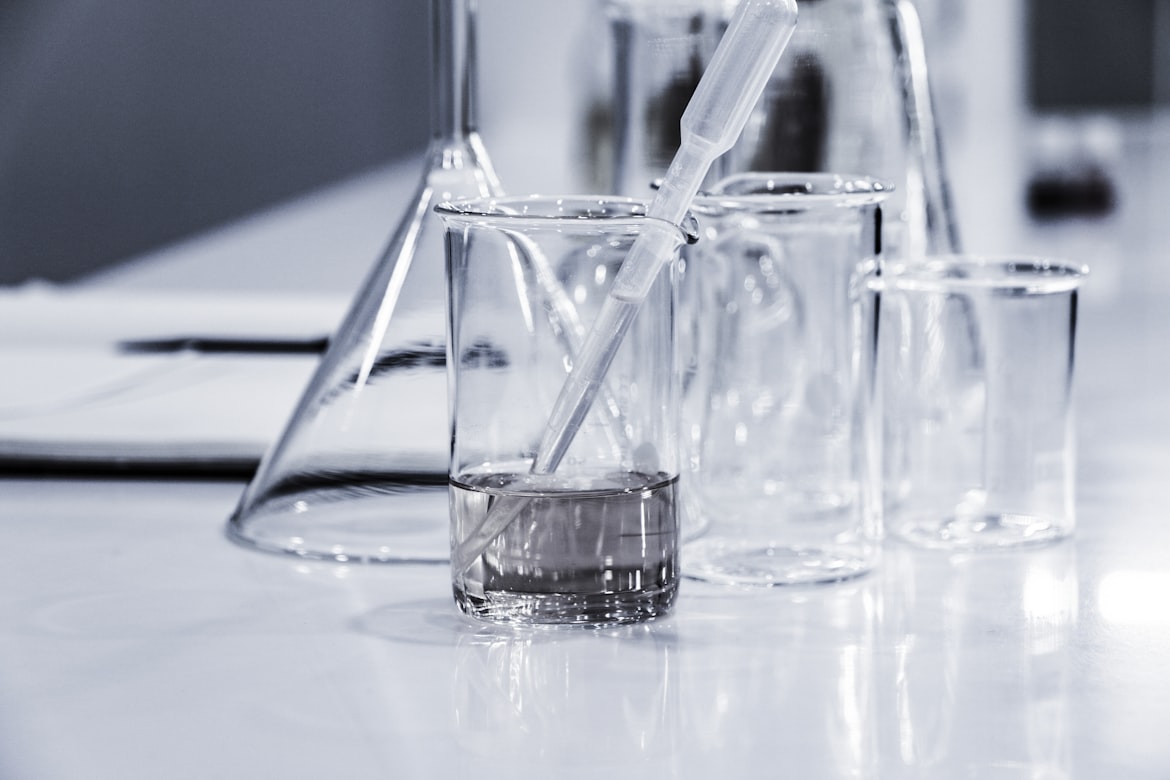
Research Equipment
Tools that revealed the brain's microscopic secrets.

Research Documentation
Meticulous records of experimental procedures and results.
Legacy: The Mentorship That Shaped a Field
In 1973, Samson became director of the Ralph Smith Mental Retardation Research Center (Kansas City). His later work pioneered "metabolic mapping"—linking brain energy use to drug toxicity and seizures 1 3 . Beyond publications, his legacy lives on through:
Collaborative Spirit
His partnership with Francis Schmitt's Neurosciences Research Program accelerated neurochemistry's growth as a discipline 1 .
The Joy of Science
Students recalled his infectious enthusiasm, often quoting his motto: "Neuroscience isn't just studied—it's lived."
Retirement, Not Retreat
Even after retiring in 1989, he mentored young scientists until his death 2 .
"In science, as in life, the most transformative journeys often begin with a daring leap into the unknown."
Why Samson's Story Still Matters
Frederick Samson's life reminds us that scientific pioneers aren't forged in linear paths. His acrobat's agility—balancing on the edge of disciplines—allowed him to see the brain's secrets from angles others missed. Today, his discoveries underpin treatments for epilepsy, neurodegenerative diseases, and traumatic brain injury. But perhaps his greatest lesson was this: In science, as in life, the most transformative journeys often begin with a daring leap into the unknown.