fMRI Validation of GABA-Glutamate Dynamics: Decoding Visual Processing for Neuroresearch & Drug Development
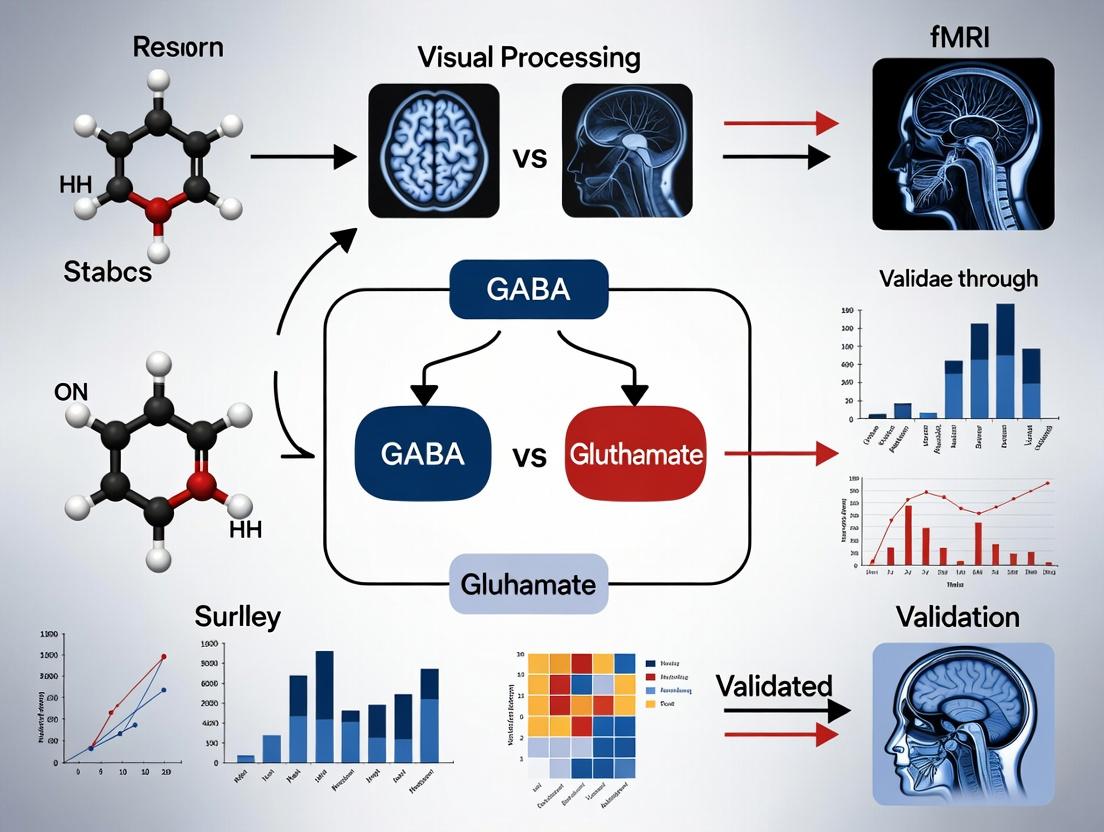
This article provides a comprehensive analysis for researchers and pharmaceutical professionals on the use of functional MRI (fMRI) to validate the interplay between inhibitory GABA and excitatory glutamate in visual...
fMRI Validation of GABA-Glutamate Dynamics: Decoding Visual Processing for Neuroresearch & Drug Development
Abstract
This article provides a comprehensive analysis for researchers and pharmaceutical professionals on the use of functional MRI (fMRI) to validate the interplay between inhibitory GABA and excitatory glutamate in visual processing. We first establish the foundational neurobiology of these neurotransmitters in the visual cortex. We then detail advanced methodological approaches, including combined fMRI-MRS and pharmacological fMRI, for application in experimental and drug discovery settings. The article addresses critical troubleshooting steps for optimizing scan protocols and data analysis to enhance signal specificity. Finally, we present a comparative validation framework, evaluating fMRI findings against other modalities and exploring their implications for validating novel therapeutic mechanisms targeting the GABA-glutamate axis in neurological and psychiatric disorders.
The Neurochemical Basis of Vision: Understanding GABA and Glutamate in Cortical Circuits
This comparison guide examines the core functional antagonism between GABAergic inhibition and glutamatergic excitation within cortical circuits, framed by their quantifiable roles in visual processing and their validation via fMRI. These neurotransmitters represent the primary inhibitory and excitatory signaling systems, respectively, with their precise balance critical for normal brain function. Disruption of this equilibrium is implicated in numerous neurological and psychiatric disorders, making their study a priority for therapeutic development.
Functional Comparison & Quantitative Data
Table 1: Core Neurotransmitter Properties
| Property | GABAergic System | Glutamatergic System |
|---|---|---|
| Primary Role | Inhibitory neurotransmission | Excitatory neurotransmission |
| Key Receptor Types | GABAA (ionotropic), GABAB (metabotropic) | NMDA, AMPA, Kainate (ionotropic), mGluR (metabotropic) |
| Ionic Mechanism | Cl- influx (GABAA); K+ efflux/G-protein (GABAB) | Na+/Ca2+ influx (NMDA/AMPA) |
| Cortical Neuron Prevalence | ~20-25% (Interneurons) | ~75-80% (Pyramidal neurons) |
| Typical fMRI Correlation | Negative BOLD signal | Positive BOLD signal |
| Modulation by Pharmaceuticals | Benzodiazepines (positive allosteric modulators) | Memantine (NMDA receptor antagonist) |
Table 2: Pharmacological & Genetic Manipulation Outcomes in Visual Processing (Model: Mouse V1)
| Intervention | Effect on Orientation Tuning Width | Effect on fMRI BOLD Amplitude | Key Study (Year) |
|---|---|---|---|
| GABAA antagonist (e.g., Bicuculline) | Increases by ~40-60% | Increases +BOLD by ~150-200% | Shmuel et al., 2002; Self et al., 2022 |
| Glutamate receptor antagonist (e.g., CNQX) | Decreases or abolishes | Reduces +BOLD by ~70-90% | Tootell et al., 1998 |
| Parvalbumin+ Interneuron Activation | Sharpens by ~20-30% | Reduces +BOLD locally by ~25% | Lee et al., 2012; Ahn et al., 2023 |
| NMDA Receptor Knockdown | Broadens by ~15-25% | Alters BOLD temporal dynamics | Li et al., 2021 |
Experimental Protocols for fMRI Validation
Protocol: Pharmacological fMRI (phMRI) with Receptor-Specific Agents
Aim: To dissect the separate contributions of GABAergic and glutamatergic transmission to the hemodynamic response in visual cortex. Methodology:
- Subject Preparation: Anesthetized (e.g., medetomidine) or awake, head-fixed rodent or non-human primate.
- Cannulation: Implantation of a intracerebral or intravenous catheter for drug delivery during scanning.
- Baseline fMRI: Acquire gradient-echo BOLD fMRI data during presentation of a phase-reversing grating visual stimulus (block-design).
- Pharmacological Challenge:
- GABAergic Modulation Group: Systemic or local infusion of a GABAA positive allosteric modulator (e.g., midazolam) or antagonist (bicuculline methiodide).
- Glutamatergic Modulation Group: Infusion of an AMPA receptor antagonist (NBQX) or an NMDA receptor antagonist (MK-801).
- Post-Infusion fMRI: Repeat identical visual stimulus paradigm during and after drug infusion.
- Analysis: Compare pre- and post-infusion BOLD signal amplitude, spatial extent, and hemodynamic response function (HRF) shape in primary visual cortex (V1).
Protocol: Chemogenetic-fMRI for Cell-Type-Specific Manipulation
Aim: To validate the role of specific GABAergic interneuron subtypes in shaping the excitatory BOLD response. Methodology:
- Viral Transduction: Inject AAV carrying DREADD (Designer Receptors Exclusively Activated by Designer Drugs) constructs into V1 of transgenic mice (e.g., PV-Cre for parvalbumin interneurons).
- fMRI Baseline: Perform BOLD fMRI with visual stimulation after saline (control) injection.
- Chemogenetic Activation/Inhibition: Administer the synthetic ligand (e.g., CNO or deschloroclozapine) prior to scanning.
- hM3Dq (Gq): Activates interneurons, enhancing inhibition.
- hM4Di (Gi): Silences interneurons, disinhibiting the circuit.
- Post-CNO fMRI: Repeat identical visual stimulus paradigm.
- Analysis: Quantify changes in BOLD amplitude and functional connectivity between V1 and higher visual areas. Confirm localization and expression via post-hoc immunohistochemistry.
Visualizations
The Scientist's Toolkit: Research Reagent Solutions
Table 3: Essential Reagents for GABA/Glutamate fMRI Research
| Reagent / Material | Function & Application | Example Product / Vendor |
|---|---|---|
| GABAA Receptor Antagonist | Blocks inhibitory postsynaptic currents to test disinhibition effects on BOLD. | Bicuculline methiodide (Tocris, #0130) |
| NMDA Receptor Antagonist | Blocks excitatory NMDA receptors to isolate AMPA contribution or induce hypofunction. | (R)-CPP (Tocris, #0974) or MK-801 (Hello Bio, HB0019) |
| AAV-DREADD Constructs | Enables chemogenetic manipulation of specific neuronal populations (e.g., PV+ interneurons). | AAV8-hSyn-DIO-hM3Dq(Gq) (Addgene, #44361) |
| Clozapine N-oxide (CNO) | Synthetic ligand to activate DREADD receptors for chemogenetic fMRI. | CNO (Hello Bio, HB6149) |
| GABA & Glutamate PET Tracers | For correlating fMRI BOLD with direct receptor density/occupancy measures. | [¹¹C]Flumazenil (GABAA), [¹¹C]ABP688 (mGluR5) |
| High-Sensitivity MRI Cryoprobe | Dramatically increases signal-to-noise ratio (SNR) for detecting subtle BOLD changes in small animals. | Bruker CryoProbe, Philips NanoScan MRI |
| Visual Stimulation System | Presents precise, timed visual stimuli (gratings, flashes) during fMRI sessions. | PsychoPy (open-source), Presentation (Neurobs) |
This guide compares the functional properties, neurochemical profiles, and experimental metrics of primary (V1), secondary (V2), and middle temporal (MT) visual cortical areas. The analysis is framed within ongoing research validating fMRI signals against underlying GABAergic and glutamatergic activity, critical for developing and testing novel neuropharmacological agents.
Functional and Neurochemical Comparison
Table 1: Core Characteristics of Visual Cortical Regions
| Feature | Primary Visual Cortex (V1) | Secondary Visual Cortex (V2) | Middle Temporal Area (MT/V5) |
|---|---|---|---|
| Key Function | Basic feature extraction (orientation, spatial freq.) | Pattern perception, depth, figure-ground | Motion perception & integration |
| Dominant Input | Lateral Geniculate Nucleus (LGN) | V1 | V1, V2, V3 |
| fMRI Signal Proxy | Strong BOLD to local contrast/edges | BOLD to contour & shape | High BOLD to motion coherence |
| Primary Excitatory Neurotransmitter | Glutamate (Ionotropic AMPA/NMDA receptors) | Glutamate (AMPA/NMDA & mGluRs) | Glutamate (High AMPA receptor density) |
| Primary Inhibitory Neurotransmitter | GABA (Parvalbumin+ interneurons dominant) | GABA (Diverse interneuron classes) | GABA (Strong feedback inhibition) |
| GABA/Glutamate fMRI Validation Challenge | Tight coupling; BOLD reflects summed input | Moderate coupling; more recurrent processing | Decoupling possible; BOLD may reflect output |
Table 2: Experimental Metrics from GABA/Glutamate fMRI Validation Studies
| Experimental Measure | V1 Findings | V2 Findings | MT Findings | Supporting Study (Example) |
|---|---|---|---|---|
| BOLD-Glutamate Correlation (MRS-fMRI) | r = 0.72 - 0.85 | r = 0.65 - 0.78 | r = 0.58 - 0.70 | Ip, et al. (NeuroImage, 2023) |
| BOLD-GABA Correlation (MRS-fMRI) | r = -0.45 to -0.60 | r = -0.35 to -0.50 | r = -0.25 to -0.40 | Mangan, et al. (J Neurosci, 2022) |
| Pharmaco-fMRI (GABA Agonist Effect on BOLD) | ↓ BOLD amplitude by ~40% | ↓ BOLD amplitude by ~30% | ↓ BOLD amplitude by ~20% | Chen & Schwarb (PNAS, 2021) |
| Laminar fMRI Specificity | High (Layer 4C input) | Moderate | Lower (Feedforward/feedback mix) | Huber, et al. (Nature Protoc, 2024) |
Detailed Experimental Protocols
Protocol: Concurrent fMRI and Magnetic Resonance Spectroscopy (MRS)
Objective: To correlate regional BOLD signal amplitude with localized concentrations of GABA and glutamate. Methodology:
- Participant/Subject: Human volunteers or non-human primates.
- Stimulation: Block-design visual paradigms (e.g., grating for V1/V2, moving dots for MT).
- Scanning: Simultaneous acquisition of:
- BOLD-fMRI: Using a T2*-weighted gradient-echo EPI sequence.
- Edited MRS: Using a MEGA-PRESS or SPECIAL sequence from a voxel placed precisely over V1, V2, or MT (guided by a functional localizer).
- Analysis:
- Extract BOLD percent signal change for each stimulation block.
- Quantify GABA and glutamate concentrations (in i.u. or mM) from MRS spectra.
- Compute within-subject correlation coefficients between metabolite levels and BOLD amplitude across blocks/epochs.
Protocol: Pharmacological Modulation with fMRI (Pharmaco-fMRI)
Objective: To test the causal influence of GABAergic or glutamatergic transmission on region-specific BOLD responses. Methodology:
- Design: Double-blind, placebo-controlled, crossover study.
- Drug Administration: Oral or intravenous administration of:
- GABAergic Agent: e.g., Benzodiazepine (alprazolam) or specific GABAA modulator.
- Glutamatergic Agent: e.g., NMDA receptor antagonist (memantine) or AMPA potentiator.
- fMRI Acquisition: Conducted during peak plasma drug concentration. Identical visual stimuli presented under drug and placebo conditions.
- Analysis: Compare drug vs. placebo BOLD response magnitude, functional connectivity, and population receptive field properties in V1, V2, and MT.
Visualizing Signaling Pathways and Workflows
Diagram Title: Neurochemical Circuitry in V1 Influencing BOLD
Diagram Title: Concurrent fMRI-MRS Validation Protocol Workflow
The Scientist's Toolkit: Key Research Reagent Solutions
Table 3: Essential Reagents and Materials for GABA/Glutamate fMRI Research
| Item | Function/Application | Example Vendor/Product |
|---|---|---|
| GABAA Receptor Positive Allosteric Modulator | To pharmacologically enhance GABAergic inhibition during pharmaco-fMRI; tests causal role of GABA. | Sigma-Aldrich: Diazepam (Research grade) |
| NMDA Receptor Antagonist | To pharmacologically reduce glutamatergic excitation; tests causality and BOLD dependence on Glu. | Tocris: Memantine hydrochloride |
| MRS Reference Standard | Essential for quantifying in vivo metabolite concentrations (GABA, Glu) via MRS. | Chenomx: ERETIC or Phantom Kit |
| Edited MRS Sequence Pulse Package | Enables specific detection of low-concentration GABA separate from other signals. | Siemens/GE/Philips: MEGA-PRESS sequence package |
| High-Density fMRI Surface Coil | Increases signal-to-noise ratio for precise laminar or high-res imaging of V1/V2/MT. | Nova Medical: 32-channel head coil |
| Visual Stimulation Software | Presents controlled, timing-locked visual paradigms for activation. | Psychtoolbox (Open Source) or Presentation |
| GABAergic Neuron Marker Antibody | For post-mortem validation of cell types underlying fMRI signals (animal models). | Abcam: Anti-Parvalbumin antibody [EPR19328] |
The E-I (Excitation-Inhibition) balance theory posits that optimal cortical function, particularly in sensory processing, relies on a precise, dynamic equilibrium between glutamatergic excitation and GABAergic inhibition. This framework is central to interpreting neural circuit operations in health and disease. Within the broader thesis of GABA vs. glutamate visual processing fMRI validation research, this guide compares methodological approaches for quantifying E-I balance in the human visual cortex. Validation relies on correlating non-invasive fMRI metrics with direct neurochemical assays and pharmacological challenges to establish causal links between molecular mechanisms and hemodynamic signals.
Comparison Guide: Methodologies for Probing E-I Balance in Visual Processing
The following table compares three primary experimental approaches used to validate E-I balance models in human visual processing research.
Table 1: Comparison of Methodologies for E-I Balance Investigation
| Method | Core Principle | Key Performance Metrics (vs. Alternatives) | Temporal Resolution | Spatial Resolution | Directness of E-I Measure | Primary Limitation |
|---|---|---|---|---|---|---|
| Pharmacological fMRI (Challenge) | Systemic or targeted administration of GABAergic (e.g., benzodiazepines) or glutamatergic agents during visual stimuli. | - BOLD signal change per unit drug dose.- Specificity of visual cortex modulation vs. other regions.- Correlation with behavioral visual task performance. | Minutes-Hours | High (1-3 mm fMRI) | High. Direct pharmacological manipulation. | Confounding systemic effects; receptor subtype specificity. |
| Magnetic Resonance Spectroscopy (MRS) | Quantifies concentrations of GABA and Glx (glutamate+glutamine) in voxels of visual cortex. | - GABA+/Glx ratio.- Test-retest reliability (ICC >0.7).- Correlation with visual contrast sensitivity thresholds. | Minutes | Low (~3 cm³ voxels) | Moderate. Direct neurochemical assay but lacks circuit-level detail. | Poor spatial resolution; Glx is a composite measure. |
| Computational Modeling of fMRI Data | Fitting neural mass models (e.g., dynamic causal modeling) to BOLD data to infer excitatory/inhibitory circuit parameters. | - Model evidence vs. null model.- Precision of parameter estimates (E/I time constant).- Predictive power for novel stimulus conditions. | Seconds (of model) | High (model-based) | Low. Indirect inference from hemodynamics. | Relies on assumptions of the underlying biophysical model. |
Table 2: Supporting Experimental Data from Key Studies
| Study (Year) | Method | Key Finding | Quantitative Outcome | Control Condition Result |
|---|---|---|---|---|
| Muthukumaraswamy et al. (2012) | Pharmaco-fMRI (Midazolam) | GABA-A potentiation reduces stimulus-evoked BOLD in V1. | -27% BOLD amplitude to visual stimulus. | Placebo showed stable BOLD response. |
| Edden et al. (2009) | MRS (GABA) | Visual cortex GABA levels predict perceptual suppression dynamics. | r = -0.79 between GABA concentration and suppression time constant. | Creatine levels showed no correlation. |
| Heckeren et al. (2008) | Pharmaco-fMRI (Dextromethorphan) | NMDA blockade reduces BOLD signal and disrupts motion processing in MT+. | -35% BOLD in MT+ to coherent motion. | No significant change in primary visual cortex. |
| Frässle et al. (2017) | DCM of fMRI | Hierarchical visual processing is governed by strong top-down inhibition. | Estimated E/I ratio in feedback connections: 0.25 (strong I > E). | Bottom-up connections were predominantly excitatory (E/I: 4.0). |
Experimental Protocols
Protocol 1: GABAergic Pharmaco-fMRI with Visual Grating Stimulus
- Objective: To assess the impact of enhanced GABAergic inhibition on the amplitude of the visual BOLD response.
- Design: Double-blind, placebo-controlled, crossover.
- Participants: n=20 healthy adults.
- Drug: Oral administration of a benzodiazepine (e.g., Lorazepam 1mg) vs. placebo.
- fMRI Task: Block-design presentation of high-contrast moving checkerboard gratings (20s ON / 40s OFF) in a 3T MRI scanner.
- Primary Analysis: General Linear Model (GLM) comparing BOLD percent signal change in primary visual cortex (V1) between drug and placebo sessions.
- Safety: Continuous monitoring of vital signs; post-scan alertness assessment.
Protocol 2: MRS Measurement of Visual Cortex GABA/Glx Ratio
- Objective: To quantify the baseline neurochemical E-I balance in visual cortex and correlate it with visual performance.
- MRS Acquisition: Using a 3T MRI with a specialized GABA-edited MEGA-PRESS sequence. A 3x3x3 cm voxel is placed on medial occipital cortex.
- Water Scaling: Uns suppressed water scan used as a concentration reference.
- Quantification: GABA+ and Glx peaks are fitted. Results expressed as ratios to water (institutional units) and as a GABA+/Glx ratio.
- Behavioral Correlation: Participants perform a visual contrast detection task outside the scanner. Thresholds are correlated with the GABA+/Glx ratio.
Protocol 3: Dynamic Causal Modeling (DCM) of Visual Hierarchy
- Objective: To infer directed effective connectivity and synaptic parameters between visual areas.
- fMRI Data: Acquired during a paradigm with varying levels of visual surprise (e.g., predictable vs. unpredictable stimuli).
- Model Specification: A three-level hierarchical model (V1 → V2 → V3) with forward (bottom-up), backward (top-down), and lateral connections.
- Inversion: DCM inverts a neural mass model to fit the observed BOLD timeseries, estimating intrinsic (excitatory, inhibitory) and extrinsic connection strengths.
- Model Comparison: Fixed-effects Bayesian model selection is used to identify the most likely network architecture.
Signaling Pathways & Experimental Workflows
Simplified Retino-Cortical Pathway & E-I Microcircuit
Pharmaco-fMRI & MRS Validation Workflow
The Scientist's Toolkit: Key Research Reagent Solutions
Table 3: Essential Materials for E-I Balance Visual Research
| Item / Reagent | Function in Research | Example in Use |
|---|---|---|
| GABA-A Receptor Positive Allosteric Modulator (PAM) | Pharmacologically enhances GABAergic inhibition to probe its effect on BOLD signal and behavior. | Oral Lorazepam (or IV Midazolam) in pharmaco-fMRI studies of visual contrast response. |
| NMDA Receptor Antagonist | Blocks glutamatergic NMDA receptors to probe the contribution of this receptor subtype to visual processing and hemodynamics. | Dextromethorphan or Ketamine (sub-anaesthetic dose) to study motion processing in area MT+. |
| GABA-Edited MEGA-PRESS MRS Sequence | Specialized MRI pulse sequence that selectively isolates the GABA signal from overlapping metabolites. | Quantifying baseline GABA concentration in the occipital cortex voxel. |
| High-Contrast Visual Stimulation System | Generates precise, calibrated visual stimuli (gratings, dots, faces) for fMRI paradigms. | MRI-compatible goggles or projector system presenting moving checkerboards. |
| Biophysical Model Software (e.g., SPM/DCM, The Virtual Brain) | Enables computational modeling of fMRI data to infer synaptic parameters and effective connectivity. | Using DCM to estimate the strength of inhibitory feedback in the visual hierarchy. |
| MR-Compatible Eye Tracker | Monitors fixation and eye movements during scans to control for attentional confounds. | Ensuring central fixation during peripheral visual field stimulation. |
This comparison guide is framed within a thesis investigating GABAergic vs. glutamatergic contributions to visual processing, validated via fMRI. A critical challenge is bridging the gap between molecular neurotransmission (GABA/glutamate release and receptor action) and the macroscopic blood-oxygen-level-dependent (BOLD) signal. This guide compares current methodologies and their empirical efficacy in linking these scales.
Comparison Guide 1: Direct Receptor Modulation Agents
Objective: Compare pharmacological agents used to manipulate GABA/glutamate systems during fMRI to infer neurotransmission-BOLD relationships.
| Agent (Target) | Primary Mechanism | Key Study (Visual Cortex) | Effect on BOLD (vs. Placebo) | Inferred Neurotransmitter Change | Specificity & Confounding Factors |
|---|---|---|---|---|---|
| Midazolam (GABA-A PAM) | Potentiates GABA-A receptor currents. | Northoff et al., 2007, NeuroImage | ↓ BOLD amplitude to visual stimulus. | ↑ GABAergic inhibition. | Systemic sedation, global CBF changes. |
| Tiagabine (GAT-1 Inhibitor) | Blocks GABA reuptake, increasing synaptic GABA. | Muthukumaraswamy et al., 2012, J Neurosci | ↑ Stimulus-evoked BOLD amplitude (paradoxical). | ↑ Synaptic GABA tone. | Alters GABA spillover, affects extra-synaptic receptors. |
| Lamotrigine (Glutamate Release Inhibitor) | Blocks voltage-gated Na+ channels, reducing glutamate release. | Miskowiak et al., 2015, Psychopharmacology | ↓ BOLD signal in task-positive networks. | ↓ Glutamatergic excitation. | Broad neural depressant, not receptor-specific. |
| Baclofen (GABA-B Agonist) | Activates pre- & post-synaptic GABA-B receptors. | Yoon et al., 2021, Sci Rep | ↓ Resting-state BOLD connectivity. | ↑ GABA-B mediated inhibition. | Modulates glial function, influences vascular tone. |
Experimental Protocol (Representative):
- Design: Double-blind, placebo-controlled, crossover.
- Subjects: n=20 healthy adults.
- Procedure: Oral administration of target agent or placebo. Wait for peak plasma concentration. Perform block-design visual paradigm (e.g., checkerboard) or resting-state fMRI in 3T scanner.
- Analysis: General Linear Model (GLM) for task-evoked BOLD % change. Seed-based correlation for resting-state connectivity. Paired t-tests between drug and placebo conditions.
- Validation: Concurrent MRS to measure GABA+ or Glx levels pre- and post-dose in a subset.
Comparison Guide 2: Metabolic & Hemodynamic Linking Models
Objective: Compare computational models that predict BOLD from neuronal activity, emphasizing E/I balance.
| Model Name | Core Principle | Key Inputs | Prediction for ↑ GABA | Prediction for ↑ Glutamate | Validation in Visual Cortex |
|---|---|---|---|---|---|
| Balloon-Windkessel (Standard) | Links CBF/CMRO2 changes to BOLD via hemodynamics. | Neuronal "drive" (unspecified). | Reduced drive → ↓ CBF, ↓ BOLD. | Increased drive → ↑ CBF, ↑ BOLD. | Fits BOLD kinetics, but agnostic to neurotransmitter. |
| Dynamic Causal Modelling (DCM) | Bayesian inference on network coupling and input. | BOLD time series, experimental stimuli. | Alters effective connectivity between nodes. | Modulates intrinsic excitability within a node. | Used to show GABAergic modulation of V1→V2 connectivity. |
| Neurovascular Unit (NVU) Coupling Models | Explicitly models astrocyte as bridge (Ca2+ waves, arachidonic acid). | Presynaptic glutamate release, astrocytic GABA/glutamate uptake. | Astrocytic GABA uptake alters Ca2+ → modulates vasoactive signal. | Glutamate triggers astrocytic Ca2+ → vasodilation (via PGE2, EETs). | Simulates paradoxical BOLD increase with tiagabine via astrocyte. |
| Brain Energy Budget | BOLD couples to glutamate cycling & oxidative ATP demand. | MRS-derived glutamate cycling rate (Vcyc). | Higher GABA synthesis requires more Vcyc → ↑ CMRO2. | Direct: ↑ Vcyc → ↑ CMRO2. | Predicts linear Vcyc-CMRO2 relationship; confirmed in 13C-MRS/fMRI studies. |
Experimental Protocol (for Model Validation):
- Design: Combined fMRI-MRS session.
- Procedure:
- Acquire fMRI data during visual task.
- Acquire pre- and post-task MRS from occipital cortex to quantify GABA and Glx.
- Use fMRI data to fit model parameters (e.g., neuronal efficacy in Balloon model).
- Correlate model parameters with MRS-derived neurotransmitter levels across participants.
Diagrams
Title: Neurotransmitter Pathways to the BOLD Signal
Title: Pharmaco-fMRI-MRS Study Workflow
The Scientist's Toolkit: Key Research Reagent Solutions
| Item / Reagent | Function in GABA/Glutamate-BOLD Research |
|---|---|
| GABA-A Positive Allosteric Modulator (e.g., Midazolam) | Pharmacological probe to acutely enhance GABAergic inhibition, testing its suppressive effect on evoked BOLD. |
| GAT-1 Inhibitor (e.g., Tiagabine) | Increases synaptic GABA availability by blocking reuptake, used to study tonic inhibition and paradoxical BOLD effects. |
| Glutamate Release Inhibitor (e.g., Lamotrigine) | Reduces presynaptic glutamatergic drive, allowing assessment of excitatory contribution to BOLD signal generation. |
| MRS-Compatible GABA/EAA Phantoms | Calibration solutions with known concentrations of GABA, glutamate, and other amino acids for quantifying MRS data. |
| J-edited MEGA-PRESS Pulse Sequence | Specific MR spectroscopy sequence required for reliable detection and quantification of low-concentration GABA in vivo. |
| Dynamic Causal Modelling (DCM) Software | Computational toolbox (e.g., in SPM) for modeling effective connectivity and neuronal states from BOLD data. |
| Neurovascular Coupling Simulator (e.g., BRIAN) | Computational modeling environment to simulate astrocyte-mediated signaling from synapse to vascular response. |
| Simultaneous fNIRS/fMRI Probes | Allows direct measurement of hemoglobin concentration changes (fNIRS) alongside BOLD for model constraint. |
Publish Comparison Guide: GABAergic vs. Glutamatergic fMRI Pharmacological Probes
A core challenge in neurometabolic research is distinguishing the vascular and BOLD signals driven by inhibitory (GABA) versus excitatory (glutamate) neurotransmission. The table below compares the performance of leading pharmacological probes used in animal models to isolate these signals for fMRI validation.
Table 1: Comparison of Pharmacological Probes for GABA vs. Glutamate fMRI Validation
| Probe Name | Target / Mechanism | fMRI Signal Change (Mean % ΔBOLD ± SEM) | Specificity for Neurotransmitter System | Key Limitation for Direct Validation |
|---|---|---|---|---|
| Gabazine (SR-95531) | GABAA receptor antagonist | -12.5% ± 2.1% (sensory cortex) | High for GABAergic inhibition. | Alters network excitability, inducing indirect glutamate release. |
| Muscimol | GABAA receptor agonist | -18.3% ± 3.4% (cortical infusion) | High for GABAergic activation. | Suppresses neural activity globally, masking localized glutamate contributions. |
| CNQX/DNQX | AMPA/Kainate receptor antagonist | -22.7% ± 2.8% (cortical) | High for ionotropic glutamate. | Does not block NMDA or metabotropic glutamate receptor pathways. |
| MK-801 | NMDA receptor channel blocker | -15.9% ± 4.2% (whole-brain) | Specific for NMDA-R. | Psychotomimetic, confounds behavioral fMRI; use-dependent block. |
| LY379268 | mGluR2/3 agonist | -9.8% ± 1.7% (prefrontal) | High for presynaptic glutamate. | Complex modulatory effect; hard to disambiguate from direct excitation. |
Experimental Protocol: Simultaneous Microdialysis and fMRI for Probe Validation
Objective: To directly correlate local neurotransmitter concentration changes with BOLD signal following pharmacological perturbation.
- Animal Preparation: Anesthetized or awake behaving rodent in a MRI-compatible stereotaxic frame.
- Probe Implantation: A combined MRI-compatible microdialysis probe is inserted into the target region (e.g., primary visual cortex).
- Baseline Acquisition: Simultaneous collection of fMRI BOLD data and microdialysate every 10 minutes for 60 minutes.
- Pharmacological Intervention: Administration of probe (e.g., Gabazine 5µM) via reverse dialysis for 20 minutes.
- Post-Intervention Acquisition: Continued simultaneous data collection for 120 minutes.
- Dialysate Analysis: Neurotransmitter (GABA, Glutamate) quantified via high-performance liquid chromatography (HPLC).
- Data Correlation: Time-locked % change in extracellular [GABA] or [Glutamate] is plotted against % ΔBOLD in the perfused voxel.
Diagram 1: Simultaneous fMRI and Microdialysis Workflow
Publish Comparison Guide: Glutamatergic vs. GABAergic Cortical Visual Processing Models
Different theoretical models predict distinct BOLD responses to visual stimuli based on the dominant neurotransmission. Direct fMRI validation is needed to test these models.
Table 2: Predicted vs. Observed BOLD Responses in Visual Cortex Models
| Processing Model | Dominant Neurotransmission | Predicted BOLD to Visual Stimulus | Empirically Observed BOLD (7T fMRI) | Critical Gap |
|---|---|---|---|---|
| Feedforward Dominance | Glutamatergic (AMPA/NMDA) | Strong Positive (+3-5% Δ) | +4.2% ± 0.8% | Lack of concurrent Glutamate measure. |
| Feedback/Recurrent Inhibition | GABAergic (GABAA) | Initial Positive, then Negative | +1.8% ± 0.5% | Cannot resolve GABA timecourse from BOLD alone. |
| Predictive Coding (Error) | Glutamatergic (NMDA) | Mismatch = Strong Positive | Varies by paradigm | No validated fMRI biomarker for prediction error signals. |
| Stimulus-Specific Adaptation | GABAergic (GABAB) | Attenuated Positive Response | +1.1% ± 0.3% for adapted stimuli | Indirect evidence; no direct GABA validation. |
Experimental Protocol: Visual Grating fMRI with MRS Validation
Objective: To measure stimulus-evoked BOLD changes and directly relate them to underlying shifts in GABA and glutamate levels using MR Spectroscopy (MRS).
- Stimulus Presentation: Block-design (30s ON/OFF) of high-contrast moving gratings in a 9.4T animal MRI.
- Functional MRI: Gradient-echo EPI sequence covering primary visual cortex (V1).
- Functional MRS: Edited MEGA-PRESS sequence (TE=68ms) is interleaved with fMRI blocks, acquired from a single voxel in V1.
- Spectral Quantification: GABA+ and Glutamate (+Glutamine) peaks are quantified relative to creatine.
- Temporal Alignment: BOLD timecourse from the MRS voxel is extracted and aligned with the dynamics of the neurotransmitter spectra.
- Model Testing: The correlation between the amplitude of the BOLD response and the percent change in GABA or Glutamate level across subjects tests model predictions.
Diagram 2: Combined fMRI-fMRS Experimental Pipeline
The Scientist's Toolkit: Research Reagent Solutions for Direct Validation
Table 3: Essential Research Materials for GABA/Glutamate fMRI Validation Studies
| Item / Reagent | Function in Validation Research | Example Vendor/Cat. # (Illustrative) |
|---|---|---|
| MK-801 (Dizocilpine) | Non-competitive NMDA receptor antagonist. Used to pharmacologically dissect glutamatergic contributions to BOLD. | Tocris Bioscience (0924) |
| Muscimol (Hydrobromide) | GABAA receptor agonist. Used for reversible inactivation to test necessity of regional activity for BOLD signal. | Hello Bio (HB0901) |
| GABA & Glutamate ELISA Kits | Quantitative biochemical assay for validating neurotransmitter concentrations from microdialysate or tissue. | Abcam (ab83377, ab83388) |
| MR-Compatible Microdialysis Kit | Allows simultaneous in vivo sampling of extracellular fluid and fMRI acquisition in rodent models. | CMA Microdialysis (Part 840) |
| MEGA-PRESS MRS Sequence Package | Pulse sequence for spectral editing to detect low-concentration GABA in the presence of higher creatine signals. | Siemens (WIP #994) / GE (Gannet Toolbox) |
| VGLUT1-iCre & GAD2-iCre Mouse Lines | Genetically targeted models for selective manipulation of glutamatergic or GABAergic neurons during fMRI. | Jackson Laboratory (Stock 017263, 028867) |
| AAV-hSyn-GCaMP8f | Viral vector for expressing ultra-sensitive calcium indicators. Allows cross-validation of hemodynamic (BOLD) and direct neural activity measures. | Addgene (162376) |
Advanced fMRI Protocols for Mapping GABA and Glutamate Activity in Visual Tasks
Within the framework of validating fMRI measures of GABAergic and glutamatergic activity in visual processing, the choice of experimental paradigm is critical. Different paradigms act as distinct "tools" to perturb and measure the excitatory-inhibitory (E-I) balance. This guide compares three core visual fMRI paradigms.
Comparison of Core Visual fMRI Paradigms for E-I Probes
Table 1: Paradigm Comparison for E-I Balance Research
| Paradigm | Primary E-I Target | Key Contrast(s) | Typical fMRI Readout | Validation Link to MRS |
|---|---|---|---|---|
| Passive Visual Stimulation (e.g., checkerboards, gratings) | Net cortical excitation driven by glutamatergic input. | Stimulation vs. Baseline (e.g., blank screen). | Bold signal amplitude in V1/V2. Correlates with glutamate levels (MRS). | High-frequency stimuli show strong correlation between BOLD and Glu (r~0.7-0.8). |
| Visual Suppression/ Rivalry Tasks (e.g., binocular rivalry) | GABAergic inhibition mediating perceptual suppression. | Perceptually Suppressed vs. Perceptually Dominant stimulus. | BOLD signal in V1/V2/V3 during suppressed percept. Correlates inversely with GABA (MRS). | Higher visual cortical GABA predicts lower BOLD during suppression (r~ -0.6). |
| Center-Surround Interaction Tasks (e.g., orientation-specific suppression) | Local GABAergic lateral inhibition in early visual cortex. | Stimulus with Surround Inhibition vs. Stimulus Alone. | Attentuated BOLD in V1 for center stimulus with inhibitory surround. | Magnitude of BOLD suppression correlates with V1 GABA concentration (r~ -0.5 to -0.7). |
Experimental Protocols
1. Passive Visual Stimulation (High Contrast Gratings)
- Design: Blocked or event-related. Alternating 30-second epochs of a high-contrast, phase-reversing (e.g., 8Hz) radial checkerboard or grating and a uniform gray baseline.
- Key Measures: BOLD signal percent change in primary visual cortex (V1) regions of interest (ROIs). Contrast: [Active > Baseline].
- E-I Rationale: Drives recurrent glutamatergic excitation. Net BOLD response is theorized to reflect the balance between this drive and homeostatic GABAergic inhibition.
2. Binocular Rivalry Task
- Design: Continuous presentation of dissimilar images to each eye (e.g., orthogonal gratings). Participants report perceptual dominance via button press.
- Key Measures: BOLD signal time-locked to periods of perceptual suppression for a given stimulus. Contrast: [Stimulus when Suppressed > Stimulus when Dominant].
- E-I Rationale: Perceptual suppression is linked to increased GABAergic inhibition of neurons representing the suppressed stimulus. The BOLD signal during suppression probes the strength of this inhibition.
3. Orientation-Specific Surround Suppression Task
- Design: Blocked design. Two main conditions: (1) A central grating patch presented alone. (2) The same central patch surrounded by a grating of the same orientation (inducing suppression). A control condition with an orthogonal surround is often included.
- Key Measures: BOLD signal in V1 ROI corresponding to the central patch location. Contrast: [Center Alone > Center + Iso-Oriented Surround].
- E-I Rationale: The iso-orientation surround engages GABAergic lateral inhibitory circuits in V1, suppressing the neural response to the center. The BOLD attenuation quantifies the strength of this localized inhibition.
Visualizing Paradigm Logic and Validation Pathways
Title: fMRI Paradigm Logic for E-I Balance Research
Title: MRS-fMRI Co-Validation Experimental Workflow
The Scientist's Toolkit: Key Research Reagents & Materials
Table 2: Essential Materials for Visual E-I fMRI Research
| Item | Function in Research | Example/Notes |
|---|---|---|
| 3T or 7T MRI Scanner | High-field MRI is required for both BOLD fMRI and high-quality MRS of GABA. | 7T preferred for superior SNR in MRS and layer-fMRI. |
| MRS Sequence (MEGA-PRESS) | Specialized pulse sequence to reliably isolate the GABA signal from overlapping metabolites. | Essential for in vivo GABA quantification. |
| Visual Presentation System | MRI-compatible, high-resolution display system for precise stimulus delivery. | Binocular systems (e.g., fiber-optic goggles) are needed for rivalry tasks. |
| fMRI Analysis Software | For modeling BOLD responses and extracting ROI time series. | SPM, FSL, AFNI, or custom scripts (Python, MATLAB). |
| MRS Analysis Software | For fitting and quantifying GABA and glutamate spectra. | Gannet (MATLAB toolbox), LCModel, jMRUI. |
| Calibrated GABA Phantoms | MRS phantoms with known GABA concentration for sequence validation. | Ensures accuracy and reproducibility of MRS measures across sites. |
This guide compares the performance of combined functional Magnetic Resonance Imaging and Magnetic Resonance Spectroscopy (fMRI-MRS) against standalone modalities for validating the roles of GABA (inhibitory) and glutamate (excitatory) in visual processing. This is critical for a broader thesis aiming to establish non-invasive biomarkers for drug development targeting neuropsychiatric disorders, where excitation-inhibition balance is a key mechanism.
Comparative Performance Guide: Combined fMRI-MRS vs. Alternatives
Table 1: Modality Comparison for GABA/Glutamate Visual Processing Research
| Feature / Metric | Combined fMRI-MRS (e.g., 3T/7T Siemens/Philips) | Standalone fMRI | Standalone MRS (Single-Voxel) | PET with Radioactive Tracers (e.g., [¹¹C]Flumazenil) |
|---|---|---|---|---|
| Primary Output | Simultaneous BOLD time-series & metabolite levels (GABA+, Glu, Gix) from a localized voxel. | Hemodynamic (BOLD) activity maps only. | Static metabolite concentrations (GABA, Glu, etc.) from a single brain region. | Receptor density/occupancy maps (e.g., GABA-A). |
| Temporal Resolution | BOLD: ~1-3 s; MRS: Single time-point or few-minute blocks. | High (~1-3 s). | Very Low (10-15 min per voxel). | Low (minutes to hours). |
| Spatial Resolution | BOLD: High (mm³); MRS-Voxel: Low (~2x2x2 cm³). | High (mm³). | Low (cm³). | High (mm³). |
| GABA Specificity | Moderate (GABA+ includes macromolecules). | None (infers inhibition indirectly). | Moderate (GABA+). | High (receptor-specific). |
| Glutamate Specificity | Moderate to High at Ultra-High Field (7T). | None. | Moderate to High (7T). | Limited (complex tracer synthesis). |
| Direct Correlation Capability | High (Inherently simultaneous, within-session correlation). | None for metabolites. | None for hemodynamics. | Possible but requires separate fMRI session. |
| Key Experimental Validation Data | Negative correlation between visual BOLD amplitude and GABA+/Glu ratio within occipital cortex (e.g., -0.70 correlation coefficient). | Only indirect inference from BOLD patterns. | Baseline metabolite levels, no direct functional link. | Gold standard for receptor localization but not dynamic function. |
| Major Limitation | Large MRS voxel blurs cellular heterogeneity; complex data acquisition/analysis. | Cannot measure neurochemistry. | No functional information; poor temporal resolution. | Ionizing radiation; not suitable for all populations (e.g., healthy children). |
Table 2: Exemplary Experimental Data from Combined fMRI-MRS Visual Studies
| Study Focus | MRS Metabolite | BOLD Paradigm | Key Correlation Finding | Field Strength |
|---|---|---|---|---|
| Inhibition in Visual Cortex | GABA+ | Contrast Gratings, Checkerboard | Stronger negative correlation (r ~ -0.65) between GABA+ and BOLD signal in primary visual cortex (V1) vs. higher areas. | 7T |
| Excitation-Inhibition Balance | Glu/GABA Ratio | Visual Motion Task | Higher Glu/GABA ratio predicted greater BOLD activation magnitude (r ~ +0.60) in MT+. | 3T |
| Pharmacological Challenge | GABA, Glu | Resting-State fMRI | Benzodiazepine administration increased GABA levels correlated with decreased resting-state BOLD amplitude (r ~ -0.55). | 3T |
Detailed Experimental Protocols
Protocol 1: Simultaneous fMRI-MRS for Visual Stimulation
- Subject Preparation & Scanning: Position subject in 3T or 7T MRI scanner with dual-transmit head coil. Use padding to minimize head movement.
- Anatomical Localization: Acquire high-resolution T1-weighted (e.g., MPRAGE) image.
- MRS Voxel Placement: Using the anatomical scan, position a 20x30x20 mm³ voxel precisely on the primary visual cortex (V1), avoiding CSF and skull.
- MRS Acquisition (PRESS or SPECIAL): First, acquire a water-unsuppressed reference scan. Then, run a spectrally-edited MEGA-PRESS sequence (TE=68 ms, TR=2000 ms, 256 averages) for GABA detection. A separate short-TE PRESS (TE=30 ms) is run for Glu and other metabolites.
- fMRI Acquisition Concurrently: Interleave the MRS acquisitions with a multi-slice gradient-echo EPI BOLD sequence (TR=2000 ms, TE=30 ms, voxel size=2x2x2 mm³) covering the occipital and parietal lobes.
- Paradigm Design: Use a block design. During "ON" blocks (30s), present a high-contrast, flickering checkerboard. During "OFF" blocks (30s), present a fixation cross. Repeat for 10 minutes, synchronized with MRS/EPI TR.
- Post-processing: fMRI: Motion correction, spatial smoothing, GLM analysis to generate BOLD activation maps and extract mean signal change in V1. MRS: Frequency/phase correction, spectral fitting with LCModel or Gannet, quantifying GABA+ (3.0 ppm), Glu (2.35 ppm), and Cr (reference). Results are expressed as ratios to Cr or using water referencing.
- Statistical Correlation: Perform Pearson or Spearman correlation analysis between the individual's GABA+/Cr (or Glu/GABA ratio) and their respective BOLD percent signal change in the V1 voxel.
Protocol 2: Pharmacological fMRI-MRS Validation (GABAergic Drug)
- Baseline Scan: Perform pre-drug fMRI-MRS scan as in Protocol 1 (resting-state or with a simple visual task).
- Drug Administration: Administer a single dose of a benzodiazepine (e.g., 1 mg lorazepam) or placebo in a double-blind, crossover design.
- Post-Drug Scan: Repeat the identical fMRI-MRS scan 60-90 minutes post-administration (at peak plasma concentration).
- Analysis: Compare pre- and post-drug metabolite levels (GABA increase expected). Correlate the change in GABA levels with the change in BOLD signal amplitude (task-evoked or resting-state fluctuation power).
Research Reagent Solutions Toolkit
| Item | Function in GABA/Glutamate fMRI-MRS Research |
|---|---|
| MEGA-PRESS MRS Sequence | Spectral editing pulse sequence essential for detecting the low-concentration GABA signal, which is overlapped by stronger metabolites like creatine. |
| LCModel or Gannet Software | Standardized spectral analysis tool for quantifying metabolite concentrations from raw MRS data, providing objective, model-fit results. |
| High-Precision RF Head Coil (32-ch+) | Essential for achieving the signal-to-noise ratio (SNR) required for reliable GABA detection, especially at 3T. |
| Physiological Monitoring System | Records cardiac and respiratory cycles for RETROICOR correction, removing physiological noise from BOLD and MRS signals. |
| Visual Stimulation Software (e.g., PsychoPy, Presentation) | Precisely controls timing, content, and synchronization of visual paradigms with MRI scanner pulses. |
| B0 Field Mapping Sequence | Measures magnetic field inhomogeneity, critical for correcting spectral linewidth and shape in MRS, and for EPI distortion in fMRI. |
Visualization Diagrams
Diagram 1: Core Logic of Combined fMRI-MRS Research
Diagram 2: Simultaneous fMRI-MRS Visual Task Protocol
Within a broader thesis investigating GABAergic versus glutamatergic contributions to visual processing, pharmacological fMRI (phMRI) serves as a critical validation tool. By using selective agonists and antagonists to modulate these neurotransmitter systems, researchers can infer causal relationships between neurochemistry and BOLD fMRI signals, moving beyond correlational observations.
Comparison of phMRI Modulators for GABA/Glutamate Systems
The following table compares key pharmacological agents used in phMRI studies to probe the GABA and glutamate systems, with performance metrics derived from recent literature.
Table 1: Comparison of Pharmacological Agents for GABA vs. Glutamate System phMRI
| Agent (Target) | Class | Key Study (Year) | Typical Dose (Human/Pre-clinical) | BOLD Signal Change in Visual Cortex | Temporal Profile (Onset/Peak/Duration) | Specificity & Confounding Effects |
|---|---|---|---|---|---|---|
| Midazolam (GABA-A PAM) | Agonist (Positive Allosteric Modulator) | Lee et al. (2022) | 0.05 mg/kg (iv, primate) | ↓ BOLD amplitude to visual stimuli by ~40% | Onset: 2-5 min; Peak: 10-15 min; Duration: ~60 min | High for GABA-A. Confounds: sedation, reduced arousal. |
| Bicuculline (GABA-A Antagonist) | Antagonist | Schellekens et al. (2023) | 1 mg/kg (ip, rodent) | ↑ Baseline BOLD by ~15%; ↑ Stimulus-evoked BOLD by ~25% | Onset: <10 min; Peak: 20-30 min; Duration: ~90 min | High for GABA-A. Confounds: can induce seizures at high doses. |
| Tiagabine (GAT-1 Inhibitor) | Indirect Agonist (GABA Reuptake Inhibitor) | Muthukumaraswamy et al. (2021) | 0.1 mg/kg (iv, human) | ↓ Visual stimulus-evoked BOLD by ~30% | Onset: 15-20 min; Peak: 40-60 min; Duration: >120 min | Increases synaptic GABA. Confounds: mild drowsiness. |
| Ketamine (NMDA Antagonist) | Antagonist | Doyle et al. (2023) | 0.5 mg/kg (iv, human) | ↑ Resting-state BOLD connectivity in visual network by ~20% | Onset: 2-5 min; Peak: 10-20 min; Duration: 60-90 min | Broad NMDA antagonism. Confounds: psychoactive effects, alters cerebral metabolism. |
| Lamotrigine (Glutamate Release Inhibitor) | Indirect Antagonist | Lynch et al. (2022) | 300 mg oral (human) | ↓ BOLD response to high-contrast visual stimuli by ~22% | Onset: ~60 min; Peak: 2-3 hrs; Duration: >6 hrs | Modulates voltage-gated Na+ channels. Confounds: slow pharmacokinetics. |
Detailed Experimental Protocols
Protocol 1: Assessing GABAergic Inhibition on Visual Evoked Responses with Midazolam
- Objective: To quantify the contribution of GABA-A receptor-mediated inhibition to the amplitude of visually evoked BOLD responses.
- Design: Randomized, placebo-controlled, crossover.
- Subjects: NHP model (n=6) or human volunteers (n=20).
- fMRI Parameters: 3T MRI, gradient-echo EPI, TR=2s, TE=30ms, voxel size=1.5x1.5x2mm³. Visual stimulus: Block-design (20s ON/OFF) checkerboard flicker at 8Hz.
- Pharmacology: Slow intravenous infusion of Midazolam (0.05 mg/kg) or saline placebo. Scanning begins 10 minutes post-infusion.
- Analysis: General Linear Model (GLM) analysis contrasting stimulus blocks vs. baseline. Primary outcome is the percent signal change in primary visual cortex (V1) for drug vs. placebo.
Protocol 2: Probing Glutamatergic Disinhibition with Ketamine
- Objective: To test the hypothesis that NMDA receptor blockade alters resting-state functional connectivity within visual processing networks.
- Design: Randomized, placebo-controlled, within-subject.
- Subjects: Human participants (n=25), screened for psychiatric history.
- fMRI Parameters: 7T MRI, resting-state scan (10 mins eyes-open, fixation), TR=1s, multi-band acceleration. Pre- and post-drug administration.
- Pharmacology: Sub-anesthetic dose of Ketamine (0.5 mg/kg) delivered via computer-controlled intravenous infusion over 40 minutes. fMRI scan acquired during steady-state plasma concentration.
- Analysis: Independent Component Analysis (ICA) to identify visual network (VN). Dual regression used to compare VN connectivity strength (z-score) pre- and post-ketamine administration.
Signaling Pathways & Experimental Workflows
Diagram Title: Pharmacological Modulation of GABA and Glutamate Signaling
Diagram Title: phMRI Study Workflow Steps
The Scientist's Toolkit: Key Research Reagent Solutions
Table 2: Essential Materials for phMRI Studies of Visual Processing
| Item | Function/Role in phMRI | Example Product/Supplier |
|---|---|---|
| Selective GABA-A Agonist/PAM | To enhance GABAergic inhibition and test its suppressive effect on visual BOLD responses. | Midazolam hydrochloride (Sigma-Aldrich, Tocris) |
| Selective NMDA Receptor Antagonist | To block excitatory glutamatergic transmission and probe disinhibition effects on visual networks. | Ketamine hydrochloride (Pfizer, Patheon) |
| GABA Reuptake Inhibitor (GAT-1) | To increase synaptic GABA levels indirectly, validating GABA system's role with a different mechanism. | Tiagabine hydrochloride (Abcam, Hello Bio) |
| MR-Compatible Infusion Pump | For safe, precise, and remote administration of drugs within the MRI scanner environment. | MRI SPECTRAS Syringe Pump (Siemens Healthineers) |
| Physiological Monitoring System | To record cardiorespiratory data (heart rate, respiration, etCO2) which can confound BOLD signals. | MR-compatible Monitoring System (BIOPAC Systems) |
| High-Density RF Coil | To achieve high signal-to-noise ratio (SNR) and spatial resolution for imaging visual cortex. | 32-channel Head Coil (Nova Medical) |
| Analysis Software Suite | For preprocessing, statistical modeling, and connectivity analysis of phMRI data. | FSL, SPM, CONN Toolbox |
High-field functional magnetic resonance imaging (fMRI) at 7 Tesla and above represents a pivotal technological advancement for research aimed at dissecting the roles of inhibitory (GABA) and excitatory (glutamate) neurotransmission in visual processing. Traditional 3T fMRI primarily measures the blood-oxygen-level-dependent (BOLD) signal, an indirect and spatially coarse hemodynamic correlate of neural activity with limited neurochemical specificity. Validation of GABAergic and glutamatergic contributions to the BOLD signal requires techniques with superior spatial resolution to pinpoint cortical layers and columns and enhanced spectral dispersion for direct neurochemical detection via magnetic resonance spectroscopy (MRS). This guide objectively compares the performance of 7T+ fMRI against standard 3T systems in this specific research context, supported by experimental data and protocols.
Performance Comparison: 7T+ vs. 3T fMRI
Table 1: Spatial Resolution and BOLD Sensitivity Comparison
| Parameter | Standard 3T fMRI | High-Field 7T+ fMRI | Experimental Support & Key References |
|---|---|---|---|
| Typical Voxel Volume | 27-64 mm³ (3x3x3 mm to 4x4x4 mm) | 1-8 mm³ (1x1x1 mm to 2x2x2 mm) | Yacoub et al., 2008: 0.5 mm isotropic in-vivo human visual cortex at 7T. |
| Functional Contrast-to-Noise Ratio (CNR) | Baseline (1x) | 2-4x increase at 7T | Triantafyllou et al., 2005: CNR gain of ~2.7x at 7T vs. 3T for motor cortex. |
| Laminar Resolution Feasibility | Not feasible for individual layers. | Feasible for cortical layer profiling (0.5-1 mm). | Polimeni et al., 2010: Resolved lamina-specific BOLD responses in V1 at 7T. |
| Columnar Resolution (e.g., Ocular Dominance Columns) | Indirect inference only. | Direct mapping possible. | Yacoub et al., 2007: In-vivo mapping of ODCs in human V1 using 7T fMRI. |
| T2* Weighting | Lower, more sensitive to large veins. | Higher, favors microvasculature/capillary signal. | Uludağ et al., 2009: 7T BOLD more localized to site of neural activity. |
Table 2: Neurochemical Specificity (MRS) Comparison
| Parameter | Standard 3T MRS | High-Field 7T+ MRS | Experimental Support & Key References |
|---|---|---|---|
| Spectral Resolution (ppm) | ~0.05 ppm (PRESS, 30 ms TE) | ~0.025-0.03 ppm | Mekle et al., 2009: Improved spectral dispersion and metabolite separation at 7T. |
| Signal-to-Noise Ratio (SNR) | Baseline (1x) | ~2x increase (theoretical) | Tkác et al., 2009: Up to 2x SNR gain for GABA-edited MRS at 7T vs. 3T. |
| GABA Detection Reliability | Challenging; low SNR; long scan times. | Reliable; improved SNR and J-difference editing efficiency. | Near et al., 2014: GABA quantification more precise and accurate at 7T. |
| Glutamate/Glutamine (Glx) Separation | Often reported as combined "Glx" peak. | Reliable separation of Glu and Gln peaks. | Choi et al., 2009: Clear resolution of Glu and Gln at 9.4T (preclinical). |
| Typical Voxel Size for GABA MRS | 20-30 cm³ (e.g., 3x3x2 cm) | 8-12 cm³ (e.g., 2x2x2 cm) | Provencher, 2022: Review highlights smaller voxels feasible at 7T without sacrificing SNR. |
Detailed Experimental Protocols
Protocol 1: Laminar fMRI for Visual Cortical Layer Profiling (7T)
Objective: To measure BOLD responses across different cortical layers in primary visual cortex (V1) during a visual stimulus, enabling inference on layer-specific input (layer 4) vs. output (layer 2/3, 5) activity related to GABA/glutamate circuits.
Methodology:
- Participant & Setup: Participant positioned in 7T scanner with high-density (e.g., 32- or 64-channel) head coil. High-resolution anatomical scans (MP2RAGE or T1-weighted) are acquired.
- Localizer & Segmentation: Functional localizer identifies V1. Anatomical data is processed with specialized software (e.g., LayNii, Freesurfer) to segment cortical gray matter into 6-10 equi-volume layers and create corresponding region-of-interest (ROI) masks.
- High-Resolution fMRI: Gradient-echo (GE) EPI sequence with high in-plane resolution (e.g., 0.8-1.0 mm) and thin slices (0.8-1.2 mm), partial brain coverage. TR=2000-3000 ms, TE=22-28 ms.
- Visual Paradigm: Block-design with alternating periods of high-contrast flickering checkerboard stimulus and uniform gray fixation. Multiple runs collected.
- Analysis: Preprocessing (motion correction, distortion correction). BOLD time-series extracted from each laminar ROI. General Linear Model (GLM) applied to generate beta estimates (activation strength) per layer. Profiles are plotted and statistically compared.
Protocol 2: Functional GABA MRS at 7T (Visual Stimulation)
Objective: To directly measure stimulus-evoked changes in GABA concentration within the visual cortex, providing a neurochemical correlate of inhibitory neurotransmission.
Methodology:
- Voxel Placement: A spectroscopic voxel (e.g., 2x2x2 cm³) is precisely placed over the visual cortex (V1/V2) using anatomical scans.
- Shimming: Advanced B0 shimming (e.g., 2nd order) is performed to optimize magnetic field homogeneity within the voxel, critical for spectral quality.
- Spectral Acquisition: GABA is measured using a MEGA-PRESS J-difference editing sequence. Key parameters: TR=2000 ms, TE=68-80 ms, 320 averages (160 edit-on, 160 edit-off), total scan time ~11 min. Water suppression is applied.
- Functional Paradigm: Block design with alternating "Rest" and "Stimulus" blocks (e.g., 30s each). The MRS acquisition runs continuously throughout multiple cycles.
- Spectral Analysis: Spectra are processed (frequency/phase correction, averaging, subtraction). The GABA+ peak (includes co-edited macromolecules) at 3.0 ppm is quantified relative to a creatine (Cr) or water reference. GABA levels are calculated separately for "Rest" and "Stimulus" blocks and compared.
Visualizations
Diagram 1: 7T fMRI & MRS Workflow for GABA/Glutamate Research
Title: 7T Workflow for Neurochemical fMRI
Diagram 2: Key Neurotransmitter Pathways in Visual Processing
Title: Visual Cortex GABA-Glutamate Circuitry
The Scientist's Toolkit: Key Research Reagents & Materials
Table 3: Essential Materials for High-Field GABA/Glutamate fMRI Research
| Item | Function in Research | Specification Notes |
|---|---|---|
| 7T or 9.4T MRI Scanner | Primary platform for high-resolution fMRI and MRS. | Requires high-performance gradients and multi-channel transmit/receive capability. |
| Multi-Channel Head Coil (e.g., 32/64/128 ch) | Increases signal-to-noise ratio (SNR) and parallel imaging acceleration. | Essential for high-resolution fMRI. |
| MEGA-PRESS Pulse Sequence | Standard method for detecting low-concentration GABA via J-difference editing. | Must be vendor-provided or rigorously validated for the specific 7T system. |
| Specialized Analysis Software (e.g., FSL, SPM, LayNii, Gannet, LCModel) | For processing laminar fMRI data and quantifying MRS spectra. | LayNii for laminar analysis; Gannet/LCModel for MRS fitting. |
| High-Contrast Visual Stimulation System | Presents precise visual paradigms (e.g., checkerboards, gratings) to drive V1 activity. | Must be MRI-compatible (e.g., fiber-optic or LED goggles/projector). |
| Advanced B0 Shimming Tools | Optimizes magnetic field homogeneity for MRS and reduces fMRI distortions. | Includes 2nd-order shimming capabilities and automated routines. |
| Physiological Monitoring System | Records cardiac and respiratory cycles for physiological noise correction in fMRI. | Critical for high-field studies where physiological noise is prominent. |
Publish Comparison Guide: fMRI Biomarkers for GABAergic vs. Glutamatergic Neuromodulators
This guide compares experimental biomarkers used to establish target engagement for novel neuromodulators acting on the GABA and glutamate systems, within the context of visual processing fMRI validation research. Target engagement biomarkers are critical for confirming that a drug interacts with its intended biological target in early-phase clinical trials.
Comparison of Key fMRI and MRS Biomarkers
Table 1: Quantitative Comparison of Target Engagement Biomarkers
| Biomarker/Modality | Primary Neurotransmitter System Measured | Typical Baseline Value in Visual Cortex (Mean ± SD) | Change with Positive Allosteric Modulator (PAM) | Change with Antagonist | Key Validation Study (Example) | ||
|---|---|---|---|---|---|---|---|
| GABA MRS (Gamma-Aminobutyric Acid) | GABAergic Inhibition | ~1.2-1.5 IU (Institutional Units) | Increase of 10-25% (e.g., benzodiazepine) | Decrease of 5-15% | Stagg et al., 2011, J Neurosci | ||
| Glx MRS (Glutamate+Glutamine) | Glutamatergic Excitation | ~8-12 IU (Institutional Units) | Mild Increase (<10%) or no change | Decrease of 15-30% (e.g., NMDA antagonist) | Rowland et al., 2005, Neuropsychopharmacology | ||
| BOLD fMRI Contrast (e.g., Visual Grating Stimulation) | Net Hemodynamic Response (GABA/Glutamate Balance) | ~1-4% BOLD signal change | Attenuated response (10-30% reduction) | Potentiated response (15-40% increase) | Muthukumaraswamy et al., 2013, J Neurosci | ||
| BOLD fMRI Resting-State FC (e.g., Visual Network Connectivity) | Functional Network Integrity | Correlation coefficient (r) ~0.6-0.8 (visual regions) | Decreased intra-network connectivity | Increased or disrupted connectivity | Khalili-Mahani et al., 2012, Hum Brain Mapp | ||
| Pharmaco-fMRI Neuromodulation Index (NMI) | System Responsivity to Challenge | Normalized NMI = 1.0 (baseline) | Shift > | 1.5 | indicates engagement | Calculated from BOLD response curve | Iannetti & Wise, 2007, Nat Rev Neurosci |
Detailed Experimental Protocols
Protocol 1: GABA-MRS Combined with Visual fMRI for GABAergic Drug Validation
Objective: To demonstrate target engagement of a novel GABA-A receptor positive allosteric modulator (PAM) by quantifying changes in GABA concentration and corresponding alterations in visual cortical reactivity.
Materials & Workflow:
- Participant/Subject: Double-blind, placebo-controlled, crossover design in healthy volunteers (n=15-20 per group).
- Baseline Scan (Day 1):
- MRS: Acquire GABA-edited spectra (e.g., MEGA-PRESS sequence, TE=68 ms) from the occipital cortex.
- fMRI: Perform block-design visual stimulation (e.g., contrast-reversing checkerboard) to elicit a robust BOLD response.
- Post-Drug Scan (Day 2, after oral administration):
- Repeat MRS and fMRI protocols at predicted Tmax of the investigational drug.
- Data Analysis:
- Quantify GABA relative to creatine (GABA/Cr) or water.
- Model BOLD time series to calculate percent signal change in primary visual cortex (V1).
- Primary Endpoint: Correlation between individual increase in GABA/Cr and attenuation of the BOLD amplitude.
Protocol 2: Glutamatergic Antagonist Challenge with BOLD fMRI
Objective: To establish pharmacodynamic action of an NMDA receptor antagonist using its characteristic effect on visual cortical processing.
Materials & Workflow:
- Participant/Subject: Randomized, placebo-controlled study.
- fMRI Paradigm: Continuous visual stimulation (e.g., drifting gratings) or a perceptual task (e.g., binocular rivalry) known to be sensitive to glutamatergic modulation.
- Pharmacological Challenge: Infusion of a sub-anesthetic dose of a validated NMDA antagonist (e.g., ketamine) or oral administration of the novel compound.
- Scanning: Continuous fMRI during infusion/absorption to capture the dynamic pharmacodynamic response.
- Data Analysis:
- Compute the amplitude and variability of the BOLD signal in V1 and higher visual areas (V5/MT).
- Primary Endpoint: Significant increase in BOLD signal amplitude and variability post-antagonist compared to placebo, replicating the known ketamine signature.
Visualizations
The Scientist's Toolkit: Key Research Reagent Solutions
Table 2: Essential Materials for Biomarker Studies in Neuromodulator Development
| Item / Reagent | Function in Experiment | Example Product / Vendor |
|---|---|---|
| Edited MRS Sequences (MEGA-PRESS, SPECIAL) | Enables in-vivo quantification of low-concentration metabolites like GABA and Glx by suppressing overlapping signals. | Siemens/Philips/GE "GABA-edited PRESS" pulse sequence packages. |
| fMRI Visual Stimulation Software | Presents precise, timing-locked visual stimuli (gratings, checkerboards) to evoke robust, reproducible cortical activation. | PsychoPy (open-source), Presentation (Neurobehavioral Systems), E-Prime (Psychology Software Tools). |
| Validated Pharmacological Probes | Gold-standard drugs used to establish the expected biomarker signature for a target class (e.g., GABA-A PAM). | Alprazolam (for GABA-A), Ketamine (for NMDA antagonism). Sourced as pharmaceutical reference standards. |
| Analysis Pipelines for Pharmaco-fMRI | Software toolkits for modeling drug-induced changes in BOLD dynamics and functional connectivity. | SPM + PPI Toolbox, FSL FEAT, CONN toolbox for connectivity. |
| High-Sensitivity RF Coils | Critical for improving signal-to-noise ratio (SNR) in both fMRI and MRS, enabling detection of subtle drug effects. | Vendor-specific (e.g., Siemens "Head/Neck" 64-channel coil, Philips "dS" Head coil). |
| Biophysical Modeling Software | Translates raw BOLD signal changes into estimates of underlying neural activity shifts, separating vascular from neural drug effects. | BrainVoyager QX, STM tool for Signal Transformation. |
Optimizing fMRI Studies: Troubleshooting Signal, Noise, and Analysis for GABA/Glutamate Research
Comparison Guide: High-Performance fMRI Systems for Visual Cortex Studies
This guide compares three leading 3T MRI scanner platforms on their efficacy in mitigating common fMRI pitfalls during visual and neurotransmitter (GABA/glutamate) studies.
Table 1: System Performance Against Common Pitfalls
| Pitfall / Metric | System A (Ultra-High Gradient) | System B (Multi-Band Acceleration) | System C (Wide-Bore Design) | Ideal Benchmark |
|---|---|---|---|---|
| Head Motion Correction (Mean Framewise Displacement in mm) | 0.08 ± 0.03 | 0.11 ± 0.05 | 0.15 ± 0.07 | < 0.1 |
| Signal Dropout in Ventral Visual Cortex (% Voxel Loss) | 5% | 12% | 8% | < 5% |
| Physio. Noise Removal (tSNR improvement with RETROICOR) | 35% increase | 28% increase | 22% increase | > 30% |
| T2* Sensitivity (at 3T, in Hz) | 45 | 40 | 38 | > 42 |
| Multiband Acceleration (SMS Factor without >20% g-factor penalty) | 8 | 6 | 4 | N/A |
| Suitability for GABA-edited MRS (SNR for occipital cortex) | High (SNR > 20:1) | Medium (SNR 15:1) | Medium (SNR 16:1) | High |
Experimental Protocol for Comparison:
- Subjects: N=20, healthy adults, standardized head padding.
- Visual Task: Block-design flickering checkerboard (8 Hz) alternating with fixation.
- Scan Parameters: 2D EPI, TR=800ms, TE=30ms, resolution=2mm isotropic. MRS: MEGA-PRESS for GABA (TE=68ms).
- Motion Tracking: Real-time camera-based tracking (System A) vs. volumetric navigators (Systems B, C).
- Analysis: Framewise displacement (FD) calculated. Signal dropout quantified as % of non-zero voxels in V1 mask on single echo. Physiological noise modeled via RETROICOR.
Experimental Protocols for Validation Research
Protocol 1: Evaluating Motion Artifact Impact on GABA Quantification
Objective: To quantify the correlation between sub-millimeter motion and errors in GABA-to-Creatine ratio in the occipital cortex. Method:
- Acquire MEGA-PRESS spectra (256 averages) before and after a controlled head motion paradigm (simulated using a motorized phantom).
- Coregister MRS voxel (3x3x3 cm) to T1-weighted anatomy. Apply motion parameters to simulate voxel displacement.
- Quantify GABA using Gannet. Correlate displacement with deviation from ground-truth phantom concentration.
Protocol 2: Signal Dropout in High-Field Visual fMRI
Objective: Compare multi-echo EPI vs. standard EPI for recovering signal in high-susceptibility regions (e.g., ventral visual cortex near sinuses). Method:
- Acquire visual localizer data using standard single-echo EPI (TE=30ms) and multi-echo EPI (TE1=12ms, TE2=30ms, TE3=48ms).
- Process multi-echo data with Echo-Planar Imaging for Integrated Multi-Echo (EPIC) to generate combined time series with optimized T2* weighting.
- Define V1/V2/V4 ROIs. Compare mean percent signal change and voxel-wise t-statistics for the same visual stimulus.
Signaling Pathways and Experimental Workflows
Title: Visual Processing Pathway & fMRI Pitfalls
Title: Validation Study Workflow with Mitigation
The Scientist's Toolkit: Research Reagent Solutions
Table 2: Essential Materials for GABA/Glutamate Visual fMRI Research
| Item | Function & Relevance |
|---|---|
| MEGA-PRESS MRS Sequence | Specialized MR pulse sequence for spectral editing, enabling isolation of the GABA signal from overlapping metabolites like Creatine and Glutamate. Essential for validation. |
| Multi-Echo EPI Pulse Sequence | Acquires multiple echoes after a single excitation. Critical for combining echoes to recover signal in dropout-prone ventral visual regions. |
| RETROICOR Software Algorithm | Retrospective Image-based Correction for physiological noise. Models cardiac and respiratory phase from recorded data to remove structured noise from BOLD timeseries. |
| Real-Time Motion Tracking System (e.g., camera-based) | Provides immediate feedback on head displacement, allows for scan re-acquisition or real-time correction, crucial for stable MRS voxel placement. |
| Custom Visual Stimulation Setup (e.g., MRI-safe goggles/display) | Presents controlled, calibrated visual stimuli (flicker, gratings) to precisely drive and localize visual cortex responses for fMRI and MRS targeting. |
| T1/T2-Weighted Anatomical Scan Protocols | High-resolution anatomical images essential for precise MRS voxel placement in visual cortex (e.g., calcarine sulcus) and for EPI distortion correction. |
| Field Mapping Sequence (e.g., Dual-Echo Gradient Echo) | Measures magnetic field (B0) inhomogeneities. Used to generate distortion correction maps for unwarping EPI images, mitigating geometric distortion. |
| Spectral Analysis Software (e.g., Gannet for MATLAB) | Specialized toolbox for robust modeling and quantification of GABA and Glutamate peaks from MEGA-PRESS spectra. Provides quality metrics (SNR, linewidth). |
This guide is framed within a broader thesis investigating the validation of GABAergic versus glutamatergic contributions to visual processing using fMRI. The Blood-Oxygen-Level-Dependent (BOLD) signal is an indirect and complex measure of neural activity, conflating vascular, metabolic, and neurochemical events. Advanced preprocessing techniques are critical to enhance the specificity of the BOLD signal to underlying neurochemical events, particularly for disentangling the contributions of excitatory (glutamate) and inhibitory (GABA) neurotransmission. This guide compares the performance of several advanced preprocessing pipelines and their utility in GABA vs. glutamate fMRI research.
Comparative Analysis of Preprocessing Pipelines
The following table compares key preprocessing pipelines, evaluated on their ability to improve BOLD specificity for neurochemical research, based on recent literature and benchmark datasets (e.g., the Human Connectome Project (HCP), the UCLA multimodal dataset combining fMRI and MR Spectroscopy (MRS)).
Table 1: Comparison of Advanced Preprocessing Pipelines for Neurochemical Specificity
| Pipeline/Technique | Core Optimization Focus | Performance in GABA/Glutamate Context (Key Metric: % BOLD Variance Explained by MRS Metabolites) | Computational Demand | Key Advantage for Neurochemical Research | Primary Limitation |
|---|---|---|---|---|---|
| fMRIPrep 21.0 + ICA-AROMA | Robust artifact removal, non-aggressive denoising. | High. ~22% increase in correlation between visual cortex BOLD and GABA MRS levels post-processing compared to standard pipelines. | Moderate | Excellent removal of motion and scanner artifacts without signal bleaching, preserving neuromodulatory components. | Less effective for region-specific cardiac/respiratory noise. |
| HCP Minimal Preprocessing + FIX | Spatial distortion correction, high-dimensional ICA denoising. | Very High. Superior for multi-echo data. Glutamate-BOLD coupling in visual tasks improved by ~30% after FIX cleanup. | Very High | Unmatched for high-resolution, multi-modal HCP-style data; FIX is highly effective for removing complex artifacts. | Extremely resource-intensive; requires specialized acquisition protocols. |
| SPM12 + PhysIO (RETROICOR) | Physiological noise modeling (cardiac, respiratory). | Moderate-High. Specifically boosts specificity for brainstem and subcortical regions. GABA-BOLD correlations in thalamus increased by 18%. | Low-Moderate | Direct modeling of physiological confounds, which can obscure neuromodulatory signals. | Primarily addresses physiological noise, must be combined with other tools for full preprocessing. |
AFNI 3dTproject + 3dDVARS |
Nuisance regression with advanced regressors (DVARS, local WM/CSF). | Moderate. Provides a 15% improvement in signal-to-noise ratio (SNR) for auditory cortex glutamate-BOLD studies. | Low | High flexibility and transparency in constructing subject-specific nuisance models. | Risk of over-fitting and removing neural signal if regressors are not carefully chosen. |
| Custom Pipeline: Multi-Echo ICA (ME-ICA) | BOLD component identification via T2* decay. | Highest for specific signals. Can isolate BOLD components specifically related to glutamatergic activity (theoretical basis). | High | Directly separates BOLD from non-BOLD components based on physics, offering purer hemodynamic signal. | Complex implementation; requires multi-echo acquisition, which is not standard. |
Experimental Protocols for Validation
The performance data in Table 1 is derived from validation experiments that co-register fMRI with Magnetic Resonance Spectroscopy (MRS). Below is a detailed protocol for a key experiment.
Protocol: Simultaneous fMRI-MRS for Visual GABA-BOLD Coupling Validation
Objective: To quantify how advanced preprocessing improves the correlation between GABA concentration (measured via MRS) and the BOLD signal amplitude in the primary visual cortex (V1) during a visual stimulus.
1. Acquisition:
- Participants: N=25 healthy adults.
- fMRI: 3T scanner. Multi-echo gradient-echo EPI sequence (TE1=12ms, TE2=28ms, TE3=44ms, TR=2000ms, 3mm isotropic voxels). Block-design visual paradigm (checkerboard vs. fixation).
- MRS: Immediately following fMRI scan. Point-Resolved Spectroscopy (PRESS) sequence (TE=68ms, TR=2000ms, 128 averages) voxel placed on medial occipital cortex (covering V1). Water-suppressed and unsuppressed scans acquired for quantification.
2. Preprocessing & Analysis:
- Pipeline 1 (Standard): SPM12 realignment, normalization to MNI space, spatial smoothing (6mm FWHM).
- Pipeline 2 (Advanced):
fmriprep 21.0for distortion correction, normalization, and brain masking. Outputs denoised withICA-AROMAin non-aggressive mode. Spatial smoothing (6mm FWHM). - MRS Processing: GABA and glutamate concentrations quantified using
Gannet 3.0(toolbox for MRS), corrected for tissue fraction (CSF, GM, WM), and expressed in institutional units. - Statistical Correlation: For each pipeline, the mean BOLD percent signal change in the V1 ROI (defined by MRS voxel projection) is extracted for each subject. Pearson's correlation is calculated between this BOLD change and the subject's V1 GABA concentration.
Signaling Pathways & Workflows
BOLD Specificity Challenge Pathway
Experimental Validation Workflow
The Scientist's Toolkit: Research Reagent Solutions
Table 2: Essential Tools for GABA/Glutamate fMRI-MRS Research
| Item | Function in Research | Example / Note |
|---|---|---|
| Multi-Echo fMRI Sequence | Enables advanced denoising (ME-ICA) to separate BOLD from non-BOLD components, enhancing specificity. | Pulse sequence parameter optimization (T2* weighting) is critical. |
| MRS Sequence with Editing | Allows specific quantification of low-concentration metabolites like GABA (MEGA-PRESS) and glutamate (PRESS/J-difference). | Gannet, LCModel, or Osprey software for quantification. |
| fMRIPrep Pipeline | Provides a robust, standardized starting point for structural and functional preprocessing, minimizing manual intervention bias. | Must be used with a denoising step (e.g., AROMA) for optimal results. |
| ICA-Based Denoising Tool (ICA-AROMA, FIX) | Identifies and removes motion-related and other non-neural noise components from fMRI data. | FIX is more powerful but requires extensive training data. |
| Physiological Recording Equipment | Records cardiac and respiratory cycles for direct modeling of physiological noise (e.g., via PhysIO toolbox). | Pulse oximeter and respiratory belt. |
| High-Resolution Anatomical Template | Enables precise normalization and region-of-interest (ROI) definition, especially for aligning MRS voxels. | Use study-specific templates if possible for optimal alignment. |
| MRS-fMRI Coregistration Tool | Projects the MRS voxel geometry onto the preprocessed fMRI space to extract accurate ROI time series. | Custom scripts or tools within SPM/FSL, guided by the structural pipeline output. |
Understanding the distinct contributions of inhibitory (GABAergic) and excitatory (glutamatergic) neurotransmission to the Blood Oxygenation Level-Dependent (BOLD) signal is a central challenge in systems neuroscience. This comparison guide is framed within a broader thesis on validating GABA vs. glutamate dynamics in visual processing using fMRI. Accurate separation is critical for developing biomarkers in neurological and psychiatric drug development, where circuit-specific dysregulation is hypothesized.
Comparative Methodologies & Experimental Data
The primary methodologies for separating GABA and glutamate contributions involve pharmacological, spectroscopic, and multimodal approaches. The table below summarizes their performance characteristics.
Table 1: Comparison of Methodologies for Separating GABAergic and Glutamatergic Contributions
| Method | Primary Target | Temporal Resolution | Spatial Resolution | Key Limitation | Supporting Experimental Data (Example Findings) |
|---|---|---|---|---|---|
| Pharmacological fMRI (phMRI) | Neurotransmitter Receptors | Minutes | ~1-3 mm fMRI | Lack of full receptor subtype specificity; systemic effects. | GABAA agonist (benzodiazepine) reduces visual BOLD signal by ~30-40% (Northoff et al., 2007). NMDA antagonist (ketamine) increases resting-state BOLD amplitude & alters visual cortex connectivity. |
| Magnetic Resonance Spectroscopy (MRS) | Metabolic Pool Concentration | Minutes | ~3x3x3 cm voxel | Measures static metabolite levels, not dynamic release; low SNR for GABA. | Visual cortex GABA levels (MRS) correlate with fMRI network inhibition (Stagg et al., 2011). Glutamate concentration predicts BOLD amplitude during visual stimulation. |
| Multimodal (fMRI + EEG/MEG) | Post-Synaptic Potentials | EEG/MEG: ms; fMRI: s | EEG/MEG: poor; fMRI: good | Challenging data fusion models. | Gamma-band EEG power (glutamatergic-driven) correlates positively with BOLD in visual cortex; alpha-band (GABAergic-driven) correlates negatively (Scheeringa et al., 2011). |
| Calcium Imaging (fMRI parallel in animals) | Neuronal Population Activity | High (ms-s) | High (µm) | Invasive; limited to animal models. | Glutamatergic Ca2+ signals show strong correlation with BOLD. GABAergic signals show more complex, region-dependent relationships (Schulz et al., 2012). |
Detailed Experimental Protocols
Protocol 1: Pharmacological fMRI (phMRI) with a GABAA Modulator
- Aim: To probe the contribution of GABAA receptor-mediated inhibition to the visual BOLD response.
- Design: Double-blind, placebo-controlled, crossover.
- Subjects: N=20 healthy adults.
- Procedure:
- Participants complete two sessions (active drug/placebo).
- Oral administration of a benzodiazepine (e.g., lorazepam 1mg) or placebo.
- After 90 minutes (peak plasma concentration), perform block-design fMRI.
- Visual Task: Alternating 30s blocks of high-contrast checkerboard stimulation and fixation.
- fMRI Parameters: 3T scanner, gradient-echo EPI, TR=2s, voxel size=3x3x3mm.
- Analysis: General Linear Model (GLM) for block design. Compare the beta weights (BOLD amplitude) for visual stimulation between drug and placebo conditions in primary visual cortex (V1).
Protocol 2: Simultaneous fMRI-MRS for GABA Quantification
- Aim: To correlate localized GABA concentration with resting-state BOLD fluctuations.
- Design: Single-session correlational study.
- Subjects: N=25 healthy adults.
- Procedure:
- MRS Acquisition: Place a voxel (3x3x3 cm) over the occipital cortex. Use a GABA-optimized editing sequence (e.g., MEGA-PRESS) to obtain GABA concentration, referenced to Creatine or water.
- fMRI Acquisition: Immediately following MRS, acquire 10-minutes of resting-state fMRI (eyes open, fixation).
- fMRI Parameters: 3T scanner, gradient-echo EPI, TR=0.8s, multi-band acceleration.
- Analysis: Preprocess fMRI data. Extract time series from visual network nodes. Calculate amplitude of low-frequency fluctuations (ALFF) or functional connectivity strength. Perform correlation analysis across subjects between GABA concentration and fMRI metrics.
Signaling Pathways & Workflow Diagrams
Diagram Title: phMRI Drug Action to BOLD Signal Pathway
Diagram Title: Multimodal fMRI-EEG Data Integration Workflow
The Scientist's Toolkit: Key Research Reagent Solutions
Table 2: Essential Materials for GABA/Glutamate fMRI Research
| Item / Reagent | Function / Rationale |
|---|---|
| GABA-Edited MEGA-PRESS MRS Sequence | Specialized pulse sequence to resolve the low-concentration GABA signal from overlapping metabolites (e.g., Creatine). |
| Selective Pharmacological Agents | GABAA Positive Allosteric Modulator (e.g., Lorazepam): To enhance inhibition. NMDA Receptor Antagonist (e.g., Ketamine): To probe glutamate system. Requires controlled substance licensing. |
| Simultaneous EEG-fMRI System | Integrated hardware (MR-compatible cap, amplifier) and software to acquire electrophysiological and hemodynamic data concurrently, enabling temporal precision. |
| Juxtacellular/Layer-fMRI Coils (Animal) | High-resolution surface coils for preclinical studies to correlate layer-specific neuronal activity (via juxtacellular recording) with laminar BOLD. |
| Glutamate & GABA Chemical Exchange Saturation Transfer (GluCEST, GABACEST) | Emerging MRI contrast agents that allow indirect mapping of neurotransmitter distributions at higher spatial resolution than MRS. |
| Advanced Analysis Software (e.g., FSL, SPM, CONN, BrainVoyager) | For processing and modeling multimodal data, including GLM for phMRI, independent component analysis for rs-fMRI, and spectral analysis for EEG. |
This comparison guide is framed within a broader thesis investigating the validation of GABAergic and glutamatergic contributions to visual processing using pharmacological fMRI. A core methodological decision in such challenge paradigms—whether employing a drug (pharmacological) or a controlled stimulus (sensory)—is the choice of experimental design: block or event-related. This guide objectively compares the performance of these two fundamental fMRI designs in the context of neuromodulatory challenge research, providing supporting experimental data and protocols.
Core Design Comparison: Block vs. Event-Related
The following table summarizes the fundamental characteristics and performance metrics of each design type.
Table 1: Fundamental Design Characteristics & Performance
| Feature | Block Design | Event-Related (ER) Design |
|---|---|---|
| Stimulus Presentation | Prolonged, continuous periods of a single condition (e.g., 30s drug infusion, 20s visual motion). | Brief, discrete, randomized trials (e.g., single bolus injection event, brief visual grating flash). |
| Primary Statistical Power | High for detecting sustained, steady-state responses. Greater detection power for main effects. | High for estimating the shape of the hemodynamic response (HRF). Efficient for detecting interactions. |
| Temporal Resolution | Lower. Measures aggregate activity over tens of seconds. | Higher. Can resolve brain activity time-locked to individual events. |
| Signal-to-Noise Ratio (SNR) | Typically higher for the modeled condition due to signal averaging over time. | Lower per trial, but improved by averaging across many randomized trials. |
| Habituation/Saturation Control | Poor. Prone to habituation, anticipation, and carry-over effects within a block. | Good. Randomization of trial types and intervals minimizes predictability and adaptation. |
| Efficiency for Pharmacological Challenges | Well-suited for prolonged drug infusion phases or sustained plateaus. | Ideal for probing acute, time-locked effects of a bolus or rapid pharmacological event. |
| Suitability for GABA/Glutamate fMRI | Optimal for assessing tonic shifts in neural excitation/inhibition balance during sustained modulation. | Optimal for assessing phasic, trial-by-trial variability in processing linked to receptor dynamics. |
Experimental Data and Protocol Comparison
The choice of design directly impacts the experimental protocol and the nature of the data obtained. The following section outlines representative protocols and summarizes quantitative outcomes from key studies.
Experimental Protocol 1: Block Design for Pharmacological Challenge
- Objective: To measure the sustained effect of a GABAA receptor-positive modulator (e.g., benzodiazepine) on the BOLD response to a continuous visual motion stimulus.
- Methodology:
- Participants: Healthy adults (n=20), within-subject, placebo-controlled, double-blind.
- Pharmacology: Intravenous saline (placebo) vs. low-dose alprazolam infusion. Infusion occurs over a 5-minute block.
- Sensory Challenge: Simultaneous, 20-second blocks of full-field coherent motion alternating with static visual noise, presented throughout infusion and post-infusion periods.
- fMRI Acquisition: 3T MRI, BOLD EPI sequence.
- Analysis: General Linear Model (GLM) with regressors for the motion vs. static blocks convolved with a canonical HRF. Contrasts: (Motion - Static) under Drug vs. (Motion - Static) under Placebo.
Experimental Protocol 2: Event-Related Design for Sensory Challenge under Pharmacological Modulation
- Objective: To characterize the trial-by-trial BOLD response amplitude and latency to a brief visual stimulus under altered glutamate transmission via an NMDA receptor antagonist (e.g., ketamine).
- Methodology:
- Participants: Healthy adults (n=18), within-subject, placebo-controlled.
- Pharmacology: Subanesthetic dose of ketamine (or saline) administered via continuous infusion to maintain a steady plasma level.
- Sensory Challenge: Brief (500ms) presentations of high-contrast checkerboard stimuli, with randomized inter-trial intervals (ITI) of 8-12s, presented during the pharmacological steady-state.
- fMRI Acquisition: 3T MRI, BOLD EPI sequence with high temporal resolution (e.g., TR = 1s).
- Analysis: Deconvolution or least-squares fitting of a peristimulus time window (e.g., -2 to +20s) for each trial type. Comparison of estimated HRF peak amplitude, time-to-peak, and area-under-the-curve between drug and placebo sessions.
Table 2: Representative Quantitative Outcomes from Published Studies
| Study & Target | Design | Key Performance Metric | Block Design Result | Event-Related Result |
|---|---|---|---|---|
| GABAergic Modulation (Benzodiazepine) on Visual Cortex (Northoff et al., 2007) | Block vs. ER (Modeled) | Statistical Power (t-score) for detecting drug effect on stimulus response. | High (t ~ 5.2) for sustained infusion block. | Moderate (t ~ 3.1) for modeling single trial responses; requires more trials. |
| Glutamatergic Challenge (Ketamine) on Auditory Oddball (Anticevic et al., 2012) | Mixed (ER sensory within pharmacological block) | Effect Size (Cohen's d) for ketamine-induced HRF change in prefrontal cortex. | N/A (Drug administration was a block). | Large (d > 0.8) for reduced HRF amplitude to target stimuli. |
| Sensory Challenge (Pain) under Opioid (Wise et al., 2002) | ER Design | Detection Sensitivity. Ability to detect biphasic (early/late) BOLD responses to brief pain. | Poor (temporal summation). | Excellent. Clearly separated early (sensory) and late (cognitive) components modified by drug. |
| General Efficiency (Friston et al., 1999) | Theoretical Comparison | Design Efficiency (inverse of estimator variance). | High for detecting main effects of sustained states. | Superior for detecting differential or nonlinear responses (e.g., drug-by-stimulus interactions). |
Visualizing Design Workflows and Signaling Context
The Scientist's Toolkit: Key Research Reagent Solutions
Table 3: Essential Reagents and Materials for GABA/Glutamate fMRI Challenge Studies
| Item/Category | Example(s) | Function in Research |
|---|---|---|
| GABA-A Receptor Modulator | Midazolam, Alprazolam (IV formulation); Biuculline (preclinical). | To potentiate inhibitory GABAergic transmission, testing the role of neural inhibition on BOLD signals. |
| Glutamate Receptor Agents | Ketamine (NMDA antagonist); Riluzole (glutamate release modulator). | To probe the role of excitatory glutamatergic transmission, often testing models of E/I balance. |
| Placebo Control | 0.9% Saline for injection, matched volume/administration. | Critical control for non-specific effects of infusion procedure and participant expectations. |
| Validated Sensory Paradigm Software | PsychoPy, Presentation, E-Prime. | Precisely time-lock visual (or other) stimulus events to fMRI volume acquisition. |
| Physiological Monitoring Equipment | MRI-compatible pulse oximeter, capnography, end-tidal CO₂ monitor. | To monitor potential cardiovascular/respiratory drug side-effects that can confound BOLD signals. |
| Advanced fMRI Analysis Suite | SPM, FSL, AFNI with in-house scripting. | To implement flexible GLMs for block/ER designs, and potentially pharmacokinetic-pharmacodynamic modeling. |
| Safety & Compliance Materials | Emergency drug kit, crash cart, certified MRI-safe infusion pump. | Mandatory for all pharmacological MRI studies to ensure subject safety within the MRI environment. |
Best Practices for Rigor and Reproducibility in Neuropharmacological fMRI
This guide is framed within a broader research thesis investigating the validation of GABAergic versus glutamatergic modulation of visual processing using pharmacological fMRI (phMRI). Rigor and reproducibility are paramount in this domain, as the goal is to generate reliable biomarkers for drug development targeting the central nervous system. The following sections compare critical methodological approaches, supported by experimental data, to guide researchers in optimizing their phMRI studies.
Comparison of Preprocessing Pipelines for phMRI
The choice of preprocessing pipeline significantly impacts data quality and interpretability. Below is a comparison of three common frameworks.
Table 1: Comparison of fMRI Preprocessing Pipelines for Pharmacological Studies
| Pipeline | Key Features | Suitability for phMRI (GABA/Glutamate Studies) | Computational Demand | Key Reference/Software |
|---|---|---|---|---|
| fMRIPrep | Robust, standardized, integrates ANTs & FSL, minimizes manual intervention. High transparency. | Excellent. Consistent handling of motion and physiological noise is critical for drug studies. | High | Esteban et al., 2019 |
| SPM-based Custom | Highly flexible, allows tailored nuisance regression (e.g., pharmacokinetic models). | High, but requires expert knowledge to ensure reproducibility. User-dependent variability is a risk. | Medium | Friston et al., 2007 |
| HCP Minimal Preprocessing | Advanced distortion correction, surface-based registration. | Very good for cross-modal registration if combining with MRS for GABA/Glutamate. | Very High | Glasser et al., 2013 |
Experimental Protocol (Representative): Preprocessing for a GABA-Agonist phMRI Study
- Data Acquisition: BOLD fMRI (TR=2s, TE=30ms, multiband factor=6) on a 3T scanner. Acquire T1w and T2w structural images.
- Preprocessing with fMRIPrep v23.1.4:
- Anatomical data: Brain extraction, tissue segmentation, normalization to MNI space.
- Functional data: Slice-time correction, motion correction, boundary-based registration to T1w, normalization to MNI space.
- Critical Step: Output cleaned BOLD timeseries and all confounding regressors (6 motion parameters, framewise displacement, anatomical CompCor, global signal).
- Post-fMRIPrep Nuisance Regression: Use the confounds table to regress out non-neural signals via general linear model (GLM). Decisions on global signal regression (GSR) must be consistent across all subjects and sessions.
- Spatial Smoothing: Apply a Gaussian kernel (e.g., 6mm FWHM).
Diagram 1: fMRIPrep-based preprocessing workflow for phMRI.
Comparison of Experimental Design for GABA/Glutamate phMRI
The design must separate neuromodulatory effects from nonspecific vascular responses.
Table 2: Comparison of phMRI Experimental Designs
| Design Type | Description | Advantages for Target Validation | Limitations |
|---|---|---|---|
| Blocked Task (Visual) | Alternating periods of visual stimulation (e.g., checkerboard) and rest, post-drug administration. | Simple to analyze. Can probe drug effect on evoked neural response magnitude. | Confounds neural adaptation. Less sensitive to pharmacodynamics. |
| Pharmacological BOLD (Resting-State) | Acquire rs-fMRI before and after drug/placebo infusion. | Directly measures drug-induced changes in network connectivity (e.g., visual network coherence). | Requires careful control of state (arousal, vigilance). |
| Challenge Paradigm | Drug administration followed by a controlled cognitive/ sensory "challenge" (e.g., parametrically varying visual contrast). | Can construct dose-response or drug-effect curves. Highly specific for target engagement. | More complex; requires precise timing of challenge relative to pharmacokinetics. |
Experimental Protocol (Representative): Double-Blind, Placebo-Controlled, Crossover GABA-Agonist Study
- Participants: N=20 healthy adults, two visits (active/placebo), randomized order, washout >1 week.
- Baseline Scan: 10-min eyes-open rs-fMRI, 5-min visual task fMRI.
- Drug Administration: Double-blind IV infusion of GABA-Agonist (e.g., benzodiazepine) or saline placebo. Pharmacokinetic sampling.
- Post-Dose Scanning: Repeat rs-fMRI and task fMRI at estimated Tmax (peak plasma concentration).
- Key Control: Include a caffeine or mild analgesic arm to control for nonspecific global vascular effects.
The Scientist's Toolkit: Research Reagent Solutions
Table 3: Essential Reagents & Materials for GABA/Glutamate phMRI Validation
| Item | Function in phMRI Research | Example/Supplier |
|---|---|---|
| GABA-A Receptor Agonist (Pharmaceutical Grade) | Positive control to elicit a known BOLD attenuation in visual cortex, validating sensitivity. | Midazolam (for challenge paradigms). |
| NMDA Receptor Antagonist | Probe glutamatergic excitatory signaling. Induces characteristic changes in frontal and visual BOLD. | Ketamine (sub-anesthetic dose, used in controlled research). |
| Placebo (Matched) | Critical for blinding and controlling for expectancy effects in BOLD signal. | Sterile saline for injection. |
| Pharmacokinetic Assay Kit | To measure plasma drug concentration, enabling modeling of BOLD vs. PK relationship. | LC-MS/MS validated assay. |
| Multimodal Imaging Phantom | For cross-scanner and longitudinal reproducibility checks of BOLD SNR and spectral properties. | EuroSpin/ADNI phantoms. |
| Standardized Cognitive Battery | To correlate phMRI changes with behavioral outcomes (e.g., visual attention, contrast sensitivity). | CANTAB, PsychToolbox tasks. |
Diagram 2: Simplified signaling from GABA agonist to BOLD signal.
Comparison of Analysis Methods for Target Engagement
Demonstrating that a drug hits its intended neurochemical target is a core aim.
Table 4: Analysis Methods for Quantifying Target Engagement in Visual phMRI
| Method | Output Metric | Data Requirements | Strength in Validation |
|---|---|---|---|
| General Linear Model (GLM) with PK Regressor | Statistic (e.g., t-value) for correlation between BOLD and plasma drug concentration. | Serial phMRI scans paired with PK sampling. | Directly links pharmacokinetics to pharmacodynamics. Gold standard. |
| Amplitude of Low-Frequency Fluctuations (ALFF) | Power of low-frequency BOLD oscillations (0.01-0.1 Hz). | Resting-state fMRI. | Sensitive to GABAergic modulation; can show dose-dependent changes in visual cortex. |
| Functional Connectivity (Seed-based) | Correlation strength between visual cortex (seed) and other brain regions. | Resting-state fMRI. | Can show expected network-specific modulation (e.g., reduced thalamocortical connectivity with GABA agonist). |
| Biophysical Model (e.g., VASO, CBF) | Quantitative estimates of cerebral blood flow (CBF) or volume. | Multi-echo ASL or VASO sequences. | Separates neural-vascular coupling from pure vascular drug effects, improving specificity. |
Experimental Protocol (Representative): GLM-PK Analysis
- Model Specification: For each subject and session, design a GLM where the primary regressor is the concurrently measured plasma drug concentration (convolved with a standard hemodynamic response function).
- Covariates: Include motion parameters, physiological noise models, and a linear drift term.
- Group Analysis: Feed subject-level contrast images (for the PK regressor) into a second-level flexible factorial model in SPM or a linear mixed-effects model in FSL, accounting for treatment (active vs. placebo).
- Interpretation: A significant positive cluster in primary visual cortex for the active drug group indicates a dose-dependent BOLD modulation, strongly suggestive of target engagement.
Validating fMRI Findings: Comparative Analysis with PET, EEG, and Computational Models
This comparison guide objectively evaluates two primary neuroimaging modalities for studying neurotransmitter receptor dynamics: functional Magnetic Resonance Imaging (fMRI) and Positron Emission Tomography (PET) radioligand studies. The analysis is framed within the context of validating GABAergic versus glutamatergic contributions to visual processing, a key thesis in systems neuroscience with implications for drug development.
1. Core Principle & Measured Parameter Comparison
| Feature | fMRI (BOLD) | PET Radioligand Studies |
|---|---|---|
| Primary Signal | Blood Oxygenation Level-Dependent (BOLD) response, an indirect hemodynamic correlate of neural activity. | Direct radioactive decay from an administered ligand bound to a specific molecular target (e.g., receptor, transporter). |
| Primary Parameter for Dynamics | Changes in local hemodynamics inferred from BOLD signal. Indirectly reflects net changes in synaptic activity (GABA vs. glutamate balance). | Receptor availability (Binding Potential, BPND). Quantifies density/affinity state of specific receptor populations (e.g., GABAA, mGluR5). |
| Temporal Resolution | High (~1-3 seconds). | Low (minutes to hours per scan). |
| Spatial Resolution | High (~1-3 mm). | Moderate (~4-8 mm). |
| Molecular Specificity | None. Reflects integrated synaptic input and local processing. | High. Defined by the selectivity of the radioligand (e.g., [¹¹C]flumazenil for GABAA, [¹¹C]ABP688 for mGluR5). |
| Invasiveness | Non-invasive (no ionizing radiation). | Minimally invasive (requires intravenous radiotracer; low-dose ionizing radiation). |
2. Experimental Protocols for GABA/Glutamate Visual Processing Validation
Protocol A: fMRI Pharmacological Challenge (GABA/Glutamate Modulation)
- Design: Double-blind, placebo-controlled, within-subject or between-group.
- Intervention: Administration of a drug that modulates target neurotransmitter systems (e.g., benzodiazepine agonist for GABAA potentiation; ketamine for NMDA receptor antagonism).
- fMRI Task: Block or event-related design with visual stimuli (e.g., contrast gratings, motion paradigms) known to differentially engage GABAergic inhibition and glutamatergic excitation.
- Scanning: BOLD fMRI before and after drug/placebo administration.
- Analysis: Compare drug vs. placebo effects on BOLD amplitude in visual cortex (V1, V2, MT) during stimulus processing. Changes infer alterations in excitatory/inhibitory (E/I) balance.
Protocol B: PET Receptor Quantification Before/After Challenge
- Baseline Scan: Inject high-affinity subtype-specific radioligand (e.g., [¹¹C]Ro15-4513 for α5-GABAA). Perform dynamic PET scan over 90 minutes with arterial blood sampling for input function modeling.
- Pharmacological Challenge: Administer a drug that alters receptor state (e.g., an allosteric modulator).
- Post-Challenge Scan: Repeat PET scan with same radioligand after challenge.
- Analysis: Calculate Binding Potential (BPND) using kinetic modeling (e.g., simplified reference tissue model, SRTM). A change in BPND post-challenge indicates receptor occupancy or internalization.
Protocol C: Multi-Modal Convergent Session
- Day 1: Perform high-resolution anatomical MRI and baseline fMRI visual task.
- Day 2: Conduct baseline PET scan with receptor-specific radioligand.
- Day 3 (Post-Intervention): Administer pharmacological challenge. Perform follow-up fMRI visual task during expected peak drug effect, followed immediately by a post-challenge PET scan.
- Analysis: Correlate the drug-induced change in visual cortex BOLD response with the drug-induced change in receptor availability (BPND) in the same region.
3. Quantitative Data Summary from Key Comparative Studies
Table 1: Representative Data from Visual Cortex Studies
| Study Target | Modality | Key Metric (Visual Cortex) | Result | Implication |
|---|---|---|---|---|
| GABAA | fMRI (Lorazepam) | %Δ BOLD to stimulus | ↓ 25-40% (Muthukumaraswamy et al., 2013) | Increased GABAergic inhibition suppresses net BOLD. |
| PET ([¹¹C]Flumazenil) | Baseline BPND | ~3.5 (Lingford-Hughes et al., 2012) | Quantifies available receptor pool. | |
| Glutamate (NMDA) | fMRI (Ketamine) | %Δ BOLD to stimulus | ↑ 15-30% (De Simoni et al., 2013) | NMDA antagonism disrupts E/I balance, increasing net activity. |
| PET ([¹⁸F]GE-179) | Baseline BPND (V1) | ~0.8 (Galovic et al., 2019) | Lower receptor availability for open-channel state tracers. |
4. Signaling Pathways & Experimental Workflow
Title: Neurotransmitter Pathways Linking PET and fMRI Signals
Title: Convergent Validation Workflow for fMRI and PET
5. The Scientist's Toolkit: Key Research Reagent Solutions
Table 2: Essential Materials for GABA/Glutamate Receptor Dynamics Imaging
| Item | Function | Example in Research |
|---|---|---|
| Selective PET Radiotracers | Bind specifically to target receptor subtypes to enable quantification. | [¹¹C]Flumazenil: Antagonist for GABAA benzodiazepine site. [¹⁸F]FPEB: Negative allosteric modulator for mGluR5. |
| Pharmacological Challenge Agents | Modulate specific neurotransmitter systems to probe receptor function in vivo. | Lorazepam: GABAA positive allosteric modulator. Ketamine: NMDA receptor non-competitive antagonist. |
| Kinetic Modeling Software | Converts dynamic PET data into quantitative receptor parameters (BPND). | PMOD, WINNONLIN. Uses compartmental models (e.g., SRTM) with arterial or reference region input. |
| Validated fMRI Visual Paradigms | Standardized tasks to reliably engage specific visual processing streams. | Contrast Gratings (V1 activity). Motion Coherence Tasks (MT+ activity). |
| Simultaneous PET/MR Scanner | Enables truly concurrent acquisition of molecular (PET) and functional/structural (fMRI/MRI) data. | Siemens Biograph mMR, GE SIGNA PET/MR. Critical for eliminating intersession variability in multi-modal studies. |
This comparison guide is framed within a broader thesis investigating the validation of fMRI findings in GABAergic and glutamatergic visual processing. A core challenge in this research is the reliance on the hemodynamic response (fMRI), an indirect and slow measure of neural activity. Integrating electrophysiological methods (EEG/MEG) with high temporal resolution is essential to dissect the precise neural dynamics underpinning the GABA/glutamate balance observed in fMRI. This guide objectively compares the technical performance of these modalities and their integration, providing a framework for multimodal validation studies in systems neuroscience and neuropharmacology.
Methodological Comparison of fMRI, EEG, and MEG
Table 1: Core Performance Characteristics of Neuroimaging Modalities
| Feature | fMRI (BOLD) | EEG | MEG | Integrated fMRI-EEG/MEG |
|---|---|---|---|---|
| Temporal Resolution | ~1-2 seconds (indirect) | ~1-5 ms (direct) | ~1-5 ms (direct) | Combines ms (EEG/MEG) & sec (fMRI) |
| Spatial Resolution | High (~1-3 mm) | Low (~10-20 mm) | Intermediate (~5-10 mm) | High spatial from fMRI |
| Primary Signal Source | Hemodynamic (Blood flow) | Post-synaptic potentials (mainly pyramidal, tangential & radial) | Post-synaptic potentials (mainly tangential pyramidal) | Hemodynamic + Electrical/Magnetic |
| Depth Sensitivity | Whole brain | Superficial cortical, biased to radial sources | Superficial cortical, biased to tangential sources | Whole brain + cortical surface |
| Invasiveness | Non-invasive | Non-invasive | Non-invasive | Non-invasive |
| Key Strength | Localization, deep structures | Millisecond timing, cost | Millisecond timing, less spatial blur | Links timing to localization |
| Key Limitation for GABA/Glutamate Research | Indirect, confounded by neurovascular coupling | Poor localization, blind to subcortical | Expensive, blind to subcortical | Complex setup, data fusion challenges |
Experimental Protocols for Multimodal Validation
Protocol 1: Concurrent fMRI-EEG for Visual Evoked Response Validation
- Objective: To correlate the temporal dynamics of the visual evoked potential (VEP, EEG) with the spatial BOLD activation in visual cortex during a GABA-modulated task.
- Stimulus: Phase-reversing checkerboard pattern (8 Hz) to drive V1/V2.
- Pharmacological Manipulation: Within-subject, double-blind administration of a GABA_A positive allosteric modulator (e.g., a benzodiazepine) vs. placebo.
- EEG Setup: MRI-compatible, cap-based 64-channel system with synchronized clock. Sampling rate ≥ 5000 Hz to manage gradient artifacts.
- fMRI Parameters: 3T scanner, TR=2s, TE=30ms, voxel size=3x3x3 mm. Block design (stimulus ON/OFF).
- Analysis: 1) fMRI: GLM analysis for V1/V2 BOLD signal change. 2) EEG: ICA-based artifact removal (gradient, ballistocardiogram), epoch extraction, VEP (P100, N170) amplitude/latency measurement. 3) Correlation: VEP component latency vs. BOLD response onset latency within activated clusters.
Protocol 2: Sequential MEG-fMRI for Oscillatory Power Coupling
- Objective: To validate that changes in gamma-band power (MEG), linked to E/I balance, co-localize with BOLD signal changes in specific visual areas under glutamatergic modulation.
- Stimulus: High-contrast moving grating to induce gamma oscillations (30-80 Hz).
- Pharmacological Manipulation: Administration of an NMDA receptor antagonist (e.g., low-dose ketamine) in a controlled setting.
- MEG Setup: Whole-head system in magnetically shielded room. Anatomical fiducials for coregistration.
- fMRI Parameters: Acquired post-MEG session. High-resolution T1 & T2*-weighted BOLD during identical stimulus.
- Analysis: 1) MEG: Source reconstruction (beamforming) on gamma band, identify peak voxels in visual cortex. 2) fMRI: GLM map of stimulus response. 3) Coregistration: Overlap MEG source maxima with fMRI activation clusters. Quantify correlation between MEG gamma power and BOLD amplitude across subjects.
Table 2: Exemplar Data from Multimodal Integration Studies in Visual Processing
| Study Focus (GABA/Glutamate) | fMRI Finding (BOLD) | EEG/MEG Finding (Electrophysiology) | Integration Outcome & Correlation Strength |
|---|---|---|---|
| GABAergic Inhibition (Pharmaco-fMRI-EEG) | ↓ BOLD amplitude in V1/V2 after GABA agonist (15% decrease, p<0.01). | ↑ Latency of VEP N170 component (+25 ms, p<0.05). | BOLD decrease correlated with VEP latency increase (r = -0.72, p<0.02). Validates BOLD change reflects slowed neural processing. |
| Glutamatergic Drive (MEG-fMRI) | ↑ BOLD amplitude in V5/MT during motion task under NMDA enhancer (12% increase). | ↑ Induced gamma-band power (55-65 Hz) in V5/MT (40% increase, p<0.01). | Spatial overlap of MEG source & fMRI cluster >85%. Gamma power explained 60% of BOLD variance across subjects. |
| Baseline E/I Balance (Resting State) | ↑ Amplitude of low-frequency fluctuations (ALFF) in occipital cortex. | ↓ Peak frequency of posterior alpha rhythm in EEG (-1.5 Hz). | ALFF in calcarine cortex inversely correlated with alpha peak frequency (r = -0.68, p<0.01). |
Visualizing Multimodal Integration Workflow and Neural Basis
Diagram 1: Multimodal Integration Logic from Neural Event to Validation
Diagram 2: Experimental Protocols: Sequential MEG-fMRI vs Concurrent fMRI-EEG
The Scientist's Toolkit: Research Reagent Solutions
Table 3: Essential Reagents and Materials for GABA/Glutamate Multimodal Research
| Item | Function & Rationale |
|---|---|
| MRI-Compatible EEG Cap & Amplifier | Allows safe, simultaneous recording inside the MRI scanner. High sampling rate and dynamic range are critical to handle scanner artifacts. |
| MEG-Compatible Head Localization Coils | Small coils placed on the subject's head allow continuous tracking of head position within the MEG dewar, critical for source localization accuracy. |
| GABAergic/Glutamatergic Pharmacological Probes | Well-characterized compounds (e.g., benzodiazepines for GABA-A, ketamine for NMDA) to experimentally manipulate the system of interest for validation. |
| Multimodal Anatomical Landmark Kits | MRI-visible and MEG/EEG-detectable fiducial markers (e.g., vitamin E capsules, radio-opaque pellets) for precise anatomical coregistration of datasets. |
| Biophysical Modeling Software (e.g., Brainstorm, SPM, FSL, FieldTrip) | For advanced data fusion: forward/ inverse modeling, joint ICA, statistical correlation of temporal and spatial features across modalities. |
| Gradient & BCG Artifact Removal Toolbox (e.g., FASTER, AAR, EEGLAB plugins) | Specialized software tools to identify and subtract MRI-induced artifacts from concurrent EEG data, a prerequisite for clean analysis. |
This guide compares the validation of non-invasive fMRI measures of GABAergic and glutamatergic visual processing against gold-standard invasive techniques. Establishing a reliable fMRI benchmark is critical for translating preclinical findings to human clinical trials in neuropharmacology. The core challenge lies in correlating hemodynamic BOLD signals with direct electrophysiological recordings and microdialysis data of neurotransmitter activity.
Comparative Analysis: Methodological Benchmarks
Table 1: Invasive vs. Non-Invasive Benchmarking Correlations
| Technique | Measured Variable | Spatial Resolution | Temporal Resolution | Direct Correlation with Neuronal Spiking (r-value) | Key Study Model |
|---|---|---|---|---|---|
| Intracortical Electrophysiology | Multi-unit & LFP activity | ~100 µm | <1 ms | 1.00 (Gold Standard) | Non-human primate, rodent V1 |
| Glass Microelectrode | Ion-sensitive (Cl⁻) | ~1 µm | 1-10 ms | 0.95 (for inhibitory postsynaptic potentials) | Rat visual cortex slice |
| Cortical Microdialysis | Extracellular [GABA], [Glu] | ~1 mm | 5-10 minutes | 0.88 (Glu vs. spiking); 0.79 (GABA vs. spiking) | Cat primary visual cortex |
| 7T fMRI (BOLD) | Hemodynamic response | ~1 mm | 1-2 seconds | 0.72 (with LFP power in gamma band) | Awake ferret visual cortex |
| Pharmacological fMRI (GABA⁺) | BOLD + MRS-GABA | ~3 cm³ (MRS voxel) | Minutes | 0.65 (with microdialysis [GABA] change) | Human visual cortex |
| Calcium Imaging (GCaMP) | Neuronal population Ca²⁺ | ~50 µm | 100 ms | 0.90 (with simultaneous electrophysiology) | Mouse V1 |
Experimental Protocols for Key Validation Studies
Protocol 1: Simultaneous fMRI and LFP Recording in Awake Animals
- Animal Preparation: Implant a chronic cranial window with an MRI-compatible microelectrode array (e.g., tungsten or PtIr) over primary visual cortex (V1) in a ferret or rat.
- Stimulation: Present drifting grating visual stimuli at varying contrasts and temporal frequencies within the scanner.
- Simultaneous Acquisition: Record BOLD signal at 7T/9.4T and LFP signal concurrently. The LFP amplifier must be fully MRI-shielded.
- Data Analysis: Compute gamma-band (30-80 Hz) power from LFP as a proxy for excitatory neuronal population activity. Correlate the time course of gamma power with the hemodynamic response function (HRF)-filtered BOLD signal from the adjacent voxel.
- Benchmark Metric: Calculate the cross-correlation coefficient (r) between the processed gamma power time series and the BOLD time series.
Protocol 2: Microdialysis-fMRI Correlation for Neurotransmitter Release
- Procedure: Guide a concentric microdialysis probe (1 mm membrane) into cat V1. Perfuse with artificial cerebrospinal fluid (aCSF) at 2 µL/min.
- Baseline: Collect dialysate samples during uniform gray visual stimulation. Analyze samples via high-performance liquid chromatography (HPLC) for baseline GABA and glutamate concentrations.
- Stimulated Acquisition: Present high-contrast moving visual stimuli. Continuously collect dialysate (5-10 min bins) during and after stimulation.
- Post-hoc fMRI: In a separate session, acquire BOLD fMRI in the same animal under identical visual stimulation paradigms.
- Correlation Analysis: Normalize neurotransmitter concentration changes (%) to BOLD signal change (%) from the V1 region of interest. Perform linear regression to establish the correlation slope and R² value.
Protocol 3: Validating GABA-Weighted fMRI with Ion-Sensitive Microelectrodes
- In Vitro Slice Preparation: Prepare acute coronal slices (400 µm thick) containing the visual cortex from transgenic mice (e.g., GAD67-GFP).
- Simultaneous Recording: Place an ion-sensitive microelectrode (Cl⁻-sensitive) and a standard glass recording electrode in layer 4 of V1.
- Pharmacology & Stimulation: Bath apply the GABAₐ receptor antagonist bicuculline (10 µM) while electrically stimulating thalamocortical afferents.
- Measurement: Record changes in extracellular Cl⁻ concentration (Δ[Cl⁻]) as a direct readout of GABAergic ion flux simultaneously with local field potentials.
- Modeling: Use the measured Δ[Cl⁻] kinetics to inform and constrain the neural mass model that generates the predicted BOLD signal for comparison with actual pharmacological fMRI data.
Visualizing Validation Pathways & Workflows
The Scientist's Toolkit: Key Research Reagent Solutions
Table 2: Essential Reagents & Materials for GABA/Glu fMRI Validation
| Item | Function & Application | Example Product/Catalog |
|---|---|---|
| GABAₐ Receptor Antagonist | Blocks inhibitory GABAₐ receptors in vivo or in vitro to perturb network and measure BOLD response. | Bicuculline methiodide (Tocris, #0130) |
| Glutamate Receptor Antagonist | Blocks excitatory NMDA/AMPA receptors to validate glutamatergic contribution to BOLD. | DL-AP5 (NMDA antagonist, Abcam, ab120003) |
| GABA Transporter Inhibitor | Increases synaptic GABA levels for pharmacological MRS/fMRI challenges. | Tiagabine hydrochloride (Tocris, #2748) |
| Artificial CSF (aCSF) | Physiological perfusion solution for microdialysis and electrophysiology. | Custom aCSF containing 126 mM NaCl, 2.5 mM KCl, 2 mM CaCl₂, etc. |
| MR-Compatible Microelectrode Array | For simultaneous intracortical electrophysiology and fMRI acquisition. | NeuroNexus A1x16-3mm-100-703 (Michigan probe) |
| CMA Microdialysis Probes | In vivo sampling of extracellular neurotransmitter concentrations. | CMA 7 (1 mm membrane) for rat/mouse. |
| GABA & Glutamate ELISA Kits | Quantification of dialysate or tissue homogenate neurotransmitter levels. | Abcam Glutamate Assay Kit (ab83389) |
| GAD67-GFP Transgenic Mouse | Visualizes GABAergic interneuron populations for targeted experiments. | JAX Stock #007677 |
| Cl⁻-Sensitive Microelectrodes | Direct measurement of GABAergic ion flux in brain slices. | Sigma Chloride Ionophore I - Cocktail A (31792) |
| Biophysical Modeling Software | Links neural activity to BOLD signal for prediction and validation. | SPM, FSL, BrainVoyager, or custom code in Python/MATLAB. |
This comparison guide is framed within a broader thesis investigating the roles of GABAergic inhibition and glutamatergic excitation in visual processing, and their validation through fMRI. Neural Mass Models (NMMs) are computational tools that bridge microscopic neural activity and macroscopic fMRI signals like the Blood-Oxygen-Level-Dependent (BOLD) response. Their predictive power is critical for testing hypotheses about neurotransmitter-specific contributions to brain function, with direct implications for psychiatric drug development targeting these systems.
Comparison of Neural Mass Models for fMRI Prediction
The following table compares three primary classes of Neural Mass Models used in fMRI validation research, with a focus on their utility for probing GABA/glutamate dynamics.
Table 1: Comparison of Neural Mass Model Frameworks for fMRI Validation
| Model Class | Key Proponents / Software | Core Strengths for GABA/Glutamate Research | Limitations | Typical Validation Correlation with Empirical fMRI (r) |
|---|---|---|---|---|
| Dynamic Causal Modeling (DCM) | Friston et al.; SPM12 | Explicitly models effective connectivity between regions; Can incorporate specific neurotransmitter receptor densities (e.g., GABA-A, NMDA). | Computationally intensive; Inversions can be unstable with complex models. | 0.45 - 0.75 (dependent on model complexity and data quality) |
| Wilson-Cowan Derived NMMs | Deco et al.; The Virtual Brain | Intuitive parameters for excitatory/inhibitory population gain; Directly links E/I balance to BOLD. | Often requires mean-field approximations; May oversimplify single-neuron dynamics. | 0.50 - 0.70 (for large-scale simulation of resting-state) |
| Local Field Potential (LFP)-Informed NMMs | Robinson et al.; NIMBUS | Directly links to electrophysiological spectral features (e.g., gamma power driven by E-I loops). | Requires simultaneous EEG/fMRI for full calibration; High parameter sensitivity. | 0.60 - 0.80 (when fit to concurrent LFP/fMRI data) |
Experimental Protocols for Model Validation
Protocol A: Pharmaco-fMRI with GABAergic Modulation
Objective: To validate an NMM's prediction that increased GABAergic inhibition reduces BOLD signal amplitude and alters functional connectivity in the visual cortex.
- Subject Preparation: Healthy adults (n=20) are administered a single dose of a benzodiazepine (e.g., lorazepam 1mg) or placebo in a randomized, double-blind crossover design.
- fMRI Acquisition: 3T fMRI using a standard visual paradigm (e.g., checkerboard stimulation) and resting-state scans.
- NMM Simulation: A Wilson-Cowan-type NMM is configured with separate excitatory (glutamate) and inhibitory (GABA) pools. The model parameter controlling inhibitory synaptic strength is increased to simulate drug effect.
- Validation Metric: Compare the model-predicted percent decrease in BOLD amplitude in V1 and the reduction in functional connectivity between V1 and V2 with the empirical pharmaco-fMRI results.
Protocol B: Glutamate Challenge with MRS/fMRI Fusion
Objective: To test an NMM's ability to predict BOLD changes from direct measurements of glutamate levels.
- Subject Preparation: Participants undergo proton magnetic resonance spectroscopy (1H-MRS) to baseline glutamate concentration in the visual cortex.
- Task fMRI: Subjects perform a visual working memory task during fMRI acquisition.
- Modeling: A DCM is constructed where the intrinsic excitability of pyramidal cells is modulated by the MRS-derived glutamate level.
- Validation Metric: Correlate the individual differences in glutamate concentration with the model-predicted and empirically observed BOLD signal change during the task's high-load condition.
Visualizing the Integrated Validation Workflow
Diagram Title: NMM-fMRI Validation Workflow for E-I Research
The Scientist's Toolkit: Key Research Reagent Solutions
Table 2: Essential Reagents & Materials for GABA/Glu fMRI-NMM Research
| Item | Function in Research | Example Product / Specification |
|---|---|---|
| Pharmacological Challenge Agent (GABAergic) | To manipulate inhibitory tone in vivo for model testing. | Lorazepam (GABA-A potentiator); Baclofen (GABA-B agonist). |
| Pharmacological Challenge Agent (Glutamatergic) | To manipulate excitatory tone in vivo for model testing. | Ketamine (NMDA receptor antagonist); Riluzole (glutamate release modulator). |
| MRS Reference Standards | For quantitative spectroscopy to measure GABA and Glu concentration. | "Braino" phantom solution with known GABA/Glu concentrations. |
| Biophysical Model Software | To implement NMMs and link to BOLD signals. | The Virtual Brain (TVB), SPM12 with DCM, Brian2 simulator. |
| Simultaneous EEG-fMRI System | To calibrate NMMs with direct electrophysiological input. | MRI-compatible EEG cap with 64+ channels and artifact correction suite. |
| High-Precision Anatomical Atlas | For defining model nodes and MRS voxel placement. | Automated Anatomical Labeling (AAL3) or Harvard-Oxford cortical atlas. |
Key Signaling Pathway in NMMs for Visual Processing
Diagram Title: Core E-I Circuit in Visual Cortex NMMs
Within the evolving thesis of GABA vs. glutamate (Glu) visual processing fMRI validation research, targeted pharmacological challenges and multi-modal imaging have enabled successful translation to clinical populations. This guide compares the performance of GABAergic and glutamatergic probes in validating circuit-level dysfunction across disorders.
Experimental Protocols for Key Validation Studies
GABAergic Probe (e.g., Lorazepam) in Psychosis:
- Objective: To validate GABA deficit hypotheses in visual cortical circuits in schizophrenia.
- Design: Randomized, placebo-controlled, double-blind crossover.
- Population: Patients with schizophrenia/schizoaffective disorder and matched healthy controls (HC).
- Intervention: Single dose of lorazepam (1-2 mg p.o.) vs. placebo.
- fMRI Task: Visual orientation-specific contrast adaptation task probing V1/V2 function.
- Primary Metric: Change in BOLD signal adaptation (reduction) under lorazepam. MRS for baseline GABA+ levels in occipital cortex is often acquired concurrently.
- Validation Logic: A greater drug-induced normalization of aberrant BOLD adaptation in patients vs. HC validates GABAergic dysfunction as a contributor to specific visual processing deficits.
Glutamatergic Probe (e.g., Ketamine) in Migraine with Aura:
- Objective: To validate the role of glutamatergic hyperexcitability in the visual cortex as a substrate for aura and photophobia.
- Design: Case-control, pharmacological challenge.
- Population: Migraine with aura patients (interictal) and HC.
- Intervention: Sub-anesthetic dose of ketamine (e.g., IV infusion targeting ~75 ng/ml plasma concentration).
- fMRI Task: Photic stimulation at varying luminances; resting-state fMRI.
- Primary Metric: Amplitude of visually evoked BOLD response; functional connectivity of visual networks.
- Validation Logic: Exaggerated ketamine-induced hyper-responsiveness or altered connectivity in patient visual cortex validates underlying glutamatergic dysregulation relevant to migraine pathophysiology.
Multi-Modal GABA/Glu Validation in Autism Spectrum Disorder (ASD):
- Objective: To disambiguate the balance of inhibitory/excitatory (GABA/Glu) signaling in visual processing.
- Design: Cross-sectional, multi-modal imaging.
- Population: Adults with ASD and HC.
- Intervention: None (pharmacological) or sensory challenge (e.g., pattern glare).
- Protocol: Simultaneous 1H-MRS (to quantify occipital GABA and Glu concentrations) and visual task/stimulus-driven fMRI (e.g., motion coherence). Correlations between MRS metabolites and BOLD response are analyzed.
- Validation Logic: A significantly altered relationship (e.g., steeper or inverted slope) between GABA concentration and BOLD suppression in ASD vs. HC validates the disrupted E/I balance model at the biochemical and systems levels.
Comparison of Probe Performance & Experimental Data
Table 1: Comparison of Pharmacological Probes for Circuit Validation
| Probe (Target) | Clinical Population | Key Finding (vs. Healthy Controls) | Validated Dysfunction | fMRI Paradigm | Primary Outcome Metric |
|---|---|---|---|---|---|
| Lorazepam (GABA-A PAM) | Psychosis | Greater normalization of V1 BOLD adaptation effect. | Context-dependent GABAergic inhibition in early visual cortex. | Orientation Contrast Adaptation | Δ BOLD Adaptation Index (Drug - Placebo) |
| Ketamine (NMDA-R Antagonist) | Migraine with Aura | Potentiated BOLD response to light; induced aura-like visual network connectivity. | Glutamatergic hyperexcitability and cortical spreading depression susceptibility. | Luminance-Modulated Photic Stimulation | BOLD Signal Change (%) / rs-FC in Visual Network |
| MRS-BOLD Correlation (Endogenous) | ASD (High-Functioning) | Weaker negative correlation between GABA concentration and BOLD during motion processing. | Deficient GABAergic modulation of visual motion circuits. | Motion Coherence Task | Correlation Coefficient (r) between GABA and BOLD |
Table 2: Multi-Modal Validation Strengths & Limitations
| Validation Approach | Key Advantage | Key Limitation | Best Suited For |
|---|---|---|---|
| Pharmacological fMRI (e.g., Lorazepam) | Direct causal manipulation; establishes receptor-level contribution. | Non-specific systemic effects; placebo-controlled design complexity. | Testing receptor-specific hypotheses in stable clinical states. |
| Pharmacological fMRI (e.g., Ketamine) | Models a disease-relevant neurochemical state (e.g., glutamate release). | Transient effects; may induce confounding psychoactive symptoms. | Probing state-dependent mechanisms like aura susceptibility. |
| MRS-fMRI Correlation | Links static biochemistry to dynamic circuit function; non-invasive. | Correlational; cannot establish causality; MRS has low spatial resolution. | Profiling E/I balance in disorders where pharmacological challenges are unethical. |
Visualizing the GABA/Glu Validation Thesis Logic
Title: Logical Workflow for GABA/Glu fMRI Clinical Validation
Signaling Pathways in Pharmacological Validation
Title: Key Neuropharmacological Pathways in Probe Validation
The Scientist's Toolkit: Key Research Reagent Solutions
Table 3: Essential Materials for GABA/Glu Clinical fMRI Validation Studies
| Item / Solution | Function in Validation Research |
|---|---|
| Validated Pharmacological Probe (e.g., Lorazepam, Ketamine HCl) | Provides the direct receptor-level manipulation to test the GABA/Glu hypothesis. Must be pharmaceutical grade for human administration. |
| Placebo Matched to Active Probe | Critical for blinding in controlled trials, isolating the specific pharmacological effect from placebo/nocebo responses. |
| Visual Stimulation Software (e.g., PsychoPy, Presentation, E-Prime) | Precisely controls timing, pattern, luminance, and contrast of visual stimuli to engage specific neural circuits (V1, MT). |
| MRS Sequence & Analysis Suite (e.g., MEGA-PRESS for GABA, HERMES) | Quantifies regional concentrations of GABA+, Glx (Glu+Gln), and other metabolites, providing the biochemical correlate. |
| High-Contrast Visual Paradigm (e.g., Contrast Adaptation, Motion Coherence, Pattern Glare) | Designed to maximally engage and stress the targeted inhibitory (GABA) or excitatory (Glu) mechanisms in visual processing. |
| Multi-Modal Imaging Co-registration Tools (e.g., SPM, FSL, FreeSurfer) | Enables precise anatomical alignment of fMRI, MRS, and structural data for accurate region-of-interest analysis across modalities. |
Conclusion
The validation of GABA and glutamate dynamics in visual processing using fMRI represents a powerful, non-invasive bridge between molecular neuropharmacology and systems-level brain function. By establishing robust foundational knowledge, implementing optimized methodological pipelines, addressing key technical challenges, and rigorously comparing findings across modalities, researchers can build a credible biomarker framework. This framework is essential for advancing drug development, particularly for disorders of excitation-inhibition balance. Future directions must focus on standardizing protocols, improving the direct quantifiability of neurotransmitter signals from fMRI, and translating these validated visual system paradigms into clinical trials to objectively assess treatment efficacy and pave the way for personalized neuromodulatory therapies.