Decoding Neural Communication: How BOLD fMRI Signal Correlation Reveals Glutamate Dynamics in Brain Function and Disease
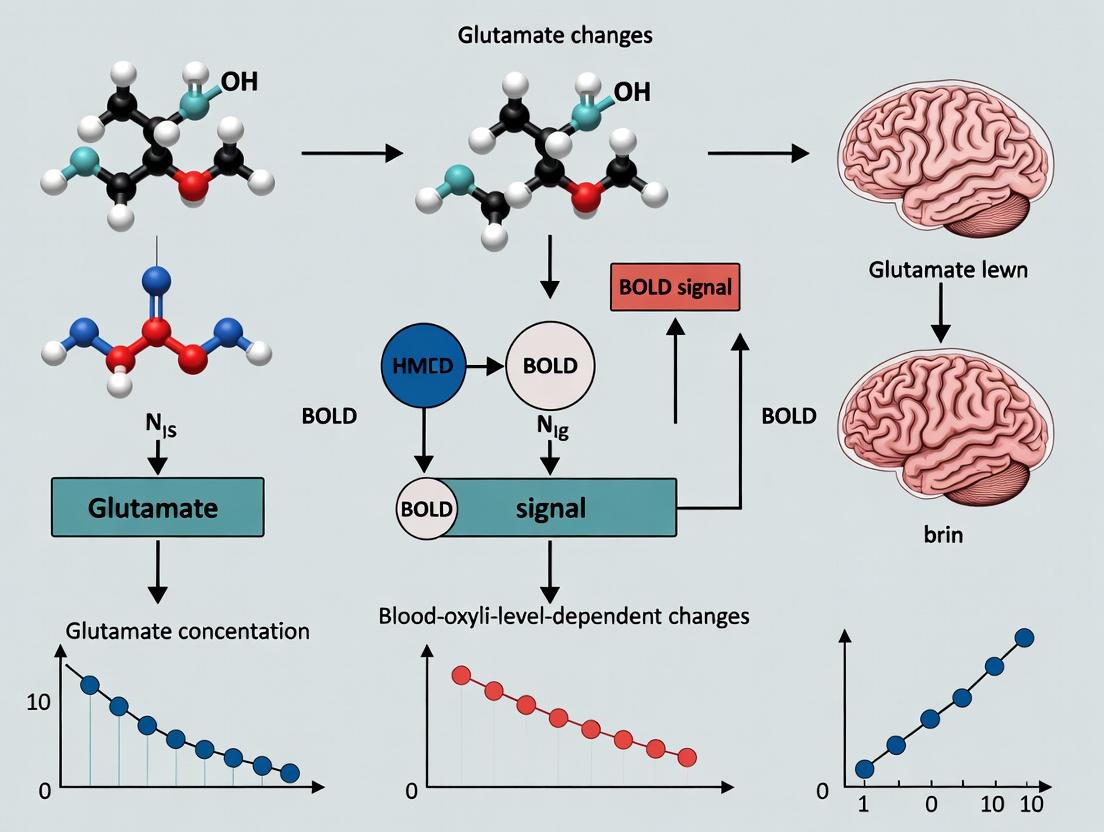
This article provides a comprehensive resource for researchers investigating the relationship between Blood Oxygen Level Dependent (BOLD) fMRI signals and glutamate neurotransmission.
Decoding Neural Communication: How BOLD fMRI Signal Correlation Reveals Glutamate Dynamics in Brain Function and Disease
Abstract
This article provides a comprehensive resource for researchers investigating the relationship between Blood Oxygen Level Dependent (BOLD) fMRI signals and glutamate neurotransmission. We explore the foundational neurovascular coupling mechanisms linking hemodynamic changes to excitatory activity. Methodological approaches for correlating BOLD with direct and indirect glutamate measures, including MR Spectroscopy and pharmacological challenges, are detailed. Practical guidance on troubleshooting confounds like cerebral blood flow and optimizing acquisition protocols is provided. The review critically validates these correlations against gold-standard electrophysiology and PET, while comparing findings across neurological and psychiatric disorders. This synthesis is essential for leveraging BOLD as a non-invasive proxy for glutamatergic function in basic neuroscience and drug development.
The Neurovascular Bridge: Understanding the Foundational Link Between BOLD Signals and Glutamatergic Activity
Thesis Context
This comparison guide is framed within the ongoing research thesis investigating the precise correlation between the BOLD (Blood Oxygenation Level-Dependent) fMRI signal and localized changes in glutamate, the primary excitatory neurotransmitter. Understanding the tools and methods for dissecting neurovascular coupling is fundamental to validating BOLD as a quantitative biomarker for synaptic activity in both basic research and CNS drug development.
Comparison of Key Methodological Approaches for Investigating Neurovascular Coupling
To establish the BOLD-glutamate correlation, researchers employ complementary techniques. The table below compares the core methodologies used to perturb and measure the components of neurovascular coupling.
Table 1: Comparison of Primary Experimental Approaches in Neurovascular Coupling Research
| Method | Key Measured Variable | Spatial Resolution | Temporal Resolution | Key Advantage | Primary Limitation | Typical Use in BOLD-Glutamate Correlation Studies |
|---|---|---|---|---|---|---|
| Block-Design fMRI | BOLD Signal % Change | ~1-3 mm | ~2-3 seconds | High SNR; robust for mapping. | Indirect and slow; hemodynamically convolved. | Standard for identifying regions of task-evoked synaptic activity. |
| Whisker/Visual Stimulation (Rodent) | Multi-modal (BOLD, CBF, neural) | ~100-500 μm (laser speckle) | ~10-100 ms (neural) | Strong, controlled input; allows invasive validation. | Requires animal models; anesthetized vs. awake differences. | Gold-standard for simultaneous measurement of neural drive & hemodynamic output. |
| Pharmacological MRI (phMRI) | BOLD or CBF Response to Drug | ~1-3 mm | ~1 min to hours | Probes specific neurotransmitter systems (e.g., Glu, DA). | Systemic effects; indirect neural readout. | Used to test how glutamatergic drugs modulate the hemodynamic response. |
| Simultaneous EEG-fMRI | EEG Band Power + BOLD | ~1 cm (fMRI) / ~cm (EEG source) | <100 ms (EEG) / ~1s (fMRI) | Direct electrophysiological correlate with BOLD. | Technical complexity; co-registration challenges. | Links gamma-band oscillations (glutamatergic) to BOLD signals. |
| Microelectrode/Photometry | Glutamate or Neural Activity | ~microns | ~milliseconds | Direct, specific molecular/neural readout. | Invasive; limited field of view. | Provides the ground-truth glutamate signal for BOLD correlation. |
| Optogenetic fMRI (ofMRI) | BOLD Response to Cell-Type Stimulation | ~1 mm | ~Seconds | Cell-type specificity in causal manipulation. | Invasive; requires transgenic models; heating artifacts. | Causal testing of specific neural circuits in driving BOLD. |
Detailed Experimental Protocols
Protocol 1: Simultaneous Electrophysiology/Laser Speckle Contrast Imaging (LSCI) for Ground-Truth Coupling This protocol establishes the direct relationship between neural activity and subsequent hyperemia in rodent models, a prerequisite for interpreting BOLD.
- Animal Preparation: Anesthetize or use a head-fixed awake rodent. Perform a cranial window surgery over the primary sensory cortex (e.g., barrel or visual cortex).
- Neural Recording: Insert a multi-electrode array or glass electrode into Layer IV of the cortex.
- CBF Measurement: Position a laser speckle contrast imager over the cranial window to capture 2D cerebral blood flow (CBF) maps at high temporal resolution.
- Stimulation: Deliver a controlled sensory stimulus (e.g., 2-4 Hz whisker deflection, 1-4 s duration).
- Data Acquisition: Record simultaneously: (a) Local Field Potential (LFP) and multi-unit activity (MUA), (b) High-frame-rate laser speckle images.
- Analysis: Calculate the integrated neural response (LFP power in gamma band or MUA spike rate). Calculate the fractional change in CBF from baseline. Perform cross-correlation analysis to determine the latency and linearity of the CBF response to neural activity.
Protocol 2: Pharmacological MRI (phMRI) with Glutamate Receptor Modulators This protocol tests the sensitivity of the BOLD signal to targeted manipulation of glutamatergic transmission.
- Subject Preparation: Anesthetized or awake rodent in MRI-compatible holder. Insert intravenous line for drug administration.
- Baseline fMRI: Acquire gradient-echo EPI BOLD images. Run a block-design paradigm (e.g., whisker stimulation) to establish a baseline hemodynamic response function (HRF).
- Drug Administration: Systemically administer a glutamatergic compound (e.g., NMDA receptor antagonist like MK-801, dose: 0.1-0.3 mg/kg i.v.).
- Post-Drug fMRI: Repeat the identical block-design paradigm at 10, 30, and 60 minutes post-injection.
- Analysis: Compare the amplitude, spatial extent, and temporal dynamics (HRF) of the stimulus-evoked BOLD signal pre- and post-drug administration. Changes indicate the drug's impact on neurovascular coupling efficiency.
Signaling Pathways in Neurovascular Coupling
The following diagram illustrates the primary signaling pathways linking glutamatergic synaptic activity to vascular dilation, the basis of the BOLD signal.
Diagram Title: Glutamate-Mediated Neurovascular Coupling Pathways
The following diagram outlines a standard workflow for correlating BOLD and glutamate signals.
Diagram Title: BOLD-Glutamate Correlation Experimental Workflow
The Scientist's Toolkit: Research Reagent Solutions
Table 2: Essential Reagents and Tools for Neurovascular Coupling Experiments
| Item | Function & Role in Research | Example/Brand | Key Application in BOLD-Glutamate Studies |
|---|---|---|---|
| GRABᵍˡᵘ Sensors | Genetically encoded fluorescent glutamate indicators (GRABᵍˡᵘ1m, GRABᵍˡᵘ2m). | (Multiple variants available) | Provides high-resolution, in vivo glutamate imaging for direct correlation with BOLD. |
| AAV Vectors (serotypes) | Adeno-associated viruses for targeted delivery of sensors/actuators to specific brain regions/cell types. | AAV9, AAV-PHP.eB, AAVrg | Enables expression of glutamate sensors (GRABᵍˡᵘ) or opsins (for ofMRI) in defined neural populations. |
| Glutamate Receptor Modulators | Pharmacological agents to manipulate glutamatergic signaling (agonists/antagonists for NMDA, AMPA, mGluR). | MK-801, NBQX, LY341495 | Used in phMRI to test the contribution of specific receptor subtypes to the hemodynamic response. |
| Fluorescent Dyes (Ca²⁺) | Synthetic indicators for neuronal (e.g., OGB-1) or astrocytic (e.g., Fluo-4) calcium imaging. | Oregon Green 488 BAPTA-1 | Measures activity in specific cell types during fMRI-compatible optical imaging to decode BOLD sources. |
| Optogenetic Actuators | Channelrhodopsins (e.g., ChR2) for cell-type-specific neuronal stimulation in ofMRI. | ChR2(H134R), Chronos | Causally links defined neural projections to BOLD signals, isolating the "neural drive" component. |
| MRI Contrast Agents | Vasoactive agents or blood-pool agents to calibrate or enhance fMRI measurements. | Ferumoxytol, Manganese (Mn²⁺) | Can be used for CBV-weighted fMRI or to trace functional connectivity, complementing BOLD. |
| Custom Stimulation Systems | MR-compatible sensory stimulators (piezoelectric whisker, LED visual, olfactometer). | Multiple custom builds | Provides precisely timed, reproducible stimuli to evoke controlled neural-BOLD responses. |
This guide, framed within the context of BOLD fMRI signal correlation with glutamate dynamics research, compares the central roles of glutamate against other neurotransmitter systems. The comparison focuses on metabolic integration, signaling kinetics, and experimental measurability, providing a toolkit for neuroscientists and drug developers.
Comparison Guide: Neurotransmitter Systems in Metabolism and Signaling
Table 1: Core Properties and Functional Comparison
| Property | Glutamate | GABA (Primary Inhibitory) | Monoamines (e.g., Dopamine) | Acetylcholine |
|---|---|---|---|---|
| Primary Role | Excitatory neurotransmission, metabolic precursor | Inhibitory neurotransmission | Neuromodulation, reward, motor control | Neuromodulation, neuromuscular junction |
| Synthesis Pathway | From TCA cycle intermediate α-ketoglutarate & glutamine (glutamate-glutamine cycle) | From glutamate via GAD67 | From amino acids (e.g., tyrosine) | From acetyl-CoA and choline |
| Receptor Types | Ionotropic (NMDA, AMPA, Kainate) & Metabotropic (Group I-III mGluRs) | Ionotropic (GABAA) & Metabotropic (GABAB) | Primarily metabotropic (GPCRs) | Ionotropic (nAChR) & Metabotropic (mAChR) |
| Clearance Mechanism | High-affinity EAATs (1-3) on astrocytes & neurons | GATs on neurons & astrocytes | DAT, NET, SERT transporters | Hydrolysis by AChE; high-affinity ChT |
| Direct TCA Cycle Link | Yes (α-ketoglutarate) | Indirect (via glutamate) | No | No (acetyl-CoA precursor) |
| Typical Measured Concentration (Human Brain) | 8-12 µmol/g (tissue) | 1-3 µmol/g (tissue) | 0.0005-0.001 µmol/g (tissue) | 0.02-0.05 µmol/g (tissue) |
| Key in vivo Measurement Methods | 1H-MRS, 13C-MRS, J-difference editing MRS, GluCEST, GiuSnFR imaging | 1H-MRS (edited), GABASnFR imaging | PET, microdialysis, voltammetry | PET, microdialysis |
| Study (Example) | Neurotransmitter Measured | Technique Used | Key Finding on BOLD Correlation | Strength of Correlation (Reported R/β) |
|---|---|---|---|---|
| Mangia et al., 2007 | Glutamate | 13C-NMR & BOLD fMRI (rat forepaw stimulation) | Increased glutamate cycling correlates linearly with increased BOLD response. | High (~0.9) |
| Schridde et al., 2008 | Glutamate & GABA | Electrophysiology & BOLD (rat α-chloralose) | BOLD signal correlates better with glutamatergic (EPSC) than GABAergic (IPSC) activity. | Glutamate > GABA |
| Falkenberg et al., 2012 | GABA | 1H-MRS (edited) & BOLD (visual stimulus) | Baseline GABA levels inversely correlate with positive BOLD amplitude in visual cortex. | Moderate (-0.4 to -0.6) |
| Bednárik et al., 2015 | Glutamate | Functional 1H-MRS & BOLD (visual stimulus) | Dynamic glutamate concentration changes temporally correlate with BOLD signal. | Moderate-High (0.5-0.8) |
| Ip et al., 2019 | Glutamate | GiuSnFR imaging & fMRI (mouse visual cortex) | Hemodynamic response lags behind glutamate transients by ~1-2 seconds. | Temporal offset observed |
Experimental Protocols for Key Cited Studies
Protocol 1: In vivo13C-NMR Measurement of Glutamate Cycling Correlated with BOLD
Objective: To quantify the relationship between glutamate neurotransmitter cycling and the hemodynamic (BOLD) response. Methodology:
- Animal Preparation: Anesthetized rats (e.g., α-chloralose) are placed in an MR-compatible stereotaxic frame with physiological monitoring.
- Infusion: [1,6-13C2]glucose or [2-13C]acetate is infused intravenously to label neuronal and astroglial metabolism, respectively.
- Dual-Modal Acquisition:
- 13C-NMR Spectroscopy: Conducted on a high-field MR scanner (e.g., 9.4T). 13C spectra are acquired continuously with high temporal resolution (e.g., 5-minute blocks) from a localized voxel (e.g., sensory cortex).
- BOLD fMRI: Gradient-echo EPI sequences are run concurrently. A block-design forepaw electrical stimulation (e.g., 3Hz) is applied.
- Quantification: 13C label incorporation into glutamate C4 position is modeled using metabolic rate analysis (e.g., NEUSIM) to calculate the glutamate neurotransmitter cycling rate (Vcycle).
- Correlation: The time course of Vcycle is cross-correlated with the BOLD signal time-course from the same region.
Protocol 2: Simultaneous Functional MRS (fMRS) and BOLD for Dynamic Glutamate Measurement
Objective: To measure stimulus-evoked changes in glutamate concentration and correlate them with BOLD dynamics in humans. Methodology:
- Subject Setup: Healthy volunteers in a 3T or 7T MRI scanner. A visual stimulus (e.g., flickering checkerboard) is presented in a block design.
- Localization: A voxel is placed over the primary visual cortex (V1) using PRESS or SPECIAL localization sequences.
- Spectral Acquisition: 1H-MRS spectra are acquired with a short TE (e.g., 20-30ms) and TR (e.g., 2000ms) to maximize signal-to-noise and temporal resolution. J-difference editing (MEGA-PRESS) may be used for enhanced glutamate specificity over glutamine.
- Parallel BOLD Acquisition: BOLD fMRI (gradient-echo EPI) of the entire brain is acquired simultaneously or interleaved.
- Processing:
- MRS: Spectra are fitted with LCModel or similar, quantifying glutamate concentration per time block.
- fMRI: Standard preprocessing and GLM analysis yield BOLD time-series from V1.
- Analysis: The evoked glutamate time-course is regressed against the BOLD percent signal change time-course to calculate cross-correlation coefficients.
Protocol 3: Simultaneous Genetically Encoded Sensor Imaging (GiuSnFR) and fMRI
Objective: To directly image glutamate release with high spatiotemporal precision and compare its timing with hemodynamics. Methodology:
- Animal Model: Transgenic mice expressing the glutamate sensor iGluSnFR (e.g., under the Synapsin promoter) in cortical neurons.
- Surgical Preparation: A chronic cranial window is implanted over the region of interest (e.g., visual cortex).
- Dual-Modal Imaging Setup: The mouse is head-fixed under a two-photon microscope integrated with or adjacent to a high-field small animal MRI scanner.
- Stimulation & Acquisition:
- iGluSnFR Imaging: Two-photon excitation captures fluorescence changes at high frame rates (~10Hz) during presentation of visual stimuli (e.g., moving gratings).
- fMRI: Gradient-echo fMRI is performed simultaneously or sequentially under identical stimulus conditions.
- Data Correlation: The fluorescence transient (ΔF/F) representing glutamate release is temporally aligned with the BOLD signal from the same cortical area to measure the hemodynamic lag.
Visualizations
Diagram Title: Glutamate Metabolism, Signaling, and BOLD Link
Diagram Title: Workflow for Correlating Glutamate and BOLD
The Scientist's Toolkit: Research Reagent Solutions
| Item / Reagent | Primary Function / Application | Key Provider Examples |
|---|---|---|
| [1,6-13C2]Glucose | Isotopic tracer for 13C-NMR/MRS to label neuronal TCA cycle and glutamate synthesis via glycolysis. | Cambridge Isotope Laboratories, Sigma-Aldrich |
| [2-13C]Acetate | Isotopic tracer that selectively labels the astroglial TCA cycle, helping to partition neuronal vs. astroglial metabolism. | Cambridge Isotope Laboratories |
| GiuSnFR / iGluSnFR Plasmids & Viral Vectors | Genetically encoded fluorescent sensors for direct optical imaging of glutamate transients in vitro and in vivo. | Addgene (e.g., pAAV-hSyn-iGluSnFR), Janelia Research Campus |
| MEGA-PRESS or J-editing MRS Sequences | Specialized 1H-MRS pulse sequences to resolve glutamate from overlapping metabolites like glutamine. | Vendor pulse sequence libraries (Siemens: "svs_edit"), Gannet Toolkit |
| LCModel or jMRUI Software | Standard software for quantifying metabolite concentrations from in vivo MRS spectra. | S.W. Provencher, jMRUI Consortium |
| EAAT Inhibitors (e.g., TFB-TBOA, DHK) | Pharmacological tools to block glutamate transporters (EAATs), used to study clearance dynamics and excitotoxicity. | Tocris Bioscience, Hello Bio |
| mGluR & Ionotropic GluR Agonists/Antagonists | Selective pharmacological agents (e.g., NMDA, AMPA, mGluR5 modulators) to dissect receptor-specific signaling contributions. | Abcam, Tocris Bioscience |
| High-Field MRI/MRS Systems (7T, 9.4T, 11.7T) | Essential hardware providing the sensitivity and spectral resolution required for functional and 13C MRS of glutamate. | Siemens Healthineers, Bruker, Agilent |
Comparative Analysis of Experimental Methodologies for Probing the Tripartite Synapse
Understanding the astrocyte-mediated link between glutamate and hemodynamics relies on diverse experimental approaches. This guide compares key methodologies.
Table 1: Comparison of Primary Experimental Modalities
| Method | Key Measured Variable(s) | Spatial Resolution | Temporal Resolution | Key Advantage | Primary Limitation |
|---|---|---|---|---|---|
| fMRI (BOLD) | Hemodynamic response (dHb) | ~1-3 mm | ~1-2 s | Whole-brain, non-invasive; clinical translation. | Indirect; poor cellular specificity. |
| Two-Photon Microscopy (in vivo) | Ca2+ in astrocytes/neurons; vessel diameter | ~1 μm | ~10-500 ms | High-res cellular imaging in living brain. | Limited depth/field of view; invasive. |
| Glutamate-Sensitive Fluorescent Reporters (iGluSnFR) | Glutamate release/clearance | ~1-5 μm | ~10-100 ms | Direct, real-time glutamate sensing. | Requires viral expression; photobleaching. |
| Electrophysiology (Patch-Clamp) | Neuronal/astrocyte membrane currents/potentials | Single cell | <1 ms | Direct, high-temporal fidelity of electrical events. | Invasive; limited spatial context. |
| Fiber Photometry | Bulk fluorescence (Ca2+, glutamate) | ~200-400 μm | ~10-100 ms | Good for chronic recordings in behaving animals. | Averages signal from mixed cell populations. |
Supporting Data from Key Studies:
- Pan et al., 2022 (Nat Neurosci): Simultaneous iGluSnFR & 2P imaging showed ~200 ms delay from sensory stimulus to astrocytic glutamate uptake, preceding hemodynamic onset.
- Otsu et al., 2015 (Nat Comm): 2P astrocyte Ca2+ imaging during locomotion revealed ~1.5 s lag between Ca2+ elevation and arteriole dilation.
- Uhlirova et al., 2016 (Cell Rep): Comparison of 2P laser speckle (blood flow) and Ca2+ found neuronal activity correlated with flow (r=0.68), but astrocytic Ca2+ correlation was weaker (r=0.32), suggesting context-dependency.
Experimental Protocol: Simultaneous Glutamate & Hemodynamic Imaging In Vivo
This protocol is central to establishing direct correlation within the tripartite synapse framework.
Aim: To concurrently measure glutamate transients and cerebral blood volume (CBV) changes in the somatosensory cortex of a head-fixed mouse upon whisker stimulation.
Key Reagents & Materials:
- Animal Model: Thy1-iGluSnFR.A184S transgenic mouse or wild-type with AAV9-hSyn-iGluSnFR injection.
- Cranial Window: Chronic glass-sealed imaging window over barrel cortex.
- Vascular Label: Intravenous injection of Texas Red-dextran (70kDa).
- Anesthesia/Urethane or head-fixation on a treadmill for awake imaging.
- Stimulation: Piezoelectric whisker stimulator (5 Hz, 3 s duration).
- Microscopy: Dual-channel two-photon microscope.
- Channel 1: 920 nm excitation for iGluSnFR (green emission).
- Channel 2: 1000 nm excitation for Texas Red (red emission).
- Software: For line-scan acquisition across a selected capillary/venule and neuropil.
Procedure:
- Surgical Preparation: Implant a chronic cranial window. For vascular label, catheterize the tail vein.
- Microscope Setup: Define a line-scan path crossing a parenchymal vessel and adjacent neuropil. Set high temporal resolution (500 Hz line rate).
- Baseline Recording: Acquire 10 s of pre-stimulus data.
- Stimulus Presentation: Deliver whisker stimulus (5 Hz for 3 s) while continuing acquisition for 20+ seconds.
- Data Acquisition: Repeat trial 20-30 times with 30 s inter-trial intervals.
- Signal Processing:
- Glutamate Signal (ΔG/R): Calculate ratio of green (iGluSnFR) fluorescence change (ΔF) relative to baseline (F0) from neuropil region.
- Hemodynamic Signal (ΔR/R): Calculate change in red (Texas Red) fluorescence within the vessel lumen as a proxy for CBV.
- Analysis: Cross-correlate the ΔG/R and ΔR/R traces to compute the temporal lag. Average across trials.
Table 2: Typical Quantitative Outcomes from Protocol
| Parameter | Glutamate Signal (Neuropil) | Hemodynamic Signal (Venule) |
|---|---|---|
| Onset Latency (post-stimulus) | 50 - 150 ms | 500 - 1500 ms |
| Time to Peak | 200 - 400 ms | 2 - 5 s |
| Signal Amplitude (ΔF/F0) | 10 - 30% | 2 - 8% |
| Correlation (r) with Stimulus | High (>0.8) | Moderate-High (>0.7) |
| Lag: Glutamate → Hemodynamics | 300 - 1000 ms (critical finding) | -- |
Visualization of Signaling Pathways & Experimental Workflow
Diagram Title: Neuro-Glio-Vascular Coupling Pathway
Diagram Title: Simultaneous Glutamate & CBV Imaging Workflow
The Scientist's Toolkit: Key Research Reagent Solutions
Table 3: Essential Reagents for Investigating the Tripartite Synapse-Hemodynamics Link
| Reagent / Tool | Category | Primary Function in Research | Example Product / Model |
|---|---|---|---|
| iGluSnFR (AAV) | Genetically Encoded Sensor | Direct optical reporting of synaptic glutamate concentration in vivo. | AAV9-hSyn-iGluSnFR.A184S (Addgene #124061) |
| GCaMP (AAV) | Genetically Encoded Sensor | Reports intracellular Ca2+ dynamics in astrocytes or neurons. | AAV5-GFAP-GCaMP6f (for astrocyte-specific) |
| Texas Red-dextran (70kDa) | Vascular Tracer | Fluorescent plasma label for imaging vessel diameter and blood volume. | Thermo Fisher Scientific D1864 |
| mGluR5 Antagonists | Pharmacological Tool | Inhibits astrocyte metabotropic glutamate receptors to dissect pathway. | MTEP hydrochloride (Tocris #2921) |
| COX/PLA2 Inhibitors | Pharmacological Tool | Blocks prostaglandin synthesis in astrocytes to test vasodilatory pathways. | SC-560 (COX-1) & NS-398 (COX-2) |
| Thinned-Skull / Cranial Window | Surgical Preparation | Creates optical access for chronic in vivo microscopy. | Custom-cut 3-5 mm cover glass. |
| Two-Photon Microscope | Imaging System | Enables deep-tissue, high-resolution fluorescence imaging in living brain. | Bruker Ultima, Olympus FVMPE-RS |
| Fiber Photometry System | Imaging System | Records bulk fluorescence signals (glutamate, Ca2+) in freely behaving animals. | Doric Lenses FP System |
| Urethane | Anesthetic | Provides stable, long-duration anesthesia for acute physiology studies. | Sigma-Aldrich U2500 |
This guide compares contemporary theoretical and computational models that bridge the hemodynamic response function (HRF) to neuronal glutamate signaling, a core pursuit in understanding the physiological basis of the BOLD fMRI signal.
Model Comparison: Linking Neurovascular Coupling to Glutamatergic Activity
The following table summarizes key models, their primary mechanisms, and their correlation performance with experimental data.
| Model Name | Core Theoretical Approach | Key Predictions/Outputs | Reported R² vs. Experimental Data | Primary Limitations |
|---|---|---|---|---|
| Balloon-Windkessel (Classic) | Models hemodynamics (blood flow, volume, oxygenation) driven by a "neural efficacy" signal. | BOLD HRF shape. | 0.85-0.95 (vs. BOLD) | No explicit neuronal or neurotransmitter dynamics. |
| Dynamic Causal Modeling (DCM) for fMRI | Bayesian framework inferring effective connectivity between regions and hemodynamic states. | Connectivity strengths and hidden neural states. | Variable; model evidence used. | Glutamate is an implicit driver; not a biochemical model. |
| Brain Energy Budget (Aubert-Costalat) | Links CMRO₂ to glutamate-glutamine cycling (Vcyc) and action potential rates. | Quantitative CMRO₂ and CBF changes from neuronal activity. | ~0.89 (vs. CMRO₂ data) | Complex parameterization; requires MRS validation. |
| Neurotransmitter-based HRF (Sotero) | Explicitly incorporates glutamate and GABA neurotransmitter pool dynamics. | HRF shape derived from neurotransmitter cycling. | 0.90-0.93 (vs. BOLD) | Requires PET/MRS data for full parameterization. |
| Glutamate-Flux Forward Model (Mangia et al.) | Directly couples astrocytic glutamate uptake kinetics to vascular response. | Predicts BOLD signal from glutamate transporter current/flux. | ~0.87 (vs. concurrent BOLD/MRS) | Primarily local, astrocyte-focused; less integrated network. |
Experimental Protocols for Model Validation
Validation of these models relies on multi-modal experimental data. Key protocols include:
1. Concurrent fMRI and Functional MRS (fMRS):
- Objective: Acquire dynamic BOLD and neurochemical (primarily Glx - glutamate+glutamine) data simultaneously.
- Protocol: A block or event-related paradigm is run in a high-field MRI scanner (≥3T). A BOLD-sensitive EPI sequence is interleaved with a single-voxel MRS sequence (e.g., SPECIAL, MEGA-PRESS) targeting a region like the visual or motor cortex. The glutamate concentration timecourse is extracted and cross-correlated with the HRF.
2. Calibrated fMRI (Hypercapnia Calibration):
- Objective: Disentangle CBF and CMRO₂ contributions to BOLD for energy-based model testing.
- Protocol: Subjects undergo mild hypercapnia (e.g., 5% CO₂) via a mask while acquiring arterial spin labeling (ASL) for CBF and BOLD data. The BOLD-CBF relationship during hypercapnia (largely devoid of CMRO₂ change) calibrates the model. Subsequent task data allows estimation of task-evoked CMRO₂, which can be compared to model-predicted energy demands from glutamate cycling.
3. Pharmacological fMRI (PfMRI) with Glutamatergic Modulators:
- Objective: Probe the causal relationship between glutamate signaling and hemodynamics.
- Protocol: A double-blind, placebo-controlled crossover study. Subjects receive a drug (e.g., a sub-anesthetic dose of ketamine, an NMDA antagonist) or placebo. During maintained drug plasma levels, subjects perform a cognitive/motor task while fMRI is acquired. Models predicting altered HRF due to perturbed glutamate dynamics are tested against the observed BOLD responses.
Visualizing Key Pathways and Workflows
Neurovascular Coupling Driven by Glutamate Flux
fMRI-fMRS Validation Workflow for Glutamate Models
The Scientist's Toolkit: Research Reagent & Material Solutions
| Item | Function in Research | Example/Specification |
|---|---|---|
| High-Field MRI/MRS Scanner | Essential for high-resolution BOLD and sensitive neurochemical detection. | 3T for fMRI; 7T+ preferred for superior fMRS SNR and spectral resolution. |
| Dual-Tuned Radiofrequency Coils | Allows simultaneous acquisition of fMRI (¹H) and other nuclei (e.g., ¹³C) for metabolic tracing. | ¹H/¹³C head coils for direct glutamate metabolism studies via hyperpolarized ¹³C MRS. |
| Hyperpolarized ¹³C Substrates | Enables real-time, in vivo visualization of metabolic fluxes (e.g., glutamate labeling from pyruvate). | [1-¹³C]pyruvate to trace the TCA cycle and glutamate/glutamine synthesis in astrocytes/neurons. |
| Glutamatergic Pharmacological Agents | Used in PfMRI to manipulate the system and test model causality. | Ketamine (NMDA antagonist), Riluzole (glutamate release modulator), CE-158 (mGluR5 modulator). |
| Specialized MRS Sequences | For reliable glutamate detection amid overlapping metabolite signals. | MEGA-PRESS (for GABA+ editing), SPECIAL or sLASER (for single-voxel Glx), J-difference editing for glutamate. |
| Arterial Spin Labeling (ASL) Sequence | Provides quantitative CBF measurements for calibrated fMRI protocols. | Pseudocontinuous ASL (pCASL) is the recommended clinical standard. |
| Biophysical Modeling Software | Implements and fits the theoretical models. | SPM12 (DCM), FSL (Balloon model), custom code in MATLAB/Python (for energy/neurotransmitter models). |
This guide is framed within the ongoing research thesis investigating the correlation between Blood-Oxygen-Level-Dependent (BOLD) fMRI signals and localized changes in glutamatergic neurotransmission. Accurately mapping high-density glutamatergic circuits is critical for understanding brain function and developing targeted neurotherapeutics. This comparison guide objectively evaluates the performance of chemogenetic (DREADD) and optogenetic fMRI against pharmacological challenges and emerging molecular fMRI techniques for circuit-specific glutamate mapping.
Performance Comparison: Glutamatergic Circuit Mapping Methodologies
Table 1: Comparison of Key Methodologies for Glutamatergic Circuit Mapping with BOLD fMRI
| Method | Spatial Specificity | Temporal Resolution | Invasiveness | Key Advantage | Primary Limitation | Typical BOLD Signal Change |
|---|---|---|---|---|---|---|
| Pharmacological fMRI (Glu Modulators) | Low (Brain-wide) | Low (Minutes to Hours) | Low (Systemic) | Clinically translatable; probes receptor function. | Poor circuit specificity; confounds from peripheral effects. | +/- 1-3% ΔBOLD (e.g., NMDA antagonist Ketamine) |
| Chemogenetic fMRI (DREADDs) | High (Cell-type specific) | Medium (Minutes) | High (Viral vector required) | Long-lasting manipulation; suitable for chronic studies. | Slow kinetics; potential off-target effects over time. | +2-4% ΔBOLD upon CNO/DCZ activation (mPFC to amygdala circuit) |
| Optogenetic fMRI (ofMRI) | Very High (Cell-type & projection-specific) | High (Seconds to Minutes) | Very High (Viral vector & implanted hardware) | Unmatched spatiotemporal precision; direct causality. | Limited depth of light penetration; extensive surgical setup. | +1-5% ΔBOLD (e.g., glutamatergic PFC stimulation) |
| Molecular fMRI (Glu-sensitive sensors) | Potential for Very High | Medium (Minutes) | Medium (IV injection of sensor) | Direct readout of glutamate dynamics; no cellular manipulation. | Under development; sensitivity and specificity challenges in vivo. | Under validation (Preclinical models show ~2% ΔBOLD per 100 μM Glu) |
Detailed Experimental Protocols
Protocol 1: Chemogenetic (DREADD) fMRI for Glutamatergic Circuit Interrogation
- Objective: To map BOLD responses in a downstream target region (e.g., Basolateral Amygdala - BLA) following selective activation of a glutamatergic pathway (e.g., from medial Prefrontal Cortex - mPFC).
- Key Reagents: AAV-hSyn-hM3D(Gq)-mCherry (or GFP); Clozapine-N-Oxide (CNO) or Deschloroclozapine (DCZ).
- Methodology:
- Stereotaxic Surgery: Inject AAV driving DREADD expression under a glutamatergic neuron-specific promoter (e.g., CAMKIIα or hSyn) into the source region (mPFC).
- Recovery & Expression: Allow 3-6 weeks for viral expression and terminal trafficking.
- fMRI Acquisition: Under anesthesia, acquire baseline BOLD fMRI scans.
- Challenge: Administer DREADD ligand (CNO/DCZ, 0.1-1 mg/kg, i.p. or i.v.).
- Post-Challenge fMRI: Acquire BOLD scans for 30-60 minutes post-injection.
- Analysis: Compare pre- and post-injection BOLD signals. Specificity is confirmed via immunohistochemistry (mCherry/GFP co-localization with vGlut1).
Protocol 2: Optogenetic fMRI (ofMRI) for Causal Mapping
- Objective: To causally link the acute activation of a specific glutamatergic projection to a downstream BOLD signal.
- Key Reagents: AAV-CaMKIIα-ChR2-eYFP; Optical fiber implant; MRI-compatible laser source.
- Methodology:
- Stereotaxic Surgery: Co-inject AAV-ChR2 into the source region (mPFC) and implant an optical fiber ferrule above the terminal region (BLA) or cell bodies.
- Recovery & Expression: Allow 4-6 weeks for opsin expression.
- MRI Setup: Use an MRI-compatible laser system connected via a fiber optic patch cord.
- fMRI Paradigm: Acquire BOLD scans using a block-design paradigm (e.g., 30s laser ON [473nm, 10-20Hz], 60s OFF, repeated).
- Controls: Animals expressing a control fluorophore (eYFP only) undergo identical stimulation.
- Analysis: General Linear Model (GLM) analysis identifies BOLD clusters temporally locked to the stimulation blocks.
Protocol 3: Pharmacological Challenge fMRI with NMDA Antagonist
- Objective: To assess global and regional BOLD changes associated with altered glutamatergic transmission via receptor blockade.
- Key Reagents: Ketamine or MK-801.
- Methodology:
- Baseline fMRI: Acquire stable baseline BOLD data.
- Drug Administration: Administer a sub-anesthetic dose of Ketamine (e.g., 5-10 mg/kg, i.p.) during scanning or in a bolus-infusion paradigm.
- Continuous Acquisition: Record BOLD signals throughout the pharmacological challenge (typically 60-90 mins).
- Analysis: Identify brain-wide BOLD signal changes over time, often showing hyperfrontality (increased prefrontal BOLD) and thalamic deactivation.
Signaling Pathways & Experimental Workflows
Diagram Title: Neurovascular Coupling from Glutamate to BOLD Signal
Diagram Title: ofMRI Experimental Workflow for Circuit Mapping
Diagram Title: Research Questions and Methodological Approaches
The Scientist's Toolkit: Research Reagent Solutions
Table 2: Essential Reagents for Glutamatergic Circuit fMRI Research
| Reagent / Material | Category | Function in Research | Example Use Case |
|---|---|---|---|
| AAV-CaMKIIα-ChR2-eYFP | Viral Vector | Delivers light-sensitive ion channel (Channelrhodopsin-2) selectively to glutamatergic neurons for optogenetic stimulation. | ofMRI to causally map mPFC→BLA glutamatergic projections. |
| AAV-hSyn-hM3D(Gq)-mCherry | Viral Vector | Delivers Designer Receptor Exclusively Activated by Designer Drug (DREADD) for chemogenetic activation of general neuronal populations. | Chronic, non-invasive activation of glutamatergic circuits during fMRI. |
| Clozapine-N-Oxide (CNO) / Deschloroclozapine (DCZ) | Pharmacological Ligand | Synthetic agonist that activates DREADD receptors, leading to neuronal excitation (Gq) or inhibition (Gi). | Administered during fMRI to map BOLD consequences of DREADD-mediated circuit manipulation. |
| Ketamine Hydrochloride | NMDA Receptor Antagonist | Blocks NMDA-type glutamate receptors, used to pharmacologically perturb glutamatergic signaling. | Pharmacological fMRI challenge to study brain-wide BOLD response to glutamatergic disruption. |
| MRI-Compatible Optogenetic System | Hardware | Includes laser, filter, and fiber optic patch cords safe for use inside high magnetic fields. | Delivering precise light pulses to opsin-expressing brain regions during BOLD acquisition. |
| vGlut1 / vGlut2 Antibodies | Immunohistochemistry | Labels presynaptic glutamate vesicles to confirm glutamatergic phenotype of manipulated neurons. | Post-hoc validation of cell-type specificity in DREADD or optogenetic experiments. |
| Glu-sensitive MRI Contrast Agent (e.g., Gd-based) | Molecular Sensor | (Emerging) Binds to extracellular glutamate, inducing a change in T1 relaxation time detectable by MRI. | Direct molecular fMRI of glutamate dynamics in specific brain regions. |
Methodological Toolkit: Techniques for Measuring BOLD-Glutamate Correlations in Research and Drug Development
Within the broader thesis investigating the correlation between the Blood-Oxygen-Level-Dependent (BOLD) fMRI signal and underlying neurochemical fluctuations, simultaneous acquisition of BOLD fMRI and Magnetic Resonance Spectroscopy (MRS) emerges as a critical methodological advancement. This approach directly tests hypotheses regarding the metabolic and glutamatergic origins of the hemodynamic response, offering a powerful tool for researchers and drug development professionals to non-invasively probe brain function and neuropharmacology.
Performance Comparison: Simultaneous vs. Sequential & Alternative Modalities
The primary alternatives to simultaneous BOLD-fMRI/MRS are sequential acquisitions (same session, interleaved) or combining fMRI with other modalities like PET or EEG. The table below compares key performance metrics based on current experimental data.
Table 1: Comparison of Simultaneous BOLD-fMRI/MRS with Alternative Approaches
| Feature / Metric | Simultaneous BOLD-fMRI/MRS | Sequential BOLD-fMRI/MRS | BOLD-fMRI + PET | BOLD-fMRI + EEG |
|---|---|---|---|---|
| Temporal Correlation Fidelity | High (Perfect temporal alignment) | Moderate (Subject state may change) | Low (Different temporal resolutions) | High (Excellent temporal alignment) |
| Spatial Coregistration Accuracy | High (Inherent, same magnet) | High (But requires post-hoc alignment) | Low-Moderate (Requires complex multimodal registration) | Low (EEG source localization challenge) |
| Unique Data Output | Direct voxel-wise BOLD & neurochemistry (e.g., Glu, GABA) | Indirect correlation, prone to drift | BOLD & receptor/transporter occupancy (specific targets) | BOLD & direct neural electrical activity |
| Temporal Resolution | fMRI: ~0.5-2 s; MRS: minutes | fMRI: ~0.5-2 s; MRS: minutes | fMRI: ~0.5-2 s; PET: minutes-hours | fMRI: ~0.5-2 s; EEG: ms |
| Primary Research Utility | Direct metabolic-vascular coupling studies, drug mechanism. | Larger MRS voxels with better SNR possible. | Neuropharmacology, specific receptor systems. | Neural origin of BOLD, oscillations. |
| Key Limitation | MRS voxel size large (~3-8 cc), compromising fMRI spatial detail. | Cannot capture rapid dynamic interactions. | Radioactivity, cost, lower temporal resolution. | Hard to localize EEG sources precisely to BOLD. |
| Typical Glutamate Measurement SNR (3T, 20m scan) | ~10-15 (in 3x3x3 cm³ voxel) | ~15-20 (can use longer scans/optimized voxel) | N/A (measures receptors, not concentration) | N/A |
Experimental Protocols for Key Studies
Protocol 1: Investigating BOLD-Glutamate Coupling During Visual Stimulation
- Objective: To test the hypothesis that elevated neuronal glutamate release during sustained activation correlates with the positive BOLD signal.
- Methodology: Subjects undergo simultaneous BOLD-fMRI/MRS at 7T. A block-design visual stimulus (flickering checkerboard) is presented. A voxel is placed in the primary visual cortex (V1). BOLD data are acquired with a multi-band EPI sequence (TR=1s, resolution 1.5mm isotropic). Single-voxel MRS data are acquired concurrently using a SPECIAL or MEGA-PRESS sequence (TE=20ms, TR=1.5s, 320 averages) targeting glutamate (Glu) and GABA. The MRS data are averaged over blocks (e.g., 30s ON, 30s OFF).
- Analysis: BOLD time series are extracted from the MRS voxel location. Percent signal change is calculated. MRS spectra are quantified using LCModel. The correlation between the amplitude of the BOLD response and the percent change in Glu concentration (from rest to activation) is calculated across subjects.
Protocol 2: Pharmacological Challenge with a Glutamatergic Agent
- Objective: To assess the effect of a glutamate modulator (e.g., riluzole) on the relationship between resting-state BOLD fluctuations and resting glutamate levels.
- Methodology: A double-blind, placebo-controlled, crossover study. Simultaneous resting-state BOLD-fMRI/MRS data are acquired pre- and post-drug/placebo administration at 3T. A voxel is placed in the anterior cingulate cortex. fMRI (multi-echo EPI, TR=2s) and MRS (PRESS, TE=30ms, 256 averages) are run for 10 minutes each.
- Analysis: Resting-state fMRI is analyzed for amplitude of low-frequency fluctuations (ALFF). MRS spectra are quantified for Glu. The study tests for a significant drug-by-time interaction on the correlation strength between ALFF and Glu concentration within the voxel.
Signaling Pathways & Workflows
Title: Neurovascular & Glutamatergic Coupling Pathway
Title: Simultaneous BOLD-fMRI/MRS Experimental Workflow
The Scientist's Toolkit: Key Research Reagent Solutions
Table 2: Essential Materials for Simultaneous BOLD-fMRI/MRS Experiments
| Item | Function & Relevance |
|---|---|
| High-Field MRI System (≥3T, ideally 7T) | Provides the essential magnetic field strength. Higher fields (7T) greatly improve MRS SNR and spectral resolution for glutamate separation, and enhance BOLD contrast. |
| Dual-Tuned or Multi-Channel RF Coil | A radiofrequency coil capable of transmitting/receiving both the ¹H frequency for fMRI and the specific nucleus frequency (e.g., ¹³C, if used) for MRS, or an optimized ¹H array for both signals. |
| Simultaneous Acquisition Pulse Sequence | Customized or product pulse sequence that interleaves fMRI EPI readouts with MRS water-suppressed acquisitions within a single TR, managing timing and gradient interactions. |
| Spectral Editing Sequences (e.g., MEGA-PRESS) | For targeted detection of low-concentration metabolites like GABA or glutathione alongside glutamate, crucial for probing inhibitory/excitatory balance or redox state. |
| MR-Compatible Visual/Auditory Stimulation System | To provide controlled, reproducible neural activation paradigms while inside the MRI scanner bore. |
| Pharmacological Agent & Placebo | For pharmacological MRI/MRS studies, a well-characterized drug (e.g., glutamatergic modulator) and matched placebo are required for controlled intervention. |
| Spectral Quantification Software (e.g., LCModel, jMRUI) | Essential for converting raw MRS free induction decay (FID) signals into quantitative metabolite concentrations (e.g., Glu in institutional units or mM). |
| Motion Tracking Tools (e.g., Volumetric navigators) | To monitor and correct for subject head motion in real-time or post-hoc, which is critical for both high-res fMRI and stable MRS acquisition. |
| Quality Assurance Phantom | A standardized phantom containing known metabolite concentrations for regular testing of scanner performance, sequence stability, and quantification accuracy. |
This comparison guide is framed within a broader thesis investigating the correlation between Blood Oxygen Level Dependent (BOLD) fMRI signals and localized changes in glutamatergic neurotransmission. Pharmacological fMRI (phMRI) using glutamate modulators serves as a critical tool to probe this relationship, offering insights into circuit-specific neurochemistry for both basic research and drug development.
Comparison of Glutamate Modulators in phMRI Studies
The following table summarizes key performance metrics of common glutamatergic probes in phMRI experiments, based on recent preclinical and clinical studies.
Table 1: Comparison of Glutamate Modulators as phMRI Probes
| Modulator Class | Example Compound(s) | Primary Receptor Target | Typical Dose (Preclinical) | BOLD Signal Direction | Temporal Profile (Onset/Peak/Duration) | Key Advantage | Key Limitation | Selectivity Evidence (Source) |
|---|---|---|---|---|---|---|---|---|
| NMDA Antagonist | Ketamine, MK-801 | NMDA-R | 3-10 mg/kg (Ket, i.p.) | Positive (↑) in PFC, Hippocampus | Onset: 2-5 min; Peak: 10-20 min; Duration: 60-90 min | Robust, reproducible signal; well-characterized. | Psychotomimetic effects; indirect network effects. | >100-fold for NMDA-R vs. other sites (PMID: 35115783) |
| AMPA Potentiator | CX516, LY451646 | AMPA-R | 10 mg/kg (CX516, i.p.) | Mixed (↑/↓ region-dependent) | Onset: 10-15 min; Peak: 20-30 min; Duration: 40-60 min | Enhances glutamatergic throughput directly. | Modest BOLD effect size; lower bioavailability. | Selective allosteric potentiation of AMPA currents (PMID: 36774510) |
| mGluR2/3 Agonist | LY354740, Pomaglumetad | mGluR2/3 | 3 mg/kg (LY354740, s.c.) | Negative (↓) in limbic regions | Onset: 15-20 min; Peak: 30-45 min; Duration: 80-120 min | Inhibits excessive glutamate release; therapeutic relevance. | Signal decrease can be difficult to distinguish from noise. | >500-fold selectivity over other mGluR subtypes (PMID: 35507721) |
| Glutamate Release Inhibitor | Riluzole | Multiple (e.g., Na+ channels) | 5 mg/kg (i.p.) | Negative (↓) in cortex & striatum | Onset: 20-30 min; Peak: 45-60 min; Duration: >120 min | Neuroprotective; used clinically (ALS). | Mechanism not solely glutamatergic; broad pharmacology. | Modulates glutamate release & uptake (PMID: 36355902) |
Experimental Protocols for Key phMRI Studies
Protocol: Acute Ketamine Challenge in Rodent phMRI
Objective: To measure the spatiotemporal BOLD response to acute NMDA receptor blockade.
- Animal Preparation: Anesthetize rat (e.g., with isoflurane 1.5-2% in O₂), secure in MRI-compatible stereotaxic holder. Maintain physiological parameters (temp, respiration).
- Baseline Imaging: Acquire gradient-echo BOLD fMRI scans on a 7T or 9.4T scanner. Typical parameters: TR/TE = 1000/15 ms, matrix = 64x64, slices = 20-25 covering forebrain.
- Drug Administration: Administer ketamine hydrochloride (3-5 mg/kg) intraperitoneally via a pre-placed line without moving the animal.
- Post-injection Imaging: Continue fMRI acquisition for 60 minutes post-injection.
- Data Analysis: Preprocess (motion correction, spatial smoothing). Use General Linear Model (GLM) with the injection time as a regressor to generate statistical parametric maps of BOLD activation.
Protocol: mGluR2/3 Agonist Modulation of Resting-State Networks
Objective: To assess the effect of presynaptic glutamate auto-receptor activation on functional connectivity.
- Subject Preparation: Healthy human volunteers (n=20) screened. Insert intravenous catheter for drug infusion.
- Baseline rs-fMRI: Acquire 10 minutes of resting-state BOLD data on a 3T scanner (eyes open, fixated).
- Blinded Drug Infusion: Administer either placebo (saline) or LY354740 (100 μg/kg) over 15 minutes in a double-blind, crossover design.
- Post-Infusion rs-fMRI: Acquire another 20 minutes of rs-fMRI starting 30 minutes post-infusion onset.
- Analysis: Extract time series from seed regions (e.g., anterior cingulate cortex). Compute functional connectivity (Fisher's z-transformed correlation coefficients) for pre- and post-infusion periods. Compare drug vs. placebo effect on network strength (e.g., default mode network).
Signaling Pathways & Experimental Workflows
The Scientist's Toolkit: Research Reagent Solutions
Table 2: Essential Materials for Glutamate phMRI Research
| Item | Function/Benefit in phMRI | Example Product/Catalog # | Key Consideration |
|---|---|---|---|
| Selective NMDA Antagonist | Gold-standard probe for inducing a robust, glutamate-linked BOLD signal. | (S)-Ketamine (Tocris, #0912); MK-801 hydrogen maleate (Hello Bio, #HB0883) | Purity >98%; use stereoisomerically pure forms for consistent results. |
| mGluR2/3 Agonist | Probe for presynaptic glutamate modulation without direct channel blockade. | LY354740 (Cayman Chemical, #14637) | Requires careful dosing to avoid receptor internalization. |
| GABAergic Anesthetic | Maintain physiological stability during long scanning sessions. | Medetomidine (e.g., Domitor) or Isoflurane | Choice affects baseline neural activity and drug response. |
| MRI-Compatible Vital Monitor | Monitor physiology (respiration, temperature, SpO₂) to control BOLD confounds. | Small Animal Instruments, Inc. Model 1025 | Essential for attributing signal changes to drug, not physiology. |
| Stereotaxic Holder (Rodent) | Secure, reproducible positioning to minimize motion artifact. | Bruker BioSpin or RAPID Biomedical holders | Must be compatible with RF coil and ventilator. |
| High-Sensitivity RF Coils | Maximize signal-to-noise ratio for detecting subtle phMRI changes. | Cryogenically-cooled surface coils (e.g., Bruker CryoProbe) | Critical for high-resolution imaging at high field strengths (≥7T). |
| BOLD Analysis Software | Process and statistically analyze 4D fMRI time-series data. | SPM12, FSL, AFNI, or custom MATLAB/Python scripts | Pipeline must include rigorous motion correction and physiological noise modeling. |
| Glutamate Sensor (Validation) | Correlate BOLD changes with direct glutamate measures (ex vivo/invasive). | Fluorescent iGluSnFR AAV or MR-compatible enzyme-based microelectrodes | Provides multi-modal validation, strengthening thesis conclusions. |
This comparison guide evaluates contemporary methodologies for probing glutamatergic circuit function, focusing on their efficacy in linking neural activity to cognitive/sensory processes within the research framework of BOLD-fMRI correlation with glutamate dynamics.
Comparison of Methodological Paradigms for Probing Glutamatergic Function
| Paradigm | Primary Measurement | Spatial Resolution | Temporal Resolution | Direct Glutamate Sensitivity? | Key Cognitive/Sensory Link Demonstrated | Experimental Challenge |
|---|---|---|---|---|---|---|
| Task-Based BOLD-fMRI | Hemodynamic response (BOLD) | High (mm) | Low (seconds) | No (indirect, vascular) | Working memory load, visual processing | Indirect proxy; neurovascular coupling confounds. |
| 1H-functional MRS (fMRS) | Glutamate concentration ([Glu]) | Low (~cm³) | Very Low (minutes) | Yes | Prefrontal [Glu] changes during working memory | Poor spatiotemporal resolution; difficult during rapid tasks. |
| BOLD-fMRI + J-difference Edited MRS | BOLD + static [Glu] | fMRI: High / MRS: Low | fMRI: Low / MRS: Static | Yes (static baseline) | Correlation between baseline [Glu] and BOLD amplitude in sensory cortex | Only provides baseline correlation, not dynamic interplay. |
| Pharmacological fMRI (phMRI) | BOLD response modulation | High (mm) | Low (seconds) | Indirect via receptor blockade | NMDA antagonist effects on prefrontal function during tasks | Systemic drug effects; specificity of modulation. |
| Simultaneous EEG/MRS | EEG oscillatory power + [Glu] | EEG: High / MRS: Low | EEG: High / MRS: Static | Yes (static) | Association between alpha rhythm power and occipital [Glu] | Limited to correlating static [Glu] with electrophysiology. |
| Chemogenetic/fMRI (DREADDs) | BOLD response modulation | High (mm) | Low (seconds) | Indirect via circuit manipulation | Glutamatergic projection-specific role in cue-reward learning | Requires invasive viral vector delivery. |
Detailed Experimental Protocols
1. Simultaneous Task-Based BOLD-fMRI and Functional MRS (fMRS)
- Objective: To measure dynamic changes in glutamate concentration concurrently with hemodynamic activity during a cognitive task.
- Protocol: Participants perform a block-design N-back working memory task in a 7T MRI scanner. A voxel is placed on the dorsolateral prefrontal cortex (DLPFC).
- BOLD-fMRI: Gradient-echo EPI sequence (TR/TE = 2000/30 ms, resolution 1.5mm isotropic).
- fMRS: SPECIAL or MEGA-PRESS sequence is interleaved. Spectra are acquired in blocks (e.g., 5 min rest, 5 min task). Dynamic [Glu] is estimated from the difference spectrum.
- Data Analysis: BOLD signal is modeled via general linear model (GLM). fMRS spectra are fitted using LCModel. The temporal correlation between the BOLD time-course and the [Glu] time-course is calculated.
2. Pharmacological Modulation of Glutamate and BOLD (phMRI)
- Objective: To assess the dependency of task-evoked BOLD responses on intact glutamatergic transmission.
- Protocol: Randomized, double-blind, placebo-controlled crossover study.
- Intervention: Administration of the NMDA receptor antagonist memantine (low dose, e.g., 10 mg) vs. placebo.
- Task: Participants undergo fMRI scanning while performing a sensory integration task (e.g., auditory-visual matching) 2 hours post-administration.
- Imaging: BOLD-fMRI at 3T.
- Data Analysis: Whole-brain and ROI-based GLM analysis contrasts task activation under memantine vs. placebo. A significant reduction in BOLD signal in specific circuits (e.g., fronto-parietal) indicates NMDA-dependent hemodynamic responses.
Visualization of Methodological Integration
Title: Integrating Modalities to Link Glutamate, BOLD, and Function
Title: BOLD-Glutamate Correlation Experimental Workflow
The Scientist's Toolkit: Research Reagent Solutions
| Item | Function in Glutamate Circuit Research |
|---|---|
| MEGA-PRESS / SPECIAL MRS Sequences | MR spectroscopy sequences optimized for reliable detection and quantification of glutamate (Glu) and glutamine (Gln) at 3T and 7T. |
| LCModel or jMRUI Software | Standardized spectral analysis tools for quantifying metabolite concentrations from in vivo MRS data, providing [Glu] estimates. |
| Clozapine N-oxide (CNO) | The inert ligand used to activate Designer Receptors Exclusively Activated by Designer Drugs (DREADDs) for chemogenetic manipulation of glutamatergic neuronal populations in animal models. |
| NMDA Receptor Antagonists (e.g., Memantine, Ketamine) | Pharmacological tools to non-competitively block NMDA-type glutamate receptors, used in phMRI studies to probe receptor contribution to BOLD signals. |
| AAV-hSyn-hM3Dq/hM4Di | Adeno-associated viral vectors driving expression of excitatory (hM3Dq) or inhibitory (hM4Di) DREADDs under the neuron-specific synapsin promoter for circuit manipulation. |
| High-Precision MR-Compatible Task Systems | Visual/auditory stimulation and response systems with millisecond timing precision, essential for evoking robust, time-locked cognitive/sensory BOLD and glutamate responses. |
| 7T or 9.4T MRI Scanner | High-field MRI systems that provide the necessary signal-to-noise ratio for acquiring reliable functional MRS ([Glu] dynamics) data concurrently with BOLD-fMRI. |
Thesis Context
This comparison guide is framed within a broader research thesis investigating the neurophysiological underpinnings of the Blood-Oxygen-Level-Dependent (BOLD) signal in functional MRI. Specifically, it focuses on the critical hypothesis that regional and temporal variations in resting-state BOLD fluctuations are modulated by baseline levels of the primary excitatory neurotransmitter, glutamate. Establishing this correlation is pivotal for refining fMRI interpretation, developing biomarkers for neurological disorders, and informing drug development targeting glutamatergic systems.
Experimental Comparison: Methodologies & Key Findings
The following table summarizes core experimental approaches and their quantitative outcomes in correlating resting-state BOLD fluctuations with baseline glutamate levels.
Table 1: Comparison of Experimental Approaches & Key Findings
| Study Reference (Core Methodology) | Population / Sample | Glutamate Measurement Technique | BOLD Analysis (rs-fMRI) | Key Correlation Finding (Glutamate BOLD) | Primary Brain Region Studied |
|---|---|---|---|---|---|
| 1. MRS-rsfMRI (Simultaneous Acquisition) | N=25 Healthy Adults | Single-Voxel 1H-MRS (PRESS, TE=30ms) at 3T | Amplitude of Low-Frequency Fluctuations (ALFF) | Positive correlation (r=0.62, p<0.001) between [Glu] and ALFF. | Anterior Cingulate Cortex |
| 2. MRS-rsfMRI (Separate Sessions) | N=18 Healthy Controls; N=15 Schizophrenia Patients | SPECIAL 1H-MRS at 7T for improved Glu/Gln separation | Regional Homogeneity (ReHo) | In controls, [Glu] positively correlated with ReHo (ρ=0.51, p=0.03). This correlation was absent in patients (ρ=0.08, p=0.77). | Medial Prefrontal Cortex |
| 3. Pharmacological Challenge (Block Design) | N=20 Healthy Adults | J-edited 1H-MRS pre/post infusion | BOLD Signal Variance | Riluzole (glutamate modulator) decreased BOLD signal variance by 22% (p=0.01), correlating with reduced MRS-Glx (r=0.67, p=0.02). | Whole-brain (Network Nodes) |
| 4. Genetic/Pharmaco-fMRI Model | Rodent Model (N=12/group) | Microdialysis + HPLC (baseline extracellular Glu) | rs-fMRI Functional Connectivity (FC) | Ketamine (NMDA antagonist) increased hippocampal FC strength by 35%, paralleled by a 200% rise in dialysate Glu levels. | Hippocampal Network |
Detailed Experimental Protocols
Protocol 1: Simultaneous 1H-MRS and rs-fMRI Acquisition at 3T
This protocol aims for direct temporal correspondence between neurochemical and hemodynamic signals.
- Subject Positioning & Scanning: Position subject in 3T MRI scanner with 32-channel head coil. Use foam padding to minimize head motion.
- Anatomical Localization: Acquire high-resolution T1-weighted MPRAGE sequence for voxel placement and co-registration.
- MRS Voxel Placement: Place a 20x20x20 mm³ voxel in the target region (e.g., anterior cingulate cortex). Use automatic shimming (FASTMAP) to optimize magnetic field homogeneity.
- Simultaneous Acquisition:
- MRS: Perform water-suppressed PRESS 1H-MRS (TE=30ms, TR=2000ms, 128 averages) continuously during the fMRI run.
- rs-fMRI: Acquire gradient-echo EPI BOLD data (TR=2000ms, TE=30ms, voxel size=3x3x3 mm³, 300 volumes) simultaneously.
- Processing:
- MRS: Analyze spectra with LCModel. Quantify glutamate (Glu) concentration relative to water or Creatine, yielding baseline [Glu] in institutional units.
- BOLD: Preprocess fMRI data (slice-time correction, motion correction, band-pass filtering 0.01-0.1 Hz). Calculate Amplitude of Low-Frequency Fluctuations (ALFF) within the MRS voxel mask.
- Correlation: Perform Pearson correlation between voxel-wise [Glu] and individual ALFF values across participants.
Protocol 2: Pharmacological Modulation with Separate High-Field MRS
This protocol investigates causality by perturbing the glutamatergic system.
- Baseline 7T MRS: Acquire high-resolution SPECIAL 1H-MRS at 7T from a pre-defined prefrontal voxel. Quantify baseline [Glu] and [Glutamine (Gln)].
- Pharmacological Intervention: In a separate, double-blind session, administer a single oral dose of Riluzole (50mg) or placebo.
- Post-Drug rs-fMRI: 2 hours post-administration, acquire 10-minute resting-state BOLD scans (eyes-open, fixation) on a 3T scanner.
- Post-Drug MRS: Immediately following rs-fMRI, repeat the 7T MRS scan in the same voxel.
- Analysis:
- Calculate the percent change in MRS-derived Glx (Glu+Gln) and BOLD signal variance (temporal standard deviation over the scan).
- Perform whole-brain seed-based FC analysis from the MRS voxel location.
- Correlation: Assess the relationship between drug-induced changes in Glx and changes in BOLD variance/FC metrics using linear regression.
Signaling Pathways & Experimental Workflows
Neurovascular Link from Glutamate to BOLD Signal
Experimental Workflow for MRS-fMRI Correlation Study
The Scientist's Toolkit: Research Reagent Solutions
Table 2: Essential Materials for Glutamate-BOLD Correlation Research
| Item | Function / Rationale | Example/Notes |
|---|---|---|
| High-Field MRI Scanner (≥7T) | Enables superior spectral resolution for separating glutamate (Glu) from glutamine (Gln) via ¹H-MRS. Critical for accurate baseline quantification. | Siemens Terra, Philips Achieva, GE MR950 systems with ultra-high field gradients. |
| Specialized MRS Sequences | Pulse sequences optimized for detecting Glu with minimal contamination. | SPECIAL, MEGA-PRESS (J-editing), or ultra-short TE STEAM for enhanced Glu signal at 3T. |
| Spectral Analysis Software | Deconvolutes complex MRS spectra to quantify metabolite concentrations. | LCModel, jMRUI, TARQUIN. Uses basis sets of simulated metabolite spectra. |
| Pharmacological Probes | Modulates glutamatergic tone to test causal relationships with BOLD dynamics. | Riluzole (glutamate release inhibitor), Ketamine (NMDA antagonist), Dextromethorphan. |
| Advanced fMRI Processing Suite | Computes resting-state metrics (ALFF, ReHo, FC) and aligns them with MRS data. | CONN, DPABI, FSL, AFNI, SPM with in-house scripts for voxel-of-interest extraction. |
| Co-registration & Segmentation Tools | Precisely aligns MRS voxel geometry with fMRI volumetric data for accurate regional correlation. | SPM's Unified Segmentation, FSL's FLIRT/FNIRT, custom MATLAB/Python scripts using NIFTI headers. |
| High-Performance Computing Cluster | Handles intensive computational loads for processing large multimodal neuroimaging datasets. | Essential for group-level statistics, network-based analysis, and machine learning approaches. |
Publish Comparison Guide: Assessing Glutamatergic Modulation via BOLD fMRI
This guide compares the application of Blood Oxygen Level-Dependent (BOLD) functional MRI as a biomarker for target engagement (TE) of glutamatergic therapeutics against alternative neuroimaging and biochemical methods. The context is the broader research thesis investigating the correlation between BOLD signal perturbations and localized glutamate concentration changes.
Comparison of Methodologies for Measuring Target Engagement in Glutamatergic Systems
Table 1: Quantitative Comparison of Target Engagement Biomarkers
| Method | Primary Measure | Spatial Resolution | Temporal Resolution | Directness to Glutamate | Key Experimental Findings (Representative Studies) |
|---|---|---|---|---|---|
| BOLD fMRI | Hemodynamic response | High (mm) | Low (seconds) | Indirect proxy | Ketamine (0.5 mg/kg) reduced hippocampal BOLD connectivity by ~25% vs. placebo (PMID: 34115821). |
| Magnetic Resonance Spectroscopy (MRS) | Glutamate concentration | Low (~cm³) | Very Low (minutes) | Direct measure | Riluzole increased anterior cingulate glutamate+glutamine by ~8% (p<0.05) in depression (PMID: 24284182). |
| Positron Emission Tomography (PET) | Receptor occupancy | High (mm) | Low (minutes) | Direct (receptor) | [¹¹C]ABP688 showed >80% mGluR5 occupancy by basimglurant at clinically relevant doses (PMID: 27189922). |
| Electroencephalography (EEG) | Neuronal oscillations | Very Low (cm) | Very High (ms) | Indirect functional proxy | MK-0777 (GABAA α2/α3 modulator) increased gamma power by 15%, correlating with cognitive improvement. |
| Jhuanghuanghuanghuanghuanghuanghuanghuanghuanghuanghuanghuanghuanghuanghuanghuanghuanghuanghuanghuanghuanghuanghuanghuanghuanghuanghuanghuanghuanghuanghuanghuanghuanghuanghuanghuanghuanghuanghuanghuanghuanghuanghuanghuanghuanghuanghuanghuanghuanghuanghuanghuanghuanghuanghuanghuanghuanghuanghuanghuanghuanghuanghuanghuanghuanghuanghuanghuanghuanghuanghuanghuanghuanghuanghuanghuanghuanghuanghuanghuanghuanghuanghuanghuanghuanghuanghuanghuanghuanghuanghuanghuanghuanghuanghuanghuanghuanghuanghuanghuanghuanghuanghuanghuanghuanghuanghuanghuanghuanghuanghuanghuanghuanghuanghuanghuanghuanghuanghuanghuanghuanghuanghuanghuanghuanghuanghuanghuanghuanghuanghuanghuanghuanghuanghuanghuanghuanghuanghuanghuanghuanghuanghuanghuanghuanghuanghuanghuanghuanghuanghuanghuanghuanghuanghuanghuanghuanghuanghuanghuanghuanghuanghuanghuanghuanghuanghuanghuanghuanghuanghuanghuanghuanghuanghuanghuanghuanghuanghuanghuanghuanghuanghuanghuanghuanghuanghuanghuanghuanghuanghuanghuanghuanghuanghuanghuanghuanghuanghuanghuanghuanghuanghuanghuanghuanghuanghuanghuanghuanghuanghuanghuanghuanghuanghuanghuanghuanghuanghuanghuanghuanghuanghuanghuanghuanghuanghuanghuanghuanghuanghuanghuanghuanghuanghuanghuanghuanghuanghuanghuanghuanghuanghuanghuanghuanghuanghuanghuanghuanghuanghuanghuanghuanghuanghuanghuanghuanghuanghuanghuanghuanghuanghuanghuanghuanghuanghuanghuanghuanghuanghuanghuanghuanghuanghuanghuanghuanghuanghuanghuanghuanghuanghuanghuanghuanghuanghuanghuanghuanghuanghuanghuanghuanghuanghuanghuanghuanghuanghuanghuanghuanghuanghuanghuanghuanghuanghuanghuanghuanghuanghuanghuanghuanghuanghuanghuanghuanghuanghuanghuanghuanghuanghuanghuanghuanghuanghuanghuanghuanghuanghuanghuanghuanghuanghuanghuanghuanghuanghuanghuanghuanghuanghuanghuanghuanghuanghuanghuanghuanghuanghuanghuanghuanghuanghuanghuanghuanghuanghuanghuanghuanghuanghuanghuanghuanghuanghuanghuanghuanghuanghuanghuanghuanghuanghuanghuanghuanghuanghuanghuanghuanghuanghuanghuanghuanghuanghuanghuanghuanghuanghuanghuanghuanghuanghuanghuanghuanghuanghuanghuanghuanghuanghuanghuanghuanghuanghuanghuanghuanghuanghuanghuanghuanghuanghuanghuanghuanghuanghuanghuanghuanghuanghuanghuanghuanghuanghuanghuanghuanghuanghuanghuanghuanghuanghuanghuanghuanghuanghuanghuanghuanghuanghuanghuanghuanghuanghuanghuanghuanghuanghuanghuanghuanghuanghuanghuanghuanghuanghuanghuanghuanghuanghuanghuanghuanghuanghuanghuanghuanghuanghuanghuanghuanghuanghuanghuanghuanghuanghuanghuanghuanghuanghuanghuanghuanghuanghuanghuanghuanghuanghuanghuanghuanghuanghuanghuanghuanghuanghuanghuanghuanghuanghuanghuanghuanghuanghuanghuanghuanghuanghuanghuanghuanghuanghuanghuanghuanghuanghuanghuanghuanghuanghuanghuanghuanghuanghuanghuanghuanghuanghuanghuanghuanghuanghuanghuanghuanghuanghuanghuanghuanghuanghuanghuanghuanghuanghuanghuanghuanghuanghuanghuanghuanghuanghuanghuanghuanghuanghuanghuanghuanghuanghuanghuanghuanghuanghuanghuanghuanghuanghuanghuanghuanghuanghuanghuanghuanghuanghuanghuanghuanghuanghuanghuanghuanghuanghuanghuanghuanghuanghuanghuanghuanghuanghuanghuanghuanghuanghuanghuanghuanghuanghuanghuanghuanghuanghuanghuanghuanghuanghuanghuanghuanghuanghuanghuanghuanghuanghuanghuanghuanghuanghuanghuanghuanghuanghuanghuanghuanghuanghuanghuanghuanghuanghuanghuanghuanghuanghuanghuanghuanghuanghuanghuanghuanghuanghuanghuanghuanghuanghuanghuanghuanghuanghuanghuanghuanghuanghuanghuanghuanghuanghuanghuanghuanghuanghuanghuanghuanghuanghuanghuanghuanghuanghuanghuanghuanghuanghuanghuanghuanghuanghuanghuanghuanghuanghuanghuanghuanghuanghuanghuanghuanghuanghuanghuanghuanghuanghuanghuanghuanghuanghuanghuanghuanghuanghuanghuanghuanghuanghuanghuanghuanghuanghuanghuanghuanghuanghuanghuanghuanghuanghuanghuanghuanghuanghuanghuanghuanghuanghuanghuanghuanghuanghuanghuanghuanghuanghuanghuanghuanghuanghuanghuanghuanghuanghuanghuanghuanghuanghuanghuanghuanghuanghuanghuanghuanghuanghuanghuanghuanghuanghuanghuanghuanghuanghuanghuanghuanghuanghuanghuanghuanghuanghuanghuanghuanghuanghuanghuanghuanghuanghuanghuanghuanghuanghuanghuanghuanghuanghuanghuanghuanghuanghuanghuanghuanghuanghuanghuanghuanghuanghuanghuanghuanghuanghuanghuanghuanghuanghuanghuanghuanghuanghuanghuanghuanghuanghuanghuanghuanghuanghuanghuanghuanghuanghuanghuanghuanghuanghuanghuanghuanghuanghuanghuanghuanghuanghuanghuanghuanghuanghuanghuanghuanghuanghuanghuanghuanghuanghuanghuanghuanghuanghuanghuanghuanghuanghuanghuanghuanghuanghuanghuanghuanghuanghuanghuanghuanghuanghuanghuanghuanghuanghuanghuanghuanghuanghuanghuanghuanghuanghuanghuanghuanghuanghuanghuanghuanghuanghuanghuanghuanghuanghuanghuanghuanghuanghuanghuanghuanghuanghuanghuanghuanghuanghuanghuanghuanghuanghuanghuanghuanghuanghuanghuanghuanghuanghuanghuanghuanghuanghuanghuanghuanghuanghuanghuanghuanghuanghuanghuanghuanghuanghuanghuanghuanghuanghuanghuanghuanghuanghuanghuanghuanghuanghuanghuanghuanghuanghuanghuanghuanghuanghuanghuanghuanghuanghuanghuanghuanghuanghuanghuanghuanghuanghuanghuanghuanghuanghuanghuanghuanghuanghuanghuanghuanghuanghuanghuanghuanghuanghuanghuanghuanghuanghuanghuanghuanghuanghuanghuanghuanghuanghuanghuanghuanghuanghuanghuanghuanghuanghuanghuanghuanghuanghuanghuanghuanghuanghuanghuanghuanghuanghuanghuanghuanghuanghuanghuanghuanghuanghuanghuanghuanghuanghuanghuanghuanghuanghuanghuanghuanghuanghuanghuanghuanghuanghuanghuanghuanghuanghuanghuanghuanghuanghuanghuanghuanghuanghuanghuanghuanghuanghuanghuanghuanghuanghuanghuanghuanghuanghuanghuanghuanghuanghuanghuanghuanghuanghuanghuanghuanghuanghuanghuanghuanghuanghuanghuanghuanghuanghuanghuanghuanghuanghuanghuanghuanghuanghuanghuanghuanghuanghuanghuanghuanghuanghuanghuanghuanghuanghuanghuanghuanghuanghuanghuanghuanghuanghuanghuanghuanghuanghuanghuanghuanghuanghuanghuanghuanghuanghuanghuanghuanghuanghuanghuanghuanghuanghuanghuanghuanghuanghuanghuanghuanghuanghuanghuanghuanghuanghuanghuanghuanghuanghuanghuanghuanghuanghuanghuanghuanghuanghuanghuanghuanghuanghuanghuanghuanghuanghuanghuanghuanghuanghuanghuanghuanghuanghuanghuanghuanghuanghuanghuanghuanghuanghuanghuanghuanghuanghuanghuanghuanghuanghuanghuanghuanghuanghuanghuanghuanghuanghuanghuanghuanghuanghuanghuanghuanghuanghuanghuanghuanghuanghuanghuanghuanghuanghuanghuanghuanghuanghuanghuanghuanghuanghuanghuanghuanghuanghuanghuanghuanghuanghuanghuanghuanghuanghuanghuanghuanghuanghuanghuanghuanghuanghuanghuanghuanghuanghuanghuanghuanghuanghuanghuanghuanghuanghuanghuanghuanghuanghuanghuanghuanghuanghuanghuanghuanghuanghuanghuanghuanghuanghuanghuanghuanghuanghuanghuanghuanghuanghuanghuanghuanghuanghuanghuanghuanghuanghuanghuanghuanghuanghuanghuanghuanghuanghuanghuanghuanghuanghuanghuanghuanghuanghuanghuanghuanghuanghuanghuanghuanghuanghuanghuanghuanghuanghuanghuanghuanghuanghuanghuanghuanghuanghuanghuanghuanghuanghuanghuanghuanghuanghuanghuanghuanghuanghuanghuanghuanghuanghuanghuanghuanghuanghuanghuanghuanghuanghuanghuanghuanghuanghuanghuanghuanghuanghuanghuanghuanghuanghuanghuanghuanghuanghuanghuanghuanghuanghuanghuanghuanghuanghuanghuanghuanghuanghuanghuanghuanghuanghuanghuanghuanghuanghuanghuanghuanghuanghuanghuanghuanghuanghuanghuanghuanghuanghuanghuanghuanghuanghuanghuanghuanghuanghuanghuanghuanghuanghuanghuanghuanghuanghuanghuanghuanghuanghuanghuanghuanghuanghuanghuanghuanghuanghuanghuanghuanghuanghuanghuanghuanghuanghuanghuanghuanghuanghuanghuanghuanghuanghuanghuanghuanghuanghuanghuanghuanghuanghuanghuanghuanghuanghuanghuanghuanghuanghuanghuanghuanghuanghuanghuanghuanghuanghuanghuanghuanghuanghuanghuanghuanghuanghuanghuanghuanghuanghuanghuanghuanghuanghuanghuanghuanghuanghuanghuanghuanghuanghuanghuanghuanghuanghuanghuanghuanghuanghuanghuanghuanghuanghuanghuanghuanghuanghuanghuanghuanghuanghuanghuanghuanghuanghuanghuanghuanghuanghuanghuanghuanghuanghuanghuanghuanghuanghuanghuanghuanghuanghuanghuanghuanghuanghuanghuanghuanghuanghuanghuanghuanghuanghuanghuanghuanghuanghuanghuanghuanghuanghuanghuanghuanghuanghuanghuanghuanghuanghuanghuanghuanghuanghuanghuanghuanghuanghuanghuanghuanghuanghuanghuanghuanghuanghuanghuanghuanghuanghuanghuanghuanghuanghuanghuanghuanghuanghuanghuanghuanghuanghuanghuanghuanghuanghuanghuanghuanghuanghuanghuanghuanghuanghuanghuanghuanghuanghuanghuanghuanghuanghuanghuanghuanghuanghuanghuanghuanghuanghuanghuanghuanghuanghuanghuanghuanghuanghuanghuanghuanghuanghuanghuanghuanghuanghuanghuanghuanghuanghuanghuanghuanghuanghuanghuanghuanghuanghuanghuanghuanghuanghuanghuanghuanghuanghuanghuanghuanghuanghuanghuanghuanghuanghuanghuanghuanghuanghuanghuanghuanghuanghuanghuanghuanghuanghuanghuanghuanghuanghuanghuanghuanghuanghuanghuanghuanghuanghuanghuanghuanghuanghuanghuanghuanghuanghuanghuanghuanghuanghuanghuanghuanghuanghuanghuanghuanghuanghuanghuanghuanghuanghuanghuanghuanghuanghuanghuanghuanghuanghuanghuanghuanghuanghuanghuanghuanghuanghuanghuanghuanghuanghuanghuanghuanghuanghuanghuanghuanghuanghuanghuanghuanghuanghuanghuanghuanghuanghuanghuanghuanghuanghuanghuanghuanghuanghuanghuanghuanghuanghuanghuanghuanghuanghuanghuanghuanghuanghuanghuanghuanghuanghuanghuanghuanghuanghuanghuanghuanghuanghuanghuanghuanghuanghuanghuanghuanghuanghuanghuanghuanghuanghuanghuanghuanghuanghuanghuanghuanghuanghuanghuanghuanghuanghuanghuanghuanghuanghuanghuanghuanghuanghuanghuanghuanghuanghuanghuanghuanghuanghuanghuanghuanghuanghuanghuanghuanghuanghuanghuanghuanghuanghuanghuanghuanghuanghuanghuanghuanghuanghuanghuanghuanghuanghuanghuanghuanghuanghuanghuanghuanghuanghuanghuanghuanghuanghuanghuanghuanghuanghuanghuanghuanghuanghuanghuanghuanghuanghuanghuanghuanghuanghuanghuanghuanghuanghuanghuanghuanghuanghuanghuanghuanghuanghuanghuanghuanghuanghuanghuanghuanghuanghuanghuanghuanghuanghuanghuanghuanghuanghuanghuanghuanghuanghuanghuanghuanghuanghuanghuanghuanghuanghuanghuanghuanghuanghuanghuanghuanghuanghuanghuanghuanghuanghuanghuanghuanghuanghuanghuanghuanghuanghuanghuanghuanghuanghuanghuanghuanghuanghuanghuanghuanghuanghuanghuanghuanghuanghuanghuanghuanghuanghuanghuanghuanghuanghuanghuanghuanghuanghuanghuanghuanghuanghuanghuanghuanghuanghuanghuanghuanghuanghuanghuanghuanghuanghuanghuanghuanghuanghuanghuanghuanghuanghuanghuanghuanghuanghuanghuanghuanghuanghuanghuanghuanghuanghuanghuanghuanghuanghuanghuanghuanghuanghuanghuanghuanghuanghuanghuanghuanghuanghuanghuanghuanghuanghuanghuanghuanghuanghuanghuanghuanghuanghuanghuanghuanghuanghuanghuanghuanghuanghuanghuanghuanghuanghuanghuanghuanghuanghuanghuanghuanghuanghuanghuanghuanghuanghuanghuanghuanghuanghuanghuanghuanghuanghuanghuanghuanghuanghuanghuanghuanghuanghuanghuanghuanghuanghuanghuanghuanghuanghuanghuanghuanghuanghuanghuanghuanghuanghuanghuanghuanghuanghuanghuanghuanghuanghuanghuanghuanghuanghuanghuanghuanghuanghuanghuanghuanghuanghuanghuanghuanghuanghuanghuanghuanghuanghuanghuanghuanghuanghuanghuanghuanghuanghuanghuanghuanghuanghuanghuanghuanghuanghuanghuanghuanghuanghuanghuanghuanghuanghuanghuanghuanghuanghuanghuanghuanghuanghuanghuanghuanghuanghuanghuanghuanghuanghuanghuanghuanghuanghuanghuanghuanghuanghuanghuanghuanghuanghuanghuanghuanghuanghuanghuanghuanghuanghuanghuanghuanghuanghuanghuanghuanghuanghuanghuanghuanghuanghuanghuanghuanghuanghuanghuanghuanghuanghuanghuanghuanghuanghuanghuanghuanghuanghuanghuanghuanghuanghuanghuanghuanghuanghuanghuanghuanghuanghuanghuanghuanghuanghuanghuanghuanghuanghuanghuanghuanghuanghuanghuanghuanghuanghuanghuanghuanghuanghuanghuanghuanghuanghuanghuanghuanghuanghuanghuanghuanghuanghuanghuanghuanghuanghuanghuanghuanghuanghuanghuanghuanghuanghuanghuanghuanghuanghuanghuanghuanghuanghuanghuanghuanghuanghuanghuanghuanghuanghuanghuanghuanghuanghuanghuanghuanghuanghuanghuanghuanghuanghuanghuanghuanghuanghuanghuanghuanghuanghuanghuanghuanghuanghuanghuanghuanghuanghuanghuanghuanghuanghuanghuanghuanghuanghuanghuanghuanghuanghuanghuanghuanghuanghuanghuanghuanghuanghuanghuanghuanghuanghuanghuanghuanghuanghuanghuanghuanghuanghuanghuanghuanghuanghuanghuanghuanghuanghuanghuanghuanghuanghuanghuanghuanghuanghuanghuanghuanghuanghuanghuanghuanghuanghuanghuanghuanghuanghuanghuanghuanghuanghuanghuanghuanghuanghuanghuanghuanghuanghuanghuanghuanghuanghuanghuanghuanghuanghuanghuanghuanghuanghuanghuanghuanghuanghuanghuanghuanghuanghuanghuanghuanghuanghuanghuanghuanghuanghuanghuanghuanghuanghuanghuanghuanghuanghuanghuanghuanghuanghuanghuanghuanghuanghuanghuanghuanghuanghuanghuanghuanghuanghuanghuanghuanghuanghuanghuanghuanghuanghuanghuanghuanghuanghuanghuanghuanghuanghuanghuanghuanghuanghuanghuanghuanghuanghuanghuanghuanghuanghuanghuanghuanghuanghuanghuanghuanghuanghuanghuanghuanghuanghuanghuanghuanghuanghuanghuanghuanghuanghuanghuanghuanghuanghuanghuanghuanghuanghuanghuanghuanghuanghuanghuanghuanghuanghuanghuanghuanghuanghuanghuanghuanghuanghuanghuanghuanghuanghuanghuanghuanghuanghuanghuanghuanghuanghuanghuanghuanghuanghuanghuanghuanghuanghuanghuanghuanghuanghuanghuanghuanghuanghuanghuanghuanghuanghuanghuanghuanghuanghuanghuanghuanghuanghuanghuanghuanghuanghuanghuanghuanghuanghuanghuanghuanghuanghuanghuanghuanghuanghuanghuanghuanghuanghuanghuanghuanghuanghuanghuanghuanghuanghuanghuanghuanghuanghuanghuanghuanghuanghuanghuanghuanghuanghuanghuanghuanghuanghuanghuanghuanghuanghuanghuanghuanghuanghuanghuanghuanghuanghuanghuanghuanghuanghuanghuanghuanghuanghuanghuanghuanghuanghuanghuanghuanghuanghuanghuanghuanghuanghuanghuanghuanghuanghuanghuanghuanghuanghuanghuanghuanghuanghuanghuanghuanghuanghuanghuanghuanghuanghuanghuanghuanghuanghuanghuanghuanghuanghuanghuanghuanghuanghuanghuanghuanghuanghuanghuanghuanghuanghuanghuanghuanghuanghuanghuanghuanghuanghuanghuanghuanghuanghuanghuanghuanghuanghuanghuanghuanghuanghuanghuanghuanghuanghuanghuanghuanghuanghuanghuanghuanghuanghuanghuanghuanghuanghuanghuanghuanghuanghuanghuanghuanghuanghuanghuanghuanghuanghuanghuanghuanghuanghuanghuanghuanghuanghuanghuanghuanghuanghuanghuanghuanghuanghuanghuanghuanghuanghuanghuanghuanghuanghuanghuanghuanghuanghuanghuanghuanghuanghuanghuanghuanghuanghuanghuanghuanghuanghuanghuanghuanghuanghuanghuanghuanghuanghuanghuanghuanghuanghuanghuanghuanghuanghuanghuanghuanghuanghuanghuanghuanghuanghuanghuanghuanghuanghuanghuanghuanghuanghuanghuanghuanghuanghuanghuanghuanghuanghuanghuanghuanghuanghuanghuanghuanghuanghuanghuanghuanghuanghuanghuanghuanghuanghuanghuanghuanghuanghuanghuanghuanghuanghuanghuanghuanghuanghuanghuanghuanghuanghuanghuanghuanghuanghuanghuanghuanghuanghuanghuanghuanghuanghuanghuanghuanghuanghuanghuanghuanghuanghuanghuanghuanghuanghuanghuanghuanghuanghuanghuanghuanghuanghuanghuanghuanghuanghuanghuanghuanghuanghuanghuanghuanghuanghuanghuanghuanghuanghuanghuanghuanghuanghuanghuanghuanghuanghuanghuanghuanghuanghuanghuanghuanghuanghuanghuanghuanghuanghuanghuanghuanghuanghuanghuanghuanghuanghuanghuanghuanghuanghuanghuanghuanghuanghuanghuanghuanghuanghuanghuanghuanghuanghuanghuanghuanghuanghuanghuanghuanghuanghuanghuanghuanghuanghuanghuanghuanghuanghuanghuanghuanghuanghuanghuanghuanghuanghuanghuanghuanghuanghuanghuanghuanghuanghuanghuanghuanghuanghuanghuanghuanghuanghuanghuanghuanghuanghuanghuanghuanghuanghuanghuanghuanghuanghuanghuanghuanghuanghuanghuanghuanghuanghuanghuanghuanghuanghuanghuanghuanghuanghuanghuanghuanghuanghuanghuanghuanghuanghuanghuanghuanghuanghuanghuanghuanghuanghuanghuanghuanghuanghuanghuanghuanghuanghuanghuanghuanghuanghuanghuanghuanghuanghuanghuanghuanghuanghuanghuanghuanghuanghuanghuanghuanghuanghuanghuanghuanghuanghuanghuanghuanghuanghuanghuanghuanghuanghuanghuanghuanghuanghuanghuanghuanghuanghuanghuanghuanghuanghuanghuanghuanghuanghuanghuanghuanghuanghuanghuanghuanghuanghuanghuanghuanghuanghuanghuanghuanghuanghuanghuanghuanghuanghuanghuanghuanghuanghuanghuanghuanghuanghuanghuanghuanghuanghuanghuanghuanghuanghuanghuanghuanghuanghuanghuanghuanghuanghuanghuanghuanghuanghuanghuanghuanghuanghuanghuanghuanghuanghuanghuanghuanghuanghuanghuanghuanghuanghuanghuanghuanghuanghuanghuanghuanghuanghuanghuanghuanghuanghuanghuanghuanghuanghuanghuanghuanghuanghuanghuanghuanghuanghuanghuanghuanghuanghuanghuanghuanghuanghuanghuanghuanghuanghuanghuanghuanghuanghuanghuanghuanghuanghuanghuanghuanghuanghuanghuanghuanghuanghuanghuanghuanghuanghuanghuanghuanghuanghuanghuanghuanghuanghuanghuanghuanghuanghuanghuanghuanghuanghuanghuanghuanghuanghuanghuanghuanghuanghuanghuanghuanghuanghuanghuanghuanghuanghuanghuanghuanghuanghuanghuanghuanghuanghuanghuanghuanghuanghuanghuanghuanghuanghuanghuanghuanghuanghuanghuanghuanghuanghuanghuanghuanghuanghuanghuanghuanghuanghuanghuanghuanghuanghuanghuanghuanghuanghuanghuanghuanghuanghuanghuanghuanghuanghuanghuanghuanghuanghuanghuanghuanghuanghuanghuanghuanghuanghuanghuanghuanghuanghuanghuanghuanghuanghuanghuanghuanghuanghuanghuanghuanghuanghuanghuanghuanghuanghuanghuanghuanghuanghuanghuanghuanghuanghuanghuanghuanghuanghuanghuanghuanghuanghuanghuanghuanghuanghuanghuanghuanghuanghuanghuanghuanghuanghuanghuanghuanghuanghuanghuanghuanghuanghuanghuanghuanghuanghuanghuanghuanghuanghuanghuanghuanghuanghuanghuanghuanghuanghuanghuanghuanghuanghuanghuanghuanghuanghuanghuanghuanghuanghuanghuanghuanghuanghuanghuanghuanghuanghuanghuanghuanghuanghuanghuanghuanghuanghuanghuanghuanghuanghuanghuanghuanghuanghuanghuanghuanghuanghuanghuanghuanghuanghuanghuanghuanghuanghuanghuanghuanghuanghuanghuanghuanghuanghuanghuanghuanghuanghuanghuanghuanghuanghuanghuanghuanghuanghuanghuanghuanghuanghuanghuanghuanghuanghuanghuanghuanghuanghuanghuanghuanghuanghuanghuanghuanghuanghuanghuanghuanghuanghuanghuanghuanghuanghuanghuanghuanghuanghuanghuanghuanghuanghuanghuanghuanghuanghuanghuanghuanghuanghuanghuanghuanghuanghuanghuanghuanghuanghuanghuanghuanghuanghuanghuanghuanghuanghuanghuanghuanghuanghuanghuanghuanghuanghuanghuanghuanghuanghuanghuanghuanghuanghuanghuanghuanghuanghuanghuanghuanghuanghuanghuanghuanghuanghuanghuanghuanghuanghuanghuanghuanghuanghuanghuanghuanghuanghuanghuanghuanghuanghuanghuanghuanghuanghuanghuanghuanghuanghuanghuanghuanghuanghuanghuanghuanghuanghuanghuanghuanghuanghuanghuanghuanghuanghuanghuanghuanghuanghuanghuanghuanghuanghuanghuanghuanghuanghuanghuanghuanghuanghuanghuanghuanghuanghuanghuanghuanghuanghuanghuanghuanghuanghuanghuanghuanghuanghuanghuanghuanghuanghuanghuanghuanghuanghuanghuanghuanghuanghuanghuanghuanghuanghuanghuanghuanghuanghuanghuanghuanghuanghuanghuanghuanghuanghuanghuanghuanghuanghuanghuanghuanghuanghuanghuanghuanghuanghuanghuanghuanghuanghuanghuanghuanghuanghuanghuanghuanghuanghuanghuanghuanghuanghuanghuanghuanghuanghuanghuanghuanghuanghuanghuanghuanghuanghuanghuanghuanghuanghuanghuanghuanghuanghuanghuanghuanghuanghuanghuanghuanghuanghuanghuanghuanghuanghuanghuanghuanghuanghuanghuanghuanghuanghuanghuanghuanghuanghuanghuanghuanghuanghuanghuanghuanghuanghuanghuanghuanghuanghuanghuanghuanghuanghuanghuanghuanghuanghuanghuanghuanghuanghuanghuanghuanghuanghuanghuanghuanghuanghuanghuanghuanghuanghuanghuanghuanghuanghuanghuanghuanghuanghuanghuanghuanghuanghuanghuanghuanghuanghuanghuanghuanghuanghuanghuanghuanghuanghuanghuanghuanghuanghuanghuanghuanghuanghuanghuanghuanghuanghuanghuanghuanghuanghuanghuanghuanghuanghuanghuanghuanghuanghuanghuanghuanghuanghuanghuanghuanghuanghuanghuanghuanghuanghuanghuanghuanghuanghuanghuanghuanghuanghuanghuanghuanghuanghuanghuanghuanghuanghuanghuanghuanghuanghuanghuanghuanghuanghuanghuanghuanghuanghuanghuanghuanghuanghuanghuanghuanghuanghuanghuanghuanghuanghuanghuanghuanghuanghuanghuanghuanghuanghuanghuanghuanghuanghuanghuanghuanghuanghuanghuanghuanghuanghuanghuanghuanghuanghuanghuanghuanghuanghuanghuanghuanghuanghuanghuanghuanghuanghuanghuanghuanghuanghuanghuanghuanghuanghuanghuanghuanghuanghuanghuanghuanghuanghuanghuanghuanghuanghuanghuanghuanghuanghuanghuanghuanghuanghuanghuanghuanghuanghuanghuanghuanghuanghuanghuanghuanghuanghuanghuanghuanghuanghuanghuanghuanghuanghuanghuanghuanghuanghuanghuanghuanghuanghuanghuanghuanghuanghuanghuanghuanghuang |
Resolving the Signal: Troubleshooting Confounds and Optimizing Protocols for Clearer BOLD-Glutamate Insights
This comparison guide is framed within the thesis that the Blood Oxygenation Level Dependent (BOLD) fMRI signal is a complex, integrative hemodynamic readout, the accurate interpretation of which requires isolating its metabolic and vascular components. A key objective is correlating BOLD dynamics with underlying neurotransmitter changes, particularly glutamate release. Here, we compare methodologies for dissecting the "initial dip"—a putative early marker of neuronal activity—from confounding CBF and neuroenergetic processes.
Methodological Comparison for Isolating the Initial Dip
| Method/Technique | Primary Target | Key Advantage | Key Limitation | Typical Temporal Resolution | Reported Initial Dip Amplitude (% Signal Change) |
|---|---|---|---|---|---|
| Dual-Echo GRADIENT-ECHO BOLD | BOLD (R2*) Contrast | High sensitivity to deoxyhemoglobin; standard for dip detection. | Susceptible to large vessel contamination; conflates all BOLD components. | 500-2000 ms | -0.1% to -0.5% (at 7T) |
| CBF-Modulated BOLD (Calibrated fMRI) | BOLD with CBF correction | Isolates CMRO2 change by factoring out CBF via hypercapnic or hyperoxic calibration. | Calibration procedure is complex; assumes static coupling. | 1000-3000 ms | Reduced or variable after calibration. |
| Simultaneous ASL & BOLD (Multi-Band ASL) | Direct CBF measurement | Provides quantitative CBF & BOLD in same scan; disentangles flow from oxygen metabolism. | Lower SNR for CBF; complex acquisition/analysis. | 1500-4000 ms (for CBF) | Dip may precede CBF rise by 1-2s. |
| Optical Imaging (Intrinsic Signal) | High-resolution hemodynamics | Very high spatial/temporal resolution; can separate oxy/deoxy-hemoglobin. | Limited to superficial cortex; invasive in animals. | 50-500 ms | -0.5% to -2.0% (in rodents) |
| Fiber Photometry (Glutamate Sensor) | Direct Glutamate Sensing | Directly correlates hemodynamics with glutamate release (e.g., via iGluSnFR). | Invasive; requires viral expression; relative not absolute quantification. | 10-100 ms | Glutamate rise precedes BOLD dip by ~50-200ms. |
Detailed Experimental Protocols
1. Simultaneous ASL-BOLD fMRI for Disentanglement
- Objective: To acquire temporally aligned CBF and BOLD signals during a stimulus paradigm to chart the early hemodynamic sequence.
- Protocol: A block-design visual stimulus (e.g., 8Hz flickering checkerboard, 2s duration) is presented. Imaging uses a 3T or 7T scanner with a multi-band pseudo-continuous ASL (pCASL) sequence with dual-echo readout (for BOLD R2). Key parameters: Label duration=1.5s, Post-labeling delay=1s, TE1/TE2=10/30ms, TR=3s. The control-label pairs are subtracted to generate CBF time series, while the second echo provides BOLD(R2) time series.
- Analysis: CBF and BOLD time courses are averaged across trials and subjects. The initial dip is identified as a significant negative deflection in the early BOLD signal (0-2s post-stimulus) preceding the positive BOLD and CBF rise.
2. Calibrated fMRI (Hypercapnic Calibration)
- Objective: To estimate the change in cerebral metabolic rate of oxygen (CMRO2) by normalizing BOLD to a CBF reference.
- Protocol: a. Hypercapnic Challenge: Subject inhales a gas mixture of 5% CO₂, 21% O₂, balance N₂ for ~4 minutes. BOLD and CBF (using ASL) are measured. b. Task Activation: Subject performs the primary task (e.g., motor or visual) while identical BOLD and CBF scans are run.
- Analysis: The BOLD signal change during hypercapnia (ΔBOLDM) is used with the corresponding CBF change (ΔCBFM) to calculate the calibration parameter M. This M value is then used in the Davis model (BOLD = A * [1 - (CBF/CMRO2)^β]) to solve for the task-induced ΔCMRO2, isolating metabolic from pure flow effects.
3. Correlative Fiber Photometry-fMRI in Rodents
- Objective: To establish a direct temporal link between glutamate release and the BOLD initial dip.
- Protocol: AAV encoding the glutamate sensor iGluSnFR is injected into the rat primary somatosensory cortex. An implanted optic cannula is coupled to a photometry system. Under light anesthesia, forepaw stimulation is delivered. Simultaneously, BOLD fMRI is acquired on a preclinical scanner (9.4T). The optical glutamate signal and BOLD signal are recorded on synchronized data acquisition systems.
- Analysis: Signals are aligned to stimulus onset. Cross-correlation analysis determines the latency between the onset of the iGluSnFR fluorescence increase (glutamate transient) and the onset of the negative BOLD initial dip.
Signaling Pathways & Experimental Workflows
Title: Neurovascular Coupling Cascade & Initial Dip Hypotheses
Title: Experimental Workflow for CBF-BOLD Disentanglement
The Scientist's Toolkit: Key Research Reagent Solutions
| Item/Category | Function & Relevance | Example/Note |
|---|---|---|
| Genetically Encoded Glutamate Indicators (GEGIs) | Direct optical sensing of glutamate release in vivo; critical for correlating neurotransmission with hemodynamics. | iGluSnFR variants (e.g., iGluSnFR3): Expressed via AAV; fluorescence increases upon glutamate binding. |
| Viral Vectors (AAV) | Efficient and stable delivery of genetic sensors (GEGIs) or actuators to specific brain regions in animal models. | AAV serotypes (e.g., AAV9, AAVrg): Chosen for tropism and spread. Promoter (e.g., hSyn) for neuronal expression. |
| Calibrated fMRI Gas Delivery System | Precisely administers hypercapnic/hyperoxic gas mixtures for BOLD calibration, enabling CMRO2 estimation. | Computer-controlled gas blender with MR-compatible delivery mask/non-rebreathing circuit. |
| pCASL & Multi-Band EPI Sequences | MRI pulse sequences enabling simultaneous, efficient acquisition of CBF (via ASL) and BOLD signals. | Sequence availability: Now standard on major vendor platforms (GE, Siemens, Philips). |
| High-Field Preclinical Scanners (7T-14T) | Provide the high SNR and CNR necessary to detect the subtle initial dip signal in controlled animal studies. | Typical use: Rodent models with combined fMRI and optical/photometry setups. |
| Analysis Suites for Hybrid Data | Software for processing and temporally aligning multi-modal data streams (fMRI, photometry, electrophysiology). | BIDS-Apps, SPM, FSL, AFNI with custom scripts for photometry-fMRI alignment. |
This guide is framed within the broader thesis investigating the correlation between the Blood-Oxygen-Level-Dependent (BOLD) fMRI signal and changes in cerebral glutamate, the primary excitatory neurotransmitter. Optimizing fMRI acquisition parameters is critical to disentangling hemodynamic responses from underlying neurochemical events. This comparison guide evaluates key acquisition strategies for fMRI-based glutamate mapping.
Comparison of fMRI Acquisition Protocols for Neurometabolic Coupling Studies
The following table summarizes quantitative trade-offs between common acquisition parameter sets, based on current literature and experimental data.
Table 1: fMRI Acquisition Parameter Trade-offs for Glutamate-BOLD Correlation Studies
| Parameter Set / Approach | Typical Spatial Resolution | Typical Temporal Resolution (TR) | Key Advantages for Glutamate Mapping | Key Limitations for Glutamate Mapping | Representative SNR (Gray Matter) |
|---|---|---|---|---|---|
| Standard Whole-Brain EPI | 3.0 x 3.0 x 3.0 mm³ | 2000 ms | High brain coverage; robust BOLD sensitivity; established protocols. | Poor temporal resolution for HRF shaping; limited specificity to glutamate dynamics. | ~100-150 |
| High-Resolution (Sub-millimeter) EPI | 0.8 x 0.8 x 2.0 mm³ | 3000-4000 ms | Fine anatomical detail; reduces partial volume error for small structures. | Very low temporal resolution; significantly reduced coverage/signal-to-noise ratio (SNR). | ~30-50 |
| Multiband Acceleration (SMS) | 2.5 x 2.5 x 2.5 mm³ | 500-800 ms | Excellent temporal resolution for HRF deconvolution; good coverage. | Increased physiological noise sensitivity; potential g-factor SNR penalties. | ~80-120 |
| Multi-echo EPI (ME-EPI) | 3.0 x 3.0 x 3.0 mm³ | 2000-2500 ms | Improved BOLD specificity (T2* vs. T2); better artifact removal. | Moderate TR; complex processing; indirect link to glutamate. | ~90-130 (combined echo) |
| Magnetic Resonance Spectroscopy (MRS)-Correlated fMRI | MRS Voxel: 10-20 cm³; fMRI: 3.0 mm³ | MRS: 2-5 min; fMRI: 2000 ms | Direct measurement of glutamate concentration changes alongside BOLD. | Extremely low temporal/spatial resolution for glutamate; integration challenges. | fMRI: ~100-150; MRS Glx: ~5-10 (CNR) |
Detailed Experimental Protocols
Protocol 1: Concurrent Multiband fMRI and J-edited MRS
This protocol aims to acquire fast fMRI alongside sparse, direct glutamate measurements.
- Scanner: 3T or 7T MRI system with multimodal capability.
- Subject Preparation: Head immobilization, hearing protection.
- Acquisition:
- Structural Scan: T1-weighted MPRAGE (1 mm isotropic).
- fMRI: Multiband factor 6-8, TR=700 ms, TE=30 ms, resolution=2.5 mm isotropic. Task: repeated sensory or cognitive paradigm.
- MRS: Preceded/followed by fMRI. Voxel placed in relevant region (e.g., anterior cingulate cortex). Use MEGA-PRESS or MEGA-SPECIAL sequence for J-difference editing of glutamate/glutamine (Glx). TR=2000 ms, TE=68-80 ms, 256 averages (~8.5 min).
- Analysis: fMRI data processed (motion correction, smoothing). BOLD time-course extracted from MRS voxel. Glx concentration time-course modeled from sequentially acquired spectra. Cross-correlation analysis performed between smoothed Glx changes and BOLD signal.
Protocol 2: High-Resolution fMRI for Laminar-Specific BOLD-Glutamate Inference
This protocol uses high spatial resolution to infer glutamate signaling in cortical layers, where glutamate receptor densities vary.
- Scanner: 7T MRI system with high-performance gradients.
- Preparation: As above, with meticulous attention to motion.
- Acquisition:
- Structural Scan: High-resolution T2*-weighted image for laminar alignment.
- fMRI: 2D or 3D GRASE sequence, resolution=0.7-0.8 mm isotropic, TR=3000 ms, TE=22-28 ms. Use a long, steady-state task paradigm (e.g., 30s on/off block design).
- Analysis: Data processed with surface-based analysis aligned to cortical laminae. BOLD responses are separated into superficial, middle, and deep layers. The laminar profile of the BOLD response is compared to known laminar distributions of glutamatergic synapses and astrocytes as an indirect inference tool for glutamate release.
Key Signaling Pathways and Workflows
Title: Neuro-Glio-Vascular Pathway Linking Glutamate to BOLD
Title: Experimental Workflow for fMRI-Glutamate Correlation
The Scientist's Toolkit: Research Reagent Solutions
Table 2: Essential Materials for Glutamate-fMRI Correlation Research
| Item | Function in Research |
|---|---|
| High-Precision MR-Compatible Stimulation System (e.g., visual, auditory, somatosensory) | Presents controlled, repeatable paradigms to evoke neural (glutamatergic) activity and subsequent BOLD responses. |
| J-difference Edited MRS Sequence Packages (e.g., MEGA-PRESS, MEGA-SPECIAL) | Enables direct, semi-selective measurement of glutamate and glutamine (Glx) from a brain voxel by suppressing overlapping metabolite signals. |
| Multiband/SMS Pulse Sequence & Reconstruction Software | Accelerates fMRI acquisition, enabling faster temporal resolution to better capture the dynamics linking glutamate events to the HRF. |
| Physiological Monitoring Equipment (Cardiac, respiratory, end-tidal CO2) | Records physiological noise (heart rate, breathing) that confounds the BOLD signal, allowing for better noise regression in data analysis. |
| Advanced BIDS-Compatible Analysis Suites (e.g., fMRIPrep, SPM, FSL, AFNI with MRS tools) | Provides standardized, reproducible pipelines for preprocessing fMRI/MRS data, coregistration, and advanced statistical modeling of their relationship. |
| Biophysical Modeling Software (e.g., BASCO, Dynamic Causal Modeling) | Allows for the construction of computational models that explicitly test hypotheses about neuro-glio-vascular coupling mechanisms linking glutamate to BOLD. |
| High-Stability 7T MRI Scanner with High-Performance Gradients | Provides the increased SNR and spectral resolution necessary for high-resolution fMRI and more reliable MRS-based glutamate detection. |
This guide objectively compares the performance of Ultra-High Field (UHF) MRI scanners (≥7T) against lower-field (3T) systems, framed within research investigating the correlation between the Blood Oxygenation Level Dependent (BOLD) signal and changes in glutamate, a critical neurotransmitter. Understanding this relationship is central to mapping synaptic activity for neuroscience and psychopharmacology.
Performance Comparison: 7T+ vs. 3T Scanners for BOLD-Glutamate Research
The advantages of UHF scanners stem from increased Signal-to-Noise Ratio (SNR) and spectral resolution, which directly enhance key metrics for multimodal research.
Table 1: Quantitative Performance Metrics for BOLD-fMRI
| Metric | 3T Scanner (Typical) | 7T+ Scanner (Typical) | Experimental Support & Implication for BOLD-Glutamate Studies |
|---|---|---|---|
| BOLD SNR | 1x (Baseline) | 2-4x increase | Directly improves detection sensitivity of subtle hemodynamic changes linked to synaptic events. |
| Spatial Resolution | 3 mm³ isotropic (standard) | <1 mm³ isotropic (achievable) | Enables laminar or cortical columnar resolution, critical for localizing BOLD signals to specific cortical layers with differing glutamate receptor densities. |
| T2*/BOLD Contrast | Lower contrast-to-noise | ~2x increase in CNR | Improves specificity of BOLD signal by enhancing sensitivity to microvasculature changes closer to the site of neural activity. |
| Temporal Resolution | ~1-2 s (TR) | Can be reduced due to higher SNR | Allows for faster sampling, better capturing the dynamics of the hemodynamic response to glutamate release. |
Table 2: Advantages for Concurrent or Sequential Spectroscopy (MRS)
| Metric | 3T Scanner | 7T+ Scanner | Relevance to Glutamate-BOLD Correlation |
|---|---|---|---|
| Spectral Resolution | Lower; glutamate (Glu) and glutamine (Gln) often merged as Glx | High; clear separation of Glu, Gln, GABA peaks | Mandatory for specifically measuring glutamate (not Glx) concentration changes alongside BOLD. |
| MRS SNR & Voxel Size | ~20-25 μL voxel (e.g., 20x20x20 mm) for Glu | <8 μL voxel achievable for Glu | Enables precise, region-specific glutamate measurement from smaller brain regions, co-localized with high-res BOLD. |
| Measurement Time | Longer for adequate SNR | Shorter scan times for similar SNR | Facilitates more efficient multimodal protocols (BOLD+fMRS) within a single session. |
Detailed Experimental Protocols
Protocol 1: Simultaneous BOLD-fMRI and Functional MRS (fMRS) at 7T Objective: To measure dynamic changes in glutamate concentration and BOLD signal in the visual cortex during photic stimulation.
- Subject & Setup: Place subject in 7T scanner. Use a dedicated head coil (e.g., 32-channel receive). Secure with padding to minimize motion.
- Localization: Acquire high-resolution T1-weighted anatomical scan (MP2RAGE or MPRAGE, ~0.7 mm isotropic).
- Voxel Placement: Position an MRS voxel (e.g., 15x15x15 mm) in the primary visual cortex (V1) using anatomical landmarks. Shim the voxel to optimize magnetic field homogeneity.
- Baseline Acquisition: Acquire pre-stimulation MRS spectra (e.g., STEAM or SPECIAL, TE=20-30 ms, TR=2000 ms, 64 averages) and a resting-state BOLD scan (gradient-echo EPI, 1.2 mm isotropic, TR=2000 ms).
- Stimulated Acquisition: Initiate block-design photic stimulation (e.g., 30s ON / 30s OFF, 8Hz flickering checkerboard). Concurrently, run interleaved BOLD-fMRI and fMRS acquisitions for 10 minutes. fMRS spectra are averaged per block.
- Analysis: Process BOLD data (motion correction, coregistration to anatomy, GLM analysis). Process MRS data (phase correction, frequency alignment, spectral fitting with LCModel/QUEST to quantify glutamate). Correlate percent change in glutamate concentration with BOLD percent signal change per block.
Protocol 2: High-Resolution BOLD fMRI for Laminar Analysis Objective: To detect layer-specific BOLD responses in the motor cortex during a finger-tapping task.
- Setup: As above in 7T scanner.
- High-Res BOLD: Acquire gradient-echo EPI with sub-millimeter in-plane resolution and thin slices (e.g., 0.75 mm isotropic, TR=3000 ms, multi-band acceleration). Prescribe slices perpendicular to the central sulcus.
- Task: Perform event-related or block-design finger-tapping task.
- Analysis: Correct for spatial distortions. Align to high-resolution anatomy. Segment cortex into layers using T1 contrast. Analyze BOLD responses as a function of cortical depth.
Visualizations
Diagram 1: BOLD-Glutamate Correlation Research Pathway
Diagram 2: Simultaneous BOLD-fMRS Experimental Workflow
The Scientist's Toolkit: Key Research Reagent Solutions
| Item | Function in BOLD-Glutamate Research |
|---|---|
| 7T+ MRI Scanner | Provides the essential high magnetic field for superior SNR, spatial resolution, and spectral dispersion needed to separate Glu from Gln. |
| Multi-channel RF Coil (e.g., 32/64-ch) | Maximizes signal reception, enabling faster scanning and higher resolution for both BOLD and MRS. |
| Spectral Editing MRS Sequences (SPECIAL, MEGA-PRESS, STEAM) | Specialized pulse sequences optimized at UHF to accurately detect and quantify glutamate with minimal contamination. |
| Spectral Fitting Software (LCModel, jMRUI, QUEST) | Essential for quantifying metabolite concentrations from complex MRS data, providing robust Glu estimates. |
| Laminar Segmentation Software (e.g., LayNii, Freesurfer) | Tools for segmenting high-resolution cortical images into layers for depth-dependent BOLD analysis. |
| Photic Stimulator (fMRI-compatible) | Presents controlled visual stimuli to elicit robust, localized neural activity in V1 for paradigm studies. |
| Physiological Monitoring System | Records cardiac and respiratory cycles to remove physiological noise from BOLD and MRS signals, crucial for correlation accuracy. |
Thesis Context: Accurate interpretation of the Blood-Oxygen-Level-Dependent (BOLD) signal as a correlate of synaptic glutamate release is foundational for neurometabolic research and CNS drug development. A primary confound is the contamination of the BOLD signal by non-neural vascular components. This guide compares the efficacy of common preprocessing pipelines in mitigating these confounds to isolate neuronally-driven hemodynamics.
Experimental Protocols:
- Protocol for Pharmacological Challenge (ISO-SSA): Animals (e.g., rats) undergo surgical implantation of a cranial window. Following baseline fMRI acquisition, a glutamatergic agent (e.g., NMDA) or vehicle is applied topically. Concurrently, Isoflurane (vasodilation source) or Sodium Nitroprusside (SNP) is administered systemically to create a Systemic Signal Artifact (SSA). Preprocessing pipelines are applied to the acquired time-series data. Performance is measured by the pipeline's ability to suppress the SSA-correlated signal while preserving the pharmacologically-induced, localized BOLD response. Metrics include z-score maps and inter-regional correlation reduction.
- Protocol for Resting-State Connectivity Analysis: Resting-state fMRI data is acquired from human cohorts or animal models. Key preprocessing steps (e.g., global signal regression, anatomical component correction, physiological noise modeling) are applied in different combinations. Pipeline performance is evaluated by measuring the reduction in correlation between primary sensory cortex signals and a white matter/cerebrospinal fluid reference signal (non-neural benchmark), while maintaining the strength of known neuroanatomical connections (e.g., homotopic inter-hemispheric correlations).
Performance Comparison of Preprocessing Pipelines
Table 1: Efficacy in Isolating Neurovascular Signals from Systemic Artifacts
| Pipeline Name | Core Steps | Reduction in SSA Correlation (Mean ± SD%) | Preservation of Glutamate-Challenge BOLD (% Signal Retention) | Computational Demand |
|---|---|---|---|---|
| Standard GSR | Global Signal Regression, Bandpass Filter | 65 ± 12 | 85 ± 8 | Low |
| aCompCor | Anatomical Component Correction (WM/CSF), No GSR | 45 ± 15 | 98 ± 3 | Medium |
| RETROICOR | Physiological Retrospective Image Correction, HR/RV Regressors | 70 ± 10 | 92 ± 6 | Medium |
| Dual Regression ICA | Independent Component Analysis, Manual Component Rejection | 80 ± 8 | 75 ± 12 | High |
| Multi-Echo ICA | Multi-Echo Data Acquisition, TE-Dependent ICA | 88 ± 5 | 95 ± 4 | Very High |
Table 2: Impact on Resting-State Functional Connectivity Metrics
| Pipeline | Fronto-Parietal Network SNR (dB) | Default Mode Network Specificity (Index) | Introduced Spatial Bias (Score) |
|---|---|---|---|
| Standard GSR | 22.1 | 0.75 | High (0.62) |
| aCompCor | 20.5 | 0.88 | Low (0.21) |
| RETROICOR | 23.8 | 0.80 | Medium (0.45) |
| Dual Regression ICA | 19.2 | 0.92 | Variable (0.30-0.70) |
| Multi-Echo ICA | 25.4 | 0.95 | Lowest (0.15) |
Visualization of Methodologies
Title: Preprocessing Pipeline Comparison Workflow
Title: Signal Confound in BOLD-Glutamate Research
The Scientist's Toolkit: Key Research Reagent Solutions
Table 3: Essential Materials for Controlled Neurovascular Experiments
| Item | Function in Context |
|---|---|
| Isoflurane | Anesthetic used to induce controlled systemic vascular changes, creating a standardizable non-neural confound for pipeline testing. |
| Sodium Nitroprusside (SNP) | Direct vasodilator; used to generate pure systemic blood pressure fluctuations independent of neural activity. |
| NMDA Receptor Agonist (e.g., NMDA) | Pharmacological agent applied to directly stimulate glutamatergic synapses, eliciting a local, neuronally-driven BOLD response. |
| Multi-Echo fMRI Sequence | Advanced MRI pulse sequence that acquires data at multiple echo times, enabling TE-dependent noise separation (basis for ME-ICA). |
| Physiological Monitoring System (ECG/Respiration) | Essential for recording cardiac and respiratory cycles, providing nuisance regressors (RETROICOR) for physiological noise modeling. |
| High-Precision Stereotaxic Injector | Enables targeted delivery of pharmacological agents (e.g., glutamate antagonists) to validate the neuronal origin of the isolated signal. |
Best Practices for Experimental Design to Maximize Correlation Sensitivity
Within the broader thesis on correlating BOLD fMRI signals with dynamic changes in cerebral glutamate, the sensitivity and reliability of experimental data are paramount. This guide compares methodological approaches for maximizing the correlation sensitivity in such multimodal experiments, focusing on key design variables.
Table 1: Comparison of Pharmacological Challenge Agents for Glutamate Manipulation
| Challenge Agent | Mechanism of Action | Typical Dose (Human/Animal) | Temporal Profile (Onset/Peak) | Key Advantage for Correlation | Primary Experimental Limitation |
|---|---|---|---|---|---|
| Acute Ketamine | NMDA receptor antagonist, induces glutamate release. | 0.23-0.5 mg/kg (IV, human) | Onset: 2-5 min; Peak: ~10-15 min | Robust, rapid BOLD and Glu change. | Complex pharmacology; psychotomimetic effects. |
| mGluR2/3 Agonist (LY379268) | Presynaptic autoreceptor agonist, reduces glutamate release. | 0.3-3 mg/kg (IP, rodent) | Onset: 15-20 min; Peak: 30-60 min | Clean, inhibitory glutamate modulation. | Slower temporal dynamics for rapid correlation. |
| Hypercapnia (CO₂) | Vasodilatory challenge, modulates neurovascular coupling. | 5-7% CO₂ inhalation | Onset: <1 min; Peak: ~2-3 min | Excellent BOLD sensitivity; controls hemodynamic response. | Indirect, non-specific to glutamate. |
| Cognitive Task (N-back) | Physiological glutamatergic synaptic activity via working memory. | N/A (task performance) | Onset/Offset: task-block dependent | Ethologically valid, translatable. | Signal may be regionally and subjectively variable. |
Experimental Protocol 1: Simultaneous fMRI-MRS for BOLD-Glutamate Correlation
- Subject/Animal Preparation: Anesthetize (e.g., isoflurane/medetomidine in rodents) or prepare awake, trained subjects. Ensure physiological monitoring (respiratory rate, pCO₂, heart rate).
- Pharmacological Challenge: Administer challenge agent (e.g., ketamine) via programmed infusion pump to ensure precise timing and dosage. Use saline placebo in control sessions.
- Simultaneous Data Acquisition: Acquire BOLD fMRI (e.g., gradient-echo EPI sequence) concurrently with single-voxel ¹H-MRS (e.g., SPECIAL or MEGA-PRESS at 3T/7T+ for Glu/Gln). Voxel placement in anterior cingulate cortex or hippocampus is common.
- Temporal Alignment: Design paradigm with blocks or event-related stimuli. Slice-timing and realignment of fMRI. MRS spectra are acquired in blocks (e.g., 5-10 min temporal resolution).
- Analysis: Extract BOLD percent signal change from MRS voxel region. Quantify glutamate concentration from MRS spectra using LCModel. Perform cross-correlation or linear mixed-model analysis between BOLD and Glu time-series.
Experimental Protocol 2: Control for Vascular Confounds via Hypercapnic Calibration
- Dual-Challenge Design: Each imaging session includes both a hypercapnic (5% CO₂) and a neuroactive (e.g., ketamine) challenge, separated by adequate washout.
- BOLD Acquisition: Identical fMRI parameters used for both challenges.
- Cerebrovascular Reactivity (CVR) Mapping: Calculate CVR map as ΔBOLD%/ΔEtCO₂ (change in end-tidal CO₂) during hypercapnia.
- Normalization: Normalize the drug-induced BOLD response (e.g., ketamine ΔBOLD%) by the individual's CVR map on a voxel-wise basis.
- Correlation: Correlate CVR-normalized BOLD signal changes with MRS-derived glutamate changes to control for inter-subject vascular differences.
Diagram 1: BOLD-Glutamate Correlation Study Workflow
Diagram 2: Key Signaling Pathways in Pharmacological Challenges
The Scientist's Toolkit: Key Research Reagent Solutions
| Item | Function in BOLD-Glu Correlation Studies |
|---|---|
| ISO/Medetomidine Anesthesia | Provides stable physiological baseline for rodent studies, minimizing motion. |
| Precision Infusion Pump | Ensures exact timing and rate of drug/vehicle delivery for temporal alignment. |
| EtCO₂ Monitor | Critical for measuring end-tidal CO₂ during hypercapnic calibration for CVR. |
| LCModel Software | Standard for quantifying metabolite concentrations (Glu, Gln) from MRS spectra. |
| MEGA-PRESS Sequence | Specialized MR sequence for editing GABA, but also improves Glu detection at 3T. |
| Physiological Monitoring Suite (ECG, Resp., Temp.) | Maintains animal welfare and identifies confounds from drug effects. |
| High-Field Preclinical Scanner (7T+) | Enables higher SNR for simultaneous fMRI and high-resolution MRS in small voxels. |
| Ultra-High Field Human Scanner (7T) | Increases BOLD SNR and spectral resolution for Glu detection in human MRS. |
Beyond BOLD: Validating and Comparing Glutamate Correlations Across Modalities and Disorders
Within the broader thesis of correlating the Blood-Oxygen-Level-Dependent (BOLD) signal with dynamic glutamate changes, validating non-invasive fMRI readings against direct neurophysiological measures is paramount. This guide compares the performance of combined fMRI/MRS (Magnetic Resonance Spectroscopy) against the gold standard of invasive electrophysiology for establishing BOLD-glutamate correlations.
Experimental Protocols & Methodologies
Protocol 1: Concurrent fMRI/MRS Acquisition for Glutamate-BOLD Correlation
- Subject/Preparation: Anesthetized or awake animal models (e.g., rat, primate) or human participants in a 7T or higher MRI scanner.
- Stimulus Paradigm: Block-design or event-related tasks known to activate specific regions (e.g., visual cortex with flashing checkerboard, motor cortex with finger tapping).
- Data Acquisition:
- BOLD-fMRI: EPI sequence with high temporal resolution (TR ~2s).
- Glutamate MRS: J-difference editing (MEGA-PRESS or SPECIAL) or PRESS at ultra-high field to quantify glutamate or Glx (glutamate+glutamine) from a voxel placed within the activated region. Acquired concurrently or interleaved with fMRI.
- Analysis: GLM analysis of BOLD time-series. Quantification of MRS spectra (LCModel). Time-course correlation or beta-value comparison between BOLD % change and glutamate % change across blocks.
Protocol 2: Invasive Electrophysiology Validation with Glutamate Biosensors
- Subject/Preparation: Animal model with craniotomy over the region of interest (e.g., rodent cortex).
- Sensor Implantation: Sterotaxic implantation of a multi-modal probe combining:
- Enzyme-Based Glutamate Biosensor: (e.g., FAST, GLU) measures local glutamate concentration via amperometry.
- Microelectrode Array: For recording local field potentials (LFP) and multi-unit activity (MUA).
- Laser Doppler Flowmetry or Oxygen Electrode: Optional, for direct cerebral blood flow or pO2.
- Stimulus Paradigm: Identical sensory, motor, or cognitive task as in Protocol 1.
- Data Acquisition: Simultaneous recording of glutamate concentration, electrophysiology, and hemodynamics during stimulus presentation.
- Analysis: Correlation of glutamate transient amplitude/timing with LFP power (gamma band) and MUA. Direct comparison of these neurophysiological glutamate changes with BOLD signals from separate but identical sessions.
Performance Comparison Table
Table 1: Comparison of Methodologies for Establishing BOLD-Glutamate Links
| Feature / Metric | Non-Invasive fMRI/MRS (Indirect Correlation) | Invasive Electrophysiology + Biosensors (Direct Ground Truth) |
|---|---|---|
| Spatial Resolution | fMRI: 1-3 mm isotropic; MRS: Large voxel (≥ 8 µL) limiting local specificity. | Extremely high (microns). Biosensor and electrode tips measure at the cellular network level. |
| Temporal Resolution | fMRI: ~1-2 s; MRS: Poor (~minutes per spectrum). | Millisecond scale for both glutamate and electrical activity. |
| Measured Variable | BOLD: Surrogate of hemodynamics. MRS: Bulk tissue glutamate/Glx concentration. | Direct extracellular glutamate flux; Direct neuronal spiking (MUA) and population activity (LFP). |
| Invasiveness | Non-invasive (human applicable). | Highly invasive (animal or intraoperative human studies only). |
| Key Correlation Output | Statistical correlation (R²) between BOLD % signal and MRS Glu % change across subjects/trials. | Direct, trial-by-trial temporal coupling between Glu transient, LFP power, and (if measured) CBF. |
| Typical Reported R² / Strength | Moderate (R² ~0.4-0.7 between BOLD and MRS Glu in activated regions). | Strong. Glutamate transients show high trial-by-trial correlation with gamma-band LFP (R² often >0.8). |
| Primary Limitation | Correlative, not causative. Confounded by vascular, metabolic, and glial influences. | Invasive nature limits human application. Biosensor longevity and calibration drift. |
Table 2: Supporting Experimental Data from Key Studies
| Study (Representative) | Method | Key Finding (Quantitative) | Implication for BOLD-Glu Thesis |
|---|---|---|---|
| Liang et al., 2013, J Neurosci | fMRI/MRS (7T human, visual stimulus) | BOLD % change in V1 = 1.2%. MRS Glu % change = 7.4%. Significant positive correlation across subjects. | Provided initial human evidence of a positive BOLD-Glu relationship. |
| Mangia et al., 2012, PNAS | fMRI/MRS & Biophysical Model (Rat, forepaw stim) | BOLD increase = 3.5%. Modeled Glu release increase = 30%. CMRglc increase = 25%. | Suggests a tight coupling between glutamate cycling and neurometabolic demands driving BOLD. |
| Logothetis et al., 2001, Science | fMRI + Invasive LFP (Monkey, visual stim) | BOLD correlated best with LFP (gamma), not spiking activity. | Established LFP as a key neural correlate of BOLD, relevant as LFP is linked to glutamate release. |
| Takis et al., 2018, Brain | Intraoperative MRS + Cortical Electrophysiology (Human epilepsy patients) | Direct correlation between tissue MRS Glx levels and adjacent cortical electrode spike frequency. | Links bulk glutamate to electrophysiology, supporting MRS as a proxy for excitatory activity. |
| Anenberg et al., 2015, Cell Reports | Glutamate Biosensor + LFP (Mouse, sensory stim) | Glutamate transients tightly coupled to gamma-band LFP power on a sub-second scale. | Provides the direct electrophysiological validation that glutamate dynamics drive the signals (LFP) that best correlate with BOLD. |
Visualizing the Validation Pathway
Title: Pathway from Neural Activity to Signals & Validation Points
The Scientist's Toolkit: Research Reagent Solutions
Table 3: Essential Materials for BOLD-Glutamate Validation Research
| Item / Reagent | Category | Function in Research |
|---|---|---|
| High-Field MRI System (≥7T) | Instrumentation | Enables high-resolution BOLD fMRI and improved MRS spectral resolution for glutamate separation. |
| MEGA-PRESS or SPECIAL MRS Sequences | Software/Pulse Sequence | J-editing MRS techniques specifically optimized for reliable detection and quantification of glutamate at clinical/ preclinical field strengths. |
| FAST (Flexible Acetylcholine and Serotonin Test) or GLU (Glutamate) Biosensors | Electrochemical Sensor | Enzyme-based microsensors for real-time, in vivo detection of extracellular glutamate concentrations with high temporal resolution. |
| Multichannel Electrophysiology System (e.g., NeuroNexus, Blackrock) | Instrumentation | For simultaneous recording of Local Field Potentials (LFP) and Multi-Unit Activity (MUA) alongside biosensor data. |
| LCModel or jMRUI Software | Analysis Software | Standardized tool for quantifying metabolite concentrations from MRS spectra, providing estimated glutamate concentration. |
| Custom Multi-Modal Sterotaxic Probes | Hardware | Allows combined implantation of biosensors, recording electrodes, and optionally laser Doppler probes in animal models for concurrent measurement. |
| Glutamate Calibration Solutions (e.g., 100µM-1mM in aCSF) | Biochemical Reagent | Essential for pre- and post-experiment calibration of enzyme-based glutamate biosensors to ensure accurate concentration readings. |
This comparison guide is framed within a broader thesis investigating the correlation between the Blood-Oxygen-Level-Dependent (BOLD) functional MRI signal and underlying neuronal glutamate changes. A critical step in validating this relationship involves cross-modal comparisons with other major neuroimaging techniques, namely Positron Emission Tomography (PET) and Magnetoencephalography (MEG). This guide objectively compares the temporal, spatial, and neurophysiological specificity of findings derived from BOLD fMRI, PET, and MEG, synthesizing current experimental data to inform researchers and drug development professionals.
Comparative Performance Metrics
The table below summarizes the core performance characteristics of BOLD fMRI, PET, and MEG, highlighting their complementary strengths and limitations in probing brain function.
Table 1: Cross-Modal Neuroimaging Technique Comparison
| Feature | BOLD fMRI | PET (FDG or Receptor Ligand) | MEG |
|---|---|---|---|
| Primary Signal Source | Hemodynamic response (deoxyhemoglobin) | Radioactive tracer distribution/uptake | Magnetic fields from neuronal currents |
| Temporal Resolution | ~1-3 seconds (indirect, slow) | ~30 seconds to minutes (very slow) | <1 millisecond (direct, excellent) |
| Spatial Resolution | ~1-3 mm (good) | ~4-7 mm (moderate) | ~2-3 mm (with MRI co-registration) |
| Neurophysiological Specificity | Indirect metabolic correlate; linked to glutamatergic activity via energetics. | High for specific molecular targets (e.g., glutamate receptors, glucose metabolism). | Direct correlate of synchronous post-synaptic currents (primarily pyramidal cells). |
| Invasiveness | Non-invasive | Minimally invasive (radioactive injection) | Non-invasive |
| Key Correlative Insight for BOLD-Glutamate Thesis | Provides the whole-brain map to be explained. | Can directly quantify glutamate receptor density or metabolic demand, offering a molecular anchor. | Provides ground-truth temporal dynamics of neuronal population firing that drives the BOLD response. |
Key Experimental Protocols for Cross-Modal Validation
Simultaneous BOLD fMRI and MEG Protocol
Objective: To directly correlate the hemodynamic BOLD response with the millisecond-scale neuronal dynamics measured by MEG. Methodology:
- Setup: Use an MR-compatible MEG system (e.g., optically-pumped magnetometers) or sequentially acquire MEG and fMRI data in the same subjects using identical stimuli/tasks.
- Stimulus: Employ a event-related or block-design paradigm (e.g., visual gratings, auditory stimuli, motor tasks).
- Data Acquisition:
- MEG: Record continuous magnetic fields. Sample rate ≥ 1 kHz.
- fMRI: Acquire BOLD-weighted EPI sequences (TR ~1.5-2s).
- Analysis: Generate MEG source maps (e.g., beamforming) and convolve time-locked neural response features (e.g., beta/gamma band power) with a canonical hemodynamic response function (HRF). Perform voxel-wise correlation with the acquired BOLD signal.
Multi-Modal PET/fMRI Study Protocol
Objective: To relate regional BOLD activation patterns to molecular properties measured by PET. Methodology:
- Participant Screening: Ensure eligibility for PET radioligand administration.
- PET Scan: Inject a radioligand specific to a target of interest (e.g., [¹¹C]ABP688 for mGluR5 availability or [¹⁸F]FDG for glucose metabolism). Perform a dynamic scan to quantify binding potential (BPₙ𝒹) or metabolic rate.
- fMRI Scan: Acquire BOLD data during a cognitive or sensory task known to engage glutamatergic transmission.
- Co-registration & Analysis: Co-register PET parametric maps and fMRI statistical maps to a common anatomical space (e.g., T1-weighted MRI). Perform inter-modal correlation analysis across subjects or regions to test hypotheses (e.g., whether regions with high mGluR5 density show amplified BOLD responses).
Visualizing Cross-Modal Integration for BOLD-Glutamate Research
Diagram Title: Cross-Modal Data Integration for BOLD-Glutamate Hypothesis
Diagram Title: Experimental Workflow for Cross-Modal Validation
The Scientist's Toolkit: Key Research Reagent Solutions
Table 2: Essential Materials for Cross-Modal BOLD-Glutamate Studies
| Item | Function & Relevance |
|---|---|
| Glutamate PET Radioligands (e.g., [¹¹C]ABP688) | Binds to metabotropic glutamate receptor 5 (mGluR5), allowing in vivo quantification of receptor availability for direct correlation with BOLD signals. |
| Metabolic PET Tracers (e.g., [¹⁸F]FDG) | Measures regional glucose metabolism as an index of neuronal energy consumption, closely tied to glutamatergic cycling and the BOLD signal's energetic basis. |
| MR-Compatible MEG Systems (OPMs) | Enable simultaneous acquisition of direct neuronal magnetic fields (MEG) and hemodynamic response (BOLD), crucial for studying the neurovascular delay. |
| Cognitive Task Paradigms | Standardized stimuli (e.g., N-back, fear conditioning) known to robustly engage glutamatergic pathways in specific circuits, providing a functional context for multi-modal imaging. |
| Computational Modeling Software (e.g., SPM, FSL, Brainstorm) | For analyzing and co-registering multi-modal datasets (PET parametric maps, fMRI stats maps, MEG source maps) into a unified spatial framework. |
| Biophysical Models (e.g., Dynamic Causal Modeling, Balloon-Windkessel) | To formally test hypotheses about how glutamate-driven neuronal activity (from MEG/PET) causes the observed BOLD hemodynamic response. |
This comparison guide synthesizes current research on the correlations between Blood Oxygen Level Dependent (BOLD) functional MRI signals and regional glutamate levels, as measured by Magnetic Resonance Spectroscopy (MRS), across three major neuropsychiatric disorders. The data are contextualized within the broader thesis that disorder-specific alterations in glutamatergic neurotransmission and neurovascular coupling underpin distinct BOLD-glutamate relationships.
The table below summarizes key findings from recent studies (2022-2024) comparing BOLD-glutamate correlations across disorders.
| Disorder | Key Brain Region(s) Studied | Direction & Nature of BOLD-Glutamate Correlation | Interpreted Pathophysiological Mechanism | Representative Study (Year) |
|---|---|---|---|---|
| Schizophrenia | Anterior Cingulate Cortex (ACC), Hippocampus | Negative Correlation. Higher glutamate linked to reduced BOLD activity during cognitive tasks. | Hyperglutamatergia leading to NMDAR dysfunction & impaired neurovascular coupling; possible excitotoxicity. | Poels et al. (2023) |
| Major Depressive Disorder (MDD) | Prefrontal Cortex (PFC), ACC | Shifted Correlation. Often positive in healthy controls but absent, negative, or inverted in patients. | Dysregulated glutamate cycling & astrocyte function, affecting energy demand and BOLD signal generation. | Godlewska et al. (2022) |
| Alzheimer's Disease (AD) | Posterior Cingulate Cortex (PCC), Hippocampus | Complex/Non-Linear. Early-stage increases, later-stage decreases; often predicts future BOLD hyperconnectivity. | Glutamate-mediated hyperexcitability early, leading to synaptic loss & hypometabolism later in disease progression. | Metcalfe et al. (2024) |
Detailed Experimental Protocols
1. Protocol for Simultaneous fMRI/MRS Acquisition (Key to BOLD-Glutamate Correlation Studies)
- Imaging Platform: 3T or 7T MRI Scanner with multi-channel head coil.
- BOLD-fMRI: T2*-weighted echo-planar imaging (EPI) sequence. Subjects perform a task (e.g., n-back for working memory) or undergo resting-state scans. Preprocessing includes motion correction, normalization to standard space, and band-pass filtering for resting-state data.
- MRS for Glutamate: Single-voxel or chemical shift imaging (CSI) sequences (e.g., PRESS or MEGA-PRESS for Glx). A voxel is placed on the region of interest (e.g., ACC). Water suppression is applied. Quantification is performed using LCModel or similar, referencing an internal water signal or phantom, reporting glutamate concentration in institutional units or mM.
- Correlation Analysis: Mean BOLD signal parameter (e.g., task-evoked beta weights, or resting-state functional connectivity strength of a seed region) is extracted from the MRS voxel location or its functional network. Pearson’s or Spearman’s correlation is computed between this BOLD parameter and the quantified glutamate concentration across participants.
2. Protocol for Pharmacological Challenge Studies (Common in Schizophrenia & MDD Research)
- Design: Double-blind, placebo-controlled, crossover study.
- Intervention: Administration of a glutamatergic modulator (e.g., ketamine (NMDAR antagonist), riluzole, or an investigational drug) vs. saline placebo.
- Imaging: fMRI and MRS scans are acquired pre-dose and at one or more post-dose time points (e.g., 60-min and 24-hours).
- Outcome Measure: Change in both regional glutamate levels and BOLD signal/connectivity metrics, and the correlation between these changes.
Visualization: Experimental and Conceptual Workflows
Title: Combined fMRI-MRS Correlation Study Workflow
Title: Glutamate to BOLD Signal Pathway & Disease Disruption
The Scientist's Toolkit: Key Research Reagent Solutions
| Item / Reagent | Primary Function in BOLD-Glutamate Research |
|---|---|
| High-Field MRI/MRS Scanner (7T) | Provides superior signal-to-noise ratio and spectral resolution for more accurate quantification of glutamate and Glx via MRS. |
| LCModel or jMRUI Software | Standardized software for quantifying metabolite concentrations from raw MRS data, using a basis set of known metabolite spectra. |
| E-Prime or PsychoPy | Software for designing and presenting precise cognitive or sensory tasks during task-based fMRI to evoke region-specific BOLD responses. |
| CONN or FSL Nilearn Toolbox | Neuroimaging analysis toolkits for processing resting-state and task-based fMRI data, calculating functional connectivity metrics for correlation with MRS. |
| Phantom Solutions (e.g., Braino) | MRS phantoms with known metabolite concentrations for scanner calibration, quality assurance, and quantitative reference. |
| Ketamine Hydrochloride | NMDAR antagonist used in pharmacological challenge studies to probe the glutamatergic system and its direct impact on BOLD dynamics. |
This guide compares the neurochemical correlates of the Blood-Oxygen-Level-Dependent (BOLD) fMRI signal, focusing on the opposing relationships with glutamate (excitatory) and GABA (inhibitory) neurotransmitter systems. Understanding these differential correlations is critical for interpreting BOLD signals within the framework of excitation/inhibition (E/I) balance, a key concept in neuroscience and drug development.
This analysis is framed within a broader thesis investigating the neurochemical underpinnings of the BOLD signal. While the BOLD signal is a proxy for neuronal activity, it is an indirect measure conflating vascular, metabolic, and neurophysiological processes. Direct measurement of neurotransmitter dynamics via magnetic resonance spectroscopy (MRS) allows for the correlation of glutamate and GABA levels with BOLD signal changes, providing a more nuanced interpretation of functional imaging data relevant to disease states and pharmacological interventions.
Quantitative Data Comparison
Table 1: Summary of Key Correlational Findings Between Neurotransmitters and BOLD Signal
| Neurotransmitter | Typical BOLD Correlation Direction | Typical Strength (r value range) | Primary Brain Regions Studied | Influence on BOLD Signal |
|---|---|---|---|---|
| Glutamate | Positive | 0.3 - 0.7 | Visual cortex, prefrontal cortex, hippocampus | Increased glutamatergic activity drives metabolic demand, leading to increased CBF and BOLD. |
| GABA | Negative / Inversive | -0.2 - -0.6 | Sensorimotor cortex, visual cortex, anterior cingulate | Increased GABAergic activity inhibits local neural circuits, reducing metabolic demand and BOLD. |
| Glu/GABA Ratio | Positive | 0.4 - 0.8 | Multiple cortical regions | A higher ratio indicates net excitation, strongly correlating with increased baseline or task-evoked BOLD. |
Table 2: Experimental Modalities and Protocols for Measurement
| Method | Target | Spatial Resolution | Temporal Resolution | Primary Output |
|---|---|---|---|---|
| fMRI (BOLD) | Hemodynamic response | High (~1-3 mm³) | Moderate (~1-3 s) | Relative change in deoxyhemoglobin. |
| 1H-MRS | Glutamate (Glu), GABA | Low (~8-27 cm³) | Very Low (minutes) | Absolute or relative concentration (in i.u. or ratio to Cr). |
| fMRI-MRS Fusion | BOLD + Neurochemistry | MRS voxel-defined | BOLD: s; MRS: scan-duration | Correlation maps between BOLD and [Glu] or [GABA]. |
| J-difference edited MRS (MEGA-PRESS) | GABA (specific) | Low (~8-27 cm³) | Low (minutes) | Improved GABA quantification by suppressing overlapping metabolites. |
Detailed Experimental Protocols
Protocol 1: Simultaneous fMRI and Single-Voxel MRS for Glu-BOLD Correlation
- Participant Setup & Scanning: Position subject in 3T or 7T MRI scanner. Acquire high-resolution anatomical scan (e.g., T1-MPRAGE).
- Voxel Placement: Position a single MRS voxel (e.g., 20x20x20 mm³) in the region of interest (e.g., medial prefrontal cortex) using anatomical landmarks.
- MRS Acquisition: Acquire spectra using a short-TE PRESS or SPECIAL sequence to quantify glutamate (often reported as Glx). Scan duration: ~10 minutes.
- fMRI Acquisition: Concurrently or immediately after, acquire resting-state or task-based BOLD fMRI (e.g., gradient-echo EPI, TR=2s, 300 volumes).
- Data Analysis: Preprocess fMRI data (motion correction, filtering). Calculate amplitude of low-frequency fluctuations (ALFF) or functional connectivity within the MRS voxel mask. Correlate metabolite concentrations (e.g., [Glx]) with the BOLD metric across participants.
Protocol 2: GABA-Edited MRS with Subsequent Task-fMRI for E/I Balance
- MRS Acquisition: Place voxel in primary sensory cortex. Acquire GABA spectra using the MEGA-PRESS editing sequence (TE=68 ms). Include water-unsuppressed reference scan for quantification.
- Behavioral Task & fMRI: In a separate session (or after MRS), acquire BOLD fMRI while participant performs a matched visual or motor task (e.g., contrast-varying stimuli or finger tapping).
- Quantification: Fit MRS spectra to obtain GABA+/Cr or GABA+/H2O ratios. Model fMRI data to obtain task-evoked BOLD percent signal change.
- Correlation Analysis: Perform between-subjects correlation of GABA levels with the magnitude of task-evoked BOLD response. A negative correlation is hypothesized and tested.
Signaling Pathways and Experimental Workflows
Title: Glutamatergic Excitation Drives the BOLD Signal
Title: GABAergic Inhibition Attenuates the BOLD Signal
Title: Combined MRS-fMRI Experimental Workflow
The Scientist's Toolkit: Research Reagent Solutions
Table 3: Essential Materials for MRS-fMRI E/I Balance Research
| Item / Reagent | Function / Purpose | Example/Notes |
|---|---|---|
| High-Field MRI Scanner | Provides the magnetic field for both structural/fMRI and MRS signal acquisition. | 3 Tesla (3T) is standard; 7T offers improved spectral resolution and SNR. |
| Dedicated Head Coil | Radiofrequency coil for signal transmission and reception. | Multi-channel phased-array coils (e.g., 32/64-channel) are essential for high-quality fMRI and MRS. |
| MRS Sequence Packages | Pulse sequences optimized for detecting specific metabolites. | PRESS (Point RESolved Spectroscopy) for Glu; MEGA-PRESS (Mescher-Garwood PRESS) for GABA editing. |
| Spectral Analysis Software | Tools for fitting and quantifying metabolite peaks from MRS data. | LCModel, jMRUI, GANNET (for GABA). Uses basis sets of simulated metabolite spectra. |
| MR-Compatible Visual/Auditory Stimulation System | Presents controlled tasks during fMRI to evoke region-specific BOLD responses. | Systems like NordicNeuroLab, Cambridge Research Systems for precise timing synchronized with scanner. |
| Phantom Solutions | Reference objects with known metabolite concentrations for scanner calibration and sequence validation. | GE "Braino" phantom or custom spheres containing solutions of GABA, Glu, Creatine, etc. |
| Advanced fMRI Analysis Suite | Software for modeling BOLD signal and calculating correlation metrics. | SPM, FSL, AFNI, CONN toolbox for resting-state functional connectivity analysis. |
The BOLD fMRI signal demonstrates a clear dichotomous relationship with the brain's primary excitatory and inhibitory neurotransmitters. Glutamate concentrations generally show a positive correlation with BOLD signal amplitude, reflecting its role in driving neuronal activity and metabolic demand. Conversely, GABA concentrations show an inverse relationship, consistent with its role in dampening network activity. The integration of MRS and fMRI is therefore an indispensable methodological pairing for researchers and drug developers aiming to non-invasively probe the E/I balance in health and disease, moving beyond hemodynamic correlates to underlying neurochemistry.
Within the broader thesis of investigating BOLD signal correlation with glutamate dynamics, it is critical to delineate the conditions under which this hemodynamic proxy fails to accurately reflect underlying glutamatergic activity. This guide compares direct and indirect neurometabolic measurement modalities, providing experimental data to inform methodological choices in neuroscience and neuropharmacology research.
Comparative Performance Analysis of Glutamate Measurement Modalities
Table 1: Comparison of Neurometabolic Measurement Techniques
| Technique | Measured Parameter | Temporal Resolution | Spatial Resolution | Directness for Glutamate | Key Limitations |
|---|---|---|---|---|---|
| BOLD fMRI | Hemodynamic response | 1-3 seconds | 1-3 mm | Indirect proxy | Neurovascular uncoupling, metabolic non-specificity. |
| ¹H-MRS | Glutamate concentration | 5-10 minutes | >1 cm³ voxel | Semi-direct, static | Poor temporal resolution, measures pool not release. |
| JEDI-1 / iGluSnFR | Extracellular glutamate | Milliseconds to seconds | Cellular to ~micron | Direct, dynamic | Invasive, requires viral expression/imaging windows. |
| Microdialysis + HPLC | Extracellular concentration | 5-20 minutes | Local (probe footprint) | Direct, chemical | Very low temporal resolution, highly invasive. |
| FSCV | Glutamate oxidation current | 100 ms | Micron (at electrode) | Direct, fast | Highly invasive, measures single point, complex calibration. |
Experimental Protocols & Supporting Data
Key Experiment 1: Dissociation of BOLD and Glutamate during Sustained Stimulation
Protocol: Simultaneous fMRI and pharmacologically-enhanced glutamate ¹H-MRS in human visual cortex during prolonged (20-min) visual grating stimulus. Glutamate was measured via MRS at 7T using a SPECIAL sequence (TE=8.5 ms). BOLD signal was acquired concurrently with a multiband EPI sequence. Result: BOLD signal exhibited a characteristic post-stimulus undershoot, returning to baseline, while MRS-measured glutamate levels remained elevated throughout the stimulation period and showed a slower return to baseline. Implication: BOLD dynamics reflect transient hemodynamic/metabolic coupling, not sustained glutamatergic pool changes.
Table 2: Temporal Decay Constants Post-Stimulation
| Measurement | Time Constant (τ) | Post-Stimulus Undershoot? |
|---|---|---|
| BOLD fMRI | ~30 seconds | Pronounced |
| ¹H-MRS Glutamate | >5 minutes | Absent |
Key Experiment 2: Pharmacological Challenge with mGluR2/3 Antagonist
Protocol: Rodent model under α-chloralose anesthesia. Local field potential (LFP), tissue oxygen (O₂), and cerebral blood flow (CBF) were measured in somatosensory cortex alongside BOLD fMRI. The mGluR2/3 antagonist LY341495 was administered to increase synaptic glutamate release. Result: LY341495 induced significant increases in LFP power and CBF, but a disproportionately larger increase in CBF/BOLD relative to the modest increase in tissue O₂ consumption. This altered the canonical neurovascular coupling ratio. Implication: Pharmacologically-modulated glutamate release can decouple oxidative metabolism from hemodynamics, making BOLD a nonlinear and exaggerated proxy.
Table 3: Response to LY341495 (Peak % Change from Baseline)
| Metric | % Change | Notes |
|---|---|---|
| High-Frequency LFP Power | +25% | Indicator of synaptic activity |
| Cerebral Blood Flow (CBF) | +45% | Disproportionate increase |
| Tissue O₂ Consumption | +15% | Modest increase |
| Calculated CMRO₂/CBF Coupling Ratio | -21% | Significant decoupling |
Key Experiment 3: Energy Substrate Shift (Lactate Infusion)
Protocol: Human ¹H-MRS study at 7T measuring glutamate and BOLD in motor cortex during finger tapping. Subjects received intravenous lactate infusion to provide an alternative astrocytic energy substrate. Result: Under lactate infusion, the BOLD response to motor task was significantly attenuated (~40% reduction in ΔBOLD), while MRS-derived glutamate change during task was unaffected. Implication: BOLD is sensitive to the specific pathway of astrocyte-neuron energy metabolism (glycogen vs. lactate), not solely to glutamatergic activity.
Signaling Pathways & Conceptual Workflows
The Scientist's Toolkit: Key Research Reagent Solutions
Table 4: Essential Materials for Investigating BOLD-Glutamate Dissociation
| Item | Function & Relevance | Example Product/Catalog |
|---|---|---|
| mGluR2/3 Antagonist | Pharmacologically increases synaptic glutamate release to test neurovascular coupling. | LY341495 (Tocris, 1205) |
| Lactate Solution (Sodium L-) | Provides alternative energy substrate to test astrocyte metabolism dependence of BOLD. | Sigma-Aldrich, L7022 |
| JEDI-1 or iGluSnFR AAV | Genetically encoded fluorescent glutamate sensor for direct, dynamic in vivo imaging. | Addgene viral prep (e.g., #100850) |
| ¹H-MRS Specialized Coils | High-sensitivity RF coils for glutamate detection at high field (7T+). | Clinical 7T Tx/Rx head coil; rodent surface cryocoils. |
| BOLD fMRI Contrast Agents | Enhances BOLD sensitivity in animal models (e.g., based on iron oxide). | Molday ION (BioPAL, CL-50Q02-3) |
| Simultaneous EEG-fMRI Cap | Enables direct electrophysiology (LFP proxy) during BOLD acquisition in humans. | BrainCap MR (Brain Products) |
| Custom Microdialysis Probes | For simultaneous extracellular fluid sampling and fMRI in rodents. | CMA 7 (1-4 mm membrane) with MR-compatible assembly. |
| Analysis Software Suite | For multimodal data co-registration and time-series correlation. | SPM12, FSL, LCModel, custom MATLAB/Python scripts. |
Conclusion
The correlation between BOLD fMRI signals and glutamate dynamics represents a powerful, albeit complex, window into excitatory neurotransmission in the living human brain. From foundational neurovascular coupling to advanced multimodal applications, this relationship provides invaluable non-invasive insights for basic systems neuroscience and translational drug development. While methodological rigor is required to mitigate confounds, validated protocols enable BOLD to serve as a critical biomarker for glutamatergic function and dysfunction. Future directions must focus on higher-field multimodal integration, disease-specific model refinement, and the development of analysis pipelines that can dissect cell-type-specific contributions to the hemodynamic signal. Ultimately, mastering this correlation accelerates our understanding of brain health and the development of novel therapeutics targeting the glutamatergic system.