Decoding Dopine Signaling: Neural Circuits, Reward Mechanisms, and Therapeutic Frontiers
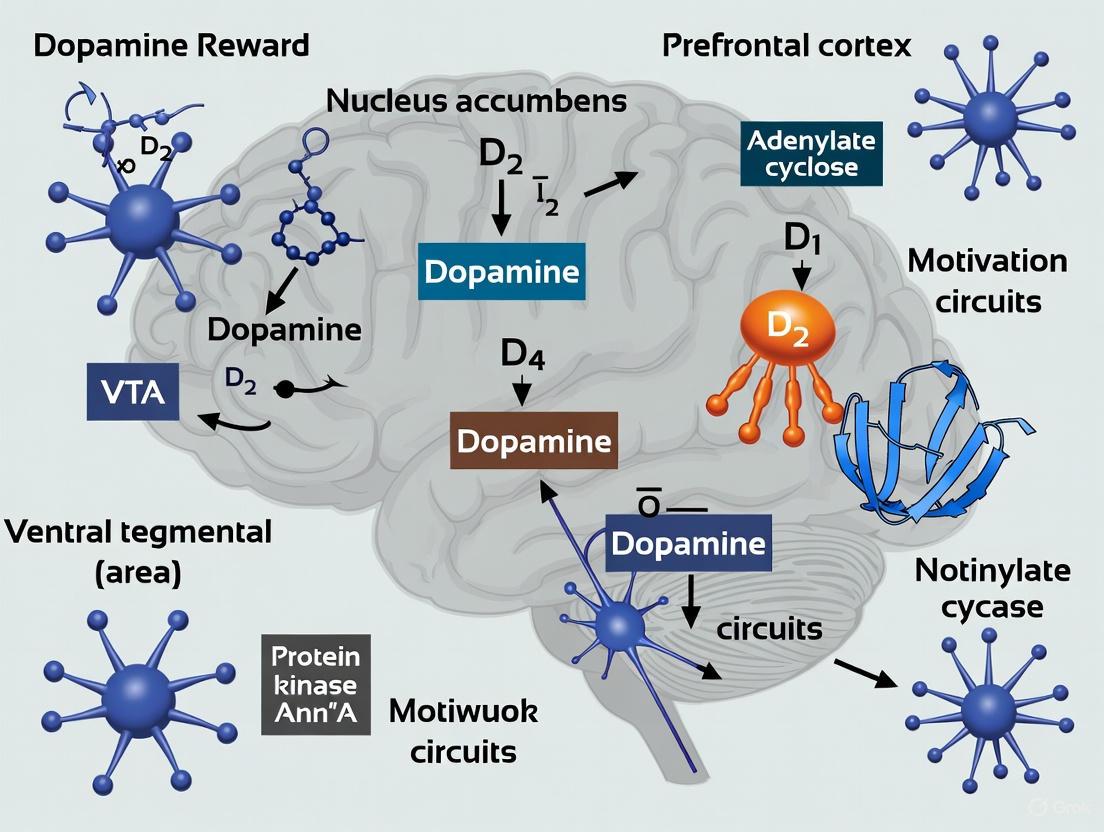
This comprehensive review synthesizes current research on dopamine signaling pathways and their pivotal role in reward processing, motivation, and adaptive behavior.
Decoding Dopine Signaling: Neural Circuits, Reward Mechanisms, and Therapeutic Frontiers
Abstract
This comprehensive review synthesizes current research on dopamine signaling pathways and their pivotal role in reward processing, motivation, and adaptive behavior. We explore the molecular architecture of dopaminergic systems, from foundational synthesis and receptor mechanisms to cutting-edge discoveries in pathway-specific coding and distributional reward signaling. The article critically evaluates methodological advances for probing dopamine dynamics, examines dysfunctional signaling in neuropsychiatric disorders, and compares computational models with emerging biological evidence. For researchers and drug development professionals, this resource provides an integrated framework connecting basic molecular mechanisms to clinical applications in addiction, Parkinson's disease, and motivational disorders, while highlighting future directions in neuromodulation therapies and AI-inspired neural models.
Molecular Architecture and Neural Circuitry of Dopaminergic Systems
Dopamine Synthesis, Metabolism, and Homeostatic Regulation
Dopamine (DA) is a critical catecholamine neurotransmitter that exerts profound influence over brain function, regulating processes ranging from motor control and hormone secretion to motivation and reward-based learning [1] [2]. Its functional integrity is maintained by a delicate and dynamic balance between synthesis, vesicular storage, release, reuptake, and metabolic degradation [3] [4]. Dysregulation of dopaminergic systems is implicated in a wide spectrum of neurological and psychiatric disorders, including Parkinson's disease (PD), schizophrenia, attention deficit hyperactivity disorder (ADHD), and addiction [5] [6] [1]. This in-depth technical guide synthesizes current knowledge on the core biochemical pathways and homeostatic mechanisms governing dopamine signaling, with a specific focus on its established and emerging roles within reward and motivation research. The content is structured to provide researchers, scientists, and drug development professionals with a consolidated resource featuring quantitative data summaries, detailed methodologies, and visualizations of critical pathways.
Dopamine Synthesis and Metabolic Pathways
Biosynthesis of Dopamine
Dopamine biosynthesis occurs primarily within the cytosol of catecholaminergic neurons. The process is a two-step sequence, initiated from the amino acids phenylalanine or tyrosine, which are readily available from dietary protein [7] [2].
Primary Pathway: The canonical and major biosynthetic route involves the following enzymatic reactions:
- Hydroxylation of Tyrosine: The amino acid L-tyrosine is hydroxylated by the enzyme tyrosine hydroxylase (TH) to form L-3,4-dihydroxyphenylalanine (L-DOPA). This is the rate-limiting step in dopamine synthesis. The reaction requires oxygen (O₂), iron (Fe²⁺), and the cofactor tetrahydrobiopterin (BH₄) [7] [4] [2].
- Decarboxylation of L-DOPA: L-DOPA is subsequently decarboxylated by the enzyme aromatic L-amino acid decarboxylase (AADC), also known as DOPA decarboxylase, to yield dopamine. This reaction uses pyridoxal phosphate (vitamin B₆) as a cofactor [7] [2].
Minor and Alternative Pathways: Under specific conditions, dopamine can be synthesized via other pathways, though their contribution to total brain DA is comparatively low [4]:
- Cytochrome P450 Pathway: Tyrosine can first be decarboxylated to tyramine, which is then hydroxylated by CYP2D proteins to form dopamine.
- Tyrosinase Pathway: The enzyme tyrosinase, typically involved in melanin synthesis, can also hydroxylate tyrosine to DOPA, which can then be taken up and decarboxylated by catecholaminergic neurons.
Table 1: Key Enzymes in Dopamine Biosynthesis
| Enzyme | Gene | Reaction Catalyzed | Cofactors | Significance |
|---|---|---|---|---|
| Tyrosine Hydroxylase (TH) | TH | L-Tyrosine → L-DOPA | O₂, Fe²⁺, BH₄ | Rate-limiting enzyme; tightly regulated by phosphorylation & feedback inhibition [4]. |
| Aromatic L-Amino Acid Decarboxylase (AADC) | DDC | L-DOPA → Dopamine | Pyridoxal Phosphate | High activity; not typically rate-limiting [2]. |
| GTP Cyclohydrolase 1 (GTPCH) | GCH1 | GTP → BH₄ | --- | Produces the essential cofactor for TH [4]. |
The following diagram illustrates the primary and alternative pathways for dopamine biosynthesis and its subsequent metabolic fate.
Metabolic Degradation and Oxidation
The activity of synaptic dopamine is terminated primarily by rapid reuptake into the presynaptic terminal via the dopamine transporter (DAT) [7] [3]. Once inside the neuron, dopamine can be repackaged into vesicles or metabolized. The degradation of dopamine is catalyzed by a sequential action of two key enzymes, resulting in the main metabolite, homovanillic acid (HVA) [2].
- Monoamine Oxidase (MAO): This mitochondrial enzyme, primarily the MAO-B isoform in the context of PD, deaminates dopamine, producing 3,4-dihydroxyphenylacetaldehyde (DOPAL) and hydrogen peroxide (H₂O₂) [7] [4].
- Catechol-O-Methyltransferase (COMT): This enzyme transfers a methyl group to dopamine, producing 3-methoxytyramine [7] [2].
The main metabolic pathways are [2]:
- Dopamine → DOPAL (via MAO) → DOPAC (via ALDH) → HVA (via COMT)
- Dopamine → 3-Methoxytyramine (via COMT) → HVA (via MAO + ALDH)
Dopamine is also highly susceptible to auto-oxidation, a non-enzymatic reaction with oxygen that generates reactive oxygen species (ROS) and dopamine quinones. These reactive molecules can poison cells by modifying proteins and promoting oxidative stress, a mechanism implicated in the neurodegeneration observed in Parkinson's disease [7] [4] [2].
Table 2: Key Proteins in Dopamine Sequestration, Reuptake, and Degradation
| Protein | Type | Location | Function | Significance |
|---|---|---|---|---|
| VMAT2 | Transporter | Vesicular Membrane | Sequesters cytosolic DA into synaptic vesicles using a proton gradient. | Protects DA from oxidation; concentrates DA for release [4]. |
| DAT | Transporter | Presynaptic Terminal | Reuptakes released DA from the synaptic cleft. | Primary mechanism for terminating synaptic signal; target of stimulants like cocaine [3]. |
| MAO | Enzyme | Mitochondrial Outer Membrane | Deaminates DA (and other monoamines). | Generates H₂O₂ as a byproduct, contributing to oxidative stress [7] [4]. |
| COMT | Enzyme | Cytosol / Extracellular | Methylates catecholamines like DA. | Important for metabolizing circulating DA; target of entacapone/tolcapone in PD [7]. |
Homeostatic Regulation of Dopamine
Dopaminergic systems employ multiple, cooperative homeostatic mechanisms to maintain functionality despite biological fluctuations in inputs, enzyme expression levels, and firing rates [3]. These mechanisms operate at the level of synthesis, release, and neuronal excitability.
Regulation of Synthesis and Release
Tyrosine Hydroxylase (TH) Regulation: TH is the primary point of control for dopamine synthesis. Its activity is regulated by:
- End-Product Inhibition: Cytosolic dopamine can directly inhibit TH activity, providing rapid negative feedback [3].
- Autoreceptor Activation: Dopamine released into the extracellular space binds to presynaptic D2-type autoreceptors. This binding inhibits TH activity, reducing synthesis, and also suppresses the firing rate of dopaminergic neurons, limiting further release [3].
- Substrate Inhibition: Interestingly, TH is inhibited by very high concentrations of its substrate, tyrosine. This property may stabilize cytosolic and vesicular dopamine against large fluctuations in tyrosine availability following meals [3].
Vesicular Sequestration: The vesicular monoamine transporter 2 (VMAT2) is critical for packing dopamine into synaptic vesicles. This not only prepares dopamine for release but also protects the cytosol from oxidative damage by keeping the concentration of free dopamine low [4].
Mathematical modeling of these interactions has demonstrated that the cooperative effects of TH properties, DATs, and autoreceptors allow the system to respond robustly to significant biological signals (like bursts of activity) while dampening responses to normal, noisy fluctuations [3].
Regulation of Neuronal Excitability
Midbrain dopamine neurons exhibit intrinsic pacemaker activity, firing action potentials rhythmically at 1-5 Hz, which maintains a baseline, or "tonic," level of dopamine in target regions [8] [9]. The transition from this tonic firing to high-frequency "phasic" bursting is crucial for signaling reward prediction errors [8].
A critical homeostatic mechanism involves the reciprocal interaction between intracellular calcium ([Ca²⁺]c) and spontaneous firing rate. Somatic [Ca²⁺]c levels are tightly coupled to firing rate, and this calcium, in turn, activates calcium-dependent potassium channels (e.g., SK3 channels) that contribute to afterhyperpolarization, thus regulating subsequent excitability [9]. This Ca²⁺-mediated homeostatic regulation ensures that the neurons maintain a stable firing range. Glutamatergic inputs, which drive phasic bursts, are integrated and modulated by this underlying calcium-dependent regulatory system [9].
The following diagram synthesizes these core homeostatic mechanisms into a single regulatory network.
Dopamine in Reward and Motivation: Pathways and Signaling
Major Dopaminergic Pathways
The dopamine neurons of the ventral midbrain project to widespread regions via distinct pathways, each with specific functional roles [1].
- Mesolimbic Pathway: Projects from the ventral tegmental area (VTA) to the ventral striatum (including the nucleus accumbens). This pathway is central to processing reward, incentive salience ("wanting"), motivation, and reinforcement learning [1] [8]. It is a key neural substrate for the effects of addictive drugs.
- Mesocortical Pathway: Projects from the VTA to the prefrontal cortex. It is critical for cognition, executive functions (e.g., attention, working memory, planning), and the regulation of emotional behavior [1].
- Nigrostriatal Pathway: Projects from the substantia nigra pars compacta to the dorsal striatum. This pathway is essential for the control of motor function and habit learning. Its degeneration is the primary cause of the motor symptoms in Parkinson's disease [1] [7].
- Tuberoinfundibular Pathway: Projects from the hypothalamus to the pituitary gland. This pathway regulates hormone secretion, particularly by inhibiting prolactin release [1].
Dopamine Signals in Motivation and Learning
The phasic activity of dopamine neurons is a cornerstone of contemporary reward learning theory [8].
Reward Prediction Error Signaling: A fundamental concept is that phasic dopamine signals encode a reward prediction error—the difference between received and predicted reward [8]. These signals are characterized by:
- Excitation (burst firing) when a reward is better than expected (positive prediction error).
- Inhibition (pausing) when a reward is worse than expected or omitted (negative prediction error).
- No response when a reward is fully predicted. This pattern is consistent with computational teaching signals used in reinforcement learning algorithms, such as temporal difference learning [8].
Beyond Reward: Motivational Salience and Aversion: Recent research indicates greater complexity, suggesting dopamine neurons are functionally diverse [10] [8]. Two broad types of dopamine neurons are hypothesized:
- Value-Coding Neurons: Excited by rewarding stimuli and inhibited by aversive stimuli. These are thought to support goal-seeking, outcome evaluation, and value learning.
- Salience-Coding Neurons: Excited by both rewarding and aversive stimuli. These are thought to support attentional orienting, cognitive processing, and general motivational arousal in response to salient events [8].
Studies tracking dopamine release in the nucleus accumbens over learning have shown that distinct dopamine signals in different sub-regions (core vs. shell) evolve as animals learn to avoid negative outcomes, highlighting dopamine's role in adaptive behavior in unpredictable environments [10].
Experimental Models and Methodologies
Key Experimental Protocols
Research into dopamine homeostasis and signaling employs a range of sophisticated techniques. Below is a detailed methodology for a representative electrophysiology experiment used to study homeostatic regulation in dopaminergic neurons.
Protocol: Analysis of Calcium-Firing Homeostasis in Acutely Dissociated Midbrain Dopamine Neurons
1. Preparation of Acutely Dissociated Neurons [9]
- Animals: Postnatal 9-14 day Sprague-Dawley rats.
- Brain Slice Preparation: Decapitate, rapidly remove the brain, and place it in ice-cold, oxygenated HEPES-buffered saline. Prepare 300-400 μm coronal slices containing the substantia nigra pars compacta (SNc) using a vibratome.
- Microdissection and Enzymatic Dissociation: Under a microscope, dissect out the darkly pigmented SNc region. Incubate the tissue chunks in a HEPES-buffered saline solution containing pronase (0.3 mg/ml) for 20-30 minutes at 31°C.
- Mechanical Trituration: After enzyme treatment, wash the tissue and gently triturate it using a fire-polished Pasteur pipette to release individual neurons.
- Cell Plating: Plate the dispersed neurons onto a poly-L-lysine-coated glass coverslip and allow them to settle for at least 30 minutes before recording. Neurons are identified by their large soma and multiple, large tapering dendrites.
2. Simultaneous Electrophysiology and Calcium Imaging [9]
- Electrophysiology Setup: Use the whole-cell patch-clamp configuration in current-clamp mode to record spontaneous action potentials. The internal pipette solution should contain a calcium indicator (e.g., 100-200 μM Fura-2 or Oregon Green BAPTA-1).
- Calcium Imaging: Illuminate the neuron at an appropriate wavelength (e.g., 340/380 nm for Fura-2) using a xenon lamp and capture fluorescence images with a CCD camera. Record the ratio of emission (F340/F380), which is proportional to the intracellular calcium concentration ([Ca²⁺]c).
- Data Acquisition: Simultaneously record the firing rate (from electrophysiology trace) and the corresponding somatic [Ca²⁺]c (from fluorescence ratio) over time.
3. Pharmacological Manipulation and Glutamate Responsiveness [9]
- Baseline Recording: Record at least 5 minutes of stable, simultaneous firing rate and [Ca²⁺]c to establish a baseline.
- Channel Blockade: Apply antagonists for voltage-operated calcium channels (VOCCs), such as Cd²⁺ (200 μM), to the bath solution. Observe and record the concurrent changes in firing rate and somatic [Ca²⁺]c.
- Glutamate Application: In a separate set of experiments, apply glutamate (e.g., 10-100 μM) via a fast perfusion system while recording neuronal responses. Test the glutamate response under control conditions and again during VOCC blockade to investigate the interaction between calcium influx and synaptic input integration.
4. Data Analysis [9]
- Plot the firing rate against the corresponding somatic [Ca²⁺]c to establish the relationship.
- Quantify the degree of inhibition of spontaneous firing and the reduction in somatic [Ca²⁺]c caused by VOCC antagonists.
- Analyze how the attenuation of tonic calcium signals by VOCC blockade affects the neuron's response to glutamate.
The Scientist's Toolkit: Essential Research Reagents
Table 3: Key Reagents and Tools for Dopamine Research
| Reagent / Tool | Function / Target | Key Research Application |
|---|---|---|
| L-DOPA (Levodopa) [2] | DA Precursor | Bypasses rate-limiting TH step; rescues motor function in PD models and DA-deficient mice [6]. |
| 6-Hydroxydopamine (6-OHDA) [6] | Neurotoxin | Selective catecholaminergic neurotoxin used to create lesion models of Parkinson's disease. |
| D2 Receptor Antagonists (e.g., Haloperidol, Sulpiride) [7] | D2-type Autoreceptors/Postsynaptic Receptors | Blocks autoreceptor feedback to study synthesis/release regulation; induces parkinsonism. |
| DAT Inhibitors (e.g., Cocaine, GBR12909) [3] | Dopamine Transporter (DAT) | Blocks DA reuptake to study the role of DAT in regulating extracellular DA dynamics and signaling. |
| VMAT2 Inhibitor (Reserpine) [4] | Vesicular Monoamine Transporter 2 (VMAT2) | Depletes vesicular DA stores; used to model DA depletion and study its consequences. |
| MAO-B Inhibitors (e.g., Selegiline) [7] | Monoamine Oxidase-B (MAO-B) | Preserves synaptic DA by inhibiting its degradation; used in PD therapy and research. |
| Calcium Indicators (e.g., Fura-2, Oregon Green BAPTA-1) [9] | Intracellular Ca²⁺ | Visualizing and quantifying spatiotemporal Ca²⁺ dynamics in dendrites and soma of DA neurons. |
| Dopamine-Deficient (DD) Mice [6] | Genetically engineered (lacking TH in DA neurons) | Allows study of DA neuron activity and circuit adaptations in the absence of DA itself. |
| Fast-Scan Cyclic Voltammetry (FSCV) | DA Release & Uptake | Real-time, high-resolution measurement of phasic DA release in vivo and in brain slices. |
Dopamine receptors are a class of G protein-coupled receptors (GPCRs) that are pivotal for cell-to-cell communication in the brain and periphery, modulating functions ranging from motor control and cognition to hormonal regulation and reward [11]. The five known dopamine receptor subtypes, categorized into D1-like (D1, D5) and D2-like (D2, D3, D4) families, transduce extracellular dopamine signals into intracellular effects via distinct signaling cascades [11] [12]. In the context of reward and motivation research, understanding the precise signaling mechanisms and cellular effects of these receptors is fundamental, as their dysregulation is implicated in disorders such as schizophrenia, Parkinson's disease, and compulsive eating [11] [13]. This review provides an in-depth technical guide to the signaling properties, cellular effects, and experimental investigation of dopamine receptor families, with a focus on their integrated role in reward circuitry.
Dopamine Receptor Classification and Fundamental Signaling
Dopamine receptors are integral membrane proteins characterized by seven transmembrane helices. They are classified based on their structural genetics, pharmacological profiles, and their opposing effects on the cyclic adenosine monophosphate (cAMP) pathway [11] [12].
- D1-like Receptors (D1 and D5): These receptors couple primarily to the Gαs subunit of heterotrimeric G proteins. Upon activation by dopamine, they stimulate adenylate cyclase (AC), leading to an increase in intracellular cAMP levels. This second messenger subsequently activates protein kinase A (PKA), which phosphorylates downstream targets, including the cAMP-response element binding protein (CREB), to mediate cellular responses such as gene expression regulation [11] [14] [12].
- D2-like Receptors (D2, D3, D4): These receptors couple primarily to the Gαi/o subunit. Their activation inhibits adenylate cyclase, thereby decreasing intracellular cAMP levels and PKA activity [11] [12]. The D2 receptor also has the function of regulating potassium and calcium ions and can directly regulate the excitability of neurons [14].
Table 1: Dopamine Receptor Subtypes: Classification, Signaling, and Function
| Receptor Subtype | G-protein Coupling | Primary Second Messenger | Key Brain Regions | Primary Physiological Functions |
|---|---|---|---|---|
| D1 | Gαs | cAMP ↑ | Striatum, Nucleus Accumbens, Olfactory Bulb, Substantia Nigra [15] | Memory, attention, impulse control, locomotion, regulation of renal function [11] |
| D5 | Gαs | cAMP ↑ | Cortex, Substantia Nigra, Hypothalamus [15] | Decision making, cognition, attention, renin secretion [11] |
| D2 | Gαi/o | cAMP ↓ | Striatum, Nucleus Accumbens, Olfactory Tubercle, VTA [12] [13] | Locomotion, attention, sleep, memory, learning, reproductive behaviour [11] [15] |
| D3 | Gαi/o | cAMP ↓ | Striatum, Islands of Calleja, Cortex [15] | Cognition, impulse control, attention, sleep, regulation of food intake [11] [15] |
| D4 | Gαi/o | cAMP ↓ | Frontal Cortex, Amygdala, Hypothalamus [15] | Cognition, impulse control, attention, sleep [11] |
Beyond the canonical cAMP pathway, both receptor families can activate alternative signaling cascades. D1-like receptors can also couple to Gαq proteins, activating phospholipase C (PLC) and leading to the production of inositol 1,4,5-trisphosphate (IP3) and diacylglycerol (DAG), which mobilizes intracellular calcium and activates protein kinase C (PKC) [14]. Similarly, D2-like receptors can activate the Gβγ subunit, which in turn can stimulate PLC and the PKC pathway [14]. The following diagram illustrates the core signaling pathways downstream of dopamine receptor activation.
Diagram 1: Core Signaling Pathways of Dopamine Receptor Families. D1-like receptors primarily signal through Gαs to increase cAMP, while D2-like receptors signal through Gαi/o to decrease cAMP. Both families can also activate the PKC pathway via Gαq or Gβγ subunits, leading to phospholipase C (PLC) activation, PIP2 hydrolysis, and generation of IP3 and DAG [11] [14].
Advanced and Integrated Signaling Concepts
The signaling landscape of dopamine receptors extends beyond simple linear pathways. Advanced concepts such as receptor heteromerization and biased signaling add layers of complexity and specificity to their cellular effects.
D1-D2 Receptor Heteromer Signaling
A significant advancement in dopamine signaling is the discovery that D1 and D2 receptors can form heteromeric complexes in a unique subset of neurons, creating a novel signaling entity [16]. The activation of the D1-D2 receptor heteromer results in a distinct signaling pathway that is not observed upon activation of either receptor alone. This pathway involves the activation of Gq proteins, leading to phospholipase C (PLC) activation, IP3-mediated calcium release from intracellular stores, and the activation of calcium/calmodulin-dependent kinase IIα (CaMKIIα) [16]. This signaling cascade has been shown to increase brain-derived neurotrophic factor (BDNF) production and promote dendritic branching in striatal neurons, highlighting its role in neural plasticity [16]. This pathway is anatomically segregated, with a higher prevalence and stronger interaction in the nucleus accumbens (NAc) shell compared to the dorsal striatum, positioning it as a key mechanism in reward and motivational processing [16].
β-Arrestin-Mediated Signaling and Regulation
Following activation, dopamine receptors are regulated by a process of desensitization and internalization, which is critically mediated by β-arrestins. GPCR kinases (GRKs) phosphorylate activated receptors, facilitating the binding of β-arrestins [17] [13]. For the D2 receptor, which possesses a short C-terminal tail but a long third intracellular loop (ICL3), key phosphorylation sites for GRK2/3 and PKC on the ICL3 are crucial for β-arrestin 2 recruitment [17]. The β-arrestin-receptor complex uncouples the receptor from G proteins, leading to signal desensitization, and promotes receptor internalization via clathrin-coated pits [13]. Beyond its role in termination of G protein signaling, β-arrestin can also initiate its own signaling cascades, such as the activation of the Akt/GSK3 pathway [18] [17]. Furthermore, β-arrestin can dynamically inhibit PKC activity, either by recruiting diacylglycerol kinase (DGK) to convert DAG to phosphatidic acid, or by interfering with the binding of PDK1 to PKC, thus providing a feedback mechanism to fine-tune PKC signaling [14]. The following diagram illustrates the detailed mechanism of β-arrestin recruitment and its downstream consequences for D2 receptor signaling.
Diagram 2: β-Arrestin 2 Recruitment and Downstream Regulation of D2 Receptors. Activation and phosphorylation of the D2 receptor's intracellular loop 3 (ICL3) by GRKs recruits β-arrestin 2, inducing its conformational change [17]. This leads to G-protein uncoupling (desensitization), receptor internalization, initiation of β-arrestin-mediated signaling (e.g., Akt), and feedback inhibition of PKC activity [14] [17] [13].
Cellular Effects and Relevance to Reward & Motivation
The distinct and often opposing signaling pathways of dopamine receptor subtypes translate into specific cellular effects that underlie their critical role in reward, motivation, and cognitive control.
Modulation of Neurotransmission and Neural Plasticity: In the prefrontal cortex (PFC), dopamine receptors gate sensory signals and working memory processes [19] [20]. D1 receptor stimulation can decrease reward expectancy coding during memory delays, while D2 receptor stimulation enhances it, suggesting complementary roles in integrating motivational signals with cognitive control [20]. Furthermore, the D1-D2 heteromer-mediated activation of CaMKIIα and BDNF production directly modulates synaptic plasticity and dendritic architecture in the nucleus accumbens, a key hub for reward processing [16].
Regulation of Neurogenesis: Dopamine receptors are expressed in neurogenic niches like the hippocampal dentate gyrus and subventricular zone. D2/D3 receptor stimulation has been shown to promote neural stem cell proliferation and differentiation, suggesting that dopamine signaling contributes to brain plasticity, which is a fundamental process for adaptive learning and motivation [15].
Control of Feeding Behavior: In the mesolimbic pathway, D2 receptors act as a brake on food reward. Their activation inhibits adenylyl cyclase, reduces cAMP/PKA/pCREB signaling, and ultimately decreases the expression of orexigenic neuropeptides like NPY and AgRP [13]. Chronic consumption of high-fat diets leads to D2R downregulation and desensitization, impairing this inhibitory pathway and contributing to compulsive eating behaviors, illustrating a direct link between D2R signaling dysregulation and pathological motivation [13].
Table 2: Key Research Reagents for Investigating Dopamine Receptor Signaling
| Reagent Category | Specific Example | Target Receptor | Function & Application in Research |
|---|---|---|---|
| D1-like Agonists | SKF-81297 [20] [15] | D1 | Selective agonist used to isolate D1 receptor-mediated physiological effects and signaling in vitro and in vivo. |
| D2-like Agonists | Quinpirole [20] [13] | D2 | Selective agonist used to study D2 receptor function, including its role in inhibitory feedback and behavior. |
| D1-like Antagonists | SCH-23390 [15] | D1 | High-affinity selective antagonist used to block D1 receptor activity and probe its necessity in biological processes. |
| D2-like Antagonists | Haloperidol, Raclopride [11] [15] | D2 | Potent antagonists; used pharmacologically and as radioligands (e.g., [¹¹C]Raclopride in PET) to measure D2 receptor availability. |
| β-arrestin Assays | NanoLuc Binary Technology (NanoBiT) [17] | N/A | Cell-based assay system used to measure β-arrestin recruitment to activated GPCRs, such as D2R, in real-time. |
| Kinase Activators/Inhibitors | Phorbol Esters (e.g., PMA) [14] | PKC | Direct activators of PKC used to probe the role of PKC in dopamine receptor signaling and cross-talk. |
Experimental Protocols for Key Investigations
Protocol: Measuring β-arrestin Recruitment to D2R using a NanoBiT Bystander Assay
Objective: To quantitatively assess the recruitment of β-arrestin 2 to the dopamine D2 receptor in live cells in response to agonist stimulation [17].
Methodology:
- Cell Culture and Transfection: Culture HEK293T cells in standard DMEM medium. Co-transfect cells with three plasmids:
- A plasmid expressing the D2 receptor (wild-type or phosphorylation-site mutant).
- A plasmid expressing β-arrestin 2 fused to the small SmBiT fragment of NanoLuc luciferase.
- A plasmid expressing a plasma membrane-targeting sequence (e.g., CAAX motif) fused to the large LgBiT fragment of NanoLuc luciferase.
- Assay Preparation: 24-48 hours post-transfection, seed cells into a white-walled, clear-bottom 96-well plate. Allow cells to adhere.
- Ligand Stimulation: Prepare a dilution series of dopamine (agonist) in assay buffer. Replace cell medium with ligand solutions. Include a buffer-only condition as a negative control.
- Luminescence Measurement: Following ligand addition (typically after 5-30 minutes of incubation), measure luminescence using a plate-reading luminometer. The recruitment of β-arrestin-SmBiT to the membrane brings SmBiT into proximity with LgBiT, reconstituting the active NanoLuc enzyme and producing a luminescent signal proportional to the level of recruitment.
- Data Analysis: Normalize luminescence values to the basal signal (negative control). Plot concentration-response curves to determine the potency (EC50) and efficacy of the agonist for β-arrestin recruitment. Compare wild-type D2R with mutants to identify phosphorylation sites critical for interaction.
Protocol: Investigating D1-D2 Heteromer-Mediated Calcium Signaling
Objective: To detect the unique, rapid release of intracellular calcium following co-activation of D1 and D2 receptors in striatal neurons [16].
Methodology:
- Cell Preparation: Use primary cultures of postnatal rat striatal neurons or a cell line co-expressing D1 and D2 receptors.
- Calcium Dye Loading: Load cells with a fluorescent, cell-permeable calcium indicator dye (e.g., Fluo-4 AM or Fura-2 AM) in a physiological buffer for 30-60 minutes at 37°C. Wash to remove extracellular dye.
- Pharmacological Stimulation: Place the cell culture under a fluorescence microscope or in a fluorimeter. Establish a baseline fluorescence recording. Stimulate cells with a combination of a selective D1 agonist (e.g., SKF-81297, 10 µM) and a selective D2 agonist (e.g., Quinpirole, 10 µM). Control experiments should involve application of each agonist alone.
- Signal Detection and Validation: Monitor the fluorescence intensity over time. A rapid and transient increase in fluorescence indicates a rise in intracellular calcium. To confirm the source is from intracellular stores, perform the experiment in a calcium-free extracellular buffer and/or pre-treat cells with an IP3 receptor antagonist (e.g., 2-APB). The use of D1 and D2 selective antagonists (e.g., SCH-23390 and raclopride, respectively) can confirm receptor specificity.
- Downstream Analysis: To link the calcium signal to functional outcomes, cells can be fixed and immunostained for phosphorylated CaMKIIα or BDNF following receptor co-activation.
Dopamine receptor signaling is a multifaceted and dynamic process. The canonical cAMP pathways, the PLC/PKC pathway, the unique calcium signaling through D1-D2 heteromers, and the diverse functions of β-arrestins collectively form a complex network that dictates cellular responses. In the realm of reward and motivation, the balance and interaction between these pathways in key brain regions like the nucleus accumbens and prefrontal cortex fine-tune goal-directed behavior, plasticity, and learning. Disruption of these precise signaling mechanisms underpins various neuropsychiatric disorders. Continued technical innovation in probing these receptors, from biased ligands to advanced cellular assays, is essential for deconvoluting their biology and developing more targeted therapeutic strategies.
Dopaminergic pathways form a crucial network of projection neurons that synthesize and release the neurotransmitter dopamine (DA), governing processes ranging from movement and cognition to motivation and neuroendocrine control [1]. These pathways are integral to the brain's functional architecture, and their dysfunction is implicated in a wide spectrum of neurological and psychiatric disorders, including Parkinson's disease, schizophrenia, addiction, and depression [21] [22]. This whitepaper provides an in-depth technical guide to the four major dopaminergic pathways—mesolimbic, mesocortical, nigrostriatal, and tuberoinfundibular—framed within the context of contemporary reward and motivation research. We synthesize current neuroanatomical, functional, and pathophysiological data, supplemented with structured quantitative comparisons, experimental methodologies, and visualizations, to serve as a resource for researchers and drug development professionals.
Neuroanatomy and Physiology of Major Pathways
The major dopaminergic pathways originate from specific nuclei in the midbrain and hypothalamus, projecting to distinct target regions to regulate diverse physiological and behavioral functions [1] [22]. Table 1 summarizes the core anatomical and functional characteristics of these pathways.
Table 1: Anatomical and Functional Summary of Major Dopaminergic Pathways
| Pathway Name | Origin | Primary Projection Targets | Core Functions | Associated Disorders |
|---|---|---|---|---|
| Mesolimbic | Ventral Tegmental Area (VTA) | Ventral Striatum (Nucleus Accumbens), Amygdala, Hippocampus [23] [24] | Reward, incentive salience, reinforcement learning, motivation [1] [8] | Addiction, Schizophrenia, Depression [23] |
| Mesocortical | Ventral Tegmental Area (VTA) | Prefrontal Cortex [1] | Executive functions (attention, working memory, inhibitory control) [1] | Schizophrenia, ADHD [1] |
| Nigrostriatal | Substantia Nigra pars compacta (SNc) | Dorsal Striatum (Caudate nucleus, Putamen) [1] | Motor control, habit formation, associative learning [1] [24] | Parkinson's disease, Huntington's disease, ADHD [1] |
| Tuberoinfundibular | Arcuate Nucleus of Hypothalamus | Median Eminence / Pituitary Gland [25] [22] | Inhibition of prolactin secretion from the anterior pituitary [25] [1] | Hyperprolactinemia [1] |
The mesolimbic and mesocortical pathways are collectively known as the mesocorticolimbic system, both originating from the Ventral Tegmental Area (VTA) [1]. The VTA is a heterogeneous structure containing not only dopaminergic neurons (~60-65%) but also GABAergic (~35%) and glutamatergic neurons (~2-3%) [24]. The VTA's subregions, such as the parabrachial pigmented area (PBP) and paranigral nucleus (PN), exhibit differential projection patterns and molecular features, contributing to the functional diversity of the DA system [24]. The other major midbrain origin is the Substantia Nigra pars compacta (SNc), which is the primary source of the nigrostriatal pathway [1]. In contrast, the tuberoinfundibular pathway (TIDA) originates from the arcuate nucleus of the hypothalamus and functions primarily as a neuroendocrine system [25].
The following diagram illustrates the anatomical trajectories and key structures of these four major pathways.
Functional Roles in Reward and Motivation
The mesocorticolimbic system is the central circuitry mediating reward processing, motivation, and goal-directed behavior [26] [23]. DA neurons in the VTA exhibit two primary firing modes: tonic (slow, regular pacemaker-like activity) and phasic (bursts of activity in response to salient events) [8] [25]. Phasic DA release encodes a reward prediction error (RPE)—the difference between received and predicted reward [8]. A positive RPE (better-than-expected outcome) excites DA neurons, reinforcing actions that led to the reward, whereas a negative RPE (worse-than-expected outcome) inhibits them [8]. This RPE signal is crucial for reinforcement learning, guiding future behavior by updating the value of actions and cues [8].
Beyond homogeneous reward signaling, emerging evidence reveals functional diversity among DA neurons. Some populations encode motivational value (excited by rewards, inhibited by aversive stimuli), while others encode motivational salience (excited by both rewarding and aversive salient events) [8]. Furthermore, the VTA contains GABAergic and glutamatergic neurons that interact with DA neurons to finely regulate reward and aversion processing [22]. The mesolimbic pathway, particularly DA release in the Nucleus Accumbens (NAc), assigns incentive salience, transforming neutral stimuli into desirable "wanted" cues that motivate behavior [8] [26]. The mesocortical pathway, projecting to the Prefrontal Cortex (PFC), supports executive functions like planning, decision-making, and weighing long-term outcomes, which are essential for controlling reward-seeking actions [26] [1].
The nigrostriatal pathway, while central to motor control, also contributes to reward-related cognition and associative learning, particularly in habit formation [1] [24]. In contrast, the tuberoinfundibular pathway operates outside the central reward system, tonically inhibiting prolactin secretion from the pituitary gland [25].
Pathophysiological and Therapeutic Implications
Dysregulation of dopaminergic signaling is a cornerstone of several neuropsychiatric disorders. The specific pathophysiology depends on the pathway affected, as detailed in Table 2 below.
Table 2: Pathophysiology and Associated Therapeutics by Dopaminergic Pathway
| Pathway | Pathological State | Associated Disorders | Example Therapeutic Interventions | Mechanism of Action |
|---|---|---|---|---|
| Mesolimbic | Hyperdopaminergia [23] | Positive symptoms of schizophrenia (hallucinations, delusions) [23]; Addiction [26] | First- and Second-generation Antipsychotics (e.g., Olanzapine) [23] | D2 receptor antagonism in the mesolimbic pathway [23] |
| Mesocortical | Hypodopaminergia [22] | Negative symptoms/cognitive impairment in schizophrenia [22]; ADHD [1] | Psychostimulants (e.g., for ADHD) [1] | Increase extracellular dopamine levels; mechanism in ADHD treatment is complex [1] |
| Nigrostriatal | Degeneration of DA neurons [22] | Parkinson's disease [1] [22] | L-DOPA; DA agonists [22] | Precursor to dopamine; direct receptor activation [22] |
| Tuberoinfundibular | Disinhibition/Reduced DA tone | Hyperprolactinemia [1] | D2 receptor agonists (e.g., Bromocriptine) [25] | Stimulate TIDA neurons to inhibit prolactin secretion [25] |
The diagram below illustrates the complex signaling mechanisms within a dopaminergic synapse, highlighting key molecular players and targets for pharmacology.
Experimental Models and Methodologies
Key Research Reagent Solutions
Cutting-edge research into dopaminergic pathways relies on a suite of sophisticated reagents and tools. Table 3 catalogues essential resources for investigating these systems.
Table 3: Key Research Reagents and Tools for Dopaminergic Pathway Investigation
| Research Tool / Reagent | Function / Target | Primary Application |
|---|---|---|
| Tyrosine Hydroxylase (TH) Antibodies | Immunohistochemical marker for dopaminergic neurons [24] | Anatomical mapping of dopaminergic cell bodies and projections [24]. |
| DREADDs (Designer Receptors Exclusively Activated by Designer Drugs) | Chemogenetic activation or inhibition of specific neuronal populations [27] | Causally linking activity of defined dopaminergic pathways to specific behaviors. |
| Channelrhodopsin (ChR2) & Halorhodopsin | Optogenetic activation or inhibition of neurons with light [27] | Precise, millisecond-scale control of dopaminergic neuron firing in vivo. |
| AAV-DAT-Cre & DAT-knockout mice | Genetic targeting of dopamine transporter-expressing neurons [24] | Studying DA reuptake mechanisms and developing models for disorders like ADHD. |
| Fast-Scan Cyclic Voltammetry (FSCV) | Real-time detection of dopamine concentration in brain tissue [27] | Measuring phasic dopamine release in response to stimuli or behaviors. |
| Fibre Photometry / Miniaturized Microscopy | Recording calcium or dopamine sensor fluorescence in axon terminals [27] | Monitoring population-level neural activity in freely behaving animals. |
| 6-Hydroxydopamine (6-OHDA) | Neurotoxin selective for catecholaminergic neurons [22] | Creating lesion models of Parkinson's disease. |
| D2 Receptor Antagonists (e.g., Haloperidol) | Pharmacological blockade of D2 receptors [23] | Studying the role of D2 receptors in psychosis and validating antipsychotic action. |
Detailed Experimental Protocol: Dopamine Axon Calcium Imaging in Reversal Learning
The following protocol, adapted from a recent study, exemplifies a modern approach to investigating dopaminergic signaling in cognitive behavior [27].
- Objective: To record dopamine axon Ca2+ activity in the dorsomedial striatum (DMS) during a lateralized reversal learning task in mice.
- Experimental Workflow:
- Virus Injection: Inject an adeno-associated virus (AAV) expressing the genetically encoded calcium indicator GCaMP (e.g., AAV9-Syn-GCaMP6f) into the substantia nigra pars compacta (SNc) of transgenic mice (e.g., DAT-Cre) to achieve dopaminergic neuron-specific expression.
- GRIN Lens Implantation: Implant a gradient-index (GRIN) lens above the DMS for subsequent calcium imaging.
- Habituation and Training: Train mice on an operant task where they learn that one lever (e.g., left) delivers a reward. After stable performance, reverse the contingency so the other lever (right) is rewarded.
- Data Acquisition: During task performance, use a miniaturized fluorescence microscope (e.g., Inscopix nVista) attached to the GRIN lens to record Ca2+ transients from dopamine axons in the DMS. Simultaneously, record behavioral variables (lever presses, rewards).
- Optogenetic Inhibition (Causal Test): In a separate cohort, inject an AAV expressing an inhibitory opsin (e.g., eNpHR3.0 or Jaws) into the SNc of DAT-Cre mice and implant an optical fiber above the nigrostriatal pathway. Unilaterally inhibit the pathway during the reversal learning task while measuring behavioral performance (e.g., "win-stay" responses).
- Key Measurements:
- Neural Data: Calcium event amplitude and frequency time-locked to actions (lever presses) and outcomes (reward delivery).
- Behavioral Data: Choice accuracy, reaction time, and behavioral strategy (e.g., "win-stay" - repeating a choice after a reward).
- Interpretation: Lateralized Ca2+ activation in the DMS during contralateral choices and rewards, specifically in the first reversal session, indicates that nigrostriatal dopamine signals facilitate the exploration of new actions when old action-outcome contingencies change [27].
The mesolimbic, mesocortical, nigrostriatal, and tuberoinfundibular pathways constitute the core anatomical substrates of dopaminergic signaling, with the mesocorticolimbic system being paramount for reward and motivational processes. Contemporary research has moved beyond a monolithic view of dopamine as a simple "pleasure chemical" to reveal a complex system encoding prediction errors, motivational value, and salience. The intricate interplay between these pathways, and the functional diversity even within a single nucleus like the VTA, underscores the sophistication of DA-regulated behaviors. Dysfunction within specific pathways leads to distinct clinical phenotypes, driving targeted therapeutic development. Future research, leveraging the advanced tools and methodologies outlined herein, will continue to dissect the precise circuit-level mechanisms of dopamine, promising novel insights and treatments for a wide range of neurological and psychiatric disorders.
Functional Specialization of Pathways in Reward, Motivation, and Motor Control
The neurotransmitter dopamine (DA) is a critical modulator of brain function, with a well-established role in motivational control—guiding organisms to learn what is beneficial or harmful and to select actions that maximize rewards and minimize punishments [8]. The major sources of dopamine in the brain are the dopaminergic neurons of the ventral midbrain, located primarily in the ventral tegmental area (VTA) and the substantia nigra pars compacta (SNc) [8] [1]. These neurons project to various brain regions via distinct pathways, forming complex circuits that regulate a spectrum of functions from basic motor control to higher-order cognitive and emotional processes. Historically, dopamine was predominantly associated with reward processing. However, contemporary research reveals a more nuanced picture, indicating that dopamine neurons are functionally diverse and are involved in transmitting signals related to a wide range of salient experiences, including aversive and alerting events [8]. This whitepaper synthesizes current research on the functional specialization of these dopaminergic pathways, focusing on their distinct roles in reward, motivation, and motor control, and details the experimental approaches used to dissect their unique contributions.
Dopaminergic neurons form several key pathways, each with distinct origin, projection targets, and primary functions. The major pathways include the mesolimbic, mesocortical, nigrostriatal, and tuberoinfundibular pathways, which together form an integrated system for behavioral control [1].
Table 1: Major Dopaminergic Pathways and Their Functions
| Pathway Name | Origin | Key Projection Targets | Primary Functions | Associated Disorders |
|---|---|---|---|---|
| Mesolimbic Pathway | Ventral Tegmental Area (VTA) | Ventral Striatum (Nucleus Accumbens) | Reward, incentive salience ("wanting"), motivation, reinforcement learning [28] [1] | Addiction, Schizophrenia [1] |
| Mesocortical Pathway | Ventral Tegmental Area (VTA) | Prefrontal Cortex | Executive function (attention, working memory, planning), cognitive control [1] | Schizophrenia, ADHD [1] |
| Nigrostriatal Pathway | Substantia Nigra pars compacta (SNc) | Dorsal Striatum | Motor control, initiation of movement, habitual behavior [1] | Parkinson's Disease, Huntington's Disease [1] |
| Tuberoinfundibular Pathway | Hypothalamus | Pituitary Gland | Regulation of hormone secretion (e.g., prolactin) [1] | Hyperprolactinemia [1] |
The mesolimbic and mesocortical pathways are often collectively referred to as the mesocorticolimbic system, which is crucial for evaluating reward, motivating behavior, and guiding goal-directed actions through cognitive control [1]. In contrast, the nigrostriatal pathway is a core component of the basal ganglia circuitry, essential for the smooth initiation and execution of movement. Dysfunction in this pathway is the hallmark of Parkinson's disease [1].
Functional Specialization in Reward and Motivation
Diversity of Dopamine Neuron Signals
Beyond a monolithic "reward signal," dopamine neurons transmit distinct types of information. A prevailing hypothesis suggests the existence of at least two functional types of dopamine neurons [8]:
- Value-Coding Neurons: These are excited by rewarding stimuli and inhibited by aversive stimuli. They are thought to support brain networks for goal-seeking, outcome evaluation, and value-based learning.
- Salience-Coding Neurons: These are excited by both rewarding and aversive events. They support brain networks for orienting, cognitive processing, and general motivational arousal [8].
This functional diversity allows the dopamine system to coordinate complex behavioral responses to a wide array of environmentally salient events.
Recent Circuit-Level Insights
Advanced circuit-mapping techniques have uncovered specialized microcircuits that provide fine-grained control over dopamine release, particularly in the context of motivated behavior and emotional regulation.
Striosomal Control of Dopamine Release: Recent research has identified pathways originating from the striosomes—clusters of neurons within the striatum—that can directly modulate dopamine-producing neurons. These pathways run in parallel to the classical "Go" and "No-Go" pathways that arise from the striatal matrix and control motor output. It was discovered that striosomal D1-type neurons project directly to the SNc to stimulate dopamine release, promoting action. In contrast, striosomal D2-type neurons connect to the SNc via an indirect relay in the globus pallidus, ultimately inhibiting dopamine release and suppressing movement [29]. This striosomal system is hypothesized to integrate emotional information from the limbic system to shape the motivation to act, especially in decisions involving risk or high anxiety [29].
Dopamine in Fear Extinction: The role of dopamine extends to the suppression of maladaptive fear. A 2025 study identified a specific dopamine circuit that signals when a fear can be safely forgotten. The research demonstrated that in mice, dopamine released from the VTA to the posterior basolateral amygdala (pBLA) is essential for learning to extinguish a fear memory. This "all-clear" signal activates a specific population of neurons in the pBLA that express the Ppp1r1b gene, which in turn drives fear extinction learning. Conversely, inputs to the anterior BLA can reinstate fear [30]. This finding positions dopamine not just as a reward signal, but as a critical teacher signal for updating emotional memories when threats subside.
Hippocampal Dopamine in Approach-Avoidance Conflict: Traditionally, dopamine's role in motivation was studied primarily in the striatum. However, a 2025 study revealed that dopamine receptors in the vententual hippocampus—a region key to emotion and stress regulation—play a critical role in resolving approach-avoidance conflicts. The study found that D1 and D2 receptors in this region are expressed on different neuronal populations and mediate opposite behavioral responses during conflict-ridden decision-making (e.g., seeking a reward despite potential danger). Artificially activating D2-expressing cells made mice significantly less fearful, highlighting a potential mechanism for modulating pathological anxiety [31].
The following diagram synthesizes these recent findings to illustrate the specialized circuits controlling dopamine release and their behavioral effects.
Figure 1: Specialized Neural Circuits for Dopaminergic Control of Motivation and Emotion. This diagram illustrates recently identified pathways, including striosomal control of dopamine release, a VTA-pBLA circuit for fear extinction, and dopaminergic influence on ventral hippocampus for resolving approach-avoidance conflict. Abbreviations: VTA, ventral tegmental area; SNc, substantia nigra pars compacta; pBLA, posterior basolateral amygdala; vHipp, ventral hippocampus; GP, globus pallidus; GPe/GPi, globus pallidus externus/internus.
Molecular Mechanisms: Dopamine Receptors and Signaling
The diverse effects of dopamine are mediated by its actions on specific G-protein coupled receptors. These receptors are categorized into two major families based on their structure and biochemical effects [11].
Table 2: Dopamine Receptor Subtypes and Signaling Mechanisms
| Receptor Subtype | G-Protein Coupling | Primary Signaling Action | Key Localizations | Principal Functions |
|---|---|---|---|---|
| D1-like (D1, D5) | Gs/olf | Stimulates adenylyl cyclase → ↑ cAMP → Activates PKA [11] [16] | Striatum, Nucleus Accumbens, Olfactory Bulb, Substantia Nigra [11] | Motor activity, Reward, Memory, Learning [11] |
| D2-like (D2, D3, D4) | Gi/o | Inhibits adenylyl cyclase → ↓ cAMP; Activates K+ channels [11] | Striatum, External Globus Pallidus, Hippocampus, Cerebral Cortex [11] | Locomotion, Attention, Sleep, Memory [11] |
D1-D2 Receptor Heteromer Signaling
A significant advance in understanding dopamine signaling is the discovery that D1 and D2 receptors can form heteromeric complexes in a unique subset of neurons, creating a novel signaling entity [16]. While D1 and D2 receptors are largely segregated in the striatal direct and indirect pathways, respectively, approximately 5-6% of neurons in the dorsal striatum and 20-30% in the nucleus accumbens co-express both receptors [16]. The activation of this D1-D2 heteromer triggers a distinct signaling pathway:
- It activates Gq proteins and phospholipase C (PLC).
- This leads to the release of calcium from intracellular stores (IP3-sensitive stores).
- The rise in intracellular calcium activates calcium/calmodulin-dependent kinase II (CaMKII) and can drive the production of brain-derived neurotrophic factor (BDNF), influencing synaptic plasticity and dendritic branching [16].
This pathway represents a non-canonical mechanism for dopamine action that may underlie the known synergistic effects of D1 and D2 receptor co-stimulation on behaviors like locomotion and reward.
The following diagram illustrates the classical and non-canonical dopamine receptor signaling pathways.
Figure 2: Dopamine Receptor Signaling Pathways. Illustration of the canonical pathways for D1-like (cAMP-stimulating) and D2-like (cAMP-inhibiting) receptors, and the non-canonical Gq-coupled pathway activated by the D1-D2 receptor heteromer, leading to calcium release and distinct physiological outcomes.
Quantitative Data and Experimental Protocols
Key Quantitative Findings in Dopamine Research
Table 3: Key Quantitative Findings from Recent Dopamine Research
| Experimental Finding | Quantitative Measure | Significance / Interpretation |
|---|---|---|
| D1-D2 Heteromer Prevalence [16] | ~6-7% of D1R-expressing neurons in caudate-putamen coexpress D2R; ~20-30% in nucleus accumbens; up to ~59% in globus pallidus. | Demonstrates region-specific existence of a unique neuronal population with a novel signaling pathway. |
| FRET Efficiency for D1-D2 Interaction [16] | High FRET efficiency (~20-21%) in nucleus accumbens, indicating close receptor proximity (5-7 nm). Lower efficiency (~5%) in caudate-putamen. | Confirms direct physical formation of D1-D2 heteromers in native tissue, with varying strength/intensity across brain regions. |
| Dopamine and Fear Extinction [30] | Mice with activated VTA dopaminergic inputs to pBLA showed accelerated fear extinction; inhibition impaired extinction. | Establishes a causal role for a specific dopamine circuit in learning to suppress fear, not just in reward. |
| Striosomal Control of DA [29] | Identification of direct (D1, stimulatory) and indirect (D2, inhibitory) striosomal pathways to substantia nigra. | Reveals a parallel circuit to classic motor pathways, potentially for relaying emotional state to modulate dopamine levels. |
Detailed Experimental Methodologies
Dissecting the functional specialization of dopamine pathways relies on a suite of advanced neuroscience techniques. Below are detailed protocols for key methodologies cited in this review.
Protocol 1: Neural Circuit Mapping with Tract Tracing
- Objective: To identify the anatomical connections between a specific dopamine neuron population (e.g., in the VTA) and its projection targets (e.g., the amygdala).
- Procedure:
- Stereotaxic Surgery: Anesthetize the experimental subject (e.g., a mouse) and securely place it in a stereotaxic frame. Use precise coordinates from a brain atlas to guide injection.
- Tracer Injection: Using a fine glass micropipette, inject a small volume (50-100 nL) of a retrograde tracer (e.g., Fluoro-Gold) into the target region (e.g., the pBLA). Retrograde tracers are taken up by axon terminals and transported back to the cell body.
- Alternatively, use an anterograde tracer (e.g., AAV expressing GFP) injected into the source region (e.g., VTA) to label axons and terminals in projection areas.
- Incubation: Allow 1-2 weeks for sufficient tracer transport.
- Tissue Processing: Perfuse and fix the brain, then section it using a cryostat or vibratome.
- Visualization: Image the tissue using fluorescence microscopy. Co-localization of the tracer with markers for dopamine neurons (e.g., tyrosine hydroxylase) confirms the specific circuit [30].
Protocol 2: Optogenetic Manipulation of Neural Activity
- Objective: To causally test the function of a specific dopamine pathway by selectively activating or inhibiting it with light.
- Procedure:
- Virus Delivery: Perform stereotaxic surgery to inject an adeno-associated virus (AAV) carrying a light-sensitive opsin (e.g., Channelrhodopsin-2 for activation, Halorhodopsin for inhibition) into the source region (e.g., VTA). Use a cell-type-specific promoter (e.g., TH for dopamine neurons) or Cre-dependent virus in transgenic mice for targeted expression.
- Optic Implant: Implant an optical fiber ferrule above the target region (e.g., pBLA) to deliver light.
- Behavioral Testing: After a few weeks for opsin expression, tether the animal to a laser source. Deliver precise light pulses (e.g., 473 nm blue light for ChR2, 589 nm yellow light for NpHR) during a behavioral task (e.g., fear extinction recall).
- Data Analysis: Compare behavioral outcomes (e.g., freezing time) on light-on vs. light-off trials to determine the circuit's causal role [30].
Protocol 3: In Vivo Fiber Photometry for Dopamine Sensing
- Objective: To record and quantify real-time dopamine release or neural activity in a specific brain region of a behaving animal.
- Procedure:
- Sensor Expression: Express a fluorescent dopamine sensor (e.g., dLight) or calcium indicator (e.g., GCaMP) in the neurons of interest (e.g., pBLA Ppp1r1b neurons) via A injection.
- Implant Placement: Implant an optical fiber cannula above the recorded region.
- Recording: During behavior, deliver excitation light through the fiber and measure the emitted fluorescence from the sensor. Changes in dopamine concentration or calcium (proxy for firing) modulate the fluorescence signal.
- Data Processing: Align the fluorescence time-series with behavioral events (e.g., shock delivery, safety cues). Calculate metrics like ΔF/F (percent change in fluorescence) and use statistical models to determine significant correlations between neural activity and behavior [30].
Protocol 4: Cell-Type-Specific Receptor Manipulation
- Objective: To determine the functional necessity of a specific dopamine receptor (e.g., D1) in a defined neuronal population.
- Procedure:
- Genetic Targeting: Use transgenic Cre-driver mice where Cre recombinase is expressed under the control of a specific gene promoter (e.g., Ppp1r1b for fear extinction neurons).
- Viral Knockdown: Inject a Cre-dependent AAV into the target region (e.g., pBLA) that expresses a short-hairpin RNA (shRNA) designed to knock down the D1 receptor.
- Control Groups: Include control groups injected with a scrambled shRNA sequence.
- Behavioral Phenotyping: Subject the mice to a relevant behavioral paradigm (e.g., fear conditioning and extinction) and assess for deficits compared to controls [30].
- Validation: Use techniques like quantitative PCR or immunohistochemistry post-mortem to confirm receptor knockdown.
The Scientist's Toolkit: Essential Research Reagents
Table 4: Key Reagents and Tools for Dopamine Pathway Research
| Reagent / Tool | Category | Primary Function in Research | Example Use Case |
|---|---|---|---|
| Cre-driver Mouse Lines | Genetic Model | Enables cell-type-specific targeting of neurons based on genetic markers. | Targeting Ppp1r1b+ neurons in pBLA to study fear extinction [30]. |
| Recombinant AAVs (e.g., DIO-opsins, DIO-shRNA) | Viral Vector | Delivers genetic payloads (opsins, sensors, modulators) to specific cell types in a Cre-dependent manner. | Expressing Channelrhodopsin selectively in VTA dopamine neurons for optogenetic activation [30]. |
| Fluorescent Reporters (e.g., GFP, RFP) | Reporter | Visualizes labeled cells, axons, and terminals under a microscope. | Tracing the projection pattern of striosomal neurons to the substantia nigra [29]. |
| Optogenetic Actuators (e.g., ChR2, NpHR) | Protein Tool | Allows precise millisecond-timescale activation or inhibition of specific neurons with light. | Causally testing the role of a VTA→pBLA circuit during fear extinction behavior [30]. |
| Genetically Encoded Sensors (e.g., dLight, GCaMP) | Sensor | Reports real-time neurotransmitter dynamics or neural activity as changes in fluorescence. | Measuring dopamine release in the amygdala during the learning and extinction of fear [30]. |
| D1/D2 Selective Agonists/Antagonists | Pharmacological Tool | Modulates the activity of specific dopamine receptor subtypes. | Investigating the synergistic effects of D1 and D2 receptor co-stimulation on locomotor behavior [16]. |
The functional specialization of dopaminergic pathways is a fundamental principle of brain organization. Moving beyond the simplified view of dopamine as a mere "reward molecule," contemporary research reveals a complex system of anatomically and molecularly distinct circuits. These include pathways for value and salience coding, for initiating and suppressing action via striosomal circuits, for extinguishing fear via the VTA-pBLA projection, and for resolving emotional conflict via hippocampal dopamine receptors. The existence of non-canonical signaling mechanisms, such as the D1-D2 receptor heteromer, adds a further layer of complexity. This refined understanding, driven by cutting-edge methodological advances, provides a more comprehensive framework for interpreting the roles of dopamine in both normal behavior and in neuropsychiatric disorders such as Parkinson's disease, addiction, anxiety, and depression. Future research that continues to integrate circuit-level, molecular, and behavioral analysis will be essential for developing more targeted and effective therapeutic strategies.
Tonic vs. Phasic Dopamine Release Modes and Their Behavioral Correlates
Dopamine signaling operates through two distinct temporal modes—tonic and phasic release—that govern fundamentally different aspects of behavioral control, learning, and motivation. Tonic dopamine refers to slow, steady-state neurotransmitter levels that set background neuronal excitability and modulate long-term behavioral states, while phasic dopamine comprises rapid, transient release events that signal reward prediction errors, salient stimuli, and immediate behavioral adaptations. Growing evidence from computational models and advanced recording techniques reveals that the dynamic interaction between these signaling modes regulates the balance between different dopamine receptor subtypes, ultimately fine-tuning decision-making, learning rates, and motor control. Disruptions in the precise coordination of tonic and phasic dopamine release are implicated in numerous neuropsychiatric disorders, including schizophrenia, addiction, depression, and Parkinson's disease, making this dichotomy a critical focus for therapeutic development in neurology and psychiatry.
Neurophysiological Basis of Tonic and Phasic Dopamine
Origins and Mechanisms
Dopamine release modes originate from distinct firing patterns of midbrain dopamine neurons in the ventral tegmental area (VTA) and substantia nigra pars compacta (SNc). Tonic firing occurs at a slow, steady rate of 0.2-10 Hz and is mediated by cell-autonomous pacemaker impulses largely independent of environmental stimuli [32]. In contrast, phasic firing consists of short, high-frequency bursts of action potentials (3-10 spikes at >10 Hz) triggered by salient environmental events and mediated primarily through activation of NMDA receptors via excitatory inputs [33] [32].
The relationship between somatic firing and axonal dopamine release is complex and non-linear. Phasic dopamine is primarily released into the synaptic cleft following burst firing, while tonic dopamine is released directly into the extracellular space, often through mechanisms independent of action potentials [32]. Approximately 30% of tonic release occurs without somatic firing, potentially through spontaneous vesicular fusion [32].
Extracellular Dynamics and Measurement
The extracellular concentration of dopamine represents a composite signal derived from both tonic and phasic sources, with estimates in the striatum consolidated in the low nanomolar range (20-30 nM) [32]. There is ongoing scientific debate regarding the primary source of extracellular dopamine, with evidence supporting contributions from both tonic and phasic release, as well as additional sources such as dopamine transporter (DAT) efflux and volume transmission [32].
Advanced analytical techniques have been developed to distinguish these signaling modes. Microdialysis provides excellent analyte selectivity and sensitivity for measuring tonic dopamine levels over minutes, while fast-scan cyclic voltammetry (FSCV) offers subsecond temporal resolution ideal for capturing phasic release events [33]. The development of these complementary methodologies has been crucial for elucidating the distinct functional roles of tonic and phasic dopamine signaling.
Table 1: Measurement Techniques for Dopamine Signaling
| Technique | Temporal Resolution | Primary Application | Key Advantages | Limitations |
|---|---|---|---|---|
| Microdialysis | Minutes | Tonic dopamine levels | High chemical selectivity; quantitative analysis | Poor temporal resolution |
| Fast-Scan Cyclic Voltammetry (FSCV) | Subsecond | Phasic dopamine transients | Excellent temporal resolution; measures naturally occurring dopamine | Limited chemical selectivity; lower spatial resolution |
| Amperometry | Microseconds | Release and reuptake kinetics | Superior temporal resolution | Minimal chemical selectivity |
| PET Imaging | Minutes-Hours | Dopamine synthesis capacity; receptor occupancy | Applicable in humans; measures endogenous dopamine | Low temporal and spatial resolution |
Receptor Dynamics and Computational Modeling
Dopamine Receptor Occupancy
The differential effects of tonic and phasic dopamine release emerge largely from the distinct binding affinities and signaling properties of dopamine receptor subtypes. D1-type receptors exhibit relatively low affinity for dopamine (EC~50~ ≈ 1 μM), while D2-type receptors show approximately 100-fold higher affinity (EC~50~ ≈ 10 nM) [34]. This fundamental difference means that subtle fluctuations in tonic dopamine levels significantly modulate D2 receptor occupancy, while phasic bursts are required to substantially activate D1 receptors.
Computational modeling reveals that synchronized phasic firing patterns profoundly alter receptor occupancy balance compared to equivalent tonic firing. Bursts primarily increase occupancy of low-affinity D1 receptors, whereas pauses translate into low occupancy of both D1 and D2 receptors [34]. Phasic patterns reduce average D2 receptor occupancy by >40% while slightly increasing average D1 receptor occupancy compared to tonic firing at the same average rate [34].
A Computational Framework for Biased Learning
Recent biologically-inspired reinforcement learning models demonstrate how tonic dopamine levels can create systematic biases in value learning by differentially altering the gain on D1 and D2 receptor-mediated pathways [35]. These models incorporate the sigmoidal dopamine dose-occupancy curves of D1 and D2 receptors, with changes in tonic dopamine differentially altering the slope of these curves at baseline concentrations.
This mechanism explains how variations in tonic dopamine alter the balance between learning from positive and negative reward prediction errors (RPEs), leading to optimistic or pessimistic value predictions. The asymmetric scaling factor (τ) can be defined as τ = α^+^/(α^-^ + α^+^), where α^+^ and α^-^ represent learning rates for positive and negative RPEs, respectively [35]. Standard reinforcement learning represents a special case where τ = 0.5.
Figure 1: Dopamine Receptor Dynamics. Tonic dopamine preferentially modulates high-affinity D2 receptors, while phasic bursts are required to activate low-affinity D1 receptors, creating distinct learning pathways.
Behavioral Correlates and Functional Roles
Distinct Behavioral Functions
The tonic and phasic dopamine systems mediate complementary but distinct behavioral functions across multiple domains:
Learning and Prediction Error Signaling: Phasic dopamine release robustly encodes reward prediction errors (RPEs)—the discrepancy between expected and received rewards—and serves as a primary teaching signal for reinforcement learning [8] [36]. In contrast, tonic dopamine levels modulate the balance between learning from positive versus negative outcomes, creating biased value predictions [35].
Motivational Control and Vigor: Tonic dopamine sets the overall level of motivational drive and willingness to exert effort for rewards. Elevated tonic dopamine increases willingness to wait for delayed rewards and overcomes effort costs [37] [33]. Phasic dopamine provides immediate motivational signals that facilitate action initiation and vigor [36].
Motor Control and Performance: Recent evidence demonstrates that distinct populations of dopamine neurons are tuned to specific movement parameters. Approximately 50% of VTA dopamine neurons show direction-specific tuning during force generation, with "Forward" and "Backward" populations increasing firing prior to movements in their preferred directions [36]. These phasic signals dynamically adjust the gain of motivated behaviors in real time, controlling latency, direction, and intensity during performance.
Continuous Value Monitoring: A recently identified tonic firing mode in dopamine neurons continuously tracks reward values that change moment-by-moment, complementing the transient phasic responses to discrete reward predictions [38]. This tonic tracking mechanism allows animals to monitor gradually increasing or decreasing reward values in real-time, with different dopamine neuron subpopulations specialized for tracking value increases versus decreases.
Table 2: Behavioral Functions of Tonic and Phasic Dopamine
| Behavioral Domain | Tonic Dopamine Function | Phasic Dopamine Function |
|---|---|---|
| Learning | Sets balance between learning from positive vs. negative outcomes [35] | Encodes reward prediction errors; Drives associative learning [8] |
| Motivation | Determines overall effort expenditure; Willingness to wait for rewards [37] | Provides immediate incentive salience; Action initiation [33] |
| Motor Control | Maintains baseline motor tone and readiness | Controls specific movement parameters: direction, force, velocity [36] |
| Value Representation | Tracks gradually changing values over time [38] | Signals discrete reward predictions and unexpected outcomes |
| Cognitive Control | Modulates behavioral flexibility and set-shifting | Signals salient, attention-capturing events |
Integration in Adaptive Behavior
The interaction between tonic and phasic dopamine systems enables sophisticated behavioral adaptation. The tonic level creates a background against which phasic signals are interpreted, effectively setting the gain on phasic responses [39] [32]. This arrangement allows animals to dynamically adjust their behavioral strategies based on environmental stability and the reliability of predictive cues [10].
For example, in predictable environments, phasic signals predominantly convey RPEs to refine value predictions, while in volatile environments, dopamine signaling shifts toward encoding salience and alerting functions to facilitate rapid behavioral adaptation [10] [8]. This flexibility emerges from the cooperative interaction of multiple dopamine neuron subtypes, including value-encoding neurons excited by rewards and inhibited by aversive events, and salience-encoding neurons excited by both rewarding and aversive stimuli [8].
Experimental Approaches and Methodologies
Electrophysiological Protocols
Single-unit recording in awake, behaving animals remains the gold standard for characterizing dopamine neuron activity. The following protocol is adapted from studies examining dopamine signaling during reward-based learning tasks:
Animal Preparation: Implant custom-made drivable microdrives or optrodes targeting VTA or SNc coordinates. For optogenetic identification, inject AAV vectors encoding channelrhodopsin-2 under control of DAT or TH promoters.
Neuron Identification: Identify putative dopamine neurons based on electrophysiological characteristics: triphasic action potential waveform (>1.1 ms duration from start to negative peak), low baseline firing rate (1-8 Hz), and regular or burst-firing patterns [33] [36]. Confirm with optogenetic tagging where possible.
Task Design: Implement behavioral paradigms that dissociate reward prediction from movement, such as:
Data Analysis: Separate tonic and phasic activity using statistical methods. Calculate:
- Tonic firing rate as mean activity over extended periods (seconds to minutes)
- Phasic responses as significant deviations from baseline (typically 100-500 ms windows around events)
- Burst identification using standard criteria (onset with interspike interval <80 ms, termination with interval >160 ms)
Neurochemical Measurement Techniques
Fast-Scan Cyclic Voltammetry (FSCV) provides the temporal resolution necessary to detect phasic dopamine transients:
Electrode Preparation: Fabricate carbon-fiber microelectrodes (diameter: 5-10 μm) and apply triangle waveform (-0.4 V to +1.3 V and back at 400 V/s) repeated at 10 Hz.
Dopamine Detection: Identify dopamine by characteristic oxidation (+0.6 V) and reduction (-0.2 V) peaks. Convert current to dopamine concentration using in vitro calibration.
Signal Analysis: Extract phasic transients using principal component regression or other chemometric methods. For tonic level estimation, use microdialysis with quantitative analysis via high-performance liquid chromatography.
Figure 2: Experimental Workflow for Studying Dopamine Signaling. Comprehensive characterization requires integration of precise neural recording with quantified behavioral measures.
The Scientist's Toolkit: Research Reagent Solutions
Table 3: Essential Research Reagents for Dopamine Signaling Studies
| Reagent/Category | Function/Application | Key Examples | Research Utility |
|---|---|---|---|
| Dopamine Receptor Agonists | Selective activation of receptor subtypes | SKF-81297 (D1), Quinpirole (D2) | Dissecting receptor-specific contributions to behavior |
| Dopamine Receptor Antagonists | Selective blockade of receptor subtypes | SCH-23390 (D1), Raclopride (D2) | Determining receptor necessity in behavioral tasks |
| Dopamine Transport Inhibitors | Block dopamine reuptake | GBR-12909, Nomifensine | Studying elevated extracellular dopamine |
| Dopamine Precursors | Increase dopamine synthesis | L-DOPA | Restoring dopamine function in depletion models |
| Viral Vectors | Cell-type specific manipulation | AAV-DAT-ChR2, AAV-TH-Cre | Optogenetic/chemogenetic control of dopamine neurons |
| Genetic Models | Selective manipulation of dopamine system | DAT-Cre, DRD1a-Cre mice | Cell-type specific labeling and manipulation |
| Electrochemical Sensors | Real-time dopamine detection | Carbon-fiber microelectrodes | Measuring phasic dopamine release |
| Microdialysis Probes | Extracellular fluid sampling | CMA-guided microdialysis | Measuring tonic dopamine levels |
Clinical Implications and Therapeutic Applications
Understanding the interplay between tonic and phasic dopamine has profound implications for treating neuropsychiatric disorders:
Schizophrenia: The tonic-phasic dopamine hypothesis proposes that reduced prefrontal cortical activity in schizophrenia decreases tonic dopamine release, leading to homeostatic compensations that increase phasic dopamine responsivity [39]. This results in aberrant assignment of salience to neutral stimuli, contributing to positive symptoms.
Addiction: Chronic drug exposure attenuates tonic dopamine levels while promoting enhanced phasic dopamine release to drug-associated cues, creating a cycle of aberrant motivation and reward prediction [33]. This imbalance disrupts normal goal-directed behavior and enhances drug-seeking.
Parkinson's Disease: Dopamine degeneration initially affects phasic release and later progresses to impact tonic signaling. Therapeutic approaches must consider this progression, as treatments targeting only phasic function may neglect the importance of maintained tonic levels for overall motor and cognitive function.
ADHD: Evidence supports a pattern of reduced tonic extracellular dopamine with excessive phasic dopamine release in ADHD, potentially due to overactive dopamine transporters [32]. This imbalance may underlie core symptoms of inattention and impulsivity.
Mood Disorders: Biases in value learning linked to altered tonic dopamine levels may contribute to pessimistic expectations in depression or excessive optimism in addiction and mania [35]. Restoring the balance between learning from positive and negative outcomes represents a potential therapeutic target.
The development of treatments that specifically target tonic or phasic dopamine systems—rather than global dopamine modulation—represents a promising direction for future therapeutics with potentially fewer side effects and greater efficacy for specific symptom domains.
Future Directions and Unresolved Questions
Despite significant advances, several fundamental questions remain unresolved. The precise molecular mechanisms that convert firing patterns into distinct release modes require further elucidation, particularly regarding the role of short-term plasticity at dopamine terminals. The functional significance of dopamine neuron diversity—including different projection targets, receptor expression profiles, and intrinsic physiological properties—demands greater investigation in the context of tonic-phasic dynamics.
Technical advances in real-time monitoring of dopamine release at receptor-dense subcellular compartments, combined with precise manipulation of defined dopamine subpopulations, will be essential for resolving ongoing debates about dopamine's primary functions. Furthermore, the development of computational models that more accurately incorporate the known biology of dopamine systems will bridge the gap between abstract reinforcement learning theories and physiological implementation.
The integration of these approaches will ultimately provide a comprehensive understanding of how coordinated tonic and phasic dopamine signaling enables adaptive behavior, and how disruptions in this coordination contribute to neuropsychiatric disease.
Advanced Techniques for Probing Dopamine Dynamics and Function
The study of dopamine signaling in reward and motivation is a cornerstone of modern behavioral neuroscience. Dopamine neurotransmission occurs on a subsecond timescale, necessitating analytical techniques capable of matching this temporal resolution for accurate measurement. Among the few methods that meet this demand, fast-scan cyclic voltammetry (FSCV) and amperometry have emerged as premier electrochemical techniques for monitoring real-time neurotransmitter dynamics. When coupled with carbon-fiber microelectrodes, these methods enable the detection of dopamine release and uptake both in vitro and in vivo with millisecond temporal resolution [40] [41]. This technical guide details the principles, methodologies, and applications of FSCV and amperometry, framing them within the context of dopamine signaling pathways critical for reward processing, motivation, and aversive behaviors [8].
Principles of Electrochemical Detection
Fundamental Concepts
Electrochemical detection of neurotransmitters is based on the principle of measuring current generated from the oxidation or reduction of electroactive molecules at a working electrode surface. Dopamine, norepinephrine, and serotonin are biogenic amines that are easily oxidized at low potentials, making them ideal candidates for electrochemical detection [42] [41]. The techniques transform chemical information about neurotransmitter concentration into a quantifiable electrical signal by applying a specific potential profile to the electrode and measuring the resulting current. The small size of carbon-fiber microelectrodes (typically 7 μm in diameter) allows for minimal tissue damage and high spatial resolution, enabling researchers to probe distinct brain regions such as the nucleus accumbens core versus shell, or the ventral tegmental area versus substantia nigra [42].
Technique Comparison: FSCV vs. Amperometry
The selection between FSCV and amperometry is dictated by the specific experimental requirements, particularly regarding the need for chemical selectivity versus temporal resolution. The table below summarizes the core characteristics of each technique.
Table 1: Core Characteristics of FSCV and Amperometry
| Feature | Fast-Scan Cyclic Voltammetry (FSCV) | Constant-Potential Amperometry |
|---|---|---|
| Primary Principle | Triangular waveform rapidly scans potentials to repeatedly oxidize and reduce analytes [40] [43]. | Electrode is held at a constant, fixed potential sufficient to oxidize the analyte [44] [41]. |
| Temporal Resolution | ~100 ms (typically 10 Hz acquisition rate) [42] [43]. | ~1-10 ms (up to 1 kHz acquisition rate) [44] [41]. |
| Chemical Selectivity | High. Background-subtracted cyclic voltammogram provides a unique chemical signature for analyte identification [40] [43]. | Low. Detects any molecule oxidizable at the applied potential without distinction [44]. |
| Measured Signal | Background-subtracted faradaic current providing a cyclic voltammogram [40]. | Oxidation current directly proportional to analyte concentration [41]. |
| Ideal Application | Measuring phasic, stimulus-evoked neurotransmitter changes in complex environments like the brain [42] [40]. | Measuring ultra-fast release kinetics from single cells or in simple biological preparations [44] [41]. |
Fast-Scan Cyclic Voltammetry (FSCV)
Theoretical Foundation and Waveform Design
In FSCV, a triangular waveform is applied to a carbon-fiber microelectrode at a very high scan rate (typically 300-400 V/s). Each scan lasts approximately 10 ms and is repeated every 100 ms (10 Hz), enabling subsecond monitoring of neurotransmitter fluctuations [42] [40]. The applied waveform drives the oxidation of neurotransmitters on the forward scan and can reduce the oxidized products on the return scan, creating a characteristic current-versus-potential plot called a cyclic voltammogram (CV) [40].
The design of the waveform is critical and is tailored to the specific analyte of interest due to differences in adsorption properties:
- Dopamine Waveform: Typically scans from a holding potential of -0.4 V to a switching potential of +1.2 V and back (vs. Ag/AgCl) [42] [40]. The negative holding potential attracts positively charged dopamine to the electrode surface, enhancing sensitivity.
- Serotonin Waveform: Scans from 0 V to +1.2 V to -0.6 V and back to 0 V (vs. Ag/AgCl). Serotonin and its metabolites foul carbon electrodes if held at negative potentials, so the waveform is maintained at 0 V between scans to prevent adsorption [42].
A key challenge in FSCV is that the rapid scanning generates a large background charging current (from the electrical double layer) that is 10-100 times greater than the faradaic current from the analyte. This is overcome by digital background subtraction, where the current from a scan prior to a release event is subtracted from scans collected during the event, revealing the faradaic component [40]. The resulting background-subtracted CV provides a "chemical fingerprint" based on the redox potentials of the analyte, which is used for identification.
Experimental Protocol for FSCV in Brain Slices
The following methodology outlines a standard protocol for monitoring dopamine release in mouse brain slices, a common preparation for studying reward pathways [42].
Table 2: Key Research Reagents and Materials for FSCV
| Item | Function/Description |
|---|---|
| Carbon Fiber Microelectrode | Working electrode (7 μm diameter, 50-200 μm length); provides the sensing surface [42]. |
| Ag/AgCl Reference Electrode | Stable reference point for the applied potential [42]. |
| Auxiliary Electrode | Completes the electrical circuit (e.g., tinned copper wire) [42]. |
| Flow Injection System | For in vitro calibration of electrodes with known analyte concentrations [42]. |
| Waveform Generator & Biopotentiostat | Applies the voltage waveform and measures the resulting current (e.g., EI-400, Cypress Systems) [42]. |
| Artificial Cerebrospinal Fluid (aCSF) | Physiological buffer for brain slice maintenance and recording [42]. |
- Electrode Fabrication: A single carbon fiber (7 μm radius) is aspirated into a glass capillary with a microfilament. The capillary is pulled on a micropipette puller to create a tight seal around the fiber. The exposed carbon fiber is trimmed to a length of 50-200 μm, and the electrode is backfilled with potassium chloride solution. A wire is then inserted into the blunt end to establish an electrical connection [42].
- Electrode Calibration: Electrodes are calibrated using a flow injection system with a buffer solution such as artificial cerebrospinal fluid (aCSF). Dopamine standards at relevant concentrations (e.g., 0.1 to 1.0 μM) are flushed past the electrode while applying the FSCV waveform. The resulting current is used to establish a calibration factor to convert current measured in experiments to analyte concentration [42].
- Data Acquisition in Brain Slices: A brain slice containing the region of interest (e.g., striatum) is prepared and perfused with oxygenated aCSF. The carbon-fiber microelectrode is positioned on the target structure using anatomical landmarks. A bipolar stimulating electrode is placed nearby to deliver brief, electrical pulses (e.g., 300 μA, 0.5 ms, 60 Hz for 2 seconds) to evoke dopamine release from dopaminergic terminals. The FSCV waveform is applied continuously. The resulting data is visualized as both current-time plots and color plots, the latter of which represent current as a function of applied potential and time, providing a rich dataset for identifying the analyte and its concentration change over time [42] [40].
- Data Analysis: Data is typically analyzed using custom software (e.g., in Python or Igor Pro). The primary outputs are the background-subtracted cyclic voltammograms for chemical identification and concentration-time profiles for analyzing release and uptake kinetics. Automated algorithms like Principal Components Regression are often used to distinguish dopamine from other interfering signals, such as pH changes [40].
The diagram below illustrates the core workflow and signaling pathway involved in an FSCV experiment studying electrically evoked dopamine release.
Constant-Potential Amperometry
Theoretical Foundation
Amperometry involves holding the working electrode at a constant potential sufficient to oxidize the analyte of interest. For dopamine, this is typically +0.4 V to +0.65 V versus an Ag/AgCl reference [44] [45]. At this fixed potential, any molecule that diffuses to the electrode surface and is electroactive will be oxidized, generating a continuous oxidation current. The magnitude of this current is directly proportional to the surface concentration of the analyte according to Faraday's law [41].
The primary strength of amperometry is its excellent temporal resolution (up to 1 kHz), as it is not limited by the time needed to scan a voltage waveform. This makes it ideal for resolving very fast events, such as the quantal release of neurotransmitters during exocytosis, which occurs on a millisecond timescale [41]. The corresponding weakness is its low chemical selectivity; it cannot distinguish between different oxidizable compounds. Therefore, its valid application is restricted to environments where the analyte of interest is the primary oxidizable species released, such as in purified cell cultures or during brief, evoked release in brain slices where interference from metabolites like DOPAC is minimal [44].
Experimental Protocol for Amperometric Detection of Exocytosis
This protocol is typically used for measuring quantal dopamine release from single cells or cultured neurons [45] [41].
- Electrode and System Setup: A carbon-fiber microelectrode is prepared similarly to FSCV, often with a polished, disk-shaped tip. A two-electrode potentiostat is sufficient due to the very small currents generated (often ≤1 nA). The electrode is held at a constant potential of +0.65 V vs. Ag/AgCl [44] [45].
- Cell Preparation and Recording: A cultured cell (e.g., a midbrain dopamine neuron or PC12 cell) is brought close to the microelectrode. Neurotransmitter release is evoked by chemical stimulation, such as local pressure ejection or bath application of a high-potassium (e.g., 30-100 mM KCl) solution, which depolarizes the cell and triggers vesicular exocytosis [45] [41].
- Data Acquisition and Analysis: The output is a continuous, real-time trace of oxidation current. Single exocytotic events appear as rapid, transient current spikes. Each spike's features are analyzed to extract biophysical parameters of release:
- Spike Amplitude: Proportional to the number of molecules released in the event.
- Spike Half-Width: Indicates the duration of the release event.
- Rise Time (10-90%): Correlates with the kinetics of the fusion pore opening [41].
Table 3: Key Research Reagents and Materials for Amperometry
| Item | Function/Description |
|---|---|
| Carbon Fiber Microelectrode | Working electrode; often polished to a disk shape [45]. |
| Two-Electrode Potentiostat | Simpler setup than FSCV; adequate for small currents (e.g., AMU 130, Micro-C) [44]. |
| Ag/AgCl Reference Electrode | Provides a stable reference potential [45]. |
| High-K⁺ Solution | Chemical stimulant (e.g., 30-100 mM KCl) to depolarize cells and evoke exocytosis [45]. |
| Pharmacological Agents | Used to probe release mechanisms (e.g., Tetrodotoxin for Na⁺ channel blockade, Cd²⁺ for Ca²⁺ channel blockade) [44]. |
Application in Dopamine Signaling Pathway Research
Electrochemical techniques have been indispensable for elucidating the role of phasic dopamine signaling in reward, motivation, and learning. FSCV, in particular, has revealed that dopamine neurons encode a reward prediction error signal—the difference between received and predicted rewards [8]. This signal is crucial for reinforcement learning, driving synaptic plasticity in striatal circuits that facilitate adaptive behavior [46].
Furthermore, these methods have been used to study the presynaptic regulation of dopamine release. For instance, amperometry has demonstrated that brief electrical stimulations of dopaminergic neurons evoke release that is inhibited by D2-family autoreceptors and terminated by the dopamine transporter (DAT) [44]. The power of FSCV lies in its ability to monitor how these processes unfold in real-time during behavior, providing insights into conditions where dopamine signaling is disrupted, such as in drug addiction, Parkinson's disease, and depression [43] [41].
The following diagram illustrates how electrochemical data integrates with the current understanding of dopamine circuitry in motivated behavior.
Advanced Developments and Future Perspectives
The field of electrochemical neurotransmitter detection continues to evolve. Key developments include:
- Novel Waveforms: Custom waveforms are being designed to improve selectivity for specific analytes, reduce electrode fouling (e.g., for serotonin), and even enable simultaneous detection of multiple neurotransmitters [40].
- New Electrode Materials: Carbon nanomaterials, such as carbon nanotubes and single-crystal diamond microelectrode arrays, are being explored to enhance sensitivity, improve biocompatibility, and "trap" analytes for longer detection windows [40] [47] [45].
- Measuring Basal Levels: Traditional FSCV is a differential technique and cannot measure steady-state, tonic dopamine levels. New methods, such as multiple-cyclic voltammetry or high-speed chronoamperometry, are being developed to overcome this limitation and provide a more complete picture of dopamine neurochemistry [40].
- Integration with Other Techniques: Increasingly, FSCV is being combined with optogenetics, electrophysiology, and fiber photometry to correlate neurotransmitter dynamics with specific neural activity and behavioral outputs, offering a more integrated view of brain function [27].
Fast-scan cyclic voltammetry and amperometry are powerful and complementary tools that have revolutionized the study of real-time dopamine dynamics. FSCV provides chemical specificity ideal for monitoring phasic neurotransmission in complex environments like the behaving brain, directly illuminating dopamine's role in reward prediction and motivated behavior. Amperometry offers unparalleled temporal resolution for dissecting the fundamental biophysics of exocytosis at the single-cell level. Together, these techniques form an essential component of the neuroscientist's toolkit, enabling the detailed investigation of dopamine signaling pathways that underpin reward, motivation, and their dysregulation in psychiatric and neurological disorders.
Genetically Encoded Sensors (dLight, GRABDA) for Spatiotemporal Mapping
Dopamine (DA) is a crucial monoamine neurotransmitter regulating reward, motivation, motor control, and various neurological processes [48] [8] [46]. Understanding its dynamics has been challenging due to limitations of traditional detection methods. Genetically encoded fluorescent sensors represent a breakthrough, enabling high spatiotemporal resolution monitoring of dopamine dynamics in living organisms [49] [50].
These tools have emerged alongside a sophisticated understanding of dopamine's dual signaling modes: tonic (slow, baseline regulation) and phasic (rapid, burst firing in response to stimuli) [8] [46]. Phasic dopamine particularly encodes a reward prediction error - the difference between expected and received rewards - crucial for reinforcement learning [8]. The development of dLight and GRABDA sensors now permits direct observation of these signals during complex behaviors, transforming our understanding of dopaminergic circuitry in health and disease [49] [50].
Sensor Engineering and Principles
Fundamental Design Strategy
Most modern dopamine sensors employ a GPCR-activation-based design [48] [49]. The core architecture fuses a native dopamine receptor to a circularly permuted green fluorescent protein (cpEGFP). Upon dopamine binding, conformational changes in the receptor alter the cpEGFP environment, producing measurable fluorescence changes [48].
Table: Core Components of Genetically Encoded Dopamine Sensors
| Component | Function | Examples |
|---|---|---|
| Sensing Module | Binds extracellular dopamine | Human D1-like or D2-like dopamine receptors |
| Reporting Module | Generates fluorescent signal | cpEGFP (circularly permuted Enhanced Green Fluorescent Protein) |
| Linker Regions | Connects modules, affects performance | Optimized amino acid sequences determining sensor kinetics |
| Targeting Sequences | Directs cellular localization | Membrane trafficking sequences for plasma membrane expression |
The GRABDA Platform
The GPCR-Activation-Based-DA (GRABDA) platform was developed through systematic optimization of a human dopamine D2 receptor-cpEGFP chimera [48]. Key engineering steps included:
- Insertion position screening: Testing cpEGFP insertion points in the third intracellular loop (ICL3)
- Linker optimization: Systematic screening of linker residues between receptor and cpEGFP
- Affinity tuning: Introducing mutations to create variants with different dopamine affinities
This yielded two primary sensors: GRABDA1m (medium affinity, EC50 ~130 nM) and GRABDA1h (high affinity, EC50 ~10 nM), both exhibiting ~90% maximal ΔF/F0 responses with subsecond kinetics and excellent molecular specificity [48].
The dLight Platform
The dLight platform, developed concurrently, also utilizes a GPCR-based design with a dopamine receptor coupled to a cpEGFP reporter [50]. Multiple variants offer a range of affinities and kinetic properties suitable for different experimental needs, from detecting brief transients to monitoring tonic dopamine levels [49].
Both platforms demonstrate minimal coupling to downstream G-protein signaling pathways, making them primarily indicators rather than interferers with native dopamine signaling [48].
Technical Characterization and Performance
Quantitative Sensor Properties
Table: Performance Characteristics of Major Dopamine Sensors
| Sensor | Affinity (EC50) | Dynamic Range (ΔF/F0) | On Kinetics (τ) | Off Kinetics (τ) | Key Applications |
|---|---|---|---|---|---|
| GRABDA1m | ~130 nM | ~90% | 60 ± 10 ms | 0.7 ± 0.06 s | Transient dopamine release in densely innervated regions |
| GRABDA1h | ~10 nM | ~90% | 140 ± 20 ms | 2.5 ± 0.3 s | Tonic dopamine and low-concentration transients |
| dLight1 | Comparable range | ~90% | Subsecond | Seconds | General purpose dopamine detection |
| Optimized variants | Nanomolar to submicromolar | Up to 1000% | Millisecond to second | Seconds to minutes | Specific experimental configurations |
Specificity and Validation
Both GRABDA and dLight sensors exhibit excellent molecular specificity. GRABDA sensors show minimal response to other neurotransmitters except norepinephrine (NE), but with approximately 10-fold lower EC50 for DA than NE, making them selective at physiological concentrations (DA: 10-100 nM; NE: 1-100 nM) [48].
Control experiments using mutant sensors (C118A/S193N) with disrupted dopamine binding pockets confirm that fluorescence responses are dopamine-specific [48]. Additionally, responses are blocked by D2R antagonists like haloperidol but not by D1R antagonists like SCH-23390 [48].
Signaling Pathways and Dopamine Dynamics
Dopamine Receptor Signaling Pathways: This diagram illustrates the opposing cellular pathways activated by D1-like and D2-like dopamine receptors, ultimately converging on downstream effectors like DARPP-32 to modulate neuronal excitability and synaptic plasticity.
Experimental Implementation
The Scientist's Toolkit: Research Reagent Solutions
Table: Essential Research Reagents for Dopamine Sensor Experiments
| Reagent/Category | Function/Description | Example Applications |
|---|---|---|
| Sensor Constructs | DNA plasmids or viral vectors encoding sensors | AAVs for in vivo expression; plasmids for cell culture |
| Viral Vectors | Delivery vehicles for sensor genes | AAVs (serotypes 1, 2, 5, 9) for specific brain region targeting |
| Control Sensors | Mutant versions lacking dopamine response | DA1m-mut, DA1h-mut for establishing specificity |
| Pharmacological Agents | Receptor antagonists for validation | Haloperidol (D2R antagonist), SCH-23390 (D1R antagonist) |
| Reference Fluorophores | Fluorescent proteins for signal normalization | eGFP, tdTomato for transfection efficiency controls |
| Recording Equipment | Systems for detecting fluorescence signals | Fiber photometry systems, multiphoton microscopes |
Measurement Instrumentation and Protocols
Fiber Photometry is widely used for recording dopamine sensor signals in behaving animals [49]. This approach involves:
- Sensor Expression: Stereotaxic injection of AAV vectors encoding dopamine sensors into target brain regions
- Fiber Implantation: Chronic implantation of optical fibers above expression sites
- Signal Acquisition: Delivery of excitation light and collection of emitted fluorescence through the same fiber
- Data Processing: Calculating ΔF/F0 by normalizing signals to baseline fluorescence
Two-Photon Microscopy provides superior spatial resolution for cellular and subcellular dopamine monitoring [48] [49]. This technique enables visualization of dopamine release at specific synapses or varicosities, particularly useful in brain slices or superficial brain regions.
Workflow for Typical Dopamine Sensing Experiments:
- Sensor Selection: Choose appropriate sensor based on affinity and kinetics requirements
- Stereotaxic Surgery: Deliver sensor to target brain region via viral injection
- Recovery and Expression: Allow 2-4 weeks for adequate sensor expression
- Hardware Implantation: Install optical fibers or cranial windows for optical access
- Behavioral Training: Habituate animals to experimental apparatus
- Data Collection: Record fluorescence during behavioral tasks
- Signal Validation: Confirm dopamine specificity through pharmacological controls
Experimental Workflow for Dopamine Sensing: This diagram outlines the key steps in implementing genetically encoded dopamine sensors for in vivo experiments, from initial design to data validation.
Applications in Reward and Motivation Research
Revealing Dopamine Dynamics During Learning
GRABDA and dLight sensors have enabled unprecedented views of dopamine signaling during reward-based learning. Key findings include:
- Reward Prediction Error Encoding: Sensors directly visualize phasic dopamine signals representing differences between expected and actual rewards, consistent with reinforcement learning theories [8] [49]
- Spatiotemporal Patterns: Contrary to assumptions of uniform release, dopamine propagates in waves across the striatum, revealing complex spatiotemporal organization [50]
- Fast Coordination: Simultaneous monitoring of dopamine and acetylcholine using dual-color sensors reveals subsecond coordination between these systems, suggesting rapid network interactions underlying decision-making [50]
Motivational Control and Behavioral Activation
Recent work using these sensors has clarified dopamine's role in motivation:
- Latent Attractor Revelation: Dopamine can reveal previously learned "latent attractors" in neural networks, suddenly motivating animals toward rewarded locations without direct sensory cues [51]
- Movement Initiation: Phasic dopamine signals precede self-paced movement initiation, potentially lowering decision thresholds for action selection [51]
- Behavioral Vigor: Dopamine fluctuations correlate with movement speed and persistence, particularly when animals must overcome effort barriers to obtain rewards [51]
Limitations and Future Directions
Despite transformative impact, current dopamine sensors have limitations:
- Quantitative Challenges: Absolute concentration measurements remain difficult due to variable expression levels and environmental influences on fluorescence
- Multiplexing Limitations: Simultaneous monitoring of multiple neurotransmitters is technically challenging
- Cellular Effects: High sensor expression may potentially overload cellular machinery or sequester signaling components [50]
- Spectral Constraints: Most sensors operate in green spectra, limiting compatibility with other optical tools
Future developments will likely focus on:
- Red-shifted variants for deeper tissue penetration and multiplexing
- Quantitative calibration methods for absolute concentration measurements
- Subcellularly targeted sensors for synapse-specific monitoring
- Wireless miniaturized systems for complex natural behaviors
Genetically encoded dopamine sensors have fundamentally transformed our ability to monitor neuromodulatory signaling in behaving organisms. The GRABDA and dLight platforms provide unprecedented spatiotemporal resolution for probing dopamine dynamics during reward processing, motivational control, and learning behaviors. As these tools continue evolving alongside optical recording methods, they will undoubtedly yield further insights into dopamine's roles in both normal brain function and neurological disorders, potentially revealing new therapeutic strategies for conditions ranging from addiction to Parkinson's disease.
Optogenetic and Chemogenetic Manipulation of Specific Dopaminergic Pathways
Dopamine (DA) is a critical neuromodulator within the brain's reward system, playing a fundamental role in motivational control, reward learning, and the execution of goal-directed behaviors [8]. The major sources of dopamine in the cerebral cortex and most subcortical areas are the DA-releasing neurons of the ventral midbrain, located primarily in the ventral tegmental area (VTA) and substantia nigra pars compacta (SNc) [8]. These neurons project to key structures including the nucleus accumbens (NAc), prefrontal cortex (PFC), and other limbic areas, forming complex circuits that regulate reward valuation, motivation, and behavioral adaptation [52] [8].
Dopamine neurons operate in distinct signaling modes—tonic and phasic release—that subserve different behavioral functions [8] [53]. Phasic DA release consists of brief, transient bursts of activity that release large concentrations of DA, sufficient to activate post-synaptic, lower-affinity D1 receptors. This signaling mode is ideally suited for signaling reward prediction errors and facilitating reinforcement learning [8] [53]. In contrast, tonic DA release is characterized by steady, baseline single-spike firing that maintains diffuse extracellular DA levels, primarily activating more sensitive presynaptic D2 autoreceptors that modulate overall circuit tone and motivation [53]. Understanding the precise roles of these signaling modes in specific pathways requires technologies capable of targeted manipulation with high spatial and temporal precision, namely optogenetics and chemogenetics [54] [52].
Optogenetic Tools for Neural Circuit Manipulation
Optogenetics is a neuromodulation technique that combines optical and genetic methods to control the activity of specific cell types using light-sensitive proteins called opsins [54] [55]. These proteins, derived from various organisms, convert light into intracellular signals that modulate ion channel activity, enabling precise temporal control of neuronal firing [54]. The core mechanism involves delivering opsins to targeted brain regions via viral vectors, where their expression renders specific neuronal populations responsive to light stimulation [54] [56].
Table 1: Common Opsins Used in Dopamine Pathway Research
| Opsin | Family | Type | Optimal Wavelength | Ion Permeability | Neuronal Effect |
|---|---|---|---|---|---|
| ChR2 | Channelrhodopsin | Ion channel | 460 nm | Mono/divalent cations | Depolarization/Excitation |
| ChETA | Channelrhodopsin | Ion channel | 490 nm | Mono/divalent cations | High-frequency excitation |
| NpHR | Halorhodopsin | Ion pump | 580 nm | Chloride | Hyperpolarization/Inhibition |
| Jaws | Cruxhalorhodopsin | Ion pump | 600 nm | Chloride | Enhanced inhibition with red light |
| Arch/ArchT | Archaerhodopsin | Ion pump | 575 nm | Proton | Hyperpolarization/Inhibition |
| Chrimson | Channelrhodopsin | Ion channel | 625 nm | Mono/divalent cations | Red-shifted excitation |
Opsins are categorized as either excitatory or inhibitory [54]. The most commonly used excitatory opsin, Channelrhodopsin-2 (ChR2), is a light-activated cation channel that permits sodium and potassium ion flow when illuminated with blue light (∼460 nm), resulting in membrane depolarization and neuronal activation [54] [56]. For neuronal inhibition, halorhodopsin (NpHR) functions as a light-activated chloride pump that pumps chloride ions into cells upon yellow light illumination (∼580 nm), causing membrane hyperpolarization and neuronal silencing [54]. Recent engineering efforts have produced enhanced variants including ChETA for high-frequency stimulation, red-shifted opsins like Chrimson for deeper tissue penetration, and bidirectional opsins that enable both activation and inhibition within the same experiment [54] [55].
Chemogenetic Tools for Neural Circuit Manipulation
Chemogenetics, most commonly implemented through Designer Receptors Exclusively Activated by Designer Drugs (DREADDs), offers an alternative approach for modulating neuronal activity [52] [56]. DREADDs are engineered G-protein-coupled receptors that have been modified to lose affinity for their native ligands while gaining high sensitivity to otherwise inert synthetic compounds such as clozapine-N-oxide (CNO) or deschloroclozapine (DCZ) [52] [57].
Table 2: Common DREADD Receptors Used in Neuroscience Research
| DREADD | Activating Ligand | Signaling Pathway | Neuronal Effect | Primary Applications |
|---|---|---|---|---|
| hM3Dq | CNO/DCZ | Gαq | Increased firing | Neuronal excitation |
| hM4Di | CNO/DCZ | Gαi | Decreased firing | Neuronal inhibition |
| rM3Ds | CNO/DCZ | Gαs | Increased firing | Enhanced excitation |
| KORD | Salvinorin B | Gαi | Decreased firing | Bidirectional control |
The most frequently used excitatory DREADD, hM3Dq, couples to the Gq signaling pathway to increase neuronal firing upon ligand administration, while the inhibitory hM4Di couples to the Gi pathway to decrease neuronal activity [52] [56]. More recently, the kappa-opioid receptor DREADD (KORD) has been developed, which is activated by salvinorin B rather than CNO, enabling orthogonal chemogenetic control of distinct neuronal populations within the same animal [52]. Chemogenetics provides less temporal precision than optogenetics but offers the advantage of not requiring intracranial implants and enables modulation of neuronal activity over longer timescales (several hours) with a single drug administration [56].
Experimental Design and Methodologies
Targeting Strategies for Dopamine-Specific Manipulations
Precise targeting of dopaminergic pathways requires combinatorial genetic approaches that restrict opsin or DREADD expression to defined neuronal populations [52] [56]. The most common strategy involves using Cre-recombinase transgenic mice in which Cre expression is driven by cell-type-specific promoters such as tyrosine hydroxylase (TH) for dopamine neurons or dopamine transporter (DAT) for more selective targeting [56]. Stereotaxic injection of Cre-dependent viral vectors (e.g., AAVs with double-floxed inverted orientation, DIO) into brain regions of interest enables opsin or DREADD expression exclusively in Cre-expressing cells within the injection site [52] [56].
For pathway-specific manipulations, retrograde tracing approaches can be employed [58]. For example, injecting a retrograde CAV2-Cre virus into a projection target (e.g., NAc) combined with a Cre-dependent DREADD virus in a source region (e.g., VTA) restricts expression specifically to the VTA→NAc projecting dopamine neurons [57] [58]. Similarly, anterograde tracing combined with optogenetic approaches allows selective stimulation of terminal fields within specific target regions [56] [58].
Figure 1: Experimental Workflow for Optogenetic and Chemogenetic Studies. The general workflow begins with selection of an appropriate targeting strategy, followed by stereotaxic viral injection, recovery period, and then either implantation (for optogenetics) or direct behavioral testing (for chemogenetics).
Core Experimental Protocols
Stereotaxic Surgery for Viral Vector Delivery
Stereotaxic surgery is essential for precise delivery of viral vectors to target brain regions [56]. The standard procedure involves:
- Anesthetizing the animal and securing it in a stereotaxic frame.
- Making a midline scalp incision and identifying bregma and lambda landmarks.
- Calculating coordinates for the target brain region using a brain atlas.
- Drilling small craniotomies at calculated positions.
- Injecting 300-500 nL of viral vector (e.g., AAV5-DIO-ChR2 or AAV8-DIO-hM3Dq) using a microsyringe or glass pipette at a slow infusion rate (50-100 nL/min).
- For optogenetics, immediately implanting an optic fiber (200 µm core diameter) positioned 0.1-0.2 mm above the injection site and securing it with dental cement.
- Allowing 3-4 weeks for recovery and sufficient transgene expression before experimentation [56].
Optogenetic Stimulation Parameters
For activating dopamine neurons using ChR2, typical parameters include:
- Light wavelength: 460-473 nm (blue light)
- Pulse duration: 5-15 ms
- Stimulation frequency: 5-40 Hz (depending on natural firing patterns)
- Light intensity: 5-15 mW at fiber tip [56]
These parameters can reliably drive dopamine neuron firing at physiological rates, with modified opsins like ChETA supporting higher frequency stimulation (up to 200 Hz) for probing burst firing dynamics [52] [56].
Chemogenetic Activation Protocols
For DREADD-based manipulations:
- Administer the designer drug (CNO, DCZ, or salvinorin B) via intraperitoneal injection or oral gavage.
- Use appropriate dosing: CNO typically 1-5 mg/kg; DCZ 0.1-0.5 mg/kg; salvinorin B 1-3 mg/kg for KORD.
- Begin behavioral testing 30-45 minutes post-injection to allow for central nervous system effects.
- Account for the extended duration of effect (several hours) in experimental design [52] [57].
Validation and Controls
Critical controls for both techniques include:
- Expression verification: Post-mortem histology to confirm opsin/DREADD expression in targeted regions.
- Functional validation: Electrophysiology or fiber photometry to confirm neural activity modulation.
- Control viruses: Expression of fluorescent proteins alone or inert opsins in control groups.
- Behavioral controls: Testing for non-specific effects of light delivery or designer drugs in non-expressing animals [56] [58].
The Scientist's Toolkit: Essential Research Reagents
Table 3: Key Research Reagents for Dopaminergic Pathway Manipulations
| Reagent Category | Specific Examples | Function/Application | Key Considerations |
|---|---|---|---|
| Cre Driver Lines | DAT-Cre, TH-Cre, DAT-IRES-Cre | Cell-type-specific targeting of dopamine neurons | DAT-Cre provides more selective targeting of midbrain DA neurons compared to TH-Cre |
| Viral Vectors | AAV5-EF1α-DIO-ChR2-eYFP, AAV8-hSyn-DIO-hM3Dq-mCherry | Delivery of optogenetic/chemogenetic constructs | AAV serotypes differ in tropism and spread; AAV5 often used for cortical regions |
| Opsins | ChR2(H134R), ChETA, eNpHR3.0, Jaws | Light-sensitive actuators for neuronal control | Red-shifted opsins (Jaws, Chrimson) enable deeper tissue penetration |
| DREADDs | hM3Dq, hM4Di, KORD | Chemogenetic receptors for neuronal modulation | KORD enables orthogonal control when combined with hM3Dq/hM4Di |
| Activation Ligands | Clozapine-N-oxide (CNO), Deschloroclozapine (DCZ), Salvinorin B | Pharmacological activation of DREADDs | DCZ has improved potency and pharmacokinetics compared to CNO |
| Fiber Optics | 200µm core diameter, ceramic ferrules | Light delivery for optogenetics | Chronic implants enable repeated experiments in behaving animals |
| Dopamine Sensors | dLight, GRABDA | Fluorescent dopamine sensors for monitoring release | Newer generation sensors offer improved signal-to-noise ratio |
Applications in Reward and Motivation Research
Dissecting Dopamine's Roles in Reward Processing
Optogenetic and chemogenetic approaches have been instrumental in elucidating the specific contributions of dopaminergic pathways to different phases of reward processing [8] [53]. Studies manipulating VTA dopamine neuron activity have demonstrated that phasic activation of VTA→NAc projections is sufficient to reinforce behavioral responses, supporting dopamine's role as a teaching signal in reward learning [8]. Similarly, chemogenetic activation of VTA dopamine neurons accelerates learning in reward-based tasks, while inhibition impairs it [56].
Research dissecting the roles of different dopamine receptor subtypes has revealed that D1- versus D2-receptor expressing neurons in the NAc mediate distinct aspects of reward-related behaviors [53]. Activation of D1-medium spiny neurons promotes reinforcement, while activation of D2-neurons induces aversion, demonstrating how the same dopamine release can have opposing behavioral effects through different downstream pathways [53].
Pathway-Specific Contributions to Motivation
Different dopaminergic pathways make unique contributions to motivational processes [8] [53]. The mesolimbic pathway (VTA→NAc) is critical for encoding motivational value and reinforcing reward-seeking behaviors, while the mesocortical pathway (VTA→PFC) appears more involved in regulating cognitive aspects of motivation, including effort-cost calculations and sustained attention [8] [53]. The nigrostriatal pathway (SNc→dorsal striatum) contributes to habit formation and the motivational aspects of action selection [8].
Figure 2: Major Dopaminergic Pathways in Reward Processing. The mesolimbic, mesocortical, nigrostriatal, and mesoamygdalar pathways mediate distinct aspects of reward processing and motivation.
Modeling and Correcting Reward Dysfunction in Disorders
These techniques have been particularly valuable for modeling reward dysfunctions seen in psychiatric disorders and identifying potential circuit-based therapies [54] [57]. For example, in rodent models of depression, optogenetic stimulation of VTA dopamine neurons or their projections to the NAc can reverse stress-induced social withdrawal and anhedonia [54] [52]. Similarly, in hyperdopaminergic states such as in dopamine transporter knockout (DAT-KO) rats—a model for disorders like ADHD—chemogenetic activation of norepinephrine release from the locus coeruleus to the prefrontal cortex has been shown to improve cognitive deficits and reduce hyperactive behaviors [57].
Current Advances and Future Perspectives
Recent technical advances continue to enhance the precision and capabilities of optogenetic and chemogenetic approaches. The development of dual-color opsins enables bidirectional control of the same neurons within a single experiment, while red-shifted variants like Chrimson and Jaws allow non-invasive stimulation of deeper brain structures [54] [55]. In chemogenetics, second-generation DREADDs with improved pharmacokinetics and the development of orthogonal systems (e.g., KORD combined with hM3Dq) enable simultaneous manipulation of multiple neural populations [52].
Emerging methods for activity-dependent targeting, such as the FLARE and Cal-Light systems, restrict opsin or DREADD expression to neurons that were active during specific experimenter-defined time windows, enabling causal investigation of memory engrams and experience-specific neural ensembles [52]. Additionally, the integration of these manipulation approaches with increasingly sophisticated dopamine sensors (e.g., dLight, GRABDA) allows for real-time monitoring of dopamine release during circuit manipulations, closing the loop between neural activity and neurochemical signaling [59].
These advanced tools are paving the way for more nuanced understanding of how specific dopaminergic pathways contribute to reward and motivation across normal and pathological states, with significant implications for developing targeted therapies for addiction, depression, and other disorders characterized by reward system dysfunction [54] [52] [57].
Stem Cell Models for Studying Human Dopaminergic Neuron Development and Screening
Dopaminergic (DA) neurons are specialized cells located primarily in the substantia nigra (SN), ventral tegmental area (VTA), and hypothalamus of the midbrain [60]. These neurons form critical pathways, including the nigrostriatal pathway (essential for motor control) and the mesolimbic/mesocortical pathways (central to reward processing, motivation, and cognitive functions) [60]. Alterations in the development, function, or survival of DA neurons are associated with a wide spectrum of neurological and psychiatric disorders, most notably Parkinson's disease (PD), but also schizophrenia, substance use disorders, and depression [61] [60]. The considerable and growing global health burden of these conditions—with PD alone projected to affect over 14 million people by 2040—underscores the urgent need for advanced model systems to elucidate disease mechanisms and screen novel therapeutics [62].
For decades, research has relied on animal models, which, despite their value, face significant limitations in replicating human-specific biology and late-onset diseases [63] [60]. The advent of human stem cell technologies has revolutionized this landscape. Stem cell-derived models, particularly those using human pluripotent stem cells (hPSCs)—including both embryonic stem cells (hESCs) and induced pluripotent stem cells (iPSCs)—now provide an unprecedented opportunity to study human DA neuron development, function, and vulnerability in a controlled, human-relevant context [60] [64]. This technical guide details the current state of these stem cell models, their application in developmental studies and drug screening, and their integration into the broader research on dopamine signaling in reward and motivation.
Stem Cell-Derived Models of Human Dopaminergic Neurons
Stem cell-based systems for modeling DA neurons exist along a spectrum of complexity, from two-dimensional (2D) cultures to three-dimensional (3D) organoids, each with distinct advantages and applications.
Two-Dimensional (2D) Culture Systems
2D differentiation remains the most widely used and scalable approach for generating DA neurons in vitro. Protocols generally follow the principles of embryonic midbrain development, directing hPSCs through a floor-plate intermediate stage via sequential exposure to key morphogens like Sonic Hedgehog (SHH), Wnts, and Fibroblast Growth Factor 8 (FGF-8) [61] [60]. The resulting cells express characteristic markers of midbrain DA neurons, such as FOXA2, LMX1A, OTX2 (progenitors), and later NURR1, PITX3, and Tyrosine Hydroxylase (TH) in mature neurons [61].
These 2D cultures are particularly suited for high-throughput screening (HTS) campaigns. As a proof-of-principle, one study established a fully automated HTS system using hPSC-derived midbrain progenitors seeded in 384-well plates [61]. This platform was used to screen a library of compounds targeting purinergic pathways, successfully identifying an adenosine receptor 3 agonist as a modulator that increased DA neuron production [61]. The simplicity and reproducibility of 2D models make them ideal for such functional genomics and drug discovery applications.
Three-Dimensional (3D) Organoid and Assembled Systems
While 2D cultures are powerful, they lack the cellular diversity and complex cytoarchitecture of the native brain. Brain organoids, 3D self-organizing structures derived from hPSCs, address this limitation by modeling cell-cell interactions and tissue organization more faithfully [60] [64]. Cerebral organoids can be generated to represent specific brain regions, including the midbrain, and have been used to model human brain development and disorders like microcephaly [64].
A key advancement is the development of assembloids, which are generated by fusing region-specific organoids (e.g., ventral midbrain organoids containing DA neurons with forebrain organoids containing striatal spiny neurons) to reconstruct functional neural circuits, such as the nigrostriatal pathway [64]. This allows for the study of DA neuron axonal projection, synapse formation, and circuit-level dysfunction in a human context, providing a highly relevant model for studying the mesolimbic reward pathway.
Table 1: Comparison of Stem Cell Models for Dopaminergic Neurons
| Model Type | Key Features | Best Applications | Major Limitations |
|---|---|---|---|
| 2D Monoculture | - Direct differentiation into DA neurons- High reproducibility and scalability- Compatible with high-content imaging | - High-throughput drug/genetic screening- Electrophysiological studies- Mechanistic studies of cell-autonomous effects | - Lack of complex cellular microenvironment- Limited maturation and subtype diversity- Absence of functional neural circuits |
| Brain Organoids | - 3D cytoarchitecture and cell diversity- Recapitulates some aspects of human development- Potential for disease modeling | - Studying human-specific development- Modeling non-cell autonomous disease mechanisms- Investigating tissue-level pathology | - High heterogeneity (batch-to-batch variability)- Lack of vasculature and immune cells- Core necrosis due to limited diffusion- Slow maturation |
| Assembled Systems | - Models connectivity between brain regions- Reconstructs functional neural circuits (e.g., nigrostriatal)- Enables study of synaptic integration | - Research on circuitry in reward and motivation- Studying axon pathfinding and synaptogenesis- Modeling circuit dysfunction in disease | - Technically challenging to generate reproducibly- Complex data analysis required- Still an emerging technology |
Quantitative Profiling and Molecular Insights from Stem Cell Models
Advanced omics technologies are being leveraged to deeply characterize stem cell-derived DA neurons, validating their authenticity and providing insights into their molecular makeup.
Proteomic and Transcriptomic Landscapes
Spatiotemporal proteomic and transcriptomic analyses of DA neurons from specific brain regions have revealed distinct molecular profiles that reflect their developmental progression and functional roles. One multi-omics study profiled DA neurons from the Nucleus Accumbens (NAc), Substantia Nigra pars compacta (SNc), and VTA across postnatal developmental stages (P7, P30, P60) [65]. The analysis identified 443 proteins with significant temporal expression changes and revealed region-specific clusters of differentially expressed proteins [65] [60]. For instance, proteins involved in cilium assembly and intracellular transport were enriched in NAc-derived neurons, while proteins related to vesicle-mediated transport in the synapse were enriched in the VTA [60]. This detailed molecular map provides a crucial benchmark for assessing the regional identity and maturity of stem cell-derived DA neurons.
A key finding from such studies is the dynamic role of Aldh1a1, an enzyme responsible for retinoic acid production. Its expression was shown to progressively increase during DA neuron maturation, highlighting its importance in neuronal development and specialized function [65]. Furthermore, these datasets demonstrate only a moderate correlation (Pearson correlation coefficient of 0.337) between the transcriptome and proteome in DA neurons, underscoring the importance of multi-layered molecular analysis for a comprehensive understanding [65].
Functional Validation in Preclinical and Clinical Studies
The functional relevance of stem cell-derived DA neurons is ultimately validated through in vivo studies and clinical trials. A recent open-label Phase I clinical trial (NCT04802733) investigated the safety and tolerability of an investigational cryopreserved DA neuron progenitor cell product (bemdaneprocel) derived from hESCs in patients with Parkinson's disease [62].
The trial involved 12 patients receiving bilateral grafts into the putamen, with two cohorts receiving different doses [62]. The primary results were highly promising:
- The procedure met its primary safety objectives at one year, with no adverse events related to the cell product itself [62].
- At 18 months post-grafting, putaminal 18F-DOPA PET uptake increased, indicating graft survival [62].
- Secondary clinical outcomes showed improvement, including an average improvement of 23 points in the MDS-UPDRS Part III OFF scores in the high-dose cohort [62].
- Critically, no graft-induced dyskinesias were observed, a major concern from earlier fetal tissue transplant trials [62].
These results not only demonstrate the feasibility and safety of this therapeutic approach but also provide indirect validation that hESC-derived DA neurons can exhibit functional integration in the human brain.
Table 2: Key Quantitative Findings from Recent DA Neuron Research
| Parameter / Metric | Findings from Stem Cell Models & Related Studies | Context / Significance |
|---|---|---|
| Clinical Improvement (MDS-UPDRS Part III OFF score) | Average improvement of 23 points in high-dose cohort (2.7 million cells) [62] | Demonstrates potential functional efficacy of hESC-derived dopaminergic grafts in Parkinson's patients. |
| Graft Survival (18F-DOPA PET uptake) | Increased uptake at 18 months after bilateral grafting [62] | Provides objective evidence of graft survival and dopaminergic functionality in the human striatum. |
| Proteomic Depth | 8,000 to 10,000 proteins consistently identified from 10,000 sorted DAT+ neurons [65] | Highlights the power of ultrasensitive proteomics for deep molecular profiling of rare cell populations. |
| Transcriptome-Proteome Correlation | Pearson correlation coefficient of 0.337 [65] | Emphasizes the complex post-transcriptional regulation in DA neurons and the need for multi-omics approaches. |
| Temporally Dynamic Proteins | 443 proteins with significant expression changes across development (P7, P30, P60) [65] | Identifies key proteins involved in postnatal maturation of DA neurons, providing a benchmark for in vitro models. |
| Screening Hit | Adenosine receptor 3 agonist identified as a candidate to increase DA neuron production [61] | Validates the use of hPSC-based screening platforms for discovering novel modulators of DA neurogenesis. |
Detailed Experimental Protocols
Protocol for High-Through Screening of DA Neuron Modulators
This protocol, adapted from a published screening campaign, allows for the systematic identification of small molecules that influence DA neuron production from hPSC-derived progenitors [61].
Differentiation of Midbrain Progenitors:
- Initial Neural Induction: Form Embryoid Bodies (EBs) from hPSCs in low-attachment 6-well plates using N2B27 medium supplemented with Noggin (100 ng/mL), SB431542 (10 µM), SHH-C24II (500 ng/mL), CHIR99021 (0.8 µM), and the ROCK inhibitor Y-27632 (10 ng/mL). A cell density of 600,000 cells per well is optimal. On day 2, replace the medium, omitting Y-27632.
- Plating and Neural Rosette Formation: On day 4, seed EBs onto culture dishes coated with poly-D-ornithine/laminin/fibronectin (PoLF) in the same medium, including Y-27632.
- Progenitor Expansion: On day 10, manually collect neural rosettes and plate them in PoLF-coated flasks in N2B27 medium containing EGF (10 ng/mL), FGF-8 (100 ng/mL), BDNF (20 ng/mL), CHIR99021 (0.8 µM), Smoothened Agonist (SAG, 500 nM), and ascorbic acid (AA2P, 0.2 mM). This is the "midbrain progenitor-amplifying medium." Passage expanding progenitors at confluency using trypsin.
- Cell Banking: On day 15, harvest progenitors and freeze them in DMSO/FCS freezing medium to create a bank of screening-ready cells.
High-Throughput Screening Setup:
- Thaw and Plate: Thaw day-15 progenitors and plate them into PoLF-coated 384-well plates at a density of 25,000 cells/cm² using an automated liquid handling platform. Use the progenitor-amplifying medium with Y-27632.
- Compound Treatment: Treat cells with the chemical library of interest (e.g., a targeted library like the Purinergic ligand library). Include DMSO-only wells as negative controls.
- Induce Neuronal Differentiation: On day 25, initiate neuronal differentiation by replating the progenitors at 35,000 cells/cm² in 384-well plates with PoLF coating, using N2B27 medium containing BDNF (20 ng/mL), GDNF (10 ng/mL), and the ɣ-secretase inhibitor DAPT (1 µM) to enhance differentiation. Change the medium twice weekly.
Endpoint Analysis and Hit Selection:
- After a defined differentiation period (e.g., 2-3 weeks), fix the cells and immunostain for midbrain DA markers like Tyrosine Hydroxylase (TH) and FOXA2.
- Use high-content imaging to quantify the number of TH+ neurons per well.
- Normalize data to control wells and select compounds that significantly increase the production of TH+ neurons as "hits" for further validation.
Protocol for Dopaminergic Neuron Differentiation forIn VitroModeling
This is a generalized protocol for generating DA neurons for disease modeling and functional studies, based on established principles [62] [61] [60].
Maintenance of Pluripotent Stem Cells: Culture hESCs or iPSCs in a defined, feeder-free medium (e.g., StemMACS iPS-Brew XF) on vitronectin-coated plates. Manually passage cells weekly, maintaining them in a state of undifferentiated pluripotency.
Directed Differentiation to Midbrain Fate:
- Days 0-4: Neural Induction and Patterning. When hPSCs reach ~80% confluency, begin differentiation by switching to a neural induction medium. A common and effective base is the N2B27 medium. Supplement this with dual SMAD inhibition (e.g., Noggin or LDN-193189 and SB431542) to promote neural induction. Simultaneously, add midbrain patterning factors: CHIR99021 (a GSK3β inhibitor that activates Wnt signaling) at ~0.8-1.0 µM, SHH (e.g., purmorphamine or recombinant protein), and FGF-8. This combination efficiently specifies a floor-plate-derived midbrain progenitor fate.
- Days 5-11: Progenitor Expansion and Maturation. Continue culture in N2B27 medium, gradually reducing the concentration of SMAD inhibitors and patterning factors. Begin adding BDNF (20 ng/mL) and GDNF (10 ng/mL) to support neuronal survival and maturation. Ascorbic acid (AA, 0.2 mM) is also typically added from this stage onward to promote antioxidant defense and DA phenotypic stability.
- Days 12-30 and Beyond: Terminal Differentiation and Maturation. After day 11, transition to a terminal differentiation medium consisting of N2B27, BDNF, GDNF, AA, and cAMP (0.5-1.0 mM). Culture the cells for several weeks to allow for the full expression of mature DA neuronal markers, such as TH, AADC, DAT, NURR1, and PITX3. For more mature phenotypes, cultures can be maintained for over 60 days.
Signaling Pathways Regulating DA Neuron Development and Function
The development and function of DA neurons are controlled by a complex interplay of intrinsic genetic programs and extrinsic signaling cues, many of which are recapitulated in stem cell differentiation protocols. The following diagram summarizes the core signaling pathways involved in the specification and maintenance of midbrain DA neurons.
Diagram 1: Key Signaling Pathways in DA Neuron Development. This map shows the extrinsic morphogens (SHH, Wnt, FGF8) and the intrinsic transcription factor cascade that guides hPSCs from a midbrain progenitor state to mature, functional dopaminergic neurons. Key markers and receptors relevant for screening and validation are also shown, including the adenosine A3 receptor, a candidate target identified via HTS [61].
The activity and development of DA neurons are further modulated by dopamine itself via autocrine and paracrine feedback loops. Dopamine signaling through D2 and D3 receptors expressed on neural stem cells and progenitors can influence their proliferation and differentiation [66]. The effects are complex and context-dependent, with studies showing that D2/D3 receptor agonists can either promote or inhibit neurogenesis, potentially depending on the duration of exposure and specific cellular context [66]. Key downstream pathways implicated in these processes include the Akt and ERK1/2 signaling pathways, which are activated by D3 receptor stimulation and can accelerate the cell cycle of neural stem cells [66].
The Scientist's Toolkit: Essential Research Reagents and Solutions
Table 3: Key Research Reagents for DA Neuron Differentiation and Screening
| Reagent / Tool | Function / Purpose | Example Use Case |
|---|---|---|
| CHIR99021 | GSK3β inhibitor; activates canonical Wnt signaling to pattern midbrain DA progenitors. | Used at ~0.8-1.0 µM during the first week of differentiation to specify midbrain floor plate identity [61]. |
| Sonic Hedgehog (SHH) / Purmorphamine | Morphogen essential for ventral midbrain patterning and induction of floor plate cells. | Combined with Wnt activation (CHIR99021) to direct hPSCs toward a midbrain DA fate [61]. |
| BDNF & GDNF | Neurotrophic factors critical for the survival, maturation, and maintenance of post-mitotic DA neurons. | Added from the second week of differentiation onwards to support neuronal health and phenotypic stability [61]. |
| DAPT (ɣ-Secretase Inhibitor) | Inhibits Notch signaling, promoting cell cycle exit and neuronal differentiation. | Used during the terminal differentiation phase to enhance the yield of post-mitotic neurons [61]. |
| L-Ascorbic Acid (Vitamin C) | Antioxidant; promotes DA phenotypic stability and overall neuronal health. | Standard component in differentiation media from progenitor stage onwards [61]. |
| ROCK Inhibitor (Y-27632) | Increases cell survival after passaging, thawing, or single-cell dissociation. | Crucial for improving the viability of progenitor cells during plating for screening assays [61]. |
| Adenosine A3 Receptor Agonist | Candidate hit from HTS; identified as a modulator that increases DA neuron production. | Example of a novel target discovered using hPSC-based screening platforms [61]. |
| Anti-TH / FOXA2 / NURR1 Antibodies | Immunocytochemistry markers for identifying and quantifying midbrain DA neurons. | Essential for validating differentiation efficiency and quantifying screening outcomes via high-content imaging [61] [65]. |
Stem cell models have fundamentally transformed the study of human dopaminergic neuron development and provided powerful platforms for therapeutic screening. The successful translation of hESC-derived DA progenitors into clinical trials for Parkinson's disease marks a historic milestone, validating the entire paradigm from in vitro differentiation to clinical application [62]. The integration of high-throughput screening with hPSC-based models is already yielding novel molecular targets, such as the adenosine A3 receptor, for modulating DA neurogenesis [61].
Future advancements will hinge on increasing the complexity and fidelity of these models. This includes generating more specific DA neuron subtypes (e.g., SNc vs. VTA), improving the maturity of in vitro neurons to better model age-related diseases, and incorporating non-neuronal cells like microglia and astrocytes into organoid and assembled systems to study neuroinflammation [60] [64]. Furthermore, the integration of advanced data science approaches, such as machine learning for analyzing high-content screening data and multi-omics datasets, will be crucial for extracting deeper biological insights [65] [67]. As these technologies continue to mature, stem cell models will remain indispensable for deconstructing the biology of dopamine signaling in health and disease, ultimately accelerating the development of new treatments for a wide range of neurological and psychiatric disorders.
Positron Emission Tomography (PET) imaging serves as a critical methodology for quantifying dopamine receptor availability and dynamics in the living human brain, providing unprecedented insights into the neurochemical underpinnings of reward, motivation, and decision-making processes. By utilizing radiolabeled tracers that selectively bind to dopamine receptors, researchers can obtain quantitative measures of receptor density, affinity, and neurotransmitter fluctuations in specific brain regions. This technical capability has revolutionized our understanding of dopaminergic signaling pathways, revealing their fundamental roles in foraging behavior, reward prediction, and learning trajectories across species [68] [69]. The continuous refinement of PET radioligands and modeling approaches has enabled increasingly precise measurement of dopamine system function, offering valuable biomarkers for both basic neuroscience research and pharmaceutical development for neuropsychiatric disorders.
The fundamental principle underlying dopamine receptor quantification involves the injection of a radiolabeled ligand that competes with endogenous dopamine for receptor binding sites. Through kinetic modeling of the time-activity curves derived from dynamic PET imaging, researchers can estimate parameters such as non-displaceable binding potential (BPND), which reflects the ratio of specifically bound radioligand to non-displaceable radioligand in tissue and is proportional to the concentration of available receptors (Bmax/KD) [70] [71]. This quantitative framework has been extensively validated and applied to investigate dopamine signaling in both striatal and extrastriatal regions, revealing circuit-specific functions in reward processing and motivational states [68] [69].
Radioligands for Dopamine D2/3 Receptor Imaging
The selection of appropriate radioligands is paramount for successful quantification of dopamine D2/3 receptors, with different tracers offering distinct advantages based on their kinetic properties, affinity, and sensitivity to endogenous dopamine. The development and validation of these radiopharmaceuticals represents a significant advancement in molecular imaging, enabling researchers to probe specific aspects of dopaminergic function with increasing precision.
High-Affinity Antagonist Radioligands
18F-fallypride and 11C-FLB457 are commonly used high-affinity D2/D3 antagonist radioligands that enable imaging of extrastriatal dopamine receptors in cortical regions where receptor density is low (<1 nmol/L) [70]. Despite similar applications, these tracers demonstrate important differences in their in vivo kinetics. A direct comparison study in rhesus monkeys revealed that 11C-FLB457 clears from arterial plasma faster and yields a non-displaceable space distribution volume (K1/k2) three times higher than 18F-fallypride, primarily due to a slower tissue-to-plasma efflux rate constant (k2) [70]. The dissociation rate constant (koff) is slower for 11C-FLB457, resulting in a lower in vivo equilibrium dissociation constant (KD) than 18F-fallypride (0.13 nM versus 0.39 nM) [70]. These kinetic differences influence their sensitivity to endogenous dopamine, with 11C-FLB457 providing greater sensitivity to subtle changes in low-receptor-density cortical regions, while 18F-fallypride is more sensitive to endogenous dopamine displacement in medium-to-high-receptor-density regions [70].
Table 1: Comparison of High-Affinity D2/3 Receptor Antagonist Radioligands
| Parameter | 18F-fallypride | 11C-FLB457 |
|---|---|---|
| Primary Application | Extrastriatal D2/3 imaging | Extrastriatal D2/3 imaging |
| Plasma Clearance | Slower | Faster |
| Distribution Volume (K1/k2) | Lower | 3x Higher |
| Tissue-to-Plasma Efflux (k2) | 0.54 min⁻¹ | 0.18 min⁻¹ |
| Dissociation Rate Constant (koff) | Faster | Slower |
| Equilibrium Dissociation Constant (KD) | 0.39 nM | 0.13 nM |
| Sensitivity to Endogenous Dopamine | Medium-high density regions | Low-density cortical regions |
Agonist Radioligands and Sensitivity to Dopamine
A significant advancement in dopamine receptor quantification has been the development of agonist radioligands that preferentially bind to the high-affinity state of D2/3 receptors, which corresponds to the functional, G protein-coupled state [72]. Unlike antagonists that bind with equal affinity to both high- and low-affinity states, agonists offer enhanced sensitivity to endogenous dopamine competition. The 18F-labeled agonist MCL-524 has demonstrated promising characteristics in non-human primate studies, with striatal nondisplaceable binding potential (BPND) values of 2.0, approximately 1.5 times higher than the agonist 11C-MNPA [72]. After administration of the dopamine-releasing drug d-amphetamine, the 18F-MCL-524 BPND values were reduced by 56%, confirming its sensitivity to synaptic dopamine levels [72]. The longer half-life of 18F (109.8 minutes) compared to 11C (20.3 minutes) provides practical advantages for imaging protocols, particularly for studies combining PET with functional MRI to simultaneously measure receptor binding and blood-oxygen-level-dependent signals [72].
Methodological Approaches and Analytical Frameworks
The quantitative accuracy of dopamine receptor measurements depends significantly on the selection of appropriate experimental designs and analytical models. Recent methodological advances have expanded the capabilities of PET imaging to capture dynamic neurotransmitter responses to behavioral and pharmacological challenges.
Functional PET (fPET) for Neurotransmitter Dynamics
Functional PET (fPET) represents an innovative approach designed to image stimulation-induced changes in neurotransmitter dynamics using repeated stimulation paradigms isolated from baseline radiotracer uptake [73]. Initially developed for imaging glucose metabolism with [18F]FDG, fPET has been adapted for the dopamine and serotonin systems using radiotracers such as 6-[18F]FDOPA and [11C]AMT [73]. This approach leverages the synthesis model, which capitalizes on the fact that neurotransmitter release is coupled with corresponding synthesis processes to replenish synaptic vesicles with de novo synthesized neurotransmitter [73]. Unlike the competition model (used in conventional activation PET studies), which is subject to a ceiling effect at about 40% signal change even for pharmacological stimulation, fPET has demonstrated signal changes of approximately 100% for 6-[18F]FDOPA and 40% for [11C]AMT [73]. The high temporal resolution of fPET (seconds) additionally supports the computation of molecular connectivity, which examines within-subject regional associations of PET dynamics rather than static, between-subject covariance [73].
Advanced Detection Frameworks for Dopamine Release
The detection of task-induced dopamine release has been significantly enhanced by the development of sophisticated analytical frameworks. The Residual Space Detection (RSD) methodology represents a data-driven approach that predicts baseline time-activity curves and compares them to measured voxel data to extract residual behavior indicative of dopamine release [74]. A generalized version, RSD-Hybrid-IMRTM, combines data-driven and kinetic model-based baseline predictions to achieve more robust voxel baseline time-activity curves and residuals [74]. This hybrid approach outperforms previous methodologies for detecting global striatal dopamine release, improving absolute detection sensitivity by 18% at 5% false positive rate, while demonstrating the ability to track the magnitude of task-induced changes in synaptic dopamine concentrations in a noise-robust manner [74]. When applied to healthy controls and Parkinson's disease subjects performing motor tasks, this method reveals expected group differences in parametric maps, parameter magnitudes, and functional segregation, demonstrating its utility for investigating neurotransmission in human cohorts [74].
Table 2: Dopamine Release Detection Frameworks in PET Imaging
| Method | Key Features | Advantages | Applications |
|---|---|---|---|
| Linear Parametric Neurotransmitter PET (lp-ntPET) | Uses library of pre-defined release timecourses; models DA-induced TAC perturbation | Simultaneously predicts baseline and DA release behavior; established method | Motor tasks, reward-based learning, pharmacological challenges |
| Residual Space Detection (RSD) | Data-driven; predicts baseline TACs and extracts residuals via percentage difference | Separates baseline prediction and DA release metric estimation; improved sensitivity to low-amplitude release | Localized, low-amplitude DA release scenarios |
| RSD-Hybrid-IMRTM | Hybrid data-driven and kinetic model-based baseline predictions; iterative MRTM | Robust to various tracer binding conditions and DA release scenarios; 18% improved detection sensitivity | Healthy controls, Parkinson's disease, wide-spread DA release |
Experimental Protocols and Practical Considerations
Implementing robust PET quantification of dopamine receptors requires careful attention to experimental design, scan protocols, and analytical procedures. The following section outlines key methodological considerations for researchers designing neuroimaging studies focused on dopaminergic signaling.
Scan Protocols and Quantification Methods
The multiple-injection (MI) PET protocol represents a sophisticated experimental design that enables more precise estimation of radioligand-receptor characteristics by introducing competition between labeled and unlabeled ligand for receptor sites [70]. This approach helps uncouple the high covariance between parameter estimates of delivery (K1, k2) and binding (k3, k4) that often limits interpretation of single bolus injection studies [70]. For radioligands with prolonged binding kinetics such as [18F]fallypride, researchers have developed delayed scan protocols to increase throughput. One validated method involves a 60-minute post-injection uptake period followed by 60 minutes of scanning, producing distribution volume ratio (DVR') estimates proportional to conventional DVR values derived from longer scans [71]. This approach can significantly enhance feasibility for clinical studies while maintaining quantitative accuracy under appropriate conditions [71].
For quantitative analysis, the multilinear reference tissue model (MRTM) provides a robust framework for estimating binding potential without arterial blood sampling [74]. The Logan plot graphical analysis method enables calculation of distribution volume ratios (DVR = BPND + 1) using a reference tissue input function, with the equation: ∫₀ᵀ Cᵣᵢcₕ(t′)dt′ / Cᵣᵢcₕ(T) = DVR [∫₀ᵀ Cᵣe𝒻eᵣen𝑐e(t′)dt′ + Cᵣe𝒻eᵣen𝑐e(T) / (k₂ᵣe𝒻 Cᵣᵢcₕ(T))] + int′ [71]. This method relies on the tracer achieving a state of equilibrium between plasma and tissue, which for [18F]fallypride typically occurs after approximately 100 minutes [71].
The Scientist's Toolkit: Research Reagent Solutions
Table 3: Essential Research Reagents for Dopamine Receptor PET Studies
| Reagent/Radioligand | Function | Key Characteristics |
|---|---|---|
| [11C]Raclopride | D2/3 receptor antagonist | Gold standard for striatal DA measurement; sensitive to endogenous DA competition |
| [18F]Fallypride | High-affinity D2/3 antagonist | Enables extrastriatal receptor quantification; suitable for delayed scan protocols |
| [11C]FLB457 | High-affinity D2/3 antagonist | Superior sensitivity in low-density cortical regions; slower koff than fallypride |
| [18F]MCL-524 | D2/3 receptor agonist | Preferentially binds high-affinity state; enhanced sensitivity to DA; 18F allows longer protocols |
| [11C]NNC112 | D1 receptor antagonist | Quantifies D1 receptor availability; complementary to D2/3 measures |
| [18F]FDOPA | Presynaptic substrate | Measures dopamine synthesis capacity; used in fPET paradigms |
Applications in Reward and Motivation Research
PET quantification of dopamine receptors has yielded significant insights into the neurochemical basis of reward processing, motivation, and decision-making behaviors. These applications demonstrate the value of molecular imaging for connecting neurotransmitter dynamics with complex cognitive functions and behavioral outcomes.
Research integrating PET measures of dopamine function with computational modeling has revealed specific roles for dopamine in foraging behavior, which requires weighing costs of time against potential rewards. A study of 57 healthy adults who completed PET imaging with [18F]-FDOPA (dopamine synthesis capacity), [11C]-NNC112 (D1 receptor availability), and [18F]-Fallypride (D2/3 receptor availability) while performing a computerized foraging task demonstrated that striatal D1 and D2/3 receptor availability predict how individuals trade rewards against time costs when deciding to leave a diminishing reward patch to explore new opportunities [68]. These findings suggest a key role for dopamine in modulating behavioral adaptations to changes in the reward environment, with specific sensitivity to changes in travel time between reward patches [68].
Longitudinal research has further illuminated dopamine's role as a teaching signal that shapes individual learning trajectories over time. Rather than merely encoding reward prediction errors as in classical models, dopamine signals in the dorsolateral striatum gradually shift toward task-relevant stimuli in a manner dependent on animals' early behavioral biases and subsequent solution strategies [69]. These strategy-specific dopamine dynamics reveal a more sophisticated mechanism through which dopamine guides personalized learning strategies, operating selectively when animals engage with decision-relevant information [69]. This evolving understanding of dopamine's circuit-specific teaching functions has important implications for understanding disorders of reward and motivation, including addiction, depression, and Parkinson's disease.
Dysfunctional Signaling in Disease and Therapeutic Targeting Strategies
Dopaminergic Circuit Dysregulation in Parkinson's, Addiction, and Schizophrenia
Dopamine (DA) is a critical catecholamine neurotransmitter that governs a wide array of brain functions, including motor control, reward-motivated behavior, emotional regulation, learning, and cognition [75]. The dopaminergic system operates through multiple distinct pathways originating primarily from midbrain nuclei, with dysregulation of these circuits implicated in several major neurological and psychiatric disorders [75] [46]. Despite dopamine neurons being relatively limited in number and confined to specific brain regions, they project to widespread areas and exert powerful effects on their targets through a complex system of receptors and signaling mechanisms [75].
The architectural organization of dopaminergic circuits follows a precise topological arrangement that enables both specialized and integrated functions. Recent research has revealed that dopamine signaling occurs with remarkable precision through highly localized bursts or "hotspots," challenging previous theories that viewed dopamine as a broad chemical broadcaster [76]. This precision signaling works in concert with broader, slower signals to fine-tune neural circuits while coordinating large-scale brain functions, indicating a sophisticated hierarchical architecture within dopaminergic systems [76] [77]. Understanding these complex circuit organizations and their dysfunctions provides critical insights into the pathophysiology of Parkinson's disease, addiction, and schizophrenia.
Dopamine System Fundamentals
Dopamine Synthesis, Release, and Reuptake
Dopamine synthesis begins in the cytosol of catecholaminergic neurons with the hydroxylation of l-tyrosine by tyrosine hydroxylase (TH) to form l-DOPA, which is subsequently decarboxylated to dopamine by aromatic amino acid decarboxylase (AADC) [75]. Once synthesized, dopamine is stored in synaptic vesicles via the vesicular monoamine transporter 2 (VMAT2), which protects it from degradation and maintains readiness for release [75]. Upon neuronal excitation, dopamine is released into the synaptic cleft where it activates both postsynaptic receptors and presynaptic autoreceptors.
Dopamine signaling is terminated through reuptake via the dopamine active transporter (DAT). The metabolic degradation of dopamine occurs through two primary pathways: monoamine oxidase (MAO) predominantly within dopamine neurons, and catechol-O-methyltransferase (COMT) mainly within glial cells [75]. Recent discoveries have identified unexpected complexity in dopamine release mechanisms, with evidence suggesting key points of divergence from canonical neurotransmitter release mechanisms at axonal sites [78].
Dopamine Receptor subtypes and Signaling Cascades
Dopamine exerts its effects through five known G protein-coupled receptor subtypes, categorized into two major families based on structural and functional properties [75] [46]:
D1-like receptors (D1 and D5) couple to Gαs/olf proteins, stimulating adenylyl cyclase (AC) activity and increasing cyclic adenosine monophosphate (cAMP) production. This leads to protein kinase A (PKA) activation and phosphorylation of downstream targets including DARPP-32 (DA- and cAMP-regulated phosphoprotein, Mr ~32,000), which acts as a critical integrator of dopamine signaling in striatal neurons by inhibiting protein phosphatase 1 (PP1) [46].
D2-like receptors (D2, D3, and D4) couple to Gαi/o proteins, inhibiting AC activity and reducing cAMP production, resulting in decreased PKA activity [75] [46]. These receptors are located both postsynaptically and presynaptically (as autoreceptors), where they modulate neuronal excitability and dampen dopamine synthesis and release [46].
Table 1: Dopamine Receptor Families and Their Properties
| Receptor Family | Subtypes | G-protein Coupling | cAMP Modulation | Primary Neuronal Localization |
|---|---|---|---|---|
| D1-like | D1, D5 | Gαs/olf | Increase | Striatal MSNs (direct pathway), Cortex |
| D2-like | D2, D3, D4 | Gαi/o | Decrease | Striatal MSNs (indirect pathway), Midbrain DA neurons (autoreceptors) |
A critical feature of dopaminergic signaling is the differential affinity between receptor families, with D2-like receptors exhibiting 10- to 100-fold greater affinity for dopamine than D1-like receptors [75] [46]. This affinity difference underlies the phenomenon where low concentrations of tonic dopamine release preferentially activate D2 receptors, while high-concentration phasic release recruits both D1 and D2 receptors [75] [46].
Major Dopaminergic Pathways
The mammalian brain contains four principal dopaminergic pathways that serve distinct functional roles:
- Nigrostriatal Pathway: Projects from the substantia nigra pars compacta to the dorsal striatum; primarily regulates motor control and coordination [75].
- Mesolimbic Pathway: Originates in the ventral tegmental area (VTA) and projects to the ventral striatum (including nucleus accumbens), amygdala, and hippocampus; central to reward processing, motivation, and emotional behaviors [75] [79].
- Mesocortical Pathway: Projects from the VTA to the prefrontal cortex; modulates executive functions, working memory, and decision-making [75].
- Tuberoinfundibular Pathway: Extends from the hypothalamus to the pituitary gland; regulates endocrine functions, particularly prolactin secretion [75].
The mesolimbic and mesocortical pathways are collectively termed the brain's "reward system," with the mesolimbic system being particularly implicated in reward processing and the development of addictive behaviors [79] [46].
Circuit Dysregulation in Disease States
Parkinson's Disease
Parkinson's disease is characterized primarily by the progressive degeneration of dopamine neurons in the substantia nigra pars compacta, leading to a severe depletion of striatal dopamine and dysfunction of the nigrostriatal pathway [75]. This dopamine deficiency results in the classic motor symptoms of Parkinson's, including bradykinesia, resting tremor, rigidity, and postural instability.
The traditional model of basal ganglia function in Parkinson's describes an imbalance between the direct and indirect pathways in the striatum [79]. Medium spiny neurons (MSNs) expressing D1 receptors form the direct pathway that facilitates movement, while those expressing D2 receptors form the indirect pathway that inhibits movement [79]. Dopamine depletion in Parkinson's leads to overactivity of the indirect pathway and underactivity of the direct pathway, resulting in increased inhibitory output from the basal ganglia and ultimately reduced motor activity [79].
Recent research has revealed additional complexities in Parkinsonian pathophysiology. Studies of axonal regulators of dopamine transmission have identified potential contributions to the susceptibility to neurodegeneration in Parkinson's disease [78]. Furthermore, new evidence suggests that restoring the precision of dopamine delivery, rather than simply increasing overall dopamine levels, may be critical for improving therapeutic outcomes [76].
Addiction Disorders
Addiction involves large-scale dysregulation of the brain's reward circuitry, particularly the mesolimbic dopamine system [79] [46]. Drugs of abuse hijack this natural reward system by producing amplified dopamine signals in the nucleus accumbens and related structures [79]. The progression from voluntary drug use to compulsive addiction involves neuroadaptations in dopaminergic circuitry that include:
- Altered Dopamine Receptor Expression: Chronic drug exposure leads to changes in dopamine receptor density and sensitivity, particularly decreased D2 receptor availability in the striatum [46] [80].
- Synaptic Plasticity: Drugs of abuse induce long-term potentiation (LTP) and long-term depression (LTD) at glutamatergic synapses on nucleus accumbens neurons, strengthening cue-reward associations [46].
- Circuit-Level Dysfunction: Disruption of the balanced activity between D1-MSNs and D2-MSNs in the striatum, leading to habitual and compulsive drug-seeking behaviors [79].
Recent circuit mapping studies have identified specific VTA dopamine neuron subpopulations with distinct projection patterns that contribute to addiction-related behaviors [81]. For example, VTA dopamine neurons projecting to the lateral nucleus accumbens shell form a reinforcing circuit that is recruited by drugs of abuse [81]. Additionally, hierarchical architectures between dopamine subsystems enable complex forms of learning relevant to addiction, such as second-order conditioning, where cues associated with drug use themselves become reinforcing [77].
Table 2: Dopaminergic Alterations in Addiction Disorders
| Drug Category | Acute Effect on DA Transmission | Chronic Adaptations | Key Brain Regions Affected |
|---|---|---|---|
| Psychostimulants (Cocaine, Amphetamine) | Increased extracellular DA via DAT blockade or reversal | Decreased D2 receptor availability, altered glutamate transmission | NAc, VTA, Dorsal Striatum, PFC |
| Opioids | Disinhibition of VTA DA neurons | Altered receptor density, generalized cue reactivity in DA neurons | VTA, NAc, Amygdala [80] |
| Nicotine | Activation of nAChRs on VTA DA neurons | Changes in DA receptor sensitivity, altered circuit connectivity | VTA, NAc, Insula [80] |
Schizophrenia
Schizophrenia involves complex dysregulation of dopaminergic circuitry across multiple brain systems, with the dominant hypothesis centering on aberrant dopamine signaling [75]. The current understanding proposes:
- Mesolimbic Hyperactivity: Increased dopamine transmission in the mesolimbic pathway, particularly at D2 receptors, is associated with positive symptoms such as hallucinations and delusions [75].
- Mesocortical Hypoactivity: Reduced dopamine function in the mesocortical pathway, especially in the prefrontal cortex, is linked to negative symptoms (avolition, flat affect) and cognitive deficits [75].
The differential affinity of dopamine receptors plays a crucial role in schizophrenia pathophysiology. Under conditions of phasic dopamine release, both D1 and D2 receptors are activated, but during tonic release, the higher affinity D2 receptors are preferentially stimulated [75]. This may contribute to the imbalance between cortical and subcortical dopamine systems observed in schizophrenia.
Recent evidence suggests that alterations in dopamine signaling may also involve circuit-level dysfunction beyond simple hyperactivity or hypoactivity. Studies using advanced tracing techniques have revealed complex input-output relationships of VTA dopamine neurons that could contribute to the diverse symptom profiles in schizophrenia [81]. Additionally, disruptions in the hierarchical organization of dopaminergic circuits may impair higher-order learning and associative processes that are characteristically disturbed in schizophrenia [77].
Experimental Methodologies for Dopamine Circuit Analysis
Viral-Genetic Circuit Mapping
Recent advances in viral-genetic techniques have enabled comprehensive mapping of dopamine circuit architecture with unprecedented precision. The rabies-mediated transsynaptic tracing method allows for retrograde mapping of direct inputs to specific neuronal populations [81]. The standard protocol involves:
- Cre-dependent AAV Delivery: Injection of adeno-associated viruses (AAVs) expressing Cre-dependent TVA (receptor for avian EnvA) and rabies glycoprotein (G) into the target region (e.g., VTA) of transgenic mice (e.g., DAT-Cre for dopamine neurons) [81].
- Rabirus Virus Injection: Two weeks later, injection of EnvA-pseudotyped, glycoprotein-deleted, GFP-expressing rabies virus (RVdG) [81].
- Circuit Analysis: The complemented rabies virus spreads retrogradely to presynaptic partners, allowing whole-brain mapping of input neurons through GFP expression [81].
This approach has revealed that VTA dopamine neurons receive diverse inputs from multiple brain regions, including the cortex, hypothalamus, and dorsal raphe, and that neurons projecting to different target regions exhibit specific input biases [81].
Photopharmacology and Photoswitchable Ligands
Photopharmacological approaches utilize light-regulated small molecules to achieve spatiotemporal precision in manipulating dopaminergic transmission [75]. These methods include:
Photocaged Dopamine Ligands: Inactive dopamine receptor ligands conjugated to photoremovable protecting groups that can be rapidly activated with precise light illumination to study dopamine signaling in defined locations and time windows [75].
Photoswitchable Compounds: Molecules such as azobenzene-derived dopamine analogs that reversibly change conformation between active and inactive states in response to different wavelengths of light, allowing dynamic control of receptor activation [75].
These techniques provide unprecedented insights into the principles of dopaminergic control and represent promising therapeutic approaches for spatiotemporally precise correction of dopamine-related neural dysfunctions [75].
In Vivo Dopamine Monitoring and Manipulation
Contemporary dopamine research employs multiple complementary approaches to monitor and manipulate dopamine signaling in behaving animals:
Fiber Photometry: Measures bulk dopamine release using genetically encoded fluorescent sensors (e.g., dLight, GRAB-DA) to record real-time dopamine dynamics during behavior [77].
Fast-Scan Cyclic Voltammetry (FSCV): Provides high temporal resolution measurements of dopamine concentration changes in specific brain regions, allowing correlation of phasic dopamine signals with behavioral events [76].
Optogenetics: Uses light-activated opsins to selectively stimulate or inhibit specific dopamine neuron subpopulations based on their projection targets or genetic identity, enabling causal determination of circuit function [81] [46].
Chemogenetics (DREADDs): Employes engineered receptors that are activated by otherwise inert compounds to modulate neuronal activity over longer timescales, suitable for studying behavioral adaptations involving dopamine circuits [46].
The Scientist's Toolkit: Essential Research Reagents
Table 3: Key Research Reagents for Dopamine Circuit Studies
| Reagent/Method | Primary Application | Key Function | Example Use Cases |
|---|---|---|---|
| DAT-Cre Mice | Genetic targeting | Enables Cre-dependent manipulation specifically in dopamine neurons [81] | Selective expression of actuators or sensors in DA neurons |
| DREADDs (Designer Receptors Exclusively Activated by Designer Drugs) | Chemogenetic manipulation | Remote control of neuronal activity via administration of CNO or similar ligands [46] | Long-term modulation of DA neuron activity in behavioral studies |
| Channelrhodopsin (ChR2) | Optogenetic activation | Precise light-mediated stimulation of specific neuronal populations [81] [46] | Causal testing of DA neuron function in reward and behavior |
| Archaerhodopsin (NpHR) | Optogenetic inhibition | Light-mediated silencing of specific neuronal populations [81] | Determining necessity of DA activity in specific behaviors |
| Rabies Virus Tracing | Circuit mapping | Retrograde transsynaptic tracing of direct inputs to starter populations [81] | Mapping whole-brain inputs to specific DA neuron subpopulations |
| Photoswitchable Ligands | Photopharmacology | Light-controlled activation of specific dopamine receptors with high spatiotemporal precision [75] | Studying timing and location requirements for DA receptor signaling |
| DARPP-32 Antibodies | Signaling analysis | Detection of phosphorylation changes in this key downstream signaling molecule [46] | Measuring DA receptor activation and intracellular signaling |
Future Directions and Therapeutic Implications
The emerging understanding of dopaminergic circuit dysregulation points to several promising future directions for both basic research and therapeutic development. Recent discoveries that dopamine acts with remarkable precision through localized "hotspots" suggest that restoring precise spatiotemporal dopamine signaling patterns, rather than simply correcting bulk neurotransmitter levels, may yield more effective treatments for Parkinson's disease [76]. Similarly, the identification of specific dopamine neuron subpopulations based on their input-output relationships provides opportunities for targeted interventions in addiction and schizophrenia with reduced side effects [81].
The hierarchical architecture of dopaminergic circuits, with slow, stable memory compartments instructing faster, transient compartments through identified interneurons, provides a new framework for understanding how dopamine subsystems interact during complex learning [77]. This architecture may explain the distinct properties of first-order and second-order memories and could inform novel approaches to disrupt maladaptive learning in addiction while preserving adaptive learning.
Advanced photopharmacological tools that enable precise spatiotemporal control of dopaminergic transmission represent promising therapeutic approaches for correcting circuit-specific dysfunctions in dopamine-related disorders [75]. As these techniques continue to evolve, they may enable unprecedented precision in modulating pathological neural circuits while sparing normal functioning.
The continued elucidation of axonal molecular mechanisms governing dopamine release [78] and the application of increasingly sophisticated circuit analysis tools [81] will likely reveal additional layers of complexity in dopaminergic function and dysfunction. Integrating these findings across molecular, cellular, circuit, and behavioral levels will be essential for developing comprehensive models of dopamine-related disorders and for creating more effective, targeted therapeutic strategies.
Receptor Density Changes in Aging and Neurodegenerative Disorders
This technical review examines the critical role of receptor density alterations in aging and neurodegenerative diseases, with specific emphasis on dopamine signaling pathways involved in reward and motivation. Receptor density, defined as the number of functioning receptors controlling the magnitude of cellular response to agonists, represents a crucial regulatory mechanism in neural signaling fidelity [82]. We synthesize current evidence demonstrating that age-related and disease-associated changes in receptor availability significantly impact functional connectivity, cognitive performance, and motivational processes. Quantitative data across neurotransmitter systems, methodological approaches for receptor quantification, and implications for therapeutic development are systematically presented for the research community.
Receptor density constitutes a fundamental biological parameter that determines the intensity and quality of a cell's response to neurotransmitter signaling. The number of receptors on cell surfaces serves as a primary mechanism by which neurons control their stimulatory environment [82]. In neural systems, receptor density not only controls response magnitude but can also qualitatively change signaling outcomes, as demonstrated in recombinant systems where higher receptor densities enable coupling to additional G-protein pathways [82].
The organization of receptor densities follows hierarchical principles across brain regions, with distinctive "receptor fingerprints" – polar coordinate plots of mean regional densities across multiple receptor types – characterizing different functional areas [83]. These fingerprints demonstrate remarkable consistency between individuals and reflect specialized signal processing requirements across motor, unimodal sensory, and multimodal associative cortices [83]. Understanding how these receptor profiles change during aging and neurodegeneration provides critical insights into cognitive decline and motivational deficits.
Quantitative Changes in Receptor Density Across Conditions
Dopamine Receptor Changes in Normal Aging
The dopamine system exhibits particularly pronounced age-related alterations in receptor density. Multiple studies demonstrate significant reductions in dopamine D1-receptor (D1DR) availability with advancing age, which has been linked to functional dedifferentiation – a pattern of decreased within-network and increased between-network connectivity [84].
Table 1: Age-Related Changes in Dopamine Receptor Density
| Receptor Type | Age-Related Change | Functional Consequences | Research Population |
|---|---|---|---|
| D1DR | Marked decline across adult lifespan [84] | Functional dedifferentiation, working memory deficits [84] | 20-79 years (N=180) [84] |
| D1DR in caudate | Particularly age-sensitive [84] | Reduced network segregation, cognitive impairment [84] | 20-78 years (N=173) [84] |
| D1/D2 receptors | Progressive decline from early adulthood [85] | Motor coordination deficits, cognitive changes [85] | Preclinical and clinical studies |
Recent research reveals that these changes may follow complex trajectories across the lifespan. One study reported biphasic patterns of age-related differences in dopamine D1 receptors, suggesting non-linear developmental and degenerative processes [86]. Older individuals with preserved D1DR availability in caudate demonstrate less functional dedifferentiation and superior working memory performance compared to age-matched counterparts with reduced D1DR, supporting the maintenance hypothesis of cognitive aging [84].
Receptor Alterations in Neurodegenerative Disorders
Neurodegenerative diseases involve profound reorganization of receptor systems, often occurring as compensatory mechanisms initially but frequently contributing to disease progression [85].
Table 2: Receptor Density Changes in Neurodegenerative Diseases
| Condition | Receptor Alterations | Clinical Correlations |
|---|---|---|
| Parkinson's Disease | Degeneration of nigrostriatal DA pathways; D2 receptor changes [85] | Motor coordination deficits, cognitive impairment [85] |
| Huntington's Disease | Abnormalities in DA transmission and receptor organization [85] | Chorea, cognitive decline, emotional symptoms [85] |
| Alzheimer's Disease | GPCR disruptions including muscarinic, glutamatergic receptors [87] | Cognitive deficits, memory impairment [87] |
| Multiple Sclerosis | Reorganization of dopaminergic transmission [85] | Fatigue, cognitive impairment, mood symptoms [85] |
The pathological reorganization of receptor systems in neurodegenerative conditions occurs at multiple levels, including changes in receptor expression, intracellular signal transduction pathways, and G-protein coupling efficiency [85]. In Parkinson's disease, the degeneration of dopaminergic neurons in the substantia nigra pars compacta represents the primary pathology, but subsequent changes in receptor density and function significantly contribute to symptom profiles and disease progression [85].
Methodological Approaches for Receptor Quantification
Autoradiography and PET Imaging
Quantitative receptor autoradiography represents the gold standard for in vitro receptor density quantification. This approach involves incubating tissue sections with tritiated ligands specific to receptor subtypes, followed by exposure to tritium-sensitive films and calibration against radioactive standards [83].
Detailed Protocol:
- Tissue Preparation: Fresh-frozen tissue sections (20μm thickness) are thaw-mounted on gelatin-coated slides [83]
- Pre-incubation: Sections are washed in appropriate buffer to remove endogenous substances [83]
- Main Incubation: Sections are incubated with tritiated ligand (e.g., [3H]-SCH23390 for D1 receptors) at specific concentrations (e.g., 10nM) for determined durations (e.g., 45min) at controlled temperatures [83]
- Displacement: Non-specific binding is determined using parallel incubations with excess unlabeled ligand
- Washing: Sections undergo controlled rinsing to remove unbound ligand [83]
- Exposure: Sections are exposed against tritium-sensitive films (e.g., Hyperfilm, Amersham) for 4-12 weeks depending on ligand [83]
- Quantification: Optical density measurements are converted to receptor density values using radioactive standards
For in vivo human studies, Positron Emission Tomography (PET) with specific radioligands enables quantification of receptor availability. The DyNAMiC project employed [11C]SCH23390 radioligand to measure D1DR binding potential (BPND) using the cerebellum as a reference region, with simplified reference tissue model (SRTM) for quantification [84].
Dual-Probe Fluorescence Imaging
Emerging methodologies enable receptor quantification through fluorescent imaging approaches. The dual-probe method utilizes a targeted fluorescent probe paired with a non-targeted reference probe to account for nonspecific uptake variations [88].
Dual-Probe Receptor Quantification Methodology
This approach employs compartmental modeling where the reference probe follows a one-tissue compartment model, while the targeted probe follows a two-tissue compartment model enabling calculation of binding potential (BP = k3/k4), which is directly proportional to receptor density when probe affinity remains constant [88].
Dopamine Receptor Signaling in Reward and Motivation
Dopamine Receptor Subtypes and Signaling Cascades
Dopamine receptors belong to the G protein-coupled receptor (GPCR) superfamily and are divided into D1-like (D1, D5) and D2-like (D2, D3, D4) subtypes based on structural and functional properties [85]. These receptor classes activate distinct intracellular signaling pathways:
D1-like Receptor Signaling:
- Coupled to Gαs/olf proteins [85]
- Activate adenylyl cyclase (AC) [85]
- Increase cyclic AMP (cAMP) production [85]
- Activate protein kinase A (PKA) [85]
- Phosphorylate DARPP-32 (dopamine and cAMP-regulated phosphoprotein, 32kDa) [85]
- Modulate L-type calcium channels, GABA-A, and NMDA receptors [85]
D2-like Receptor Signaling:
- Coupled to Gαi/o proteins [85]
- Inhibit adenylyl cyclase activity [85]
- Reduce cAMP production and PKA activity [85]
- Activate K+ channels, inhibit Ca2+ channels [85]
- Modulate phosphatidylinositol and arachidonic acid pathways [85]
Dopamine Receptor Signaling Pathways
Receptor Density and Motivational Control
Dopamine signaling through mesolimbic pathways originating in the ventral tegmental area (VTA) plays a fundamental role in reward processing and motivational control [8]. The density of dopamine receptors critically determines signaling efficacy in these pathways. Midbrain dopamine neurons transmit signals through tonic and phasic firing patterns, with receptor density influencing how these patterns are decoded in target regions [8].
D1 receptors, with their lower affinity for dopamine, are preferentially activated by phasic dopamine release resulting from burst firing of dopamine neurons, while higher-affinity D2 receptors can detect lower concentrations resulting from tonic firing [46]. This differential activation threshold based on receptor affinity and density enables complex decoding of reward prediction errors – the discrepancy between expected and received rewards – which is crucial for reinforcement learning [8].
Age-related reductions in dopamine receptor density specifically impair the phasic signaling component, disrupting reward prediction accuracy and potentially contributing to apathy and motivational deficits observed in both normal aging and neurodegenerative conditions [84] [8].
The Scientist's Toolkit: Research Reagent Solutions
Table 3: Essential Research Reagents for Receptor Density Studies
| Reagent/Category | Specific Examples | Research Application | Technical Function |
|---|---|---|---|
| Radioligands for DA Receptors | [11C]SCH23390 (D1) [84], [3H]SCH23390 [83] | PET imaging, autoradiography | D1 receptor quantification |
| Fluorescent Ligands | IRdye-800CW-EGF [88], IRdye-700CW (reference) [88] | Dual-probe fluorescence imaging | EGFR quantification; reference probe |
| Incubation Buffers | Tris-acetate buffer (pH 7.2) [83], Tris-citrate buffer [83] | Receptor autoradiography | Maintain pH and ionic strength |
| Displacer Compounds | Quisqualate (AMPA) [83], GABA (GABAA) [83] | Specificity controls | Determine non-specific binding |
| Reference Region Tissue | Cerebellar tissue [84] | PET quantification | Reference region for SRTM modeling |
| Compartmental Modeling Software | Simplified Reference Tissue Model (SRTM) [84] | PET kinetics | Receptor binding potential calculation |
Implications for Therapeutic Development
The precise quantification of receptor density changes in aging and neurodegeneration provides valuable insights for therapeutic development. Approximately 35% of FDA-approved drugs target GPCRs [87], making understanding receptor dynamics crucial for rational drug design.
Preserved D1DR availability in aging is associated with maintained functional network segregation and working memory performance, suggesting that interventions targeting dopamine receptor preservation may promote cognitive health [84]. Additionally, the reorganization of dopamine receptors in neurodegenerative diseases represents both a pathological process and potential compensatory mechanism, highlighting the need for carefully timed therapeutic interventions [85].
Novel approaches targeting receptor density regulation rather than simply receptor activation may offer promising avenues for future therapeutics. The development of biased ligands that selectively activate beneficial signaling pathways while avoiding detrimental ones represents a particularly promising approach for neurodegenerative and neuropsychiatric conditions [87].
Receptor density changes represent a fundamental biological mechanism underlying neural network reorganization in both normal aging and neurodegenerative disorders. The particular vulnerability of dopamine receptors, especially D1 receptors in striatal regions, has profound implications for reward processing, motivational states, and cognitive function. Advanced quantification methodologies, including PET imaging with specific radioligands and emerging fluorescent techniques, enable precise mapping of these molecular changes. Integrating receptor neuroimaging with functional and behavioral measures provides a comprehensive framework for understanding the molecular basis of age-related cognitive decline and neurodegenerative disease progression, offering critical insights for future therapeutic development targeting GPCR systems.
Impulsive-Compulsive Behaviors in Parkinson's Patients on Dopamine Medication
Impulsive-compulsive behaviors (ICBs) represent a significant and devastating non-motor complication of dopamine replacement therapy in Parkinson's disease (PD). These behaviors manifest as a spectrum of behavioral addictions that can severely impact quality of life, finances, and personal relationships. Understanding the neurobiological mechanisms underlying ICBs requires examination within the broader context of dopamine signaling pathways in reward and motivation systems. The transition from motor symptom management to behavioral dysregulation illustrates the complex duality of dopaminergic pharmacotherapy - while effectively treating motor symptoms through nigrostriatal pathway restoration, these medications simultaneously overstimulate mesolimbic reward pathways, creating a vulnerability to addictive behaviors. This whitepaper synthesizes current research on ICB phenomenology, epidemiology, risk factors, neurobiological mechanisms, and experimental approaches, providing a comprehensive technical resource for researchers and drug development professionals working at the intersection of neurology and reward processing.
Clinical Phenomenology and Epidemiology
ICBs in PD encompass a range of behavioral abnormalities characterized by impaired decision-making and failure to resist urges despite negative consequences. The clinical presentation includes several well-defined syndromes:
Impulse Control Disorders (ICDs) involve the inability to resist urges to perform harmful activities and include pathological gambling, compulsive sexual behavior (hypersexuality), compulsive buying, and binge eating [89] [90]. These behaviors are typically pleasure-seeking and hedonic, though they ultimately lead to negative consequences including financial hardship, relationship damage, and legal issues.
Dopamine Dysregulation Syndrome (DDS) is characterized by addictive patterns of dopamine medication use where patients compulsively self-administer doses beyond what is required for motor symptom control [89]. This pattern of overuse leads to severe dyskinesias, mood disturbances, and drug-seeking behavior, with patients often hoarding medications or manipulating prescriptions.
Punding involves complex, repetitive, purposeless behaviors such as incessant sorting, organizing, or manipulating objects [89] [90]. Unlike ICDs, punding is not driven by pleasure but rather by compulsive engagement, with patients becoming irritable when interrupted. Related behaviors include hobbyism (excessive focus on hobbies) and hoarding [90].
Table 1: Prevalence of Specific Impulsive-Compulsive Behaviors in Parkinson's Disease
| Behavior Type | Reported Prevalence Range | Key Characteristics |
|---|---|---|
| Any ICB | 3.5% - 43% [90] | Varies by population and assessment method |
| Pathological Gambling | 3.4% - 8% lifetime prevalence [91] | Preference for repetitive games (slot machines, scratch cards) |
| Hypersexuality | Not specified | Inappropriate sexual thoughts/behaviors, pornography overuse |
| Binge Eating | Not specified | Consumption of large food amounts in short periods |
| Compulsive Shopping | Not specified | Buying unneeded items, financial consequences |
| Dopamine Dysregulation Syndrome | Not specified | Pattern of compulsive medication overuse |
| Punding | Not specified | Repetitive, purposeless behaviors/manipulations |
Epidemiological studies reveal substantial variability in ICB prevalence, with cross-cultural differences observed. Higher rates have been reported in Western countries (up to 35% in Finland) compared to Asian populations (0.32%-1.3% in China and Korea) [91]. This variability suggests cultural, genetic, and environmental modifiers of ICB risk. Up to 28% of affected patients exhibit multiple co-occurring ICBs [91], indicating a generalized vulnerability rather than specific behavioral predisposition.
Risk Factors and Genetic Vulnerabilities
Multiple factors influence ICB susceptibility in PD patients, with identifiable demographic, clinical, and genetic risk profiles:
Demographic and Clinical Risk Factors: Younger age at PD onset, male gender, personal or family history of addiction behaviors, history of depression or anxiety, and smoking behavior constitute established risk factors [89] [90]. Patients experiencing wearing-off phenomena and dyskinesias also demonstrate elevated ICB risk, suggesting shared mechanisms with other dopamine therapy complications.
Genetic Vulnerabilities: The Ser9Gly polymorphism (rs6280) of the dopamine receptor D3 (DRD3) gene represents a significant genetic risk factor [92]. This polymorphism increases dopamine-binding affinity at D3 receptors, which are predominantly expressed in the limbic striatum. Patients carrying the DRD3 risk type show reduced dopamine synthesis capacity in the limbic striatum and putamen, creating a vulnerable phenotype [92].
Apathy as Behavioral Marker: Apathy in drug-naïve PD patients correlates with subsequent ICB development after initiating dopamine therapy [92]. This association suggests that apathy may represent a predisposing hypodopaminergic state in motivation circuits, which when exposed to dopaminergic medication, creates behavioral dysregulation. Apathy severity correlates with striatal atrophy and reduced dopaminergic tone [92].
Table 2: Established Risk Factors for ICB Development in Parkinson's Disease
| Risk Factor Category | Specific Factors | Mechanistic Implications |
|---|---|---|
| Demographic | Younger age, Male sex [89] [90] | Age-related plasticity in reward circuits; hormonal influences |
| Behavioral History | Personal/family history of addiction, Gambling/alcohol abuse [90] | Preexisting vulnerability in reward processing systems |
| Psychiatric Comorbidities | Depression, Anxiety [90] | Shared circuitry with mood regulation |
| Genetic Factors | DRD3 Ser9Gly polymorphism [92] | Altered dopamine affinity in limbic striatum |
| Clinical Features | Disease duration, Motor complications, "Off" periods [90] | Relationship to dopaminergic fluctuation severity |
| Medication-Related | Dopamine agonist use, Higher doses [89] | Direct pharmacologic stimulation of reward pathways |
Neurobiological Mechanisms
Dopamine Signaling Pathways in Reward Processing
Dopamine neurons play diverse roles in motivational control, extending beyond simple reward processing. Contemporary research indicates distinct dopamine pathways encode different motivational aspects:
Value Coding Dopamine Neurons: These neurons exhibit classic reward prediction error signaling, activated by unexpected rewards and reward-predicting cues, inhibited by worse-than-expected outcomes, and unchanged by fully predicted rewards [8]. This pattern corresponds to temporal difference error signals crucial for reinforcement learning, enabling organisms to update value expectations based on experience.
Salience Coding Dopamine Neurons: A separate population responds to both rewarding and aversive salient events, encoding motivational significance regardless of valence [8]. These neurons support brain networks for orienting, cognitive processing, and general motivation, potentially contributing to excessive salience attribution to behaviors in ICBs.
Dopamine's actions are mediated through multiple receptor types with distinct distributions and signaling cascades. D1-class receptors (D1, D5) couple to Gs proteins, activating adenylate cyclase and increasing cAMP production, while D2-class receptors (D2, D3, D4) couple to Gi proteins, inhibiting adenylate cyclase and reducing cAMP levels [93]. The differential expression of these receptors across striatal compartments underlies the complexity of dopamine's effects on behavior.
Diagram 1: Dopamine Receptor Signaling Pathways. D1-class receptors activate adenylyl cyclase via Gs proteins, increasing cAMP and activating PKA-CREB signaling. D2-class receptors inhibit adenylyl cyclase via Gi proteins, decreasing cAMP. Presynaptic TAAR1 receptors modulate dopamine release and receptor function.
Mesolimbic Sensitization in ICBs
A key mechanism underlying ICBs in PD is medication-induced sensitization of the mesolimbic dopamine system. Dopamine agonists, particularly D2/D3 receptor agonists like pramipexole and ropinirole, induce neuroplastic changes that enhance dopamine release in the ventral striatum in response to reward-related cues [91]. This sensitization creates a cycle where conditioned stimuli trigger excessive dopamine release, driving compulsive behaviors despite negative consequences.
Functional neuroimaging studies consistently demonstrate enhanced ventral striatal activity in PD patients with ICBs compared to those without, particularly in response to reward-related cues [91]. This hyperactivity aligns with the incentive salience hypothesis, where dopaminergic medications pathologically enhance the "wanting" aspect of rewards, dissociated from actual "liking" or pleasure derived from the activities.
Striatal Compartments in ICB Pathophysiology
The striatum demonstrates functional heterogeneity in ICB manifestation. The limbic (ventral) striatum, particularly the nucleus accumbens, shows reduced dopamine synthesis capacity at baseline in PD patients who develop ICBs [92]. Dopamine replacement therapy then produces relative overstimulation of this region, creating a mismatch between value representation and salience attribution.
Recent animal research reveals distinct patterns of striatal neuroactivity corresponding to different medication profiles. Ropinirole treatment shifts neuronal activation from dorsolateral to centromedial striatal regions, a pattern associated with compulsive checking and maladaptive decision-making in rodent models [94]. This regional activation shift may represent the neural basis for transitioning from goal-directed to habitual and ultimately compulsive behaviors.
Experimental Models and Methodologies
Animal Models of PD ICBs
Animal models, particularly rodent models with specific dopaminergic lesions, provide critical platforms for investigating ICB mechanisms and potential treatments. The bilateral 6-hydroxydopamine (6-OHDA) model targeting the dorsolateral striatum replicates the partial dopaminergic denervation characteristic of early PD while preserving sufficient circuitry for complex behaviors [94].
Lesion Verification Methods: Successful dopaminergic denervation is confirmed through tyrosine hydroxylase (TH) immunohistochemistry showing specific reduction in dorsolateral striatal TH expression and decreased TH-positive neurons in substantia nigra pars compacta [94]. Behavioral verification includes forelimb akinesia tests (stepping test), with impaired adjusting steps in lesioned animals that improve with dopaminergic medication [94].
Drug Treatment Paradigms: Chronic administration regimens typically extend 4-6 weeks, mimicking long-term treatment in human PD. Common protocols include:
- Dopamine agonists: Ropinirole (2.5 mg/kg/day) or pramipexole
- Levodopa: 24 mg/kg/day alone or in combination with agonists
- Comparison to vehicle controls [94]
Table 3: Key Research Reagent Solutions for ICB Investigation
| Reagent/Chemical | Function/Application | Experimental Role |
|---|---|---|
| 6-Hydroxydopamine (6-OHDA) | Selective catecholaminergic neurotoxin | Creates bilateral dorsolateral striatal lesions mimicking PD pathology |
| Ropinirole | D2/D3 dopamine receptor agonist | Induces ICB-like behaviors in animal models |
| L-DOPA | Dopamine precursor | Standard PD treatment comparison for ICB studies |
| Tyrosine Hydroxylase (TH) Antibodies | Marker for dopaminergic neurons | Verifies lesion extent and dopaminergic denervation |
| Phosphorylated S6 (pS6) Antibodies | Neuronal activity marker | Maps regional brain activation patterns |
| [18F]DOPA | PET radiotracer | Measures striatal dopamine synthesis capacity |
Behavioral Assessment Paradigms
Multiple behavioral tests capture different ICB dimensions in animal models:
Compulsive Checking Test: Adapted from obsessive-compulsive disorder research, this test measures repetitive, stereotyped checking behaviors [94]. Animals treated with ropinirole demonstrate increased compulsive checking not observed with L-DOPA alone.
Rat Iowa Gambling Task (rIGT): Models disadvantageous decision-making and risk-taking behavior characteristic of pathological gambling [94]. The task involves choices between small consistent rewards and larger rewards paired with higher penalty risks. Ropinirole-treated animals show preference for disadvantageous options, indicating impaired risk assessment.
Open Field Test: Assesses general locomotor activity and anxiety-related behaviors through parameters including total distance traveled, time in motion, maximum speed, and time in inner zone [94]. Ropinirole induces marked hyperactivity and reduced anxiety-like behavior (increased inner zone time).
Elevated Plus Maze: Validated anxiety assessment where increased open arm entries and time indicate anxiolytic effects [94]. Ropinirole produces significant anxiolysis, potentially related to its ICB-inducing properties.
Diagram 2: Experimental Workflow for ICB Modeling. Sequential methodology from selective dopaminergic lesioning through behavioral phenotyping to neural tissue analysis, illustrating comprehensive approach to investigating medication-induced impulsive-compulsive behaviors.
Neuroimaging and Molecular Analysis
Dopamine Synthesis Capacity Measurement: Dynamic PET imaging with [18F]DOPA tracer quantifies presynaptic dopaminergic function, revealing reduced dopamine synthesis capacity in limbic striatum of ICB-vulnerable PD patients [92].
Neuronal Activity Mapping: Phosphorylated ribosomal protein S6 (pS6) immunohistochemistry serves as a neuronal activity marker, revealing distinct striatal activation patterns corresponding to different medication regimens [94]. Ropinirole shifts activation toward centromedial striatal regions compared to L-DOPA.
Genetic Analysis: DRD3 Ser9Gly genotyping identifies genetic vulnerability, with the Gly allele associated with increased dopamine binding affinity and elevated ICB risk [92].
Therapeutic Approaches and Clinical Management
Medication Adjustment: First-line ICB management involves reducing or discontinuing dopamine agonists, particularly pramipexole and ropinirole [89] [90] [95]. This approach must be balanced against potential motor symptom worsening. Dopamine agonist withdrawal must be gradual to avoid dopamine agonist withdrawal syndrome (DAWS), characterized by irritability, depression, and even suicidality [89].
Alternative Dopaminergic Strategies: Switching from dopamine agonists to levodopa monotherapy or intestinal levodopa infusion (Duopa) may reduce ICBs while maintaining motor control [89]. Deep brain stimulation (particularly subthalamic nucleus DBS) may allow significant reduction in dopaminergic medication, potentially improving ICBs [89].
Adjunctive Pharmacotherapy: Limited evidence supports specific ICB treatments, but reported options include amantadine, quetiapine, clozapine, and valproic acid [89]. These approaches require careful monitoring for side effects and drug interactions.
Behavioral and Environmental Strategies: Practical interventions include financial controls, website blocking for gambling/pornography sites, and involvement of family members in medication supervision [90]. These approaches help manage consequences while addressing underlying pharmacological issues.
ICBs in PD represent a critical challenge in balancing motor symptom control with behavioral side effects. The neurobiological mechanisms involve complex interactions between pre-existing vulnerabilities (genetic, structural, and behavioral) and medication-induced changes in reward circuit function. Future research directions should focus on:
Predictive Biomarkers: Developing comprehensive risk profiling incorporating genetic, neuroimaging, and clinical factors to identify vulnerable individuals before initiating dopaminergic therapy.
Novel Therapeutic Agents: Developing dopamine receptor subtype-selective medications that maintain motor benefits without stimulating mesolimbic reward pathways excessively.
Circuit-Based Interventions: Advancing neuromodulation approaches that specifically target dysfunctional reward circuits while preserving motor benefits.
Cross-Species Validation: Strengthening translational connections between animal models and human ICB manifestations through parallel behavioral testing and circuit analysis.
Understanding ICBs within the broader framework of dopamine signaling in reward and motivation provides not only insights for PD treatment but also fundamental knowledge about addictive disorders generally. The PD model offers a unique opportunity to study how targeted dopaminergic manipulations alter complex human behaviors, with implications extending far beyond movement disorders.
Glucagon-like peptide-1 (GLP-1) and glucose-dependent insulinotropic polypeptide (GIP) receptor agonists, initially developed for type 2 diabetes and obesity management, demonstrate significant potential as neuroprotective agents. This whitepaper examines the mechanistic pathways through which these incretin-based therapies confer protection in neurodegenerative conditions, with particular emphasis on their intersection with dopamine signaling pathways in reward and motivation circuitry. Evidence from preclinical models and emerging clinical data indicates that GLP-1 receptor agonists (GLP-1RAs) and dual/triple receptor agonists targeting GLP-1R, GIPR, and glucagon receptors (GCGR) mitigate neurodegeneration through multiple pathways including apoptosis reduction, inflammation suppression, and enhancement of neuronal viability. Furthermore, their modulation of mesolimbic dopamine pathways presents novel therapeutic opportunities for addressing reward system dysfunction in neurodegenerative disorders. This technical review synthesizes current evidence, mechanistic insights, methodological approaches, and future directions for harnessing incretin biology in neuroprotective drug development.
GLP-1 and GIP are endogenous incretin hormones primarily known for their glucose-dependent insulinotropic effects [96]. Beyond their peripheral metabolic actions, both hormones and their receptors are expressed throughout the central nervous system, establishing them as significant neuromodulators [97] [98]. GLP-1 receptors (GLP-1Rs) are widely distributed in brain regions including the striatum, hypothalamus, cortex, subventricular zone, substantia nigra, and brainstem [97]. Similarly, GIP receptors (GIPRs) demonstrate substantial CNS presence, enabling robust neuropharmacological targeting.
The therapeutic evolution from single-receptor agonists to multi-receptor targeting represents a paradigm shift in neuropharmacology. While first-generation GLP-1RAs like exenatide and liraglutide established proof-of-concept for CNS penetration, newer unimolecular multi-agonists (e.g., GLP-1R/GIPR co-agonists, GLP-1R/GIPR/GCGR tri-agonists) demonstrate enhanced efficacy through complementary signaling pathways [99] [100]. The development of blood-brain-barrier-penetrant formulations, including oral semaglutide and novel small molecule agonists, further expands the therapeutic landscape for neurodegenerative applications [96] [101].
Table 1: Evolution of GLP-1-Based Therapies with CNS Implications
| Therapeutic Class | Representative Agents | Key Neuroprotective Findings | Development Status |
|---|---|---|---|
| GLP-1 Receptor Agonists | Exenatide, Liraglutide, Semaglutide | Reduced infarct volume in stroke models; improved motor function in PD models; slowed cognitive decline in AD models | Approved for T2DM/obesity; Phase 3 trials for neurodegenerative disorders |
| GLP-1R/GIPR Co-agonists | Tirzepatide | Enhanced neuroprotection compared to selective GLP-1RAs in preclinical models | Approved for T2DM/obesity; neuroprotection in preclinical investigation |
| GLP-1R/GIPR/GCGR Tri-agonists | Retatrutide, Novel tetra-agonists | Superior efficacy in weight loss and metabolic parameters with potential neuroprotective benefits | Phase 2-3 trials for metabolic disease; early preclinical neuroprotection research |
| Small Molecule GLP-1R Agonists | Structure Therapeutics oral compounds | Blood-brain barrier penetration with potential for enhanced CNS delivery | Preclinical and early clinical development |
Neuroprotective Mechanisms of GLP-1 and GIP Signaling
Primary Neuroprotective Pathways
GLP-1 and GIP receptor activation engages multiple overlapping mechanisms that collectively confer neuroprotection. The canonical signaling pathway involves G-protein coupled receptor (GPCR) activation leading to cyclic adenosine monophosphate (cAMP) production and protein kinase A (PKA) activation, subsequently modulating downstream transcription factors including cAMP response element-binding protein (CREB) [97] [98]. This signaling cascade elicits several neuroprotective effects:
Anti-apoptotic Effects: GLP-1R activation increases levels of anti-apoptotic proteins (e.g., Bcl-2) while decreasing pro-apoptotic factors (e.g., Bax, cytochrome c, caspase-3) [97] [102]. This shift in apoptotic balance enhances neuronal survival under stress conditions.
Reduction of Neuroinflammation: GLP-1 and GIP signaling attenuate microglial activation and reduce production of pro-inflammatory cytokines including TNF-α, IL-6, and IL-1β [99] [97]. This anti-inflammatory effect is particularly relevant in conditions like Alzheimer's disease and Parkinson's disease where neuroinflammation accelerates progression.
Enhancement of Neurotrophic Support: Incretin signaling increases expression of neurotrophic factors including brain-derived neurotrophic factor (BDNF), glial cell line-derived neurotrophic factor (GDNF), and vascular endothelial growth factor (VEGF) [97] [98]. These factors support neuronal health, synaptic plasticity, and neurogenesis.
Metabolic Optimization: GLP-1RAs improve cerebral glucose metabolism and insulin sensitivity, addressing the cerebral metabolic deficits observed in neurodegenerative disorders [97].
Vascular Protection: GLP-1 signaling strengthens blood-brain barrier integrity and promotes vasodilation, enhancing cerebral blood flow and reducing vascular contributions to neurodegeneration [97].
Dopaminergic Pathway Modulation
The intersection between incretin signaling and dopamine pathways represents a particularly relevant mechanism for reward and motivation circuitry. GLP-1 receptors are densely expressed in brain regions central to reward processing, including the ventral tegmental area (VTA), nucleus accumbens (NAc), striatum, and lateral septum [103] [98]. These regions comprise the mesolimbic dopamine pathway, which orchestrates motivated behavior for both natural rewards and drugs of abuse [103].
Research demonstrates that GLP-1R activation modulates dopamine homeostasis through several mechanisms. In rat striatum, GLP-1 administration increases dopamine transporter (DAT) surface expression, enhances dopamine uptake, and accelerates dopamine clearance [103]. These effects collectively reduce synaptic dopamine availability, potentially attenuating excessive reward signaling. Additionally, GLP-1R activation reduces cocaine, amphetamine, alcohol, and nicotine reward in animal models, further supporting its modulatory role in reward pathways [98].
The following diagram illustrates the key neuroprotective mechanisms and their intersection with dopamine signaling:
Quantitative Evidence from Preclinical and Clinical Studies
Efficacy in Neurodegenerative Disease Models
Substantial evidence from preclinical models demonstrates the neuroprotective efficacy of GLP-1RAs and multi-agonists across neurodegenerative conditions. The table below summarizes key quantitative findings from experimental studies:
Table 2: Neuroprotective Efficacy of GLP-1 and GIP-Based Therapies in Preclinical Models
| Disease Model | Therapeutic Agent | Key Efficacy Outcomes | Proposed Mechanisms |
|---|---|---|---|
| Alzheimer's Disease | Liraglutide, Semaglutide | Reduced amyloid-β plaques (40-50%); improved memory performance in Morris water maze (30-40%); enhanced synaptic plasticity | Reduced neuroinflammation; increased neurite outgrowth; decreased apoptosis; enhanced LTP |
| Parkinson's Disease | Exenatide, Lixisenatide | Improved motor function (25-35% in rotational behavior); protection of dopaminergic neurons in substantia nigra (30-40% cell survival); reduced α-synuclein aggregation | Anti-inflammatory effects; mitochondrial protection; reduced oxidative stress; autophagy enhancement |
| Ischemic Stroke | GLP-1(7-36) amide, Exendin-4 | Reduced infarct volume (40-60%); improved neurological scores (50-70%); extended therapeutic window for reperfusion | Enhanced blood-brain barrier integrity; anti-apoptotic effects; cerebral blood flow improvement |
| Amyotrophic Lateral Sclerosis | Exendin-4 | Delayed disease onset (20-25%); extended survival (15-20%); preserved motor neuron count (30-40%) | Reduced glial activation; decreased pro-inflammatory cytokines; mitochondrial stabilization |
In clinical studies, GLP-1RAs have demonstrated promising results. Exenatide treatment in Parkinson's disease patients resulted in significant improvements in motor function (UPDRS scores) that persisted beyond the treatment period [99]. For Alzheimer's disease, retrospective analyses of diabetic patients receiving GLP-1RAs showed reduced incidence and slower cognitive decline compared to those on other medications [99] [102]. The ongoing EVOKE and EVOKE+ Phase 3 trials are specifically evaluating semaglutide in early Alzheimer's disease, with results anticipated to provide definitive evidence regarding clinical efficacy [100].
Dopamine and Reward System Effects
The effects of GLP-1RAs on dopamine signaling and reward processing have been quantitatively characterized in both animal models and human studies:
Table 3: Effects of GLP-1 and GIP Modulation on Dopamine and Reward Pathways
| Experimental System | Intervention | Key Findings | Methodological Approach |
|---|---|---|---|
| Rat Striatal Slices | GLP-1 (7-36)-amide (100 nM) | Increased DA uptake (25-30%); enhanced DAT surface expression (20-25%); accelerated DA clearance (30-35%) | [3H]DA uptake assays; surface biotinylation; Western blot |
| Rodent Addiction Models | Exendin-4, Liraglutide | Reduced cocaine, amphetamine, alcohol, and nicotine reward (30-50% reduction in self-administration); attenuated drug-seeking behavior | Conditioned place preference; operant self-administration; microdialysis |
| Human fMRI Studies | Exenatide | Decreased brain response to food anticipation in insula (20-25% reduced activation); altered reward processing in orbitofrontal cortex | Functional MRI during food cue exposure; eating behavior assessment |
| Human Observational Studies | GLP-1RAs in T2DM | Reduced opioid overdose risk (40-50%) in patients with opioid use disorder; decreased alcohol craving and consumption | Retrospective cohort analysis; alcohol use questionnaires |
Experimental Methodologies for Neuroprotection Research
In Vitro Assessment of Neuroprotective Mechanisms
Establishing robust in vitro models is essential for elucidating the molecular mechanisms underlying incretin-mediated neuroprotection. Key methodological approaches include:
Neuronal Viability and Apoptosis Assays: Primary cortical or dopaminergic neuronal cultures exposed to neurotoxic insults (e.g., glutamate excitotoxicity, rotenone, amyloid-β) treated with GLP-1RAs/GIP agonists. Assessment via MTT assay, LDH release, TUNEL staining, and caspase-3 activation [97] [102].
Signal Transduction Analysis: Western blotting and ELISA to quantify phosphorylation of key signaling molecules (AKT, ERK, GSK-3β, CREB) in response to incretin receptor activation [98].
Gene Expression Profiling: RT-qPCR and RNA sequencing to measure changes in neurotrophic factors (BDNF, GDNF), inflammatory mediators (TNF-α, IL-6), and apoptotic regulators (Bcl-2, Bax) [97].
Calcium Imaging: Fluorometric assays to assess GLP-1R-mediated effects on intracellular calcium dynamics, particularly relevant for dopamine neuron function [103].
The following workflow illustrates a comprehensive approach to evaluating neuroprotective efficacy:
In Vivo Models of Neurodegeneration
Animal models remain indispensable for evaluating neuroprotective efficacy and elucidating mechanisms in integrated biological systems. Essential methodologies include:
Behavioral Assessment: Motor function (rotarod, open field, cylinder test), cognitive performance (Morris water maze, novel object recognition), and motivation/reward behavior (conditioned place preference, operant conditioning) [97] [98].
Histopathological Analysis: Immunohistochemistry and stereological cell counting to quantify neuronal survival (e.g., tyrosine hydroxylase-positive neurons in substantia nigra for PD models), plaque burden (in AD models), and synaptic integrity [97].
Neurochemical Monitoring: High-performance liquid chromatography (HPLC) and in vivo microdialysis to measure neurotransmitter levels (dopamine, glutamate, GABA) in specific brain regions [103].
Neuroimaging: Magnetic resonance imaging (MRI) for volumetric analysis, diffusion tensor imaging (DTI) for white matter integrity, and positron emission tomography (PET) for metabolic and receptor profiling [97].
The Scientist's Toolkit: Essential Research Reagents
Table 4: Key Research Reagents for Investigating GLP-1/GIP Neuroprotection
| Reagent Category | Specific Examples | Research Applications | Functional Role |
|---|---|---|---|
| Receptor Agonists | Exendin-4, Liraglutide, Semaglutide, Tirzepatide, Retatrutide | In vitro and in vivo neuroprotection studies; dose-response characterization | Selective receptor activation to elucidate therapeutic effects and mechanisms |
| Receptor Antagonists | Exendin(9-39), GLP-1R antisense oligonucleotides | Mechanistic studies to confirm receptor-dependent effects | Inhibition of receptor signaling to establish specificity |
| Detection Antibodies | Anti-GLP-1R, Anti-GIPR, Anti-phospho-CREB, Anti-BDNF, Anti-TH | Western blot, immunohistochemistry, ELISA | Target protein quantification and localization |
| Animal Models | MPTP-treated mice, 6-OHDA rats, APP/PS1 mice, Middle cerebral artery occlusion | Parkinson's, Alzheimer's, and stroke efficacy studies | Disease modeling for therapeutic screening |
| Cell Lines | SH-SY5Y, PC12, Primary cortical/ dopaminergic neurons | High-throughput screening; mechanistic studies | In vitro systems for neuroprotection assays |
| Radioligands | [³H]DA, [¹²⁵I]Exendin-9-39, [³H]cAMP | Uptake studies, receptor binding assays, second messenger quantification | Quantitative assessment of receptor function and signaling |
Future Directions and Clinical Translation
The neuroprotective potential of GLP-1 and GIP receptor agonists represents a promising frontier in CNS therapeutics. Several key areas warrant focused investigation:
Optimized CNS Delivery: Developing formulations with enhanced blood-brain barrier penetration remains a priority. Strategies include nanoparticle-based delivery systems, fusion proteins with transferrin receptor antibodies, and small molecule agonists with improved CNS pharmacokinetics [101]. The recent approval of oral semaglutide utilizing sodium N-(8-[2-hydroxybenzoyl] amino) caprylate (SNAC) as a permeation enhancer establishes proof-of-concept for advanced delivery approaches [96].
Personalized Therapeutic Approaches: Genetic variability in GLP-1R and GIPR expression and signaling efficiency may influence treatment response [98]. Pharmacogenomic studies to identify biomarkers predictive of neuroprotective efficacy will enable patient stratification and personalized treatment paradigms.
Combination Therapies: The development of multi-receptor agonists (e.g., GLP-1R/GIPR, GLP-1R/GIPR/GCGR) demonstrates superior metabolic efficacy compared to single-receptor targeting [99] [100]. Similarly, combining incretin-based therapies with other neuroprotective approaches may yield synergistic benefits exceeding monotherapy effects.
Long-term Safety and Tolerability: While current GLP-1RAs demonstrate favorable safety profiles in metabolic indications, extended-duration studies specifically evaluating neurological outcomes are needed. Particular attention should focus on psychiatric safety, given the modulatory effects on reward pathways [104].
The convergence of incretin biology and dopamine neuroscience represents a particularly promising avenue for addressing the motivational deficits (anhedonia) that frequently accompany neurodegenerative disorders. By modulating mesolimbic dopamine pathways, GLP-1 and GIP-based therapies may uniquely address both the core neurodegenerative processes and the associated neuropsychiatric symptoms that substantially impact quality of life.
GLP-1 and GIP receptor agonists demonstrate multifaceted neuroprotective properties extending well beyond their glucoregulatory actions. Through modulation of apoptosis, inflammation, neurotrophic signaling, and dopamine pathways, these agents target multiple pathological processes in neurodegenerative diseases. The intersection with dopamine reward pathways presents unique opportunities for addressing motivation and reward deficits in neurological disorders. As research progresses toward more brain-penetrant formulations and multi-receptor targeting strategies, incretin-based therapies hold significant promise as novel disease-modifying approaches for neurodegenerative conditions with integrated benefits for both neurological and neuropsychiatric symptoms.
The basal ganglia are a group of subcortical nuclei that play a critical role in motor control, learning, and motivational processes [105]. Their function is deeply intertwined with dopaminergic signaling from the substantia nigra pars compacta (SNc), which is progressively depleted in Parkinson's disease (PD) [106] [107]. The classical model of basal ganglia function describes two primary pathways: the direct pathway, which facilitates movement via striatal neurons expressing dopamine D1 receptors (D1-MSNs), and the indirect pathway, which suppresses movement via striatal neurons expressing dopamine D2 receptors (D2-MSNs) [105] [107]. Under normal conditions, dopamine release activates the direct pathway and inhibits the indirect pathway, collectively promoting movement [107].
Dopamine's role extends beyond simple reward processing to include encoding motivational value, salience, and alerting signals [8]. Phasic dopamine signals resemble a reward prediction error, reporting discrepancies between expected and actual outcomes, which serves as a crucial teaching signal for reinforcement learning [8] [69]. This signaling mechanism refines behavior by selectively reinforcing neural pathways, shaping individual learning trajectories over time [69]. The integrity of these dopaminergic signals is therefore essential for both motor control and the motivational processes governing goal-directed behavior.
Pathophysiological Changes in Parkinson's Disease
In Parkinson's disease, the degeneration of dopaminergic neurons in the SNc creates a cascade of circuit-level dysfunctions within the basal ganglia. The loss of dopamine leads to increased activity in the indirect pathway and decreased activity in the direct pathway, resulting in excessive inhibition of thalamocortical motor networks [105] [107]. This imbalance manifests clinically as the cardinal motor symptoms of PD: bradykinesia, rigidity, and tremor [108] [109].
Advanced neuroimaging and electrophysiological studies have revealed specific network alterations in PD. Functional MRI studies demonstrate that the SNc has decreased connectivity with widespread brain regions including the striatum, globus pallidus, subthalamic nucleus, thalamus, supplementary motor area, dorsolateral prefrontal cortex, and cerebellum [106]. This disrupted connectivity pattern is more severe in advanced disease and can be partially normalized by levodopa administration [106].
At the neuronal level, studies comparing PD with dystonia (a hyperkinetic movement disorder) reveal disease-specific signatures. GPi neurons in PD show distinct oscillatory patterns, with symptom severity positively correlating with the power of low-beta frequency (12-21 Hz) spiketrain oscillations [110]. In contrast, dystonia severity correlates with theta frequency oscillations and lower firing rates [110]. These findings substantiate claims of hyperfunctional GPi output in PD versus hypofunctional output in dystonia [110].
Table 1: Electrophysiological Signatures in Parkinson's Disease versus Dystonia
| Electrophysiological Feature | Parkinson's Disease | Dystonia |
|---|---|---|
| GPi Firing Rate | Increased | Decreased |
| Neuronal Regularity | More regular | Less regular |
| Beta Frequency Oscillations (12-30 Hz) | Increased, correlating with symptom severity | Not characteristic |
| Theta Frequency Oscillations (4-12 Hz) | Not characteristic | Increased, correlating with symptom severity |
| Response to Levodopa | Partial normalization of network connectivity | Not applicable |
The dopamine deficiency in PD particularly affects the posterior putamen, a region associated with habitual behavior control [105]. This selective depletion may force patients to rely more heavily on goal-directed control systems, which consumes greater cognitive resources and contributes to the motor difficulties observed in PD [105]. The table below summarizes key circuit changes observed in Parkinson's disease.
Table 2: Basal Ganglia Circuit Changes in Parkinson's Disease
| Circuit Element | Change in PD | Functional Consequence |
|---|---|---|
| Substantia Nigra pars compacta | Dopaminergic neuron degeneration | Loss of dopamine input to striatum |
| Direct Pathway (D1-MSN) | Downregulated | Reduced movement facilitation |
| Indirect Pathway (D2-MSN) | Upregulated | Increased movement suppression |
| STN Activity | Increased | Enhanced excitatory drive to GPi |
| GPi/SNr Activity | Increased | Excessive inhibition of thalamus |
| Thalamocortical Output | Reduced | Decreased cortical activation |
Circuit-Based Interventional Approaches
Pharmacological Interventions: Levodopa and Beyond
Levodopa, a precursor of dopamine, remains the most effective pharmacological treatment for PD. It operates by restoring dopaminergic transmission in the striatum, thereby partially rebalancing the direct and indirect pathways [106] [37]. Recent research indicates that levodopa administration increases willingness to wait for delayed rewards, suggesting effects on both motor and motivational circuits [37].
From a circuit perspective, levodopa partially normalizes the abnormal connectivity patterns observed in PD. Functional MRI studies show that levodopa administration restores connectivity between the SNc and cortical motor areas, including the supplementary motor area, which is crucial for motor planning and execution [106]. This restoration of network connectivity correlates with clinical improvement in motor symptoms.
Deep Brain Stimulation Mechanisms
Deep brain stimulation (DBS) represents the most established circuit-based intervention for advanced PD. By delivering high-frequency electrical stimulation to specific targets within the basal ganglia-thalamocortical circuit, DBS can ameliorate motor symptoms even in the face of ongoing neurodegeneration [110] [109] [107]. The most common targets are the subthalamic nucleus (STN) and the internal segment of the globus pallidus (GPi).
Recent multi-scale computational modeling of fMRI data from PD patients with STN-DBS has revealed a "push-pull effect" of basal ganglia networks [109]. In the PD state, increased GABAergic projection from the basal ganglia to the thalamus worsens rigidity, while reduced GABAergic projection within the cortex exacerbates bradykinesia [109]. DBS counteracts these changes by enhancing GABAergic projections within the basal ganglia to improve rigidity, and reducing cortical projections to the basal ganglia to improve bradykinesia [109].
The therapeutic mechanisms of DBS involve multiple temporal domains. Short-term effects likely involve disruption of pathological oscillatory activity, while long-term benefits may involve induction of synaptic plasticity [110]. Studies comparing PD and dystonia have found disease-specific differences in plasticity dynamics, with dystonia associated with less long-term plasticity and slower synaptic depression at striato-pallidal synapses [110]. These differences may explain why DBS effects emerge over different timescales in these disorders (seconds to minutes in PD versus hours to days in dystonia) [110].
Diagram 1: DBS mechanism in PD. DBS counteracts pathological activity (red) to restore function (green).
Emerging Approaches and Future Directions
Recent advances in our understanding of basal ganglia circuits have inspired several innovative interventional strategies. Adaptive DBS systems, which adjust stimulation parameters in real-time based on neural feedback, represent a promising approach to optimize therapeutic efficacy while minimizing side effects [107]. These systems typically use local field potential biomarkers, such as beta-band oscillations, to guide stimulation intensity [107].
Another emerging approach involves targeting non-motor circuits within the basal ganglia. Given the role of dopamine in reward processing and motivation, interventions that specifically address these circuits may improve non-motor symptoms such as apathy, anhedonia, and depression in PD [69]. The discovery that dopamine signals in the nucleus accumbens evolve differently during avoidance learning depending on whether situations are predictable or controllable opens new avenues for circuit-specific interventions [10].
Cell-specific neuromodulation using optogenetics represents a frontier in circuit-based interventions. While not yet applicable in humans, optogenetic studies in animal models have demonstrated the ability to precisely control specific neural pathways, offering unprecedented selectivity in modulating the direct and indirect pathways [107]. Such approaches may eventually lead to more targeted therapies with fewer off-target effects.
Experimental Methods for Circuit Analysis
Functional Neuroimaging Protocols
Functional MRI (fMRI) has become an essential tool for investigating basal ganglia circuit dysfunction in PD. The following protocol outlines key steps for assessing circuit connectivity:
Data Acquisition: Perform whole-brain fMRI scanning using a 3T scanner with a relatively long acquisition time (TR=2000 ms, TE=30 ms, 33 axial slices, 3.5 mm thickness) for connectivity analysis between BG and cortical areas [106]. For examining influences between closely spaced BG nuclei, use a much shorter acquisition time (TR=400 ms) covering only BG regions (7 axial slices, 3.5 mm thickness) to increase sensitivity for detecting time-directed associations [106].
Task Paradigm: Conduct scans in both resting and movement states. For movement state, ask subjects to perform a self-paced motor task (e.g., briskly tapping right index finger at 2s intervals) during the entire scanning session [106]. Record movement intervals using an electrical response button.
Pharmacological Challenge: For intervention studies, acquire scans before and after administration of levodopa (250 mg Madopar containing 200 mg levodopa/50 mg benserazide). Perform post-medication scanning 60 minutes after administration when patients achieve clinical "on" state [106].
Data Preprocessing: Process fMRI data using standard pipelines (e.g., SPM8). Include slice-time correction, alignment to the first image, co-registration to high-resolution anatomical images, spatial normalization, resampling to 3×3×3 mm voxels, and smoothing with a 4 mm Gaussian kernel [106]. Regress out nuisance covariates including head-motion estimates and global mean signal.
Connectivity Analysis: Implement Granger causality analysis (GCA) to infer directionality of neural interactions. Use signed path coefficient to reveal Granger causality between seed regions (e.g., SNc) and whole-brain areas [106]. Estimate time-directed prediction between BOLD time-series across a lag of one TR to maximize temporal resolution.
Electrophysiological Recording Techniques
Intraoperative microelectrode recording during DBS surgery provides unique insights into basal ganglia circuit physiology in human patients:
Data Collection: Use microelectrodes (0.2-0.4 MΩ impedances) with ≥10 kHz sampling rate during DBS surgery [110]. Guide electrode placement based on standard-of-care neurophysiological mapping procedures.
Neuronal Feature Extraction: Isolate single units with >4 signal-to-noise ratio and <1% interspike interval violations [110]. Extract features including firing rate, burst index (computed from log interspike interval distribution), coefficient of variation, and oscillatory power across theta (4-8 Hz), alpha (8-12 Hz), low-beta (12-21 Hz), and high-beta (21-30 Hz) frequency bands [110].
Plasticity Assessment: Characterize short- and long-term synaptic plasticity using measures of inhibitory evoked field potentials [110]. Deliver microstimulation using biphasic pulses (100 μA, 150 μs) while recording field-evoked potentials from adjacent microelectrodes. Implement a protocol with initial low-frequency stimulation (1 Hz) to establish baseline, followed by high-frequency stimulation (four 2s blocks of 100 Hz, each separated by 8s), then another set of low-frequency stimulation to assess plasticity induction [110].
Clinical Correlation: Correlate electrophysiological features with clinical scores (e.g., UPDRS-III for PD, BFMDRS or TWSTRS for dystonia) to establish pathophysiological significance [110].
Diagram 2: Experimental workflow for basal ganglia circuit analysis.
The Scientist's Toolkit: Research Reagent Solutions
Table 3: Essential Research Reagents and Resources for Basal Ganglia Circuit Research
| Resource | Specifications | Research Application |
|---|---|---|
| fMRI Acquisition | 3T Scanner, gradient-echo echo-planar sequences (TR=2000/400 ms, TE=30 ms, 3.5 mm thickness) | Assessing functional connectivity between basal ganglia nuclei and cortical regions [106] |
| Microelectrodes | Tungsten/platinum-iridium, 0.2-0.4 MΩ impedance, ≥10 kHz sampling rate | Intraoperative single-neuron recording and mapping during DBS surgery [110] |
| Granger Causality Analysis | Resting-State fMRI Data Analysis Toolkit (REST), SPM8 software | Inferring directionality of neural interactions and information flow [106] |
| Izhikevich Neuron Model | Computational model simulating membrane potential dynamics: dv/dt=0.04v²+5v+140-u+I; du/dt=a(bv-u) | Multi-scale modeling of cortico-basal ganglia-thalamic circuit dynamics [109] |
| Levodopa Challenge | 250 mg Madopar (200 mg levodopa/50 mg benserazide) | Assessing dopaminergic modulation of circuit connectivity and normalization of network patterns [106] |
| DBS Stimulation Parameters | High-frequency stimulation (100-185 Hz), 60-450 μs pulse width, 1-5 V amplitude | Therapeutic modulation of pathological circuit activity in STN or GPi [110] [107] |
Circuit-based interventions for Parkinson's disease represent a paradigm shift from purely pharmacological approaches to strategies that directly target the dysfunctional neural networks underlying symptomatology. The success of deep brain stimulation has validated the circuit-based approach and provided unprecedented insights into basal ganglia pathophysiology. Current research is moving beyond the classical rate-based models of basal ganglia function to incorporate oscillatory dynamics, synaptic plasticity, and network-level interactions across multiple spatial and temporal scales.
Future directions in circuit-based interventions will likely include closed-loop stimulation systems that adapt to moment-to-moment changes in neural activity, targeting of non-motor circuits to address the diverse symptoms of PD, and potentially cell-type specific neuromodulation approaches as they transition from animal models to human applications. As our understanding of basal ganglia circuits continues to evolve, so too will our ability to develop more precise and effective interventions for restoring balanced activity in the parkinsonian brain.
Computational Models, Emerging Paradigms, and Cross-Disciplinary Insights
For decades, the Reward Prediction Error (RPE) hypothesis has served as the dominant theoretical framework for understanding dopamine's role in reinforcement learning. This theory posits that phasic activity of midbrain dopamine neurons encodes the difference between expected and received rewards, providing a teaching signal that guides adaptive behavior [111]. The RPE hypothesis, drawing formal principles from temporal difference reinforcement learning algorithms, has demonstrated remarkable explanatory power across species, experimental paradigms, and measurement techniques [112] [113]. Its core proposition is elegantly simple: when a reward exceeds expectations (positive prediction error), dopamine neurons increase their firing; when a reward matches expectations, firing remains at baseline; and when a reward falls short of expectations (negative prediction error), dopamine activity decreases [111] [114].
The RPE theory has achieved its dominant status through converging evidence from multiple neuroscience approaches. Neurophysiological recordings in non-human primates, rodents, and even humans have consistently demonstrated dopamine responses consistent with RPE encoding [111]. Optogenetic manipulations have provided causal evidence, showing that artificial activation of dopamine neurons can substitute for natural prediction errors to drive learning [112]. Furthermore, human neuroimaging studies have revealed RPE-like signals in dopamine-rich regions during reward-based learning tasks [115]. However, despite this substantial evidence base, recent research has introduced significant challenges and nuances to this established paradigm, suggesting that dopamine's functions may be more complex and multifaceted than originally conceived [112] [36].
This review comprehensively examines the validation and recent challenges to RPE theory, with particular focus on mechanistic insights relevant to researchers investigating dopamine signaling pathways in reward and motivation. We synthesize evidence from key studies that have both supported and questioned the RPE hypothesis, provide detailed methodological information for critical experiments, and outline emerging alternative frameworks for understanding dopamine function.
Core Mechanisms and Validation of the RPE Hypothesis
Fundamental Principles and Neural Implementation
The theoretical foundation of the RPE hypothesis originates from reinforcement learning algorithms in which agents learn to maximize reward through trial-and-error interaction with their environment [111]. In these frameworks, RPEs serve as the driving force for updating value estimates associated with states or actions. The Rescorla-Wagner model, a foundational algorithm in this space, formalizes this learning process through a simple but powerful equation: Vt+1 = Vt + α(Rt - Vt), where V represents the predicted value, R is the actual reward received, and α is the learning rate [116] [117]. The term (Rt - Vt) constitutes the RPE, which is used to incrementally refine predictions to minimize future surprises.
At the neural level, substantial evidence indicates that dopamine neurons in the ventral tegmental area (VTA) and substantia nigra pars compacta (SNc) implement this computational principle. These neurons exhibit precisely tuned responses to reward surprises: they show phasic activation to unexpected rewards or cues that predict them, no response to fully predicted rewards, and depressed activity when expected rewards are omitted [111] [114]. This tripartite response pattern—positive, neutral, and negative RPE signaling—represents a remarkable alignment between theoretical computation and biological implementation.
The dopamine RPE signal is not static but evolves during learning. Initially, dopamine neurons respond to the reward itself when it is unexpected. As animals learn cues that predict reward, the dopamine response shifts earlier in time to occur at the predictive cue rather than the reward delivery. Once the reward is fully predicted by preceding cues, dopamine neurons cease responding to the reward itself [111]. This transfer of dopamine signaling from rewards to their predictors represents a key prediction of temporal difference learning models and provides strong support for the RPE hypothesis.
Causal Evidence Through Optogenetic Manipulations
The development of optogenetic tools has enabled researchers to move beyond correlational observations to establish causal relationships between dopamine activity and learning. Seminal experiments using the "blocking" paradigm have been particularly influential in validating the RPE hypothesis [112].
In a classic blocking design, animals first learn that a cue (A) fully predicts a reward. Once this association is learned, presentation of a compound cue (AX) followed by the same reward normally does not result in learning about the redundant cue (X) because the reward is already fully predicted by A—learning about X is "blocked." However, when researchers optogenetically stimulated dopamine neurons at the time of reward delivery during compound cue presentation, they found that this artificial activation could "unblock" learning—animals subsequently responded to X as if it predicted reward [112]. This demonstrated that dopamine neuron activity is not merely correlated with RPE but is sufficient to cause learning exactly as predicted by RPE theory.
Complementary experiments using optogenetic inhibition further refined this understanding. When dopamine neurons were inhibited during cue presentation in a blocking paradigm, learning about the redundant cue remained blocked, indicating that dopamine neurons encode a strictly defined RPE rather than value predictions themselves [112]. These causal manipulations provide perhaps the strongest evidence for the RPE hypothesis and represent a gold standard for linking neural activity to computational function.
Table 1: Key Experimental Evidence Supporting RPE Theory
| Experimental Paradigm | Key Finding | Neural Correlation | Causal Evidence |
|---|---|---|---|
| Classical Conditioning | Dopamine response transfers from reward to predictive cue | Temporal shift in phasic dopamine activity | ChR2 stimulation at cue time accelerates learning |
| Blocking Design | No learning about redundant predictive cues | No dopamine response to blocked reward | ChR2 stimulation at reward unblocks learning |
| Reward Omission | Decreased responding when expected reward omitted | Phasic decrease in dopamine firing | NpHR inhibition mimics negative RPE |
| Probabilistic Reward | Sensitivity to reward probability | Graded dopamine responses to unexpected rewards | Stimulation intensity scales with learning magnitude |
Molecular and Circuit Mechanisms
The implementation of RPE signaling requires precise coordination between molecular and circuit-level mechanisms. At the molecular level, dopamine exerts its effects through distinct receptor systems that may differentially process positive and negative RPE components. The D1 and D2 receptor subtypes exhibit different affinities for dopamine, with D2 receptors having approximately 100 times higher affinity than D1 receptors [114]. This differential sensitivity creates a potential mechanism for distinguishing between positive and negative RPE signals: positive RPEs (increased dopamine release) strongly activate both D1 and D2 receptors, while negative RPEs (decreased dopamine release) primarily affect the more sensitive D2 receptors [114].
At the circuit level, RPE computation involves integration of inputs carrying reward-related information. Excitatory inputs from regions such as the lateral hypothalamus and pedunculopontine tegmental nucleus convey information about actual rewards received, while inhibitory inputs from the ventral pallidum and striatum may carry predictions based on prior experience [112]. The integration of these signals in dopamine neurons effectively performs the subtraction between actual and predicted reward—the fundamental computation of an RPE.
Recent research has also revealed that dopamine neurons are not homogeneous in their RPE encoding. Studies using single-cell RNA sequencing have identified multiple molecularly distinct subtypes of dopamine neurons, which may contribute to different aspects of RPE signaling [112]. Furthermore, the concept of "distributional coding" has emerged, suggesting that different dopamine neurons encode a range of reward predictions distributed around a mean value, potentially allowing for more complex reinforcement learning [112].
Diagram 1: Classical RPE Signaling Pathway. This diagram illustrates the core circuit mechanism for RPE computation in dopamine neurons, where integrated inputs carrying actual and expected reward information generate teaching signals that guide learning and behavior.
Beyond Simple RPE: Nuances and Complexities
Distributional RPE and Belief States
Recent research has revealed that dopamine RPE signaling is more sophisticated than initially conceptualized. The traditional view of a single scalar RPE signal has been expanded by the concept of distributional RPE coding [112]. Instead of all dopamine neurons encoding a similar mean prediction error, evidence suggests that individual neurons encode different parts of a distribution of possible outcomes, with some representing more "optimistic" and others more "pessimistic" predictions. This distributional coding scheme potentially allows the brain to represent full probability distributions of future rewards, enabling more flexible and robust learning in uncertain environments [112].
Another significant refinement to simple RPE theory involves the incorporation of belief states. Rather than responding solely to external reward contingencies, dopamine RPE signals appear to depend on an animal's internal model of the world and its current belief about which state it occupies [112]. In experiments where external cues about state are ambiguous, dopamine responses align with RPE models that incorporate these belief states rather than reflecting objective reward probabilities. This indicates that dopamine neurons encode subjective RPEs based on the animal's internal understanding of task structure, rather than simply tracking objective reward statistics [112].
Modulatory Influences on RPE Signaling
RPE signaling is not fixed but is subject to modulation by various internal and external factors. Recent research has demonstrated that estrogenic modulation significantly influences RPE signaling and reinforcement learning [116]. In female rats, endogenous increases in 17β-estradiol were found to enhance behavioral sensitivity to reward states and increase the magnitude of dopamine RPE signals in the nucleus accumbens core [116]. This enhancement was associated with reduced expression of dopamine transporters, suggesting a mechanism involving prolonged dopamine signaling. Furthermore, knockdown of midbrain estrogen receptors suppressed sensitivity to reward states, establishing a causal relationship [116].
The RPE concept has also been expanded beyond reward processing to include affective prediction errors [118]. Research in social learning contexts has demonstrated that humans separately compute prediction errors for both monetary rewards and emotional states. These affective prediction errors exhibit partially distinct neural signatures, with the feedback-related negativity (FRN) component in EEG primarily tracking reward prediction errors, while the P3b component is more consistently associated with affective prediction errors [118]. This suggests parallel learning systems for external rewards and internal emotional states, with potential implications for understanding disorders of mood and motivation.
Table 2: Beyond Simple RPE: Expanded Concepts in Prediction Error Signaling
| Concept | Mechanism | Experimental Evidence | Functional Significance |
|---|---|---|---|
| Distributional RPE | Different dopamine neurons encode optimistic/pessimistic predictions | Single-unit recordings show heterogeneous RPE scaling | Enables richer probability-based learning |
| Belief State RPE | RPE depends on internal state estimates rather than external cues | Dopamine responses in ambiguous cue paradigms | Reflects internal model-based processing |
| Affective Prediction Error | Separate system for emotion expectation violations | EEG during social learning tasks | Supports social and emotional learning |
| Sensory Prediction Error | Response to unexpected sensory events regardless of reward value | Dopamine activation by novel cues | Facilitates attention to salient events |
Recent Challenges to the RPE Hypothesis
The Performance Challenge: RPE as Movement Artifact
A significant challenge to the RPE hypothesis has emerged from studies employing precise behavioral measurements that question whether dopamine signals RPE or instead reflects kinematic variables related to movement. Research using force sensors in head-fixed mice demonstrated that a substantial proportion of VTA dopamine neurons are tuned to specific directions of force exertion, with distinct populations activated before forward versus backward movements [36].
These movement-related activations occurred during both spontaneous movements and conditioned behaviors, independently of learning or reward predictability. When researchers carefully controlled for these movement parameters, they found that variations in force exertion and licking behavior fully accounted for dopamine dynamics traditionally attributed to RPE, including responses to reward magnitude, probability, and omission [36]. Optogenetic manipulations further confirmed that dopamine activity modulates force exertion and behavioral transitions in real time without necessarily affecting learning.
This alternative framework suggests that phasic dopamine activity may primarily function to dynamically adjust the gain of motivated behaviors, controlling their latency, direction, and intensity during performance rather than encoding a teaching signal for future learning [36]. This performance-based view represents a fundamental challenge to the core premise of the RPE hypothesis.
Expanded Neural Encoding Beyond Reward
Further challenges to a pure RPE account come from evidence that dopamine neurons encode diverse signals beyond reward prediction errors. Studies have identified dopamine responses to:
- Novel and salient stimuli regardless of their reward value [112]
- Aversive stimuli that activate specific dopamine subpopulations [36]
- Movement kinematics including velocity, force, and direction [36]
- Sensory prediction errors that occur when sensory expectations are violated [112]
This diversity of response properties suggests that dopamine's functions extend beyond a pure reward teaching signal to include broader roles in motivation, movement control, and attention to salient events. The heterogeneity of dopamine neuron responses has become increasingly apparent, with different subpopulations exhibiting distinct response profiles based on their anatomical location, molecular identity, and connectivity [112].
Diagram 2: Performance-Based Challenge to RPE Theory. This diagram illustrates the alternative view that phasic dopamine activity primarily reflects movement parameters and behavioral performance rather than encoding a pure reward prediction error teaching signal.
Methodological Approaches and Research Tools
Key Experimental Paradigms
Research investigating RPE theory employs several well-established behavioral paradigms that enable precise manipulation of reward expectations and measurement of subsequent learning. The blocking design has been particularly influential for establishing causal evidence for RPE signaling [112]. This paradigm involves two phases: initial training where a cue (A) fully predicts reward, followed by compound training where a redundant cue (X) is presented with A before the same reward. The absence of learning about X demonstrates blocking, while optogenetic manipulation of dopamine during compound training can unblock learning.
Pavlovian conditioning tasks with variable reward probabilities have been widely used to characterize RPE responses [111] [36]. In these tasks, animals learn associations between neutral cues and rewards, allowing researchers to track how dopamine responses transfer from rewards to predictors as learning progresses. Variations in reward probability, magnitude, and timing enable precise testing of RPE predictions.
Social exchange games combined with self-report measures have been used in human studies to dissociate reward prediction errors from affective prediction errors [118]. These paradigms, such as the repeated Ultimatum Game, allow simultaneous measurement of reward expectations, emotional expectations, and actual experiences, enabling computation of separate prediction error types.
Measurement and Manipulation Techniques
Modern neuroscience employs a sophisticated toolkit for measuring and manipulating neural activity during reward learning tasks:
Table 3: Research Reagent Solutions for RPE Investigation
| Tool Category | Specific Methods | Key Applications | Technical Considerations |
|---|---|---|---|
| Neural Recording | In vivo electrophysiology, Fiber photometry, Calcium imaging | Measuring dopamine neuron activity during behavior | Temporal resolution vs. cell-type specificity tradeoffs |
| Causal Manipulation | Optogenetics (ChR2, NpHR), Chemogenetics (DREADDs) | Testing necessity and sufficiency of dopamine signals | Targeting specificity, temporal precision |
| Behavioral Measurement | Force sensors, Video tracking, Lickometers | Quantifying subtle movement parameters | Sampling rate, sensitivity to detect small movements |
| Computational Modeling | Reinforcement learning models, Bayesian inference | Quantifying trial-by-trial predictions and errors | Model comparison approaches, parameter identifiability |
Synthesis and Future Directions
The Reward Prediction Error hypothesis remains a foundational theory in systems neuroscience, supported by decades of converging evidence from neurophysiology, optogenetics, and human neuroimaging. Its remarkable coherence with formal reinforcement learning theory has provided a powerful framework for understanding how the brain learns from experience to maximize future rewards. However, recent research has introduced significant complexities and challenges that necessitate a more nuanced understanding of dopamine function.
The emerging view suggests that dopamine signaling serves multiple functions beyond a pure RPE teaching signal, including roles in movement control, behavioral vigor, motivation, and attention to salient events. Rather than representing a single unified signal, dopamine appears to encompass a family of related signals implemented by distinct subpopulations of neurons with different response properties and connectivity [112].
Future research directions should focus on understanding how these diverse dopamine signals are integrated to guide behavior, with particular attention to:
- Dopamine neuron heterogeneity and how molecularly defined subpopulations contribute to different aspects of reward processing and behavior [112]
- Interactions between different prediction error systems, including how reward, affective, and sensory prediction errors are coordinated [118]
- Circuit-level mechanisms of RPE computation, including the specific inputs that carry reward and prediction information to dopamine neurons [117]
- Translational implications for understanding and treating disorders of motivation and reward processing, such as depression, addiction, and Parkinson's disease [114]
The ongoing scientific dialogue between traditional RPE accounts and emerging alternative views represents a vibrant and productive area of neuroscience research that continues to refine our understanding of dopamine's fundamental functions in reward, motivation, and behavior.
The canonical reward prediction error (RPE) theory of dopamine, which posits that dopamine neurons signal the difference between expected and received reward values, has long provided a unifying framework for understanding reward-based learning. However, recent research reveals a more complex and sophisticated computational role for the dopamine system. This whitepaper synthesizes cutting-edge findings demonstrating that dopamine neurons implement distributional reinforcement learning, encoding a full probability distribution of future rewards rather than a single scalar expectation. We detail experimental evidence showing diverse, specialized neural responses that collectively represent a multidimensional map of possible future outcomes across reward magnitude, probability, and timing. This paradigm shift not only explains enhanced behavioral adaptability but also provides a biological blueprint for advanced artificial intelligence systems, with significant implications for understanding motivational pathologies and developing novel therapeutic interventions.
The Traditional Reinforcement Learning Framework
Traditional reinforcement learning (RL) theory conceptualizes learning as a process of refining a single value function, V(s), representing the scalar expected value of future rewards from a given state. The cornerstone of this framework is the temporal difference (TD) prediction error [119]:
δ(t) = r(t) + γV(sₜ₊₁) - V(sₜ)
where r(t) is the immediate reward, and γ is a discount factor. According to this theory, phasic activity of midbrain dopamine neurons in the ventral tegmental area (VTA) and substantia nigra pars compacta (SNc) encodes this TD error [119] [8]. This signal is thought to guide learning by updating value expectations and reinforcing successful actions, functioning as a universal teaching signal throughout the corticostriatal circuits.
The Emergence of Distributional Reinforcement Learning
Inspired by advances in artificial intelligence, a new theoretical framework has emerged: distributional reinforcement learning [120]. This approach proposes that the brain represents possible future rewards not as a single mean value, but as a probability distribution, capturing multiple potential outcomes simultaneously and in parallel. This framework explains how biological systems achieve rapid adaptation and sophisticated risk assessment capabilities that exceed the explanatory power of traditional RL models [121] [122].
Table: Core Differences Between Traditional and Distributional Reinforcement Learning
| Feature | Traditional RL | Distributional RL |
|---|---|---|
| Representation | Single scalar value | Probability distribution |
| Prediction | Average expected reward | Multiple possible outcomes |
| Dopamine Signal | Homogeneous RPE | Diverse, specialized RPEs |
| Information Content | Limited | Rich, probabilistic |
| Adaptive Efficiency | Moderate | High in volatile environments |
Neural Evidence for Distributional Coding
Diversity in Reward Magnitude Coding
Seminal experiments recording from optogenetically-identified dopaminergic VTA neurons in mice performing probabilistic reward tasks provide compelling evidence for distributional coding [120]. When animals received liquid rewards of varying magnitudes (drawn randomly from seven possible values), dopamine neurons exhibited substantially different response reversal points:
- Some neurons reversed from inhibition to excitation between the smallest two rewards
- Others reversed only between the largest two rewards
- At intermediate reward magnitudes (e.g., 5μL), individual neurons showed significantly different responses: 13/40 cells had above-baseline responses while 10/40 had below-baseline responses
This diversity was reliable across trials, with reversal points estimated on one half of the data robustly predicting those on the other half (R = 0.58, p = 1.8 × 10⁻⁵) [120]. This systematic diversity directly contradicts the classical TD model, which predicts a uniform reversal point at the expected value across all dopamine neurons.
Diversity in Reward Probability Coding
In a cued probability task where sensory cues indicated reward probabilities of 10%, 50%, or 90%, distributional RL predicts that dopamine neurons should vary in their responses to the 50% cue [120]. Experimental results confirmed this prediction:
- Optimistically-biased neurons responded to the 50% cue nearly as strongly as to the 90% cue
- Pessimistically-biased neurons responded to the 50% cue similarly to the 10% cue
- At the population level, 10/31 cells were significantly optimistic and 9/31 were significantly pessimistic (p < 0.05 threshold)
- This diversity was observed side-by-side within individual animals
This pattern of concurrent optimistic and pessimistic coding for reward probability cannot be explained by the standard RPE theory, which predicts that all dopamine neurons should show the same relative spacing between probability cue responses.
Multidimensional Distributional Maps
Recent research has revealed that dopamine neurons encode a multidimensional distributional map of future rewards that includes both magnitude and timing information [121] [122]. Through experiments with odor cues predicting rewards of different sizes and delays, researchers discovered:
- Some dopamine neurons are "impatient," placing greater value on immediate rewards
- Others are sensitive to delayed rewards, exhibiting different temporal discounting profiles
- Simultaneously, some neurons are "optimistic" (responding more to large rewards), while others are "pessimistic" (reacting more strongly to disappointments)
- This heterogeneous population collectively encodes a probabilistic map of future rewards across time and magnitude dimensions
This multidimensional coding scheme allows the population of dopamine neurons to represent the full distribution of possible future rewards, not just their average expectation [121].
Diagram: Multidimensional Distributional Mapping in Dopamine Neurons
Experimental Protocols and Methodologies
Probabilistic Reward Tasks for Magnitude and Probability Coding
Key Experimental Protocol [120]:
- Subjects: Mice with optogenetically-identified dopaminergic VTA neurons
- Behavioral Apparatus: Operant conditioning chamber with liquid reward delivery system
- Reward Magnitude Task:
- Seven possible reward volumes delivered randomly
- Recording of single-unit dopamine responses to reward receipt
- Analysis of response reversal points across neurons
- Reward Probability Task:
- Distinct sensory cues predicting 10%, 50%, or 90% reward probability
- Recording of dopamine responses to cue presentation
- Classification of neurons as optimistic or pessimistic based on response patterns
- Data Analysis: Cross-validated reversal point estimation; ANOVA for population diversity; correlation with anticipatory licking behavior to control for global expectation changes
Temporal Discounting and Magnitude Sensitivity Tasks
Advanced Protocol for Multidimensional Mapping [121] [122]:
- Odor Cue Paradigm: Mice presented with odor cues predicting specific reward magnitudes and delays
- Recording Techniques: Combination of genetic labeling (dLight1.1 dopamine sensor) and advanced decoding techniques
- Neural Classification: Identification of neurons specialized for temporal discounting vs. magnitude sensitivity
- Population Decoding: Application of linear regression models to photometry data to separate responses to different task events (cue, choice, outcome)
- Open Arena Validation: Tests to confirm movement-related rather than sensory-driven responses
Action Prediction Error Paradigm
Protocol for Identifying Value-Free Teaching Signals [123]:
- Auditory Discrimination Task: Cloud-of-tones (COT) task requiring frequency discrimination
- Brain Region Focus: Tail of striatum (TS) and its dopaminergic inputs
- Manipulation Approaches:
- Pharmacological inactivation (muscimol) and receptor blockade (d-AP5)
- Optogenetic inactivation of striatal projection neurons
- Ablation of TS-projecting dopamine neurons
- Measurement Techniques: Fiber photometry with dopamine sensors during learning progression
- Control Conditions: Uncueed trials, sound presentation during movement rather than decision
Table: Quantitative Summary of Distributional Coding Evidence
| Experimental Finding | Neural Population | Key Metric | Statistical Significance |
|---|---|---|---|
| Reversal Point Diversity | 40 VTA dopamine neurons | Reversal point correlation between trial halves | R = 0.58, p = 1.8 × 10⁻⁵ |
| Probability Coding Diversity | 31 VTA dopamine neurons | Proportion of optimistic vs. pessimistic cells | 10/31 optimistic, 9/31 pessimistic (p < 0.05) |
| Within-Animal Diversity | 16 VTA dopamine neurons (single animal) | Opposite responses to same reward magnitude | 6/16 above baseline, 5/16 below baseline |
| GABA Neuron Parallel Coding | VTA GABAergic neurons | Concurrent optimistic/pessimistic probability coding | Observed in 12/36 optimistic, 11/36 pessimistic cells |
Specialized Dopamine Subsystems for Distinct Learning Functions
Value-Based vs. Value-Free Teaching Signals
Recent research has revealed that dopamine neurons comprise specialized subsystems supporting distinct learning functions [123]:
- Classical RPE Signals: Encoded by dopamine neurons in VTA and medial SNc projecting to ventral striatum; support value-based learning of reward-driven actions
- Action Prediction Error (APE) Signals: Encoded by dopamine neurons in lateral SNc and substantia nigra pars lateralis projecting to tail of striatum; support value-free learning of repeated state-action associations
The APE signal represents the discrepancy between an executed action and its predicted occurrence in a given state, reinforcing behavioral repetitions independent of reward outcome [123].
Distinct Roles in Avoidance Learning
Research on avoidance learning reveals further functional specialization within the dopamine system [10]:
- Ventromedial Shell of Nucleus Accumbens: Dopamine increases during bad experiences; important for early learning
- Core of Nucleus Accumbens: Dopamine decreases during bad experiences; important for later-stage learning
- Contextual Flexibility: These patterns adapt when outcomes become unavoidable, demonstrating sensitivity to environmental controllability
This functional dissociation illustrates how specialized dopamine signals guide adaptive behavior across different phases of learning and in response to changing environmental contingencies.
Diagram: Specialized Dopamine Subsystems and Their Functions
The Scientist's Toolkit: Research Reagent Solutions
Table: Essential Research Reagents for Distributional RL Investigations
| Reagent/Tool | Function/Application | Key Findings Enabled |
|---|---|---|
| Optogenetic Identification (Channelrhodopsin) | Specific targeting and identification of dopaminergic neurons | Confirmation that recorded neurons are genuinely dopaminergic [120] |
| Genetically-Encoded Dopamine Sensors (dLight1.1) | Real-time measurement of dopamine dynamics with high temporal resolution | Correlation of dopamine release with specific behavioral events [123] |
| Pharmacological Agents (Muscimol, d-AP5) | Reversible inactivation and receptor blockade of specific brain regions | Causal evidence for region-specific functions in learning [123] |
| Viral-Mediated Caspase System | Selective ablation of specific neuronal populations | Demonstration of necessity of TS dopamine neurons for learning [123] |
| Linear Regression Modeling of Photometry | Disentangling responses to overlapping behavioral events | Separation of cue, choice, and outcome-related dopamine signals [123] |
| Advanced Decoding Techniques | Population-level analysis of heterogeneous neural responses | Reconstruction of multidimensional reward maps from population activity [121] |
Implications for Pathology and Therapeutics
The distributional RL framework provides novel perspectives on motivational pathologies and potential therapeutic approaches:
- Impulsivity Disorders: Individual differences in temporal discounting may reflect variations in how "impatient" versus "patient" dopamine neurons are weighted within the distributional map [122]
- Addiction: Maladaptive drug-seeking may arise from distorted distributional representations, with overemphasis on immediate drug rewards despite negative long-term consequences
- Anxiety and Depression: Excessive avoidance behavior may result from pessimistic biases in probability coding, causing overestimation of threat and underestimation of reward likelihood [10]
- Compulsive Disorders: Altered balance between value-based and value-free dopamine systems may explain the persistence of behaviors despite negative outcomes
Understanding these conditions through the lens of distributional coding may enable more targeted interventions that specifically address distorted reward representations rather than globally modulating dopamine function.
The emerging evidence for distributional reinforcement learning in dopamine systems represents a paradigm shift in our understanding of reward processing and motivational control. Rather than encoding a single scalar expectation, diverse populations of dopamine neurons collectively represent a multidimensional probability distribution of future rewards across magnitude, probability, and time dimensions. This sophisticated computational strategy enables rapid adaptation to changing environments, supports complex risk assessment, and provides a biological blueprint for advanced artificial intelligence systems.
This expanded framework resolves long-standing puzzles about dopamine function, including neural response diversity and the coexistence of value-based and value-free learning systems. It provides novel therapeutic perspectives for motivational pathologies and underscores the importance of population-level analyses rather than averaging approaches in neuroscience research. As the field progresses, investigating how these distributional representations are learned, maintained, and read out by downstream circuits will be essential for fully understanding the neural basis of adaptive decision-making.
Dopamine has long been conceptualized within the reward prediction error (RPE) framework, where it functions as a global teaching signal broadcasting mismatches between expected and received rewards across the brain. This classical model posits that dopamine operates as a unitary reinforcement signal that uniformly strengthens associations regardless of the behavioral strategy employed by the learner. However, emerging research reveals a more nuanced architecture in which dopamine signals are precisely tailored to individual learning strategies and specific neural circuits. This emerging paradigm shift reconceptualizes dopamine from a global reinforcer to a targeted teaching signal that selectively updates only those neural pathways relevant to an individual's chosen behavioral strategy.
This technical review synthesizes recent advances elucidating how dorsolateral striatum (DLS) dopamine encodes strategy-specific teaching signals that guide long-term learning trajectories. We detail experimental methodologies, computational models, and therapeutic implications of this refined understanding, providing researchers with comprehensive technical resources for further investigation. The findings challenge the orthodox view of dopamine as a monolithic reward signal and establish its role as a sophisticated instructor that shapes individualized learning through circuit-specific reinforcement.
Experimental Evidence for Strategy-Specific Dopamine Signaling
Longitudinal Tracking of Learning Trajectories
Core Finding: Liebana et al. (2025) demonstrated that dopamine signals in the dorsolateral striatum (DLS) evolve dynamically throughout multi-week learning periods, reflecting strategy-specific stimulus-choice associations rather than global reward values [69] [124].
Experimental Protocol: Mice were trained over several weeks on a visual decision-making task requiring them to turn a wheel clockwise or counterclockwise based on visual grating stimulus location. The task structure remained constant, allowing isolation of internally-driven learning processes [69].
- Longitudinal behavioral tracking: Researchers monitored individual mice throughout the learning process, from naive to expert performance
- Real-time dopamine measurements: Dopamine release was measured in the DLS during task performance across learning stages
- Optogenetic manipulations: Dopamine release was inhibited or stimulated at specific learning stages to establish causality
Key Observations: Behavioral analyses revealed substantial strategic variability among individuals. Some mice developed balanced stimulus-response mappings, while others adopted highly lateralized strategies, consistently associating one stimulus side with reward. Early behavioral biases reliably predicted each animal's eventual psychometric performance curve across learning phases. Despite different trajectories, most animals converged on comparable final performance levels, suggesting multiple optimized strategies can emerge through consistent experience [69].
Table 1: Strategy-Specific Learning Patterns in Mouse Model
| Learning Characteristic | Classical RPE Model Prediction | Observed Strategy-Specific Pattern |
|---|---|---|
| Dopamine Signal Encoding | Global reward value | Strategy-dependent stimulus-choice associations |
| Learning Trajectory | Convergent paths to expertise | Substantial individual diversity |
| Early Behavioral Biases | Random noise | Predictive of final strategy |
| Response to Manipulation | Uniform value updating | Selective pathway reinforcement |
| Temporal Dynamics | Stable RPE signals | Evolving teaching signals |
Circuit-Specific Dopamine Functions
The regional specialization of dopamine signaling extends beyond the DLS. Research on the nucleus accumbens (NAc) reveals anatomically and temporally distinct dopamine signals that encode different aspects of valence-based learning [125]. In avoidance learning, dopamine signals in different NAc subregions respond differently to negative experiences, with distinct patterns emerging during early versus late learning stages [10].
Experimental Protocol for Avoidance Learning: Northwestern University researchers trained mice to respond to a five-second warning cue predicting an unpleasant outcome in a two-chamber box [10].
- Dopamine recording: Dopamine activity was recorded in two NAc subregions (core and ventromedial shell) during task learning
- Environmental manipulation: Researchers tested how dopamine patterns changed when outcomes couldn't be avoided
- Temporal analysis: Dopamine signals were tracked as mice transitioned from novices to experts
Key Findings: Dopamine in the NAc ventromedial shell increased during bad experiences, while dopamine in the NAc core decreased. These different responses were important for different learning stages—one for early learning, the other for later-stage learning. When outcomes became unavoidable, dopamine patterns returned to earlier configurations, demonstrating signal flexibility and environmental sensitivity [10].
Computational Framework: The Tutor–Executor Model
Model Architecture and Implementation
To computationally explain their empirical findings, Liebana et al. developed a biologically-inspired deep reinforcement learning framework called the Tutor–Executor model [69]. This architecture comprises parallel pathways for sensory and contextual information, incorporating three forms of RPEs that selectively update specific network connections rather than implementing global value updates.
Key Innovation: The model implements partial, input-specific RPEs that update only the connections associated with either sensory or contextual inputs, recapitulating the DLS dopamine selectivity observed experimentally [69] [124]. This stands in contrast to traditional reinforcement learning models that rely on fixed state representations and global value updates.
Table 2: Tutor–Executor Model Components and Functions
| Component | Function | Biological Correlation |
|---|---|---|
| Parallel Pathways | Process sensory and contextual information separately | Segregated cortical-striatal circuits |
| Input-Specific RPEs | Update only relevant connections | Strategy-specific dopamine signals |
| Saddle Points | Create temporary learning plateaus | Intermediate learning stages |
| Weight Space Dynamics | Govern strategy transitions | Neural pathway reinforcement |
| Tutor-Executor Interaction | Enable strategy refinement | Cortical-subcortical dialogue |
The model successfully reproduced key behavioral features observed in mice, including asymmetric slope development, early behavioral biases, and diverse yet systematic learning trajectories across individuals [69]. Analysis revealed that transitions between strategies were governed by unstable saddle points in weight space, creating temporary learning plateaus that explain why some animals stall at intermediate learning stages.
Dopamine as a Teaching Signal in the Model
In the Tutor–Executor framework, dopamine-like signals derived from learning gradients closely matched the dynamics of recorded DLS dopamine release [124]. These signals encoded stimulus-choice associations contingent on each animal's internal learning state rather than the learned stimulus value as in traditional models. The model also captured a gradual shift from cortical to subcortical control over time, aligning with biological transitions from goal-directed to habitual behavior [69].
Experimental Protocols and Methodologies
Key Experimental Protocols
Longitudinal Dopamine Measurement in DLS:
- Subjects: Mice trained on visual decision-making task over several weeks
- Task Structure: Mice turn wheel clockwise/counterclockwise based on visual grating location
- Dopamine Recording: Real-time dopamine measurements in DLS during task performance
- Optogenetic Manipulation: Inhibition/stimulation of dopamine release at specific learning stages
- Behavioral Analysis: Tracking of individual learning trajectories and strategy development [69] [124]
Reinforcement Learning of Cognitive Control:
- Subjects: Human participants (n=415 across three preregistered experiments)
- Task Design: Task-switching paradigm with unique stimuli on each trial
- Reward Manipulation: Selective reinforcement of correct performance on trials with either more (incongruent) or less (congruent) task-rule conflict
- Analysis: Drift diffusion modeling to identify underlying cognitive processes affected by reinforcement [126]
Research Reagent Solutions
Table 3: Essential Research Materials and Experimental Tools
| Reagent/Resource | Function | Experimental Application |
|---|---|---|
| Optogenetic Constructs (e.g., Channelrhodopsin, Halorhodopsin) | Selective activation/inhibition of dopamine release | Causal manipulation of dopamine signaling during learning [69] |
| * Fiber Photometry Systems* | Real-time measurement of dopamine dynamics | Longitudinal tracking of dopamine signals during learning [69] [124] |
| Task Switching Paradigms | Assessment of cognitive control adaptations | Measuring reinforcement learning of abstract control strategies [126] |
| Drift Diffusion Modeling | Computational decomposition of cognitive processes | Identifying how reinforcement affects specific cognitive components [126] |
| Deep Neural Network Architectures | Biologically-inspired computational modeling | Simulating learning trajectories and dopamine teaching signals [69] [124] |
Implications and Future Directions
Therapeutic Applications
The strategy-specific nature of dopamine teaching signals has significant implications for understanding and treating neuropsychiatric disorders. Alterations in these precise dopamine signaling mechanisms may contribute to excessive avoidance in anxiety disorders, obsessive-compulsive disorder, and depression [10]. The individual variability in learning strategies and dopamine encoding suggests that personalized therapeutic approaches targeting specific dopamine pathways may be more effective than global interventions.
Dysregulation of dopamine teaching signals may underlie conditions involving impaired reinforcement learning, including addiction, Parkinson's disease, attention deficit/hyperactivity disorder, and schizophrenia [69]. The Tutor–Executor model provides a framework for predicting individual disease trajectories and developing targeted interventions based on specific dopamine signaling pathologies.
Artificial Intelligence and Educational Applications
Principles derived from strategy-specific dopamine teaching signals can inform more efficient deep reinforcement learning models in artificial intelligence [69]. AI systems implementing partial, input-specific teaching signals rather than global value updates may demonstrate more human-like learning capabilities and adaptability.
In educational contexts, understanding individual learning strategies and their neurobiological basis could enable truly personalized learning experiences. Rather than one-size-fits-all approaches, educational frameworks could adapt to individual learning biases and strategy preferences, optimizing knowledge acquisition based on principles of neural reinforcement [69].
The emerging evidence firmly establishes dopamine as a sophisticated teaching signal that operates in a strategy-specific manner, selectively reinforcing neural pathways relevant to an individual's chosen learning approach. This represents a fundamental shift from the classical RPE model of dopamine as a global reward signal. The combination of longitudinal neural recordings, optogenetic manipulations, and computational modeling has revealed how dopamine signals in the DLS and other striatal regions encode individualized teaching signals that guide long-term learning trajectories through selective pathway reinforcement.
These findings provide a more nuanced framework for understanding how the brain acquires complex skills over extended periods and explain the substantial individual variability observed in learning processes. For researchers and drug development professionals, these insights open new avenues for developing targeted interventions that respect the individualized nature of dopamine signaling, potentially leading to more effective treatments for neuropsychiatric disorders and more sophisticated AI systems inspired by the brain's specialized teaching mechanisms.
Dopamine neurons in the midbrain are fundamental to motivational control, learning, and decision-making processes. While historically conceptualized as a relatively uniform population encoding reward prediction errors, emerging evidence reveals significant functional specialization within these neuronal populations. Research conducted over the past two decades has established that dopamine neurons can be categorized into distinct subtypes based on their response profiles to motivationally significant stimuli [8]. This whitepaper provides a comprehensive technical analysis of two principal dopamine neuron subtypes: value-coding neurons that respond differentially to rewarding versus aversive events, and salience-coding neurons that respond to both rewarding and aversive stimuli based on their motivational significance regardless of valence [8] [127]. Understanding this functional specialization provides crucial insights for developing targeted therapeutic interventions for psychiatric disorders including depression, addiction, and anxiety-related conditions where these systems may be dysregulated.
Theoretical Frameworks and Functional Dichotomy
Value-Coding Dopamine Neurons
Value-coding dopamine neurons exhibit a classic reward prediction error (RPE) signal that corresponds to theoretical models of reinforcement learning [128] [8]. These neurons are excited by unexpected rewards and cues predicting reward (positive prediction errors) and are inhibited when expected rewards are omitted or by aversive stimuli (negative prediction errors) [8]. The phasic responses of these neurons encode the difference between expected and received reward value, thereby providing a teaching signal for value-based learning [128]. This signal is quantitatively predicted by temporal difference (TD) learning algorithms for circumstances in which the prediction error is positive, though evidence suggests incomplete representation of negative prediction errors, indicating potential asymmetry in this encoding system [128].
Salience-Coding Dopamine Neurons
In contrast, salience-coding dopamine neurons respond to both rewarding and aversive stimuli based on their motivational significance, regardless of valence [8]. These neurons process what has been termed "salience prediction error" – responding to the presence of any unexpected biologically significant stimulus, but not differentiating whether that event is better or worse than expected [129]. Neuroimaging studies in humans indicate that the ventral striatum processes salience prediction error regardless of stimulus valence, while regions like the orbitofrontal cortex and anterior insula code for the differential valence of appetitive/aversive stimuli [129]. This functional specialization suggests a division of labor within the dopaminergic system and its associated neural circuits.
Integrated Theoretical Framework
The coexistence of these specialized subsystems suggests a hierarchical organization of dopaminergic function organized around the overarching purpose of exploration [127]. In this unifying framework, dopamine's core function is to promote exploration by facilitating engagement with cues of specific reward (mediated by value-coding systems) and cues of the reward value of information (mediated by salience-coding systems) [127]. This theoretical perspective organizes the apparently diverse influences of dopamine on personality and behavior, linking it to traits that reflect variation in processes of exploration, while accounting for its role in both incentive reward and threat responses to uncertainty.
Table 1: Comparative Properties of Dopamine Neuron Subtypes
| Property | Value-Coding Neurons | Salience-Coding Neurons |
|---|---|---|
| Response to Reward | Phasic excitation [8] | Phasic excitation [8] |
| Response to Aversive Stimuli | Phasic inhibition [8] | Phasic excitation [8] |
| Encoded Signal | Reward prediction error [128] [8] | Salience prediction error [129] |
| Theoretical Basis | Temporal difference learning [128] | Motivational salience [129] |
| Primary Function | Value learning, goal-seeking [8] [127] | Orienting, cognitive processing, general motivation [8] [127] |
| Downstream Effects | Synaptic plasticity for specific action-outcome associations [8] | Enhanced cognitive processing and general motivational drive [8] |
Neuroanatomical Substrates and Circuit Architecture
The specialized functions of value-coding and salience-coding dopamine neurons are supported by distinct neuroanatomical pathways and circuit connections. Value-coding neurons predominantly project to regions involved in reward evaluation and goal-directed behavior, including specific sectors of the nucleus accumbens and orbitofrontal cortex [8]. In contrast, salience-coding neurons project more broadly to regions involved in attention, cognitive control, and general motivational processes [8].
Recent research has further elucidated functional specialization even within subregions of key dopamine projection areas. Studies recording dopamine activity in different subregions of the nucleus accumbens during avoidance behavior found that "dopamine in the ventromedial shell of the nucleus accumbens increases during bad experiences, while dopamine in the core of the nucleus accumbens decreases" [10]. Furthermore, this research demonstrated that "one is important for early learning while the other one is important for later-stage learning," indicating temporal specialization in addition to functional specialization [10].
Diagram 1: Neuroanatomical Pathways of Dopamine Neuron Subtypes. Value-coding and salience-coding dopamine neurons originate in midbrain regions (VTA and SNc) and project to distinct target regions, exhibiting differential response patterns to rewarding and aversive stimuli.
Neurophysiological Signaling Mechanisms
Phasic and Tonic Dopamine Signaling
Dopamine neurons transmit information through two primary modes: phasic and tonic signaling. Phasic signals are brief, transient changes in firing rate (lasting 100-500 milliseconds) that encode prediction errors, while tonic signals refer to the steady, baseline level of dopamine that modulates overall circuit function [8]. Value-coding neurons primarily utilize phasic signals to communicate reward prediction errors, whereas salience-coding neurons employ phasic signals to communicate salience detection [8].
Recent evidence suggests that the balance between phasic and tonic dopamine signaling critically influences learning biases. A 2025 study proposed that "variations in tonic dopamine can alter the balance between learning from positive and negative reward prediction errors, leading to biased value predictions" [35]. This occurs through differential effects on D1 and D2-type dopamine receptors, whose distinct affinities make them differentially sensitive to changes in tonic dopamine levels [35].
Receptor Mechanisms and Downstream Signaling
The functional effects of dopamine are mediated through two primary receptor classes: D1-type (D1 and D5) and D2-type (D2, D3, D4) receptors, which have opposing effects on intracellular signaling pathways [127]. These receptors are differentially expressed in target regions and contribute to the distinct functions of value and salience signals.
Biologically inspired reinforcement learning models suggest that "changes in tonic dopamine differentially alter the slope of the dose-occupancy curves of these receptors, thus sensitivities, at baseline dopamine concentrations" [35]. This mechanism provides a plausible biological basis for how alterations in tonic dopamine can bias learning, potentially contributing to symptoms observed in psychiatric disorders.
Table 2: Quantitative Properties of Dopamine Signaling in Neuron Subtypes
| Parameter | Value-Coding System | Salience-Coding System |
|---|---|---|
| Temporal Dynamics | Phasic bursts (100-500ms) [8] | Phasic bursts (100-500ms) [8] |
| Response to Unexpected Reward | Strong excitation [128] [8] | Excitation [129] [8] |
| Response to Unexpected Aversive Stimulus | Inhibition [8] | Excitation [8] |
| Response to Fully Predicted Reward | No response [8] | Not well characterized |
| Response to Reward-Predicting Cue | Excitation proportional to predicted value [8] | Excitation proportional to salience [129] |
| Impact of Tonic Dopamine Levels | Modulates learning rate balance [35] | Modulates general motivational tone [8] |
| Primary Receptor Types | D1-type in direct pathway [35] | Mixed receptor profiles [127] |
Experimental Approaches and Methodologies
Electrophysiological Recording Protocols
The foundational studies distinguishing dopamine neuron subtypes employed single-unit recordings in awake-behaving non-human primates during reward learning tasks [128]. The standard protocol involves:
Surgical Preparation: Implantation of recording chambers positioned over the substantia nigra pars compacta (SNc) and ventral tegmental area (VTA) to allow microelectrode access.
Behavioral Task Design: Implementation of classical conditioning or operant tasks with varied reward probabilities and magnitudes. Critical design elements include:
- Randomized presentation of conditioned stimuli predicting rewards, aversive outcomes, or neutral outcomes
- Parametric variation of reward magnitude and probability
- Introduction of unexpected reward omissions and aversive stimuli
- Block-wise changes in contingency to examine adaptation
Neuronal Identification: Identification of dopamine neurons based on:
- Characteristic wide waveform morphology (>1.1 ms duration)
- Low baseline firing rates (typically 1-8 Hz)
- Irregular or burst-firing patterns
- Location in SNc or VTA
Data Analysis: Calculation of prediction error responses by comparing neuronal activity to computational model outputs, particularly temporal difference learning algorithms [128].
Functional Magnetic Resonance Imaging (fMRI) Approaches
Human studies have utilized fMRI to examine the distinct neural correlates of value and salience processing:
Experimental Paradigm: Adaptation of Pavlovian conditioning with appetitive and aversive stimuli within the same run, using a partial reinforcement schedule (typically 33%) [129].
Stimulus Selection:
- Appetitive unconditioned stimulus (US): Monetary reward ($5) or juice
- Aversive US: Mild electrical stimulation to finger titrated to "unpleasant but tolerable" levels
- Neutral US: No programmed consequences
Imaging Parameters: Acquisition of T2*-sensitive images with spiral sequence (TR = 2240 ms, TE = 25 ms, 28 contiguous axial slices) to measure blood oxygen level-dependent (BOLD) responses [129].
Computational Modeling: Estimation of prediction errors using temporal difference learning algorithms, with separate regressors for value and salience prediction errors [129].
Optogenetic and Chemogenetic Approaches
Recent studies have employed precise circuit manipulation techniques:
Cell-Type Specific Targeting: Use of Cre-driver mouse lines for selective targeting of dopamine neuron subpopulations based on anatomical location or genetic markers.
Circuit Mapping: Anterograde and retrograde tracing to identify input-output relationships of specific dopamine neuron subpopulations.
Behavioral Causality Tests: Temporally-precise activation or inhibition of dopamine neuron subtypes during specific task phases to establish causal roles in behavior.
Diagram 2: Experimental Workflow for Characterizing Dopamine Neuron Subtypes. Comprehensive methodology spanning subject preparation, stimulus delivery, behavioral tasks, neural recording, and final neuron classification based on response profiles.
The Scientist's Toolkit: Research Reagent Solutions
Table 3: Essential Research Tools for Dopamine Neuron Subtype Investigation
| Reagent/Material | Function/Application | Technical Specifications |
|---|---|---|
| Cre-driver Mouse Lines (e.g., DAT-Cre, TH-Cre) | Selective targeting of dopamine neurons for manipulation and tracing | Cre recombinase expression under dopamine transporter or tyrosine hydroxylase promoters |
| Channelrhodopsin (ChR2) | Optogenetic activation of specific dopamine neuron populations | Blue light-sensitive (470 nm) cation channel for precise temporal control |
| Halorhodopsin (NpHR) | Optogenetic inhibition of dopamine neuron activity | Yellow light-sensitive (589 nm) chloride pump for neuronal silencing |
| DREADDs (Designer Receptors) | Chemogenetic manipulation of dopamine neurons | hM3Dq (activation) and hM4Di (inhibition) systems using CNO ligand |
| Fibre Photometry Systems | Recording calcium or dopamine dynamics in behaving animals | GCaMP or dLight sensors with compatible optics and recording systems |
| Fast-Scan Cyclic Voltammetry | Real-time measurement of dopamine concentration | Carbon fiber electrodes with millisecond temporal resolution |
| Temporal Difference Learning Models | Computational framework for identifying prediction error signals | Algorithmic implementation comparing expected vs. actual outcomes [128] |
| High-Density Neuroprobes (e.g., Neuropixels) | Large-scale recording of neuronal populations | Simultaneous recording from hundreds to thousands of neurons |
Implications for Drug Development and Psychiatric Disorders
The distinction between value-coding and salience-coding dopamine systems has profound implications for understanding and treating psychiatric disorders. Dysfunction in these systems can lead to characteristic behavioral phenotypes:
Value System Dysregulation: Overactivity in value-coding systems may contribute to addiction and impulse control disorders, while underactivity may underlie anhedonia in depression [35]. A 2025 study proposed that "changes in tonic dopamine differentially alter the slope of the dose-occupancy curves of these receptors, thus sensitivities, at baseline dopamine concentrations" [35], providing a mechanism for how altered tonic dopamine levels in disorders like depression can bias learning.
Salience System Dysregulation: Overactivity in salience-coding systems may contribute to anxiety disorders, paranoia, and obsessive-compulsive disorder by attributing excessive significance to neutral or mild threats [10] [8]. Northwestern researchers noted that "excessive avoidance — a hallmark symptom of multiple psychiatric conditions such as anxiety, obsessive-compulsive disorder and depression — may come to be via alterations in dopamine function" [10].
Novel Therapeutic Approaches: These insights suggest pathway-specific interventions rather than global dopamine modulation. Potential strategies include:
- Selective receptor modulators that preferentially target circuits involved in value vs. salience processing
- Context-dependent dosing strategies that account for tonic dopamine dynamics
- Circuit-specific neuromodulation approaches
The recognition that "dopamine neurons come in multiple types that are connected with distinct brain networks and have distinct roles in motivational control" [8] represents a fundamental shift from earlier models that treated dopamine as a unitary system, opening new avenues for targeted therapeutic development.
Future Research Directions
Several key areas require further investigation to advance our understanding of dopamine neuron subtypes:
Genetic and Molecular Markers: Identification of specific genetic markers that distinguish value-coding versus salience-coding dopamine neurons would enable more precise manipulation and tracking of these populations.
Circuit-Specific Plasticity Mechanisms: Elucidation of how these distinct dopamine signals differentially regulate synaptic plasticity in their respective target regions.
Developmental Trajectories: Understanding how these systems develop and mature, and how early life experiences shape their functional organization.
Translational Biomarkers: Development of non-invasive biomarkers for assessing the balance between value and salience systems in human patients to guide personalized treatment approaches.
The integration of computational models with biological detail, as exemplified by recent work showing how "tonic dopamine and biases in value learning" are linked [35], represents a particularly promising approach for bridging molecular mechanisms with circuit function and ultimately, complex behavior.
The convergence of artificial intelligence and neuroscience has catalyzed fundamental advances in adaptive algorithms, with dopamine signaling serving as a primary biological inspiration. This whitepaper examines how the brain's dopamine system implements sophisticated learning rules through reward prediction errors, adaptive learning rates, and policy optimization mechanisms. We synthesize recent research characterizing dopamine's role in regulating behavioral plasticity and present experimental protocols for investigating these mechanisms. By mapping biological principles to computational frameworks, we provide researchers with a comprehensive toolkit for developing neuromorphic algorithms and therapeutic interventions. The findings demonstrate how dopamine-mediated learning architectures enable efficient adaptation in complex environments, offering promising directions for both AI development and neuropharmacological research.
Dopamine signaling represents one of the most well-characterized neural learning systems in the brain, implementing sophisticated algorithms that guide adaptive behavior. Midbrain dopamine neurons in the ventral tegmental area (VTA) and substantia nigra pars compacta (SNpc) encode reward prediction errors (RPEs)—the discrepancy between expected and obtained rewards—through phasic firing patterns [130] [113]. This RPE signal corresponds closely to the temporal difference error in reinforcement learning (RL) algorithms, providing a biological blueprint for value-based learning [113] [131]. Beyond this established role, emerging evidence indicates dopamine also regulates adaptive learning rates that control how rapidly behavior changes in response to new information, and directly shapes behavioral policies through performance-dependent plasticity [130] [131].
The computational efficiency of dopamine-mediated learning offers rich inspiration for AI systems facing similar challenges in adapting to dynamic environments. This whitepaper examines the core mechanisms of dopamine signaling and their implementation in adaptive algorithms, providing researchers with experimental frameworks and computational tools to advance this convergent field.
Computational Foundations of Dopamine Learning
Reward Prediction Error Theory
The reward prediction error theory posits that dopamine neurons encode the difference between actual and expected reward, corresponding to the temporal difference error in reinforcement learning algorithms [113]. This signal follows a precise computational logic:
- Unexpected rewards: Generate phasic dopamine bursts when rewards occur without prediction [113]
- Predicted rewards: Shift dopamine responses to predictive cues once contingency is learned [113]
- Omitted rewards: Produce dopamine dips when expected rewards fail to occur [113]
This RPE signal can be formalized as: [ \delta(t) = R(t) + \gamma V(S{t+1}) - V(St) ] where (\delta(t)) represents the RPE at time (t), (R(t)) is the received reward, (\gamma) is a discount factor, and (V(S)) represents the value of state (S) [130].
Adaptive Learning Rates
A key advancement in understanding dopamine's computational role is its regulation of adaptive learning rates. In reinforcement learning models, the learning rate parameter (λ) controls how rapidly new information updates value estimates [130]. Normative theories suggest the optimal learning rate depends on environmental statistics:
[ \lambdan = \frac{\sigman}{\sigma_n + \text{Var}(R)} ]
where (\sigma_n) represents uncertainty in current reward estimates and (\text{Var}(R)) represents reward variance [130]. This formalization predicts that learning rates should increase when environmental volatility is high or when estimate uncertainty is substantial, allowing for more rapid behavioral adaptation.
The Modulation of Dopamine for Adaptive Learning (MODAL) model provides a neural implementation of this principle, proposing that dopamine modulates the gain on RPE responses according to various "modulating variables" including unexpected uncertainty, volatility, and feedback contingency [130]. This enables the system to dynamically adjust learning rates based on environmental conditions.
Table 1: Computational Variables in Dopamine-Mediated Learning
| Computational Variable | Mathematical Formalization | Dopaminergic Implementation |
|---|---|---|
| Reward Prediction Error | (\delta = R - V) | Phasic dopamine firing |
| Learning Rate | (\lambdan = \frac{\sigman}{\sigma_n + \text{Var}(R)}) | Dopamine response gain modulation |
| Value Estimate | (V(S) = \mathbb{E}[\sum \gamma^t R_t]) | Striatal synaptic weights |
| Policy Update | (\pi(a|s) \propto e^{Q(s,a)}) | Dopamine-dependent plasticity in motor circuits |
Neural Implementation of Learning Algorithms
Dopamine Circuitry and Signaling
Dopamine neurons implement learning algorithms through specialized circuitry and signaling dynamics. The mesolimbic pathway, originating from the VTA and projecting to striatal regions, represents the core circuit for reward-based learning [131]. Dopamine signals operate across multiple temporal scales:
- Phasic signals (millisecond-to-second): Encode RPEs and other teaching signals [130] [113]
- Tonic signals (minute-to-hour): Modulate overall network responsivity and exploration-exploitation balance [132]
Recent work reveals substantial heterogeneity in dopamine neuron responses, with different subpopulations exhibiting distinct response profiles to positive and negative prediction errors [133]. This distributional coding scheme potentially enables the representation of full outcome distributions rather than just expected values, mirroring advances in distributional reinforcement learning [133].
Figure 1: Dopamine Signaling Pathway. Dopamine neurons in the VTA integrate sensory inputs and project to striatal targets, with phasic and tonic signaling modes implementing distinct computational functions.
Policy Learning Mechanisms
Beyond value learning, dopamine directly regulates policy learning through performance-dependent plasticity. In trace conditioning experiments, dopamine responses correlate with the emergence of learned behavioral policies rather than just value representations [131]. Closed-loop optogenetic manipulation demonstrates that phasic dopamine signals regulate learning rates for direct policy updates rather than merely conveying signed errors [131].
This policy learning function operates through two dissociable behavioral components:
- Preparatory behavior: Actions initiated in anticipation of reward
- Reactive behavior: Responses to reward delivery
These components are differentially weighted across individuals and learning contexts, with dopamine signals adaptively regulating their updating [131].
Experimental Approaches and Methodologies
Behavioral Paradigms
Research into dopamine-mediated learning employs specialized behavioral protocols designed to dissociate computational components:
Probabilistic Gambling Tasks
- Participants choose between certain and gamble options with equal expected value [132]
- Options presented in low-value (£1-£5) and high-value (£2-£6) contexts to examine value normalization [132]
- Measures baseline gambling propensity, value-dependent risk sensitivity, and contextual normalization
Trace Conditioning Paradigms
- Naive mice learn associations between auditory cues and subsequent reward delivery [131]
- Measures preparatory and reactive behavioral components through multidimensional tracking (licking, whisking, pupil diameter, movement) [131]
- Enables quantification of policy learning trajectories through abstract "learning space"
Table 2: Key Experimental Protocols for Dopamine Research
| Protocol | Key Measurements | Computational Variables | Applications |
|---|---|---|---|
| Probabilistic Gambling | Choice preference, reaction time | Baseline risk propensity, value normalization | Pharmacological manipulation, individual differences [132] |
| Trace Conditioning | Preparatory actions, reward collection latency | Policy learning rate, performance error | Optogenetic manipulation, learning trajectories [131] |
| Volatility Tasks | Learning rate adjustments, belief updating | Environmental uncertainty, learning rate | fMRI, pupillometry, computational modeling [130] |
| Distributional Learning | Response to reward distributions | Outcome variance, asymmetric value updates | Dopamine recording, distributional RL models [133] |
Neurobiological Manipulations
Pharmacological Approaches
- L-DOPA administration: Dopamine precursor increases synaptic dopamine levels [132]
- Dosage: 150mg L-DOPA/37.5mg benserazide in double-blind, placebo-controlled designs [132]
- Measurement: Effects on risk preference, learning rate, and choice consistency
Optogenetic Interventions
- Targeted manipulation: Channelrhodopsin expression in VTA dopamine neurons [131]
- Closed-loop stimulation: Precisely timed to behavioral events or neural activity patterns [131]
- Physiological calibration: Matching naturalistic dopamine response magnitudes [131]
Measurement Techniques
- Fibre photometry: Population-level dopamine dynamics during behavior [131]
- Fast-scan cyclic voltammetry: Real-time dopamine concentration measurements [130]
- PET imaging: Receptor and transporter density mapping across neurotransmitter systems [134]
The Scientist's Toolkit: Research Reagent Solutions
Table 3: Essential Research Reagents for Dopamine Studies
| Reagent/Tool | Function | Example Application | Considerations |
|---|---|---|---|
| L-DOPA | Dopamine precursor increases synaptic dopamine | Examining dopamine effects on risk preference in healthy volunteers [132] | Weight-adjusted dosing (max 70kg); peripheral decarboxylase inhibition with benserazide |
| Channelrhodopsin | Light-sensitive ion channel for neuronal activation | Closed-loop optogenetic manipulation of VTA dopamine neurons [131] | Requires viral vector delivery; calibration to physiological response magnitudes critical |
| FDOPA PET Tracer | Radioligand for presynaptic dopamine function | Mapping dopamine synthesis capacity across brain regions [134] | Radioactive exposure limits repeated measures; combined with pharmacokinetic modeling |
| Dopamine Biosensors | Genetically encoded fluorescent dopamine indicators | Real-time dopamine dynamics during behavior [131] | Fiber photometry compatible; improved temporal resolution over microdialysis |
| Tsodyks-Markram Model | Computational model of synaptic transmission | Simulating short-term plasticity at dopamine synapses [135] | Parameters include release probability, facilitation/inactivation time constants |
Computational Modeling Approaches
Spiking Neuron Models
Biologically detailed computational models simulate dopamine system function at multiple scales. The MODAL model implements adaptive learning rates through spiking neuron networks that modulate dopamine response gain based on environmental statistics [130]. These models successfully reproduce empirical results from single-neuron recording studies and fast-scan cyclic voltammetry measurements [130].
Key components include:
- Population dynamics: Tonic activity levels determine response gain [130]
- Circuit modulation: Ventral subiculum and other inputs adapt learning rates [130]
- Phasic/tonic integration: Combined signals regulate policy updates [131]
Synaptic Transmission Models
Realistic synaptic models capture neurotransmitter dynamics at dopamine synapses:
Figure 2: Synaptic Transmission Model. Computational models of dopamine synapses incorporate vesicle cycling, neurotransmitter diffusion, and receptor activation to simulate synaptic plasticity and signal transmission [135].
The Tsodyks-Markram model formalizes presynaptic dynamics through differential equations tracking neurotransmitter states (X: available, Y: releasing, Z: depleted) with parameters for release probability (U), recovery (τrec), facilitation (τfacil), and inactivation (τ_in) time constants [135]. These models reproduce short-term plasticity patterns that filter neural information flow.
Implications for Algorithm Design and Drug Development
Bio-Inspired Adaptive Algorithms
Dopamine mechanisms have inspired several algorithmic advances in artificial intelligence:
Distributional Reinforcement Learning
- Multiple value estimates with different optimisms/pessimisms [133]
- Mirrors dopamine population heterogeneity in outcome sensitivity [133]
- Enhances learning stability and exploration in challenging environments
Meta-Learning Systems
- Adaptive learning rates based on environmental statistics [130]
- Similar to dopamine gain modulation in volatile environments [130]
- Enables rapid adaptation to new tasks with minimal samples
Multi-Timescale Learning
- Separate fast policy adaptation and slow value consolidation [131]
- Corresponds to phasic/tonic dopamine signaling separation [131]
- Improves stability-plasticity balance in continual learning
Therapeutic Applications and Targets
Understanding dopamine's computational functions enables more targeted therapeutic interventions:
Neurological Disorders
- Parkinson's disease: Dopamine depletion disrupts policy learning and value updating [131]
- Addiction: Hijacked reward prediction errors create compulsive behavior patterns [132]
- Pharmacological approaches can target specific components (learning rate vs. value encoding)
Psychiatric Conditions
- Depression: Possibly linked to attenuated positive prediction errors [133]
- Anxiety: May involve overestimation of outcome variance and pessimistic biases [133]
- Computational psychiatry approaches use RL models to identify specific deficits
Neurodevelopmental Disorders
- ADHD: Potential dysregulation of meta-learning parameters [130]
- Autism: Possible alterations in uncertainty estimation and learning rates [130]
- Receptor-specific interventions based on distribution mappings [134]
The convergence of dopamine neuroscience and artificial intelligence continues to yield transformative insights into adaptive learning mechanisms. Dopamine signaling implements sophisticated algorithms that balance exploration with exploitation, adjust learning rates based on environmental statistics, and directly shape behavioral policies through performance-dependent plasticity. These biological principles have inspired distributional reinforcement learning, meta-learning systems, and multi-timescale algorithms that advance artificial intelligence capabilities.
For researchers and drug development professionals, computational models of dopamine function provide frameworks for understanding neurological and psychiatric disorders as specific disruptions to learning algorithms. This enables more targeted therapeutic interventions that restore balanced function to distinct components of the dopamine learning system. Future research will further elucidate how heterogeneous dopamine signals are integrated across brain networks to support flexible behavior, promising continued advances in both intelligent systems and treatments for brain disorders.
Conclusion
Dopamine signaling emerges as a multi-dimensional system orchestrating motivation, learning, and action through specialized pathways and coding strategies. The integration of molecular, circuit, and computational approaches reveals dopamine's roles extend beyond simple reward prediction to include salience detection, strategic teaching, and probabilistic future mapping. These advances resolve longstanding debates about dopamine's functions while opening new therapeutic frontiers for disorders of motivation and movement. Future research must bridge molecular mechanisms with circuit-level computations, develop pathway-specific neuromodulation, and leverage stem cell models for personalized therapeutic discovery. The convergence of neuroscience with AI principles promises to unlock deeper insights into how dopamine coordinates adaptive behavior while inspiring next-generation intelligent systems.
References
- 1. Dopaminergic pathways [https://en.wikipedia.org/wiki/Dopaminergic_pathways]
- 2. Dopamine [https://en.wikipedia.org/wiki/Dopamine]
- 3. Homeostatic mechanisms in dopamine synthesis and release [https://tbiomed.biomedcentral.com/articles/10.1186/1742-4682-6-21]
- 4. Complexity of dopamine metabolism [https://biosignaling.biomedcentral.com/articles/10.1186/1478-811X-11-34]
- 5. Figure 1, [Metabolic pathway of dopamine synthesis...]. [https://www.ncbi.nlm.nih.gov/books/NBK536726/figure/Ch7-f0001/]
- 6. Homeostatic regulation of dopaminergic neurons without ... [https://pmc.ncbi.nlm.nih.gov/articles/PMC516531/]
- 7. Dopamine Metabolism - an overview [https://www.sciencedirect.com/topics/medicine-and-dentistry/dopamine-metabolism]
- 8. Dopamine in motivational control: rewarding, aversive, and ... [https://pmc.ncbi.nlm.nih.gov/articles/PMC3032992/]
- 9. Homeostatic regulation mechanism of spontaneous firing ... [https://www.sciencedirect.com/science/article/pii/S014341601300105X]
- 10. It's the path to pleasure, but here's how dopamine helps us ... [https://news.northwestern.edu/stories/2025/04/how-dopamine-helps-us-learn-to-avoid-bad-outcomes]
- 11. Biochemistry, Dopamine Receptors - StatPearls - NCBI - NIH [https://www.ncbi.nlm.nih.gov/books/NBK538242/]
- 12. Dopamine D1–D5 Receptors in Brain Nuclei [https://www.mdpi.com/2813-2564/3/2/9]
- 13. Dopamine D2 Receptors and Its Downstream Signaling in ... [https://www.mdpi.com/2076-3425/15/9/923]
- 14. PKC in the perspective of dopamine receptor signaling [https://www.frontierspartnerships.org/journals/acta-biochimica-polonica/articles/10.3389/abp.2025.14488/full]
- 15. Physiological and Functional Basis of Dopamine Receptors ... [https://pmc.ncbi.nlm.nih.gov/articles/PMC5985548/]
- 16. Dopamine D1-D2 receptor heteromer signaling pathway in the ... [https://molecularbrain.biomedcentral.com/articles/10.1186/1756-6606-4-26]
- 17. Molecular mechanism of β-arrestin 2 interaction with ... [https://www.nature.com/articles/s42003-025-08649-w]
- 18. Decoding Dopamine Signaling [https://www.sciencedirect.com/science/article/pii/S009286740500704X]
- 19. Dopamine Receptor Subtypes, Physiology and ... [https://www.frontiersin.org/journals/pharmacology/articles/10.3389/fphar.2020.01003/full]
- 20. Dopamine receptor activation regulates reward expectancy ... [https://www.nature.com/articles/s41467-023-43271-6]
- 21. The role of dopaminergic signalling from physiology to ... [https://www.sciencedirect.com/science/article/pii/S0969996125004115]
- 22. The interplay of dopamine metabolism abnormalities and ... [https://www.nature.com/articles/s41398-022-02233-0]
- 23. Mesolimbic Pathway - an overview [https://www.sciencedirect.com/topics/neuroscience/mesolimbic-pathway]
- 24. Stress and the dopaminergic reward system [https://www.nature.com/articles/s12276-020-00532-4]
- 25. Current Review of the Function and Regulation of ... [https://pmc.ncbi.nlm.nih.gov/articles/PMC10778701/]
- 26. Brain Reward System [https://www.simplypsychology.org/brain-reward-system.html]
- 27. Lateralized nigrostriatal dopamine pathway activation ... [https://www.frontiersin.org/journals/behavioral-neuroscience/articles/10.3389/fnbeh.2025.1703094/full]
- 28. Reward system - Wikipedia [https://en.wikipedia.org/wiki/Reward_system]
- 29. Brain pathways that control dopamine release ... - MIT News [https://news.mit.edu/2024/brain-pathways-control-dopamine-release-may-influence-motor-control-1023]
- 30. Dopamine signals when a fear can be forgotten [https://news.mit.edu/2025/dopamine-signals-when-fear-can-be-forgotten-0507]
- 31. Discovery of Dopamine Receptors in a Previously ... [https://www.mountsinai.org/about/newsroom/2025/discovery-of-dopamine-receptors-in-a-previously-overlooked-part-of-the-brain-sheds-light-on-the-complex-circuitry-for-anxiety-and-depression]
- 32. 6. Tonic / phasic / extracellular dopamine [https://www.adxs.org/en/page/111/6-tonic-phasic-extracellular-dopamine]
- 33. Phasic dopamine release in appetitive behaviors and drug ... [https://pmc.ncbi.nlm.nih.gov/articles/PMC2877500/]
- 34. Influence of Phasic and Tonic Dopamine Release on ... [https://pmc.ncbi.nlm.nih.gov/articles/PMC6634758/]
- 35. Tonic dopamine and biases in value learning linked ... [https://www.nature.com/articles/s41467-025-62280-1]
- 36. Dopamine dynamics during stimulus-reward learning in ... [https://www.nature.com/articles/s41467-025-64132-4]
- 37. Precursor of dopamine increases willingness to wait for ... [https://www.news-medical.net/news/20251028/Precursor-of-dopamine-increases-willingness-to-wait-for-larger-delayed-rewards.aspx]
- 38. Tonic firing mode of midbrain dopamine neurons ... [https://elifesciences.org/articles/63166]
- 39. Phasic versus tonic dopamine release and the modulation of ... [https://pubmed.ncbi.nlm.nih.gov/1676137/]
- 40. Fundamentals of Fast-Scan Cyclic Voltammetry for ... [https://pmc.ncbi.nlm.nih.gov/articles/PMC7028514/]
- 41. Electrochemical Analysis of Neurotransmitters - PMC [https://pmc.ncbi.nlm.nih.gov/articles/PMC4728736/]
- 42. Fast Scan Cyclic Voltammetry of Dopamine and Serotonin in Mouse Brain Slices - Electrochemical Methods for Neuroscience - NCBI Bookshelf [https://www.ncbi.nlm.nih.gov/books/NBK2579/]
- 43. Fast-scan cyclic voltammetry - Wikipedia [https://en.wikipedia.org/wiki/Fast-scan_cyclic_voltammetry]
- 44. Presynaptic Regulation of Extracellular Dopamine as Studied ... [https://www.ncbi.nlm.nih.gov/books/NBK2576/]
- 45. Quantal Release of Dopamine and Action Potential Firing ... [https://www.frontiersin.org/journals/neuroscience/articles/10.3389/fnins.2019.00288/full]
- 46. Frontiers | Dopamine Signaling in reward-related behaviors [https://www.frontiersin.org/journals/neural-circuits/articles/10.3389/fncir.2013.00152/full]
- 47. Real-time selective detection of dopamine and serotonin at ... [https://www.sciencedirect.com/science/article/pii/S0956566323005213]
- 48. A genetically-encoded fluorescent sensor enables rapid and ... [https://pmc.ncbi.nlm.nih.gov/articles/PMC6092020/]
- 49. Review Genetically encoded dopamine sensors: principles ... [https://www.sciencedirect.com/science/article/abs/pii/S2352154625000087]
- 50. How genetically encoded sensors have lit up neuroscience [https://www.nature.com/articles/d41586-025-03639-8]
- 51. Dopamine builds and reveals reward-associated latent ... [https://www.nature.com/articles/s41467-024-53976-x]
- 52. Wiring the depressed brain: optogenetic and chemogenetic ... [https://pmc.ncbi.nlm.nih.gov/articles/PMC6461994/]
- 53. Using pharmacological manipulations to study the role of ... [https://www.sciencedirect.com/science/article/abs/pii/S0149763420306369]
- 54. Frontiers | Optogenetics and chemogenetics: key tools for modulating neural circuits in rodent models of depression [https://www.frontiersin.org/journals/neural-circuits/articles/10.3389/fncir.2025.1516839/full]
- 55. Optogenetics and chemogenetics: key tools for modulating ... [https://pmc.ncbi.nlm.nih.gov/articles/PMC11893610/]
- 56. Optogenetics and Chemogenetics - PMC [https://pmc.ncbi.nlm.nih.gov/articles/PMC6984397/]
- 57. Chemogenetic tools for modulation of spatial learning in ... [https://www.frontiersin.org/journals/neuroscience/articles/10.3389/fnins.2025.1615208/full]
- 58. Optogenetic and chemogenetic approaches reveal differences in neuronal circuits that mediate initiation and maintenance of social interaction - PMC [https://pmc.ncbi.nlm.nih.gov/articles/PMC10686636/]
- 59. A chemogenetic approach for dopamine imaging with ... [https://www.nature.com/articles/s41467-024-49442-3]
- 60. Proteomic insights into the biology of dopaminergic neurons [https://www.frontiersin.org/journals/molecular-neuroscience/articles/10.3389/fnmol.2025.1642519/full]
- 61. Identification of signaling pathways modifying human ... [https://pmc.ncbi.nlm.nih.gov/articles/PMC10331426/]
- 62. Phase I trial of hES cell-derived dopaminergic neurons for ... [https://www.nature.com/articles/s41586-025-08845-y]
- 63. Animal Disease Models and Patient-iPS-Cell-Derived In ... [https://pmc.ncbi.nlm.nih.gov/articles/PMC10045735/]
- 64. Human organoids: model systems for human biology and ... [https://www.nature.com/articles/s41580-020-0259-3]
- 65. Spatiotemporal proteomic and transcriptomic landscape of ... [https://pmc.ncbi.nlm.nih.gov/articles/PMC11978345/]
- 66. Effects of Dopamine on stem cells and its potential roles in the ... [https://stemcellres.biomedcentral.com/articles/10.1186/s13287-023-03454-w]
- 67. Biologists use AI to flesh out 3-D views of a cell's inner ... [https://www.geekwire.com/2018/biologists-use-artificial-intelligence-flesh-3-d-views-cells-inner-workings/]
- 68. PET-measured human dopamine synthesis capacity and ... [https://www.nature.com/articles/s41467-023-41897-0]
- 69. Dopamine as a teaching signal: understanding its role in ... [https://www.nature.com/articles/s41392-025-02406-5]
- 70. High-affinity dopamine D2/D3 PET radioligands 18F-fallypride ... [https://pmc.ncbi.nlm.nih.gov/articles/PMC2897717/]
- 71. [18F]Fallypride dopamine D2 receptor studies using ... [https://www.sciencedirect.com/science/article/abs/pii/S0969805109001553#!]
- 72. 18F-MCL-524, an 18F-Labeled Dopamine D2 and D3 ... [https://jnm.snmjournals.org/content/55/7/1164]
- 73. The Value of Functional PET in Quantifying Neurotransmitter ... [https://jnm.snmjournals.org/content/early/2025/03/13/jnumed.124.269238]
- 74. A generalized framework for in vivo detection of dopamine ... [https://pmc.ncbi.nlm.nih.gov/articles/PMC12449306/]
- 75. Molecular Tools to Study and Control Dopaminergic ... [https://pmc.ncbi.nlm.nih.gov/articles/PMC12322515/]
- 76. CU Anschutz study shows dopamine acts with precision [https://coloradobiz.com/cu-anschutz-dopamine-precision-discovery-2025/]
- 77. Hierarchical architecture of dopaminergic circuits enables ... [https://elifesciences.org/articles/79042]
- 78. New insights into axonal regulators of dopamine ... [https://pubmed.ncbi.nlm.nih.gov/40819584/]
- 79. The Brain's Reward System in Health and Disease - PMC [https://pmc.ncbi.nlm.nih.gov/articles/PMC8992377/]
- 80. Reward and anti-reward circuits in health and disease [https://www.nature.com/collections/jibjaahicb]
- 81. Circuit Architecture of VTA Dopamine Neurons Revealed by ... [https://pmc.ncbi.nlm.nih.gov/articles/PMC4522312/]
- 82. Receptor Density - an overview [https://www.sciencedirect.com/topics/immunology-and-microbiology/receptor-density]
- 83. Receptor density pattern confirms and enhances the anatomic ... [https://pmc.ncbi.nlm.nih.gov/articles/PMC6778536/]
- 84. Dopamine D1-signaling modulates maintenance of functional ... [https://pmc.ncbi.nlm.nih.gov/articles/PMC10318303/]
- 85. Dopamine Receptors and Neurodegeneration - PubMed Central [https://pmc.ncbi.nlm.nih.gov/articles/PMC4567218/]
- 86. Biphasic patterns of age-related differences in dopamine ... [https://www.sciencedirect.com/science/article/pii/S221112472301118X]
- 87. G protein-coupled receptors in neurodegenerative ... [https://www.nature.com/articles/s41392-023-01427-2]
- 88. Quantifying receptor density in vivo using a dual-probe ... [https://pmc.ncbi.nlm.nih.gov/articles/PMC3874279/]
- 89. Impulsive-compulsive behaviors in Parkinson's disease [https://www.apdaparkinson.org/article/impulsive-compulsive-behaviors-in-parkinsons-disease/]
- 90. Impulsive and compulsive behaviours in Parkinson's [https://www.parkinsons.org.uk/information-and-support/impulsive-and-compulsive-behaviours-parkinsons]
- 91. Impulsive and Compulsive Behaviours in Parkinson's disease [https://pmc.ncbi.nlm.nih.gov/articles/PMC4197852/]
- 92. Impulsive-compulsive behaviour in early Parkinson's ... [https://pmc.ncbi.nlm.nih.gov/articles/PMC10651866/]
- 93. 多巴胺- 維基百科,自由的百科全書 [https://zh.wikipedia.org/wiki/%E5%A4%9A%E5%B7%B4%E8%83%BA]
- 94. Impulsive-compulsive behaviours and striatal neuroactivity ... [https://www.nature.com/articles/s41531-025-00996-z]
- 95. Impulse Control [https://www.parkinson.org/living-with-parkinsons/emotional-mental-health/impulse-control]
- 96. Current Perspectives on GLP-1 Agonists in Contemporary ... [https://pmc.ncbi.nlm.nih.gov/articles/PMC12511252/]
- 97. Neuroprotective Mechanisms of Glucagon-Like Peptide-1- ... [https://www.frontiersin.org/journals/neurology/articles/10.3389/fneur.2022.844697/full]
- 98. Can GLP-1 Be a Target for Reward System Related ... [https://www.frontiersin.org/journals/behavioral-neuroscience/articles/10.3389/fnbeh.2020.614884/full]
- 99. Glucagon-like peptide-1 receptor: mechanisms ... - Nature [https://www.nature.com/articles/s41392-024-01931-z]
- 100. GLP-1 Receptor Agonists – From Evolution to Revolution [https://www.genre.com/us/knowledge/publications/2025/september/glp-1-receptor-agonists-from-evolution-to-revolution-en]
- 101. GLP1 & Oral Peptides | April 15-16, 2025 | San Diego, CA [https://www.drugdiscoverychemistry.com/25/oral-peptides]
- 102. GLP-1's role in neuroprotection: a systematic review [https://pubmed.ncbi.nlm.nih.gov/30938196/]
- 103. Glucagon-like peptide-1 receptor regulation of basal ... [https://pmc.ncbi.nlm.nih.gov/articles/PMC7452124/]
- 104. Review The expanding role of GLP-1 receptor agonists [https://www.sciencedirect.com/science/article/pii/S2589537025002950]
- 105. Goal-directed and habitual control: from circuits and ... [https://www.frontiersin.org/journals/neurology/articles/10.3389/fneur.2023.1254447/full]
- 106. Basal ganglia circuits changes in Parkinson's disease ... [https://pmc.ncbi.nlm.nih.gov/articles/PMC4163196/]
- 107. A review of basal ganglia circuits and physiology [https://pmc.ncbi.nlm.nih.gov/articles/PMC7020857/]
- 108. Circuit Mechanisms of Parkinson's Disease [https://www.sciencedirect.com/science/article/pii/S0896627319302119]
- 109. Push-pull effects of basal ganglia network in Parkinson's ... [https://www.nature.com/articles/s41531-024-00835-7]
- 110. Interrogating basal ganglia circuit function in people with ... [https://elifesciences.org/articles/90454]
- 111. Dopamine reward prediction error coding - PMC [https://pmc.ncbi.nlm.nih.gov/articles/PMC4826767/]
- 112. Dopamine, Updated: Reward Prediction Error and Beyond [https://pmc.ncbi.nlm.nih.gov/articles/PMC8116345/]
- 113. Why does the brain have a reward prediction error? [https://medium.com/the-spike/why-does-the-brain-have-a-reward-prediction-error-6d52773bd9e7]
- 114. Reward prediction error in learning-related behaviors - PMC [https://pmc.ncbi.nlm.nih.gov/articles/PMC10471312/]
- 115. Exploring signed and unsigned reward prediction errors ... [https://www.sciencedirect.com/science/article/pii/S1053811925003064]
- 116. Estrogen modulates reward prediction errors and ... [https://www.nature.com/articles/s41593-025-02104-z]
- 117. A quantitative reward prediction error signal in ventral ... [https://pmc.ncbi.nlm.nih.gov/articles/PMC7870109/]
- 118. Separable neural signals for reward and emotion ... [https://www.nature.com/articles/s41467-025-63135-5]
- 119. Computational models of reinforcement learning: the role of ... [https://pmc.ncbi.nlm.nih.gov/articles/PMC2866366/]
- 120. A distributional code for value in dopamine-based ... [https://pmc.ncbi.nlm.nih.gov/articles/PMC7476215/]
- 121. A multidimensional distributional map of future reward in ... [https://www.nature.com/articles/s41586-025-09089-6]
- 122. Many Possible Futures: How Dopamine in the Brain Might ... [https://www.fchampalimaud.org/news/many-possible-futures-how-dopamine-brain-might-inform-ai-adapts-quickly-change]
- 123. Dopaminergic action prediction errors serve as a value- ... [https://www.nature.com/articles/s41586-025-09008-9]
- 124. Dopamine encodes deep network teaching signals for ... [https://pubmed.ncbi.nlm.nih.gov/40505657/]
- 125. Dopamine in the nucleus accumbens in valence-based ... [https://www.sciencedirect.com/science/article/pii/S235215462400113X]
- 126. Reinforcement learning of adaptive control strategies - PMC [https://pmc.ncbi.nlm.nih.gov/articles/PMC11332247/]
- 127. A unifying theory of the role of dopamine in personality [https://www.frontiersin.org/journals/human-neuroscience/articles/10.3389/fnhum.2013.00762/full]
- 128. Midbrain Dopamine Neurons Encode a Quantitative Reward ... [https://pmc.ncbi.nlm.nih.gov/articles/PMC1564381/]
- 129. Separate brain regions code for salience vs. valence during ... [https://pmc.ncbi.nlm.nih.gov/articles/PMC6871333/]
- 130. Modulation of Dopamine for Adaptive Learning [https://pmc.ncbi.nlm.nih.gov/articles/PMC8210637/]
- 131. Mesolimbic dopamine adapts the rate of learning from action [https://www.nature.com/articles/s41586-022-05614-z]
- 132. Dopamine Increases a Value-Independent Gambling Propensity [https://pmc.ncbi.nlm.nih.gov/articles/PMC5026733/]
- 133. Beyond the average view of dopamine - PMC [https://pmc.ncbi.nlm.nih.gov/articles/PMC7799861/]
- 134. Mapping neurotransmitter systems to the structural and ... [https://www.nature.com/articles/s41593-022-01186-3]
- 135. Computational models of neurotransmission at cerebellar ... [https://www.frontiersin.org/journals/computational-neuroscience/articles/10.3389/fncom.2022.1006989/full]