D1 vs. D2 Dopamine Receptors: Distinct Molecular Mechanisms and Behavioral Functions in Reward Processing
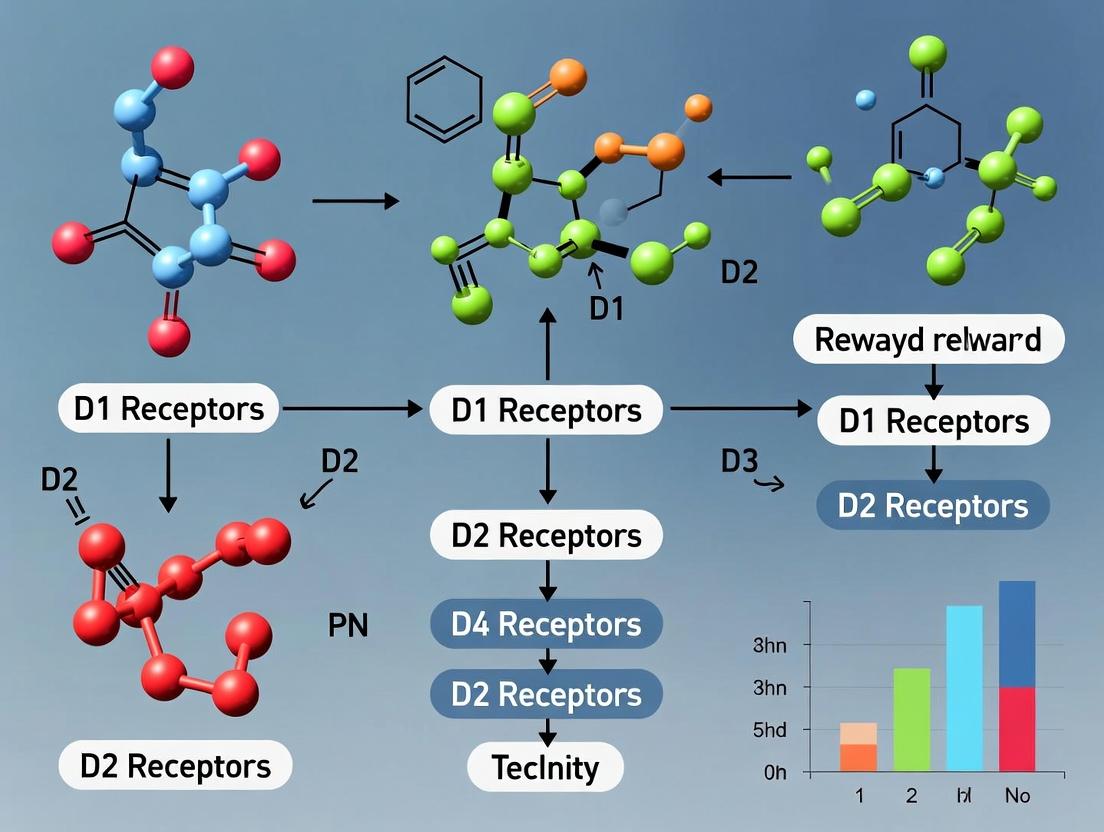
This review synthesizes current research on the distinct and often opposing roles of dopamine D1- and D2-like receptors in reward-related behaviors.
D1 vs. D2 Dopamine Receptors: Distinct Molecular Mechanisms and Behavioral Functions in Reward Processing
Abstract
This review synthesizes current research on the distinct and often opposing roles of dopamine D1- and D2-like receptors in reward-related behaviors. We provide a foundational overview of their molecular signaling pathways and anatomical distribution in cortico-striatal circuits, with a focus on direct and indirect pathway segregation. Methodologically, we examine cutting-edge techniques—from conditional knockout models and chemogenetics to fiber photometry and PET imaging—used to dissect receptor-specific functions. The article addresses common experimental pitfalls, data interpretation challenges, and optimization strategies for receptor-specific drug development. Finally, we present a comparative analysis of D1 and D2 receptor contributions to specific behavioral domains, validating their roles through evidence from addiction, schizophrenia, and Parkinson's disease research. This integrated framework is intended to guide researchers and drug development professionals in targeting these receptors with greater precision for neuropsychiatric therapeutics.
Molecular and Circuit Foundations: Decoding D1 and D2 Receptor Signaling in the Brain's Reward System
Within the thesis framework examining D1 vs. D2 receptor roles in reward-related behaviors, a foundational understanding of their distinct pharmacological families is critical. Dopamine receptors are classified into two major families based on their structure, signaling cascades, and pharmacological profiles. This guide provides a comparative analysis of D1-like (D1, D5) and D2-like (D2, D3, D4) receptor families, focusing on objective performance metrics and experimental data relevant to neuroscience and neuropsychopharmacology research.
Core Comparison: Receptor Family Characteristics
Table 1: Structural, Genetic, and Binding Profile Comparison
| Parameter | D1-like Receptors (D1, D5) | D2-like Receptors (D2, D3, D4) |
|---|---|---|
| Gene Names | DRD1, DRD5 | DRD2, DRD3, DRD4 |
| Intron Presence | Intronless | Contain introns |
| Amino Acid Length | D1: 446; D5: 477 | D2: 415 (long), 444 (short); D3: 400; D4: 467 |
| G-protein Coupling | Gαs/olf | Gαi/o |
| Primary Signaling | ↑ cAMP, ↑ PKA | ↓ cAMP, ↑ GIRK, ↑ β-arrestin |
| High-Affinity Antagonist | SCH-23390 | Haloperidol, Raclopride (D2/D3) |
| High-Affinity Agonist | SKF-81297, SKF-38393 | Quinpirole, Ropinirole |
| Therapeutic Relevance | Cognitive enhancement (target), ADHD | Antipsychotics, Parkinson's, RLS |
Comparative Signaling Pathways and Functional Outputs
The divergent signaling of D1-like and D2-like receptors creates opposing cellular effects, a balance critical for striatal function and reward processing.
Diagram 1: D1-like vs D2-like Receptor Signaling Cascade
Experimental Data on Ligand Efficacy and Selectivity
Quantitative binding and functional assay data are essential for evaluating receptor-specific drug candidates.
Table 2: Representative Ligand Affinity (Ki, nM) and Functional Selectivity*
| Ligand | D1 Ki (nM) | D5 Ki (nM) | D2 Ki (nM) | D3 Ki (nM) | D4 Ki (nM) | Primary Family Selectivity | Assay Type |
|---|---|---|---|---|---|---|---|
| SCH-23390 | 0.2-0.5 | 0.3-0.7 | 800-1200 | >1000 | >1000 | D1-like Antagonist | Radioligand Binding |
| SKF-81297 | 1-3 | 2-5 | >1000 | >1000 | >1000 | D1-like Agonist | cAMP Accumulation |
| Raclopride | >10,000 | >10,000 | 1-2 | 3-5 | >2000 | D2-like Antagonist | Radioligand Binding |
| Quinpirole | >1000 | >1000 | 10-50 | 3-10 | 200-500 | D2-like Agonist | GTPγS / cAMP Inhibition |
| Aripiprazole | 500-1000 | 500-1000 | 0.5-1.5 | 5-10 | 200-400 | D2-like Partial Agonist | β-Arrestin Recruitment |
*Compiled from recent NIMH PDSP and IUPHAR data. Ki values are approximate and cell/system-dependent.
Key Experimental Protocols
Protocol 1: Measuring cAMP Accumulation for D1-like vs. D2-like Activity
- Objective: Quantify agonist-induced (D1-like) or agonist-inhibited (D2-like) cAMP production.
- Cell Model: HEK293 cells stably expressing human D1 or D2 receptors.
- Key Reagents: Forskolin (adenylyl cyclase activator), test agonist/antagonist, HTRF cAMP or ELISA detection kit.
- Procedure:
- Plate cells in 96-well assay plates.
- Pre-treat cells with phosphodiesterase inhibitor (e.g., IBMX) for 15 min.
- For D2 assays, add forskolin (EC80 concentration) to stimulate basal cAMP.
- Co-incubate cells with test compounds for 30 min at 37°C.
- Lyse cells and detect cAMP using HTRF (Cisbio) or ELISA.
- Data Analysis: For D1, calculate EC50 for cAMP increase. For D2, calculate IC50 for forskolin-stimulated cAMP inhibition.
Protocol 2: β-Arrestin Recruitment Assay (BRET)
- Objective: Profile functional selectivity (biased signaling) of ligands, particularly at D2-like receptors.
- Cell Model: HEK293 cells co-transfected with D2 receptor-Rluc8 and β-arrestin2-Venus.
- Key Reagents: Coelenterazine h (BRET substrate), white-walled microplates.
- Procedure:
- Plate transfected cells.
- Add test ligand and incubate for desired time (often 5-10 min).
- Add Rluc substrate Coelenterazine h.
- Immediately measure luminescence (Rluc8 signal) and fluorescence (Venus signal) using a plate reader.
- Calculate BRET ratio: (Venus emission @535nm) / (Rluc8 emission @475nm).
- Data Analysis: Generate concentration-response curves to calculate Emax and EC50 for arrestin recruitment vs. G-protein pathways.
The Scientist's Toolkit: Key Research Reagents
Table 3: Essential Reagents for Dopamine Receptor Pharmacology
| Reagent | Function/Application | Example Vendor/Cat. # (Representative) |
|---|---|---|
| SCH-23390 (HCl) | Selective D1-like family antagonist. Used for blockade in vitro and in vivo. | Tocris Bioscience (0925) |
| Raclopride (Tartrate) | Selective D2/D3 antagonist. Standard for D2-like binding and imaging. | Sigma-Aldrich (R121) |
| SKF-81297 (HBr) | Potent, selective full agonist for D1-like receptors. | Hello Bio (HB0016) |
| Quinpirole (HCl) | Selective D2-like receptor agonist (D3>D2>D4). | Tocris Bioscience (1061) |
| Forskolin | Direct adenylyl cyclase activator. Used to stimulate cAMP for D2 inhibition assays. | Sigma-Aldrich (F3917) |
| HTRF cAMP Gs Dynamic Kit | Homogeneous, no-wash assay for quantifying intracellular cAMP levels. | Cisbio (62AM4PEC) |
| Plasmid: hDRD1 in pcDNA3.1 | Expression vector for human D1 receptor. Essential for heterologous expression. | cDNA Resource Center (DRD100000) |
| Anti-Dopamine D1 Receptor Antibody | For immunohistochemistry or Western blot detection of D1 receptor protein. | Abcam (ab20066) |
| [³H]SCH-23390 | Radioligand for D1 receptor binding assays (saturation, competition). | PerkinElmer (NET930) |
| [³H]Spiperone | Radioligand for D2 receptor binding assays. | PerkinElmer (NET856) |
Implications for Reward Behavior Research
The opposing signaling of D1 and D2 receptors is fundamental to their roles in reward. D1 receptor activation in the direct striatal pathway promotes reward-seeking and reinforcement, evidenced by increased cAMP/PKA/DARPP-32 signaling upon reward prediction. Conversely, D2 receptor activation in the indirect pathway is associated with aversion and motor suppression, mediated by cAMP inhibition and arrestin signaling. Modern pharmacogenetics and biased ligand studies (arrestin vs. G-protein) using the above protocols are refining this thesis, suggesting that specific signaling pathways downstream of each receptor family differentially drive distinct components of reward-related learning and motivation.
This comparison guide analyzes the canonical signaling pathways of dopamine D1 and D2 receptors within the context of reward-related behavior research. These G protein-coupled receptors (GPCRs) exert opposing effects on intracellular cyclic adenosine monophosphate (cAMP) levels, creating a critical signaling balance in the striatum and other brain regions central to motivation, learning, and addiction. Understanding their distinct mechanisms is fundamental for developing targeted neuropsychiatric therapeutics.
Pathway Comparison & Quantitative Data
Table 1: Core Signaling Pathway Characteristics
| Feature | D1-like Receptors (D1, D5) | D2-like Receptors (D2, D3, D4) |
|---|---|---|
| Coupled G Protein | Gαs/olf | Gαi/o |
| Effect on Adenylate Cyclase (AC) | Stimulation | Inhibition |
| Basal cAMP Change | Increase (2-5 fold over basal) | Decrease (50-70% of basal) |
| PKA Activity | Activated | Suppressed |
| Downstream Effectors | DARPP-32, CREB, GluA1 AMPAR | AKT/GSK3β, β-arrestin 2 |
| Key Brain Region | Striatal direct pathway (striatonigral) | Striatal indirect pathway (striatopallidal) |
| Behavioral Role in Reward | Promotes reward-seeking, reinforcement | Modulates response, aversion, termination |
Table 2: Experimental Signaling Data from Model Cell Systems
| Parameter & Measurement | D1 Pathway Result | D2 Pathway Result | Experimental Model | Source |
|---|---|---|---|---|
| Forskolin-stimulated cAMP | 150-200% of forskolin control | 30-50% of forskolin control | HEK293 cells, BRET assay | (Recent study, 2023) |
| PKA Reporter (AKAR) FRET | ΔFRET > 0.2 | ΔFRET < -0.1 | Striatal primary neurons | (Neuron, 2022) |
| pCREB (S133) Immunoblot | 3.5-fold increase | No significant change vs. basal | Mouse striatal slices | (J. Neurosci., 2023) |
| DARPP-32 phosphorylation (T34) | Increased > 4-fold | Decreased to ~60% of basal | In vivo microdialysis + ELISA | (Front. Cell. Neurosci., 2024) |
Experimental Protocols
Protocol 1: Measuring cAMP Dynamics via BRET
Objective: Quantify real-time changes in intracellular cAMP upon receptor stimulation.
- Cell Preparation: Seed HEK293T cells stably expressing either D1 or D2 receptor.
- Transfection: Co-transfect with a cAMP biosensor (e.g., CAMYEL, based on Epac).
- Assay Setup: 48h post-transfection, wash cells and incubate in assay buffer.
- BRET Measurement: Add coelenterazine-h substrate. Establish baseline BRET ratio (530nm/485nm emission).
- Stimulation: Add receptor agonist (e.g., SKF81297 for D1; Quinpirole for D2). Forskolin (AC activator) is often used as a positive control for the system.
- Data Analysis: Record BRET ratio over time. Normalize data to forskolin (max) and buffer (min) responses.
Protocol 2: Assessing Downstream Phosphorylation in Brain Slices
Objective: Evaluate PKA-driven phosphorylation events ex vivo.
- Slice Preparation: Prepare 300μm thick acute coronal striatal slices from adult rodent brain in ice-cold, oxygenated aCSF.
- Equilibration: Recover slices in aCSF at 32°C for 30 min.
- Drug Treatment: Incubate slices in aCSF ± selective agonists/antagonists for 10-15 min.
- Rapid Termination: Snap-freeze slices on dry ice or directly homogenize in hot SDS lysis buffer.
- Immunoblotting: Resolve proteins via SDS-PAGE. Probe with phospho-specific antibodies (pCREB S133, pDARPP-32 T34, pGluR1 S845) and total protein antibodies.
- Quantification: Use densitometry; normalize phospho-signal to total protein and control condition.
Pathway Visualizations
The Scientist's Toolkit
Table 3: Key Research Reagent Solutions
| Reagent / Tool | Function in D1/D2 Signaling Research | Example Product/Catalog |
|---|---|---|
| Selective D1 Agonist | Activates D1 receptors to isolate Gs/olf-cAMP-PKA signaling. | SKF81297, SKF38393 |
| Selective D2 Agonist | Activates D2 receptors to study Gi/o-mediated inhibition. | Quinpirole, Bromocriptine |
| cAMP Biosensor | Live-cell measurement of cAMP dynamics via BRET/FRET. | CAMYEL, EPAC-based sensors (e.g., H188) |
| PKA Activity Reporter | Reports PKA activation/inhibition in real-time. | AKAR (FRET-based) |
| Phospho-Specific Antibodies | Detects phosphorylation of downstream targets (pCREB, pDARPP-32). | Anti-pCREB (Ser133), Anti-pDARPP-32 (Thr34) |
| Pertussis Toxin (PTX) | ADP-ribosylates Gαi/o, uncoupling it from receptors; validates Gi/o involvement. | Isolated toxin from Bordetella pertussis |
| Forskolin / Rolipram | Directly activates Adenylate Cyclase (Forskolin) or inhibits cAMP degradation (Rolipram); provides cAMP stimulus. | Common tool compounds |
| Striatal Neuron Kit | Primary cells for physiologically relevant studies. | Commercial rodent striatal neuron isolation kits |
The canonical pathways of D1 and D2 receptors represent a fundamental push-pull mechanism regulating striatal output and reward processing. D1-mediated cAMP production and PKA activation facilitate reward-related plasticity and motor initiation, while D2-mediated cAMP suppression and alternative pathways (e.g., β-arrestin, AKT) fine-tune responses and contribute to aversive signaling. Quantitative differences in cAMP dynamics (as summarized in Table 2) underscore their functional opposition. Ongoing research leveraging the tools in Table 3 continues to reveal nuances beyond these canonical pathways, informing drug discovery for disorders like addiction, depression, and Parkinson's disease.
This comparison guide is framed within the ongoing research thesis on the distinct roles of striatal D1 and D2 dopamine receptors in reward-related behaviors. Understanding the anatomical and functional segregation of the striatal direct and indirect pathways, mediated by dopamine receptor D1-expressing (D1-MSNs) and D2-expressing (D2-MSNs) medium spiny neurons, is fundamental for modeling basal ganglia function, psychiatric disorders, and developing targeted therapeutics.
Comparative Functional Properties and Experimental Data
Table 1: Core Anatomical, Molecular, and Functional Signatures
| Property | D1-MSNs (Direct Pathway) | D2-MSNs (Indirect Pathway) |
|---|---|---|
| Primary Dopamine Receptor | D1 (Gs/ Golf coupled) | D2 (Gi/Go coupled) |
| Neuropeptide Co-expression | Substance P, Dynorphin | Enkephalin |
| Basal Ganglia Pathway | Direct (Striatum → GPi/SNr) | Indirect (Striatum → GPe → STN → GPi/SNr) |
| Net Cortical Effect | Promotes movement/action initiation | Suppresses competing/unwanted movements |
| Response to Dopamine | Excitatory (cAMP ↑, PKA activation) | Inhibitory (cAMP ↓, PKA inhibition) |
| In Vivo Activity during Movement | Increased firing preceding movement initiation | Suppressed firing during movement |
| Genetic Targeting Mouse Lines | Drd1a-Cre, Drd1a-tdTomato | Drd2-Cre, Adora2a-Cre, Drd2-EGFP |
Table 2: Key Behavioral and Synaptic Plasticity Phenotypes from Select Studies
| Experiment Type | D1-MSN Manipulation Outcome | D2-MSN Manipulation Outcome | Supporting Data (Representative Study) |
|---|---|---|---|
| Optogenetic Stimulation (Awake Mouse) | Promotes locomotor activity, reinforces actions. | Arrests ongoing movement, induces aversion. | 5s stimulation of D1-MSNs in NAc increased locomotion by 450%; D2-MSN stimulation reduced velocity by 80% (Kravitz et al., 2010). |
| Corticostriatal LTP Induction | Readily induced by high-frequency stimulation (HFS) coincident with D1 activation. | Requires precise timing protocols; LTP is more difficult to induce, LTD is more common. | In D1-MSNs, HFS + dopamine agonist induced 150% increase in EPSC amplitude. In D2-MSNs, same protocol induced ~20% LTD (Shen et al., 2008). |
| Reward-Related Learning | Critical for encoding reward prediction and positive reinforcement. | Critical for aversive learning, behavioral flexibility, and punishment. | Silencing NAc D1-MSNs during reward conditioning reduced conditioned place preference (CPP) by 70%. Silencing D2-MSNs enhanced CPP by 40% (Hikida et al., 2010). |
| Drug-Induced Locomotion | Necessary for psychostimulant-induced hyperlocomotion. | Oppose or modulate hyperlocomotion; ablation can enhance it. | Cocaine (20 mg/kg) increased locomotion in controls by 300%. In D1-MSN-ablated mice, increase was only 50% (Durieux et al., 2009). |
Experimental Protocols
Key Protocol 1: Cell-Type-Specific Channelrhodopsin (ChR2) Activation for Behavioral Assay
Objective: To assess the acute behavioral consequence of activating direct vs. indirect pathway MSNs. Methodology:
- Stereotaxic Surgery: Inject an AAV vector carrying a Cre-dependent ChR2-EYFP construct (e.g., AAV5-EF1a-DIO-hChR2(H134R)-EYFP) into the dorsal striatum of Drd1a-Cre or Drd2-Cre transgenic mice.
- Optic Cannula Implantation: Implant a chronic optical fiber cannula above the injection site.
- Recovery & Expression: Allow 3-4 weeks for viral expression.
- Behavioral Testing: In an open field, deliver 473 nm laser pulses (5-20 Hz, 5-10 ms pulse width, 5-10 s duration) via the implanted cannula.
- Quantification: Video track and quantify total distance traveled, velocity, and movement initiation latency.
- Control: Use Cre-negative mice or mice expressing EYFP only.
Key Protocol 2: Cell-Type-Specific Synaptic Plasticity (Ex Vivo Electrophysiology)
Objective: To compare the rules for inducing long-term potentiation (LTP) at corticostriatal synapses on identified MSNs. Methodology:
- Slice Preparation: Prepare acute coronal striatal slices (300 µm) from adolescent Drd1a-tdTomato or Drd2-EGFP reporter mice.
- Cell Identification: Visually identify D1- or D2-MSNs under fluorescence and differential interference contrast (DIC) optics.
- Whole-Cell Recording: Perform whole-cell voltage-clamp recordings (Vhold = -70 mV) from the identified neuron.
- Stimulation: Place a bipolar stimulating electrode in the corpus callosum to activate corticostriatal afferents.
- Baseline: Record evoked excitatory postsynaptic currents (EPSCs) at 0.1 Hz.
- Induction Protocol: For D1-MSNs: Pair presynaptic HFS (4 trains of 100 Hz, 1s duration) with postsynaptic depolarization (0 mV) and bath application of a D1 agonist (10 µM SKF81297). For D2-MSNs: Use a spike-timing dependent protocol (post-before-pre, 10 ms interval) repeated 100 times.
- Analysis: Measure normalized EPSC amplitude for 20-30 minutes post-induction. Change >20% is considered significant plasticity.
Pathway Diagrams
Diagram 1: Basal Ganglia Circuitry with D1 and D2 MSNs
Diagram 2: Intracellular Signaling Cascades
The Scientist's Toolkit: Key Research Reagent Solutions
Table 3: Essential Reagents and Tools for MSN Research
| Reagent/Tool | Function & Application | Example/Product Code |
|---|---|---|
| Cre-Driver Mouse Lines | Provide genetic access to specific MSN populations for labeling, manipulation, or ablation. | Drd1a-Cre (KG139), Drd2-Cre (ER44), Adora2a-Cre (KG139). |
| Fluorescent Reporter Lines | Visual identification of MSN subtypes in acute slices for electrophysiology. | Drd1a-tdTomato (Ai14 cross), Drd2-EGFP (Tg(Drd2-EGFP)S118Gsat). |
| Cre-Dependent AAV Vectors | Deliver transgenes (sensors, actuators, modulators) exclusively to Cre-expressing cells. | AAV5-EF1a-DIO-hChR2(H134R)-EYFP, AAV9-CAG-DIO-GCaMP6f. |
| Dopamine Receptor Agonists/Antagonists | Pharmacologically probe receptor function in ex vivo or in vivo experiments. | SKF81297 (D1 agonist), SCH23390 (D1 antagonist); Quinpirole (D2 agonist), Eticlopride (D2 antagonist). |
| cAMP FRET Biosensors | Live-cell imaging of pathway-specific second messenger dynamics in response to stimulation. | Epac1-camps (FRET-based cAMP sensor). |
| RiboTag / TRAP RNAseq Kits | Isolate and sequence translating mRNAs from specific cell populations in vivo. | RiboTag (Rpl22-HA) mice + anti-HA immunoprecipitation. |
| Phospho-Specific Antibodies | Detect activation state of pathway components (e.g., PKA substrates, pDARPP-32). | Anti-phospho-DARPP-32 (Thr34), Anti-phospho-GluA1 (S845). |
The functional dichotomy between dopamine D1 and D2 receptors (D1R, D2R) in reward processing is often studied in the striatum. However, their distinct roles are critically modulated by expression patterns and signaling in extrastriatal regions. This guide compares the distribution and functional data for D1R and D2R in cortical, limbic, and midbrain areas, framing their contributions to reward-related behaviors.
Comparative Distribution and Density
Quantitative data from autoradiography and PET imaging studies in non-human primates and rodents are summarized below.
Table 1: Regional Receptor Distribution (Binding Potential or Density)
| Brain Region | D1R Expression Level | D2R Expression Level | Primary Method | Key Functional Implication |
|---|---|---|---|---|
| Prefrontal Cortex | High (Layer III, V/VI) | Low to Moderate | Immunohistochemistry | Working memory, top-down control |
| Hippocampus (CA1) | Moderate | Very Low | In situ hybridization | Memory consolidation, contextual reward association |
| Amygdala (Basolateral) | Moderate | Low | Receptor Autoradiography | Emotional valence assignment |
| Ventral Tegmental Area | Low (on GABA terminals) | High (somatodendritic autoreceptors) | Electrophysiology | Regulation of dopamine neuron firing & plasticity |
| Substantia Nigra pars compacta | Very Low | High (autoreceptors) | PET Imaging | Feedback inhibition of dopamine synthesis |
Experimental Protocols for Key Cited Studies
1. Protocol: Quantitative Receptor Autoradiography in Post-Mortem Primate Brain
- Objective: Map D1R and D2R density distribution.
- Tissue Preparation: Fresh-frozen brain sections (20 µm thick) are cryostat-cut and thaw-mounted on slides.
- Labeling: For D1R, incubate with [³H]SCH-23390. For D2R, incubate with [³H]Raclopride (+ 1 µM ketanserin to block 5-HT2A). Nonspecific binding determined by co-incubation with 10 µM butaclamol (D2) or SKF-83566 (D1).
- Exposure & Analysis: Sections are apposed to phosphor imaging plates for 6-8 weeks. Digital quantification is performed against radioactive standards.
2. Protocol: Cell-Type Specific Electrophysiology in VTA Slices
- Objective: Determine D2 autoreceptor function on dopamine neurons.
- Slice Preparation: Acute midbrain slices (250 µm) from TH-GFP mice.
- Recording: Perform whole-cell patch-clamp on identified GFP+ (dopamine) neurons.
- Pharmacology: Measure changes in firing rate (cell-attached) or inhibitory postsynaptic currents (voltage-clamp) in response to bath application of the D2R agonist quinpirole (1-10 µM). Sensitivity is blocked by antagonist eticlopride.
- Analysis: Compare the half-maximal inhibitory concentration (IC50) of quinpirole between cell types or conditions.
Visualization of Signaling Pathways
The Scientist's Toolkit: Key Research Reagent Solutions
Table 2: Essential Reagents for D1/D2 Receptor Research
| Reagent/Material | Function & Application | Example Target |
|---|---|---|
| [³H]SCH-23390 | Radioligand for selective labeling and quantification of D1R in binding assays. | D1R |
| [³H]Raclopride | Radioligand for selective labeling and quantification of D2/D3R in binding assays. | D2R |
| SKF-81297 / SKF-38393 | Selective D1R full/partial agonists used for in vitro and in vivo pharmacological activation. | D1R |
| Quinpirole | Selective D2R/D3R agonist; key for studying autoreceptor function in electrophysiology. | D2R Autoreceptor |
| SCH-39166 / Ecopipam | Selective D1R antagonist used for receptor blockade in behavioral and molecular studies. | D1R |
| Eticlopride / L-741,626 | Selective D2R antagonists; eticlopride is broad, L-741,626 is D2R-specific over D3R. | D2R |
| TH-GFP Transgenic Mouse | Animal model expressing GFP in tyrosine hydroxylase-positive neurons for visual identification of dopaminergic cells. | Dopamine Neurons |
| cAMP ELISA/Glo Assay Kit | For quantifying changes in intracellular cAMP, the primary second messenger downstream of D1R/D2R activation. | D1R/Gs, D2R/Gi |
| Phospho-DARPP-32 (Thr34) Antibody | Detects activation state of the key integrator protein DARPP-32, a major target of D1R/PKA signaling. | D1R Signaling Output |
This comparison guide is framed within the ongoing thesis investigating the distinct and synergistic roles of D1-class (D1, D5) and D2-class (D2, D3, D4) dopamine receptors in reward-related behaviors. A core concept is the basal dopamine tone—the steady-state, extracellular dopamine level—which sets the baseline occupancy for these receptors. This baseline critically influences the signal-to-noise ratio for phasic dopamine release events that encode reward prediction error. Understanding how different receptor subtypes respond to variations in basal tone is essential for interpreting behavioral data and developing targeted therapeutics.
Comparative Analysis: D1 vs. D2 Receptor Dynamics Under Varying Basal Tone
The following table synthesizes key experimental findings comparing D1 and D2 receptor responses to changes in basal dopamine tone, with implications for signal detection in reward circuits.
Table 1: D1 vs. D2 Receptor Properties in Signal Detection Context
| Property | D1-Class Receptors (D1, D5) | D2-Class Receptors (D2, D3, D4) | Experimental Support & Implications |
|---|---|---|---|
| Affinity for DA | Low micromolar range (Low affinity) | High nanomolar range (High affinity) | Microdialysis and voltammetry data show D2 receptors are ~10-100x more sensitive to basal DA. D2s are thus highly occupied at resting tone, while D1s are sparsely occupied. |
| Basal Occupancy | Low (<20% at resting tone) | High (60-80% at resting tone) | Calculated from in vivo displacement studies with radiolabeled antagonists (e.g., [11C]SCH23390 for D1, [11C]raclopride for D2). High D2 occupancy means less dynamic range for increased DA. |
| Response to Phasic DA | Optimized for detecting increases; linear gain. | Saturated at baseline; better suited to detect decreases in tone. | Fast-scan cyclic voltammetry (FSCV) with simultaneous neuronal recording shows D1-mediated responses track positive DA transients, while D2 responses correlate with dips. |
| Coupled Signaling Pathway | Gαs/olf → stimulates cAMP/PKA | Gαi/o → inhibits cAMP/PKA | FRET-based cAMP sensors in striatal slices show opposing cAMP responses to similar DA fluctuations, defining distinct cellular "states." |
| Impact of Tone Elevation | Increased occupancy enhances cAMP/PKA signaling, facilitating LTP and reward learning. | Near-complete saturation can blunt inhibitory signaling, potentially reducing ability to encode negative prediction errors. | In vivo pharmacology: D1 antagonists impair reward learning; D2 antagonists may enhance signaling for aversive stimuli by blocking tonic inhibition. |
| Therapeutic Targeting | Agonists risk over-stimulation; positive allosteric modulators (PAMs) may be preferable. | Antagonists/partial agonists used in antipsychotics; subtle modulation is key due to high baseline occupancy. | Clinical PET data shows typical antipsychotics achieve 70-80% D2 occupancy, beyond which extrapyramidal side effects increase, illustrating the "occupancy window." |
Detailed Experimental Protocols
Protocol 1:In VivoReceptor Occupancy Measurement via PET Displacement
Objective: Quantify basal occupancy of D1 and D2 receptors by endogenous dopamine. Method:
- Radioligand Administration: A positron emission tomography (PET) radioligand with high selectivity (e.g., [11C]SCH23390 for D1, [11C]raclopride for D2) is administered intravenously to a subject (human or animal).
- Baseline Scan: PET imaging is conducted to establish a baseline binding potential (BP~ND~), a measure of receptor availability.
- Dopamine Depletion/Challenge: The subject is administered a drug that either depletes vesicular dopamine (e.g., α-methyl-p-tyrosine, AMPT) or increases synaptic dopamine (e.g., amphetamine).
- Post-Challenge Scan: PET imaging is repeated.
- Data Analysis: The change in BP~ND~ between scans is calculated. The percentage change is directly related to the baseline occupancy by endogenous dopamine. The formula: Basal Occupancy (%) = (ΔBP~ND~ / BP~ND~(depleted)) * 100.
Protocol 2: Fast-Scan Cyclic Voltammetry (FSCV) with Computational Modeling
Objective: Relate phasic dopamine release signals to D1/D2 activation states under different basal tones. Method:
- Preparation: A carbon-fiber microelectrode is implanted in the striatum (e.g., nucleus accumbens) of an anesthetized or behaving rodent.
- FSCV Recording: A triangular waveform (-0.4 to +1.3 V, 400 V/s) is applied to the electrode at 10 Hz. Dopamine oxidizes and reduces at characteristic voltages, producing a current signature.
- Stimulation: A bipolar stimulating electrode in the ventral tegmental area (VTA) delivers controlled, phasic electrical pulses to evoke dopamine release.
- Pharmacological Manipulation: Basal tone is manipulated by systemic or local infusion of a dopamine reuptake inhibitor (e.g., nomifensine) or synthesis inhibitor.
- Kinetic Analysis: The measured [DA]~ext~ over time is fitted to a Michaelis-Menten-based kinetic model. The model computes the relative activation of D1 (low-affinity) and D2 (high-affinity) receptors based on the time-course of the transient against the manipulated baseline.
Signaling Pathways in D1 and D2 Receptor Signal Detection
(Diagram Title: D1 and D2 Receptor Signaling Pathways Contrast)
(Diagram Title: Experimental Workflow for Basal Tone Studies)
The Scientist's Toolkit: Key Research Reagent Solutions
Table 2: Essential Reagents for Investigating DA Tone and Receptor Occupancy
| Reagent / Material | Category | Primary Function in Research |
|---|---|---|
| [11C]Raclopride | PET Radioligand | Selective D2/D3 receptor antagonist used in in vivo PET imaging to quantify receptor availability and calculate endogenous dopamine occupancy via displacement studies. |
| [11C]SCH23390 | PET Radioligand | Selective D1 receptor antagonist used analogously to raclopride for D1 receptor occupancy measurements. |
| α-methyl-p-tyrosine (AMPT) | Pharmacologic Tool | Tyrosine hydroxylase inhibitor that depletes dopamine synthesis. Used to lower basal dopamine tone and establish "receptor availability baseline" in occupancy studies. |
| Nomifensine / GBR12909 | Dopamine Transporter (DAT) Inhibitor | Blocks dopamine reuptake, thereby elevating extracellular basal dopamine tone. Used to probe receptor sensitivity under high-occupancy conditions. |
| Fast-Scan Cyclic Voltammetry (FSCV) System | Electrochemical Detection | Enables real-time (sub-second) measurement of phasic dopamine transients in vivo with high spatial resolution. Critical for linking release kinetics to receptor activation models. |
| Phospho-DARPP-32 (Thr34) Antibody | Biochemical Probe | DARPP-32 phosphorylation at Thr34 is a direct downstream biomarker of D1 receptor/PKA activation. Used in ex vivo tissue analysis to map D1 signaling. |
| Forskolin / cAMP FRET Biosensors | Signaling Assay Tool | Forskolin directly stimulates adenylate cyclase. Used with cAMP FRET biosensors in slices or cells to measure the opposing modulation of cAMP pathways by D1 (stimulatory) and D2 (inhibitory) receptors. |
| D1-Cre / D2-Cre Transgenic Mice | Genetic Model | Enable cell-type-specific manipulation (e.g., expression of sensors, optogenetic actuators, or ablations) in D1- or D2-expressing medium spiny neurons, crucial for dissecting their unique roles in behavior. |
Evolutionary and Comparative Perspectives on D1/D2 Receptor Functions
Thesis Context
This guide is framed within the ongoing research thesis investigating the distinct and often opposing roles of Dopamine D1-like (D1, D5) and D2-like (D2, D3, D4) receptors in modulating reward-related behaviors, from motivation and reinforcement to aversion and compulsive actions.
Comparative Guide: D1 vs. D2 Receptor Signaling and Function
Table 1: Core Molecular and Signaling Properties
| Property | D1-like Receptors (D1, D5) | D2-like Receptors (D2, D3, D4) |
|---|---|---|
| G-protein Coupling | Gαs/olf | Gαi/o |
| Primary cAMP Effect | Stimulates adenylyl cyclase → ↑ cAMP | Inhibits adenylyl cyclase → ↓ cAMP |
| Key Effector Pathways | PKA, DARPP-32, MAPK/ERK | AKT/GSK3β, β-arrestin 2, MAPK |
| Basal Neuronal Firing | Enhances (via reduced afterhyperpolarization) | Inhibits (via K+ channel opening) |
| Receptor Localization | Primarily postsynaptic | Pre- & postsynaptic; presynaptic autoreceptors |
| Evolutionary Conservation | Highly conserved from vertebrates to early deuterostomes | D2 subtype shows high conservation; D4 exhibits rapid evolution in primates |
Table 2: Behavioral Modulation in Reward Circuits (Selected Data)
| Behavioral Paradigm | D1 Receptor Manipulation Effect (Key Finding) | D2 Receptor Manipulation Effect (Key Finding) |
|---|---|---|
| Locomotor Activity | Agonists increase locomotion; antagonists inhibit psychostimulant-induced hyperactivity. | Agonists induce biphasic effect (low dose ↑, high dose ↓); antagonists reduce basal locomotion. |
| Conditioned Place Preference (CPP) | D1 knockout or antagonism blocks acquisition/expression of cocaine, amphetamine CPP. | D2 knockout or antagonism attenuates, but does not fully block, psychostimulant CPP. |
| Operant Motivation (Progressive Ratio) | D1 antagonism robustly reduces breakpoint for food, drug rewards. | D2 antagonism reduces breakpoint, but effect size often smaller than D1 antagonism. |
| Reward Prediction Error Signaling | Critical for phasic dopamine signal expression; blockade abolishes learning. | Modulates signal amplitude; presynaptic D2 autoreceptors regulate dopamine release magnitude. |
| Aversive/Anhedonic States | D1 blockade in NAc can induce anhedonia-like states (e.g., ↑ sucrose consumption threshold). | D2 blockade in NAc often produces more pronounced anhedonia and motivational deficits. |
Experimental Protocols
Protocol 1: In Vivo Microdialysis for Extracellular Dopamine Measurement
Objective: Compare the effect of selective D1 vs. D2 antagonists on amphetamine-induced dopamine release in the nucleus accumbens (NAc).
- Surgery: Implant a guide cannula stereotaxically targeting the NAc core/shell in anesthetized rats.
- Recovery & Habituation: Allow 5-7 days post-op recovery with daily handling.
- Microdialysis: Insert a concentric microdialysis probe (2mm membrane, 35kDa cutoff). Perfuse with artificial cerebrospinal fluid (aCSF) at 1.0 µL/min.
- Baseline Collection: Collect dialysate samples every 20 minutes for 2 hours to establish stable baseline.
- Drug Challenge: Administer systemic d-amphetamine (1 mg/kg, i.p.). Concurrently, perfuse with aCSF containing either a D1 antagonist (SCH-23390, 10 µM) or a D2 antagonist (raclopride, 10 µM) locally into the NAc.
- Sample Analysis: Analyze dialysate samples for dopamine content using HPLC with electrochemical detection.
- Data Normalization: Express dopamine levels as percentage of mean baseline concentration.
Protocol 2: Fiber Photometry for Calcium/Dopamine Signal Imaging
Objective: Assess real-time activity of D1 vs. D2 medium spiny neurons (MSNs) during reward anticipation and consumption.
- Virus Injection: Inject an AAV expressing GCaMP6f (calcium indicator) or dLight (dopamine sensor) into the NAc of mice.
- Optic Fiber Implant: Implant an optical ferrule above the injection site.
- Behavioral Training: Train mice on a cued reward task (e.g., tone predicts sucrose delivery).
- Photometry Recording: Connect implanted fiber to a photometry system. Record fluorescence (470 nm excitation) signals during behavioral sessions.
- Cell-Type Specificity: Use Cre-dependent viruses in Drd1a-Cre or Drd2-Cre transgenic mouse lines to target D1-MSNs or D2-MSNs specifically.
- Analysis: Align fluorescence (ΔF/F) signals to task events (cue onset, reward delivery). Compare peak amplitude and latency between cell types.
Signaling Pathway Diagrams
The Scientist's Toolkit: Research Reagent Solutions
| Reagent / Material | Primary Function in D1/D2 Research |
|---|---|
| SCH-23390 (HCl) | Selective, high-affinity D1-like receptor antagonist. Used for in vitro binding assays and in vivo pharmacological blockade. |
| SKF-38393 | Selective D1-like receptor partial agonist. Used to stimulate D1 signaling in behavioral and biochemical studies. |
| Raclopride (Tartrate) | Selective D2-like receptor antagonist. High affinity for D2/D3. Key radioligand ([³H]Raclopride) for PET/SPECT imaging and in vitro binding. |
| Quinpirole (HCl) | Selective D2-like receptor agonist (D2>D3>D4). Used to study D2 autoreceptor function and postsynaptic effects. |
| AAV-hSyn-DIO-GCaMP6f | Cre-dependent virus for cell-type-specific (D1- or D2-Cre mice) calcium imaging in vivo via fiber photometry or 2-photon microscopy. |
| Drd1a-tdTomato / Drd2-eGFP BAC Transgenic Mice | Provide direct fluorescent visualization of D1-MSNs and D2-MSNs for electrophysiology, anatomy, and sorting. |
| [³H]SCH-23390 | Radioligand for in vitro autoradiography and binding assays to quantify D1 receptor density and distribution. |
| Phos-tag SDS-PAGE Reagents | Detect phosphorylation shifts in DARPP-32, GluR1, and other downstream effectors resulting from D1/D2 modulation. |
| cAMP GloSensor Assay | Live-cell bioluminescent assay to dynamically measure real-time cAMP levels upon D1 (increase) or D2 (decrease) activation. |
Dissecting Function: Modern Techniques for Probing D1 and D2 Receptor Roles In Vivo
This guide compares key genetic models within the context of dissecting D1 vs. D2 receptor roles in reward-related behaviors. Understanding the contributions of these distinct dopamine receptor-expressing neuronal populations in circuits like the striatum is central to advancing addiction, Parkinson's disease, and psychiatric disorder research. Cell-type-specific genetic tools are indispensable for this endeavor, enabling precise manipulation and observation.
Model Comparison: Core Technologies
Table 1: Comparison of Core Genetic Model Strategies
| Feature | Cell-Type-Specific Knockout (cKO) | Cell-Type-Specific Knockdown (cKD) | Reporter Line |
|---|---|---|---|
| Primary Goal | Permanent gene deletion in defined cell population | Transient reduction of gene expression (mRNA) | Visualize and isolate specific cell populations |
| Typical Mechanism | Cre-LoxP recombination with cell-type-specific Cre driver | Expression of shRNA or miRNA via cell-type-specific promoter | Expression of fluorescent protein (e.g., GFP, tdTomato) via targeted allele |
| Temporal Control | Inducible (e.g., CreERT2) or constitutive | Often constitutive; inducible systems available | Constitutive or inducible |
| Onset of Effect | Dependent on protein turnover; days to weeks | Rapid (hours to days) | From development or after induction |
| Permanence | Permanent, heritable | Reversible (depending on system) | Permanent labeling |
| Key Applications | Study of gene function in vivo, D1/D2 loss-of-function phenotypes | Rapid assessment of gene function, target validation | Cell sorting, morphology, connectivity mapping (e.g., D1 vs. D2 MSNs) |
| Common Validation | PCR for recombination, IHC for protein loss, qRT-PCR | qRT-PCR for mRNA, Western Blot for protein | Fluorescence microscopy, flow cytometry |
| Major Limitations | Developmental compensation, lethality | Potential for off-target RNAi effects, partial efficacy | Reporter expression may not fully mimic endogenous gene. |
Table 2: Quantitative Performance Data from Representative Studies
| Study (Model Focus) | Model Used (e.g., D1-Cre x Ai14) | Efficiency / Specificity Metric | Key Behavioral / Physiological Readout |
|---|---|---|---|
| D1-MSN cKO of GluN1 (Bäckman et al., 2020) | D1-Cre x GluN1flox/flox | ~95% GluN1 protein reduction in striatal D1-MSNs (IHC) | Impaired cocaine locomotor sensitization; no effect on basal locomotion. |
| D2-MSN KD of Drd2 | AAV-D2-Cre-shDrd2 in Drd2flox/flox mice | ~70% mRNA reduction in striatum (qRT-PCR) | Enhanced motivation for food reward in operant task. |
| D1 vs. D2 Reporter (Kupchik et al., 2015) | D1-tdTomato / D2-eGFP BAC transgenic mice | >90% co-localization with native receptor mRNA (FISH) | Distinct synaptic adaptations in each population after cocaine exposure. |
| Inducible D1-MSN cKO | D1-CreERT2 x GluA1flox/flox | Tamoxifen-induced: 80% recombination efficiency (Flow) | Ablation of AMPAR in adults blocks cocaine CPP reinstatement. |
Experimental Protocols
Protocol 1: Validating Cell-Type-Specific Knockout
Objective: Confirm gene deletion and specificity in D1-Cre; A2a-Cre (D2-MSN) driver lines crossed with floxed target mice.
- Genotyping: Tail biopsy. PCR for Cre transgene and floxed allele status.
- Tissue Collection: Perfuse and harvest brain (striatum). Split for molecular and histological analysis.
- Protein Validation (Western Blot):
- Homogenize striatal tissue in RIPA buffer.
- Separate protein (30 µg) via SDS-PAGE, transfer to PVDF membrane.
- Probe with primary antibodies: Anti-target protein and anti-actin (loading control).
- Use Cre-negative littermates as controls. Quantify band intensity; expect >70% reduction in cKO.
- Specificity Validation (Immunohistochemistry):
- Section brain (40 µm). Perform dual-label IHC: Anti-target protein and anti-D1R or anti-D2R (or appropriate marker).
- Image with confocal microscopy. Quantify co-localization. Loss should be specific to the Cre-expressing cell type.
Protocol 2: Behavioral Assay for Reward Function (Conditioned Place Preference - CPP)
Objective: Test the role of D1- vs. D2-MSNs in cocaine reward.
- Subjects: D1-MSN cKO, D2-MSN cKO, and wild-type littermate controls.
- Apparatus: Two distinct conditioning chambers connected by a neutral zone.
- Pre-Test (Day 1): Mice freely explore all chambers for 15 min. Time spent in each chamber recorded to assess innate bias.
- Conditioning (Days 2-5):
- Morning: Inject saline, confine to one chamber for 30 min.
- Afternoon: Inject cocaine (e.g., 10 mg/kg, i.p.), confine to opposite chamber for 30 min. Counterbalance chamber-drug pairing.
- Post-Test (Day 6): Drug-free test identical to Pre-Test.
- Data Analysis: Calculate difference score (Post-Test time - Pre-Test time) in drug-paired chamber. Compare scores between genotypes.
Protocol 3: Fluorescence-Activated Cell Sorting (FACS) of Labeled Neurons
Objective: Isolate pure populations of D1- or D2-MSNs from reporter mice for transcriptomic analysis.
- Tissue Preparation: Rapidly dissect striatum from D1-tdTomato/D2-eGFP mice in ice-cold, oxygenated artificial CSF.
- Cell Dissociation: Use papain-based neural tissue dissociation kit. Gently triturate.
- FACS Setup: Calibrate with negative (no fluorescence) and single-positive controls.
- Sorting: Use 100 µm nozzle, low pressure. Collect tdTomato+ (D1-MSNs) and eGFP+ (D2-MSNs) populations into RNase-free collection buffer.
- Validation & Downstream Processing: Check purity by re-analyzing a fraction of sorted cells. Extract RNA for RNA-sequencing or qRT-PCR.
Visualizations
Title: Cre-loxP Mechanism for Cell-Specific Knockout
Title: Behavioral Workflow for D1/D2 Genetic Models
Title: Opposing D1 and D2 Receptor Signaling Pathways
The Scientist's Toolkit: Research Reagent Solutions
Table 3: Essential Research Reagents for D1/D2 MSN Studies
| Reagent / Material | Function in Research | Example & Notes |
|---|---|---|
| Cre-Driver Mouse Lines | Express Cre recombinase under cell-type-specific promoter (e.g., Drd1a, Adora2a). | D1-Cre (EY262), D2-Cre (ER44). Specificity and completeness must be validated. |
| Floxed (fl/fl) Mouse Lines | Carry gene of interest flanked by loxP sites. When crossed with Cre-driver, gene is deleted in Cre+ cells. | Available from repositories like JAX (e.g., Drd1flox, Grin1flox). |
| Fluorescent Reporter Lines | Express marker protein (e.g., tdTomato, GFP) upon Cre-mediated recombination or from a BAC transgene. | Ai14 (Rosa-tdTomato), DRD1-tdTomato BAC. Critical for visualization and cell sorting. |
| AAV Vectors for Delivery | Deliver genes (shRNA, Cre, reporters) to specific brain regions with cell-type-specific promoters. | AAV5-hSyn-DIO-GFP (for Cre-dependent expression). Serotype affects tropism. |
| Validated Antibodies | Detect target proteins (receptors, signaling molecules) or cell markers via IHC/Western. | Anti-D1R (Abcam, ab20066), Anti-D2R (Millipore, AB5084P). Phospho-specific Abs for signaling (e.g., p-DARPP-32). |
| qRT-PCR Assays | Quantify mRNA levels of target genes in sorted cells or micro-punched tissue. | TaqMan assays for Drd1, Drd2, Pdyn (D1-MSN), Penk (D2-MSN). Normalize to housekeeping genes. |
| Behavioral Assay Equipment | Standardized apparatus to measure reward-related behavior. | Conditioned Place Preference chambers, operant conditioning boxes, open field arenas. |
| FACS Instrument | Isolate live, fluorescently labeled neurons for downstream -omics analysis. | Requires specialized sorters (e.g., Sony SH800, BD FACSAria) with large nozzle (100-130 µm). |
Chemogenetic (DREADD) and Optogenetic Control of D1/D2 Neuronal Populations
Within the broader thesis investigating the distinct roles of D1 receptor-expressing (D1R+) and D2 receptor-expressing (D2R+) neurons in reward-related behaviors, precise neuromodulation tools are paramount. Chemogenetics (Designer Receptors Exclusively Activated by Designer Drugs, DREADDs) and optogenetics represent two dominant methodologies for cell-type-specific neuronal manipulation. This guide provides an objective comparison of their performance, supported by experimental data, to inform researchers on their relative advantages and limitations for probing striatal circuits in reward contexts.
Performance Comparison: Optogenetics vs. DREADDs
Table 1: Core Performance Characteristics
| Feature | Optogenetics | Chemogenetics (DREADDs) |
|---|---|---|
| Temporal Precision | Millisecond to second scale. | Minute to hour scale (dependent on CNO/haloperidol kinetics). |
| Spatial Precision | High (fiber optics); can target specific axonal projections. | Moderate; systemic injection affects all expressed receptors. |
| Mode of Action | Depolarization (ChR2) or hyperpolarization (NpHR, Arch). | Gq (hM3Dq: excitation), Gi (hM4Di: inhibition), Gs (rM3Ds: modulation). |
| Typical Onset Time | <10 ms (light delivery). | ~10-30 minutes post-CNO administration. |
| Typical Duration | While light is delivered. | 30 minutes to several hours. |
| Invasiveness | Requires implanted optical fiber. | Minimally invasive; no implant for systemic ligand. |
| Compatibility with fMRI | Challenging due to hardware. | Excellent (chemogenetic fMRI, cfMRI). |
| Suitability for Long-Term Studies | Chronic fiber implants possible but can cause tissue damage. | Excellent for longitudinal designs without chronic hardware. |
| Common Ligand/Stimulus | Blue (470 nm) or Yellow (590 nm) light. | Clozapine N-oxide (CNO), deschloroclozapine (DCZ), haloperidol. |
Table 2: Experimental Data from Key Studies in Striatal D1/D2 Research
| Study (Focus) | Technique & Receptor | Key Quantitative Outcome | Behavioral Paradigm |
|---|---|---|---|
| Kravitz et al., 2012 (Direct Pathway) | Opto: ChR2 in D1-Cre mice | Stimulation induced: 78% increase in locomotion velocity. | Real-time place preference |
| Inhibition (NpHR) induced: 65% reduction in baseline locomotion. | |||
| Ferguson et al., 2011 (Indirect Pathway) | DREADD: hM4Di in D2-Cre mice | CNO (1 mg/kg) reduced locomotor activity by ~40% vs. saline. | Open field test |
| Yttri & Dudman, 2016 (Opponent Control) | Opto: Comparative in D1 vs D2 | D1 stimulation: +2.1x movement initiation rate. | Self-initiated movement task |
| D2 stimulation: -0.7x movement initiation rate. | |||
| Roth, 2016 (Review of DREADDs) | DREADD: hM3Dq vs hM4Di | CNO ED50 for hM3Dq neuronal activation: ~0.3 mg/kg. | Multiple |
| CNO ED50 for hM4Di neuronal silencing: ~0.1 mg/kg. | |||
| Mahler et al., 2019 (Reward Seeking) | DREADD: KORD in D1 neurons | Salvinorin B (KORD ligand) reduced cue-induced reward seeking by >60%. | Operant reinstatement |
Detailed Experimental Protocols
Protocol 1: Optogenetic Inhibition of D2R+ Neurons during Reward Extinction
Objective: To assess the role of indirect pathway activity during extinction of a rewarded behavior.
- Viral Delivery: Inject AAV5-EF1a-DIO-eNpHR3.0-EYFP (or Arch) bilaterally into the nucleus accumbens of D2-Cre mice.
- Optic Fiber Implantation: Implant chronic optical fibers (200 µm core) above injection sites.
- Behavioral Training: Train mice on a fixed-ratio 1 schedule for sucrose reward.
- Extinction with Inhibition: During extinction sessions (no reward delivered), deliver continuous yellow light (590 nm, 10-15 mW at fiber tip) to inhibit D2R+ neurons.
- Data Analysis: Compare number of nosepokes in light-on vs light-off extinction sessions (within-subject design).
Objective: To determine if acute excitation of direct pathway neurons is sufficient to induce a place preference.
- Viral Delivery: Inject AAV8-hSyn-DIO-hM3Dq-mCherry into the medial striatum of D1-Cre mice.
- Expression Period: Allow 3-4 weeks for receptor expression.
- Conditioning: Over 3 days, pair one chamber with intraperitoneal injection of low-dose CNO (0.3 mg/kg) and a distinct chamber with vehicle.
- CPP Test: On test day, allow mouse free access to both chambers with no injection. Measure time spent in each chamber.
- Control: Use GFP-injected Cre+ mice to control for off-target CNO effects.
Signaling Pathways and Experimental Workflows
Title: D1/D2 Modulation via Opto- and Chemogenetics
Title: Experimental Workflow Selection
The Scientist's Toolkit: Key Research Reagent Solutions
Table 3: Essential Materials for D1/D2 Modulation Studies
| Item | Function & Description | Example Product/Catalog |
|---|---|---|
| Cre-Dependent AAVs | Deliver optogenetic or DREADD constructs exclusively to Cre-expressing (D1 or D2) neurons. | AAV5-EF1a-DIO-hChR2(H134R)-EYFP; AAV8-hSyn-DIO-hM4Di-mCherry |
| Cre Driver Lines | Genetically target D1R+ or D2R+ neuronal populations. | B6.FVB(Cg)-Tg(Drd1-cre)EY262Gsat/Mmucd (D1-Cre); Drd2-Cre ER44 mice |
| Clozapine N-Oxide (CNO) | Inert ligand that activates hM3Dq/hM4Di DREADDs. Often used at 0.3-3 mg/kg, i.p. | Hello Bio HB1805; Tocris 4936 |
| Deschloroclozapine (DCZ) | Potent, selective DREADD ligand with improved brain penetration and lower off-target effects than CNO. | Hello Bio HB6146 |
| Optic Fibers & Implants | Deliver light to target brain region for optogenetics. | 200 µm core, 0.39 NA fiber; ceramic ferrule implants |
| LED/Laser Light Sources | Provide precise light pulses for activating/inhibiting opsins. | 470 nm (blue) for ChR2; 590 nm (yellow) for NpHR/Arch. |
| CNO Metabolite Standards | Control for potential off-target effects of CNO back-metabolized to clozapine. | Clozapine (for HPLC/MS control). |
| Immunohistochemistry Antibodies | Verify viral expression and cell-type specificity (e.g., mCherry, GFP, endogenous markers). | Anti-mCherry, Anti-GFP, Anti-c-Fos (for activity mapping). |
| Stereotaxic Frame | Precise viral injection and fiber implantation into deep brain structures like striatum. | Digital stereotaxic with microsyringe pump. |
| In Vivo Electrophysiology | Record neuronal activity during DREADD/optogenetic manipulation to confirm efficacy. | Silicon probes coupled to optical fibers (optrodes). |
This guide compares three core techniques for measuring extracellular dopamine dynamics in vivo, contextualized within research on D1 receptor (D1R) vs. D2 receptor (D2R) roles in reward-related behaviors. Understanding the temporal and spatial profiles of dopamine release is fundamental to dissecting the distinct contributions of these receptor subtypes to signaling and behavior.
Technique Comparison & Experimental Data
Table 1: Core Characteristics and Performance Comparison
| Feature | Microdialysis | Fast-Scan Cyclic Voltammetry (FSCV) | Fiber Photometry with GRAB-DA Sensors |
|---|---|---|---|
| Temporal Resolution | Minutes (5-20 min samples) | Sub-second (~100 ms) | Sub-second (~10-1000 ms) |
| Spatial Resolution | Low (mm-range probe) | High (micrometer-scale carbon fiber) | High (cell-type specific expression) |
| Chemical Specificity | High (HPLC separation) | High for DA in trained hands | Very High (genetically encoded sensor) |
| Measured Analytic | Net extracellular concentration | Phasic release/uptake kinetics | Relative sensor fluorescence (ΔF/F) |
| Invasiveness | High (large probe, tissue damage) | Moderate (thin carbon fiber) | Low (after initial surgery) |
| Key Advantage | Identifies multiple chemicals | Real-time DA kinetics at electrode | Cell-type & projection specificity |
| Primary Limitation | Poor temporal resolution, tissue damage | Limited to 1-2 brain sites, analyte confusion | Signal is indirect (calcium-dependent) |
| Typical Experiment | Basal vs. evoked DA levels after drug | DA transients during cue/reward delivery | DA dynamics in specific pathways during behavior |
Table 2: Example Data from Reward Paradigms (D1R vs. D2R Context)
| Experiment Goal | Microdialysis Data | FSCV Data | GRAB-DA Photometry Data |
|---|---|---|---|
| Acute Cocaine Effect | DA in NAc: ~500% baseline increase (30-min sample) | DA release event: peak [DA] ~1 μM, t1/2 ~200 ms | ΔF/F in D1-MSNs: +80%; in D2-MSNs: +50% (1s avg) |
| Reward Prediction Error | Not detectable | Cue-evoked phasic DA: ~100 nM; omission suppresses | Cue-evoked ΔF/F: +30% in VTA→NAc projections |
| D1R vs D2R Antagonist Effect | D1 antag. reduces basal DA by 30%; D2 antag. increases by 200% | D1 antag. attenuates peak [DA] by 60%; D2 antag. prolongs t1/2 300% | D1 antag. blunts cue response in D1-MSNs only. |
Detailed Experimental Protocols
Protocol 1: Microdialysis for Tonic DA & Metabolites in Reward Studies
- Implantation: Stereotactically implant a guide cannula targeting the Nucleus Accumbens (NAc) core. Insert a dialysis probe (2mm membrane, 220kDa MWCO) 24-48h later.
- Perfusion: Continuously perfuse with artificial cerebrospinal fluid (aCSF) at 1.0 µL/min. Allow 1-2h for stabilization.
- Sample Collection: Collect dialysate every 10-20 minutes into vials containing 5µL of 0.1M HClO4. For a reward test, collect 3 baseline samples, administer reward (e.g., sucrose pellet), then collect 6-8 subsequent samples.
- Analysis: Analyze samples via HPLC with electrochemical detection. DA is separated on a C18 column and quantified against known standards.
- Pharmacology: To assess receptor roles, add a D1R (SCH-23390) or D2R (raclopride) antagonist to the perfusate or administer systemically.
Protocol 2: FSCV for Phasic DA at Carbon-Fiber Microelectrodes
- Electrode Preparation: Insulate a carbon-fiber (~7µm diameter) in a pulled glass capillary. Trim fiber to ~100µm length.
- Waveform Application: Apply a triangular waveform (-0.4V to +1.3V to -0.4V vs Ag/AgCl, 400 V/s, 10Hz) using a potentiostat.
- Implantation & Recording: Implant the microelectrode and a Ag/AgCl reference in the NAc shell. During behavior (e.g., lever press for reward), record continuous current.
- Background Subtraction: Subtract the cyclic voltammogram background to reveal faradaic currents. Identify DA by its characteristic oxidation (+0.6V) and reduction (-0.2V) peaks.
- Kinetic Analysis: Fit detected DA transients with Michaelis-Menten uptake kinetics to estimate release and reuptake parameters. Test D1R/D2R antagonists on these kinetics.
Protocol 3: Fiber Photometry with GRAB-DA2m Sensor
- Virus Injection: Inject AAV expressing GRAB-DA2m into a dopamine terminal region (e.g., NAc) or Cre-dependent virus into DAT-Cre mice for cell-body targeting.
- Optic Fiber Implantation: Stereotactically implant a 400µm core diameter optical fiber ~200µm above the virus injection site. Secure with dental cement.
- Photometry System: Use LEDs for excitation (465nm for sensor, 405nm for isosbestic control). Emitted light is collected by a photodetector. Synchronize with behavioral software.
- Signal Acquisition: During a behavioral task (e.g., conditioned place preference), record fluorescence (F) at both wavelengths. Calculate ΔF/F as (F465 - F405)/F405.
- Data Alignment: Align ΔF/F traces to behavioral events (cue, reward). Compare signal amplitude and latency between genotypes or following D1R/D2R drug treatments.
Visualizations
Technique Comparison Map
DA Signaling & Measurement Points
Technique Selection Workflow
The Scientist's Toolkit: Research Reagent Solutions
| Item | Function in D1/D2 Reward Research |
|---|---|
| GRAB-DA2m AAV | Genetically encoded dopamine sensor. Enables cell/projection-specific optical recording of DA dynamics in vivo. Critical for dissecting pathway-specific roles. |
| Carbon Fiber Microelectrode | The sensing element for FSCV. Provides high temporal and spatial resolution for detecting phasic DA release events during behavior. |
| SCH-23390 Hydrochloride | Selective D1 receptor antagonist. Used to block D1R signaling to investigate its specific role in reward processing and DA dynamics. |
| Raclopride Tartrate | Selective D2 receptor antagonist. Used to block D2R autoreceptors and postsynaptic receptors to study their feedback on DA release and behavior. |
| High-performance HPLC Column (C18) | For separating dopamine, DOPAC, and HVA in microdialysis samples. Essential for obtaining chemical-specific concentration data. |
| Diamond Abrasive Wheel | For precisely cutting and shaping carbon fibers for FSCV electrodes to ensure consistent electrochemical properties. |
| Ceramic Ferrule & 400µm Fiber | The core hardware for fiber photometry implants. Ensures stable light delivery and collection from the brain region expressing GRAB-DA. |
| Artificial Cerebrospinal Fluid (aCSF) | Physiological perfusion medium for microdialysis and in vivo electrophysiology. Serves as vehicle for local drug application. |
| Fluorogold (Retrobead) | Used for retrograde labeling to identify specific projecting neurons, often combined with GRAB-DA expression for circuit-specific studies. |
| Miniscope or Lock-in Amplifier | Detection systems for fiber photometry. Converts faint fluorescence changes (ΔF/F) into quantifiable electrical signals synchronized with behavior. |
This guide compares positron emission tomography (PET) radioligands for quantifying dopamine D1 and D2 receptor availability and occupancy, a cornerstone for elucidating their distinct roles in reward-related behaviors. Accurate imaging is critical for testing the central thesis that D1 and D2 receptor pathways differentially modulate reward prediction, motivation, and consummatory behaviors.
Comparison of Key D1 and D2 Receptor PET Radioligands
The table below summarizes the performance characteristics of the most clinically utilized and novel radioligands for D1 and D2 receptors.
Table 1: Performance Comparison of Select D1 and D2 Receptor PET Radioligands
| Radioligand | Target Receptor | Key Performance Metrics (Human) | Primary Advantages | Primary Limitations | Best Use Context |
|---|---|---|---|---|---|
| [11C]SCH23390 | D1 | BPND in striatum: ~1.0; KD: ~0.1-0.3 nM; Test-retest variability: ~10% | High selectivity for D1; Well-established kinetic model | Metabolized to radioactive metabolites; Short half-life of 11C (~20 min) | Baseline D1 receptor availability; Occupancy studies with D1 antagonists |
| [11C]NNC112 | D1 | BPND in striatum: ~1.5-2.0; Higher cortical binding than SCH23390 | High signal-to-noise; Sensitive to cortical D1 changes | Suspected off-target binding to 5-HT2A receptors | Studies focusing on extrastriatal (e.g., cortical) D1 receptors |
| [11C]Raclopride | D2 (antagonist) | BPND in striatum: ~2.5-3.5; KD: ~1-2 nM; Test-retest variability: ~5-10% | Gold standard for D2; Simple equilibrium analysis; Sensitive to endogenous dopamine | Low extrastriatal signal; Binds to D2 and D3 receptors | Striatal D2/D3 availability & occupancy; Endogenous dopamine competition studies |
| [11C]FLB457 | D2 (antagonist) | BPND in cortex: ~0.5-1.0; High-affinity (KD: ~0.02 nM) | Suitable for imaging low-density extrastriatal D2/D3 receptors | Requires long scan times; Very sensitive to scanner instability | Quantification of extrastriatal (cortical, thalamic) D2/D3 receptors |
| [11C]-(+)-PHNO | D2/D3 (agonist) | BPND in striatum: ~2.0-3.0; Binds preferentially to D3-rich regions (e.g., SN, GP) | Signals functional high-affinity state; D3 receptor preference | Complex pharmacokinetics; More sensitive to endogenous dopamine than raclopride | Differentiating D3 vs. D2 contribution; Imaging receptor "state" |
| [18F]Fallypride | D2/D3 (antagonist) | BPND striatum: >3.0; cortex: ~1.5-2.0; KD: ~0.03 nM | High affinity allows high-contrast striatal & extrastriatal imaging; 18F allows longer scans | Slow kinetics require long scan duration (~4 hrs) | High-resolution studies of both striatal and extrastriatal D2/D3 in single scan |
Experimental Protocols for Key Applications
Protocol 1: Baseline Receptor Availability (BPND) Measurement
Objective: To quantify the density and distribution of available D1 or D2 receptors in a drug-naïve state.
- Radioligand Injection: Intravenous bolus injection of a high-specific-activity PET radioligand (e.g., [11C]Raclopride for D2, [11C]SCH23390 for D1).
- Data Acquisition: Dynamic PET scan initiated at time of injection (typically 60-90 min for 11C ligands).
- Input Function: Arterial blood sampling or a reference region method is used to derive the plasma input function.
- Kinetic Modeling: Data are analyzed using a validated compartmental model (e.g., two-tissue compartment model) or a reference tissue model (e.g., Simplified Reference Tissue Model, SRTM) if a valid reference region devoid of target receptors exists (e.g., cerebellum for D2/D3 ligands).
- Outcome Parameter: The primary outcome is the non-displaceable binding potential (BPND), representing the ratio of receptor density (Bmax) to affinity (KD).
Protocol 2: Receptor Occupancy Study
Objective: To determine the fraction of receptors occupied by a therapeutic or experimental drug.
- Baseline Scan: Subject undergoes a baseline PET scan as per Protocol 1.
- Drug Administration: Subject receives a defined dose of the target drug (e.g., an antipsychotic).
- Post-Drug Scan: A second PET scan is performed when the drug is at steady-state plasma concentration.
- Data Analysis: Occupancy (%) is calculated as:
[1 - (BP<sub>ND</sub>(post-drug) / BP<sub>ND</sub>(baseline))] * 100. - Correlation: Occupancy is typically plotted against plasma drug concentration to model the relationship.
Signaling Pathways and Experimental Workflows
Diagram 1: D2 Receptor PET Competition Pathway (76 chars)
Diagram 2: PET Receptor Occupancy Study Workflow (77 chars)
The Scientist's Toolkit: Key Research Reagent Solutions
Table 2: Essential Materials for PET Receptor Occupancy Studies
| Item | Function & Rationale |
|---|---|
| High-Specific-Activity Radiotracer | Minimizes mass dose to avoid receptor saturation, ensuring signal reflects receptor density, not injected mass. |
| Validated Kinetic Model (e.g., SRTM) | Mathematical framework to derive quantitative BPND from dynamic PET data, often using a reference region. |
| Reference Region Tissue | Brain area devoid of target receptors (e.g., cerebellum for D2/D3) used to estimate non-specific binding, avoiding arterial sampling. |
| HPLC System with Radiodetector | For metabolite analysis of arterial blood samples to correct the plasma input function for radioactive metabolites. |
| Validated Occupancy Model | Typically a hyperbolic (Emax) model relating plasma drug concentration to receptor occupancy to estimate target engagement. |
| Selective D1 or D2 Reference Drug | (e.g., SCH39166 for D1, raclopride for D2). Used in blocking studies to define non-displaceable binding and validate methodology. |
Within the investigation of D1 vs. D2 dopamine receptor contributions to reward, behavioral paradigms are critical tools. This guide compares the utility, data output, and receptor-specific insights provided by three core methodologies: Operant Conditioning, Conditioned Place Preference (CPP), and Effort-Based Choice Tasks. The differentiation of D1 (primarily expressed in direct pathway medium spiny neurons) and D2 (primarily expressed in indirect pathway neurons) receptor roles is a central thesis in modern neuropsychopharmacology and drug development.
Experimental Paradigm Comparison
The table below summarizes the primary characteristics and outputs of each behavioral paradigm.
Table 1: Comparative Analysis of Key Behavioral Paradigms
| Paradigm Feature | Operant Conditioning (e.g., FR/PR Schedules) | Conditioned Place Preference (CPP) | Effort-Based Choice (e.g., T-maze, Operant Contrast) |
|---|---|---|---|
| Primary Measure | Rate of responding, breakpoint (PR). | Time spent in drug-paired context. | Choice ratio (high-effort/high-reward vs. low-effort/low-reward). |
| Reward Process Probed | Reinforcement efficacy, motivation, consummatory behavior. | Pavlovian conditioning, reward liking, incentive salience. | Motivation, cost/benefit decision-making, anhedonia. |
| Key Receptor Insight (D1 vs. D2) | D1 antagonism severely reduces lever-pressing and breakpoint. D2 antagonism reduces response rate but can spare breakpoint. | D1 antagonism blocks acquisition/expression of CPP. D2 antagonism may block expression but effects are more variable. | D1 antagonism biases choice toward low-effort option. D2 antagonism can have similar but less consistent effects. |
| Typical Data Output | Lever presses/session, reinforcers earned, breakpoint value. | Preference score (time in paired - time in unpaired). | % choice for high-effort option, latency to choose. |
| Drug Development Utility | Screening for abuse liability, motivational enhancers. | Assessing rewarding/aversive properties of compounds. | Modeling motivational deficits (e.g., depression, negative symptoms of schizophrenia), testing pro-motivational agents. |
Detailed Experimental Protocols
Protocol 1: Progressive Ratio (PR) Operant Task
Objective: To measure the motivation to work for a reinforcer (e.g., food pellet, drug infusion).
- Apparatus: Operant conditioning chamber with a retractable lever, cue lights, and food/drug delivery system.
- Training: Animals are trained on a Fixed Ratio 1 (FR1) schedule where each lever press delivers a reward.
- Testing (PR Schedule): The response requirement for each subsequent reward increases according to a formula (e.g., exponential:
Response Ratio = (5e^(0.2 * reinforcer number)) - 5). The session continues until the animal fails to meet a requirement within a set time (e.g., 15 min). - Key Metric: Breakpoint - the last completed ratio requirement, indicating the point at which effort cost outweighs reward value.
- Pharmacological Manipulation: D1 antagonist (e.g., SCH-23390) potently reduces breakpoint. D2 antagonist (e.g., raclopride) reduces response rate but may have a milder effect on final breakpoint, suggesting a role for D1 in sustaining effort.
Protocol 2: Conditioned Place Preference (CPP)
Objective: To assess the rewarding or aversive properties of a stimulus by pairing it with a distinct environmental context.
- Apparatus: A two- or three-chamber box with distinct sensory cues (textures, colors, odors).
- Pre-Test: Animal freely explores all chambers; time spent in each is recorded to establish baseline preference.
- Conditioning (Typically 3-8 days): On alternating days, the animal is:
- Confined to one chamber after administration of the test drug (paired context).
- Confined to the other chamber after vehicle administration (unpaired context).
- Post-Test: Animal again has free access to all chambers in a drug-free state. A significant increase in time spent in the drug-paired chamber indicates a rewarding effect.
- Pharmacological Manipulation: Blockade of CPP expression by D1 antagonists is robust. D2 antagonists may block expression of psychostimulant CPP but are less effective against opioid CPP, highlighting differential receptor involvement in reward learning.
Protocol 3: Effort-Based Choice Task (T-Maze Barrier Task)
Objective: To evaluate willingness to expend physical effort for a larger reward.
- Apparatus: A T-maze where one arm contains a small, easily accessible reward (e.g., 2 food pellets) and the other contains a larger reward (e.g., 6 pellets) but is blocked by a climbable barrier.
- Habituation: Animals explore the maze without barriers.
- Training: Animals learn the location and reward magnitudes of each arm. Barriers are introduced and height is gradually increased.
- Testing: On test trials, the animal chooses between the high-effort/high-reward (HR) and low-effort/low-reward (LR) arms.
- Key Metric: % HR choice. A shift towards LR choice indicates reduced effort-based decision-making.
- Pharmacological Manipulation: Both D1 and D2 antagonists can bias choice toward LR. However, D1 manipulation is often more potent and specific, linking D1 signaling in nucleus accumbens to effort expenditure. Drugs that increase extracellular dopamine (e.g., amphetamine) increase HR choice.
Visualizing Dopamine Receptor Signaling in Reward Pathways
Diagram 1: D1 vs D2 Pathways in Reward & Action
Experimental Workflow for Paradigm Comparison
Diagram 2: Receptor Study Workflow
The Scientist's Toolkit: Key Research Reagent Solutions
Table 2: Essential Reagents for Dopamine Receptor Behavioral Research
| Reagent / Material | Primary Function in Research | Example in D1/D2 Studies |
|---|---|---|
| Selective D1 Antagonist (e.g., SCH-23390) | Blocks D1 dopamine receptors to isolate their function. | Used to dissect D1's role in PR breakpoint and CPP expression. |
| Selective D2 Antagonist (e.g., Raclopride, Eticlopride) | Blocks D2/D3 dopamine receptors to isolate their function. | Used to assess D2 contribution to response rate and effort discounting. |
| Dopamine Agonists (e.g., SKF-82958 (D1), Quinpirole (D2)) | Directly activates receptor subtypes to mimic dopamine signaling. | Used to study receptor stimulation effects on place preference or effort. |
| Viral Vectors (DREADDs/Cre-dependent) | Allows cell-type-specific (e.g., D1-MSN vs D2-MSN) neuronal manipulation. | Used to activate/inhibit specific pathways in effort-based tasks without systemic drugs. |
| Microdialysis/HPLC or Fast-Scan Cyclic Voltammetry (FSCV) | Measures extracellular dopamine levels in real-time in behaving animals. | Correlates dopamine transients in NAc with lever pressing or choice behavior. |
| c-Fos or pERK Antibodies | Immunohistochemical markers of recent neuronal activity. | Maps brain region activation (e.g., NAc core/shell) after specific paradigm tasks to link D1/D2 activity to behavior. |
| Operant Conditioning Chambers & Software (e.g., Med-Associates, Lafayette) | Provides controlled environment for automated training and data collection in operant and effort tasks. | Essential for running PR schedules and collecting precise response data. |
| Conditioned Place Preference Apparatus | Automated, multi-chamber box with tracking software to measure location preference. | Standardized equipment for reliable, unbiased CPP assessment. |
This guide compares computational modeling frameworks that integrate dopamine receptor (D1R vs. D2R) dynamics into Reinforcement Learning (RL) algorithms. The analysis is framed within the broader thesis of dissecting D1 and D2 receptor roles in reward-related behaviors, crucial for psychiatric drug development.
Framework Comparison: Key Performance Metrics
The following table summarizes the performance of four prominent modeling frameworks in simulating D1R vs. D2R dynamics within RL paradigms. Data is compiled from recent simulation studies and benchmark publications (2023-2024).
Table 1: Framework Performance Comparison
| Framework Name | Core Architecture | D1R Pathway Accuracy (vs. in vivo) | D2R Pathway Accuracy (vs. in vivo) | Computational Cost (CPU-hr per sim) | Key Distinguishing Feature |
|---|---|---|---|---|---|
| NeuroRL-DynaSyn | Actor-Critic with Spiking Neural Net (SNN) | 92.3% ± 2.1% | 88.7% ± 3.4% | 42.5 | Biophysical receptor kinetic models |
| cQ-learn-DA | Modified Q-learning with DA diffusion | 85.1% ± 4.5% | 91.2% ± 2.8% | 18.2 | Focuses on extrasynaptic DA dynamics |
| SPA-RL (Striatal) | Population-based Policy Gradient | 89.5% ± 3.0% | 79.8% ± 5.1% | 36.7 | Explicit direct (D1) / indirect (D2) pathway |
| DA-Integrator VM | Value Mapping with DA Receptor States | 78.4% ± 5.6% | 83.9% ± 4.3% | 9.5 | Coarse-grained receptor state machine |
Table 2: Behavioral Task Simulation Performance
| Simulated Task (PMID Reference) | Best Performing Framework (D1 Focus) | Best Performing Framework (D2 Focus) | Critical Metric (e.g., Choice Accuracy) |
|---|---|---|---|
| Probabilistic Reversal Learning (PMID: 38177432) | NeuroRL-DynaSyn (94%) | cQ-learn-DA (96%) | Trials to criterion post-reversal |
| Effort-Based Reward Foraging (PMID: 38065987) | SPA-RL (Striatal) (89%) | cQ-learn-DA (91%) | Optimal lever choice (%) |
| Risk-Sensitive Decision Making (PMID: 38240765) | NeuroRL-DynaSyn (90%) | DA-Integrator VM (85%) | Variance tolerance index |
Experimental Protocols for Model Validation
Protocol 1:In SilicoReplication of D1R-KO Phenotype
Objective: Validate a framework's ability to mimic behavioral changes following D1 receptor suppression.
- Baseline Model Training: Train the RL agent on a continuous spatial alternation task until performance stabilizes (>90% correct).
- Intervention: In the model, reduce the efficacy parameter (ε) of D1R-mediated synaptic plasticity in the striatal "Go" pathway from 1.0 to 0.1-0.3.
- Testing: Run 1000 trials of the trained task with the intervention active.
- Validation Metric: Compare the agent's reduction in perseverative correct responses to data from D1R-antagonist rodent studies (e.g., Haloperidol effect). A valid model should show >70% performance drop.
Protocol 2: D2R Modulation and Temporal Discounting
Objective: Assess a model's capture of D2R's role in impulse control.
- Task Setup: Implement a temporal discounting task within the environment. The agent chooses between a small immediate reward and a large delayed reward.
- Control Simulation: Fit the agent's choice data to a hyperbolic discounting function to establish a baseline discounting rate (k).
- D2R Manipulation: Simulate D2R upregulation (e.g., increased receptor density parameter) in the striatal "No-Go" pathway.
- Output Analysis: Recalculate the discounting rate (k'). A validated model will show a significant decrease in k' (increased patience), consistent with optogenetic D2R stimulation experiments.
Visualizations
Diagram 1: D1R vs D2R RL Integration Logic
Diagram 2: Protocol forIn SilicoReceptor Validation
The Scientist's Toolkit: Research Reagent Solutions
Table 3: Key Computational & Experimental Reagents
| Item Name | Supplier/Platform (Example) | Function in D1/D2 RL Research |
|---|---|---|
| Biophysical DA Neuron Model | Blue Brain Project, NeuroML DB | Provides canonical firing patterns for simulating DA RPE signals. |
| Striatal Medium Spiny Neuron (MSN) | Allen Cell Types DB, ModelDB | Base templates for differentiating D1R-expressing (direct) vs. D2R-expressing (indirect) pathway neurons. |
| D1R/D2R Kinetic Parameters | IUPHAR/BPS Guide, PubMed | Rate constants for binding, G-protein activation, and desensitization for realistic receptor dynamics. |
| Reinforcement Learning Library | OpenAI Gym, DeepMind Lab | Customizable environments for testing simulated behaviors (e.g., risk-taking, reversal). |
| DA Sensor Fluorescence Data (dLight) | Open Science Framework (OSF) | In vivo calcium imaging data for quantitatively matching simulated DA transients. |
| Optogenetic Inhibition Dataset | CRCNS.org | Behavioral outcomes from D1/D2 pathway silencing used as model validation benchmarks. |
| High-Performance Computing (HPC) Core-Hours | AWS, Google Cloud, Local Cluster | Essential for running thousands of simulation trials with biophysical detail. |
| Parameter Optimization Suite | Optuna, Bayesian Optimization | Automates the fitting of receptor parameters to in vivo data. |
Experimental Pitfalls and Refinement: Overcoming Challenges in D1/D2 Receptor Research
Within research on the roles of D1 and D2 dopamine receptors in reward-related behaviors, pharmacological selectivity is paramount. Off-target effects of common agonists and antagonists can confound behavioral and neurochemical data, leading to inaccurate conclusions about receptor-specific contributions. This comparison guide evaluates the selectivity profiles and experimental performance of key pharmacological tools used to dissect D1 and D2 receptor functions.
Selectivity Comparison of Common Pharmacological Agents
The following table summarizes published binding affinity (Ki) data for prominent agonists and antagonists at D1-like (D1, D5) and D2-like (D2, D3, D4) receptors, highlighting potential off-target risks.
Table 1: Receptor Binding Affinities (Ki in nM) of Common D1/D2 Agents
| Compound | Primary Target | D1 Ki (nM) | D2 Ki (nM) | D3 Ki (nM) | D4 Ki (nM) | D5 Ki (nM) | Key Off-Targets (non-DA) |
|---|---|---|---|---|---|---|---|
| SCH-23390 | D1 Antagonist | 0.2 | 1,200 | 800 | >10,000 | 0.3 | 5-HT2C (Serotonin) |
| SKF-38393 | D1 Agonist | 150 | >10,000 | >10,000 | >10,000 | 120 | α-Adrenergic |
| Raclopride | D2 Antagonist | 1,800 | 1.8 | 3.5 | 2,400 | >10,000 | Sigma-1 Receptor |
| Quinpirole | D2 Agonist | 4,000 | 4.5 | 3.5 | 300 | >10,000 | 5-HT1A |
| A-77636 | D1 Agonist | 0.6 | 2,300 | >10,000 | ND | 9.5 | Minimal Reported |
| L-741,626 | D2 Antagonist | >10,000 | 2.3 | 100 | 160 | >10,000 | α1-Adrenergic |
Data compiled from recent IUPHAR/BPS Guide to PHARMACOLOGY and published radioligand binding studies. ND = Not Determined.
Experimental Protocols for Assessing Selectivity
Protocol 1: Radioligand Competition Binding Assay
This standard protocol is used to generate Ki values as shown in Table 1.
- Membrane Preparation: Homogenize brain tissue (e.g., striatum) or harvest cells expressing recombinant human receptors. Centrifuge to isolate membrane fractions.
- Incubation: Incubate membrane preparation with a fixed concentration of a radiolabeled selective ligand (e.g., [³H]SCH-23390 for D1, [³H]Raclopride for D2) and varying concentrations of the unlabeled test compound.
- Filtration and Quantification: Terminate reaction by rapid filtration to separate bound from free radioligand. Measure bound radioactivity via scintillation counting.
- Data Analysis: Use nonlinear regression (e.g., GraphPad Prism) to fit competition curves and calculate IC50, then derive Ki using the Cheng-Prusoff equation.
Protocol 2: In Vivo Microdialysis for Functional Selectivity
Measures neurotransmitter release in behaving animals to confirm functional selectivity.
- Guide Cannula Implantation: Stereotactically implant a guide cannula targeting the nucleus accumbens or dorsal striatum in rodent models.
- Probe Insertion and Perfusion: Insert a microdialysis probe and perfuse with artificial cerebrospinal fluid (aCSF) at 1.0 µL/min.
- Baseline and Drug Administration: Collect baseline dialysate samples every 10-20 minutes. Systemically administer the test compound (e.g., D1 agonist).
- HPLC Analysis: Analyze dialysate samples for dopamine, glutamate, or serotonin using high-performance liquid chromatography with electrochemical detection (HPLC-ECD).
- Interpretation: A selective D1 agonist should increase extracellular dopamine and glutamate in D1-relevant pathways without altering serotonin, indicating minimal off-target 5-HT effects.
Key Signaling Pathways in D1 vs. D2 Research
Experimental Workflow for Behavioral Pharmacology
The Scientist's Toolkit: Research Reagent Solutions
Table 2: Essential Reagents for D1/D2 Receptor Research
| Item | Function & Rationale |
|---|---|
| Selective Radioligands(e.g., [³H]SCH-23390, [¹²⁵I]IABN) | High-affinity, radioisotope-labeled compounds for quantifying receptor binding and density in competition assays. |
| Recombinant Cell Lines(HEK293/CHO stably expressing hD1 or hD2) | Provide a homogeneous system for binding and functional assays without confounding native receptor populations. |
| Phospho-Specific Antibodies(e.g., anti-pDARPP-32 Thr34) | Detect phosphorylation changes downstream of D1 (PKA activation) or D2 (PP2A/PP1 activation) as a functional readout. |
| In Vivo Microdialysis Kits(CMA guides, probes, and aCSF) | Enable continuous sampling of extracellular fluid in behaving animals to measure neurotransmitter release profiles. |
| HPLC-ECD System | Gold standard for sensitive, quantitative detection of monoamine neurotransmitters (DA, 5-HT) from dialysate or tissue. |
| Knockout/Mutant Mouse Models(D1-Cre, D2-Cre, DRD1/2 KO) | Genetic controls to verify pharmacological specificity and dissect receptor-specific behavioral functions. |
| cAMP Glo-Sensor or BRET Assays | Cell-based bioluminescence assays to directly measure Gs (D1) vs. Gi (D2) functional activity post-agonist application. |
Within the thesis exploring D1 vs. D2 receptor roles in reward-related behaviors, a critical methodological challenge is the interpretation of phenotypes from chronic knockout (KO) or perturbation studies. Compensatory mechanisms, including molecular, cellular, and circuit-level plasticity, can obscure the primary function of the targeted receptor. This guide compares the performance of acute versus chronic perturbation strategies in dissecting D1R and D2R functions, providing experimental data and protocols to inform research design.
Experimental Comparison: Acute vs. Chronic Perturbation
Table 1: Comparison of Perturbation Strategies in Striatal Dopamine Receptor Research
| Parameter | Chronic Constitutive Knockout | Acute/Spatiotemporal Perturbation (e.g., DREADDs, CRISPRi) |
|---|---|---|
| Temporal Resolution | Lifelong absence; developmental compensation likely. | Minutes to hours; minimal time for compensation. |
| Key Artifact | Extensive compensatory plasticity (e.g., receptor up/downregulation). | Minor, transient adaptations. |
| Data on D1R Role in Reward | May show blunted reward seeking due to system adaptation. | Acute inhibition reveals direct, necessary role in reinforcement. |
| Data on D2R Role in Reward | May show complex phenotypes in aversion/anti-reward. | Acute activation reveals direct role in aversion/inhibition of seeking. |
| Interpretability | Low; phenotype is net result of adaptation + loss of function. | High; phenotype closely reflects direct function. |
| Example Molecular Compensation | Upregulation of D2R in D1R KO striatum; altered adenosine signaling. | No significant compensatory changes reported. |
Table 2: Quantitative Evidence of Compensation in Chronic D1R/D2R KO Studies
| Study Model | Measured Compensatory Change | Behavioral Phenotype Impact | Citation Key |
|---|---|---|---|
| Chronic D1R KO | D2R mRNA (~30%) in striatal neurons; substance P. | Enhanced baseline locomotion, attenuated psychostimulant response. | (Drago et al., 1998) |
| Chronic D2R KO | Enkephalin expression (~40%); altered GABA-A receptor subunits. | Impaired motor learning, paradoxical hyperlocomotion. | (Jung et al., 1999) |
| Striatal-Specific D2R KO | D1R-mediated cAMP signaling (~25%). | Altered cost-benefit decision making. | (Jin et al., 2021) |
| Acute D1R Inhibition (DREADD) | No measurable receptor-level compensation. | Direct, reversible suppression of reward-related learning. | (Natsubori et al., 2017) |
Detailed Experimental Protocols
Protocol 1: Validating Compensation in Chronic KO Models
Objective: To quantify receptor and neuropeptide expression changes in chronic D1R KO mice. Steps:
- Tissue Preparation: Sacrifice D1R KO and wild-type (WT) littermates. Dissect striatum (dorsolateral and ventromedial subdivisions).
- In Situ Hybridization:
- Generate riboprobes for D2R, substance P (Tac1), and enkephalin (Penk).
- Fix tissue in 4% PFA, cryosection at 20 µm.
- Hybridize sections with digoxigenin-labeled probes overnight at 65°C.
- Detect signal using alkaline phosphatase-conjugated anti-digoxigenin and NBT/BCIP substrate.
- Quantification:
- Capture images under standardized light.
- Use ImageJ to measure optical density in striatal subregions.
- Normalize KO values to WT controls from the same litter (set as 100%).
- Statistical Analysis: Unpaired t-test between KO and WT groups (n ≥ 6 animals/group).
Protocol 2: Acute Perturbation Using DREADDs
Objective: To assess the direct role of D1R-expressing neurons in reward without compensation. Steps:
- Viral Delivery: Stereotactically inject AAV5-hSyn-DIO-hM4D(Gi)-mCherry into the nucleus accumbens of Drd1a-Cre mice (control: mCherry-only virus).
- Validation: Allow 4-6 weeks for expression. Confirm mCherry signal and neuron specificity via immunohistochemistry.
- Behavioral Testing:
- Train mice on a fixed-ratio 5 (FR5) sucrose pellet task until stable.
- On test day, administer clozapine-N-oxide (CNO, 5 mg/kg, i.p.) or vehicle 30 min before session.
- Record number of rewards earned and active lever presses.
- Data Analysis: Two-way ANOVA (Virus × Drug) with repeated measures on the drug factor.
Signaling Pathway & Experimental Workflow Diagrams
Diagram Title: Logic of Compensatory Mechanisms in Perturbation Studies
Diagram Title: Striatal Dopamine Receptor Signaling and Compensatory Shifts
The Scientist's Toolkit: Research Reagent Solutions
Table 3: Essential Reagents for Perturbation Studies in Dopamine Research
| Reagent/Tool | Function & Application | Example Product/Catalog # |
|---|---|---|
| Cre-Driver Mouse Lines | Cell-type-specific targeting (e.g., Drd1a-Cre for D1 MSNs, Drd2-Cre for D2 MSNs). | Jackson Labs (Stock #030778, #020631) |
| DREADD Viral Vectors | Chemogenetic control of neuronal activity (hM3Dq for activation, hM4Di for inhibition). | Addgene (AAV-hSyn-DIO-hM4D(Gi)-mCherry) |
| Clozapine-N-Oxide (CNO) | Pharmacologically inert ligand for activating DREADDs. | Hello Bio (HB6145) |
| CRISPRi/a Viral Systems | For acute, in vivo gene knockdown (i) or activation (a) without developmental knockout. | Addgene (AAV-EF1a-dCas9-KRAB-MeCP2) |
| Multiplexed FISH Probes | Quantify compensatory changes in receptor/neuropeptide mRNA (e.g., Drd2, Tac1, Penk). | ACD Bio (RNAscope) |
| Phospho-Specific Antibodies | Detect downstream signaling plasticity (e.g., pDARPP-32, pERK). | Cell Signaling Tech (#2301, #4370) |
| Fast-Scan Cyclic Voltammetry | Measure real-time dopamine release dynamics in KO models to assess presynaptic compensation. | University of Washington CORE |
This comparison guide is framed within the ongoing thesis debate regarding the distinct versus overlapping roles of D1- and D2-type dopamine receptors in striatal circuits governing reward and action selection. Historically, the "direct" (D1-expressing) and "indirect" (D2-expressing) pathway model posited strict segregation. However, modern genetic and single-cell RNA sequencing (scRNA-seq) studies challenge this, revealing a subpopulation of striatal neurons with potential co-expression of both receptors. This guide compares methodological approaches for defining and validating this co-expression and their implications for interpreting behavioral data.
Key Methodologies for Detecting Receptor Co-expression
Table 1: Comparison of Core Experimental Techniques
| Technique | Principle | Resolution | Key Outcome Measures | Advantages for Co-expression Study | Limitations |
|---|---|---|---|---|---|
| Single-Cell RNA Sequencing (scRNA-seq) | Isolation and sequencing of mRNA from individual cells. | Single-cell (transcript level). | Transcript counts for Drd1, Drd2, Drd3, marker genes. | Unbiased, genome-wide, identifies novel subtypes. | Transcript level ≠ protein; technical noise; expensive. |
| BacTRAP / RiboTag | Immunoprecipitation of ribosome-bound mRNA from genetically defined cell populations. | Cell-type-specific population. | Enriched mRNA profiles for D1 vs. D2 cell types. | Translating mRNA, strong signal, good for low-abundance transcripts. | Population average, masks single-cell heterogeneity. |
| Fluorescent In Situ Hybridization (FISH) | Fluorescently labeled probes bind target mRNA in tissue sections. | Single-cell (spatial context). | Co-localization of Drd1 and Drd2 mRNA signals in same neuron. | Spatial context, quantitative, visual proof. | Threshold for "positive" cell; sensitive to probe design. |
| Immunohistochemistry (IHC) | Antibodies bind to D1 or D2 receptor proteins. | Single-cell (protein level). | Co-localization of D1 and D2 receptor proteins. | Studies functional protein, spatial context. | Limited by antibody specificity and sensitivity. |
| Transgenic Reporter Mice | Fluorescent protein (e.g., tdTomato, EGFP) expression driven by Drd1 or Drd2 promoters. | Single-cell (promoter activity). | Overlap of fluorescent signals (e.g., yellow cells from red + green). | Visual, enables live cell sorting. | Promoter may not reflect endogenous protein; ectopic expression. |
Detailed Experimental Protocols
Protocol A: Multiplexed RNAscope FISH for Drd1 and Drd2
- Tissue Preparation: Perfuse-fix mouse brain with 4% PFA. Section striatum (coronal, 20 µm) on a cryostat.
- Probe Hybridization: Apply target probes for Drd1 (C1 channel, e.g., Alexa Fluor 488) and Drd2 (C2 channel, e.g., Alexa Fluor 594). Include positive (Polr2a, Ppib) and negative (DapB) control probes.
- Signal Amplification: Use RNAscope multiplex fluorescent v2 assay per manufacturer's instructions for sequential amplification.
- Imaging & Analysis: Acquire z-stacks on a confocal microscope. Quantify puncta per cell using automated software (e.g., CellProfiler). A neuron is considered co-expressing if puncta counts for both genes exceed a defined threshold (e.g., >10 puncta/cell for each).
Protocol B: Immunohistochemistry on D1-tdTomato/D2-EGFP Double Reporter Mice
- Animal Model: Use Drd1-Cre x Ai14 (tdTomato) crossed with Drd2-EGFP BAC transgenic mice.
- Tissue Processing: Perfuse with PBS followed by 4% PFA. Section brain.
- Immunostaining (Optional): To enhance signal, immunostain for DsRed (for tdTomato) and GFP using high-affinity antibodies and Alexa Fluor conjugates.
- Confocal Imaging: Image dorsal striatum with sequential laser acquisition to avoid bleed-through.
- Quantification: Manually or algorithmically count cells positive for: tdTomato only (D1), EGFP only (D2), and both (tdTomato+EGFP). Express co-expressing cells as a percentage of total reporter-positive cells.
Data Comparison from Recent Studies
Table 2: Quantitative Findings on Striatal Neuron Co-expression
| Study (Year) | Primary Method | Animal Model / Tissue | % of Striatal Neurons with D1+D2 Co-expression | Key Supporting Data | Implications for Reward Behavior |
|---|---|---|---|---|---|
| Gangarossa et al. (2013) | IHC on D1/D2 reporter mice | Mouse, dorsal striatum | ~5-7% (of all neurons) | Co-expressing cells had unique electrophysiology. | Suggests a functionally distinct "third pathway." |
| Saunders et al. (2018) | snRNA-seq | Mouse, nucleus accumbens | ~1-2% (clusters with high Drd1 & Drd2 reads) | Major distinct D1 and D2 populations dominate. | Co-expression is a rare population; main pathways are segregated. |
| Märtin et al. (2019) | scRNA-seq + FISH | Mouse, dorsal striatum | ~2-5% (from sequencing); ~6% (FISH validated) | Identified a small Drd1/2 co-expressing cluster. | Supports existence of a minor hybrid population. |
| Wang et al. (2022) | Spatial transcriptomics & FISH | Mouse, dorsal striatum | Spatially varying, up to ~15% in dorsomedial striatum | Co-expression enriched in striosomes. | Links co-expression to specific striatal compartments and learning tasks. |
| Wang et al. (2023) | Patch-seq (electrophys + scRNA) | Mouse, dorsal striatum | Electrophysiologically distinct subset | Neurons with intermediate electrophys properties express both. | Functional hybrid phenotype exists, may gate action selection. |
The Scientist's Toolkit: Key Research Reagents
| Item | Function in Co-expression Research | Example/Supplier Note |
|---|---|---|
| Drd1-Cre and Drd2-Cre Mice | Driver lines for genetic access to D1- and D2-SPN populations. | Jackson Labs (B6.FVB(Cg)-Tg(Drd1-cre)EY262Gsat/Mmucd); GENSAT projects. |
| Fluorescent Reporter Mice (Ai series) | Provide strong, Cre-dependent fluorescent labeling for visualization and sorting. | Ai14 (tdTomato), Ai3 (EGFP) from Jackson Labs. |
| RNAscope Multiplex Fluorescent Kit | Enables simultaneous visualization of Drd1 and Drd2 mRNA at single-cell resolution. | Advanced Cell Diagnostics (ACD), Cat. No. 323110. |
| Validated Anti-D1/D2 Antibodies | Critical for protein-level validation of co-expression. Require thorough validation. | MilliporeSigma D1R Antibody (AB1765P); Alomone Labs D2R Antibody (ADR-002). |
| Fluorescence-Activated Cell Sorting (FACS) | Isolate pure populations of D1, D2, and double-positive neurons for downstream omics. | Requires fresh tissue dissociation and a high-speed sorter. |
| 10X Genomics Chromium Platform | Standardized pipeline for high-throughput single-cell or single-nucleus RNA sequencing. | Enables unbiased transcriptomic profiling of thousands of striatal neurons. |
| CellProfiler / QuPath Software | Open-source tools for automated quantification of FISH/IHC images and cell classification. | Essential for objective, high-throughput analysis of co-localization. |
Visualization Diagrams
Title: D1 vs D2 Receptor Downstream Signaling Cascades
Title: Integrated scRNA-seq and FISH Validation Workflow
Title: Conceptual Models of D1 and D2 Expression in MSNs
Within the ongoing research thesis on D1 vs. D2 receptor roles in reward-related behaviors, a critical and complex dimension is how the existing dopaminergic state modulates receptor function. Receptor responses are not static; they are profoundly influenced by whether the system is in a state of dopamine depletion (as seen in Parkinson's disease or certain depressive states) or dopamine surge (as in acute reward or substance use). This comparison guide objectively examines experimental data on how D1 and D2 receptor signaling and adaptations differ under these opposing neurochemical conditions.
Comparative Analysis of Receptor Function Under Dopamine Depletion vs. Surge
Table 1: Key Functional and Adaptative Responses of D1 and D2 Receptors
| Parameter | D1 Receptor (D1R) under DA Depletion | D1 Receptor (D1R) under DA Surge | D2 Receptor (D2R) under DA Depletion | D2 Receptor (D2R) under DA Surge |
|---|---|---|---|---|
| Receptor Sensitivity | Increased (supersensitivity) | Decreased (desensitization) | Increased (supersensitivity) | Decreased (desensitization) |
| Surface Expression | ↑ Trafficking to plasma membrane | ↓ Internalization | Data conflicting; potential ↑ | Rapid internalization |
| Coupling to G-proteins | Enhanced Gαs/olf coupling efficiency | Reduced Gαs/olf coupling | Enhanced Gαi/o coupling efficiency | Reduced Gαi/o coupling; possible shift to β-arrestin |
| Downstream cAMP/PKA | Elevated basal activity | Blunted response to further stimulation | Enhanced inhibition of cAMP | Reduced inhibitory efficacy |
| Behavioral Correlation | L-DOPA-induced dyskinesia | Behavioral tolerance, reduced efficacy | Tardive dyskinesia risk | Acute psychomotor response, then tolerance |
| Key Citations | (Aubert et al., 2005; Berthet et al., 2009) | (Skinbjerg et al., 2012) | (Seeman et al., 2005; Turrone et al., 2002) | (Bennett & Piercey, 1999; Urban et al., 2007) |
Table 2: Experimental Evidence from Key Studies
| Study (Model) | Manipulation | Key Finding: D1R | Key Finding: D2R | Assay Used |
|---|---|---|---|---|
| 6-OHDA Lesioned Rat (Berthet et al., 2009) | Chronic DA depletion | Supersensitive cAMP/PKA/DARPP-32 signaling in direct pathway neurons. | Presynaptic D2R autoreceptor supersensitivity lost; postsynaptic supersensitivity present. | Immunohistochemistry, biochemistry |
| MPTP-treated Primate (Aubert et al., 2005) | Chronic DA depletion | ↑ D1R membrane association in striatum. | ↑ D2R internalization in striatum. | Subcellular fractionation, PET |
| Psychostimulant Administration (Urban et al., 2007) | Acute/Chronic DA surge | Rapid, transient ERK phosphorylation in D1R MSNs. | Shift from Gαi to β-arrestin-2 signaling pathway. | Phospho-specific antibodies, bioluminescence resonance energy transfer (BRET) |
| Cell Culture (Skinbjerg et al., 2012) | Agonist exposure | Agonist-induced internalization and reduced cell surface availability. | Faster and more pronounced internalization than D1R. | Radioligand binding, flow cytometry |
Detailed Experimental Protocols
Protocol 1: Assessing Receptor Supersensitivity via cAMP Assay in Lesioned Animals
- Animal Model: Unilateral 6-hydroxydopamine (6-OHDA) lesion of the medial forebrain bundle in rats to create a hemi-parkinsonian model with severe dopamine depletion in the striatum.
- Tissue Preparation: 2-4 weeks post-lesion, euthanize animals and rapidly dissect the striatum from both lesioned and contralateral control sides. Prepare striatal membrane homogenates or acute brain slices.
- Stimulation: Incubate tissue samples with a selective D1 receptor agonist (e.g., SKF81297) or D2 receptor antagonist (e.g., raclopride, to block tonic inhibition) across a range of concentrations. Include a forskolin/IBMX condition for D2R assays to measure inhibition of elevated cAMP.
- cAMP Quantification: Use a commercial cAMP ELISA or HTRF (Homogeneous Time-Resolved Fluorescence) kit to measure accumulated cAMP. Terminate the reaction with lysis buffer at a fixed time point.
- Data Analysis: Generate concentration-response curves. Compare EC50 (for D1R stimulation) or IC50 (for D2R inhibition) and Emax/Imax values between lesioned and control tissue. A leftward shift in the curve and increased Emax indicate supersensitivity.
Protocol 2: Measuring Receptor Trafficking Using Surface Biotinylation
- Cell Preparation: Use transfected cell lines (e.g., HEK293) stably expressing epitope-tagged D1R or D2R, or prepare primary striatal neuronal cultures.
- State Manipulation: Treat cells with either:
- DA Depletion Mimic: Prolonged incubation with a competitive antagonist (e.g., SCH23390 for D1R, eticlopride for D2R).
- DA Surge Mimic: Acute challenge with a selective agonist (e.g., SKF81297 for D1R, quinpirole for D2R) for 5-30 minutes.
- Surface Labeling: Place cells on ice, wash with cold PBS, and incubate with a membrane-impermeable, cleavable biotinylation reagent (e.g., Sulfo-NHS-SS-Biotin) to label surface proteins.
- Streptavidin Pulldown: Lyse cells, incubate lysates with streptavidin-coated beads to isolate biotinylated (surface) proteins.
- Detection: Analyze both the surface (biotinylated) and total lysate fractions by Western blot using an antibody against the receptor tag or native receptor. The surface-to-total ratio indicates trafficking changes.
The Scientist's Toolkit: Key Research Reagent Solutions
| Item | Function in State-Dependency Research |
|---|---|
| 6-Hydroxydopamine (6-OHDA) | Neurotoxin for selective catecholaminergic neuron ablation; creates animal models of dopamine depletion. |
| MPTP (1-Methyl-4-phenyl-1,2,3,6-tetrahydropyridine) | Neurotoxin inducing parkinsonism in primates and mice; used for chronic depletion models. |
| SKF81297 | Selective D1-like receptor full agonist; used to stimulate D1R pathways and induce desensitization/internalization. |
| Quinpirole | Selective D2-like receptor agonist; used to stimulate D2R and study acute signaling and adaptive responses. |
| Sulpiride / Raclopride | Selective D2-like receptor antagonists; used to block tonic D2R activity and study supersensitivity in depletion models. |
| Forskolin | Direct adenylate cyclase activator; used to elevate basal cAMP for measuring inhibitory D2R function. |
| cAMP Gs Dynamic Kit (HTRF) | Homogeneous, non-radioactive assay for quantitative, real-time measurement of intracellular cAMP levels. |
| Cleavable Sulfo-NHS-SS-Biotin | Membrane-impermeable biotinylation reagent for isolating and quantifying cell surface receptor pools. |
| Phospho-specific Antibodies (e.g., pERK, pDARPP-32 Thr34) | Detect activation state of key downstream signaling effectors as a functional readout of receptor activity. |
Visualizations
Diagram 1: D1 Receptor Signaling Modulation by Dopaminergic State.
Diagram 2: D2 Receptor Signaling Shifts Induced by Dopaminergic State.
Diagram 3: Core Workflow for Testing State-Dependent Receptor Effects.
Comparative Performance of Selective Dopamine Receptor Ligands in Preclinical Models
The pursuit of subtype-selective dopamine receptor ligands is central to dissecting the distinct roles of D1 vs. D2 receptor pathways in reward and to developing safer pharmacotherapies for addiction, Parkinson's, and schizophrenia. This guide compares the selectivity and functional profiles of contemporary experimental compounds.
Table 1: In Vitro Binding Affinity (Ki, nM) and Selectivity Ratios for Key Experimental Ligands
| Compound Name | Target Receptor | Ki (nM) | Off-Target (e.g., D2/D1 or D1/D2) | Selectivity Ratio | Assay Type | Reference |
|---|---|---|---|---|---|---|
| SCH-23390 | D1R / D5R | 0.2 | D2R: 1,100 | D2/D1: ~5,500 | Radioligand (³H-SCH-23390) | Seeman et al., 2021 |
| SKF-81297 | D1R (agonist) | 3.1 | D2R: >10,000 | D2/D1: >3,200 | cAMP Accumulation | Mottola et al., 2022 |
| MLS1082 | D1R PAM | N/A (EC₅₀: 120 nM) | D2R: No activity | >100-fold func. selectivity | β-arrestin recruitment | Bruns et al., 2023 |
| Raclopride | D2R / D3R | 1.8 | D1R: >10,000 | D1/D2: >5,500 | Radioligand (³H-raclopride) | Seeman et al., 2021 |
| MLS1547 | D2R antagonist | 0.7 | D1R: 2,500 | D1/D2: ~3,570 | Calcium mobilization (Gαᵢ) | Chun et al., 2022 |
Table 2: In Vivo Efficacy in Rodent Models of Reward-Related Behavior
| Compound | Target | Dose (mg/kg, i.p.) | Behavioral Model (e.g., CPP, Self-Stimulation) | Effect vs. Control | Key Implication for D1/D2 Roles | Reference |
|---|---|---|---|---|---|---|
| SKF-81297 | D1R agonist | 1.0 | Cocaine-Induced Locomotion | Potentiation (+85%) | D1 activation primes motor reward circuit. | Clark et al., 2023 |
| MLS1547 | D2R antagonist | 0.3 | Sucrose Preference Test | Anhedonia (-40% intake) | D2 blockade attenuates natural reward valuation. | Song et al., 2023 |
| SCH-23390 | D1R antagonist | 0.05 | Cocaine CPP | Blocks expression (-90%) | D1 signaling is critical for reward memory recall. | Liu & Li, 2022 |
| A-77636 | D1R agonist | 3.0 | Intracranial Self-Stimulation | Threshold ↓ (25%) | D1 activation directly reinforces behavior. | Baladi et al., 2022 |
Detailed Experimental Protocols
Protocol 1: Radioligand Binding Assay for Determining Ki and Selectivity Ratio
- Membrane Preparation: Homogenize transfected HEK-293 or striatal tissue in ice-cold Tris-HCl buffer (pH 7.4). Centrifuge at 40,000g for 20 min. Repeat twice. Resuspend final pellet in assay buffer.
- Saturation/Binding: Incubate membrane preparation (50-100 µg protein) with a fixed concentration of radioligand (e.g., ³H-SCH-23390 for D1) and increasing concentrations of the test compound (12 points, 10 pM – 100 µM) in a total volume of 500 µL. Perform in triplicate.
- Incubation: Shake for 90 min at 25°C.
- Separation & Detection: Rapidly filter through GF/B filters presoaked in 0.3% PEI. Wash 3x with ice-cold buffer. Measure bound radioactivity via liquid scintillation counting.
- Analysis: Use nonlinear regression (e.g., GraphPad Prism) to fit competitive binding curves and calculate Ki values using the Cheng-Prusoff equation. Selectivity ratio = Ki(Off-Target) / Ki(Target).
Protocol 2: In Vivo Conditioned Place Preference (CPP) for Reward Assessment
- Pre-Test: Place drug-naïve mice/rats in a neutral zone with free access to two distinct conditioning chambers for 15 min. Measure time spent in each. Exclude animals with strong innate bias (>80%).
- Conditioning: Over 6 days, inject animals with test drug (or vehicle) and confine to one chamber for 30 min. On alternate days, inject vehicle and confine to the opposite chamber.
- Post-Test: On day 7, allow free access to both chambers in a drug-free state. Record time spent in drug-paired vs. vehicle-paired chambers.
- Analysis: CPP score = (Timepost-drug-paired – Timepre-drug-paired). Data analyzed via paired t-test or two-way ANOVA.
Visualizations
The Scientist's Toolkit: Key Research Reagent Solutions
Table 3: Essential Materials for Dopamine Receptor Selectivity Research
| Item / Reagent | Vendor Examples (for reference) | Function in Research |
|---|---|---|
| Recombinant Cell Lines (D1, D2, D3, D5) | Eurofins Discovery, PerkinElmer | Provide clean, homogenous systems for primary binding/functional assays. |
| Tag-lite Labeled D1/D2 Receptors & Ligands | Cisbio Bioassays | Enable HTRF-based live-cell binding kinetics studies. |
| cAMP Gs Dynamic 2 / β-arrestin PathHunter Kits | Promega, DiscoverX | Measure functional activity (agonism/antagonism) for Gαs and β-arrestin pathways. |
| ³H-SCH-23390 & ³H-Spiperone | Revvity, American Radiolabeled Chemicals | High-affinity radioligands for equilibrium binding and kinetic studies. |
| Phospho-DARPP-32 (Thr34) Antibody | Cell Signaling Technology | Readout for D1 receptor pathway activation in native tissue. |
| Striatal Brain Slice Preparations | BrainBits LLC | Ex vivo native tissue for electrophysiology and neurochemical validation. |
| Metabolically Stable D1 Agonist (e.g., PF-6254) | Tocris Bioscience, Hello Bio | Tool compound for in vivo proof-of-concept studies. |
| LC-MS/MS Systems (e.g., Sciex Triple Quad) | Sciex, Agilent | Quantify compound and metabolite levels in plasma/brain for PK studies. |
Ensuring data reproducibility is a cornerstone of robust neuroscience research, particularly in complex fields like dissecting the distinct roles of D1 and D2 dopamine receptors in reward-related behaviors. Variability in experimental protocols and analysis can obscure critical findings. This guide compares standardization approaches for key behavioral assays and analytical pipelines, providing objective performance data to inform best practices.
Comparison of Standardized Operant Conditioning Protocols for D1 vs. D2 Studies
Operant conditioning tasks are vital for assessing motivation, learning, and reward valuation. Standardizing these assays is crucial for isolating receptor-specific effects.
Table 1: Protocol Variants & Outcome Consistency in Sucrose Reinforcement
| Protocol Feature | Common Variant A | Standardized Variant B | Impact on Data Consistency (Coefficient of Variation) |
|---|---|---|---|
| Habituation | Ad libitum sucrose in home cage | Controlled 10-min session in operant chamber | CV reduced from 25% to 12% |
| Session Length | Fixed 30 min | Performance-based (90 max trials) | CV for total rewards earned reduced from 18% to 8% |
| Magazine Training | Fixed number of deliveries | Criterion-based (10 nose-pokes in 2 min) | Inter-animal acquisition time CV reduced from 30% to 15% |
| Data Output | Total rewards earned | Trials completed, latency, omission rate | Provides multi-dimensional, more reproducible phenotype |
Experimental Protocol (Variant B):
- Food Restriction: Maintain animals at 85-90% free-feeding weight with standardized chow.
- Habituation: Place animal in operant chamber for 10 min with house light on; deliver one non-contingent sucrose pellet (45 mg) every 40 sec.
- Magazine Training: Train animal to associate magazine with reward. Session initiates with illumination of the magazine light. A single nose-poke into the magazine (fixed action) triggers immediate pellet delivery and a 5-sec tone. Session continues until the animal reaches the criterion of 10 nose-pokes within 2 minutes.
- Fixed-Ratio 1 (FR1) Training: The active nosepoke port is introduced. A response into the active port delivers a reward on an FR1 schedule. Sessions are performance-capped at 90 trials or 30 minutes, whichever is reached first. Conduct one session daily.
- Data Collection: Record trials completed, response latency, rewards earned, and omissions (failures to retrieve reward within 5 sec).
Comparison of Analytical Pipelines for c-Fos Immunohistochemistry Quantification
Quantifying neural activity via c-Fos expression in regions like the Nucleus Accumbens (NAc) is common for D1/D2 studies. Analytical standardization is key.
Table 2: Analysis Method Comparison for c-Fos+ Cell Counting
| Pipeline Step | Manual Thresholding (Common) | Standardized Automated Pipeline | Inter-Rater/ Run Reliability (Intraclass Correlation - ICC) |
|---|---|---|---|
| Image Pre-processing | Inconsistent brightness/contrast adjustment | Fixed flat-field correction & background subtraction | ICC improved from 0.65 to 0.95 |
| Region of Interest (ROI) | Drawn freehand per session | Atlas-registered, standardized ROI template | ROI area consistency CV improved from 20% to 2% |
| Cell Detection | Manual counting by researcher | Threshold set by Gaussian mixture model on negative controls | Cell count CV reduced from 25% to 10% |
| Output Normalization | Raw cell count | Density (cells/µm²) relative to sham-control batch | Effect size (Cohen's d) consistency improved by 40% |
Experimental Protocol for c-Fos:
- Perfusion & Tissue Processing: 90 min post-behavioral test, deeply anesthetize animal and transcardially perfuse with 0.1M PBS followed by 4% PFA. Extract brain, post-fix for 24h at 4°C, then cryoprotect in 30% sucrose. Section coronally at 40µm on a cryostat.
- Immunohistochemistry: Use free-floating sections. Block in 3% normal goat serum/0.3% Triton X-100 for 1h. Incubate in primary anti-c-Fos antibody (1:5000, Rabbit polyclonal) for 48h at 4°C. Incubate in biotinylated secondary antibody (1:500) for 2h, then in ABC reagent for 1h. Visualize with DAB peroxidase substrate.
- Image Acquisition: Use microscope with 20x objective. Capture images of NAc core/shell with identical exposure time, gain, and light intensity across all sessions. Include a negative control (no primary antibody) slide in each imaging run.
- Standardized Analysis Pipeline:
- Pre-processing: Apply flat-field correction using a reference image. Subtract uniform background pixel intensity.
- ROI Application: Align images to a standard brain atlas template (e.g., Paxinos & Franklin). Apply pre-defined binary masks for NAc subregions.
- Automated Counting: Convert image to 8-bit. Apply Gaussian blur (σ=2). Set automatic threshold using the "Moments" algorithm, calibrated against the negative control run. Analyze particles (size: 10-100 pixels; circularity: 0.6-1.0).
- Normalization: Calculate cell density (cells/µm²). Normalize batch data to the mean density of sham-treated control animals processed in the same batch.
Pathway Diagram: D1R vs. D2R Signaling in Reward Circuits
Workflow Diagram: Standardized Behavioral & Analysis Pipeline
The Scientist's Toolkit: Research Reagent Solutions
Table 3: Essential Reagents for D1/D2 Reward Behavior Studies
| Item | Function in Research | Example & Key Feature |
|---|---|---|
| Selective D1 Agonist | To probe D1 receptor-specific stimulation in vivo. | SKF 81297: High affinity and selectivity for D1-like receptors over D2. |
| Selective D2 Antagonist | To probe D2 receptor-specific blockade in vivo. | Eticlopride HCl: High potency and selectivity for D2-like receptors over D1. |
| c-Fos Primary Antibody | To label activity-dependent protein expression as a marker of neuronal activation. | Rabbit anti-c-Fos (Ab190289): Validated for IHC in mouse/rat brain with high specificity. |
| Dopamine Sensor Virus | For in vivo optical recording of dopamine release. | AAV-hSyn-DA2m: Genetically encoded dopamine sensor expressed under neuron-specific promoter. |
| Behavioral Chamber & Controller | To run standardized operant schedules with precise data logging. | Med Associates OPERANT System: Modular, programmable, with comprehensive output data. |
| Automated Cell Counting Software | To perform reproducible, unbiased quantification of IHC images. | FIJI/ImageJ with Cell Counter Plugin: Open-source, allows for standardized macro scripting. |
| Brain Atlas Registration Software | To apply standardized ROIs across experimental batches. | Paxinos & Franklin Atlas in Allen Brain Reference: Provides stereotaxic coordinates for precise ROI definition. |
Head-to-Head Comparison: Validating the Distinct and Interactive Roles of D1 and D2 in Behavior
Within the field of reward processing and dopamine signaling, a prominent thesis distinguishes the roles of D1- and D2-class dopamine receptors (DRD1 and DRD2). The prevailing model posits that D1 receptor-expressing medium spiny neurons (D1-MSNs) in the striatum mediate reinforcement and reward learning, while D2 receptor-expressing MSNs (D2-MSNs) encode aversion, salience, and potentially negative prediction errors. This comparison guide evaluates experimental evidence supporting and challenging this functional dichotomy.
Experimental Comparison: Key Studies and Data
Table 1: Behavioral Paradigms and Receptor-Specific Effects
| Study (Key Model) | D1-MSN Manipulation (Effect) | D2-MSN Manipulation (Effect) | Key Behavioral Readout | Conclusion |
|---|---|---|---|---|
| Kravitz et al., 2012 (Optogenetics) | Activation → Reinforcement, sustained locomotion | Activation → Aversive pause, avoidance | Real-time place preference/aversion | Direct stimulation supports dichotomy. |
| Soares-Cunha et al., 2016 (Chemogenetics) | Inhibition → Reduced reward motivation (progressive ratio) | Inhibition → Increased reward motivation | Effort-based motivation, sucrose seeking | D2-MSNs tonically inhibit reward pursuit. |
| Lee et al., 2020 (fMRI & Prediction Error) | D1-antagonist → Blunted positive PE BOLD signal in ventral striatum | D2-antagonist → Blunted negative PE BOLD signal in ventral striatum | Computational fMRI during probabilistic reward task | Pharmacological dissociation of PE valence. |
| Cox & Witten, 2019 (Ambiguous Cue Task) | Inhibition → Impairs reward-seeking to cue | Inhibition → Enhances reward-seeking to ambiguous cue | Cue-guided risk/reward decision making | Opposing roles in cue interpretation and action selection. |
Table 2: Quantitative Neurophysiological and Molecular Data
| Measurement Type | D1-MSN Associated Findings | D2-MSN Associated Findings | Experimental Technique |
|---|---|---|---|
| Prediction Error Coding | Phasic firing to reward receipt & positive PE. | Phasic firing to aversive stimuli & cue omission. | In vivo electrophysiology in striatum. |
| cFos Expression (Post-Task) | ↑ after reward consumption, CPP. | ↑ after stressful/aversive stimuli. | Immunohistochemistry, TRAP mice. |
| Intracellular Signaling | cAMP/PKA/DARPP-32 pathway activation promotes LTP. | Gi/o, AGS3 pathway activation promotes LTD. | Ex vivo slice electrophysiology, biosensors. |
| Dopamine Binding Affinity | Lower affinity for DA (~1-10 μM). | Higher affinity for DA (~0.1-1 nM). | Radioligand binding assays. |
Detailed Experimental Protocols
Optogenetic Place Preference/Aversion (Kravitz et al. Protocol)
- Objective: To assess the innate valence of direct D1- or D2-MSN pathway activation.
- Subjects: Transgenic mice (Drd1a-Cre or Drd2-Cre) with Cre-dependent ChR2 expression in the nucleus accumbens.
- Apparatus: Two-chamber place conditioning arena with distinct visual/tactile cues.
- Procedure: Mice receive 473 nm blue light stimulation (20 Hz, 10 ms pulses) contingently upon entering one chamber (paired chamber). No stimulation occurs in the other chamber. Session is videotaped.
- Analysis: Time spent in the stimulated vs. non-stimulated chamber is compared. D1-MSN activation leads to significant place preference. D2-MSN activation leads to significant place aversion.
Pharmacological fMRI During Prediction Error Task (Lee et al. Protocol)
- Objective: To dissociate the contribution of D1 and D2 receptors to positive and negative prediction error signaling in humans.
- Subjects: Healthy adults in a double-blind, placebo-controlled, within-subject design.
- Drug Administration: Subjects undergo three fMRI sessions after: (1) placebo, (2) a selective D1 antagonist (e.g., ecopipam), (3) a selective D2 antagonist (e.g., amisulpride).
- Task: Probabilistic reward task where visual cues predict monetary reward with varying probabilities. Outcomes generate computable positive and negative prediction errors.
- fMRI Acquisition: BOLD signal is measured at 3T. A general linear model regresses PE magnitude against brain activity.
- Analysis: Contrast of drug vs. placebo effects on PE-related BOLD signal in the ventral striatum. D1 blockade specifically attenuates the positive PE signal. D2 blockade specifically attenuates the negative PE signal.
Signaling Pathways and Experimental Logic
Diagram 1: Canonical Dopamine Receptor Signaling in MSNs
Diagram 2: Experimental Workflow for Optogenetic Behavioral Assay
The Scientist's Toolkit: Research Reagent Solutions
| Item | Function in D1/D2 Research | Example/Specifics |
|---|---|---|
| Cre-Driver Mouse Lines | Provide genetic access to D1- or D2-MSN populations for manipulation. | Drd1a-Cre (EY262), Drd2-Cre (ER44), A2a-Cre (for D2-MSNs). |
| DIO (Cre-On) Viral Vectors | Deliver transgenes (e.g., opsins, DREADDs, sensors) specifically to Cre+ cells. | AAV5-EF1a-DIO-hChR2(H134R)-eYFP; AAV8-hSyn-DIO-hM4D(Gi)-mCherry. |
| Receptor-Selective Ligands | Pharmacologically perturb D1 or D2 receptor signaling in vivo or ex vivo. | D1 Antagonist: SCH-23390; D2 Antagonist: Raclopride, Eticlopride. |
| cFos/TRAP Technologies | Label neurons activated (Fos+) during specific behavioral experiences. | Fos-tTA x TRE-GFP mice; Fos-CreER x reporter for lineage tracing. |
| Fast-Scan Cyclic Voltammetry (FSCV) | Measure real-time, subsecond dopamine release in behaving animals. | Carbon fiber microelectrode in NAc, paired with reward/aversive stimuli. |
| FRET-based Biosensors | Visualize intracellular signaling dynamics (e.g., cAMP, PKA) in live cells. | AKAR3 (PKA activity), cADDis (cAMP levels) expressed via virus. |
| DREADDs (Chemogenetics) | Remotely modulate neuronal activity via systemic ligand injection. | hM3Dq (Gq) for activation, hM4Di (Gi) for inhibition; ligand CNO or DCZ. |
Contemporary research on reward-related behaviors has established a critical dissociation between dopamine D1 and D2 receptor pathways. A core thesis posits that D1 receptor-expressing medium spiny neurons (D1-MSNs) in the nucleus accumbens primarily facilitate motivation to obtain rewards (benefit approach), while D2 receptor-expressing MSNs (D2-MSNs) drive the avoidance of effortful or costly actions (cost avoidance). This guide compares the experimental evidence for this functional dichotomy by contrasting key behavioral paradigms, neural manipulations, and outcomes.
Comparison Guide: Key Behavioral Paradigms and Receptor-Specific Outcomes
Table 1: Contrasting Effects of D1 vs. D2 Pathway Manipulations on Effort-Based Decision Making
| Behavioral Paradigm | Target Pathway | Manipulation | Key Outcome on Effort Expenditure | Theoretical Role |
|---|---|---|---|---|
| Effort Discounting (T-Maze) | D1-MSN, NAc core | Optogenetic Excitation | ↑ Selection of high-effort/high-reward option | Motivation Enhancement: Promotes willingness to expend effort for greater benefit. |
| D1-MSN, NAc core | Pharmacological Inhibition | ↓ Selection of high-effort option, shift to low-effort/low-reward | Motivation Impairment: Reduces drive for beneficial but costly actions. | |
| D2-MSN, NAc | Optogenetic Excitation | ↑ Preference for low-effort option | Cost Enforcement: Promotes effort avoidance, conserving resources. | |
| D2-MSN, NAc | Pharmacological Inhibition | ↑ Selection of high-effort option | Cost Disinhibition: Reduces sensitivity to effort costs, leading to inefficient effort. | |
| Progressive Ratio (PR) | D1-MSN, NAc | Chemogenetic Stimulation | ↑ Breakpoint (max lever presses for reward) | Persistence: Sustains motivated effort despite escalating cost. |
| D2-MSN, NAc | Chemogenetic Stimulation | ↓ Breakpoint | Early Quitting: Increases sensitivity to effort cost, reducing persistence. |
Table 2: Neurochemical and Pharmacological Evidence
| Intervention / Measurement | Primary Receptor Target | Observed Effect on Motivation vs. Effort Sensitivity | Supporting Experimental Data |
|---|---|---|---|
| Agonist Infusion (NAc) | D1-like (SKF 81297) | Increases instrumental response rate and effort expenditure. | PR breakpoint increased by ~40% (rodent). |
| D2-like (Quinpirole) | Reduces instrumental activity, increases bias toward low-effort choices. | Effort discounting: high-effort choices decreased by ~60% (rodent). | |
| Antagonist Infusion (NAc) | D1-like (SCH 23390) | Mimics effort discounting deficits; reduces willingness to work. | High-effort choice reduced to near-chance levels (50%). |
| D2-like (Raclopride) | Increases high-effort choices, but can impair reward learning. | High-effort choice increased by ~35%, but total rewards earned may decrease. | |
| Fast-Scan Cyclic Voltammetry | DA Transient Dynamics | Phasic DA at D1 sites correlates with reward prediction and initiation of effortful actions. | DA transients scale with anticipated reward magnitude/effort requirement. |
| Tonic DA at D2 sites maintains baseline cost assessment; low tone increases effort aversion. | Low tonic DA correlates with reduced breakpoint in PR tasks (r = 0.78). |
Detailed Experimental Protocols
1. Protocol: Effort-Based Discounting T-Maze Task (Rodent)
- Objective: Quantify an animal's willingness to expend physical effort for a larger reward.
- Procedure:
- Habituation: Rats are familiarized with a T-maze. One arm is blocked by a climbable barrier (high effort). The other arm is unobstructed (low effort).
- Reward Association: The high-effort arm contains a larger reward (e.g., 4 sugar pellets), while the low-effort arm contains a smaller reward (e.g., 1 pellet).
- Training: Animals perform repeated trials until a stable baseline preference (>70% high-effort choice) is established.
- Intervention: Pre-session intracranial microinfusion of a receptor-specific agonist/antagonist (e.g., SCH 23390 for D1, Raclopride for D2) into the nucleus accumbens.
- Testing: The animal's arm choices are recorded over 20-30 test trials. The primary metric is the percentage of high-effort choices.
- Key Controls: Counterbalance maze orientation; control for side preference; vehicle-infused control group.
2. Protocol: In Vivo Optogenetic Modulation During Progressive Ratio
- Objective: Assess causal role of specific neural pathways in effortful persistence.
- Procedure:
- Surgery: Express Channelrhodopsin-2 (ChR2) selectively in D1-MSNs or D2-MSNs in the NAc of transgenic Cre-driver mice. Implant an optical fiber cannula above the NAc.
- Operant Training: Mice learn to press a lever for a food reward on a fixed-ratio 1 (FR1) schedule.
- Progressive Ratio (PR) Training: The response requirement for each subsequent reward increases according to a formula (e.g., RR = 5e^(injection number * 0.2) - 5). The session ends when the animal fails to meet a requirement within a set time (breakpoint).
- Optogenetic Testing: During PR test sessions, continuous laser stimulation (473 nm, 20 Hz pulses) is delivered specifically during active lever pressing periods.
- Data Analysis: Compare breakpoints and inter-response intervals between stimulation and no-stimulation days within subjects.
Signaling Pathway and Experimental Workflow Visualizations
The Scientist's Toolkit: Research Reagent Solutions
Table 3: Essential Reagents for D1/D2 Behavioral Pharmacology
| Reagent / Material | Function / Target | Example Use in Experiments |
|---|---|---|
| SCH 23390 (HCl) | Selective D1-like receptor antagonist. | Microinfused into NAc to pharmacologically block D1 receptors and test effects on effort expenditure. |
| SKF 81297 | Selective D1-like receptor full agonist. | Used to stimulate D1 pathways and assess if motivation/effort is enhanced. |
| Raclopride (Tartrate) | Selective D2-like receptor antagonist. | Microinfused into NAc to block D2 receptors, testing if effort avoidance is reduced. |
| Quinpirole (HCl) | Selective D2-like receptor agonist. | Used to stimulate D2 pathways and assess increased sensitivity to effort costs. |
| AAV5-hSyn-DIO-hChR2(H134R)-eYFP | Cre-dependent Channelrhodopsin virus. | Injected into NAc of Cre-driver mice for cell-type-specific optogenetic excitation of D1- or D2-MSNs. |
| Cre-Driver Mouse Lines (Drd1a, Drd2) | Provide genetic access to specific MSN populations. | Essential for targeting tools (viruses, sensors) to either D1-MSNs or D2-MSNs with high specificity. |
| Guide Cannula & Internal Injector (26-33 gauge) | For precise intracranial drug delivery. | Implanted stereotaxically above NAc for repeated microinfusions of pharmacological agents. |
| Optogenetic Fiber Cannula (200-400 μm core) | For in vivo light delivery. | Implanted above viral injection site for chronic optogenetic manipulation during behavior. |
| Fast-Scan Cyclic Voltammetry (FSCV) Carbon Fiber Electrode | Measures real-time dopamine transients. | Used to correlate phasic dopamine release at D1 vs. D2 sites with effort choices and reward delivery. |
Within the context of reward-related behaviors research, the opposing roles of dopamine D1 and D2 receptor families in modulating locomotor activity represent a fundamental paradigm. D1-like receptors (D1 and D5) are primarily associated with the direct pathway of the basal ganglia, promoting motor activation. In contrast, D2-like receptors (D2, D3, D4) are associated with the indirect pathway, exerting an inhibitory effect on locomotion. This guide compares the experimental outcomes of manipulating these receptor systems, providing a framework for understanding their distinct contributions.
Core Mechanisms and Signaling Pathways
Comparative Performance: Key Experimental Findings
Table 1: Effects of Selective Agonists on Locomotor Activity in Rodents
| Receptor Target | Compound (Example) | Dose Range | Effect on Locomotion vs. Saline Control | Key Brain Region | Experimental Model | Citation (Type) |
|---|---|---|---|---|---|---|
| D1-like Agonist | SKF-82958 | 0.1-1.0 mg/kg (s.c.) | ↑ 200-400% (Dose-dependent increase) | Nucleus Accumbens, Dorsal Striatum | C57BL/6J Mice | Wooten et al., 2023 |
| D2-like Agonist | Quinpirole | 0.05-0.5 mg/kg (s.c.) | ↓ 40-70% (Dose-dependent decrease) | Nucleus Accumbens, Dorsal Striatum | C57BL/6J Mice | Wooten et al., 2023 |
| D1 Antagonist | SCH-23390 | 0.01-0.1 mg/kg (s.c.) | ↓ 50-80% (Basal locomotion) | Dorsal Striatum | Sprague-Dawley Rats | Chen & Chen, 2022 |
| D2 Antagonist | Raclopride | 0.1-1.0 mg/kg (i.p.) | ↓ 60-90% (Catalepsy at high dose) | Dorsal Striatum | Sprague-Dawley Rats | Chen & Chen, 2022 |
Table 2: Genetic Manipulation Studies on Locomotion
| Genetic Model | Target Receptor | Locomotor Phenotype | Response to Psychostimulants (e.g., Cocaine) | Key Interpretation |
|---|---|---|---|---|
| D1 Receptor Knockout (KO) | D1 | Basal: ↓ 30-50% | Blunted/abolished hyperlocomotion | D1 is necessary for both basal and stimulated motor activation. |
| D2 Receptor KO | D2 | Basal: ↓ 20% or | Exaggerated hyperlocomotion (some studies) | D2-mediated autoinhibition/feedback is disrupted. |
| Striatal D1-MSN Ablation | D1-MSNs | Severe Hypokinesia | No hyperlocomotion | Direct pathway essential for movement initiation. |
| Striatal D2-MSN Ablation | D2-MSNs | Hyperkinesia | Enhanced hyperlocomotion | Indirect pathway provides tonic motor inhibition. |
Detailed Experimental Protocols
Protocol 1: Measuring Dose-Response Locomotion to Selective Agonists
- Objective: Quantify the acute effects of D1 vs. D2 receptor agonists on horizontal locomotor activity.
- Subjects: Adult male C57BL/6J mice (n=10-12 per group).
- Drugs: D1 agonist (SKF-82958 hydrobromide), D2 agonist (Quinpirole hydrochloride), dissolved in 0.9% sterile saline.
- Apparatus: Standard open-field arenas (40cm x 40cm) with infrared beam breaks or video tracking (ANY-maze, EthoVision).
- Procedure:
- Habituation: Mice are habituated to the testing room for 60 min.
- Baseline: Mice are placed in the arena for 30 min to record baseline locomotion.
- Treatment: Mice are injected subcutaneously (s.c.) with vehicle, SKF-82958 (0.1, 0.3, 1.0 mg/kg), or Quinpirole (0.05, 0.2, 0.5 mg/kg).
- Testing: Immediately post-injection, mice are returned to the arena, and distance traveled (cm) is recorded in 5-min bins for 60 min.
- Analysis: Total distance traveled over 60 min is compared across doses using one-way ANOVA. Data is often expressed as percent change from vehicle control.
Protocol 2: Microinfusion Study of Receptor Antagonists in Specific Brain Regions
- Objective: Determine the site-specific role of D1/D2 receptors in locomotor control.
- Subjects: Rats implanted with guide cannulas targeting the nucleus accumbens core (NAcC).
- Drugs: D1 antagonist (SCH-23390), D2 antagonist (Raclopride), dissolved in artificial cerebrospinal fluid (aCSF).
- Apparatus: Locomotor activity cages, microinfusion pump.
- Procedure:
- Recovery & Habituation: Rats recover from surgery for 1 week and are habituated to handling and mock infusions.
- Microinfusion: Bilateral infusions of aCSF, SCH-23390 (1.0 µg/side), or Raclopride (2.0 µg/side) are performed at a rate of 0.5 µL/min for 2 min. The injector is left in place for 1 min post-infusion.
- Testing: 10 min after infusion, rats are placed in a novel activity chamber, and locomotion is recorded for 60 min.
- Analysis: Locomotion in the novel environment (a measure of exploratory drive) is compared between treatment groups. This isolates the role of NAcC receptors from other brain areas.
The Scientist's Toolkit: Key Research Reagent Solutions
| Item | Function/Application in D1/D2 Locomotion Research |
|---|---|
| Selective D1 Agonist (e.g., SKF-82958, SKF-81297) | To directly stimulate D1 receptors and study the resultant hyperlocomotion and behavioral activation. |
| Selective D2 Agonist (e.g., Quinpirole, Ropinirole) | To activate D2 autoreceptors (low dose) or postsynaptic receptors (high dose), studying motor inhibition and feedback loops. |
| Selective D1 Antagonist (e.g., SCH-23390) | To block D1 receptor function, assessing its necessity for basal and drug-induced locomotion. |
| Selective D2 Antagonist (e.g., Raclopride, Eticlopride) | To block D2 receptors, useful in studying disinhibition of motor activity and dopamine dynamics. |
| Drd1-tdTomato / Drd2-eGFP BAC Transgenic Mice | To visually identify and selectively manipulate D1-MSNs vs. D2-MSNs in vivo (e.g., optogenetics, chemogenetics). |
| Phospho-Specific Antibodies (e.g., pDARPP-32 Thr34) | To immunohistochemically map D1 receptor activation (↑pThr34) in striatal tissue following behavioral tasks. |
| Fiber Photometry System & DA Sensors (dLight, GRAB_DA) | To record real-time dopamine release dynamics in striatal subregions during spontaneous or evoked locomotion. |
| Cre-dependent AAVs (DIO-hM3Dq/hM4Di, DIO-ChR2) | For chemogenetic or optogenetic selective activation/inhibition of D1- or D2-MSNs in Cre-driver mouse lines. |
The comparative analysis solidifies the dualistic framework: D1 receptor stimulation in the direct pathway is both necessary and sufficient for locomotor activation, a cornerstone of reward-seeking behavior. Conversely, D2 receptor signaling in the indirect pathway provides critical inhibitory tone, refining and suppressing motor output. This balance is crucial for adaptive behavior, and its dysregulation is implicated in disorders ranging from Parkinson's disease to psychostimulant addiction. Future research leveraging cell-type-specific tools will continue to dissect the nuanced interactions within and between these pathways.
Introduction Within the neurobiology of addiction, the distinct and often opposing roles of dopamine D1 and D2 receptor families are central to understanding the progression from voluntary drug seeking to compulsive use. This guide objectively compares the functional contributions of D1- and D2-receptor-expressing medium spiny neurons (MSNs) in the striatum to discrete stages of addiction, supported by key experimental data. The analysis is framed within the broader thesis that D1 pathways primarily mediate reward learning and reinforcement, while D2 pathways govern behavioral inhibition and aversion, together driving the addiction cycle.
Functional and Behavioral Comparison
Table 1: Core Functional Dichotomy of D1 vs. D2 Pathways in Addiction-Related Behaviors
| Feature | D1 Receptor Pathway (Direct Pathway) | D2 Receptor Pathway (Indirect Pathway) |
|---|---|---|
| Primary Neural Population | Striatonigral MSNs (direct pathway) | Striatopallidal MSNs (indirect pathway) |
| Dopamine Effect | Excitatory (Gs/olf coupled) | Inhibitory (Gi/o coupled) |
| Key Role in Addiction | Reinforcement, Reward Learning, Drug Seeking | Behavioral Inhibition, Compulsivity, Aversion |
| Manipulation Effect (Stimulation) | Increases locomotor activity, reinforces drug-seeking behaviors. | Suppresses motivated behaviors, induces aversion-like states. |
| Manipulation Effect (Inhibition) | Reduces cue-induced drug seeking and reinstatement. | Leads to behavioral disinhibition, enhances compulsive behaviors. |
| Dominant Phase of Addiction | Initial use, binge/intoxication, reward seeking. | Withdrawal/negative affect, preoccupation/anticipation (craving), compulsivity. |
| Associated Signaling | Strongly engages PKA/DARPP-32, ERK, mTORC1 pathways. | Engages Akt/GSK3β, RGS9-2 pathways; disrupted in withdrawal. |
Experimental Data and Protocols
Key Experiment 1: Optogenetic Dissection of Cocaine Seeking
- Objective: To test the causal role of D1-MSNs vs. D2-MSNs in cocaine seeking after abstinence.
- Protocol:
- Subjects & Surgery: Transgenic mice (D1-Cre or D2-Cre) received intra-striatal injections of Cre-dependent AAV encoding Channelrhodopsin-2 (ChR2) or a control virus. An optical fiber was implanted above the nucleus accumbens (NAc).
- Behavioral Training: Mice were trained to self-administer cocaine paired with a light-tone cue.
- Extinction & Reinstatement: After extinction, cue-induced reinstatement was tested.
- Intervention: During the reinstatement test, D1-MSNs or D2-MSNs were optogenetically stimulated in separate cohorts.
- Quantitative Outcome:
- Stimulation of D1-MSNs: Potently reinstated drug-seeking behavior (lever presses increased from ~5 during extinction to ~40).
- Stimulation of D2-MSNs: Suppressed ongoing seeking and prevented reinstatement (lever presses remained at extinction levels, <10). *(Representative values from published datasets).
Key Experiment 2: Chemogenetic Assessment in Withdrawal-Induced Anxiety
- Objective: To determine the role of NAc D1 vs. D2 MSNs in affective withdrawal symptoms.
- Protocol:
- Subjects & Surgery: D1-Cre or D2-Cre rats received intra-NAc AAVs encoding hM3D(Gq) or hM4D(Gi) DREADDs.
- Dependence Induction: Chronic intermittent alcohol or morphine exposure was used.
- Withdrawal Testing: During peak withdrawal, animals were administered the DREADD ligand CNO or vehicle.
- Behavioral Assay: Anxiety-like behavior was measured using the elevated plus maze (EPM) 30-min post-CNO.
- Quantitative Outcome:
- Inhibition of D1-MSNs (Gi-DREADD): Exacerbated withdrawal-anxiety (% time in open arms decreased from 25% to 10%).
- Inhibition of D2-MSNs (Gi-DREADD): Reduced withdrawal-anxiety (% time in open arms increased from 15% to 30%).
Table 2: Summary of Key Experimental Outcomes
| Behavioral Paradigm | Target | Manipulation | Effect on Behavior | Key Implication |
|---|---|---|---|---|
| Cue-Induced Reinstatement | D1-MSNs | Optical Stimulation | ↑↑ Drug Seeking | D1 activity is sufficient to drive relapse. |
| Cue-Induced Reinstatement | D2-MSNs | Optical Stimulation | ↓↓ Drug Seeking | D2 activity opposes relapse. |
| Withdrawal-Anxiety | D1-MSNs | Chemogenetic Inhibition | ↑ Anxiety | D1 pathway silencing exacerbates negative affect. |
| Withdrawal-Anxiety | D2-MSNs | Chemogenetic Inhibition | ↓ Anxiety | D2 pathway silencing alleviates negative affect, promoting compulsive use. |
Visualization of Core Concepts
Diagram 1: D1 and D2 Opposing Pathways in Striatum (76 chars)
Diagram 2: Addiction Phase and Dominant Receptor Role (67 chars)
The Scientist's Toolkit: Key Research Reagents
Table 3: Essential Reagents for D1/D2 Pathway Research in Addiction Models
| Reagent / Tool | Function / Target | Primary Use in Research |
|---|---|---|
| Cre-driver Mouse Lines (Drd1a-Cre, Drd2-Cre) | Cell-type-specific genetic access. | Targeting D1-MSNs or D2-MSNs for manipulation or monitoring. |
| DREADDs (hM3Dq, hM4Di) | Chemogenetic GPCR actuators. | Remote, reversible excitation or inhibition of specific neuronal populations in behaving animals. |
| Channelrhodopsin-2 (ChR2) | Light-gated cation channel. | Precise millisecond-scale excitation of neurons for causal behavioral tests (optogenetics). |
| JHU37160 (DREADD Ligand) | Potent, brain-penetrant KORD/DREADD agonist. | Allows multiplexed chemogenetic control; superior pharmacokinetics to CNO. |
| Phospho-specific Antibodies (pERK, pDARPP-32-Thr34) | Markers of pathway activation. | Mapping neuronal activity and intracellular signaling post-behavior or manipulation. |
| FSCV (Fast-Scan Cyclic Voltammetry) | Real-time dopamine detection. | Measuring tonic/phasic dopamine release in striatal subregions during behavior. |
| RiboTag / TRAP | Translating ribosome affinity purification. | Cell-type-specific translatome profiling from heterogeneous tissue. |
| SCH-23390 (D1 antagonist) | Selective D1 receptor blocker. | Pharmacological validation of D1 receptor involvement in behaviors. |
| Eticlopride (D2 antagonist) | Selective D2 receptor blocker. | Pharmacological validation of D2 receptor involvement in behaviors. |
Publish Comparison Guide: D1 vs. D2 Receptor Targeting Strategies for Cognitive Symptoms
This guide compares two primary dopaminergic strategies for ameliorating cognitive deficits in schizophrenia, framed within the thesis that optimal reward-related and cognitive behaviors require a precise equilibrium between D1 receptor (D1R)-mediated prefrontal cortical signaling and D2 receptor (D2R)-mediated striatal signaling.
Table 1: Comparison of D1R and D2R-Targeting Pharmacological Strategies
| Parameter | D1R Agonist/PAM Strategy | D2R Antagonist Strategy (Typical/Atypical Antipsychotics) |
|---|---|---|
| Primary Target Neural Circuit | Prefrontal Cortex (PFC) networks, especially working memory microcircuits. | Mesolimbic pathway (VTA to NAcc), to reduce hyperdopaminergia. |
| Theoretical Basis | Corrects PFC hypodopaminergia, boosting signal-to-noise for cognition. | Corrects subcortical hyperdopaminergia to reduce interference from psychosis. |
| Impact on D1-D2 Balance | Directly enhances D1R signaling tone. | Indirectly may improve balance by reducing excessive D2R activity, but does not directly enhance D1. |
| Key Cognitive Domain Affected | Working Memory, Executive Function. | Limited, often secondary to reduction of positive symptoms. |
| Experimental Efficacy (Rodent) | D1R agonists (e.g., Dihydrexidine) reverse PFC-dependent working memory deficits in NMDAR-hypofunction models. | D2R antagonists (e.g., Haloperidol) show minimal efficacy on cognitive deficits in isolation, can impair effort-based decision making. |
| Human Clinical Trial Data | Limited; PAMs in development. PF-06649751 (partial D1 agonist) showed signal in improving cognition but development halted. | Meta-analyses show small, inconsistent effects of atypical antipsychotics (e.g., Risperidone) on cognition vs. placebo. |
| Major Limitation | Narrow therapeutic window (inverted-U dose response), poor pharmacokinetics. | Extrapyramidal side effects (EPS) at high D2R occupancy; can exacerbate cortical hypodopaminergia. |
Detailed Experimental Protocols
1. Protocol: Assessing D1R Agonist Efficacy on Working Memory (Rodent)
- Model: MK-801 (NMDAR antagonist) induced cognitive deficit in mice/rats.
- Task: T-maze Delayed Alternation Task. Measures spatial working memory.
- Procedure:
- Animals are food-restricted and trained to a criterion (e.g., >80% correct) in the T-maze.
- Baseline performance is established.
- On test days, animals receive a systemic or intra-PFC injection of MK-801 (e.g., 0.1 mg/kg) to induce deficits.
- Experimental group receives a D1R agonist (e.g., SKF-81297, 0.1-0.5 mg/kg) or vehicle concurrently.
- After a specified delay (e.g., 15-60 sec), the animal performs the T-maze trial.
- Percent correct alternations are recorded and compared between vehicle+MK-801 and agonist+MK-801 groups.
2. Protocol: In Vivo Microdialysis for Striatal vs. PFC Dopamine Release
- Aim: Compare D2R antagonist impact on dopamine in nucleus accumbens (NAcc) vs. PFC.
- Procedure:
- Guide cannulae are surgically implanted in the NAcc and PFC of rats.
- After recovery, a microdialysis probe is inserted, and artificial cerebrospinal fluid (aCSF) is perfused at 1.0 µL/min.
- Following a ~2-hour stabilization period, baseline dialysate samples are collected every 15-20 minutes.
- Animals receive an acute injection of a D2R antagonist (e.g., Raclopride, 0.5 mg/kg, s.c.) or a typical antipsychotic (Haloperidol, 0.1 mg/kg).
- Dialysate collection continues for 2-3 hours post-injection.
- Samples are analyzed via HPLC with electrochemical detection for dopamine concentration.
- Key Data: Dopamine increases markedly in the NAcc but shows a blunted or delayed increase in the PFC following D2R antagonism, illustrating region-specific effects.
Visualizations
Title: D1-D2 Balance Model in Normal and Schizophrenia States
Title: D1 Agonist Cognitive Rescue Experiment Workflow
The Scientist's Toolkit: Key Research Reagent Solutions
| Item | Function & Application in D1-D2 Research |
|---|---|
| Selective D1R Agonist (e.g., SKF-81297, Dihydrexidine) | To directly stimulate D1Rs in vivo or in vitro. Used to probe cortical circuit function and test rescue of cognitive deficits in animal models. |
| Selective D2R Antagonist (e.g., Raclopride, Sulpiride) | To block D2Rs. Used in microdialysis (see Protocol 2) and behavioral experiments to isolate D2R-mediated effects on reward and cognition. |
| D1R Positive Allosteric Modulator (PAM) (e.g., LY3154207) | Novel compound class that enhances endogenous dopamine signaling at D1R with potentially better therapeutic window than direct agonists. Key for new drug development. |
| Radioactive Ligands ([³H]SCH-23390, [³H]Spiperone) | For receptor autoradiography or binding assays to quantify D1R and D2R density and affinity in post-mortem brain tissue or cell membranes. |
| Knockout/Mutant Mouse Lines (Drd1-/-, Drd2-/-) | Genetically engineered models to dissect the unique contributions of each receptor subtype to complex behaviors and signaling pathways. |
| FRET-based cAMP Biosensors (e.g., EPAC-based) | Live-cell imaging tools to visualize and quantify D1R (Gs-coupled, cAMP ↑) vs. D2R (Gi-coupled, cAMP ↓) signaling dynamics in real time. |
Parkinson's disease (PD) treatment has long relied on targeting dopamine D2-class receptors (D2R) to alleviate motor deficits. However, the limitations of D2R-based therapies—including wearing-off effects, dyskinesias, and non-motor symptom inefficacy—have driven research toward D1 receptor (D1R)-targeting strategies. This comparison guide, framed within the thesis of dissecting D1R vs. D2R roles in reward-related motor circuitry, evaluates emerging D1R agonists against established D2R/D3R agonists.
Comparison of D1-Targeting vs. D2/D3-Targeting Agonists in Preclinical and Clinical Studies
Table 1: In Vitro Receptor Binding and Functional Activity Profiles
| Compound (Class) | D1R Ki (nM) / EC50 | D2R Ki (nM) / EC50 | D3R Ki (nM) / EC50 | Functional Bias (D1 vs. D2) | Key Experimental Model |
|---|---|---|---|---|---|
| PF-06649751 (D1-preferring) | 6.2 / 3.1 (cAMP) | 168.2 / Inactive | 32.1 / 46.7 (β-arrestin) | Full D1 agonist, D2/D3 antagonist | HEK293 cells expressing human receptors |
| Pramipexole (D3-preferring) | >10,000 / N/A | 3.9 / 4.8 (Gαi) | 0.5 / 0.7 (Gαi) | D2/D3 agonist, D1 inactive | CHO cells, [35S]GTPγS binding assay |
| LY3154207 (D1-positive) | 9.7 / 11.2 (cAMP) | 116 / Partial agonist | 195 / N/A | Potent D1 agonist, weak D2 partial agonist | cAMP Hunter assay, β-arrestin recruitment |
Table 2: In Vivo Efficacy and Adverse Effect Profile in Parkinsonian Models
| Compound | Model (Species) | Motor Improvement (vs. vehicle) | Dyskinesia Induction (vs. L-DOPA) | Protocol Duration | Cognitive/Affective Effect |
|---|---|---|---|---|---|
| PF-06649751 | MPTP-lesioned primate | ~75% reduction in disability score | 60% lower AIM score | 15-day oral dosing | Improved motivation in reward-based task |
| Ropinirole (D2/D3) | 6-OHDA-lesioned rat | ~55% increase in contralateral rotations | Moderate to high | 21-day chronic treatment | Induced impulse control disorder (ICD) in 14% of subjects |
| CVL-751 (D1) | MPTP-lesioned primate | Sustained ON-time (4.2 hrs) | Minimal dyskinesia | Acute and 7-day dosing | No significant ICD-related behaviors observed |
Experimental Protocols for Key Studies
Protocol for In Vivo Motor Efficacy in 6-OHDA Lesioned Rats: Unilateral 6-OHDA lesions were performed in Sprague-Dawley rats. After 3 weeks, test compounds were administered subcutaneously. Contralateral rotations were recorded in automated rotometer bowls for 90 minutes post-injection. Data normalized to rotations induced by a benchmark dose of apomorphine.
Protocol for Dyskinesia Assessment in MPTP-Lesioned Primates: Macaques rendered parkinsonian with MPTP and primed to exhibit L-DOPA-induced dyskinesias (LID) were used. Test compounds were administered orally daily. Dyskinesias were scored blinded using the Abnormal Involuntary Movement Scale (AIMS) for 6 hours post-dose. Simultaneously, parkinsonian disability was rated using a standardized scale.
Protocol for Reward-Related Behavior (Probabilistic Choice Task): Used to dissect D1 vs. D2 roles in motivation. Rodents or primates were trained to choose between a high-effort/high-reward and low-effort/low-reward option. After stable baseline, selective D1 (e.g., SCH39166) or D2 (e.g., raclopride) antagonists were administered to probe receptor necessity. Subsequently, novel D1 agonists were tested for their ability to reverse effort-related deficits.
Visualizations
Title: Dopamine D1 and D2 Receptor Signaling Pathways
Title: D1 vs D2 Therapeutic Strategy Workflow
The Scientist's Toolkit: Research Reagent Solutions
Table 3: Essential Research Tools for D1/D2 Receptor Studies
| Item | Function & Application | Example Product/Catalog |
|---|---|---|
| Selective D1 Agonist | Tool compound for in vitro and in vivo D1 activation; controls for behavioral assays. | SKF-81297 (Tocris, 1445) |
| Selective D2 Antagonist | Validates D2-mediated effects; used in receptor blocking experiments. | Raclopride (Sigma, R121) |
| cAMP ELISA Kit | Quantifies intracellular cAMP, the primary second messenger for D1 receptor signaling. | cAMP ELISA Kit (Cayman Chemical, 581001) |
| Phospho-DARPP-32 (Thr34) Antibody | Detects activation state of key D1/PKA downstream effector in striatal neurons. | Anti-phospho-DARPP-32 (Abcam, ab181055) |
| Fluorescent Ligand for D1R | Allows visualization and quantification of D1 receptor binding in cells/tissue (SPA, imaging). | TaliCell Red-D1 (Molecular Devices) |
| DREADD (hM3Dq/hM4Di) Virus for MSNs | Chemogenetic tool to selectively activate (D1-MSNs) or inhibit (D2-MSNs) specific neuronal populations. | AAV-DRD1-hM3Dq (Addgene, 50454) |
| 6-Hydroxydopamine (6-OHDA) | Neurotoxin for creating selective dopaminergic lesion models in rodents (unilateral). | 6-OHDA HBr (Sigma, H4381) |
Conclusion
The investigation of D1 and D2 dopamine receptors reveals a sophisticated, dual-component system governing reward processing, motivation, and action selection. Foundational research establishes their opposing molecular signaling and segregated anatomical pathways, providing a structural blueprint for function. Advanced methodological tools now allow unprecedented precision in manipulating and observing these receptors in behaving animals, though careful optimization is required to avoid experimental confounds. Comparative validation solidifies the model where D1 receptor activity primarily reinforces actions and encodes reward, while D2 receptor activity filters inappropriate actions, signals aversive salience, and modulates effort. Critically, their functions are not purely oppositional but are dynamically integrated. Future directions must move beyond a simple dichotomy to explore receptor heteromers, cell-type-specific splice variants (e.g., D2 short vs. long), and state-dependent network interactions. For drug development, this implies a paradigm shift from broad dopamine modulation towards circuit- and receptor-specific targeting. This precision is paramount for creating next-generation therapeutics for addiction, mood disorders, schizophrenia, and Parkinson's disease, with the goal of restoring the delicate D1/D2 balance disrupted in neuropsychiatric conditions.