Combating Biofouling in Electrochemical Neurochemical Sensors: Strategies for Long-Term Stability and Accurate In Vivo Monitoring
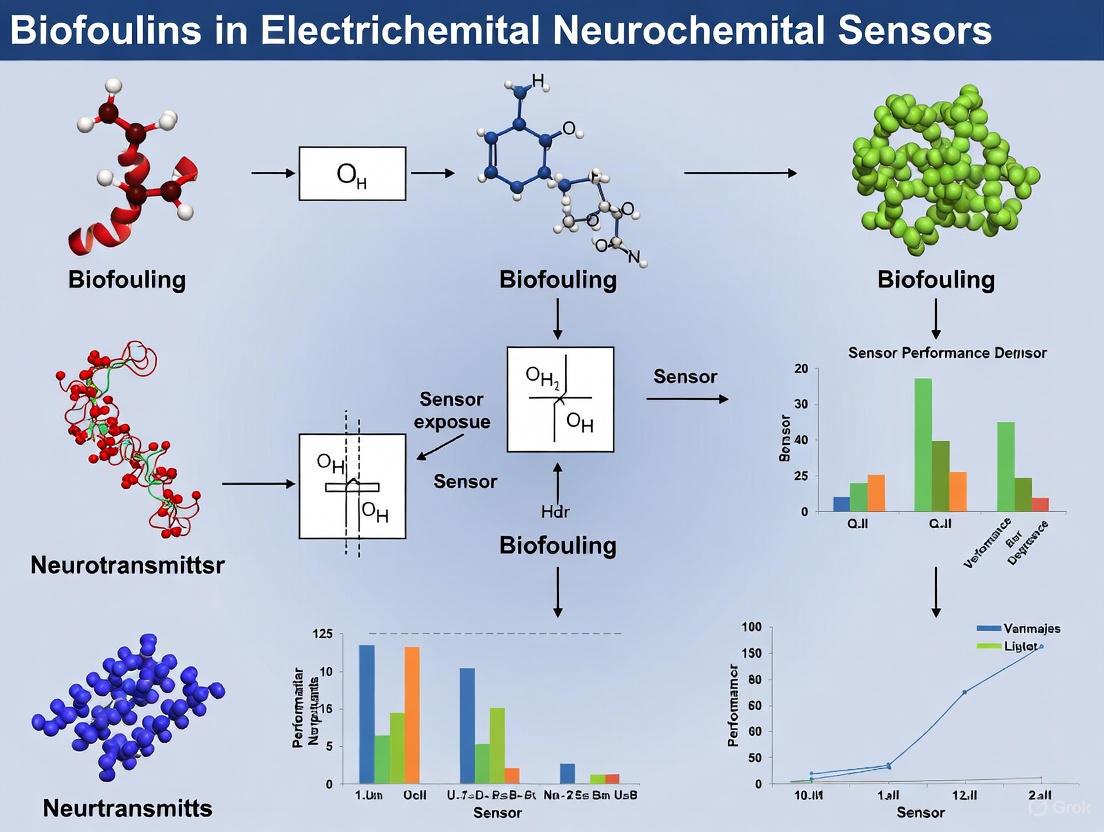
This article addresses the critical challenge of biofouling in electrochemical neurochemical sensors, a major obstacle to reliable long-term in vivo monitoring for neuroscience research and drug development.
Combating Biofouling in Electrochemical Neurochemical Sensors: Strategies for Long-Term Stability and Accurate In Vivo Monitoring
Abstract
This article addresses the critical challenge of biofouling in electrochemical neurochemical sensors, a major obstacle to reliable long-term in vivo monitoring for neuroscience research and drug development. It explores the fundamental mechanisms of biofouling, including protein adsorption and immune response-induced electrode encapsulation, which lead to signal drift and sensitivity loss. The scope encompasses a detailed examination of current mitigation strategies, from novel electrode materials like boron-doped diamond and carbon nanotubes to advanced antifouling coatings, electrochemical cleaning methods, and sensor design optimizations. Furthermore, the article provides a comparative analysis of these technologies, discusses validation frameworks, and outlines future directions for developing robust, fouling-resistant sensors to enable unprecedented durations of accurate neurochemical measurement.
Understanding the Biofouling Challenge: Mechanisms and Impact on Neurochemical Sensing
Frequently Asked Questions (FAQs)
What is biofouling in the context of electrochemical neurochemical sensors? Biofouling is the unwanted adsorption of biomolecules (such as proteins) and adhesion of cells onto a sensor's surface. For implantable neurochemical sensors, this process begins almost immediately upon implantation with the non-specific adsorption of proteins, forming a "conditioning film." This is often followed by the attachment and proliferation of glial cells, leading to the formation of a dense biofilm. This fouling layer acts as a physical and chemical barrier, severely compromising sensor performance by reducing sensitivity, increasing electrical noise, and leading to signal loss or drift [1] [2] [3].
What are the primary consequences of biofouling on my in vivo measurements? Biofouling leads to several critical performance issues:
- Reduced Sensitivity and Signal Drift: The fouling layer impedes the diffusion of the target neurochemical (e.g., dopamine) to the electrode surface, causing a decline in the signal over time.
- Loss of Selectivity: The biofilm can foul the sensing interface, making it harder to distinguish between electroactive substances with similar formal potentials, such as dopamine, ascorbic acid (AA), and 3,4-dihydroxyphenylacetic acid (DOPAC) [2].
- Increased Background Noise: The non-conductive properties of adsorbed proteins and cells can increase electrical noise, obscuring the faradaic signal from your target analyte [2] [4].
- Inflammation and Foreign Body Response (FBR): Microelectrode implantation triggers an innate immune response, leading to glial cell activation and encapsulation of the sensor. This fibrotic tissue notifies the electrode and creates a diffusion barrier, ultimately causing irreversible signal degradation [2] [3].
Which neurochemicals are most vulnerable to biofouling-related interference? Biofouling can interfere with the detection of any neurochemical, but it is particularly problematic for:
- Dopamine (DA): Often measured with fast-scan cyclic voltammetry (FSCV), its detection is highly susceptible to interference from surface fouling and the presence of other electroactive species like AA [2].
- Serotonin (5-HT)
- Glutamate (Glu): Typically requires enzyme-based biosensors, where biofouling can block the enzyme's access to its substrate [2].
- Ascorbic Acid (AA): A common interferent in neurochemical detection, whose signal can overlap with others if the sensor surface is compromised [2].
Troubleshooting Guide: Diagnosing and Mitigating Biofouling
Symptom: Gradual Signal Decline or Complete Signal Loss During Long-Term Implantation
| Potential Cause | Diagnostic Experiments | Mitigation Strategies |
|---|---|---|
| Protein Adsorption & Biofilm Formation | Perform continuous monitoring in a complex medium (e.g., artificial cerebrospinal fluid with serum proteins). Check for a steady decrease in the redox peak current of a standard probe like ferricyanide over hours. | Apply antifouling coatings such as zwitterionic polymers, PEG, or sol-gel silicate layers to the working electrode [2] [4]. |
| Foreign Body Response (FBR) & Glial Scarring | Post-experiment, histologically analyze brain tissue surrounding the implant tract for markers of activated microglia and astrocytes. | Consider coatings that release anti-inflammatory agents. Minimize the physical footprint of the sensor. Use softer, more biocompatible materials [2] [3]. |
| Physical Detachment of Catalyst | If the sensor is modified with a catalyst (e.g., an enzyme), test its function in a clean buffer solution before and after a simulated implantation period. A loss of function in buffer suggests physical or chemical degradation of the modification. | Ensure robust immobilization of sensing elements. Use cross-linking strategies. Avoid harsh electrochemical cleaning pulses that can etch the surface [2] [4]. |
Symptom: Poor Selectivity and Inability to Distinguish Between Neurochemicals
| Potential Cause | Diagnostic Experiments | Mitigation Strategies |
|---|---|---|
| Fouling of Selective Coatings | Characterize the electrode surface with electrochemical impedance spectroscopy (EIS) or surface plasmon resonance (SPR) after exposure to biofluids to confirm protein adhesion on top of your selective layer. | Use multi-layered sensor designs. Incorporate robust permselective membranes like Nafion or mesoporous membranes that can filter large interferents [1] [2]. |
| Unspecific Adsorption on Bare Electrodes | Use differential pulse voltammetry (DPV) or fast-scan cyclic voltammetry (FSCV) in a solution containing your target analyte and common interferents (e.g., DA and AA). Overlapping peaks indicate poor selectivity. | Functionalize the electrode with specific recognition elements like nucleic acid aptamers or molecularly imprinted polymers (MIPs) to enhance specificity [2]. |
Quantitative Data on Biofouling Impacts
The table below summarizes experimental data on how biofouling affects sensor performance, based on published research.
Table 1: Documented Impacts of Biofouling on Sensor Performance
| Performance Metric | Observed Change Due to Biofouling | Experimental Context | Source |
|---|---|---|---|
| Sensor Signal | Up to 50% reduction in current | Pencil electrode with syringaldazine catalyst in cell culture medium over 72 hours. | [4] |
| Fuel Consumption | 9-84% increase in shaft power | Marine vessels (relevant for power requirements of autonomous sensor platforms). | [5] |
| Data Accuracy | >30% increase in wave buoy data errors | Marine sensing buoys. | [5] |
| Sensor Lifetime | Failure within 2 weeks | Conductivity-Temperature-Depth (CTD) sensors during peak fouling seasons. | [5] |
| Flow Resistance | 15% reduction in lift coefficient; 90% decrease in lift-to-drag ratio | Tidal turbine blades with 1mm fouling layer (analogous to flow cells). | [5] |
Experimental Protocols for Assessing Antifouling Strategies
Protocol: Evaluating Antifouling Coatings with a Model Redox Mediator
This protocol is adapted from a study that screened over 10 different antifouling layers [4].
Objective: To test the protective efficacy of an antifouling coating on an electrochemical sensor intended for use in complex biological media.
Materials:
- Working Electrode: Carbon-based electrode (e.g., glassy carbon, screen-printed carbon, or pencil lead electrode).
- Redox Mediator: Syringaldazine (0.5 mg/mL solution in ethanol).
- Test Solution: Complete cell culture medium (e.g., DMEM with 10% fetal bovine serum).
- Control Buffer: Phosphate Buffered Saline (PBS), pH 7.4.
- Potentiostat with a standard three-electrode setup.
Method:
- Electrode Preparation: Polish the carbon working electrode following standard procedures (e.g., with alumina slurry) and rinse thoroughly.
- Mediator Adsorption: Immerse the clean electrode in the syringaldazine solution for 60 seconds. Remove and let it dry under ambient conditions. This creates a stable, surface-adsorbed redox mediator.
- Baseline Measurement: Record a cyclic voltammogram (CV) of the modified electrode in a control buffer (e.g., pH 7.4 PBS). This establishes the initial electrochemical signal of the mediator.
- Apply Antifouling Coating: Apply the candidate antifouling coating (e.g., a sol-gel silicate, zwitterionic polymer, or PEG-based layer) onto the syringaldazine-modified electrode.
- Post-Coating Measurement: Record a second CV in the control buffer to ensure the coating itself does not degrade the mediator's signal.
- Fouling Challenge: Incubate the coated electrode in the cell culture medium at 37°C for a set period (e.g., 3, 24, 72 hours).
- Post-Challenge Measurement: Gently rinse the electrode with buffer and record a CV under the same conditions as the baseline.
- Data Analysis: Calculate the percentage of the original redox peak current retained after the fouling challenge. A high-performing coating will retain a large percentage of its initial signal over extended periods.
Protocol: Testing Anti-Biofouling Performance in Raw Saliva
This protocol is based on a study developing a sensor for uric acid in saliva [6].
Objective: To validate the anti-biofouling performance of a modified sensor in a complex, protein-rich biological fluid like saliva.
Materials:
- Sensor: Laser-induced graphene (LIG) electrode.
- Antifouling Coating: Composite of Bovine Serum Albumin and Tween-20 (BSAT).
- Analyte: Uric acid (UA) standard solutions.
- Biofluid: Human raw saliva, centrifuged and diluted 5-fold.
- Electrochemical Workstation.
Method:
- Sensor Fabrication: Fabricate LIG electrodes by laser scribing on a polyimide sheet.
- Coating Application: Modify the LIG electrode by drop-casting the BSAT composite solution and allowing it to dry.
- Characterization: Use scanning electron microscopy (SEM) and water contact angle measurements to confirm the coating changes the surface morphology and increases hydrophilicity.
- Calibration: Perform differential pulse voltammetry (DPV) with the BSAT/LIG sensor in standard UA solutions to establish a calibration curve (signal vs. concentration).
- Real Sample Analysis: Measure the DPV response of the sensor in the 5-fold diluted raw saliva sample.
- Standard Addition: Spike the saliva sample with known concentrations of UA standard and measure the recovery. A recovery close to 100% indicates the coating effectively prevents fouling and maintains sensor accuracy.
The Scientist's Toolkit: Key Research Reagents and Materials
Table 2: Essential Materials for Developing Biofouling-Resistant Sensors
| Material / Reagent | Function in Biofouling Research | Key Considerations |
|---|---|---|
| Zwitterionic Polymers (e.g., poly(carboxybetaine)) | Forms a highly hydrophilic surface that binds water molecules tightly, creating a physical and energetic barrier against protein adsorption [2] [7]. | Excellent long-term stability and high oxidative resistance compared to PEG. |
| Poly(ethylene glycol) (PEG) & Derivatives | Creates a steric and energetic barrier through its hydrated polymer chains, preventing proteins from reaching the sensor surface [2] [4] [7]. | Can be susceptible to oxidative degradation in vivo; requires robust surface immobilization. |
| Sol-Gel Silicate | Forms a stable, porous inorganic layer that can act as a physical barrier. Proven to protect a catalyst signal for up to 6 weeks in cell culture medium [4]. | The porosity must be tuned to allow analyte diffusion while blocking larger proteins. |
| Bovine Serum Albumin (BSA) | Used as a blocking agent or in composites (e.g., with Tween-20) to passivate unused surface sites and reduce non-specific protein adsorption [6]. | A cost-effective and simple method, but stability over very long durations may be limited. |
| Nafion | A perfluorosulfonated ionomer that is negatively charged. It can repel interferents like uric acid and ascorbic acid and provide some fouling resistance [2]. | Its effectiveness can be dependent on the thickness and uniformity of the cast film. |
| Nitric Oxide (NO) Donors (e.g., S-Nitroso-N-acetylpenicillamine (SNAP)) | Releases NO, a natural bactericidal agent that can disperse biofilms and reduce bacterial adhesion [7]. | Requires careful tuning of release kinetics and can have selective effects on different bacteria. |
Visualizing the Biofouling Cascade on Neurosensors
The following diagram illustrates the key stages of biofouling, from initial protein adsorption to the final foreign body response, which researchers must address.
Frequently Asked Questions (FAQs)
Q1: What are the primary cellular drivers of the foreign body response against implanted neural electrodes? The reaction is primarily driven by non-neuronal glial cells. Microglia are the first responders, activating within minutes, adopting an amoeboid morphology, and migrating to encapsulate the implant [8] [9]. This is followed by astrocytes, which become reactive, proliferate, hypertrophy, and over weeks form a dense glial scar that ensheaths the device [8] [10]. Other cells like NG2 glia (oligodendrocyte precursor cells) and infiltrating blood-borne myeloid cells also contribute to the inflammatory cascade and scar formation [8] [9].
Q2: How does the blood-brain barrier (BBB) disruption contribute to device failure? Device insertion inevitably disrupts the BBB, allowing blood-serum proteins (e.g., albumin, fibronectin) to enter the brain parenchyma [8]. These proteins adsorb onto the implant surface, triggering the activation of microglia and astrocytes [9]. The resulting inflammation can lead to excitotoxicity, neurodegeneration, and a prolonged mismatch in metabolic supply and demand, ultimately impairing the neuronal function that the device aims to record from or stimulate [8] [9].
Q3: Why do recorded neural signals degrade over time, and how can this be troubleshooted? Signal degradation manifests as drops in signal-to-noise ratio (SNR), amplitude shifts, and a loss of detectable single units [8] [10]. A primary biological cause is the formation of the glial scar, which creates a physical and biochemical barrier that impedes charge transfer and isolates neurons from the electrode surface [10] [9]. To troubleshoot, researchers should:
- Monitor Impedance: A chronic increase in electrode impedance can indicate tissue encapsulation.
- Histological Validation: Post-mortem histology for glial fibrillary acidic protein (GFAP) for astrocytes and ionized calcium-binding adapter molecule 1 (Iba1) for microglia is essential to correlate signal quality with the degree of gliosis.
- Consider Materials: Utilize flexible polymer substrates (e.g., polyimide) and soft conductive coatings to reduce mechanical mismatch [11].
Q4: What are the key time-dependent phases of the tissue response I should consider for my experimental timeline? The tissue response evolves significantly over time, which is critical for planning the duration and endpoint analysis of experiments. The table below summarizes the key phases.
Table 1: Timeline of Key Cellular Events in the Neural Tissue Response
| Time Post-Implantation | Microglial Response | Astrocytic Response | Other Key Events |
|---|---|---|---|
| Minutes - Hours (Acute) | Activation, process extension, migration to device [9]. | Initial hypertrophy [9]. | BBB disruption; serum protein leakage [8]. |
| Days - 1-3 Weeks | Peak reactivity, formation of dense cellular barrier [10]. | Proliferation, upregulation of GFAP, active encapsulation [8]. | Prominent involvement of NG2 glia [8]. |
| 4 Weeks - Chronic (Months+) | Phenotype may stabilize or chronic inflammation persist [10]. | Mature, dense glial scar formation [8]. | Progressive neurodegeneration; neuronal cell loss around implant [10] [9]. |
Troubleshooting Guides
Guide 1: Diagnosing and Mitigating Chronic Signal Degradation
Problem: A gradual decline in recording signal quality (amplitude, SNR) or an increase in stimulation impedance over several weeks to months.
Investigation and Resolution: Table 2: Troubleshooting Chronic Signal Degradation
| Observed Symptom | Potential Biological Cause | Recommended Experimental Actions |
|---|---|---|
| Gradual decrease in single-unit yield and amplitude. | Progressive neurodegeneration and glial scar encapsulation [10] [9]. | Perform immunohistochemistry to quantify neuronal density (NeuN) and astrogliosis (GFAP) around the implant track. |
| Increased electrode electrical impedance at low frequencies. | Build-up of a dense, insulating cellular capsule around the electrode [10]. | Measure electrochemical impedance spectroscopy (EIS) in vivo. Correlate with histology for glial markers. |
| Signal instability on an intraday basis. | Device micromotion within the encapsulated tissue, provoking acute inflammatory responses [8]. | Improve device mechanical compatibility (see Guide 2). Verify device anchoring and system integrity. |
Guide 2: Addressing Device-Tissue Mechanical Mismatch
Problem: Acute and chronic inflammation exacerbated by physical damage from stiff implants.
Solution Strategies:
- Substrate Material Selection: Transition from traditional rigid materials (silicon, ~100 GPa) to flexible polymers (e.g., polyimide, parylene) with a lower Young's modulus closer to brain tissue (~0.4-15 kPa) to reduce strain and physical damage [11].
- Geometric Design: Utilize smaller, thinner, and more flexible microelectrodes to minimize insertion trauma and chronic micromotion [11] [12].
- Conductive Coatings: Apply soft conductive coatings like conducting polymers or iridium oxide instead of relying solely on stiff metals to improve charge injection while enhancing mechanical compliance [11].
Experimental Protocols for Key Analyses
Protocol 1: Histological Evaluation of Gliosis and Neuronal Density
Objective: To quantitatively assess the extent of the glial scar and neuronal loss around an implanted neural electrode.
Materials:
- Frozen or fixed brain tissue sections containing the implant track.
- Primary antibodies: Chicken anti-GFAP (astrocytes), Rabbit anti-Iba1 (microglia), Mouse anti-NeuN (neurons).
- Fluorescently-labeled secondary antibodies.
- Confocal or fluorescence microscope.
Methodology:
- Tissue Preparation: Perfuse-fix the animal at the experimental endpoint. Extract the brain and cryoprotect. Section tissue coronally (30-40 µm thickness) through the implant site.
- Immunostaining: Perform standard immunofluorescence protocols. Incubate free-floating sections with primary antibodies, followed by appropriate secondary antibodies. Include DAPI for nuclear counterstaining.
- Image Acquisition: Capture high-resolution z-stack images using a confocal microscope. Focus on the tissue-electrode interface and extending radially outward (e.g., 50 µm, 100 µm, 200 µm).
- Quantitative Analysis:
- Gliosis: Measure the intensity of GFAP and Iba1 staining and the thickness of the glial sheath surrounding the former implant track.
- Neuronal Density: Count NeuN-positive cells within defined distances from the implant track and compare to contralateral or distant control regions [10].
Protocol 2: In Vivo Electrochemical Impedance Spectroscopy (EIS) for Monitoring Tissue Encapsulation
Objective: To track changes in the electrode-tissue interface non-destructively over the implantation period.
Materials:
- Potentiostat/Galvanostat with EIS capability.
- Implanted neural electrode (working electrode), reference electrode (e.g., Ag/AgCl), and counter electrode.
- Software for EIS data fitting.
Methodology:
- Measurement: At regular intervals post-implantation, perform EIS measurements on the implanted electrode. A typical setup applies a small sinusoidal voltage (e.g., 10 mV RMS) over a frequency range (e.g., 1 Hz to 100 kHz).
- Data Recording: Record the impedance magnitude and phase angle.
- Data Analysis: Fit the EIS spectra to an equivalent circuit model (e.g., a Randles circuit). A chronic increase in the low-frequency impedance and the resistance associated with the tissue interface is indicative of progressing encapsulation, which can be validated post-mortem with histology [10].
Signaling Pathways and Cellular Workflows
Cellular Cascade Post-Implantation
The Scientist's Toolkit: Research Reagent Solutions
Table 3: Essential Reagents for Investigating the Neural Immune Response
| Reagent / Material | Function / Target | Key Application in Research |
|---|---|---|
| Anti-GFAP Antibody | Labels intermediate filaments in reactive astrocytes [8]. | Immunohistochemical staining to visualize and quantify astrogliosis and glial scar thickness. |
| Anti-Iba1 Antibody | Labels ionized calcium-binding adapter molecule 1 in microglia/macrophages [9]. | Identifying and quantifying activated microglia surrounding the implant. |
| Anti-NeuN Antibody | Labels neuronal nuclei in mature neurons [10]. | Quantifying neuronal density and loss at various distances from the implant track. |
| Flexible Polymer Substrates | (e.g., Polyimide, Parylene) [11]. | Fabricating neural probes with reduced mechanical mismatch to minimize chronic inflammation. |
| Conductive Coatings | (e.g., Iridium Oxide, PEDOT:PSS) [11]. | Improving charge injection capacity for stimulation and signal quality for recording; can be softer than bare metals. |
| Anti-fouling Peptides | (e.g., EK-IKVAV zwitterionic peptide) [12]. | Functionalizing electrode surfaces to resist protein adsorption (EK head) and promote neuronal adhesion (IKVAV tail). |
| Cytokine Panels | (e.g., TNF-α, IL-1β, MCP-1) [8] [9]. | Quantifying pro-inflammatory markers in microdialysate or tissue homogenates near the implant site via ELISA. |
Troubleshooting Guide: FAQs on Biofouling in Electrochemical Neurochemical Sensors
FAQ 1: What are the primary consequences of biofouling on my neurochemical sensor's performance? Biofouling, the nonspecific adsorption of proteins, lipids, and other biomolecules onto the sensor surface, has three primary detrimental effects that degrade data quality and reliability [4] [13]:
- Signal Drift: The gradual passivation of the electrode surface creates an impermeable layer, leading to a steady, often unpredictable, change in the baseline signal over time [4] [13].
- Reduced Sensitivity: The fouling layer acts as a physical and chemical barrier, hindering the diffusion of the target neurochemical (e.g., dopamine, glutamate) to the electrode surface. This results in a diminished current response for a given analyte concentration [4].
- Loss of Selectivity: The fouling layer can alter the electrochemical environment and the electron transfer kinetics. This may obscure the distinct redox "fingerprint" of your target analyte, making it difficult to distinguish from other electroactive interferents present in the brain matrix [13].
FAQ 2: My sensor sensitivity drops drastically within hours of implantation. What antifouling strategies can I implement? Rapid signal deterioration, especially during the first few hours of contact with complex biofluids, is a classic sign of biofouling [4]. The following strategies have demonstrated efficacy in protecting sensor function:
- Apply a Physical Barrier: Coat the sensor with a porous or permselective membrane. Materials like sol-gel silicate have shown remarkable long-term stability, preserving electrode function for up to 6 weeks in cell culture medium [4].
- Use Biocompatible Polymer Coatings: Grafting hydrophilic and protein-repellent polymers like poly(ethylene glycol) (PEG) or zwitterionic polymers creates a hydration layer that minimizes nonspecific adsorption [4] [13].
- Optimize Probe Size and Flexibility: Utilizing cellular-scale micro-invasive probes (µIPs) with diameters less than 10 µm significantly reduces tissue inflammation and micromotion-induced fouling, enabling stable chronic monitoring for over a year [14].
FAQ 3: How can I design an experiment to quantitatively compare the effectiveness of different antifouling coatings? A robust experimental protocol involves incubating coated and uncoated sensors in a complex medium and tracking the signal of a model redox mediator over time [4]:
- Sensor Preparation: Modify your working electrodes (e.g., glassy carbon, carbon fiber) with the antifouling coatings you wish to test (e.g., PEG, sol-gel, poly-L-lysine-g-poly(ethylene glycol)).
- Immobilize a Redox Mediator: Adsorb a stable redox molecule like syringaldazine onto the electrode surface. This serves as an internal standard to track changes in electron transfer efficiency directly at the interface [4].
- Baseline Measurement: Perform cyclic voltammetry (CV) or differential pulse voltammetry (DPV) in a buffer solution to record the initial peak current and potential of the mediator.
- Incubation in Complex Medium: Immerse the sensors in the fouling environment (e.g., cell culture medium, undiluted serum, artificial cerebrospinal fluid).
- Periodic Signal Measurement: At set time intervals (e.g., 3h, 24h, 72h, 1 week), remove the sensors, rinse gently, and re-measure the mediator's signal in a clean buffer solution.
- Data Analysis: Calculate the percentage of the original signal retained for each coating. This provides a direct, quantitative metric for the protective efficacy and longevity of each antifouling layer [4].
Quantitative Data: Performance of Antifouling Strategies
The following tables summarize experimental data on the performance of various antifouling strategies, providing a reference for selecting the appropriate method for your research.
Table 1: Performance of Antifouling Coatings in Complex Media
| Antifouling Coating | Type of Layer | Key Mechanism | Signal Retention & Longevity (in cell culture medium) |
|---|---|---|---|
| Sol-Gel Silicate [4] | Porous membrane | Diffusion barrier | ~50% after 3h; signal still detectable after 6 weeks |
| Poly-L-lactic acid (PLLA) [4] | Polymer | Physical barrier | Low change in first hours; complete deterioration after 72h |
| Poly(L-lysine)-g-poly(ethylene glycol) [4] | Polymer brush | Hydration layer & steric repulsion | Sustained performance during prolonged incubation |
| PEGylated Polyaniline (PANI/PEG) [13] | Conducting polymer composite | Hydration & conductivity | Retained 92.17% of initial current after incubation in undiluted human serum |
| PEDOT:PSS with NaPSS [13] | Conducting polymer | Amphiphilic repulsion of reaction products | 85% of initial current after 20 repetitive measurements (vs. 30% for bare electrode) |
Table 2: Impact of Probe Size on Chronic Recording Stability
| Probe Type | Diameter / Cross-Sectional Area | Flexural Rigidity | Tissue Response & Recording Stability |
|---|---|---|---|
| Micro-Invasive Probe (µIP) [14] | 7 µm / ~60 µm² | K < 8 × 10⁻¹¹ N·m² (Very low) | Minimal inflammation markers; stable subsecond dopamine monitoring for over one year |
| Conventional CFE [14] | 90 µm / ~6362 µm² | K > 2.3 × 10⁻⁷ N·m² (High) | Significant tissue disruption; signal degradation over weeks |
Experimental Protocols for Key Cited Studies
Protocol 1: Evaluating Antifouling Layers with an Internal Redox Mediator
This protocol is adapted from the study that screened over 10 antifouling layers [4].
Objective: To assess the protective effect and catalyst compatibility of various antifouling coatings in a biologically relevant environment.
Materials:
- Working Electrodes: Glassy carbon electrodes (GCE) or screen-printed carbon electrodes.
- Antifouling Materials: Solutions for preparing sol-gel silicate, poly-L-lactic acid (PLLA), PEG, etc.
- Redox Mediator: Syringaldazine (0.5 mg/mL in ethanol).
- Fouling Medium: Cell culture medium (e.g., DMEM with 10% FBS).
- Instrumentation: Potentiostat (e.g., PalmSens 4) with a standard three-electrode setup.
Methodology:
- Electrode Polishing: Polish the GCEs with alumina slurry and sonicate in water and ethanol to achieve a clean, reproducible surface.
- Mediator Immobilization: Immerse all electrodes in the syringaldazine solution for 60 seconds. Remove and dry under ambient conditions [4].
- Baseline Electrochemical Measurement: Perform Cyclic Voltammetry (CV) in a phosphate buffer (e.g., from -0.2 V to +0.8 V, 100 mV/s). Record the peak current and potential of the syringaldazine.
- Application of Antifouling Layers: Apply the different antifouling coatings to the mediator-modified electrodes according to their specific fabrication protocols (e.g., spin-coating, dip-coating, electro-polymerization).
- Incubation and Periodic Testing: Incubate the coated electrodes in the cell culture medium. At predetermined time points (3h, 24h, 72h, 1 week, etc.), remove the electrodes, rinse with buffer, and repeat the CV measurement in a clean phosphate buffer.
- Data Analysis: For each time point, calculate the percentage of the original syringaldazine peak current that is retained. Plot signal retention vs. time to compare the performance and durability of each coating.
Protocol 2: Fabrication and Implantation of Micro-Invasive Probes (µIPs) for Chronic Sensing
This protocol is based on the methods for creating year-stable dopamine sensors [14].
Objective: To fabricate and implant a cellular-scale carbon fiber electrode that minimizes biofouling and enables long-term neurochemical monitoring.
Materials:
- Carbon Fiber: 7 µm diameter, 5-7 mm long.
- Insulation Material: Parylene-C.
- Shuttle Material: Polyethylene Glycol (PEG), 0.5-1 mm thick.
- Fabrication Tools: Parylene coater, micro-coil or controlled flame for thermal etching.
- Electrochemical Instrumentation: Fast-scan cyclic voltammetry (FSCV) setup.
Methodology:
- Insulation: Deposit a thin, conformal layer (0.7-1.3 µm) of parylene-C over the entire length of the carbon fiber [14].
- Tip Exposure (Patterning): Use a thermal etching method (e.g., a heated micro-coil at the probe tip) to remove a 50-200 µm length of parylene at the tip. This creates a smooth boundary and enhances the carbon fiber's electrochemical sensitivity. Avoid lift-off techniques for chronic applications as they can compromise long-term adhesion [14].
- Shuttle Assembly: Encasement the fragile µIP in a rigid, biodegradable PEG shuttle to provide the necessary stiffness for brain insertion [14].
- In Vitro Characterization: Before implantation, calibrate the µIP in a flow injection system with artificial cerebrospinal fluid (aCSF) containing physiologically relevant dopamine concentrations (e.g., 0.25-1 µM) using FSCV. Verify sensitivity and limit of detection.
- Stereotaxic Implantation: Slowly lower the PEG-shuttled µIP into the target brain region of an anesthetized rodent. Dissolve the PEG shuttle incrementally just above the brain surface to release the flexible probe into the tissue with minimal deflection and trauma [14].
- Chronic Recording: The µIP enables stable, subsecond monitoring of stimulation-evoked dopamine release for extended periods, with demonstrated stability exceeding one year [14].
Visualizing Biofouling Consequences and Mitigation
Biofouling Impact on Sensor Function
Strategies to Mitigate Biofouling
The Scientist's Toolkit: Research Reagent Solutions
Table 3: Essential Materials for Antifouling Sensor Research
| Item | Function/Benefit | Example Use Case |
|---|---|---|
| Parylene-C [14] | A USP Class VI biocompatible polymer used for thin, conformal, and impermeable insulation of microelectrodes. | Primary insulation for chronic micro-invasive probes (µIPs). |
| Poly(ethylene glycol) (PEG) [4] [13] [14] | A hydrophilic "gold standard" polymer that resists protein adsorption via hydration and steric hindrance. Used both as a coating and as a biodegradable implantation shuttle. | PEGylated polyaniline for DNA sensing in serum; shuttle for µIP implantation. |
| Zwitterionic Polymers [4] [13] | Polymers (e.g., pCBMA, pSBMA) that form strong hydration layers via ionic solvation, offering superior anti-fouling and oxidative stability compared to PEG. | Creating functionalizable, low-fouling microarrays for protein detection in complex serum. |
| Sol-Gel Silicate [4] | A porous, inorganic matrix that acts as a robust physical diffusion barrier, offering exceptional long-term stability in biological media. | Long-term (6+ weeks) protection of electrodes in cell culture environments. |
| Conductive Polymers (PEDOT:PSS) [15] [13] | Combines high electronic conductivity with the ability to be functionalized with antifouling groups, preventing passivation while maintaining signal strength. | Sensing in harsh environments; repelling cresol oxidation products in gas sensors. |
| Syringaldazine [4] | A redox mediator that easily adsorbs onto carbon surfaces. Serves as an internal standard for quantifying electron transfer efficiency and coating performance. | Benchmarking the protective effect of antifouling layers during incubation in complex media. |
| Carbon Fiber (7 µm diameter) [14] | The sensing element for neurochemical detection. At cellular scales, it minimizes tissue damage and the associated inflammatory response, a root cause of fouling. | Fabricating micro-invasive probes for chronic dopamine monitoring. |
Frequently Asked Questions (FAQs)
FAQ 1: What are the primary fouling agents that affect neurochemical sensors in the brain? The main fouling agents are proteins, lipids, and oxidative byproducts like those from serotonin. Following probe insertion, serum proteins such as fibrinogen and albumin immediately adsorb to the implant surface, promoting inflammatory cell adhesion [16]. Lipids from cell membranes can oxidize, altering the local biochemical environment and potentially affecting sensor performance [17]. Furthermore, the oxidation of neurotransmitters like serotonin can generate reactive species that contribute to surface fouling [18].
FAQ 2: How does protein adsorption lead to the failure of a neural sensor? Protein adsorption initiates a detrimental cascade. The adsorbed protein layer triggers the activation of microglia and astrocytes, key immune cells in the brain [16]. This leads to a persistent inflammatory response, characterized by glial scar formation (a physical barrier of cells) and compromise of the blood-brain barrier, which allows more proteins to enter the area [16]. This scar ultimately encapsulates the sensor, isolating it from nearby neurons and causing signal degradation or complete failure [16].
FAQ 3: Why is serotonin oxidation a particular concern for neurochemical sensing? Serotonin (5-HT) has a dual nature. While it is a key neurotransmitter, its oxidation can be a source of fouling. However, research also shows that serotonin possesses potent antioxidant properties and can bind to lipid membranes to intercept reactive oxygen species, thereby protecting lipids from oxidation [18]. The net effect on sensor fouling likely depends on the local balance between its protective antioxidant role and the potential for its oxidative byproducts to contribute to surface contamination.
FAQ 4: What are the characteristics of an ideal antifouling coating for a brain sensor? An ideal coating must combine several properties. It should be highly resistant to non-specific adsorption of proteins and lipids [16] [4]. It needs to be stable for long periods in the complex, ionic environment of the brain [4] [19]. It should not hinder electron transfer, meaning it must be electroconductive or at least not insulative [19]. Furthermore, it should be mechanically robust and not elicit a chronic inflammatory response from the host tissue [16] [19].
Troubleshooting Guides
Problem 1: Rapid Signal Degradation Post-Implantation
Symptoms: High-quality signals during initial in vitro testing or immediately after implantation are followed by a swift decline in sensitivity and increase in electrical noise within hours or days in vivo.
Potential Cause: Acute biofouling caused by the rapid, non-specific adsorption of proteins and lipids onto the sensor surface, triggering an initial inflammatory response [16] [4].
Solutions:
- Apply an Anti-fouling Coating: Modify the sensor surface with a hydrophilic, non-fouling coating before implantation. Zwitterionic polymers like poly(sulfobetaine methacrylate) (PSB) have been shown to reduce protein adsorption by over 85% [16].
- Ensure Coating Stability: Use a co-deposition method, such as combining PSB with polydopamine (PDA), to improve the stability of the coating without compromising its anti-fouling properties [16].
- Consider Porous Nanocomposites: Explore newer coating technologies, such as a micrometer-thick porous nanocomposite of cross-linked albumin and gold nanowires. This coating resists biofouling in complex biological fluids while maintaining excellent electroconductivity for over a month [19].
Problem 2: Chronic Inflammatory Encapsulation and Neuronal Loss
Symptoms: Stable but attenuated signals in the first week degrade further over several weeks, accompanied by histological evidence of a dense glial scar and a reduction of neurons near the probe interface.
Potential Cause: A chronic foreign body response, fueled by the initial fouling layer, leading to the formation of a dense cellular capsule (microglia and astrocytes) that physically separates the sensor from its neuronal targets [16].
Solutions:
- Mitigate the Initial Fouling: The most effective strategy is to prevent the initial protein adsorption, as this directly reduces microglia activation and subsequent scar formation. Studies show that PSB-PDA coated implants exhibit significantly decreased expression of inflammatory markers (GFAP, Iba-1) and improved blood-brain barrier integrity after one week [16].
- Incorporate Anti-inflammatory Agents: Research into coatings that can release anti-inflammatory compounds is ongoing. The primary focus, however, remains on creating perfectly bio-inert surfaces that the brain does not recognize as foreign [16].
Problem 3: Inconsistent Sensor Performance in Serotonin-Rich Environments
Symptoms: Sensor calibration drifts unpredictably, or baseline noise increases specifically in brain regions with high serotonergic activity.
Potential Cause: Interference from the oxidation of serotonin or its interaction with other oxidized species in the brain environment. While serotonin can act as an antioxidant to protect lipids [18], its oxidation products or its ability to modulate lipid oxidation [17] could potentially foul the electrode surface.
Solutions:
- Employ Advanced Coatings: Use a thick, porous antifouling coating that acts as a physical barrier. The porous structure allows for the diffusion of the target analyte while blocking larger fouling agents like proteins and lipids [19].
- Explore Serotonin's Protective Role: Investigate coating strategies that leverage serotonin's antioxidant properties. A coating that attracts or binds serotonin might theoretically use it to create a local antioxidant environment, protecting both the sensor surface and surrounding lipids from oxidation [18].
Experimental Protocols & Data
Protocol 1: Evaluating Antifouling Coatings for Protein Resistance
Objective: To quantitatively compare the efficacy of different antifouling coatings in reducing protein adsorption.
Methodology:
- Surface Preparation: Coat silicon substrates (to mimic neural probe material) with the candidate coatings (e.g., PSB-only, PDA-PSB, PEG, porous albumin nanocomposite) [16] [19].
- Protein Exposure: Incubate the coated substrates in a solution containing a relevant protein (e.g., fibrinogen) or complete serum.
- Quantification: Use a spectroscopic or colorimetric method (e.g., BCA assay) to measure the amount of protein adsorbed onto the surface. Compare against an uncoated control.
Expected Outcomes:
- Effective coatings will show a significant reduction in adsorbed protein.
Table 1: Protein Adsorption on Various Coatings
| Coating Type | Protein Adsorption Reduction | Key Finding |
|---|---|---|
| PDA-PSB Coating [16] | ~89% vs. bare silicon | Superior stability compared to PSB alone. |
| Zwitterionic PCBMA [16] | Significant reduction | Resisted fibrous capsule formation in mice for 3 months. |
| Porous Albumin/AuNW (1µm) [19] | High resistance | Maintained electron transfer in serum for over one month. |
Protocol 2: Assessing the Impact of Lipid Oxidation on the Neurochemical Environment
Objective: To determine how lipid oxidation in the neuronal membrane affects the activity of a neuromodulator system relevant to sensing.
Methodology:
- Model System: Fabricate Giant Unilamellar Vesicles (GUVs) that incorporate the human serotonin 1A receptor (5-HT1AR) [17].
- Induce Oxidation: Incorporate oxidized lipids (e.g., PoxnoPC) into the GUV membrane at varying ratios, or expose the vesicles to air for extended periods to simulate oxidative stress [17].
- Activity Assay: Quantify the activity of the 5-HT1A receptor using a GDP-GTP exchange assay by the coupled G protein α subunit [17].
Expected Outcomes:
- Increased receptor activity in bilayers containing oxidized lipids, demonstrating that the lipid oxidation state can significantly alter the local neurochemical signaling that a sensor is trying to measure [17].
Table 2: Key Research Reagents for Fouling and Sensing Studies
| Reagent / Material | Function / Role | Application Context |
|---|---|---|
| Zwitterionic Polymers (e.g., PSB, PCBMA) [16] | Form a hydration layer via charged groups to repel protein adsorption. | Low-fouling coating for neural implants and biosensors. |
| Polydopamine (PDA) [16] | Serves as a universal, adhesive anchor for attaching other functional coatings. | Used to graft zwitterionic polymers to implant surfaces. |
| Gold Nanowires (AuNWs) [19] | Provide electroconductivity within an insulating antifouling matrix. | Key component in conductive nanocomposite coatings. |
| Poly(L-lactic acid) [4] | Acts as a porous, biodegradable barrier to foulants. | Antifouling layer for electrochemical sensors. |
| Sol-gel Silicate [4] | Creates a stable, porous inorganic layer. | Long-term protective coating for sensors in cell culture. |
| Syringaldazine [4] | A redox mediator that easily adsorbs to carbon. | Model catalyst for screening the protective effects of antifouling layers. |
Supporting Diagrams
Biofouling Cascade in Brain
Coating Evaluation Workflow
Advanced Anti-Biofouling Strategies: From Material Science to Electrochemical Engineering
Frequently Asked Questions (FAQs)
FAQ 1: What makes BDD electrodes more fouling-resistant than other carbon-based materials like glassy carbon or carbon fiber?
BDD electrodes exhibit superior fouling resistance due to their unique material properties. The sp3 hybridized carbon structure, combined with a chemically inert and smooth surface, minimizes the non-specific adsorption of proteins and the formation of insulating polymer layers from neurotransmitter byproducts. Unlike other carbon electrodes, BDD's surface has fewer reactive sites for fouling agents to adhere to, and its inherent stability allows for aggressive electrochemical cleaning protocols without degrading the electrode material. This makes it particularly advantageous for long-term measurements in complex biological media like neuron cultivation fluids or serum [20] [21] [22].
FAQ 2: I need to detect dopamine and serotonin in neuron cultivation media. What performance can I expect from a BDD electrode?
When using differential pulse voltammetry (DPV) on a polished BDD (p-BDD) electrode in neat Neurobasal medium, you can achieve low detection limits of 2 µM for dopamine and 0.2 µM for serotonin, which are within the physiological range. However, it is crucial to note that the electrode's performance can change significantly in the presence of complex, protein-containing supplements necessary for cell cultivation. In such media, biofouling can degrade signal quality. In these scenarios, amperometric detection at +0.75 V (vs. Ag/AgCl) has been shown to successfully detect portion-wise additions of neurotransmitters as low as 1–2 µM, despite a reduction in sensitivity [20].
FAQ 3: How does the surface termination of a BDD electrode affect its electroanalytical performance and fouling resistance?
The surface termination of a BDD electrode is a critical parameter. Two common pre-treatment methods are anodic oxidation and mechanical polishing.
- Anodically Oxidized BDD (O-BDD): This creates an oxygen-terminated surface. It generally offers better signal repeatability but may result in higher detection limits (e.g., two-fold higher for dopamine and serotonin) compared to polished surfaces [20].
- Polished BDD (p-BDD): This surface is predominantly terminated with -OH groups and has a lower quantity of oxygen-containing groups. It typically provides faster electron transfer kinetics and lower detection limits but may have slightly lower repeatability [20] [22]. The choice between them involves a trade-off between ultimate sensitivity and measurement reproducibility, and should be guided by your specific application requirements.
FAQ 4: Can I use BDD electrodes for in vivo neurotransmitter sensing, and how do they perform compared to traditional materials?
Yes, BDD electrodes are promising candidates for in vivo sensing. Pre-clinical studies have demonstrated their superior biofouling resistance compared to conventional materials like titanium nitride (TiN). One key finding is that the electrochemical properties of BDD electrodes (e.g., voltage transients, capacitance) stabilize quickly after implantation and remain stable over extended periods (e.g., 6 weeks), whereas TiN electrodes show significant degradation. This stability is attributed to BDD's robust resistance to protein adsorption and surface passivation in a biological environment [23] [21].
Troubleshooting Guides
Issue 1: Decreased Sensitivity and Poor Signal Shape in Complex Biological Media
Problem: Your voltammograms are poorly shaped, and the detection limit has worsened after switching from a simple buffer to a complex medium like cell culture media or serum.
Explanation: This is a classic symptom of electrode biofouling. Proteins, lipids, and other biomolecules in the medium non-specifically adsorb to the electrode surface, forming an insulating layer that hinders electron transfer and reduces sensitivity [20] [4].
Solutions:
- Select the Appropriate Detection Mode: If using voltammetry leads to fouling, switch to amperometry. Apply a constant potential (e.g., +0.75 V vs. Ag/AgCl for dopamine/serotonin) to detect portion-wise additions of analyte. This method can be more robust in fouling-prone environments [20].
- Employ an Electrochemical Cleaning Protocol: Utilize BDD's wide potential window to clean the surface in situ.
- Procedure: Between measurements or if a signal drift is observed, apply a high anodic potential (e.g., +1.5 V to +2.0 V vs. Ag/AgCl) in your background electrolyte (e.g., phosphate-buffered saline) for 30-60 seconds. This generates hydroxyl radicals that oxidize and desorb fouling agents [20] [22].
- Verification: Confirm the recovery of electrode performance by checking the redox response of a standard probe like
[Fe(CN)₆]³⁻/⁴⁻before and after cleaning.
- Consider an Anti-fouling Nanocomposite: For extreme fouling conditions, modify your BDD electrode with an anti-fouling nanocomposite. A protocol for a COF-CNT composite is provided in the "Experimental Protocols" section below [24].
Issue 2: Inconsistent Results Between New and Used BDD Electrodes
Problem: The electrochemical response is not reproducible from one experiment to another, or between a new electrode and one that has been used multiple times.
Explanation: Inconsistency can stem from varying surface states or a contaminated surface. The history of the electrode (previous experiments, cleaning procedures, storage) significantly impacts its performance [22].
Solutions:
- Standardize a Pre-treatment Protocol: Before the first use and after prolonged storage, consistently pre-treat your electrode.
- For an oxidized surface (O-BDD): Perform anodic activation by applying a positive potential (e.g., +1.5 V to +2.0 V) in 0.1 M H₂SO₄ for 5-10 minutes [20] [22].
- For a polished-like surface: Electrochemical polishing can be achieved by cycling the potential (e.g., from -1.5 V to +1.5 V) in the same acid solution until a stable voltammogram is obtained.
- Characterize the Electrode Surface State: Routinely characterize your electrode's surface using a well-known redox couple.
- Procedure: Record a cyclic voltammogram (CV) of 1 mM
[Fe(CN)₆]³⁻/⁴⁻in 1 M KCl. - Expected Outcome: A healthy BDD electrode should show a well-defined, quasi-reversible redox wave. A large peak separation (>150 mV) or a suppressed current indicates surface contamination or a different termination state, signaling the need for cleaning or pre-treatment [20] [22].
- Procedure: Record a cyclic voltammogram (CV) of 1 mM
- Ensure Proper Storage: Always store BDD electrodes in a clean, dry environment, preferably in deionized water or a dry cabinet to prevent contamination.
Experimental Protocols
Protocol 1: Evaluating BDD Electrode Performance for Neurotransmitter Detection
This protocol outlines the steps to characterize a BDD electrode and measure dopamine (DA) and serotonin (5-HT) in simple and complex media [20].
Research Reagent Solutions
| Reagent/Solution | Function & Brief Explanation |
|---|---|
| Boron-Doped Diamond (BDD) Electrode | Working electrode. Its sp3 carbon structure and chemical inertness provide a wide potential window and superior fouling resistance. |
| Polished (p-BDD) or Oxidized (O-BDD) | Electrode pre-treatment. p-BDD often yields lower detection limits, while O-BDD offers better signal repeatability [20]. |
| Ag/AgCl (3M KCl) Reference Electrode | Provides a stable and reproducible reference potential for all measurements. |
| Platinum Wire Counter Electrode | Completes the electrical circuit for the electrochemical cell. |
| Neurobasal (NB) Medium | A simple, defined neuron cultivation medium; serves as a baseline for performance. |
| B-27 & GlutaMAX Supplements | Protein- and peptide-containing supplements added to NB to create a complex, biofouling-prone medium for realistic testing. |
| Dopamine Hydrochloride / Serotonin Hydrochloride | Primary analytes (neurotransmitters) for detection. |
| Phosphate Buffered Saline (PBS) or Artificial Cerebrospinal Fluid (aCSF) | Simple, protein-free salt solutions for initial electrode testing and characterization. |
Step-by-Step Methodology:
- Electrode Pre-treatment: Decide on the required surface state. For O-BDD, anodically oxidize the electrode at +2.0 V in 0.1 M H₂SO₄ for 5 min. For a polished-like surface, cycle the potential between -1.5 V and +1.5 V in the same solution for 20 cycles.
- Surface Characterization: Using CV, characterize the electrode in a 1 mM
[Fe(CN)₆]³⁻/⁴⁻/ 1 M KCl solution. Verify the peak-to-peak separation (ΔEp) is consistent with expectations for your BDD type. - Calibration in Simple Medium:
- Prepare standard solutions of DA and 5-HT in neat Neurobasal medium.
- Using DPV, obtain calibration curves for each analyte. The following table summarizes typical performance data [20]:
Table 1: Typical BDD Electrode Performance for Neurotransmitter Detection in Neat Neurobasal Medium using DPV
| Analyte | BDD Surface State | Limit of Detection (LOD) | Linear Range | Key Characteristic |
|---|---|---|---|---|
| Dopamine | Polished (p-BDD) | 2 µM | Information missing | Lower detection limit |
| Dopamine | Oxidized (O-BDD) | ~4 µM | Information missing | Better signal repeatability |
| Serotonin | Polished (p-BDD) | 0.2 µM | Information missing | Lower detection limit |
| Serotonin | Oxidized (O-BDD) | ~0.4 µM | Information missing | Better signal repeatability |
- Testing in Complex Media:
- Switch to the full cell cultivation medium (NB + B-27 + GlutaMAX, optionally after neuron growth).
- Observe the degradation in voltammogram shape due to biofouling.
- Switch to amperometric detection at a constant potential of +0.75 V (vs. Ag/AgCl). Successively add small aliquots of DA or 5-HT stock solution to mimic vesicular release (1-2 µM final concentration per addition) and record the current response.
- Electrode Cleaning: After experiments in complex media, clean the electrode amperometrically at +1.8 V in PBS for 60 seconds to remove fouling layers.
Protocol 2: Fabrication of a Fouling-Resistant COF-CNT Composite Electrode
This protocol describes an alternative anti-fouling strategy by modifying a glassy carbon electrode (GCE) with a covalent organic framework (COF)-carbon nanotube (CNT) composite, which is highly effective in complex media like serum [24].
Step-by-Step Methodology:
- Composite Preparation: Disperse carboxylic multi-walled carbon nanotubes (CNTs) in water with the assistance of COF TpPA-1 nanosheets. The COF acts as a dispersant due to its abundant hydrophilic groups, forming a uniform COF-CNT composite via π-π interactions.
- Electrode Modification: Drop-cast the homogeneous COF-CNT composite suspension onto a thoroughly cleaned GCE and allow it to dry.
- Anti-fouling Verification: Test the modified electrode's performance for detecting analytes like uric acid (UA) or NADH in pure buffer and then in undiluted human serum. The composite interface should show minimal signal loss and stable electrochemistry in serum, demonstrating effective resistance to biofouling. The hydrophilic COF layer and the conductive CNT network work synergistically to prevent non-specific protein adsorption while maintaining efficient electron transfer [24].
Signaling Pathways and Workflows
The following diagram illustrates the core workflow for utilizing and maintaining a BDD electrode in neurochemical sensing applications, integrating the key concepts from the FAQs and troubleshooting guides.
BDD Sensor Maintenance Workflow
Frequently Asked Questions (FAQs) on CNT Coating Development
FAQ 1: What are the primary causes of poor electrical conductivity in my CNT-coated membrane, and how can I improve it?
Poor electrical conductivity often stems from insufficient CNT dispersion, low CNT purity, or a lack of a continuous conductive network within the polymer matrix. To improve conductivity:
- Enhance CNT Purification: Remove metallic and carbonaceous impurities that disrupt electron pathways. A mixture of H₂O₂ and HCl, combined with ultrasonication and high-temperature treatment, can effectively remove impurities without severely altering CNT surface chemistry [25].
- Improve Dispersion: Use appropriate surfactants or functionalization to prevent CNT agglomeration. A well-dispersed CNT solution ensures the formation of a percolating network in the coating [25] [26].
- Optimize Loading: Ensure the CNT concentration exceeds the percolation threshold. Studies on textiles have shown that a concentration as low as 0.5 wt% CNTs can reduce surface resistance from 10¹³ Ω to 10⁸ Ω [27]. For membranes, a composite with polyphenylene achieved a 3.4 times higher conductivity than pure CNT membranes [28].
FAQ 2: How can I enhance the adhesion and structural stability of CNT coatings on sensor substrates to prevent delamination?
Weak adhesion is typically due to poor interfacial interaction between the CNTs and the substrate.
- Surface Functionalization: Introduce functional groups (e.g., carboxyl, amino) to the CNT surface via acid treatment. These groups can form stronger chemical bonds with the substrate or the polymer matrix [25].
- Use of Coupling Agents: Employ silane coupling agents (e.g., (3-aminopropyl)triethoxysilane) to create a bridge between the inorganic substrate and the CNTs. This method is documented in patent literature for creating robust, self-healing coatings [29].
- In-situ Polymerization: Construct a composite matrix where a polymer, such as polyphenylene, is electropolymerized directly onto the CNT network. This creates an interpenetrating structure that offers superior structural stability compared to pure CNT membranes [28].
FAQ 3: My CNT-coated sensor experiences significant biofouling in complex biological fluids. What strategies can mitigate this?
Biofouling occurs when proteins and cells adhere to the sensor surface, causing signal drift and failure.
- Apply Anti-fouling Coatings: Graft hydrophilic polymers onto the CNT coating. A zwitterionic poly-sulfobetaine methacrylate (SBMA) and polydopamine (PDA) coating has been shown to significantly enhance resistance to biofouling in diverse biological fluids, reducing signal drift for electrochemical aptamer-based sensors [30].
- Electrochemical Anti-fouling: Leverage the conductivity of the CNT membrane. Applying a small electrical potential (-X V has been used) can electrostatically repel foulants or degrade them electrochemically. One study demonstrated that under electrical assistance, flux loss was only 11.7% after 5 hours of filtration, compared to 56.8% without it [28].
- Surface Topography: Create a smooth, nano-scale surface that minimizes areas for foulant attachment. The inherent nanostructure of a well-formed CNT coating can contribute to this effect [31].
FAQ 4: What is the best method to uniformly coat a complex, three-dimensional sensor structure with CNTs?
Achieving a uniform coat on complex geometries is challenging.
- Electrophoretic Deposition (EPD): This technique uses an electric field to drive charged CNTs onto the conductive substrate, ensuring a conformal coating even on intricate shapes.
- Spray Coating with Precise Control: Optimize the parameters for spray coating, including dispersion viscosity, spray pressure, and nozzle-to-substrate distance. Multiple light passes are better than a single heavy coat. The use of an airbrush is common in research settings for small-scale, controlled deposition [29].
- In-situ Growth: For the highest level of conformity, CNTs can be grown directly on the sensor substrate via Chemical Vapor Deposition (CVD). However, this requires high temperatures and specialized equipment, which may not be compatible with all sensor materials [31].
Troubleshooting Guide for CNT Coating Processes
Table 1: Common Issues and Solutions during CNT Coating Application
| Problem | Possible Cause | Solution |
|---|---|---|
| Cracking or Peeling of Coating | Rapid drying, high internal stress, poor adhesion. | Slow down drying process; introduce flexibilizers; use adhesion promoters like silane coupling agents [29]. |
| Non-uniform Coating Thickness | Improper wetting, uneven spray/dip coating, agglomerated CNTs. | Improve substrate wettability with plasma treatment; filter CNT dispersion; optimize coating speed/pressure [27]. |
| Low Electrical Conductivity | CNT agglomeration, impurities, concentration below percolation threshold. | Improve CNT dispersion and purification; increase CNT loading percentage in coating formulation [25] [27]. |
| Poor Anti-fouling Performance | Inadequate surface chemistry, lack of anti-fouling agents. | Graft zwitterionic polymers (e.g., SBMA); apply an electrical potential during operation to repel foulants [30] [28]. |
| Clogging of Membrane Pores | CNT agglomerates, excessive coating thickness. | Ultrasonicate dispersion before coating; use smaller CNT batches; control coating viscosity and process [25]. |
Experimental Protocols for Key CNT Coating Procedures
Protocol: Dip-Coating with Silane-CNT Nanocomposite for Enhanced Adhesion
This protocol is adapted from methods used to create robust, self-healing coatings [29].
Materials:
- Multi-walled carbon nanotubes (MWCNTs)
- (3-Aminopropyl)triethoxysilane (APTES)
- Anhydrous ethanol
- Copper substrate (or other sensor material)
- Epoxy resin (e.g., E44)
- Ultrasonic bath
Procedure:
- CNT Purification: Treat MWCNTs with a 3:1 v/v mixture of concentrated H₂SO₄ and HNO₃ at 60°C for 4 hours to introduce carboxyl groups. Wash with deionized water until neutral pH and dry under vacuum [25].
- Silane Modification: Dispense 0.1 g of purified CNTs into 100 mL of anhydrous ethanol. Add 1 mL of APTES and stir the mixture at 70°C for 8 hours under reflux to allow silane molecules to graft onto the CNT surface.
- Composite Formulation: Separate the modified CNTs and re-disperse them into an epoxy resin solution.
- Substrate Preparation: Clean the copper substrate with ethanol and treat with oxygen plasma for 5 minutes to increase surface hydrophilicity.
- Dip-Coating: Immerse the substrate into the CNT-epoxy composite suspension. Withdraw at a controlled speed of 2 mm/s to ensure a uniform coat.
- Curing: Pre-dry the coated substrate at 60°C for 30 minutes, followed by thermal curing at 120°C for 2 hours to complete the cross-linking process.
Protocol: Applying a Zwitterionic Anti-fouling Coating on a CNT Electrode
This protocol is based on strategies for creating fouling-resistant electrochemical sensors [30].
Materials:
- CNT-coated electrode
- Dopamine hydrochloride
- Tris-HCl buffer (10 mM, pH 8.5)
- Sulfobetaine methacrylate (SBMA)
- Potassium persulfate (KPS) initiator
Procedure:
- Polydopamine Adhesion Layer: Prepare a 2 mg/mL dopamine solution in Tris-HCl buffer. Immerse the CNT-coated electrode in this solution for 30 minutes with gentle shaking. A polydopamine (PDA) film will self-polymerize and adhere to the CNT surface. Rinse gently with deionized water.
- Zwitterionic Grafting: Prepare an aqueous solution containing 1 M SBMA and 10 mM KPS. Submerge the PDA-coated electrode into this solution.
- Polymerization: Deoxygenate the solution by bubbling with nitrogen for 15 minutes. Then, heat the solution to 60°C and maintain for 4 hours to initiate free-radical polymerization, grafting PSBMA onto the PDA layer.
- Post-treatment: Remove the electrode, rinse thoroughly with deionized water to remove any unreacted monomers, and dry under a stream of nitrogen.
Quantitative Performance Data of CNT-Based Materials
Table 2: Performance Comparison of CNT-Based Conductive and Anti-fouling Materials
| Material System | Key Function | Electrical Conductivity / Performance | Anti-fouling / Stability Performance | Reference Context |
|---|---|---|---|---|
| PP/CNT Composite Membrane | Conductive filter | 3.4x higher than pure CNT membrane | Flux loss: 11.7% (with -X V) vs. 56.8% (without); Flux recovery: 97.2% | Water treatment membrane [28] |
| Zwitterionic SBMA@PDA Coating | Sensor anti-fouling | High signal retention, low noise | Reduces signal drift; robust to pH, temp, mechanical stress | Electrochemical aptamer sensor [30] |
| CNT Yarn (Wet-Spinning) | Macroscale conductor | Specific conductivity close to copper | N/A | Macroscale CNT fiber [25] |
| MWCNTs in Textile Coating | Static dissipation | Surface resistance: 10⁵–10⁷ Ω | Withstands ≥50 standard washes | Functional fabrics [27] |
| FC-CVD Synthesized CNT Fiber | Macroscale conductor | Current density up to 10¹⁰ A cm⁻² (individual SWCNT) | N/A | CNT synthesis method [31] |
The Scientist's Toolkit: Essential Research Reagents
Table 3: Key Reagents for CNT Coating Development in Sensor Research
| Reagent / Material | Function | Example Application in Context |
|---|---|---|
| Multi-walled Carbon Nanotubes (MWCNTs) | Primary conductive nanomaterial; provides electron transfer pathways and nano-structure. | Building the core conductive layer on membranes or electrodes [29] [28]. |
| (3-Aminopropyl)triethoxysilane (APTES) | Coupling agent; improves adhesion between CNTs and inorganic substrates (e.g., glass, metal oxides). | Surface modification of CNTs and substrates to enhance coating stability [29]. |
| Sulfobetaine Methacrylate (SBMA) | Zwitterionic monomer; creates a hydrophilic, biofouling-resistant surface by binding water molecules. | Grafting anti-fouling layers on sensor surfaces to prevent non-specific protein adsorption [30]. |
| Dopamine Hydrochloride | Bio-adhesive; forms a polydopamine (PDA) layer that adheres to various surfaces and provides a platform for further functionalization. | Used as an intermediate layer to graft zwitterionic polymers onto CNT surfaces [30]. |
| Epoxy Resin (e.g., E44) | Polymer matrix; binds CNTs together, provides mechanical integrity, and can offer self-healing properties. | Forming a robust, self-healing nanocomposite coating with CNTs [29]. |
| Poly-p-phenylene | Conductive polymer; used to form a composite with CNTs, enhancing structural stability and electrical conductivity. | Electropolymerization on CNT membranes to create stable, conductive composites for filtration [28]. |
Workflow and Signaling Pathway Diagrams
Diagram 1: Biofouling Mitigation via CNT Coatings
Diagram 2: CNT Coating Fabrication Workflow
Troubleshooting Guides and FAQs
Frequently Asked Questions
Q1: What are the key advantages of zwitterionic hydrogels over traditional PEG coatings? Zwitterionic polymers, such as poly(sulfobetaine methacrylate) (SBMA), possess equal positive and negative charges, making them overall electrically neutral. This structure leads to superior hydrophilicity and forms a stable hydration layer via ionic solvation, which acts as a powerful barrier against protein and bacterial adhesion [32] [33]. While PEG has been a gold standard for its anti-fouling properties, it is susceptible to oxidative degradation in physiological conditions, which can limit its long-term application. Zwitterionic polymers generally exhibit higher hydrolytic stability and oxidative resistance compared to PEG [32] [33].
Q2: My hydrogel coating is delaminating from the sensor surface. How can I improve adhesion? Delamination is often a failure of the surface adhesion strategy. A highly effective method is to use a catechol-based surface primer, such as dopamine methacrylamide (DMA). The protocol involves:
- Clean the sensor surface (e.g., titanium) with an ozone plasma system for 30 minutes.
- Immerse the clean substrate in a 1 mM solution of DMA in methanol for 18 hours at room temperature.
- Wash the coated substrate with methanol and dry under a nitrogen stream [34]. This creates a robust, reactive adlayer that facilitates the covalent grafting of the subsequent hydrogel network.
Q3: How can I quantitatively evaluate the anti-fouling performance of my coating? A standard method is to test for protein adsorption and biofilm formation.
- Protein Adsorption: Use a model protein like fibrinogen and measure the amount adsorbed on the coating compared to an uncoated surface. High-performance coatings can show a significant reduction. For instance, SBMA-GelMA hydrogels have demonstrated a substantial decrease in protein adsorption [32].
- Biofilm Formation: Incubate the coated device in bacterial cultures (e.g., S. aureus and E. coli) for 24-48 hours. Stain the biofilm with a fluorescent dye and use fluorescence microscopy or quantitative assays to measure biomass. Effective coatings prevent visible biofilm formation [32].
Q4: The mechanical strength of my hydrogel is insufficient. What are potential solutions? Limited mechanical strength is a common challenge. You can address it by:
- Introducing a Cross-linker: Incorporate a chemical cross-linker like poly(ethylene glycol) dimethacrylate (PEGDMA) to form a denser polymer network.
- Forming a Composite: Blend your primary polymer with a second network. For example, crosslinking SBMA with Gelatin Methacrylate (GelMA) has been shown to significantly increase the mechanical strength of the resulting hydrogel [32]. Increasing the crosslinking density generally improves stability but may reduce swelling.
Troubleshooting Common Experimental Issues
Problem: Coating Application Results in Inconsistent Thickness
- Potential Cause: Manual application (e.g., pipetting) can lead to uneven spreading.
- Solution: Use spin-coating for a uniform layer. A representative protocol is:
- Prepare the hydrogel precursor solution (e.g., containing monomers and photo-initiator).
- Place the solution onto the primed sensor surface.
- Spin-coat at a defined speed (e.g., 500 rpm for 18 seconds).
- Cover with a cover glass and cure under UV light (e.g., 365 nm wavelength) for 30 minutes [34].
Problem: Coating Fails to Prevent Biofouling in Complex Media
- Potential Cause: The coating may be defective, or the anti-fouling mechanism is insufficient for the specific biofoulants.
- Solution: Ensure the coating is continuous and without cracks. For hydrogels, consider incorporating a multi-faceted anti-fouling strategy. For example, one sensor design uses the local electrochemical generation of low-concentration hydrogen peroxide (H₂O₂) to inhibit bacterial biofilm formation on the sensing element, proving effective in marine environments [35].
Problem: Coating Swelling is Excessive, Affecting Sensor Function
- Potential Cause: The crosslinking density is too low, or the polymer is too hydrophilic for the application environment.
- Solution: Increase the concentration of the crosslinking agent (e.g., PEGDMA) in your formulation. A higher crosslinking density reduces the water uptake capacity of the hydrogel and increases its mechanical stability [32].
Experimental Data and Protocols
Key Performance Data
Table 1: Anti-biofouling Performance of SBMA-GelMA Hydrogel [32]
| Test Metric | Result | Experimental Detail |
|---|---|---|
| Protein Adsorption | Significant reduction | Fibrinogen adsorption test |
| Blood Clotting Time | Delayed | Activated Partial Thromboplastin Time (APTT) test |
| Biofilm Prevention | Prevented formation | Against S. aureus and E. coli after 24h |
| Cytocompatibility | Good | With L929 fibroblasts |
| Immunocompatibility | Good | With RAW 264.7 macrophages |
Table 2: Comparison of Antifouling Layer Longevity for Electrochemical Sensors [4]
| Antifouling Layer | Protective Effect Dynamics | Longevity in Cell Culture |
|---|---|---|
| Silicate Sol-Gel | Signal halved after 3 hours, but stable thereafter | Up to 6 weeks |
| Poly-L-lactic acid | Lower initial signal change | Complete signal loss after 72 hours |
| Poly(L-lysine)-g-Poly(ethylene glycol) | Moderate initial signal change | Sustained performance for several days |
Standard Experimental Protocol: Fabricating a Zwitterionic Hydrogel Coating
This protocol details the creation of an SBMA-GelMA hydrogel coating, adapted from recent research [32].
Objective: To form a zwitterionic hydrogel coating on a primed sensor surface to mitigate biofouling.
Materials:
- SBMA monomer
- Gelatin Methacrylate (GelMA)
- Photo-initiator (e.g., Irgacure 2959 or DMPA)
- Crosslinker (e.g., PEGDMA)
- Solvent (e.g., Dimethylformamide - DMF)
- Dopamine Methacrylamide (DMA) for surface priming
- UV Light Source (e.g., Blak-Ray B-100 AP/R, 365 nm)
Method:
- Surface Priming: Clean the sensor substrate and immerse it in a 1 mM DMA solution in methanol for 18 hours. Wash and dry to form the adhesive layer [34].
- Hydrogel Precursor Preparation: In a vial, dissolve the following in DMF:
- SBMA monomer
- GelMA at the desired concentration (e.g., for two different crosslinking densities)
- PEGDMA crosslinker
- Photo-initiator (e.g., 0.034 mmol DMPA)
- Mix thoroughly until a homogeneous solution is achieved.
- Coating Application: Apply the precursor solution onto the primed sensor surface using a pipette. Use a spin coater (500 rpm for 18 seconds) to spread the solution evenly.
- UV Crosslinking: Cover the coated surface with a microscope cover glass to control thickness and prevent oxygen inhibition. Place under UV light (10 cm distance) for 30 minutes to initiate free radical polymerization and form the crosslinked hydrogel network.
- Post-processing: Remove the cover glass and wash the coated sensor copiously with DMF and THF to remove any unreacted monomers. Dry under a gentle stream of nitrogen.
Visualizations and Workflows
Hydrogel Coating Fabrication and Functionalization
Anti-fouling Mechanism of a Zwitterionic Coating
The Scientist's Toolkit: Research Reagent Solutions
Table 3: Essential Materials for Coating Development
| Reagent | Function | Key Characteristic |
|---|---|---|
| Sulfobetaine Methacrylate (SBMA) | Zwitterionic monomer for anti-fouling | Forms a superhydrophilic surface with strong hydration via ionic solvation [32] [33]. |
| Gelatin Methacrylate (GelMA) | Biocompatible polymer for mechanical strength | Provides cell-adhesive RGD motifs; crosslinking increases hydrogel stability and toughness [32]. |
| Poly(ethylene glycol) dimethacrylate (PEGDMA) | Crosslinker | Creates a 3D network, controlling hydrogel swelling and mechanical properties [34]. |
| Dopamine Methacrylamide (DMA) | Surface adhesive primer | Contains catechol groups for robust adhesion to diverse inorganic and organic substrates [34]. |
| Irgacure 2959 / DMPA | Photo-initiator | Generates free radicals upon UV exposure to initiate polymerization under mild conditions [32] [34]. |
| Furan-protected Maleimide (FuMaMA) | Click-chemistry functional monomer | Enables versatile post-fabrication bio-functionalization via various 'click' reactions (e.g., Diels-Alder, thiol-ene) [34]. |
Frequently Asked Questions (FAQs)
Q1: What is the primary mechanism by which a cathodic bias mitigates biofouling on sensor surfaces? The primary mechanism is a dual-action process combining sublethal oxidative stress and electrostatic repulsion. Applying a mild cathodic bias (e.g., 1-5 V) generates low levels of reactive oxygen species (ROS), which places a sublethal stress on microbial cells. This stress does not kill the cells but triggers a detoxification response that downregulates the genes responsible for producing biofilm matrices like exopolysaccharides (EPS) and lipopolysaccharides. Simultaneously, the negatively charged electrode surface electrostatically repels similarly charged bacterial cells, preventing their initial attachment and subsequent biofilm maturation [36] [37].
Q2: Why choose a cathodic approach over an anodic one for biofouling control in sensitive applications? Anodic processes often operate at high potentials that generate strong oxidants, which can effectively inactivate microbes but carry significant drawbacks. These drawbacks include the potential degradation of the electrode or sensor material, disturbance of beneficial biomass, and the possibility of damaging sensitive neurochemical detection layers. Cathodic operation, in contrast, offers a milder approach. It mitigates biofouling through transcriptional modulation and physical repulsion rather than cell death, preserving the integrity of the sensor surface and being more suitable for long-term, stable operation in complex biological environments [36].
Q3: My sensor signal has degraded despite electrochemical cleaning. What could be the issue? Signal loss can be attributed to several factors:
- Persistent Protein Fouling: The electrochemical strategy may not fully address the non-specific adsorption of proteins and other biomolecules from complex biofluids. This fouling can insulate the sensor surface [2] [38].
- Foreign Body Reaction: Implantation can trigger an immune response, leading to the encapsulation of the sensor by glial cells and a fibrotic layer, which acts as a physical barrier to diffusion [2].
- Insufficient Voltage/Current: The applied electrical parameters may be outside the optimal "practical operating window" for your specific system, failing to generate sufficient ROS or electrostatic repulsion [36].
- Material Compatibility: The antifouling strategy might not be fully compatible with the sensor's electroactive surface, affecting its sensitivity.
Q4: What are the best materials to use for an antifouling electrochemical sensor? Effective sensor construction involves both conductive and antifouling materials.
- Conductive Substrates: Carbon-based materials like carbon nanotubes (CNTs), carbon fibers, and graphene are widely used due to their excellent conductivity, high surface area, and compatibility with biological systems [36] [2].
- Antifouling Coatings: Applying a thin layer of antifouling materials is crucial for stability in complex media. Excellent options include:
- Zwitterionic Polymers: Contain both positive and negative charges that create a hydration barrier, resisting protein adsorption [2] [38].
- PEG and its Derivatives: Polyethylene glycol forms a steric barrier to biomolecules [38].
- Nafion: A perfluorinated polymer that is negatively charged, repelling interfering anions and providing some antifouling properties [36] [2].
Troubleshooting Guide
| Problem | Possible Cause | Suggested Solution |
|---|---|---|
| Rapid signal loss | Severe biofouling or protein adsorption | Apply a physical antifouling coating (e.g., zwitterionic polymer) to the sensor surface. Ensure the cathodic bias is applied continuously or pre-emptively [2] [38]. |
| High background noise | Non-specific adsorption of interferents (e.g., ascorbic acid) | Use a charged coating like Nafion to repel interferents. Combine electrochemical cleaning with a selective recognition probe (e.g., enzyme, aptamer) for your target analyte [2]. |
| Low sensitivity | Fouling layer blocking electron transfer | Optimize the applied voltage (typically 1-5 V for cathodic cleaning). Incorporate nanomaterials like CNTs or graphene to enhance sensitivity and electroactive surface area [36] [2]. |
| Short sensor lifespan | Electrode degradation or passivation | Avoid high anodic potentials that can degrade materials. For cathodic systems, verify the electrical settings do not promote hydrogen bubble formation that could damage delicate surfaces [36]. |
| Inconsistent results | Unstable reference electrode potential in biofluids | Use a stable, biocompatible reference electrode. Check for biofouling on the reference electrode itself, which can disrupt the electrochemical circuit [2]. |
Experimental Protocols & Data
Protocol 1: Implementing Cathodic Electrochemical Filtration for Biofouling Mitigation
This protocol is adapted from a study on carbon nanotube membranes and can be conceptualized for sensor surface protection [36].
1. Objective: To suppress biofilm formation on an electrochemical sensor surface by applying a continuous, low-level cathodic bias.
2. Materials:
- Conductive sensor substrate (e.g., CNT-coated electrode, carbon fiber)
- Potentiostat/Galvanostat
- Three-electrode system (Working Electrode = sensor, Counter Electrode, Reference Electrode)
- Solution containing biofilm-forming bacteria (e.g., Pseudomonas aeruginosa PA14) in a relevant growth medium.
3. Methodology:
- Setup: Immerse the three-electrode system in the bacterial solution.
- Bias Application: Apply a continuous cathodic DC bias to the sensor (working electrode), with the voltage set between 1 V and 5 V versus the reference electrode. A control without applied bias should be run in parallel.
- Duration: Maintain the bias for an extended period (e.g., 24 hours) to cover the initial attachment and maturation phases of biofilm formation.
- Analysis: Post-experiment, analyze the sensor surface using techniques like Confocal Laser Scanning Microscopy (CLSM) to visualize biofilm thickness and colony enumeration to confirm cell viability.
Protocol 2: Quantifying Biofouling Mitigation Effectiveness
1. EPS Quantification: After the experimental period, scrape the biofilm off the sensor surface and quantify the extracellular polymeric substances (EPS). This typically involves separating the bound EPS and measuring polysaccharide and protein content using colorimetric methods like the phenol-sulfuric acid method for carbohydrates and the Lowry or BCA method for proteins [39].
2. Transcriptomic Analysis: For a deep mechanistic insight, perform whole-transcriptome RNA sequencing on the cells attached to the sensor surface. This identifies up- or down-regulated genes, confirming the impact on pathways like oxidative-stress detoxification, exopolysaccharide biosynthesis, and quorum-sensing [36].
The table below summarizes key performance metrics from a model study on cathodic biofouling mitigation.
| Performance Metric | Experimental Condition | Result | Reference |
|---|---|---|---|
| Transmembrane Pressure Rise | 5 V cathodic bias vs. unbiased control | Slowed by 50% | [36] |
| Reversible Hydraulic Resistance | 5 V cathodic bias vs. unbiased control | Reduced by 96% | [36] |
| EPS Production | 5 V cathodic bias vs. unbiased control | 55% less EPS | [36] |
| Biofilm Thickness | 5 V cathodic bias vs. unbiased control | 30% thinner | [36] |
| Gene Downregulation | Pathways for exopolysaccharide, lipopolysaccharide, quorum-sensing | Twofold log change (adjusted p-value < 0.05) | [36] |
Mechanism Visualization
Cathodic Biofouling Mitigation Mechanism
The Scientist's Toolkit: Research Reagent Solutions
| Item | Function in Research | Application Note |
|---|---|---|
| Carbon Nanotubes (CNTs) | Form a highly conductive, porous coating on electrodes/sensors, serving as the platform for applying electrochemical bias. | Optimize loading to minimize intrinsic antibacterial activity to isolate electrophysical effects [36]. |
| Zwitterionic Polymers (e.g., PSB) | Create an ultra-low fouling surface via a strong hydration layer, resisting non-specific protein adsorption in complex biofluids. | Ideal for coating sensors intended for in vivo implantation or use in serum/blood [2] [38]. |
| Nafion | A cation-exchange polymer; its negative charge repels common anionic interferents (e.g., ascorbate, urate) and provides antifouling properties. | Apply as a thin film over the sensor. Can be combined with other materials like CNTs [36] [2]. |
| Pseudomonas aeruginosa PA14 | A model Gram-negative bacterium for studying biofilm formation and evaluating the efficacy of antifouling strategies. | Its well-characterized genome allows for detailed transcriptomic analysis (RNA-seq) of biofilm-related gene expression [36]. |
| Reactive Oxygen Species (ROS) Probes | Chemical probes (e.g., DCFH-DA) used to detect and quantify the generation of ROS like H₂O₂ on the electrode surface. | Essential for confirming the "sublethal oxidative stress" mechanism and optimizing voltage parameters [36] [40]. |
For researchers measuring neurotransmitters like dopamine in the brain, obtaining reliable data over extended periods is a significant challenge. The primary obstacle is biofouling—a complex immune response triggered by electrode implantation. This process leads to protein adsorption, glial cell encapsulation, and scar tissue formation, which degrades electrode performance [2] [41]. These biofouling effects cause two critical problems for electrochemical measurements: cathodic polarization of the Ag/AgCl reference electrode and a significant increase in the electrochemical impedance of both the working and reference electrodes [41]. The consequence is a gradual shift in the background signal, diminished sensitivity, and ultimately, a complete loss of accurate neurochemical detection.
The transition from a traditional two-electrode configuration to a three-electrode system is a fundamental innovation for overcoming these limitations. While two-electrode setups are sufficient for acute, short-term studies, they become inadequate in long-term implants where impedance rises dramatically [41]. The three-electrode system introduces a dedicated counter electrode (often made from platinum wire), which serves as a stable current source, isolating the reference electrode from current flow and thereby preserving its stable potential. This configuration is essential for compensating for the impedance changes caused by biofouling, ensuring that the applied potential at the working electrode remains accurate and that neurotransmitter sensitivity is preserved over time [42] [41].
Troubleshooting Guide: Diagnosing and Solving Common Implantation Issues
Frequently Encountered Problems and Solutions
| Problem Symptom | Potential Cause | Diagnostic Method | Corrective Action |
|---|---|---|---|
| Progressive background signal shift in FSCV over days/weeks [41] | Biofouling-induced cathodic polarization of Ag/AgCl reference electrode and increased impedance [41] | Open Circuit Potential (OCP) measurements, EIS on both working and reference electrodes [41] | Switch to a three-electrode configuration; consider a more stable or biocompatible reference electrode [41]. |
| Diminished sensitivity and selectivity to target analytes (e.g., dopamine) [41] | Electrode encapsulation by proteins and glial cells, partially blocking the electrode surface [2] [41] | Cyclic Voltammetry (CV) and EIS in a standard solution (e.g., with Ru(NH3)6Cl3) pre- and post-implantation [42] | Apply anti-fouling coatings (e.g., Lubricin, Nafion); use a three-electrode headstage to compensate for impedance [41] [43]. |
| Invalid calibration curves and unreliable data analysis [42] | Use of a two-electrode configuration with similarly sized working and reference/counter electrodes, making the slower electrode rate-limiting [42] | Perform identical calibration in both two- and three-electrode configurations and compare results [42]. | Always use a three-electrode configuration with a significantly larger counter electrode for benchtop validation [42]. |
| Unstable potential reading and signal drift [2] | Biofouling of the reference electrode, leading to changes in its potential [2] [41] | Monitor reference electrode potential stability vs. a stable, external reference. | Implement a stable, biocompatible reference electrode; ensure proper design and insulation [2]. |
| High and variable access voltage during stimulation [42] | Formation of a tissue capsule around the implant, increasing impedance [42] | Measure voltage transients during current pulses in vivo. | Use a three-electrode configuration to better control the potential at the working electrode [42]. |
Experimental Protocol: Validating Your Three-Electrode Setup Pre-Implantation
Before moving to costly and complex in vivo experiments, it is crucial to validate your system and methods on the benchtop. The following protocol, adapted from recent studies, allows you to verify that your electrode configuration is not adversely affecting your measurements [42].
Objective: To confirm that the electrochemical response is not limited by the electrode configuration and to establish a baseline for the electrode's performance.
Materials Needed:
- Potentiostat (e.g., Gamry 1010E)
- Working Electrode: 0.6 mm diameter platinum disc electrode (or your specific implanted electrode material)
- Reference Electrode: Ag|AgCl (3 M KCl)
- Counter Electrodes: 1 cm2 platinum mesh (large) AND a 0.6 mm diameter platinum disc (similarly sized to the working electrode)
- Test Solution: Degassed 0.1 M NaCl (Note: PBS is avoided as phosphate adsorbs to Pt) [42]
- Redox Probe: 5 mM Hexaammineruthenium(III) chloride (Ru(NH3)6Cl3)
Method:
- Electrode Preparation: Polish the platinum disc working electrode with 0.3 μm alumina slurry, rinse with deionized water, and dry gently [42].
- Baseline Measurement in Three-Electrode Mode:
- Set up a standard three-electrode cell with the Pt disc working electrode, Ag|AgCl reference, and the large Pt mesh counter electrode.
- In the degassed 0.1 M NaCl solution, perform Cyclic Voltammetry (CV) from 0.8 V to -0.8 V at a scan rate of 100 mV/s.
- Add 5 mM Ru(NH3)6Cl3 to the solution and repeat the CV scan.
- Record the cathodic charge storage capacity (CSCc) and the peak current for the Ru3+ reduction.
- Configuration Test in Limited-Counter-Electrode Mode:
- Replace the large Pt mesh counter electrode with the 0.6 mm Pt disc counter electrode.
- Repeat the CV measurements in both the blank and Ru3+-containing solutions.
- Compare the CSCc and peak current values with those from Step 2.
- Two-Electrode Mode Test:
- Configure the potentiostat in a two-electrode setup, using the 0.6 mm Pt disc as the combined reference/counter electrode.
- Repeat the CV measurements.
Interpretation of Results:
- If the electrochemical response (CSC, peak current) is significantly reduced when using the similarly sized counter electrode (Step 3) or the two-electrode configuration (Step 4), it indicates that the electrode configuration itself is becoming the rate-limiting factor [42].
- A valid setup for in vivo work should show that the response is not limited by the counter electrode size. The large counter electrode configuration (Step 2) provides the benchmark for the system's maximum performance.
Essential Materials: The Scientist's Toolkit
Research Reagent Solutions
| Item | Function/Benefit | Key Considerations | |
|---|---|---|---|
| Carbon-Fiber Microelectrode [41] | The primary working electrode for neurochemical detection (e.g., dopamine). Offers excellent spatial and temporal resolution. | Prone to mechanical damage; small size is optimal for in vivo implantation [2]. | |
| Ag | AgCl Reference Electrode [42] [41] | Provides a stable potential reference for electrochemical measurements. | Susceptible to cathodic polarization and biofouling in vivo; not ideal for long-term stability [41]. |
| Platinum Wire Counter Electrode [41] | In a three-electrode system, completes the current circuit without passing current through the reference electrode, stabilizing its potential. | Should be made of an inert material; a larger surface area than the working electrode is recommended [42] [44]. | |
| Lubricin (PRG4) Coating [43] | A glycoprotein that self-assembles into an anti-fouling brush layer on electrodes. Prevents non-specific adsorption of large biomolecules. | Size-selective—allows small redox molecules to pass while blocking larger proteins; highly hydrated structure [43]. | |
| Nafion Coating [2] [41] | A negatively charged polymer coating used to repel interfering anions and provide some level of anti-fouling protection. | Can be applied to both working and reference electrodes; may delay the onset of biofouling but is not a permanent solution [41]. | |
| Hexaammineruthenium(III) Chloride [42] | A redox probe used for benchtop characterization of electrodes and system validation. | Used to test electron transfer kinetics and ensure the configuration is not rate-limiting [42]. |
FAQs on Three-Electrode System Implementation
Q1: Why can't I just use a two-electrode configuration for long-term implants? It's simpler.
While a two-electrode configuration is simpler and sufficient for short-term acute studies, it becomes problematic in long-term implants due to biofouling. In a two-electrode system, the current flows between the working and reference electrodes. As biofouling increases the impedance of both electrodes, the reference electrode's potential can drift (a phenomenon called polarization), and the system can no longer accurately control the potential at the working electrode. This leads to shifted signals and loss of sensitivity. The three-electrode system adds a counter electrode to handle the current load, thereby protecting the reference electrode and ensuring potential control is maintained despite rising impedance [42] [41].
Q2: My potentiostat only has two electrode leads. Can I still do three-electrode measurements?
Standard benchtop potentiostats are designed for three-electrode experiments. They have separate leads for the working (W), reference (R), and counter (C) electrodes. If your equipment only has two connections, it is likely configured for two-electrode measurements only. For valid long-term in vivo electrochemistry, you will need a potentiostat and a headstage that support a true three-electrode configuration [41].
Q3: How does the three-electrode setup actually mitigate the effects of biofouling?
It addresses the impedance component of biofouling. When glial encapsulation and protein adsorption increase the impedance at the electrode-tissue interface, the two-electrode system struggles to maintain accurate potential control. The three-electrode system, with its dedicated counter electrode, is specifically designed to compensate for this increased impedance. It ensures that the full applied waveform reaches the working electrode, which preserves the sensitivity and the characteristic "fingerprint" of neurotransmitters like dopamine in techniques such as FSCV [41].
Q4: What is the most critical factor in designing a reference electrode for long-term stability?
Stability and biocompatibility are the two most critical factors. A stable potential is non-negotiable for accurate measurements. Furthermore, the toxicity of silver from traditional Ag|AgCl electrodes in brain tissue is a concern. Therefore, research is focused on developing new, more biocompatible reference electrode materials that maintain a stable potential for the duration of long-term studies, which is a key direction for the future of the field [2] [41].
Experimental Workflow & Logical Relationships
The following diagram illustrates the logical progression from the initial challenge of biofouling to the validated implementation of a three-electrode system, summarizing the key concepts and actions detailed in this guide.
Troubleshooting Sensor Performance: Optimizing Waveforms, Coatings, and System Design
Troubleshooting Guides
Guide: Addressing Signal Drift Due to Electrode Fouling
Problem: Gradual signal attenuation or baseline drift occurs during electrochemical measurements in complex biological fluids like serum, saliva, or brain tissue, leading to inaccurate concentration readings.
Explanation: Biofouling results from the nonspecific adsorption of proteins, lipids, and other biomolecules onto the electrode surface, forming an insulating layer that impedes electron transfer and reduces sensor sensitivity. [45] [19] This fouling layer can physically block active sites and increase charge transfer resistance.
Solution: Implement a multi-pronged approach combining optimized waveform parameters with advanced antifouling coatings.
Action 1: Optimize Switching Potentials
- Procedure: Systematically increase the anodic switching potential in your voltammetric waveform (e.g., in FSCV). A potential of up to 1.3 V (vs. a suitable reference) has been shown to renew the electrode surface by oxidizing fouling agents, thereby restoring sensitivity for analytes like serotonin. [46]
- Verification: Monitor the background current. A stable background following adjustment often indicates effective fouling removal.
Action 2: Incorporate Desorption Pulses
- Procedure: Integrate short, high-frequency pulses at optimized potentials into your waveform. Machine-learning-guided designs have proven effective in identifying pulse sequences that minimize fouling while maintaining signal integrity. [46]
- Verification: Use a standard solution of your analyte to compare signal-to-noise ratios before and after implementing the new waveform.
Action 3: Apply a Conformal Antifouling Coating
- Procedure: Modify the electrode surface with a porous nanocomposite coating. A ~1 µm thick coating of cross-linked albumin with integrated gold nanowires has demonstrated exceptional fouling resistance in complex fluids for over one month. [19]
- Verification: Test sensor performance in a concentrated protein solution (e.g., 10% FBS) and compare the signal attenuation to an uncoated electrode.
Guide: Resolving Loss of Sensitivity and Selectivity
Problem: The sensor fails to detect low physiological concentrations of the target analyte or shows increased interference from similarly structured molecules.
Explanation: Loss of sensitivity can stem from fouling layers that increase the distance for electron transfer or block specific recognition sites. Selectivity loss occurs when fouling layers non-specifically adsorb interferents close to the sensing interface. [45]
Solution: Enhance the sensing interface and waveform to jointly repel interferents and renew the surface.
Action 1: Utilize Multifunctional Peptide Coatings
- Procedure: Fabricate an electrode modified with a branched peptide containing zwitterionic antifouling sequences (e.g., EKEKEKEK), antibacterial sequences, and a specific recognition aptamer. This combination can achieve a low detection limit (e.g., 0.28 pg mL⁻¹ for a viral protein) even in saliva. [45]
- Verification: Use Quartz Crystal Microbalance (QCM-D) to quantify the reduction in non-specific protein adsorption on the modified surface.
Action 2: Employ Rapid-Pulse Voltammetry
- Procedure: Transition from traditional cyclic voltammetry to Rapid Pulse Voltammetry (RPV). Short (e.g., 2 ms), optimally designed pulses generate informative current-time fingerprints while reducing the accumulation of fouling agents compared to linear sweeps. [46]
- Verification: Perform continuous monitoring in a fouling-prone medium and observe the stability of the faradaic signal over time.
Frequently Asked Questions (FAQs)
FAQ 1: What is the optimal switching potential to minimize fouling in neurochemical sensing?
The optimal switching potential is a balance between effectively cleaning the electrode and avoiding damage to the electrode or excessive oxidation of the analyte. For carbon-fiber microelectrodes detecting neurotransmitters like serotonin, research indicates that increasing the anodic switching potential to +1.3 V (vs. Ag/AgCl) can significantly renew the electrode surface and improve signal stability by oxidizing fouling deposits. [46] However, the exact value should be optimized for your specific sensor and analyte.
FAQ 2: How can waveform frequency or pulse design be used to combat fouling?
Higher frequencies and strategically designed pulses can limit the time available for fouling agents to adsorb. Rapid Pulse Voltammetry (RPV) uses short pulses (e.g., 2 ms) to reduce fouling. [46] Furthermore, machine-learning approaches like Bayesian optimization can now design complex pulse waveforms that are inherently less susceptible to fouling by targeting specific potentials and timings that keep the surface clean while detecting the analyte. [46]
FAQ 3: Besides waveform optimization, what are the most effective surface modifications to prevent biofouling on sensors?
Several advanced material strategies show high efficacy:
- Porous Nanocomposites: A micrometer-thick, porous coating of cross-linked albumin with gold nanowires acts as a physical and charge-repelling barrier, maintaining performance in biofluids for over a month. [19]
- Multifunctional Peptides: Branched peptides combine zwitterionic (antifouling) and antimicrobial sequences with biorecognition elements, offering multi-layer protection. [45]
- Zwitterionic Materials: Surfaces modified with peptides alternating positively charged lysine (K) and negatively charged glutamic acid (E) residues form a hydration layer that resists protein adsorption. [45]
- Polymer Coatings: Simple polymers like polyvinyl alcohol (PVA) can stabilize DNA-based sensor interfaces, protecting them from degradation and fouling for up to two months, even at elevated temperatures. [47]
FAQ 4: Are there non-waveform physical methods to inhibit fouling in fluidic systems?
Yes, physical methods like electromagnetic fields are actively researched, particularly for scaling inhibition (e.g., CaCO₃) in industrial water systems. A variable frequency electromagnetic field at 1 kHz was shown to reduce fouling resistance by 64.7% by promoting the formation of less-adherent crystal forms (aragonite instead of calcite). [48] While more common in cooling towers, the principle of using external fields to alter fouling chemistry could inspire future neuro-sensor designs.
Data Presentation
Table 1: Experimentally Validated Antifouling Coatings for Electrochemical Sensors
| Coating Material | Key Characteristic | Target Analyte/Application | Performance Summary | Primary Source |
|---|---|---|---|---|
| Albumin-AuNW Nanocomposite | ~1 µm thick, porous emulsion | SARS-CoV-2 biomarkers (nucleic acid, antigen, antibody) | Retained electron transfer kinetics & antifouling in serum/nasopharyngeal secretions for >1 month | [19] |
| Multifunctional Branched Peptide | Integrates zwitterionic, antibacterial, and recognizing sequences | SARS-CoV-2 RBD protein | Detection limit of 0.28 pg mL⁻¹ in human saliva; excellent antifouling & antibacterial properties | [45] |
| Polyvinyl Alcohol (PVA) | Polymer "tarp" coating | DNA-based sensors (e.g., for prostate cancer gene) | Enabled sensor storage for up to 2 months, stable at high temperatures (~150°F) | [47] |
| Silicate Sol-Gel | Antifouling layer | Redox mediator in cell culture | Preserved electrochemical signal after 6 weeks of constant incubation in cell culture medium | [49] |
Table 2: Optimized Operational Parameters for Fouling Reduction
| Method | Optimized Parameter | Key Finding / Effect on Fouling | Application Context |
|---|---|---|---|
| Fast-Scan Cyclic Voltammetry | Switching Potential = +1.3 V | Electrode surface renewal, enhanced serotonin detection | Neurochemical sensing in vivo [46] |
| Variable Frequency Electromagnetic Field | Frequency = 1 kHz | Fouling inhibition rate of 64.7%; promotes softer aragonite crystals | CaCO₃ scaling on heat transfer surfaces [48] |
| Rapid Pulse Voltammetry (RPV) | Pulse duration = 2 ms | Reduced fouling compared to linear sweeps; generates informative current-time fingerprints | Multi-analyte neurochemical monitoring [46] |
| Machine-Learning Guided Waveforms | Bayesian Optimization (SeroOpt) | Outperformed random/human-guided designs; tunable for selective, low-fouling detection | Serotonin detection in complex environments [46] |
Experimental Protocols
Objective: To construct a biosensor capable of detecting specific biomarkers in complex biological media (e.g., saliva) with minimal signal interference from biofouling.
Materials:
- Glassy Carbon Electrode (GCE)
- EDOT (3,4-Ethylenedioxythiophene) and PSS (Poly(sodium 4-styrenesulfonate))
- Gold Nanoparticles (AuNPs)
- Synthesized Multifunctional Branched Peptide (PEP): e.g., containing zwitterionic (EKEKEKEK), antibacterial (KWKWKWKW), and recognizing sequences.
Procedure:
- Electrode Polishing: Polish the GCE sequentially with 0.3 µm and 0.05 µm alumina slurry. Rinse thoroughly with ultrapure water.
- PEDOT:PSS Electrodeposition: Soak the clean GCE in an aqueous solution containing 7.4 mM EDOT and 1.0 mg mL⁻¹ PSS. Perform electrodeposition to form a PEDOT:PSS film on the electrode surface.
- Gold Nanoparticle Modification: Deposit AuNPs onto the PEDOT:PSS-modified electrode to enhance surface area and conductivity.
- Peptide Immobilization: Incubate the AuNP/PEDOT:PSS/GCE electrode with the synthesized multifunctional peptide (PEP) solution. The thiol groups in the peptide will form gold-sulfur bonds, creating a stable, self-assembled monolayer on the electrode.
- Validation: Use Scanning Electron Microscopy (SEM) to characterize the surface morphology at each step. Verify antifouling performance via fluorescence imaging and electrochemical impedance spectroscopy in a protein-rich solution.
Objective: To employ an active learning workflow (SeroOpt) for designing a voltammetric waveform that maximizes signal stability and minimizes fouling for a specific analyte.
Materials:
- Potentiostat and sensing electrode (e.g., carbon-fiber microelectrode).
- Standard solutions of the target analyte (e.g., serotonin).
- Software: Custom code for Bayesian optimization (e.g., provided in the SeroOpt repository).
Procedure:
- Define Search Space: Identify the waveform parameters to be optimized (e.g., step potentials, pulse lengths, hold times).
- Set Objective Function: Define the metric to be maximized (e.g., serotonin detection accuracy, signal-to-noise ratio, or stability over time).
- Initial Data Collection: Collect a small initial set of training data by testing a few randomly generated or heuristic-based waveforms.
- Bayesian Optimization Loop:
- Surrogate Modeling: Use a probabilistic model (e.g., Gaussian process) to approximate the relationship between waveform parameters and the objective function.
- Acquisition Function: Use an acquisition function (e.g., Expected Improvement) to select the most promising next waveform to test.
- Experimental Evaluation: Test the proposed waveform experimentally and record its performance.
- Model Update: Add the new data point (waveform + performance) to the training set and update the surrogate model.
- Iterate: Repeat the optimization loop for a set number of iterations or until performance converges to a satisfactory level.
- Validation: Independently validate the final, machine-learning-optimized waveform against conventional waveforms in a fouling-prone environment.
Signaling Pathways and Workflows
Biofouling Mechanisms and Mitigation Pathways
Biofouling Mechanisms and Mitigation Pathways: This diagram illustrates the sequential process of biofouling on a sensor surface (red cluster) and the points where key mitigation strategies (green cluster) intervene to prevent sensor failure.
Machine-Learning Workflow for Waveform Optimization
ML Waveform Optimization Workflow: This diagram outlines the iterative Bayesian optimization workflow (SeroOpt) for designing voltammetry waveforms that are robust to fouling. [46]
The Scientist's Toolkit
Table 3: Key Research Reagent Solutions
| Reagent / Material | Function in Fouling Mitigation | Example Application / Note |
|---|---|---|
| Multifunctional Branched Peptide | Combines antifouling, antibacterial, and target recognition in a single molecule. | Ideal for specific detection in dirty samples like saliva; requires peptide synthesis. [45] |
| Albumin-Gold Nanowire Emulsion | Forms a thick, porous, conductive nanocomposite coating that resists biomolecule adsorption. | Provides long-term (>1 month) stability in serum; requires nozzle-printing for application. [19] |
| Polyvinyl Alcohol (PVA) | Forms a protective polymer film that shields sensitive bioreceptors (e.g., DNA) from degradation. | Low-cost solution for extending shelf-life of disposable DNA sensors. [47] |
| Zwitterionic Peptide (EKEKEKEK) | Creates a hydrophilic surface that forms a hydration barrier, repelling nonspecific proteins. | A fundamental building block for designing custom antifouling interfaces. [45] |
| Silicate Sol-Gel | Forms a stable, inert physical barrier on the electrode surface. | Effective for long-term cell culture studies, preserving signal for weeks. [49] |
| Bayesian Optimization Software (SeroOpt) | Algorithmically designs optimal voltammetry waveforms to minimize fouling and maximize signal. | A data-driven approach that moves beyond trial-and-error; code is publicly available. [46] |
Balancing Antifouling Efficacy with Sensor Sensitivity and Biocompatibility
Frequently Asked Questions (FAQs)
FAQ 1: What are the primary causes of biofouling in electrochemical neurochemical sensors? Biofouling in electrochemical neurochemical sensors occurs through several mechanisms. When implanted, sensors encounter nonspecific adsorption of proteins, lipids, and other biomolecules from complex biofluids like brain extracellular fluid [50] [2]. This is compounded by a foreign body reaction, an immune response that triggers glial cell activation and aggregation, leading to fibrotic encapsulation of the electrode [2]. Furthermore, the electrochemical oxidation products of certain target analytes, such as neurotransmitters like dopamine, can form insoluble polymeric films that precipitate and passivate the electrode surface [50] [2].
FAQ 2: How does an antifouling coating impact the sensitivity of my sensor? Antifouling coatings can significantly impact sensitivity. Dense, non-conductive polymer layers (e.g., long-chain PEG) can create a high impedance barrier, physically hindering electron transfer and reducing the current signal for your target neurochemical [50]. The key is to use strategic material choices, such as conducting polymers (e.g., PEDOT:PSS) or hydrogels, which provide antifouling properties while maintaining efficient electron transfer or analyte permeability [50] [2]. The trade-off is that while a coating might slightly reduce absolute current, it preserves the sensor's function over time in fouling environments, leading to more reliable and stable data.
FAQ 3: Which antifouling material is best for in vivo neurochemical sensing? There is no single "best" material; the choice depends on the specific application and target analyte. The following table compares the most common strategies:
| Material | Mechanism of Action | Key Advantages | Key Limitations |
|---|---|---|---|
| PEG-based Polymers [50] | Forms a hydrophilic hydration layer that sterically repels biomolecules. | Considered the "gold standard"; commercially available; biocompatible. | Prone to oxidative degradation; can increase impedance. |
| Zwitterionic Polymers [50] [2] | Creates a strong tightly bound hydration layer via ionic solvation. | Superior hydration vs. PEG; low immunogenicity; high stability in complex biofluids. | More complex synthesis and surface grafting. |
| Conducting Polymers (e.g., PEDOT) [50] [2] | Combines electronic conductivity with hydrophilic/repulsive properties. | Maintains high sensitivity and electron transfer rates. | Long-term stability under electrical cycling can be a concern. |
| Nafion [2] [51] | A perfluorosulfonated ionomer; repels negatively charged interferents. | Excellent selectivity for cationic neurotransmitters (e.g., dopamine). | Less effective against uncharged or larger protein foulants. |
| Biomimetic Cell Membranes [2] | Presents a "self" surface that minimizes immune recognition. | High biocompatibility; can reduce foreign body response. | Technically challenging to fabricate and stabilize on electrodes. |
FAQ 4: What experimental protocols can I use to validate antifouling efficacy? A robust validation requires testing in increasingly complex environments.
- Non-specific Protein Adsorption Test: Incubate the modified sensor in a solution of a model protein like Bovine Serum Albumin (BSA) (e.g., 1 mg/mL). Use spectroscopic (e.g., QCM) or electrochemical (e.g., EIS) methods to quantify the amount of protein adsorbed. A successful coating will show >90% reduction in adsorption compared to a bare electrode [50].
- Complex Fluid Challenge: Test the sensor's performance in undiluted biological fluids relevant to your application, such as human serum, plasma, or artificial cerebrospinal fluid [50] [52]. Monitor the signal for a target analyte over time (e.g., 1-4 hours) or after multiple measurement cycles. A stable signal (e.g., >90% signal retention) indicates good antifouling performance [50].
- In Vivo Validation: For neurochemical sensors, the ultimate test is implantation in the target brain region of an animal model. Monitor the sensor's sensitivity (calibration pre- and post-implantation) and baseline current stability over hours to days to assess both biofouling and the foreign body response [2].
Troubleshooting Guides
Problem 1: Significant Signal Drift During In Vivo or Complex Fluid Measurements This is a classic symptom of active biofouling.
- Potential Cause: The antifouling layer is insufficient or has degraded, allowing proteins and cells to adsorb and form an insulating layer on the electrode surface.
- Solutions:
- Optimize Coating Density and Thickness: Ensure a dense, uniform surface coverage. For polymers like PEG, both chain length and surface packing density are critical for creating an effective steric barrier [50].
- Switch Material Class: If using PEG, consider switching to a more robust antifouling material like a zwitterionic polymer (e.g., pCBMA), which forms a stronger hydration layer and is less susceptible to oxidation [50].
- Incorporate a Conducting Element: Use a conducting polymer (e.g., PEDOT:PSS) as part of your modification. Its amphiphilic nature can help repel fouling agents while maintaining electronic communication with the electrode [50].
Problem 2: Successful Antifouling but Poor Sensitivity and High LOD The antifouling layer is working but is hindering the detection of the neurochemical.
- Potential Cause: The antifouling layer is too thick or made of a highly insulating material, creating a significant diffusion barrier for the analyte and blocking electron transfer.
- Solutions:
- Use Ultrathin or Nanostructured Films: Employ techniques to create thinner, more controlled layers, such as self-assembled monolayers (SAMs) or polymer brushes with precise chain length [50].
- Employ a Hydrogel: Hydrogels are highly hydrated and resist protein adsorption but allow small molecules (like neurotransmitters) to diffuse through to the electrode surface [50].
- Leverage Conducting Nanomaterials: Incorporate carbon nanotubes (CNT) or graphene into your sensor design. These materials can be functionalized with antifouling agents while their nanoscale geometry and excellent conductivity preserve high sensitivity [2] [53].
Problem 3: Sensor Performance Degrades Rapidly After Multiple Uses in Serum The antifouling properties are not stable for long-term or reusable applications.
- Potential Cause: The antifouling coating is being chemically degraded (e.g., oxidative damage to PEG) or is physically desorbing from the electrode surface during measurement or regeneration steps.
- Solutions:
- Improve Surface Grafting Chemistry: Use a more stable covalent linkage to attach the antifouling polymer to the electrode surface (e.g., via silane or diazonium chemistry for carbon) [50].
- Choose a More Stable Polymer: Replace PEG with zwitterionic polymers, which are more resistant to oxidative degradation [50].
- Implement a "Shield": Use a pH-responsive polymer (e.g., Eudragit) that forms a protective shell during exposure to complex fluids and is only removed at a specific pH before measurement [50].
The Scientist's Toolkit: Key Research Reagent Solutions
| Reagent/Material | Function in Experiment | Key Considerations |
|---|---|---|
| Poly(ethylene glycol) (PEG) [50] | The benchmark hydrophilic polymer for creating an antifouling hydration layer. | Packing density and chain length are critical. Prone to oxidation in vivo. |
| Zwitterionic Polymers (e.g., pCBMA, pSBMA) [50] | Forms a super-hydrophilic surface via ionic solvation for superior protein resistance. | Often requires more complex surface initiation and polymerization techniques. |
| PEDOT:PSS [50] | A conducting polymer that provides antifouling properties while maintaining high charge transfer. | Excellent for balancing sensitivity and antifouling. Long-term electrical stability should be verified. |
| Nafion [2] [51] | Cation-exchange polymer used to repel anionic interferents (e.g., ascorbate, DOPAC) in neurochemical sensing. | Provides selectivity but is not a broad-spectrum antifouling layer against proteins. |
| Carbon Nanotubes (CNTs) [2] [53] | Nanomaterial used to enhance sensitivity and surface area; can be functionalized with antifouling agents. | The type (SWCNT/MWCNT) and purification method influence performance and biocompatibility. |
| Laser-Induced Graphene (LIG) [51] | A porous graphene material formed by laser ablation, providing a high-surface-area electrode substrate. | Can be modified with Nafion or other polymers for enhanced selectivity and fouling resistance. |
Experimental Workflows and System Relationships
The following diagrams illustrate the core concepts and experimental logic for developing a balanced sensor.
Figure 1. The Core Balancing Act in Sensor Design
Figure 2. Sensor Development and Validation Workflow
In electrochemical research, particularly in long-term neurochemical sensing, the stability of the reference electrode is paramount. A common and critical failure mode is cathodic polarization, often exacerbated by the biofouling that occurs when sensors are implanted in the brain. This fouling, a result of the body's immune response, leads to electrode encapsulation and a cascade of electrochemical problems. These issues manifest as unstable potentials, drifting baselines, and a significant loss of sensitivity and selectivity for neurotransmitters like dopamine, compromising the validity of long-term studies [41]. This guide details the mechanisms of this failure and presents proven solutions, such as Nafion coatings, to mitigate these effects and ensure data reliability.
FAQs and Troubleshooting Guides
Frequently Asked Questions
Q1: What is cathodic polarization in a reference electrode, and why is it a problem for neurochemical sensors?
Cathodic polarization refers to an unwanted negative shift in the potential of a reference electrode. In the context of implanted neurochemical sensors, this is primarily caused by the biofouling and encapsulation that occur as part of the brain's immune response to the implanted device [41]. This shift destabilizes the entire electrochemical system, as the potential of the reference electrode is the baseline against which all measurements are made. For techniques like Fast-Scan Cyclic Voltammetry (FSCV), this results in a shift in the background signal, obscuring the unique "fingerprint" of neurotransmitters and drastically reducing the ability to accurately identify and quantify them [41].
Q2: How does biofouling specifically lead to reference electrode failure?
Biofouling induces two primary failure events at the reference electrode:
- Cathodic Polarization: The encapsulation of the electrode isolates it, leading to a negative drift in its stable potential [41].
- Increased Electrochemical Impedance: The fouling layer creates a physical barrier that increases the resistance to ion flow. This increased impedance seriously disturbs the electrochemical measurement, especially in the two-electrode configurations common in early FSCV work [41]. These two effects collectively degrade sensor performance over time.
Q3: My Ag/AgCl reference electrode readings are erratic. What is happening?
Erratic readings, especially a large offset when measuring a buffer solution with a known pH, are a classic sign of reference poisoning [54]. This occurs when chemicals from your sample solution pass through the porous junction and contaminate the reference electrolyte. Ions like bromide (Br⁻), iodide (I⁻), and sulfide (S²⁻) form insoluble salts with silver, depleting the available silver ions for a stable potential [54]. Furthermore, this precipitation can clog the porous junction, leading to slow response times and signal drift [54].
Q4: Can electrode coatings really protect against biofouling?
Yes, research has demonstrated that specific coatings can significantly mitigate biofouling. A comparative study of membrane coatings found that fibronectin provided excellent protection against albumin-induced biofouling, while Nafion and cellulose acetate also showed good protective properties [55]. The key is selecting a coating that is tailored to your specific experimental environment, whether it's for a reference electrode or a working electrode.
Troubleshooting Common Problems
| Problem | Probable Cause | Solution |
|---|---|---|
| Drifting or unstable potential | Reference electrode poisoning or clogging [54] | Use a double-junction reference electrode or a differential sensor design to prevent contamination [54]. |
| Slow sensor response time | Clogged reference junction [54] | Clean the electrode according to manufacturer guidelines. For some designs, the junction (salt bridge) can be replaced [54]. |
| Large offset in known buffer | Reference poisoning, leading to depleted Ag/AgCl layer [54] | Replace the sensor. Consider using a more robust reference system for future experiments. |
| Shift in FSCV background signal in vivo | Cathodic polarization and increased impedance from biofouling [41] | Switch to a three-electrode system with a counter electrode and coat the reference electrode with a protective layer like Nafion [41]. |
Experimental Solutions and Protocols
Nafion Coating for Reference Electrode Protection
Nafion is a perfluorosulfonate ionomer that acts as a physical and chemical barrier. Coating a reference electrode with Nafion can delay the onset of cathodic polarization by preventing fouling agents from reaching the electroactive surface [41]. Recent studies have successfully developed protected Ag/Ag₂O micro-reference electrodes using Nafion coating and polypropylene tube encapsulation for use in harsh alkaline environments, demonstrating excellent potential stability (<0.2 mV/h drift) and contamination resistance [56].
Detailed Protocol: Applying a Nafion Coating to a Micro-reference Electrode
- Materials: Micro-reference electrode (e.g., Ag/AgCl wire), Nafion solution (e.g., 5% w/w in lower aliphatic alcohols), ultrapure water, soft-bristled brush (optional).
- Procedure:
- Ensure the electrode surface is clean and free of contaminants.
- Dip-Coating: Dip the tip of the reference electrode into the Nafion solution. Withdraw it slowly and steadily to ensure a uniform coating.
- Alternative Brush-Coating: For more localized application, use a soft brush to apply a thin layer of Nafion solution directly to the electrode tip.
- Curing: Allow the solvent to evaporate at room temperature for 5-10 minutes.
- Thermal Curing: Place the electrode in an oven at ~70°C for 15-30 minutes to solidify the film and ensure strong adhesion.
- Validation: Before use, test the coated electrode's stability and impedance in a relevant electrolyte to ensure performance has not been adversely affected [56] [41].
Comparison of Protective Coating Materials
The table below summarizes the performance of various coating materials tested for protecting gold electrodes from albumin-induced biofouling, a model for in vivo protein fouling [55].
| Coating Material | Performance against Albumin Biofouling | Effect on Electrochemical Mechanisms |
|---|---|---|
| Fibronectin | Excellent protection in all situations investigated [55] | Minimal disturbance [55] |
| Nafion | Good protective properties [55] | Can increase peak current, but does not seriously disturb mechanisms [55] |
| Cellulose Acetate | Good protective properties [55] | Minimal disturbance [55] |
| Chitosan | Does not provide satisfactory protection [55] | Not specified |
| PSS/PL | Does not provide satisfactory protection [55] | Seriously disturbs electrochemical mechanisms [55] |
The Three-Electrode Configuration for In Vivo Sensing
A critical strategy to combat the impedance component of biofouling is moving from a two-electrode to a three-electrode configuration. While a two-electrode setup is sufficient for acute measurements, the increased impedance from chronic implantation causes significant errors. Adding a Pt-wire counter electrode allows the potentiostat to source current through the counter, thereby isolating the reference electrode from these perturbations and maintaining a stable potential. Research has confirmed that this configuration reduces the FSCV background shift in vivo and preserves dopamine sensitivity at high impedance levels in vitro [41].
The Scientist's Toolkit: Essential Research Reagents & Materials
| Item | Function / Explanation |
|---|---|
| Nafion Solution | Ionomer coating used to create a physical barrier on electrode surfaces, protecting against biofouling and contamination [56] [41]. |
| Fibronectin Coating | A protein of the extracellular matrix that has shown excellent performance as a biofouling-resistant membrane for electrochemical sensors [55]. |
| Differential Sensor | A sensor design with a buffered, refillable reference electrolyte and a replaceable salt bridge to resist poisoning and clogging [54]. |
| Double-Junction Reference Electrode | Features two porous junctions to create a longer, more complex pathway, significantly slowing the contamination of the primary reference element [54]. |
| Pt-Wire Counter Electrode | A crucial component of the three-electrode system that compensates for increased impedance in chronic implants, preserving signal stability [41]. |
| Saturated KCl Solution | Standard electrolyte for filling and storing Ag/AgCl reference electrodes to maintain a stable potential and low impedance [57]. |
Success in long-term electrochemical neurochemical sensing relies on proactively addressing reference electrode failure. Key takeaways for researchers include:
- Prevention is Paramount: Assume biofouling will occur. Integrate strategies like Nafion coatings and a three-electrode configuration from the initial experimental design phase [41].
- Select the Right Tool: No single solution fits all. Choose protective coatings and electrode designs based on your specific experimental model and target analyte [55].
- Routine Care is Non-Negotiable: Proper storage of reference electrodes in appropriate solutions and regular checks of their impedance are fundamental practices that prevent a host of avoidable problems [57].
By understanding the mechanisms of cathodic polarization and implementing these robust experimental strategies, researchers can significantly enhance the reliability and duration of their in vivo electrochemical studies.
Troubleshooting Guides
Power Systems for Chronic Implantation
Problem: Rapid battery depletion in a long-term neurochemical sensing implant. Question: Why does my implantable sensor lose power much faster than projected in pre-clinical testing?
Diagnosis:
- Check Energy Source Type: Primary (non-rechargeable) batteries have a finite lifespan. Confirm if the calculated energy density of your battery aligns with the device's current draw and the desired implantation period [58] [59].
- Measure In-Situ Current Draw: Power requirements can be significantly higher in the complex in vivo environment than in bench tests. Use an ammeter to verify if the device's operational and standby current draws match expectations during actual operation [58].
- Evaluate Telemetry Usage: Wireless data transmission and power-hungry sensing modalities (e.g., high-frequency voltammetry) are major power drains. Assess the power cost of each wireless communication event [59].
Solutions:
- Switch to Rechargeable Systems: For long-term applications, consider Lithium-ion rechargeable batteries coupled with a wireless energy transfer system (e.g., inductive coupling) to eliminate the need for explantation due to power loss [58] [59].
- Implement Advanced Power Management: Integrate a smart power management circuit that uses low-power sleep modes, dynamically scales sensor performance based on need, and prioritizes energy use for critical functions [58].
- Explore Energy Harvesting: Investigate sustainable power sources that convert physiological energy (e.g., body heat using thermoelectric generators, or body movement via piezoelectric materials) into electricity, though generated power is typically on the order of microwatts to milliwatts [59].
Coating Longevity and Biofouling
Problem: Gradual signal degradation and loss of sensor sensitivity in vivo. Question: My sensor's performance degrades within weeks of implantation, despite a functional electrode. What is happening?
Diagnosis:
- Inspect for Biofouling: Performance loss is often due to the non-specific adsorption of proteins and other biomolecules, or the aggregation of glial cells on the electrode surface, forming an insulating layer. This is a foreign body reaction to the implanted microelectrode [2].
- Check Coating Integrity: The initial anti-fouling coating may be degrading, delaminating, or being compromised by the harsh physiological environment (e.g., pH changes, enzymatic activity) [60].
- Monitor for Infection: Biofilm formation, a structured community of microorganisms encased in a polymeric matrix, can cause persistent infections and insulate the sensor. Biofilms are highly resistant to antibiotics and the host immune system [61] [62].
Solutions:
- Apply Advanced Low-Fouling Coatings: Utilize modern coating materials to create a barrier.
- Zwitterionic Polymers: Form highly hydrophilic surfaces that strongly bind water molecules, creating a physical and energetic barrier against protein adsorption [61] [2].
- Hydrogels: Mimic the natural tissue environment and can resist cellular adhesion.
- Nanoporous Membranes: (e.g., silica nanoporous membranes) can physically block larger molecules like proteins from reaching the electrode surface [2].
- Utilize Nanotechnology-Enhanced Coatings:
- Antimicrobial Nanoparticles: Incorporate silver (Ag) or copper (Cu) nanoparticles into coatings. They offer broad-spectrum antibacterial efficacy through mechanisms like ion release, oxidative stress generation, and membrane disruption, helping to prevent biofilm formation [61].
- Stimuli-Responsive Coatings: Develop "smart" coatings that can release an antimicrobial agent (e.g., an antibiotic) in response to a specific trigger from the infection site, such as a local pH drop or enzyme presence [61] [63].
- Ensure Proper Encapsulation: The entire device, not just the sensing area, must be encapsulated in a biocompatible, hermetic material (e.g., medical-grade silicone, parylene) to protect internal electronics from moisture and ions, ensuring long-term stability [58].
Experimental Protocols & Data
Protocol: Evaluating Coating Anti-Fouling Performance
Aim: To test the efficacy and longevity of a new zwitterionic polymer coating in resisting protein adsorption and biofilm formation on a neural sensor surface.
- Coating Application: Apply the zwitterionic polymer to the sensor surface via dip-coating or spin-coating. Cross-link if necessary to enhance stability.
- In-Vitro Protein Adsorption Test:
- Immerse coated and uncoated (control) sensors in a solution of Bovine Serum Albumin (BSA) conjugated with a fluorescent tag (e.g., FITC) for 2 hours.
- Rinse thoroughly with PBS buffer to remove non-adsorbed proteins.
- Image the sensor surfaces using fluorescence microscopy. Quantify the fluorescence intensity; a significantly lower intensity on the coated sensor indicates effective protein resistance [2] [60].
- In-Vitro Biofilm Challenge Assay:
- Incubate sensors in a culture of a relevant bacterium (e.g., Staphylococcus aureus) for 24-48 hours.
- Gently rinse to remove non-adherent cells.
- Stain the biofilms with a dye like Crystal Violet or a live/dead bacterial viability kit.
- Quantify the biofilm biomass spectrophotometrically or via confocal microscopy imaging [61] [62].
- Accelerated Aging Test: To simulate long-term stability, immerse coated sensors in phosphate-buffered saline (PBS) at 37°C for 4-8 weeks. Periodically repeat Step 2 to check for any decline in anti-fouling performance.
- In-Vivo Validation: Implant the best-performing coated sensors and control sensors in an animal model. After several weeks, explant the devices and analyze the electrode surfaces using scanning electron microscopy (SEM) to visually assess the degree of cellular adhesion and biofilm formation [2].
Protocol: Profiling Power Consumption
Aim: To accurately characterize the power consumption profile of an implantable neurochemical sensor to inform battery selection and power management design.
- Define Operational States: List all device states (e.g., Deep Sleep, Sensing Standby, Active Sensing, Data Processing, Wireless Transmission).
- Measure Current Draw: Connect the device to a source measure unit (SMU) or a high-resolution digital multimeter in series with the power supply.
- For each operational state, record the average current (
I_avg) and voltage (V). - For burst-mode events like wireless transmission, use the oscilloscope function of the SMU to capture the precise current waveform, noting peak current (
I_peak), duration (t), and frequency of events.
- For each operational state, record the average current (
- Calculate Energy Use:
- Energy per Event (Joules) =
V×I_avg×t - Average Power (Watts) =
V×I_avg - Daily Energy Consumption (Joules) = Σ (Energy per Event for all operations in a day)
- Energy per Event (Joules) =
- Project Battery Life:
- Battery Life (days) = [Battery Capacity (A·h) ×
V_batt × 3600] / [Daily Energy Consumption (J)] - Apply a de-rating factor (e.g., 0.7-0.8) to the theoretical battery capacity to account for self-discharge and real-world conditions [59].
- Battery Life (days) = [Battery Capacity (A·h) ×
Comparative Data Tables
Table 1: Comparison of Power Source Technologies for Implants
| Power Source | Typical Energy/Power Output | Key Advantages | Key Limitations | Best For |
|---|---|---|---|---|
| Primary Lithium Batteries [59] | High energy density (e.g., Li/I₂: ~210 W·h/kg) | Reliable, proven long-term operation (5-10 years), no recharging needed | Finite energy, requires surgical replacement | Pacemakers, devices with medium-to-low power needs |
| Rechargeable Li-ion Batteries [58] [59] | Varies with size; coupled with wireless transfer | Eliminates surgery for battery replacement, enables more power-hungry applications | Requires periodic external recharging, complex circuitry | Chronic implants with wireless functionality |
| Inductive Coupling [59] | Can deliver sufficient power for most IMDs | Continuous power, no internal battery needed, well-established | Limited range/alignment sensitivity, tissue heating concerns | High-power devices, close to the skin |
| Energy Harvesting (Thermoelectric) [59] | Low (µW to mW range) | Self-sustaining, theoretically infinite lifetime | Very low and variable power output, location-dependent | Ultra-low-power sensors, supplementary power |
| Coating Strategy | Mechanism of Action | Key Benefits | Translational Status (TRL) [61] |
|---|---|---|---|
| Zwitterionic Polymers [61] [2] | Forms a hydration layer via strong electrostatic interactions, preventing protein adhesion | Excellent anti-fouling, can improve biocompatibility | Preclinical to early clinical trials (TRL 3-4) |
| Silver Nanoparticles (AgNPs) [61] | Broad-spectrum antimicrobial via ion release, oxidative stress, and membrane disruption | Effective against drug-resistant bacteria, versatile application | Early clinical trials for some implant systems (TRL 6) |
| Stimuli-Responsive "Smart" Coatings [61] [63] | Releases antimicrobials (e.g., antibiotics) on-demand in response to infection triggers (e.g., pH) | High specificity, reduces unnecessary drug exposure | Preclinical research (TRL 3) |
| Biological Coatings (e.g., Peptides) [63] | Promotes specific cell integration (osseointegration) and discourages bacterial adhesion | Enhances tissue integration and healing | Preclinical research (TRL 3) |
Process Visualization
Diagram: Biofouling & Power Challenges in Implantable Sensors
The Scientist's Toolkit: Research Reagent Solutions
Table 3: Essential Materials for Developing Fouling-Resistant Sensor Coatings
| Material / Reagent | Function | Key Consideration for Researchers |
|---|---|---|
| Zwitterionic Monomers (e.g., SBMA, CBMA) [2] | Forms a highly hydrophilic polymer brush layer that resists non-specific protein adsorption. | Ensure controlled polymerization on sensor surfaces for uniform coverage. Stability in long-term implantation requires testing. |
| Silver Nanoparticles (AgNPs) [61] | Provides broad-spectrum antimicrobial activity to prevent initial bacterial colonization and biofilm formation. | Must evaluate cytotoxicity and control ion release kinetics to balance efficacy and biocompatibility. |
| Hydroxyapatite (HA) [63] | A bioactive ceramic that promotes osseointegration (bone bonding) for orthopedic and dental implants. | Often applied via plasma spraying. Its porosity and crystallinity significantly affect bioactivity and resorption rate. |
| Titanium & its Alloys [63] | The base material for many structural implants. Excellent biocompatibility and mechanical properties. | Surface can be modified (e.g., anodized, coated) to enhance biointegration and add anti-fouling properties. |
| Stimuli-Responsive Hydrogels [61] | "Smart" material that can swell/shrink or degrade to release encapsulated drugs (e.g., antibiotics) in response to pH, enzymes, or temperature. | The choice of trigger (e.g., pH-drop in infection) and release kinetics are critical for effective, timely treatment. |
Frequently Asked Questions (FAQs)
Q1: What is the single biggest challenge to the long-term stability of electrochemical neurochemical sensors? A: Biofouling is arguably the most significant challenge. The foreign body response leads to protein adsorption and glial cell encapsulation, which insulates the electrode and causes irreversible signal degradation over time, independent of the sensor's initial electrochemical performance [2].
Q2: Can we ever create a truly "zero-fouling" coating for chronic implants? A: While a perfect, permanent solution is unlikely, next-generation strategies are making major strides. The focus is on multi-functional coatings that combine passive anti-fouling (e.g., zwitterionic polymers) with active defense mechanisms (e.g., controlled antimicrobial release) [61]. The goal is to extend the functional lifespan of the sensor for the duration of its required use, which may be years.
Q3: My implant's battery is not rechargeable. How can I maximize its lifespan? A: Implement aggressive power management strategies. This includes:
- Designing the device to operate predominantly in an ultra-low-power sleep mode.
- Waking up for sensing and data transmission only at necessary intervals.
- Minimizing the power cost of wireless communication by transmitting only processed, essential data rather than raw data streams [58] [59].
Q4: Are energy harvesting methods like thermoelectric generators a viable replacement for batteries? A: Currently, they are best suited as supplementary power sources or for specific ultra-low-power applications. The power generated from body heat or motion is typically in the microwatt to milliwatt range, which may not be sufficient to power a complete sensing and telemetry system continuously. They are often used in conjunction with a rechargeable battery to extend its life [59].
Q5: What are the key regulatory hurdles for new coating technologies on medical implants? A: Beyond proving efficacy, the main hurdles are demonstrating long-term biocompatibility and safety. Regulators require robust data showing that the coating materials and any leached substances (e.g., ions from nanoparticles) are non-cytotoxic, non-genotoxic, and do not cause systemic effects over the implant's lifetime. Scalable and reproducible manufacturing processes must also be validated [61].
Protocols for In-Situ Cleaning and Sensor Regeneration
This technical support center provides definitive guidance on protocols for in-situ cleaning and sensor regeneration, specifically framed within thesis research addressing biofouling in electrochemical neurochemical sensors. The accumulation of biological materials (proteins, cells, neurotransmitters, etc.) on sensor surfaces—biofouling—severely degrades sensitivity, reproducibility, and reliability, presenting a major hurdle for long-term and continuous monitoring in neurological research and drug development [13]. The following troubleshooting guides and FAQs detail established and emerging methodologies to counteract these challenges, enabling robust sensor operation in complex biological fluids.
Frequently Asked Questions (FAQs) on Sensor Fouling and Regeneration
1. What is electrode fouling and why is it particularly problematic for neurochemical sensing?
Electrode fouling is the gradual passivation of the transducer surface due to accumulation of fouling compounds, which may be a matrix component (like proteins from brain tissue), the target analyte itself (such as neurotransmitters like dopamine), or an electrochemical reaction product [13]. The reaction products of neurotransmitter oxidation can form polymeric molecules similar to melanin that strongly adhere to the electrode surface. This fouling layer inhibits the direct contact of the target analyte with the electrode, impairing electron transfer and severely affecting the sensor's sensitivity, stability, and overall data reliability [13].
2. Can sensors be fully regenerated after use, or do they need to be discarded?
Many sensor platforms can be regenerated, effectively restoring their function for multiple uses. Regeneration is achieved by disrupting the binding affinity between the target analytes and the immobilized receptors on the sensor surface. This can be accomplished through various means, including chemical treatments, applying an electric potential, using light or heat, or a combination of these [64]. Successful regeneration mitigates chip-to-chip variance during continuous measurements and significantly reduces the cost per test, which is vital for extensive research applications [64].
3. What are the key properties of an ideal antifouling coating for a neurochemical sensor?
An ideal antifouling coating for this context should:
- Effectively resist nonspecific adsorption of proteins, cells, and other biomolecules in complex fluids like brain homogenate or cerebral spinal fluid.
- Maintain high electron transfer kinetics, ensuring sensor sensitivity is not compromised.
- Be mechanically robust to withstand prolonged exposure to biological environments.
- Allow for efficient mass transport of the target neurochemical analyte to the electrode surface [19]. No single solution perfectly meets all criteria, hence the variety of strategies explored below.
Troubleshooting Guides & Experimental Protocols
Guide 1: Implementing Electrochemical Regeneration via Host-Guest Chemistry
This protocol uses an electro-oxidation mechanism to trigger the dissociation of signal-reporting guest molecules from host molecules on the electrode, providing a rapid, reagentless regeneration method [65].
Key Application: Regenerating detection platforms for affinity-based assays (e.g., immunoassays) relevant to biomarker detection in neurochemical research.
Workflow Overview:
The diagram below illustrates the key stages of the host-guest regeneration protocol:
Experimental Protocol:
Sensor Fabrication:
- Polish a glassy carbon electrode (GCE) with 0.05 μm alumina slurry and clean via sonication.
- Electrodeposit a gold layer on the GCE by performing cyclic voltammetry (CV) from -1.0 V to +0.20 V (scan rate: 50 mV/s) for 12 cycles in a 5 mM HAuCl₄ solution.
- Drop-cast 20 μL of a 3 mg/mL solution of 6-mercapto-6-deoxy-β-cyclodextrin (host) onto the Au-modified GCE. Dry at 37°C to form a self-assembled monolayer [65].
Measurement & Regeneration Cycle:
- Incubate the sensor with the sample containing the target analyte (e.g., conjugated with ferrocene-based guest molecules).
- Measure the electrochemical signal (e.g., via chronoamperometry or CV) generated by the ferrocene-cyclodextrin complex.
- Regenerate by applying a controlled oxidative potential (e.g., +0.20 V) to the working electrode for 3 minutes in a clean buffer solution. This oxidizes the ferrocene derivative (Fc) to hydrophilic ferrocenium (o-Fc), weakening the hydrophobic interaction with the cyclodextrin cavity and causing guest dissociation [65].
- Rinse the electrode with buffer. The platform is now regenerated and ready for the next measurement cycle.
Performance Data:
- Regeneration Time: < 3 minutes [65]
- Regeneration Efficiency: > 99% reconstruction rate [65]
- Stability: Maintains remarkable detection performance even after multiple regeneration cycles [65].
Guide 2: Applying Multifunctional Peptide-Based Antifouling Coatings
This strategy focuses on preventing fouling by designing a single peptide sequence that integrates antifouling, antibacterial, and biomarker-recognition functionalities [45].
Key Application: Creating low-fouling biosensors for direct detection of specific proteins in complex biological fluids like saliva, with high relevance for in-situ monitoring.
Workflow Overview:
The diagram below shows the structure of the multifunctional peptide and its integration onto the sensor:
Experimental Protocol:
Peptide Design: Synthesize a branched peptide (PEP) with three distinct domains:
- Antifouling domain: A zwitterionic sequence (e.g., EKEKEKEK), which forms a hydration layer to resist nonspecific protein adsorption [45].
- Antibacterial domain: A sequence (e.g., KWKWKWKW) with positive charges that interact with and disrupt negatively charged bacterial cell membranes [45].
- Recognition domain: A specific peptide aptamer (e.g., KSYRLWVNLGMVL for SARS-CoV-2 RBD protein) that binds your target neurochemical or biomarker [45].
Sensor Fabrication:
- Polish a glassy carbon electrode (GCE) sequentially with 0.3 μm and 0.05 μm alumina slurry.
- Electrodeposit the conducting polymer PEDOT:PSS onto the cleaned GCE from an aqueous solution containing 7.4 mM EDOT and 1.0 mg/mL PSS.
- Electrodeposit gold nanoparticles (AuNPs) onto the PEDOT:PSS-modified electrode.
- Immerse the electrode in a solution of the synthesized multifunctional peptide. The thiol group (from a cysteine residue) will spontaneously form a stable gold-sulfur (Au-S) bond, creating the functional sensing interface [45].
Performance Data:
- Antifouling Efficacy: Effectively resists biomolecule adhesion in complex biological environments, as verified by fluorescence imaging and QCM-D [45].
- Detection Limit: Can achieve ultra-high sensitivity (e.g., 0.28 pg mL⁻¹ for a model protein) [45].
- Stability: Exhibits excellent selectivity and stability in human saliva samples [45].
Comparison of Regeneration and Antifouling Strategies
The table below provides a concise comparison of the featured methods and other common techniques.
Table 1: Comparison of Sensor Regeneration and Antifouling Strategies
| Strategy | Mechanism | Key Advantage | Typical Regeneration Time / Coating Durability | Potential Limitation |
|---|---|---|---|---|
| Electro-Oxidation Host-Guest [65] | Applied potential oxidizes guest molecule, triggering dissociation from host. | Reagentless, fast, high regeneration efficiency (>99%). | ~3 minutes per cycle | Requires specific host-guest chemistry on sensor surface. |
| Multifunctional Peptide Coating [45] | Integrated peptide sequence prevents fouling and bacteria adhesion. | Prevents fouling instead of removing it; highly biocompatible. | Long-term (coating stability) | Requires careful peptide design and synthesis. |
| Electrochemical Self-Cleaning (BDD) [66] | High current density generates hydroxyl radicals and gas bubbles that disrupt/remove biofilm. | Effective for thick biofilm removal; useful in water treatment. | ~60 minutes for ~75μm biofilm | Requires robust electrode material (BDD); high energy input. |
| Chemical Re-functionalization [64] | Harsh chemicals (e.g., acid, ethanol) strip off receptors; surface is re-coated. | Simple principle, versatile for different receptors. | ~4 hours (including re-functionalization) | Time-consuming; can damage transducer; not biocompatible. |
| Thick Porous Nanocomposite [19] | Micrometer-thick, porous albumin coating resists fouling while allowing mass transport. | Exceptional long-term antifouling (≥1 month) and high conductivity. | Long-term (coating stability) | Complex coating fabrication process (nozzle-printing). |
The Scientist's Toolkit: Essential Research Reagents & Materials
Table 2: Key Reagents and Materials for Sensor Regeneration and Antifouling Experiments
| Reagent / Material | Function in Protocol | Example Application |
|---|---|---|
| 6-mercapto-6-deoxy-β-cyclodextrin | Host molecule that forms a self-assembled monolayer on gold surfaces for guest capture [65]. | Electrochemical regeneration platform. |
| N,N-dimethylaminomethylferrocene (DL-Fc) | Guest and signal-reporting molecule that dissociates from host upon electro-oxidation [65]. | Electrochemical regeneration platform. |
| Custom Synthetic Peptides | To create multifunctional surfaces with antifouling, antibacterial, and recognition capabilities [45]. | Low-fouling biosensor coating. |
| PEDOT:PSS | A conducting polymer used to modify electrodes, providing a stable, high-surface-area substrate [45]. | Sensor substrate for biomolecule immobilization. |
| Gold Nanoparticles (AuNPs) | Nanomaterial used to enhance surface area and facilitate thiol-based chemisorption of biomolecules [45]. | Signal amplification and bioreceptor immobilization. |
| Bovine Serum Albumin (BSA) | A protein used as a blocking agent or as a matrix in cross-linked porous coatings to minimize nonspecific adsorption [19]. | Common blocking agent and component of antifouling coatings. |
| Zwitterionic Polymers/Molecules | Materials that form a strong hydration layer via electrostatic interactions, effectively repelling biomolecules [13]. | High-performance antifouling coatings. |
Evaluating Anti-Fouling Technologies: In Vitro and In Vivo Performance Metrics
Performance Comparison & Quantitative Data
The selection of an electrode material is critical and depends on the specific requirements of the experiment, such as the need for high sensitivity, long-term stability, or operation in fouling environments. The table below summarizes the key performance characteristics of Boron-Doped Diamond (BDD) and traditional carbon-based electrodes.
Table 1: Performance Comparison of BDD vs. Traditional Carbon Electrodes
| Performance Characteristic | Boron-Doped Diamond (BDD) Microelectrodes | Traditional Carbon Fiber Microelectrodes (CFMEs) | Glassy Carbon (GC) Electrodes |
|---|---|---|---|
| Primary Advantage | Excellent resistance to biofouling and long-term stability [67] [68] | High sensitivity for neurotransmitters; well-established protocols [67] [21] | Low cost and wide availability [68] |
| Fouling Resistance | Superior; significantly reduced current reduction in biofouling conditions (e.g., with BSA) [67] [68] [21] | Poor; significant biofouling from proteins and neurotransmitter by-products (e.g., serotonin oxidation products) [67] [21] | Poor to Moderate; performance deteriorates in complex matrices, though surface oxides can improve resistance [68] |
| Sensitivity | Lower sensitivity and slower electron transfer kinetics for some analytes [67] [21] | High sensitivity; excellent limits of detection (LOD) for neurotransmitters like serotonin [67] [21] | Varies with surface treatment |
| Working Potential Window | Very wide [67] [69] | Standard [67] | Standard |
| Background Current | Low, leading to improved signal-to-noise ratio [69] | Low [67] | Low |
| Mechanical/Chemical Stability | Excellent [67] [69] | Good, but susceptible to surface fouling [67] | Good |
Table 2: Experimental Data from Comparative Studies
| Experiment | Analyte | Key Finding | Implication for Sensor Design |
|---|---|---|---|
| In vitro FSCV with Biofouling [67] [21] | Serotonin (5-HT) | Biofouling-induced current reductions were "significantly less pronounced" at BDDMEs compared to CFMEs when using a "Jackson" waveform. | BDD is superior for chronic implantation studies where protein adsorption is a major concern. |
| Cyclic Voltammetry in Biological Matrices [68] | Dopamine (DA) | BDD showed the best performance and stability for dopamine detection in the presence of albumin and liver tissue homogenate. | BDD is the preferred material for measurements in complex, fouling biological environments. |
| FSCV Parameter Variation [67] | Serotonin (5-HT) | BDDMEs showed more sustained 5-HT responses to increasing switching potentials and frequency than CFMEs. | BDD electrodes offer greater operational flexibility and are more robust to waveform parameter changes. |
Troubleshooting Guides & FAQs
Electrode Fouling and Stability
Q: My sensor signal decreases rapidly during in vivo or complex in vitro measurements. What can I do?
- Problem: Biofouling - the adsorption of proteins, lipids, and other biomolecules onto the electrode surface, hindering electron transfer and analyte diffusion [67] [4].
- Solution:
- Switch Electrode Material: Consider using Boron-Doped Diamond (BDD) electrodes, which demonstrate superior resistance to biofouling due to their stable sp3 carbon structure and fewer surface functional groups that adsorb molecules [67] [68] [69].
- Apply Protective Coatings: If you must use CFMEs, apply an antifouling coating. Options include:
- Optimize Electrochemical Waveform: For FSCV, using an extended switching potential (e.g., to 1.3 V) can help constantly clean and regenerate the carbon fiber surface [67] [21].
Q: My BDD electrode shows lower sensitivity than reported for carbon fiber electrodes. Is this normal?
- Problem: Inherent property of BDD surfaces.
- Solution: This is a known trade-off. The same sp3 carbon structure that provides excellent fouling resistance can also result in slower electron transfer kinetics and reduced sensitivity compared to the graphitic sp2 carbon of CFMEs [67] [21] [69]. To mitigate this:
- Optimize Waveform Parameters: Systematically adjust FSCV parameters like scan rate, switching potential, and frequency to find the optimal response for your BDD electrode and target analyte [67].
- Confirm Application Fit: Use BDD where long-term stability and fouling resistance are more critical than ultimate sensitivity.
Experimental Setup and Configuration
Q: I am planning a long-term implantation study and am concerned about signal stability. What should I consider in my setup?
- Problem: Chronic implantation triggers an immune response (e.g., gliosis) that encapsulates the electrode, leading to increased impedance and reference electrode polarization [41].
- Solution:
- Use a Three-Electrode Configuration: A standard two-electrode setup (working and reference) is susceptible to impedance changes. A three-electrode system (working, reference, and counter electrode) compensates for increased impedance and helps preserve analyte sensitivity in long-term studies [41].
- Stable Reference Electrode: The traditional Ag/AgCl-wire reference can undergo cathodic polarization in the brain. Consider Nafion-coating the reference or investigating more stable, biocompatible alternatives [41].
Q: How do I optimize a FSCV waveform for serotonin detection on a new electrode material?
- Problem: Serotonin (5-HT) detection is particularly challenging due to severe electrode fouling by its oxidation by-products [67] [21].
- Solution: The "Jackson" waveform was specifically developed to mitigate this.
- Waveform Shape: N-shaped waveform.
- Parameters: Starts at 0.2 V, scans to 1.0 V, then to -0.1 V, and back to 0.2 V at a scan rate of 1000 V/s [67] [21].
- Rationale: Holding the initial potential at 0.2 V minimizes interference from 5-HT oxidation by-products that polymerize on the surface. The fast scan rate increases the 5-HT current amplitude and reduces the appearance of an interferent electrochemical couple [67].
The Scientist's Toolkit: Essential Research Reagents & Materials
Table 3: Key Reagents and Materials for Electrochemical Neurotransmitter Sensing
| Item Name | Function / Role in Experiment | Example Application / Note |
|---|---|---|
| Artificial Cerebrospinal Fluid (aCSF) | A pH-buffered (7.4) salt solution that mimics the ionic composition of brain fluid. Used as the primary measurement medium for in vitro experiments [67] [41]. | Serves as a background for calibrating electrodes and testing analyte responses in a physiologically relevant environment [67]. |
| Bovine Serum Albumin (BSA) | A model protein used to simulate the biofouling effects of a complex biological matrix in vitro [67] [68]. | Typically used at 4% (w/v) concentration to study the fouling resistance of electrode materials and coatings [67] [68]. |
| Dopamine (DA) & Serotonin (5-HT) Hydrochloride | Catecholamine and indolamine neurotransmitters, respectively. Common target analytes in neurochemical research [67] [41]. | Stock solutions are often prepared in dilute (e.g., 1 mM) perchloric or hydrochloric acid to prevent degradation and diluted in aCSF for experiments [67] [41]. |
| Phosphate Buffered Saline (PBS) | A common saline buffer used in electrochemical experiments for its stable pH and ionic strength [68]. | Used for general electrochemical characterization and testing in non-CNS specific contexts [68]. |
| Nafion | A permselective polymer coating that can be applied to electrode surfaces. It repels negatively charged interferents (like ascorbic acid and anionic proteins) while allowing cationic neurotransmitters (like dopamine) to pass [4]. | A common strategy to improve selectivity and provide some fouling resistance for CFMEs [4]. |
| Syringaldazine | A redox mediator that is easily adsorbed onto carbon surfaces. It serves as a tool for evaluating the protective effects of antifouling coatings without harming catalysts [4]. | Used as a model catalyst to screen the performance of over 10 different antifouling layers [4]. |
Experimental Workflow & Material Property Relationships
The following diagram illustrates the logical process of selecting an electrode material based on experimental goals and the key property relationships that drive performance differences.
Diagram Title: Electrode Selection Logic and Property Relationships
This technical support center provides guidance on using Quartz Crystal Microbalance (QCM) and Electrochemical Impedance Spectroscopy (EIS) to evaluate the performance of antifouling coatings for electrochemical neurochemical sensors. Biofouling—the non-specific adhesion of proteins, cells, and other biological materials to sensor surfaces—severely compromises sensor longevity and accuracy in complex biological environments like the brain. This resource offers detailed troubleshooting guides, frequently asked questions (FAQs), and standardized experimental protocols to support researchers in developing robust, fouling-resistant sensor interfaces.
Technology Comparison: QCM vs. EIS for Coating Analysis
The following table summarizes the core principles, measured parameters, and key applications of QCM and EIS relevant to coating development and biofouling assessment.
Table 1: Comparison of QCM and EIS for Coating Performance Benchmarking
| Feature | Quartz Crystal Microbalance (QCM) | Electrochemical Impedance Spectroscopy (EIS) |
|---|---|---|
| Fundamental Principle | Measures mass changes via resonant frequency shifts of a piezoelectric quartz crystal [70] [71]. | Measures the impedance (resistance to current flow) of an electrochemical system as a function of frequency [72]. |
| Primary Measured Parameters | Frequency shift (Δf) - related to mass adsorbed; Dissipation shift (ΔD) - related to viscoelasticity [70] [71]. | Impedance (Z), Phase Angle (θ). Often modeled to extract parameters like Charge Transfer Resistance (Rct) and Double Layer Capacitance (Cdl) [72]. |
| Mass Sensitivity | Nanogram range [70] [71]. | Not a direct mass sensor. |
| Information Depth | Penetration depth of the shear wave is typically ~250 nm in water [70]. | Probes the electrode-electrolyte interface, sensitive to molecular layers on the electrode surface [72]. |
| Key Coating Performance Metrics | Mass of adsorbed fouling layer, hydration, viscoelastic properties (soft/rigid), binding kinetics in real-time [70] [71]. | Integrity, barrier properties, and charge transfer resistance of the coating. An increase in Rct often indicates successful formation of a non-conductive coating or fouling layer [72] [49]. |
| Typical Assay Format | Label-free, real-time detection in liquid. Can use direct adsorption assays [73]. | Often requires a redox probe (e.g., [Fe(CN)6]3−/4−) in the solution for faradaic EIS [72]. |
| Advantages for Biofouling | Directly quantifies non-specific adsorption (mass) and layer softness, ideal for real-time monitoring of fouling events [73] [70]. | Highly sensitive to minute changes in the electrode surface, excellent for testing coating integrity and electrical insulation properties [72] [49]. |
| Disadvantages/Challenges | Mass includes coupled water; data interpretation for viscoelastic layers requires modeling [70]. | Does not directly measure mass; extensive data handling can be required; can be prone to specific error messages at high frequencies or with low-conductivity solutions [74] [72]. |
Experimental Protocols
Standard QCM-D Protocol for Antifouling Coating Validation
This protocol assesses a coating's ability to resist protein adsorption in real-time.
- Objective: To evaluate the antifouling performance of a modified QCM sensor chip by monitoring the frequency and dissipation shifts upon exposure to a complex biofluid.
- Materials:
- QCM-D instrument (e.g., Q-Sense)
- Gold-coated QCM sensor chips
- Antifouling coating solutions (e.g., polymer brushes, hydrogels)
- Phosphate Buffered Saline (PBS), pH 7.4
- Fetal Bovine Serum (FBS) or 1-10 mg/mL Bovine Serum Albumin (BSA) solution
- Methodology:
- Baseline Establishment: Mount the coated sensor chip in the flow module. Flow PBS at a constant rate (e.g., 100 µL/min) until stable frequency (Δf) and dissipation (ΔD) baselines are achieved. Record the Δf and ΔD for the 3rd, 5th, and 7th harmonics.
- Sample Exposure: Switch the flow to the protein solution (FBS or BSA) for a set period (e.g., 30-60 minutes).
- Wash Phase: Switch back to PBS buffer and flow for another 20-30 minutes to remove loosely adsorbed material.
- Data Analysis: The total frequency shift (Δf) between the baseline before protein injection and the final baseline after washing is proportional to the mass of the irreversibly adsorbed fouling layer. A larger negative Δf indicates greater adsorption and poorer antifouling performance. The concomitant ΔD provides information on the rigidity of the adsorbed layer.
The workflow for this protocol is outlined below.
Faradaic EIS Protocol for Coating Integrity and Fouling Assessment
This protocol uses EIS to electrochemically characterize coating quality and detect biofouling.
- Objective: To characterize the integrity of an antifouling coating on an electrode and monitor the increase in charge transfer resistance due to biofouling.
- Materials:
- Potentiostat/Galvanostat with EIS capability (e.g., Gamry, PalmSens)
- Screen-printed or glassy carbon working electrodes (modified with coating)
- Phosphate Buffered Saline (PBS), pH 7.4, containing 5 mM [Fe(CN)6]3−/4− as a redox probe.
- Fetal Bovine Serum (FBS) or cell culture medium.
- Methodology:
- Initial EIS Measurement: Immerse the coated electrode in the redox probe solution. Run an EIS experiment from 100 kHz to 0.1 Hz (or 50 mHz) at a DC potential set to the formal potential of the redox couple (typically ~0.2 V vs. Ag/AgCl for [Fe(CN)6]3−/4−). Use a 10 mV AC amplitude.
- Exposure: Incubate the electrode in FBS or cell culture medium for a set duration.
- Post-Exposure EIS Measurement: Rinse the electrode gently with DI water and perform the EIS measurement again in a fresh redox probe solution.
- Data Analysis: Fit the obtained Nyquist plots to a modified Randles equivalent circuit to extract the Charge Transfer Resistance (Rct). An increase in Rct after exposure indicates the formation of an insulating fouling layer on top of the coating. A high Rct for a freshly applied coating indicates good integrity and low conductivity.
The following diagram illustrates the key steps and data output.
Troubleshooting Guides and FAQs
Frequently Asked Questions (FAQs)
Q1: When should I use QCM-D over EIS to test my antifouling coating? A: Use QCM-D when you need to directly quantify the mass of the adsorbed fouling layer and study its viscoelastic properties and binding kinetics in real-time. Use EIS when your primary concern is the electrochemical integrity of the coating and how fouling impacts the electron transfer at the electrode surface, which is directly relevant for amperometric or potentiometric sensor function [72] [70].
Q2: My EIS data is noisy at high frequencies. What could be the cause? A: Noisy data at high frequencies is a common issue. Potential causes include:
- Stray Capacitance: Ensure all cables are properly shielded and connections are secure.
- Uncompensated Solution Resistance: This is particularly critical in low-conductivity solutions. Ensure your electrolyte has sufficient conductivity [74].
- Instrument Limitations: High-frequency measurements are challenging, especially for low-impedance systems like bare electrodes. Refer to your instrument's specifications [75].
Q3: Why is the Sauerbrey equation not suitable for calculating the mass of my adsorbed protein layer? A: The Sauerbrey equation assumes the adsorbed layer is thin, rigid, and evenly distributed. Protein layers are often soft, hydrated, and viscoelastic. The trapped water within the protein layer contributes to the measured frequency shift but is not part of the dry mass. For such layers, the Sauerbrey equation underestimates the true mass. You must use the ΔD data and viscoelastic modeling available in QCM-D analysis software to obtain an accurate mass value [70] [71].
Q4: What are some effective antifouling materials I can test with these methods? A: Research has shown promise with various materials, including:
- Polymer Brushes: Such as poly(L-lysine)-g-poly(ethylene glycol) (PLL-g-PEG) [49].
- Hydrogels: Like poly-L-lactic acid (PLLA), though long-term stability can be an issue [49].
- Sol-Gel Silicates: These can offer excellent long-term stability in complex media [49].
- Zwitterionic Materials: Known for their strong hydration layer and antifouling properties.
Troubleshooting Common Error Messages
Table 2: Troubleshooting EIS and QCM Error Messages
| Error / Issue | Technology | Possible Cause | Solution |
|---|---|---|---|
| "Unable to Control AC Cell Current/Voltage" | EIS | The instrument cannot output a large enough signal to achieve the requested potential/current, often at high frequencies or with low electrolyte conductivity [74]. | Increase electrolyte conductivity, lower the requested AC signal amplitude, or avoid problematic high frequencies [74]. |
| "Timeout" or "Cycle Limit" | EIS | The measurement did not stabilize within the set time or number of cycles. The data point may be of poor quality [74]. | Check electrode connections and stability. Increase the measurement precision limit or maximum time/cycles in the script, though this will lengthen experiment time [74]. |
| "Stuck in Reading Loop" | EIS | The software has made too many failed attempts to measure the impedance at a given frequency [74]. | On the first frequency, ensure the initial impedance guess is accurate. If at high frequencies, try starting at a lower frequency. Inspect the electrode for damage or bubbles [74]. |
| Excessive Drift in Baseline | QCM-D | Temperature fluctuations, air bubbles in the fluidic system, or an unstable sensor coating. | Ensure strict temperature control (≤ 0.1 °C). Degas all solutions before use. Check for leaks and ensure stable coating immobilization [71]. |
| Low Frequency Response | QCM-D | The adsorbed layer is too thick or too soft, over-dampening the crystal's oscillation [70]. | The shear wave may not penetrate the entire layer. Use the ΔD data and model the layer as viscoelastic. For cells, this is normal and requires dissipation monitoring [70]. |
The Scientist's Toolkit: Essential Research Reagents and Materials
Table 3: Key Reagents and Materials for Antifouling Sensor Research
| Item | Function / Application | Example Use Case |
|---|---|---|
| Gold-coated QCM Chips | The standard sensor substrate for QCM-D; allows for functionalization with various chemistries (e.g., thiols). | Substrate for attaching antifouling polymer brushes [73] [71]. |
| Redox Probes (e.g., [Fe(CN)₆]³⁻/⁴⁻) | Essential for Faradaic EIS. Their charge transfer resistance (Rct) is sensitive to surface modifications and fouling. | Probing coating integrity and biofouling on electrode surfaces [72]. |
| Antifouling Polymers (e.g., PLL-g-PEG) | Forms a brush layer that resists non-specific protein adsorption via steric repulsion and hydration. | Coating neural probes to reduce protein and glial cell adhesion [49]. |
| Sol-Gel Silicate Precursors | Forms a stable, porous inorganic matrix that can be applied as a protective coating. | Creating a durable, long-term antifouling layer on sensors [49]. |
| Model Fouling Agents (e.g., BSA, FBS) | A standard protein or complex biofluid used to challenge and evaluate the performance of antifouling coatings. | In vitro testing of coating efficacy in a simulated biological environment [73]. |
| Metal-Organic Frameworks (MOFs) | Porous materials with high surface area for enhanced gas or analyte capture; can be used as sensitive layers on QCM sensors [76]. | Developing selective gas sensors; not typically used for antifouling. |
FAQs on Long-Term Stability and Biofouling
What is the primary cause of signal degradation in electrochemical sensors used in biological media? Signal degradation is primarily caused by biofouling, which is the nonspecific adsorption of molecules such as proteins, lipids, and cells onto the sensor's surface. This creates an impermeable layer that blocks the target analyte from reaching the electrode, decreasing sensitivity, increasing background noise, and leading to a loss of signal over time. This is a significant challenge for both in vitro experiments in complex biofluids and in vivo applications [4] [77] [13].
What timescales are achievable for stable sensor operation? With the correct antifouling strategies, stable operation over dramatically different timescales is possible, ranging from hours to over a year, depending on the technology:
- Days to Weeks: Certain polymer and sol-gel coatings can preserve signals for several weeks. For instance, a sol-gel silicate layer was shown to maintain a detectable signal after 6 weeks of constant incubation in cell culture medium [4].
- Years: Advanced hardware designs, such as micro-invasive probes (µIPs) with cellular-scale dimensions (<10 µm diameter), have enabled stable, sub-second monitoring of dopamine in rodent models for over a year [14].
Is there a trade-off between antifouling protection and sensor performance? Yes, this is a critical consideration. Many antifouling strategies can impede the essential transport of redox-active species to the electrode surface or increase electrical impedance, thereby reducing sensitivity. An ideal coating must prevent fouling without significantly altering the reaction mechanism, damaging the catalyst, or hindering electron transfer. The selection of an antifouling material often involves balancing its protective durability with its impact on the electrochemical signal [4] [78] [13].
How does sensor size impact long-term stability, particularly in vivo? Sensor size is a major factor for in vivo stability. Larger probes can induce a significant inflammatory foreign body response. This involves the activation of microglial cells, infiltration of inflammatory cells, and the release of reactive oxygen species (ROS) that can degrade the sensor and alter local neurochemistry. Smaller, cellular-scale probes (<10 µm) cause minimal tissue disruption, greatly reducing this inflammatory response and enabling chronic, stable recording [77] [14].
Troubleshooting Guide: Signal Loss in Long-Term Experiments
| Symptom | Potential Cause | Recommended Solution |
|---|---|---|
| Rapid signal loss within first few hours | Overwhelming biofouling from proteins in biological medium; insufficient antifouling coating. | Apply a robust, dense antifouling layer (e.g., Zwitterionic polymer, PEG, or a physical barrier like a VMSF) [4] [38] [13]. |
| Gradual, continuous signal decline over days/weeks | Progressive degradation of the antifouling coating; slow accumulation of foulants; inflammatory response in vivo. | Optimize coating stability (e.g., use a sol-gel silicate); consider a micro-invasive probe design to minimize tissue response [4] [14]. |
| Increased background noise | Non-specific adsorption of interfering molecules; formation of a fouling layer that alters electrode capacitance. | Improve selectivity of the interface with charge-selective or size-exclusion membranes (e.g., VMSF); use hydrogels that repel interferents [4] [77] [78]. |
| Slowed sensor response time (kinetics) | Antifouling layer is too thick or dense, hindering analyte diffusion. | Switch to a more porous antifouling material (e.g., nanostructured or ordered mesoporous films) that provides a barrier to macromolecules but allows small analyte diffusion [78] [13]. |
| Complete signal loss after initial stability | Coating failure or delamination; catalyst degradation; electrolyte drought in gas sensors. | Verify the integrity of the coating adhesion protocol; ensure sensors are stored and used within specified humidity ranges to prevent electrolyte issues [4] [79]. |
Experimental Protocols for Stability Assessment
Protocol 1: Evaluating Antifouling Coatings in Cell Culture Media
This protocol is adapted from a study that screened over 10 different antifouling layers [4].
Objective: To assess the protective effect and durability of various antifouling coatings on electrode signal preservation during prolonged incubation in cell culture medium.
Materials:
- Working electrodes (e.g., glassy carbon, screen-printed carbon, or pencil lead electrodes)
- Antifouling coating materials (e.g., Silicate sol-gel, Poly-l-lactic acid (PLLA), Poly(l-lysine)-g-poly(ethylene glycol) (PLL-g-PEG))
- Redox mediator (e.g., Syringaldazine for adsorption onto carbon surfaces)
- Cell culture medium (e.g., DMEM with serum)
- Phosphate Buffered Saline (PBS), pH 7.4
- Potentiostat and three-electrode setup
Workflow:
Procedure:
- Electrode Preparation: Polish and clean the working electrodes according to standard procedures.
- Mediator Adsorption: Immerse the electrodes in a solution of the redox mediator (e.g., 0.5 mg/mL syringaldazine in ethanol) for 60 seconds, then dry under ambient conditions [4].
- Coating Application: Apply the antifouling coating to the modified electrode. For a silicate sol-gel, this typically involves depositing a precursor solution and allowing it to condense into a solid layer.
- Baseline Measurement: Perform electrochemical measurements (e.g., Cyclic Voltammetry or Differential Pulse Voltammetry) in a clean buffer solution (e.g., PBS) to establish the initial signal strength of the mediator.
- Incubation: Incubate the coated and uncoated (control) electrodes in the cell culture medium at 37°C.
- Periodic Testing: At predetermined time points (e.g., 3 h, 24 h, 72 h, 1 week, 6 weeks), remove the electrodes, rinse gently with buffer, and repeat the electrochemical measurement in clean buffer to quantify the remaining signal.
Expected Outcomes:
- Different coatings will exhibit distinct protection dynamics. For example, PLLA may show lower initial signal loss but fail completely by 72 hours, whereas a silicate sol-gel layer may lose half its signal intensity quickly (e.g., in 3 hours) but maintain a detectable signal for over 6 weeks [4].
Protocol 2: Fabrication of a Nanostructured Anti-Fouling Sensor for Complex Biofluids
This protocol outlines the creation of a sensor with a dual-functional architecture for direct detection in undiluted human serum [78].
Objective: To construct a sensor modified with a nanocomposite interface that provides superior antifouling performance and rapid electron transfer for point-of-care detection.
Materials:
- Screen-printed carbon electrode (SPCE)
- Multiwalled carbon nanotubes (MWCNTs)
- Ionic liquid (e.g., 1-Butyl-3-methylimidazole hexafluorophosphate, BMIMPF6)
- Precursors for vertically-ordered mesoporous silica film (VMSF) (e.g., Tetraethyl orthosilicate)
- Surfactant template (e.g., Cetyltrimethylammonium bromide, CTAB)
- Phosphate Buffered Saline (PBS), pH 7.4
- Target analyte standard (e.g., Paclitaxel)
Workflow:
Procedure:
- Nanocomposite Modification: Disperse MWCNTs in the ionic liquid (BMIMPF6) to form a homogeneous composite. Deposit this composite onto the surface of the SPCE and allow it to dry. This layer enhances electrical conductivity and electron transfer kinetics [78].
- VMSF Electrodeposition: Grow the VMSF directly onto the modified SPCE. This is typically done by immersing the electrode in an acidic solution containing the silica precursor (TEOS) and the surfactant template (CTAB), followed by the application of a positive potential. This creates a dense array of vertical nanochannels [78].
- Template Removal: After deposition, remove the surfactant template to open up the nanochannels. This is often achieved by immersing the sensor in an acidic ethanol solution.
- Sensor Characterization: Use Scanning Electron Microscopy (SEM) to confirm the ordered structure of the VMSF. Electrochemically characterize the sensor using a redox probe like Fe(CN)₆³⁻/⁴⁻ to verify enhanced and stable performance.
- Antifouling Validation: Test the sensor's performance by measuring the target analyte in undiluted human serum and comparing the signal stability and sensitivity to an unmodified sensor. The VMSF acts as a physical size-exclusion barrier, blocking proteins and other macromolecules from fouling the underlying electrode [78].
Research Reagent Solutions
The following table details key materials used in developing sensors with long-term stability.
| Research Reagent | Function in Long-Term Stability |
|---|---|
| Silicate Sol-Gel | Forms a porous, mechanically stable, and biocompatible inorganic layer. Protects the electrode catalyst and sustains signal for up to 6 weeks in cell culture media [4]. |
| Zwitterionic Polymers (e.g., pCBMA, pSBMA) | Form a strong hydration layer via electrostatic interactions, creating a highly effective barrier against protein adsorption. More stable against oxidation than PEG [38] [13]. |
| Poly(ethylene glycol) (PEG) | The "gold standard" hydrophilic polymer. Prevents fouling via steric hindrance and formation of a hydrated layer. Performance can degrade over long terms due to oxidation [4] [13]. |
| Vertically-Ordered Mesoporous Silica Films (VMSF) | Provides dual size and charge exclusion. Its uniform nanochannels physically block large fouling agents while allowing small analytes to diffuse freely, enabling direct sensing in serum [78]. |
| Micro-Invasive Probes (µIPs) | Probes with cellular-scale diameters (<10 µm) minimize tissue damage and inflammatory response in the brain, enabling stable neurochemical monitoring for over a year [14]. |
| Parylene-C | A USP Class VI biocompatible polymer used as a conformal, impermeable insulation for micro-electrodes. Critical for the mechanical and functional stability of chronic implants [14]. |
Frequently Asked Questions (FAQs)
Q1: What are the primary causes of performance degradation in electrochemical sensors within complex biological matrices? Performance degradation is primarily driven by two key processes: biofouling and electrochemical fouling [77] [13]. Biofouling involves the non-specific adsorption of proteins, cells, and other biomolecules onto the electrode surface, forming an impermeable layer that inhibits electron transfer [77] [13]. Electrochemical fouling results from the oxidation products of target analytes, such as serotonin, which can polymerize and adsorb to the electrode surface, thereby passivating it [80]. In vivo, an additional challenge is the inflammatory response to the implanted sensor, which involves microglial activation and the release of reactive oxygen species (ROS) that can degrade the sensor and disrupt the local neurochemical environment [77] [81].
Q2: What material strategies can improve sensor stability and resist fouling? Several advanced materials have demonstrated superior antifouling properties:
- Boron-Doped Diamond (BDD): BDD microelectrodes exhibit significant resistance to both biofouling and electrochemical fouling due to their inert sp3 carbon-bonding structure [80]. Studies show physically cleaved BDDMEs resist serotonin-induced electrochemical fouling better than traditional carbon fiber microelectrodes (CFMEs) [80].
- Zwitterionic Polymers: These polymers, such as polycarboxybetaine methacrylate (pCBMA), form a strong hydration layer via electrostatic interactions, effectively repelling proteins and other fouling agents [13]. They are considered promising alternatives to poly(ethylene glycol) (PEG) due to stronger hydration and lower immunogenicity [13].
- Multifunctional Peptides (MF-peptides): These incorporate a recognition element (e.g., for β-amyloid) with a hydrophilic sequence of amino acids (like lysine and glutamic acid) that provides inherent antifouling capabilities, enabling highly sensitive detection in human serum [82].
- Single-Atom Catalysts (SACs): SACs with FeN4 coordination can function as both antioxidative nanozymes that scavenge ROS to mitigate inflammation and as highly reactive electrode materials for neurotransmitter oxidation, creating an "inflammation-free" sensing platform [81].
Q3: How can I validate sensor performance in artificial cerebrospinal fluid (aCSF) before moving to in vivo studies? Validation in aCSF is a critical pre-clinical step. A standard protocol involves using a flow-injection analysis system to characterize the sensor's sensitivity, limit of detection, and selectivity in aCSF matrix [80]. The typical aCSF composition used for such validations is Tris-buffered aCSF (pH 7.4) containing 25 mM Trizma Buffer, 126 mM NaCl, 2.5 mM KCl, 1.2 mM NaH₂PO₄, 2.4 mM CaCl₂, and 1.2 mM MgCl₂ [80]. This tests the sensor's baseline performance in a simulated brain environment.
Q4: What are the key quantitative metrics to report when validating sensors in serum? When reporting performance in serum, key metrics include sensitivity, dynamic range, limit of detection (LOD), and interference resistance. For example, an antifouling MF-peptide sensor for β-amyloid aggregates demonstrated a strong bilinear response from 0.3 fM to 0.5 pM with an LOD of 0.1 fM in human serum. It also showed an interference coefficient of less than 12.76% against high concentrations of endogenous interferents, confirming high selectivity in this complex matrix [82].
Troubleshooting Guides
Table 1: Common Experimental Issues and Solutions
| Problem Observed | Potential Cause | Recommended Solution |
|---|---|---|
| Drifting baseline and signal attenuation during in vivo experiments. | Biofouling from protein adsorption and/or the inflammatory tissue response [77] [13]. | Modify electrode surface with antifouling biomaterials like zwitterionic polymers or hydrogels [13]. Consider using single-atom catalysts with anti-inflammatory properties [81]. |
| Signal degradation upon repeated exposure to neurotransmitters like serotonin. | Electrochemical fouling from polymerized oxidation byproducts [80]. | Switch electrode material to Boron-Doped Diamond (BDD) [80] or optimize the electrochemical waveform (e.g., use a "Jackson" N-shaped waveform) to minimize byproduct adsorption [80]. |
| Poor signal-to-noise ratio in complex samples. | Non-specific adsorption of interferents and matrix effects [83]. | Integrate machine learning algorithms for data analysis to "unscramble" signals and isolate the target analyte from interference [83]. |
| Low sensitivity despite high selectivity. | Antifouling layers (e.g., long-chain PEG) may have high impedance, hindering electron transfer [13]. | Use conductive antifouling materials, such as PEGylated polyaniline nanofibers, which combine fouling resistance with efficient electron transfer [13]. |
Table 2: Performance Comparison of Antifouling Sensor Materials
| Sensor Material / Strategy | Target Analyte | Complex Matrix Tested | Key Performance Metric | Reference |
|---|---|---|---|---|
| MF-Peptide on AuNP | β-amyloid aggregates | Human serum | LOD: 0.1 fM; Interference coefficient: <12.76% [82] | [82] |
| FeN4 Single-Atom Catalyst | Dopamine | In vivo (rat brain) | Anti-inflammatory; enables accurate sensing by scavenging ROS [81] | [81] |
| Physically Cleaved BDDME | Serotonin (5-HT) | aCSF | Superior fouling resistance vs. CFME; stable background for 24h [80] | [80] |
| PEGylated Polyaniline | DNA (BRCA1 gene) | Undiluted human serum | Retained 92.17% of initial current after serum incubation [13] | [13] |
| Zwitterionic Polymer (pCBMA) | Proteins (BSA) | Complex matrices (e.g., 100% bovine serum) | Detection of 10 ng mL⁻¹ BSA with excellent antifouling properties [13] | [13] |
Detailed Experimental Protocols
Protocol 1: Flow-Cell Fouling Assessment for Neurotransmitter Sensors
This protocol is used to evaluate a sensor's susceptibility to electrochemical fouling, as described in the BDDME study [80].
1. Reagents and Equipment:
- Electrochemical workstation with FSCV capability.
- Flow injection analysis system with aCSF carrier stream.
- Custom-built electrochemical cell.
- Stock solutions of target analyte (e.g., 1 mM Dopamine, 1 mM Serotonin) prepared in 1 mM perchloric acid to prevent degradation.
- Working solutions prepared in Tris aCSF (pH 7.4).
- Test electrodes (e.g., CFMEs, BDDMEs) and Ag/AgCl reference electrode.
2. Procedure:
- Step 1: Place the microelectrode into the flow cell with a constant flow of aCSF.
- Step 2: Apply the chosen electrochemical technique (e.g., FSCV with a specific waveform) continuously.
- Step 3: Perform repeated injections (e.g., 25 injections) of the analyte at a relevant concentration (e.g., 5 µM or 50 µM 5-HT).
- Step 4: Record the oxidation current response for each injection.
- Step 5: Data Analysis: Calculate the percentage drop in current from the first to the last injection. Compare this drop across different electrode materials (e.g., CFME vs. BDDME) to assess fouling resistance.
Protocol 2: Validating Sensor Selectivity in Serum with Interference Testing
This protocol outlines how to quantify a sensor's selectivity, as demonstrated by the MF-peptide sensor for Alzheimer's biomarkers [82].
1. Reagents and Equipment:
- Electrochemical sensor (e.g., MF-peptide modified AuNP electrode).
- Human serum samples (pooled or from individuals).
- Stock solutions of target analyte (Aβ aggregates).
- Solutions of potential interferents (e.g., ascorbic acid, uric acid, other proteins).
2. Procedure:
- Step 1: Record the baseline sensor response in a blank buffer or serum.
- Step 2: Spike the serum sample with a known concentration of the target analyte and measure the sensor response.
- Step 3: In a separate experiment, spike the serum with a high concentration of a potential interfering substance in the absence of the target analyte. Measure the sensor response.
- Step 4: Data Analysis: Calculate the interference coefficient (IC) using the formula:
- IC (%) = (Signal from Interferent / Signal from Target Analyte) × 100% A low IC value (e.g., <15%) indicates high selectivity [82].
Visual Workflows and Pathways
Sensor Fouling Mechanisms and Mitigation
In Vivo Sensor Validation Workflow
The Scientist's Toolkit: Key Research Reagents
Table 3: Essential Materials for Fouling-Resistant Neurochemical Sensors
| Material / Reagent | Function in Research | Example Application |
|---|---|---|
| Boron-Doped Diamond (BDD) | Electrode material with superior fouling resistance and electrochemical stability [80]. | Used for detection of fouling-prone neurotransmitters like serotonin [80]. |
| Multifunctional (MF) Peptides | Serve as both a biorecognition element and an antifouling layer [82]. | Detection of Alzheimer's disease biomarkers (Aβ aggregates) in human serum [82]. |
| Zwitterionic Polymers (e.g., pCBMA) | Create a strong surface hydration layer to repel non-specific protein adsorption [13]. | Used in protein microarrays to enable detection in 100% bovine serum [13]. |
| FeN4 Single-Atom Catalysts | Function as dual-purpose material: electrocatalyst for sensing and nanozyme to scavenge ROS and reduce inflammation [81]. | Enables "inflammation-free" in vivo dopamine sensing in rat brain [81]. |
| Tris-Buffered aCSF | Physiologically relevant simulated brain fluid for in vitro sensor validation [80]. | Standard matrix for pre-clinical testing of sensor sensitivity and selectivity before in vivo use [80]. |
Frequently Asked Questions
What is the practical difference between Signal-to-Background (S/B) and Signal-to-Noise Ratio (SNR)? While S/B is a simple ratio of the mean signal level to the mean background level, SNR is a more robust metric because it also accounts for variation in the background (noise) [84]. A high S/B ratio is not useful if the background variation is also high, as the signal may still be indistinguishable from the noise. SNR provides confidence in quantifying a signal, especially near the detection limit [84].
Why does the Limit of Detection (LOD) sometimes differ between publications using the same sensor platform? The LOD is highly dependent on the experimental and data analysis methods used. Different definitions and formulas for calculating SNR and contrast can lead to significantly different performance assessments for the same system [85]. Consistent application of metrics and reporting of calibration data is essential for valid comparisons [86].
My sensor's sensitivity has dropped suddenly. What are the most likely causes? A sudden loss of sensitivity often indicates physical damage or chemical poisoning of the sensor [79] [87]. This can include cracked welds from mechanical shock, exposure to extreme temperatures that dry out the electrolyte, or contact with high concentrations of interfering gases that poison the catalyst [79] [87]. A "bump test" with the target gas is the most reliable way to confirm sensor failure [79].
I observe a gradual, steady decline in my sensor's signal over several weeks. Is this normal? A gradual drift in baseline signal or a slow decrease in sensitivity is often linked to environmental factors or normal aging [79] [88]. Common causes include slow evaporation or dilution of the electrolyte due to non-ideal humidity, aging of the electrodes, or gradual deterioration of the selective membrane [79] [88]. Regular calibration can help correct for this drift.
Troubleshooting Guides
Problem: High Background Noise Obscuring Signal
| Step | Action & Purpose | Key Details & Metrics |
|---|---|---|
| 1 | Identify Noise Source: Determine if noise is electronic or environmental. | Use a Faraday cage; if noise drops, it's environmental EMI. If unchanged, source is likely electronic (e.g., from instrumentation) [89]. |
| 2 | Shield and Ground: Use proper shielding and grounding to minimize electromagnetic interference (EMI). | Ensure all cables are shielded and the sensor setup is properly grounded to divert unwanted EMI [89]. |
| 3 | Signal Averaging: Employ signal averaging if measuring a stable analyte concentration. | Acquire multiple measurements; random noise will average out, while the true signal is reinforced, improving SNR [89]. |
| 4 | Check Electrolyte: Inspect for signs of electrolyte dilution or drought, which can increase internal sensor noise [79]. | Weigh the sensor. A change of more than ±250mg from specifications suggests electrolyte issues [79]. |
Problem: Signal Drift and Loss of Sensitivity Retention
| Step | Action & Purpose | Key Details & Metrics |
|---|---|---|
| 1 | Verify Storage Conditions: Ensure sensors were stored correctly with electrodes shorted (if unbiased) and in a cool, dry place [79]. | Ideal storage temperature: 10°C to 30°C. Shorting the working and reference electrodes prevents charge buildup [79]. |
| 2 | Inspect for Biofouling: Check the sensor membrane for biological contamination, a primary cause of sensitivity loss in neurochemical sensing. | A physical inspection may reveal a film or debris. Experimentally, a continuous, unexplained baseline drift can indicate fouling. |
| 3 | Control Environment: Stabilize ambient temperature and humidity to prevent electrolyte degradation [79] [87]. | Ideal operational environment is ~20°C and 60% relative humidity. Extreme humidity causes electrolyte dilution (>95% RH) or drought (<20% RH) [79]. |
| 4 | Re-calibrate: Perform a full calibration to establish a new baseline and sensitivity factor [79]. | If the sensor fails calibration or shows a significantly prolonged response time (T90), it must be replaced [79]. |
Problem: Degrading Limit of Detection (LOD) Over Time
| Step | Action & Purpose | Key Details & Metrics |
|---|---|---|
| 1 | Re-establish Calibration Curve: Plot the sensor's signal against known analyte concentrations to determine current sensitivity and noise levels [86]. | Sensitivity = Change in Signal / Change in Concentration. The scatter of data points at zero concentration provides the baseline noise [86]. |
| 2 | Re-calculate LOD: Use the new calibration data to find the current LOD. | LOD = 3 × (Baseline Noise) / Sensitivity [86]. This identifies the lowest detectable concentration with certainty. |
| 3 | Diagnose LOD Change: A degrading LOD is typically due to increased noise or reduced sensitivity, both of which can be caused by biofouling or electrolyte issues. | Compare new LOD to the sensor's initial specification. Investigate root causes from the previous troubleshooting guides. |
Key Metric Definitions and Experimental Protocols
The table below defines the core success metrics and outlines how to measure them experimentally.
| Metric | Definition & Purpose | Experimental Protocol & Calculation |
|---|---|---|
| Signal-to-Noise Ratio (SNR or S/N) | A measure of how clearly a desired signal can be distinguished from background noise [84] [89]. A higher SNR indicates a clearer, more reliable signal. | 1. Measure Signal & Noise: Record the output (e.g., current) when exposed to a target analyte (Signal) and in a clean, analyte-free medium (Noise).2. Calculate: SNR = Signal / Noise. An SNR ≥ 3 is generally considered the threshold for detection [86]. For a single numeric value in decibels: SNR(dB) = 10 × log₁₀(Signal Power / Noise Power) [89]. |
| Limit of Detection (LOD) | The lowest concentration of an analyte that can be reliably detected by the sensor [84] [86]. It defines the sensitivity limit of the assay. | 1. Build Calibration Curve: Measure sensor output across a range of known low concentrations, including zero [86].2. Determine Parameters: Calculate the standard deviation of the blank measurements (Baseline Noise) and the slope of the calibration curve (Sensitivity).3. Calculate: LOD = 3 × (Baseline Noise) / Sensitivity [86]. |
| Sensitivity / Response Slope | The rate at which the sensor's signal changes in response to a change in analyte concentration [86]. It indicates the sensor's responsiveness. | 1. Calibration Data: Use the data collected from multiple known analyte concentrations.2. Calculate Slope: Sensitivity = Δ(Signal) / Δ(Concentration). A steeper slope indicates greater sensitivity [86]. |
| Z'-Factor | A statistical parameter that assesses the quality and separation band of an assay by incorporating both the means and variations of the positive and negative control groups [84]. | 1. Measure Controls: Record signals from positive (high signal) and negative (low signal) control groups.2. Calculate: Z' = 1 - [ 3×(σC+ + σC-) / |μC+ - μC-| ], where σ is standard deviation and μ is mean [84]. A Z' ≥ 0.4 is generally acceptable [84]. |
The Scientist's Toolkit: Research Reagent Solutions
| Reagent / Material | Primary Function in Neurochemical Sensing |
|---|---|
| Ions (Na+, K+, Ca²⁺) | Essential for maintaining metabolic homeostasis and generating electrical signals between neurons. Imbalances are linked to epilepsy, migraines, and Alzheimer's [90]. |
| Neurotransmitters (Dopamine, Glutamate, Serotonin) | Primary chemical messengers. Their dysregulation is a hallmark of numerous neurological disorders (e.g., Parkinson's, schizophrenia, Alzheimer's) and are key target analytes [90]. |
| Antifouling Membranes (e.g., PTFE) | A hydrophobic membrane that separates the sample from the electrode, selectively allowing target gases/substances to pass while blocking contaminants and potentially fouling agents [79] [88]. |
| Electrolyte Solution | A medium inside the sensor that allows ions to move between electrodes, facilitating the electrochemical reaction. Its stability is critical for sensor lifespan [88]. |
Sensor Performance and Degradation Pathway
The following diagram illustrates the logical relationship between external factors, internal sensor damage, and the resulting impact on key performance metrics.
Experimental Workflow for Metric Validation
This workflow outlines the key steps for systematically evaluating and validating the key success metrics of a sensor, from initial setup to data analysis.
Conclusion
Biofouling remains a significant barrier, but a multifaceted approach combining novel materials, smart electrochemistry, and intelligent sensor design is paving the way for a new generation of robust neurochemical sensors. The integration of fouling-resistant materials like boron-doped diamond, with active strategies such as optimized waveforms and three-electrode systems, demonstrates a clear path toward achieving chronic stability. Future progress hinges on developing environmentally friendly, multifunctional coatings and leveraging AI for predictive fouling management. Success in this endeavor will fundamentally enhance our capacity for long-term neuromonitoring, accelerating discoveries in neuroscience and the development of novel neurotherapeutics.
References
- 1. Biofouling - an overview [https://www.sciencedirect.com/topics/earth-and-planetary-sciences/biofouling]
- 2. Challenges and strategies faced in the electrochemical ... [https://www.sciencedirect.com/science/article/abs/pii/S0039914023006847]
- 3. Controlling Experimental Parameters to Improve ... [https://pmc.ncbi.nlm.nih.gov/articles/PMC7759637/]
- 4. Methods of Protection of Electrochemical Sensors against ... [https://pmc.ncbi.nlm.nih.gov/articles/PMC10831843/]
- 5. Biofouling prevention and control technology for marine ... [https://www.sciencedirect.com/science/article/pii/S0025326X25014006]
- 6. Anti-biofouling laser-scribed graphene electrochemical ... [https://www.sciencedirect.com/science/article/abs/pii/S1572665723008469]
- 7. Bio-inspired strategies for designing antifouling biomaterials [https://pmc.ncbi.nlm.nih.gov/articles/PMC4913429/]
- 8. Glial responses to implanted electrodes in the brain - PMC [https://pmc.ncbi.nlm.nih.gov/articles/PMC6261524/]
- 9. Understanding the Inflammatory Tissue Reaction to Brain ... [https://pmc.ncbi.nlm.nih.gov/articles/PMC5944321/]
- 10. Response of brain tissue to chronically implanted neural ... [https://www.sciencedirect.com/science/article/abs/pii/S0165027005002931]
- 11. Tissue Response to Neural Implants: The Use of Model ... [https://pmc.ncbi.nlm.nih.gov/articles/PMC6624471/]
- 12. Anti-fouling peptide functionalization of ultraflexible neural ... [https://pubmed.ncbi.nlm.nih.gov/34284305/]
- 13. Antifouling (Bio)materials for Electrochemical (Bio)sensing [https://www.mdpi.com/1422-0067/20/2/423]
- 14. Cellular-scale probes enable stable chronic subsecond ... [https://www.nature.com/articles/s42003-018-0147-y]
- 15. Emerging Implantable Sensor Technologies at the ... [https://www.mdpi.com/2079-6374/15/11/762]
- 16. Zwitterionic polymer/polydopamine coating reduce acute ... [https://www.sciencedirect.com/science/article/abs/pii/S0142961219306180]
- 17. Oxidation of Membrane Lipids Alters the Activity ... [https://pubmed.ncbi.nlm.nih.gov/35608952/]
- 18. Antioxidant and Membrane Binding Properties of Serotonin ... [https://www.sciencedirect.com/science/article/pii/S0006349517303855]
- 19. Micrometer-thick and porous nanocomposite coating for ... [https://www.nature.com/articles/s41467-024-44822-1]
- 20. Biofouling and performance of boron-doped diamond ... [https://www.sciencedirect.com/science/article/abs/pii/S1567539424000756]
- 21. In Vitro Biofouling Performance of Boron-Doped Diamond ... [https://www.mdpi.com/2079-6374/13/6/576]
- 22. A practical guide to using boron doped diamond in ... [https://pubs.rsc.org/en/content/articlehtml/2015/cp/c4cp04022h]
- 23. Biofouling resistance of boron-doped diamond neural ... [https://pubmed.ncbi.nlm.nih.gov/27548023/]
- 24. Fouling-resistant electrode for electrochemical sensing ... [https://www.sciencedirect.com/science/article/abs/pii/S003991402300913X]
- 25. Critical challenges and advances in the carbon nanotube ... [https://pmc.ncbi.nlm.nih.gov/articles/PMC9417627/]
- 26. 碳纳米材料基电化学修饰剂用于环境污染物检测的进展与展望 [https://www.ebiotrade.com/newsf/2025-10/20251028094919341.htm]
- 27. 纳米涂层技术在提升T/C防静电抗油拒水面料性能中的应用 [https://texuv.com/post/14291.html]
- 28. Conductive and stable polyphenylene/CNT composite ... [https://link.springer.com/article/10.1007/s11783-024-1763-z]
- 29. 一种环保的超疏水抗生物污损自修复涂层的制备方法 [https://patents.google.com/patent/CN115851071A/zh]
- 30. Antifouling zwitterionic coating enhances electrochemical ... [https://www.sciencedirect.com/science/article/pii/S1748013225002646]
- 31. Engineering challenges and innovations in controlled ... [https://www.sciencedirect.com/science/article/abs/pii/S0925963524006873]
- 32. Zwitterionic hydrogels as antibiofouling, adhesive coatings [https://www.sciencedirect.com/science/article/abs/pii/S0014305725006895]
- 33. Recent advances of multifunctional zwitterionic polymers ... [https://www.sciencedirect.com/science/article/abs/pii/S1742706124002460]
- 34. Multifunctional and Transformable 'Clickable' Hydrogel ... [https://pmc.ncbi.nlm.nih.gov/articles/PMC7362003/]
- 35. Biofouling Resistance [https://www.anbsensors.com/biofouling-resistance/]
- 36. Biofouling mitigation in cathodic electrochemical filtration ... [https://www.sciencedirect.com/science/article/abs/pii/S0043135425017476]
- 37. Biofouling mitigation in cathodic electrochemical filtration ... [https://pubmed.ncbi.nlm.nih.gov/41138320/]
- 38. Antifouling strategies for electrochemical sensing in ... [https://pubmed.ncbi.nlm.nih.gov/38361136/]
- 39. Biofouling of Water Treatment Membranes - PubMed Central [https://pmc.ncbi.nlm.nih.gov/articles/PMC4021920/]
- 40. A review on reactive oxygen species generation, anode ... [https://www.sciencedirect.com/science/article/pii/S0045653524021167]
- 41. Mitigating the Effects of Electrode Biofouling-Induced ... [https://pmc.ncbi.nlm.nih.gov/articles/PMC8281608/]
- 42. Electrochemistry in a Two- or Three-Electrode Configuration to ... [https://pmc.ncbi.nlm.nih.gov/articles/PMC10141359/]
- 43. Lubricin (PRG4) reduces fouling susceptibility and ... [https://www.sciencedirect.com/science/article/abs/pii/S0013468619324466]
- 44. A Guide to the Application and Customization of Three- ... [https://www.neware.net/news/three-electrode-battery-testing-guide/230/112.html]
- 45. A low-fouling electrochemical biosensor based on ... [https://www.sciencedirect.com/science/article/abs/pii/S0925400524000510]
- 46. Machine-learning-guided design of electroanalytical pulse ... [https://pubs.rsc.org/en/content/articlehtml/2025/dd/d5dd00005j]
- 47. MIT engineers develop electrochemical sensors for cheap ... [https://news.mit.edu/2025/mit-engineers-develop-electrochemical-sensors-cheap-disposable-diagnostics-0701]
- 48. Experimental study on fouling inhibition characteristics of a ... [https://www.sciencedirect.com/science/article/abs/pii/S0017931022002381]
- 49. Methods of protection of electrochemical sensors against ... [https://chemrxiv.org/engage/chemrxiv/article-details/64286e0edb1a20696e5bb908]
- 50. Antifouling (Bio)materials for Electrochemical (Bio)sensing [https://pmc.ncbi.nlm.nih.gov/articles/PMC6358752/]
- 51. Multiplexed detection of dopamine and serotonin using ML ... [https://pubmed.ncbi.nlm.nih.gov/40945112/]
- 52. Recent advances in surface modification and antifouling ... [https://www.sciencedirect.com/science/article/pii/S2451910323001126]
- 53. Biofouling-resistant nanomaterials for non-enzymatic ... [https://www.sciencedirect.com/science/article/pii/S2590006425003059]
- 54. Tips for Preventing pH Sensor Reference Poisoning [https://sensorex.com/prevent-ph-reference-poisoning/?srsltid=AfmBOormdIpMZVgBiS2sbaJ5Uu6E4K4zhkrqNPYXi5WbYikBPfnT4Rxg]
- 55. Comparative study of the effect of various electrode ... [https://www.sciencedirect.com/science/article/abs/pii/S1388248109002306]
- 56. Stable and Contamination-Resistant Ag/Ag2O Micro- ... [https://pubmed.ncbi.nlm.nih.gov/41115714/]
- 57. Reference Electrode Care Overview [https://www.gamry.com/support-2/technical-support/frequently-asked-questions/reference-electrode-care-overview/]
- 58. Overcoming the Challenges of Powering Long-Term ... [https://www.iancollmceachern.com/single-post/overcoming-the-challenges-of-powering-long-term-implantable-devices]
- 59. Power Approaches for Implantable Medical Devices - PMC [https://pmc.ncbi.nlm.nih.gov/articles/PMC4701313/]
- 60. Low fouling strategies for electrochemical biosensors ... [https://pubs.rsc.org/en/content/articlelanding/2019/ay/c8ay02674b]
- 61. Next-Generation Nanotechnology Strategies for Infection ... [https://www.sciencedirect.com/science/article/abs/pii/S1773224725010895]
- 62. Targeting Bacterial Biofilms on Medical Implants [https://pubmed.ncbi.nlm.nih.gov/40867996/]
- 63. Enhancing Longevity and Performance of Medical Implants [https://www.uteshiyamedicare.com/implant-coatings-enhancing-longevity-and-performance-of-medical-implants/]
- 64. Recent progress in biosensor regeneration techniques [https://pubs.rsc.org/en/content/articlehtml/2024/nr/d3nr05456j]
- 65. Regenerating electrochemical detection platform by electro ... [https://www.sciencedirect.com/science/article/abs/pii/S1385894722011019]
- 66. Electrochemical self-cleaning anodic surfaces for ... [https://www.sciencedirect.com/science/article/abs/pii/S1388248118302546]
- 67. In Vitro Biofouling Performance of Boron-Doped Diamond ... [https://pmc.ncbi.nlm.nih.gov/articles/PMC10296319/]
- 68. Comparison of glassy carbon and boron doped diamond ... [https://www.sciencedirect.com/science/article/abs/pii/S0013468610008194]
- 69. Boron-doped diamond nano/microelectrodes for bio-sensing ... [https://pmc.ncbi.nlm.nih.gov/articles/PMC4331346/]
- 70. Quartz Crystal Microbalance with Dissipation Monitoring [https://pmc.ncbi.nlm.nih.gov/articles/PMC2563918/]
- 71. Quartz Crystal Microbalance (QCM) [https://www.nanoscience.com/techniques/quartz-crystal-microbalance/]
- 72. A Comparison of EIS and QCM NanoMIP-Based Sensors for ... [https://pmc.ncbi.nlm.nih.gov/articles/PMC8707575/]
- 73. A reusable QCM biosensor with stable antifouling nano- ... [https://www.sciencedirect.com/science/article/pii/S0956713524004122]
- 74. Electrochemical Impedance > EIS Status and Error Messages [https://help.gamry.com/Framework/experiments_g_main_eis-status-and-error-messages.html]
- 75. Electrochemical impedance spectroscopy error analysis ... [https://www.sciencedirect.com/science/article/pii/S0378775322004177]
- 76. Collaborative integration of SERS and QCM sensing for ... [https://www.sciencedirect.com/science/article/abs/pii/S0039914024018915]
- 77. Recent Advances in In Vivo Neurochemical Monitoring - PMC [https://pmc.ncbi.nlm.nih.gov/articles/PMC7922317/]
- 78. Nanostructured Anti-Fouling Electrochemical Sensor ... [https://www.sciencedirect.com/science/article/abs/pii/S092540052501559X]
- 79. FAQs of Electrochemical Gas Sensors [https://www.semeatech.com/m/list.php?tid=74]
- 80. Evaluation of in Vitro Serotonin-Induced Electrochemical Fouling... [https://www.preprints.org/manuscript/202407.0037/v1]
- 81. Inflammation-free electrochemical in vivo sensing of ... [https://www.nature.com/articles/s41467-024-52279-5]
- 82. A reagent-free, fouling-resistant electrochemical ... [https://www.sciencedirect.com/science/article/pii/S2590006425006519]
- 83. Machine‐Learning‐Aided Advanced Electrochemical ... [https://pmc.ncbi.nlm.nih.gov/articles/PMC12369699/]
- 84. Better metrics for comparing instruments and assays [https://www.moleculardevices.com/en/assets/app-note/br/better-metrics-for-comparing-instruments-and-assays]
- 85. Impact of signal-to-noise ratio and contrast definition on the ... [https://pmc.ncbi.nlm.nih.gov/articles/PMC11256003/]
- 86. Understanding sensitivity in biosensors - metrics, surface ... [https://blog.igii.uk/understanding-sensitivity-in-biosensors-metrics-surface-area-and-detection-principles]
- 87. Maximize the Lifespan of Electrochemical Sensors [https://www.critical-environment.com/support/faq/maximize-the-lifespan-of-electrochemical-sensors]
- 88. Understanding Electrochemical Sensors and Their Shelf Life [https://mru-instruments.com/understanding-electrochemical-sensors-and-their-shelf-life-a-deep-dive/?srsltid=AfmBOoqZCwZ7U-X6YTU3b6QBnYtNCQd0y8PFFu5gCGzJR9sb5EmS4zXq]
- 89. What is signal-to-noise ratio and how is it measured? [https://www.techtarget.com/searchnetworking/definition/signal-to-noise-ratio]
- 90. Recent advances in bio-integrated electrochemical sensors ... [https://pmc.ncbi.nlm.nih.gov/articles/PMC11955048/]