Closed-Loop vs. Open-Loop Deep Brain Stimulation: Efficacy, Mechanisms, and Future Directions in Neuromodulation
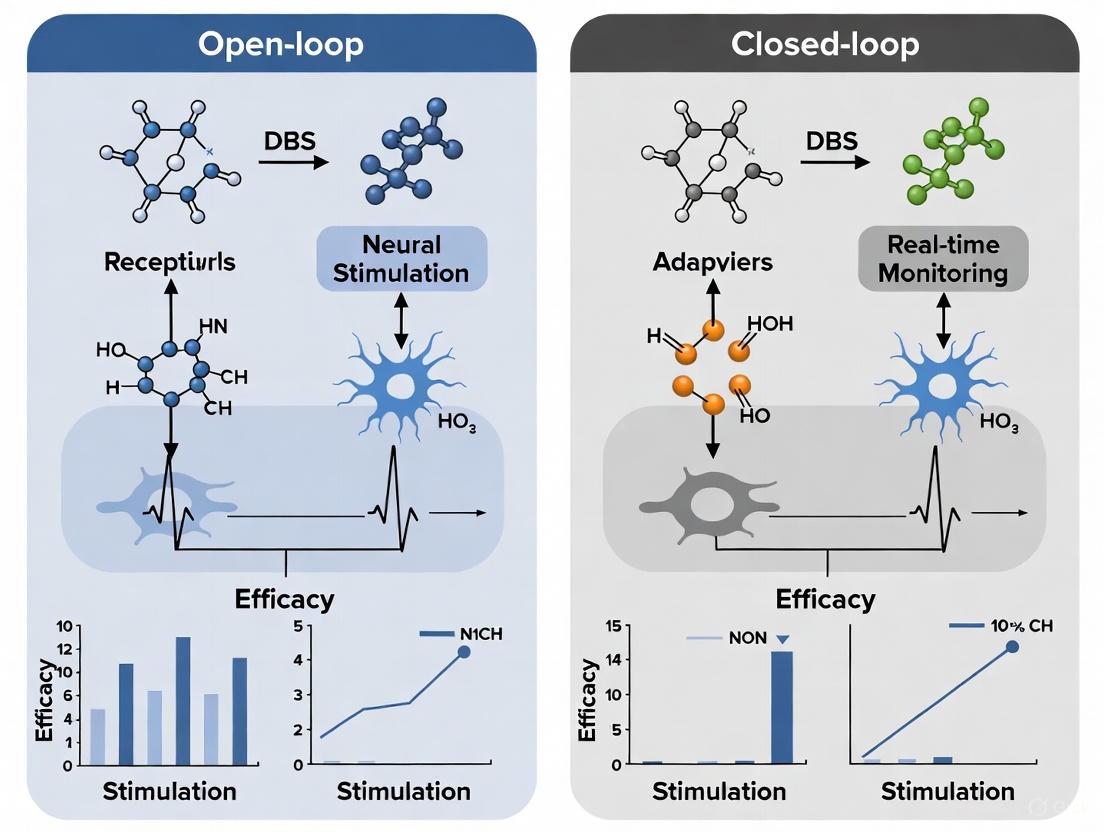
This article provides a comprehensive analysis of the efficacy of closed-loop (CL) versus open-loop (OL) deep brain stimulation (DBS) for neurological and psychiatric disorders.
Closed-Loop vs. Open-Loop Deep Brain Stimulation: Efficacy, Mechanisms, and Future Directions in Neuromodulation
Abstract
This article provides a comprehensive analysis of the efficacy of closed-loop (CL) versus open-loop (OL) deep brain stimulation (DBS) for neurological and psychiatric disorders. Tailored for researchers and drug development professionals, it explores the foundational principles of both paradigms, examines the methodological advances in biomarker detection and adaptive algorithms, and addresses key optimization challenges. The content synthesizes current clinical validation data and comparative outcomes, highlighting the potential for CL-DBS to enhance treatment personalization, improve symptom control, and reduce side effects through responsive neuromodulation. The discussion extends to future implications for biomedical research and clinical trial design in the era of precision medicine.
Understanding DBS Paradigms: From Open-Loop to Adaptive Closed-Loop Systems
Deep brain stimulation (DBS) represents a cornerstone therapeutic approach for drug-resistant neurological and psychiatric disorders. While recent research has focused on technologically advanced closed-loop systems, traditional open-loop DBS (OL-DBS) remains the clinical standard for most approved indications. This review systematically defines OL-DBS, characterizing its fundamental principle of continuous, preprogrammed neural stimulation independent of momentary physiological state. We examine the structured clinical workflow for parameter optimization, present quantitative efficacy data across disorders, and detail experimental methodologies for investigating OL-DBS mechanisms. By contextualizing OL-DBS within the evolving spectrum of adaptive neuromodulation, this guide provides researchers and drug development professionals with a foundational reference for therapeutic benchmarking and technology assessment.
Open-loop DBS delivers electrical stimulation to deep brain structures through parameters—amplitude, frequency, pulse width, and contact selection—that are preset by clinicians and remain constant or follow a fixed schedule, irrespective of the patient's fluctuating symptoms or brain states [1] [2]. This "continuous DBS" (cDBS) approach lacks integrated, real-time feedback from physiological biomarkers, relying instead on periodic clinical evaluations for parameter adjustment [3] [4]. Since its initial development in 1987 for movement disorders, OL-DBS has become the standard of care for Parkinson's disease (PD), essential tremor, dystonia, and obsessive-compulsive disorder, with over 244,000 patients implanted worldwide [1] [5]. Despite the emergence of closed-loop systems, OL-DBS remains a critical benchmark due to its proven long-term efficacy, clinical familiarity, and well-characterized risk profile, establishing the foundational principles upon which next-generation adaptive neuromodulation therapies are built.
Core Principles and Clinical Workflow
The therapeutic action of OL-DBS is predicated on delivering constant high-frequency stimulation (typically >100 Hz) to modulate dysfunctional neural circuits. The mechanism is multifactorial, involving local inhibition of neuronal somata, activation of passing fiber tracts, and network-level modulation of pathological oscillations [6] [7]. The clinical workflow for implementing OL-DBS is a multi-stage, iterative process crucial for achieving optimal therapeutic outcomes.
Clinical Programming and Titration Workflow
The process begins post-surgical recovery, where a clinician systematically titrates stimulation parameters. Amplitude (voltage/current), frequency, pulse width, and active electrode contact selection are adjusted during repeated clinic visits to maximize symptom control and minimize side effects [5]. This titration is particularly effective for symptoms like tremor that respond rapidly to stimulation; however, symptoms with delayed responses carry a risk of chronic overstimulation [5]. The process is inherently patient-specific, as individual neuroanatomy, lead placement, and disease characteristics significantly influence optimal parameters [1]. The following diagram illustrates this iterative clinical workflow.
Key Technological Components
The OL-DBS system consists of three primary hardware components [5]:
- Implanted Pulse Generator (IPG): A battery-powered neurostimulator, typically implanted in the subclavicular area or abdomen, which generates the electrical pulses.
- Leads: Insulated coiled wires with multiple platinum-iridium electrodes at the tip, which are stereotactically implanted within the target brain structure.
- Extension Cable: A subcutaneous wire connecting the IPG to the intracranial leads, traversing from the chest, up the neck, behind the ear, and into the skull.
Quantitative Efficacy and Performance Data
The therapeutic efficacy of OL-DBS is well-established through numerous randomized controlled trials and long-term observational studies. The tables below summarize key outcome metrics across its primary indications.
Table 1: Motor Symptom Efficacy of Open-Loop DBS in Parkinson's Disease
| Target Nucleus | UPDRS-III Improvement (Off-Med) | Medication Reduction | Key Strengths | Long-Term Limitations |
|---|---|---|---|---|
| Subthalamic Nucleus (STN) | 40-60% [5] [7] | ~50-60% [5] | Effective for tremor, rigidity, bradykinesia; allows medication reduction | Can worsen gait, speech, cognition; more frequent neuropsychiatric side effects |
| Globus Pallidus internus (GPi) | 30-50% [5] [7] | ~0-20% [5] | Superior for reducing dyskinesias; fewer cognitive/affective side effects | Less effective for medication reduction |
Table 2: OL-DBS Efficacy Across Approved Neurological Disorders
| Disorder | Primary DBS Target | Key Efficacy Metrics | Evidence Level |
|---|---|---|---|
| Essential Tremor | Ventral Intermedial (VIM) nucleus of thalamus | 60-80% tremor reduction [3] | FDA Approved (1997) |
| Dystonia | Globus Pallidus internus (GPi) | 30-60% improvement in Burke-Fahn-Marsden Dystonia Rating Scale [5] [7] | FDA Approved (HDE, 2003) |
| Epilepsy | Anterior Thalamic Nucleus (ATN) | ~40% median seizure reduction (SANTE Trial) [8] | FDA Approved (2018) |
| Obsessive-Compulsive Disorder | Ventral Capsule/Ventral Striatum (VC/VS) | ~35-40% response rate (Y-BOCS reduction ≥35%) [5] [7] | FDA Approved (HDE, 2009) |
Table 3: Common Adverse Effects and Management in OL-DBS
| Adverse Effect Category | Common Examples | Typical Cause | Management Strategies |
|---|---|---|---|
| Surgical Risks | Intracranial hemorrhage (1-2%), infection (~5%) [1] | Lead implantation trajectory | Surgical precision, anticoagulant management [1] |
| Stimulation-Limited Side Effects | Dysarthria, gait disturbance, paraesthesia [3] | Current spread to adjacent structures | Parameter adjustment (reduce amplitude, change active contact) [5] |
| Hardware-Related | Lead fracture, IPG erosion, battery failure | Mechanical stress, biocompatibility | Surgical revision, battery replacement (every 3-5 years) [4] |
Experimental Models and Methodological Approaches
Preclinical and clinical research into OL-DBS mechanisms employs sophisticated experimental protocols to dissect its effects on neural circuits.
In Vivo Electrophysiological Protocol
A seminal study by Rosin et al. established a method to compare OL-DBS versus closed-loop DBS (CL-DBS) efficacy in a non-human primate PD model [1] [2].
Objective: To determine if CL-DBS provides superior symptom control with less energy than traditional OL-DBS. Subjects: Non-human primates with 1-methyl-4-phenyl-1,2,3,6-tetrahydropyridine (MPTP)-induced parkinsonism. Neural Interface: Microelectrodes implanted in the GPi and primary motor cortex (M1). Stimulation Protocol:
- OL-DBS: Continuous 130 Hz train delivered to the GPi.
- CL-DBS: A train of seven pulses at 130 Hz delivered to the GPi with an 80 ms delay upon detecting a trigger signal from a reference neuron in the GPi or M1. Outcome Measures: Extracellular single-unit recordings, local field potentials (LFPs), and quantitative assessment of motor symptoms. Key Finding: CL-DBS was significantly more effective than OL-DBS in alleviating parkinsonian motor signs and disrupting pathological oscillatory discharge patterns [2].
Molecular and Circuit Mechanism Investigation
Recent research utilizing fiber photometry has elucidated the synaptic-level mechanisms of OL-DBS [6].
Objective: To characterize the presynaptic and postsynaptic effects of high-frequency STN DBS. Animal Model: Vglut2-cre mice. Technique: Spectrally resolved fiber photometry with genetically encoded fluorescent sensors (GCaMP6f, tdTomato, iGluSnFR, iGABASnFR). Stimulation Parameters: Monopolar, monophasic, cathodic stimulation at 130 Hz, 60-μs pulse width. Experimental Groups:
- Postsynaptic Activity: GCaMP6f expressed in STN neurons.
- Afferent Terminal Activity: GCaMP8f expressed in glutamatergic (from M1 cortex) and GABAergic (from GPe) inputs to the STN.
- Neurotransmitter Release: SF-Venus-iGluSnFR and iGABASnFR expressed in STN to measure glutamate and GABA release. Key Finding: OL-DBS inhibits STN neuron activity while activating afferent inputs. A larger decrease in glutamate release than GABA release shifts the excitation/inhibition balance toward net inhibition, suggesting "differential synaptic depression" as a core therapeutic mechanism [6]. The following diagram summarizes these neural pathway effects.
Table 4: Essential Reagents and Tools for DBS Research
| Resource Category | Specific Example | Research Application | Key Function |
|---|---|---|---|
| Animal Models | 6-OHDA-lesioned rat; MPTP-treated primate [2] [6] | Preclinical efficacy testing | Recapitulates key neuropathological features of PD for therapeutic screening |
| Genetically Encoded Sensors | GCaMP6/8f (calcium); iGluSnFR (glutamate); iGABASnFR (GABA) [6] | Circuit mapping and mechanism | Reports real-time neural activity and neurotransmitter dynamics in vivo |
| Viral Vectors | AAV9-hSyn-DIO-GCaMP6f-WPRE; AAVretro-syn-jGCaMP7f [6] | Targeted gene delivery | Enables cell-type-specific or projection-specific sensor expression |
| Neural Interfaces | MEMS-based silicon probes; hybrid electrode-optical fiber probes [1] [6] | Combined stimulation and recording | Allows simultaneous electrical stimulation and optical/photometric recording |
| Clinical Sensing IPGs | Medtronic Percept PC/RC; Activa PC+S/RC+S [3] | Human neural signal capture | Enables recording of local field potentials (LFPs) in patients during stimulation |
Open-loop DBS remains a powerful and widely deployed therapeutic modality, defined by its continuous stimulation paradigm and clinician-dependent optimization workflow. While its efficacy in suppressing symptoms of movement disorders is robust, limitations include its non-responsiveness to dynamic symptom fluctuations, side effects from overstimulation, and the burden of chronic programming. The future of neuromodulation research lies in refining patient selection, optimizing targeting, and developing hybrid approaches that integrate the reliability of open-loop systems with the efficiency of closed-loop principles. A precise understanding of OL-DBS mechanisms and performance provides an essential foundation for evaluating next-generation adaptive neurostimulation therapies.
Deep brain stimulation (DBS) has established itself as a transformative therapy for numerous neurological and psychiatric disorders, including Parkinson's disease, essential tremor, dystonia, epilepsy, and chronic pain. Traditional open-loop DBS (OL-DBS) systems operate through a unidirectional approach, delivering constant electrical stimulation to targeted brain regions regardless of the patient's fluctuating clinical state [9]. While effective for many conditions, this continuous stimulation paradigm lacks responsiveness to dynamic neurological changes, potentially leading to side effects, suboptimal symptom control, and reduced battery longevity due to unnecessary stimulation [2] [10]. The inherent limitations of OL-DBS have catalyzed a fundamental paradigm shift toward closed-loop DBS (CL-DBS), a bidirectional system that senses physiological biomarkers to inform precise, responsive neuromodulation [11] [9].
CL-DBS, also termed adaptive DBS (aDBS), represents a significant advancement in neurotechnology by incorporating a real-time feedback loop [12]. This system continuously monitors and interprets neural signals, using this information to dynamically adjust stimulation parameters—a stark contrast to the static nature of OL-DBS [2] [10]. The core principle of CL-DBS is to deliver personalized therapy at an unprecedented temporal precision, stimulating only when pathological neural activity is detected and ceasing when the brain state normalizes [12]. This review provides a comprehensive comparison of CL-DBS versus OL-DBS, examining the underlying principles, feedback control mechanisms, experimental evidence, and practical implementation challenges, framed within the context of efficacy research for neurological disorders.
Fundamental Operating Principles: Open-Loop vs. Closed-Loop DBS
Core Architectural Differences
The fundamental distinction between OL-DBS and CL-DBS lies in their system architecture and operational logic, which directly impacts their therapeutic approach and clinical performance.
Table 1: Core Architectural Comparison of OL-DBS and CL-DBS
| Feature | Open-Loop DBS (OL-DBS) | Closed-Loop DBS (CL-DBS) |
|---|---|---|
| System Architecture | Unidirectional | Bidirectional with feedback loop |
| Stimulation Pattern | Continuous, regardless of brain state | Intermittent, triggered by biomarkers |
| Control Basis | Pre-programmed parameters (fixed frequency, amplitude, pulse width) | Real-time physiological feedback signals |
| Therapeutic Approach | "One-size-fits-all" | Personalized, adaptive therapy |
| Key Components | Implantable pulse generator (IPG), stimulating electrodes | Sensing & stimulating electrodes, biomarker detection algorithm, control policy [12] |
The Feedback Control Loop in CL-DBS
The operational superiority of CL-DBS stems from its sophisticated feedback control system, which typically involves three critical components working in concert:
- Input Stimulation: DBS pulses are delivered to the target brain region.
- Output Feedback: A biomarker, reflective of the patient's clinical state, is continuously monitored.
- Feedback Control: A control algorithm processes the biomarker signal and automatically adjusts DBS parameters in response [13].
This closed-loop system can be visualized as a continuous cycle of sensing, interpreting, and modulating neural activity.
Figure 1: The Closed-Loop DBS Feedback Control Cycle. This diagram illustrates the continuous process where a biomarker is sensed and analyzed to determine the appropriate stimulation parameters, which are then delivered and their effect assessed, creating an adaptive feedback loop. Adapted from principles in [9] [10] [13].
Biomarkers for Feedback Control: The Signals Driving Adaptation
A critical element for successful CL-DBS is the identification of reliable, physiologically relevant biomarkers that can be used as feedback signals. These biomarkers serve as proxies for the patient's clinical state and can be derived from various sources.
Table 2: Biomarkers for Closed-Loop DBS
| Biomarker Type | Description | Applications | Advantages/Limitations |
|---|---|---|---|
| Local Field Potentials (LFPs) | Low-frequency signals from neuronal populations; oscillatory power (e.g., beta band, 13-30 Hz) is a key feature [11] [9] | Parkinson's disease (STN beta power) [11] [12] | Stable over time; recorded from DBS target itself; may not capture all symptom domains [9] |
| Electrocorticography (ECoG) | Cortical surface recordings | Epilepsy (seizure detection), chronic pain [10] | Rich signal content; requires additional cortical electrode placement |
| Electromyography (EMG) | Muscle activity recordings | Essential tremor [13] | Direct correlate of motor symptoms; not a direct brain signal |
| Neural & Kinematic Decoding via AI | Machine learning models decoding motor symptoms or pain states from neural signals [11] [14] | Parkinson's disease (motor state decoding), chronic pain (pain metric prediction) [11] [14] | Can integrate multi-modal inputs; potentially more comprehensive; requires advanced computational models |
| Aperiodic Neural Activity | Non-oscillatory component of LFP (1/f slope) [8] | Epilepsy, Parkinson's disease (investigational) [8] | Novel biomarker of neuronal excitability; relationship to symptoms under investigation |
The expansion of biomarkers beyond simple oscillatory rhythms, leveraging artificial intelligence to decode complex motor states or subjective experiences like pain from neural signals, represents a significant advancement in the field [11] [14]. Data-driven models are improving symptom estimation and facilitating more accurate neural decoding for personalized therapy [11].
Quantitative Efficacy Comparison: Experimental Data
Robust clinical studies have begun to quantify the superior efficacy of CL-DBS compared to traditional OL-DBS across multiple domains, including therapeutic outcomes, energy efficiency, and side effect profiles.
Table 3: Quantitative Efficacy Comparison of OL-DBS vs. CL-DBS
| Study & Disorder | Experimental Protocol | Key Efficacy Metrics | Results: OL-DBS vs. CL-DBS |
|---|---|---|---|
| Parkinson's Disease (PD) [10] | 8 PD patients; blinded assessment; CL-DBS controlled by subthalamic LFP beta power | Motor score improvement; Stimulation time; Energy consumption | Motor Improvement: OL-DBS: ~40% vs. CL-DBS: 50-66% (27-29% higher with CL-DBS, p=0.005-0.03) [10] |
| Stimulation Time: CL-DBS reduced stimulation time by 56% [10] | |||
| Chronic Pain [14] | 5 patients with refractory neuropathic pain; double-blind, sham-controlled crossover; CL-DBS using personalized pain biomarkers | Pain Visual Analog Scale (VAS) relief; Durability of effect | Pain Relief: CL-DBS superior to sham stimulation; Durability of pain relief maintained up to 3.5 years with personalized CL-DBS [14] |
| PD & Essential Tremor [2] | Systematic scoping review of 50 studies over 10 years | Battery longevity; Adverse effects | Battery Life: CL-DBS significantly reduces power consumption, potentially decreasing battery replacement surgeries [2] |
Detailed Experimental Protocols in Closed-Loop DBS Research
To ensure reproducibility and provide a clear framework for researchers, this section outlines the detailed methodologies from key experiments cited in this review.
Protocol for Parkinson's Disease: Beta-Driven aDBS
The development of CL-DBS for Parkinson's disease primarily relies on the beta-band (13-30 Hz) oscillation power recorded from the Subthalamic Nucleus (STN) as a biomarker for the hypokinetic state [11] [12].
- Patient Population & Implantation: Patients with idiopathic Parkinson's disease and drug-resistant motor symptoms are implanted with DBS electrodes bilaterally in the STN. The system used must allow for simultaneous sensing and stimulation, such as the Medtronic Activa PC+S or similar research-capable implants [12].
- Biomarker Identification: Local Field Potentials (LFPs) are recorded from the DBS electrodes, typically with stimulation temporarily switched off. The power in the beta frequency band is quantified and its correlation with clinical bradykinesia and rigidity scores is established [11] [12].
- Control Policy Implementation: A dual-threshold control policy is often employed. The system continuously monitors the STN-LFP beta power. When the beta power crosses a pre-defined upper threshold, indicating a worsening hypokinetic state, stimulation is triggered. Stimulation continues until the beta power falls below a lower threshold, signifying a return to a more normal neural state [12] [10].
- Blinded Assessment: In clinical trials, efficacy is evaluated in a blinded manner, where patients are assessed under OL-DBS, CL-DBS, and sometimes no stimulation conditions, with the order randomized. Motor function is rated using standardized scales like the Unified Parkinson's Disease Rating Scale (UPDRS)-Part III by blinded clinicians [10].
Protocol for Chronic Pain: Personalized Biomarker aDBS
A precision-medicine approach for chronic pain involves identifying individualized neural signatures of pain, as demonstrated in a recent feasibility trial [14].
- Temporary Intracranial Monitoring: Patients with refractory neuropathic pain syndromes are initially implanted with temporary intracranial EEG (iEEG) electrodes spanning multiple cortico-striatal-thalamocortical pathway nodes (e.g., anterior cingulate cortex (ACC), orbitofrontal cortex (OFC), caudate, centromedian thalamus) [14].
- Brain Mapping & Biomarker Discovery: Over several days, different brain targets are stimulated in a double-blind, sham-controlled manner to identify sites that produce acute pain relief. Concurrently, patients frequently self-report their pain levels (e.g., using a Visual Analog Scale (VAS)). Machine learning models (e.g., LASSO regression, Linear Discriminant Analysis) are trained to predict the reported pain metrics from spectral features of the iEEG signals, thus creating a bespoke, patient-specific pain biomarker [14].
- Permanent Implantation & Closed-Loop Trial: Patients who respond to temporary stimulation receive a permanent, sensing-capable DBS device (e.g., Medtronic Summit RC+S). The personalized pain biomarker is integrated into the device's algorithm. The efficacy of closed-loop DBS (stimulation triggered by high-pain biomarker states) is then tested against sham stimulation in a double-blind, crossover trial [14] [15].
The Scientist's Toolkit: Essential Research Reagents & Technologies
Progress in CL-DBS research is facilitated by a suite of specialized technologies and computational tools.
Table 4: Essential Research Reagents & Technologies for CL-DBS Investigation
| Tool/Technology | Function in CL-DBS Research | Specific Examples / Notes |
|---|---|---|
| Bidirectional Implantable Neurostimulators | Enable simultaneous sensing of neural signals and delivery of stimulation in ambulatory patients. | Medtronic Activa PC+S, Medtronic Summit RC+S [14] [12]. These are often used in feasibility trials. |
| Computational Models of Brain Circuits | Simulate the effects of DBS on neuronal networks to develop and test control policies in silico before clinical application. | Models of the cortico-basal ganglia-thalamic network for PD [13]; models of Vim thalamus for essential tremor incorporating short-term synaptic plasticity [13]. |
| Machine Learning Algorithms | Decode clinical states (e.g., high pain, bradykinesia) from complex, multi-modal neural signals. | Linear Discriminant Analysis (LDA) for binary state classification; LASSO regression for continuous symptom prediction [14]. |
| Control Algorithms & Policies | The core "brain" of the CL-DBS system that determines how to adjust stimulation based on the biomarker input. | Dual-threshold controllers [10]; Proportional-Integral-Derivative (PID) controllers [13]; and more complex, model-predictive controllers. |
| High-Density Intracranial EEG (iEEG) | Temporary electrode arrays used for precise brain mapping to identify optimal stimulation targets and biomarkers. | Used in chronic pain trials to map effective targets across cortico-striatal-thalamocortical loops [14]. |
The paradigm of deep brain stimulation is undergoing a fundamental transformation from static, open-loop systems to dynamic, intelligent, closed-loop interfaces. Evidence from clinical and computational studies consistently demonstrates that CL-DBS outperforms OL-DBS in key areas: it provides superior, personalized symptom control by responding to the brain's fluctuating states, significantly improves energy efficiency by stimulating only when necessary, and holds the potential to reduce side effects by avoiding unnecessary neural modulation [2] [10].
The future of CL-DBS lies in the continued refinement of multi-modal biomarker detection, the integration of artificial intelligence for more robust symptom decoding, and the development of next-generation implantable devices that make this advanced therapy accessible to a broader patient population [11] [12]. While challenges in practical implementation and the exploration of vast parameter spaces remain, the principles of feedback control and responsive stimulation are firmly established as the cornerstone of the next generation of precision neuromodulation therapies.
Deep Brain Stimulation (DBS) has emerged as a pivotal therapeutic intervention for managing symptoms of various neurological and psychiatric disorders, most notably Parkinson's disease (PD), essential tremor (ET), and obsessive-compulsive disorder (OCD) [7]. Despite its clinical success, the precise mechanisms by which DBS exerts its therapeutic effects remain a subject of intense investigation. Two predominant theoretical frameworks have been advanced to explain its mechanism of action: the Disruption Hypothesis (often termed the "informational lesion" hypothesis) and the Circuit Modulation hypothesis [16] [7]. The former posits that DBS primarily acts by blocking or masking pathological neural activity, while the latter suggests it works by driving neural circuits toward a more normalized, physiological state. This guide objectively compares these mechanisms within the critical context of evolving DBS paradigms, specifically the efficacy of traditional open-loop DBS (OL-DBS) versus next-generation closed-loop DBS (CL-DBS). Understanding these mechanistic distinctions is fundamental for researchers and drug development professionals aiming to optimize current therapies and develop novel neuromodulation-based treatments.
Theoretical Frameworks: Disruption vs. Modulation
The Disruption ("Informational Lesion") Hypothesis
The disruption hypothesis suggests that high-frequency DBS functions as a reversible "informational lesion" by preventing the transmission of pathological neural signals through the stimulated region [16]. It does not silence the neural tissue but rather disrupts the flow of dysfunctional information.
- Core Principle: The therapeutic effect is achieved by masking or antidromically blocking synaptic inputs and preventing neurons from responding to intrinsic pathological oscillations [16]. This is analogous to "jamming" a faulty signal.
- Key Evidence: In the context of OCD, which involves overactive cortico-striatal-thalamo-cortical (CSTC) circuits, high-frequency DBS is thought to disrupt the pathological network patterns that underlie symptoms [16]. The hypothesis is supported by observations that DBS can have almost immediate effects on certain symptoms, such as anxiety in OCD patients [16].
The Circuit Modulation Hypothesis
In contrast, the circuit modulation hypothesis proposes that DBS actively entrains neural activity, driving plastic changes within complex brain networks to restore more normal function.
- Core Principle: DBS acts by imposing a new, rhythmic pattern of activity on local and downstream circuits. This involves both direct effects and the activation of upstream inhibitory interneurons, which can lead to long-term synaptic remodeling and stabilization of network dynamics [16] [17].
- Key Evidence: The differential time course of DBS effects supports this view. For example, in OCD, improvements in mood and anxiety can be immediate, while reductions in core OCD symptoms follow a more gradual timeline, suggesting a process of slow, adaptive circuit reorganization [16]. Furthermore, CL-DBS relies on the principle that neural circuits can be dynamically modulated based on real-time biomarkers [18] [13].
Table 1: Comparative Analysis of Core Theoretical Frameworks
| Feature | Disruption Hypothesis | Circuit Modulation Hypothesis |
|---|---|---|
| Primary Mechanism | Jamming or blocking pathological signals [16] | Entraining and reshaping neural network activity [16] |
| Therapeutic Analogy | Informational lesion | Network recalibration |
| Temporal Profile | Often immediate for some symptoms [16] | Can be gradual, involving neuroplasticity [16] |
| View of Neural Activity | Target is a source of "noise" to be disrupted | Target is a dysfunctional node to be retuned |
Experimental Evidence and Protocols
Research into these mechanisms employs a range of methodologies, from chronic intracranial recording in humans to computational modeling.
Key Experimental Findings
Recent studies have provided quantitative data that helps distinguish between these mechanisms.
- Evidence for Circuit Modulation in OCD: A landmark 2024 study recorded local field potentials (LFPs) from the ventral striatum in OCD patients over several months. The research identified a neural signature at 9 Hz (theta/alpha border) that was highly periodic and predictable in the symptomatic state. In patients who responded to DBS, this predictability was significantly diminished after DBS activation. This decrease in periodicity was interpreted as a successful disruption of a pathological, rigid rhythm and a shift toward a healthier, less predictable neural state—a form of circuit modulation. The study achieved an accurate classification of clinical status based on this neural feature [18].
- Evidence for Disruption in Parkinson's Disease: The long-standing use of DBS for PD often aligns with a disruptive mechanism. The INTREPID trial, a five-year study on subthalamic nucleus (STN) DBS, showed that motor function (measured by UPDRS-III) improved by 51% at one year and 36% at five years compared to baseline [19]. The rapidity of this effect upon stimulation is consistent with the disruption of pathological beta oscillations in the motor circuit.
Table 2: Quantitative Outcomes from Key DBS Studies
| Study / Disorder | Key Metric | Baseline (Mean) | Post-DBS Outcome | Change | Hypothesis Supported |
|---|---|---|---|---|---|
| INTREPID (PD) [19] | UPDRS-III (Motor, off-med) | 42.8 | 21.1 (Yr 1) / 27.6 (Yr 5) | -51% (Yr 1) / -36% (Yr 5) | Disruption |
| INTREPID (PD) [19] | Dyskinesia Score | 4.0 | 1.0 (Yr 1) / 1.2 (Yr 5) | -75% (Yr 1) / -70% (Yr 5) | Disruption |
| Neural Periodicity (OCD) [18] | Predictability of 9 Hz VS Power | High (Symptomatic) | Significantly Diminished (Responders) | N/A | Circuit Modulation |
Detailed Experimental Protocol: Chronic Intracranial Recording for Biomarker Discovery
The following methodology, derived from the OCD study [18], exemplifies the modern approach to investigating DBS mechanisms.
- Patient Cohort: Recruit patients with severe, treatment-resistant OCD who meet surgical criteria for DBS implantation.
- Device Implantation: Implant DBS leads bilaterally in the target region (e.g., ventral striatum/ventral capsule). Use a device capable of both delivering stimulation and chronic sensing of LFPs.
- Data Acquisition: Initiate continuous, passive LFP recordings from the implanted leads before DBS activation. Record at high temporal resolution (e.g., 10-minute intervals) for an extended period (months to over a year).
- Stimulation Protocol: After a baseline recording period, activate DBS according to a standardized clinical programming protocol.
- Clinical Assessment: Regularly assess clinical status using standardized psychiatric rating scales.
- Data Analysis: Process the chronic LFP data to extract spectral features. Analyze the periodicity and predictability of oscillatory power in specific frequency bands (e.g., 9 Hz). Use machine learning models to correlate neural features with clinical state.
- Model Validation: Train predictive models on an initial patient cohort and validate them on a separate, held-out cohort to ensure generalizability.
The Open-Loop vs. Closed-Loop Paradigm
The distinction between disruption and modulation becomes critically important in the design of advanced DBS systems.
Open-Loop DBS (OL-DBS)
OL-DBS delivers constant electrical stimulation, with parameters set intermittently by a clinician [2]. Its mechanism aligns most readily with the disruption hypothesis.
- Mechanistic Link: It assumes a constant need to block a consistently present pathological signal. This "always-on" approach can lead to side effects, habituation, and inefficient battery use, as it does not account for the dynamic nature of brain states and symptoms [2] [13].
Closed-Loop DBS (CL-DBS)
CL-DBS, or adaptive DBS, dynamically adjusts stimulation parameters in real-time based on a feedback biomarker derived from LFP, EMG, or other signals [2] [13]. Its function is a pure embodiment of the circuit modulation hypothesis.
- Mechanistic Link: It seeks to interact with the neural circuit, providing stimulation only when needed to nudge the network back toward a healthy state. A 2024 proof-of-concept study for essential tremor demonstrated a model-based CL-DBS system that used a PID controller to adjust stimulation frequency based on EMG signals, effectively modulating the circuit to suppress tremor [13].
Table 3: OL-DBS vs. CL-DBS System Characteristics
| Characteristic | Open-Loop (OL) DBS | Closed-Loop (CL) DBS |
|---|---|---|
| Stimulation Paradigm | Constant, continuous [2] | Intermittent, responsive to biomarker [2] |
| Primary Hypothesis | Disruption / Informational Lesion | Circuit Modulation |
| Key Advantage | Simplicity, established protocols [2] | Potential for better efficacy, fewer side effects, longer battery life [2] [13] |
| Key Challenge | Inability to adapt to symptom fluctuations [7] | Identifying reliable biomarkers and control algorithms [13] |
The Scientist's Toolkit: Research Reagent Solutions
Research into DBS mechanisms relies on a suite of specialized tools and reagents.
Table 4: Essential Research Materials and Their Functions
| Item / Solution | Function in Research |
|---|---|
| Sensing-Enabled DBS Systems (e.g., Medtronic Percept PC) | Allows for chronic recording of local field potentials (LFPs) in ambulatory patients, enabling the discovery of clinical biomarkers [18]. |
| Computational Network Models | Simulates the response of neural circuits (e.g., CSTC, thalamocortical) to DBS, helping to test mechanistic hypotheses in silico [13]. |
| Control Algorithms (e.g., PID Controller) | The core software of CL-DBS that processes the biomarker input and determines the optimal stimulation output in real-time [13]. |
| Standardized Clinical Scales (e.g., Y-BOCS for OCD, UPDRS for PD) | Provides quantitative, objective assessment of clinical symptom severity, essential for correlating with neural data [19] [18]. |
| Biomarker Validation Platforms | Computational frameworks for testing the predictive power of neural features across patient cohorts to ensure generalizability [18]. |
The Disruption Hypothesis and Circuit Modulation Hypothesis are not mutually exclusive; rather, they represent complementary facets of DBS's complex mechanism of action. Evidence suggests that DBS may initially disrupt pathological signaling to provide immediate relief, while its long-term efficacy depends on sustained modulation and neuroplastic remodeling of dysfunctional circuits [16]. The evolution from OL-DBS to CL-DBS marks a paradigm shift from a purely disruptive approach toward a more nuanced, interactive form of circuit modulation. For researchers and clinicians, this comparative analysis underscores that the future of therapeutic neuromodulation lies in identifying specific circuit dysfunctions and personalizing neuromodulation strategies to dynamically correct them, moving beyond a one-size-fits-all "lesion" approach.
Deep brain stimulation (DBS) has revolutionized the treatment of neurological disorders, particularly Parkinson's disease (PD) and essential tremor. Traditional open-loop DBS systems provide continuous, fixed-parameter stimulation, requiring manual adjustment by clinicians based on patient feedback and observed symptoms [1] [20]. While effective, this approach cannot respond to the brain's dynamic needs that fluctuate with activities, emotional states, and medication cycles [20]. In contrast, adaptive DBS (aDBS) or closed-loop DBS incorporates a feedback loop that automatically adjusts stimulation parameters based on real-time biomarkers, potentially offering more personalized therapy, improved efficacy, and reduced side effects [10] [21].
The core innovation enabling aDBS is the identification of reliable neural biomarkers – physiological signals that correlate with disease symptoms and can be used to guide stimulation parameters. This review compares three key biomarkers—local field potentials (LFPs), with a focus on beta oscillations and theta activity—evaluating their experimental support, clinical applications, and implementation challenges within the broader context of open-loop versus closed-loop DBS efficacy research.
Beta Oscillations: A Well-Established Biomarker for Parkinsonian Motor Symptoms
Experimental Evidence and Correlation with Symptoms
Beta oscillations (13-30 Hz) recorded from the subthalamic nucleus (STN) represent the most extensively studied biomarker for aDBS in Parkinson's disease. Research has consistently demonstrated that elevated beta power correlates with motor symptoms such as rigidity and bradykinesia [20] [22]. This pathological beta activity is considered a hallmark of the parkinsonian state, and its suppression through DBS coincides with clinical improvement [22].
Table 1: Key Experimental Findings on Beta Oscillations as a DBS Biomarker
| Study Focus | Experimental Protocol | Key Findings | Clinical Implications |
|---|---|---|---|
| Chronic aDBS Feasibility [23] | - 8 PD patients with commercially available aDBS- Beta power guided stimulation adjustments- Two-week home evaluation with ecological momentary assessments | - Significant improvement in overall well-being (p=0.007)- Trend toward enhanced general movement (p=0.058)- 6/8 patients chose to remain on aDBS | Beta-guided aDBS is clinically feasible and may improve outcomes over cDBS |
| Therapeutic Mechanism [22] | - Combined STN LFP recordings with magnetoencephalography (MEG)- Recordings at rest (DBS OFF/ON) and during a Go/NoGo task | - DBS diminished right-lateralized beta peaks in STN power and STN-cortex coherence | Suppression of pathological beta synchrony is a key therapeutic mechanism of DBS |
| Beta Peak Selection [23] | - Review of prior OFF medication "Signal Test" LFP data- Identification of optimal beta peaks for aDBS control | - In 3/16 hemispheres, no beta peak was visible when tested ON medication- Double beta peaks observed in 4/16 STN | Reliable beta biomarker identification may require testing in the OFF medication state |
Signaling Pathways and Experimental Workflow
The following diagram illustrates the role of beta oscillations in the basal ganglia-thalamocortical circuit and its application in a closed-loop DBS system:
Beta oscillations are embedded within the cortico-basal ganglia-thalamocortical loop. In Parkinson's disease, this circuit exhibits pathological synchronization in the beta frequency range. The aDBS system senses these oscillations, processes the signal to extract beta power, and uses this information to titrate stimulation, thereby disrupting the abnormal synchrony and alleviating symptoms [21] [22].
Theta Activity: An Emerging Biomarker for Tremor and Dyskinesias
Experimental Evidence for Theta in Movement Disorders
Theta band (4-8 Hz) activity has emerged as a significant biomarker, particularly for tremor and levodopa-induced dyskinesias (LIDs). Unlike beta oscillations, which are strongly linked to bradykinesia and rigidity, theta activity appears to have a more diverse role across different neurological conditions.
Table 2: Key Experimental Findings on Theta Activity as a DBS Biomarker
| Study Focus | Experimental Protocol | Key Findings | Clinical Implications |
|---|---|---|---|
| Tremor Biomarkers [24] | - Intraoperative thalamic LFP & tremor recording (32 participants)- Computational modeling of tremor cells- DBS at different frequencies (16 participants) | - Moderate tremor-LFP power correlation: theta (r=0.445), alpha (r=0.389)- Strong tremor-LFP coherence correlation (r=0.559)- Tremor decoded from LFP with AUC ~0.7 | Theta power alone may be insufficient for tremor prediction; coherence may be more robust |
| Dyskinesia Prediction [25] | - Bilateral STN LFP, EMG, & accelerometry in PD patients with LIDs- Apomorphine administration to induce dyskinesias- Spectral power analysis over 200s post-dyskinesia onset | - Dyskinesias preceded by bilateral beta decrease (p<0.001) & contralateral theta increase (p=0.02)- Changes peaked in the DBS "sweet spot" | Theta activity may serve as a key biomarker for predicting and controlling LIDs |
| OCD Theta Activity [22] | - STN LFP recordings combined with MEG in OCD patient- Resting state (DBS OFF/ON) and Go/NoGo task (DBS OFF) | - Task-related modulations of STN power occurred in theta band for OCD patient- Contrasted with beta modulations in PD patient | Disease-specific spectral modulations: theta in OCD vs. beta in PD |
Theta Activity in Tremor and Dyskinesia Pathways
The experimental workflow for investigating theta oscillations in tremor and their relationship with DBS is complex, involving multiple recording modalities and analytical approaches:
The diagram above outlines the comprehensive methodology used to investigate theta oscillations, from data acquisition through analysis to key findings. This approach revealed that while theta power alone shows only a moderate correlation with tremor, the coherence between LFP and tremor signals is a stronger predictor, suggesting that the relationship between neural activity and motor output may be more informative than oscillatory power alone [24].
Comparative Analysis of Biomarker Performance and Implementation
Quantitative Comparison of Biomarker Efficacy
Table 3: Comprehensive Comparison of Key DBS Biomarkers
| Parameter | Beta Oscillations | Theta Activity | LFP-Tremor Coherence |
|---|---|---|---|
| Frequency Band | 13-30 Hz [20] | 4-8 Hz [24] | N/A (Cross-signal correlation) |
| Primary Correlates | Bradykinesia, Rigidity [20] [22] | Tremor, Levodopa-Induced Dyskinesias [24] [25] | Tremor Amplitude [24] |
| Correlation Strength | Strong correlation with motor symptoms [20] | Moderate correlation with tremor (r=0.445) [24] | Strong correlation with tremor (r=0.559) [24] |
| Decoding Performance | Used for effective aDBS control [23] | Tremor decoded with AUC ~0.7 [24] | Not separately quantified |
| Response to DBS | Suppressed by high-frequency DBS [22] | Reduced by high-frequency DBS [24] | Not reported |
| Advantages | - Strong symptom correlation- Established biomarker- Commercial implementations | - Predictive for dyskinesias- Relevant across disorders (PD, OCD) | - Strong tremor correlation- May be more robust than power alone |
| Limitations | - Medication-sensitive- May not capture all symptoms | - Moderate correlation alone- Spatial distribution affects recording | - Requires multiple signal sources- More complex implementation |
The Scientist's Toolkit: Essential Research Reagents and Materials
Table 4: Key Research Reagents and Experimental Materials for DBS Biomarker Studies
| Item | Function/Application | Examples/Specifications |
|---|---|---|
| DBS Electrodes | Sensing LFPs and delivering stimulation | Medtronic 3387/3389 leads [24]; Directional electrodes (e.g., 8-contact) [21] |
| Implantable Pulse Generator (IPG) | Housing sensing/stimulation electronics | Medtronic Percept PC [23] [22] with BrainSense technology |
| Signal Amplifiers | Amplifying neural signals for analysis | SR560 amplifiers (Stanford Research Systems) [24] |
| Motion Sensors | Quantifying tremor and motor symptoms | CXL04LP3 accelerometer (Crossbow Technology) [24]; EMG systems |
| Computational Modeling Tools | Simulating neural activity and DBS effects | Biophysical models of thalamic networks & tremor cell distributions [24] |
| Neuroimaging Integration | Electrode localization and target verification | BrainLab software; Lead-DBS v3.1 with DISTAL atlas [22] |
| Signal Processing Platforms | Analyzing LFP data and detecting biomarkers | Custom Matlab scripts (Mathworks) [24]; FieldTrip toolbox [22] |
The evolution from open-loop to closed-loop DBS represents a paradigm shift in neuromodulation therapy. Beta oscillations and theta activity have emerged as validated biomarkers with complementary strengths: beta for bradykinesia and rigidity in PD, and theta for tremor and dyskinesias. However, research indicates that theta power alone may be insufficient for robust tremor prediction, while LFP-tremor coherence shows stronger correlation [24].
Future aDBS systems will likely move beyond single-biomarker approaches. Research is already exploring multi-modal input systems that leverage various neural and kinematic signals [11]. The integration of artificial intelligence for neural decoding and stimulation parameter optimization holds promise for creating more intelligent and personalized systems [20] [11]. Additionally, as evidenced by differential theta and beta band engagement across PD and OCD, disease-specific biomarkers will be crucial for expanding aDBS to new neurological and psychiatric indications [22].
The translation of these biomarkers into clinical practice faces ongoing challenges, including signal stability, individual variability in biomarker expression, and the development of robust control algorithms. However, the continued refinement of aDBS systems promises more effective, efficient, and personalized therapy for patients with movement disorders and potentially other neurological and psychiatric conditions.
Deep Brain Stimulation (DBS) has established itself as a transformative therapy for numerous neurologic and neuropsychiatric disorders. This surgical technique, which involves the implantation of electrodes to modulate neuronal firing in specific subcortical structures, has evolved significantly since its inception [26]. The conventional approach, known as open-loop DBS (OL-DBS), delivers continuous electrical stimulation with parameters determined during clinical programming sessions and remains fixed until the next adjustment [27]. While effective for many conditions, this "one-size-fits-all" paradigm does not account for the dynamic nature of brain states and neural circuitry, potentially leading to suboptimal symptom control and side effects [28].
The limitations of static stimulation parameters have prompted the development of closed-loop DBS (CL-DBS), also termed adaptive DBS (aDBS), which represents a paradigm shift in neuromodulation therapy [26] [27]. These advanced systems analyze neural biomarkers in real-time and automatically adjust stimulation parameters based on the patient's current brain state [28]. This evolution from open-loop to closed-loop systems marks a critical advancement toward personalized, precision medicine for neurologic disorders, offering the potential for improved efficacy, reduced side effects, and enhanced energy efficiency [29] [27].
The Open-Loop Era: Foundations and Limitations
Historical Development and Mechanism
Open-loop DBS emerged as a therapeutic alternative to ablative neurosurgical procedures, gaining FDA approval for tremor suppression in essential tremor or Parkinson's disease in 1997 [27]. The standard OL-DBS setup delivers continuous high-frequency stimulation (typically 130-160 Hz) using square-wave pulses [26]. The precise mechanism of action remains partially elucidated, with several competing theories proposed. Some research suggests that DBS acts through desynchronization or reorganization of pathologic network oscillations, while other theories propose direct inhibition or excitation of neural activity, or the introduction of an "information lesion" that produces effects similar to neural ablation [26].
Table 1: Conventional Open-Lloop DBS Parameters by Disorder
| Disorder | Primary Target | Frequency | Pulse Width | Amplitude |
|---|---|---|---|---|
| Parkinson's Disease | Subthalamic Nucleus (STN) | 130-160 Hz [26] | 60-120 μs [30] | 2-4 V [30] |
| Essential Tremor | Ventral Intermediate Nucleus (VIM) | 130-160 Hz [26] | 60-120 μs | 1-3 V |
| Dystonia | Globus Pallidus interna (GPi) | 130-160 Hz [26] | 90-450 μs | 2-5 V |
| Obsessive-Compulsive Disorder | Anterior Limb of Internal Capsule | 130-160 Hz [26] | 90-210 μs | 5-10 V |
Clinical Efficacy and Long-Term Outcomes
The efficacy of OL-DBS has been well-established across multiple disorders, with particularly robust evidence for Parkinson's disease. A long-term study evaluating bilateral STN-DBS in patients with PD demonstrated sustained motor improvement over 10 years, with Unified Parkinson's Disease Rating Scale Part III (UPDRS-III) scores in the off-medication state improving by 53.02%, 44.79%, and 22.56% at 1, 3, and ≥10 years, respectively [30]. Tremor and rigidity showed the most sustained improvement, while non-motor symptoms such as emotion, cognition, and quality of life improved at 3 years but returned to baseline or declined beyond 10 years [30].
The concept of a "DBS honeymoon" period has been described, analogous to the "levodopa honeymoon" in Parkinson's disease, representing a period of maximal therapeutic benefit before subsequent decline [30]. Research suggests that the initial 3 years post-implantation likely represent this honeymoon period, with peak improvements in both motor and non-motor symptoms [30].
Limitations of Open-Loop Systems
Despite its proven benefits, OL-DBS presents several significant limitations. The static nature of stimulation parameters fails to account for fluctuating symptom severity throughout the day, leading to periods of both over-stimulation and under-stimulation [27]. Over-stimulation can cause side effects such as paresthesia, dysarthria, and mood changes, while under-stimulation results in inadequate symptom control [28]. Additionally, the continuous delivery of stimulation in OL-DBS systems leads to relatively rapid battery consumption, necessitating more frequent surgical replacements [27].
Cognitive effects represent another concern, with studies documenting declines in verbal fluency regardless of whether the DBS target was the subthalamic nucleus (STN), globus pallidus interna (GPi), or various thalamic nuclei [26]. These limitations have motivated the investigation of more sophisticated stimulation paradigms that can dynamically adjust to patient needs [26] [28].
The Closed-Loop Revolution: Principles and Biomarkers
Fundamental Architecture of CL-DBS Systems
Closed-loop DBS systems represent a significant technological advancement that enables dynamic, adaptive neuromodulation. These systems operate on a feedback control principle where neural biomarkers are continuously monitored, and stimulation parameters are automatically adjusted based on the difference between the current and desired brain states [28].
Diagram 1: The fundamental architecture of a closed-loop DBS system. Neural signals are continuously monitored as biomarkers, compared to a desired brain state, and used to automatically adjust stimulation parameters through an optimization algorithm.
Key Biomarkers for Adaptive Stimulation
CL-DBS systems rely on quantifiable neural signatures that correlate with disease states or symptoms. These biomarkers serve as the input for the feedback control system, enabling real-time adjustment of stimulation parameters.
Table 2: Neural Biomarkers in Closed-Loop DBS Applications
| Disorder | Biomarker | Detection Method | Clinical Application |
|---|---|---|---|
| Parkinson's Disease | Beta-band (13-30 Hz) oscillations [27] | Local Field Potentials from STN | Correlate with bradykinesia and rigidity; used to adjust stimulation amplitude [27] |
| Essential Tremor | Tremor-associated oscillations [27] | Cortical sensors (accelerometers) or thalamic LFPs | Modulate stimulation amplitude based on tremor severity [27] |
| Chronic Pain | Individualized pain signatures [29] | Cortico-striatal-thalamocortical LFPs | Machine learning-derived biomarkers guide stimulation timing [29] |
| Epilepsy | Ictal and interictal epileptiform activity [27] | Intracranial EEG (iEEG) | Detect seizure onset and deliver responsive stimulation [27] |
Comparative Efficacy: Experimental Data and Clinical Outcomes
Methodological Approaches in CL-DBS Research
Research comparing OL-DBS and CL-DBS employs rigorous methodologies to quantify differences in efficacy, side effect profiles, and energy consumption. Standardized assessment scales specific to each disorder are employed, such as the UPDRS-III for Parkinson's disease, while specialized equipment for neural signal acquisition and analysis forms the backbone of CL-DBS systems [30] [27].
The Scientist's Toolkit: Essential Research Reagents and Solutions
| Item | Function | Example Application |
|---|---|---|
| Directional DBS Leads [31] | Enable precise current steering toward specific neural populations | Target specific sub-regions within STN to optimize benefit and reduce side effects |
| Implantable Pulse Generators with Sensing Capability [29] | Simultaneously stimulate and record neural signals | Capture local field potentials for biomarker detection in chronic pain [29] |
| Accelerometers/Gyroscopes [27] | Quantify tremor amplitude and frequency | Provide motor symptom input for essential tremor CL-DBS algorithms |
| Machine Learning Algorithms (SVM, RF, CNN) [27] | Classify neural states and predict symptom severity | Differentiate between medication "on" and "off" states in PD [27] |
| Local Field Potential Acquisition Systems | Record oscillatory activity from implanted electrodes | Detect beta-band oscillations in Parkinson's disease [27] |
Quantitative Comparison of OL-DBS vs. CL-DBS
Clinical studies have generated substantial data comparing the performance of open-loop and closed-loop systems across various neurological disorders.
Table 3: Efficacy and Efficiency Comparison: OL-DBS vs. CL-DBS
| Disorder | Outcome Measure | OL-DBS Performance | CL-DBS Performance | Reference |
|---|---|---|---|---|
| Parkinson's Disease | Motor Symptom Improvement (UPDRS-III) | 44.79% improvement at 3 years [30] | Comparable or superior improvement with reduced side effects [27] | |
| Essential Tremor | Tremor Suppression | Effective but fixed parameters [27] | Comparable efficacy with 47-56% energy savings [27] | |
| Epilepsy | Median Seizure Frequency Reduction | 56% reduction at 2 years (SANTÉ trial) [27] | 53% reduction at 2 years (RNS System) [27] | |
| Chronic Pain | Long-term Pain Relief | Inconsistent across traditional targets [29] | Durable relief up to 3.5 years with personalized approach [29] |
Experimental Protocols in Closed-Loop DBS Research
The methodology for developing and testing CL-DBS systems involves a multi-stage process that integrates neural recording, biomarker identification, and algorithm validation:
Neural Signal Acquisition: Researchers collect continuous electrophysiological data (local field potentials, intracranial EEG) from implanted electrodes during various behavioral states and symptom severities [29] [27].
Biomarker Identification: Machine learning algorithms analyze the recorded neural signals to identify patterns that correlate with specific symptoms or disease states. For chronic pain, this involves identifying individualized pain signatures from cortico-striatal-thalamocortical pathways [29].
Control Algorithm Development: Researchers develop and refine algorithms that can translate biomarker detection into appropriate stimulation parameter adjustments. This often involves testing different machine learning approaches (SVM, random forest, CNN) to optimize classification accuracy and response latency [27].
Closed-Loop Validation: The integrated system is tested in controlled environments, often employing crossover designs that compare closed-loop stimulation to both open-loop stimulation and sham stimulation in a double-blind manner [29].
Ambulatory Testing: Successful systems are then evaluated in real-world settings, assessing long-term efficacy, safety, and practical implementation challenges [29].
Diagram 2: The workflow for developing and validating closed-loop DBS systems, progressing from initial signal acquisition to real-world ambulatory testing.
Future Directions and Research Implications
The evolution of DBS technology from open-loop to closed-loop systems represents a fundamental shift toward personalized neuromodulation therapy. Future developments will likely focus on multi-modal biomarker integration, combining neural signals with other data sources such as peripheral physiology, behavior, and context [28]. Advanced machine learning approaches, including deep neural networks, will enhance the accuracy of state classification and predictive capabilities [27]. Furthermore, the identification of novel neural targets and the development of increasingly sophisticated electrode designs will expand the therapeutic potential of CL-DBS for a broader range of neurologic and neuropsychiatric disorders [31].
For researchers and drug development professionals, these technological advancements create new opportunities for understanding disease mechanisms and developing targeted interventions. The ability to monitor neural circuitry in real-time provides unprecedented insight into disease dynamics and treatment responses, potentially accelerating the development of both neuromodulation and pharmacological therapies for complex brain disorders [28].
Implementing Adaptive DBS: Biomarkers, Algorithms, and Clinical Workflows
Identifying and Validating Physiological Biomarkers for Various Disorders
The advancement of Deep Brain Stimulation (DBS) from a open-loop to a closed-loop paradigm represents a fundamental shift in the treatment of neurological and psychiatric disorders. Traditional open-loop DBS systems deliver constant electrical stimulation to targeted brain regions, with parameters set by clinicians during periodic clinical visits [2]. These systems lack the capability to adapt to the dynamic physiological state of the patient's brain, often leading to suboptimal therapy and potential side effects due to overstimulation [10]. In contrast, closed-loop DBS (CL-DBS) incorporates real-time feedback of physiological biomarkers to dynamically adjust stimulation parameters, offering the potential for more personalized, effective, and efficient neuromodulation [2] [10].
The core enabler of this adaptive approach is the identification and validation of reliable physiological biomarkers—objective, measurable indicators of the underlying pathological state or symptom severity. These biomarkers allow the DBS system to detect the onset of symptoms or pathological neural activity and deliver stimulation only when necessary, mimicking the natural feedback mechanisms of biological systems [10]. This comparative guide examines the current landscape of biomarker research for CL-DBS, providing a detailed analysis of the experimental approaches, validation methodologies, and performance characteristics of various biomarker classes across different neurological and psychiatric disorders.
Biomarker Classes and Characteristics in DBS
Table 1: Categories of Biomarkers Used in Deep Brain Stimulation
| Biomarker Category | Specific Types | Measured Signal/Parameter | Primary Disorders Studied | Invasiveness |
|---|---|---|---|---|
| Electrophysiological | Local Field Potentials (LFPs) | Oscillatory power (e.g., Beta, Gamma bands) | Parkinson's Disease, Chronic Pain, Essential Tremor | Invasive |
| Electroencephalography (EEG) | Cortical rhythms and coherence | Parkinson's Disease, Epilepsy, OCD | Non-invasive to Semi-invasive | |
| Evoked Potentials (EPs) | Amplitude and latency of specific peaks (e.g., ~35, ~75, ~120 ms) | Obsessive-Compulsive Disorder (OCD) | Invasive | |
| Clinical/Behavioral | Self-reported metrics | Visual Analog Scale (VAS), Numeric Rating Scale (NRS) | Chronic Pain | Non-invasive |
| Kinematic measures | Tremor amplitude, Gait parameters | Parkinson's Disease, Essential Tremor | Non-invasive | |
| Neuroimaging | Tractography | White matter connectivity (e.g., to vmPFC/OFC) | OCD | Non-invasive (pre-operative) |
| Neurochemical | Biochemical signals | Dopamine, Serotonin levels | Parkinson's Disease, Depression (Experimental) | Invasive |
The selection of a biomarker for clinical application involves careful consideration of its strengths and limitations. Electrophysiological biomarkers, particularly Local Field Potentials (LFPs) recorded directly from DBS leads, are among the most widely investigated for disorders like Parkinson's disease. LFPs provide a direct measurement of the oscillatory activity within the targeted brain circuits, such as beta-band (13-35 Hz) oscillations in the subthalamic nucleus, which are linked to Parkinsonian symptoms like bradykinesia and rigidity [10] [11]. A significant advantage of LFPs is that they can be recorded from the same macroelectrodes used for therapeutic stimulation, facilitating their integration into implantable closed-loop systems [10].
For psychiatric disorders such as Obsessive-Compulsive Disorder (OCD), Evoked Potentials (EPs) have emerged as a promising biomarker. Intraoperative recordings during ALIC DBS surgery have revealed consistent EPs with three oscillatory peaks at approximately 35, 75, and 120 milliseconds [32] [33]. The amplitude of these EPs correlates with the strength of white matter connectivity to prefrontal cortical regions like the ventromedial prefrontal cortex/orbitofrontal cortex (vmPFC/OFC), as assessed by tractography. Crucially, treatment nonresponders exhibited less consistent EP waveforms across different lead contacts, highlighting the potential of EPs to predict clinical response and optimize target engagement [32].
In chronic pain, a condition with a strong subjective component, self-reported clinical biomarkers have been successfully integrated into closed-loop paradigms. Researchers have used machine learning models to predict individual pain metrics from ambulatory brain recordings, creating personalized pain biomarkers. These bespoke biomarkers were then incorporated into closed-loop DBS algorithms that triggered stimulation in response to the detected pain state, demonstrating superiority over sham stimulation in blinded trials [14] [29].
Experimental Protocols for Biomarker Identification and Validation
Protocol for Identifying Personalized Pain Biomarkers
A recent pioneering study established a comprehensive protocol for deriving and validating patient-specific biomarkers for chronic pain [14] [29]. The methodology can be summarized as follows:
Inpatient Brain Mapping Phase: Six participants with refractory neuropathic pain underwent a 10-day inpatient trial with temporary intracranial EEG (iEEG) electrodes. Across 10 hospital days, multiple candidate stimulation sites within cortico-striatal-thalamocortical pathways were tested in a double-blind, sham-controlled manner to identify personalized optimal targets for pain relief.
Data Collection: Participants provided an average of 266 self-reported pain metrics (including Numeric Rating Scale (NRS), Visual Analog Scale (VAS), and relief VAS) during the recording period. These reports were made at least 5 minutes away from any stimulation to avoid signal artifacts.
Feature Extraction: Spectral power features (delta, theta, alpha, beta, low gamma, and high gamma frequency bands) were extracted from iEEG recordings from four time windows (1, 5, 10, and 30 minutes) preceding each pain report.
Machine Learning Modeling: Sixteen different machine learning models were trained to predict self-reported pain metrics from the neural features. This included:
- LASSO Regression: Used to examine the continuous relationship between neural features and pain metrics. The coefficient of determination (R²) ranged from 0.16 to 0.82 across participants, indicating variable but often high prediction accuracy [14].
- Linear Discriminant Analysis (LDA): Used to classify brain states into binary "high-pain" versus "low-pain" categories. This classifier reliably identified pain states with high area-under-the-curve (AUC) values, making it suitable for implementation in embedded devices.
Ambulatory Validation and Closed-Loop Implementation: Five participants who experienced meaningful pain relief received permanent implanted devices (Medtronic Summit RC+S). The personalized biomarkers were deployed in these devices to guide closed-loop stimulation, which was subsequently tested against sham stimulation in a double-blind, crossover trial [14] [29].
Figure 1: Workflow for developing a personalized, closed-loop DBS therapy for chronic pain, from initial mapping to ambulatory treatment [14] [29].
Protocol for Validating Evoked Potentials as a Biomarker for OCD
A 2025 study established a protocol for using DBS-Evoked Potentials (EPs) as an intraoperative biomarker for target engagement in OCD [32] [33]:
Cohort and Surgery: Ten patients with severe, treatment-resistant OCD undergoing bilateral ALIC DBS implantation were included. Directional DBS leads were implanted following the surgical team's standard practice, which incorporated patient-specific tractography-based targeting.
Intraoperative Recording and Stimulation: During the awake surgery, EEG was recorded from four forehead electrodes (FP1, FP2, AF7, AF8). Monopolar stimulation was delivered successively through each contact on the newly implanted DBS lead. Stimuli consisted of cathode-first symmetrical biphasic pulses delivered at 2 Hz for 90 seconds.
Signal Processing: A bipolar referencing scheme was used. The recorded signal was high-pass filtered, epoched time-locked to the stimulation artifact, and averaged across trials to extract the Evoked Potential. A bandpass filter (5-50 Hz) was applied to visualize oscillatory components.
Feature Extraction: The following features were extracted from the averaged EPs:
- Peak and Trough Latencies: Identified using a prominence-based peak detection algorithm.
- Response Magnitude: Quantified as the Area Under the Curve (AUC) of the absolute value of the EP between 10-100 ms post-stimulus. This value was normalized to account for differences in stimulation amplitude.
Correlation with Anatomy and Outcome: The extracted EP features (amplitude, latency) were correlated with:
- The overlap between the stimulation site and the preoperatively defined tractographic target.
- The strength of white matter connectivity to the vmPFC/OFC and vlPFC, assessed via probabilistic tractography from preoperative diffusion MRI.
- The subsequent reduction in symptom severity, measured by the Yale-Brown Obsessive Compulsive Scale (Y-BOCS) [32] [33].
Comparative Efficacy: Open-Loop vs. Closed-Loop DBS
The transition from open-loop to closed-loop DBS is driven by accumulating evidence demonstrating the superior efficacy and efficiency of adaptive systems.
Table 2: Performance Comparison of Open-Loop vs. Closed-Loop DBS
| Performance Metric | Open-Loop DBS | Closed-Loop DBS | Supporting Evidence |
|---|---|---|---|
| Therapeutic Efficacy | Consistent but can be limited by side effects and habituation. | Superior in blinded trials; shows durable efficacy up to 3.5 years. | Personalized CL-DBS for pain was superior to sham; P=0.005 [14] [29]. |
| Stimulation Efficiency | Continuous or pre-programmed stimulation, regardless of brain state. | Stimulation only delivered upon biomarker detection. | 44-56% reduction in stimulation time, lowering energy consumption [2] [10]. |
| Symptom Control | Manual adjustment leads to lag between symptom change and therapy adaptation. | Real-time adjustment provides precise symptom control. | CL-DBS improved motor scores in PD by 50-66%, 27-29% higher than OL-DBS [10]. |
| Battery Longevity | Fixed stimulation drain requires battery replacement surgeries every 3-5 years. | Significant extension of battery life due to reduced stimulation time. | Reduced power consumption decreases the frequency of replacement surgeries [2] [10]. |
| Personalization | "One-size-fits-all" with manual tuning; limited by inter-individual variation. | High degree of personalization based on individual neural signatures. | Biomarkers and effective targets varied considerably across chronic pain participants [14]. |
The data-driven approach of closed-loop DBS allows it to address a fundamental limitation of open-loop systems: the dynamic nature of brain disorders. Symptoms of Parkinson's disease, chronic pain, and OCD fluctuate over time, and the neural circuits underlying them are not static. A study on chronic pain highlighted that effective stimulation targets varied considerably among participants, with some responding best to stimulation in non-traditional areas like the left caudate body or globus pallidus internus [14]. This interindividual variability undermines the "one-size-fits-all" approach of traditional DBS and underscores the necessity of personalized, biomarker-driven therapy.
Furthermore, closed-loop systems offer significant practical advantages. By stimulating only when necessary, they conserve battery power. A systematic scoping review noted that this battery-saving capacity has the potential to reduce the number of surgical interventions needed for battery replacement, thereby lowering patient risk and healthcare costs [2]. Studies have shown a 44% to 56% reduction in stimulation time with CL-DBS while achieving superior symptom control [10].
The Scientist's Toolkit: Essential Research Reagents and Materials
Table 3: Key Reagents and Materials for DBS Biomarker Research
| Item | Specific Example / Model | Primary Function in Research |
|---|---|---|
| DBS Lead | Directional leads (e.g., SenSight B33015, Medtronic) | Allows targeted stimulation and recording from specific directional segments, improving precision. |
| Implantable Pulse Generator (IPG) | Research-capable devices (e.g., Medtronic Summit RC+S) | Provides chronic sensing and stimulation capabilities; enables ambulatory biomarker validation and closed-loop algorithm testing. |
| Neural Signal Amplifier | High-resolution, low-noise amplifiers (e.g., in RC+S system) | Amplifies microvolt-level neural signals (LFPs, EPs) for accurate analysis. |
| Electrophysiology Recording System | Intraoperative EEG systems (e.g., forehead electrodes FP1, FP2) | Records cortical responses (EEG, EPs) to DBS stimulation for biomarker development. |
| Tractography Software | Probabilistic tractography algorithms (e.g., in FSL, MRtrix) | Reconstructs white matter pathways from diffusion MRI; validates anatomical engagement of DBS target. |
| Machine Learning Toolkit | LASSO Regression, Linear Discriminant Analysis (LDA) in MATLAB/Python | Derives biomarkers by decoding symptoms from neural features; implements classification for closed-loop control. |
| Clinical Rating Scales | Yale-Brown Obsessive Compulsive Scale (Y-BOCS), Visual Analog Scale (VAS) for Pain | Provides ground truth clinical data for correlating with and validating physiological biomarkers. |
The successful development of closed-loop DBS relies on a sophisticated toolkit that bridges clinical neurology, surgery, and computational neuroscience. The Medtronic Summit RC+S has been a pivotal research device, as it is one of the few commercially available implants that supports both chronic sensing and stimulation, making it instrumental in recent studies of personalized CL-DBS for chronic pain and other conditions [14] [29]. Furthermore, the advent of directional DBS leads has been a significant advancement, allowing researchers to steer current and record from specific anatomical sub-regions, which refines both therapy and biomarker detection [32].
The analytical tools are equally important. Probabilistic tractography provides a structural roadmap of brain connectivity, helping to define the ideal surgical target based on white matter pathways associated with treatment response [32] [33]. Finally, machine learning algorithms serve as the computational engine that translates raw neural data into actionable biomarkers. Techniques like LDA are particularly valuable for clinical translation because they can be implemented with relatively low computational power, making them suitable for the resource-constrained environment of an implantable device [14].
Figure 2: The closed-loop DBS control system. A biomarker is detected, processed by a control algorithm, and used to trigger therapeutic stimulation, which in turn modifies the brain state and symptom expression [14] [10] [11].
The identification and validation of physiological biomarkers are fundamentally changing the landscape of neuromodulation therapy. Evidence from recent studies demonstrates that closed-loop DBS, guided by personalized biomarkers, is not only feasible but also outperforms traditional open-loop stimulation in terms of efficacy, efficiency, and personalization for conditions like chronic pain, Parkinson's disease, and OCD [14] [32] [10]. The future of this field lies in the development of increasingly sophisticated and multi-faceted biomarker approaches.
Future directions include the integration of multi-modal biomarkers, where a combination of electrophysiological signals, kinematic data, and even neurochemical measurements are fused to create a more comprehensive picture of the patient's clinical state [11]. Furthermore, the application of advanced artificial intelligence and neural decoding will enable systems to predict symptom onset before it becomes clinically manifest, allowing for preemptive stimulation [11]. As these technologies mature, the vision of fully autonomous, patient-specific neural prosthetics that seamlessly adapt to the dynamic needs of the individual is steadily becoming a clinical reality.
Machine Learning and Computational Models for Personalized Therapy
The evolution of deep brain stimulation (DBS) from open-loop to closed-loop systems represents a paradigm shift in personalized neuromodulation, largely driven by advances in machine learning (ML) and computational modeling. Traditional open-loop DBS (OL-DBS) systems provide constant electrical stimulation to targeted brain regions, lacking the ability to adapt to a patient's fluctuating physiological state [2]. This static approach necessitates frequent clinical interventions for fine-tuning and often leads to suboptimal symptom management and side effects. In contrast, closed-loop DBS (CL-DBS), also known as adaptive DBS, employs a feedback control system that monitors and responds to the brain's dynamic activity in real-time [2].
CL-DBS technology utilizes sensors to detect physiological signals and biomarkers linked to specific symptoms. This information is integrated into a processing unit, which dynamically adapts both the timing and intensity of stimulation [2]. The superiority of this approach was demonstrated in a foundational study where CL-DBS was not only more effective at alleviating the main symptoms of Parkinson's disease (PD) but also disrupted the pathological oscillatory discharge patterns in the cortico-basal ganglia loops better than OL-DBS [2]. This scoping review of CL-DBS found it has been used primarily for treating essential tremor (ET) and freezing of gait (FoG) in PD, and more recently for major depressive disorder (MDD) and intractable Tourette's syndrome [2].
The core thesis is that the integration of ML and computational models is the key differentiator that enables this personalization, moving neuromodulation from a one-size-fits-all approach to a dynamic, patient-specific therapy.
Table 1: Long-Term Outcomes of Open-Loop STN-DBS for Parkinson's Disease (5-Year Follow-up)
| Outcome Measure | Baseline (Mean SD) | 1-Year Result (Mean SD) | 5-Year Result (Mean SD) | Relative Improvement at 5 Years |
|---|---|---|---|---|
| UPDRS-III (Motor, off medication) | 42.8 (9.4) | 21.1 (10.6) | 27.6 (11.6) | 36% (P < .001) |
| UPDRS-II (ADL, off medication) | 20.6 (6.0) | 12.4 (6.1) | 16.4 (6.5) | 22% (P < .001) |
| Dyskinesia Score | 4.0 (5.1) | 1.0 (2.1) | 1.2 (2.1) | 70% (P < .001) |
| Levodopa Equivalent Dose | Baseline | -28% | -28% (stable from Y1) | Stable 28% reduction (P < .001) |
Table 2: Comparative Analysis of OL-DBS vs. CL-DBS Paradigms
| Feature | Open-Loop DBS (OL-DBS) | Closed-Loop DBS (CL-DBS) |
|---|---|---|
| Stimulation Paradigm | Constant, continuous stimulation | Stimulation triggered upon detection of specific biomarkers |
| Adaptivity | None; static parameters | Real-time adjustment of timing and amplitude based on feedback |
| Key Technological Components | Simplistic circuits, constant current source [2] | Sensors, biomarker detection algorithms, real-time processing units [2] |
| Clinical Efficacy | Sustained motor improvement (36% at 5 yrs in UPDRS-III) [19] | Superior to OL-DBS in ameliorating parkinsonism in controlled studies [2] |
| Side Effect Profile | May induce side effects due to continuous stimulation | Potential to reduce side effects by stimulating only when needed |
| Battery Consumption | Higher due to constant stimulation | Demonstrated battery-saving capacity [2] |
| Personalization Level | Low; set during clinical visits | High; continuously adapts to individual patient's brain state |
The data in Table 1, from the 5-year INTREPID trial, demonstrates that OL-DBS provides significant and sustained improvement in motor function, activities of daily living, and dyskinesia for patients with Parkinson's disease, alongside a stable reduction in medication [19]. While robust long-term data for CL-DBS is still accumulating, Table 2 highlights its foundational advantages. Clinical trials have validated findings from animal models, showing "direct evidence of superior clinical outcomes following CL-DBS intervention, when compared to OL-DBS" [2]. A key non-motor advantage of CL-DBS is its battery-saving capacity, which has the potential to reduce the number of surgical procedures for battery replacement [2].
Experimental Protocols and Methodologies
The INTREPID Trial: A Benchmark for OL-DBS
The Implantable Neurostimulator for the Treatment of Parkinson's Disease (INTREPID) trial was a prospective, randomized, double-blind, sham-controlled study conducted across 23 US movement disorder centers [19]. Its primary objective was to evaluate the long-term (5-year) outcomes and safety of bilateral subthalamic nucleus (STN) DBS for moderate to advanced PD.
- Patient Population: The study enrolled 313 patients with bilateral idiopathic PD. Key eligibility criteria included: >5 years of motor symptoms, >6 hours per day of poor motor function, modified Hoehn and Yahr Scale scores >2, and a Unified Parkinson's Disease Rating Scale (UPDRS-III) score of ≥30 in the medication-off state with a ≥33% improvement in the medication-on state [19].
- Intervention: Patients were implanted with the Vercise DBS system and randomized in a 3:1 ratio to active stimulation or sham control for the initial 12-week double-blind phase. This was followed by an open-label 5-year follow-up period where all participants received active stimulation [19].
- Outcome Measures: Primary endpoints were changes in the UPDRS-III (motor) and UPDRS-II (activities of daily living) scores in the medication-off state, dyskinesia scores, quality-of-life measures, and systematic safety assessments. Exploratory analyses included levodopa equivalent dose reduction [19].
- Data Analysis: Efficacy was analyzed using mean scores and relative percentage improvements from baseline, with statistical significance tested (P < .001). The study accounted for attrition, with 72% of the implanted cohort completing the 5-year follow-up [19].
A Paradigm for CL-DBS: Biomarker-Guided Adaptive Stimulation
The methodology for CL-DBS is fundamentally different, centering on the real-time detection and response to physiological biomarkers.
- Biomarker Identification: The first step involves identifying a reliable electrophysiological biomarker correlated with the patient's symptoms. For Parkinson's disease, this is often beta-band (13-30 Hz) oscillation in the local field potentials (LFPs) recorded from the implanted DBS leads, which is associated with bradykinesia and rigidity [2].
- Signal Processing and Machine Learning: Continuous LFP data is streamed in real-time from the DBS electrode. A machine learning model, often a pre-trained classifier or regression algorithm, analyzes the signal to detect the presence and magnitude of the pathological biomarker [2].
- Control Policy Execution: Upon detecting the biomarker exceeding a predetermined threshold, the system's control policy triggers the implantable pulse generator (IPG) to deliver a pre-defined or adaptive electrical stimulus. The stimulation ceases when the biomarker normalizes, creating a feedback loop [2]. This approach was used in a study for freezing of gait in PD, where neural signatures of gait freezing were used to trigger stimulation [2].
Diagram 1: OL-DBS vs CL-DBS logical workflow. CL-DBS uses a continuous feedback loop for adaptive stimulation, while OL-DBS provides constant, non-adaptive stimulation.
Contextualized Machine Learning for Ultra-Personalized Models
Beyond DBS, a novel ML methodology known as contextualized modeling is pushing the boundaries of personalization. Developed by researchers at Carnegie Mellon University, this approach generates individualized models for each patient.
- Objective: To build patient-specific models (e.g., gene networks for tumors) that account for complex, multi-factorial individual contexts like genetics, tumor characteristics, and lifestyle, rather than lumping patients into broad groups [34].
- Methodology: The workflow combines:
- CONNECTOR: A data-driven framework for inspecting longitudinal data to stratify subjects.
- GreatMod: A quantitative modeling framework based on Petri Net formalism to simulate patient-specific disease dynamics [35].
- Application: In a landmark study, researchers built individualized gene network models for nearly 8,000 tumors across 25 cancer types. This "contextualized network" approach identified hidden cancer subtypes and improved survival predictions, especially for rare cancers like a specific thyroid carcinoma with a worse prognosis [34]. The model is generative, meaning it can produce a new, personalized model for an unseen patient context, simulating future disease progression or treatment response.
Diagram 2: Contextualized modeling for personalized therapy. This ML workflow uses individual patient data to generate a unique predictive model for each patient.
The Scientist's Toolkit: Essential Research Reagents and Solutions
Table 3: Key Reagents and Platforms for Personalized Therapy Research
| Item / Solution | Function / Application in Research |
|---|---|
| Vercise DBS System | An implantable, multiple independent constant current-controlled DBS system used in the pivotal INTREPID trial for OL-DBS in Parkinson's disease [19]. |
| Abbott's DBS System | A DBS system with sensing capabilities, currently under investigation in the TRANSCEND clinical trial for treatment-resistant depression, enabling CL-DBS research [36]. |
| GreatNector Workflow | A computational workflow combining CONNECTOR and GreatMod for analyzing longitudinal patient data and building patient-specific models of disease dynamics (e.g., for cancer or MS) [35]. |
| Self-Supervised Learning (SSL) Frameworks | A machine learning paradigm used to create "personal foundation models" by pretraining on a patient's unlabeled data (e.g., from wearables), enabling fine-tuning for predictive tasks with few labels [37]. |
| MLPerf/MLCommons Benchmarks | A suite of fair and reproducible benchmarks for evaluating the performance of AI/ML hardware, software, and models, ensuring valid comparison of new computational methods [38]. |
| Contextualized Modeling Toolkit | A publicly available software toolkit (contextualized.ml) for generating ultra-personalized machine learning models that account for individual patient context [34]. |
| Wearable Sensors (IMUs, etc.) | Inertial Measurement Units and other trackers to capture real-time body movements and physiological data for continuous monitoring and input into adaptive algorithms [39]. |
| ChatGPT/OpenAI Models | Large language models explored in research for generating initial rehabilitation exercise plans, providing patient support via chatbot, and acting as a just-in-time adaptive assistant [39]. |
The integration of machine learning and computational models is fundamentally advancing the field of personalized therapy, as exemplified by the evolution from open-loop to closed-loop DBS. While OL-DBS, as evidenced by robust 5-year data, provides significant and sustained benefits, CL-DBS represents a more sophisticated, adaptive, and efficient paradigm with demonstrated superiority in early studies and a strong potential to reduce side effects and extend battery life [2] [19]. The future of personalization extends beyond DBS, with emerging approaches like contextualized modeling and self-supervised learning enabling the creation of truly individualized digital patients. This progression promises to usher in a new era of precision medicine where therapies are dynamically tailored to the unique and fluctuating physiological state of each individual.
Ambulatory Recording and Real-Time Signal Processing Techniques
The field of neuromodulation is undergoing a transformative shift from static, continuous stimulation toward dynamic, responsive therapies. This evolution centers on the advancement of ambulatory recording and real-time signal processing techniques, which enable a new class of precision medical devices. These technologies form the foundational infrastructure for closed-loop deep brain stimulation (CL-DBS) systems, which stand in stark contrast to conventional open-loop approaches [8] [2]. Open-loop DBS (OL-DBS) delivers constant electrical stimulation to targeted brain regions irrespective of the patient's immediate neurological state, requiring clinical intervention for parameter adjustments and often leading to suboptimal symptom control and side effects [2]. In contrast, CL-DBS systems utilize continuous ambulatory recording of neural signals to detect disease-specific biomarkers, then algorithmically adapt stimulation parameters in real-time based on these physiological feedback signals [2] [40].
This technological paradigm shift is particularly relevant for drug-resistant neurological and neuropsychiatric conditions, where traditional pharmacotherapy and static neuromodulation have reached efficacy plateaus [8] [2]. The integration of ambulatory recording capabilities with real-time processing creates a responsive system that can modulate brain circuitry with millisecond precision, potentially offering improved therapeutic outcomes while minimizing stimulation burden and side effects [14] [40]. This comparison guide examines the technical specifications, experimental protocols, and efficacy data for these contrasting approaches within the broader thesis of neuromodulation efficacy research.
Technical Architectures: Open-Loop Versus Closed-Loop Systems
Fundamental Operational Differences
The distinction between open-loop and closed-loop DBS systems originates from their fundamental operational architectures. OL-DBS employs simplistic circuits and algorithms that provide continuous, non-adaptive stimulation to targeted brain regions [2]. This "one-size-fits-all" approach lacks integration of real-time physiological feedback, necessitating periodic clinical visits for manual parameter optimization by healthcare providers [2]. The stimulation parameters remain static between these adjustments, regardless of fluctuations in symptom severity, medication cycles, or behavioral state [41].
CL-DBS systems represent a significant architectural advancement through their incorporation of sensing capabilities, biomarker detection algorithms, and adaptive stimulation protocols [2] [40]. These systems employ sensors to continuously monitor and detect electrophysiological signals linked to symptoms, known as biomarkers, under normal physiological conditions and following stimulation [2]. This information feeds into a processing unit that dynamically adapts stimulation parameters in real-time, creating a feedback-controlled system that modulates both the timing and intensity of therapeutic intervention [2]. Unlike OL-DBS, which provides constant stimulation irrespective of the brain's response, CL-DBS delivers stimulation only upon detection of specific pathological neural signatures [2].
Table 1: Fundamental Operational Characteristics of Open-Loop vs. Closed-Loop DBS Systems
| Characteristic | Open-Loop DBS | Closed-Loop DBS |
|---|---|---|
| Stimulation Paradigm | Continuous, non-adaptive | Responsive, adaptive |
| Feedback Mechanism | None | Real-time biomarker detection |
| Parameter Adjustment | Manual clinical programming | Automated, continuous adaptation |
| Stimulation Timing | Constant, regardless of neural state | Only when pathological biomarkers detected |
| Power Consumption | Higher due to continuous operation | Potentially lower through intermittent stimulation |
System Architecture and Signal Processing Pathways
The implementation of ambulatory recording and real-time processing requires sophisticated system architectures that can acquire, process, and respond to neural signals within clinically relevant timeframes. Modern ambulatory recorders often employ dual-processor designs featuring a real-time processor dedicated to sampling functions and a non-real-time processor handling higher-level operations like multitasking, graphical user interfaces, and long-term memory storage [42]. This division of labor optimizes power consumption by activating only components essential for immediate operation while maintaining capability for complex computational tasks [42].
The signaling pathway for closed-loop neuromodulation begins with intracranial recording electrodes capturing local field potentials from deep brain structures [40]. These raw signals undergo conditioning and analog-to-digital conversion before spectral feature extraction (delta, theta, alpha, beta, low gamma, and high gamma frequency bands) [14]. Machine learning classifiers, such as linear discriminant analysis (LDA) or LASSO regression models, then analyze these features to detect symptom-specific biomarkers in real-time [14]. Upon biomarker detection, the system triggers therapeutic stimulation according to predetermined parameters optimized for each patient's unique neurophysiology [14] [40].
Experimental Evidence and Efficacy Comparison
Methodological Approaches in DBS Research
Rigorous evaluation of DBS efficacy requires sophisticated experimental protocols that objectively quantify therapeutic outcomes across multiple dimensions. Research in this field typically employs randomized, double-blind, sham-controlled crossover designs to minimize bias and isolate treatment effects [14]. The methodological framework generally includes four distinct phases: (1) temporary intracranial monitoring for biomarker identification and target validation; (2) chronic implantation of sensing-enabled neurostimulators; (3) ambulatory recording during daily activities; and (4) controlled efficacy testing with predefined endpoints [14] [40].
In chronic pain research, for example, temporary intracranial EEG (iEEG) trials spanning approximately 10 hospital days are conducted to map personalized stimulation targets across multiple candidate sites within cortico-striatal-thalamocortical pathways [14]. Researchers test various stimulation frequencies (e.g., 10, 50, or 100 Hz) while collecting continuous patient-reported outcome measures, including numerical rating scales (NRS) and visual analog scales (VAS) for pain [14]. During ambulatory phases, patients provide frequent symptom reports while implanted devices record neural data, enabling machine learning algorithms to identify patient-specific biomarkers that predict high-symptom states [14]. These biomarkers are subsequently incorporated into CL-DBS algorithms for personalized therapy, with efficacy validated through double-blind, sham-controlled testing periods [14].
Table 2: Key Experimental Protocols in DBS Efficacy Research
| Research Phase | Primary Objectives | Methodological Approach | Outcome Measures |
|---|---|---|---|
| Target Identification | Determine optimal stimulation sites | Double-blind temporary iEEG stimulation across multiple candidate targets [14] | Acute changes in symptom severity scores (e.g., VAS), adverse effect profile |
| Biomarker Discovery | Identify neural signatures correlating with symptoms | Ambulatory recording during symptom reporting, machine learning analysis of spectral features [14] [40] | Classification accuracy of high vs. low symptom states, feature importance metrics |
| Efficacy Testing | Compare active stimulation vs. control | Randomized, double-blind, sham-controlled crossover trials [14] | Primary: Symptom reduction scores; Secondary: Functional improvement, quality of life measures |
| Long-term Outcomes | Assess durability of therapeutic effect | Prospective observational studies with periodic assessment [8] [14] | Sustained symptom control, device functionality, tolerance development |
Quantitative Efficacy Comparisons Across Neurological Disorders
Evidence from clinical studies demonstrates differential efficacy between open-loop and closed-loop DBS approaches across various neurological conditions. For drug-resistant epilepsy, OL-DBS targeting the anterior thalamic nucleus (ATN) achieved a median seizure reduction of 40.4% during the blinded phase of the landmark SANTE trial, with additional improvements in cognitive and neuropsychological functions [8]. CL-DBS approaches for epilepsy have demonstrated potential for enhanced seizure control through responsive stimulation paradigms that disrupt epileptogenic networks at seizure onset [8].
In Parkinson's disease, recent research has established the superiority of CL-DBS systems that modulate stimulation based on beta-band (13-30 Hz) oscillatory activity, a well-established biomarker of Parkinsonian motor symptoms [41]. The pivotal ADAPT-PD study, which led to FDA approval of adaptive DBS, demonstrated clinical effectiveness, long-term safety, and patient preference for Medtronic's BrainSense aDBS system [43]. This technology, recognized as a 2025 TIME Best Invention, represents the largest commercial launch of brain-computer interface technology to date, with over 1,000 patients already receiving the adaptive therapy worldwide [43].
For chronic pain disorders, a precision medicine approach using CL-DBS has shown remarkable outcomes in patients refractory to all other treatments. Research by Shirvalkar et al. demonstrated that personalized, closed-loop DBS was superior to sham stimulation, with durability extending to 3.5 years in some participants [14]. The study identified novel stimulation targets in the basal ganglia (left caudate body and ipsilateral globus pallidus internus) and achieved high-accuracy prediction of individual pain metrics from ambulatory brain recordings [14].
Table 3: Quantitative Efficacy Outcomes for Open-Loop vs. Closed-Loop DBS
| Condition | Open-Loop DBS Outcomes | Closed-Loop DBS Outcomes | Comparative Advantage |
|---|---|---|---|
| Epilepsy | 40.4% median seizure reduction (SANTE trial) [8] | Enhanced seizure control through responsive stimulation [8] | CL-DBS potentially offers more targeted intervention with reduced side effects |
| Parkinson's Disease | Improved motor symptoms but with side effects from continuous stimulation [2] [41] | Superior symptom control, reduced side effects, battery conservation [43] [41] | CL-DBS shows clinical superiority in controlled trials with patient preference |
| Chronic Pain | Inconsistent long-term results with traditional targets [14] | Significant pain reduction durable to 3.5 years, novel targets identified [14] | CL-DBS enables personalized targets and stimulation parameters |
| Neuropsychiatric Disorders | Limited efficacy data, variable outcomes [40] | Promising results for OCD, depression, PTSD in early studies [40] | CL-DBS allows symptom-specific modulation based on neural biomarkers |
The Researcher's Toolkit: Essential Methodological Components
Successful implementation of ambulatory recording and real-time processing research requires specialized tools and methodologies. The following table summarizes key components of the technological infrastructure necessary for advancing DBS efficacy research.
Table 4: Essential Research Tools for Ambulatory Recording and Real-Time DBS Studies
| Tool Category | Specific Technologies | Research Function | Implementation Examples |
|---|---|---|---|
| Recording Platforms | Sensing-enabled neurostimulators (Percept PC), temporary iEEG electrodes [43] [14] | Capture neural signals in clinical and ambulatory settings | Chronic implantation for long-term biomarker monitoring; temporary electrodes for target identification [14] |
| Signal Processing | Spectral analysis algorithms, machine learning classifiers (LDA, LASSO regression) [14] | Extract features and detect symptom-specific biomarkers | Linear discriminant analysis for binary classification of high/low pain states; LASSO regression for continuous symptom prediction [14] |
| Stimulation Hardware | Directional DBS leads, current-controlled neurostimulators [8] [43] | Deliver targeted therapeutic stimulation with minimal side effects | Directional leads for precise current steering; adaptive stimulators that modify parameters in real-time [43] |
| Patient Reporting Tools | Electronic diaries, structured symptom scales (VAS, NRS) [14] | Correlate neural signals with subjective symptom experience | Smartphone-based ecological momentary assessment; standardized pain and mood metrics [14] [40] |
| Computational Modeling | Volume of tissue activated (VTA) models, network connectivity mapping [8] | Predict stimulation effects and optimize targeting | Diffusion tensor imaging to map structural connectivity; VTA models to estimate stimulation spread [8] |
The integration of ambulatory recording capabilities with real-time signal processing represents a fundamental advancement in neuromodulation therapy. Evidence from randomized controlled trials and long-term observational studies consistently demonstrates that closed-loop DBS systems outperform traditional open-loop approaches across multiple neurological and neuropsychiatric conditions [8] [14] [41]. The capacity to detect pathological neural biomarkers and deliver responsive, personalized stimulation enables superior symptom control while potentially reducing stimulation burden and side effects [2] [40].
Future developments in this field will likely focus on refining biomarker specificity, enhancing algorithmic sophistication, and expanding therapeutic applications. Advances in sensing technologies, patient-specific connectivity mapping, and closed-loop stimulation paradigms continue to push the boundaries of what's possible in neuromodulation [8]. As these technologies evolve, they promise to deliver increasingly personalized and effective therapies for patients with treatment-resistant neurological and psychiatric disorders, ultimately transforming the landscape of neuromodulation and restorative neuroscience.
Deep Brain Stimulation (DBS) represents a pivotal therapeutic frontier for refractory chronic pain, a condition affecting millions worldwide that remains unresponsive to conventional pharmacological and interventional treatments [44]. Traditional open-loop DBS (OL-DBS) systems deliver continuous, fixed-parameter electrical stimulation to targeted brain regions, independent of the patient's fluctuating symptoms or neural state [45]. While OL-DBS has demonstrated efficacy for certain pain syndromes, its non-adaptive nature often leads to suboptimal symptom control, side effects, and inefficient power consumption [46]. In contrast, closed-loop DBS (CL-DBS) represents a paradigm shift toward personalized neuromodulation. CL-DBS systems dynamically adjust stimulation parameters in response to real-time neural biomarkers correlated with pain states, offering the potential for more precise, effective, and efficient therapy [29] [47]. This case study examines the emergence of personalized CL-DBS for chronic pain, comparing its performance and mechanisms directly against established OL-DBS approaches within the context of advancing precision medicine for neurological disorders.
Experimental Comparison: CL-DBS vs. OL-DBS for Chronic Pain
Key Efficacy and Outcomes Data
The comparative efficacy of CL-DBS and OL-DBS can be evaluated across several domains, including pain relief precision, sustainability, and technological adaptability. Table 1 summarizes quantitative and qualitative findings from recent clinical investigations.
Table 1: Performance Comparison of CL-DBS vs. OL-DBS for Chronic Pain
| Performance Metric | Personalized CL-DBS | Conventional OL-DBS |
|---|---|---|
| Pain Relief Mechanism | Real-time response to individualized neural pain biomarkers [29] | Continuous, fixed-parameter stimulation independent of pain state [45] |
| Stimulation Targets | Multiple, patient-specific cortico-striatal-thalamocortical pathways [29] | Standard targets (e.g., PAG/PVG, sensory thalamus) [44] |
| Therapeutic Efficacy | Superior to sham stimulation in controlled trials; durable relief up to 3.5 years reported [29] | Variable response rates; most successful for nociceptive and neuropathic pain [44] |
| Adaptability | High; adjusts to sleep-wake cycles and dynamic pain fluctuations [29] | Low; static parameters require clinical visits for adjustment [45] |
| Side Effect Profile | Potential for reduced side effects via targeted, demand-based stimulation [45] | Risk of stimulation-induced side effects due to constant output [44] [45] |
| Power Consumption | Lower; stimulation is delivered only when needed [46] | Higher; continuous stimulation drains battery life [46] |
Detailed Experimental Protocols
The foundational evidence for personalized CL-DBS originates from a rigorous clinical trial protocol (NCT04144972) [29]. The methodology is described in two phases:
Phase 1: Biomarker Discovery & Target Identification: In this double-blind, sham-controlled stage, researchers performed intracranial EEG brain mapping over 10 days in six participants with refractory neuropathic pain. They recorded neural activity across multiple brain regions while collecting patient-reported pain metrics. Machine learning algorithms were applied to this data to identify patient-specific neural signatures (biomarkers) of pain. This mapping also revealed individualized stimulation targets within cortico-striatal-thalamocortical pathways that provided rapid pain relief [29].
Phase 2: Permanent Implantation & Closed-Loop Therapy: Five participants from the first phase who experienced meaningful pain relief were implanted with a permanent, sensing-enabled neurostimulator (Medtronic's Summit RC+S). The system was programmed with algorithms that used the previously identified personal pain biomarkers to trigger or adjust stimulation automatically. The therapy's feasibility and efficacy were then tested against sham stimulation in a double-blind, cross-over trial [29].
Visualizing the CL-DBS Workflow and Signaling Pathways
Personalized CL-DBS System Workflow
The following diagram illustrates the continuous feedback loop that defines the personalized CL-DBS system, from signal sensing to adaptive therapy delivery.
Neural Circuitry of Chronic Pain and DBS Targets
This diagram maps the key brain regions involved in chronic pain processing and commonly targeted by both OL-DBS and personalized CL-DBS.
The Scientist's Toolkit: Essential Research Reagents and Materials
The development and implementation of personalized CL-DBS rely on a sophisticated ecosystem of specialized hardware, software, and methodological tools. Table 2 catalogs the key components essential for research in this field.
Table 2: Research Reagent Solutions for Personalized CL-DBS Investigation
| Tool Category | Specific Examples & Functions | Research Application |
|---|---|---|
| Sensing Neurostimulators | Summit RC+S implantable pulse generator (donated by Medtronic for research [29]); Percept PC [48]. | Allows simultaneous brain activity recording (sensing) and electrical stimulation in human participants. |
| Neural Signal Processing Tools | Algorithms for processing local field potentials (LFPs) and intracranial EEG [29] [46]. | Filters, processes, and extracts features from raw neural data for biomarker identification. |
| Biomarker Decoding Software | Machine learning classifiers that map neural features to patient-reported pain states [29]. | Creates personalized models that predict a patient's pain level from real-time neural signals. |
| Closed-Loop Algorithms | Adaptive DBS (aDBS) controllers that use neural biomarkers for real-time stimulation adjustment [29] [45]. | Forms the "brain" of the CL-DBS system, determining when and how much to stimulate. |
| Brain Mapping Platforms | Intracranial EEG recording systems for inpatient biomarker discovery [29]. | Used in Phase 1 trials to identify patient-specific pain circuits and effective stimulation targets. |
| Clinical Assessment Scales | Validated patient-reported outcome measures for pain intensity, quality of life, and mood [44] [49]. | Quantifies therapeutic efficacy and symptom changes during experimental phases. |
Discussion and Future Directions
The direct comparison within a controlled trial establishes that a personalized CL-DBS system, which leverages individual pain biomarkers for closed-loop stimulation, is a feasible and superior strategy for treating refractory chronic pain syndromes compared to the one-size-fits-all approach of traditional OL-DBS [29]. The critical advantage of CL-DBS lies in its precision—it targets individually mapped neural pathways and interacts dynamically with the fluctuating neurophysiology of pain [29] [47].
Future research must focus on overcoming the technical and clinical challenges of CL-DBS to enable widespread adoption. Experts predict that adaptive neuromodulation will become clinical routine within the next decade [45]. Key research priorities include simplifying implantation and programming procedures, developing more robust and multi-faceted neural biomarkers, and integrating artificial intelligence to improve the predictive control of stimulation [45] [46]. Furthermore, the ethical conduct of these interaction-intensive trials in vulnerable populations is paramount, requiring multidisciplinary teams and carefully managed participant expectations [49].
In conclusion, the evolution from open-loop to closed-loop DBS marks a transition toward a new era of personalized neuromodulation. By moving beyond continuous stimulation to adaptive, brain-state-contingent therapy, personalized CL-DBS holds the promise of more effective, efficient, and patient-specific relief for the complex challenge of refractory chronic pain.
Deep brain stimulation (DBS) is an established neuromodulation therapy for neurological and psychiatric disorders refractory to pharmacological treatment. Traditional open-loop DBS (OL-DBS) systems deliver constant electrical stimulation to targeted brain regions without incorporating real-time feedback, necessitating periodic clinical adjustments for optimal symptom control [2]. In contrast, closed-loop DBS (CL-DBS), also termed adaptive DBS, utilizes sensor-based feedback of neural biomarkers to dynamically adjust stimulation parameters in real-time [2]. This paradigm shift aims to enhance therapeutic efficacy, reduce side effects, and improve battery efficiency by providing stimulation only when needed [2] [8].
This case study examines the application of CL-DBS for two distinct conditions: Parkinsonian gait and treatment-resistant depression (TRD). We compare the efficacy of different stimulation targets and modalities through structured quantitative data, experimental protocols, and pathway visualizations to inform researchers and drug development professionals.
CL-DBS for Parkinsonian Gait
Efficacy of DBS Targets on Gait Improvement
Gait impairment is a debilitating feature of advanced Parkinson's disease (PD). The primary DBS targets for gait include the subthalamic nucleus (STN), internal globus pallidus (GPi), and pedunculopuntine nucleus (PPN). A Bayesian network meta-analysis of 34 studies provides comparative efficacy data [50].
Table 1: Network Meta-Analysis of DBS Targets on Gait Improvement (UPDRS-III Item 29)
| Stimulation Target | Medication State | Mean Difference (95% CI) | SUCRA Score | Ranking |
|---|---|---|---|---|
| STN-DBS | Off | -0.97 (-1.1, -0.81) | 74.15% | 1 |
| GPi-DBS | Off | -0.79 (-1.2, -0.41) | 48.30% | 2 |
| PPN-DBS | Off | -0.56 (-1.1, -0.021) | 27.20% | 3 |
| GPi-DBS | On | -0.53 (-1.0, -0.088) | 59.00% | 1 |
| STN-DBS | On | -0.47 (-0.66, -0.29) | 51.70% | 2 |
| PPN-DBS | On | Not Significant | 35.93% | 3 |
The data indicates that in the medication-off state, STN-DBS provides the most significant improvement in gait, as reflected by its highest Surface Under the Cumulative Ranking (SUCRA) score. In the medication-on state, GPi-DBS ranks highest, though both STN and GPi targets show significant efficacy [50].
Emerging Targets: Dentato-Rubro-Thalamic Tract (DRTt)
Recent evidence highlights the dentato-rubro-thalamic tract (DRTt) as a promising adjunctive target for tremor and gait control. Simultaneous stimulation of the STN and DRTt, achieved through electric field modeling, results in superior motor outcomes compared to STN stimulation alone. Studies show that electric field overlap with both structures predicts clinical efficacy with an AUC >0.9 [51].
Long-Term Outcomes and Sensory Benefits
Long-term outcomes for STN-DBS are robust. The INTREPID trial, a 5-year prospective study, demonstrated that STN-DBS sustained a 36% improvement in motor scores (UPDRS-III) and a 70% reduction in dyskinesia [52]. Furthermore, STN-DBS shows specific benefits for sensory complaints and pain, which are common non-motor symptoms in PD. STN-DBS significantly reduces sensory complaints related to parkinsonism and increases central beta-endorphin levels, an endogenous opioid, whereas GPi-DBS does not [53].
Experimental Protocol for Gait Studies
Typical Methodology for Assessing DBS Efficacy on Gait [50]:
- Patient Population: Idiopathic Parkinson's disease patients with advanced, drug-resistant gait impairments.
- Study Design: Randomized or non-randomized controlled trials, often single-blind or double-blind for acute assessments.
- Intervention: Implantation of DBS electrodes targeting STN, GPi, or PPN.
- Outcome Measures:
- Primary: Gait sub-score (item 29) of the Unified Parkinson's Disease Rating Scale Part III (UPDRS-III), assessed in both medication-on and medication-off states.
- Secondary: Total UPDRS-III score, levodopa equivalent daily dose (LEDD), dyskinesia rating scales, and quality-of-life measures.
- Assessment Timeline: Outcomes are measured at baseline and at predetermined post-surgical intervals (e.g., 3, 6, 12 months, and annually up to 5 years).
- Analysis: Bayesian network meta-analysis incorporating direct and indirect comparisons to rank treatment efficacy.
Diagram 1: Mechanism of STN and DRTt DBS for Parkinsonian Symptoms. Abbreviations: GPi (Globus Pallidus internus); SNr (Substantia Nigra pars reticulata); LEDD (Levodopa Equivalent Daily Dose).
CL-DBS for Treatment-Resistant Depression
Comparative Efficacy of DBS Targets for TRD
For treatment-resistant depression (TRD), several DBS targets have been investigated. A recent network meta-analysis of 22 trials provides a comparative ranking of their efficacy [54].
Table 2: Network Meta-Analysis of DBS Targets for Treatment-Resistant Depression
| Stimulation Target | Full Name | Key Efficacy Findings | Responder Rate | Remission Rate |
|---|---|---|---|---|
| MFB | Medial Forebrain Bundle | Greatest reduction in depressive symptoms | 86% | Not Reported |
| SCG | Subcallosal Cingulate Gyrus | Moderate efficacy | Lower than MFB | Lower than MFB |
| VC/VS | Ventral Capsule/Ventral Striatum | Moderate efficacy | Lower than MFB | Lower than MFB |
| AL-IC | Anterior Limb of Internal Capsule | Moderate efficacy | Lower than MFB | Lower than MFB |
| rePFC | rostral extension of Prefrontal Cortex | Not greatest symptom reduction, but... | Not Reported | 60% |
Stimulation of the medial forebrain bundle (MFB) is associated with the most significant reduction in depressive symptoms and the highest responder rate (86%) [54]. The rostral extension of the prefrontal cortex (rePFC) is linked to the highest remission rate (60%), though this was not statistically significant against all other targets [54]. The MFB's efficacy is likely due to its integral role in the mesolimbic and mesocortical reward pathways [54].
Personalized, Closed-Loop DBS for Chronic Pain and Depression
While classical OL-DBS targets specific nuclei, a novel CL-DBS approach for neuropathic pain demonstrates the feasibility of personalized, biomarker-driven therapy. This framework is highly relevant to TRD [29].
Experimental Protocol for Personalized CL-DBS [29]:
- Phase 1: Biomarker Identification & Target Mapping. Patients undergo a double-blind, sham-controlled intracranial EEG mapping over several days. Multiple cortical and subcortical regions are stimulated to identify personalized targets that provide acute symptom relief.
- Phase 2: Ambulatory Biomarker Development. Patients implanted with sensing-capable neurostimators provide continuous brain activity data. Machine learning models are trained to derive bespoke neural biomarkers (e.g., specific power bands or connectivity patterns) that correlate with subjective symptom reports.
- Phase 3: Closed-Loop Algorithm Implementation. The derived biomarkers are integrated into the stimulator's algorithm. Stimulation is delivered adaptively, triggered by the detection of the pathological biomarker state. The system can also incorporate contextual data like sleep-wake cycles.
- Phase 4: Blinded Efficacy Testing. The personalized CL-DBS system is tested against sham stimulation in a double-blind, cross-over trial to establish efficacy.
This approach achieved durable pain relief for up to 3.5 years in a pilot study, showcasing the potential of precision-medicine DBS for complex neuropsychiatric conditions [29].
Diagram 2: Workflow for Personalized Closed-Loop DBS Therapy.
The Scientist's Toolkit: Key Research Reagents & Solutions
Table 3: Essential Materials and Tools for Advanced DBS Research
| Tool / Reagent | Primary Function in Research | Specific Application Example |
|---|---|---|
| High-Resolution MRI & DTI | Precisely visualizes brain anatomy and white matter tracts (e.g., DRTt). | Used for surgical targeting and patient-specific electric field modeling [51]. |
| Probabilistic Stimulation Maps (PSMs) | Correlates simulated stimulation volume with clinical outcomes across a patient cohort. | Identifies "sweet spots" for efficacy and zones to avoid for side effects [55]. |
| Electric Field Modeling Software | Computes the volume of tissue activated (VTA) around a DBS electrode. | Optimizes lead placement and stimulation parameters to cover target structures [51] [55]. |
| Sensing-Capable Implantable Pulse Generator (IPG) | Records local field potentials (LFPs) and delivers stimulation; enables CL-DBS. | Used to capture ambulatory neural data and test closed-loop algorithms [29]. |
| Unified Parkinson's Disease Rating Scale (UPDRS) | Gold standard clinical scale to assess Parkinson's disease motor and non-motor severity. | Primary outcome measure in DBS trials for PD (e.g., UPDRS-III for motor function) [52] [50]. |
| Montgomery-Asberg Depression Rating Scale (MADRS) | Clinician-rated scale to measure depressive symptom severity. | Primary outcome measure in DBS trials for treatment-resistant depression [54]. |
This case study demonstrates a clear trajectory in DBS therapy from open-loop to personalized closed-loop systems. For Parkinsonian gait, STN-DBS shows superior efficacy in the off-medication state, with emerging evidence supporting co-stimulation of the DRTt for enhanced tremor and gait control [51] [50]. For treatment-resistant depression, the MFB appears to be the most promising target for reducing symptom severity, though other targets may promote remission [54]. The future of DBS lies in personalized, biomarker-driven CL-DBS, which moves beyond static anatomical targets to dynamic, circuit-based therapy. This approach, validated in chronic pain models, holds significant promise for improving outcomes in both movement and mood disorders by providing adaptive, patient-specific neuromodulation [2] [29].
Overcoming Clinical and Technical Hurdles in Adaptive DBS Implementation
Addressing Biomarker Reliability and Signal Stability Over Time
The efficacy of neuromodulation therapies, particularly deep brain stimulation (DBS), fundamentally depends on the reliability of biomarkers used to guide and optimize treatment. In both research and clinical practice, biomarker stability directly influences the validity of therapeutic outcomes and the feasibility of long-term treatment strategies. This is especially critical in the evolving paradigm shift from traditional open-loop DBS (OL-DBS), which provides constant stimulation without feedback, to closed-loop DBS (CL-DBS) systems that dynamically adjust stimulation based on real-time physiological feedback [2]. The reliability of the biomarkers that inform these adaptive systems—particularly their stability over time—becomes paramount for both accurate clinical response and meaningful research comparisons.
This guide objectively compares product performance and methodological approaches for addressing biomarker stability, providing researchers with experimental data and protocols essential for advancing DBS efficacy research. We focus specifically on the stability challenges affecting biomarker research across temporal, technological, and analytical dimensions, with direct implications for validating superior outcomes in closed-loop versus open-loop DBS systems.
Fundamental Concepts: Biomarker Types and Stability Challenges in DBS Research
Classifying Biomarkers in Neuromodulation Research
Table 1: Classification of Biomarkers Relevant to DBS Research
| Category | Definition | Examples in DBS | Stability Considerations |
|---|---|---|---|
| Neurophysiological Biomarkers | Electrical signals derived from neural activity | Local field potentials, beta band oscillations (~13-30 Hz) [41] | Highly state-dependent; vary with medication, movement, and arousal |
| Molecular Biomarkers | Measurable molecular species in biological fluids | Proteins, metabolites, neurotransmitters [56] [57] | Susceptible to pre-analytical conditions and degradation during storage |
| Clinical Endpoint Biomarkers | Direct measures of symptom severity | UPDRS motor scores, tremor frequency/amplitude [58] | Subject to diurnal variation and environmental influences |
| Neuroimaging Biomarkers | Features derived from brain imaging | Functional connectivity, network centrality [59] | Sensitive to acquisition parameters and processing methodologies |
The Open-Loop vs. Closed-Loop Paradigm and Biomarker Dependencies
Traditional OL-DBS systems deliver continuous electrical stimulation to specific brain targets, such as the subthalamic nucleus (STN) or globus pallidus internus (GPi), without adapting to the patient's current clinical state or neural activity [7]. This approach necessitates manual clinical intervention for parameter tuning and is limited by its inability to respond to dynamic symptom fluctuations [2]. In contrast, CL-DBS (also termed adaptive DBS or aDBS) employs sensors to monitor and detect symptom-linked signals, or biomarkers, integrating this information into a processing unit whose output dynamically adapts the stimulation parameters in real-time [2] [60].
CL-DBS does not follow a linear approach to neuromodulation; by monitoring and responding to physiological changes, it can modulate both the timing and intensity of stimulation [2]. A key advantage is that it provides stimulation primarily upon detection of a specific "error term" or pathological signal, contrary to OL-DBS which provides constant stimulation irrespective of the brain's immediate needs [2] [41]. The efficacy of this responsive intervention critically hinges on the reliability and stability of the biomarker used for feedback. An unstable biomarker can lead to inappropriate triggering or withholding of stimulation, compromising therapy and potentially causing side effects.
Experimental Data on Biomarker Stability: Quantitative Comparisons
Long-Term Stability of Protein Biomarkers in Dried Blood Spots
Dried blood spots (DBS) offer an attractive method for biobanking due to ease of collection, low cost, and minimal storage space requirements [56]. However, their utility depends entirely on the stability of the analytes they contain.
Table 2: Stability of Protein Biomarkers in Dried Blood Spots During Storage [56]
| Storage Condition | Storage Duration | Impact on Protein Detection | Key Findings |
|---|---|---|---|
| +4°C | Up to 30 years | 34% of analyzed proteins showed no significant decrease. | Median protein abundance decreased to 80% of starting levels after 10 years. |
| -24°C | Up to 30 years | 76% of analyzed proteins showed no significant decrease. | Median protein abundance decreased to 93% of starting levels after 10 years. |
| Room Temperature | 3 days | Significant variation detected in analyte stability. | Storage even for short periods at RT affects stability compared to -20°C. |
A study investigating 92 oncology-related proteins using multiplex proximity extension assays (PEA) found that the act of drying itself only slightly influenced detection (average correlation of 0.970) in a highly reproducible manner (correlation of 0.999) [56]. The main factor affecting stability was long-term storage, with degradation following slow, protein-specific decay patterns with half-lives estimated between 10 to 50 years.
Metabolite Stability in Dried Blood Spots for Lysosomal Storage Diseases
Research on metabolomic biomarkers for Lysosomal Storage Diseases (LSDs) underscores the profound impact of pre-analytical conditions.
Table 3: Factors Affecting Metabolite Yield in DBS-Based Metabolomics [57]
| Experimental Factor | Comparison | Impact on Metabolite Measurement |
|---|---|---|
| Sample Type | Fresh whole blood vs. Frozen blood | High fluctuation in metabolite yields was observed. |
| Storage Time | Year-to-year storage at -20°C | >40% of metabolites had a coefficient of variation (CV) of 20-50%. |
| Extraction Solvent | Methanol:Acetonitrile (3:1) vs. other buffers | Provided the highest number of metabolites with intensities >1000. |
| Card Age | Long-term vs. short-term storage | Accounted for differences in metabolite yield in heterogeneous batches. |
This work demonstrated that measurements of metabolites are highly susceptible to differences in pre-analytical conditions and extraction solvents [57]. For instance, using DBS samples from the same individuals over six years stored at -20°C, less than 1% of metabolites showed a low coefficient of variation (<5%), while the majority exhibited significant variation [57]. This highlights that filter cards, even when kept at low temperatures, demonstrate instability over multi-year timescales, a critical consideration for longitudinal studies.
Neurophysiological Biomarker Stability in Closed-Loop DBS
The stability of neurophysiological biomarkers like local field potentials is challenged by their inherent state-dependency. In Parkinson's disease, the beta band (~13-30 Hz) oscillation is a prominent biomarker for adaptive DBS. Research indicates that while beta power can vary with a patient's movement, medication state, and overall arousal, its pathological signature remains a sufficiently reliable trigger for CL-DBS when monitored in real-time [41]. The stability of this biomarker is not in its constant amplitude, but in the consistent interpretation of its elevated levels as correlating with worsened bradykinesia and rigidity. Clinical trials have validated that using this biomarker for adaptive control is not only feasible but superior to OL-DBS in ameliorating parkinsonism [2] [41].
Methodological Protocols for Assessing Biomarker Stability
Protocol for Evaluating Protein Stability in Long-Term Biobanked DBS Samples
Objective: To quantify the degradation kinetics of protein biomarkers in DBS samples stored for extended periods under various temperature conditions.
Materials:
- DBS samples from a cohort of subjects (e.g., from newborn screening programs).
- Samples stored for varying durations (e.g., 0.5, 10.5, 20.5, 30.5 years) at +4°C and -24°C.
- Punches (e.g., 1.2 mm diameter) from DBS cards.
- Multiplex protein detection platform (e.g., Proseek Multiplex Oncology II PEA panel).
- Statistical analysis software.
Workflow:
- Sample Selection: Identify and retrieve DBS samples from a biobank with well-documented storage histories, including consistent records of storage temperature and humidity [56].
- Sample Preparation: Punch a standardized disk from each DBS card. Use a clean area of the sampling card for punching between each sample to prevent carry-over contamination [56].
- Protein Measurement: Analyze protein abundance using a highly multiplexed, quantitative assay (e.g., PEA). Include fresh control samples for baseline comparison.
- Data Analysis:
- Correlate protein measurements from dried samples versus fresh liquid plasma to assess the impact of drying.
- Model the decay of individual proteins over time using linear or non-linear regression.
- Calculate the half-life of protein detectability for each analyte under different storage temperatures.
Protocol for Optimizing Metabolite Extraction from DBS
Objective: To identify the optimal extraction solvent for maximizing metabolome coverage and metabolite intensity from DBS samples in biomarker discovery.
Materials:
- DBS samples from control and patient cohorts.
- Different extraction solvents (e.g., Dimethyl sulfoxide:Water, Methanol:Acetonitrile (3:1, v/v), Isopropanol:Acetonitrile:Water, Ammonium acetate:Water).
- LC-qTOF/MS system for untargeted metabolomics.
- Data processing software (e.g., Progenesis QI).
Workflow:
- Sample Preparation: Prepare duplicate DBS cards from each donor.
- Solvent Comparison: Extract metabolites from punched DBS disks using the different extraction buffers in a side-by-side comparison.
- Metabolite Profiling: Analyze all extracts using Liquid Chromatography coupled with quadrupole Time-Of-Flight Mass Spectrometry (LC-qTOF/MS) in a single batch to exclude instrumental drift.
- Data Evaluation:
- Process raw data to detect features (m/z-retention time pairs).
- Normalize abundances and apply a filter for compound selection based on parameters like m/z, retention time, fold change, and abundance.
- Evaluate solvents based on the total number of detected metabolites (metabolome coverage) and the number of metabolites with high intensity (e.g., >1000 abundance units) [57].
The Scientist's Toolkit: Essential Reagents and Materials
Table 4: Key Research Reagent Solutions for Biomarker Stability Studies
| Item | Specific Example | Function in Experiment |
|---|---|---|
| Sample Collection Card | Whatman DMPK-C, Whatman 903 Protein Saver Card | Standardized cellulose-based paper for collecting and storing whole blood samples. |
| Micro-Puncher | Uni-Core 1.2 mm micro puncher | Obtains uniform disks from DBS cards for reproducible elution. |
| Multiplex Protein Assay | Proseek Multiplex Oncology II (PEA) | Enables simultaneous quantification of 92 proteins from a minute sample volume. |
| Extraction Solvents | Methanol:Acetonitrile (3:1, v/v) | Efficiently extracts a wide range of metabolites with high intensity for LC-MS. |
| LC-MS System | LC-qTOF/MS (Liquid Chromatography quadrupole Time-Of-Flight Mass Spectrometry) | Provides high-resolution, untargeted analysis of complex metabolite mixtures. |
| Biomarker Analysis Software | Progenesis QI, AFNI (for fMRI) | Processes raw omics or neuroimaging data for feature alignment, normalization, and statistical analysis. |
Integrated Discussion: Implications for DBS Efficacy Research
The stability profiles of biomarkers have direct and profound consequences for research comparing OL-DBS and CL-DBS. The superior efficacy of CL-DBS reported in numerous studies [2] [58] [41] is contingent upon the consistent and accurate detection of its control biomarkers. For instance, if the beta band oscillation used for control in Parkinson's disease were fundamentally unstable over time, the long-term benefits of CL-DBS would diminish. Similarly, the use of molecular biomarkers to predict patient response to DBS or to monitor disease progression requires rigorous stability validation to ensure that measured changes reflect true pathophysiology rather than pre-analytical artifacts.
The data presented here reveals a core principle: biomarker stability is not an absolute property but a context-dependent one. While molecular biomarkers in biofluids face challenges from long-term degradation, neurophysiological biomarkers face challenges from state-dependent physiological variability. Therefore, the research question must dictate the required stability dimension. Longitudinal studies tracking disease progression over years must prioritize molecular stability, as demonstrated in the DBS biobanking studies [56] [57]. In contrast, research on real-time adaptive stimulation must prioritize understanding and accounting for the short-term state-dependent dynamics of neurophysiological signals [2] [60].
Addressing biomarker reliability and signal stability over time is not merely a methodological concern but a foundational requirement for generating valid, reproducible, and translatable findings in DBS research. The quantitative data and protocols provided in this guide serve as a framework for researchers to critically evaluate and implement robust biomarker strategies. As the field advances towards more personalized and adaptive neuromodulation therapies, a deeper understanding and rigorous control of biomarker stability will be instrumental in unequivocally demonstrating the efficacy of closed-loop systems and optimizing their therapeutic potential for neurological and psychiatric disorders. Future directions must include the development of more stable biomarker assays, standardized protocols for their measurement, and computational methods that can compensate for inherent biomarker variability in real-time.
Strategies for Managing High Parameter Space and Personalization Complexity
Deep Brain Stimulation (DBS) is an established therapy for neurological disorders, but its therapeutic efficacy is highly dependent on identifying optimal stimulation parameters from a vast possible setting space [61]. The programming challenge has intensified with technological advancements; modern directional leads and multi-channel independent current control have exponentially expanded the parameter space, making manual, trial-and-error optimization increasingly impractical within clinical time constraints [61] [62]. This complexity underscores a fundamental divide in DBS systems: traditional open-loop stimulation, where parameters remain constant regardless of the patient's immediate state, versus emerging closed-loop approaches, which dynamically adjust stimulation based on real-time physiological feedback [1] [10]. This guide objectively compares the performance of these two paradigms in managing parameter space and enabling personalization, providing researchers with experimental data and methodologies critical for advancing next-generation DBS therapies.
Open-Loop DBS: Strategies for Static Parameter Optimization
Open-loop DBS systems deliver continuous stimulation with parameters (amplitude, frequency, pulse width, and contact configuration) set by a clinician. Optimization strategies in this space focus on using patient-specific data to narrow the search for effective settings.
Key Optimization Strategies
- Image-Guided Inverse Programming: The DBS Illumina 3D algorithm exemplifies this approach. It uses pre-operative neuroimaging (e.g., T1-weighted and Diffusion Weighted Imaging) and post-operative lead trajectory reconstruction to create a patient-specific model. The algorithm then searches the stimulation parameter space to find settings that maximize coverage of a predefined target area (e.g., the subcallosal cingulate cortex for depression) while minimizing stimulation spillage into regions that could cause side effects [61]. This method shifts programming from pure clinician intuition to a computationally-assisted process.
- Semi-Automated Bayesian Optimization: For symptoms like rigidity in Parkinson's disease, Bayesian optimization (BayesOpt) efficiently models the relationship between a stimulation parameter and a quantitative outcome. In one protocol, rigidity was measured using a robotic manipulandum that quantified resistive torque during forearm rotation. The BayesOpt algorithm actively selected the most informative frequencies to test, dramatically reducing the number of measurements needed to identify the frequency that minimized rigidity compared to testing all frequencies in a brute-force manner [62].
Experimental Data and Protocols
Table 1: Experimental Results from Open-Loop Optimization Studies
| Optimization Method | Clinical Application | Key Outcome Metric | Reported Result | Source |
|---|---|---|---|---|
| Image-Guided (DBS Illumina 3D) | Treatment-Resistant Depression | Target Coverage / Side Effect Reduction | Algorithm-generated settings achieved similar target coverage with significantly less stimulation spillage outside the target (P=0.002) compared to clinician-chosen settings. [61] | PMC Articles |
| Bayesian Optimization (BayesOpt) | Parkinson's Disease Rigidity | Optimization Efficiency | BayesOpt reconstructed the rigidity-frequency response curve using only 8 data points, achieving a result nearly indistinguishable from a brute-force method using 30-36 frequencies. [62] | Journal of NeuroEngineering and Rehabilitation |
| Patient Preference Modeling (probit GP) | Parkinson's Disease | Patient-Rated Preference | Patient-preferred frequencies (70–110 Hz) were often lower than the highest-tolerable frequency that minimized rigidity, highlighting a distinction between symptom suppression and subjective benefit. [62] | Journal of NeuroEngineering and Rehabilitation |
Detailed Experimental Protocol: Bayesian Optimization for Rigidity [62]
- Objective: To efficiently identify the stimulation frequency that minimizes rigidity in Parkinson's disease patients with implanted DBS.
- Participants: Patients with PD (akinetic-rigid subtype) in the off-medication state.
- Setup: DBS parameters (amplitude, pulse width, contacts) were fixed at clinical settings. Only frequency was varied.
- Quantitative Rigidity Measurement: A robotic manipulandum (Entact) was used. Participants held the device's handle while it performed supination-pronation rotations. The resistive torque was measured via a strain gauge, digitized, and filtered. The Robotic Manipulandum Rigidity (RoMaR) value was derived from the slope of the angular impulse over time.
- Optimization Workflow: A Bayesian optimization algorithm modeled the rigidity-frequency relationship. It sequentially selected the next most informative frequency to test based on all previous measurements, aiming to rapidly find the frequency that minimized the RoMaR value.
- Comparison: The efficiency of BayesOpt was compared to testing frequencies at equal intervals or at random.
Closed-Loop DBS: Strategies for Dynamic Parameter Adaptation
Closed-loop DBS (aDBS) systems incorporate a feedback signal, or biomarker, to automatically adjust stimulation parameters in response to the patient's fluctuating neurological state [10]. This represents a paradigm shift towards dynamic personalization.
Biomarkers and Control Strategies
The core of a closed-loop system is its feedback mechanism. The choice of biomarker directly influences the system's responsiveness and personalization capability.
Table 2: Biomarkers for Closed-Loop DBS [10]
| Biomarker Type | Specific Signal | Invasiveness | Reported Application | Advantages & Challenges |
|---|---|---|---|---|
| Electrophysiological | Local Field Potentials (LFPs) | Invasive | Parkinson's Disease (e.g., beta band power in STN) [10] | Direct recording from target area; well-studied correlation with symptoms. Signal can be corrupted by stimulation artifact. |
| Electrophysiological | Cortical EEG / ECoG | Semi-/Invasive | Parkinson's Disease, Epilepsy [10] | Reflects cortical brain state; useful for network-level modulation. May have lower spatial specificity for deep structures. |
| Electrophysiological | Action Potentials (APs) | Invasive | Parkinson's Disease (e.g., in GPi) [10] | High-fidelity single-unit activity. Technically challenging to maintain stable long-term recordings. |
| Kinematic | IMU-based Gait Metrics | Non-invasive | Parkinson's Disease (e.g., stride velocity, arm swing) [63] | Directly measures motor symptoms; non-invasive. Can introduce a delay in the feedback loop. |
| Biochemical | Neurotransmitter Levels | Invasive | Pre-clinical Research | Potential for direct molecular monitoring. Technology is largely in research phase. |
Experimental Data and Performance
Table 3: Experimental Results from Closed-Loop DBS Studies
| Study Focus | Biomarker & Control Strategy | Key Outcome | Source |
|---|---|---|---|
| Motor Symptom Improvement | STN-LFP beta power; stimulation triggered upon beta elevation. | Motor scores improved by 50% (blinded) and 66% (unblinded), which was 27-29% higher than open-loop DBS, with a 56% reduction in stimulation time. [10] | Journal of NeuroEngineering and Rehabilitation |
| Gait Enhancement | Pallidal LFP beta power & Motor Cortex ECoG; Gaussian Process Regressor to model gait. | Identified personalized DBS settings that improved a composite Walking Performance Index (WPI). Improved gait correlated with reduced pallidal beta power during key gait phases. [63] | npj Parkinson's Disease |
| System Efficiency | Neural activity in GPi; stimulation triggered with a delay after reference neuron activity. | Demonstrated closed-loop stimulation was more effective at alleviating PD motor symptoms than open-loop, high-frequency stimulation. [1] | PMC Articles |
Detailed Experimental Protocol: Gait-Specific aDBS [63]
- Objective: To identify personalized DBS settings that enhance gait and uncover the underlying neurophysiological signatures in Parkinson's disease.
- Participants: PD patients with gait disturbances, implanted with a bidirectional neural stimulator (Summit RC+S) in the globus pallidus (GP) and with a cortical ECoG strip over the motor area.
- Gait Assessment: Participants performed overground walking while wearing full-body Inertial Measurement Unit (IMU) sensors. A Walking Performance Index (WPI) was developed, integrating four key gait metrics: stride velocity, arm swing amplitude, step length variability, and step time variability.
- Neural Recording & Stimulation: Local field potentials from the GP and motor cortex were recorded simultaneously during walking. DBS parameters (amplitude, frequency) were systematically varied across sessions.
- Modeling and Analysis: A Gaussian Process Regressor (a machine learning model) was used to predict the WPI based on DBS settings. The relationship between stimulation parameters, neural oscillations (e.g., beta power), and walking performance was analyzed to identify person-specific biomarkers.
Comparative Analysis: Open-Loop vs. Closed-Loop Performance
The following diagram synthesizes the core operational differences and strategic approaches between open-loop and closed-loop DBS systems in managing parameter space and personalization.
The Scientist's Toolkit: Essential Research Reagents and Materials
Advancing research in DBS parameter optimization requires a specific set of tools and reagents. The table below details key items used in the featured experiments.
Table 4: Key Research Reagents and Materials for DBS Parameter Studies
| Item Name | Function/Application | Example from Literature |
|---|---|---|
| Bidirectional Implantable Device | Enables simultaneous neural recording (sensing) and electrical stimulation. Foundational for closed-loop DBS research. | Summit RC+S stimulator (Medtronic) used for chronic streaming of local field potentials and delivering stimulation in gait studies [63]. |
| Robotic Manipulandum | Provides quantitative, objective measurement of motor symptoms like rigidity, replacing subjective clinical scores. | Entact robot used to measure forearm rigidity by quantifying resistive torque during passive movement [62]. |
| Inertial Measurement Units (IMUs) | Captures kinematic data for comprehensive analysis of complex motor functions like gait. | Full-body IMU sensors used to calculate stride velocity, arm swing, and step variability for the Walking Performance Index [63]. |
| Directional DBS Leads | Leads with segmented contacts allowing for more precise shaping of the electrical field. Increases parameter space for optimization. | Cartesia directional leads (Boston Scientific) with a 1-3-3-1 electrode configuration [61]. |
| Finite Element Modeling Software | Used to create patient-specific volume conductor models and simulate the Volume of Tissue Activated (VTA) by DBS. | COMSOL Multiphysics software used to generate electric field models for the DBS Illumina 3D algorithm [61]. |
| Bayesian Optimization Algorithm | A machine learning approach for efficiently optimizing expensive black-box functions, ideal for navigating complex parameter spaces with limited trials. | Used to model the rigidity-frequency relationship and actively select the most informative frequencies to test [62]. |
The strategic management of DBS's high parameter space is evolving from static, image-guided maps in open-loop systems to dynamic, biomarker-driven controllers in closed-loop paradigms. Experimental data consistently shows that closed-loop systems can match or surpass the therapeutic efficacy of open-loop stimulation while delivering significantly less total energy, reducing side effects, and offering personalized adaptation to symptom fluctuations [10] [1]. However, the choice of biomarker and the development of robust, patient-specific control algorithms remain active areas of research. For scientists and drug developers, the future lies in integrating multi-modal biomarkers—combining electrophysiological, kinematic, and potentially biochemical data—into intelligent systems that can automatically navigate the complex parameter space, delivering truly personalized neuromodulation therapy.
The ability to simultaneously stimulate neural tissue and record subsequent electrophysiological activity is a cornerstone for advancing closed-loop neuromodulation systems. These systems, which adjust stimulation parameters in real-time based on recorded feedback signals, represent a significant evolution beyond traditional open-loop approaches that deliver constant stimulation regardless of the brain's dynamic state [2] [10]. The fundamental challenge in creating such bidirectional neural interfaces lies in the massive stimulation artifacts that can saturate sensitive recording electronics, obscuring the underlying neural signals of interest [64]. This technical hurdle must be overcome to realize the full potential of closed-loop systems for deep brain stimulation (DBS), which promise superior efficacy, reduced side effects, and extended battery life compared to their open-loop counterparts [10] [65].
This article examines the core engineering challenges in concurrent stimulation and recording and compares the performance of emerging solutions. Framed within the broader thesis of open-loop versus closed-loop DBS efficacy, we will analyze experimental data and provide detailed methodologies that inform the development of next-generation neural interfaces for researchers and drug development professionals.
Engineering Challenges in Bidirectional Neural Interfacing
The Fundamental Obstacle: Stimulation Artifacts
The primary challenge in concurrent operation is the presence of large stimulation artifacts that corrupt the desired biological signals. During electrical stimulation, the delivered voltage pulse can be orders of magnitude larger than the faint neural signals such as local field potentials (LFPs) or action potentials [64] [66]. This high-amplitude signal can saturate the high-gain amplifiers used in recording front-ends, leading to prolonged recovery times and loss of meaningful neural data. The problem is exacerbated in closed-loop DBS systems, where the recording and stimulation sites are often in close proximity, or even share the same electrodes [1] [10]. Furthermore, the electrode-tissue interface itself presents challenges related to impedance mismatches and charge accumulation, which can cause residual voltage drifts and further obscure neural recordings [66].
System-Level Design Constraints
Beyond the artifact problem, engineers face multiple system-level constraints when designing bidirectional neural interfaces. Power consumption is a critical concern, particularly for fully implantable devices where battery life is limited. Surgical replacement of depleted batteries poses a significant burden on patients, making energy efficiency a paramount design goal [1] [10]. Size and form factor are equally important, as implants must be miniaturized while often incorporating multiple channels for both recording and stimulation to achieve high spatial resolution [67]. Additionally, long-term stability is challenged by the body's biological response. The mechanical mismatch between rigid conventional implants and soft neural tissue can induce foreign body responses, leading to glial scarring and degradation of signal quality over time [67].
Technical Solutions and Performance Comparison
Artifact Mitigation Strategies
Engineers have developed several hardware and software strategies to mitigate stimulation artifacts, each with distinct advantages and limitations. The performance of these strategies is summarized in Table 1.
Table 1: Comparison of Artifact Mitigation Strategies for Concurrent Stimulation and Recording
| Strategy | Principle | Key Advantages | Key Limitations | Reported Efficacy |
|---|---|---|---|---|
| Hardware Blanking [64] | Dynamically disconnects or mutes the recording amplifier during stimulation pulses. | Prevents amplifier saturation; simple to implement. | Results in data loss during stimulation periods. | Preserved myoelectric control quality; no significant performance difference vs. visual feedback [64]. |
| Software Blanking [64] | Discards or zeroes out sampled data points contaminated by the artifact. | Can be applied post-hoc; no complex hardware needed. | Data loss; requires precise timing synchronization. | Effective for myoelectric signal classification in offline analysis [64]. |
| Time-Division Multiplexing [64] | Alternates between stimulation and recording in dedicated time windows. | Provides clear artifact-free recording periods. | Does not allow continuous feedback; reduces effective stimulation rate. | Provides stable control but interrupts feedback continuity [64]. |
| Active Charge Cancellation [66] | Uses secondary circuitry to actively remove residual charge on the electrode. | Enhances patient safety and protects neural tissue. | Increases circuit complexity and power consumption. | Maintains electrode voltage within safe window, preventing tissue damage [66]. |
Advanced System Architectures and Materials
Progress in system integration and materials science has been instrumental in developing high-performance bidirectional interfaces. The MaxSens system is a notable example, a compact device that integrates 16-channel electrotactile stimulation with 8-channel electromyography (EMG) recording. It employs dynamic blanking to manage artifacts, allowing the recording and stimulation electrodes to be placed close together—a critical feature for use within a prosthetic socket [64]. In the DBS domain, commercial and research devices are increasingly incorporating closed-loop capabilities. For instance, the Medtronic Activa PC+S system and the responsive neurostimulator (RNS) from NeuroPace represent pioneering steps toward adaptive neuromodulation, using recorded brain signals to guide stimulation timing [10].
Material innovations focus on enhancing biocompatibility and signal fidelity. Flexible and conformable neural probes made of polymers like PEDOT:PSS and silicone composites reduce mechanical mismatch with native tissue, thereby mitigating chronic immune responses and improving long-term recording stability [67] [1]. These materials enable the development of interfaces that can intimately conform to the brain's convoluted surface, providing higher quality signals compared to traditional rigid electrodes.
Experimental Comparison: Open-Loop vs. Closed-Loop DBS
Quantitative Efficacy Metrics
The theoretical advantages of closed-loop DBS are supported by a growing body of experimental evidence comparing its efficacy with conventional open-loop stimulation. Key findings from preclinical and clinical studies are quantified in Table 2.
Table 2: Experimental Efficacy Comparison of Open-Loop vs. Closed-Loop Deep Brain Stimulation
| Study Model & Disorder | Feedback Biomarker | Stimulation Reduction | Efficacy Outcome (vs. Open-Loop) | Source |
|---|---|---|---|---|
| Rodent Model (Epilepsy) [65] | Intracerebral EEG (icEEG) | Not specified | 90% seizure reduction (Closed-Loop) vs. 17% (Open-Loop) | [65] |
| PD Patients [10] | Subthalamic Nucleus LFP Beta Power | 56% less stimulation time | Motor improvement 27-29% higher | [10] |
| PD Patients [10] | Subthalamic Nucleus LFP | 44% less electrical energy | Similar clinical efficacy achieved | [10] |
Detailed Experimental Protocol: Closed-Loop DBS for Essential Tremor
To illustrate the practical implementation of a closed-loop system, we detail a model-based approach for controlling thalamic DBS in Essential Tremor, as presented by Tian et al. [13].
Objective: To develop and validate a computational framework for a closed-loop DBS system that automatically adjusts stimulation frequency based on tremor severity, as measured by electromyography (EMG) signals.
Materials & Reagents:
- Computational Model: A rate-based network model of the ventral intermediate nucleus (Vim) of the thalamus that incorporates DBS-induced short-term synaptic plasticity.
- Feedback Signal: Synthetic EMG signal generated by a multi-stage model (Vim → Motor Cortex → Motoneurons → Muscle Fibers).
- Controller: A Proportional-Integral-Derivative (PID) controller algorithm.
- Control Target: A desired level of EMG power (or tremor suppression).
Methodology:
- Model Simulation: The Vim network model receives a DBS frequency input and outputs a predicted firing rate. This firing rate is propagated through the downstream motor pathway model to generate a synthetic EMG signal.
- Biomarker Extraction: The power of the generated EMG signal is calculated as the feedback biomarker representing tremor magnitude.
- Control Loop: a. The calculated EMG power is compared to the pre-defined target power. b. The PID controller processes this error signal. c. The controller outputs a new DBS frequency intended to minimize the error. d. This new frequency is fed back into the Vim model, closing the loop.
- Validation: The model-predicted optimal DBS frequencies are compared against frequencies known to be effective in clinical practice (e.g., ~130 Hz for ET).
This protocol highlights a key trend: the move towards model-based control systems that leverage physiological understanding to improve the predictability and efficacy of closed-loop interventions [13]. The logical flow of this experimental workflow is visualized below.
The Scientist's Toolkit: Key Research Reagents and Materials
Table 3: Essential Materials and Reagents for Bidirectional Neural Interface Research
| Item / Technique | Function / Role in Research | Key Consideration |
|---|---|---|
| PEDOT:PSS [67] | A conducting polymer used for electrode coating or as the core material for all-polymeric probes. | Improves signal-to-noise ratio, offers mechanical flexibility, and enhances biocompatibility for chronic implants. |
| Local Field Potentials (LFPs) [10] [13] | A low-frequency neural signal reflecting aggregate synaptic activity; used as a feedback biomarker. | Provides a robust, population-level signal that is well-correlated with symptoms in disorders like Parkinson's disease. |
| Model-Based Control (e.g., PID Controller) [13] | An algorithm that adjusts stimulation parameters based on the error between a measured biomarker and a target setpoint. | Allows for automated, real-time optimization of therapy. Sophisticated models can incorporate disease physiology. |
| Hardware Blanking Circuit [64] | A hardware module that temporarily disconnects the recording amplifier during a stimulation pulse. | A critical circuit block for preventing amplifier saturation and enabling simultaneous recording and stimulation. |
| Iridium Oxide (IrOx) [1] | A coating material for metal electrodes to improve their charge injection capacity and biocompatibility. | Allows for safe delivery of more charge per unit area, enabling smaller electrodes and more focused stimulation. |
The engineering solutions for concurrent stimulation and recording have progressed from basic blanking techniques to sophisticated, model-based closed-loop systems. The experimental data compellingly demonstrates that closed-loop DBS, by leveraging a feedback biomarker to guide stimulation, can achieve superior symptom control with significantly less energy compared to traditional open-loop systems [10] [65]. This not only improves patient outcomes but also extends battery life, reducing the need for replacement surgeries.
Future developments in this field will likely focus on several key areas. Biomarker discovery will continue to be a priority, with research seeking more specific and robust neural signatures of disease states [10]. Intelligent control algorithms that go beyond simple thresholding to incorporate machine learning and more detailed physiological models will enable truly personalized and adaptive neuromodulation [13]. Finally, the pursuit of miniaturized, wireless, and power-efficient systems that leverage advanced materials and circuit design techniques will be crucial for the widespread clinical adoption of these transformative closed-loop therapies [67] [66]. As these technologies mature, the line between diagnostic recording and therapeutic stimulation will continue to blur, paving the way for a new era of intelligent, responsive neural implants.
In the evolving landscape of neuromodulation, the debate between open-loop (OL-DBS) and closed-loop deep brain stimulation (CL-DBS) represents a pivotal shift toward more intelligent, efficient therapeutic devices. [2] [10] Traditional OL-DBS systems deliver continuous electrical stimulation to targeted brain regions, requiring manual programming by specialists and operating without regard to the patient's fluctuating symptomatic state. [2] [10] While effective for conditions like Parkinson's disease and essential tremor, this continuous operation paradigm imposes significant power demands, frequently necessitating surgical battery replacements and potentially causing side effects through overstimulation. [13] [68] In contrast, CL-DBS systems incorporate real-time feedback mechanisms that dynamically adjust stimulation parameters based on detected biomarkers of symptoms. [2] [10] This adaptive approach not only potentially improves therapeutic efficacy by delivering stimulation precisely when needed but also promises substantial reductions in power consumption and extended battery lifespan – critical considerations for implanted medical devices. [69] [10] This guide objectively compares the power efficiency of these competing DBS architectures, providing researchers and device developers with experimental data and methodologies critical for advancing next-generation neuromodulation technologies.
Comparative Power Efficiency: OL-DBS vs. CL-DBS
Quantitative Performance Comparison
Table 1: Power Consumption and Efficacy Comparison of OL-DBS vs. CL-DBS
| Performance Metric | Open-Loop DBS | Closed-Loop DBS | Experimental Context |
|---|---|---|---|
| Stimulation Time | Continuous (100%) | 44% reduction vs. OL-DBS [10] | PD patients, beta-band LFP feedback [10] |
| Energy Requirement | Baseline | 56% reduction vs. OL-DBS [10] | PD patients, LFP-based adaptive system [10] |
| Clinical Efficacy (Motor Score Improvement) | Baseline | 27-29% higher improvement [10] | 8 PD patients, blinded assessment [10] |
| Battery Longevity | Limited by continuous stimulation | Potential for fewer replacement surgeries [2] [10] | Estimated from reduced energy use [10] |
| Symptom Tracking | None (static stimulation) | Real-time adaptation to daily activities & medication [70] | 8-hour monitoring of PD patients [70] |
Underlying Mechanisms of Efficiency
The superior power efficiency of CL-DBS systems stems from their fundamental operational principle: on-demand stimulation. [70] Instead of delivering a constant train of electrical pulses regardless of the patient's clinical state, CL-DBS employs sophisticated control algorithms to monitor neural biomarkers and activate stimulation only when pathological activity is detected. [2] [10] This approach directly addresses the primary power drain in OL-DBS systems – continuous energy delivery.
Furthermore, CL-DBS optimization extends beyond simple on/off switching. Advanced systems can modulate multiple stimulation parameters – including amplitude, frequency, and pulse width – to apply the minimal effective dose required to normalize neural activity. [70] [13] For instance, one constrained optimization study demonstrated that patient-specific amplitude calculation could maintain therapeutic efficacy while minimizing power consumption, which is crucial because power consumption increases with the square of the stimulus amplitude. [69] Another investigation into pulse width tuning suggested that longer pulse widths might focus stimulation on smaller, nearby axons, potentially improving energetic efficiency when equivalent neural activation is maintained. [71]
Key Experimental Protocols in CL-DBS Efficiency Research
Biomarker-Triggered Stimulation in Parkinson's Disease
Objective: To evaluate the efficacy and energy use of closed-loop DBS triggered by subthalamic nucleus (STN) local field potential (LFP) beta oscillations in patients with Parkinson's disease. [70] [10]
Methodology: Researchers implanted DBS systems capable of both recording LFPs and delivering stimulation. Beta oscillation power (12-32 Hz) was extracted in real-time from the STN signals. A dual-threshold control algorithm was implemented to initiate stimulation when beta power exceeded a predefined upper threshold (indicating a bradykinetic state) and to cease stimulation when beta power fell below a lower threshold. [70] [10] Stimulation parameters were dynamically adjusted to maintain beta power within a therapeutic range. The system's performance, including stimulation time, total energy delivered, and clinical improvement on motor rating scales, was directly compared to conventional open-loop DBS in the same patients. [10]
Model-Based Closed-Loop Control for Essential Tremor
Objective: To develop and test a computational model-based closed-loop system that automatically adjusts thalamic (Vim) DBS frequency for essential tremor based on electromyography (EMG) feedback. [13]
Methodology: This methodology involved creating a computational framework that incorporated physiological mechanisms of the thalamocortical network and DBS-induced synaptic plasticity. [13] The system used a proportional–integral–derivative (PID) controller to continuously track the power of EMG signals from muscles affected by tremor. The controller automatically adjusted the Vim-DBS frequency to maintain EMG power below a target threshold, effectively suppressing tremor with minimal stimulation. The model-predicted optimal frequencies were validated against known clinical efficacy data. [13]
Constrained Optimization of Stimulation Amplitude
Objective: To calculate patient-specific DBS amplitudes that ensure target coverage while minimizing power consumption through mathematical constrained optimization. [69]
Methodology: Patient-specific brain models were constructed from medical imaging data for five patients undergoing bilateral DBS. [69] Volume of tissue activated (VTA) models were used to predict neural activation. Optimization algorithms calculated stimulation amplitudes that maximized VTA coverage of therapeutic targets while respecting constraints to avoid side-effect regions. Power consumption was estimated using measured impedance values, and battery life was projected under both clinically programmed settings and model-optimized settings for comparison. [69]
Visualization of System Architectures and Workflows
Operational Logic Comparison: OL-DBS vs. CL-DBS
Experimental Workflow for CL-DBS Efficiency Validation
The Scientist's Toolkit: Research Reagent Solutions
Table 2: Essential Tools and Platforms for CL-DBS Efficiency Research
| Tool Category | Specific Examples | Research Function |
|---|---|---|
| Research DBS Platforms | AlphaLab SnR, NeuroOmega (Alpha Omega) [70] | Provides unified hardware interface for translational research; enables LFP, ECoG, and single-unit recording simultaneous with stimulation. [70] |
| Clinical DBS Systems | Medtronic Activa PC+S [15], Investigational RC+S [14] | Implantable devices capable of chronic brain signal sensing and adaptive stimulation; enables ambulatory biomarker discovery and closed-loop algorithm testing. [14] [15] |
| Biomarker Sensing Modalities | Local Field Potential (LFP) [70] [10], Electrocorticography (ECoG) [70], Electromyography (EMG) [13], Intracranial EEG (iEEG) [14] | Provides feedback signals for closed-loop control; LFP beta power for PD, EMG power for tremor, iEEG spectral features for chronic pain. [70] [14] [13] |
| Computational Modeling Tools | Volume of Tissue Activated (VTA) models [69], Network models of brain circuits [13], PID controllers [13] | Predicts neural activation from stimulation; optimizes electrode targeting and parameters in silico; develops model-based control strategies. [69] [13] |
| Signal Processing Algorithms | Real-time artifact removal [70], Chebyshev filters [70], Machine learning classifiers (LDA, LASSO) [14] | Removes stimulation artifacts to enable sensing during stimulation; extracts predictive features from neural signals for state classification. [70] [14] |
The empirical evidence consistently demonstrates that closed-loop DBS systems offer significant advantages over traditional open-loop systems in terms of power efficiency and battery optimization. By transitioning from a continuous, static stimulation paradigm to an adaptive, on-demand approach, CL-DBS achieves comparable or superior symptom control while reducing stimulation time and energy consumption by approximately 44-56%. [10] These efficiency gains directly translate to practical clinical benefits, including potentially extended battery lifespan and reduced frequency of replacement surgeries. [2] [10] For researchers and device developers, the ongoing challenges include refining biomarker specificity, developing more sophisticated control algorithms that further minimize energy dose while maintaining efficacy, and creating efficient methods for artifact-free recording during stimulation. [70] As computational models become more integral to controller design and as machine learning techniques improve personalized biomarker detection, the next generation of CL-DBS devices is poised to deliver even greater efficiency, moving the field closer to truly intelligent, autonomous neuromodulation therapies that optimize both clinical outcomes and device longevity.
Biocompatibility and Long-Term Stability of Implanted Electrodes
The efficacy of Deep Brain Stimulation (DBS) hinges on the sustained performance of implanted electrodes, which is intrinsically linked to their biocompatibility and long-term stability. These electrodes form the critical interface between sophisticated neuromodulation technology and the delicate neural environment. The brain's response to implanted devices—characterized by inflammatory reactions, glial scarring, and neuronal loss—often leads to signal degradation and diminished therapeutic effectiveness over time [72]. Within the broader research context comparing open-loop versus closed-loop DBS efficacy, the physical and functional integrity of the electrode-tissue interface is a fundamental determinant of system performance. This guide objectively compares the performance of various electrode designs, coating technologies, and implantation methodologies, providing researchers and drug development professionals with experimental data to inform their therapeutic device strategies.
Key Challenges at the Neural Interface
Chronic implantation of electrodes triggers a cascade of biological responses that compromise both biocompatibility and function.
- Foreign Body Response (FBR): The implantation procedure and the continued presence of a foreign object initiate a complex immune response. This includes inflammatory gliosis, activation of microglia, and the formation of a glial scar, which can insulate the electrode from nearby neurons and lead to neural cell loss [72].
- Signal Degradation: The encapsulation of the electrode by glial and other non-neuronal cells increases the impedance at the recording site. This can result in a diminished signal-to-noise ratio (SNR) and loss of fidelity for both recording neural activity and delivering therapeutic stimulation [72] [73].
- Mechanical Mismatch: The stark difference in mechanical properties between rigid, traditional silicon electrodes and the soft, dynamic brain tissue can cause chronic micromotion. This repeated irritation exacerbates the FBR and contributes to ongoing tissue damage [1].
Comparative Analysis of Electrode Technologies and Strategies
The following sections and tables provide a detailed comparison of approaches designed to overcome these challenges.
Electrode Design and Material Innovations
Advancements in material science and microengineering are focused on creating interfaces that the body tolerates for longer periods.
Table 1: Comparison of Electrode Design and Material Strategies
| Strategy / Technology | Key Features & Mechanism | Experimental Model & Duration | Quantified Biocompatibility Outcomes | Quantified Stability Outcomes |
|---|---|---|---|---|
| Neurotrophic Electrode [72] | Hollow design encourages ingrowth of neural filaments; minimizes strain. | Human patient; 10-year implantation. | Presence of myelinated neural filaments; absence of significant gliosis. | Stable neural recordings over a decade; prevention of signal loss. |
| Layer-Dependent Positioning [72] | Electrodes positioned in deeper cortical layers (L4-L5). | Rodent model; chronic implantation. | Neuronal cell loss most significant in upper layers (L2/3). | Highest long-term stability in spike amplitude and signal-to-noise ratio in L4-L5. |
| Cell Membrane Coating [73] | Ag/AgCl electrodes coated with self-derived red cell membrane (RCM) and ionic liquid. | Rat brain; 28-day implantation. | Significantly smaller extent of glial scarring compared to uncoated controls. | Relatively stable potential; constant charge-transfer resistance over 28 days. |
| Microfluidic Drug Delivery [74] | Silicon-parylene hybrid probes with channels to deliver anti-inflammatory (Minocycline). | Rat auditory cortex; 4-week implantation. | Decreased microglial reaction around implants with Minocycline vs. artificial CSF. | Induced minimal tissue reaction; design enhances long-term stability. |
| Flexible Probe (Sucragel) [1] | Silicon-polyamide composite; stiff at insertion, becomes flexible after sucragel dissolves in CSF. | Pre-clinical testing. | Aims to reduce damage from micromotion and internal forces on tissue. | Designed for mechanical stability during insertion and long-term flexibility. |
Stimulation Paradigm: Open-Loop vs. Closed-Loop
The method of stimulation delivery itself significantly impacts the tissue interface and long-term performance. The choice between open-loop and closed-loop systems involves a direct trade-off between complexity and the potential for enhanced stability.
Table 2: Comparison of Open-Loop and Closed-Loop Deep Brain Stimulation
| Feature | Open-Loop DBS | Closed-Loop DBS |
|---|---|---|
| Stimulation Protocol | Constant, pre-programmed parameters (amplitude, frequency, duty cycle) regardless of brain state [1] [10]. | Stimulation is dynamically adjusted or delivered only in response to detected biomarkers of symptoms [10]. |
| Key Advantage | Simplicity and proven clinical success [10]. | Potential for superior symptom control, significant reduction in stimulation time (e.g., 56% less), and lower energy consumption [10]. |
| Impact on Biocompatibility & Stability | Continuous stimulation can lead to tissue adaptation and potential over-stimulation, potentially exacerbating FBR. Energy inefficiency requires more frequent battery replacement surgeries [1]. | Reduced total electrical energy delivered to the brain may lessen the chronic tissue response. Extended battery life minimizes replacement surgeries [10]. |
| Supporting Experimental Data | N/A | In a rodent epilepsy model, closed-loop stimulation reduced seizure frequency by 90%, compared to a 17% reduction with open-loop stimulation [65]. In PD patients, closed-loop DBS provided 27-29% greater improvement in motor scores than open-loop [10]. |
The following diagram illustrates the fundamental operational difference between these two paradigms.
A Paradigm Shift: Non-Surgical Circulatronics Implants
A revolutionary approach to bypassing the biocompatibility challenge entirely is the development of non-surgical, cell-delivered electronics.
- Technology Overview: This technology, termed Circulatronics, involves subcellular-sized, wireless, photovoltaic electronic devices (SWEDs) that are covalently attached to immune cells (e.g., monocytes), creating cell-electronics hybrids [75].
- Mechanism of Implantation: These hybrids are administered intravenously via a standard syringe. The immune cells then traffic autonomously through the bloodstream and implant at regions of inflammation in the brain, a key therapeutic target for many neurological diseases [75] [76].
- Experimental Evidence: In mouse models, SWEDs (10 µm in diameter) generated sufficient power (approximately 0.5 nW) to enable focal neural stimulation with 30-µm precision in deep brain regions like the ventrolateral thalamic nucleus, even with an intact skull [75]. This method completely avoids the tissue damage associated with traditional surgical implantation.
The workflow for this novel technology is detailed below.
Experimental Protocols for Key Studies
To facilitate replication and critical evaluation, this section outlines the methodologies of pivotal experiments cited in this guide.
- Objective: To investigate whether coating Ag/AgCl electrodes with a self-derived red cell membrane (RCM) improves biocompatibility and potential stability.
- Electrode Fabrication: Ag wires were coated with AgCl. A protective layer of ionic liquid (1-butyl-2,3-dimethylimidazolium hexafluorophosphate) was applied, followed by extrusion of RCM vesicles onto the surface to form the final RCM coating.
- Animal Implantation: Electrodes were implanted into the brains of rats.
- Biocompatibility Assessment (4 weeks post-implant):
- Immunohistochemistry: Brain tissue sections from the implant site were stained for markers of astrocytes (GFAP) and microglia to quantify the extent of glial scarring.
- Result: The Ag/AgCl/IL/RCM electrodes showed a significantly smaller area of glial scarring compared to uncoated and Nafion-coated controls.
- Stability Assessment:
- Electrochemical Impedance Spectroscopy (EIS): Measured at implantation and after 28 days. Charge-transfer resistance remained nearly constant.
- Open-Circuit Potential (OCP): Monitored over 28 days, demonstrating relatively stable potential for RCM-coated electrodes.
- Objective: To compare the seizure suppression efficacy of closed-loop versus open-loop DBS.
- Disease Model: Chronic seizures were induced in rats via intraperitoneal injection of kainic acid.
- Surgery & Device Implantation: Bipolar electrodes were implanted into the CA1 regions of both hippocampi and connected to a custom-built, programmable neurostimulation device.
- Experimental Groups:
- No-stimulation group: Received no stimulation.
- Stimulation group: Received both closed-loop and open-loop stimulation in sequence.
- Stimulation Protocols:
- Closed-loop: The device continuously monitored intracerebral EEG (icEEG) and triggered electrical stimulation only upon automatic detection of seizure onset.
- Open-loop: The device delivered periodic electrical stimulation regardless of brain state.
- Outcome Measure: Seizure frequency was compared between groups. Closed-loop stimulation reduced seizure frequency by 90%, significantly outperforming open-loop stimulation, which reduced frequency by only 17%.
The Scientist's Toolkit: Key Reagents and Materials
Table 3: Essential Research Reagents and Materials for Neural Interface Studies
| Item | Function / Application in Research |
|---|---|
| Iridium Oxide & Carbon Nanotube Coatings [1] | Coating materials for electrode sites to improve charge injection capacity, reduce impedance, and enhance mechanical stability at the tissue interface. |
| Anti-inflammatory Agents (e.g., Minocycline) [74] | Pharmacological agents delivered via integrated microfluidic channels in neural probes to suppress local inflammatory and glial responses post-implantation. |
| Ionic Liquids (e.g., BDMI) [73] | Used as a protective coating film on Ag/AgCl electrodes to stabilize the chloride layer and support subsequent functional coatings like cell membranes. |
| Silicone & Parylene Polymers [77] [74] | Biostable, flexible polymers used as substrate and insulation materials for chronic neural probes to improve mechanical compatibility with brain tissue. |
| Organic Semiconductors (e.g., P3HT, PCPDTBT) [75] | Light-sensitive materials used in the active layer of photovoltaic devices (like SWEDs) for wireless, optically powered neuromodulation. |
| Glial Fibrillary Acidic Protein (GFAP) & Iba1 Antibodies [74] | Antibodies for immunohistochemical staining to identify and quantify reactive astrocytes (GFAP) and activated microglia/macrophages (Iba1) around implant sites. |
Evaluating Therapeutic Efficacy: Clinical Outcomes and Comparative Performance
Superiority of CL-DBS in Motor Symptom Control in Parkinson's Disease
Deep Brain Stimulation (DBS) has established itself as a transformative therapy for Parkinson's disease (PD), particularly for managing motor symptoms that become refractory to pharmacological treatment. Traditional open-loop DBS (OL-DBS) systems deliver constant, continuous high-frequency electrical stimulation to targeted brain regions, irrespective of the patient's immediate symptomatic state or brain activity patterns [2]. While effective, this static approach lacks responsiveness to fluctuating symptoms and can lead to side effects such as speech impairment and reduced verbal fluency, while also consuming more battery power, necessitating frequent replacement surgeries [78] [2]. In contrast, closed-loop DBS (CL-DBS), also known as adaptive DBS (aDBS), represents a paradigm shift toward personalized neuromodulation. CL-DBS systems employ a feedback mechanism that continuously senses physiological biomarkers linked to symptoms and dynamically adjusts the timing and intensity of stimulation in real-time [11] [2]. By responding to the brain's changing physiological state, CL-DBS aims to provide more effective symptom control, potentially reduce side effects, and improve battery efficiency [2].
Comparative Mechanisms of Action
The fundamental distinction between OL-DBS and CL-DBS lies in their operational logic and engagement with brain circuitry.
OL-DBS follows a linear, one-directional approach. It modulates neural activity based on predetermined parameters, without incorporating feedback on the therapy's immediate effect [2]. Its mechanism is primarily thought to involve the suppression of pathological beta-frequency oscillations (15-30 Hz) within the cortico-basal ganglia-thalamocortical loop, which are associated with parkinsonian motor symptoms like bradykinesia and rigidity [11] [58]. By delivering constant high-frequency stimulation, OL-DBS overrides this aberrant activity, leading to improved motor function [58]. However, this constant stimulation, regardless of the patient's current need, is the source of its limitations.
CL-DBS introduces a feedback loop, creating a responsive system. It typically uses implanted sensors to record local field potentials (LFPs), capturing real-time oscillatory activity from the stimulated region or other connected areas [11] [2]. When a pathological biomarker (e.g., elevated beta power) is detected, the system automatically triggers or increases stimulation. Once the biomarker normalizes, stimulation is reduced or paused [79] [2]. This strategy not only controls symptoms but also actively disrupts the pathological oscillatory discharge patterns within the network. Research indicates that CL-DBS's superior efficacy stems from this precise modulation of neural patterns rather than a constant alteration of the discharge rate [79]. Furthermore, investigations are expanding the biomarker repertoire beyond subcortical beta oscillations, leveraging other neural signals and even kinematic data to create multi-modal input systems for a more comprehensive symptom control strategy [11].
The diagram below illustrates the core structural and functional difference between the two systems.
Experimental Data and Comparative Outcomes
Evidence from animal models and human clinical trials consistently demonstrates the advantages of CL-DBS over the traditional open-loop approach.
Foundational Preclinical Evidence
A seminal study in the MPTP primate model of PD provided crucial early evidence for the superiority of the closed-loop approach. The study implemented a cortico-pallidal CL-DBS system where stimulation of the globus pallidus was dynamically controlled by cortical activity. The key finding was that this CL-DBS paradigm resulted in a significantly greater alleviation of parkinsonian akinesia compared to standard OL-DBS. Furthermore, it led to a more pronounced reduction in the pathological oscillatory discharge patterns in both cortical and pallidal neurons [79]. This dissociation between changes in discharge rates and patterns offered a new pathophysiological insight and established that modulating pathological oscillatory activity is more effective than simply altering the discharge rate of the basal ganglia-cortical networks [79].
Clinical Trial Outcomes in Humans
Subsequent clinical trials have validated these findings in human patients. A systematic scoping review of CL-DBS applications confirmed its efficacy, particularly for managing essential tremor (ET) and freezing of gait (FoG) in PD [2]. The data indicates that CL-DBS can achieve comparable or better symptom control than OL-DBS while delivering significantly less total stimulation. This is achieved by providing stimulation only upon the detection of specific pathological biomarkers, such as aberrant beta oscillations for bradykinesia or tremor-related signals [2].
The following table summarizes key quantitative outcomes from experimental studies comparing CL-DBS and OL-DBS:
Table 1: Comparative Outcomes of CL-DBS vs. OL-DBS in Experimental Models
| Study Model | Primary Outcome Measure | CL-DBS Performance | OL-DBS Performance | Key Findings |
|---|---|---|---|---|
| MPTP Primate [79] | Akinesia | Significantly greater alleviation | Standard improvement | CL-DBS showed superior efficacy in reducing motor deficits. |
| MPTP Primate [79] | Neuronal Oscillatory Activity | Greater reduction | Moderate reduction | CL-DBS more effectively suppressed pathological discharge patterns. |
| Human PD (FoG) [2] | Stimulation Energy Use | Lower total electrical energy | Constant high energy | CL-DBS reduced battery consumption, potentially extending device lifespan. |
| Human ET [2] | Tremor Suppression | Equivalent or better control | Effective control | CL-DBS achieved comparable therapeutic benefit with intermittent stimulation. |
Detailed Experimental Protocols in CL-DBS Research
To understand the evidence base for CL-DBS, it is critical to examine the methodologies underpinning key experiments. The protocols below are synthesized from seminal and recent studies.
Protocol 1: Primate Model of PD for Efficacy Validation
This protocol is based on the foundational work by Rosin et al. (2011) [79].
- 1. Animal Model Preparation: Primate models are rendered parkinsonian via systemic administration of 1-methyl-4-phenyl-1,2,3,6-tetrahydropyridine (MPTP), which selectively destroys dopaminergic neurons in the substantia nigra, replicating the core motor features of PD.
- 2. Surgical Implantation: Researchers stereotactically implant a clinical DBS lead into a target structure, such as the globus pallidus (GPi). Additionally, recording electrodes are implanted in connected regions, like the motor cortex, to capture network activity.
- 3. Biomarker Identification & System Calibration: In the parkinsonian state, neural recordings are conducted to identify the pathological biomarker—typically exaggerated beta-band (15-30 Hz) oscillatory activity in the cortical-basal ganglia loop.
- 4. Stimulation Paradigm Comparison: The study employs a within-subject cross-over design:
- OL-DBS Condition: Continuous, high-frequency (e.g., 130 Hz) stimulation is applied.
- CL-DBS Condition: The system is set to trigger stimulation only when the predefined biomarker (e.g., cortical beta power) exceeds a set threshold. Stimulation ceases once the biomarker normalizes.
- Control Condition: No stimulation (OFF state).
- 5. Outcome Assessment: The primary outcome is improvement in akinesia, quantitatively measured using a standardized motor task. Secondary outcomes include analysis of neuronal firing patterns and synchronization from simultaneously recorded signals.
Protocol 2: Human Clinical Trial for Gait Control
This protocol is adapted from trials on CL-DBS for freezing of gait (FoG) in PD patients [2].
- 1. Patient Selection & Implantation: PD patients with medically refractory FoG are selected. They undergo implantation of a directional DBS lead in the subthalamic nucleus (STN) or other target, connected to an investigational implantable pulse generator (IPG) capable of sensing and stimulating.
- 2. Biomarker Discovery Phase: Post-operatively, patients perform tasks that provoke FoG while neural signals (LFPs) are recorded. Researchers analyze these signals to identify a reliable electrophysiological signature of FoG (e.g., low-frequency oscillations in the alpha-theta band).
- 3. Control Policy Programming: The identified FoG biomarker is programmed into the IPG as the control variable. The stimulation parameters (amplitude, frequency) for the therapeutic response are defined.
- 4. Randomized, Double-Blind Crossover Trial: Patients undergo different stimulation conditions in a randomized order:
- Standard OL-DBS
- CL-DBS (stimulation adaptive to the FoG biomarker)
- Stimulation OFF Each condition is maintained for a set period (e.g., several weeks), followed by a washout.
- 5. Outcome Measurement: The primary outcome is the reduction in FoG episodes, measured objectively by sensor-based motion analysis and subjectively by clinical scales (e.g., UPDRS). Secondary outcomes include quality of life measures and total electrical energy delivered.
The workflow for a typical human CL-DBS clinical trial is summarized below.
The Scientist's Toolkit: Key Research Reagents and Solutions
Research and development in CL-DBS rely on a sophisticated ecosystem of hardware, software, and methodological tools. The following table details essential components for a modern CL-DBS research program.
Table 2: Essential Research Tools for CL-DBS Investigation
| Tool / Solution | Function in CL-DBS Research |
|---|---|
| Directional DBS Leads | Electrodes with segmented contacts that allow for steering of the electric field. Crucial for precisely targeting stimulation to the sensorimotor region of a nucleus while avoiding side-effects, thereby improving the signal-to-noise ratio for biomarker recording [78] [80]. |
| Sensing-Capable Implantable Pulse Generator (IPG) | The core device that powers the system. Modern investigational IPGs can simultaneously record local field potentials (LFPs) and deliver stimulation, enabling the closed-loop feedback [11] [2]. |
| Biomarker Detection Algorithms | Software algorithms that process neural signals in real-time to identify pathological biomarkers (e.g., beta power, coherence). This is the "brain" of the CL-DBS system that decides when to stimulate [11]. |
| Artificial Intelligence / Neural Decoders | Machine learning models trained to decode specific motor symptoms (e.g., tremor severity, bradykinesia) from neural or kinematic signals. They provide a more sophisticated control input for aDBS beyond simple oscillatory power [11]. |
| Diffusion Tensor Imaging (DTI) Tractography | An advanced MRI technique that visualizes white matter tracts (e.g., the Dentato-Rubro-Thalamic Tract, DRTt). Used for patient-specific surgical targeting to optimize electrode placement for both efficacy and biomarker recording [80]. |
| Electric Field Modeling Software | Computational tools that simulate the spread of electrical stimulation from the DBS lead. Used to quantify overlap with target structures and predict clinical efficacy and potential side effects, informing lead configuration and programming [80]. |
| High-Density Electromyography (EMG) & Motion Capture | Objective quantification tools for measuring motor symptoms (e.g., rigidity, tremor, bradykinesia) during experimental paradigms, providing validated outcome measures free from rater bias [78] [81]. |
The collective evidence from preclinical models and clinical trials firmly establishes the superiority of closed-loop DBS in the management of Parkinson's disease motor symptoms compared to the conventional open-loop approach. The core advantage of CL-DBS lies in its fundamental operation as a responsive system that modulates pathological oscillatory activity in real-time, leading to more effective alleviation of symptoms like akinesia and tremor, while also offering the significant secondary benefits of reduced energy consumption and potentially fewer side effects [79] [2]. The ongoing integration of directional leads, artificial intelligence for neural decoding, and multi-modal biomarker sensing is poised to further enhance the precision and effectiveness of adaptive neuromodulation [78] [11] [80]. As the field progresses, CL-DBS is set to redefine the standard of care, moving from a static, one-size-fits-all therapy to a dynamic, personalized treatment that adapts to the changing needs of each patient with Parkinson's disease.
Deep Brain Stimulation (DBS) is a well-established neuromodulation therapy that delivers electrical impulses to specific brain targets via implanted electrodes. For decades, the conventional approach has been open-loop DBS (OL-DBS), which provides continuous stimulation with parameters set clinically and adjusted during periodic visits [2]. This one-size-fits-all paradigm does not account for dynamic fluctuations in disease state, brain activity, or medication levels, which can lead to suboptimal symptom control and side effects over time [48] [2].
A paradigm shift is underway toward closed-loop DBS (CL-DBS), also known as adaptive DBS (aDBS). This advanced system delivers stimulation responsively by continuously monitoring and responding to a patient's unique neural signals, known as biomarkers [2]. CL-DBS aims to provide the right level of stimulation only when needed, offering the potential for superior efficacy, reduced side effects, and improved battery conservation [48] [2]. This review objectively compares the efficacy of these two DBS paradigms for two challenging non-motor disorders: chronic pain and treatment-resistant depression (TRD).
Comparative Efficacy Outcomes
Chronic Pain Outcomes
Chronic pain, a complex condition affecting millions worldwide, is associated with maladaptive changes in brain circuits [14] [44]. DBS targets key nodes in these circuits, such as those in the cortico-striatal-thalamocortical pathways [14].
Table 1: DBS Outcomes for Chronic Pain
| DBS Paradigm | Study Design | Key Efficacy Findings | Limitations & Side Effects |
|---|---|---|---|
| Open-Loop (OL-DBS) | Historical cohorts & case series; targets include PVG/PAG, thalamus [44] [82]. | Variable long-term success; best for nociceptive & neuropathic pain (e.g., cluster headache, phantom limb pain) [44]. Inconsistent outcomes attributed to non-personalized targets and fixed stimulation [14]. | Inconsistent response rates; lacks adaptability to dynamic pain states; habituation and side effects from continuous stimulation [14] [82]. |
| Closed-Loop (CL-DBS) | Double-blind, sham-controlled crossover trial (NCT04144972) [14]. | Superior to sham stimulation; pain relief durable up to 3.5 years [14]. Personalization of both stimulation target and timing using individual pain biomarkers predicted from ambulatory brain recordings [14]. | Early feasibility stage; requires identification of reliable neural biomarker; more complex implantation and programming [14]. |
Depression Outcomes
Treatment-resistant severe depression represents a major therapeutic challenge. DBS for TRD targets circuits involved in emotional regulation, reward, and anxiety, such as the bed nucleus of the stria terminalis (BNST) and nucleus accumbens [83].
Table 2: DBS Outcomes for Treatment-Resistant Depression (TRD)
| DBS Paradigm | Study Design | Key Efficacy Findings | Limitations & Side Effects |
|---|---|---|---|
| Open-Loop (OL-DBS) | Open-label trials; targets include subcallosal cingulate cortex, BNST, nucleus accumbens [83] [84]. | Shows promise but variable response rates across studies. A recent open-label trial of BNST/nucleus accumbens DBS showed 50% of patients (13/26) had significant improvements, with 35% (9/26) achieving remission [83]. | Lack of consistent, predictive biomarkers for patient selection; fixed stimulation may not address dynamic symptom severity [83]. |
| Closed-Loop (CL-DBS) | Emerging research; biomarker-driven approach [83]. | Potential for optimized therapy. Theta activity (4-8 Hz) in the BNST identified as a clinically important biomarker correlating with depression and anxiety severity [83]. Lower pre-operative theta predicted better outcomes, offering a objective marker for personalization [83]. | Predominantly in early research and feasibility stages; closed-loop systems for depression are not yet widely implemented in clinical practice [83] [2]. |
Experimental Protocols and Methodologies
Protocol for Personalized CL-DBS in Chronic Pain
A proof-of-concept study detailed a rigorous protocol for implementing personalized CL-DBS for refractory chronic pain [14].
- Inpatient Brain Mapping: A 10-day, double-blind, sham-controlled intracranial EEG (iEEG) brain mapping trial was conducted. In six participants, up to 14 candidate brain sites per hemisphere were stimulated (at 10, 50, or 100 Hz) to identify the optimal personalized target for acute pain relief in each individual [14].
- Biomarker Identification: During the mapping phase, participants frequently self-reported pain metrics (e.g., VAS, NRS). Simultaneously, iEEG signals were recorded. Machine learning models (including LASSO regression and Linear Discriminant Analysis) were trained to identify bespoke neural biomarkers—specific patterns of spectral power (delta, theta, alpha, beta, gamma)—that predicted individual pain states from the brain recordings [14].
- Permanent Implant and Ambulatory Recording: Five participants with meaningful pain relief received a permanent implant of a sensing neurostimulator (Medtronic Percept PC). Ambulatory brain recordings were used to further refine the pain biomarkers in real-world settings [14].
- Closed-Loop Trial: The personalized pain biomarkers were integrated into the CL-DBS algorithm. The system was programmed to deliver stimulation automatically in response to the detected pain state. Efficacy was then tested in a double-blind, crossover trial against sham stimulation [14].
Protocol for Biomarker Identification in TRD
A study on DBS for TRD focused on identifying predictive biomarkers for therapy personalization [83].
- Patient Implantation and Open-Label Stimulation: Twenty-six patients with TRD were implanted with DBS electrodes targeting the BNST and nucleus accumbens. They received open-label stimulation [83].
- Clinical and Neurophysiological Assessment: Patients were assessed over 12 months using standardized depression, anxiety, quality of life, and disability scores. Their brain electrical activity was recorded simultaneously from the DBS electrodes and scalp EEG [83].
- Biomarker Correlation and Analysis: Researchers analyzed the recorded neural signals, focusing on different frequency bands. They discovered that theta activity (4-8 Hz) within the BNST was a key biomarker: its power correlated with daily anxiety and depression severity, and its coherence with the prefrontal cortex predicted better clinical outcomes. Lower baseline theta activity pre-surgery was associated with greater improvement [83].
- Towards a Closed-Loop System: The finding that DBS reduced BNST theta activity in tandem with symptom improvement opens the door for CL-DBS. A proposed system would use real-time theta power as a feedback signal to automatically titrate stimulation intensity [83].
Conceptual Workflows and Signaling Pathways
Fundamental DBS System Operation
The following diagram illustrates the core operational difference between open-loop and closed-loop DBS systems.
Chronic Pain Biomarker Personalization
The workflow for developing a personalized CL-DBS therapy for chronic pain is a multi-stage process, as shown below.
The Scientist's Toolkit: Key Research Reagents & Materials
Table 3: Essential Materials for Advanced DBS Research
| Item / Solution | Function in Research | Specific Examples & Applications |
|---|---|---|
| Sensing Neurostimulator | Enables concurrent brain signal recording (sensing) and electrical stimulation; foundational for CL-DBS research. | Medtronic Percept PC IPG used in chronic pain [14] and Parkinson's [48] CL-DBS trials to record local field potentials. |
| Intracranial EEG (iEEG) | Temporary electrode arrays for high-resolution brain mapping and biomarker discovery during inpatient monitoring. | Used for initial target identification and pain/affect biomarker derivation in chronic pain [14] and depression studies. |
| Machine Learning Algorithms | To decode neural signals and identify patient-specific biomarkers that predict symptom states for closed-loop control. | Linear Discriminant Analysis (LDA) for binary state classification; LASSO regression for continuous symptom prediction in chronic pain [14]. |
| Neural Biomarkers | Objective, measurable neural signals that serve as proxies for clinical symptom severity and triggers for adaptive stimulation. | Chronic Pain: Patient-specific spectral power features in cortico-striatal-thalamic circuits [14]. Depression: Theta band (4-8 Hz) activity in the BNST and its coherence with the prefrontal cortex [83]. |
| Stereotactic Navigation Software | Precisely plans and guides the surgical implantation of DBS leads to intended brain targets with high accuracy. | Used in all DBS procedures to target structures like the BNST, nucleus accumbens, CM thalamus, and ACC [14] [83]. |
Evidence from early feasibility studies and clinical trials indicates a clear trajectory for DBS in non-motor disorders. While open-loop DBS has demonstrated potential, particularly in TRD and specific chronic pain syndromes, its efficacy is often limited by inconsistent patient responses and the static nature of its stimulation [14] [44] [83].
In contrast, closed-loop DBS represents a transformative, precision-medicine approach. By leveraging individual neural biomarkers to guide adaptive stimulation, CL-DBS has shown superior and durable efficacy over sham in chronic pain [14] and holds immense promise for TRD by providing an objective basis for patient selection and therapy titration [83]. The ongoing integration of sensing technology, machine learning, and a deeper understanding of brain network dysfunction is poised to expand the benefits of responsive neuromodulation, offering new hope for patients with these debilitating treatment-resistant conditions.
The objective assessment of symptom improvement is fundamental to advancing deep brain stimulation (DBS) therapies. For researchers and clinicians, selecting the right metric is crucial for evaluating treatment efficacy, especially when comparing traditional open-loop systems with emerging closed-loop approaches. This guide provides a comparative analysis of the primary tools used to quantify improvements in Parkinson's disease (PD) motor symptoms, gait, and pain. Within the burgeoning field of adaptive DBS, the precision and responsiveness of these outcome measures directly influence our ability to demonstrate superior symptom control and personalized therapeutic paradigms.
Comparative Analysis of Quantitative Assessment Tools
The following scales and metrics provide the empirical backbone for DBS efficacy research.
Unified Parkinson's Disease Rating Scale (UPDRS/MDS-UPDRS)
The UPDRS and its refined version, the MDS-UPDRS, are the gold standards for assessing PD severity.
Overview and Structure: The MDS-UPDRS, sponsored by the International Parkinson and Movement Disorder Society, was developed to evaluate a broader range of non-motor and motor experiences of daily living in PD. It improves upon several problematic areas of the original UPDRS [85]. The scale is designed for use in both clinical and research settings, with an estimated administration time of under 30 minutes for the full assessment [85].
Part III - Motor Examination: This section is the most critical for evaluating DBS motor outcomes. It is a clinician-administered assessment comprising 33 items scored from 0 (normal) to 4 (severe), evaluating motor functions like speech, facial expression, tremor, rigidity, bradykinesia, posture, gait, and postural stability [85].
Key Applications in DBS Research:
- Motor Symptom Tracking: UPDRS-III scores are the primary endpoint in most DBS trials. A meta-analysis found that subthalamic nucleus (STN) DBS leads to significant improvements in UPDRS-III scores, with sustained benefits observed for over 10 years [86] [87].
- Longitudinal Efficacy: Long-term studies show UPDRS-III (off-state) scores improve by approximately 53% at 1 year post-STN-DBS, 45% at 3 years, and 23% after 10+ years, indicating durable though gradually declining efficacy [87].
- Age-Independent Efficacy: A meta-analysis demonstrated that the improvement in UPDRS-III scores after DBS is similar between young-onset and late-onset PD patients, supporting its use regardless of age at onset [86].
Table 1: UPDRS-III Score Changes in Long-Term DBS Studies
| Follow-up Period | UPDRS-III Improvement (Off-State) | Key Sustained Improvements | Study Design |
|---|---|---|---|
| 1 Year | 53.02% | Tremor, Rigidity | Retrospective Cohort [87] |
| 3 Years | 44.79% | Tremor, Rigidity, Bradykinesia | Retrospective Cohort [87] |
| ≥10 Years | 22.56% | Tremor, Rigidity | Retrospective Cohort [87] |
Gait Metrics
Gait disturbances are a major challenge in advanced PD, and their assessment has evolved from simple observation to sophisticated quantitative analysis.
UPDRS Gait Sub-Score: The UPDRS-III includes a single-item gait sub-score (Item 3.10), which provides a quick, clinician-rated assessment on a 0-4 scale. However, its simplicity fails to capture the multidimensional nature of gait dysfunction [63].
Multidimensional Gait Indices: To address the limitations of the UPDRS, researchers have developed composite metrics. One such tool is the Walking Performance Index (WPI), which integrates key gait kinematics: stride velocity, arm swing amplitude, variability in step length, and variability in step time. This index provides a more objective and comprehensive assessment of gait quality in response to DBS parameter adjustments [63].
Comparative Efficacy of DBS Targets: A Bayesian network meta-analysis compared the efficacy of different DBS targets on the UPDRS-III gait item (Item 29). The analysis ranked STN-DBS highest for improving gait in the medication-off state (Surface Under the Cumulative Ranking [SUCRA] = 74.15%), followed by GPi-DBS (SUCRA = 48.30%) and PPN-DBS (SUCRA = 27.20%). In the medication-on state, GPi-DBS ranked first (SUCRA = 59.00%), followed by STN-DBS (SUCRA = 51.70%) [88].
Table 2: Comparison of Gait Assessment Metrics in Parkinson's Disease
| Metric | Description | Advantages | Limitations |
|---|---|---|---|
| UPDRS Gait Item | Single-item clinician-rated score (0-4). | Fast; part of standard clinical assessment. | Low resolution; subjective; fails to capture key gait parameters like variability [63]. |
| Walking Performance Index (WPI) | Composite index from body-worn IMU sensors. | Objective, multi-parametric (speed, arm swing, variability); sensitive to DBS parameter changes [63]. | Requires specialized equipment and data processing; not yet a clinical standard. |
| PIGD Score | Sub-score derived from UPDRS items (gait, freezing, postural stability). | Broader assessment of posture and gait disorders. | Relies on clinician rating; lacks kinematic detail. |
Pain Scales
Pain is a common non-motor symptom in PD. While not a primary target of DBS, its assessment is vital for holistic evaluation of patient quality of life.
Numerical Pain Scale (NPS): The NPS is an 11-point scale where patients self-report pain intensity from 0 ("no pain") to 10 ("worst pain imaginable"). It is widely used due to its simplicity but is limited by subjective interpretation of the scale anchors [89].
Wong-Baker FACES Pain Rating Scale (FACES): This scale uses six facial expressions to represent pain intensity, scored as 0, 2, 4, 6, 8, and 10. Initially developed for children, it is also used with adults. A key limitation is that each face corresponds to a range of scores, potentially obscuring small but clinically meaningful changes in pain [89].
Functional Pain Scale (FPS): The FPS is a more descriptive 10-point scale where each number corresponds to specific functional impairments related to activities of daily living, sleep, and communication. For example, a score of 5 represents "distracting pain," which "interrupts your sleep and limits your ability to perform some activities of daily living." A comparative study found the FPS has a strong correlation with both the NPS (r=0.634) and FACES (r=0.647), but yields significantly lower mean scores than the NPS, potentially leading to different clinical interpretations [89].
Table 3: Comparison of Pain Assessment Scales in Clinical Research
| Scale | Scale Range | Administration | Key Features | Considerations for DBS Studies |
|---|---|---|---|---|
| Numerical Pain Scale (NPS) | 0-10 | Patient self-report | Quick, widely adopted. | Subjective; "worst pain" is patient-defined, leading to variability [89]. |
| Wong-Baker FACES | 0, 2, 4, 6, 8, 10 | Patient self-report | Visual, useful for communication challenges. | Less sensitive due to wide score ranges; cultural interpretations of faces may vary [89]. |
| Functional Pain Scale (FPS) | 0-10 | Patient self-report | Links pain intensity to functional loss (ADLs, sleep, communication). | Provides context for the score, may reduce over-reporting; correlates well with NPS/FACES [89]. |
Experimental Protocols for DBS Assessment
Protocol: Evaluating Long-Term DBS Motor Outcomes
This protocol is based on a retrospective study assessing the long-term efficacy of STN-DBS [87].
1. Patient Cohort: Recruit patients who have undergone bilateral STN-DBS. The referenced study had 31 initial patients, with 13 completing the ≥10-year follow-up. 2. Pre-Operative Assessment: Conduct a baseline evaluation using the UPDRS-III in both off-medication (typically ≥12 hours after last dose) and on-medication states. 3. Post-Operative Follow-ups: Schedule assessments at standardized intervals: 1 year, 3 years, and ≥10 years post-surgery. 4. Motor Evaluation: At each follow-up, administer the UPDRS-III with stimulation ON and OFF. The OFF state is usually achieved after a sufficient medication washout. 5. Data Collection: Record UPDRS-III total scores and sub-scores for tremor, rigidity, and bradykinesia. Also, document levodopa equivalent daily dose (LEDD), DBS stimulation parameters, and any adverse events. 6. Data Analysis: Calculate the percentage improvement in UPDRS-III scores from the pre-operative off-medication baseline to the post-operative off-medication/on-stimulation state at each time point.
Protocol: Optimizing DBS for Gait Using a Personalized Model
This protocol outlines a data-driven approach to identify patient-specific DBS settings for gait enhancement [63].
1. Patient Implantation: Implant participants with a bidirectional DBS system (e.g., Summit RC+S) that allows simultaneous stimulation and recording of local field potentials (LFPs) from targets like the globus pallidus (GP) and electrocorticography (ECoG) from the motor cortex. 2. Sensor Setup: Fit patients with a full-body inertial measurement unit (IMU) system to capture high-fidelity gait kinematics during overground walking. 3. DBS Parameter Testing: Systematically test multiple DBS configurations by varying stimulation amplitude, frequency, and pulse width within safe limits. Include the clinically optimized setting as a reference. 4. Data Recording: For each DBS setting, record simultaneous neural data (LFPs/ECoG) and gait kinematics while the patient performs a standardized walking task (e.g., a 6-meter loop). 5. Metric Calculation: Compute the Walking Performance Index (WPI) from the kinematic data for each tested DBS setting. 6. Model Building: Use a machine learning model (e.g., Gaussian Process Regressor) to predict the WPI based on DBS parameters and neural data. 7. Biomarker Identification: Analyze neural data (e.g., spectral power in beta band) to identify correlations between specific neural signatures and improved WPI scores.
Diagram 1: Personalized DBS Gait Optimization Workflow (Title: Gait Optimization Protocol)
The Scientist's Toolkit: Essential Reagents & Materials
Table 4: Key Research Materials for DBS Efficacy Studies
| Item | Function in Research | Example Application |
|---|---|---|
| MDS-UPDRS Scale | Standardized clinical assessment of PD motor and non-motor severity. | Primary outcome measure for DBS efficacy trials [85]. |
| Bidirectional DBS System | Implantable device capable of both delivering stimulation and recording neural signals. | Enables closed-loop DBS and research into neural biomarkers of symptoms [63] [10]. |
| Inertial Measurement Units (IMUs) | Wireless sensors to capture body movement and kinematics. | Objective quantification of gait parameters (step length, arm swing) [63]. |
| Local Field Potential (LFP) Recordings | Measure aggregate neural oscillations from DBS leads. | Used as a potential biomarker for closed-loop control (e.g., beta power in STN) [10]. |
| Electrocorticography (ECoG) | Record cortical brain activity from the surface of the cortex. | Investigate cortico-basal ganglia communication during movement [63]. |
The Open-Loop vs. Closed-Loop DBS Efficacy Framework
The choice of outcome measure is critically important when contrasting the performance of open-loop and adaptive closed-loop DBS systems.
Open-Loop DBS delivers constant, pre-programmed stimulation. Its efficacy is typically measured by periodic, cross-sectional assessments like the UPDRS-III, which demonstrate significant long-term benefits [87]. However, these static snapshots may miss fluctuations in symptom control between programming sessions.
Closed-Loop DBS automatically adjusts stimulation based on real-time feedback from a biomarker. This paradigm requires outcome measures that can capture its dynamic advantages:
- Responsiveness to Change: The UPDRS is insufficient for real-time control. Instead, electrophysiological biomarkers like LFPs are used for the feedback loop. For instance, reduced pallidal beta power has been correlated with improved gait metrics in a closed-loop setting [63].
- Demonstrating Superiority: Studies show closed-loop DBS can achieve equivalent or better symptom control (as measured by UPDRS) than open-loop DBS while delivering less total stimulation, leading to extended battery life and potentially fewer side effects [10].
- Gait and Beyond: The variable effects of open-loop DBS on gait [63] create an opportunity for closed-loop systems to demonstrate superior, personalized efficacy. The use of multi-dimensional metrics like the WPI is essential to prove this advantage, as they are more sensitive to the subtle, real-time adjustments made by adaptive systems.
Diagram 2: Open-Loop vs. Closed-Loop DBS Paradigms (Title: DBS System Paradigms Comparison)
The rigorous quantification of symptoms is the cornerstone of DBS research and clinical management. The UPDRS remains an indispensable tool for validating the overall motor efficacy of both open-loop and closed-loop systems. However, the future of DBS personalization, particularly for complex symptoms like gait disturbance, hinges on the adoption of more sensitive, multi-dimensional metrics like the Walking Performance Index and the integration of real-time neural biomarkers. As closed-loop DBS systems evolve, the development and validation of sophisticated, objective outcome measures will be equally critical as the technological advances in the stimulators themselves, ultimately enabling more responsive and effective therapies for Parkinson's disease.
Deep brain stimulation (DBS) is an established therapy for various neurological and psychiatric disorders, employing electrical stimulation to targeted brain regions to modulate neural circuitry. Traditional open-loop DBS (OL-DBS) delivers continuous, fixed-parameter stimulation regardless of the patient's immediate physiological state [2]. This approach has demonstrated significant efficacy in treating conditions such as Parkinson's disease (PD), essential tremor (ET), and dystonia, yet it possesses inherent limitations including suboptimal energy efficiency and potential stimulation-induced side effects due to its non-adaptive nature [2] [90]. The clinical outcomes for OL-DBS are gradually approaching a plateau, necessitating a paradigm shift in neuromodulation strategies [2].
In contrast, closed-loop DBS (CL-DBS), also termed adaptive DBS (aDBS), represents a technological evolution toward personalized neuromodulation. CL-DBS systems incorporate sensors to monitor and detect symptom-linked biomarkers, integrating this information into a processing unit that dynamically adapts stimulation parameters in real-time [2] [90]. By monitoring and responding to physiological changes, CL-DBS modulates both the timing and intensity of stimulation, providing intervention only upon detection of specific aberrant neural signals rather than continuously [2]. This fundamental difference in operational paradigm underlies the potential advantages of CL-DBS in both energy efficiency and side-effect mitigation.
Mechanisms of Operation
Open-Loop DBS (OL-DBS) Mechanism
OL-DBS operates on a simple, linear principle. An implantable pulse generator (IPG) delivers constant electrical stimulation to a predefined brain target, such as the subthalamic nucleus (STN) or globus pallidus internus (GPi), at parameters (frequency, amplitude, pulse width) set by a clinician during programming sessions [2] [91]. The stimulation is continuous and invariant, meaning it does not change in response to the patient's fluctuating symptoms, brain states (e.g., during sleep versus movement), or the emergence of side effects [91]. This "one-size-fits-all" approach, while beneficial, lacks refinement. It can lead to situations where patients receive excessive stimulation when it is not needed, wasting battery energy and potentially causing side effects like speech impairments, dyskinesias, or cognitive dysfunction [90] [48]. The management of these side effects often requires repeated clinical visits for manual parameter adjustments, placing a burden on both patients and healthcare systems [2].
Closed-Loop DBS (CL-DBS) Mechanism
CL-DBS introduces a feedback control system, creating a dynamic and responsive therapeutic loop. The core mechanism involves several integrated steps, illustrated in the diagram below.
- Biomarker Sensing and Recording: The system continuously monitors neural activity via the implanted DBS leads or other sensors. A commonly used biomarker is the power of beta-band oscillations (13-35 Hz) in local field potentials (LFPs) recorded from structures like the STN, which is correlated with bradykinesia and rigidity in PD [2] [91]. Other biomarkers, such as theta activity for depression or patient-specific signals for chronic pain, are also being investigated [83] [29].
- Signal Processing and Control Algorithm: The recorded biomarker is fed into a control algorithm, often implemented in the IPG itself. This algorithm computes the error between the desired biomarker level (the reference signal) and the current, actual level [91]. Advanced controllers, such as Proportional-Integral (PI) controllers, use this error signal to calculate the necessary adjustment to stimulation parameters [91].
- Dynamic Stimulation Adjustment: Based on the algorithm's output, the system automatically and rapidly adjusts stimulation parameters—most commonly amplitude or frequency—in real-time [2] [48]. For instance, if beta power rises above a certain threshold, indicating a worsening of symptoms, stimulation amplitude is increased. Conversely, when beta power normalizes, stimulation is decreased or paused, thereby conserving energy and reducing the risk of over-stimulation side effects [48].
Comparative Analysis: Energy Efficiency
A primary advantage of CL-DBS over OL-DBS is its superior energy efficiency. Because CL-DBS delivers stimulation only when necessary, it significantly reduces the total energy delivered compared to continuous OL-DBS.
Table 1: Energy Efficiency Comparison: CL-DBS vs. OL-DBS
| Study Type | Reported Energy Saving of CL-DBS | Key Mechanism | Citation |
|---|---|---|---|
| Systematic Scoping Review | Mean of 51.94% (Range: 36.62% - 68%) | Intermittent stimulation triggered by biomarker detection versus continuous stimulation. | [2] [92] |
| In-silico Modeling (Directional DBS) | 45.9% lower current draw from battery for MICC-based steering | Precise current control with Multiple Independent Current Control (MICC) technology avoids energy waste compared to interleaved stimulation. | [93] |
| Clinical Trial (ADAPT-PD) | Implied significant saving, enabling long-term use | Dual-threshold control that titrates stimulation to patient's real-time need, minimizing unnecessary output. | [48] |
The energy savings demonstrated in the table above have a direct and critical impact on clinical practice. Reduced energy consumption extends the battery life of the implantable pulse generator. For non-rechargeable devices, this translates to fewer surgical interventions for battery replacement, reducing patient morbidity, surgical risks, and overall healthcare costs [2]. For rechargeable systems, it enhances patient convenience by extending the time between charging sessions, thereby improving the quality of life and adherence to therapy [94].
Comparative Analysis: Side-Effect Profile
The side-effect profile of DBS is closely tied to the precision and timing of stimulation. OL-DBS, with its constant output, can inadvertently stimulate neural pathways that cause side effects, especially as the patient's condition and environment change throughout the day.
Table 2: Side-Effect Profile Comparison: CL-DBS vs. OL-DBS
| Side-Effect Category | OL-DBS Profile | CL-DBS Profile | Mechanism of CL-DBS Mitigation |
|---|---|---|---|
| Stimulation-Induced Side Effects (e.g., dyskinesia, speech impairment, impulsivity) | More frequent and persistent due to constant stimulation, even when not needed [90] [48]. | Reduced incidence and severity [90] [48]. | Automatic reduction of stimulation intensity when biomarker levels are normal, preventing over-stimulation. |
| Disease Symptom Control | Can be suboptimal; symptoms may break through during medication OFF periods [90]. | Superior and more consistent symptom suppression, particularly for fluctuating symptoms like freezing of gait in PD [2] [90]. | Rapid increase in stimulation in response to biomarker detection of symptom onset. |
| Therapeutic Specificity | Low; constant stimulation affects multiple neural circuits simultaneously. | Higher; targets pathological activity specifically [91]. | Stimulation is contingent on the presence of a specific pathological biomarker, promoting more focal neural modulation. |
| Long-Term Tolerability | Requires frequent clinical visits for reprogramming to manage side effects and changing symptoms [2]. | Potentially higher; the system self-adapts, reducing the need for manual adjustments [48]. | Continuous adaptation to the patient's neural state maintains efficacy while minimizing side effects over time. |
The ADAPT-PD clinical trial, which evaluated a commercially available CL-DBS system (Medtronic's Percept PC), provided key clinical evidence supporting the improved side-effect profile. The trial found that long-term aDBS was safe, effective, and tolerable for participants who were previously stable on continuous DBS. It highlighted the ability of aDBS to reduce "bothersome dyskinesias" by smoothing out the peaks and valleys of neurostimulation that occur with OL-DBS due to changing emotions, activity levels, and medications [48].
Key Experimental Protocols and Methodologies
Robust comparisons between CL-DBS and OL-DBS rely on sophisticated experimental designs, ranging from computational modeling to controlled clinical trials.
In-Silico Network Modeling
Objective: To design and evaluate the performance of CL-DBS controllers (e.g., PI controllers) in a simulated, controlled environment before human trials [91].
- Model Setup: A biophysically-based computational model of the cortico-basal ganglia-thalamus network is implemented, simulating both healthy and parkinsonian states. In the PD model, neurons exhibit exaggerated beta-band oscillations [91].
- Biomarker Identification: The spike times of model GPi neurons are analyzed, and the power in the beta band (13-35 Hz) is calculated and used as a proxy for parkinsonian symptoms [91].
- Controller Implementation: A PI controller is designed. The error signal
e(k) = desired_beta_power - actual_beta_poweris fed into the controller, which calculates the optimal stimulation frequencyu(k)to minimize the error [91]. - Performance Evaluation: The controller's ability to track a dynamic reference signal (mimicking natural fluctuations in beta power during movement) is tested and compared against the effects of static, high-frequency OL-DBS. Studies have confirmed that the PI controller can successfully suppress beta oscillations while adapting stimulation frequency, thereby saving energy [91].
Randomized, Cross-Over Clinical Trials (e.g., for Chronic Pain)
Objective: To evaluate the feasibility and efficacy of personalized CL-DBS against sham stimulation or OL-DBS in a double-blind setting [29].
- Participant Recruitment: Patients with refractory chronic pain syndromes are recruited.
- Biomarker Personalization: Ambulatory electrical brain recordings are used to derive patient-specific pain biomarkers using machine learning algorithms [29].
- Trial Design: A cross-over design is employed where participants sequentially receive both CL-DBS and sham/OL-DBS for predefined periods. The order of therapy is randomized and double-blinded to eliminate bias [29].
- Outcome Measures: The primary efficacy endpoint is often the percentage of time with adequate symptom control (e.g., "on" time in PD) or a significant reduction in a pain rating scale. Safety endpoints meticulously record all stimulation-related adverse events [48] [29]. The ADAPT-PD trial, for instance, met its primary endpoint and found no serious device-related adverse events during long-term aDBS follow-up [48].
The Scientist's Toolkit: Key Research Reagents and Technologies
Advancing research in CL-DBS requires a suite of specialized technologies and analytical tools.
Table 3: Essential Research Tools for CL-DBS Investigation
| Tool / Technology | Function in CL-DBS Research | Specific Examples / Notes |
|---|---|---|
| Sensing-Capable Implantable Pulse Generator (IPG) | Allows simultaneous recording of local field potentials (LFPs) and delivery of stimulation; the core hardware for clinical CL-DBS research. | Medtronic Percept PC [48]; Provides access to sensed biomarker data like beta power. |
| Directional DBS Leads | Leads with segmented electrodes enabling more precise steering of the stimulation field away from side-effect inducing regions and towards therapeutic targets. | Boston Scientific directional lead model 2202 [93]; Improves therapeutic window. |
| Computational Models & VTA Software | In-silico prediction of the Volume of Tissue Activated (VTA) by different stimulation parameters and electrode configurations; used for planning and analysis. | Customized MATLAB implementations coupled with finite element models [91] [93]; Allows comparison of steering paradigms like MICC vs. Interleaving. |
| Biomarker Analysis Platform | Software for processing and analyzing neural signals to identify and validate biomarkers for control. | Chronux neural signal analysis package for spectral analysis [91]; Machine learning pipelines for personalized biomarker discovery in chronic pain [29]. |
| Control Algorithm Software | Implementation and testing of control policies (e.g., PI, dual-threshold) for translating biomarker signals into stimulation commands. | Custom algorithms implemented on the IPG or external hardware [48] [91]; Critical for system adaptability and performance. |
| Wearable Sensors | Objective, continuous monitoring of motor symptoms (e.g., tremor, gait) in real-world settings to correlate with neural biomarkers and therapy outcomes. | Kinematic sensors used in gait analysis [94]; Provides real-world validation of CL-DBS efficacy. |
The comparative analysis of Closed-Loop and Open-Loop Deep Brain Stimulation reveals a clear trajectory in neuromodulation toward more intelligent, efficient, and patient-tailored therapies. The accumulated evidence indicates that CL-DBS holds a distinct advantage in energy efficiency, consistently demonstrating the ability to reduce power consumption by approximately half compared to traditional OL-DBS systems. This has direct, positive implications for device longevity and patient quality of life.
Furthermore, the side-effect profile of CL-DBS is fundamentally improved by its adaptive nature. By delivering stimulation contingent on the presence of pathological neural signals, CL-DBS effectively decouples therapeutic efficacy from excessive stimulation, thereby reducing the incidence and severity of stimulation-induced side effects such as dyskinesias and speech impairments. While OL-DBS remains a powerful and effective treatment, the paradigm shift toward closed-loop systems promises to enhance the precision, sustainability, and overall benefit of neuromodulation for patients with a range of neurological and psychiatric disorders. Future research focused on discovering novel biomarkers, refining control algorithms, and simplifying clinical implementation will be crucial for the widespread adoption of this transformative technology.
The long-term durability of therapeutic effects is a critical factor in evaluating the efficacy of deep brain stimulation (DBS) for neurological disorders. As DBS technologies evolve from traditional open-loop systems to next-generation closed-loop approaches, understanding their sustained performance requires examination of extended clinical data across multiple neurological conditions. This comparison guide analyzes long-term follow-up data for both stimulation modalities, focusing on Parkinson's disease, essential tremor, epilepsy, and chronic pain. The objective analysis presented herein synthesizes current evidence to inform researchers, scientists, and drug development professionals about the comparative durability of these neuromodulation strategies.
Comparative Long-Term Efficacy Across Neurological Disorders
Quantitative Comparison of DBS Durability
Table 1: Long-term efficacy outcomes of open-loop DBS across neurological disorders
| Disorder | DBS Target | Sample Size | Follow-up Duration | Primary Efficacy Outcome | Key Limitations | Citation |
|---|---|---|---|---|---|---|
| Parkinson's Disease | STN | 13 | ≥10 years | UPDRS-III (off-state) improvement: 53.02%(1y), 44.79%(3y), 22.56%(≥10y) | Small sample size; retrospective design | [30] |
| Essential Tremor | VIM vs. PSA | 52 studies | Up to 10 years | Tremor reduction: VIM -28.24, PSA -31.23; Efficacy decline: ~1.2 points/year | Comparative efficacy statistically non-significant | [95] |
| Drug-Resistant Epilepsy | ANT | 40 | 5 years | Seizure frequency reduction: 56.7%; Responder rate: 62.5% | Peak effect within first 24 months | [96] |
| Chronic Pain | Cortico-striatal-thalamocortical pathways | 5 | 3.5 years | Durability demonstrated with closed-loop approach | Very small sample size; early feasibility trial | [14] |
Table 2: Comparison of open-loop versus closed-loop DBS systems for Parkinson's disease
| Parameter | Open-Loop DBS | Closed-Loop DBS | Clinical Implications |
|---|---|---|---|
| Stimulation delivery | Continuous, fixed parameters | Dynamic adjustment based on neural biomarkers | aDBS provides more personalized therapy |
| Long-term motor symptom management | Gradual decline over years (e.g., 53% to 23% over 10 years) | Comparable or improved vs. cDBS; trend toward enhanced general movement | aDBS may extend therapeutic benefits |
| Non-motor symptoms | Return to baseline or decline beyond 10 years | Improved overall well-being (5.92 to 6.73 points, p=0.007) | aDBS addresses broader symptom spectrum |
| Medication requirements | LEDD reductions: 36%(1y), 40%(3y), 29%(≥10y) | Not fully quantified; potential for optimized medication timing | aDBS may enable better medication management |
| Energy consumption | Fixed, continuous | Reduced total electrical energy delivered (TEED) | aDBS may extend battery life |
| Adaptation to symptom fluctuations | Limited, requires manual reprogramming | Real-time adjustment to track beta power fluctuations | aDBS addresses dynamic nature of PD |
The "DBS Honeymoon" Phenomenon in Open-Loop Systems
Long-term studies of open-loop DBS reveal a characteristic decline in efficacy termed the "DBS honeymoon" period. In Parkinson's disease, the initial 3 years post-implantation represent a period of peak therapeutic benefit, with motor improvements gradually declining thereafter. Specifically, UPDRS-III scores in the off-state show improvement declining from 53.02% at 1 year to 22.56% at ≥10 years [30]. Similarly, essential tremor patients experience efficacy declines of approximately 1.2 points per year, resulting in the loss of almost half the initial efficacy within 10 years, regardless of whether VIM or PSA targeting is used [95].
This honeymoon phenomenon is not limited to motor symptoms. Non-motor symptoms including emotion, cognition, and quality of life show initial improvement at 3 years but typically return to baseline or decline beyond 10 years of continuous stimulation [30]. This pattern highlights a fundamental limitation of static stimulation paradigms in addressing progressive neurodegenerative disorders.
Experimental Protocols and Methodologies
Long-Term Follow-Up Study Designs
Parkinson's Disease STN-DBS Protocol (10-Year Follow-Up)
This retrospective study employed comprehensive assessment protocols at 1, 3, and ≥10 years post-implantation [30]. Motor symptoms were evaluated using the Unified Parkinson's Disease Rating Scale-Part III (UPDRS-III) in both off- and on-medication states with stimulation. Non-motor symptoms and quality of life were measured using validated scales including the Parkinson's Disease Sleep Scale Chinese Version (PDSS-CV), Epworth Sleepiness Scale (ESS), Hamilton Anxiety Scale (HAMA), Hamilton Depression Rating Scale (HAMD), Mini-Mental State Examination (MMSE), Montreal Cognitive Assessment (MoCA), and the 39-Item Parkinson's Disease Questionnaire (PDQ-39). Levodopa equivalent daily dose (LEDD), stimulation parameters, and adverse events were systematically recorded. Genetic testing was performed for a subset of patients to investigate potential genetic influences on DBS outcomes.
Adaptive DBS Clinical Trial Protocol (ADAPT-PD)
The ADAPT-PD trial represented a pivotal study evaluating chronic use of BrainSense adaptive deep brain stimulation [48] [97]. This international trial employed two distinct aDBS algorithms: single threshold mode and dual threshold mode. Forty-five participants were evaluated in either one or both aDBS modes for 30 days, with 40 patients receiving aDBS for more than one year. The primary efficacy endpoint was "On" time without troublesome dyskinesia compared to continuous DBS. Clinical outcomes were acquired at home using ecological momentary assessments (EMA) during two weeks of both continuous and adaptive DBS. The study design enabled evaluation of long-term safety, efficacy, energy use, and patient preference between stimulation modalities.
Chronic Pain Closed-Loop DBS Protocol
This innovative protocol featured a double-blind, sham-controlled, intracranial EEG brain mapping trial spanning 10 hospital days [14]. Six participants with refractory neuropathic pain syndromes underwent temporary implantation with recording and stimulation electrodes spanning cortico-striatal-thalamocortical pathways. Researchers identified optimal stimulation targets through systematic testing of candidate sites followed by implementation of closed-loop DBS algorithms using machine learning-derived pain biomarkers. The protocol included an open-label period followed by a double-blind, cross-over trial testing closed-loop DBS efficacy against sham stimulation.
Programming Strategies for Adaptive DBS Systems
The clinical implementation of adaptive DBS requires specialized programming approaches distinct from conventional open-loop systems. Research indicates a three-step programming methodology is essential for optimal aDBS configuration [98]:
Step 1: Contact and Beta Peak Selection - Sensing contacts and respective beta peaks must be selected, with recommendation to perform Signal Test local field potential (LFP) data collection in the OFF medication state to ensure adequate peak detection. In cases of double beta peaks, continuous test stimulations and assessing medication-induced beta power modulation help identify the most responsive peak.
Step 2: Selection of LFP Thresholds and Stimulation Limits - Continuous Timeline data acquisition over several days enables review of beta band modulation before setting LFP thresholds. Research shows final LFP thresholds demonstrate strong inter-individual variance (upper threshold: 1011 ± 924, lower threshold: 691 ± 843), necessitating personalized approaches.
Step 3: Parameter Adaptation During Optimization Phase - Optimization visits ensure LFP thresholds allow stimulation amplitude to appropriately track beta power changes, and that amplitude limits provide adequate symptom control. Clinical reports indicate 6/16 hemispheres required adjustment of LFP thresholds on the first optimization visit due to stimulation remaining stuck at either lower or upper stimulation limits.
Signaling Pathways and Neural Circuits
Neurophysiological Basis for DBS Effects
The therapeutic mechanisms of DBS involve modulation of specific neural circuits that vary by target and neurological condition. Long-term efficacy is fundamentally linked to the ability of stimulation to maintain beneficial circuit modulation despite disease progression.
Biomarker-Guided Adaptive Stimulation
Closed-loop DBS systems rely on detection of specific neural biomarkers to guide stimulation parameters. In Parkinson's disease, subthalamic beta activity (13-35 Hz) correlates with bradykinesia and rigidity severity, providing a control signal for aDBS algorithms [98]. The adaptive DBS systems continuously monitor these oscillatory patterns and automatically adjust stimulation intensity to maintain optimal symptom control while minimizing side effects.
For chronic pain applications, research has demonstrated that machine learning approaches can identify individualized biomarkers from local field potentials that predict clinical pain states with high accuracy (R² ranging from 0.16 to 0.82 across participants) [14]. These biomarkers are typically derived from spectral power features (δ, θ, α, β, low γ, and high γ) from intracranial EEG recordings and incorporated into linear discriminant analysis classifiers to distinguish high-pain from low-pain states.
Table 3: Essential research materials and technical solutions for DBS investigations
| Category | Specific Resource | Research Application | Key Features | Representative Use |
|---|---|---|---|---|
| DBS Hardware | Medtronic Percept PC | Adaptive DBS research | Sensing-enabled implantable neurostimulator with BrainSense technology | ADAPT-PD trial; chronic aDBS implementation [97] |
| Electrode Types | Model 3389 (Medtronic) | Clinical DBS applications | Quadripolar DBS electrodes for precise targeting | ANT-DBS for epilepsy; STN-DBS for PD [30] [96] |
| Surgical Guidance | Leksell Stereotactic System | Precise electrode placement | Stereotactic frame system for surgical targeting | ANT-DBS implantation across multiple centers [96] |
| Localization Software | Lead-DBS toolbox | Electrode localization analysis | Open-source software for DBS electrode localization | ANT-DBS electrode reconstruction [96] |
| Programming Interfaces | BrainSense Streaming | Neural signal monitoring | Enables real-time visualization of local field potentials | aDBS programming optimization [98] |
| Assessment Tools | Unified Parkinson's Disease Rating Scale (UPDRS) | Motor symptom assessment | Gold standard for PD motor evaluation | Long-term STN-DBS outcomes [30] |
| Ecological Momentary Assessment (EMA) | Home-based symptom monitoring | Real-world symptom tracking | aDBS home outcome assessments [98] | |
| Liverpool Seizure Severity Scale (LSSS) | Seizure characterization | Comprehensive seizure assessment | ANT-DBS efficacy evaluation [96] |
Discussion
Comparative Analysis of Stimulation Modalities
The long-term data reveal distinct durability profiles between open-loop and closed-loop DBS systems. Traditional open-loop systems demonstrate a characteristic decline in efficacy over time, with Parkinson's disease patients experiencing approximately 30% reduction in motor improvement over a 10-year period [30]. This gradual decline appears consistent across neurological disorders, with essential tremor patients showing similar patterns of reduced benefit over time [95].
Closed-loop systems represent a promising approach to extending therapeutic durability through personalized, biomarker-guided stimulation. The ADAPT-PD trial demonstrated that adaptive DBS can provide comparable efficacy to continuous stimulation while offering additional benefits including improved overall well-being and reduced energy consumption [48] [97]. Notably, 98% of trial participants chose to continue with aDBS instead of returning to their prior cDBS settings, indicating strong patient preference for the adaptive approach [97].
Methodological Considerations in Long-Term DBS Research
Several methodological challenges emerge in the interpretation of long-term DBS outcomes. Attrition rates in extended follow-up studies present significant concerns, as evidenced by the Parkinson's disease study where only 13 of 31 original patients completed the ≥10-year follow-up [30]. The evolving nature of neurodegenerative diseases further complicates outcome attribution, as disease progression naturally confounds assessment of stimulation durability.
The development of standardized programming protocols for adaptive DBS systems remains an area of active investigation. Current research identifies challenges including biomarker selection, threshold definition, and artifact-related maladaptation that require targeted strategies [98]. Future studies must address these technical considerations while establishing standardized outcome measures that enable direct comparison between stimulation modalities across research centers.
The long-term follow-up data presented in this analysis demonstrate that while open-loop DBS systems provide significant therapeutic benefits across neurological disorders, their efficacy gradually declines over time, particularly beyond the initial "honeymoon" period of approximately 3 years. Closed-loop DBS systems represent a promising advancement with potential to extend therapeutic durability through personalized, biomarker-guided stimulation. However, larger prospective studies with extended follow-up durations are needed to fully characterize the long-term performance of adaptive systems. Future research directions should focus on optimizing biomarker selection, developing standardized programming protocols, and identifying patient factors that predict sustained response to both stimulation modalities.
Conclusion
The evidence demonstrates a clear paradigm shift from static open-loop to dynamic closed-loop DBS systems. CL-DBS offers superior efficacy, enhanced personalization, and improved energy efficiency compared to traditional OL-DBS, as validated in disorders ranging from Parkinson's disease to chronic pain and depression. Key takeaways include the critical role of reliable biomarkers, the power of machine learning for therapy optimization, and the clinical benefits of responsive neuromodulation. Future directions for biomedical research should focus on the discovery of novel biomarkers, the development of more sophisticated control algorithms, and the conduct of large-scale randomized controlled trials. For drug development, these findings highlight the potential for synergistic pharmaco-digital therapies and underscore the importance of circuit-level understanding for treating neurological and psychiatric disorders. The continued integration of engineering and clinical neuroscience is poised to further advance precision neuromodulation.
References
- 1. Closed- and Open-loop Deep Brain Stimulation [https://pmc.ncbi.nlm.nih.gov/articles/PMC6015649/]
- 2. Closed loop deep brain stimulation: A systematic scoping ... [https://www.sciencedirect.com/science/article/abs/pii/S0303846722003973]
- 3. Challenges and opportunities of acquiring cortical ... [https://pmc.ncbi.nlm.nih.gov/articles/PMC12413772/]
- 4. Challenges and Opportunities for Physiologically ... [https://www.embs.org/pulse/articles/challenges-and-opportunities-for-physiologically-controlled-therapy-in-neural-systems/]
- 5. Deep brain stimulation [https://en.wikipedia.org/wiki/Deep_brain_stimulation]
- 6. Differential synaptic depression mediates the therapeutic ... [https://www.nature.com/articles/s41593-025-02088-w]
- 7. Deep brain stimulation: current challenges and future directions [https://pmc.ncbi.nlm.nih.gov/articles/PMC6397644/]
- 8. Deep Brain Stimulation Therapy for Drug-Resistant Epilepsy [https://pmc.ncbi.nlm.nih.gov/articles/PMC12185915/]
- 9. Creating the feedback loop: Closed Loop Neurostimulation [https://pmc.ncbi.nlm.nih.gov/articles/PMC4058859/]
- 10. Advances in closed-loop deep brain stimulation devices [https://jneuroengrehab.biomedcentral.com/articles/10.1186/s12984-017-0295-1]
- 11. Closing the loop in DBS: A data-driven approach [https://www.sciencedirect.com/science/article/pii/S1353802025000896]
- 12. Adaptive Deep Brain Stimulation: From Experimental ... [https://pubmed.ncbi.nlm.nih.gov/37148553/]
- 13. Model-based closed-loop control of thalamic deep brain ... [https://www.frontiersin.org/journals/network-physiology/articles/10.3389/fnetp.2024.1356653/full]
- 14. Personalized, closed-loop deep brain stimulation for ... [https://www.medrxiv.org/content/10.1101/2025.08.11.25333010v1.full]
- 15. Closed-loop Deep Brain Stimulation to Treat Refractory ... [https://clinicaltrials.ucsf.edu/trial/NCT03029884]
- 16. Mechanisms of DBS: from informational lesions to circuit ... [https://pmc.ncbi.nlm.nih.gov/articles/PMC12095183/]
- 17. Untangling stability and gain modulation in cortical circuits ... [https://elifesciences.org/reviewed-preprints/99808v1]
- 18. Disruption of neural periodicity predicts clinical response ... [https://www.nature.com/articles/s41591-024-03125-0]
- 19. Five-Year Outcomes from Deep Brain Stimulation of the ... [https://pubmed.ncbi.nlm.nih.gov/40952750/]
- 20. Adaptive DBS: A New Era in Parkinson's Disease Treatment [https://www.apdaparkinson.org/article/adaptive-deep-brain-stimulation-dbs/]
- 21. Biomarkers and Stimulation Algorithms for Adaptive Brain ... [https://www.frontiersin.org/journals/neuroscience/articles/10.3389/fnins.2017.00564/full]
- 22. Deep brain stimulation-responsive subthalamo-cortical ... [https://www.medrxiv.org/content/10.1101/2025.06.12.25329123v5.full]
- 23. Chronic adaptive deep brain stimulation for Parkinson's ... [https://pmc.ncbi.nlm.nih.gov/articles/PMC12397205/]
- 24. Analyses of biomarkers for tremor using local field ... [https://pmc.ncbi.nlm.nih.gov/articles/PMC12370280/]
- 25. The Role of Basal Ganglia Theta Oscillations in Predicting ... [https://pubmed.ncbi.nlm.nih.gov/41074605/]
- 26. Alternative patterns of deep brain stimulation in neurologic ... [https://www.frontiersin.org/journals/neuroinformatics/articles/10.3389/fninf.2023.1156818/full]
- 27. Landscape and future directions of machine learning ... [https://www.nature.com/articles/s41746-023-00779-x]
- 28. Closing the loop between brain and electrical stimulation [https://pmc.ncbi.nlm.nih.gov/articles/PMC10427701/]
- 29. Personalized, closed-loop deep brain stimulation for ... [https://www.medrxiv.org/content/10.1101/2025.08.11.25333010v1]
- 30. Long-term efficacy of deep brain stimulation in Parkinson's ... [https://pmc.ncbi.nlm.nih.gov/articles/PMC12602932/]
- 31. A comprehensive review of deep brain stimulation for ... [https://www.sciencedirect.com/science/article/pii/S259009352500013X]
- 32. Electrophysiological Biomarkers Reflect Target ... [https://pmc.ncbi.nlm.nih.gov/articles/PMC12607010/]
- 33. Electrophysiological Biomarkers Reflect Target ... [https://www.sciencedirect.com/science/article/pii/S2667174325001636]
- 34. CMU Researchers Build Personalized Models To Advance ... [https://www.cmu.edu/news/stories/archives/2025/may/cmu-researchers-build-personalized-models-to-advance-precision-cancer-care]
- 35. A new computational workflow to guide personalized drug ... [https://www.sciencedirect.com/science/article/pii/S1532046423002678]
- 36. Emory joins national study investigating deep brain ... [https://news.emory.edu/stories/2025/08/hs_bhc_national_study_dbs/story.html]
- 37. Personalization of AI Using Personal Foundation Models Can ... [https://ai.jmir.org/2025/1/e55530]
- 38. Benchmark Work | Benchmarks MLCommons [https://mlcommons.org/benchmarks/]
- 39. Artificial intelligence in personalized rehabilitation: current ... [https://pmc.ncbi.nlm.nih.gov/articles/PMC12328449/]
- 40. Intracranial closed-loop neuromodulation as an ... [https://www.frontiersin.org/journals/psychiatry/articles/10.3389/fpsyt.2025.1479240/full]
- 41. The research behind adaptive deep brain stimulation for ... [https://med.stanford.edu/news/all-news/2025/02/deep-adaptive-brain-stimulation-parkinsons.html]
- 42. US6154668A - Ambulatory having a recorder and non-real... real time [https://patents.google.com/patent/US6154668A/en]
- 43. Medtronic BrainSense™ Adaptive Deep Brain Stimulation ... [https://news.medtronic.com/2025-10-09-Medtronic-BrainSense-TM-Adaptive-Deep-Brain-Stimulation-named-a-2025-TIME-Best-Inventions]
- 44. Deep brain stimulation for chronic pain: mechanisms, clinical ... [https://pmc.ncbi.nlm.nih.gov/articles/PMC12598033/]
- 45. Will adaptive deep brain stimulation for Parkinson's ... [https://www.nature.com/articles/s41531-025-00974-5]
- 46. Predictive neuromodulation of cingulo-frontal neural ... [https://www.frontiersin.org/journals/computational-neuroscience/articles/10.3389/fncom.2023.1119685/full]
- 47. Closed-loop neural interfaces for pain: Where do we stand? [https://www.sciencedirect.com/science/article/pii/S2666379124003768]
- 48. Trial: Adaptive DBS Is Tolerable, Effective and Safe - Consult QD [https://consultqd.clevelandclinic.org/trial-adaptive-dbs-is-tolerable-effective-and-safe]
- 49. Best practices for clinical trials of deep brain stimulation ... [https://www.frontiersin.org/journals/human-neuroscience/articles/10.3389/fnhum.2025.1572972/full]
- 50. Comparison of the Efficacy of Deep Brain Stimulation in ... [https://www.frontiersin.org/journals/human-neuroscience/articles/10.3389/fnhum.2021.749722/full]
- 51. Deep Brain Stimulation for Parkinson's Disease—A ... [https://www.mdpi.com/2227-9059/13/10/2430]
- 52. Five-Year Outcomes from Deep Brain Stimulation of the ... [https://pmc.ncbi.nlm.nih.gov/articles/PMC12439180/]
- 53. Efficacy of deep brain stimulation of the subthalamic ... [https://www.nature.com/articles/s41531-024-00689-z]
- 54. Deep brain stimulation for treatment-resistant major ... [https://pubmed.ncbi.nlm.nih.gov/40911913/]
- 55. Probabilistic maps for deep brain stimulation – Impact of ... [https://www.sciencedirect.com/science/article/pii/S1935861X22001887]
- 56. Stability of Proteins in Dried Blood Spot Biobanks - PMC [https://pmc.ncbi.nlm.nih.gov/articles/PMC5500761/]
- 57. Dried Blood Spot (DBS) Methodology Study for Biomarker ... [https://www.mdpi.com/2218-1989/11/6/382]
- 58. Efficacy and Safety of Deep Brain Stimulation in the Treatment ... [https://pmc.ncbi.nlm.nih.gov/articles/PMC6318091/]
- 59. The colors of our brain: an integrated approach for ... [https://pmc.ncbi.nlm.nih.gov/articles/PMC9107439/]
- 60. Closed-Loop Neuromodulation in Physiological and ... [https://pmc.ncbi.nlm.nih.gov/articles/PMC6824403/]
- 61. Automated optimization of deep brain stimulation ... [https://pmc.ncbi.nlm.nih.gov/articles/PMC11090244/]
- 62. Semi-automated approaches to optimize deep brain ... [https://jneuroengrehab.biomedcentral.com/articles/10.1186/s12984-021-00873-9]
- 63. Modeling and optimizing deep brain stimulation to ... [https://www.nature.com/articles/s41531-025-00990-5]
- 64. A compact system for simultaneous stimulation and recording ... [https://jneuroengrehab.biomedcentral.com/articles/10.1186/s12984-021-00877-5]
- 65. Seizure Suppression Efficacy of Closed-Loop Versus Open ... [https://pubmed.ncbi.nlm.nih.gov/26571534/]
- 66. Advances in Neural Recording and Stimulation Integrated ... [https://www.frontiersin.org/journals/neuroscience/articles/10.3389/fnins.2021.663204/full]
- 67. Recent advances in recording and modulation technologies ... [https://pmc.ncbi.nlm.nih.gov/articles/PMC8666678/]
- 68. Developments in Deep Brain Stimulators for Successful ... [https://www.frontiersin.org/journals/aging/articles/10.3389/fragi.2022.848219/full]
- 69. Calculating deep brain stimulation amplitudes and power ... [https://pubmed.ncbi.nlm.nih.gov/30524006/]
- 70. Closed-Loop Deep Brain Stimulation Platform for ... [https://www.sciencedirect.com/science/article/abs/pii/S1094715924012248]
- 71. Neural selectivity, efficiency, and dose equivalence in deep ... [https://www.sciencedirect.com/science/article/pii/S1935861X2030070X]
- 72. Editorial: Biocompatibility of implanted devices, modulation, and repair in the nervous system - PMC [https://pmc.ncbi.nlm.nih.gov/articles/PMC11551927/]
- 73. Improvement of the Biocompatibility and Potential Stability of Chronically Implanted Electrodes Incorporating Coating Cell Membranes - PubMed [https://pubmed.ncbi.nlm.nih.gov/30741520/]
- 74. Enhanced biocompatibility of neural probes by integrating microstructures and delivering anti-inflammatory agents via microfluidic channels - PubMed [https://pubmed.ncbi.nlm.nih.gov/28155844/]
- 75. A nonsurgical brain implant enabled through a cell ... [https://www.nature.com/articles/s41587-025-02809-3]
- 76. Tiny chips hitch a ride on immune cells to sites of ... [https://arstechnica.com/science/2025/11/tiny-chips-hitch-a-ride-on-immune-cells-to-sites-of-inflammation/]
- 77. Stimulation Stability and Selectivity of Chronically Implanted ... [https://pmc.ncbi.nlm.nih.gov/articles/PMC2927980/]
- 78. Randomized crossover trial on motor and non ... [https://pmc.ncbi.nlm.nih.gov/articles/PMC11513109/]
- 79. Article Closed-Loop Deep Brain Stimulation Is Superior in ... [https://www.sciencedirect.com/science/article/pii/S0896627311007768]
- 80. Deep Brain Stimulation for Parkinson's Disease—A Narrative ... [https://pmc.ncbi.nlm.nih.gov/articles/PMC12561515/]
- 81. Medication versus globus pallidus internus deep brain ... [https://www.nature.com/articles/s41598-025-02098-5]
- 82. Brain stimulation for chronic pain management: a narrative ... [https://link.springer.com/article/10.1007/s10143-023-02032-1]
- 83. Deep brain stimulation for treatment-resistant severe ... [https://www.news-medical.net/news/20251118/Deep-brain-stimulation-for-treatment-resistant-severe-depression-shows-positive-results.aspx]
- 84. Deep Brain Stimulation: Mechanisms, Cost-Effectiveness ... [https://www.mdpi.com/2227-9059/13/11/2691]
- 85. MDS-Unified Parkinson's Disease Rating Scale ... [https://www.movementdisorders.org/MDS/MDS-Rating-Scales/MDS-Unified-Parkinsons-Disease-Rating-Scale-MDS-UPDRS.htm]
- 86. Comparison of UPDRS III score between young and late ... [https://pubmed.ncbi.nlm.nih.gov/37933060/]
- 87. Long-term efficacy of deep brain stimulation in Parkinson's ... [https://pubmed.ncbi.nlm.nih.gov/41230122/]
- 88. Comparison of the Efficacy of Deep Brain Stimulation in ... [https://pmc.ncbi.nlm.nih.gov/articles/PMC8568957/]
- 89. Assessment of Functional Pain Score by Comparing to ... [https://pmc.ncbi.nlm.nih.gov/articles/PMC8425136/]
- 90. Will adaptive deep brain stimulation for Parkinson's ... [https://pmc.ncbi.nlm.nih.gov/articles/PMC12052990/]
- 91. Model-Based Evaluation of Closed-Loop Deep Brain ... [https://www.frontiersin.org/journals/neuroscience/articles/10.3389/fnins.2019.00956/full]
- 92. Closed Loop Deep Brain Stimulation: a systematic scoping review [https://www.bohrium.com/paper-details/closed-loop-deep-brain-stimulation-a-systematic-scoping-review/817346088636776448-33603]
- 93. In silico Accuracy and Energy Efficiency of Two Steering ... [https://pmc.ncbi.nlm.nih.gov/articles/PMC7661934/]
- 94. Patient, target, device, and program selection for DBS in ... [https://www.nature.com/articles/s41531-025-01015-x]
- 95. Comparative efficacy of PSA and VIM deep brain ... [https://pubmed.ncbi.nlm.nih.gov/41160184/]
- 96. Long-term efficacy of anterior nucleus of the thalamus deep ... [https://bmcmedicine.biomedcentral.com/articles/10.1186/s12916-025-04465-5]
- 97. Groundbreaking study published in the Journal of ... [https://news.medtronic.com/Groundbreaking-study-published-in-the-Journal-of-the-American-Medical-Association-JAMA-Neurology-demonstrates-effectiveness-of-Medtronic-BrainSense-TM-Adaptive-deep-brain-stimulation-for-people-with-Parkinsons]
- 98. Chronic adaptive deep brain stimulation for Parkinson's ... [https://www.nature.com/articles/s41531-025-01124-7]