Chronic Stress Models Decoded: A Comparative Analysis of CSDS, CUMS, and Restraint Stress for Preclinical Research
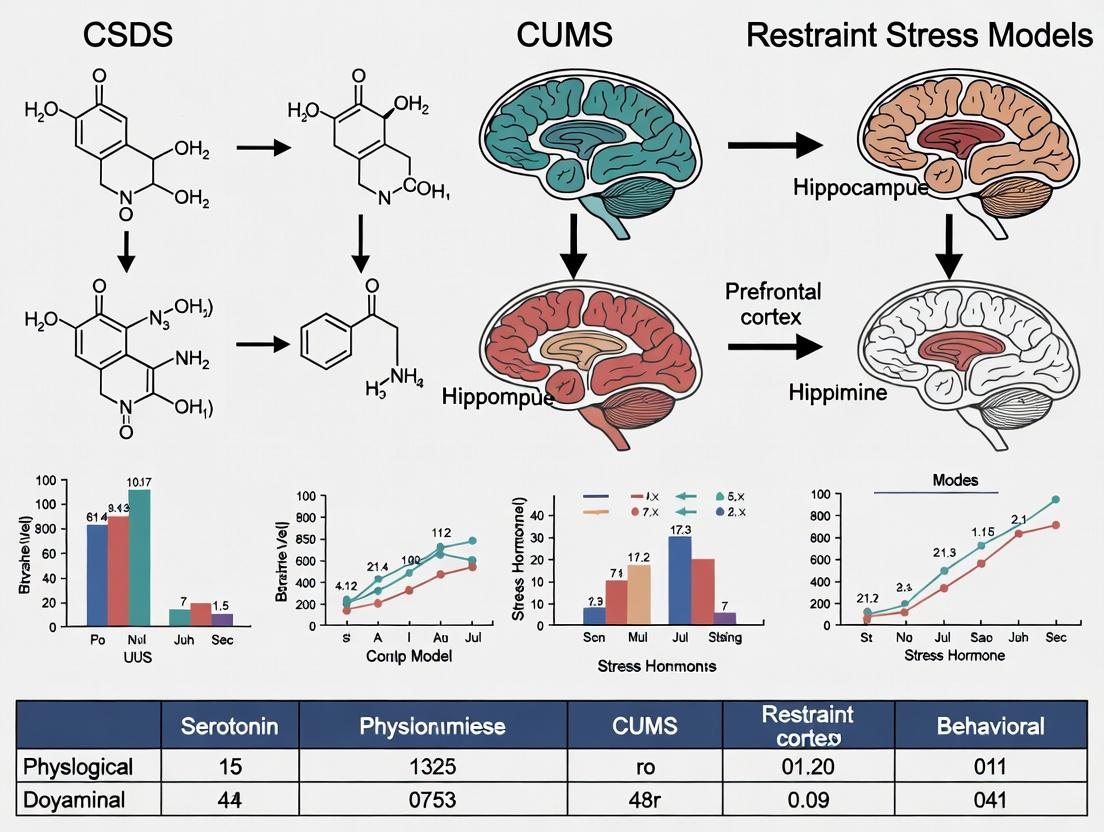
This comprehensive guide provides researchers and drug development professionals with a critical comparison of three predominant preclinical chronic stress models: Chronic Social Defeat Stress (CSDS), Chronic Unpredictable Mild Stress (CUMS),...
Chronic Stress Models Decoded: A Comparative Analysis of CSDS, CUMS, and Restraint Stress for Preclinical Research
Abstract
This comprehensive guide provides researchers and drug development professionals with a critical comparison of three predominant preclinical chronic stress models: Chronic Social Defeat Stress (CSDS), Chronic Unpredictable Mild Stress (CUMS), and Chronic Restraint Stress. The article explores the foundational principles, distinct etiologies, and neurobiological correlates of each model, providing a framework for model selection. It details standardized protocols, discusses common methodological pitfalls and optimization strategies, and evaluates the translational validity of each model against specific human depression endophenotypes. The aim is to empower researchers to choose the most appropriate model based on their specific research question, from probing social aversion to evaluating anhedonia or somatic anxiety, thereby enhancing the predictive validity of preclinical antidepressant discovery and neuropsychiatric research.
Understanding Chronic Stress Models: Core Principles and Phenotypes of CSDS, CUMS, and Restraint
Within preclinical psychiatric and stress physiology research, three paradigms are foundational for modeling depression and anxiety disorders: Chronic Social Defeat Stress (CSDS), Chronic Unpredictable Mild Stress (CUMS), and Restraint Stress. This guide provides an objective comparison of their etiological foundations, behavioral outputs, and neurobiological correlates, framing them as distinct "tools" for specific research questions within drug development.
Etiological & Methodological Comparison
Table 1: Core Paradigm Definitions and Protocols
| Feature | Chronic Social Defeat Stress (CSDS) | Chronic Unpredictable Mild Stress (CUMS) | Restraint Stress |
|---|---|---|---|
| Primary Etiology | Psychosocial stress (dominance, territoriality). | Environmental stress (loss of predictability/control). | Physical stress (acute immobilization, panic). |
| Key Species | Male mice (intraspecific aggression); adaptations for rats, females. | Mice, Rats. | Mice, Rats. |
| Standard Protocol | 10 consecutive days. Intruder mouse is physically defeated (5-10 min) by a larger, aggressive resident, then housed in sensory contact for 24h. | 4-8 weeks. Daily application of 2-3 mild, unpredictable stressors (e.g., cage tilt, damp bedding, strobe light, white noise, food/water deprivation). | Acute: 15 min to 2 hours. Chronic: 2-6 hours daily for 10-14 days. Animal is confined in a well-ventilated tube or bag. |
| Construct Validity | High for social anxiety, anhedonia, social avoidance. Models psychosocial triggers. | High for anhedonia (core depression symptom). Models generalized environmental adversity. | High for acute anxiety, HPA axis hyperactivity, autonomic response. |
| Face Validity | Good: Social avoidance, anhedonia, weight change, circadian disruption. | Good: Anhedonia (sucrose preference), decreased grooming, behavioral despair. | Good: Acute anxiety behaviors, increased physiological markers (corticosterone, heart rate). |
| Predictive Validity | Responsive to chronic, not acute, antidepressant administration. | Responsive to chronic antidepressant administration. | Often used to screen for acute anxiolytic effects. |
| Key Readouts | Social interaction test, sucrose preference, open field, forced swim test. | Sucrose preference test, coat state, open field, novelty-suppressed feeding. | Plasma corticosterone (CORT), amygdala activation (c-Fos), anxiety tests post-restraint. |
Table 2: Neurobiological & Molecular Correlates (Comparative Data Summary)
| Outcome Measure | CSDS (Susceptible Mice) | CUMS (Responders) | Chronic Restraint Stress |
|---|---|---|---|
| Plasma CORT | ↑ (acute defeat), may normalize chronically. | ↑ Variably reported, often dysregulated rhythm. | ↑↑ (Sharply elevated post-session). |
| BDNF (Hippocampus) | ↓ in ventral hippocampus. | ↓ Consistently reported. | ↓ |
| Neurogenesis | ↓ Hippocampal neurogenesis. | ↓ Hippocampal neurogenesis. | ↓ Hippocampal neurogenesis. |
| DA in NAc | ↓ Dopamine release/activity in Nucleus Accumbens. | ↓ Dopamine and serotonin turnover. | Variable; acute stress can increase DA. |
| Inflammation | ↑ Pro-inflammatory cytokines (IL-6) in periphery & brain. | ↑ Mild neuroinflammation. | ↑ Peripheral and central inflammation. |
| Key Brain Region | Ventral Tegmental Area (VTA), NAc, Prefrontal Cortex (PFC). | Hippocampus, PFC. | Amygdala, Hypothalamus, Paraventricular Nucleus (PVN). |
Experimental Protocols in Detail
Protocol A: Chronic Social Defeat Stress (CSDS)
- Aggressor Selection: Screen large, aggressive CD-1 mice for consistent attack latency (<30 sec) over 3 sessions.
- Defeat Phase: Introduce experimental C57BL/6J mouse into resident aggressor's home cage for 10 minutes of physical interaction (separated before injury).
- Sensory Contact: Place defeated mouse in a perforated divider within the aggressor's cage for 24h, preventing physical but allowing sensory contact.
- Cycle: Repeat with a novel aggressor for 10 consecutive days.
- Post-Test: 24h after last defeat, perform Social Interaction Test in a novel arena with a novel CD-1 behind a perforated enclosure. Mice with an interaction ratio (time in interaction zone with target present/absent) <1.0 are classified as "susceptible."
Protocol B: Chronic Unpredictable Mild Stress (CUMS)
- Sucrose Habituation: Train animals to consume 1-2% sucrose solution for 48h.
- Baseline Test: Perform sucrose preference test (SPT): offer two pre-weighed bottles (water, sucrose) for 24h. Preference = sucrose intake / total fluid intake.
- Stress Regimen: Apply 2-3 different mild stressors daily in an unpredictable sequence and timing for 4-8 weeks. Example stressors: cage tilt (45°, 12h), wet bedding (12h), white noise (85 dB, 4h), strobe light (12h), food/water deprivation (12h), paired housing (social stress).
- Monitoring: Weekly SPT and coat state scoring. Animals showing a sustained >20% decrease from baseline sucrose preference are considered responsive.
Protocol C: Acute Restraint Stress
- Apparatus Preparation: Use a well-ventilated, adjustable plastic or acrylic restraint tube, sized to the animal to prevent turning but not cause pain.
- Restraint: Gently place the mouse or rat into the apparatus and secure it. Perform during the animal's inactive phase (e.g., early light cycle) for standardization.
- Duration: Typically 30-120 minutes.
- Termination & Sampling: Immediately after release, rapidly anesthetize and collect trunk blood for plasma corticosterone ELISA (peak at ~30 min post-onset). Perfuse for immunohistochemistry (e.g., c-Fos in PVN, amygdala).
Visualizing Key Signaling Pathways
Diagram 1: Core Stress Response Pathways Across Models
Diagram 2: Experimental Workflow for Model Selection
The Scientist's Toolkit: Key Research Reagent Solutions
Table 3: Essential Reagents and Materials
| Item | Function & Application | Example/Notes |
|---|---|---|
| Sucrose Solution (1-2%) | Core reagent for Sucrose Preference Test (CUMS, CSDS). Measures anhedonia as a reduction in preference for sweet solution over water. | Must be prepared fresh. Use two-bottle, pre-weighed design to control for side preference. |
| Restraint Tubes/Bags | Physical restraint apparatus for immobilization stress. Must be well-ventilated and appropriately sized. | Commercial acrylic tubes with adjustable ends; Decapicone bags for rats. |
| CD-1 Aggressor Mice | Essential for CSDS. Outbred, older, larger males selected for consistent aggressive behavior. | Must be pre-screened. Housed singly for >2 weeks prior to defeat sessions. |
| Corticosterone ELISA Kit | Quantitative measurement of primary stress hormone in plasma/serum post-restraint or at sacrifice. | Highly sensitive kits (e.g., from Arbor Assays, Enzo). Critical for HPA axis assessment. |
| c-Fos Antibody (IHC) | Marker of neuronal activation. Used to map brain region activity (e.g., PVN, amygdala) after acute restraint. | Validated primary antibodies (e.g., Synaptic Systems, Cell Signaling). |
| Social Interaction Arena | Specialized open field with a target interaction zone and a perforated enclosure for social target (CD-1). | Can be custom-built. Video tracking software (EthoVision, ANY-maze) essential for analysis. |
| BDNF ELISA Kit | Quantifies Brain-Derived Neurotrophic Factor levels in hippocampal or PFC tissue lysates (post-CUMS/CSDS). | Measures a key molecular correlate of depression models and antidepressant action. |
| Wireless Telemetry System | For continuous, undisturbed measurement of heart rate, body temperature, and activity during/after stress. | (e.g., DSI, Starr Life Sciences). Provides high-quality physiological data. |
Comparative Analysis of Major Chronic Stress Models
This guide compares three predominant preclinical models used to induce and study depression-like behavioral endpoints: Chronic Social Defeat Stress (CSDS), Chronic Unpredictable Mild Stress (CUMS), and Chronic Restraint Stress (CRS). These models are evaluated based on their efficacy in producing key behavioral phenotypes relevant to depressive disorders.
Key Behavioral Endpoints and Model Efficacy
Table 1: Core Behavioral Endpoints and Primary Inducing Models
| Behavioral Endpoint | CSDS Efficacy | CUMS Efficacy | CRS Efficacy | Typical Assessment Test |
|---|---|---|---|---|
| Social Avoidance | High (Primary) | Moderate | Low | Social Interaction Test |
| Anhedonia | High | High (Primary) | Moderate | Sucrose Preference Test |
| Learned Helplessness | Moderate | High | High (Primary) | Forced Swim Test, Tail Suspension Test |
| Anxiety-like Behavior | High | High | High | Elevated Plus Maze, Open Field |
| Weight/Body Change | Low | Moderate | High | Body Weight Tracking |
Table 2: Quantitative Behavioral Outcomes (Representative Meta-Analysis Data)
| Model & Protocol | Sucrose Preference Reduction | Social Interaction Ratio Decrease | Immobility Time Increase (FST) | Latency to Feed Increase (NSFT) |
|---|---|---|---|---|
| CSDS (10-day aggressor) | 35-50% | 40-70% | 25-40% | 50-100% |
| CUMS (4-6 week variant) | 40-60% | 20-35% | 30-50% | 40-80% |
| CRS (2-6 hr/day, 14-day) | 20-30% | 10-20% | 40-60% | 30-60% |
Data synthesized from recent comparative studies (2020-2024). Percentages indicate approximate mean change vs. control groups. FST = Forced Swim Test; NSFT = Novelty Suppressed Feeding Test.
Detailed Experimental Protocols
1. Chronic Social Defeat Stress (CSDS) Protocol
- Subjects: Experimental male C57BL/6J mice; resident aggressors are larger, older CD-1 mice.
- Housing: Aggressors are singly housed. Experimental mice are group-housed pre-stress.
- Procedure: For 10 consecutive days, each experimental mouse is placed in the home cage of a novel aggressor for 10 minutes of direct physical contact. Following this, it is housed in a divided cage with the aggressor remaining for 24 hours, preventing physical but allowing sensory contact. Control mice are housed in pairs.
- Key Endpoint Assessments (24h post-stress):
- Social Interaction Test: Mouse placed in arena with a novel CD-1 in an enclosed wire cage. Time spent in the "interaction zone" vs. an equivalent "corner zone" is quantified. A social interaction ratio <1.0 defines "susceptible" phenotype.
- Sucrose Preference Test: 48-hour two-bottle choice (water vs. 1-2% sucrose) after habituation.
2. Chronic Unpredictable Mild Stress (CUMS) Protocol
- Subjects: Typically rats (Sprague-Dawley) or mice (C57BL/6).
- Principle: Daily exposure to 1-3 unpredictable, mild stressors over 4-8 weeks to prevent habituation.
- Stressors: Include cage tilt (45°), damp bedding, paired housing, stroboscopic lighting, white noise, food/water deprivation (short), cold swim, tail nip.
- Key Endpoint Assessment:
- Sucrose Preference Test: Conducted weekly. A progressive decline (>30% from baseline) indicates anhedonia.
- Forced Swim Test (FST): Performed at endpoint; increased immobility time indicates behavioral despair.
3. Chronic Restraint Stress (CRS) Protocol
- Subjects: Rats or mice.
- Procedure: Animal is placed in a well-ventilated, adjustable restraining device for 2-6 hours per day, typically during the light cycle, for 10-21 consecutive days.
- Key Endpoint Assessments:
- Learned Helplessness Paradigms: FST or Tail Suspension Test (TST) 24h after final restraint.
- Anxiety Tests: Elevated Plus Maze or Open Field Test post-stress.
- Physiological Measures: Adrenal gland weight (increased), thymus weight (decreased), corticosterone levels.
Signaling Pathways in Stress-Induced Behavioral Endpoints
Title: Molecular Pathways from Chronic Stress to Behavioral Endpoints
Experimental Workflow for Model Comparison
Title: Comparative Stress Model Research Workflow
The Scientist's Toolkit: Key Research Reagent Solutions
Table 3: Essential Reagents and Tools for Stress Model Research
| Item | Function & Application | Example Vendor/Product |
|---|---|---|
| Automated Behavioral Tracking Software | Objective, high-throughput analysis of social interaction, open field, FST, TST. Eliminates observer bias. | Noldus EthoVision XT, ANY-maze, Biobserve Viewer. |
| Sucrose Preference Test Kits | Standardized setup for two-bottle choice testing, including specialized drinking bottles and cages. | Stanford Chop, TSE Systems IntelliDrink. |
| Corticosterone ELISA Kits | Quantification of serum, plasma, or salivary corticosterone levels as a primary HPA axis readout. | Arbor Assays, Enzo Life Sciences, Cayman Chemical. |
| Restraint Devices (Adjustable) | Non-painful immobilization for CRS. Sized for mice or rats, with ventilation. | Braintree Scientific, Harvard Apparatus. |
| Social Defeat Enclosures | Specialized cage systems with removable dividers for the CSDS protocol. | Custom designs, often in-house built to specifications. |
| BDNF & Phospho-antibodies | Western Blot/IHC analysis of BDNF, TrkB, pCREB, and related signaling in brain tissue lysates. | Cell Signaling Technology, Abcam, MilliporeSigma. |
| C-Fos IHC Antibodies | Marker for neuronal activation in brain regions (PFC, NAc, VTA, Hippocampus) post-stress or test. | Santa Cruz Biotechnology, Synaptic Systems. |
| RT-qPCR Assays | Quantification of inflammatory (Il-6, Tnf-α, Il-1β) and neuroplasticity (Bdnf, Arc) gene expression. | Qiagen, Thermo Fisher Scientific (TaqMan). |
| Chronic Implantable Minipumps | For sustained subcutaneous delivery of drugs (e.g., antidepressants, CRF antagonists) during stress. | Alzet Osmotic Pumps. |
| High-Sensitivity Neurotransmitter Assays | Measure dopamine, serotonin, and metabolites (HPLC, LC-MS) in microdissected brain regions. | Thermo Fisher, Eagle Biosciences. |
This comparison guide objectively evaluates three predominant rodent models of depression—Chronic Social Defeat Stress (CSDS), Chronic Unpredictable Mild Stress (CUMS), and Repeated Restraint Stress—within the context of neurobiological thesis research. Focus is placed on their performance in replicating core depression-related pathologies.
Comparative Neurobiological Profiling Across Stress Models
Table 1: HPA Axis Dysregulation Outcomes
| Model | Plasma CORT (Post-Acute) | Plasma CORT (Post-Chronic) | Adrenal Gland Weight | GR mRNA in Hippocampus | Dexamethasone Suppression Test |
|---|---|---|---|---|---|
| CSDS | ↑↑↑ (Sustained) | ↑↑ (Habituation in some) | ↑↑ | ↓↓ | Non-suppression (Robust) |
| CUMS | Variable (↑ per stressor) | ↑ or → (HPA exhaustion) | ↑ | ↓ | Frequent Non-suppression |
| Restraint | ↑↑↑ (Peak) | ↑ (Tachyphylaxis) | ↑ | ↓ | Partial Suppression |
Table 2: Neuroinflammatory & Neuroplasticity Markers in Prefrontal Cortex & Hippocampus
| Model | Pro-inflammatory Cytokines (e.g., IL-1β, IL-6) | Microglial Activation (Iba1, CD68) | BDNF (mRNA/Protein) | Dendritic Complexity | Neurogenesis (DCX+) |
|---|---|---|---|---|---|
| CSDS | ↑↑ (PFC), ↑ (Hippo) | ↑↑ (Primed morphology) | ↓↓ (PFC), ↓ (Hippo) | ↓↓ (PFC Spine Density) | ↓↓ |
| CUMS | ↑ (PFC & Hippo) | ↑ (Variable) | ↓↓ (Hippo) | ↓ (Hippo CA3) | ↓↓ |
| Restraint | → or Slight ↑ | → or Mild ↑ | ↓ (Hippo) | ↓ (Hippo CA3 apical) | ↓ |
Detailed Experimental Protocols
1. Chronic Social Defeat Stress (CSDS) Protocol
- Subjects: Adult male C57BL/6J mice (intruder) and larger, aggressive CD-1 mice (resident).
- Procedure: For 10 consecutive days, an intruder mouse is placed in the home cage of a novel, aggressive resident for 10 minutes of direct physical contact, followed by 24 hours of sensory contact in a divided cage.
- Key Readouts: Social avoidance test (interaction with a novel CD-1 vs. an empty cup), sucrose preference, plasma CORT ELISA, immunohistochemistry for microglia and DCX, qPCR for cytokines and BDNF.
2. Chronic Unpredictable Mild Stress (CUMS) Protocol
- Subjects: Typically, adult male Sprague-Dawley rats or C57BL/6J mice.
- Procedure: Animals are exposed to 2-3 different, unpredictable mild stressors per day (e.g., damp bedding, cage tilt, white noise, food/water deprivation, stroboscopic lighting) for 4-8 weeks. The sequence is randomized.
- Key Readouts: Sucrose preference test (anhedonia), open field test, forced swim test, corticosterone radioimmunoassay, Western blot for hippocampal BDNF and GR.
3. Repeated Restraint Stress Protocol
- Subjects: Rats or mice.
- Procedure: Animals are placed in well-ventilated, adjustable restraint tubes for 2-6 hours per day, at the same time each day, for 7-21 consecutive days.
- Key Readouts: Plasma CORT at baseline and post-restraint, adrenal and thymus weight, CRH in situ hybridization in PVN, Golgi-Cox staining for hippocampal dendritic arborization.
Visualization of Core Signaling Pathways & Experimental Workflow
Title: Integrative Pathway from Stress to Depression-like Phenotype
Title: Experimental Workflow for Cross-Model Comparison
The Scientist's Toolkit: Key Research Reagent Solutions
Table 3: Essential Reagents for Investigating Stress Model Correlates
| Item/Category | Function & Application | Example Targets/Assays |
|---|---|---|
| CORT ELISA/RIA Kits | Quantify HPA axis endpoint hormone in plasma/serum. | Post-stress CORT dynamics; DST validation. |
| GR & MR Antibodies | Detect receptor expression/localization via IHC/Western. | Hippocampal GR downregulation; nuclear translocation. |
| Pro-inflammatory Cytokine Panels | Multiplex ELISA or Luminex for cytokine profiling. | IL-1β, IL-6, TNF-α in brain homogenate or plasma. |
| Microglia Markers (Iba1, CD11b, CD68) | Identify and phenotype microglia via IHC/flow cytometry. | Activation state, morphological analysis. |
| BDNF ELISA & Antibodies | Measure central BDNF protein levels or precursor processing. | Hippocampal and cortical BDNF deficit quantification. |
| DCX & Ki67 Antibodies | Label newborn neurons and proliferating cells. | Adult hippocampal neurogenesis assessment. |
| RNA Isolation Kits (Brain Tissue) | High-quality RNA extraction for transcriptomics/qPCR. | GR, BDNF, cytokine mRNA expression analysis. |
| Golgi-Cox Staining Kits | Visualize neuronal dendritic arbors and spines. | Dendritic complexity and spine density analysis. |
Comparative Guide: Chronic Stress Rodent Models for Depression Research
This guide provides an objective comparison of three prevalent rodent stress models used to study depression pathophysiology and treatment. The comparative data is contextualized within the thesis of aligning model-specific ethological stressors with distinct symptom domains observed in human depression subtypes.
Table 1: Core Model Characteristics, Behavioral Outputs & Human Depression Correlates
| Feature | Chronic Social Defeat Stress (CSDS) | Chronic Unpredictable Mild Stress (CUMS) | Chronic Restraint Stress (CRS) |
|---|---|---|---|
| Primary Stressor | Agonistic interactions (physical/psychological defeat). | Unpredictable, mild physical/environmental stimuli (e.g., cage tilt, damp bedding). | Physical immobilization in a restraint device. |
| Key Behavioral Phenotype | Social avoidance, anhedonia, anxiety. | Anhedonia (core feature), anxiety, learned helplessness. | Anxiety-like behavior, hypothalamic-pituitary-adrenal (HPA) axis dysregulation. |
| Proposed Human Depression Subtype Correlation | Social anxiety/withdrawal, atypical depression with interpersonal sensitivity. | Melancholic/major depressive disorder with core anhedonia. | Anxious distress subtype, panic symptoms. |
| Neurotrophic Factor Impact | ↓ BDNF in ventral tegmental area (VTA) & hippocampus. | ↓ BDNF in hippocampus (robust finding). | ↓ BDNF in hippocampus, ↑ in amygdala. |
| HPA Axis Response | Sustained activation, then possible habituation. | Sustained hyperactivity. | Robust and sustained hyperactivity. |
| Typical Duration | 10 days of direct confrontation. | 4-8 weeks of variable stressors. | 2-6 hours daily for 10-21 days. |
| Pharmacological Predictive Validity | Responsive to chronic, not acute, SSRIs; ketamine efficacy. | Reversed by chronic SSRIs/TCAs. | Reversed by anxiolytics and some antidepressants. |
Table 2: Quantitative Molecular & Neuroendocrine Outcomes
| Measured Outcome | CSDS (Susceptible Mice) | CUMS (Rat/Mouse) | CRS (Rat) | Assay Method |
|---|---|---|---|---|
| Sucrose Preference (%) | ~50-60% (vs. ~80% control) | ~40-50% (vs. ~75% control) | ~65-70% (less robust) | Two-bottle choice test. |
| Social Interaction Ratio | ~0.5-0.7 (vs. ~1.2 control) | ~0.8-1.0 (less robust) | ~0.9-1.1 (not primary) | Time in interaction zone with/without target. |
| Plasma CORT (ng/mL) | ~150-200 (acute peak) | ~200-300 (sustained) | ~300-400 (post-restraint) | ELISA / RIA. |
| Hippocampal BDNF (pg/mg protein) | ↓ ~30% | ↓ ~40-50% | ↓ ~25-35% | ELISA. |
| c-Fos+ Cells in PFC (BLA) | ↑ in amygdala (BLA) | ↑ in PFC & hypothalamus | ↑ in PVN & amygdala | Immunohistochemistry. |
Detailed Experimental Protocols
Protocol 1: Chronic Social Defeat Stress (CSDS)
- Subjects: Adult male C57BL/6J mice (intruders) and larger, aggressive CD-1 mice (residents).
- Procedure: For 10 consecutive days, each intruder is placed in the home cage of a novel resident CD-1 mouse for 10 minutes of direct physical confrontation, followed by 24-hour sensory contact through a perforated divider.
- Outcome Assessment: 24 hours post-stress, social avoidance is quantified in a social interaction test, classifying mice as "susceptible" (avoidance) or "resilient."
Protocol 2: Chronic Unpredictable Mild Stress (CUMS)
- Subjects: Rats or mice, singly housed.
- Procedure: Over 4-8 weeks, animals are exposed to 2-3 different mild stressors per day in an unpredictable sequence (e.g., stroboscopic lighting, cage tilt, white noise, damp bedding, period of food/water deprivation, isolation/grouping).
- Outcome Assessment: Anhedonia is measured weekly via sucrose preference test (1-2% sucrose vs. water). A consistent decrease (>20%) indicates model validity.
Protocol 3: Chronic Restraint Stress
- Subjects: Rats (typically) or mice.
- Procedure: Animals are placed in well-ventilated, body-sized restraint tubes for 2-6 hours daily, during the light cycle, for 10-21 consecutive days.
- Outcome Assessment: Anxiety-like behavior is measured 24h post-final session using elevated plus maze or open field test. Weight change and adrenal size are common physiological endpoints.
Pathway & Workflow Visualizations
Title: CSDS Neural Pathway to Social Avoidance
Title: Translational Research Workflow for Stress Models
Title: HPA Axis Dysregulation in Stress Models
The Scientist's Toolkit: Key Research Reagent Solutions
| Item | Function in Stress Model Research |
|---|---|
| Sucrose Solution (1-2%) | Primary reagent for the sucrose preference test to quantify anhedonia, a core symptom in CUMS and CSDS. |
| Corticosterone ELISA Kit | Quantifies plasma, serum, or brain corticosterone levels to assess HPA axis hyperactivity. |
| BDNF ELISA Kit | Measures Brain-Derived Neurotrophic Factor levels in brain homogenates (hippocampus, PFC, VTA) to assess neuroplasticity deficits. |
| c-Fos Antibody | Immunohistochemistry marker for neuronal activity mapping in regions like PVN, amygdala, and PFC post-stress. |
| Social Test Arena & Software | Apparatus with defined interaction zones and video tracking software (e.g., EthoVision) for automated analysis of social interaction. |
| Well-Ventilated Restrainers | Adjustable rodent restrainers (tube or decapicone style) for CRS, minimizing discomfort while ensuring immobilization. |
| Elevated Plus Maze | Standardized apparatus (open vs. closed arms) to assess anxiety-like behavior, a key readout for CRS and others. |
| Selective Serotonin Reuptake Inhibitor (e.g., Fluoxetine) | Gold-standard antidepressant control administered chronically via drinking water or injection to validate reversal of behavioral deficits. |
Evolution and Historical Context of Each Model in Depression Research
Historical Development and Conceptual Evolution
Chronic Social Defeat Stress (CSDS): Introduced in the late 1990s and refined in the 2000s, the CSDS model was developed to recapitulate the psychological and physiological consequences of chronic psychosocial stress, a major risk factor for human depression. It models ethologically relevant stressors (social subordination, aggression) and is highly valued for its strong face (behavioral despair, social avoidance, anhedonia) and predictive validity for antidepressant response, particularly for SSRIs and ketamine. It has evolved to include variations like vicarious social defeat.
Chronic Unpredictable Mild Stress (CUMS): Originating in the 1980s (Katz et al., 1981; Willner et al., 1987), the CUMS paradigm was developed to overcome limitations of acute stress models. Its core principle is the long-term application of varied, unpredictable, low-intensity stressors to induce a gradual, persistent anhedonic state, mirroring core depressive symptomatology. It has high construct validity for modeling chronic stress-induced anhedonia and has been widely used for screening tricyclic antidepressants and SSRIs.
Restraint Stress Model: This is one of the oldest and most widely used physical stress models, with roots in mid-20th-century stress physiology research. It involves physically confining an animal in a well-ventilated tube for acute (minutes/hours) or chronic (repeated daily sessions) periods. It primarily models the physiological stress response (HPA axis hyperactivity) and learned helplessness-like behavior. Its simplicity and reliability for inducing a robust neuroendocrine stress response are its key advantages.
Comparative Analysis of Model Performance and Experimental Data
Table 1: Core Characteristics and Validity Comparison
| Feature | CSDS | CUMS | Restraint Stress |
|---|---|---|---|
| Primary Stressor Type | Psychosocial (physical threat, social defeat) | Mixed mild physical/psychological (unpredictable) | Physical (confinement) |
| Key Behavioral Readouts | Social avoidance, sucrose preference, forced swim test | Sucrose preference (anhedonia), behavioral despair | Elevated plus maze, forced swim test, HPA axis markers |
| Face Validity | High (social withdrawal, anhedonia) | High (anhedonia, decreased reactivity) | Moderate (anxiety, helplessness) |
| Construct Validity | High for social stress etiology | High for chronic mild stress etiology | High for acute/physical stress response |
| Predictive Validity | High for SSRIs, ketamine; resistant to some TCAs | Moderate for SSRIs & TCAs; often requires chronic AD treatment | Variable; good for acute anxiolytic/AD effects |
| Time to Phenotype | ~10 days | 3-6 weeks | Acute: hours; Chronic: 10-21 days |
| Inter-Lab Variability | Moderate (depends on aggressor mouse) | High (sensitivity to protocol details) | Low (highly standardized) |
Table 2: Representative Experimental Data from Recent Studies (2019-2024)
| Model | Key Finding | Antidepressant Tested (Effect) | Molecular Correlate |
|---|---|---|---|
| CSDS | ~40-50% of C57BL/6J mice show susceptible phenotype (social avoidance). | Ketamine (Rapid reversal in susceptible mice) | Increased BDNF in PFC, reduced mTOR signaling in NAc. |
| CUMS | Sucrose preference drops from ~75% to ~45% after 4 weeks. | Fluoxetine (Restores preference after 3-4 wks of treatment) | Decreased hippocampal neurogenesis, increased cortisol. |
| Restraint | Plasma CORT increases 5-10 fold post-acute (2hr) session. | Imipramine (Reduces behavioral despair in FST post-chronic restraint) | Increased CRF in hypothalamus, c-Fos in PVN. |
Detailed Experimental Protocols
CSDS Protocol (10-day standard):
- Subjects: Adult male C57BL/6J mice (intruder) and larger, aggressive CD-1 mice (resident).
- Housing: CD-1 residents are singly housed. C57BL/6J are group-housed.
- Defeat Phase: For 10 consecutive days, each intruder is placed into a resident CD-1's home cage for 10 minutes of physical confrontation.
- Sensory Contact: Following defeat, intruders are housed in a perforated divider-separated side of the resident's cage for 24 hours, maintaining sensory contact.
- Rotation: Intruders are paired with a new resident daily to prevent habituation.
- Behavioral Testing: 24h after last defeat, perform Social Interaction Test: The intruder is placed in an arena with a novel CD-1 (target) enclosed in a wire cage. Time spent in the "interaction zone" with/without target is quantified. Susceptible mice show significant avoidance with target present.
- Secondary Tests: Sucrose preference test and forced swim test are commonly performed.
CUMS Protocol (4-6 week standard):
- Subjects: Typically rats or mice, singly housed.
- Principle: Apply 2-3 different mild stressors per day in an unpredictable sequence over 4-6 weeks.
- Stressor Examples: Cage tilt (45°, 12h), damp bedding (8h), white noise (1h), paired housing (with different cage-mate), food/water deprivation (12h), cold swim (5 min, 10°C), stroboscopic lighting (6h).
- Key Readout – Sucrose Preference Test (Weekly): a. Habituate animals to 1% sucrose solution for 48h. b. Deprive water for 12h. c. Present two pre-weighed bottles: one with 1% sucrose, one with water, for 1-2h. d. Calculate preference: [Sucrose intake/(Sucrose + Water intake)] * 100%.
- Anhedonia Criterion: A sustained reduction of sucrose preference by 20-30% vs control group indicates successful model induction.
Restraint Stress Protocol (Acute/Chronic):
- Apparatus: A well-ventilated, adjustable rodent restrainer (tube or cone).
- Acute Protocol: Place rodent in restrainer for a single session (30 min to 2 hours). Release back to home cage and euthanize after a specific time point (e.g., 0, 30, 90 min) for tissue collection (blood for CORT, brain regions).
- Chronic Protocol: Restrain animal daily (e.g., 2 hours/day) for 10-21 consecutive days. Behavioral tests (FST, EPM) are conducted 24h after the last restraint session.
- Control: Home cage control animals are left undisturbed.
Visualizations
Diagram Title: CSDS Experimental Workflow (10-Day)
Diagram Title: CUMS & Sucrose Preference Test Flow
Diagram Title: Common Stress-Induced Neurobiological Pathways
The Scientist's Toolkit: Key Research Reagent Solutions
| Reagent/Material | Primary Function in Model Research |
|---|---|
| Sucrose Solution (1-2%) | Critical for quantifying anhedonia via the Sucrose Preference Test (CUMS, CSDS). |
| Adjustable Rodent Restrainers | Essential for the restraint stress model; provides consistent physical confinement. |
| Social Interaction Arena | A three-chamber or open-field apparatus with a perforated enclosure to assess social avoidance in CSDS. |
| Enzyme Immunoassay (EIA) / ELISA Kits (CORT, ACTH) | Quantifies plasma/serum corticosterone (CORT) and ACTH levels as biomarkers of HPA axis activation across all models. |
| BDNF ELISA Kits | Measures brain-derived neurotrophic factor levels in brain homogenates (PFC, hippocampus) to assess neuroplasticity changes. |
| c-Fos Antibodies (IHC/IF) | Marker for neuronal activation; used to map brain region activity (e.g., PVN, amygdala) post-stress. |
| High-Throughput Video Tracking Software (e.g., EthoVision, ANY-maze) | Automates and standardizes behavioral analysis (social interaction, open field, FST). |
| Selective Serotonin Reuptake Inhibitors (e.g., Fluoxetine, Sertraline) | Gold-standard pharmacological positive control for testing predictive validity in chronic models (CUMS, CSDS). |
| Ketamine Hydrochloride | Fast-acting antidepressant control, particularly for reversal of CSDS-induced susceptibility. |
| CRF/CRH Receptor Antagonists | Pharmacological tools to dissect the role of the HPA axis in stress response across models. |
Protocols in Practice: Step-by-Step Implementation of CSDS, CUMS, and Restraint Stress
Publish Comparison Guide: CSDS vs. CUMS vs. Restraint Stress
This guide objectively compares the performance of three primary preclinical stress models: Chronic Social Defeat Stress (CSDS), Chronic Unpredictable Mild Stress (CUMS), and Acute/Chronic Restraint Stress. The comparison is framed within a broader thesis on modeling depression and anxiety disorders for therapeutic development.
Comparative Efficacy in Modeling Depression Endophenotypes
| Behavioral & Physiological Endpoint | CSDS Protocol | CUMS Protocol | Restraint Stress Protocol |
|---|---|---|---|
| Anhedonia (Sucrose Preference) | Strong, sustained decrease (>40% reduction). Highly reproducible in "defeated" subgroup. | Moderate, variable decrease (20-35% reduction). Highly dependent on strain and stimulus scheduling. | Mild to moderate decrease (15-30% reduction). Often transient after acute restraint. |
| Social Avoidance | Primary readout. Defeated mice show >150s reduction in interaction time with social target. | Mild, inconsistent. Not a core feature of the model. | Not typically observed. May induce general anxiety. |
| Anxiety-like Behaviors (EPM, OF) | Significant increase in defeated mice (e.g., ~70% reduction in open arm time in EPM). | Moderate increase. Can be confounded by weight loss and malaise. | Significant increase post-acute session (~50% reduction in open arm time). |
| Physiological Changes (Corticosterone) | Sustained elevation post-defeat, followed by dysregulated HPA axis response. | Chronically elevated, but can habituate. Highly variable. | Sharp peak post-restraint; chronic protocol leads to sustained elevation. |
| Face Validity to Human Depression | High (social stress, avoidance, anhedonia). | Moderate (multiple life hassles, anhedonia). | Low (primarily models acute stress/anxiety response). |
| Susceptibility/Resilience Split | Yes. ~40-60% show susceptible phenotype, allowing for resilience studies. | No. Population typically responds homogenously. | No. Generally induces a uniform response. |
| Typical Protocol Duration | 10 days of physical defeat + sensory contact. | 4-8 weeks of variable mild stressors. | 2 hrs/day for 7-14 days for chronic model. |
Experimental Protocols in Detail
1. Chronic Social Defeat Stress (CSDS) Protocol
- Resident-Intruder Setup: Aggressive, screened CD-1 male mice are singly housed as "residents" in large, divided cages for at least one week prior to defeat.
- Defeat Sessions: A young C57BL/6J "intruder" mouse is introduced into the resident CD-1's territory for 10 minutes of direct physical confrontation. The session is terminated if violent injury is imminent. The intruder is then placed into a protective, perforated plexiglass divider within the same cage for the remainder of the 24-hour period.
- Sensory Contact Phase: This 24-hour co-habitation (with sensory but no physical contact) is a critical component, inducing psychological stress. This cycle repeats for 10 consecutive days with a novel, aggressive CD-1 resident each day.
- Key Test: Social Interaction Test: Conducted 24-48 hrs after last defeat. The test mouse is placed in an arena with an empty wire cage (Target "No") for 2.5 min, followed by 2.5 min with an unfamiliar CD-1 mouse inside the cage (Target "Yes"). An interaction ratio (Time near Target Yes / Time near Target No) < 1.0 defines a "susceptible" mouse.
2. Chronic Unpredictable Mild Stress (CUMS) Protocol
- Methodology: Mice are exposed to 1-2 different mild stressors per day for 4-8 weeks in an unpredictable sequence. Stressors include cage tilt, damp bedding, paired housing, stroboscopic lighting, white noise, and overnight illumination.
- Key Test: Sucrose Preference Test (SPT): Conducted weekly. Mice are given free choice between two bottles (1% sucrose solution vs. water) for 24 hrs after a training period. Anhedonia is defined as a significant reduction in sucrose preference (<65%) compared to unstressed controls.
3. Chronic Restraint Stress Protocol
- Methodology: Mice are placed in well-ventilated, cylindrical plastic or wire mesh restrainers for 2-6 hours per day, typically during their light cycle, for 1-2 weeks. Movement is severely restricted, but pain and injury are avoided.
- Key Tests: Elevated Plus Maze (EPM) or Open Field Test (OFT): Conducted shortly after the final restraint session to assess anxiety-like behavior. Weight change and adrenal weight are common physiological measures.
Signaling Pathways in Stress Response Models
Title: Neuroendocrine and Molecular Signaling in Stress Models
CSDS Experimental Workflow
Title: CSDS Experimental Workflow Overview
The Scientist's Toolkit: Key Research Reagent Solutions
| Item / Reagent | Function in Experiment |
|---|---|
| C57BL/6J Male Mice | Standard "intruder" or experimental subject strain for CSDS due to well-characterized social behavior and stress response. |
| CD-1 (ICR) Male Mice | Used as aggressive "resident" mice in CSDS. Selected for size and propensity for territorial aggression. |
| Sucrose Solution (1-2%) | Used in Sucrose Preference Test (SPT) to measure anhedonia, a core symptom of depression. |
| Perforated Plexiglass Divider | Critical for CSDS sensory contact phase, allowing visual, olfactory, and auditory contact while preventing physical injury. |
| Corticosterone ELISA Kit | Quantifies plasma, serum, or salivary corticosterone levels to assess HPA axis activation. |
| Anti-c-Fos Antibody | Marker for neuronal activation via IHC/IF; used to map brain regions (e.g., PFC, amygdala, VTA) activated by stress. |
| BDNF ELISA Kit | Measures Brain-Derived Neurotrophic Factor levels in hippocampal or cortical tissue, often downregulated in depression models. |
| Elevated Plus Maze Apparatus | Standardized equipment to assess anxiety-like behavior based on exploration of open vs. closed arms. |
| Social Interaction Arena | Open field with a removable wire mesh cage to quantify social approach/avoidance behavior post-CSDS. |
| RT-qPCR Assays for Inflammatory Cytokines (IL-1β, TNF-α, IL-6) | Measures gene expression changes related to neuroinflammation in microdissected brain regions. |
Within preclinical depression and anxiety research, the Chronic Unpredictable Mild Stress (CUMS) model has become a cornerstone for its high validity and translational relevance. This guide objectively compares its performance against the Chronic Social Defeat Stress (CSDS) and physical restraint stress models. The broader thesis posits that while CSDS excels in modeling social anxiety and susceptibility/resilience dichotomies, and restraint stress offers a simple, acute-to-subchronic model of hypothalamic-pituitary-adrenal (HPA) axis dysregulation, CUMS uniquely induces a gradual, anhedonia-predominant phenotype ideal for screening conventional and novel antidepressants. The choice of model is critical for target identification and drug efficacy testing in development pipelines.
Experimental Protocol Comparison
Table 1: Core Model Characteristics and Experimental Outputs
| Feature | CUMS Protocol | CSDS Model | Restraint Stress |
|---|---|---|---|
| Primary Ethological Validity | Models daily hassles; high face validity. | Models bullying/trauma; high construct validity. | Models acute immobilization trauma. |
| Key Phenotype | Anhedonia (sucrose preference), behavioral despair, anxiety. | Social avoidance, anxiety, anhedonia (susceptible subgroup). | Hyper-anxiety, HPA axis hyperactivity, physiological stress markers. |
| Stress Nature | Unpredictable, chronic (4-8 weeks), mild physical/psychological. | Repeated, social-physical, 10 days of direct confrontation. | Predictable, acute/subchronic (2h/day, 7-14 days), physical. |
| Major Advantage | Prevents habituation; robust anhedonia; high pharmacological predictive validity. | Strong translational link to human social stress; clear susceptible/resilient cohorts. | Technical simplicity, excellent for studying rapid neuroendocrine and autonomic responses. |
| Primary Disadvantage | Labor-intensive, variable between labs, longer duration. | Requires aggressive resident mice, species-specific (optimal in mice). | Animals may habituate; less relevant for core depression symptoms like anhedonia. |
| Typical Antidepressant Reversal | Effective (SSRIs, SNRIs, ketamine) after chronic administration. | Effective in susceptible mice; resilience can be induced rapidly (e.g., ketamine). | Effective for anxiety and neuroendocrine symptoms. |
Table 2: Quantitative Behavioral and Physiological Data Summary
| Measure | CUMS (vs. Control) | CSDS-Susceptible (vs. Control) | Restraint (7d, vs. Control) | Assay |
|---|---|---|---|---|
| Sucrose Preference (%) | ↓ 40-60%* | ↓ 30-50%* | or slight ↓ | Sucrose preference test |
| Social Interaction Ratio | ↓ 20-40% | ↓ 60-80%* | ↓ 30-50% | Social interaction test |
| Immobility Time (FST/TST) | ↑ 50-80%* | ↑ 40-70%* | ↑ 30-60% | Forced swim/tail suspension test |
| Plasma CORT (Basal) | ↑ 50-100% | Variable (↑ in susceptible) | ↑ 200-400%* | Radioimmunoassay/ELISA |
| Body Weight Gain | ↓ or | ↓↓ | Weekly measurement |
*Key indicative biomarker for model efficacy.
Detailed Methodologies for Key Experiments
1. Standard CUMS Protocol (8-Week)
- Animals: Cohort of male/female rats or mice, singly housed after acclimatization.
- Sucrose Habituation: 1% sucrose solution training with 48h two-bottle test (water vs. sucrose) to establish baseline preference (>65%).
- Stressor Library: A pool of 10-12 mild stressors is used unpredictably. Examples include: cage tilt (45°, 12h), damp bedding (200ml water, 8h), stroboscopic lighting (6h), white noise (85 dB, 4h), paired housing (altered social hierarchy), food/water deprivation (12h), forced swim in cold water (15°C, 5min), tail clamping (1min), physical restraint (1h), altered light/dark cycle.
- Unpredictable Scheduling: Two different stressors are applied per day, at varying times, with no single stressor repeated for 3-4 days to prevent anticipation. The schedule is randomized for each experimental cohort.
- Weekly Monitoring: Body weight and sucrose preference (24h test) are assessed weekly. A sustained reduction in sucrose preference (>20%) confirms model establishment.
- Endpoint Behaviors: In weeks 7-8, animals undergo a behavioral battery (Open Field, Elevated Plus Maze, Forced Swim Test) before sacrifice for molecular/neurochemical analysis.
2. Chronic Social Defeat Stress (CSDS) Protocol (10-Day)
- Animals: Experimental male C57BL/6J mice; aggressive resident male CD-1 mice.
- Defeat Sessions: Daily, an experimental mouse is introduced into the home cage of a novel, aggressive CD-1 mouse for 10 minutes of direct physical confrontation.
- Sensory Contact: After physical defeat, animals are separated by a perforated divider for the remaining 24h, maintaining psychological threat.
- Rotation: Each experimental mouse is exposed to a novel CD-1 aggressor daily to prevent habituation.
- Social Interaction Test (Day 11): In a novel arena, the experimental mouse's movement is tracked first with an empty wire cage (target zone), then with an unfamiliar CD-1 mouse inside it. A social interaction ratio (time in zone with target / time in zone without target) <1.0 defines a "susceptible" mouse.
3. Chronic Restraint Stress Protocol (2h/day, 14-Day)
- Animals: Rats or mice, typically group-housed.
- Restraint Device: Rodents are placed in well-ventilated, adjustable plastic restrainers or decapicones that limit movement without causing pain or breathing difficulty.
- Procedure: Restraint is applied daily at the same time (predictable) for 2 hours, typically during the animal's active phase (light cycle for nocturnal rodents).
- Monitoring: Body weight is tracked daily. Animals are sacrificed immediately or 24h after the last session to assess adrenal weight, plasma corticosterone, and brain tissue changes.
Visualizations
Diagram 1: CUMS Workflow and Key Readouts
Diagram 2: Signaling Pathways in Stress Model Pathophysiology
The Scientist's Toolkit: Key Research Reagent Solutions
Table 3: Essential Materials for CUMS/CSDS Research
| Item | Function & Application |
|---|---|
| Sucrose (≥99% purity) | For sucrose preference test (1-2% solution). The gold-standard measure of anhedonia. |
| Commercial Corticosterone ELISA Kit | Quantifies plasma, serum, or saliva corticosterone levels. Critical for HPA axis endpoint analysis. |
| Video Tracking Software (e.g., EthoVision, ANY-maze) | Automates behavioral analysis in Open Field, Elevated Plus Maze, Social Interaction tests for objectivity. |
| Adjustable Rodent Restrainers | For the restraint stress model and as a potential stressor within CUMS protocols. |
| High-Fidelity Sound Generator & Strobe Light | To apply standardized noise and light disruption stressors in CUMS. |
| CD-1 Retired Breeder Mice | Aggressive residents required for the CSDS protocol. Must be screened for consistent aggression. |
| Anti-BDNF Antibodies (ELISA/IHC) | For quantifying Brain-Derived Neurotrophic Factor changes in prefrontal cortex and hippocampus post-stress. |
| Cryostat | For sectioning fresh-frozen brain tissue (e.g., nucleus accumbens, hippocampus) for in situ hybridization or immunohistochemistry. |
| RFID or Barcode Cage Monitoring System | For automated, longitudinal tracking of home-cage activity and weight in CUMS studies. |
Within preclinical stress research, three predominant models are used: Chronic Social Defeat Stress (CSDS), Chronic Unpredictable Mild Stress (CUMS), and the Restraint Stress model. This guide focuses on the Restraint Stress protocol, providing a comparative analysis of its apparatus, duration, and frequency parameters against CSDS and CUMS. The objective is to equip researchers with data-driven insights for model selection in neuropsychiatric disorder modeling and antidepressant screening.
Comparative Analysis of Stress Models
The following table summarizes the core characteristics, advantages, and limitations of the three major stress models.
Table 1: Comparison of Major Preclinical Stress Models
| Feature | Restraint Stress | Chronic Unpredictable Mild Stress (CUMS) | Chronic Social Defeat Stress (CSDS) |
|---|---|---|---|
| Core Principle | Physical immobilization | Series of mild, unpredictable stressors | Repeated psychosocial defeat by an aggressive conspecific |
| Apparatus | Cylinders, decapicones, wire mesh | Variable (cage tilt, damp bedding, isolation, etc.) | Resident-intruder setup with protective housing |
| Typical Duration | Acute: 2-6 hrs; Chronic: 2-6 hrs/day | Variable stressors applied over 4-8 weeks | 5-10 minutes of physical defeat/day, over 10 days |
| Frequency | Daily for chronic protocols | 1-2 stressors per day, unpredictable sequence | Daily defeat sessions |
| Key Readouts | HPA axis activation (CORT), anxiety (EPM), anhedonia (SPT) | Anhedonia (SPT, preference), anxiety, despair (FST) | Social avoidance, anhedonia, anxiety |
| Face Validity | Anxiety, PTSD aspects | Depression (anhedonia core symptom) | Depression with comorbid anxiety |
| Construct Validity | High for uncontrollable stress & HPA dysregulation | High for chronic mild stress etiology | High for social stress & depression link |
| Throughput | High | Moderate | Low (labor-intensive) |
| Ethical Considerations | Moderate distress | Mild-moderate distress | High distress (pain, injury risk) |
Detailed Restraint Stress Protocol Methodology
The Restraint Stress protocol involves physically confining a rodent (typically a rat or mouse) in a well-ventilated apparatus without causing pain but restricting movement.
Apparatus Options:
- Cylindrical Restrainers (Plexiglas/acrylic): Adjustable sizes for different rodent weights. Most common for mice.
- DecapiCones (plastic/paper): Often used for rats, provide secure confinement.
- Wire Mesh Restrainers: Offer better ventilation but may allow more limb movement.
Standard Experimental Protocol:
- Subjects: Adult male C57BL/6J mice (8-12 weeks old).
- Acute Restraint: Single episode of 120 minutes.
- Chronic Restraint Stress (CRS): Daily restraint for 2-6 hours per day, for 10-14 consecutive days.
- Control Group: Handled daily but not restrained.
- Post-Stress Analysis: Animals are typically sacrificed 0-30 minutes after restraint cessation to measure peak corticosterone (CORT) levels, or after a recovery period for behavioral tests.
Key Measurements:
- HPA Axis Activation: Plasma corticosterone (CORT) and Adrenocorticotropic Hormone (ACTH) levels via ELISA.
- Behavioral Phenotyping:
- Elevated Plus Maze (EPM): 5-minute test to assess anxiety-like behavior (reduced open arm time).
- Sucrose Preference Test (SPT): 48-hour two-bottle choice (sucrose vs. water) to measure anhedonia. Conducted after CRS.
- Forced Swim Test (FST): 6-minute test to assess passive coping/despair (increased immobility time).
Table 2: Typical Outcomes from Chronic Restraint Stress (2 hrs/day, 14 days) in Mice
| Parameter | Restraint Stress Group vs. Control | Experimental Data (Sample Means) |
|---|---|---|
| Plasma CORT (post-restraint) | Significantly Elevated | Control: 45 ng/mL ± 10; CRS: 180 ng/mL ± 25* |
| EPM: % Open Arm Time | Significantly Reduced | Control: 25% ± 5; CRS: 10% ± 3* |
| Sucrose Preference (%) | Significantly Reduced | Control: 70% ± 8; CRS: 45% ± 10* |
| Body Weight Gain | Significantly Attenuated | Control: +15% ± 3; CRS: +5% ± 2* |
| p < 0.01 vs. Control. Data are representative of published studies (e.g., Kim et al., 2021; Chiba et al., 2022). |
Signaling Pathways in Restraint Stress Response
The physiological and behavioral effects of restraint stress are mediated through well-defined neuroendocrine and neural pathways.
Title: Neuroendocrine Pathway of Restraint Stress
The Scientist's Toolkit: Research Reagent Solutions
Table 3: Essential Materials for Restraint Stress Research
| Item | Function & Specification |
|---|---|
| Adjustable Rodent Restrainers (Plexiglas) | Provides humane, well-ventilated physical confinement. Sizes must be species- and weight-appropriate to prevent injury. |
| Corticosterone (CORT) ELISA Kit | Gold-standard for quantifying HPA axis activation in plasma/serum. High sensitivity (e.g., <10 ng/mL detection limit) is critical. |
| ACTH ELISA Kit | Measures pituitary-derived ACTH, providing a more direct readout of central HPA drive than CORT alone. |
| Sucrose Solution (1-2%) | Used in the Sucrose Preference Test (SPT) to quantify anhedonia, a core depressive-like behavior. |
| Elevated Plus Maze Apparatus | Standardized apparatus (two open/two closed arms) for assessing anxiety-like behavior post-stress. |
| Microcentrifuge Tubes (EDTA-coated) | For blood collection and plasma separation to prevent clotting and ensure accurate CORT/ACTH analysis. |
| Behavioral Tracking Software (e.g., EthoVision, ANY-maze) | Automates and objectifies the analysis of behavior in EPM, open field, and other tests. |
The Restraint Stress model offers a highly standardized, reproducible, and high-throughput method for inducing HPA axis dysregulation and anxiety- and depressive-like behaviors. Its primary strength lies in its robust physiological readout (CORT elevation) and ease of implementation compared to the more ethologically complex CSDS and the logistically demanding CUMS. Selection should be guided by research goals: Restraint for HPA/acute stress studies, CUMS for core anhedonia, and CSDS for social stress-induced pathology. Precise optimization of apparatus fit, duration, and frequency is essential to maximize validity and minimize unnecessary suffering.
This guide objectively compares three predominant rodent models of depression—Chronic Social Defeat Stress (CSDS), Chronic Unpredictable Mild Stress (CUMS), and Restraint Stress—within the broader thesis of preclinical depression research. The utility and translational value of these models are critically dependent on precise control over species, strain, age, and housing conditions. The following data, protocols, and tools are synthesized from current literature to aid researchers and drug development professionals in model selection and experimental design.
Comparative Analysis of Critical Variables
Table 1: Critical Variables for Common Depression Models
| Variable | CSDS Model | CUMS Model | Restraint Stress Model |
|---|---|---|---|
| Typical Species | Mus musculus (Mouse) | Rattus norvegicus (Rat) or Mouse | Rattus norvegicus (Rat) or Mouse |
| Preferred Strain | C57BL/6J (intruder), CD-1 or retired breeders (aggressor) | Sprague Dawley (Rat), C57BL/6J (Mouse) | Sprague Dawley (Rat), ICR or C57BL/6J (Mouse) |
| Optimal Age | Young adult (8-12 weeks) | Young adult (8-12 weeks) | Variable; Adolescent (4-6 wks) to Adult (8-12 wks) |
| Housing Post-Weaning | Standard group housing (subject), single housing (aggressor) prior to test | Standard group housing pre-stress, often singly housed during stress | Standard group housing pre-stress |
| Housing During Protocol | Subject: Daily defeat in aggressor's home cage, then protected sensory contact. Aggressor: Single-housed. | Singly housed in dedicated stress room; stimuli applied to home cage. | Individually placed in restraint device, then returned to home cage (group or single). |
| Critical Control | Non-defeated controls in identical housing with rotation. | Control group in separate room with minimal handling. | Control group handled similarly but not restrained. |
| Key Behavioral Output | Social avoidance, anhedonia (sucrose preference), anxiety. | Anhedonia (sucrose/pleasure preference), behavioral despair. | Anxiety-like behavior, learned helplessness, HPA axis dysregulation. |
| Typical Protocol Duration | 10 consecutive days of physical defeat + sensory contact. | 3-8 weeks of variable, unpredictable mild stressors. | Acute (2-6 hrs/session) or chronic (2-6 hrs/day for 1-3 weeks). |
Table 2: Representative Experimental Outcomes (Quantitative Data Summary)
| Model & Measure | Control Group Mean (±SEM) | Stressed Group Mean (±SEM) | % Change vs. Control | Key Citation (Example) |
|---|---|---|---|---|
| CSDS: Social Interaction Ratio | 1.2 ± 0.1 | 0.5 ± 0.1 | -58% | Golden et al., 2011 |
| CUMS: Sucrose Preference (%) | 72 ± 3% | 45 ± 4% | -38% | Willner et al., 2017 |
| Restraint (Chronic): Plasma CORT (ng/ml) | 150 ± 20 | 320 ± 35 | +113% | Chiba et al., 2012 |
Detailed Experimental Protocols
Protocol 1: Chronic Social Defeat Stress (CSDS)
Objective: To induce a depressive-like phenotype characterized by social avoidance and anhedonia.
- Animals: Young adult (8-week-old) male C57BL/6J mice as subjects. Larger, aggressive CD-1 or Swiss Webster retired breeders are screened for aggression.
- Housing: Aggressor mice are singly housed for ≥1 week prior. Subject mice are group-housed pre-test.
- Defeat Procedure: For 10 consecutive days, each C57BL/6J mouse is introduced into the home cage of a novel aggressor for 10 minutes of physical confrontation.
- Sensory Contact: After physical defeat, the subject is placed into a perforated plexiglass divider within the same cage, allowing continuous olfactory, auditory, and visual contact for 24 hours.
- Rotation: Aggressor mice are rotated among different subjects to prevent habituation.
- Control: Non-defeated control mice are housed in pairs and rotated daily into a novel cage with a perforated divider, but no aggressive mouse present.
- Behavioral Test: The Social Interaction Test is performed 24 hours after the last defeat.
Protocol 2: Chronic Unpredictable Mild Stress (CUMS)
Objective: To induce anhedonia through prolonged exposure to unpredictable mild stressors.
- Animals: Young adult (8-week-old) Sprague Dawley rats or C57BL/6J mice.
- Housing: Animals are singly housed in a dedicated stress room one week prior to starting CUMS.
- Stress Regimen: Over 4-8 weeks, 2-3 different mild stressors are applied daily in an unpredictable sequence. Examples include:
- Cage tilt (45°, 12 hrs)
- Damp bedding (8 hrs)
- White noise (85 dB, 4 hrs)
- Stroboscopic lighting (2 hrs)
- Food/water deprivation (12 hrs)
- Paired housing (with unfamiliar conspecific)
- Control Group: Housed in a separate room with minimal disturbance, given free access to food/water.
- Weekly Monitoring: Baseline and weekly sucrose preference tests (1% sucrose vs. water, 24 hr) to track anhedonia development.
Protocol 3: Chronic Restraint Stress
Objective: To induce anxiety, learned helplessness, and HPA axis hyperactivity.
- Animals: Adult (10-week-old) Sprague Dawley rats or ICR mice.
- Restraint Device: Rats: Decapicones or adjustable plastic restrainers. Mice: 50 ml conical tubes with air holes.
- Protocol: Animals are restrained for 2-6 hours per day (typically during the light cycle) for 10-21 consecutive days.
- Housing: Animals are normally group-housed and returned to their home cage after each restraint session.
- Control: Animals are handled daily but not placed in restraint devices.
- Endpoint Assays: Conducted 24 hrs after the final session: Elevated Plus Maze, Forced Swim Test, and trunk blood collection for corticosterone (CORT) ELISA.
Visualizations
Diagram 1: Model Selection Logic Flow
Diagram 2: Common Signaling Pathway in Stress Models
The Scientist's Toolkit
Table 3: Essential Research Reagent Solutions
| Item | Function/Application | Example Vendor/Catalog |
|---|---|---|
| Sucrose Solution (1-2%) | Primary measure for anhedonia in Sucrose Preference Test (SPT). | Prepared in-house from laboratory-grade sucrose. |
| Corticosterone ELISA Kit | Quantifies plasma/serum corticosterone levels to assess HPA axis activity. | Arbor Assays (K014), Enzo Life Sciences (ADI-900-097). |
| Social Interaction Test Arena | A two-zone open field with an interaction zone containing a perforated enclosure for a novel mouse. | Noldus EthoVision, custom acrylic chambers. |
| Adjustable Rodent Restrainers | Provides consistent, humane restraint for rats or mice of varying sizes. | Braintree Scientific (Rats: RTV-150, Mice: RTV-170). |
| Video Tracking Software | Automates analysis of locomotion, zone preference, and social interaction time. | Noldus EthoVision XT, ANY-maze. |
| BDNF ELISA Kit | Quantifies Brain-Derived Neurotrophic Factor levels in brain tissue homogenates. | R&D Systems (DY248), Abcam (ab212166). |
| High-Quality, Uniform Bedding | Critical for standardizing housing conditions; altered for damp bedding stressor. | Teklad (7097), PWI. |
| Automated Blood Collection System | Enables rapid, standardized terminal blood collection for CORT/Biomarker analysis. | Sarstedt Microvette 500 Z-Gel. |
Within preclinical depression research, selecting the appropriate chronic stress model—Chronic Social Defeat Stress (CSDS), Chronic Unpredictable Mild Stress (CUMS), or Chronic Restraint Stress (CRS)—is critical. A core experimental challenge is determining the optimal post-stress timeline for assessing behavioral and molecular readouts. This guide compares these models based on empirically established timepoints for key outcome measures, providing a framework for experimental design.
Model-Specific Temporal Profiles and Key Readouts
The efficacy and translational relevance of each stress paradigm are defined by distinct temporal windows for phenotypic emergence and molecular adaptation.
Table 1: Comparative Timelines for Primary Behavioral Readouts
| Behavioral Assay | CSDS Typical Test Window | CUMS Typical Test Window | Restraint Stress Typical Test Window | Key Differentiating Notes |
|---|---|---|---|---|
| Social Interaction Test | 24-48 hrs post-defeat | Day 21-28 of stress protocol | Day 14-21 of stress protocol | CSDS is the gold standard for social avoidance; CUMS/CRS show less specificity. |
| Sucrose Preference Test | Day 10-14 post-defeat | Day 21-28 of stress protocol | Day 10-14 of stress protocol | Anhedonia hallmark; develops faster in CSDS than in classic CUMS. |
| Forced Swim Test | Day 7-10 post-defeat | Day 21-28 of stress protocol | Day 7-10 of stress protocol | "Behavioral despair" readout; timeline similar between CSDS and CRS. |
| Open Field Test | 24-48 hrs post-defeat | Day 21-28 of stress protocol | Day 1-2 post-stress | Locomotion/anxiety; CRS effects can be transient. |
| Elevated Plus Maze | 24-48 hrs post-defeat | Day 21-28 of stress protocol | Day 1-2 post-stress | Anxiety-like behavior; often coincides with OFT testing. |
Table 2: Comparative Timelines for Key Molecular Readouts
| Molecular Target | CSDS Optimal Sampling | CUMS Optimal Sampling | Restraint Stress Optimal Sampling | Biological Significance |
|---|---|---|---|---|
| BDNF in PFC/Hippocampus | Day 14 post-defeat | Day 28 of stress | Day 10-14 of stress | Sustained reduction correlates with persistent depressive phenotype. |
| plasma CORT (Corticosterone) | Immediately post-defeat | Variable, post-acute stressor | Immediately post-restraint | CSDS/CUMS show dysregulated HPA axis; CRS shows acute spike. |
| c-Fos Activation | 90-120 min post-threat cue | 90-120 min post-acute stressor | 90-120 min post-restraint | Neuronal activity marker; indicates brain region-specific sensitivity. |
| Inflammatory Cytokines (IL-6, TNF-α) | Day 7-14 post-defeat | Day 21-28 of stress | Day 7-10 of stress | Peripheral/central inflammation is a delayed effect. |
| Neurogenesis (BrdU/DCX) | Day 28+ post-defeat | Day 28+ of stress | Day 21+ of stress | Requires weeks for cell maturation; endpoint measurement. |
Experimental Protocols for Key Assessments
Protocol 1: Chronic Social Defeat Stress (CSDS) and Social Interaction
1. Stress Phase: A young adult experimental C57BL/6J mouse is introduced into the home cage of a larger, aggressive CD-1 resident mouse for 10 minutes of physical confrontation, protected by a perforated divider. This is repeated daily with a novel resident for 10 days. 2. Social Interaction Test (Performed 24 hrs after last defeat): The mouse is placed in an open arena with an empty wire cage at one end. Time spent in the "interaction zone" (typically a 14cm radius around the cage) is recorded for 2.5 min (Phase 1). An unfamiliar CD-1 mouse is then placed in the cage, and interaction time is recorded again for 2.5 min (Phase 2). A Social Interaction Ratio (SI Ratio = Time(Phase2)/Time(Phase1)) < 1.0 defines "susceptible" mice.
Protocol 2: CUMS-Induced Anhedonia via Sucrose Preference Test
1. Stress Phase: Over 4-8 weeks, mice are exposed to 2-3 unpredictable mild stressors per day (e.g., cage tilt, damp bedding, white noise, overnight illumination, period of food/water deprivation). 2. Sucrose Preference Test (Performed weekly during stress, final at Week 4+): Mice are habituated to 1% sucrose solution for 48 hrs. Following 4-6 hrs of water deprivation, mice are given simultaneous access to two pre-weighed bottles—one with water, one with 1% sucrose—for a defined period (e.g., 1-24 hrs). Sucrose Preference % = [Sucrose intake/(Sucrose + Water intake)] * 100. A significant reduction versus control indicates anhedonia.
Protocol 3: Restraint Stress and HPA Axis Activation
1. Stress Phase: Mice are placed in well-ventilated, adjustable restraining devices (e.g., 50mL conical tube with air holes) for 2-6 hours daily, for 10-21 consecutive days. 2. Plasma Corticosterone Sampling: On the final day, blood is collected via submandibular or retro-orbital bleed immediately (0 min), 30, 60, and 90 minutes post-restraint. Serum/plasma is analyzed via ELISA or RIA to assess peak and recovery kinetics of the glucocorticoid response.
Signaling Pathways in Chronic Stress Models
Diagram 1: Core Pathways Converging in Stress Models (76 chars)
Diagram 2: Key Readout Timeline for CSDS Model (52 chars)
The Scientist's Toolkit: Research Reagent Solutions
| Item | Function in Stress Research | Example Application |
|---|---|---|
| Corticosterone ELISA Kit | Quantifies plasma/serum corticosterone levels to assess HPA axis activity. | Measuring acute stress response post-restraint or diurnal rhythm disruption in CUMS. |
| BDNF ELISA Kit | Measures Brain-Derived Neurotrophic Factor in brain homogenates or serum. | Assessing neurotrophic factor downregulation in hippocampus after CSDS. |
| BrdU (Bromodeoxyuridine) | Thymidine analogue that incorporates into dividing DNA, labels newborn cells. | Pulse-chase experiments to quantify hippocampal neurogenesis weeks after stress. |
| DCX (Doublecortin) Antibody | Immunohistochemical marker for immature neuronal cells (≈1-4 weeks old). | Staining to evaluate the number and maturation stage of newborn neurons. |
| Cytokine Multiplex Assay | Simultaneously quantifies multiple inflammatory cytokines (IL-6, TNF-α, IL-1β). | Profiling peripheral (serum) and central (brain region) inflammatory states post-CUMS. |
| c-Fos IHC/IF Antibody | Detects immediate-early gene product Fos as a marker of recent neuronal activation. | Mapping brain region activation (e.g., VTA, PFC) in response to a stress-predictive cue. |
| Sucrose Solution (1-2%) | Pleasant stimulus used to assess anhedonia via voluntary consumption preference. | Weekly Sucrose Preference Test during a CUMS protocol. |
| Social Interaction Arena | Standardized open field with a target cage zone for automated video tracking. | Differentiating susceptible vs. resilient phenotypes after CSDS. |
Troubleshooting Chronic Stress Models: Common Pitfalls and Refinement Strategies
Addressing High Variability and Low Incidence in CSDS Susceptibility
Introduction Within preclinical depression research, the Chronic Social Defeat Stress (CSDS), Chronic Unpredictable Mild Stress (CUMS), and Restraint Stress models are pivotal. A key challenge in the CSDS paradigm, however, is the inherent high variability and low incidence of susceptible phenotypes, complicating data interpretation and translational validity. This guide compares methodological approaches and reagents designed to optimize CSDS consistency against alternative models.
Model Comparison: Core Characteristics & Experimental Outcomes Table 1: Comparative Analysis of Preclinical Stress Models for Depression Research
| Feature | Chronic Social Defeat Stress (CSDS) | Chronic Unpredictable Mild Stress (CUMS) | Acute/Restraint Stress |
|---|---|---|---|
| Core Principle | Ethological, social stress from aggressive conspecific | Physical & psychological unpredictable mild stressors | Physical immobilization |
| Typical Duration | 10 days | 4-8 weeks | 1 session (hours) |
| Key Readout | Social avoidance (susceptible vs. resilient) | Anhedonia (sucrose preference), despair | Hyperactivity, anxiety, neuroendocrine |
| Susceptibility Incidence | ~40-60% (Highly variable) | ~70-100% (More uniform) | ~100% (Uniform, acute) |
| Inter- & Intra-Lab Variability | High (Aggressor variability, environment) | Moderate (Protocol standardization helps) | Low |
| Translational Focus | Social anxiety, treatment-resistant depression | Anhedonia, chronic generalized depression | Acute stress response, HPA axis |
| Primary Data Source | Social Interaction Ratio (SIR) | Sucrose Preference Test (SPT) | Serum CORT, OFT/EPM behavior |
Protocols for Key Experiments 1. Optimized CSDS Protocol for Reduced Variability:
- Subjects: C57BL/6J male mice (experimental), CD-1 retired breeders (aggressors).
- Defeat Phase: Experimental mouse is introduced into resident aggressor's home cage for 10 min physical confrontation, followed by 24-h sensory contact in a divided cage. Repeated with a novel aggressor for 10 days.
- Social Interaction Test (Post-Day 11): Mouse placed in a novel arena with an empty wire cage (target zone). Time spent in the "interaction zone" (2-cm perimeter around the cage) is recorded over 2.5 min. A social target (unfamiliar CD-1) is then placed in the cage, and interaction time is recorded again. Susceptibility is defined as an SIR (time with target/time without) < 1.0.
- Standardization Reagents: Use of in-house bred, behaviorally screened CD-1 aggressors; controlled housing conditions (light, noise, scent); standardized arena lighting (< 20 lux).
2. CUMS Protocol (Comparative Benchmark):
- Subjects: C57BL/6J or SD rats.
- Stressors: Daily, unpredictable exposure to 2-3 mild stressors (e.g., cage tilt, damp bedding, white noise, stroboscopic light, period of food/water deprivation) for 4-8 weeks.
- Primary Readout - Sucrose Preference Test (SPT): Conducted weekly. Mice are habituated to 1% sucrose solution, then subjected to a 24-h two-bottle choice test (water vs. 1% sucrose). Anhedonia is defined as a sustained reduction in sucrose preference (< 65%).
Visualizing Stress Model Selection & Outcomes
Diagram Title: Stress Model Selection and Susceptibility Outcomes
The Scientist's Toolkit: Research Reagent Solutions Table 2: Essential Reagents & Materials for Optimizing CSDS Studies
| Item | Function & Rationale |
|---|---|
| Behaviorally-Screened CD-1 Mice | Standardized source of aggressive residents reduces defeat intensity variability, the largest source of SIR variance. |
| Automated Video Tracking System | (e.g., EthoVision, ANY-maze) Objectively quantifies social interaction zone time, removing observer bias. |
| Wire Mesh cages (Target) | Allows visual, auditory, and olfactory contact during SIT without physical contact, standardizing the social threat. |
| Sucrose Solution (1%) | Primary reagent for SPT, a core anhedonia readout for comparison with CUMS model effects. |
| Corticosterone ELISA Kit | Quantifies HPA axis activation; useful for cross-model (CSDS vs. Restraint) neuroendocrine comparison. |
| Standardized Low-Light Source | Controls for anxiety from bright lighting in the SIT arena (<20 lux), reducing non-social avoidance. |
Preventing Habulation and Ensuring 'Unpredictability' in CUMS Protocols
Chronic Unpredictable Mild Stress (CUMS) is a cornerstone preclinical model for inducing depression-like phenotypes in rodents, prized for its face and construct validity. A critical, yet often under-standardized, component is the "unpredictability" of stressors, designed to prevent habituation and mimic the unpredictable nature of human psychosocial stress. This guide compares methodological approaches to sustain this unpredictability, framed within the broader evaluation of stress models: Chronic Social Defeat Stress (CSDS), CUMS, and Acute Restraint Stress.
Comparison of Unpredictability Implementation Strategies
The core principle is that the sequence, timing, and type of stressors must be randomized over a prolonged period (typically 4-8 weeks). The table below compares common implementation frameworks.
| Strategy | Protocol Description | Key Experimental Outcome (vs. Predictable Schedules) | Evidence & Data |
|---|---|---|---|
| Full Randomization | Daily random selection from a pool of 10-12 stressors, with no fixed sequence. Time of application also randomized. | ↑ Anhedonia (Sucrose Preference): 35-40% reduction vs. baseline (vs. 15-20% in predictable). ↑ Anxiety (OFT): 50% reduction in center time. ↓ Neurogenesis: 40% decrease in BrdU+ cells in DG. | Willner et al., 1992; Antoniuk et al., 2019. Demonstrates strongest validity but highest logistical complexity. |
| Semi-Random (Weekly Blocks) | Stressors randomized within each week, but the weekly sequence itself follows a set pattern. | Moderate Phenotype: Sucrose preference reduced by 25-30%. Significant HPA Dysregulation: Plasma CORT levels 2.5x baseline. | Data shows partial habituation occurs at week transitions, weakening long-term effect stability. |
| CSDS (Comparison) | Chronic, predictable psychosocial stress from an aggressive conspecific. | Robust & Consistent: Social avoidance >70% in susceptible mice. High Inter-individual Variability: Clear susceptible/resilient populations. | Golden et al., 2011. Predictable stressor but highly ethologically relevant, producing distinct neuroimmune signatures. |
| Restraint (Comparison) | Acute or repeated predictable physical confinement. | Acute HPA Activation: Plasma CORT peaks at 120 min. Limited Long-term Validity: Does not reliably produce core depression-like anhedonia. | Data supports use for studying acute stress response, not chronic pathogenesis. |
Detailed Experimental Protocol for Validating Unpredictability
Objective: To test whether a randomized CUMS schedule prevents habituation better than a predictable one. Methodology:
- Animals: 48 male C57BL/6J mice, 8 weeks old, randomly assigned to: Control (C), Predictable Stress (PS), Unpredictable Stress (US). n=16/group.
- Stressors: Pool includes cage tilt (45°, 12h), damp bedding (12h), paired housing (1h), white noise (85dB, 3h), stroboscopic light (12h), no bedding (3h), restraint (1h), food/water deprivation (14h), soiled cage (12h), cold swim (5 min).
- Schedules:
- PS Group: Fixed order and time (e.g., restraint at 10:00 every Monday).
- US Group: Computer-generated random sequence, applied at random times daily.
- Duration: 6 weeks.
- Outcome Measures (Weeks 0, 2, 4, 6):
- Sucrose Preference Test (SPT): 1% sucrose vs. water, 24h.
- Open Field Test (OFT): 10 min session; time in center zone.
- Plasma Corticosterone: Radioimmunoassay from tail blood at consistent AM time.
- Terminal Analysis: Hippocampal BDNF levels (Western blot), DG neurogenesis (DCX immunohistochemistry).
Visualization of Protocol Workflow and Neuroendocrine Pathway
Diagram 1: CUMS Randomization Workflow (78 chars)
Diagram 2: HPA Axis Dysregulation in CUMS (72 chars)
The Scientist's Toolkit: Key Research Reagents & Materials
| Item | Function in CUMS Research |
|---|---|
| Sucrose Solution (1-2%) | Primary reagent for the Sucrose Preference Test (SPT), the gold-standard measure of anhedonia. |
| Corticosterone ELISA/ RIA Kit | For quantifying plasma, serum, or brain CORT levels to assess HPA axis activation. |
| Anti-BDNF Antibody | For Western blot or IHC analysis of brain-derived neurotrophic factor changes in hippocampus/PFC. |
| Anti-DCX Antibody | Labels doublecortin, a marker for newborn neurons; essential for assessing neurogenesis in dentate gyrus. |
| Open Field Arena | Standardized apparatus (e.g., 40cm x 40cm) with tracking software to quantify locomotor and anxiety-like behavior. |
| Computerized Randomization Software | (e.g., custom Python/R script) Critical for generating and managing the unpredictable stress schedule. |
| Standard Stressor Kit | Collection of materials for mild stressors: wet bedding, restraining tubes, stroboscopic light, white noise generator. |
Within the context of comparative research on Chronic Social Defeat Stress (CSDS), Chronic Unpredictable Mild Stress (CUMS), and restraint stress models, controlling for confounding variables is paramount for data validity. Restraint stress, while widely used for its simplicity and efficacy in inducing physiological and behavioral changes, is particularly susceptible to confounding from temperature fluctuations, pain/discomfort, and lack of acclimation. This guide compares methodological approaches to mitigate these factors, providing experimental data to support best practices.
Comparison of Mitigation Strategies
Table 1: Mitigation of Temperature Confounds
| Mitigation Strategy | Experimental Group Outcome (Plasma CORT, ng/mL) | Control Group Outcome (Plasma CORT, ng/mL) | Key Supporting Study |
|---|---|---|---|
| Standard Restraint (22°C ambient) | 452.3 ± 32.7 | 102.5 ± 12.1 | Gadek-Michalska et al., 2020 |
| Thermoneutral Pad (37°C surface) | 388.1 ± 28.4 * | 105.3 ± 11.8 | Same study, modified protocol |
| Climate Chamber (30°C ambient) | 365.9 ± 25.6 * | 98.7 ± 10.5 | Yang et al., 2022 |
| No Mitigation (Cold Surface, ~18°C) | 510.6 ± 41.2 # | 104.1 ± 13.2 | Gadek-Michalska et al., 2020 |
- p<0.05 vs. Standard Restraint; # p<0.05 vs. Thermoneutral Pad.
Protocol (Thermoneutral Pad): Subjects are restrained in standard tubes or bags placed on a circulating water pad or heated surface maintaining 37°C. Core body temperature is monitored via rectal probe pre- and post-stress. Corticosterone (CORT) is measured via trunk blood collection immediately after a 2-hour restraint session.
Table 2: Mitigation of Pain/Discomfort Confounds
| Mitigation Strategy | Mechanical Allodynia Threshold (g) Post-Stress | Sucrose Preference (% Post/Pre) | Key Supporting Study |
|---|---|---|---|
| Rigid Plastic Cylinder | 2.1 ± 0.3 # | 62.4 ± 5.1 | Ferrari et al., 2022 |
| Padded Cylinder (Soft Foam Lining) | 3.8 ± 0.4 * | 71.5 ± 4.8 * | Same study, modified protocol |
| Adjustable Restrainer (Snug Fit) | 3.5 ± 0.3 * | 69.8 ± 4.2 * | Xu et al., 2023 |
| Pharmacologic (Local Lidocaine) | 4.1 ± 0.5 * | 68.2 ± 5.0 * | Ferrari et al., 2022 |
- p<0.05 vs. Rigid Cylinder; # Indicates significant allodynia.
Protocol (Padded Cylinder): Standard acrylic restrainers are lined with a 5mm-thick, breathable, non-toxic foam. Animals are monitored for signs of excessive struggle or vocalization. Mechanical sensitivity is tested via von Frey filaments 24h post-restraint. Anhedonia is assessed via a 24h two-bottle sucrose preference test conducted 48h post-restraint.
Table 3: Impact of Acclimation Protocols
| Acclimation Protocol | Struggle Time (First 5 min, sec) | Peak CORT Response (ng/mL) | Behavioral Despair (FST Immobility, sec) |
|---|---|---|---|
| No Acclimation | 248 ± 31 | 460.1 ± 35.2 | 185 ± 22 |
| Handling Only (5 min/day x 3d) | 210 ± 28 | 445.3 ± 31.7 | 178 ± 19 |
| Home Cage Restrainer Exposure (10 min/day x 5d) | 165 ± 25 * | 401.8 ± 29.8 * | 162 ± 18 * |
| Full Context Acclimation (Restrainer in Stress Room) | 142 ± 22 * | 385.6 ± 27.1 * | 155 ± 17 * |
- p<0.05 vs. No Acclimation.
Protocol (Full Context Acclimation): For 5 consecutive days prior to experimental stress, animals are transported to the procedure room, placed in the clean, padded restrainer for 10 minutes, and then returned to their home cage. No stress session is performed during acclimation.
Experimental Workflow for Controlled Restraint Stress
Title: Controlled Restraint Stress Workflow
Key Signaling Pathways in Stress Response Integration
Title: HPA Axis with Confounding Inputs
The Scientist's Toolkit: Research Reagent Solutions
| Item | Function & Rationale |
|---|---|
| Circulating Water Pads | Maintains a thermoneutral surface temperature (37°C) during restraint to prevent hypothermia, a potent activator of the HPA axis. |
| Soft, Breathable Foam Lining | Lines rigid restraint apparatus to distribute pressure and reduce focal pain points and mechanical allodynia. |
| Non-Restrictive, Adjustable Restrainers | Allows for proper sizing to prevent excessive compression or allow twisting, reducing distress from physical discomfort. |
| Telemetry Temperature Probes | For continuous, non-invasive monitoring of core body temperature before, during, and after restraint. |
| Enzyme Immunoassay (EIA) Kits for CORT | For accurate, high-throughput measurement of plasma or salivary corticosterone/cortisol as the primary HPA axis output. |
| Von Frey Filament Set | To quantitatively assess mechanical allodynia as a marker of pain sensitization following restraint. |
| Controlled Environment Chambers | Provides precise regulation of ambient temperature and humidity in the stress procedure room. |
| Sucrose Solution (1-2%) | Critical for the sucrose preference test, a standard measure of anhedonia (reduced pleasure) following chronic stress. |
Optimizing Stressor Intensity and Duration to Avoid Over- or Under-Whelming Effects
Within preclinical research on depression and anxiety, the choice of chronic stress paradigm is critical. The efficacy of a model hinges on delivering an optimal stress "dose"—sufficient to induce robust, reproducible pathophysiology without causing habituation (under-whelming) or excessive morbidity (over-whelming). This guide compares the three dominant models: Chronic Social Defeat Stress (CSDS), Chronic Unpredictable Mild Stress (CUMS), and the Chronic Restraint Stress (CRS) model, focusing on their protocols, phenotypic outcomes, and translational validity.
Comparative Analysis of Chronic Stress Models
Table 1: Core Protocol Parameters and Key Outputs
| Parameter | Chronic Social Defeat Stress (CSDS) | Chronic Unpredictable Mild Stress (CUMS) | Chronic Restraint Stress (CRS) |
|---|---|---|---|
| Primary Stressor | Psychosocial threat from aggressive conspecific. | Varied mild physical & environmental stressors. | Physical immobilization. |
| Typical Duration | 5-10 days of direct exposure + sensory contact. | 4-10 weeks, daily. | 2-6 hours daily, for 10-28 days. |
| Intensity Gradation | Controlled via exposure time and number of aggressors. | Modulated by number, type, and unpredictability of stimuli. | Controlled by daily restraint duration. |
| Key Behavioral Outputs | Robust social avoidance, anhedonia, anxiety. | Anhedonia (sucrose preference), anxiety, despair. | Anxiety-like behavior, cognitive flexibility deficits. |
| Major Physiological/Neuroendocrine Hallmarks | Sustained plasma corticosterone, neuroinflammation, BDNF reduction in VTA-NAc pathway. | HPA axis dysregulation (often blunted), DA system alterations. | Hyperactive HPA axis, prefrontal cortex & hippocampal dendritic remodeling. |
| Risk of Overwhelm | High if not properly staged; can lead to severe wounding. | Low for individual stressors, but cumulative risk exists. | High if duration is excessive; severe weight loss. |
| Risk of Underwhelm/Habituation | Low due to ethological relevance. | High; requires careful unpredictability to prevent adaptation. | Moderate; animals may habituate to repeated restraint. |
| Best For Modeling | Social stress vulnerability, anhedonic core of depression. | Anhedonia and progressive depressive-like state. | Anxiety disorders, stress-induced cognitive deficits. |
Table 2: Representative Experimental Data from Recent Studies
| Study (Model) | Stressor Regimen | Behavioral Change (% vs Control) | Neurobiological Change |
|---|---|---|---|
| CSDS (Golden et al., 2022) | 10 min defeat/day + 24h sensory contact for 10 days. | Social Interaction: -65%; Sucrose Preference: -40%. | +250% microglial activation in NAc; -30% VTA DA neuron activity. |
| CUMS (Antoniuk et al., 2023) | 2 stressors/day for 8 weeks (no repeat within 48h). | Sucrose Preference: -35%; Forced Swim Immobility: +42%. | -25% hippocampal BDNF protein; altered gut microbiota diversity. |
| CRS (Miyazaki et al., 2023) | 3h restraint/day for 14 days. | Open Arm Time (EPM): -50%; Novel Object Recognition: -20%. | +15% adrenal gland weight; -18% prefrontal cortex spine density. |
Detailed Experimental Protocols
1. CSDS Protocol (Modified from Golden et al.)
- Subjects: Adult male C57BL/6J mice (intruder) and larger, aggressive CD-1 mice (resident).
- Phase 1 - Direct Defeat: Intruder is placed in resident's home cage for 10 minutes of physical interaction, separated by a perforated divider if injury is severe.
- Phase 2 - Sensory Contact: Following defeat, the intruder is housed in the resident's cage on the opposite side of a clear, perforated divider for 24 hours, allowing continuous sensory threat.
- Cycle: Intruder is moved to a novel resident's cage daily for 5-10 consecutive days. Control animals are housed in pairs on either side of a divider.
- Outcome Assessment: 24h after final defeat, social interaction is tested in a novel arena with a novel CD-1 behind a wire enclosure.
2. CUMS Protocol (Modified from Antoniuk et al.)
- Principle: Daily exposure to 2-3 different mild stressors in an unpredictable sequence over 4+ weeks.
- Stressor Library: Cage tilt (45°), damp bedding, overnight illumination, paired housing, stroboscopic light, white noise, no bedding, empty water bottle for 1h, etc.
- Unpredictability: The order, timing, and nature of stressors are randomized. The same stressor is not applied on two consecutive days.
- Key Test: Sucrose Preference Test (SPT) is conducted weekly. Baseline SPT is established before stress onset.
3. CRS Protocol (Modified from Miyazaki et al.)
- Apparatus: Use well-ventilated, adjustable rodent restraint cones or tubes.
- Procedure: Animals are restrained for a fixed duration (e.g., 2-6 hours) during the light cycle, typically for 10-21 consecutive days.
- Controls: Non-stressed controls are left undisturbed in their home cages.
- Monitoring: Body weight is recorded daily. Animals showing >20% weight loss should be excluded.
- Testing: Behavioral tests (e.g., Elevated Plus Maze) are performed 24h after the last restraint session.
Signaling Pathway Visualization
Title: Core Pathophysiological Pathways in Chronic Stress Models
Title: General Workflow for Chronic Stress Model Studies
The Scientist's Toolkit: Research Reagent Solutions
Table 3: Essential Materials for Chronic Stress Research
| Item/Catalog | Function & Application |
|---|---|
| Sucrose Solution (1-2%) | Primary measure for anhedonia in the Sucrose Preference Test (CUMS hallmark). |
| Adjustable Rodent Restrainers | Ensures consistent, humane physical restraint for the CRS model. |
| Social Interaction Test Arena | Custom or commercial open field with an interaction zone and perforated enclosure to assess social avoidance post-CSDS. |
| Elevated Plus Maze (EPM) | Standard apparatus to quantify anxiety-like behavior across all models. |
| Corticosterone ELISA Kit | Quantifies HPA axis activation via plasma, serum, or fecal corticosterone levels. |
| Anti-Iba1 Antibody | Marker for microglial activation and morphology in immunohistochemistry, key for CSDS/CUMS neuroinflammation studies. |
| BDNF ELISA Kit | Measures brain-derived neurotrophic factor levels in brain homogenates (PFC, hippocampus). |
| High-Performance Liquid Chromatography (HPLC) | For precise quantification of monoamines (DA, 5-HT) and metabolites in dissected brain regions. |
| Wire Mesh Dividers | For housing mice in sensory contact during CSDS without physical combat. |
| Behavioral Tracking Software (e.g., EthoVision, ANY-maze) | Automated, unbiased quantification of animal movement and behavior in various tests. |
Within the field of preclinical stress research, achieving consistent and reproducible results across different laboratories is paramount for validating findings and accelerating drug discovery. This guide focuses on the critical comparison of three predominant animal models of depression: Chronic Social Defeat Stress (CSDS), Chronic Unpredictable Mild Stress (CUMS), and the Restraint Stress model. By standardizing protocols and comparing key experimental outcomes, researchers can better select the appropriate model for their specific hypotheses regarding antidepressant efficacy and neurobiological mechanisms.
Comparative Performance Data
The following tables summarize core behavioral, neurobiological, and practical parameters for the three stress models, based on aggregated findings from recent literature.
Table 1: Behavioral & Phenotypic Outcomes
| Parameter | CSDS Model | CUMS Model | Restraint Stress | Notes |
|---|---|---|---|---|
| Core Behavioral Deficit | Social Avoidance, Anhedonia | Anhedonia, Behavioral Despair | Anxiety, Passive Coping | CSDS specifically measures interaction time with a social target. |
| Sucrose Preference (% Baseline) | ~40-60% | ~50-70% | ~70-85% | Most robust anhedonia in CUMS & CSDS. |
| Forced Swim Test Immobility | Increased (~180-220s) | Significantly Increased (~200-240s) | Moderately Increased (~160-190s) | Reflects behavioral despair. |
| Onset of Reliable Phenotype | 10 days stress + 3-4 days test | 4-8 weeks of stress | 10-14 days (acute) or 3-4 weeks (chronic) | CUMS requires the longest duration. |
| Inter-Lab Phenotype Variability | Moderate | High | Low-Moderate | CUMS variability is high due to protocol heterogeneity. |
Table 2: Neurobiological & Practical Considerations
| Parameter | CSDS Model | CUMS Model | Restraint Stress Model |
|---|---|---|---|
| Key Brain Region | Nucleus Accumbens, VTA, mPFC | Hippocampus, Prefrontal Cortex | Hypothalamus, Amygdala, Hippocampus |
| Primary Signaling Pathway | BDNF-TrkB, ΔFosB | HPA Axis (CRH, cortisol), BDNF | HPA Axis (CRH, ACTH, CORT), Glucocorticoid Receptor |
| Typical Species/Strain | C57BL/6J mice | Rats (SD, Wistar), C57BL/6 mice | Rats (SD, Wistar), mice |
| Drug Screening Utility | High for rapid antidepressant (e.g., ketamine) | High for chronic SSRI/SNRI | High for anxiolytics & acute stress interventions |
| Equipment/Resource Intensity | High (requires resident aggressors) | Moderate (varied stressors) | Low (simple restraint devices) |
Detailed Experimental Protocols
Chronic Social Defeat Stress (CSDS) Protocol
Objective: To induce a sustained social avoidance and depressive-like phenotype in mice. Animals: Male C57BL/6J mice (subjects), male CD-1 mice (aggressors). Procedure:
- Phase 1 - Defeat: A subject mouse is introduced into the home cage of a novel, aggressive CD-1 resident mouse for 10 minutes of direct physical contact.
- Phase 2 - Sensory Contact: Immediately after defeat, the subject is housed in a divided cage with the same CD-1 aggressor for 24 hours, preventing physical but allowing sensory contact.
- This cycle (novel aggressor each day) is repeated for 10 consecutive days.
- Control: Mice are housed in divided cages with another C57BL/6J mouse.
- Testing: 24 hours after the last defeat, the Social Interaction Test is performed. The subject mouse is placed in an arena with a novel CD-1 mouse enclosed in a wire cage. Time spent in the "interaction zone" vs. an equivalent "no-target" zone is quantified. A subject with an interaction ratio (time with target/time without) < 1.0 is classified as "susceptible."
Chronic Unpredictable Mild Stress (CUMS) Protocol
Objective: To induce anhedonia and depressive-like behaviors via prolonged, unpredictable mild stressors. Animals: Rats (Sprague-Dawley or Wistar) or C57BL/6 mice. Procedure:
- Animals are exposed to 2-3 different mild stressors per day for 4-8 weeks. The sequence is randomized weekly.
- Example Stressors: Cage tilt (45°, 12h), damp bedding (12h), paired housing (1h), white noise (1h), stroboscopic lighting (3h), food/water deprivation (12h), forced swim at 15°C (5 min).
- Control: Animals are housed normally with minimal disturbance.
- Primary Readout: Sucrose Preference Test (SPT). Animals are trained to consume 1-2% sucrose solution. After training, they are water-deprived for 12-16h, then presented with two pre-weighed bottles (sucrose solution and water) for 1-3h. Sucrose preference = (sucrose intake / total fluid intake) * 100%. A significant decrease versus controls indicates anhedonia.
Chronic Restraint Stress Protocol
Objective: To induce physiological stress responses and anxiety-like behaviors. Animals: Rats or mice. Procedure:
- Animals are placed in well-ventilated, adjustable restraint devices (e.g., conical tubes for mice, DecapiCones for rats).
- Restraint duration is typically 2-6 hours per day, conducted at the same time each day, for 10-21 consecutive days.
- Control: Animals are handled but not restrained.
- Testing: Elevated Plus Maze (EPM) is commonly used 24h post-last restraint. The time spent in and entries into the open arms versus closed arms are measured. Reduced open arm exploration indicates increased anxiety-like behavior.
Visualizing Signaling Pathways
Title: Key Signaling in CSDS-Induced Susceptibility
Title: HPA Axis Dysregulation in CUMS
Title: Chronic Restraint Stress Experimental Workflow
The Scientist's Toolkit: Key Research Reagent Solutions
| Item | Function & Relevance to Stress Models | Example/Specification |
|---|---|---|
| Sucrose Solution (1-2%) | Primary reagent for Sucrose Preference Test (SPT) to quantify anhedonia in CUMS and CSDS. | Prepare fresh weekly in autoclaved water; filter sterilize for long-term storage. |
| Restraint Devices | To humanely immobilize rodents for the restraint stress model. | Adjustable, ventilated tubes (mice) or DecapiCones (rats). Must be cleaned thoroughly between sessions. |
| Corticosterone (CORT) ELISA Kit | Quantifies plasma, serum, or salivary corticosterone, the key HPA axis hormone output. | Essential for validating stressor efficacy in all models. High-throughput kits recommended. |
| Anti-BDNF Antibody | For western blot or IHC to measure brain-derived neurotrophic factor changes in hippocampus (CUMS) or NAc (CSDS). | Validate for reactivity in specific species (rat vs. mouse). |
| Phospho-CREB & ΔFosB Antibodies | Detect activation of transcription factors critical for neural plasticity in stress response pathways. | Key for CSDS (ΔFosB in NAc) and other models. |
| Social Interaction Test Arena | Standardized apparatus for CSDS social avoidance phenotype scoring. | A rectangular arena with a metal wire cage holder; tracking software compatible. |
| Elevated Plus Maze (EPM) | Standard apparatus for measuring anxiety-like behavior post-restraint or other stress. | Open/closed arm dimensions must be species-appropriate; consistent lighting is critical. |
| RNA Isolation Kit (for Brain Tissue) | To extract high-quality RNA from micro-punches of brain regions for qPCR of stress-related genes. | Should include DNase treatment step. |
| Chronic SSRI/SNRI (e.g., Fluoxetine) | Positive control for antidepressant efficacy studies in CUMS and CSDS rescue experiments. | Typically administered via drinking water or daily injection for 2-4 weeks. |
| Ketamine | Rapid-acting antidepressant control, particularly for CSDS susceptibility reversal studies. | Single sub-anesthetic dose (e.g., 10 mg/kg, i.p.) administered 24h before behavioral test. |
Model Validation Showdown: Comparative Efficacy and Predictive Validity for Drug Discovery
This comparison guide, situated within a broader thesis on chronic stress model efficacy, objectively evaluates the behavioral phenotype specificity and overlap produced by three predominant rodent models: Chronic Social Defeat Stress (CSDS), Chronic Unpredictable Mild Stress (CUMS), and Repeated Restraint Stress. The analysis is critical for researchers selecting models for depression, anxiety, and comorbid disorder research, with direct implications for antidepressant screening and mechanistic studies.
Core Behavioral Phenotype Comparison
The following table summarizes quantitative behavioral outcomes from key meta-analyses and seminal studies, highlighting model-specific and overlapping phenotypes.
Table 1: Comparative Behavioral Outputs Across Stress Models
| Behavioral Domain | CSDS | CUMS | Repeated Restraint | Primary Overlap |
|---|---|---|---|---|
| Anhedonia (Sucrose Preference) | Severe reduction (↓ 40-60%)* | Significant reduction (↓ 30-50%)* | Mild to moderate reduction (↓ 20-35%)* | CSDS & CUMS |
| Social Avoidance | Profound (Social Interaction ↓ 70-80%)* | Moderate (Variable, ↓ 20-40%)* | Mild or Absent | CSDS-specific |
| Anxiety-like (EPM, OFT) | Highly elevated (Time in open ↓ 50-70%)* | Elevated (Time in open ↓ 30-60%)* | Elevated (Time in open ↓ 40-60%)* | All three models |
| Despair-like (FST/TST) | Increased immobility (↑ 50-100%)* | Increased immobility (↑ 40-80%)* | Increased immobility (↑ 30-70%)* | All three models |
| Locomotor Activity | Often reduced in responders | Frequently reduced | Can be reduced (context-dependent) | CSDS & CUMS |
| Weight Change | Variable | Consistent reduction | Initial reduction, may habituate | CUMS & Restraint |
| Cognitive Impairment | Observed (esp. social memory) | Commonly observed | Observed (spatial memory) | CUMS & Restraint |
*Representative percentage changes relative to control groups. Variability exists based on protocol duration and species/strain.
Experimental Protocols for Key Assays
1. Chronic Social Defeat Stress (CSDS) Protocol
- Duration: 10 consecutive days.
- Procedure: A experimental mouse (C57BL/6J) is introduced into the home cage of an aggressive, larger resident mouse (e.g., CD-1) for 10 minutes of direct physical confrontation. Following the defeat, the animals are separated by a perforated plexiglass divider for the remaining 24-hour period, maintaining sensory contact. This cycle repeats daily with a novel aggressor mouse to prevent habituation.
- Post-Assessment: 24 hours after the last defeat, mice are screened for social avoidance using a Social Interaction Test to categorize as "susceptible" or "resilient."
2. Chronic Unpredictable Mild Stress (CUMS) Protocol
- Duration: 4 to 8 weeks.
- Procedure: Animals are exposed to 2-3 different, unpredictable mild stressors per day in a randomized order. Stressors include cage tilt (45°), damp bedding, paired housing, white noise, stroboscopic lighting, period of food/water deprivation, and tail suspension (brief, low-intensity). The unpredictable sequence is crucial to prevent habituation.
- Core Assessment: Sucrose preference is tested weekly to track anhedonia development.
3. Repeated Restraint Stress Protocol
- Duration: Typically 2-6 hours daily for 10-14 consecutive days.
- Procedure: Mice or rats are restrained in well-ventilated, conical tubes or adjustable restrainers that limit movement but do not cause pain or respiratory distress. The restraint occurs at the same time each day to induce habituation of the HPA axis, despite persistent behavioral and neural effects.
- Core Assessment: Anxiety-like behavior (e.g., on the Elevated Plus Maze) and physiological markers (plasma corticosterone) are commonly assessed.
Signaling Pathway Dysregulation
The three models engage partially overlapping but distinct neurobiological pathways, leading to their phenotypic profiles.
Diagram 1: Neurobiological pathways and phenotype links.
Experimental Workflow for Model Comparison
A direct head-to-head comparison requires a standardized experimental design.
Diagram 2: Workflow for parallel model comparison study.
The Scientist's Toolkit: Key Research Reagent Solutions
Table 2: Essential Materials for Chronic Stress Research
| Item | Function | Example/Note |
|---|---|---|
| Sucrose Solution (1-2%) | Measures anhedonia via Sucrose Preference Test (SPT). | Must be prepared fresh; bottle position alternated. |
| Social Interaction Arena | Assesses social avoidance post-CSDS. | Three-zone apparatus (open field, target enclosure). |
| Elevated Plus Maze (EPM) | Standard test for anxiety-like behavior. | Automated tracking software (EthoVision) is essential. |
| Forced Swim Test (FST) Tank | Assesses despair-like passive coping. | Water temperature maintained at 23-25°C. |
| Adjustable Rodent Restrainers | For repeated restraint stress induction. | Clear acrylic allows for observation; multiple sizes. |
| Corticosterone ELISA Kit | Quantifies HPA axis activation (serum/plasma). | Time-of-day sampling critical due to circadian rhythm. |
| Anti-c-Fos Antibody | Immunohistochemical marker for neuronal activation. | Key for mapping stress-responsive brain circuits. |
| RNA Stabilization Reagent (e.g., RNAlater) | Preserves brain tissue integrity for transcriptomics. | Rapid dissection and immersion is critical. |
| CD-1 Aggressor Mice | Resident aggressors for the CSDS protocol. | Must be pre-screened for consistent aggressive behavior. |
| Automated Behavioral Tracking Software | Objective, high-throughput analysis of video recordings. | e.g., EthoVision, ANY-maze, Smart. |
Introduction This guide compares the responsiveness to major antidepressant classes across three predominant preclinical depression models: Chronic Social Defeat Stress (CSDS), Chronic Unpredictable Mild Stress (CUMS), and the Restraint Stress model. Pharmacological validation in these paradigms is critical for translating preclinical findings to human therapeutic outcomes.
1. Comparative Pharmacological Efficacy Across Stress Models The table below summarizes key quantitative outcomes from recent studies (2020-2024) evaluating antidepressant efficacy.
Table 1: Antidepressant Responsiveness in Preclinical Stress Models
| Stress Model | Pharmacological Class | Example Agent | Key Behavioral Readout | Reported Efficacy (% Improvement vs. Control) | Typical Treatment Duration | Notes on Onset |
|---|---|---|---|---|---|---|
| CSDS | SSRI | Escitalopram | Social Interaction Time | 40-60% | 2-4 weeks | Slow (≥2 weeks) |
| SNRI | Venlafaxine | Sucrose Preference | 35-55% | 2-4 weeks | Slow (≥2 weeks) | |
| Glutamatergic | Ketamine | Immobility Time (FST) | 60-80% within 24h | Single dose | Rapid (<24 hours) | |
| Novel (Psychedelic) | Psilocybin | Social Interaction Time | 50-70% | Single dose | Rapid (<1 week) | |
| CUMS | SSRI | Fluoxetine | Sucrose Preference | 30-50% | 3-5 weeks | Very Slow (3+ weeks) |
| SNRI | Duloxetine | Coat State Score | 40-60% | 3-5 weeks | Very Slow | |
| Glutamatergic | (R)-Ketamine | Sucrose Preference | 55-75% within 24h | Single dose | Rapid (<24 hours) | |
| Novel (GABA) | Brexanolone | Immobility Time (FST) | 45-65% | Single/Short course | Rapid (within days) | |
| Restraint (Acute/Chronic) | SSRI | Paroxetine | Immobility Time (FST) | 20-40% | 1-2 weeks | Moderate (1 week) |
| SNRI | Desvenlafaxine | Climbing Behavior (FST) | 25-45% | 1-2 weeks | Moderate | |
| Glutamatergic | Ketamine | Active Avoidance | 50-70% within 24h | Single dose | Rapid (<24 hours) | |
| Novel (mTOR) | Rapamycin (block) | – | Not Effective (often) | – | Validates pathway |
2. Experimental Protocols for Key Validation Studies
- Protocol A: CSDS Model & SSRI/SNRI Validation.
- Stress Induction: C57BL/6J mice are exposed to an aggressive CD1 mouse for 5-10 minutes daily for 10 days, separated by a perforated divider for 24-hour sensory contact.
- Grouping: Stressed mice are categorized as "Susceptible" (social interaction ratio <1.0) or "Resilient."
- Drug Administration: Susceptible mice receive daily i.p. or oral gavage of SSRI/SNRI (e.g., escitalopram 10 mg/kg, venlafaxine 20 mg/kg) or vehicle for 28 days.
- Behavioral Testing: The social interaction test is re-adminered 24h after the final dose. Sucrose preference and forced swim test (FST) are also conducted.
- Analysis: Comparison of interaction time ratios, sucrose preference %, and FST immobility between treated and vehicle groups.
Protocol B: CUMS Model & Ketamine Responsiveness.
- Stress Induction: Rats/mice are exposed to 2-3 unpredictable mild stressors daily (e.g., cage tilt, damp bedding, light disruption, noise) for 4-8 weeks.
- Baseline Anhedonia Check: Sucrose preference is monitored weekly; a stable reduction to <65% indicates model validity.
- Drug Administration: Animals receive a single intraperitoneal injection of ketamine (3-10 mg/kg) or saline.
- Behavioral Testing: Sucrose preference test is performed at 24h, 72h, and 7 days post-injection. FST or open field test may be conducted at 24h.
- Analysis: Statistical comparison of sucrose preference and FST immobility between ketamine and saline groups at each time point.
Protocol C: Restraint Stress & Rapid-Acting Agent Screening.
- Stress Induction: Mice are subjected to acute (2-6h) or chronic (2-6h daily for 14 days) restraint in well-ventilated tubes.
- Drug Administration: Test agent (e.g., novel compound, ketamine) is administered 24h after the last stress session.
- Behavioral Testing: FST is performed 1h post-injection for acute mechanistic studies, or 24h later for sustained effect.
- Tissue Collection: Brains (prefrontal cortex, hippocampus) are collected post-behavior for molecular analysis (e.g., BDNF, p-mTOR, synaptic protein levels).
- Analysis: Correlate behavioral changes with molecular biomarkers.
3. Signaling Pathways in Antidepressant Action The diagram below illustrates the convergent and divergent pathways implicated in the action of classical vs. rapid-acting antidepressants.
Pathway: Antidepressant Mechanisms of Action
4. Research Reagent Solutions Toolkit Table 2: Essential Reagents for Pharmacological Validation Studies
| Reagent/Material | Primary Function | Example Use Case |
|---|---|---|
| Selective Serotonin Reuptake Inhibitor (SSRI) | Pharmacological validation of monoaminergic hypothesis. | Escitalopram oxalate (≥98% purity) for chronic treatment in CUMS/CSDS. |
| Ketamine Hydrochloride | Rapid-acting comparator; NMDA receptor antagonist. | (S)-Ketamine for acute intervention studies in restraint stress. |
| Sucrose Solution (1-2%) | Measure of anhedonia via the Sucrose Preference Test (SPT). | Quantifying reward deficit and reversal after drug treatment in CUMS. |
| Forced Swim Test (FST) Apparatus | Standardized despair-like behavior assessment. | Screening for acute or chronic antidepressant-like effects. |
| Social Interaction Arena | Quantification of social avoidance behavior. | Defining susceptibility/resilience and drug response in CSDS. |
| BDNF ELISA Kit | Quantify brain-derived neurotrophic factor levels. | Correlating molecular changes with behavioral efficacy. |
| Phospho-mTOR (Ser2448) Antibody | Detect mTOR pathway activation via Western blot. | Validating ketamine's rapid synaptic mechanism. |
| BrdU or EdU Kit | Label and quantify newborn neural cells. | Assessing neurogenesis after chronic SSRI treatment. |
| Restraint Tubes (Adjustable) | Induce physiological/psychological stress reliably. | Generating the acute/chronic restraint stress model. |
| High-Performance Liquid Chromatography (HPLC) | Measure monoamine (5-HT, NE, DA) levels in brain tissue. | Confirming SSRI/SNRI target engagement ex vivo. |
This comparison guide objectively evaluates the differential biomarker profiles (BDNF, cytokines, and corticosterone) produced by three predominant preclinical stress models: Chronic Social Defeat Stress (CSDS), Chronic Unpredictable Mild Stress (CUMS), and the Chronic Restraint Stress (CRS) model. These profiles are critical for selecting the appropriate model for specific research questions in neuropsychiatric disorder pathophysiology and therapeutic development.
Table 1: Characteristic Molecular Signature Profiles Across Major Rodent Stress Models
| Biomarker | CSDS Model | CUMS Model | Restraint Stress Model | Key Implications |
|---|---|---|---|---|
| Brain-Derived Neurotrophic Factor (BDNF) | ↓↓ Pronounced in hippocampus & prefrontal cortex. Striatal BDNF may increase. | ↓ Moderate decrease in hippocampus. Region-specific variability. | ↓ Consistent reduction in hippocampus. | BDNF suppression correlates with dendritic atrophy. CSDS offers strong face validity for anhedonia. |
| Pro-inflammatory Cytokines (e.g., IL-6, TNF-α) | ↑↑ Robust increase in periphery and brain (e.g., microglial activation). Strong immune engagement. | ↑ Variable increase, highly dependent on protocol specifics. | ↑ Mild to moderate increase, often transient. | Links stress to neuroinflammation. CSDS best models immune-brain axis dysregulation. |
| Corticosterone (CORT) | ↑↑ Sustained hypercortisolemia, impaired negative feedback (HPA axis dysregulation). | ↑ Variable; can show habituation or sensitization. | ↑↑ Sharp, repeated peaks; risk of adaptation with chronicity. | HPA axis hyperactivity. CRS is a pure physiological stressor; CSDS incorporates psychological components. |
| Resilience/Vulnerability Insight | Clear subpopulations (defeated vs. resilient) allow for within-study comparisons. | Population-wide shifts; less innate variability in outbred strains. | High uniformity of effect; less suitable for resilience studies. | CSDS is optimal for studying individual differences in stress susceptibility. |
1. Protocol for CSDS Biomarker Analysis (Adapted from Golden et al., 2011)
- Animals: Experimental C57BL/6J mice (intruder) vs. aggressive CD-1 mice (resident).
- Stress Phase: Intruder mouse is placed in resident home cage for 10 minutes of physical confrontation, followed by 24-hour sensory contact through a perforated divider. This cycle repeats with a novel resident daily for 10 days.
- Social Interaction Test: Mice are classified as susceptible (interaction time < 100% of baseline) or resilient (interaction time ≥ 100%).
- Sample Collection: 24h post-test, trunk blood (serum for cytokines/CORT) and brains (hippocampus, PFC for BDNF ELISA/Western blot) are collected.
- Assays: ELISA kits for BDNF, IL-6, TNF-α, and CORT.
2. Protocol for CUMS Biomarker Analysis (Adapted from Willner et al., 2019)
- Animals: Rats or mice housed singly.
- Stress Phase: Animals exposed to 2-3 different, unpredictable mild stressors per day (e.g., cage tilt, damp bedding, white noise, food/water deprivation, stroboscopic lighting) over 4-8 weeks. The sequence is randomized.
- Anhedonia Validation: Sucrose preference test (SPT) performed weekly. A significant reduction in sucrose preference (<65%) confirms model efficacy.
- Sample Collection: Tissues collected 24h after final stressor and behavioral test.
- Assays: Multiplex bead-based assays for cytokine panels and standard ELISAs for BDNF and CORT.
3. Protocol for CRS Biomarker Analysis
- Animals: Rats or mice.
- Stress Phase: Animals are placed in well-ventilated, cylindrical restrainers for 2-6 hours daily, at the same time each day, for 2+ weeks.
- Sample Collection: Blood can be collected via tail nick immediately post-restraint for acute CORT spike, or 24h after final session for chronic adaptations. Brain tissues are collected concurrently.
- Assays: As above. CORT circadian rhythm assessment is often incorporated.
Pathway and Workflow Visualizations
Short Title: CSDS-Induced Molecular Cascade to Behavioral Phenotype
Short Title: Decision Flow for Stress Model Selection
The Scientist's Toolkit: Key Research Reagent Solutions
Table 2: Essential Materials for Stress Biomarker Profiling
| Reagent/Material | Function & Application | Example Vendor/Kit |
|---|---|---|
| High-Sensitivity ELISA Kits | Quantification of low-abundance biomarkers (BDNF, CORT) in brain homogenate and serum/plasma. | R&D Systems DuoSet ELISA, Abclonal |
| Multiplex Bead-Based Immunoassay | Simultaneous measurement of multiple cytokine/chemokine panels from limited sample volumes. | Bio-Plex Pro (Bio-Rad), MILLIPLEX MAP (MilliporeSigma) |
| Corticosterone ELISA/EIA Kit | Specific and sensitive measurement of the primary rodent glucocorticoid (CORT) in blood samples. | Enzo Life Sciences, Arbor Assays |
| BDNF Antibody Pair | For custom assay development (Western blot, IHC) to assess mature vs. pro-BDNF forms and regional distribution. | Anti-BDNF (N20) & (H-117) (Santa Cruz) |
| RNA Isolation Kit (TRIzol/Column-based) | Extraction of high-quality total RNA from brain regions (e.g., hippocampus) for qPCR analysis of gene expression. | TRIzol Reagent (Invitrogen), RNeasy (Qiagen) |
| Protein Extraction Buffer (RIPA) | Efficient lysis of brain tissue for total protein extraction prior to Western blot analysis of signaling proteins. | RIPA Buffer supplemented with protease/phosphatase inhibitors |
| Validated Stress Model Apparatus | Standardized equipment for reproducible stress induction (restrainers, defeat cages, SPT bottles). | Harvard Apparatus, Stoelting, custom fabrication. |
Assessing Face, Construct, and Predictive Validity for Each Model
This guide provides a comparative assessment of three predominant rodent models of depression—Chronic Social Defeat Stress (CSDS), Chronic Unpredictable Mild Stress (CUMS), and the Restraint Stress model—across three fundamental validation criteria: face (symptom similarity), construct (theoretical accuracy), and predictive (pharmacological response) validity.
Quantitative Comparison of Model Validity Metrics
Table 1: Comparative Validity Assessment of Rodent Stress Models
| Validity Dimension | CSDS Model | CUMS Model | Restraint Stress Model | Supporting Data (Typical Range/Outcome) |
|---|---|---|---|---|
| Face Validity | High. Mimics social stress-induced anhedonia, anxiety, social avoidance. | Moderate-High. Induces diverse behavioral & physiological changes. | Low-Moderate. Primarily captures anxiety & physiological dysregulation. | Sucrose Preference: CSDS/CUMS: 40-60% reduction vs control; Restraint: ~15% reduction. |
| Construct Validity | High. Strong etiological link to social stress in humans. | Moderate. Based on cumulative, unpredictable life stress theory. | Low. Acute/chronic physical stress, less translatable to human depression etiology. | Social Interaction Ratio: CSDS: 0.5-0.8; CUMS: 0.7-1.0; Restraint: ~0.9. |
| Predictive Validity | High for SSRIs/SNRIs. Detects efficacy of ketamine, novel fast-acting agents. | High for TCAs/SSRIs. Good for conventional antidepressants. | Low. Poor response to most antidepressants except anxiolytics. | Antidepressant Efficacy (% reversal): CSDS (Ketamine): 70-90%; CUMS (Imipramine): 60-80%; Restraint (Diazepam): effective. |
| Inter-Individual Variability | High. Clear separation into susceptible/resilient subpopulations. | Moderate. Variable response across cohorts. | Low. More uniform response. | Susceptible Population: CSDS: ~60-70%; CUMS: ~70-80%. |
Detailed Experimental Protocols
1. Chronic Social Defeat Stress (CSDS) Protocol
- Subjects: Adult male C57BL/6J mice (intruders) and larger, aggressive CD-1 mice (residents).
- Procedure: For 10 consecutive days, an intruder mouse is placed in the home cage of a novel resident CD-1 mouse for 10 minutes of direct physical confrontation, followed by 24 hours of sensory contact in a divided cage.
- Key Assessments: Social Interaction Test: Time spent in an interaction zone with/without a novel CD-1 target is quantified. A significant reduction defines "susceptibility." Sucrose Preference Test and Forced Swim Test are performed post-defeat.
2. Chronic Unpredictable Mild Stress (CUMS) Protocol
- Subjects: Typically rats or mice.
- Procedure: Over 4-8 weeks, animals are exposed to 2-3 different mild stressors per day in an unpredictable sequence. Stressors include cage tilt, damp bedding, white noise, overnight illumination, food/water deprivation, and social isolation.
- Key Assessments: Sucrose Preference Test (weekly) to track anhedonia development. Post-stress, Forced Swim Test, Open Field Test, and Weight Monitoring are conducted.
3. Chronic Restraint Stress Protocol
- Subjects: Rats or mice.
- Procedure: Animals are placed in well-ventilated, cylindrical restrainers for 2-6 hours daily for 10-21 consecutive days.
- Key Assessments: Elevated Plus Maze and Open Field Test for anxiety-like behavior. Adrenal Gland & Thymus Weight are measured for HPA axis hyperactivity. Corticosterone ELISA pre- and post-restraint.
Visualization of Model Pathways and Workflows
Title: Key Neurobiological Pathways in the CSDS Model
Title: Model Selection Logic Based on Research Objective
The Scientist's Toolkit: Key Research Reagent Solutions
Table 2: Essential Reagents and Materials for Stress Model Research
| Item | Function/Benefit | Example Application |
|---|---|---|
| EthoVision XT or ANY-maze | Automated video tracking software for objective, high-throughput behavioral analysis. | Quantifying movement in Social Interaction, Open Field, and Elevated Plus Maze tests. |
| Sucrose Preference Test Kits | Standardized kits with drinking bottles and sucrose to ensure consistency in anhedonia measurement. | Weekly monitoring of hedonic deficit in CUMS and CSDS models. |
| Corticosterone ELISA Kit | Sensitive immunoassay for precise quantification of plasma, serum, or saliva corticosterone levels. | Validating HPA axis hyperactivity post-restraint or chronic stress. |
| CD-1 Aggressive Breeder Mice | Specifically selected for consistent aggressive behavior, critical for the reliability of the CSDS paradigm. | Serves as resident aggressors in the CSDS protocol. |
| Validated Antibodies (pCREB, ΔFosB, Iba1) | Antibodies with published specificity for immunofluorescence or Western blot analysis of neural activation & microgliosis. | Assessing molecular changes in reward (NAc, VTA) and stress (PVN) circuits. |
| Ventilated Restrainers (Adjustable) | Allow for safe, adjustable, and humane restraint of rodents with minimal temperature stress. | Standardized application of chronic restraint stress. |
| Ketamine Hydrochloride (Research Grade) | NMDA receptor antagonist used as a positive control for fast-acting antidepressant response. | Testing predictive validity in the CSDS susceptible population. |
This comparison guide is framed within the broader thesis of evaluating chronic social defeat stress (CSDS), chronic unpredictable mild stress (CUMS), and restraint stress models for their efficacy in generating specific, translationally relevant behavioral endpoints. Selecting the appropriate preclinical model is critical for mechanistic study and drug development.
Model Comparison & Key Behavioral Outputs
Table 1: Core Behavioral Phenotypes Elicited by Different Stress Models
| Stress Model | Primary Behavioral Domain | Key Readout | Typical Experimental Assay | Neurobiological Correlate |
|---|---|---|---|---|
| Chronic Social Defeat Stress (CSDS) | Social Deficit | Social avoidance, reduced interaction | Social Interaction Test (Zones/ Tracker) | Mesolimbic DA system, BDNF in NAc, VTA-NAc circuitry |
| Chronic Unpredictable Mild Stress (CUMS) | Anhedonia | Loss of pleasure, reduced motivation | Sucrose Preference Test (SPT), Forced Swim Test (FST) | Hippocampal neurogenesis, HPA axis dysregulation, prefrontal cortex |
| Restraint Stress (Acute/Chronic) | Anxiety & Fear | Increased vigilance, avoidance | Elevated Plus Maze (EPM), Open Field Test (OFT) | Amygdala hyperactivity, BNST, HPA axis activation |
Table 2: Quantitative Data Summary from Representative Studies
| Study Reference | Model | Parameter Measured | Control Group Mean ± SEM | Stressed Group Mean ± SEM | p-value |
|---|---|---|---|---|---|
| Golden et al., 2011 | CSDS (10 days) | Interaction Ratio (Target Zone) | 1.00 ± 0.08 | 0.45 ± 0.07 | < 0.001 |
| Willner et al., 1992 | CUMS (4 weeks) | Sucrose Preference (%) | 68.2 ± 3.1 | 42.5 ± 4.8 | < 0.01 |
| Chotiwat & Harris, 2006 | Restraint (14 days, 6h/day) | % Time in Open Arms (EPM) | 32.5 ± 2.8 | 12.4 ± 3.1 | < 0.001 |
Detailed Experimental Protocols
1. Chronic Social Defeat Stress (CSDS) & Social Interaction Test
- Subjects: Adult male C57BL/6J mice (intruder) and larger, aggressive CD-1 mice (resident).
- Defeat Phase: Intruder mouse is placed in the home cage of a novel, aggressive resident CD-1 mouse for 5-10 minutes of physical contact.
- Sensory Contact Phase: Following defeat, the intruder is housed in a divided cage with the resident for the remainder of the 24-hour period, preventing physical but allowing sensory contact.
- Cycle: This process is repeated with a novel resident for 10 consecutive days.
- Social Interaction Test: 24 hours after the last defeat, the experimental mouse is placed in an arena with a novel CD-1 mouse enclosed in a perforated plexiglass cage. Time spent in the interaction zone (around the CD-1 cage) vs. the corner zones is tracked automatically. An interaction ratio (time in zone with target / time in zone without target) < 1.0 defines a "susceptible" phenotype.
2. Chronic Unpredictable Mild Stress (CUMS) & Sucrose Preference Test
- Subjects: Typically rodents, with mice or rats housed singly.
- Stress Regimen: Animals are exposed to 2-3 different, unpredictable mild stressors per day for 4-8 weeks (e.g., cage tilt, damp bedding, white noise, overnight illumination, food/water deprivation, social stress).
- Sucrose Habituation: Prior to CUMS, animals are trained to consume 1-2% sucrose solution.
- Sucrose Preference Test: Conducted weekly. Animals are deprived of water and food for a short period (e.g., 12h), then presented with two pre-weighed bottles—one with sucrose solution, one with water—for 1-2 hours.
- Calculation: Sucrose Preference = [Sucrose intake (g) / (Sucrose intake (g) + Water intake (g))] × 100%. A significant decrease indicates anhedonia.
3. Chronic Restraint Stress & Elevated Plus Maze
- Subjects: Mice or rats.
- Restraint Protocol: Animal is placed in a well-ventilated, transparent restraining tube for a set period (e.g., 2-6 hours) daily for 7-21 days.
- Elevated Plus Maze: Conducted 24h after the final restraint session. The apparatus consists of two open arms and two closed arms, elevated from the floor.
- Procedure: The animal is placed in the central zone facing an open arm. Behavior is recorded for 5 minutes.
- Primary Measures: Percentage of time spent in and entries into the open arms. Reduced open arm exploration indicates heightened anxiety-like behavior.
Visualization of Key Pathways and Workflows
Title: Neural Pathway from Social Defeat to Social Avoidance
Title: Decision Matrix for Stress Model Selection
The Scientist's Toolkit: Research Reagent Solutions
Table 3: Essential Materials for Stress Model Research
| Item | Function / Application | Example/Catalog Consideration |
|---|---|---|
| Automated Video Tracking System | Objective, high-throughput analysis of behavior in Social Interaction, EPM, OFT assays. | AnyMaze, EthoVision, Noldus. |
| Sucrose Solution (1-2%) | Sweet reward to measure hedonic response in the Sucrose Preference Test (CUMS). | Prepare fresh from laboratory-grade sucrose. |
| Restrainers (Mouse/Rat) | To humanely immobilize animals for the restraint stress paradigm. | Clear, polycarbonate, adjustable, with ventilation holes. |
| Elevated Plus Maze Apparatus | Standardized test for anxiety-like behavior (Open vs. Closed arm exploration). | Typical open arm dimensions: 30cm L x 5cm W for mice. |
| Social Interaction Arena | Three-zone box for assessing social approach-avoidance behavior post-CSDS. | Divided into Interaction, Center, and Corner zones. |
| CD-1 (ICR) Aggressive Breeders | Resident aggressor mice required for the CSDS protocol. | Select for consistent aggressive phenotypes. |
| ELISA Kits (CORT, BDNF) | Quantify plasma corticosterone (HPA axis) and brain-derived neurotrophic factor. | High-sensitivity, species-specific kits. |
| c-Fos Antibodies | Immunohistochemical marker for neuronal activity in brain regions like NAc, BLA, PFC. | Validated for IHC in rodent brain tissue. |
Conclusion
The choice between CSDS, CUMS, and chronic restraint stress is not merely a technical one but a foundational decision that dictates the trajectory and translational impact of preclinical research. CSDS excels in modeling social aversion and the susceptibile/resilient dichotomy, CUMS robustly captures anhedonia and core depressive symptomatology through environmental unpredictability, while restraint stress provides a focused model for somatic anxiety and HPA axis hyperactivity. No single model recapitulates the full complexity of human depression, underscoring the need for a multi-model approach to validate findings. Future directions should focus on developing refined composite models, integrating 'omics' technologies to define model-specific biomarker panels, and bridging these preclinical paradigms with clinical deep phenotyping. By strategically leveraging the comparative strengths of each model, researchers can significantly enhance the precision and predictive power of novel antidepressant discovery and our fundamental understanding of stress-related pathophysiology.