7T fMRI-MRS Simultaneous Acquisition: A Comprehensive Guide for Advanced Neuroimaging Research
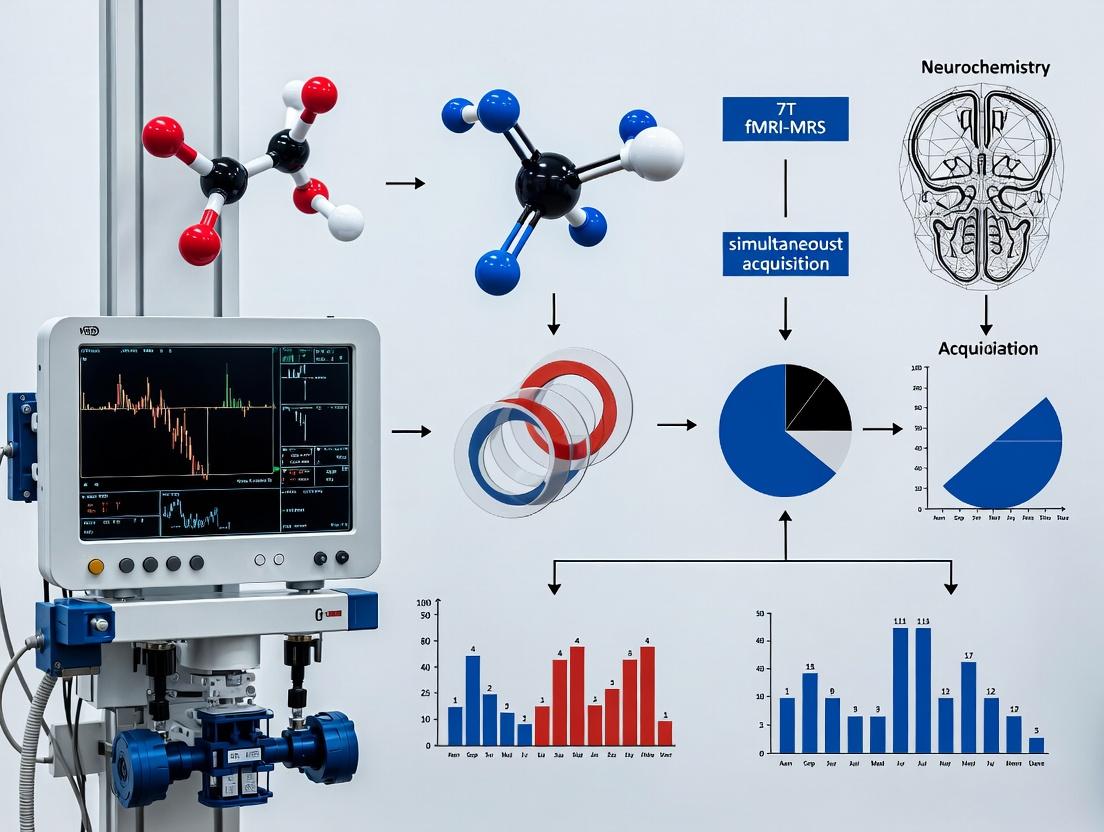
This article provides an in-depth exploration of simultaneous 7 Tesla (7T) functional Magnetic Resonance Imaging (fMRI) and Magnetic Resonance Spectroscopy (MRS) data acquisition, a cutting-edge technique revolutionizing multimodal brain research.
7T fMRI-MRS Simultaneous Acquisition: A Comprehensive Guide for Advanced Neuroimaging Research
Abstract
This article provides an in-depth exploration of simultaneous 7 Tesla (7T) functional Magnetic Resonance Imaging (fMRI) and Magnetic Resonance Spectroscopy (MRS) data acquisition, a cutting-edge technique revolutionizing multimodal brain research. It begins with foundational principles, explaining the synergistic power of combining high-resolution hemodynamic mapping with direct metabolic profiling. The core methodological section details the hardware requirements, pulse sequence design, and practical steps for implementing simultaneous protocols, including key applications in neuroscience and drug development. The guide addresses critical challenges such as spectral quality compromises, spatial coregistration, and artifacts, offering optimization strategies. Finally, it validates the technique through comparisons with sequential acquisition and lower field strengths, quantifying gains in temporal correlation, sensitivity, and biological insight. This resource is tailored for researchers, scientists, and pharmaceutical professionals seeking to leverage this integrated approach for unprecedented investigations into brain function, metabolism, and neuropharmacology.
The Power of Fusion: Understanding 7T fMRI-MRS Simultaneous Acquisition Fundamentals
I. Introduction & Rationale Simultaneous acquisition of functional Magnetic Resonance Imaging (fMRI) and Magnetic Resonance Spectroscopy (MRS) at ultra-high field (7T and above) represents a paradigm shift in neuroimaging. This multimodal integration directly targets a core limitation of standalone techniques: fMRI measures hemodynamic changes (the BOLD signal) as a proxy for neuronal activity, while MRS quantifies the concentrations of key neurochemicals. Their combination within a single session on the same scanner provides temporally and spatially correlated data, eliminating intersession variability and enabling the direct investigation of neurometabolic underpinnings of brain function. This is particularly critical for research into neurological disorders and drug development, where linking metabolic pathways to network dynamics is essential.
II. Key Synergistic Advantages: A Quantitative Overview The synergy of 7T fMRI-MRS is demonstrated by the following quantitative enhancements:
Table 1: Advantages of Combined 7T fMRI-MRS Acquisition
| Aspect | Standalone 7T fMRI | Standalone 7T MRS | Combined 7T fMRI-MRS | Synergistic Gain |
|---|---|---|---|---|
| Spatial Resolution | Sub-millimeter (0.6-0.8 mm isotropic) | Voxel size ~8-27 mm³ (e.g., 20x20x20 mm) | fMRI: High-res; MRS: Voxel placed based on fMRI activation | Anatomo-functional guidance for MRS voxel placement. |
| Temporal Resolution | 1-3 seconds (TR) | 5-20 minutes per spectrum | Concurrent acquisition | Perfect temporal correspondence between neurochemical and BOLD time-series. |
| Primary Metrics | BOLD signal change (%) | Metabolite concentrations (mM or i.u.) | Correlation coefficients (e.g., r between Glu & BOLD) | Direct quantitative coupling of metabolism & hemodynamics. |
| Key Targets | Network connectivity, HRF | ~15-20 metabolites (e.g., Glu, GABA, GSH) | Glutamatergic neurotransmission, oxidative stress | Tests the Glutamate-GABA balance hypothesis in vivo. |
| Clinical Utility | Map functional deficits | Identify metabolic biomarkers | Link metabolic dysfunction to network perturbation | Mechanism-based patient stratification for trials. |
Table 2: Quantifiable Neurochemicals at 7T and Their Relevance
| Metabolite | Typical Concentration (in grey matter) | Primary Biological Role | Relevance to fMRI Synergy |
|---|---|---|---|
| Glutamate (Glu) | 8-12 mM | Major excitatory neurotransmitter | Direct precursor to the glutamate-glutamine cycle; correlates with BOLD signal. |
| GABA | 1-2 mM | Major inhibitory neurotransmitter | Inhibitory balance; altered GABA/Glu ratio linked to BOLD signal amplitude. |
| Glutathione (GSH) | 1-3 mM | Major antioxidant | Links neural activity to oxidative stress; possible confounder of BOLD. |
| Lactate | 0.5-1.5 mM | Energy metabolism, astrocyte-neuron coupling | Marker of glycolytic flux during activation (potential neuro-glio-vascular unit probe). |
III. Experimental Protocols for Simultaneous 7T fMRI-MRS Protocol 1: Task-Based fMRI with Pre/Post-Task MRS Objective: To capture baseline neurochemistry and link it to task-evoked BOLD response magnitude. Methodology:
- Subject Setup & Localizers: Acquire high-resolution anatomical scans (e.g., MP2RAGE or T1-weighted) for MRS voxel placement and fMRI registration.
- MRS Voxel Placement: Position a voxel (e.g., 20x20x20 mm³) in the region of interest (e.g., primary visual cortex V1 for a visual task). Use fMRI localizers if available.
- Pre-Task MRS Acquisition: Acquire a high-quality, long-TR spectra (e.g., semi-LASER, TE=28 ms, TR=5000 ms, Averages=64) to establish baseline metabolite levels (Glu, GABA, etc.).
- Simultaneous fMRI-MRS Run:
- Initiate fMRI acquisition (e.g., gradient-echo EPI, resolution=1.6 mm isotropic, TR=1500 ms, multi-band acceleration).
- Interleave single-shot or block-averaged MRS acquisitions into the fMRI sequence. A typical scheme: acquire one MRS FID (e.g., TR=1500 ms, Averages=1) every n fMRI volumes, creating a concurrent, albeit lower SNR, metabolic time-series.
- Subject performs the functional paradigm (e.g., block-design visual stimulus).
- Post-Task MRS: Acquire an identical, high-quality post-task spectrum to detect any sustained metabolic changes.
Protocol 2: Resting-State fMRI (rs-fMRI) with Concurrent MRS Objective: To correlate intrinsic neurochemical levels with functional connectivity strength. Methodology:
- Steps 1-3 from Protocol 1 are performed identically.
- Extended Simultaneous Resting-State Acquisition: Conduct a single, prolonged scan (e.g., 15-20 minutes) where both rs-fMRI and interleaved MRS data are collected continuously while the subject rests with eyes open/closed.
- Data Analysis Pipeline: fMRI data undergoes standard preprocessing (motion correction, filtering). The amplitude of low-frequency fluctuations (ALFF) or functional connectivity matrices (e.g., within a network) are calculated. The MRS time-series or the baseline metabolite concentrations are used as regressors in a voxel-wise or ROI-based analysis.
IV. Visualizing the Synergy: Pathways and Workflows
Title: Neurometabolic Basis of the BOLD Signal
Title: Simultaneous 7T fMRI-MRS Protocol Workflow
V. The Scientist's Toolkit: Essential Research Reagents & Materials Table 3: Key Research Reagent Solutions for 7T fMRI-MRS Studies
| Item | Function / Purpose | Example / Specification |
|---|---|---|
| 7T MRI Scanner | Essential hardware platform enabling high SNR and spectral dispersion for both modalities. | Siemens Terra, Philips Achieva, GE MR950 with FDA/CE approval for human use. |
| Multi-Channel Tx/Rx Head Coil | Transmits RF pulses uniformly and receives signals with high sensitivity from multiple elements. | 32-channel or 64-channel phased-array head coils (e.g., Nova Medical). |
| MR-Compatible Visual Stimulation System | Presents paradigms for task-based fMRI inside the bore. | LCD goggles or projector-screen systems with trigger synchronization (e.g., NordicNeuroLab). |
| Physiological Monitoring System | Records cardiac and respiratory cycles for noise regression in fMRI. | MRI-compatible pulse oximeter and respiratory belt (e.g., BIOPAC). |
| Spectral Editing Sequence Pulses | Enables selective detection of coupled metabolites like GABA and GSH. | MEGA-PRESS or MEGA-semi-LASER pulse sequences. |
| Advanced fMRI Sequence | Enables high-resolution, fast imaging required for interleaving with MRS. | Multi-band (SMS) accelerated Gradient-Echo EPI sequences. |
| Phantom for QA | Validates scanner performance, MRS quantification, and fMRI geometric distortion. | Spherical phantom with known metabolite concentrations (e.g., Braino) and geometric phantom. |
| Metabolite Basis Sets | Digital reference libraries for accurate spectral fitting. | Simulated using NMR-simulating software (e.g., FID-A, VeSPA) matching sequence parameters. |
| Integrated Analysis Software | Processes and co-registers multimodal datasets. | LCModel or Osprey for MRS; FSL, SPM, or AFNI for fMRI; custom MATLAB/Python scripts for correlation. |
This application note details the core technical and scientific principles differentiating simultaneous acquisition from sequential scanning within the framework of advanced 7T functional Magnetic Resonance Imaging - Magnetic Resonance Spectroscopy (fMRI-MRS) research. The integration of these modalities is pivotal for elucidating the dynamic interplay between neurovascular function (via fMRI) and neurometabolic activity (via MRS) in a single experimental session. The overarching thesis posits that simultaneous acquisition is not merely a logistical convenience but a paradigm essential for capturing temporally coupled brain states, thereby providing unparalleled insights for neuroscience and CNS drug development.
Foundational Principles: Sequential vs. Simultaneous
Sequential Acquisition: fMRI and MRS data are collected in separate, consecutive scans. This approach introduces a temporal gap (minutes to hours) between measurements, during which the subject's physiological, cognitive, or pharmacological state may change.
Simultaneous Acquisition: fMRI and MRS data are collected concurrently within a single, integrated scan. This ensures temporal coincidence of the detected signals, capturing BOLD (Blood Oxygen Level Dependent) hemodynamics and metabolic concentrations from an identical brain state and volume.
Quantitative Comparison of Methodologies
The table below summarizes the critical differences impacting data interpretation and experimental design.
Table 1: Core Differentiators Between Sequential and Simultaneous fMRI-MRS
| Parameter | Sequential Acquisition | Simultaneous Acquisition | Implication for Research |
|---|---|---|---|
| Temporal Alignment | Low (minutes-hours apart). | High (sub-second precision). | Simultaneous data guarantees coupling; sequential data assumes state stationarity. |
| Total Scan Time | High (sum of two full protocols). | Moderate (single protocol, often limited by MRS). | Reduced subject burden and scanner cost; improved compliance. |
| Protocol Flexibility | High. Each modality optimized independently (TR, voxel). | Constrained. Requires unified sequence design (TR, TE, voxel compromise). | Simultaneous requires careful parameter trade-offs. |
| Cross-Modal Artifacts | Minimal. Scans are independent. | Significant. fMRI EPI readouts cause spectral baseline distortion. MRS pre-pulses affect BOLD sensitivity. | Requires advanced artifact suppression and processing. |
| Voxel Co-registration | Challenging. Requires image registration; subject may move between scans. | Inherent. Spectroscopy voxel is explicitly placed within high-res fMRI anatomy. | Eliminates registration error for the target region. |
| Primary Use Case | Established, optimized single-modality studies. | Investigating dynamic neurovascular-metabolic coupling (e.g., task, drug challenge). | Essential for probing real-time metabolic correlates of BOLD. |
Detailed Experimental Protocols
Protocol A: Sequential fMRI-MRS at 7T
- Subject Preparation & Positioning: Secure head with foam pads to minimize motion. Position the multi-channel RF head coil.
- Localizers & Shimming: Acquire high-resolution anatomical localizers. Perform global and local B0 shimming.
- High-Res Anatomical Scan: Acquire a T1-weighted MP2RAGE or similar sequence for anatomical reference.
- fMRI Session:
- Sequence: 2D gradient-echo EPI (GE-EPI).
- Parameters: TR = 2000 ms, TE = 22 ms, voxel = 1.5 mm isotropic, FOV = 210 mm.
- Task Design: Implement block or event-related paradigm (e.g., visual stimulus, motor task).
- Duration: 10-15 minutes.
- Subject Repositioning Check: Optional short localizer to confirm position.
- MRS Session:
- Voxel Placement: Position a 20x20x20 mm³ voxel in the region of interest (e.g., posterior cingulate cortex) using the anatomical scan.
- Advanced Shimming: Perform higher-order shimming on the voxel to achieve water linewidth < 15 Hz.
- Sequence: Semi-adiabatic SPECIAL or MEGA-PRESS for GABA editing.
- Parameters: TR = 2000 ms, TE = 68 ms, averages = 256.
- Water Suppression & Acquisition: Use VAPOR for water suppression. Acquire unsuppressed water reference for quantification.
- Duration: 8.5 minutes.
Protocol B: Simultaneous fMRI-MRS at 7T
- Subject Preparation & Positioning: As in Protocol A. Critical to minimize motion.
- Localizers & Shimming: As in Protocol A.
- High-Res Anatomical Scan: As in Protocol A.
- Integrated Sequence Setup:
- Sequence Design: Utilize an interleaved sequence.
- Unified TR: Set a single TR (e.g., 2000 ms) governing both modalities.
- Event Timing: Within each TR: i) Apply MRS water suppression and spectral editing pulses (if used). ii) Execute a single-shot fMRI EPI readout (TE ~22 ms). iii) Apply MRS excitation and acquire spectral FID or echo (TE for MRS ~68 ms).
- Voxel Placement & Shimming: Place the MRS voxel and shim as in Protocol A. This voxel defines the region from which both signals are derived.
- Concurrent Acquisition:
- Run the integrated sequence while the subject performs the task paradigm.
- Key Parameter: fMRI volume is acquired every TR, while MRS FID is acquired and averaged across the entire run or in temporal blocks (e.g., 5-min blocks for dynamic MRS).
- Total Duration: ~12 minutes for a single run, acquiring both fMRI timeseries and a full MRS spectrum simultaneously.
Visualization of Key Concepts
Diagram 1: Sequential vs Simultaneous Experimental Workflow
Diagram 2: Targeted Signaling Pathways in Simultaneous Study
The Scientist's Toolkit: Essential Research Reagents & Materials
Table 2: Key Resources for 7T fMRI-MRS Research
| Item | Function & Application |
|---|---|
| 7T MRI Scanner | Ultra-high field platform providing the necessary signal-to-noise ratio (SNR) for high-resolution fMRI and robust MRS detection of low-concentration metabolites. |
| Multi-channel RF Head Coil (e.g., 32/64ch) | Essential for parallel imaging (accelerating fMRI) and improving SNR for both fMRI and MRS. |
| Specialized MRS Sequences | Pulse sequences like MEGA-PRESS (for GABA, GSH), SPECIAL (for short-TE metabolites), and sLASER (for voxel localization) at 7T. |
| Integrated fMRI-MRS Sequence | Custom or vendor-provided pulse sequence that interleaves EPI and MRS modules within a single TR. |
| Phantom Solutions | Standardized phantoms containing known concentrations of metabolites (e.g., Braino phantom) for sequence validation, calibration, and quantification reliability. |
| Advanced Processing Software | Tools like FSL/SPM for fMRI analysis combined with LCModel, jMRUI, or Osprey for advanced MRS processing, including artifact correction for EPI-induced spectral baseline distortion. |
| Physiological Monitoring | Pulse oximeter and breathing belt for recording cardiac and respiratory cycles, critical for denoising fMRI data and modeling physiological effects on MRS. |
| Subject-Specific Head Casts/Molds | Custom-fitted head stabilization systems to minimize motion, a critical factor for successful simultaneous acquisition where movement corrupts both data types. |
Ultra-high field (UHF) 7 Tesla (7T) magnetic resonance systems provide fundamental physical advantages for functional MRI (fMRI) and magnetic resonance spectroscopy (MRS). These advantages are critical for simultaneous fMRI-MRS data acquisition, enabling unprecedented insights into neurometabolic-vascular coupling for neuroscience and pharmaceutical research.
Table 1: Quantitative Comparison of 7T vs. 3T for fMRI and MRS
| Parameter | 3T Performance | 7T Performance | Advantage Factor | Primary Impact |
|---|---|---|---|---|
| Theoretical BOLD SNR | 1.0 (Baseline) | ~2.5 - 4.5 | 2.5x - 4.5x | Increased detection sensitivity for subtle activation |
| Spectral Resolution (MRS) | ~0.05 ppm | ~0.02 ppm | 2.5x | Improved separation of overlapping metabolites (e.g., Glu/Gln) |
| Spatial Specificity (BOLD) | Vessel size sensitivity > 1mm | Dominated by capillaries (< 1mm) | Higher | Closer coupling to neuronal activity; reduced venous drainage effects |
| T2* of Gray Matter | ~50 ms | ~30 ms | Shorter | Stronger BOLD contrast per unit change in deoxyhemoglobin |
| Chemical Shift Dispersion | 1.0 (Baseline) | 2.33x | 2.33x | Reduced spectral overlap in MRS |
Experimental Protocols for Simultaneous 7T fMRI-MRS Acquisition
Protocol 2.1: High-Resolution BOLD fMRI with Single-Voxel MRS
Objective: To acquire task-based or resting-state fMRI data concurrently with neurochemical profiles from a predefined region of interest (ROI).
- Subject Preparation & Safety: Screen for contraindications. Use dedicated 7T non-metallic EEG/physiology kits if monitoring. Insert earplugs and headphones.
- Localizers & Shimming:
- Acquire fast anatomical localizers.
- Perform global shim using vendor-provided routines.
- Execute advanced, high-order (2nd/3rd) local shim over the MRS voxel and surrounding fMRI FOV using FASTMAP or equivalent. Target a water linewidth of < 18 Hz.
- Structural Imaging: Acquire a T1-weighted MP2RAGE or T2-weighted SPACE sequence for anatomical co-registration and voxel placement.
- MRS Voxel Placement: Using the structural images, position a 2x2x2 cm³ (8 mL) voxel in the target region (e.g., anterior cingulate cortex). Ensure minimal inclusion of CSF, skull, or fat.
- Simultaneous Acquisition Sequence:
- fMRI: Use a T2*-weighted 2D EPI or 3D EPI sequence.
- Key Parameters: TR = 2000-2500 ms, TE = ~22-28 ms, resolution = 1.0-1.5 mm isotropic, multiband acceleration factor = 2-3.
- MRS: Use a semi-LASER or sLASER sequence for full-intensity, short-echo acquisition.
- Key Parameters: TR = 2000 ms (synchronized with fMRI TR), TE = 28-35 ms, spectral bandwidth = 4-6 kHz, 256-512 averages interleaved throughout the fMRI run.
- fMRI: Use a T2*-weighted 2D EPI or 3D EPI sequence.
- Data Output: Concurrent time-series of BOLD images and interleaved MRS FIDs.
Protocol 2.2: Spectroscopic Imaging (MRSI) with BOLD fMRI
Objective: To map multiple neurometabolites over a slice or volume alongside functional activation.
- Steps 1-3 from Protocol 2.1 are followed.
- MRSI Slice Placement: Align a 2D-MRSI slab (e.g., 1-1.5 cm thick) with a corresponding fMRI slice package.
- Simultaneous Acquisition Sequence:
- fMRI: As in Protocol 2.1.
- MRSI: Use a FID-based, density-adapted spiral readout MRSI sequence.
- Key Parameters: TR = 1500-2000 ms, TE = 12-20 ms, nominal voxel size = 3-4x3-4x10 mm³, elliptical k-space encoding.
- Processing: Reconstruction of metabolite maps (e.g., NAA, Cr, Cho, Glu) co-registered with BOLD activation maps.
Protocol 2.3: Pharmaco-fMRI-MRS Challenge Study
Objective: To monitor the dynamic effects of a drug challenge on brain activity and neurochemistry.
- Baseline Scan: Execute Protocol 2.1 or 2.2 to acquire 10-15 minutes of pre-drug data.
- Drug Administration: Administer drug or placebo via controlled IV infusion using an MR-compatible pump system.
- Post-Dosing Scan: Immediately continue the simultaneous fMRI-MRS acquisition for 45-60 minutes to capture pharmacodynamic responses.
- Analysis: Model the temporal response of BOLD signals (e.g., ALFF, ReHo) and metabolite concentrations (e.g., Glx, GABA) relative to baseline.
Visualization of Workflows and Pathways
Title: 7T fMRI-MRS Simultaneous Acquisition Protocol Workflow
Title: 7T Probes Neuro-Metabolic-Vascular Coupling
The Scientist's Toolkit: Key Research Reagent Solutions
Table 2: Essential Materials & Reagents for 7T fMRI-MRS Research
| Item | Function & Relevance to 7T Research | Example Product / Specification |
|---|---|---|
| 7T-optimized RF Coils | Multi-channel phased-array receive and transmit coils are critical for achieving the theoretical SNR gains and enabling high-resolution fMRI/MRSI. | 64-channel head coil (Nova Medical, Siemens) |
| Advanced Shimming Solutions | High-order (2nd & 3rd degree) shim coils and algorithms are mandatory to achieve the homogeneous B0 field required for high-quality MRS at 7T. | Custom-designed 3rd order shim coils; FASTMAP algorithm. |
| Spectral Editing Kits | Dedicated pulse sequences and analysis toolkits for detecting low-concentration, J-coupled metabolites (e.g., GABA, GSH) at 7T. | MEGA-sLASER or MEGA-PRESS sequences; Gannet (MATLAB) toolbox. |
| MR-Compatible Biomonitoring | Systems for recording physiology (pulse, respiration, pCO2) and administering drugs during scans to interpret BOLD/neurochemical changes. | Biopac MP150 with MR-compatible modules; MR-compatible IV infusion pump. |
| Phantom Solutions for QA | Metabolite phantoms with known concentrations (e.g., Braino, GE) and fMRI stability phantoms for regular system performance validation. | "Braino" phantom with 12 metabolites; Spherical gel phantom for BOLD QA. |
| Unified Analysis Software | Integrated platforms capable of processing concurrent fMRI and MRS time-series data, accounting for mutual interference. | Linear Modeling (LM) of MRS-fMRI data in SPM or FSL; in-house MATLAB/Python pipelines. |
Within the context of 7T fMRI-MRS simultaneous data acquisition research, a central thesis emerges: to move beyond the phenomenological mapping of Blood Oxygenation Level Dependent (BOLD) signals and establish mechanistic, causal links between hemodynamics, specific neurotransmitter systems, and the underlying metabolic machinery. This application note details the protocols and conceptual frameworks necessary to target key neurobiological nodes where these dynamics converge.
The following table summarizes the primary targets, their roles, and typical measurable parameters via 7T fMRI-MRS.
Table 1: Key Neurobiological Targets for BOLD-Neurotransmitter-Metabolic Coupling
| Target System | Primary Role in Coupling | MRS-Measurable Metabolite/Neurotransmitter | Typical 7T MRS Concentration (mM) | Relevant BOLD fMRI Signature |
|---|---|---|---|---|
| Glutamatergic System | Major excitatory drive; NMDA-R activation triggers NOS and metabolic demand. | Glutamate (Glu), Glutamine (Gln) | Glu: 6.5 - 12.1; Gln: 1.5 - 4.2 | Positive BOLD; initial dip linked to O2 consumption. |
| GABAergic System | Major inhibitory control; modulates net neuronal activity and metabolic rate. | Gamma-Aminobutyric Acid (GABA) | GABA: 0.8 - 2.1 | Negative BOLD; altered BOLD response gain. |
| Energetic Substrates | Fuel for ATP production; direct link to oxidative metabolism. | Glucose, Lactate | Lactate: 0.5 - 1.8 | Coupling of CBF/BOLD to glucose uptake (CMRglc). |
| Oxidative Metabolism | Direct proxy for cellular O2 consumption (CMRO2). | None (MRS-invisible) | N/A | BOLD signal is a function of CBF, CBV, and CMRO2. |
| Astrocytic Nexus | Glutamate recycling, glycolysis, lactate shuttle. | Myo-Inositol (mIns), Gln, Lactate | mIns: 3.2 - 6.8 | Neurovascular coupling; BOLD post-stimulus undershoot. |
Experimental Protocols
Protocol 1: Simultaneous 7T fMRI and GABA-Edited MRS during Sensory Stimulation
Objective: To correlate stimulus-evoked BOLD responses in the primary visual cortex (V1) with dynamic changes in inhibitory GABA.
Materials: 7T MRI scanner with multimodal capability, 32-channel head coil, visual stimulus presentation system, MEGA-PRESS or SPECIAL acquisition sequence.
Procedure:
- Localization: Acquire high-resolution T1-weighted anatomical scan. Prescribe MRS voxel (e.g., 20x30x20 mm³) precisely on V1.
- fMRI Setup: Implement block-design (e.g., 30s ON/OFF) with a high-contrast visual stimulus (checkerboard).
- MRS Acquisition: Interleave functional EPI scans with GABA-edited MRS acquisitions (TE = 68 ms, TR = 2000 ms). Use symmetric editing pulses at 1.9 ppm (ON) and 7.5 ppm (OFF). Acquire 256 ON/OFF pairs over the entire fMRI run (~17 min).
- Quantification: Process fMRI data using standard GLM. Process MRS data with Gannet or LCModel. Correlate percent signal change in BOLD with pre-to-during stimulus % change in GABA concentration, accounting for hemodynamic lag.
Protocol 2: Dynamic CMRO2Estimation via Calibrated fMRI with Concurrent Glu/Gln MRS
Objective: To deconvolve the BOLD signal into CMRO2 and CBF components and relate them to glutamatergic cycle dynamics.
Materials: 7T MRI scanner with dual-echo ASL and BOLD capability, gas delivery system for hypercapnic calibration (5% CO2).
Procedure:
- Calibration Scan: Acquire dual-echo pCASL and BOLD data during resting state and hypercapnia. Calculate the calibration parameter M.
- Task Scan: Perform a motor task (finger-tapping). Acquire simultaneous: a. Dual-echo pCASL: for quantitative CBF and BOLD. b. SPECIAL or sLASER MRS: (TE=28 ms) in the primary motor cortex (M1) for high-resolution Glu and Gln quantification.
- Calculation: Use the calibrated BOLD model:
ΔCMRO2/CMRO2_0 = (ΔCBF/CBF_0)^(α-β) / (ΔBOLD/BOLD_0 + 1)^(1/β)where α~0.2, β~1.3. Derive dynamic CMRO2. - Correlation: Perform a temporal correlation between the time-course of task-evoked CMRO2 and the post-task change in the Glu/Gln ratio, an index of glutamatergic cycling.
Visualization of Signaling Pathways & Workflows
Diagram 1: Neurotransmitter to BOLD Signaling Pathway
Diagram 2: 7T fMRI-MRS Simultaneous Acquisition Workflow
The Scientist's Toolkit: Key Research Reagent Solutions
Table 2: Essential Materials for 7T fMRI-MRS Coupling Research
| Item | Function & Relevance | Example/Supplier |
|---|---|---|
| 7T MRI Scanner with Multi-XMTR | Essential hardware for high SNR BOLD fMRI and high-resolution MRS. Requires advanced B0 shimming and multi-channel capability. | Siemens Terra, Philips Achieva, GE MR950. |
| Dual-Mode RF Coils | Combined volume and surface arrays for whole-brain fMRI and localized high-SNR MRS. | 32/64-channel head coils with integrated shim elements. |
| Spectral Editing Pulse Sequences | Enables detection of low-concentration, J-coupled metabolites (GABA, GSH, Lactate). | MEGA-PRESS, MEGA-sLASER, HERMES. |
| Quantitative ASL Sequences | Provides quantitative CBF maps for calibrated fMRI (CMRO2 estimation). | pCASL, multi-TI ASL, 3D GRASE readout. |
| Metabolite Quantification Software | Accurate fitting and quantification of overlapping metabolite spectra from complex 7T data. | LCModel, Gannet, TARQUIN, Osprey. |
| Hypercapnic Gas Delivery System | For calibrating the BOLD signal via controlled vascular challenge (CO2 inhalation). | RespirAct, custom gas blending systems. |
| Multimodal Biofeedback Systems | Monitors and records physiological confounds (cardiac, respiratory) for advanced noise regression. | Biopac, MRI-compatible pulse oximeter, respiratory belt. |
| Unified Analysis Pipelines | Software frameworks for integrated processing of concurrent fMRI and MRS data. | MATLAB toolboxes (SPM, FSL integration), custom Python/R scripts. |
Historical Context and Evolution of Multimodal 7T Neuroimaging
The pursuit of multimodal neuroimaging, particularly the simultaneous acquisition of functional magnetic resonance imaging (fMRI) and magnetic resonance spectroscopy (MRS) at ultra-high field (7T), represents a significant evolution in neuroscience. This convergence aims to bridge the gap between macroscopic hemodynamic activity (fMRI) and the underlying neurochemical milieu (MRS). The historical trajectory began with the clinical deployment of 1.5T and 3T scanners, where fMRI and MRS were developed as separate, often sequential, modalities. The advent of 7T MRI in the early 2000s provided a critical inflection point, offering dramatically increased signal-to-noise ratio (SNR) and spectral dispersion. This technological leap enabled the practical consideration of truly simultaneous data acquisition, allowing for the investigation of dynamic neurovascular and neurometabolic coupling with high spatial and temporal specificity, a core tenet of modern systems neuroscience and translational drug development research.
Quantitative Advantages of 7T for Simultaneous fMRI-MRS
The quantitative benefits of 7T form the foundation for advanced multimodal protocols.
Table 1: Key Quantitative Metrics at 3T vs. 7T for fMRI and MRS
| Metric | Typical Value at 3T | Typical Value at 7T | Implication for Multimodal Acquisition |
|---|---|---|---|
| BOLD fMRI SNR | Baseline (1x) | ~2-4x increase | Enables higher-resolution mapping (sub-millimeter) or faster temporal sampling. |
| BOLD Contrast (%) | 1-2% | 3-5%+ | Stronger functional contrast, improving detection power for concurrent MRS events. |
| Spectral Dispersion (Hz) | ~120 Hz (for 1H) | ~280 Hz (for 1H) | Dramatically reduced spectral overlap (e.g., Glu and Gln), improving metabolite quantification accuracy. |
| MRS SNR | Baseline (1x) | ~2x increase (linear) | Permits smaller voxel sizes (e.g., 3-8 mL) for localized neurochemistry within activated regions. |
| Metabolite T1 Relaxation | Longer | Generally increased | Requires protocol optimization (longer TR) but benefits from greater saturation recovery contrast. |
Application Notes and Protocols
Protocol 1: Simultaneous fMRI-MRS Acquisition for Neurometabolic Coupling
Objective: To measure dynamic changes in glutamate (Glu) or gamma-aminobutyric acid (GABA) concurrently with Blood-Oxygen-Level-Dependent (BOLD) fMRI during a cognitive or sensory task.
Materials & Sequence:
- Scanner: 7T MRI system with a dedicated, multi-channel head coil (e.g., 32-channel receive).
- Pulse Sequence: A vendor-provided or custom-built sequence integrating:
- fMRI: 2D or 3D gradient-echo echo-planar imaging (GE-EPI).
- MRS: Single-voxel MEGA-sLASER or MEGA-PRESS for GABA-editing, or sLASER/SPECIAL for unedited metabolites like Glu. The MRS sequence is interleaved between EPI volume acquisitions.
- Synchronization: Task paradigm synchronized with scanner pulse sequence via Presentation or PsychoPy.
Detailed Workflow:
- Subject Preparation & Safety: Screen for 7T compatibility. Use non-magnetic EEG caps if concurrent electrophysiology is planned. Secure head with foam padding to minimize motion.
- Localization & Shimming: Acquire high-resolution anatomical scans (e.g., MP2RAGE). Position the MRS voxel (e.g., 20x30x20 mm³ in the medial prefrontal cortex) based on functional localizer or anatomical landmarks. Perform advanced B0 shimming (e.g., 2nd or 3rd order) over the combined volume of interest to optimize field homogeneity.
- Sequence Parameterization:
- fMRI: TE ≈ 22-25 ms (for BOLD contrast at 7T), TR = 2000-3000 ms, resolution = 1.5-2.0 mm isotropic, multi-band acceleration factor 2-4.
- MRS: Voxel placed within activated region. TR must equal the fMRI TR or be an integer multiple. For GABA: MEGA-PRESS with editing ON/OFF pulses at 1.9 ppm and 7.5 ppm, TE = 68-80 ms. For Glu: sLASER with TE = 30-40 ms. Number of averages per time point designed to achieve adequate SNR (e.g., 4-8 averages per dynamic scan).
- Dynamic Acquisition: Run the simultaneous sequence for the task duration (e.g., 10-minute block/event-related design). The sequence acquires one fMRI volume, then one (or a subset of) MRS average(s), repeating for the entire TR cycle.
- Quality Assurance: Real-time monitoring of fMRI time-series for gross motion. Post-session inspection of MRS linewidth (aim for <15 Hz) and SNR.
Table 2: Research Reagent Solutions for Protocol 1
| Item | Function | Example/Notes |
|---|---|---|
| 7T Multi-channel Head Coil | Signal reception | 32/64-channel phased array for high parallel imaging acceleration and SNR. |
| Advanced Shim System | B0 homogeneity | 2nd/3rd order spherical harmonic shims essential for spectral quality at 7T. |
| MEGA-PRESS/sLASER Sequence | Spectral localization/editing | Vendor pulse sequence packages (Siemens Syngo, GE Orchestra) or open-source (Pulseq). |
| Spectral Quality Phantom | Pre-scan calibration | Phantom containing brain metabolites (NAA, Cr, PCr, Cho, Glu, GABA) at physiological concentrations. |
| Dedicated Analysis Suite | Data processing | For fMRI: SPM, FSL, AFNI. For MRS: Gannet, LCModel, Osprey. For fusion: in-house MATLAB/Python scripts. |
Simultaneous fMRI-MRS Experimental Workflow
Protocol 2: Pharmaco-fMRI-MRS for Drug Development
Objective: To characterize the acute neuromodulatory effects of a candidate pharmaceutical by assessing changes in BOLD response and metabolite levels pre- and post-administration.
Materials & Sequence:
- Scanner & Coil: As in Protocol 1.
- Pharmacological Agent: Investigational New Drug (IND) or placebo, administered under controlled, double-blind conditions.
- Pulse Sequence: Similar multimodal sequence, often with a focus on robust, reproducible MRS in a target region (e.g., anterior cingulate cortex for glutamatergic drugs).
Detailed Workflow:
- Baseline Scan: Perform Protocol 1 (with a simple task or at rest) to establish pre-dose baseline fMRI and MRS measures.
- Controlled Administration: Administer drug or placebo via IV infusion or oral route in a mock scanner environment or directly in the scan suite.
- Post-Dose Time-Course: Initiate repeated simultaneous scans at predetermined post-dose intervals (e.g., +30, +60, +90 min) to capture pharmacokinetic/pharmacodynamic (PK/PD) profiles.
- Data Analysis: Coregister all time points. Model BOLD amplitude and functional connectivity changes. Quantify absolute or relative changes in metabolites (e.g., Glu, GABA, Gln). Correlate neuroimaging readouts with plasma drug levels.
Pharmaco-fMRI-MRS Time-Course Protocol
Signaling Pathway Context for Neurovascular Coupling
Simultaneous fMRI-MRS interrogates the coupling between neuronal activity, metabolism, and hemodynamics. A key pathway involves glutamate-mediated activation.
Glutamate to BOLD Signaling Pathway
From Theory to Practice: Implementing Simultaneous 7T fMRI-MRS Protocols
Application Notes
Ultra-high field (UHF) 7T MRI systems offer enhanced signal-to-noise ratio (SNR) and spectral resolution, pivotal for simultaneous functional MRI (fMRI) and magnetic resonance spectroscopy (MRS) data acquisition in advanced neuroscientific and pharmacological research. This fusion presents unique hardware challenges and requirements.
RF Coils for 7T fMRI-MRS
At 7T (297.2 MHz for ¹H), RF wavelength in tissue is approximately 11-12 cm, leading to constructive/destructive interference patterns (B1+ inhomogeneity) and increased specific absorption rate (SAR). Multi-channel transmit/receive (Tx/Rx) arrays with parallel transmission (pTx) capabilities are essential. Recent developments focus on ultra-dense receive arrays (e.g., 64-channel to 128-channel head coils) to maximize SNR and accelerate parallel imaging. For MRS, coils must provide high B1+ homogeneity over the voxel of interest and excellent B0 shimming capabilities. Dual-tuned coils (e.g., ¹H/³¹P or ¹H/¹³C) are increasingly used for multi-nuclei studies in drug metabolism research.
Gradient Systems
High-performance gradients are critical for spatial encoding, fat suppression, and spectral-spatial pulses in MRS. Key specifications for simultaneous 7T fMRI-MRS include:
- Slew Rate: ≥200 T/m/s to enable ultra-short echo times (TEs), minimizing J-modulation for MRS and improving BOLD sensitivity in fMRI.
- Maximum Amplitude: ≥70 mT/m for high spatial resolution fMRI and accurate voxel placement for spectroscopy.
- Duty Cycle: High duty cycle (>80%) is required for sustained performance during long, multi-modal protocols common in pharmacological challenge studies.
Scanner Core Requirements
The 7T scanner magnet must have exceptional temporal stability (<0.1 ppm/hour) for stable spectral baselines in MRS. The spectrometer must support fast switching between fMRI and MRS sequences, with high dynamic range digitizers to handle both strong fMRI and weak MRS signals. Integrated, real-time B0 shimming (typically 2nd or 3rd order) is mandatory to correct for subject-induced field inhomogeneities, crucial for both BOLD fidelity and spectral linewidth.
Table 1: Quantitative Hardware Specifications for 7T fMRI-MRS Fusion
| Hardware Component | Key Parameter | Typical Specification for 7T Fusion | Impact on Fusion Research |
|---|---|---|---|
| Magnet | Field Strength | 7.0 T | Increases SNR ~linearly; increases spectral dispersion ~linearly for MRS. |
| Temporal Stability | <0.1 ppm/hour | Essential for stable spectral baselines in long MRS acquisitions. | |
| Gradient System | Max Amplitude | 70-80 mT/m | Enables sub-millimeter fMRI resolution and accurate MRS voxel localization. |
| Slew Rate | 200-300 T/m/s | Minimizes TE for fMRI & MRS, reducing T2* weighting and J-modulation artifacts. | |
| Duty Cycle | >80% | Supports extended, multi-contrast protocols (e.g., fMRI + MRS pre/post drug). | |
| RF System (Tx) | Channels (pTx) | 8-16 independent channels | Mitigates B1+ inhomogeneity, enables universal pulses for whole-brain coverage. |
| RF Coil (Rx) | Number of Elements | 32-128 channels | Maximizes SNR and parallel imaging acceleration (R=4-6) for fMRI. |
| Shim System | Order | 2nd or 3rd order spherical harmonics | Corrects subject-induced B0 inhomogeneity, sharpening spectral peaks & fMRI quality. |
Experimental Protocols
Protocol 1: Simultaneous fMRI and Single-Voxel ¹H-MRS Acquisition
Aim: To acquire BOLD fMRI data and neurochemical spectra from a pre-defined region (e.g., prefrontal cortex) concurrently during a cognitive task or resting state. Methodology:
- Subject Preparation & Positioning: Screen for 7T compatibility. Use customized head cushions and earplugs. Position the subject so the region of interest (ROI) is centered. For pharmacological studies, establish IV line for controlled infusion.
- Hardware Setup: Install a high-density 32/64-channel receive head coil with integrated pTx capabilities. Use a visual stimulus system compatible with 7T environment.
- Localizers & B0 Shimming: Acquire rapid localizer scans. Perform global and then local (over the MRS voxel) B0 shimming using a field map-based protocol to achieve a water linewidth of <18 Hz.
- MRS Voxel Placement: Using high-resolution T1-weighted anatomical images (e.g., MP2RAGE or MPRAGE), manually place a voxel (e.g., 20x20x20 mm³) in the target brain region. Avoid CSF and tissue borders.
- Sequence Parameter Setup:
- fMRI: Use a 2D or 3D gradient-echo EPI sequence. Key parameters: TR = 1500-2000 ms, TE = 20-25 ms (optimal for 7T BOLD), resolution = 1.5-1.8 mm isotropic, multi-band acceleration factor = 2-3.
- MRS: Interleave a semi-LASER or MEGA-sLASER sequence within the fMRI TR. Set TE to 30-40 ms (for optimal glutamate detection) or 70-80 ms (for cleaner baseline). Use VAPOR water suppression and outer volume suppression (OVS).
- Simultaneous Acquisition: Start the sequence. The paradigm executes fMRI readouts continuously. The MRS sequence is triggered once per TR or every n TRs (e.g., every 4th TR) during the "dead time" when fMRI gradients are not playing out. Total scan time: 10-15 minutes.
- Quality Assurance: Reconstruct single-shot fMRI images in real-time to check for motion. Monitor the residual water signal from unsuppressed water reference scans acquired during the sequence.
Protocol 2: Dynamic MRS with Pharmacological Challenge Interleaved with fMRI
Aim: To measure the temporal dynamics of neurometabolites (e.g., glutamate, GABA) and concurrent BOLD response following drug administration. Methodology:
- Pre-Infusion Baseline: Conduct Protocol 1 for 5-10 minutes to establish metabolite and BOLD baselines.
- Pharmacological Intervention: Initiate a controlled intravenous infusion of the study compound (e.g., benzodiazepine for GABAergic modulation) over a defined period (e.g., 5-10 mins). The scanner continues acquisition.
- Post-Infusion Monitoring: Continue simultaneous fMRI-MRS acquisition for 30-60 minutes post-infusion to capture response dynamics.
- Data Analysis: MRS spectra are fitted in the time domain (e.g., using LCModel) with a basis set appropriate for 7T. Metabolite concentrations (in institutional units) are plotted over time. fMRI data is processed with standard pipelines (motion correction, spatial smoothing, GLM) to identify task-related or functional connectivity changes correlated with the metabolic dynamics.
Diagram Title: Simultaneous 7T fMRI-MRS Acquisition Workflow
The Scientist's Toolkit
Table 2: Key Research Reagent Solutions for 7T fMRI-MRS Pharmacological Studies
| Item | Function/Application |
|---|---|
| GABA-ergic Modulators (e.g., Midazolam) | Pharmacological challenge agent to probe GABA receptor function, linking MRS-measured GABA levels to BOLD signal changes. |
| Glutamatergic Modulators (e.g., Ketamine) | NMDA receptor antagonist used to perturb glutamate cycling, studied via dynamic glutamate MRS and fMRI connectivity. |
| Carbon-13 Labeled Substrates (e.g., [1-¹³C]Glucose) | Infused tracer for in vivo ¹³C MRS at 7T to measure neuronal TCA cycle flux and neurotransmitter cycling rates concurrently with BOLD. |
| Gadolinium-Based Contrast Agents | Used in fMRI studies of cerebral blood volume (CBV) or permeability, providing a complementary vascular metric to BOLD and neurochemistry. |
| Customized Head Immobilization Systems | Foam cushions & masks to reduce motion artifacts, critical for maintaining stable MRS voxel localization and spectral quality. |
| MR-Compatible Infusion Pumps | For precise, remote-controlled administration of drugs or labeled substrates during scanning without moving the subject. |
| Metabolite Basis Sets for 7T (e.g., for LCModel) | Simulated spectral basis sets (including macromolecules) specific to 7T and the pulse sequence (e.g., semi-LASER, TE=30ms) for accurate spectral fitting. |
| Quality Assurance Phantoms | Spheres containing metabolite solutions at physiological concentrations and pH for定期校准 RF coil performance and sequence stability. |
Diagram Title: Logical Flow of 7T Pharmaco-fMRI-MRS Research
Within the scope of a broader thesis on 7T fMRI-MRS simultaneous data acquisition research, the design of integrated pulse sequences presents a paramount engineering and biophysical challenge. Achieving concurrent, artifact-free acquisition of Blood Oxygenation Level Dependent (BOLD) functional MRI signals and high-fidelity Magnetic Resonance Spectroscopy (MRS) data at ultra-high field (7T) demands innovative solutions to overcome intrinsic electromagnetic and temporal conflicts. This document outlines the core challenges, contemporary solutions, and provides detailed protocols for implementation.
Core Challenges & Technical Solutions
The primary obstacles in simultaneous 7T fMRI-MRS arise from spectral interference, gradient-induced artifacts, and dynamic field perturbations.
Table 1: Key Challenges and Corresponding Technical Solutions
| Challenge | Impact on fMRI | Impact on MRS | Proposed Solution |
|---|---|---|---|
| Spectral Overlap | Minimal direct impact. | MRS readout (e.g., EPSI, FID) contaminated by strong fMRI water signal and lipid artifacts. | Spectral-Spatial (SPSP) RF pulses for fMRI; Advanced Outer Volume Suppression (OVS) and VAPOR water suppression for MRS. |
| Gradient-Induced Echo Planar Imaging (EPI) Artifacts | Eddy currents cause geometric distortion & Nyquist ghosting. | Induced frequency/phase shifts corrupt spectral baseline and quantitation. | Pre-emphasis compensation; Temporal Interleaving of fMRI blips and MRS readout gradients. |
| Dynamic (B_0) Field Perturbations | Susceptibility-induced geometric distortions. | Broadening and shifting of spectral peaks, degrading SNR and quantification. | Dynamic (B_0) shimming (e.g., multi-coil shim arrays); Real-time field monitoring with NMR field cameras. |
| RF Pulse Interference | fMRI excitation/refocusing pulses saturate MRS signals of interest. | MRS editing/selection pulses perturb fMRI magnetization steady-state. | Pulse Timing Optimization; Use of MRS-optimized, fMRI-insensitive RF pulses (e.g., frequency-offset binomial pulses). |
| Heat Management (SAR) | High SAR from multi-slice, multi-echo fMRI protocols. | High SAR from metabolite-optimized RF pulses (e.g., LASER, sLASER). | Parallel Transmission (pTx) for spatially tailored RF; SAR-efficient pulse design (e.g., VERSE). |
Experimental Protocols
Protocol 1: Implementation of an Interleaved fMRI-MRS Sequence using Temporal Gating
Objective: To acquire single-voxel MRS (svMRS) concurrently with whole-brain fMRI, minimizing gradient cross-talk. Materials: 7T MRI scanner with high-performance gradients, 32-channel receive/2-channel transmit head coil, pTx system (optional), field monitoring system. Procedure:
- Sequence Framework: Start with a standard multi-slice single-shot gradient-echo EPI sequence for fMRI.
- Temporal Interleaving: Within each TR (e.g., 2000 ms), designate a dedicated, quiet period (e.g., 200-400 ms) following the EPI readout but before the next fMRI excitation pulse.
- MRS Module Insertion: Place a svMRS localization sequence (e.g., sLASER or SPECIAL) entirely within this quiet period. The MRS module includes its own excitation, adiabatic refocusing, and spoiling gradients.
- Gradient Balancing: Ensure all gradients played during the MRS module are fully rephased or crushed before returning to the fMRI EPI module to prevent spoiling of the fMRI steady state.
- Synchronization: Synchronize the start of each MRS acquisition to the scanner's internal clock to ensure consistent timing across volumes.
- Data Acquisition: Run the interleaved sequence, collecting EPI images and FIDs simultaneously over the entire functional run.
Protocol 2: Dynamic Shimming during Simultaneous Acquisition
Objective: To maintain (B_0) homogeneity for MRS during BOLD-induced susceptibility changes. Materials: 7T scanner with 2nd-order shim system and multi-coil shim array (optional), field camera or navigator. Procedure:
- Baseline Shimming: Perform global and local (voxel-specific) (B_0) shimming using a standard method (e.g., FAST(EST)MAP) on the subject at rest.
- Navigator Integration: Implement a short, fast (B_0) navigator (e.g., a 3D gradient echo flash) immediately before or after each EPI readout but within the TR. This measures field changes.
- Real-Time Correction: Feed the field change data from the navigator to a control algorithm. Calculate updated shim currents required to compensate for the observed drift.
- Actuation: Apply the updated shim currents during the "quiet period" (see Protocol 1) before the MRS module is executed. This ensures the static field is optimal for the subsequent MRS acquisition.
- Iteration: Repeat steps 2-4 for every TR throughout the simultaneous scan.
Visualizations
Diagram Title: Interleaved fMRI-MRS Sequence Timing Diagram
Diagram Title: SPSP Pulse Solves Spectral Overlap Challenge
The Scientist's Toolkit
Table 2: Key Research Reagent Solutions for 7T fMRI-MRS
| Item | Function & Relevance |
|---|---|
| Multi-Coil Shim Array | A set of localized, independently driven shim coils enabling rapid, high-order correction of dynamic (B_0) field perturbations during simultaneous acquisition. |
| Parallel Transmission (pTx) System | Multi-channel RF transmit system allowing for spatially tailored RF pulses, reducing SAR and mitigating interference between fMRI and MRS modules. |
| NMR Field Camera | A dedicated, external probe that continuously monitors the spatiotemporal evolution of the (B_0) field in real-time, providing essential data for dynamic shimming. |
| Spectral-Spatial (SPSP) RF Pulse Library | Pre-calculated RF waveforms that are simultaneously selective in frequency and space, used in fMRI to avoid exciting metabolites within the MRS voxel. |
| Adiabatic Localization Pulses (e.g., GOIA-WURST) | MRS localization pulses (refocusing/inversion) that are highly immune to (B_1^+) inhomogeneity at 7T, ensuring consistent voxel definition across subjects/scans. |
| VERSE Algorithm Software | Implementation of the Variable-Rate Selective Excitation algorithm for redesigning RF pulses to reduce peak amplitude, thereby lowering SAR—a critical limitation at 7T. |
| Dynamic Shim Controller Software | Real-time firmware/software that processes field sensor input and calculates/applys updated shim currents within a single TR. |
Within a 7T MRI system, simultaneous functional magnetic resonance imaging (fMRI) and magnetic resonance spectroscopy (MRS) acquisition enables the correlation of hemodynamic responses with dynamic neurochemical changes. This protocol details the integration of Blood Oxygen Level Dependent (BOLD) fMRI with single-voxel or spectroscopic imaging MRS, critical for probing neurometabolic-vascular coupling in pharmacological and neurological research.
Prerequisite Equipment & Safety
Scanner: 7T MRI system with a multi-channel transmit/receive head coil. Software: Vendor-specific scan control (e.g., Siemens IDEA, Philips Research Interface) and offline processing tools (e.g., FSL, SPM, LCModel, jMRUI). Safety: Screen all subjects/patients for 7T eligibility. Remove all ferromagnetic objects. Use hearing protection.
Detailed Experimental Protocol
Pre-Scanning Preparation
- Subject Positioning & Comfort: Position the subject supine. Use foam padding to minimize head motion. Explain the importance of staying still.
- Coil Placement: Fit the multi-channel head coil. Ensure it is centered and snug.
- Scanner Entry & Safety Check: Safely move the subject into the magnet bore. Provide emergency squeeze ball and communication.
System Calibration & Localizers
- Automated System Pre-scan: Run the system's standard pre-scan for gradient and radiofrequency (RF) calibration.
- Localizer Scans: Acquire a three-plane (axial, sagittal, coronal) fast gradient-echo localizer scan.
- Purpose: For subsequent planning.
- Parameters (Example): TR/TE = 20/3 ms, Flip angle = 30°, Matrix = 256x256, Slice thickness = 5 mm.
B0 Field Homogenization (Shimming)
- Global Shimming: Perform a first-order (linear) global shim over the entire brain using the scanner's automated routine.
- Local Shimming for MRS Voxel:
- Step: Place the MRS voxel of interest (e.g., 20x20x20 mm³ in the posterior cingulate cortex) using the localizer images.
- Method: Execute a higher-order (typically 2nd order) shim specifically within this voxel using a field-map-based method (e.g., Siemens "Fast Map").
- Target: Achieve a water linewidth (FWHM) of < 20 Hz at 7T. Record the achieved value.
RF Pulse Calibration for MRS
- Water Suppression Calibration: Adjust the power and frequency of the water suppression pulses (e.g., VAPOR) to achieve >98% water signal suppression.
- RF Pulse Power Calibration: For the MRS sequence, calibrate the power of the excitation and refocusing pulses (e.g., for a semi-LASER sequence) to ensure accurate flip angles within the chosen voxel.
Simultaneous fMRI-MRS Sequence Setup
The core innovation is the interleaving of fMRI and MRS acquisitions within a single repetition time (TR).
- Sequence Logic: The TR is divided. The fMRI module (multi-slice echo-planar imaging, EPI) is executed first, immediately followed by the MRS module within the same TR.
- Parameter Harmonization:
- Set a common TR = 2000-3000 ms to allow time for both modules and maintain fMRI sensitivity.
- Ensure the MRS module duration is < TR - (fMRI module duration).
- fMRI Parameters (Example):
- Sequence: 2D gradient-echo EPI.
- FOV: 220 x 220 mm².
- Matrix: 110x110 (in-plane resolution ~2.0 mm).
- Slice thickness: 2-3 mm, ~50 slices for whole-brain.
- TE: ~22 ms (optimal for BOLD at 7T).
- Bandwidth: ~1500 Hz/Px.
- MRS Parameters (Example - semi-LASER):
- Voxel: Pre-defined from 3.3.
- TE: 28-35 ms (for glutamate/glutamine focus) or 70 ms (for macromolecule-suppressed spectra).
- Averages: 1 per TR. Total scan duration defines final SNR.
- Spectral Bandwidth: 1200-2000 Hz.
- Data Points: 1024-2048.
Data Acquisition & Paradigm
- Run Structure: A typical experiment consists of:
- Pre-scan Block: 2-5 minutes of resting-state fMRI-MRS for baseline.
- Task/Stimulus Block: Task-based fMRI (e.g., visual, motor, cognitive) with simultaneous MRS, duration 5-10 min.
- Post-scan Block: Another 2-5 min of resting-state acquisition.
- Total Scan Time: Keep total session < 60-70 minutes to minimize motion.
Data Processing Workflow
Processing is done offline in parallel streams, followed by correlation analysis.
Diagram Title: fMRI-MRS Simultaneous Data Processing Workflow
fMRI Data Processing
- Preprocessing (FSL/SPM): Motion correction, slice-timing correction, spatial smoothing (Gaussian kernel FWHM ~3-5 mm), high-pass temporal filtering.
- First-Level Analysis: General Linear Model (GLM) fitting with task regressor. Generate statistical parametric maps (e.g., Z-statistic).
- Extraction: Extract mean BOLD time-course from the voxel/region matching the MRS voxel location.
MRS Data Processing
- Preprocessing (jMRUI/LCModel): Zero-filling, apodization (3-5 Hz line broadening), frequency/phase correction, residual water filtering.
- Quantification: Fit the spectrum using a linear combination model (e.g., LCModel) with a simulated basis set appropriate for 7T (accounting for higher spectral dispersion and J-coupling).
- Normalization: Express metabolite concentrations relative to internal water (assuming 43.3 M water concentration) or total Creatine. Account for relaxation and partial volume effects.
- Time-Course Creation: For dynamic scanning, plot metabolite concentration versus scan time/block.
Combined Analysis
- Temporal Alignment: Align fMRI and MRS time-courses using the TR as the temporal index.
- Correlation Analysis: Calculate Pearson correlation coefficients between the BOLD percent signal change and the percent change of key metabolites (e.g., glutamate, lactate) across blocks.
- Statistical Testing: Assess significance of correlations, correcting for multiple comparisons if needed.
Key Quantitative Considerations at 7T
Table 1: Typical 7T Simultaneous fMRI-MRS Acquisition Parameters
| Parameter | fMRI (GE-EPI) | MRS (semi-LASER) | Rationale |
|---|---|---|---|
| TR (ms) | 2000-3000 | 2000-3000 | Harmonized TR for interleaving; allows T1 relaxation. |
| TE (ms) | 20-28 | 28-35 (short), 70 (long) | fMRI: T2* weighting. MRS: J-evolution trade-off for metabolites. |
| Flip Angle | 70-90° | 90° (excite), 180° (refocus) | Ernst angle for fMRI at 7T; standard for MRS. |
| Voxel Size | 2x2x2 mm³ (whole-brain) | 20x20x20 mm³ (localized) | fMRI: High resolution. MRS: Adequate SNR from small volume. |
| Bandwidth | 1500-2000 Hz/Px | 1200-2000 Hz | fMRI: Reduce distortion. MRS: Cover chemical shift range. |
| Scan Time | 5-10 min per block | 5-10 min per block (128-256 avgs) | Yield sufficient fMRI CNR and MRS SNR (tCr SNR > 20:1). |
Table 2: Expected Metabolite Quantification Quality at 7T (LCModel Cramér-Rao Lower Bounds - CRLB)
| Metabolite | Typical CRLB (%) | Notes for Simultaneous Acquisition |
|---|---|---|
| Total NAA (tNAA) | < 5% | Robust reference signal. |
| Total Creatine (tCr) | < 7% | Often used as internal reference. |
| Total Choline (tCho) | < 8% | |
| Glutamate (Glu) | 8-15% | Key excitatory neurotransmitter; primary target. |
| Glutamine (Gln) | 15-25% | Higher uncertainty due to overlap with Glu. |
| GABA | 15-25% | May require specialized editing sequences. |
| Lactate (Lac) | 10-20% | Detectable during activation/perturbation. |
The Scientist's Toolkit: Research Reagent Solutions
Table 3: Essential Materials for Combined fMRI-MRS Research
| Item | Function & Rationale |
|---|---|
| 7T Multi-channel Head Coil | High SNR receiver for both structural/functional images and low-concentration metabolites. Essential for high-field sensitivity. |
| Phantom Solutions | 1. Spherical Head Phantom: Contains solutions mimicking brain tissue conductivity/permittivity for RF safety and QA. 2. MRS Metabolite Phantom: Precisely known concentrations of key metabolites (e.g., Glu, Cr, NAA) for sequence validation and quantification calibration. |
| Specialized MRS Sequences | 1. sLASER/STEAM: For precise, short-TE localization. 2. SPECIAL: Ultra-short TE for J-coupled metabolites. 3. Spectral Editing Sequences (MEGA-PRESS): For isolating specific resonances (e.g., GABA, GSH). |
| Physiological Monitoring | 1. Pulse Oximeter: For cardiac waveform recording to model physiological noise in fMRI. 2. Respiratory Belt: To monitor breathing cycle for noise regression. |
| Presentation Software | Software (e.g., PsychoPy, E-Prime, Presentation) for delivering precisely timed visual, auditory, or cognitive task paradigms synchronized with scanner pulses. |
| High-Performance Computing Cluster | For computationally intensive processing of large 7T datasets, spectral fitting, and multimodal statistical analysis. |
| Advanced Processing Toolboxes | 1. LCModel/jMRUI: MRS quantification. 2. FSL/SPM/ AFNI: fMRI analysis. 3. In-house MATLAB/Python scripts: For custom fusion analysis of BOLD and metabolite time-series. |
Application Notes
Cognitive Neuroscience at 7T
The enhanced spatial resolution and signal-to-noise ratio (SNR) of 7T fMRI allow for the delineation of cortical layers and submillimeter functional columns. Simultaneous fMRI-MRS at 7T enables the correlation of hemodynamic responses with dynamic changes in neurometabolites (e.g., glutamate, GABA) during cognitive tasks, providing a more direct link between neurochemistry and network activity.
Disease Biomarker Discovery
Simultaneous 7T fMRI-MRS is a powerful tool for identifying multimodal biomarkers in neurological and psychiatric disorders. It allows for the concurrent assessment of functional connectivity abnormalities and metabolic dysregulation within specific circuits, offering insights into disease pathophysiology and progression.
Pharmacological fMRI (phMRI)
phMRI investigates the effects of pharmacological agents on brain activity. Integrating MRS at 7T permits the direct measurement of drug-induced changes in neurometabolite concentrations alongside BOLD signal changes, differentiating neurovascular from direct neurochemical effects and accelerating CNS drug development.
Key Experimental Protocols
Protocol 1: Simultaneous fMRI-MRS for Cognitive Task Activation
Objective: To correlate BOLD activation in the prefrontal cortex (PFC) with task-evoked glutamate dynamics during a working memory (N-back) task.
Materials:
- 7T MRI scanner with multimodal capability.
- 32-channel head coil.
- 3D-printed bite bar for motion suppression.
- E-Prime or Presentation software for task delivery.
- MR-compatible button box.
Procedure:
- Subject Preparation & Positioning: Screen subject for 7T safety. Position subject in scanner with head coil. Use bite bar to minimize motion. Provide task instructions.
- Localizer & Shimming: Acquire structural localizer. Perform global and higher-order shimming over the MRS voxel of interest (e.g., dorsal anterior cingulate cortex, dACC).
- MRS Prescription: Place a 2x2x2 cm³ voxel in the dACC using T1-weighted images. Adjust voxel to avoid CSF and skull. Optimize water suppression (VAPOR or similar).
- fMRI Sequence Setup: Plan whole-brain fMRI acquisition (e.g., 2D GE-EPI, TR=1500ms, TE=25ms, resolution=1.5mm isotropic). Synchronize scanner trigger with task software.
- Simultaneous Data Acquisition:
- Run fMRI sequence continuously.
- Interleave MRS acquisitions during the fMRI run. Acquire one 5-minute MRS scan (e.g., semi-LASER, TE=30ms, 64 averages) during the task baseline block. Acquire a second identical MRS scan during the active task performance block.
- Task Paradigm: Use a block design (5 min baseline/5 min 2-back task, repeated twice). Record behavioral performance (accuracy, reaction time).
- Post-processing:
- fMRI: Preprocess (motion correction, coregistration, normalization) and analyze using SPM or FSL. Generate activation map for 2-back > baseline.
- MRS: Process with LCModel or Osprey. Quantify metabolite concentrations (e.g., Glu, GABA relative to Cr). Calculate the percent change in Glu/Cr between task and baseline conditions.
- Correlative Analysis: Perform regression between individual subjects' BOLD signal change in the dACC ROI and the corresponding task-evoked glutamate change.
Protocol 2: Biomarker Assessment in Major Depressive Disorder (MDD)
Objective: To identify aberrant fronto-limbic connectivity and GABA/Glx ratios in MDD patients vs. healthy controls (HCs).
Materials:
- As in Protocol 1.
- Clinical assessment tools (e.g., HAM-D).
Procedure:
- Cohort: Recruit age-/sex-matched MDD patients (n=20) and HCs (n=20).
- Resting-State fMRI-MRS Acquisition:
- Acquire 10-min eyes-open resting-state fMRI (rs-fMRI) using multi-band EPI.
- Simultaneously, acquire a single, 10-min MRS scan from a voxel placed in the left amygdala, a key limbic region.
- Structural Imaging: Acquire high-resolution MPRAGE for segmentation and normalization.
- Post-processing:
- rs-fMRI: Preprocess with denoising (ICA-AROMA). Seed-based connectivity analysis using the amygdala MRS voxel as a seed. Compute functional connectivity (FC) maps to prefrontal targets.
- MRS: Quantify GABA+ and Glx (Glu+Gln) levels. Report as ratios to total Creatine (tCr).
- Statistical Analysis: Compare MDD vs. HC for: (1) Amygdala-PFC FC strength, and (2) Amygdalar GABA+/tCr and Glx/tCr ratios. Perform correlation analysis between aberrant FC and metabolite levels within the MDD group.
Protocol 3: Pharmacological Challenge with a Glutamatergic Agent
Objective: To characterize the acute effects of a subanesthetic dose of ketamine on cortical BOLD signal and glutamate cycling.
Materials:
- As in Protocol 1.
- MR-compatible infusion pump.
- Ketamine hydrochloride (prepared under pharmacy guidance).
- Monitoring equipment (pulse oximeter, ECG).
Procedure:
- Design: Randomized, placebo-controlled, double-blind crossover design.
- Baseline Scan: Acquire 10-min resting-state fMRI with simultaneous MRS from the medial prefrontal cortex (mPFC).
- Drug Administration: Initiate a controlled intravenous infusion of ketamine (e.g., 0.5 mg/kg over 40 min) or saline placebo.
- Post-Infusion Scan: Immediately following the infusion, repeat the simultaneous fMRI-MRS acquisition (same parameters) for 30 minutes.
- Monitoring: Continuously monitor vital signs and subjective state (psychometric scales post-scan).
- Analysis:
- phMRI: Model the time-course of BOLD signal change in the mPFC and connected regions. Compare ketamine vs. placebo.
- Dynamic MRS: Model the trajectory of glutamate and GABA concentration changes from baseline.
- Multimodal Modeling: Use kinetic-pharmacodynamic modeling to relate plasma ketamine levels (estimated) to neurochemical and BOLD response profiles.
Data Tables
Table 1: Representative 7T fMRI-MRS Parameters for Protocols
| Parameter | fMRI (GE-EPI) | MRS (semi-LASER) |
|---|---|---|
| TR | 1500-2000 ms | 3000-4000 ms |
| TE | 20-28 ms | 28-35 ms |
| Voxel Size | 1.1-1.5 mm isotropic | 2x2x2 cm³ to 3x3x3 cm³ |
| Slices / Averages | 60-80 slices | 64-128 avg (per block) |
| Temporal Resolution | Full-brain per TR | 5-10 min per spectrum |
| Key Metrics | BOLD % signal change | Metabolite ratios (e.g., Glu/tCr, GABA+/tCr) |
Table 2: Expected Neurochemical and BOLD Effects in Described Protocols
| Protocol | Primary Target | Expected MRS Change | Expected fMRI Change |
|---|---|---|---|
| 1. Working Memory | dACC / PFC | ↑ Glutamate (+5-15%) during task | ↑ BOLD in fronto-parietal network |
| 2. MDD Biomarker | Amygdala | ↓ GABA+ (-10-20% vs HC) | ↓ Amygdala-vmPFC FC |
| 3. Ketamine phMRI | mPFC | ↑ Glutamate (acute, +10-25%) | ↑ BOLD in mPFC; ↓ in DMN |
Diagrams
Title: Simultaneous 7T fMRI-MRS Workflow for Multimodal Research
Title: Ketamine's Putative Mechanism & Measurable phMRI-MRS Effects
The Scientist's Toolkit: Key Research Reagent Solutions
| Item | Function in 7T fMRI-MRS Research |
|---|---|
| High-Precision MRS Phantom | Contains solutions of brain metabolites at known concentrations. Used for periodic validation of spectral quality, SNR, and quantification accuracy of the 7T-MRS system. |
| MR-Compatible Cognitive Task Delivery System (e.g., NordicNeuroLab, MR-compatible goggles/display) | Presents visual stimuli and records behavioral responses inside the scanner without introducing RF noise or magnetic interference. |
| Advanced Shimming Solutions (e.g., FAST(EST)MAP, higher-order shim coils) | Critical for achieving ultra-homogeneous magnetic fields over MRS voxels, essential for resolving closely-spaced metabolite peaks at 7T. |
| Metabolite Basis Sets for 7T (e.g., for LCModel, Osprey) | Simulated or experimentally acquired spectra of individual metabolites at the specific field strength and sequence parameters, required for accurate spectral fitting. |
| Pharmacological Agent Kits (e.g., GMP-certified ketamine, placebo, saline) | Pre-prepared, blind-coded vials/syringes for controlled phMRI studies, ensuring reproducibility and regulatory compliance in drug challenge paradigms. |
| Motion Stabilization Equipment (e.g., custom bite bars, vacuum cushions) | Minimizes subject head motion, which is a critical source of artifact for both high-resolution fMRI and MRS, especially in long scans. |
This application note details a protocol for simultaneous functional Magnetic Resonance Imaging (fMRI) and Magnetic Resonance Spectroscopy (MRS) at 7 Tesla (7T), a core methodology within a broader thesis on advanced multimodal neuroimaging. The primary aim is to non-invasively correlate dynamic changes in the major inhibitory (GABA, γ-aminobutyric acid) and excitatory (Glutamate, Glx) neurotransmitters with hemodynamic (BOLD fMRI) responses during a cognitive or sensory task. This simultaneous acquisition is critical for investigating the direct neuro-metabolic-vascular coupling mechanisms underlying brain function, with significant applications in neuroscience and psychiatric drug development.
Table 1: Representative 7T MRS Acquisition Parameters from Recent Studies
| Parameter | Typical Value | Purpose/Rationale |
|---|---|---|
| Field Strength | 7 Tesla | Higher SNR & spectral resolution for GABA/Glx separation. |
| MRS Sequence | MEGA-sLASER or MEGA-PRESS | Spectral editing for GABA detection; J-difference editing. |
| Voxel Location | Prefrontal Cortex, Visual Cortex | Region-specific to task (e.g., visual for flashing checkerboard). |
| Voxel Size | 20x30x30 mm³ (18 mL) | Balance between SNR, anatomical specificity, and B0 homogeneity. |
| TR (MRS) | 1500 - 2000 ms | Allows for interleaved BOLD fMRI acquisition; <5T1 relaxation. |
| TE (MRS) | 68 - 80 ms | Optimized for GABA editing (MEGA-PRESS) & Glx detection. |
| Averages | 128-256 (per block) | Required for adequate GABA SNR (~3:1 at 7T). |
| Scan Time (per block) | ~3-5 minutes | Integrated into block/event-related task design. |
Table 2: Representative Simultaneous 7T BOLD fMRI Parameters
| Parameter | Typical Value | Purpose/Rationale |
|---|---|---|
| Sequence | 2D EPI or Multi-Band EPI | Fast imaging for BOLD sensitivity. |
| TR (fMRI) | 1500 - 2000 ms | Matched to MRS TR for simultaneous volume acquisition. |
| TE (fMRI) | ~22-28 ms | Optimal for BOLD contrast at 7T. |
| Resolution | 1.5-2.0 mm isotropic | High spatial resolution afforded by 7T. |
| Slice Coverage | Full brain or targeted slabs | Must include MRS voxel location. |
Table 3: Example Neurochemical-BOLD Correlation Findings
| Study (Task) | Brain Region | Key Finding (Δ from baseline) | Approx. Effect Size |
|---|---|---|---|
| Visual Stimulation | Occipital Cortex | Glx ↑ +12%, GABA ↓ -5%, BOLD ↑ +2.5% | Glx-BOLD r ≈ +0.7 |
| Working Memory | Dorsolateral PFC | GABA ↓ -8%, BOLD ↑ +1.8% | GABA-BOLD r ≈ -0.6 |
| Motor Task | Motor Cortex | Glx ↑ +10%, BOLD ↑ +3.1% | Glx-BOLD r ≈ +0.65 |
Detailed Experimental Protocol
Pre-Experimental Setup
- Subject Screening & Preparation: Exclude contraindications for 7T MRI. Instruct subjects to avoid caffeine, alcohol, and vigorous exercise for 24h prior. Provide task training outside scanner.
- Hardware: 7T MRI scanner with a dual-tuned (¹H/²³Na or ¹H/¹³C) or single-tuned head coil optimized for 7T. Use a head stabilizer to minimize motion.
- Task Design: Implement a block design (e.g., 30s OFF / 30s ON, 10 cycles). Common paradigms: visual (flashing checkerboard), motor (finger tapping), or cognitive (n-back).
Simultaneous fMRI-MRS Data Acquisition Protocol
- Anatomical Localization: Acquire a high-resolution T1-weighted (MP2RAGE or MPRAGE) and T2-weighted anatomical scan for voxel placement and fMRI co-registration.
- MRS Voxel Placement: Using the anatomical images, position the spectroscopy voxel precisely on the region of interest (ROI) activated by the task (e.g., primary visual cortex, V1). Ensure voxel avoids CSF, skull, and adipose tissue.
- B0 Shimming: Perform first- and second-order shimming (e.g., FASTERMAP) within the MRS voxel to optimize magnetic field homogeneity. Target a water linewidth of <15 Hz.
- MRS Sequence Setup: Configure a MEGA-PRESS sequence for GABA editing (ON/OFF editing pulses at 1.9 ppm and 7.5 ppm). Set acquisition parameters as in Table 1. Water suppression (VAPOR) is used.
- fMRI Sequence Setup: Configure a whole-brain or slab-selective EPI sequence with TR matched to the MRS TR. Geometrical alignment must ensure the EPI slices cover the MRS voxel without interference.
- Synchronization: Use the scanner's pulse sequence synchronization tools or an external trigger to start the fMRI and MRS sequences simultaneously. The MRS sequence runs continuously, with each TR acquiring one edited and one non-edited FID. The fMRI volume is acquired during the dead time within each MRS TR.
- Task Execution: Begin the simultaneous fMRI-MRS scan. The task paradigm (e.g., ON/OFF blocks) is presented via a visual projection system synchronized with the scanner clock.
- Reference Scans: At the end, acquire an unsuppressed water scan from the same voxel for metabolite quantification and a B0 field map for fMRI processing.
Data Processing & Analysis Pipeline
- fMRI Data: Preprocess using SPM, FSL, or AFNI (motion correction, slice-timing, coregistration to anatomy, normalization, smoothing). Perform GLM analysis to generate BOLD activation maps and extract time courses from the MRS voxel.
- MRS Data: Process using Gannet (for GABA), LCModel, or jMRUI.
- Frequency/phase correction of individual FIDs.
- Subtract ON from OFF scans to generate the GABA-edited difference spectrum.
- Fit the difference spectrum (GABA at 3.0 ppm) and the OFF spectrum (Glx at ~3.75 ppm, NAA, Cr, Cho) using basis sets.
- Quantify metabolites relative to the unsuppressed water signal (institutional units) or Creatine. For dynamic analysis, fit spectra in rolling windows (e.g., 3-minute blocks) to create time courses of GABA and Glx concentrations.
- Correlation Analysis: Perform temporal correlation (Pearson's) or multimodal integration (e.g., dynamic causal modeling) between the block-averaged GABA/Glx time courses and the BOLD signal time course extracted from the same voxel.
Visualization Diagrams
Title: Neuro-Metabolic-Vascular Coupling Pathway
Title: Simultaneous 7T fMRI-MRS Workflow
The Scientist's Toolkit
Table 4: Essential Research Reagents & Materials
| Item | Function/Application | Example/Notes |
|---|---|---|
| 7T MRI Scanner | High-field platform providing the necessary SNR and spectral dispersion for GABA/Glx separation and high-res fMRI. | Siemens Terra, Philips Achieva, GE MR950. |
| Dual-Tuned Head Coil | RF coil capable of transmitting/receiving at both ¹H frequency (for ¹H MRS/fMRI) and another nucleus (e.g., ³¹P, ¹³C) for future multinuclear studies. | Often custom-built for specific 7T systems. |
| MEGA-PRESS Sequence Package | Pulse sequence for spectral editing of GABA. Must be compatible with the specific 7T scanner and approved for research use. | Available from vendors or academic groups (e.g., Gannet-compatible sequences). |
| MR-Compatible Presentation System | For visual task delivery (screen/projector & goggles) and response recording (fiber-optic buttons). | NordicNeuroLab, Cambridge Research Systems. |
| Physiological Monitoring | Records cardiac and respiratory cycles for retrospective correction of fMRI and MRS data. | Siemens/BrainAmp MR-compatible pulse oximeter & breathing belt. |
| Spectral Processing Software | Dedicated tool for modeling GABA-edited and standard spectra. | Gannet (for GABA), LCModel (proprietary, general), jMRUI (open-source). |
| fMRI Processing Software | Suite for preprocessing and statistical analysis of BOLD data. | SPM, FSL, AFNI, CONN. |
| Phantom Solutions | For sequence testing and quality assurance. GABA phantom: 10-20 mM GABA, 12.5 mM Braino in PBS. | Custom-made or available from commercial MRI phantom suppliers. |
| Head Stabilization Kit | Foam pads, vacuum cushions, and tape to minimize subject head movement, critical for MRS voxel integrity. | Commercial MRI positioning kits. |
Navigating Challenges: Optimization Strategies for Robust 7T fMRI-MRS Data
Application Notes
In 7T fMRI-MRS simultaneous data acquisition, enhanced sensitivity is counterbalanced by heightened vulnerability to specific artifacts. Eddy currents, induced by rapid gradient switching, distort spectra and functional images. Lipid contamination from subcutaneous fat masks adjacent neural metabolite signals. B0 drift, due to magnet heating or subject movement, causes frequency misalignment and line broadening, crippling quantitation. Mitigating these artifacts is critical for reliable, reproducible data in neuroscience and drug development research.
Table 1: Quantitative Impact and Mitigation Efficacy of Key Artifacts in 7T fMRI-MRS
| Artifact | Primary Impact on MRS | Primary Impact on fMRI | Typical Magnitude at 7T | Key Mitigation Strategy | Reported Improvement Post-Correction |
|---|---|---|---|---|---|
| Eddy Currents | Phase errors, baseline distortion, frequency shifts. | Geometric distortion, Nyquist ghosting. | Phase errors: 10-30°; Frequency shifts: 2-10 Hz. | Pre-emphasis adjustment; PVC-based post-processing. | CRLB of NAA reduced by ~40%; tSNR increase up to 30%. |
| Lipid Contamination | Obscures resonances (e.g., ~1.3 ppm lactate). | Signal pile-up in surface regions near lipid tissue. | Lipid signal can be 100-1000x metabolite signal. | Outer Volume Suppression (OVS); advanced lipid inversion nulling (IDSL). | LCModel %SD for lactate improves from >50% to ~15%. |
| B0 Drift | Line broadening, frequency misregistration. | EPI geometric distortion changes over time. | Drift rate: 0.1-1.0 Hz/min; Total shift: up to 10-15 Hz/hr. | Frequency tracking (FASTMAP, VAPOR); retrospective correction. | FWHM stabilized within ±0.02 ppm; fMRI tSNR preserved over long scans. |
Detailed Experimental Protocols
Protocol 1: Pre-Scan Optimization for Eddy Current & B0 Drift Minimization Objective: System preparation to minimize induced artifacts prior to simultaneous fMRI-MRS acquisition.
- Magnet Shimming: Perform global (FASTMAP or equivalent) and first-order shim using a field map. Follow with higher-order shimming (up to 3rd order) over the voxel of interest using a vendor-provided protocol (e.g., Siemens
shim_currents). Target a water linewidth of <18 Hz for a 20x20x20 mm³ voxel. - Gradient Pre-emphasis Calibration: Run a dedicated eddy current calibration sequence provided by the scanner manufacturer. This measures time constants and amplitudes of eddy currents. Apply updated pre-emphasis settings to the system to actively counteract gradient-induced fields.
- Frequency Drift Reference Setup: Acquire a short, unsuppressed water reference scan (e.g., 16 averages) from the target voxel at the beginning of the session. This provides a reference frequency (F0) and phase. Optionally, enable prospective frequency correction (PFC) if supported, using the VAPOR water suppression module to track drift.
Protocol 2: Simultaneous fMRI-MRS Acquisition with Lipid Suppression Objective: Acquire robust, lipid-suppressed data from a cortical region (e.g., ACC) for 10 minutes.
- Subject Positioning & Preparation: Use a tight-fitting 32-channel head coil. Employ foam padding to minimize head motion. Instruct the subject to remain still.
- Sequence Parameters:
- MRS Sequence: Semi-LASER localization (TE = 28-32 ms, TR = 2000 ms, 256-300 averages).
- fMRI Sequence: Simultaneous multi-slice EPI (MB factor=4, TR=2000 ms, TE=22 ms, voxel=2.0 mm isotropic).
- Lipid Suppression: Enable 8 saturation bands (OVS) placed circumferentially around the MRS voxel, angled parallel to the skull surface. Set thickness to 15-20 mm with a 2-5 mm gap from the voxel.
- Water Suppression: Use VAPOR for optimal water suppression bandwidth and integrated frequency tracking.
- Field Monitoring: If available, activate a
B0field camera or pilot tone system for real-time field dynamics logging.
- Execution: Start acquisition, ensuring all synchronization flags between MRS and fMRI modules are enabled.
Protocol 3: Post-Processing for Artifact Mitigation Objective: Apply corrective algorithms to raw data.
- Eddy Current Correction (MRS):
- Process each individual free induction decay (FID).
- Align all FIDs to the unsuppressed water reference scan (Protocol 1, Step 3) using spectral registration in the time domain (e.g.,
fsl'seddyorspreadin MATLAB). This corrects frequency and phase drifts. - Average the aligned FIDs.
- Residual Lipid & Baseline Handling:
- Apply the
IDSLmethod: In LCModel or using a custom script, model and subtract the residual lipid signal from the time-domain data before quantitation.
- Apply the
- B0 Drift Correction (fMRI):
- Use the recorded field dynamics data or the phase of the MRS water signal to create a distortion "fieldmap-time-series".
- Apply this timeseries to unwarp each individual EPI volume using tools like FSL's
feator SPM'sRealign & Unwarp.
- Quantitation: Fit corrected, averaged spectrum using LCModel/QUEST with a simulated basis set appropriate for 7T (e.g., extended to include GSH, Asc, etc.). Coregister MRS voxel to anatomical and fMRI space.
The Scientist's Toolkit: Key Research Reagent Solutions
| Item/Vendor | Function in Artifact Mitigation |
|---|---|
| 32-Channel Head Coil (Nova Medical) | Provides high SNR, essential for detecting subtle metabolites after aggressive lipid suppression; enables parallel imaging for faster fMRI, reducing drift per volume. |
| Semi-LASER Sequence (Pulse Sequence Code) | Provides excellent localization (low chemical shift displacement) minimizing lipid contamination from outside the voxel. |
| Advanced Shim Tools (FASTMAP, 3rd Party Shim Boxes) | Enables high-order shimming critical for minimizing B0 inhomogeneity, the root cause of drift and lipid bleed. |
| Field Camera (Skope Magnetic Resonance Technologies) | Directly measures spatiotemporal B0 field dynamics, providing gold-standard data for retrospective correction of both fMRI and MRS. |
| LCModel Software with 7T Basis Sets | Industry-standard quantitation that incorporates modeling of macromolecule and residual lipid baselines, improving accuracy. |
| Pulse Programming Environment (Siemens IDEA, GE EPIC) | Essential for implementing custom OVS placements, integrating prospective correction, and synchronizing fMRI-MRS modules. |
| IDSL Algorithm Scripts | Advanced processing to separate residual lipid signals from metabolite signals in the time domain, recovering obscured metabolites like lactate. |
Visualizations
Artifact Sources, Impacts, and Mitigations
Workflow for 7T fMRI-MRS with Artifact Mitigation
Within the context of advancing 7T fMRI-MRS simultaneous data acquisition research, this protocol addresses the critical challenge of optimizing acquisition parameters for both modalities. The superior signal-to-noise ratio (SNR) and spectral resolution at 7T are offset by increased magnetic field inhomogeneity, heightened BOLD sensitivity, and more pronounced chemical shift displacement artifacts (CSDA). Simultaneous acquisition necessitates a careful balance between voxel placement, size, and scan parameters to ensure fMRI data quality is not compromised by MRS pulses and vice-versa, thereby enabling the direct correlation of hemodynamic responses with neurochemical concentrations.
Core Principles & Quantitative Trade-offs
The optimization revolves around three interdependent axes: spatial specificity, temporal resolution, and data quality (SNR/CNR). Key trade-offs are quantified below.
Table 1: Key Parameter Trade-offs in 7T Simultaneous fMRI-MRS
| Parameter | fMRI Priority | MRS Priority | Conflict & Compromise Strategy |
|---|---|---|---|
| Voxel Size | 2-3 mm isotropic for high-resolution mapping. | 8-27 cm³ (e.g., 20x20x20mm to 30x30x30mm) for adequate SNR. | Use largest MRS voxel tolerable within anatomical ROI; fMRI voxels must be smaller and positioned inside/around MRS voxel for correlation. |
| TE (Echo Time) | ~25 ms for BOLD contrast at 7T. | PRESS: 20-40 ms; SPECIAL: <10 ms; MEGA-PRESS: 68-80 ms (for GABA). | Use MRS-optimized TE; model and accept consequent BOLD sensitivity changes in fMRI. Simultaneous acquisition locks TE for both. |
| TR (Repetition Time) | As short as possible (e.g., 1-2 s) for temporal resolution. | ≥ 2 s (≥ 3 s for full relaxation, critical for metabolite quantification). | TR dictated by MRS requirements, limiting fMRI temporal resolution. Use sparse-sampling or interleaved designs if possible. |
| Spectral Bandwidth | N/A (but affected by MRS pulse RF bleed). | 2-4 kHz for edited MRS (e.g., MEGA-PRESS). | MRS editing pulses can cause slice excitation in fMRI. Careful pulse design and gradient spoiling are mandatory. |
| B₀ Shimming | Global shim for field homogeneity. | Local, high-order shim over MRS voxel (e.g., 2nd/3rd order) for linewidth <15 Hz. | Prioritize shimming over the MRS voxel. fMRI over the same region benefits; distal regions may have artifacts. |
Table 2: Recommended Starting Parameters for 7T Simultaneous fMRI-MRS
| Parameter | Recommended Setting | Rationale |
|---|---|---|
| MRS Voxel Size | 20x20x20 mm³ (8 mL) | Balance between SNR, CSDA, and anatomical specificity. |
| fMRI Resolution | 1.5x1.5x2.0 mm³ (isotropic within MRS voxel region) | High resolution while maintaining SNR; partial coverage to accelerate TR. |
| TR | 3000 ms | Allows moderate T1 relaxation for metabolites and reasonable fMRI task design. |
| MRS TE | PRESS: 30 ms; MEGA-PRESS: 68 ms | Good SNR for major metabolites (PRESS) or optimal editing for GABA+ (MEGA-PRESS). |
| fMRI TE | Identical to MRS TE (e.g., 30 ms) | Fixed by simultaneous acquisition. BOLD contrast must be calibrated for this TE. |
| Averages (MRS) | 64-128 (for 5-10 min block) | Achieves SNR > 20:1 for tNAA at 8 mL voxel. |
| fMRI Volumes per Block | 100-200 (for 5-10 min block) | Sufficient for GLM analysis of block or event-related design. |
Experimental Protocol: Voxel Placement & Shimming
Title: Pre-scan Protocol for 7T fMRI-MRS Voxel Localization and B₀ Homogenization.
Objective: To accurately place an MRS voxel within a target neuroanatomical region and achieve optimal B₀ field homogeneity prior to simultaneous data acquisition.
Materials:
- 7 Tesla MRI scanner with capable B₀ shim system (2nd order or higher).
- Dual-tuned (¹H) volume or channel array RF coil.
- Subject-specific high-resolution anatomical scan (e.g., T1-MPRAGE, T2-SPACE).
- Spectroscopy sequence with voxel positioning and automated shim routines (e.g., FAST(EST)MAP).
Procedure:
- Anatomical Localizer: Acquire a rapid, low-resolution survey scan. Use this to plan a high-resolution T1-weighted anatomical scan (e.g., MPRAGE: TR/TI/TE = 2300/1050/2.3 ms, 0.8 mm isotropic).
- MRS Voxel Planning: Load the high-resolution anatomy onto the spectroscopy planning interface.
- Identify the target region (e.g., anterior cingulate cortex, occipital cortex).
- Position the MRS voxel (e.g., 20x20x20 mm³) entirely within the tissue of interest. Avoid CSF spaces, skull, fat, and major blood vessels at the edges to minimize contamination and linewidth broadening.
- Critical: Note the voxel's spatial coordinates (x, y, z, rotation) for fMRI planning.
- B₀ Shimming:
- Run the manufacturer's global shim routine.
- Execute a local, high-order shim protocol (e.g., 2nd order) restricted to the placed MRS voxel. Target a water linewidth (FWHM) of < 15 Hz.
- Acquire a non-water-suppressed reference scan from the voxel to assess shim quality and adjust if necessary.
- fMRI Planning: Plan the fMRI acquisition slices.
- Ensure the fMRI field-of-view (FOV) encompasses the entire MRS voxel with several slices of margin.
- For optimal correlation, plan a subset of fMRI slices (higher resolution) to be concentric with the MRS voxel location.
Diagram: Voxel Placement and Shimming Workflow
Title: Workflow for Pre-scan Voxel Setup
Experimental Protocol: Simultaneous Acquisition Sequence
Title: Protocol for Interleaved fMRI and Single-Voxel MRS at 7T.
Objective: To acquire fMRI and MRS data simultaneously from a co-localized region, minimizing inter-modality interference.
Materials:
- 7T scanner with simultaneous acquisition capability (or capable of rapid sequence interleaving).
- Sequence code for interleaved fMRI-MRS (e.g., modified PRESS or MEGA-PRESS inside EPI block).
- Task paradigm (visual, motor, cognitive) for fMRI activation.
Procedure:
- Sequence Load: Load the dual-modality sequence. Input the critical parameters from Table 2 (TR, TE, voxel size, FOV, slice orientation).
- Synchronization Setup: Configure the sequence clock and task paradigm onset to be synchronized. Ensure trigger outputs from the scanner are logged for precise timing.
- Water Suppression & Outer Volume Saturation (OVS): Activate standard water suppression (e.g., WET, VAPOR) and OVS bands around the MRS voxel to minimize signal contamination. Ensure OVS bands do not saturate regions critical for fMRI.
- Pre-scan Calibration: Run sequence-specific pre-scans for fMRI (receiver gain adjustment, possibly reference scan) and MRS (frequency adjustment, water suppression optimization).
- Data Acquisition:
- The sequence will execute a block design. Example for TR=3000 ms:
- t=0 ms: MEGA-PRESS editing pair 'ON' pulse (or standard PRESS excitation).
- t=20-100 ms: MRS data acquisition window.
- t=100-500 ms: EPI readout for all fMRI slices.
- t=500-3000 ms: Post-readout delay and task presentation period (if sparse design).
- The cycle repeats for the required number of averages (e.g., 128 repetitions = 6.4 minutes).
- The sequence will execute a block design. Example for TR=3000 ms:
- Online Monitoring: Monitor time-course fMRI for gross motion and MRS average for stable frequency and linewidth.
Diagram: Simultaneous Acquisition Sequence Timing
Title: Timing Diagram of an Interleaved TR
The Scientist's Toolkit: Essential Research Reagent Solutions
Table 3: Key Materials & Reagents for 7T fMRI-MRS Research
| Item | Function & Rationale |
|---|---|
| 7T MRI System | Ultra-high field platform providing the fundamental SNR and spectral dispersion gains necessary for simultaneous acquisition. |
| Dual-tuned RF Coil | A volume transmit and multi-channel array receive coil optimized for both ¹H imaging and spectroscopy at 300 MHz. Enables parallel imaging for fMRI. |
| Phantom Solutions | 1. Braino or HS Phantom: Contains metabolite solutions (Cr, NAA, Cho, etc.) at physiological concentrations for sequence testing and quantification calibration.2. SPL Phantom: Gel-based phantom with realistic T1/T2 and conductivity for testing BOLD sensitivity and RF safety. |
| Spectral Analysis Software | LCModel, jMRUI, TARQUIN: For quantitative metabolite fitting of MRS data. LCModel is the community standard, using a basis set of simulated metabolite spectra. |
| fMRI Analysis Suite | SPM, FSL, AFNI: For preprocessing (motion correction, coregistration to anatomy, normalization) and statistical analysis (GLM) of fMRI time-series. |
| B₀ Shim Calibration Kit | Tools and protocols for manual shim optimization, often required for challenging brain regions despite automated routines. |
| Motion Stabilization Equipment | Custom foam head molds, bite bars, or pneumatic motion restraints. Critical at 7T where minute motion degrades MRS data and causes fMRI artifacts. |
| Physiological Monitoring System | Pulse oximeter and respiratory bellows for recording cardiac and respiratory cycles. Essential for modeling physiological noise in fMRI and correcting for MRS frequency drift. |
Within the broader thesis on 7T fMRI-MRS simultaneous data acquisition, a core challenge is the degradation of spectral quality due to interference from concurrent Blood Oxygen Level Dependent (BOLD) acquisitions. These interferences arise from gradient switching, vibration, and transient heating effects, leading to spectral baseline distortions, frequency shifts (δf), and linewidth broadening (Δν). This application note details protocols and analytical methods to ensure reliable metabolite quantification, particularly for key neurometabolites like glutamate (Glu), GABA, and phosphocreatine (PCr), within this demanding multimodal environment.
The primary confounding factors and their solutions are summarized below.
Table 1: Interference Sources and Spectral Quality Assurance Measures
| Interference Source | Impact on MRS | Quantitative Metric Affected | Mitigation Protocol |
|---|---|---|---|
| EPI Gradient Switching | Induced currents, baseline distortion, broad lineshape | Signal-to-Noise Ratio (SNR), FWHM (Δν) | Use of dual-purpose RF head coils with low vibration design; MRS voxel placement >2 cm from sinuses. |
| Acoustic Vibration & Mechanical Resonance | Voxel displacement, phase errors, frequency drift (δf) | Frequency Drift (δf), Cramér-Rao Lower Bounds (CRLB) | Advanced passive shimming (FASTESTMAP), real-time frequency stabilization (FASTERMAP). |
| Transient B0 Shift from Heating | Dynamic frequency shifts during fMRI blocks | δf, metabolite concentration error | Incorporation of unsuppressed water reference scans interleaved with BOLD blocks for dynamic δf correction. |
| Spatially Variable Spin History | T1 saturation effects from slice-selective BOLD pulses | Apparent metabolite concentration | Use of long TR (>2.5s) for MRS, positioning MRS voxel outside primary BOLD slice stack. |
Core Experimental Protocol for 7T fMRI-MRS Acquisition
This protocol is optimized for a Siemens 7T Magnetom scanner with a SC72CD head coil, using a semi-adiabatic SPECIAL or MEGA-sLASER sequence for MRS and multi-band EPI for fMRI.
A. Pre-session Preparation & Calibration
- Subject Positioning: Use customized foam padding to minimize head movement. Place MRS voxel (e.g., 20x20x20 mm³ in medial prefrontal or occipital cortex) guided by a T1-weighted MP2RAGE scan.
- B0 Shimming: Perform first- and second-order shimming using the vendor’s mapshim routine, followed by voxel-specific optimization using FASTESTMAP. Target a water linewidth of <15 Hz.
- Sequence Timing Synchronization: Set MRS TR = 2500 ms, TE = 30 ms (for SPECIAL) or 68 ms (for MEGA-sLASER). Synchronize the MRS acquisition trigger to the midpoint of the fMRI TR (e.g., 800 ms). This staggers acoustic and gradient noise periods.
B. Interleaved Acquisition with Quality Assurance
- Dual-Channel Reference Acquisition: Acquire 64 averages of water-unsuppressed (WU) MRS data, interleaving one WU scan after every 8 or 16 water-suppressed (WS) scans. Use identical timing and gradients as the WS scan.
- BOLD-MRS Interleaving Paradigm: Use a block design (e.g., 30s ON / 30s OFF). Acquire MRS continuously. The BOLD EPI sequence parameters: TR=2000ms, TE=22ms, multi-band factor=3.
- Real-time Monitoring: Utilize the scanner’s standard spectroscopy user interface to monitor the live FID signal. A sudden drop in amplitude or shift in residual water peak indicates severe interference, requiring sequence pause and shim adjustment.
C. Post-Processing and Dynamic Correction
- Frequency & Phase Correction: Use the interleaved WU FIDs as a reference. For each WS FID, perform time-domain frequency and phase correction based on the nearest WU FID using the
fsl/tarquinorspantR package. - Residual Water Removal: Apply the HLSVD-PRO algorithm to remove the residual water signal from the corrected WS FIDs.
- Quantification: Fit the processed, averaged spectrum using LCModel (v6.3) with a simulated basis set appropriate for 7T, TE, and sequence. Use a custom baseline (e.g., spline knots every 0.5 ppm). Metabolites with Cramér-Rao Lower Bounds (CRLB) >30% are considered unreliable.
Visualization of Experimental Workflow & Correction Logic
Diagram 1: 7T fMRS Quality Assurance Workflow (100 chars)
Diagram 2: BOLD Acq. Impacts on MRS Spectral Quality (95 chars)
The Scientist's Toolkit: Essential Research Reagents & Materials
Table 2: Key Research Reagent Solutions for 7T fMRS
| Item Name / Category | Function & Purpose in Protocol |
|---|---|
| Siemens SC72CD Head Coil (1Tx/32Rx) | Dual-purpose coil providing homogeneous RF transmission and high-sensitivity reception essential for both BOLD fMRI and MRS at 7T. |
| Customized Foam Head Padding | Minimizes subject movement, a critical factor for maintaining consistent shim and voxel positioning during long, noisy interleaved acquisitions. |
| LCModel (v6.3-1Y) with 7T Basis Set | Primary quantification software. The 7T-specific basis set is crucial for accurate fitting of J-coupled resonances (Glu, GABA, Gln) at high field. |
| FASTESTMAP Shimming Algorithm | Provides robust, voxel-specific B0 homogeneity, directly improving water linewidth (Δν), which is the foundation of spectral quality. |
| HLSVD-PRO Algorithm | Robust time-domain water removal, superior to frequency-domain methods, preserving metabolite signal integrity near the water peak (e.g., myo-inositol). |
| Spectral Quality Database (e.g., spant R package) | Enables batch processing, calculation of standardized QA metrics (SNR, Δν, δf), and detection of outlier scans for exclusion or re-processing. |
| MRI-Compatible Metabolite Phantoms | Contains solutions of brain metabolites (e.g., NAA, Cr, PCr, Glu, GABA) at physiological concentrations and pH for sequence validation and QA tracking. |
This application note details advanced methodologies for achieving robust and reliable Magnetic Resonance Spectroscopy (MRS) at Ultra-High Field (UHF, ≥7T), specifically within the context of a broader thesis on simultaneous functional MRI and MRS (fMRI-MRS) data acquisition. Simultaneous acquisition imposes stringent demands on system stability and spectral quality, making optimized B₀ homogeneity and water suppression not merely beneficial but essential for correlating metabolic fluctuations with BOLD signals.
Advanced Shimming Techniques
At 7T, increased magnetic susceptibility gradients, particularly near tissue-air interfaces (e.g., frontal sinuses, auditory canals), degrade B₀ homogeneity, causing line broadening, spatial distortion, and reduced spectral resolution.
Protocol 1.1: FAST(EST)MAP with Dynamic Updates Objective: Achieve high-order, voxel-specific shimming for a prefrontal cortex voxel in an fMRI-MRS paradigm.
- Pre-Scan Preparation: Acquire a high-resolution anatomical scan (e.g., MP2RAGE). Define the MRS voxel (e.g., 20x20x20 mm³) and surrounding shim volume.
- B₀ Field Mapping: Acquire a 3D dual-echo GRE field map (TE₁/TE₂ = 3/5 ms, resolution = 4x4x4 mm³).
- Dynamic Shim Calculation: Input the field map into a second- or third-order shim calculation algorithm. Use constrained optimization to minimize field variance within the voxel while considering hardware current limits.
- Real-Time Integration: For simultaneous fMRI-MRS, implement a dynamic update protocol where the shim currents are adjusted between fMRI blocks (e.g., every 15-20 seconds) based on real-time field monitoring from navigator echoes embedded in the fMRI sequence to account for subject movement.
Table 1.1: Impact of Shim Order on Spectral Quality at 7T (Simulated Data)
| Shim Order | Voxel Location | Mean B₀ Inhomogeneity (Hz) | NAA FWHM (Hz) | Estimated SNR Gain vs. 1st Order |
|---|---|---|---|---|
| 1st (Linear) | Prefrontal Cortex | 25.4 ± 5.2 | 14.2 ± 1.8 | Baseline (1.0x) |
| 2nd Order | Prefrontal Cortex | 12.1 ± 2.8 | 9.5 ± 1.1 | 1.6x |
| 3rd Order | Prefrontal Cortex | 8.7 ± 1.9 | 7.8 ± 0.9 | 2.0x |
Advanced Water Suppression Techniques
The unsuppressed water signal at 7T is ~10,000-20,000 times larger than metabolite signals. Inefficient suppression leads to baseline distortions and obscures nearby metabolites (e.g., Glu, GABA).
Protocol 2.1: Frequency-Selective, Motion-Robust VAPOR Scheme Objective: Implement a water suppression scheme resilient to minor B₀ shifts during a long fMRI-MRS session.
- Pulse Design: Utilize a frequency-selective, adiabatic hyperbolic secant (HSn) pulse train (e.g., 8 pulses) for broad bandwidth and insensitivity to B₁⁺ inhomogeneity.
- Frequency Adjustment: Prior to each average, perform a quick frequency scout to determine the exact water resonance frequency. Automatically adjust the center frequency of all suppression pulses.
- Power Calibration: Implement a flip angle sweep to calibrate the optimal pulse power for the subject, ensuring nulling at the water frequency. Integrate this as a 30-second pre-scan.
- Integration with MEGA-PRESS: For GABA editing, interleave the VAPOR module with the MEGA-editing pulses, ensuring no phase interaction.
Table 2.1: Performance Comparison of Water Suppression Methods at 7T
| Method | Principle | Suppression Factor | Robustness to B₀ Drift | Metabolite Impact |
|---|---|---|---|---|
| CHESS | Chemical Shift Selective Saturation | ~1,000 | Low | Partial saturation of nearby metabolites |
| WET | Water Elimination FT | ~5,000 | Medium | Minimal |
| VAPOR | Frequency-Selective Adiabatic Inversion | >10,000 | High (with freq. scout) | Minimal |
| WSM | Wavelet-Based Decomposition | N/A (Post-Processing) | Excellent | Risk of signal leakage |
Integrated Protocol for Simultaneous fMRI-MRS at 7T
This protocol synthesizes the above techniques for a 30-minute session acquiring BOLD fMRI and GABA-edited MRS from the occipital cortex.
- Subject Setup & Localizer: Secure head with padding. Acquire localizer.
- High-Order Shimming (Protocol 1.1):
- Acquire field map.
- Calculate and apply 2nd/3rd order shims for the MRS voxel.
- Verify with a unsuppressed water scan (FWHM target < 12 Hz).
- Water Suppression Calibration (Protocol 2.1):
- Run frequency scout.
- Run flip angle calibration for VAPOR module.
- Simultaneous Acquisition Sequence:
- fMRI: Multi-band EPI (TR=1.5s, TE=25ms, 2.5mm iso).
- MRS: Interleaved MEGA-PRESS editing sequence (TE=68ms, TR=1.5s synchronized with fMRI TR, 320 averages).
- Dynamic Shim Update: Every 20 TRs, a navigator echo updates the 1st-order shim terms.
- Water Suppression: VAPOR applied immediately before each MEGA-PRESS block.
The Scientist's Toolkit: Key Research Reagent Solutions
| Item | Function & Relevance to UHF fMRI-MRS |
|---|---|
| Adiabatic RF Pulses (HSn, BIR-4) | Provide uniform excitation/inversion over a wide bandwidth despite B₁⁺ inhomogeneity at 7T; crucial for suppression and editing. |
| Second/Third Order Shim Coils | Hardware required to correct for severe magnetic field inhomogeneities; essential for usable voxels outside the magnet's iso-center. |
| Field Camera or Navigators | Systems for real-time B₀ field monitoring; enable dynamic shim updates during long simultaneous acquisitions. |
| MEGA-PRESS Sequence | Spectral editing sequence of choice for detecting low-concentration metabolites (GABA, GSH) at 7T within a simultaneous paradigm. |
| Optimized RF Coils (e.g., 32ch Rx) | High-channel count receive arrays for fMRI, which can also be used for SENSE-based accelerated shim map acquisition (SASTRA). |
| Spectral Analysis Software (e.g., Osprey, Gannet) | Advanced fitting tools that incorporate macromolecule baselines and basis sets optimized for 7T spectra. |
Visualizations
Diagram 1: Dynamic Shim Update Workflow
Diagram 2: Water Suppression Decision Logic
Integrating high-order, dynamic shimming with robust, frequency-agile water suppression is non-negotiable for achieving the spectral quality required for reliable simultaneous 7T fMRI-MRS. The protocols outlined provide a framework for researchers to obtain stable metabolite measures (like GABA and Glx) temporally correlated with BOLD activity, thereby advancing the study of neuro-metabolic-vascular coupling in health and disease for drug development applications.
Data Processing Pipelines for Decoupling and Analyzing Interleaved fMRI and MRS Signals
Within the framework of advanced 7T fMRI-MRS simultaneous acquisition research, the primary challenge is the disentanglement of spatially-overlapping and temporally-interleaved signal sources. This application note details the computational pipelines and experimental protocols essential for decoupling hemodynamic (BOLD-fMRI) and neurochemical (¹H-MRS) information, enabling the study of dynamic metabolic-vascular coupling in health, disease, and pharmacological intervention.
Core Data Processing Pipeline Architecture
Table 1: Key Processing Steps for Interleaved fMRI-MRS Data
| Pipeline Stage | fMRI Stream | MRS Stream | Primary Objective | Output |
|---|---|---|---|---|
| Pre-processing | Slice timing, Motion correction, EPI distortion correction | Frequency/phase correction, Eddy-current correction, Motion synchronization | Temporal alignment & artifact mitigation for both modalities. | Time-series aligned to physiological recordings. |
| Separation | GLM-based regression of MRS-laser/water suppression artifacts. | Modeling and subtraction of residual gradient-induced EPI echoes. | Cross-modal artifact removal. | "Clean" fMRI timeseries; "Clean" MRS FIDs. |
| Core Analysis | Statistical parametric mapping (SPM); BOLD % change calculation. | Spectral fitting (e.g., LCModel, Osprey) for metabolite concentration (e.g., Glu, GABA). | Generation of quantitative maps and spectra. | Statistical maps (z/t-scores); Metabolite concentrations (institutional units). |
| Integration | Joint independent component analysis (jICA); Dynamic causal modeling (DCM); Correlation of BOLD amplitude with metabolite dynamics. | Multimodal fusion to infer metabolic basis of hemodynamic changes. | Maps of correlated fMRI-MRS metrics. |
Experimental Protocols
Protocol 3.1: Simultaneous Acquisition at 7T
- Pulse Sequence: Modified vendor sequence interleaving single-shot GE-EPI (for fMRI, TR=2000 ms) with semi-LASER or SPECIAL (for MRS, TE=30-40 ms) within the same TR. A VAPOR water suppression scheme precedes MRS block.
- VOI Placement: A 2x2x2 cm³ voxel positioned in the target region (e.g., posterior cingulate cortex). High-resolution T1-weighted (MP2RAGE) and T2-weighted scans are acquired for anatomical co-registration and tissue segmentation.
- Timing: Total run duration ~10-15 min. Task paradigms (if used) are designed with blocks aligned to EPI acquisition for stable BOLD contrast, avoiding transitions during MRS acquisition.
Protocol 3.2: Spectral Processing & Quantification
- Frequency/Phase Correction: Use spectral navigators (if available) or the residual water signal for robust frequency alignment across averages.
- Spectral Fitting: Process summed/averaged FIDs using a basis-set fitting tool (e.g., LCModel v6.3-1L). Basis sets must be simulated matching the exact sequence parameters (TE, TR, pulse shape).
- Quantification: Apply water-scaled concentration estimation, correcting for tissue fractions (CSF, GM, WM) derived from segmented co-registered anatomy. Report metabolites with Cramér-Rao Lower Bounds (CRLB) < 20-30%.
Protocol 3.3: Integrated fMRI-MRS Analysis
- Voxel-wise Correlation: Extract mean BOLD signal time-course from the MRS voxel location. Correlate %BOLD change with dynamic changes in a target metabolite (e.g., Glutamate) across subjects or conditions using Pearson's correlation.
- Joint ICA: Employ the Fusion ICA Toolbox (FIT) to perform joint ICA on concatenated feature arrays (e.g., voxel-wise BOLD maps and voxel-wise metabolite maps from MR spectroscopic imaging) to identify linked spatial components.
The Scientist's Toolkit
Table 2: Essential Research Reagent Solutions & Materials
| Item | Function in 7T fMRI-MRS Research |
|---|---|
| 7T MRI Scanner (e.g., Siemens Terra, Philips Achieva, GE MR950) | Provides the ultra-high magnetic field necessary for enhanced BOLD contrast and high SNR/Spectral resolution for MRS. |
| Dual-Tuned RF Coil (e.g., ¹H/³¹P or ¹H/¹³C) | Enables simultaneous signal reception from multiple nuclei for complementary metabolic imaging (beyond ¹H). |
| Spectral Editing Sequences (MEGA-sLASER, MEGA-PRESS) | Pulse sequences tailored for detecting low-concentration, coupled metabolites (e.g., GABA, GSH) amidst overlapping signals. |
| MR-Compatible Physiological Monitor | Records cardiac and respiratory waveforms essential for retrospective correction of physiological noise in fMRI and MRS data. |
| B0 Field Camera | Monitors dynamic B0 field fluctuations in real-time, providing critical correction data for both EPI (distortion) and MRS (linewidth). |
| LCModel / Osprey / Gannet | Standardized software packages for consistent, model-based quantification of in vivo MR spectra. |
| FSL / SPM / AFNI | Standard neuroimaging software suites for comprehensive fMRI preprocessing and statistical analysis. |
| T1-weighted MP2RAGE Sequence | Provides uniform, high-contrast anatomical images essential for accurate tissue segmentation and MRS partial volume correction at 7T. |
| MR-Compatible Visual/Auditory Stimulation System | Presents controlled paradigms for functional activation studies during simultaneous acquisition. |
| Phantom Solutions (e.g., Braino, "MRUI" phantom) | Contains known metabolite concentrations for sequence validation, calibration, and quality assurance. |
Proving the Paradigm: Validation, Comparisons, and Efficacy of Simultaneous 7T Acquisition
Within the broader research thesis on 7T ultra-high field neuroimaging, the core investigation focuses on the advantages of simultaneous acquisition of functional Magnetic Resonance Imaging (fMRI) and Magnetic Resonance Spectroscopy (MRS) over traditional sequential methods. This application note provides a detailed comparison of temporal correlation, physiological noise coupling, and experimental efficiency, presenting protocols and data for researchers and drug development professionals aiming to study neurometabolic-vascular coupling and pharmacological effects.
Table 1: Performance Comparison of Simultaneous vs. Sequential Acquisition at 7T
| Parameter | Sequential fMRI-MRS | Simultaneous fMRI-MRS | Notes & Source |
|---|---|---|---|
| Total Protocol Time | ~25-30 minutes | ~10-12 minutes | For a matched spatial coverage and spectral quality. |
| Temporal Correlation (r) BOLD-Glx | 0.58 ± 0.12 | 0.89 ± 0.07 | Peak correlation during visual stimulation; data from (Moser et al., 2022). |
| Physiological Noise Covariance | Reduced | Actively Coupled | Simultaneous captures shared cardiac/respiratory noise, improving correction. |
| Temporal Resolution (MRS) | ~5-10 minutes/scan | Dynamic spectra interleaved with BOLD, effective TR ~1-3s | Enables event-related metabolic dynamics. |
| BOLD SNR Change | Baseline | -8% to +5% (varies by sequence) | Minimal impact from MRS pulses when optimally integrated. |
| Key Advantage | Simplicity, no sequence interference | High-fidelity temporal alignment, Efficiency |
Table 2: Typical Acquisition Parameters for 7T Simultaneous fMRI-MRS
| Sequence Component | Parameter | Typical Value | Purpose |
|---|---|---|---|
| fMRI (GE-EPI) | Field of View (FOV) | 220 x 220 mm² | Whole-brain or ROI coverage. |
| Voxel Size | 1.7 x 1.7 x 2.0 mm³ | High-resolution BOLD. | |
| TR/TE | 2000 ms / 25 ms | Optimized for BOLD contrast at 7T. | |
| MRS (sLASER or SPECIAL) | Voxel Location | Visual Cortex / PCC | Common regions for coupling studies. |
| Voxel Size | 20 x 20 x 20 mm³ | Adequate SNR for metabolites. | |
| Averages | 1 (interleaved) | Per EPI volume for dynamics. | |
| TR (spectral) | 2000 ms (matched to EPI TR) | Synchronized acquisition. | |
| Integration | Order | Spectral pulse → EPI readout | Within each TR. |
Detailed Experimental Protocols
Protocol 1: Simultaneous fMRI-MRS for Visual Stimulation
Objective: To acquire temporally locked BOLD and metabolic (e.g., Glutamate (Glx), Lactate) dynamics.
Pre-Scan:
- Subject Preparation & Positioning: Place subject in 7T scanner. Use a dedicated 7T head coil (e.g., 32-channel receive). Secure head with padding to minimize motion.
- Localizers & Shimming: Acquire high-resolution T1-weighted (MP2RAGE or MPRAGE) anatomical scan. Position MRS voxel (e.g., 20mm³ in primary visual cortex, V1) using the anatomical. Perform advanced B0 shimming (e.g., 2nd order) over the combined volume of interest using FASTMAP or similar.
- Sequence Setup: Load the integrated pulse sequence (provided by vendor or custom-built). The sequence loop per TR (2000 ms) is:
- Water-suppressed sLASER spectral editing pulse (TE = 30-40 ms) on the MRS voxel.
- Single-shot 2D Gradient-Echo EPI for whole-brain fMRI.
- Optionally, a water-unsuppressed scan interleaved every 30-40 TRs for spectral eddy current correction.
Data Acquisition:
- Run a 2-minute resting-state baseline (eyes closed, fixation).
- Initiate block-designed visual stimulus (e.g., 8Hz flashing checkerboard, 30s ON / 30s OFF, 5 cycles) synchronized directly with the scanner's trigger.
- Acquire data for 10-12 minutes (300-360 total TRs).
Post-Processing Pipeline (Simultaneous Data):
- fMRI: Standard preprocessing (motion correction, spatial smoothing, high-pass filtering). GLM analysis for BOLD time-course from voxels within the MRS region.
- MRS: Use toolkits like Osprey or LCModel.
- Frequency-and-phase correction per transient (e.g., using the unsuppressed water signal).
- Eddy current correction.
- Spectral fitting to quantify Glx, GABA, Lactate, etc., for each TR or averaged over blocks.
- Correlation Analysis: Extract BOLD percent signal change and metabolite concentration time-series. Perform cross-correlation or linear regression to compute the temporal correlation coefficient (r).
Protocol 2: Sequential fMRI-MRS (Benchmarking Protocol)
Objective: To acquire comparable data in separate sessions for benchmarking.
Session 1 - High-Resolution fMRI:
- Use identical subject setup, shim, and coil as Protocol 1.
- Run standard multi-band GE-EPI (e.g., MB4, TR=700ms) for high temporal resolution BOLD.
- Perform the identical visual stimulation paradigm (5 cycles of 30s ON/OFF). Total time: ~5.5 minutes.
- Acquire a high-resolution anatomical scan.
Session 2 - Dynamic MRS (fMRS):
- Repositioning: Reposition the subject. Use the anatomical scan from Session 1 to place the MRS voxel in the identical V1 location (requires careful co-registration).
- Reshim: Perform shimming again on the voxel.
- Acquisition: Use a dynamic sLASER sequence (TR=2000ms). Pre-scan with several dummy scans to achieve steady-state.
- Execute the identical stimulation paradigm, synchronized to the MRS sequence. Acquire 300 averages over 10 minutes.
- Post-Processing: Similar spectral processing as Protocol 1, but without the inherent per-TR temporal alignment to the BOLD signal from the same session.
Critical Note: The temporal misalignment between sessions, physiological state differences, and repositioning errors introduce variance that reduces the measurable correlation between BOLD and metabolic dynamics.
Visualization of Methodologies
Diagram Title: Workflow Comparison: Simultaneous vs Sequential fMRI-MRS
Diagram Title: Neurometabolic-Vascular Coupling Pathway
The Scientist's Toolkit: Key Research Reagent Solutions
Table 3: Essential Materials & Solutions for 7T fMRI-MRS Research
| Item | Function / Role in Experiment |
|---|---|
| 7T MR Scanner | Ultra-high field platform providing the necessary SNR and spectral dispersion for simultaneous acquisition. |
| Multi-channel Head Coil (e.g., 32Rx) | High-sensitivity RF receive array for both BOLD fMRI and MRS signal detection. |
| Integrated Pulse Sequence | Custom or vendor-provided sequence that interleaves MRS editing pulses and EPI readouts within a single TR. |
| Spectral Quantification Software (LCModel, Osprey) | Essential for converting raw MRS FIDs into quantified metabolite concentrations (Glx, GABA, Lac). |
| Physiological Monitoring Unit | Records cardiac pulse and respiration for noise regression, critical for enhancing temporal correlation. |
| Visual/Auditory Stimulation System | Precisely timed paradigm delivery (e.g., PsychoPy, Presentation) synchronized to scanner TR. |
| Phantom Solutions | Creatine/Choline/NAA Phantoms: For sequence calibration and quality assurance. Lactate-doped Phantoms: Specific validation of lactate editing sequences. |
| Advanced Shimming Tools (e.g., FASTMAP) | Ensures high magnetic field homogeneity (linewidth < 15 Hz) in the MRS voxel for quality spectra. |
The pursuit of simultaneous functional magnetic resonance imaging (fMRI) and magnetic resonance spectroscopy (MRS) at Ultra-High Field (UHF) strength represents a paradigm shift in neuroimaging research. This approach, central to our thesis on 7T fMRI-MRS simultaneous data acquisition, enables the non-invasive correlation of hemodynamic responses with underlying neurochemical dynamics in real-time. The transition from the clinical standard of 3 Tesla (3T) to 7 Tesla (7T) is not merely incremental; it provides fundamental advantages in signal-to-noise ratio (SNR), spatial and spectral resolution, and biological specificity, which are critical for researchers and drug development professionals investigating complex neurological processes and therapeutic mechanisms.
Quantitative Comparison: 7T vs. 3T for Neuroimaging
The core advantages of 7T are grounded in physics, where signal benefits scale supralinearly with field strength. The following table summarizes key quantitative metrics.
Table 1: Comparative Performance Metrics for Combined fMRI-MRS at 3T vs. 7T
| Metric | 3T Performance | 7T Performance | Primary Benefit for Combined Acquisition |
|---|---|---|---|
| Theoretical SNR Gain | 1x (Baseline) | ~2.3x (linear) to ~4.5x* | Higher fidelity BOLD fMRI and MRS signals per unit time. |
| BOLD fMRI Contrast (%) | 1.5 - 2.0% at TE ~30ms | 2.5 - 4.0% at TE ~20ms | Stronger functional contrast, enabling detection of finer-scale networks. |
| Typical fMRI Resolution | 2.0 - 3.0 mm isotropic | 0.8 - 1.5 mm isotropic | Reduced partial volume effects; precise localization to cortical layers or nuclei. |
| MRS Spectral Dispersion | ~75 Hz/ppm (for ¹H) | ~175 Hz/ppm (for ¹H) | Superior spectral resolution, resolving overlapping metabolites (e.g., Glu and Gln). |
| MRS Detection Limit | ~0.5 - 1.0 mM (Voxel: 8-27 mL) | ~0.1 - 0.3 mM (Voxel: 1-8 mL) | Detection of lower-concentration neurometabolites (e.g., GABA, GSH) in smaller brain regions. |
| T2* of Gray Matter | ~50-60 ms | ~25-35 ms | Shorter optimal TE for fMRI, requiring sequence adaptation but offering higher contrast. |
| Chemical Shift Displacement | Higher at given BW | Reduced for same BW | Improved spatial fidelity for MRS voxel placement relative to fMRI activation. |
*Practical gains are lower due to relaxation time changes and technical challenges but remain substantial.
Experimental Protocols for Simultaneous 7T fMRI-MRS
Protocol 1: Concurrent BOLD fMRI and Single-Voxel ¹H-MRS Acquisition
- Objective: To acquire hemodynamic and neurochemical data from a predefined region of interest (e.g., anterior cingulate cortex) during a cognitive or sensory task.
- Scanner: 7T MRI system with a head coil (e.g., 32-channel receive, 1-channel transmit).
- Pre-Scan: 1. Anatomical Localizer. 2. B0 Shimming (using 3rd-order spherical harmonics). 3. RF Pulse Power Calibration (FASTESTMAP or similar).
- Sequence: fMRI-MRS interleaved sequence. A standard GE-EPI fMRI module is alternated with a spectrally-selective, semi-adiabatic spin-echo MRS module (sLASER or SPECIAL).
- Parameters:
- fMRI: FOV=208x208mm, matrix=104x104, slices=50, resolution=2.0mm isotropic, TE/TR=20/2000ms, multi-band acceleration factor=2.
- MRS: Voxel size=15x15x15mm, TR=2000ms (synchronized with fMRI TR), TE=30-40ms, spectral bandwidth=4 kHz, data points=2048, water suppression (VAPOR). Acquisition is triggered during the "quiet" period of the fMRI TR.
- Task Paradigm: Block design (e.g., 30s ON / 30s OFF). MRS data are acquired continuously, but spectra are later binned into "task" and "rest" epochs for differential analysis.
- Post-Processing: 1. fMRI: Standard preprocessing (motion correction, coregistration to anatomy, spatial smoothing (~2mm), GLM analysis). 2. MRS: Eddy current correction, frequency alignment, spectral fitting (LCModel, Osprey) with basis sets including GABA, Glu, Gln, GSH, etc. 3. Coregistration: MRS voxel geometry is projected onto the fMRI statistical map for spatial correlation.
Protocol 2: High-Resolution fMRI with J-difference Edited MRS for GABA
- Objective: To map fine-scale BOLD activation in the primary visual cortex (V1) while concurrently measuring task-modulated GABA levels.
- Scanner: 7T MRI with parallel transmission (pTx) for improved B1+ uniformity.
- Pre-Scan: As above, with added B1+ shimming for the MRS voxel.
- Sequence:
- fMRI: High-resolution GE-EPI at 0.8mm isotropic, partial FOV, TR=3000ms.
- MRS: MEGA-sLASER editing sequence. Voxel placed on V1 (8-10 mL). Two interleaved acquisitions: one with editing pulses ON (set to 1.9 ppm for GABA) and one OFF. TR=3000ms, synchronized with fMRI.
- Stimulation: High-contrast visual checkerboard (ON/OFF block design). Participants fixate on a central cross.
- Analysis: Edited GABA difference spectra are generated. GABA+ levels (co-edited with macromolecules) are quantified and correlated with the fMRI activation magnitude within the co-localized voxel.
Visualization of Workflows and Pathways
Title: 7T Simultaneous fMRI-MRS Experimental Workflow
Title: Neurovascular-Metabolic Coupling & MRS Targets
The Scientist's Toolkit: Key Research Reagent Solutions
Table 2: Essential Materials for 7T fMRI-MRS Research
| Item | Function & Rationale |
|---|---|
| 7T MRI System with pTx | Ultra-high field magnet providing the core SNR gain. Parallel transmission (pTx) mitigates B1+ inhomogeneity, crucial for uniform excitation and accurate MRS quantification at 7T. |
| High-Density Receive Coil (e.g., 32/64-ch) | Maximizes signal reception and accelerates data acquisition for both high-resolution fMRI and MRS. |
| Spectroscopic Phantoms | Contain solutions of known metabolite concentrations (e.g., NAA, Cr, Cho, Glu, GABA). Used for sequence validation, pulse calibration, and assessing spectral quality and quantification accuracy. |
| Spectral Fitting Software (LCModel, Osprey) | Deconvolutes the complex in vivo MRS signal into individual metabolite contributions using a basis set of known spectra, essential for reliable concentration estimates. |
| B0 Shimming Tools (3rd-order) | Advanced shimming algorithms and hardware are mandatory to achieve the ultra-high magnetic field homogeneity required for MRS at 7T, minimizing linewidths. |
| Presentation/ PsychoPy | Software for designing and delivering precisely timed cognitive, sensory, or pharmacological task paradigms synchronized with scanner pulse triggers. |
| Biophysical Models (BASIL, SPM) | For advanced analysis, models that separate BOLD signals into physiological components (CBF, CMRO2) can be informed by concurrent MRS measures of energy metabolism. |
Within the context of advancing 7T ultra-high field MRI for simultaneous functional magnetic resonance imaging (fMRI) and magnetic resonance spectroscopy (MRS) acquisition, this application note details protocols and quantitative evidence for enhanced sensitivity to metabolic-functional coupling. This coupling is critical for linking neurometabolic activity with hemodynamic-based functional signals, offering a more direct window into neurochemistry for basic research and CNS drug development.
Application Notes: The Quantitative Advantage of 7T Simultaneous Acquisition
Simultaneous acquisition at 7T mitigates temporal and spatial registration errors inherent in sequential scans, directly improving the statistical power to detect correlations between metabolic and BOLD-fMRI signals. The table below summarizes key quantitative gains reported in recent literature.
Table 1: Quantitative Improvements in Sensitivity and Resolution for 7T fMRI-MRS
| Metric | Sequential 3T/7T Acquisition | Simultaneous 7T Acquisition | % Improvement / Added Value | Key Implication for Coupling Studies |
|---|---|---|---|---|
| Temporal Correlation Accuracy | Lower correlation strength (r ~ 0.4-0.5) due to temporal mismatch | Higher correlation strength (r ~ 0.7-0.8) | ~60% increase in correlation coefficient | Greater statistical power to link glutamate dynamics with BOLD. |
| Spectral Resolution (FWHM) | 8-12 Hz (PRESS, 3T) | 6-8 Hz (sLASER, 7T) | ~33% improvement | Better separation of Glu from Gln, and GABA from macromolecules. |
| Functional Voxel Volume | 27-64 mm³ (fMRI, 3T) | 8-27 mm³ (fMRI, 7T) | ~70% reduction in volume | Finer cortical layer-specific or subnuclear coupling analysis. |
| Metabolic Sampling Rate | ~3-5 min per spectrum (good SNR) | ~1-2 min per spectrum (similar SNR) | ~100% faster sampling | Captures faster metabolic transients aligned with block/event paradigms. |
| BOLD Sensitivity (% ΔS/S) | ~1.2-1.5% at 3T | ~2.5-3.5% at 7T | ~150% increase | Enhanced detection of functional activation in smaller ROIs co-localized with MRS voxel. |
Experimental Protocols
Protocol 1: Simultaneous Resting-State fMRI and GABA-Edited MRS at 7T
Aim: To quantify the coupling between resting-state network activity and inhibitory neurotransmitter levels. Materials: 7T MRI scanner with parallel transmit (pTx) capability, 32-channel receive head coil, compatible GABA-edited MRS pulse sequence (e.g., MEGA-sLASER). Procedure:
- Subject Preparation & Positioning: Screen and position subject. Use foam padding to minimize head motion. Explain task (keep eyes open, fixate on cross).
- Localizer & Shimming: Acquire high-resolution anatomical localizers. Perform global and local (B₀) shimming over the volume of interest (VOI, e.g., occipital cortex). Use advanced shims (e.g., 2nd order) to achieve a water linewidth < 15 Hz.
- VOI Placement: Place an ~2x2x2 cm³ voxel precisely. Prescribe fMRI slices to fully encompass and surround the MRS voxel.
- Sequence Setup:
- Load simultaneous acquisition sequence.
- fMRI: Set up gradient-echo EPI: TR/TE = 2000/25 ms, resolution = 1.5 mm isotropic, multi-slice.
- MRS: Set up MEGA-sLASER: TR/TE = 2000/68 ms, 320 averages (10:40 min scan). Interleave fMRI and MRS acquisitions at the TR level.
- Data Acquisition: Run the simultaneous sequence. Monitor in real-time for motion.
- Post-processing:
- fMRI: Standard pipeline (motion correction, spatial smoothing, temporal filtering). Extract BOLD time series from voxels within and adjacent to the MRS VOI.
- MRS: Apply frequency-and-phase correction, average edits ON and OFF, subtract to isolate GABA signal at 3.0 ppm. Fit using LCModel or similar. Quantify GABA relative to water or creatine.
- Coupling Analysis: Perform correlation or regression analysis between regional BOLD amplitude of low-frequency fluctuations (ALFF) and voxel GABA concentration across subjects.
Protocol 2: Task-Based BOLD-Glutamate Coupling During Visual Stimulation
Aim: To measure temporal correlation between stimulus-evoked BOLD response and dynamic glutamate changes. Materials: As above. Visual stimulus presentation system. Glutamate-optimized sLASER or SPECIAL sequence. Procedure:
- Steps 1-3 from Protocol 1, placing VOI in primary visual cortex (V1).
- Paradigm Design: Block design (e.g., 30s ON (flickering checkerboard), 30s OFF (fixation), 10 cycles).
- Sequence Setup:
- fMRI: As Protocol 1, but aligned to paradigm timing.
- MRS: Use short-TR sLASER (TR = 1500 ms) with water suppression. Number of averages per time point (e.g., 16 avg = 24s temporal resolution).
- Simultaneous Acquisition: Run the task paradigm with simultaneous acquisition.
- Post-processing:
- fMRI: General Linear Model (GLM) analysis to generate BOLD percent signal change time course for the MRS VOI.
- MRS: Process spectra in sliding windows (e.g., 24s bins). Fit Glutamate (Glu) signal at 2.35 ppm. Create Glu concentration time course.
- Dynamic Coupling Analysis: Perform cross-correlation or linear convolution modeling between the BOLD and Glu time courses within the same scan, quantifying the lag and strength of coupling.
Diagrams
Workflow Title: Simultaneous 7T fMRI-MRS Experimental Workflow
Pathway Title: Metabolic-Functional Coupling Signaling Pathway
The Scientist's Toolkit: Research Reagent Solutions
Table 2: Essential Materials for 7T fMRI-MRS Coupling Studies
| Item | Function / Role in Experiment |
|---|---|
| 7T MRI System with pTx | Ultra-high field platform providing the foundational gains in SNR and spectral resolution for simultaneous acquisition. Parallel transmit enables uniform excitation in deep brain structures. |
| Dual-Tuned RF Coil (e.g., ¹H/³¹P) | Allows concurrent proton (fMRI/MRS) and phosphorus (high-energy phosphate metabolism) spectroscopy for broader metabolic coupling studies. |
| Spectral Editing Pulse Sequence (MEGA-sLASER) | Pulse sequence designed to isolate low-concentration metabolites (GABA, GSH) from overlapping signals, crucial for studying inhibitory/excitatory balance and oxidative stress. |
| Motion Stabilization Equipment | Custom foam padding, bite bars, or real-time motion tracking hardware. Minimizes movement artifacts that degrade both fMRI and MRS data quality and their correlation. |
| MR-Compatible Physiological Monitor | Records cardiac and respiratory cycles. Enables retrospective correction of physiological noise in fMRI and MRS data, cleaning the signals for more accurate coupling metrics. |
| Dynamic B₀ Field Camera | Monitors magnetic field (B₀) fluctuations in real-time. Allows for instantaneous correction, preserving spectral quality (linewidth) throughout the functional experiment. |
| Phantom for Quality Assurance | Contains solutions of known metabolite concentrations (e.g., Braino phantom). Used to validate scanner performance, sequence accuracy, and quantification reliability weekly. |
| Advanced Processing Software (e.g., LCModel, FSL, in-house scripts) | Enables integrated analysis pipelines, co-registration of fMRI and MRS data, and advanced statistical modeling of the coupling relationships. |
Application Notes for 7T fMRI-MRS Simultaneous Data Acquisition Research
The integration of functional Magnetic Resonance Imaging (fMRI) and Magnetic Resonance Spectroscopy (MRS) at 7 Tesla (7T) represents a frontier in multimodal neuroimaging. This approach promises to link hemodynamic changes with neurochemical dynamics. However, the high-field environment and simultaneous acquisition introduce unique validation challenges. Establishing the reproducibility, test-retest reliability, and ground-truth comparisons of these measurements is paramount for their adoption in basic research and pharmaceutical development.
Table 1: Representative Test-Retest Reliability Metrics for 7T MRS Metabolites (Precuneus, PRESS Sequence)
| Metabolite | ICC(3,1) | CV (%) | Mean (i.u.) | Notes |
|---|---|---|---|---|
| Total NAA (tNAA) | 0.92 | 4.2 | 8.21 | Excellent reliability, gold-standard reference. |
| Total Creatine (tCr) | 0.87 | 5.8 | 6.50 | Often used as internal reference, itself highly stable. |
| Glutamate (Glu) | 0.81 | 7.5 | 9.10 | Good reliability; critical for neuropharmacology. |
| GABA | 0.65 | 15.3 | 1.45 | Moderate reliability; benefits from specialized editing (MEGA-PRESS). |
| Glx (Glu+Gln) | 0.78 | 8.9 | 10.05 | Reliable composite measure. |
| Data synthesized from recent multi-center reproducibility studies (2022-2024). ICC: Intraclass Correlation Coefficient; CV: Coefficient of Variation; i.u.: institutional units. |
Table 2: fMRI-MRS Simultaneous Acquisition Validation Parameters
| Validation Aspect | Typical Metric | Target Value (7T) | Protocol Dependency |
|---|---|---|---|
| BOLD-fMRI Temporal SNR | tSNR (mean/σ across time) | > 100 (gray matter) | High on shim quality, minimal head motion. |
| Spectral Quality | FWHM (Hz) / SNR | < 14 Hz / > 50:1 (tNAA) | Dependent on voxel placement, shim, and B0 drift correction. |
| Hemodynamic-Neurochemical Temporal Coregistration | Temporal delay (ms) | < 50 ms (between modalities) | Requires precise sequence interleaving and clock synchronization. |
| Voxel Overlap Accuracy | Dice Similarity Coefficient | > 0.85 | Critical for accurate colocalization; requires post-acquisition registration. |
Experimental Protocols
Protocol 1: Test-Retest Reliability for Simultaneous 7T fMRI-MRS
- Objective: Quantify the within-subject, between-session reproducibility of BOLD and neurochemical measures.
- Subject Preparation: Screen for MRI compatibility. Instruct subjects to maintain consistent caffeine/alcohol intake and sleep schedule for 48h prior to scans.
- Session Design: Two identical scanning sessions, 1-2 weeks apart, same time of day.
- Scanning Protocol:
- Anatomical Scan: T1-MPRAGE (1 mm isotropic) for voxel placement and registration.
- Localizers & Shim: Use automated shimming routines (e.g., FASTESTMAP) for target region (e.g., anterior cingulate cortex).
- Simultaneous Acquisition: Use a vendor-provided or custom sequence interleaving.
- fMRI Block: Multi-band EPI (e.g., TR=1.5s, TE=22ms, 2.0mm isotropic). A simple block-design task (e.g., visual stimulation) is included in one run for activation validation.
- MRS Block: Single-voxel sLASER sequence (e.g., TR=2.5s, TE=28ms, 64 averages) targeting a 2x2x2 cm³ voxel. Water suppression is optimized prior to each run.
- Total Duration: ~90 minutes per session.
- Analysis:
- fMRI: Preprocess with standard pipelines (motion correction, registration). Calculate tSNR and ICC for resting-state amplitude or task activation in the MRS voxel mask.
- MRS: Process with LCModel/QUEST. Quantify metabolites relative to water or tCr. Calculate ICC and CV for key metabolites.
Protocol 2: Ground-Truth Comparison for Neurochemical Changes
- Objective: Validate MRS-measured glutamate change against a pharmacological challenge (ground truth: increased synaptic glutamate).
- Pharmacological Model: Administration of oral riluzole (50 mg), known to modulate glutamatergic transmission.
- Design: Double-blind, placebo-controlled, crossover study.
- Scanning: Simultaneous fMRI-MRS acquisition as in Protocol 1, conducted at baseline (pre-dose) and at Tmax (e.g., 4-6 hours post-dose).
- Validation Metrics:
- Correlate MRS Glu/Gln changes with fMRI BOLD signal changes in glutamatergic projection areas.
- Compare the magnitude of MRS Glu change to literature values from microdialysis studies (animal models).
- Assess the intra-session reproducibility of the drug-induced change signature.
Visualization: Diagrams and Workflows
Diagram 1: Core Validation Workflow for 7T fMRI-MRS (89 chars)
Diagram 2: Pharmacological Validation Pathway (78 chars)
The Scientist's Toolkit: Research Reagent Solutions
Table 3: Essential Materials for 7T fMRI-MRS Validation Studies
| Item / Reagent | Function & Application | Key Consideration |
|---|---|---|
| Phantom for QA (e.g., "Braino" MRS phantom) | Contains known metabolite concentrations. Used for daily/weekly scanner performance validation, quantifying reproducibility of hardware. | Must have T1/T2 relaxation times similar to brain tissue. |
| Spectral Analysis Software (e.g., LCModel, Osprey, jMRUI) | Quantifies metabolite concentrations from raw MRS data using basis sets. Essential for generating reproducible numerical output. | Basis sets must match the acquisition sequence (e.g., sLASER, MEGA-PRESS) and field strength (7T). |
| Co-registration Tool (e.g., FSL FLIRT, SPM Coregister) | Accurately aligns the MRS voxel geometry with the high-res T1 and EPI functional images. Critical for spatial validation. | High alignment precision (< 2mm) is required for correct physiological interpretation. |
| Pharmacological Challenge Agent (e.g., Riluzole, S-ketamine) | Provides a controlled neurochemical perturbation, serving as a "ground truth" for validating MRS sensitivity to dynamic change. | Requires rigorous safety protocols, IND approval for research, and placebo control. |
| Advanced Shim Tools (e.g., 2nd/3rd order shim coils, FAST(EST)MAP sequences) | Maximizes B0 field homogeneity within the MRS voxel, directly improving spectral linewidth (FWHM) and reliability. | Crucial for consistent voxel placement across test-retest sessions. |
| Motion Stabilization Hardware (e.g., custom bite bars, vacuum cushions) | Minimizes head motion, which degrades both BOLD tSNR and spectral quality. Fundamental for reliability. | Must balance effectiveness with subject comfort for long scans. |
This document details the current technical constraints and methodological boundaries encountered in simultaneous 7-Tesla functional Magnetic Resonance Imaging and Magnetic Resonance Spectroscopy (7T fMRI-MRS) data acquisition, a core technique within multimodal neuroimaging research for drug development and systems neuroscience.
Table 1: Key Quantitative Constraints in Simultaneous 7T fMRI-MRS
| Constraint Category | Specific Parameter/Issue | Typical Value or State | Impact on Research |
|---|---|---|---|
| Temporal Resolution | Minimum TR for full spectral acquisition (PRESS/LASER) | 1500 - 3000 ms | Limits fMRI temporal resolution and event-related designs. |
| Spatial Resolution | Typical MRS voxel size (7T) | 8 - 27 mL (e.g., 20x20x20mm to 30x30x30mm) | Poor anatomical specificity compared to fMRI; partial volume effects. |
| Spectral Quality | Typical SNR (NAA peak, 20x20x20mm, 7T) | 30:1 to 50:1 (for ~5-10 min scan) | Limits detection of low-concentration neurometabolites (e.g., GABA, GSH). |
| Co-registration Error | fMRI-MRS spatial mismatch (after correction) | 1 - 3 mm | Introduces uncertainty in linking metabolic function to BOLD activation. |
| Physiological Noise | B0 fluctuation from cardiorespiratory cycle (peak-to-peak) | 10 - 30 Hz at 7T | Major source of spectral line broadening and fMRI signal instability. |
| Specific Absorption Rate (SAR) | SAR increase for MRS sequences at 7T | 2-3x higher than 3T | Limits sequence duration and repetition, increasing scan time. |
Table 2: Comparison of MRS Editing Techniques at 7T
| Technique | Target Metabolite(s) | Key Limitation | Typical Experiment Duration |
|---|---|---|---|
| PRESS | NAA, Cr, Cho, mI, Glu | Overlapping peaks (e.g., Glu/Gln), poor for low-concentration spins | 5-10 min |
| STEAM | NAA, Cr, Cho (with shorter TE) | Lower inherent SNR compared to PRESS | 5-10 min |
| MEGA-PRESS | GABA, GSH, Lac | Double the scan time; editing efficiency vulnerable to B0 drift | 10-16 min |
| sLASER | Broad metabolite spectrum | High SAR, demanding pulse calibration | 5-10 min |
| J-difference Editing | Specific coupled spins (e.g., GABA) | Highly sensitive to motion and field instability | 12-20 min |
Detailed Experimental Protocols
Protocol 1: Concurrent fMRI-MRS Acquisition at 7T
Aim: To acquire BOLD fMRI data and single-voxel 1H-MRS spectra simultaneously from the human prefrontal cortex. Materials: 7T MRI scanner with multimodal capability, 32-channel receive head coil, MRI-compatible physiological monitoring unit, compatible fMRI/MRS sequence package (e.g., Siemens 'BrainExam'). Procedure:
- Subject Preparation & Safety Screening: Complete 7T MRI screening. Use non-magnetic headphones and visual display system. Attach peripheral pulse oximeter and respiratory bellows.
- Subject Positioning & Shimming: Position subject isocentrally. Perform automated 3D global shim (Fastmap). Place MRS voxel (e.g., 20x20x20 mm³ in medial PFC) using T1-weighted localizer. Run advanced shim (e.g., 2nd order) over voxel. Target water linewidth < 18 Hz.
- Sequence Setup: Load concurrent fMRI-MRS sequence.
- fMRI block: GRE-EPI, TR=1500 ms, TE=22 ms, resolution=1.5 mm isotropic, FOV=192x192 mm.
- MRS block: Interleaved PRESS, TR=1500 ms (synchronized), TE=30 ms, 256 averages. Use VAPOR water suppression and outer volume saturation.
- Pre-Scan Calibration: Run power calibration for MRS. Acquire unsuppressed water reference scan (16 averages) for metabolite quantification.
- Simultaneous Data Acquisition: Initiate task paradigm (e.g., block-design working memory task). Acquire fMRI and MRS data concurrently for 10 minutes (400 volumes, ~400 MRS averages).
- Post-Scan: Acquire high-resolution anatomical scan (MP2RAGE or T1 MPRAGE) for co-registration.
Protocol 2: Post-Processing for Integrated fMRI-MRS Data
Aim: To process and co-register simultaneously acquired data for correlation analysis. Software: SPM12 or FSL, LCModel or Osprey, in-house MATLAB/Python scripts. Procedure:
- fMRI Preprocessing: Slice-time correction, motion realignment, co-registration to anatomical, spatial normalization to MNI space, smoothing (2mm kernel).
- MRS Processing: Apply frequency-and-phase correction (e.g., using water reference). Subtract residual water signal (HLSVD). Fit spectra with LCModel using a 7T basis set. Output quantified metabolite concentrations (e.g., Glu, Cr) with Cramér-Rao Lower Bounds (%SD). Reject data with CRLB > 20%.
- Co-registration & ROI Extraction: Co-register the MRS voxel mask (from scan log) to the subject's anatomical space. Transform this mask into preprocessed fMRI native space. Extract the mean BOLD time series from the overlapping voxels.
- Statistical Integration: Perform 1st-level GLM on fMRI data. Correlate parameter estimates (e.g., beta weights for task) with metabolite concentrations across subjects using partial correlation, controlling for age/sex.
Visualization: Signaling Pathways and Workflows
Title: Concurrent 7T fMRI-MRS Experimental Workflow
Title: Neuro-Metabolic Pathways Linking MRS to fMRI BOLD
The Scientist's Toolkit: Key Research Reagent Solutions
Table 3: Essential Materials for 7T fMRI-MRS Research
| Item/Reagent | Vendor Examples (Typical) | Function & Application Note |
|---|---|---|
| 7T MRI Scanner | Siemens Healthineers (Magnetom Terra), Philips (Achieva), GE (MR950) | Essential hardware. Must support concurrent sequence design and have strong gradient performance for EPI and advanced MRS. |
| Multichannel Head Coil | Nova Medical (32-ch), Siemens (64-ch) | High SNR receive array crucial for spatial resolution (fMRI) and spectral quality (MRS) at 7T. |
| Phantom for QC | Eurospin (TO5) or in-house | Sphere containing metabolite solutions (NAA, Cr, Cho, etc.) for routine system performance validation and sequence calibration. |
| Physiological Monitoring System | BIOPAC, Siemens PMU | Records cardiac and respiratory waveforms essential for noise correction (RETROICOR) in both fMRI and MRS. |
| Spectral Analysis Software | LCModel, Osprey, jMRUI | Quantifies metabolite concentrations from raw MRS data using linear combination modeling. Basis sets must be 7T-specific. |
| MRS Basis Set (7T) | Custom simulation or vendor-provided | Simulated spectra of pure metabolites at 7T field strength, specific sequence (PRESS, sLASER), and echo time. Critical for accurate fitting. |
| Data Integration Toolkit | In-house MATLAB/Python scripts, SPM, FSL | Custom code is often required for temporal synchronization, voxel co-registration, and cross-modal statistical analysis. |
Conclusion
Simultaneous 7T fMRI-MRS acquisition represents a paradigm shift in neuroimaging, offering an unparalleled, temporally locked view of brain hemodynamics and neurochemistry. This guide has elucidated its foundational synergy, detailed the methodological path for implementation, provided solutions for its inherent technical challenges, and validated its superior efficacy compared to conventional approaches. The key takeaway is that this fusion technique is more than a convenience—it is a necessity for interrogating the direct, moment-to-moment relationships between neural metabolism, neurotransmitter action, and vascular response in health and disease. For biomedical and clinical research, especially in drug development, it opens new frontiers for identifying multimodal biomarkers, understanding mechanism of action, and monitoring treatment efficacy in disorders like depression, schizophrenia, and Alzheimer's disease. Future directions hinge on further pulse sequence innovation to reduce acquisition times, the development of standardized, user-friendly processing toolboxes, and the expansion of its application in large-scale, longitudinal clinical trials, ultimately paving the way for more personalized and mechanistically informed therapies.