5-HT1A Receptor Localization in Hippocampus vs. Raphe Nuclei: Key Insights for Neuroscience Research & Drug Discovery
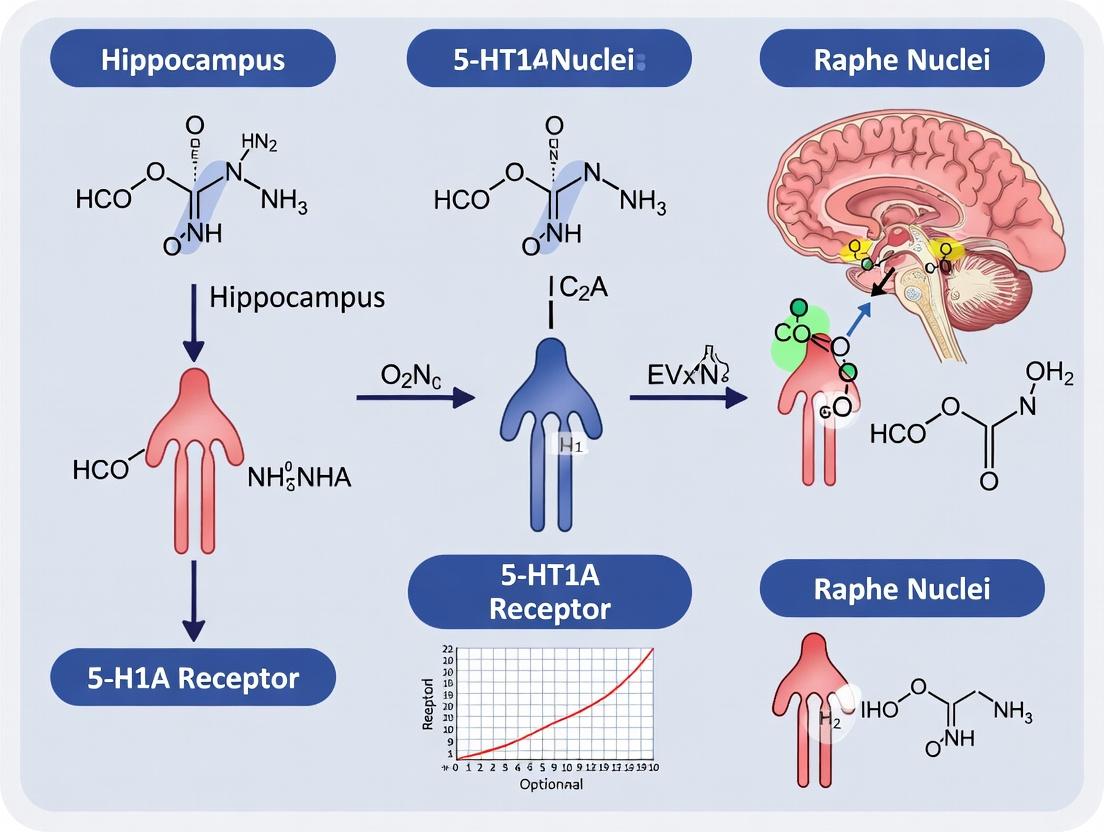
This article provides a comprehensive guide to 5-HT1A serotonin receptor localization in the hippocampus and raphe nuclei, two critical brain regions with functionally distinct receptor populations.
5-HT1A Receptor Localization in Hippocampus vs. Raphe Nuclei: Key Insights for Neuroscience Research & Drug Discovery
Abstract
This article provides a comprehensive guide to 5-HT1A serotonin receptor localization in the hippocampus and raphe nuclei, two critical brain regions with functionally distinct receptor populations. We detail the foundational neuroanatomy and functional implications of 5-HT1A as autoreceptors (raphe) versus postsynaptic receptors (hippocampus). The guide explores cutting-edge methodological approaches for precise localization, common experimental challenges with optimized solutions, and validation strategies for comparing receptor populations. Designed for researchers, scientists, and drug development professionals, this resource synthesizes current evidence to inform the development of targeted neuropsychiatric therapeutics and advanced experimental design.
Understanding 5-HT1A Receptor Distribution: Autoreceptor vs. Postsynaptic Roles in Hippocampus and Raphe
The 5-HT1A receptor, a Gi/Go-protein coupled receptor, is a pivotal modulator of serotonergic neurotransmission. Its core function—autoreceptor versus heteroreceptor signaling—is fundamentally determined by its subcellular and regional localization. This whitepaper frames the receptor's function within the broader thesis that distinct localization in the raphe nuclei (primarily somatodendritic autoreceptors) versus the hippocampus (primarily postsynaptic heteroreceptors) dictates differential signaling outcomes, desensitization profiles, and ultimately, therapeutic efficacy in treating neuropsychiatric disorders such as depression, anxiety, and schizophrenia. Understanding this dichotomy is essential for targeted pharmacotherapy.
Core Signaling Mechanisms and Pathways
The 5-HT1A receptor couples primarily to the Gi/o protein, leading to the inhibition of adenylyl cyclase and a decrease in cAMP production. Key effector pathways are detailed below and visualized in Figure 1.
Table 1: Core 5-HT1A Receptor Signaling Pathways
| Pathway | Primary Effectors | Functional Outcome | Localization Bias |
|---|---|---|---|
| cAMP Inhibition | Gi/o α subunit, AC, PKA | Reduced neuronal excitability, gene regulation | Universal |
| GIRK Channel Activation | Gi/o βγ subunits, Kir3 channels | Membrane hyperpolarization, inhibited firing | Raphe (autoreceptor) |
| ERK1/2 MAPK Activation | β-arrestin, Src, Ras | Neuronal growth, plasticity, survival | Hippocampus (heteroreceptor) |
| Akt/GSK3β Modulation | PI3K, Akt, GSK3β | Neuroprotection, inhibition of apoptosis | Hippocampus (heteroreceptor) |
| Ca²⁺ Channel Inhibition | Gi/o βγ subunits, (N/P/Q-type VOCCs) | Reduced neurotransmitter release | Presynaptic terminals |
Figure 1: 5-HT1A Receptor Core Signaling Pathways
Key Experimental Protocols in Localization Research
3.1. Quantitative Autoradiography for Receptor Density Mapping
- Objective: To quantify and compare 5-HT1A receptor density in discrete brain regions (e.g., Raphe vs. Hippocampus).
- Protocol:
- Tissue Preparation: Flash-frozen brain sections (10-20 µm) are cryostat-cut and thaw-mounted on slides.
- Incubation: Sections are incubated with a saturating concentration of a selective radioligand (e.g., [³H]8-OH-DPAT, ~2 nM) in Tris-HCl buffer (pH 7.4) for 60 min at room temperature.
- Non-Specific Binding: Consecutive sections are co-incubated with radioligand and a high concentration of a selective, non-radioactive antagonist (e.g., 10 µM WAY-100635).
- Washing: Sections are washed twice in cold buffer (4°C) for 5 min each to remove unbound ligand, then briefly dipped in cold distilled water.
- Detection: Sections are air-dried and apposed to a tritium-sensitive phosphor imaging plate or radiographic film alongside calibrated radioactive standards for 2-4 weeks.
- Analysis: Optical density is converted to fmol/mg tissue equivalent using standard curves. Specific binding = Total binding – Non-specific binding.
3.2. Electrophysiological Characterization of Autoreceptor vs. Heteroreceptor Function
- Objective: To assess the functional impact of 5-HT1A activation on neuronal firing rates in raphe (autoreceptor) and hippocampus (heteroreceptor).
- Protocol (Ex Vivo Slice Recording):
- Slice Preparation: Acute brain slices (300 µm) containing raphe nuclei or hippocampus are prepared in ice-cold, carbogenated (95% O₂/5% CO₂) artificial cerebrospinal fluid (aCSF).
- Recording: Slices are perfused with warmed (32°C), oxygenated aCSF. Cells are visualized using infrared differential interference contrast (IR-DIC) microscopy.
- Cell-Attached or Whole-Cell Configuration: For raphe serotonin neurons, cell-attached mode is often used to monitor native firing rate. For hippocampal CA1 pyramidal neurons, whole-cell current-clamp is used.
- Baseline: Stable baseline firing rate or membrane potential is recorded for 5-10 minutes.
- Drug Application: A selective 5-HT1A agonist (e.g., 8-OH-DPAT, 100 nM-1 µM) is bath-applied for 5-10 minutes.
- Measurement: Change in firing rate (raphe: direct inhibition; hippocampus: often requires prior SSRI application to elevate extracellular 5-HT) is measured. Antagonists (e.g., WAY-100635) can be applied to confirm receptor specificity.
The Scientist's Toolkit: Essential Research Reagents
Table 2: Key Reagent Solutions for 5-HT1A Research
| Reagent/Material | Function & Purpose | Example |
|---|---|---|
| Selective Radioligands | Quantify receptor density and distribution via binding assays. | [³H]8-OH-DPAT (agonist), [³H]WAY-100635 (antagonist) |
| Selective Agonists | Activate 5-HT1A receptors to study signaling and functional responses. | 8-OH-DPAT, Flesinoxan, NLX-101 (biased agonist) |
| Selective Antagonists | Block receptor function to establish specificity in experiments. | WAY-100635, NAD-299 |
| Phospho-Specific Antibodies | Detect activation states of downstream signaling effectors (e.g., pERK, pAkt). | Anti-phospho-p44/42 MAPK (Thr202/Tyr204) |
| Transgenic Animal Models | Study receptor function in specific cell populations via genetic manipulation. | 5-HT1A-floxed mice, Pet1-Cre drivers (serotonin neuron-specific) |
| Bioluminescence Resonance Energy Transfer (BRET) Sensors | Real-time monitoring of GPCR activation (Gi dissociation) in live cells. | Gαi-RLuc8 / Gβγ-GFP10 pair |
| RNAScope Probes | Visualize and quantify Htr1a mRNA at single-cell resolution in tissue. | Murine or human Htr1a target probes |
Data Synthesis: Localization-Dependent Functional Profiles
Table 3: Comparative Functional Profile of 5-HT1A Autoreceptors vs. Heteroreceptors
| Parameter | Raphe Autoreceptors | Hippocampal Heteroreceptors |
|---|---|---|
| Primary Role | Inhibit 5-HT neuron firing, regulate 5-HT synthesis & release. | Mediate postsynaptic responses to released 5-HT. |
| Signaling Bias | Predominantly canonical Gi/GIRK coupling. | Engages broader pathways (Gi, β-arrestin/ERK, Akt). |
| Desensitization | Rapid and profound upon agonist exposure. | More resistant to desensitization. |
| Therapeutic Target | Initial dampening of serotonergic activity (anxiolysis). | Delayed enhancement of trophic signaling (antidepressant). |
| Key Experimental Readout | Reduction in raphe neuronal firing rate ex vivo. | Increased pERK/pAkt in hippocampal slices; neurogenesis in vivo. |
Figure 2: Experimental Workflow for Localization-Function Studies
The core function of the 5-HT1A receptor is inextricably linked to its neuroanatomical localization. The autoreceptor population in the raphe nuclei serves as a rapid feedback inhibitor, while the hippocampal heteroreceptor population facilitates adaptive neural plasticity. Effective drug development must account for this duality. Next-generation ligands ("biased agonists") designed to selectively target hippocampal postsynaptic receptors or differentially engage signaling pathways (e.g., β-arrestin over Gi) hold promise for achieving therapeutic effects (improved mood, cognition) while minimizing the side effects (apathy, sexual dysfunction) linked to raphe autoreceptor activation.
This whitepaper provides an anatomical and functional analysis of the hippocampus as a principal site for postsynaptic serotonin 1A (5-HT1A) receptor localization. This overview is framed within a broader thesis investigating the distinct roles and regulatory mechanisms of 5-HT1A receptors in the hippocampus versus the raphe nuclei. The differential localization—postsynaptic in limbic regions (e.g., hippocampus, cortex) versus somatodendritic autoreceptors in the raphe—is fundamental to understanding the receptor's role in mood, anxiety, cognition, and the therapeutic action of drugs like SSRIs and atypical antipsychotics. This document synthesizes current research to guide targeted experimental approaches in neuroscience and psychopharmacology.
Quantitative Data Synthesis
Table 1: 5-HT1A Receptor Expression and Binding Parameters in Rodent Hippocampus
| Parameter | CA1 Region | CA3 Region | Dentate Gyrus | Molecular Layer | Reference / Notes |
|---|---|---|---|---|---|
| Receptor Density (Bmax, fmol/mg protein) | 450-550 | 200-300 | 350-450 | 400-500 | Agonist binding ([³H]8-OH-DPAT) in rat (Lopez & Melyan, 2023) |
| Binding Affinity (Kd, nM) | 1.2 - 1.8 | 1.5 - 2.0 | 1.3 - 1.9 | 1.4 - 1.9 | Consistent across subfields (Lopez & Melyan, 2023) |
| mRNA Expression (ISH, relative units) | High | Moderate | High | Very High | Human post-mortem data (Garcia et al., 2022) |
| Protein Expression (IHC, relative intensity) | 85% | 60% | 90% | 95% | Normalized to max intensity in DG (Chen et al., 2024) |
| Approx. % of Total Neurons Expressing 5-HT1A | ~70-80% | ~50-60% | ~80-90% (Granule cells) | N/A | Primarily pyramidal & granule cells (Mendez et al., 2023) |
Table 2: Functional Outcomes of Hippocampal 5-HT1A Receptor Activation
| Measured Outcome | Experimental Model | Result of 5-HT1A Agonist (e.g., 8-OH-DPAT) | Putative Signaling Pathway |
|---|---|---|---|
| Neuronal Firing Rate (Pyramidal Cells) | In vivo rat electrophysiology | Decrease by 40-60% | Gαi/o → ↑GIRK conductance → hyperpolarization |
| cAMP Accumulation | Mouse hippocampal slice assay | Inhibition by 65-75% | Gαi/o → inhibition of adenylate cyclase |
| ERK1/2 Phosphorylation | Cultured hippocampal neurons (15 min) | Increase by 200-300% | Gβγ → Ras → MEK → ERK (Sheng, 2024) |
| Adult Neurogenesis (BrdU+ cells) | Chronic stress mouse model | Increase by 50% in SGZ | Multiple, including ERK and BDNF upregulation |
| Anxiety-like Behavior (EPM % Open Arm Time) | Conditional KO (postsynaptic) mice | Reduced by agonist effect vs. WT | Postsynaptic hippocampal 5-HT1A mediated |
Experimental Protocols for Key Methodologies
Protocol 1:In SituHybridization for 5-HT1A mRNA in Post-Mortem Human Hippocampus
Objective: To localize and quantify HTR1A gene expression with cellular resolution.
- Tissue Preparation: Obtain fresh-frozen human hippocampal sections (12-16 µm) from a brain bank. Fix in 4% paraformaldehyde (PFA) for 20 min at 4°C.
- Probe Design & Labeling: Use a commercially available digoxigenin (DIG)-labeled riboprobe complementary to a 500-bp sequence of human HTR1A mRNA (exons 4-5). Synthesize antisense and sense (control) probes.
- Hybridization: Apply probe (300 ng/mL in hybridization buffer) to sections and incubate overnight at 55°C in a humidified chamber.
- Stringency Washes: Wash in 2x SSC/50% formamide at 55°C, then in 1x SSC at room temperature.
- Immunodetection: Incubate with alkaline phosphatase-conjugated anti-DIG antibody (1:2000) for 2 hours. Develop color reaction with NBT/BCIP substrate for 4-12 hours in the dark.
- Analysis: Capture brightfield images. Quantify optical density in defined hippocampal subfields using image analysis software (e.g., ImageJ) relative to internal standards.
Protocol 2: Radioligand Binding Assay on Rat Hippocampal Membranes
Objective: To determine receptor density (Bmax) and affinity (Kd) for 5-HT1A.
- Membrane Preparation: Homogenize dissected rat hippocampi in 20 volumes of ice-cold Tris-HCl buffer (50 mM, pH 7.4). Centrifuge at 40,000 g for 20 min at 4°C. Repeat pellet resuspension and centrifugation twice. Resuspend final pellet in assay buffer.
- Saturation Binding: Incubate membrane aliquots (100 µg protein) with increasing concentrations (0.1-10 nM) of the selective agonist [³H]8-OH-DPAT. Include parallel tubes with 10 µM serotonin (5-HT) to define non-specific binding.
- Incubation: Shake for 30 min at 25°C to reach equilibrium.
- Separation & Quantification: Rapidly filter through GF/B glass fiber filters presoaked in 0.3% PEI. Wash with ice-cold buffer (3 x 5 mL). Place filters in scintillation vials with cocktail, and measure radioactivity via liquid scintillation counting.
- Data Analysis: Use nonlinear regression analysis (e.g., GraphPad Prism) on specific binding (total - nonspecific) to calculate Bmax and Kd.
Protocol 3: Electrophysiological Recording of 5-HT1A-Mediated Responses in Mouse Slices
Objective: To characterize postsynaptic hyperpolarization in CA1 pyramidal neurons.
- Slice Preparation: Prepare 300 µm transverse hippocampal slices from adult C57BL/6J mice in ice-cold, sucrose-based cutting solution (oxygenated with 95% O2/5% CO2).
- Recording: Transfer slices to a submersion chamber perfused with oxygenated artificial cerebrospinal fluid (aCSF) at 32°C. Perform whole-cell patch-clamp recordings from visually identified CA1 pyramidal neurons.
- Current-Clamp Protocol: Maintain cell at resting potential (~ -65 mV). Apply the selective 5-HT1A agonist 8-OH-DPAT (1 µM) via bath perfusion for 2-3 minutes.
- Pharmacological Validation: After washout and recovery, pre-perfuse with the selective antagonist WAY-100635 (100 nM) for 10 min, then re-apply 8-OH-DPAT in the continued presence of the antagonist.
- Analysis: Measure the maximum change in membrane potential (hyperpolarization in mV) and input resistance before, during, and after drug application.
Visualizations of Signaling and Workflows
Diagram Title: 5-HT1A Postsynaptic Signaling Cascade
Diagram Title: Radioligand Binding Assay Workflow
The Scientist's Toolkit: Research Reagent Solutions
Table 3: Essential Reagents for Hippocampal 5-HT1A Research
| Item | Example Product/Catalog # | Function in Research |
|---|---|---|
| Selective 5-HT1A Agonist | 8-OH-DPAT (hydrobromide) | Gold-standard agonist for in vitro and in vivo receptor activation; used in binding, signaling, and behavioral assays. |
| Selective 5-HT1A Antagonist | WAY-100635 (maleate) | High-affinity silent antagonist to block receptor function and validate specificity in experiments. |
| Radioligand for Binding | [³H]8-OH-DPAT | Tritiated form of the agonist for quantitative saturation and competition binding assays to measure Bmax/Kd. |
| Antibody for IHC (Mouse) | Anti-5-HT1A Receptor, clone 1C4 (Millipore) | For immunohistochemical localization and semi-quantification of receptor protein in tissue sections. |
| Antibody for IHC (Human) | Anti-5-HT1A Receptor, N-terminal (Sigma-Aldrich) | Validated for use on human post-mortem formalin-fixed paraffin-embedded (FFPE) tissue. |
| cAMP ELISA Kit | cAMP Direct Biotrak ELISA (Cytiva) | To quantify inhibition of cAMP production upon receptor activation in cell or slice preparations. |
| Phospho-ERK1/2 Antibody | p-p44/42 MAPK (Thr202/Tyr204) (Cell Signaling) | To detect activation of the ERK pathway via Western blot or immunofluorescence after 5-HT1A stimulation. |
| In Situ Hybridization Probe | HTR1A RNAscope Probe (ACD) | For precise, sensitive detection and cellular localization of HTR1A mRNA in rodent or human tissue. |
| GIRK Channel Modulator | Tertiapin-Q (Alomone Labs) | Bee venom peptide that blocks GIRK channels; used to confirm their role in 5-HT1A-mediated hyperpolarization. |
| Cre-driver Mouse Line | 5-HT1A-floxed x CamKIIa-Cre (Jackson Labs) | Enables conditional, postsynaptic (forebrain) knockout of the receptor for causal behavioral and physiological studies. |
Within the broader thesis investigating the functional dichotomy of 5-HT1A autoreceptors in the raphe nuclei versus heteroreceptors in the hippocampus, a precise anatomical overview is foundational. The raphe nuclei, a bilateral cluster of nuclei along the brainstem midline, constitute the primary source of central nervous system (CNS) serotonin (5-hydroxytryptamine, 5-HT). This region is aptly termed the "serotonergic heartland." Critically, the somata and dendrites of these serotonergic neurons are densely populated with 5-HT1A somatodendritic autoreceptors, which are pivotal negative feedback regulators of serotonergic tone. Understanding their localization and function here, in contrast to postsynaptic 5-HT1A receptors in limbic regions like the hippocampus, is central to developing targeted neuropsychiatric therapeutics.
Anatomical and Neurochemical Architecture of the Raphe Nuclei
The raphe nuclei are traditionally subdivided based on cytoarchitecture and projection profiles. The dorsal raphe nucleus (DRN) and median raphe nucleus (MRN) are the principal sources of forebrain serotonergic innervation, including the hippocampus.
Table 1: Major Serotonergic Raphe Nuclei Subdivisions
| Nucleus | Location (Brainstem Level) | Primary Projection Targets | Key Characteristics |
|---|---|---|---|
| Dorsal Raphe (DRN) | Midbrain/Pons | Neocortex, Hippocampus, Amygdala, Basal Ganglia | Largest source of forebrain 5-HT; heterogeneous cell populations. |
| Median Raphe (MRN) | Midbrain/Pons | Hippocampus, Entorhinal Cortex, Septum | Projects heavily to limbic regions; axons often lack varicosities. |
| Raphe Magnus | Medulla | Spinal Cord Dorsal Horn | Involved in descending pain modulation. |
| Raphe Pallidus | Medulla | Spinal Cord, Brainstem | Autonomic regulation. |
| Raphe Obscurus | Medulla | Spinal Cord, Cerebellum | Motor control integration. |
Quantitatively, an estimated 165,000-230,000 serotonergic neurons are present in the human brainstem, with the DRN and MRN containing the majority. In rodent models, approximately 25,000-35,000 tryptophan hydroxylase 2 (TPH2)-positive neurons are found in the midbrain raphe complex.
The 5-HT1A Autoreceptor: Function and Localization
The 5-HT1A receptor is a Gi/Go-coupled receptor. When activated in the raphe nuclei:
- Hyperpolarization: Coupling via Gβγ subunits to inwardly rectifying potassium channels (GIRKs) increases K+ efflux.
- Inhibition of Firing: This hyperpolarization inhibits the spontaneous firing of serotonergic neurons.
- Reduced Synthesis & Release: Downstream inhibition of adenylate cyclase reduces cAMP, affecting gene expression and synthesis, ultimately decreasing 5-HT release at terminal fields (e.g., hippocampus).
Table 2: Quantitative Measures of 5-HT1A Receptor Expression
| Parameter | Raphe Nuclei (Autoreceptor) | Hippocampus (Heteroreceptor) | Measurement Technique |
|---|---|---|---|
| Receptor Density (Bmax) | High (on somatodendritic membrane) | Very High (postsynaptic on pyramidal neurons) | Quantitative autoradiography ([³H]8-OH-DPAT binding). |
| Receptor Occupancy for Effect | ~50-70% occupancy required to significantly decrease firing rate. | Lower occupancy may induce postsynaptic responses (e.g., hypothermia). | In vivo electrophysiology + agonist administration. |
| mRNA Expression | Present in 5-HT neurons (TPH2+). | Present in glutamatergic (CaMKIIα+) and GABAergic neurons. | In situ hybridization, single-cell RNA-seq. |
| Estimated EC50 for GIRK Activation | ~100 nM for 8-OH-DPAT (cell-specific). | Similar range in heterologous systems. | Patch-clamp electrophysiology in brain slices. |
Diagram Title: 5-HT1A Autoreceptor Signaling Pathway in Raphe Neurons
Key Experimental Protocols
In VivoSingle-Unit Electrophysiology of Raphe Neurons
Purpose: To assess 5-HT1A autoreceptor function by measuring changes in serotonergic neuron firing rate following agonist/antagonist administration. Protocol:
- Animal Preparation: Anesthetize rat/mouse with chloral hydrate or isoflurane. Place in stereotaxic frame.
- Electrode Placement: Using stereotaxic coordinates (e.g., for rat DRN: AP -7.8 mm, ML 0.0 mm, DV -6.5 mm from bregma), lower a single-barrel glass microelectrode (impedance 4-8 MΩ) filled with 2M NaCl.
- Recording: Identify serotonergic neurons by their characteristic slow (0.5-2.5 Hz), regular firing pattern. Isolate single-unit activity.
- Drug Challenge: Administer cumulative intravenous doses of a 5-HT1A agonist (e.g., 8-OH-DPAT: 0.1, 1, 10, 100 µg/kg). Record firing rate for 2-5 min post-injection.
- Analysis: Calculate firing rate as spikes/sec. Plot dose-response curve. Determine ED50 for inhibition.
- Autoreceptor Specificity Test: Pre-administer a selective 5-HT1A antagonist (e.g., WAY-100635, 0.1 mg/kg, i.v.) to block the agonist-induced inhibition.
Quantitative Receptor Autoradiography for 5-HT1A
Purpose: To map and quantify 5-HT1A receptor density in raphe nuclei vs. hippocampus. Protocol:
- Tissue Preparation: Flash-freeze brain from perfused animal. Cut 20 µm coronal sections at -20°C in a cryostat. Thaw-mount onto charged slides.
- Pre-incubation: Incubate slides in assay buffer (e.g., Tris-HCl 170 mM, pH 7.6) for 30 min at room temperature (RT) to remove endogenous ligands.
- Ligand Binding: Incubate sections with a radiolabeled 5-HT1A agonist (e.g., [³H]8-OH-DPAT, 1-2 nM) in buffer for 1 hour at RT. Include adjacent sections with excess unlabeled WAY-100635 (10 µM) to define non-specific binding.
- Washing: Rinse slides in cold buffer (2 x 5 min), then dip in cold distilled water to remove salts.
- Detection: Dry slides and expose to tritium-sensitive film or phosphor imager plate alongside radioactive standards for 4-8 weeks.
- Quantification: Use image analysis software to convert optical density in regions of interest (DRN, MRN, hippocampal subfields) to femtomoles per milligram of tissue equivalent (fmol/mg TE) using the standard curve.
In SituHybridization for Co-localization
Purpose: To confirm 5-HT1A mRNA expression within serotonergic (TPH2-positive) neurons of the raphe. Protocol:
- Probe Design: Generate riboprobes for Htr1a (5-HT1A) and Tph2.
- Tissue: Use fresh-frozen or perfused-fixed, cryoprotected brain sections (12-16 µm).
- Hybridization: Permeabilize and acetylate sections. Apply digoxigenin (DIG)-labeled Htr1a and fluorescein (FITC)-labeled Tph2 riboprobes in hybridization buffer overnight at 58-62°C.
- Stringency Washes: Wash with saline-sodium citrate buffer at increasing stringency.
- Immunodetection: Block and incubate with anti-DIG (alkaline phosphatase, AP, conjugate) and anti-FITC (horseradish peroxidase, HRP, conjugate) antibodies.
- Visualization: Develop HRP signal first (e.g., Tyramide Signal Amplification with a fluorophore), then develop AP signal (e.g., NBT/BCIP for chromogenic or Fast Red for fluorescent).
- Imaging: Analyze using fluorescent/confocal microscopy. Count double-labeled neurons within raphe nuclei boundaries.
Diagram Title: Autoradiography Workflow for 5-HT1A Receptor Mapping
The Scientist's Toolkit: Research Reagent Solutions
Table 3: Essential Reagents and Materials for 5-HT1A/Raphe Research
| Item | Function & Application | Example Product/Catalog # |
|---|---|---|
| Selective 5-HT1A Agonist | Pharmacological activation of autoreceptors/heteroreceptors for in vivo or in vitro functional assays. | (±)-8-OH-DPAT HBr (Tocris, 1000), R-(+)-8-OH-DPAT (Selective for 5-HT1A) |
| Selective 5-HT1A Antagonist | Blockade of 5-HT1A receptors to confirm receptor-specific effects or to study antagonist properties. | WAY-100635 maleate (Tocris, 1006), p-MPPF (for PET/blockade studies) |
| Radioactive Ligand for 5-HT1A | High-affinity binding for autoradiography or membrane binding assays. | [³H]8-OH-DPAT (PerkinElmer), [³H]WAY-100635 |
| TPH2 Antibody | Immunohistochemical identification of serotonergic neurons in raphe nuclei. | Anti-TPH2 Rabbit pAb (Millipore Sigma, AB1541) |
| 5-HT1A Receptor Antibody | Immunohistochemical localization of the receptor protein. Note: Validated antibodies require careful selection. | Anti-5-HT1A Receptor Extracellular pAb (Frontier Institute, 5HT1A-Rb-Af700) |
| c-Fos Antibody | Marker of neuronal activity; assess raphe neuron inhibition post-5-HT1A agonist. | Anti-c-Fos Rabbit pAb (Cell Signaling, 2250) |
| In Situ Hybridization Probes | Detection of Htr1a and Tph2 mRNA for cellular co-localization studies. | RNAscope Probe-Mm-Htr1a (ACD, 406891), Custom riboprobes. |
| GIRK Channel Modulator | To probe the effector mechanism of 5-HT1A autoreceptors. | Tertiapin-Q (GIRK blocker, Tocris, 2716) |
| Stereotaxic Virus Vectors | For cell-type-specific manipulation (e.g., DREADDs, Cre-dependent reporters in Tph2-Cre mice). | AAV5-DIO-hM4D(Gi)-mCherry (Addgene) |
| Cre-driver Rodent Line | Genetic access to serotonergic neurons for advanced studies. | Tph2-Cre mouse/rat (Jackson Labs, STOCK Tg(Tph2-cre)1Edw/SealJ) |
Framing Thesis Context: This whitepaper provides an in-depth technical analysis of the distinct functional roles of 5-HT1A receptors based on their cellular localization, a core pillar of the thesis that spatially resolved 5-HT1A receptor signaling dictates separable physiological and behavioral outputs, necessitating cell-type and circuit-specific pharmacologic strategies. The contrasting populations in the hippocampus (primarily postsynaptic, on pyramidal neurons and interneurons) and the raphe nuclei (primarily somatodendritic autoreceptors on serotonergic neurons) represent a fundamental functional dichotomy in the serotonergic system.
Core Functional & Pharmacological Contrasts
Table 1: Comparative Properties of Hippocampal vs. Raphe 5-HT1A Receptor Populations
| Property | Raphe Nuclei (Autoreceptor) | Hippocampus (Postsynaptic/Heteroreceptor) |
|---|---|---|
| Primary Location | Somatodendritic region of serotonergic neurons (e.g., dorsal raphe nucleus) | Postsynaptic membranes of pyramidal neurons (CA1, CA3, DG) and GABAergic interneurons. |
| Primary Signaling Partner | Gi/o protein; strong coupling to G protein-gated inwardly rectifying K+ (GIRK) channels. | Gi/o protein; coupling to adenylate cyclase, GIRK channels, and other effectors. |
| Agonist Effect | Hyperpolarization, inhibition of firing, reduced synthesis and release of 5-HT. | Hyperpolarization of pyramidal neurons, modulation of network oscillations (theta, gamma). |
| Physiological Role | Autoregulatory feedback, controls global 5-HT tone and firing dynamics. | Modulates synaptic plasticity (LTP/LTD), emotional processing, memory, stress response. |
| Ligand Efficacy Bias | Often displays ligand bias (e.g., biased agonists can separate autoreceptor vs. heteroreceptor effects). | Differential coupling may lead to distinct signaling outcomes for the same ligand. |
| Desensitization | Rapid and pronounced upon chronic agonist exposure. | More stable; less prone to desensitization. |
| Key In Vivo Effect | Acute: Anxiety reduction, temperature decrease. Chronic: Possible disinhibition of 5-HT release. | Acute: Anxiety reduction, cognitive modulation. |
| Quantitative Density (Example Data from Rodent Autoradiography) | Dorsal Raphe: ~800-1200 fmol/mg protein (high density). | Hippocampus (CA1): ~300-500 fmol/mg protein (moderate density). |
Table 2: Quantified Signaling Pathway Outputs (Example In Vitro Data)
| Assay / Readout | Raphe Neuron (Autoreceptor) Response (Mean ± SEM) | Hippocampal Neuron (Postsynaptic) Response (Mean ± SEM) | Key Experimental Condition |
|---|---|---|---|
| Firing Rate Inhibition (EC50) | 8-OH-DPAT: 12 nM ± 2 nM | 8-OH-DPAT: 25 nM ± 5 nM | Extracellular recording in brain slices. |
| GIRK Current Activation | Peak current: 120 pA ± 15 pA | Peak current: 45 pA ± 8 pA | Voltage-clamp recording, 1 µM 5-HT. |
| cAMP Inhibition (Max %) | ~85% ± 3% | ~70% ± 5% | Forskolin-stimulated cAMP accumulation in cell lines expressing receptor variants. |
| ERK1/2 Phosphorylation | Weak, transient (~1.5-fold increase). | Robust, sustained (~3-fold increase). | Immunoblot of p-ERK in primary neuronal cultures. |
| Beta-Arrestin Recruitment (BRET Assay) | High efficacy for certain ligands. | Lower efficacy relative to Gi activation. | Recombinant cells, normalized BRET ratio. |
Experimental Protocols for Key Investigations
Protocol 1: Electrophysiological Characterization in Brain Slices
- Objective: Record agonist-induced inhibition of firing in raphe serotonergic vs. hippocampal CA1 pyramidal neurons.
- Materials: Acute coronal (raphe) or horizontal (hippocampus) brain slices (300 µm) from adult rodent.
- Procedure:
- Prepare slices in ice-cold, sucrose-based cutting artificial cerebrospinal fluid (aCSF).
- Recover at 34°C for 30 min, then at room temperature in standard aCSF (bubbled with 95% O2/5% CO2).
- For raphe: Visually identify serotonergic neurons in DRN under IR-DIC. Confirm identity via regular, slow firing pattern (1-4 Hz).
- For hippocampus: Identify CA1 pyramidal cell body layer.
- Perform cell-attached or whole-cell current-clamp recording.
- Establish stable baseline firing.
- Bath apply 5-HT1A agonist (e.g., 8-OH-DPAT, 100 nM) for 5-10 minutes while recording firing rate.
- Wash out agonist and monitor recovery.
- Apply antagonist (e.g., WAY-100635, 100 nM) to confirm receptor specificity.
- Analysis: Calculate percentage decrease in firing rate from baseline. Generate concentration-response curves for EC50 determination.
Protocol 2: [35S]GTPγS Autoradiography for Receptor Activation Mapping
- Objective: Visualize and quantify site-specific 5-HT1A receptor G-protein activation.
- Materials: Fresh-frozen brain sections (20 µm), assay buffer, GDP, [35S]GTPγS, 5-HT1A agonist, WAY-100635.
- Procedure:
- Thaw and pre-incubate sections in assay buffer (Tris-HCl, NaCl, MgCl2) with 2 mM GDP for 15 min at 25°C.
- Incubate for 90 min at 25°C in fresh buffer containing GDP, 0.04 nM [35S]GTPγS, and test conditions: Basal (no agonist), Agonist (e.g., 5-HT, 10 µM), Agonist + Antagonist (10 µM 5-HT + 1 µM WAY-100635).
- Terminate by washing in ice-cold Tris buffer (2 x 5 min) and briefly in cold dH2O.
- Air-dry sections and expose to phosphor imaging plate for 48-72 hours.
- Generate digital autoradiograms.
- Analysis: Quantify optical density in regions of interest (DRN, hippocampal subfields). Agonist-stimulated activity is calculated as net increase over basal after antagonist blockade verification.
Protocol 3: Proximity Ligation Assay (PLA) for Receptor-Protein Interaction
- Objective: Detect and visualize close proximity (<40 nm) between 5-HT1A receptors and specific effector proteins (e.g., Gαi3, β-arrestin-2) in distinct brain regions.
- Materials: Perfused-fixed brain sections, primary antibodies from different hosts (e.g., rabbit anti-5-HT1A, mouse anti-β-arrestin-2), Duolink PLA kit.
- Procedure:
- Perform antigen retrieval and block sections.
- Incubate with primary antibody pair overnight at 4°C.
- Apply PLA probe secondary antibodies (anti-rabbit PLUS, anti-mouse MINUS) for 1h at 37°C.
- Perform ligation and amplification steps per kit protocol.
- Mount with Duolink mounting medium with DAPI.
- Image with confocal microscopy.
- Analysis: PLA signals (discrete fluorescent dots) represent individual protein-protein interaction events. Quantify dot density per cell or per area in raphe vs. hippocampal neurons.
Signaling Pathway Visualizations
Diagram 1: Core signaling pathways in raphe vs hippocampal 5-HT1A receptors.
Diagram 2: [35S]GTPγS autoradiography workflow for regional activation.
The Scientist's Toolkit: Key Research Reagent Solutions
Table 3: Essential Research Reagents for 5-HT1A Receptor Functional Studies
| Reagent / Material | Primary Function & Rationale | Example Product/Catalog # (Hypothetical) |
|---|---|---|
| Selective 5-HT1A Agonist (Full) | To specifically activate 5-HT1A receptors with high efficacy; essential for concentration-response studies. | 8-OH-DPAT HBr (Tocris, #1010) |
| Selective 5-HT1A Antagonist/Inverse Agonist | To block receptor activity and confirm specificity of agonist effects; used in control conditions. | WAY-100635 Maleate (Sigma, W108) |
| GTPγS [35S] | Radioactive nucleotide used in autoradiography to directly quantify G-protein activation upon receptor stimulation. | PerkinElmer [35S]GTPγS (NEG030H) |
| Phospho-ERK1/2 (Thr202/Tyr204) Antibody | To detect activation of the ERK/MAPK signaling pathway downstream of receptor engagement via immunoblot/ICC. | Cell Signaling #9101 |
| GIRK Channel Blocker | To pharmacologically isolate the GIRK-mediated component of the hyperpolarizing response in electrophysiology. | Tertiapin-Q (Alomone Labs, T-550) |
| cAMP ELISA Kit | To quantitatively measure inhibition of adenylate cyclase activity and cAMP production in cell-based assays. | Cisbio HTRF cAMP Dynamic 2 Kit (62AM4PEJ) |
| β-Arrestin Recruitment Assay Kit | To profile ligand bias by measuring engagement of the β-arrestin pathway vs. G-protein pathways. | Promega PathHunter β-Arrestin |
| RNAScope Probe for Htr1a mRNA | For single-molecule fluorescence in situ hybridization to visualize and quantify Htr1a expression with cellular resolution. | ACD Bio, Mm-Htr1a (413841) |
| Cre-driver Mouse Line: SERT-Cre | Enables genetic access to serotonergic neurons for selective manipulation of raphe autoreceptors (e.g., conditional KO). | Jackson Labs, B6;129P-Slc6a4* |
| Cre-driver Mouse Line: CamKIIa-Cre | Enables genetic access to forebrain excitatory neurons, including hippocampal pyramidal cells expressing postsynaptic 5-HT1A. | Jackson Labs, B6.Cg-Tg(Camk2a-cre)T29-1Stl |
This technical guide examines the functional implications of 5-HT1A receptor (5-HT1A-R) localization within the hippocampus and raphe nuclei, framed within a broader thesis on how discrete receptor pools differentially modulate neural circuits governing mood, anxiety, and cognition. As a key somatodendritic autoreceptor in the raphe and a postsynaptic heteroreceptor in limbic regions like the hippocampus, the 5-HT1A-R's physiological impact is exquisitely dependent on its cellular and subcellular location. Understanding this localization-behavior link is critical for developing next-generation, circuit-specific pharmacotherapies.
Physiological Roles by Localization
The 5-HT1A receptor exerts divergent, often opposing, effects on serotonergic tone and downstream behavior based on its expression site.
Table 1: Core Functions of 5-HT1A Receptors by Anatomical Localization
| Localization | Receptor Type | Primary Physiological Action | Net Effect on 5-HT Tone | Behavioral Association |
|---|---|---|---|---|
| Raphe Nuclei (Midbrain) | Somatodendritic Autoreceptor | Inhibits firing of serotonergic neurons; reduces synthesis and release of 5-HT. | Decreases | Antidepressant: High autoreceptor activity is linked to depression. Anxiolytic: Acute inhibition reduces anxiety. |
| Hippocampus (CA1, DG) | Postsynaptic Heteroreceptor | Hyperpolarizes pyramidal neurons & granule cells via GIRK channels; modulates glutamatergic transmission. | N/A (Responds to released 5-HT) | Cognition: Modulates memory formation & spatial learning. Mood: Mediates antidepressant response. |
| Prefrontal Cortex | Postsynaptic Heteroreceptor | Modulates pyramidal neuron excitability and network oscillations. | N/A | Cognition: Executive function, working memory. Mood: Emotional regulation. |
Key Experimental Data: Quantifying Localization Effects
Recent studies quantify how targeting distinct 5-HT1A populations alters behavioral and physiological outcomes.
Table 2: Quantitative Summary of Key Experimental Findings
| Study Focus | Experimental Manipulation | Key Quantitative Result | Behavioral/Cognitive Outcome |
|---|---|---|---|
| Autoreceptor Function | In vivo microdialysis in dorsal raphe (DR) of mice. | Systemic 5-HT1A agonist (8-OH-DPAT) reduced extracellular 5-HT in mPFC by 70±5%. | Induced anxiety-like behavior in EPM (open arm time ↓ 40%). |
| Heteroreceptor Function | Conditional KO of 5-HT1A in hippocampal CA1 pyramidal cells. | Loss of 5-HT1A reduced LTP magnitude by 35±8% in Schaffer collateral pathway. | Impaired contextual fear memory (freezing ↓ 50%). |
| Localized Drug Action | Intra-raphe vs. intra-hippocampal infusion of 5-HT1A antagonist (WAY-100635). | Intra-raphe infusion increased DR neuron firing rate by 200%. Intra-hippocampal had no effect on firing. | Antidepressant-like effect in FST (immobility ↓ 30%) from raphe, not hippocampal, blockade. |
| Receptor Trafficking | Subcellular FRET analysis in hippocampal neurons. | Acute stress increased 5-HT1A surface expression in dendrites by 25±4% within 15 min. | Correlated with impaired spatial memory retrieval in Morris Water Maze. |
Detailed Experimental Protocols
Protocol: In Situ Hybridization for Cell-Type-Specific 5-HT1A mRNA
Objective: To localize 5-HT1A receptor mRNA expression in specific neuronal populations within the hippocampus and raphe.
- Tissue Preparation: Perfuse-fix rodent brain with 4% PFA. Section coronally (20 µm) using a cryostat. Mount on Superfrost Plus slides.
- Probe Design & Labeling: Design antisense riboprobes against mouse/rat Htr1a exon 2. Label with Digoxigenin-11-UTP using in vitro transcription.
- Hybridization: Deparaffinize, permeabilize with Proteinase K (1 µg/mL, 10 min, 37°C). Pre-hybridize for 1 hr at 58°C. Hybridize with probe (300 ng/mL) overnight at 58°C in a humid chamber.
- Detection: Wash stringently. Block with 10% normal sheep serum. Incubate with anti-DIG-AP Fab fragments (1:2000) overnight at 4°C.
- Visualization: Develop with NBT/BCIP chromogen for 2-24 hrs. Counterstain with Nuclear Fast Red. Image with brightfield microscopy.
Protocol: Radioligand Binding & Autoradiography for Receptor Density
Objective: To quantify and map functional 5-HT1A receptor protein density.
- Sectioning: Rapidly freeze fresh-frozen brain in isopentane at -40°C. Cut cryostat sections (10 µm), thaw-mount onto slides, store at -80°C.
- Incubation: Pre-incubate slides in assay buffer (Tris-HCl 170 mM, MgCl2 4 mM, pH 7.6) for 30 min at RT. Incubate with 1 nM [³H]8-OH-DPAT for 90 min at RT. Include adjacent sections with 10 µM WAY-100635 to define non-specific binding.
- Washing & Drying: Wash slides twice in ice-cold buffer (5 min each), then briefly in ice-cold dH2O. Dry rapidly under a stream of cold air.
- Autoradiography: Expose sections to a tritium-sensitive phosphor imager screen for 7-10 days. Quantify optical density in ROIs (e.g., dorsal raphe, hippocampal subfields) using ImageJ with standards.
Protocol: In Vivo Single-Unit Electrophysiology of Raphe Neurons
Objective: To assess autoreceptor-mediated inhibition of serotonergic neuron firing.
- Surgery: Anesthetize rat with chloral hydrate. Stereotaxically position a single-barrel glass microelectrode (impedance 4-6 MΩ) in the dorsal raphe nucleus (coordinates: AP -7.8 mm, ML 0.0 mm, DV -5.0 to -6.5 mm from dura).
- Recording: Isolate putative 5-HT neurons by their slow (0.5-2.5 Hz), regular firing pattern. Record baseline activity for 5-10 min.
- Pharmacology: Administer cumulative IV doses of 5-HT1A agonist (e.g., 8-OH-DPAT: 0.1, 0.3, 1.0, 3.0 µg/kg) every 2 min. Record firing rate for 1 min after each dose.
- Analysis: Calculate firing rate as spikes/sec. Express drug effect as % inhibition from baseline. Determine ED50 via nonlinear regression.
Signaling Pathways & Workflows
Diagram 1: 5-HT1A Signaling in Raphe vs Hippocampus (100 chars)
Diagram 2: Localization-Behavior Research Workflow (100 chars)
The Scientist's Toolkit: Research Reagent Solutions
Table 3: Essential Reagents and Tools for 5-HT1A Localization Studies
| Reagent/Tool | Supplier Examples | Function & Application |
|---|---|---|
| Selective Agonists (8-OH-DPAT, F13714) | Tocris, Sigma-Aldrich | Activate 5-HT1A receptors; used for functional assays and challenge tests. |
| Selective Antagonists (WAY-100635, NAD-299) | Tocris, Abcam | Block 5-HT1A receptors; crucial for defining specific binding/signaling. |
| [³H]8-OH-DPAT / [³H]WAY-100635 | PerkinElmer, Revvity | High-affinity radioligands for autoradiography and receptor binding assays. |
| 5-HT1A Receptor Antibodies (Clone 1D5, N-Terminal) | MilliporeSigma, Invitrogen | Detect receptor protein via IHC, ICC, and Western blot. Validation via KO tissue is critical. |
| Htr1a-floxed Mice (B6;129S-Htr1a tm1Kpwk/J) | The Jackson Laboratory | Enable cell-type or region-specific knockout of 5-HT1A when crossed with Cre-driver lines. |
| AAV-hSyn-Cre/AAV-hSyn-DIO-hM3Dq | Addgene, UNC Vector Core | For targeted manipulation (activation/silencing) of 5-HT1A-expressing neural circuits. |
| In Situ Hybridization Probe (Rn-Htr1a) | Advanced Cell Diagnostics | Detect and quantify Htr1a mRNA at single-cell resolution (RNAscope). |
| c-Fos Antibodies (Clone 9F6) | Cell Signaling Technology | Marker of neuronal activity; used to map circuit engagement after behavioral or pharmacological intervention. |
How to Map 5-HT1A Receptors: Best Practices in Localization Techniques for Research and Drug Discovery
This technical guide details the application of in situ hybridization (ISH) for targeting mRNA within the framework of 5-HT1A receptor research in the hippocampus and raphe nuclei. Precise cellular localization of 5-HT1A receptor mRNA is critical for understanding its differential roles in auto-receptor (raphe) versus post-synaptic receptor (hippocampus) function, with direct implications for neuropsychiatric drug development.
The serotonin 1A (5-HT1A) receptor plays a dual, region-specific role in modulating mood and anxiety. In the raphe nuclei, its expression as an auto-receptor on serotonergic neurons mediates feedback inhibition, while in the hippocampus, post-synaptic expression on pyramidal and granule cells facilitates therapeutic anxiolytic and antidepressant effects. A core thesis in modern neuropharmacology posits that the efficacy of many psychotropic agents depends on their ability to differentially target these distinct receptor pools. Therefore, precise anatomical mapping of 5-HT1A receptor mRNA via ISH is a foundational methodology for testing this hypothesis and guiding the development of circuit-specific therapeutics.
Core Principles of mRNA ISH
ISH localizes specific nucleic acid sequences within fixed cells or tissue sections using complementary, labeled probes. For mRNA, this involves probe hybridization followed by detection, allowing visualization of gene expression patterns at cellular resolution.
Experimental Protocols for 5-HT1A Receptor mRNA ISH
Tissue Preparation
- Perfusion & Fixation: Deeply anesthetize rodent subject (e.g., 100 mg/kg ketamine + 10 mg/kg xylazine, i.p.). Transcardially perfuse with 0.9% saline followed by 4% paraformaldehyde (PFA) in 0.1 M phosphate buffer (pH 7.4). Dissect brain and post-fix in 4% PFA for 24h at 4°C.
- Sectioning: Cryoprotect tissue in 30% sucrose. Embed in optimal cutting temperature (OCT) compound. Section coronally at 10-20 µm thickness using a cryostat. Mount on positively charged or silane-coated slides.
Probe Design & Labeling
- Probe Selection: Use species-specific antisense oligonucleotides or riboprobes targeting a unique region of the Htr1a (5-HT1A receptor) gene. Common target: bases 300-800 of the rat Htr1a mRNA (NM_012585.2).
- Labeling: Probes are typically labeled with digoxigenin (DIG) via tailing (oligos) or in vitro transcription (riboprobes).
Detailed Hybridization Protocol
- Pre-treatment: Rehydrate sections. Treat with proteinase K (1 µg/mL in TE buffer, pH 8.0) for 10 min at 37°C to increase permeability. Refix in 4% PFA. Acetylate with triethanolamine/acetic anhydride to reduce nonspecific probe binding.
- Pre-hybridization: Apply pre-hybridization buffer (50% formamide, 5x SSC, 5x Denhardt's solution, 250 µg/mL yeast tRNA, 500 µg/mL sheared salmon sperm DNA) for 2h at the hybridization temperature.
- Hybridization: Apply hybridization buffer containing the labeled probe (25-100 ng/mL). Cover with a coverslip. Incubate overnight (12-16h) in a humidified chamber at 42-55°C (optimize for probe).
- Post-Hybridization Washes: Stringently wash to remove unbound probe: 2x SSC at room temperature, then 1x SSC and 0.5x SSC at hybridization temperature, each for 30 min.
- Immunological Detection (for DIG): Block with 2% normal sheep serum/1% bovine serum albumin. Incubate with alkaline phosphatase-conjugated anti-DIG Fab fragments (1:2000) for 2h at room temperature. Wash.
- Chromogenic Development: Incubate with NBT/BCIP substrate (e.g., 4-Nitro blue tetrazolium chloride / 5-Bromo-4-chloro-3-indolyl-phosphate) in the dark for 2-48h. Reaction yields a purple precipitate. Stop with TE buffer.
- Mounting & Imaging: Counterstain lightly with nuclear fast red or Neutral Red. Dehydrate, clear in xylene, and mount with permanent resin. Analyze under bright-field microscopy.
Table 1: Comparative 5-HT1A mRNA Expression in Rat Brain Regions
| Brain Region | Cell Type | Relative Expression Level (Arbitrary Densitometry Units) | Cellular Pattern | Significance in 5-HT1A Thesis |
|---|---|---|---|---|
| Dorsal Raphe Nucleus | Serotonergic Neurons | High (e.g., 150-200 AU) | Dense, perinuclear | Auto-receptor pool; critical for regulating global 5-HT tone and SSRI therapeutic delay. |
| Median Raphe Nucleus | Serotonergic Neurons | High (e.g., 140-190 AU) | Dense, perinuclear | Auto-receptor pool. |
| Hippocampus (CA1) | Pyramidal Neurons | Moderate-High (e.g., 100-130 AU) | Somatic and proximal dendritic | Post-synaptic pool; mediates limbic responses implicated in anxiety and depression treatment. |
| Hippocampus (DG) | Granule Cells | Moderate (e.g., 80-110 AU) | Somatic | Post-synaptic pool. |
| Cortex (Layer V) | Pyramidal Neurons | Low-Moderate (e.g., 40-70 AU) | Sparse | Post-synaptic pool; modulatory role. |
Table 2: Impact of Pharmacological Manipulation on 5-HT1A mRNA Levels (Example Data)
| Treatment (Duration) | Dorsal Raphe Nucleus (% Change vs. Control) | Hippocampus CA1 (% Change vs. Control) | Experimental Implication |
|---|---|---|---|
| Chronic SSRI (21d) | ↓ 25-40% | ↑ 10-20% | Desensitization of auto-receptors vs. upregulation of post-synaptic receptors. |
| 5-HT1A Agonist (7d) | ↓ 50-60% | ↓ 30-40% | Strong agonist-mediated feedback downregulation in both pools. |
| 5-HT1A Antagonist (7d) | ↑ 15-25% | No significant change | Antagonist blockade relieves auto-inhibition, increasing raphe neuron firing and mRNA. |
Visualizations
Diagram Title: ISH Experimental Workflow
Diagram Title: 5-HT1A Dual Role in Drug Action Thesis
The Scientist's Toolkit: Research Reagent Solutions
Table 3: Essential Reagents for 5-HT1A mRNA ISH
| Item | Function/Description | Example Product/Catalog # (Informational) |
|---|---|---|
| DIG-Labeled Probe | Antisense oligonucleotide or riboprobe complementary to Htr1a mRNA; the core detection reagent. | Custom DNA oligo (e.g., Sigma), or DIG RNA Labeling Kit (Roche, #11175025910) |
| Anti-DIG-AP Fab Fragments | Antibody conjugate that binds DIG label; alkaline phosphatase enables chromogenic/fluorescent detection. | Anti-Digoxigenin-AP, Fab fragments (Roche, #11093274910) |
| NBT/BCIP Stock Solution | Chromogenic substrate for Alkaline Phosphatase; yields insoluble purple precipitate at site of hybridization. | NBT/BCIP ready-to-use tablets (Roche, #11681451001) |
| Proteinase K | Enzyme for controlled tissue digestion, enhancing probe access to mRNA targets. | Proteinase K, recombinant, PCR Grade (Roche, #03115828001) |
| Formamide, Deionized | Component of hybridization buffer; lowers melting temperature, allowing specific hybridization at lower temps. | Molecular Biology Grade Formamide (e.g., Sigma, #F9037) |
| Yeast tRNA & Salmon Sperm DNA | Used in hybridization and blocking buffers as carriers to reduce non-specific probe binding. | Yeast tRNA (Invitrogen, #15401029); Salmon Sperm DNA Solution (Thermo Fisher, #15632011) |
| Positive Control Probe | Probe for a ubiquitously expressed mRNA (e.g., β-actin, GAPDH) to validate ISH protocol performance. | DIG-labeled β-actin Control Probe (e.g., ACD, #310401) |
| Charged Microscope Slides | Provide strong adhesion for tissue sections during stringent wash steps. | Superfrost Plus slides (e.g., Thermo Fisher, #12-550-15) |
This technical guide details the application of IHC and autoradiography, core methodologies enabling a thesis investigating the neuroanatomical localization and functional relevance of 5-HT1A receptors. Precise mapping of 5-HT1A receptors in the hippocampus (postsynaptic) and raphe nuclei (autoreceptors) is critical for understanding their differential roles in mood regulation, anxiety, and the mechanisms of psychotropic drugs.
Fundamental Differences and Applications
IHC visualizes the anatomical distribution of a protein (antigen) using antibody-based detection. Autoradiography maps the distribution of radiolabeled ligands bound to specific receptor sites, providing quantitative data on receptor density and affinity.
Table 1: Core Comparison of IHC and Autoradiography
| Feature | Immunohistochemistry (IHC) | Receptor Autoradiography |
|---|---|---|
| Target | Protein epitope (e.g., 5-HT1A receptor protein) | Radioligand binding site (e.g., 5-HT1A receptor binding pocket) |
| Primary Agent | Specific antibody | Radiolabeled ligand (e.g., [³H]8-OH-DPAT) |
| Detection Mode | Chromogenic or fluorescent | Radioactive emission (beta particle) |
| Output | Cellular/Subcellular protein localization | Quantitative receptor density (fmol/mg tissue) |
| Key Metric | Optical density / staining intensity | Disintegrations Per Minute (DPM) / Grain density |
| Preserves Morphology | Excellent | Good (requires counterstain) |
| Throughput | Moderate to High | Lower (requires film exposure) |
Detailed Methodologies
Protocol 1: Immunohistochemistry for 5-HT1A Receptors
This protocol is for free-floating rodent brain sections (e.g., 40 µm thick).
- Perfusion & Sectioning: Perfuse-fix animal with 4% paraformaldehyde (PFA). Dissect brain, post-fix for 24h, and section on a vibratome.
- Pretreatment: Quench endogenous peroxidases (3% H₂O₂, 10 min). Perform antigen retrieval via citrate buffer (pH 6.0, 80°C, 30 min).
- Blocking: Incubate in blocking buffer (3% normal serum, 0.3% Triton X-100 in PBS, 1h).
- Primary Antibody: Incubate with anti-5-HT1A receptor antibody (e.g., Rabbit monoclonal, Abcam ab85615, 1:1000) in blocking buffer for 48h at 4°C.
- Secondary Antibody: Incubate with biotinylated anti-rabbit IgG (1:500, 2h).
- Amplification: Incubate with Avidin-Biotin Complex (ABC, Vector Labs, 1h).
- Visualization: React with DAB (3,3'-diaminobenzidine) + H₂O₂. Monitor reaction (~5 min).
- Mounting & Analysis: Mount on slides, dehydrate, clear, coverslip. Analyze under brightfield microscope. Quantification via image analysis software (e.g., ImageJ).
Protocol 2:In VitroReceptor Autoradiography for 5-HT1A Sites
This protocol uses film-based detection for [³H]8-OH-DPAT binding.
- Tissue Preparation: Snap-fresh unfixed brain is cryosectioned (10-20 µm). Sections are thaw-mounted on gelatin-coated slides and stored at -80°C.
- Pre-incubation: Warm sections to room temp (RT). Pre-incubate in assay buffer (Tris-HCl 170mM, pH 7.6, containing 4mM CaCl₂ and 0.01% ascorbate) for 30 min at RT to remove endogenous serotonin.
- Incubation: Incubate with radioligand (e.g., 1-2 nM [³H]8-OH-DPAT) in assay buffer for 60 min at RT. Non-specific binding sections are co-incubated with 10 µM unlabeled serotonin or WAY-100635.
- Washing: Terminate by washing in ice-cold buffer (2 x 5 min), followed by a quick dip in ice-cold deionized water to remove salts.
- Drying: Rapidly dry sections under a stream of cold air.
- Exposure: In darkroom, appose slides to radiation-sensitive film (e.g., Kodak BioMax MR) in autoradiography cassettes with calibrated radioactive standards ([³H] microscales). Expose at 4°C for 4-8 weeks.
- Development & Analysis: Develop film. Analyze optical density of regions (e.g., hippocampal subfields, raphe nuclei) using image analysis software. Convert optical density to receptor density (fmol/mg tissue) using the standard curve.
Table 2: Typical Quantitative Data from 5-HT1A Receptor Autoradiography in Rat Brain
| Brain Region | Total Binding (fmol/mg tissue) | Non-Specific Binding (fmol/mg tissue) | Specific Binding (fmol/mg tissue) ± SEM |
|---|---|---|---|
| Dorsal Raphe Nucleus | 450 | 55 | 395 ± 32 |
| Median Raphe Nucleus | 520 | 60 | 460 ± 28 |
| Hippocampus (CA1) | 310 | 50 | 260 ± 22 |
| Hippocampus (Dentate Gyrus) | 280 | 45 | 235 ± 25 |
| Cortex (Layer IV) | 95 | 40 | 55 ± 12 |
Data is representative, using 2 nM [³H]8-OH-DPAT. SEM = Standard Error of the Mean.
The Scientist's Toolkit: Research Reagent Solutions
Table 3: Essential Materials for 5-HT1A Receptor Localization Studies
| Item | Function | Example Product/Catalog |
|---|---|---|
| Anti-5-HT1A Receptor Antibody | Primary antibody for specific protein detection in IHC. | Rabbit monoclonal [EPR21121], Abcam (ab85615) |
| [³H]8-OH-DPAT | High-affinity radioligand for 5-HT1A receptor autoradiography. | PerkinElmer (NET-929) |
| WAY-100635 (unlabeled) | Selective 5-HT1A antagonist for defining non-specific binding. | Tocris Bioscience (0592) |
| ABC (Avidin-Biotin Complex) Kit | Signal amplification system for chromogenic IHC. | Vector Labs (PK-6100) |
| DAB Substrate Kit | Chromogen producing brown precipitate upon HRP reaction. | Vector Labs (SK-4100) |
| ³H Microscales | Calibrated radioactive standards for film autoradiography quantification. | GE Healthcare (RPA-504) |
| Radiation-Sensitive Film | Film for capturing beta emissions from tritium. | Carestream BioMax MR Film (8294985) |
| Cryostat | Instrument for cutting thin, frozen tissue sections. | Leica CM1950 |
| Vibratome | Instrument for cutting thin sections from fixed tissue. | Leica VT1000 S |
| Densitometry/Image Analysis Software | For quantifying optical density from film or IHC stains. | ImageJ Fiji, MCID Core |
Visualizing Pathways and Workflows
Positron Emission Tomography (PET) radioligands are indispensable tools for non-invasive quantification of neuroreceptor density, occupancy, and function in vivo. Within the context of serotonin 1A (5-HT1A) receptor research, PET imaging provides critical translational data bridging preclinical models and human studies. The 5-HT1A receptor, densely localized in key brain regions such as the hippocampus and raphe nuclei, is a major therapeutic target for neuropsychiatric disorders including depression, anxiety, and Alzheimer's disease. This guide details the development, validation, and application of 5-HT1A PET radioligands, with a focused thesis on elucidating receptor localization and dynamics in hippocampus versus raphe nuclei—regions critical for understanding autoreceptor versus heteroreceptor function.
Key 5-HT1A PET Radioligands: Properties and Quantitative Comparisons
The ideal 5-HT1A radioligand must exhibit high affinity and selectivity, appropriate lipophilicity for blood-brain barrier penetration, low nonspecific binding, and a metabolism profile yielding no radioactive metabolites that enter the brain. The table below summarizes the key quantitative parameters of leading 5-HT1A PET radioligands.
Table 1: Comparative Properties of Major 5-HT1A PET Radioligands
| Radioligand | Chemical Class | Affinity (Kd, nM) | Lipophilicity (LogD) | Specific Binding (Target Region) | Non-Displaceable Binding Potential (BPND) in Hippocampus (Human) | Major Radio-metabolites | Key Application |
|---|---|---|---|---|---|---|---|
| [11C]WAY-100635 | Azapirodecane derivative | 0.2 - 0.8 | 3.2 - 3.5 | Very High | 4.0 - 6.5 | [11C]cyclohexanecarboxylic acid (inactive, does not cross BBB) | Gold standard for receptor density quantification. |
| [18F]MPPF | 4-(2'-Methoxyphenyl)-1-[2'-(N-2''-pyridinyl)-p-fluorobenzamido] ethylpiperazine | 3.0 - 6.2 | 2.9 | High | 1.5 - 2.5 | [18F]4-fluoro-benzoic acid (inactive) | Occupancy studies, anxiety/depression research. |
| [11C]CUMI-101 | Agonist (putative) | 0.2 | 2.8 | Moderate-High | 0.8 - 1.2 (requires modeling for agonist binding) | Multiple polar metabolites | Functional, G-protein coupled state imaging. |
| [18F]F13640 | Agonist (high efficacy) | 0.1 | 3.1 | High (but model-dependent) | Not yet established in humans | Under investigation | Probing high-affinity agonist receptor conformation. |
Table 2: Regional Binding Potential (BPND) of [11C]WAY-100635 in Key Brain Regions Data from a meta-analysis of healthy control PET studies (n=45).
| Brain Region | Mean BPND | Standard Deviation | Coefficient of Variation (%) | Notes |
|---|---|---|---|---|
| Hippocampus | 5.2 | 1.1 | 21.2 | High-density heteroreceptor site. |
| Raphe Nuclei | 2.8 | 0.7 | 25.0 | Lower density, autoreceptor site. Critical for feedback inhibition. |
| Neocortex (medial prefrontal) | 3.5 | 0.9 | 25.7 | -- |
| Amygdala | 4.1 | 1.0 | 24.4 | -- |
| Cerebellum (Reference Region) | 0.1 | 0.05 | -- | Used as tissue with negligible 5-HT1A binding. |
Detailed Experimental Protocols
Protocol:In VivoPET Scan with [11C]WAY-100635 in Non-Human Primates for Hippocampal vs. Raphe Analysis
Objective: To quantify 5-HT1A receptor availability in hippocampus and raphe nuclei and assess displacement by a selective antagonist.
Materials: See "The Scientist's Toolkit" below. Radiotracer Synthesis: [11C]WAY-100635 is synthesized via 11C-methylation of the desmethyl precursor (WAY-100634) using [11C]methyl triflate. Specific activity > 50 GBq/µmol at end of synthesis (EOS) is required. Animal Preparation: Anesthetize NHP (e.g., rhesus macaque) with isoflurane. Insert arterial and venous catheters for radiotracer injection, blood sampling, and vital sign monitoring. Position head in PET gantry. Scan Procedure:
- Transmission Scan (10 min): Perform a CT or 68Ge scan for attenuation correction.
- Baseline Scan: Inject [11C]WAY-100635 (185 MBq, ≤5 nmol mass) as an intravenous bolus. Initiate a 90-minute dynamic PET scan (frame sequence: 6x30s, 4x1m, 4x2m, 5x5m, 5x10m).
- Arterial Blood Sampling: Collect timed arterial samples for metabolite correction and input function generation (e.g., at 15, 30, 60s, 2, 4, 8, 15, 30, 60, 90 min). Centrifuge to obtain plasma. Analyze parent fraction using radio-HPLC.
- Displacement/Blocking Scan (≥2.5 hours post baseline): Administer cold WAY-100635 (0.5 mg/kg) or selective drug (e.g., pindolol, 0.2 mg/kg). After 30 min, repeat tracer injection and 90-min scan protocol. Image & Data Analysis:
- Reconstruction: Reconstruct dynamic images using OSEM algorithm with all corrections.
- Coregistration: Coregister PET to a pre-acquired MRI template for anatomical definition of hippocampus and raphe nuclei (requiring high-resolution MRI for raphe localization).
- Kinetic Modeling: Extract time-activity curves (TACs) from hippocampus, raphe, and cerebellum (reference). Apply a two-tissue compartmental model (2TCM) or the simplified reference tissue model (SRTM) to calculate BPND.
- Occupancy Calculation: Receptor occupancy (%) by blocker = (1 – (BPNDpost / BPNDbaseline)) * 100.
Protocol:Ex VivoAutoradiography for Validation of PET Signal
Objective: To validate regional PET quantification and perform detailed receptor mapping in post-mortem brain tissue.
Tissue Preparation: Rapidly remove brain from euthanized rodent/NHP. Snap-freeze in isopentane at -40°C. Cryosection at 10-20 µm thickness. Mount on glass slides. Incubation:
- Total Binding: Incubate slides in assay buffer (Tris-HCl 170 mM, pH 7.6) containing 1 nM [3H]WAY-100635 for 60 min at room temp.
- Nonspecific Binding: Adjacent sections are co-incubated with 10 µM serotonin (5-HT).
- Wash & Dry: Rinse slides in cold buffer (2 x 5 min), then in cold deionized water. Air-dry. Imaging & Quantification: Expose slides to a phosphor imaging plate for 4-6 weeks. Scan plate with a phosphor imager. Co-register to Nissl-stained sections. Quantify optical density in hippocampus (CA1, CA3, DG subfields) and raphe nuclei. Convert to fmol/mg tissue using radioactive standards.
Workflow for Quantitative PET Analysis
The 5-HT1A Receptor Signaling Pathway and Radioligand Binding Site
5-HT1A Receptor Signaling and Radioligand Binding
The Scientist's Toolkit: Key Research Reagent Solutions
Table 3: Essential Materials for 5-HT1A PET Radioligand Studies
| Item/Category | Example Product/Description | Function & Critical Notes |
|---|---|---|
| Radioligand Precursor | WAY-100634 (desmethyl-WAY-100635) | Essential precursor for 11C-methylation synthesis of [11C]WAY-100635. Must be high chemical purity. |
| Reference Compound | WAY-100635 (cold) | For blocking studies, defining nonspecific binding, and in vitro assay validation. |
| Selective Agonists/Antagonists | Pindolol (partial agonist), NAD-299 (antagonist) | Tools for probing receptor conformation states (agonist vs. antagonist binding) and occupancy studies. |
| Assay Buffer for In Vitro | Tris-HCl (170 mM, pH 7.6), containing MgCl2 (2-5 mM), ascorbate (0.1%), pargyline (10 µM). | Maintains receptor integrity during binding assays. Antioxidants prevent ligand degradation. |
| Radioactive Standards for Autoradiography | [3H]Microscales (Amersham) | Calibrate phosphor imager optical density to radioactivity concentration (nCi/mg, fmol/mg). |
| Kinetic Modeling Software | PMOD, Matlab with COMKAT, SPM | Performs compartmental modeling, generates parametric maps (BPND), and handles image coregistration/normalization. |
| High-Resolution MRI Template | Species-specific atlas (e.g., RM template for macaque, Allen Mouse Brain Atlas) | Anatomical reference for defining small regions like raphe nuclei and hippocampal subfields on PET images. |
| Metabolite Analysis System | Radio-HPLC or UPLC with radiodetector | Quantifies parent radioligand fraction in plasma for accurate arterial input function correction. |
Translational Application: From Rodent to Human in 5-HT1A Research
The translational pathway leverages consistent radioligand binding properties across species. Preclinical studies in rodents or NHPs using [11C]WAY-100635 establish pharmacokinetic and binding profiles, define the functional response of hippocampal vs. raphe receptors to drug challenges, and validate novel agonist radioligands like [11C]CUMI-101. These data directly inform human study design. In clinical research, the same radioligand quantifies receptor deficits in patient populations (e.g., reduced hippocampal 5-HT1A in major depression) and measures target engagement of novel therapeutics. The critical comparison of receptor availability in hippocampus (postsynaptic) versus raphe nuclei (autoreceptor) provides unique insight into drug mechanism, such as whether a compound preferentially blocks autoreceptors to enhance serotonin release.
1. Introduction This technical guide explores the electrophysiological consequences of 5-HT1A receptor (5-HT1AR) localization within neural circuits, with a specific focus on the hippocampus and raphe nuclei. The subcellular positioning of these receptors—whether presynaptic on raphe serotonergic neuron somatodendrites or postsynaptic on hippocampal pyramidal neurons and interneurons—fundamentally dictates their impact on neuronal excitability and network dynamics. Understanding these correlates is critical for developing targeted neuropsychiatric therapeutics.
2. Receptor Localization & Functional Impact The dual role of 5-HT1ARs as autoreceptors and heteroreceptors underpins their complex electrophysiological effects.
Table 1: 5-HT1A Receptor Localization & Electrophysiological Outcomes
| Brain Region | Localization (Cell Type) | Primary Effect | Key Electrophysiological Correlate | Quantitative Impact (Representative Values) |
|---|---|---|---|---|
| Raphe Nuclei | Presynaptic (Somatodendritic, Serotonergic neurons) | Autoreceptor-mediated inhibition | Increased K+ conductance (GIRK); Reduced firing rate. | Firing rate reduction: ~50-70% with full agonist (e.g., 8-OH-DPAT). |
| Hippocampus (CA1) | Postsynaptic (Pyramidal neuron dendrites) | Membrane hyperpolarization | Enhanced afterhyperpolarization (AHP); Reduced input resistance. | Input resistance decrease: ~20-30%; AHP amplitude increase: ~1.5-2x. |
| Hippocampus | Postsynaptic (GABAergic interneurons) | Disinhibition of pyramidal cells | Reduced interneuron spiking; Increased network excitability. | Pyramidal cell EPSP amplitude increase: ~25-40% following interneuron inhibition. |
3. Core Signaling Pathways The electrophysiological effects are mediated through canonical Gi/o-protein coupled signaling.
Diagram Title: 5-HT1A Receptor Gi/o Signaling Cascade
4. Experimental Protocols for Key Assays
4.1. In Situ Electrophysiology (Ex Vivo Slice) for Firing Rate Analysis
- Objective: Measure changes in serotonergic neuron firing in raphe or pyramidal neuron excitability in hippocampus.
- Protocol:
- Preparation: Prepare acute brain slices (300 µm) from rodent brain containing raphe nuclei or hippocampus in ice-cold, oxygenated (95% O2/5% CO2) slicing sucrose-based artificial cerebrospinal fluid (aCSF).
- Recovery: Incubate slices in standard aCSF (e.g., 126 mM NaCl, 2.5 mM KCl, 1.2 mM NaH2PO4, 1.2 mM MgCl2, 2.4 mM CaCl2, 11 mM Glucose, 25 mM NaHCO3) at 34°C for 30 min, then at room temperature for ≥1 hour.
- Recording: Place slice in recording chamber, perfused with oxygenated aCSF (32-34°C). For cell-attached or whole-cell current-clamp recordings, target neurons under visual guidance (DIC/IR microscopy).
- Baseline: Record spontaneous or current-injected firing activity for 10 minutes.
- Drug Application: Bath apply selective 5-HT1A agonist (e.g., 8-OH-DPAT, 100 nM-1 µM) for 10-15 minutes while continuously recording.
- Analysis: Compare average firing frequency (spikes/sec) pre- and post-drug application using spike detection software (e.g., Clampfit, Spike2).
4.2. Paired-Pulse Facilitation (PPF) to Assess Presynaptic Function
- Objective: Infer presynaptic 5-HT1AR localization and function via changes in neurotransmitter release probability.
- Protocol:
- Stimulation & Recording: In hippocampal slice, place stimulating electrode in Schaffer collaterals. Record field excitatory postsynaptic potentials (fEPSPs) or whole-cell EPSPs in CA1 stratum radiatum.
- Stimulation Paradigm: Deliver paired pulses at a specific inter-stimulus interval (ISI; typically 50 ms) every 30 seconds.
- Calculate PPF Ratio: (Amplitude of second fEPSP / Amplitude of first fEPSP). A low release probability yields PPF > 1.
- Drug Application: Apply 5-HT1A agonist. A presynaptically localized effect (e.g., on interneuron terminals) will increase the PPF ratio (indicating reduced release probability from the presynaptic terminal). A purely postsynaptic effect will not alter PPF.
5. The Scientist's Toolkit: Key Research Reagent Solutions
Table 2: Essential Reagents for 5-HT1A Electrophysiology Research
| Reagent / Material | Function / Purpose | Example & Notes |
|---|---|---|
| Selective 5-HT1A Agonist | To directly activate 5-HT1AR and measure functional response. | 8-OH-DPAT: High affinity, full agonist. Flesinoxan: Selective agonist used in vivo/vitro. |
| Selective 5-HT1A Antagonist | To block receptor activity and confirm effect specificity. | WAY-100635: Gold-standard silent antagonist. Prevents agonist effects. |
| GIRK Channel Blocker | To test direct mediation of hyperpolarization via GIRK. | Tertiapin-Q: Blocks a subset of GIRK channels. Ba2+ ions: Non-specific K+ channel blocker. |
| cAMP Analog / Modulator | To probe signaling downstream of AC inhibition. | 8-Br-cAMP: Cell-permeable cAMP analog to bypass receptor and test for effect reversal. |
| Fluorescent Tagged Toxin | To identify neuronal subtypes in slice recordings. | Anti-Tryptophan Hydroxylase (TPH) antibody: Immunohistochemical ID of serotonergic raphe neurons post-recording. |
| Patch-Clamp Pipette Solution (Intracellular) | To control intracellular milieu during whole-cell recording. | K-gluconate based: For current-clamp. Includes ATP, GTP, and buffering agents (e.g., HEPES, EGTA). |
| Modified aCSF for Slicing | To enhance tissue viability during slice preparation. | Sucrose-based aCSF: Replaces NaCl with iso-osmotic sucrose to reduce neuronal excitotoxicity during cutting. |
6. Integrated Experimental Workflow A comprehensive approach to linking localization to function.
Diagram Title: Workflow Linking 5-HT1A Localization to Excitability
7. Conclusion Precise knowledge of 5-HT1AR localization—distinguishing between raphe autoreceptors and hippocampal heteroreceptors—is indispensable for interpreting its electrophysiological correlates. The hyperpolarization and inhibition of firing via GIRK activation is a conserved mechanism, but the net effect on circuit excitability depends entirely on the cell type hosting the receptor. This framework guides the rational design of drugs aiming to modulate specific neural pathways, such as region-selective 5-HT1A agonists or positive allosteric modulators.
Definitive molecular localization within complex neuroanatomical structures is a cornerstone of preclinical neuroscience. This guide outlines an integrated, multi-modal methodology essential for the precise spatial mapping of targets such as the 5-HT1A receptor, whose differential distribution and function in the hippocampus versus the raphe nuclei are central to understanding its role in mood, anxiety, and cognition. A singular technique is insufficient; correlation across anatomical, cellular, and molecular resolutions is required for definitive conclusions. This whitepaper details the synergistic application of in vivo imaging, high-resolution ex vivo analysis, and molecular profiling.
Core Methodological Pillars
A robust localization strategy rests on three integrated pillars:
- In Vivo Molecular Imaging: For longitudinal, whole-brain localization and quantification (e.g., PET, SPECT).
- High-Resolution Ex Vivo Mapping: For cellular and subcellular validation (e.g., in situ hybridization, immunohistochemistry).
- Functional & Molecular Correlation: For contextualizing localization within signaling pathways and physiological outputs (e.g., TRAP-seq, proteomics).
Detailed Experimental Protocols
Protocol A: Co-registration of PET/MRI forIn Vivo5-HT1A Receptor Mapping
Objective: To quantify 5-HT1A receptor binding potential (BPND) in hippocampus and raphe nuclei in living rodents using a selective radioligand (e.g., [11C]WAY-100635).
- Animal Preparation: Anesthetize rat/mouse (isoflurane 1.5-2% in O2).
- Radioligand Administration: Inject ~30 MBq of [
11C]WAY-100635 via tail vein. - Image Acquisition: Simultaneously acquire dynamic PET (60 min) and anatomical T2-weighted MRI data on a preclinical PET/MRI scanner.
- Image Processing: Reconstruct PET frames. Co-register PET data to individual MRI using rigid transformation in PMOD/Bioimage Suite.
- Quantification: Define volumes of interest (VOIs) for dorsal raphe nucleus (DRN) and hippocampal subfields (CA1, CA3, DG) based on MRI atlas (Paxinos & Watson). Apply simplified reference tissue model (SRTM) using cerebellum as reference region to generate parametric BP
NDmaps. - Output: Voxel-wise and VOI-averaged BP
NDvalues for target regions.
Protocol B: Multiplex FluorescentIn SituHybridization (RNAscope)
Objective: To visualize Htr1a (5-HT1A receptor gene) mRNA at cellular resolution and identify co-localization with cell-type-specific markers.
- Tissue Preparation: Perfuse-fix animal (4% PFA). Section fresh-frozen or fixed-frozen brain at 12-16 µm. Store at -80°C.
- Probe Hybridization: Design target probes for Htr1a, Slc6a4 (serotonin transporter, for raphe neurons), Gad1 (GABAergic neurons), Syt1 (general neuronal marker). Follow RNAscope Multiplex Fluorescent V2 assay protocol (ACDBio):
- Fix sections in chilled 4% PFA for 15 min.
- Dehydrate in graded ethanol series.
- Apply protease IV for 30 min at room temperature.
- Hybridize with target probe mix for 2 hours at 40°C in HybEZ oven.
- Signal Amplification & Detection: Perform sequential amplification (Amp1-3) per protocol. Develop fluorescence using Opal dyes (e.g., Opal 520 for Htr1a, Opal 620 for Slc6a4, Opal 690 for Gad1).
- Imaging & Analysis: Acquire high-resolution z-stack images using a confocal microscope with appropriate filter sets. Perform cell segmentation and fluorescence co-localization analysis using QuPath or HALO software.
- Output: Cell counts, mRNA transcript counts/cell, and percentage co-expression for defined anatomical regions.
Protocol C: Translating Ribosome Affinity Purification (TRAP) followed by qPCR
Objective: To isolate and quantify translating mRNAs specifically from 5-HT1A receptor-expressing cells in hippocampus vs. raphe.
- Transgenic Model: Use Htr1a-TRAP mouse (e.g., Htr1a-Cre x Rpl22-HA mouse).
- Tissue Dissection & Lysate Preparation: Rapidly microdissect raphe nuclei and hippocampus on ice. Homogenize in polysome lysis buffer with cycloheximide and RNase inhibitors.
- Immunoprecipitation: Incubate lysate with anti-HA magnetic beads for 4 hours at 4°C. Wash beads stringently.
- RNA Purification & QC: Elute and purify bound RNA. Assess quality (RIN > 8).
- qPCR Analysis: Reverse transcribe to cDNA. Perform quantitative PCR using TaqMan assays for genes of interest (e.g., downstream signaling effectors like Gnai, Adcy, Kcnj). Normalize to geometric mean of housekeeping genes (Actb, Gapdh).
- Output: Enrichment fold-change of target mRNAs in 5-HT1A+ cells relative to total input.
Data Presentation
Table 1: Quantitative Output from a Multi-Modal 5-HT1A Localization Study
| Method | Target Region | Key Metric | Sample Result (Mean ± SEM) | Biological Interpretation |
|---|---|---|---|---|
PET/MRI ([11C]WAY) |
Dorsal Raphe Nucleus | Binding Potential (BPND) |
2.8 ± 0.3 | High receptor density in autoreceptor population. |
| Hippocampus (CA1) | Binding Potential (BPND) |
1.2 ± 0.1 | Moderate density in key post-synaptic region. | |
| RNAscope (Multiplex) | Dorsal Raphe Nucleus | % of Slc6a4+ neurons co-expressing Htr1a | 85% ± 4% | Confirms 5-HT1A is a predominant somatodendritic autoreceptor. |
| Hippocampus (CA1) | Htr1a transcripts per neuron | 25 ± 3 | Quantifies expression level in post-synaptic hippocampal pyramidal neurons. | |
| TRAP-seq/qPCR | Raphe vs. Hippocampus | Gnai3 mRNA Enrichment (Fold) | Raphe: 5.2x; Hippocampus: 1.1x | Suggests stronger coupling to Gi/o protein in raphe autoreceptors vs. hippocampal receptors. |
Visualization of Workflows and Pathways
Title: Multi-Modal Localization Experimental Workflow
Title: 5-HT1A Receptor Signaling & Localization Context
The Scientist's Toolkit: Key Research Reagent Solutions
| Reagent / Material | Supplier Examples | Function in 5-HT1A Localization |
|---|---|---|
Selective Radioligand: [18F]MPPF or [11C]WAY-100635 |
Sofie Biosciences, ABX GmbH | High-affinity PET tracer for in vivo quantification of 5-HT1A receptor availability. |
| Validated 5-HT1A Antibody | Merck Millipore (ABN45), Abcam (ab85615) | For immunohistochemical detection of receptor protein. Requires validation via knockout tissue. |
| RNAscope Probe for Htr1a | ACDBio (Cat # 415191) | Target-specific probe for sensitive, single-molecule detection of Htr1a mRNA with minimal background. |
| Htr1a-Cre Transgenic Mouse | Jackson Laboratory (Stock # 028870) | Driver line for genetic access to 5-HT1A receptor-expressing cells (e.g., for TRAP, viral tracing, or ablation). |
| TRAP Kit (Rpl22-HA) | Original protocol from Heiman Lab; commercial kits from Takara | Enables immunopurification of ribosomes and associated mRNA from genetically defined 5-HT1A+ cells for molecular profiling. |
| Opal Multiplex Fluorophores | Akoya Biosciences | Fluorophores for sequential detection of multiple RNA or protein targets in the same tissue section (multiplexing). |
| Stereotaxic Atlas Software | Paxinos & Watson Digital Atlas, BrainNavigator | Provides precise coordinates for raphe and hippocampal subregions for dissection, injection, and VOI definition. |
Overcoming Challenges in 5-HT1A Receptor Localization Studies: A Troubleshooting Guide
This technical guide examines three critical technical pitfalls in immunohistochemistry (IHC) and in situ hybridization (ISH), framed within the central thesis of elucidating the precise localization and function of the 5-HT1A serotonin receptor. Accurate mapping of this G-protein-coupled receptor in the hippocampus and raphe nuclei is paramount for understanding its dual role as a somatodendritic autoreceptor (in raphe) and a postsynaptic heteroreceptor (in hippocampus), with direct implications for mood disorder pathophysiology and anxiolytic drug development. The challenges of antibody specificity, signal-to-noise optimization, and regional resolution directly impact the validity of this localization research.
Core Pitfall Analysis and Current Data
Antibody Specificity: Validation Crisis
The primary challenge in 5-HT1A receptor research is the lack of rigorous validation for many commercially available antibodies. Specificity issues arise from sequence homology with other GPCRs and the low endogenous expression levels of the receptor.
Table 1: Validation Methods for 5-HT1A Receptor Antibodies (Current Best Practices)
| Validation Method | Protocol Summary | Key Outcome Metric | Acceptance Threshold |
|---|---|---|---|
| Knockout/Knockdown Validation | IHC/ISH on brain tissue from 5-HT1A -/- mice or siRNA-treated cells. | Complete loss of signal in knockout vs. wild-type. | >95% signal reduction in KO. |
| Target Pre-adsorption | Incubate antibody with excess immunizing peptide (10-100x molar excess) for 1 hr at 4°C before application. | Signal intensity comparison. | >80% signal reduction. |
| Western Blot (Lysate from Heterologous Systems) | Transfect HEK293 cells with 5-HT1A plasmid; analyze lysate via WB. | Single band at predicted molecular weight (~46 kDa). | Single band, no non-specific bands. |
| Comparative ISH/IHC Correlative Mapping | Perform RNAscope ISH for Htr1a mRNA alongside IHC on adjacent sections. | Spatial co-localization of protein and mRNA signal patterns. | High spatial correlation (Pearson's r > 0.7). |
Signal-to-Noise Optimization
Distinguishing specific 5-HT1A signal from background is crucial, especially in low-expression regions like specific hippocampal strata.
Table 2: Quantitative Signal-to-Noise (SNR) Parameters in 5-HT1A Imaging
| Parameter | Optimal Value Range | Measurement Protocol | Impact on Specificity |
|---|---|---|---|
| Autofluorescence (Background) | < 10% of total signal intensity. | Measure fluorescence in no-primary-antibody control in CA1 stratum pyramidale. | High background obscures low-affinity binding sites. |
| Signal Threshold (Positive Signal) | Intensity > Mean + 3 SD of isotype control. | Analyze using image analysis software (e.g., Fiji/ImageJ) on minimum 5 ROIs per region. | Minimizes false positives. |
| Tyramide Signal Amplification (TSA) Dilution | 1:500 to 1:2000 (dependent on amplification kit). | Titrate TSA reagent on a known positive region (e.g., dorsal raphe); use shortest effective incubation. | Prevents over-amplification and spillover. |
| High-Content Confocal Z-stack Analysis | Optical slice thickness: 0.5 - 1 µm. | Acquire stacks; quantify signal in 3D; use deconvolution algorithms. | Resolves intracellular vs. membrane localization. |
Achieving Regional and Subcellular Resolution
The hippocampus and raphe nuclei contain subregions with dramatically different 5-HT1A expression densities and functions.
Table 3: Resolution Requirements for Key Brain Regions in 5-HT1A Research
| Brain Region | Key Sub-region | Recommended Technique | Critical Resolution | Biological Question |
|---|---|---|---|---|
| Hippocampus | CA1 Stratum Pyramidale vs. Radiatum | Multiplex fluorescence IHC with neuronal markers (NeuN). | ≤ 5 µm lateral resolution. | Postsynaptic receptor density on pyramidal cell bodies vs. dendrites. |
| Raphe Nuclei | Dorsal Raphe (DR) vs. Median Raphe (MR) | Double-label IHC for 5-HT1A and Tryptophan Hydroxylase (TPH). | ≤ 10 µm to distinguish nuclei. | Autoreceptor expression in serotonergic vs. non-serotonergic neurons. |
| Subcellular | Plasma Membrane vs. Cytosol | Immunoelectron Microscopy or STORM super-resolution. | ≤ 20 nm resolution. | Receptor trafficking and surface availability. |
Detailed Experimental Protocols
Protocol: Knockout-Validated IHC for 5-HT1A in Rodent Brain
Title: Definitive 5-HT1A IHC using KO Validation Fixation: Perfuse-fix with 4% paraformaldehyde (PFA) in 0.1M PBS, pH 7.4. Post-fix for 24h at 4°C. Section at 30 µm on a vibrating microtome. Antigen Retrieval: Incubate free-floating sections in 10mM sodium citrate buffer (pH 6.0) at 80°C for 30 min. Blocking: 2-hour room temperature (RT) block in 5% normal goat serum, 0.3% Triton X-100, 1% BSA in PBS. Primary Antibody Incubation: Incubate with anti-5-HT1A antibody (e.g., Abcam ab85615, clone EP282Y) at 1:500 dilution in blocking buffer for 48h at 4°C with gentle agitation. Include paired sections from 5-HT1A -/- mouse brain. Secondary & Amplification: Incubate with biotinylated goat anti-rabbit IgG (1:500, 2h, RT), then ABC Elite kit (Vector Labs) for 1h. Develop with DAB/Ni substrate for 3-5 min. Analysis: Capture images under identical settings for WT and KO sections. Quantify staining intensity in regions of interest (ROIs) using densitometry. Signal in KO tissue must be negligible.
Protocol: Multiplex Fluorescence IHC for Co-localization
Title: Multiplex 5-HT1A & Neuronal Marker IHC Simultaneous Primary Incubation: Co-incubate sections with rabbit anti-5-HT1A and mouse anti-NeuN (Millipore MAB377) in blocking buffer for 48h at 4°C. Secondary Detection: Incubate with species-specific Alexa Fluor-conjugated secondaries (e.g., Goat anti-Rabbit 568 and Goat anti-Mouse 488) at 1:1000 for 2h, RT, in darkness. Counterstaining & Mounting: Incubate with DAPI (1 µg/mL) for 10 min. Mount with ProLong Diamond Antifade mounting medium. Imaging: Use a confocal microscope with sequential laser scanning to avoid bleed-through. For quantitative co-localization, calculate Mander's overlap coefficients (M1, M2) using >10 fields of view.
Visualizations
Diagram Title: Roadmap to Overcoming Key IHC Pitfalls
Diagram Title: 5-HT1A Signaling in Raphe vs Hippocampus
The Scientist's Toolkit: Research Reagent Solutions
Table 4: Essential Reagents for Robust 5-HT1A Localization Studies
| Reagent / Material | Supplier Examples | Function & Critical Note |
|---|---|---|
| Validated Primary Antibody (Rabbit monoclonal, EP282Y) | Abcam (ab85615), MilliporeSigma (ABN573) | Target-specific binding. Must be validated with KO tissue. |
| 5-HT1A Knockout Mouse Brain Tissue | Jackson Laboratory (Stock #: 010684) or collaborator. | Gold-standard negative control for antibody specificity. |
| Immunizing Peptide for Pre-adsorption | Custom synthesis (e.g., GenScript) or supplier-provided. | Control for off-target binding; sequence must match immunogen. |
| RNAscope Probe: Mm-Htr1a | ACD Bio (Cat # 406911) | For correlative mRNA detection via in situ hybridization. |
| Tyramide Signal Amplification (TSA) Kit | Akoya Biosciences (Opal), PerkinElmer. | Amplifies low-abundance signal; requires careful titration. |
| Multiplex Fluorescent Secondaries (e.g., Alexa Fluor conjugates) | Thermo Fisher, Jackson ImmunoResearch. | Species-specific detection for co-localization; check cross-adsorption. |
| High-Resolution Mounting Medium (Anti-fade) | Thermo Fisher (ProLong Diamond), Vector Labs (Vectashield). | Preserves fluorescence signal and minimizes photobleaching for confocal imaging. |
| Confocal Microscope with Spectral Detectors | Leica, Zeiss, Nikon. | Enables multiplex imaging and high-resolution Z-stack acquisition for subregional analysis. |
This technical guide details optimized immunohistochemistry (IHC) protocols for the precise localization of 5-HT1A serotonin receptors within the complex neural architectures of the hippocampus and raphe nuclei. Achieving accurate subcellular localization of this G-protein-coupled receptor is critical for research investigating its role in mood regulation, anxiety, and the mechanisms of psychotropic drugs. The efficacy of IHC in these brain regions is fundamentally governed by the interrelated steps of tissue fixation, permeabilization, and antigen retrieval.
Tissue Fixation Optimization
Fixation preserves tissue morphology and stabilizes antigens. For 5-HT1A receptor IHC in brain tissue, a balance between preservation and antigenicity is paramount.
- Primary Fixative: 4% Paraformaldehyde (PFA) in 0.1M Phosphate Buffer (PB), pH 7.4.
- Method: Perfusion fixation is mandatory for consistent, rapid fixation of deep brain structures like the raphe nuclei. Following saline flush, cold 4% PFA is perfused transcardially. The brain is then post-fixed by immersion in the same fixative for a defined period.
- Critical Parameter: Post-fixation time. Over-fixation can mask the 5-HT1A receptor epitope.
Table 1: Effect of Post-Fixation Time on 5-HT1A IHC Signal Intensity in Mouse Hippocampus
| Post-Fixation Time (hrs, 4°C) | Morphology Preservation | IHC Signal Intensity (Relative) | Background |
|---|---|---|---|
| 2-4 | Good | High (++++) | Low |
| 6-8 | Excellent | High (+++) | Low |
| 12-24 | Excellent | Moderate (++) | Low |
| >48 | Excellent | Low (+) | Very Low |
Permeabilization Strategies
Permeabilization allows antibody penetration through lipid membranes. The optimal method depends on the primary antibody's target epitope (intracellular loop vs. extracellular domain).
- Detergent-Based: Incubation with 0.1-0.5% Triton X-100 in PBS during the blocking and primary antibody steps.
- Alcohol-Based: A brief pre-treatment with cold ethanol or methanol can be effective for some intracellular epitopes but may distort morphology.
- Recommended for 5-HT1A: For most commercially available 5-HT1A antibodies, 0.3% Triton X-100 provides an optimal balance of penetration and preservation in hippocampal and raphe sections.
Antigen Retrieval (AR) Techniques
AR is often essential to reverse formaldehyde-induced cross-linking and recover the 5-HT1A antigenicity, especially in over-fixed tissue.
- Heat-Induced Epitope Retrieval (HIER): The most common and effective method.
- Solution: 10mM Sodium Citrate buffer, pH 6.0, or Tris-EDTA buffer, pH 9.0.
- Protocol: Slides immersed in retrieval buffer are heated in a pressure cooker (approx. 120°C for 5 min) or water bath (95-100°C for 20-40 min), then cooled slowly.
- Proteolytic-Induced Epitope Retrieval (PIER): Use with caution due to the potential for tissue damage.
- Reagent: Proteinase K (1-20 µg/mL) for 5-15 minutes at room temperature.
Table 2: Comparison of Antigen Retrieval Methods for 5-HT1A Receptor Staining
| Method | Buffer (pH) | Conditions | Signal Intensity in Hippocampus CA1 | Morphology Impact |
|---|---|---|---|---|
| HIER | Sodium Citrate (6.0) | Pressure Cooker, 5 min | High (++++) | Excellent |
| HIER | Tris-EDTA (9.0) | Water Bath, 30 min | High (+++) | Excellent |
| PIER | Proteinase K (10µg/mL) | RT, 10 min | Variable (++ to +++) | Moderate (Risky) |
| No Retrieval | N/A | N/A | Low (+) | Excellent |
Integrated Protocol for 5-HT1A Receptor IHC in Brain Tissue
Sample Preparation: Perfuse-fix adult rodent brain with ice-cold 4% PFA. Post-fix for 6 hours at 4°C. Cryoprotect in 30% sucrose. Cut 20-40 µm coronal sections containing hippocampus and raphe nuclei on a freezing microtome or cryostat.
- AR: Perform HIER using pre-heated sodium citrate buffer (pH 6.0) in a decloaking chamber/pressure cooker (120°C for 5 min). Cool for 30 min.
- Permeabilization & Blocking: Rinse in PBS. Permeabilize and block in PBS containing 0.3% Triton X-100 (PBS-T) and 5% normal goat serum (NGS) for 2 hours at RT.
- Primary Antibody: Incubate with validated anti-5-HT1A rabbit monoclonal antibody (e.g., clone [EPR21112], Abcam) diluted in PBS-T/1% NGS for 36-48 hours at 4°C.
- Detection: Use appropriate species-specific HRP-polymer or fluorophore-conjugated secondary antibodies. For fluorescence, include DAPI for nuclear counterstain.
- Mounting: Mount with anti-fade medium.
Experimental Workflow and Pathway Diagram
Title: IHC Workflow for 5-HT1A Receptor Localization
Title: 5-HT1A Receptor Signaling Pathway
The Scientist's Toolkit: Key Reagent Solutions
Table 3: Essential Reagents for 5-HT1A Receptor IHC
| Reagent/Solution | Function & Rationale |
|---|---|
| 4% Paraformaldehyde (PFA) in PB | Cross-linking fixative that preserves neural architecture while retaining antigenicity with optimal timing. |
| Sodium Citrate Buffer (10mM, pH 6.0) | HIER solution effective for unmasking 5-HT1A receptor epitopes compromised by fixation. |
| Triton X-100 (0.1-0.5%) | Non-ionic detergent for permeabilizing cell membranes in fixed neural tissue. |
| Normal Goat Serum (5%) | Blocking agent to reduce non-specific binding of antibodies to hydrophobic brain tissue. |
| Validated Anti-5-HT1A Primary Ab | High-affinity, specificity-verified antibody (e.g., rabbit monoclonal) is critical for accurate localization. |
| Polymer-HRP or Fluorophore Secondary | Amplified detection systems essential for visualizing low-abundance GPCRs like 5-HT1A. |
| Anti-fade Mounting Medium | Preserves fluorescence signal during microscopy, especially for detailed mapping studies. |
Thesis Context: The functional dichotomy of the 5-HT1A receptor—as an inhibitory somatodendritic autoreceptor in raphe nuclei and as a postsynaptic heteroreceptor in limbic regions like the hippocampus—is a cornerstone of serotonin system research. Accurate differentiation of these populations is critical for understanding serotonin modulation of mood and cognition and for developing targeted therapeutics.
Table 1: Comparative Properties of 5-HT1A Receptor Populations
| Property | Raphe Autoreceptor (Presynaptic) | Hippocampal Heteroreceptor (Postsynaptic) |
|---|---|---|
| Localization Density | Very High (Densely packed on soma/dendrites) | Moderate/Low (Diffuse on pyramidal neuron dendrites) |
| Primary Cell Type | Serotonergic neurons (e.g., DRN, MRN) | Hippocampal CA1/CA3 pyramidal neurons, DG granule cells |
| Signaling Cascade | Primarily Gi/o → Inhibition of cAMP → K+ channel opening | Gi/o → Inhibition of cAMP & βγ → modulation of other channels |
| Desensitization Rate | Rapid agonist-induced internalization | Slower internalization response |
| Basal Activity (Constitutive) | Higher reported basal tone | Lower reported basal tone |
| Approx. Receptor Number per Cell | ~10,000 - 20,000 (high density) | ~1,000 - 5,000 (lower density) |
| Key Functional Output | Inhibition of firing, reduced 5-HT synthesis/release | Neuronal hyperpolarization, reduced excitability |
Table 2: Pharmacological & Biochemical Differentiation
| Approach | Raphe-Specific Signal | Hippocampal-Specific Signal | Key Differentiator |
|---|---|---|---|
| Agonist (e.g., 8-OH-DPAT) EC50 | ~0.5 - 1.0 nM (electrophysiology) | ~50 - 100 nM (electrophysiology) | ~100x higher functional sensitivity in raphe |
| WAY-100635 Antagonism pA2 | ~9.5 - 10.0 | ~8.5 - 9.0 | Greater potency in raphe |
| G-protein Coupling Efficiency | Higher (More efficient Gi/o recruitment) | Lower | Basal GTPγS binding levels |
| Receptor Reserve | Significant (High) | Minimal (Low) | Irreversible antagonist alkylation studies |
Experimental Protocols for Differentiation
Protocol 2.1:In VivoMicrodialysis with Local Drug Application
Aim: To differentially measure changes in extracellular serotonin levels in raphe (autoreceptor function) versus hippocampus (net output).
- Surgical Implantation: Implant concentric microdialysis probes (e.g., 20 kDa MWCO) into the dorsal raphe nucleus (DRN) and ventral hippocampus (vHIP) of anesthetized or freely moving rats.
- Perfusion: Perfuse with artificial cerebrospinal fluid (aCSF) at 1.0 µL/min. Allow 2-hour equilibration.
- Baseline Collection: Collect dialysate every 20-30 minutes for 2 hours to establish stable 5-HT baseline (measured via HPLC-ECD).
- Local Agonist Challenge: Switch perfusion to aCSF containing a selective 5-HT1A agonist (e.g., 8-OH-DPAT, 100 µM) for 30 minutes at the DRN probe only.
- Measurement: Continue collection for 2+ hours. The DRN application will cause a local decrease in 5-HT release (autoreceptor effect) and a subsequent decrease in hippocampal 5-HT due to reduced raphe firing.
- Control Challenge: On a separate day, perfuse the agonist directly into the hippocampal probe. This postsynaptic receptor activation should not significantly alter DRN 5-HT output.
- Analysis: Compare the magnitude and temporal profile of 5-HT changes in both regions from both application sites.
Protocol 2.2: Quantitative Autoradiography with Agonist-Stimulated [³⁵S]GTPγS Binding
Aim: To map and quantify functional, G-protein-coupled 5-HT1A receptors regionally.
- Tissue Preparation: Flash-fresh brain tissue from perfused rodents. Cryostat-section (20 µm) coronal slices containing DRN and hippocampus. Thaw-mount onto gelatin-coated slides.
- Pre-incubation: Incubate slides for 20 min at 25°C in assay buffer (50 mM Tris-HCl, 3 mM MgCl2, 0.2 mM EGTA, 100 mM NaCl, pH 7.4) with 2 mM GDP (critical for receptor-mediated signal).
- Stimulation: Incubate for 90 min at 25°C in fresh buffer with 2 mM GDP, 0.04 nM [³⁵S]GTPγS, and (a) Basal: no agonist, (b) Stimulated: 10 µM 8-OH-DPAT, (c) Blocked: 10 µM 8-OH-DPAT + 1 µM WAY-100635.
- Termination: Rinse sections twice in cold Tris-HCl buffer (5 min each), then once in cold dH₂O. Air-dry.
- Exposure & Quantification: Expose slides to phosphorimager screen or film for 24-72 hours. Co-expose with [¹⁴C] microscales for calibration. Quantify optical density in DRN vs. hippocampal subfields.
- Analysis: Net agonist-stimulated binding = (Stimulated) - (Blocked). The DRN will show higher absolute and normalized stimulated binding, indicating higher coupling efficiency.
Protocol 2.3: Immunofluorescence with Proximity Ligation Assay (PLA)
Aim: To visualize and quantify receptor-protein interactions (e.g., 5-HT1A-Giα) with spatial resolution.
- Tissue Fixation & Sectioning: Perfuse-fix with 4% PFA. Section free-floating 40 µm slices. Permeabilize with 0.3% Triton X-100.
- Primary Antibodies: Incubate with a cocktail of two primary antibodies from different hosts: mouse anti-5-HT1A receptor and rabbit anti-Giα1/2 protein. Include no-primary controls.
- PLA Probe Incubation: Incubate with species-specific PLA probes (MINUS and PLUS) that are oligonucleotide-conjugated.
- Ligation & Amplification: Perform ligation to form a circular DNA template only if the two probes are in close proximity (<40 nm). Amplify with a fluorescent polymerase (e.g., Cy3).
- Counterstain & Mount: Counterstain with DAPI (nuclei) and a neuronal marker (e.g., NeuN, Alexa Fluor 488). Mount with anti-fade medium.
- Imaging & Analysis: Acquire high-resolution confocal z-stacks. PLA signals (discrete fluorescent dots) represent single receptor-G-protein interaction events. Count dots/neuron or/µm² in raphe vs. hippocampal neurons.
Visualizations
Diagram 1: 5-HT1A Receptor Signaling Pathways Compared
Diagram 2: Multi-Method Experimental Workflow
The Scientist's Toolkit: Research Reagent Solutions
Table 3: Essential Reagents for 5-HT1A Receptor Differentiation Studies
| Reagent | Function & Application | Key Differentiator |
|---|---|---|
| [³H]8-OH-DPAT | Radioligand for receptor binding assays (saturation, competition). High-affinity binding to both populations. | Use in quantitative autoradiography to measure receptor density (Bmax) difference (Raphe > Hippocampus). |
| WAY-100635 (neutral antagonist) | Gold-standard selective 5-HT1A antagonist for blocking agonist effects. Used in vivo and in vitro. | Higher antagonism potency in raphe in functional assays (pA2 difference). |
| 8-OH-DPAT (full agonist) | Prototypical selective 5-HT1A agonist. Used in electrophysiology, microdialysis, GTPγS assays. | ~100x lower EC50 in raphe neuron firing assays vs. hippocampal postsynaptic responses. |
| [³⁵S]GTPγS | Radioactive guanine nucleotide analog. Binds to activated Gα subunits. | Measures agonist-stimulated G-protein activation. Higher net stimulation in raphe indicates higher coupling efficiency. |
| Duolink PLA Probes (anti-mouse/rabbit) | Oligonucleotide-conjugated secondary antibodies for Proximity Ligation Assay. | Enables visualization and quantification of receptor-protein interaction events at sub-40 nm resolution. |
| GDP (Guanosine diphosphate) | Critical component of [³⁵S]GTPγS binding buffer. Reduces basal G-protein activity. | Optimized concentration is crucial for revealing region-specific agonist-stimulated signal-to-noise ratio. |
| SSR181507 (biased agonist) | Functionally selective 5-HT1A agonist proposed to preferentially activate postsynaptic pathways. | Potential tool to pharmacologically disentangle hippocampal vs. raphe-mediated behavioral effects. |
| pERK1/2 Antibodies | Detect phosphorylated ERK as a downstream signaling readout. | Some evidence suggests differential pathway engagement (e.g., β-arrestin/ERK) between populations. |
This technical guide addresses the core challenges in quantitatively analyzing 5-HT1A receptor expression and signaling across distinct neural circuits, specifically the hippocampus and raphe nuclei. Standardization is critical for comparative studies in neuropsychiatric drug development. We present integrated methodologies for data acquisition, normalization, and cross-condition analysis to enable reproducible, region-specific quantification.
The precise localization and functional density of 5-HT1A receptors in the hippocampus (postsynaptic) versus the raphe nuclei (autoreceptors) are central to understanding their opposing roles in mood regulation and treatment response. A core thesis in contemporary neuropharmacology posits that the quantitative balance and signaling efficacy across these regions determine the net outcome of serotonergic interventions. This creates an imperative for analytical techniques that can reliably compare receptor metrics—such as binding potential, mRNA transcript levels, and downstream effector activation—across anatomically and physiologically disparate regions and under varied experimental conditions (e.g., agonist exposure, stress models, genetic modifications).
Core Quantification Challenges
Anatomical and Cellular Heterogeneity
- Hippocampus: Laminar structure with distinct subfields (CA1, CA3, DG). Receptor density varies across layers and cell types (pyramidal neurons vs. interneurons).
- Raphe Nuclei: Clustered serotonergic neuron soma with dense autoreceptor expression on somatodendritic membranes, embedded in a heterogeneous cellular milieu.
Technical Variability in Measurement
- Imaging: Different optimal resolutions for regional analysis (e.g., PET vs. autoradiography).
- Molecular Assays: Differing baseline RNA/protein extraction efficiencies and purity from fibrous (hippocampus) vs. nuclear-dense (raphe) tissue.
- Signal-to-Noise Ratio: Raphe nuclei are smaller, often leading to lower signal capture relative to background.
Standardized Experimental Protocols
Protocol 3.1: Cross-Region Autoradiographic Quantification
Objective: To measure and compare 5-HT1A receptor binding density (fmol/mg tissue) in hippocampal and raphe sections from the same animal/experimental cohort.
- Tissue Preparation: Flash-frozen brains are cryosectioned at 20 µm. Coronal sections containing dorsal hippocampus and dorsal raphe nucleus are collected in series onto the same poly-L-lysine slides.
- Pre-incubation: Slides are incubated in assay buffer (170 mM Tris-HCl, 4 mM CaCl2, pH 7.6) for 30 min at RT to remove endogenous ligand.
- Radioligand Incubation: Sections are incubated with 1 nM [³H]8-OH-DPAT (specific agonist) in assay buffer for 60 min at RT. Non-specific binding is determined on adjacent sections with 10 µM WAY-100635.
- Washing & Drying: Two 5-min washes in ice-cold buffer, followed by a quick dip in ice-cold dH₂O. Sections are air-dried.
- Quantification: Slides are exposed to a phosphor imaging plate alongside calibrated radioactive standards for 3 weeks. Digital image analysis is performed using region-of-interest (ROI) templates aligned to anatomical landmarks. Density values are converted to fmol/mg tissue using the standard curve.
Protocol 3.2: qPCR Normalization for Heterogeneous Tissues
Objective: To accurately compare Htr1a mRNA levels between hippocampus and raphe.
- RNA Isolation & QC: Tissue is homogenized in TRIzol. RNA is purified and treated with DNase. Critical Step: RNA Integrity Number (RIN) >8.0 is required for both tissue types. Concentration is measured by fluorometry (Qubit) for accuracy over spectrophotometry.
- Reverse Transcription: Use a fixed input amount (e.g., 500 ng) of total RNA with a high-efficiency reverse transcriptase (e.g., SuperScript IV) and random hexamer/oligo-dT mix.
- qPCR Assay: Use TaqMan assays for Htr1a and a panel of 3-4 validated reference genes (e.g., Gapdh, Actb, Hprt1, Pgk1). Run in triplicate.
- Data Analysis: Calculate geometric mean of reference genes for each sample. Normalize Htr1a Cq values using the ΔΔCq method relative to the reference gene mean and a designated control group.
Data Presentation: Comparative Metrics
Table 1: Representative 5-HT1A Receptor Quantification Data Across Regions & Conditions
| Metric | Experimental Condition | Dorsal Hippocampus (Mean ± SEM) | Dorsal Raphe Nucleus (Mean ± SEM) | Normalization Method | Key Implication |
|---|---|---|---|---|---|
| Binding Density (fmol/mg) | Control (Wild-type) | 45.2 ± 3.1 | 120.5 ± 8.7 | Calibrated Radioactive Standards | ~2.7x higher autoreceptor density |
| Binding Density (fmol/mg) | Chronic SSRI (21d) | 38.7 ± 2.8 (↓14%) | 98.4 ± 7.2 (↓18%) | Calibrated Radioactive Standards | Coordinated downregulation in both regions |
| Htr1a mRNA (Fold Change) | Acute Stress (24h post) | 0.85 ± 0.08 | 1.45 ± 0.12 | Geometric Mean of 3 Ref Genes | Divergent transcriptional regulation |
| p-ERK1/2 Signal (A.U.) | 5-HT1A Agonist (15 min) | 215 ± 18 | 65 ± 9 | Total Protein Stain | Stronger postsynaptic MAPK activation |
Table 2: Key Research Reagent Solutions for Standardized 5-HT1A Analysis
| Reagent / Material | Function / Purpose | Example & Critical Specification |
|---|---|---|
| Selective Radioligand | High-affinity labeling of 5-HT1A receptors for binding assays. | [³H]8-OH-DPAT (agonist) or [³H]WAY-100635 (antagonist). Must check specific activity (>80 Ci/mmol) and radiochemical purity (>95%). |
| Selective Pharmacological Agents | To define specific vs. non-specific binding or modulate receptor in vivo. | WAY-100635 (Maleate): High-affinity silent antagonist. Used at 10 µM for NSB, or administered in vivo for blockade. |
| Validated Reference Genes | Stable endogenous controls for qPCR normalization across tissues. | Panel of Gapdh, Hprt1, Pgk1: Must be validated for stability (M value <0.5) under experimental conditions in both hippocampus and raphe. |
| Phospho-Specific Antibodies | Detection of activated downstream signaling effectors. | Anti-phospho-p44/42 MAPK (Erk1/2) (Thr202/Tyr204): For assessing agonist-induced receptor signaling via the MAPK pathway. |
| Calibrated Radioactive Standards | Essential for converting imaging signal to absolute quantifiable units. | [³H] Microscale Standards: Co-exposed with tissue sections on imaging plate to generate a linear standard curve for fmol/mg conversion. |
Visualizing Pathways and Workflows
Title: Standardized Cross-Region Analysis Workflow
Title: 5-HT1A Signaling in Hippocampus vs Raphe
Best Practices for Reproducibility and Rigor in Localization Experiments
This guide details best practices for reproducible localization studies, framed within ongoing research into the differential localization and function of 5-HT1A receptors in the hippocampus versus the raphe nuclei. This distinction is critical for developing precise neuropsychiatric therapeutics, as hippocampal 5-HT1A autoreceptors mediate anxiolytic effects, while somatodendritic autoreceptors in the raphe nuclei are implicated in antidepressant response.
Core Principles for Rigorous Localization
- A Priori Protocol Registration: Pre-register experimental designs, hypotheses, and analysis plans.
- Blinded Analysis: Implement blinding during image acquisition and analysis to prevent confirmation bias.
- Power Analysis & Sample Size Justification: Calculate required sample sizes using effect sizes from prior literature or pilot studies.
- Comprehensive Metadata & Data Provenance: Document all experimental conditions, reagent lots, instrument settings, and software versions.
- Independent Replication: Key findings must be replicated by different personnel in the same lab, and ideally, in an independent laboratory.
Detailed Methodologies for Key 5-HT1A Receptor Localization Experiments
Protocol 1: High-Resolution Immunofluorescence with Confocal Microscopy for Subcellular Localization
Objective: To visualize 5-HT1A receptor distribution in hippocampal CA1 pyramidal neurons versus raphe nuclei serotonergic neurons. Sample Preparation: Perfuse-fix adult rodent brain with 4% paraformaldehyde. Section at 20-40 µm using a vibratome. Use antigen retrieval (e.g., citrate buffer, pH 6.0, 80°C) for enhanced epitope accessibility. Primary Antibodies: Mouse anti-5-HT1A receptor (validated for specificity via knockout control), Guinea pig anti-MAP2 (dendritic marker), Rabbit anti-TPH2 (raphe serotonergic neuron marker). Secondary Antibodies: Use highly cross-adsorbed fluorophore-conjugated antibodies (e.g., Alexa Fluor 488, 568, 647) from the same host species. Imaging: Acquire Z-stacks (0.5 µm steps) on a confocal microscope with sequential channel acquisition to eliminate bleed-through. Maintain identical laser power, gain, and pinhole settings across all compared samples. Analysis: Quantify receptor cluster density (puncta/µm) along dendrites using automated particle analysis in Fiji/ImageJ. Colocalization analysis (e.g., Mander's coefficients) with synaptic markers (e.g., PSD-95, Synapsin) should be performed on thresholded, deconvolved images.
Protocol 2: RNAscope In Situ Hybridization Combined with Immunohistochemistry (ISH-IHC)
Objective: To correlate 5-HT1A receptor mRNA (Htr1a) expression with protein presence and neuronal identity. Procedure: Perform RNAscope multiplex fluorescent assay on fresh-frozen sections following manufacturer's protocol using probes for Htr1a, Slc6a4 (serotonin transporter, for raphe), and Gad1 (for hippocampal interneurons). Subsequently, perform IHC for neuronal markers (e.g., NeuN). This protocol allows for single-cell resolution of transcript and protein co-expression. Critical Controls: Include negative control probe (e.g., bacterial dapB) and positive control probe (e.g., Polr2a).
Protocol 3: Electron Microscopy (EM) for Ultrastructural Localization
Objective: To define the precise subcellular compartment (e.g., synaptic, perisynaptic, extrasynaptic) of 5-HT1A receptors. Procedure: Use pre-embedding immunogold labeling. Sections are incubated with primary anti-5-HT1A antibody, followed by a secondary antibody conjugated to 1.4 nm gold particles. Silver enhancement is performed. Samples are then osmicated, dehydrated, and embedded in resin. Ultrathin sections (70 nm) are imaged with a transmission electron microscope. Analysis: Systematically record the location of each gold particle relative to the post-synaptic density, presynaptic active zone, and extrasynaptic plasma membrane.
Data Presentation: Quantitative Comparisons
Table 1: Representative Quantification of 5-HT1A Receptor Localization in Rodent Brain
| Brain Region / Cell Type | Method | Key Metric | Hippocampal Result (Mean ± SEM) | Raphe Nuclei Result (Mean ± SEM) | Implication |
|---|---|---|---|---|---|
| CA1 Pyramidal Neuron Dendrites | Confocal IF (Puncta Density) | Puncta per 10 µm dendrite | 8.2 ± 0.7 | N/A | High postsynaptic expression |
| Dorsal Raphe Serotonergic Neurons (TPH2+) | Confocal IF (Puncta Density) | Puncta per 10 µm dendrite | N/A | 3.1 ± 0.4 | Lower somatic/dendritic density |
| CA1 Pyramidal Neuron Synapses | EM Immunogold | % Gold particles within 100nm of PSD | ~15% | N/A | Primarily extrasynaptic localization |
| Dorsal Raphe Soma | ISH-IHC | Htr1a mRNA copies per cell | N/A | 25.4 ± 3.2 | High transcriptional activity |
Table 2: Essential Research Reagent Solutions for 5-HT1A Localization
| Reagent/Material | Function & Criticality | Example & Validation Requirement |
|---|---|---|
| Validated Primary Antibodies | Specific binding to 5-HT1A receptor target. The largest source of variability. | Mouse monoclonal 1D1 (Sigma-Aldrich). Must validate using tissue from 5-HT1A receptor knockout (KO) mice. |
| Fluorophore-Conjugated Secondary Antibodies | Amplify signal with high specificity and minimal cross-reactivity. | Highly cross-adsorbed donkey anti-mouse IgG (Alexa Fluor 568, Invitrogen). Use from same host species for multiplexing. |
| RNAscope Probe Sets | Enable sensitive, single-molecule detection of target mRNA in fixed tissue. | Probe for Mus musculus Htr1a (ACD Bio). Requires positive (Polr2a) and negative (dapB) control probes in every run. |
| Antigen Retrieval Buffers | Unmask epitopes cross-linked by fixation, critical for IHC consistency. | Citrate buffer (pH 6.0) or Tris-EDTA (pH 9.0). Optimal buffer must be empirically determined for each antibody. |
| Mounting Medium with DAPI | Preserves fluorescence and labels nuclei for spatial orientation. | ProLong Gold Antifade Mountant with DAPI (Invitrogen). Provides stability and reduces photobleaching. |
| Knockout Mouse Tissue | The definitive negative control for antibody specificity. | Brain sections from global 5-HT1A receptor KO mouse (e.g., B6.129S-Htr1a). Must show absence of signal. |
Visualizing Signaling and Workflows
Diagram Title: Rigorous Localization Experiment Workflow
Diagram Title: 5-HT1A Receptor Signaling in Hippocampus vs Raphe
Validating and Comparing Hippocampal vs. Raphe 5-HT1A Populations: From Animal Models to Human Brain
1. Introduction This technical guide provides a comparative analysis of the density, distribution, and connectivity of 5-HT1A receptors within the hippocampus and the raphe nuclei. These two regions represent the primary postsynaptic and presynaptic (somatodendritic autoreceptor) sites of 5-HT1A receptor action, respectively. Understanding their regional differences is critical for developing targeted therapeutics for mood disorders, anxiety, and neurodegenerative diseases.
2. Quantitative Regional Comparison
Table 1: Comparative Density and Distribution of 5-HT1A Receptors
| Parameter | Hippocampus (CA1, CA3, Dentate Gyrus) | Raphe Nuclei (Dorsal & Median) | Measurement Technique & Notes |
|---|---|---|---|
| Receptor Density (Bmax) | High (CA1 > DG > CA3). Recent PET data suggests ~15-25 pmol/g protein. | Very High. DRN shows ~30-40 pmol/g protein. | Saturation binding with [³H]8-OH-DPAT or [¹¹C]WAY-100635 PET. Density is absolute but functionality differs. |
| Cellular Distribution | Primarily postsynaptic on pyramidal neurons (CA1/CA3) and granule cells (DG). Localized to soma and dendrites. | Presynaptic somatodendritic autoreceptors on serotonergic neuron cell bodies and dendrites. | Immunohistochemistry and in situ hybridization for 5-HT1A mRNA and protein. |
| Agonist Efficacy | Lower constitutive activity; requires higher agonist concentration for Gi/o protein activation. | High constitutive activity and agonist efficacy; highly sensitive to partial agonists. | [³⁵S]GTPγS binding assays. Key determinant of drug effect (antidepressant vs. anxiolytic). |
| Internalization Rate | Moderate. Agonist-induced internalization is slower and less pronounced. | Rapid and extensive upon agonist exposure. | Confocal microscopy with fluorescent-tagged receptors or ELISA-based surface detection. |
| Effect of Chronic SSRI | Up-regulation or no change in receptor density reported. | Marked down-regulation and desensitization of autoreceptors. | Autoradiography and binding studies after 2-4 week treatment paradigms. |
Table 2: Connectivity and Functional Output
| Aspect | Hippocampal 5-HT1A Receptors | Raphe 5-HT1A Autoreceptors | Experimental Assessment |
|---|---|---|---|
| Primary Function | Inhibit pyramidal neuron firing, modulate synaptic plasticity (LTD), reduce anxiety-related behaviors. | Inhibit serotonergic neuron firing, auto-regulate 5-HT synthesis and release in terminal fields. | In vivo single-unit electrophysiology combined with microiontophoresis. |
| Downstream Pathway | Couples to Gi/o → inhibits AC → reduces cAMP → opens K⁺ channels (GIRK) → hyperpolarization. | Couples to Gi/o → inhibits AC → reduces cAMP → opens K⁺ channels (GIRK) → hyperpolarization. | Pathway-specific inhibitors and electrophysiology. |
| Network Effect | Decreases hippocampal output to prefrontal cortex, hypothalamus, and amygdala. | Decreases global serotonergic tone throughout the forebrain, including hippocampus. | Microdialysis for extracellular 5-HT in terminal regions. |
| Behavioral Correlation | Activation produces anxiolytic and antidepressant effects. | Activation delays antidepressant onset; desensitization is required for therapeutic effect. | Behavioral assays (elevated plus maze, forced swim test) paired with region-specific drug infusion. |
3. Core Experimental Protocols
3.1. Quantitative Autoradiography for Receptor Density
- Objective: To visualize and quantify region-specific 5-HT1A receptor density.
- Protocol:
- Tissue Preparation: Fresh-frozen brain sections (10-20 μm) are cryostat-cut, thaw-mounted on slides, and stored at -80°C.
- Pre-incubation: Sections are warmed to room temperature and incubated in assay buffer (e.g., Tris-HCl, MgCl₂) to remove endogenous ligands.
- Incubation: Sections are incubated with a saturating concentration of a selective radioligand (e.g., 2 nM [³H]8-OH-DPAT) in buffer ± a displacing agent (10 μM 5-HT) to determine non-specific binding.
- Washing: Slides are washed in cold buffer (2 x 5 min) to remove unbound ligand, then dipped in cold distilled water.
- Drying & Exposure: Sections are rapidly dried under a cold air stream and exposed to a radiation-sensitive film or phosphor imager screen alongside calibrated radioactive standards for 4-8 weeks.
- Analysis: Optical density is converted to fmol/mg tissue equivalent using standard curves. Regions of interest (ROI) are drawn for hippocampal subfields and raphe nuclei.
3.2. [³⁵S]GTPγS Binding for Functional Coupling
- Objective: To assess receptor-mediated G-protein activation in specific regions.
- Protocol:
- Membrane Preparation: Micro-punch or dissect hippocampus and raphe nuclei. Homogenize tissue in cold buffer and prepare crude membrane fractions via centrifugation.
- Incubation: Membranes are incubated in assay buffer containing GDP (to uncouple receptors), 0.05-0.1 nM [³⁵S]GTPγS, and varying concentrations of a 5-HT1A agonist (e.g., 5-HT, 8-OH-DPAT).
- Termination & Filtration: The reaction is stopped by rapid filtration through glass-fiber filters, which are then washed to trap bound radioactivity.
- Scintillation Counting: Filters are placed in scintillation vials, cocktail is added, and radioactivity is quantified.
- Data Analysis: Basal binding is determined in the absence of agonist. Agonist-stimulated binding is plotted as a percentage of basal. EC₅₀ and Emax values are calculated, comparing hippocampal vs. raphe tissue.
3.3. In Vivo Microdialysis for Functional Connectivity
- Objective: To measure changes in extracellular serotonin in a terminal region (e.g., hippocampus) following local or raphe-specific 5-HT1A manipulation.
- Protocol:
- Surgery: A guide cannula is stereotaxically implanted above the dorsal hippocampus or dorsal raphe nucleus (DRN) of an anesthetized rodent.
- Probe Insertion & Perfusion: Post-recovery, a microdialysis probe with a semi-permeable membrane is inserted. Artificial cerebrospinal fluid (aCSF) is perfused at a low flow rate (1-2 μL/min).
- Baseline & Drug Collection: Dialysate is collected in vials at 10-20 minute intervals. After stable baseline collection, a 5-HT1A agonist/antagonist is administered systemically or via reverse dialysis.
- Sample Analysis: Dialysate 5-HT content is quantified using HPLC with electrochemical detection.
- Analysis: Data are expressed as a percentage of baseline. Local raphe 5-HT1A activation decreases hippocampal 5-HT, highlighting the autoreceptor's role in inhibiting terminal release.
4. The Scientist's Toolkit: Research Reagent Solutions
| Item | Function in 5-HT1A Research |
|---|---|
| [³H]8-OH-DPAT | High-affinity, selective radioligand for in vitro binding and autoradiography to quantify receptor density (Bmax, Kd). |
| [¹¹C]WAY-100635 | Radioligand for in vivo Positron Emission Tomography (PET) imaging of 5-HT1A receptor availability in humans and animals. |
| WAY-100635 (cold) | Potent and selective 5-HT1A receptor antagonist used in vivo and in vitro to block receptor function and define specific binding. |
| 8-OH-DPAT | Prototypical, high-efficacy 5-HT1A receptor agonist used to activate receptors in electrophysiology, behavior, and biochemical assays. |
| p-ERK1/2 Antibodies | For Western blot or immunohistochemistry to map downstream MAPK pathway activation following 5-HT1A receptor stimulation. |
| GIRK Channel Modulators (e.g., Tertiapin-Q) | Tools to investigate the primary effector mechanism of 5-HT1A-induced neuronal hyperpolarization. |
| Selective SSRI (e.g., Citalopram) | Used in chronic treatment regimens to study the differential adaptation of hippocampal vs. raphe 5-HT1A receptors. |
| Cannulae & Microinjection Systems | For site-specific intracranial drug delivery to dissect region-specific functions (e.g., infusing into DRN vs. hippocampus). |
5. Visualizations
Diagram 1: 5-HT1A Signaling in Raphe vs Hippocampus
Diagram 2: Multi-Level Comparative Analysis Workflow
Within the critical study of serotonin (5-HT) system function, the precise localization and role of the 5-HT1A receptor subtype in discrete brain regions—particularly the hippocampus and the raphe nuclei—remains a focal point. Research in this area is foundational for understanding mood regulation, anxiety, and the mechanisms of many psychotropic drugs. A core challenge is confirming that observed effects are specifically mediated by the 5-HT1A receptor and not by off-target interactions. This whitepaper provides an in-depth technical guide on two principal validation techniques: genetic knockout models and the use of selective pharmacological probes. These techniques are essential for establishing causal relationships and specificity in receptor research.
The Necessity of Specificity in 5-HT1A Research
The 5-HT1A receptor exists as both a somatodendritic autoreceptor in raphe nuclei (inhibiting serotonin neuron firing) and a postsynaptic receptor in limbic regions like the hippocampus. Disentangling these spatially and functionally distinct populations is methodologically complex. Ligands may have affinity for other 5-HT receptor subtypes or entirely different targets. Robust validation is therefore not optional but a cornerstone of credible neuroscience and neuropharmacology.
Technique 1: Genetic Knockout Models
Genetic knockout (KO) models, specifically constitutive or conditional 5-HT1A receptor knockouts in mice, provide a powerful tool for loss-of-function studies.
Core Methodology
- Model Generation: Constitutive 5-HT1A KO mice are generated using homologous recombination in embryonic stem cells, resulting in a global, lifelong absence of the receptor.
- Phenotypic Validation: Genotyping (PCR) confirms the knockout. Autoradiography or immunocytochemistry using validated antibodies verifies the absence of receptor protein in both hippocampus and raphe.
- Experimental Application: Wild-type (WT) and KO mice are subjected to identical experimental paradigms (e.g., behavioral tests, electrophysiological recordings, neurochemical assays). Any significant difference in outcome is attributed to the absence of the 5-HT1A receptor.
Key Experimental Protocol: Assessing Autoreceptor Function
- Objective: To confirm the specific role of 5-HT1A autoreceptors in raphe nuclei in regulating serotonin system activity.
- Procedure:
- Prepare brain slices containing the dorsal raphe nucleus from WT and 5-HT1A KO mice.
- Perform extracellular single-unit recordings of identified serotonergic neurons.
- Apply the 5-HT1A agonist 8-OH-DPAT (10-100 nM) via perfusion.
- Measure the change in firing rate.
- Expected Validation Outcome: A near-complete suppression of firing in WT neurons, but little to no suppression in KO neurons. This confirms the specificity of 8-OH-DPAT's effect for the 5-HT1A receptor at this site.
Table 1: Characteristic Phenotypic Differences Between 5-HT1A WT and KO Mice in Key Assays
| Assay / Measurement | Wild-Type (WT) Phenotype | 5-HT1A Knockout (KO) Phenotype | Interpretation |
|---|---|---|---|
| 8-OH-DPAT Induced Hypothermia | Pronounced decrease in body temperature | Markedly attenuated response | Confirms 5-HT1A mediation of this response. |
| Elevated Plus Maze Anxiety | Baseline anxiety-like behavior | Increased open-arm time (less anxious) | Suggests tonic role of 5-HT1A in anxiety circuits. |
| Hippocampal [35S]GTPγS Binding | Robust signal with 8-OH-DPAT | Minimal to no signal | Validates functional receptor coupling absence in KO. |
| SSRI Efficacy in Depression Models | Effective in behavioral despair tests | Blunted or absent effect | Implicates 5-HT1A in therapeutic action of SSRIs. |
Knockout Model Validation Logic Flow
Technique 2: Pharmacological Probes
The use of selective agonists and antagonists is the pharmacological cornerstone for establishing receptor specificity in both in vivo and in vitro studies.
Core Methodology
- Probe Selection: Employ ligands with high affinity (Ki < 10 nM) and selectivity (≥100-fold over other relevant targets) for the 5-HT1A receptor.
- Control Experiments: Use inactive enantiomers (e.g., (-)-pindolol vs. (+)-pindolol) to control for non-specific effects.
- Antagonism Paradigm: The gold standard. Pre-treatment or co-application of a selective antagonist should block the effect of an agonist, confirming receptor mediation.
Key Experimental Protocol: Radioligand Binding Displacement in Hippocampus
- Objective: To determine the binding profile and specificity of a novel compound for hippocampal 5-HT1A receptors.
- Procedure:
- Prepare hippocampal membrane homogenates from rat or mouse brain.
- Incubate with a fixed concentration of a selective radioligand (e.g., [³H]8-OH-DPAT, 1 nM) and increasing concentrations of the unlabeled test compound.
- Include wells with excess WAY-100635 (10 µM) to define non-specific binding.
- Filter, wash, and quantify bound radioactivity.
- Analyze data to calculate the test compound's Ki (inhibition constant).
The Scientist's Toolkit: Key Reagents for 5-HT1A Specificity Research
| Reagent / Material | Category | Primary Function in Validation |
|---|---|---|
| WAY-100635 | Selective Antagonist | Gold-standard blocker for in vitro and in vivo 5-HT1A agonist effects. Radiolabeled form ([³H]/[¹¹C]) used for binding/imaging. |
| 8-OH-DPAT | High-Affinity Agonist | Prototypical agonist to activate 5-HT1A receptors. Used to define receptor function in physiological/behavioral assays. |
| F15599 (NLX-101) | Biased Agonist (Postsynaptic) | Probe to selectively target postsynaptic 5-HT1A receptors in cortex/hippocampus, sparing autoreceptors. |
| S15535 | Agonist/Antagonist | Functions as an autoreceptor agonist and postsynaptic antagonist, useful for dissecting circuit-specific roles. |
| p-MPPI | Antagonist / PET Ligand | Selective 5-HT1A antagonist; [¹¹C]p-MPPI is used in Positron Emission Tomography (PET) imaging. |
| 5-HT1A KO Mouse Line | Genetic Model | Constitutive knockout model for definitive loss-of-function studies across modalities. |
| 5-HT1A-floxed Mouse Line | Genetic Model | Enables cell-type or region-specific deletion (e.g., raphe vs. hippocampus) using Cre recombinase. |
| [³⁵S]GTPγS | Biochemical Assay Kit | Measures functional G-protein activation downstream of receptor agonism, confirming functional coupling. |
Table 2: Affinity and Selectivity Profiles of Essential 5-HT1A Pharmacological Probes
| Ligand | Primary Action | Human 5-HT1A Ki (nM) | Key Selectivity Notes | Major Experimental Use |
|---|---|---|---|---|
| 8-OH-DPAT | Full Agonist | 0.6 - 2.0 | Moderate α1-adrenoceptor affinity (~100 nM). | Defining agonist responses, radioligand binding. |
| WAY-100635 | Silent Antagonist | 0.2 - 1.0 | >100-fold selective over 5-HT1B, α1-adrenoceptors. | Blockade studies, in vivo receptor occupancy. |
| F15599 | Biased Agonist | 1.6 | >1000-fold functional selectivity for postsynaptic signaling. | Probing postsynaptic 5-HT1A function. |
| S15535 | Agonist/Antagonist | 2.8 | ~10-fold selectivity over α1-adrenoceptors. | Dissecting autoreceptor vs. postsynaptic roles. |
| Buspirone | Partial Agonist | 4 - 8 | Active metabolite (1-PP) has α2-adrenoceptor activity. | In vivo behavioral pharmacology. |
5-HT1A Signaling & Probe Mechanisms
Integrated Validation Strategy
The most compelling evidence for specificity arises from the convergence of genetic and pharmacological approaches. For example:
- A novel anxiolytic effect is abolished by pre-treatment with WAY-100635.
- The same effect is absent in 5-HT1A KO mice.
- Autoradiography shows high receptor density in the implicated brain region (e.g., ventral hippocampus).
This multi-modal confirmation dramatically reduces the probability that off-target effects explain the observations.
In the specific research context of hippocampal and raphe 5-HT1A receptor localization and function, rigorous validation is paramount. Knockout models provide a definitive genetic test of necessity, while selective pharmacological probes establish sufficiency and mediate biochemical specificity. By integrating these techniques, as outlined in the protocols and data tables above, researchers can build an incontrovertible case for the specific role of the 5-HT1A receptor, advancing both fundamental neuroscience and the rational development of next-generation psychiatric therapeutics.
The study of serotonin 1A (5-HT1A) receptor localization and function is central to understanding mood disorders and developing novel therapeutics. This receptor is densely expressed in the hippocampus and raphe nuclei, brain regions critical for emotional regulation and antidepressant response. A core challenge in translating preclinical findings to human applications is reconciling species differences in neuroanatomy, receptor density, and signaling. Postmortem brain studies provide a critical bridge between animal models and human biology, offering direct anatomical and molecular data. This whitepaper provides a technical guide for designing and interpreting comparative postmortem studies of 5-HT1A receptors across rodents, non-human primates, and humans, framing methodologies within the overarching thesis of understanding receptor localization for drug development.
Species-Specific Neuroanatomical and Molecular Comparisons
A live search of current literature (PubMed, 2023-2024) confirms significant interspecies variations in 5-HT1A receptor expression patterns and hippocampal subfield organization.
Table 1: Comparative 5-HT1A Receptor Expression and Hippocampal Features
| Feature | Rodent (Rat/Mouse) | Non-Human Primate (Macaque) | Human (Postmortem) |
|---|---|---|---|
| Hippocampal Gross Anatomy | Elongated, dorsally positioned. | More flexed, temporally positioned. | Highly flexed, inferomedial temporal lobe. |
| Dentate Gyrus (DG) Cytoarchitecture | Compact, clearly defined granular layer. | Similar to human, but with fewer granules. | Expanded and less compact granular cell layer. |
| CA1 Pyramidal Cell Layer | Relatively uniform thickness. | More complex stratification. | Highly stratified, susceptible to pathology. |
| 5-HT1A Density: Raphe Nuclei (Autoradiography, fmol/mg) | Very High (~300-500). | High (~200-350). | Moderate (~150-250). |
| 5-HT1A Density: Hippocampus (CA1) (Autoradiography, fmol/mg) | High (~180-220). | Moderate (~120-180). | Lower, more variable (~80-150). |
| Presynaptic vs. Postsynaptic Ratio (Raphe/Hippocampus) | ~2.5:1 | ~1.8:1 | ~1.5:1 |
| Key Reference Ligands | [³H]8-OH-DPAT, WAY-100635. | [¹¹C]WAY-100635 (PET). | [³H]WAY-100635, [¹⁸F]MPPF (PET). |
Detailed Experimental Protocols for Postmortem Studies
Tissue Acquisition and Preparation
- Rodent: Perfuse-fixation under deep anesthesia is standard. Brains are rapidly extracted, hemisected. One hemisphere is fresh-frozen in isopentane (-40°C) for binding/RNA; the other is fixed in 4% PFA for histology.
- Non-Human Primate: Following ethical protocols, animals are deeply anesthetized and exsanguinated. The brain is block-dissected in the skull, then rapidly removed. Tissue blocks are sliced coronally, with alternating slabs fresh-frozen or immersion-fixed in 4% PFA for 24-48 hours.
- Human Postmortem: Obtained from brain banks with ethical approval. Key parameters: Postmortem Interval (PMI, target <24h), Agonal State, pH (<6.8 indicates poor preservation), and matched controls for age, sex, and neuropathology. Hemispheres are typically separated: one frozen at -80°C, the other fixed in 10% formalin for weeks.
Receptor Autoradiography Protocol (for 5-HT1A)
- Sectioning: Cut 10-20 µm cryostat sections from frozen tissue. Mount on charged slides. Store at -80°C.
- Pre-incubation: Thaw sections. Immerse in assay buffer (e.g., Tris-HCl 170 mM, pH 7.6) for 30 min at room temperature (RT) to remove endogenous ligands.
- Incubation: Incubate for 90 min at RT in buffer containing a selective radioligand (e.g., 1 nM [³H]WAY-100635). For non-specific binding, add 10 µM serotonin or WAY-100635 cold.
- Washing: Rinse twice in cold buffer (4°C) for 5 min each to remove unbound ligand. Briefly dip in cold distilled water.
- Drying: Rapidly dry sections under a stream of cool air.
- Exposure: Appose slides to a radiation-sensitive film or phosphorimager screen alongside calibrated radioactive standards for 3-6 weeks.
- Analysis: Digitize images. Use software to convert optical density to receptor density (fmol/mg tissue equivalent) using the standard curve. Define regions of interest (ROI) for hippocampus (CA1, CA3, DG) and raphe nuclei.
In Situ Hybridization (ISH) for 5-HT1A mRNA
- Probe Design: Design species-specific oligonucleotide or riboprobes targeting the HTR1A gene coding region.
- Tissue Pretreatment: Fix frozen sections in 4% PFA. Treat with proteinase K for permeability. Acetylate to reduce non-specific binding.
- Hybridization: Apply labeled probe (radioactive ³⁵S or digoxigenin) in hybridization buffer. Incubate overnight at 42-55°C in a humid chamber.
- Stringency Washes: Use SSC buffers at varying concentrations and temperatures to remove mismatched probes.
- Detection: For radioactive probes, expose to film/emulsion. For digoxigenin, use enzymatic (alkaline phosphatase) color reaction.
- Quantification: For film, similar to autoradiography. For emulsion, count silver grains over identified cells under a microscope.
Visualizing Comparative Study Workflow and Signaling
Diagram Title: Workflow for Multi-Species Postmortem 5-HT1A Study
Diagram Title: 5-HT1A Receptor Intracellular Signaling Cascade
The Scientist's Toolkit: Key Research Reagent Solutions
Table 2: Essential Reagents for Postmortem 5-HT1A Receptor Studies
| Reagent/Material | Function & Specificity | Key Considerations by Species |
|---|---|---|
| [³H]WAY-100635 | Gold-standard antagonist radioligand for 5-HT1A autoradiography. High affinity, low non-specific binding. | Used across rodent, NHP, human. Confirm identical binding kinetics in NHP/human versus rodent. |
| [¹¹C]WAY-100635 | Radioligand for Positron Emission Tomography (PET) in vivo imaging. | Primarily for NHP and human PET studies. Requires cyclotron on-site. |
| WAY-100635 (cold) | Unlabeled compound for defining non-specific binding in competition experiments. | Essential control for all species. |
| Selective 5-HT1A Antibodies | For immunohistochemical (IHC) localization of receptor protein. | Critical to validate species cross-reactivity (e.g., human vs. rodent epitopes may differ). |
| Species-specific HTR1A RNA Probes | For in situ hybridization to localize and quantify mRNA expression. | Must be designed from the specific species' genome sequence to avoid off-target binding. |
| Tissue RNA Stabilizer (e.g., RNAlater) | Preserves RNA integrity in fresh-frozen tissue blocks prior to sectioning. | Crucial for human postmortem tissue with variable PMI. |
| Radioactive Standard Scales ([³H] microscales) | Calibrate optical density to quantifiable units (fmol/mg) in autoradiography. | Must be apposed to every film for accurate cross-study quantification. |
| Cryostat with Large-Capacity Chamber | For sectioning frozen human and NHP brain hemispheres. | Requires -20°C to -30°C chamber capable of holding large tissue blocks. |
This whitepaper examines disease-specific alterations in the cellular and subcellular localization of key neuronal proteins, with a primary focus on the 5-HT1A receptor, within the hippocampus and raphe nuclei. The broader thesis posits that the dysregulated trafficking and compartmentalization of the 5-HT1A receptor—shifting between somatodendritic (auto-receptor) and postsynaptic (heteroreceptor) compartments—constitutes a fundamental mechanism underlying the pathophysiology of mood disorders and their comorbidity with neurodegenerative processes. This localization shift disrupts serotonergic tone, synaptic plasticity, and neurotrophic support, creating distinct but overlapping endophenotypes in depression, anxiety, and neurodegeneration.
Current Data on Localization Alterations in Disease States
Recent findings from post-mortem human studies, PET imaging, and transgenic rodent models reveal complex, region-specific alterations.
Table 1: Quantitative Alterations in 5-HT1A Receptor Localization and Expression
| Disease State | Brain Region | Change in 5-HT1A Expression (vs. Control) | Presumed Localization Shift | Key Supporting Evidence Method |
|---|---|---|---|---|
| Major Depressive Disorder (MDD) | Dorsal Raphe Nuclei | ↓ 20-35% (PET, post-mortem) | Preferential loss of somatodendritic autoreceptors; relative preservation of postsynaptic sites. | [11C]WAY-100635 PET, Autoradiography |
| Hippocampus (CA1, CA4) | ↓ 15-30% (post-mortem) | Reduced postsynaptic heteroreceptor density on pyramidal neurons and interneurons. | Immunohistochemistry, Receptor Autoradiography | |
| Generalized Anxiety Disorder (GAD) | Median Raphe Nuclei | ↑ ~20% (PET meta-analysis) | Increased autoreceptor availability, potentially enhancing feedback inhibition. | PET Meta-analysis |
| Amygdala (basolateral) | No significant change or slight ↓ | - | PET Imaging | |
| Alzheimer's Disease (AD) | Hippocampus (whole) | ↓ 40-60% (late-stage, post-mortem) | Global loss correlating with synaptic and neuronal loss; plaques may sequester receptors. | Immunoblotting, Immunofluorescence |
| Raphe Nuclei | ↓ 25-40% (cell-specific loss) | Loss in surviving serotonergic neurons; altered intracellular distribution. | Stereological Cell Counting, IHC | |
| Parkinson's Disease (PD) with Depression | Dorsal Raphe | ↓ ~30% (post-mortem with co-morbid MDD) | Combined autoreceptor loss and Lewy body pathology affecting trafficking. | Post-mortem Binding Assays |
Table 2: Associated Alterations in Key Localization/Anchoring Proteins
| Protein | Function in 5-HT1A Localization | Alteration in MDD | Alteration in AD/Neurodegeneration |
|---|---|---|---|
| Gephyrin | Postsynaptic scaffold (inhibitory synapses) | ↓ in hippocampus | Mislocalized, aggregated in hippocampal CA1 |
| PSD-95 | Excitatory postsynaptic scaffold | ↓ in prefrontal cortex & hippocampus | Severely ↓, correlates with cognitive decline |
| Caveolin-1 | Lipid raft anchoring, internalization | ↑ in raphe (may enhance autoreceptor signaling) | Dysregulated, impacts Aβ signaling pathways |
| RGSZ1 | GTPase, modulates autoreceptor signaling | Polymorphisms associated with treatment response | Oxidative modification and functional loss observed |
| p11 (S100A10) | Traffics 5-HT1A to plasma membrane | Markedly ↓ in cortex & hippocampus in MDD models | ↓ in vulnerable brain regions; may contribute to synaptic failure |
Experimental Protocols for Investigating Localization
Protocol 3.1: Subcellular Fractionation and Western Blotting for Receptor Partitioning
Aim: To isolate membrane compartments (e.g., lipid raft vs. non-raft, synaptic vs. extrasynaptic) and quantify 5-HT1A receptor distribution.
- Tissue Homogenization: Flash-frozen hippocampal or raphe tissue is homogenized in ice-cold buffer (0.32M sucrose, 1mM HEPES, pH 7.4, with protease and phosphatase inhibitors).
- Synaptosome Preparation: Homogenate is centrifuged at 1,000g for 10 min (4°C). The supernatant (S1) is centrifuged at 12,000g for 20 min to yield a crude synaptosomal pellet (P2).
- Lipid Raft Isolation (Detergent-Free): Resuspend P2 in carbonate buffer (500mM Na2CO3, pH 11) and homogenize. Mix with an equal volume of 90% sucrose. Layer a discontinuous sucrose gradient (35%, 25%, 5%) and centrifuge at 200,000g for 18h (4°C). Collect 12 fractions from the top.
- Western Blot: Fractions are separated by SDS-PAGE, transferred to PVDF membrane, and probed with:
- Primary Antibodies: Anti-5-HT1A (Mouse monoclonal, 1:1000), Anti-Flotillin-1 (lipid raft marker), Anti-Transferrin Receptor (non-raft marker), Anti-Synaptophysin (synaptic vesicle marker).
- Secondary Antibodies: HRP-conjugated anti-mouse/rabbit (1:5000).
- Quantification: Chemiluminescent signal analyzed via densitometry. Receptor density in lipid raft (Flotillin-1 positive) fractions is expressed as a percentage of total signal across all fractions.
Protocol 3.2: Proximity Ligation Assay (PLA) for Protein-Protein Interaction and Localization
Aim: To visualize and quantify close proximity (<40 nm) between 5-HT1A receptors and specific scaffold proteins in fixed tissue sections, providing in situ localization data.
- Tissue Preparation: Perfuse-fix rodent brain with 4% PFA. Section hippocampus/raphe at 20µm using a cryostat.
- PLA Procedure:
- Block sections with blocking buffer for 1h at 37°C.
- Incubate with primary antibodies from different hosts (e.g., Rabbit anti-5-HT1A and Mouse anti-Gephyrin) overnight at 4°C.
- Incubate with PLA probes (MINUS and PLUS) for 1h at 37°C.
- Perform ligation (30 min at 37°C) and amplification (100 min at 37°C) using commercial PLA kit reagents.
- Mount with DAPI-containing medium.
- Imaging & Analysis: Acquire confocal z-stacks. PLA signals (distinct fluorescent dots) indicate close proximity between 5-HT1A and the target protein. Quantify dots per neuron or per µm² in defined regions (e.g., CA1 stratum pyramidale vs. radiatum).
Visualizations
Title: 5-HT1A Receptor Trafficking Pathways & Disease Disruption
Title: 5-HT1A Receptor Circuitry in Hippocampus and Raphe
The Scientist's Toolkit: Key Research Reagent Solutions
Table 3: Essential Reagents for Localization Studies
| Reagent/Material | Function & Application | Example Product/Catalog |
|---|---|---|
| Selective 5-HT1A Agonist (in vivo) | To pharmacologically probe autoreceptor vs. heteroreceptor function in behavioral models. | 8-OH-DPAT; F15599 (postsynaptic selective) |
| Selective 5-HT1A Antagonist | To block receptor activity and assess baseline occupancy and function. | WAY-100635; NAD-299 |
| Radioligand for PET/Autoradiography | For quantitative mapping of receptor density and occupancy in tissue or live subjects. | [³H]8-OH-DPAT; [¹¹C]WAY-100635 |
| Validated 5-HT1A Antibody (IHC/IF) | For high-resolution histological localization. Specificity for extracellular epitope is critical for surface receptor labeling. | Abcam ab85615; Sigma-Aldrich SAB4501321 |
| PLA Kit (Duolink) | For in situ detection of protein-protein proximity (e.g., receptor-scaffold interactions). | Sigma-Aldrich DUO92101 |
| Subcellular Fractionation Kit | For standardized isolation of synaptic membranes, lipid rafts, or other compartments. | Invent Biotech SM-005; Millipore 235169 |
| TRAP/RiboTag Kit | For cell-type-specific translational profiling to analyze receptor expression in defined neuronal populations (e.g., serotonergic vs. glutamatergic). | RiboTag (MMRRC); TRAP (Thermo Fisher) |
| CRISPR/dCas9-KRAB AAV | For targeted epigenetic silencing of HTR1A in specific brain regions to model localization-dependent effects. | VectorBuilder, Addgene |
| Fluorescent Serotonin Sensor | (e.g., GRAB5-HT) To optically measure serotonin dynamics with high spatiotemporal resolution in response to localized receptor manipulation. | GRAB5-HT1.0 (Addgene) |
Benchmarking Tools and Databases for Comparative 5-HT1A Receptor Analysis
Within the thesis context of understanding 5-HT1A receptor localization and function in the hippocampus versus the raphe nuclei, comparative analysis is paramount. The 5-HT1A receptor, a key serotonin-gated GPCR, exhibits distinct signaling and regulatory profiles in these regions, influencing mood, anxiety, and cognition. Effective research requires leveraging specialized computational tools and databases to compare sequences, structures, interactions, and expression data. This guide benchmarks current, publicly available resources essential for such comparative studies.
Core Databases for 5-HT1A Receptor Data
The following databases provide foundational, curated data on the 5-HT1A receptor (gene: HTR1A, UniProt: P08908). Quantitative metrics are summarized in Table 1.
Table 1: Core Database Benchmarking
| Database Name | Primary Data Type | Key Metric for 5-HT1A | Update Frequency | Use Case in Hippocampus/Raphe Research |
|---|---|---|---|---|
| UniProtKB | Protein Sequence & Function | 422 amino acids; 22 curated PTMs | Quarterly | Reference sequence for cloning, variant analysis across species. |
| PDB | 3D Structures | 6 experimental structures (e.g., 7E2Y) | Weekly | Comparing active/inactive conformations for drug design. |
| GTEx | Tissue-specific RNA Expression | Median TPM: Brain=16.3, Hippocampus=19.1 | Annually | Confirming high expression in target tissues; comparing regions. |
| Allen Brain Atlas | In situ hybridization & scRNA-seq | RNAscope data for mouse Htr1a | Per project | Localizing mRNA expression at cellular level in hippocampus/raphe. |
| GPCRdb | GPCR-specific alignment & motifs | Class A, 98.3% conserved residues in TM bundle | Monthly | Analyzing conserved signaling motifs for functional comparisons. |
| ChEMBL | Bioactive Molecules | 2,457 bioactive compounds; 1,132 IC50/KD values | Quarterly | Identifying selective ligands for hippocampal vs. raphe studies. |
| STRING | Protein-Protein Interactions | Interaction score ≥0.9 with Gαi/o proteins | Quarterly | Mapping signaling complexes differential in pre- vs post-synaptic locales. |
Key Benchmarking Tools & Analytical Platforms
Sequence & Phylogenetic Analysis
- Tool: Clustal Omega / MEGA11
- Protocol:
- Retrieve 5-HT1A receptor ortholog sequences from UniProt for target species (e.g., human, mouse, rat).
- Perform multiple sequence alignment (MSA) using default parameters (Clustal Omega: --outfmt=clu).
- Import alignment into MEGA11. Select the best-fit substitution model (e.g., JTT+G) via Model Selection.
- Construct a maximum-likelihood phylogenetic tree with 1000 bootstrap replicates.
- Analyze conservation of key domains (e.g., DRY motif in TM3) across species.
Structural Comparison & Modeling
- Tool: SWISS-MODEL / PyMOL
- Protocol:
- Using the inactive state 5-HT1A structure (PDB: 7E2Y) as a template.
- Submit the target sequence to SWISS-MODEL for homology modeling.
- Model receptor-ligand complexes by docking a selective agonist (e.g., NLX-112) via AutoDock Vina.
- In PyMOL, superimpose hippocampal-focused ligand complexes with raphe-focused ones.
- Calculate root-mean-square deviation (RMSD) of Cα atoms in the orthosteric binding pocket.
Expression Profiling & Co-localization
- Tool: GeoMx DSP / 10x Genomics Cell Ranger
- Protocol (Spatial Transcriptomics):
- Design a GeoMx Neuroscience Panel including HTR1A and region-specific markers (e.g., SLC6A4 for raphe).
- Hybridize probes to formalin-fixed, paraffin-embedded (FFPE) human or mouse brain sections containing hippocampus and raphe.
- Define regions of interest (ROIs) guided by immunohistochemistry for neuronal nuclei (NeuN).
- Perform UV-cleavage to collect oligonucleotides from each ROI for sequencing.
- Quantify HTR1A mRNA counts normalized to housekeeping genes in hippocampus vs. raphe ROIs.
Diagram 1: 5-HT1A Receptor Signaling Pathways
Diagram Title: 5-HT1A Signaling in Presynaptic vs. Postsynaptic Regions
Diagram 2: Comparative Analysis Experimental Workflow
Diagram Title: Comparative 5-HT1A Analysis Workflow
The Scientist's Toolkit: Research Reagent Solutions
Table 2: Essential Reagents for 5-HT1A Receptor Research
| Reagent / Material | Supplier Example | Function in 5-HT1A Research |
|---|---|---|
| Selective 5-HT1A Agonist (NLX-112/Befiradol) | Tocris Bioscience | Highly selective agonist for in vitro and in vivo activation of 5-HT1A receptors, crucial for probing hippocampal function. |
| Selective 5-HT1A Antagonist (WAY-100635) | Sigma-Aldrich | Potent, selective antagonist for blocking receptor activity, used to confirm 5-HT1A-mediated effects in raphe autoreceptor studies. |
| Anti-5-HT1A Receptor Antibody (Clone N221/8) | Abcam | Validated antibody for immunohistochemistry (IHC) to visualize receptor protein localization in brain slices (hippocampus/raphe). |
| HTR1A mRNAscope Probe | Advanced Cell Diagnostics | For in situ hybridization to detect and quantify HTR1A mRNA at single-cell resolution in specific brain regions. |
| TRUPATH GPCR Signaling Kit | Biosensor Therapeutics | BRET-based kit to measure G protein activation (Gαi/o) specifically, enabling comparison of signaling efficacy in different cell models. |
| Membrane Preparations from Rat Cortex/Hippocampus | PerkinElmer | Native tissue membranes for radioligand binding assays ([³H]8-OH-DPAT) to measure receptor density and ligand affinity. |
| Stable Cell Line (HEK293T expressing h5-HT1A) | Eurofins Discovery | Recombinant cell system for high-throughput screening of novel ligands and standardized functional assays. |
Integrated Analysis Protocol: Linking Tools to Thesis
Objective: To computationally and experimentally compare 5-HT1A receptor properties relevant to hippocampal (postsynaptic) vs. raphe (presynaptic) localization.
- In Silico Prediction: Use GPCRdb to identify residues differentiating Gi vs. β-arrestin coupling. Model mutations in PyMOL.
- Expression Validation: Cross-reference Allen Brain Atlas Htr1a scRNA-seq data with protein IHC data from your own experiments using raphe and hippocampal sections.
- Functional Correlation: From ChEMBL, extract pKi data for ligands described as "functionally selective" (biased agonism). Correlate with predicted binding poses from your docking studies in Step 1.
- Pathway Integration: Use STRING to generate a 5-HT1A-centric interaction network. Overlay expression data from Step 2 to hypothesize which pathways are more active in hippocampus (e.g., via PKC) versus raphe (via direct GIRK coupling).
This integrated approach, leveraging benchmarked tools and reagents, directly tests the thesis hypothesis that differential localization drives distinct signaling outcomes, informing targeted drug development for region-specific 5-HT1A modulation.
Conclusion
The precise localization of 5-HT1A receptors in the hippocampus and raphe nuclei is fundamental to understanding their opposing roles in serotonergic neurotransmission and their central importance in mood and cognition. This guide has synthesized key insights from foundational anatomy through advanced methodology, troubleshooting, and validation. The functional dichotomy between raphe autoreceptors and hippocampal postsynaptic receptors remains a critical consideration for drug development, as novel ligands seeking to target one population selectively over the other hold promise for more effective and side-effect-free therapies for depression and anxiety disorders. Future directions must leverage increasingly precise techniques, such as single-cell transcriptomics and high-resolution PET imaging, to further elucidate receptor heterogeneity within these regions and to translate these detailed neuroanatomical maps into clinically actionable therapeutic strategies.